
A comprehensive analysis of leadership, civilization, and savagery in Lord...
 English Literature763 views·Updated 22 Jul 2026·6 pages
Exploring Ralph's Leadership and Themes in Lord of the Flies
X
xrosemiax @xrosemiax_hetc
1 / 6
1
of 6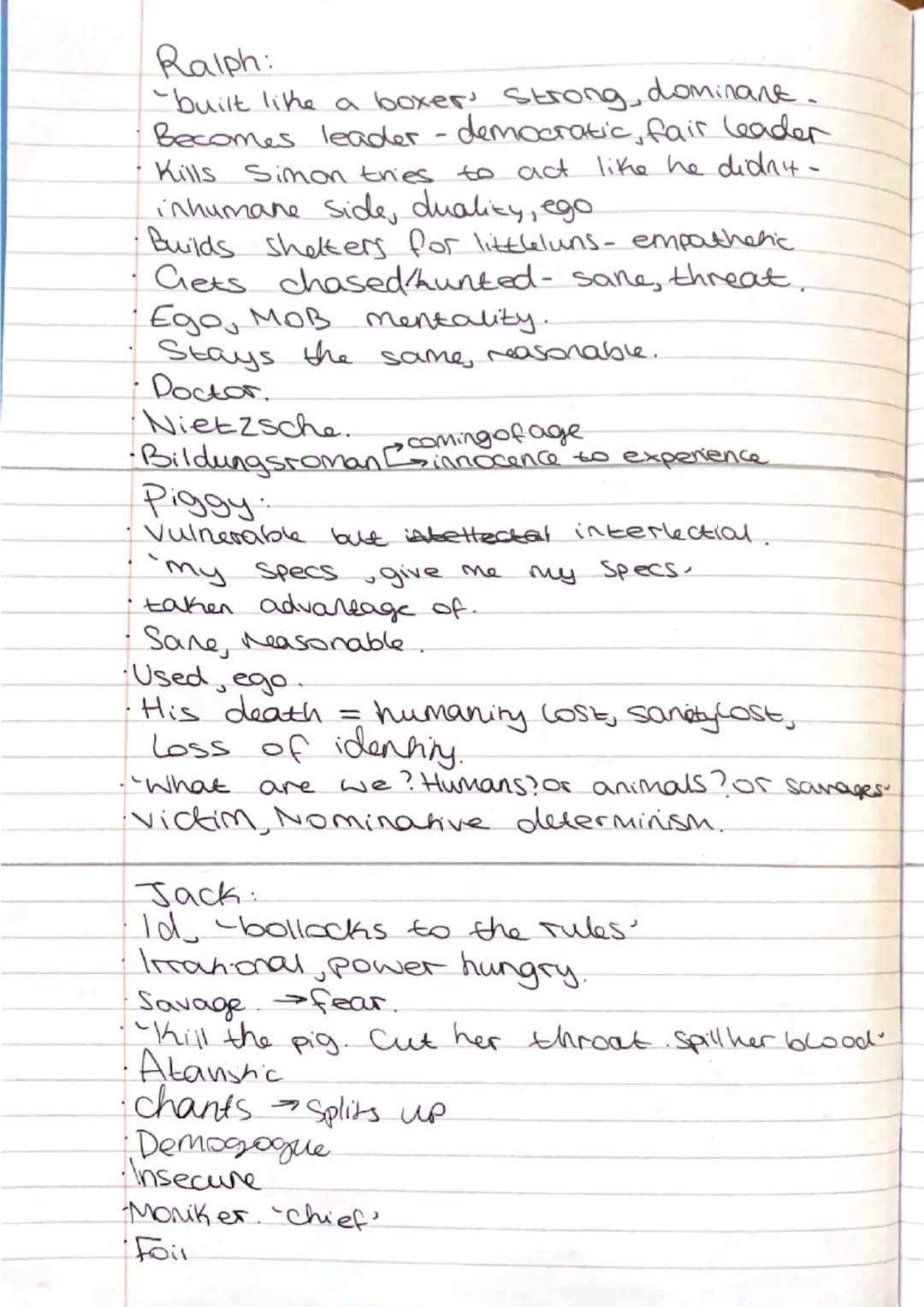
Ralph's Moral Dilemmas and the Descent into Savagery
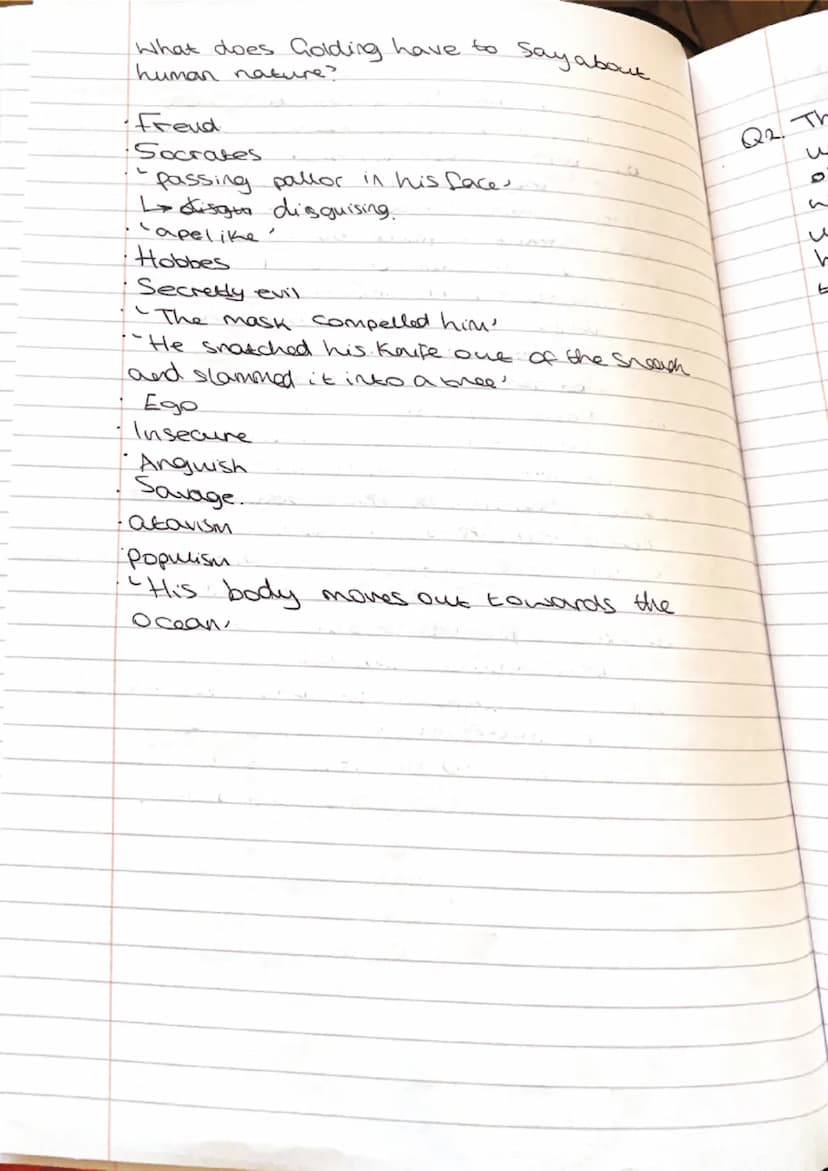
As the situation on the island deteriorates, Ralph faces increasing challenges to his leadership and moral convictions. The conflict between Ralph and Jack represents the broader theme of civilization versus savagery, with Ralph striving to maintain order and reason in the face of growing chaos.
Ralph's character remains relatively consistent throughout the novel, serving as a beacon of sanity and reason amidst the growing madness. However, his experiences force him to confront the fragility of civilized behavior and the ease with which society can descend into barbarism.
Vocabulary: Atavism - The reversion to primitive behavior, a key concept in understanding the boys' descent into savagery.
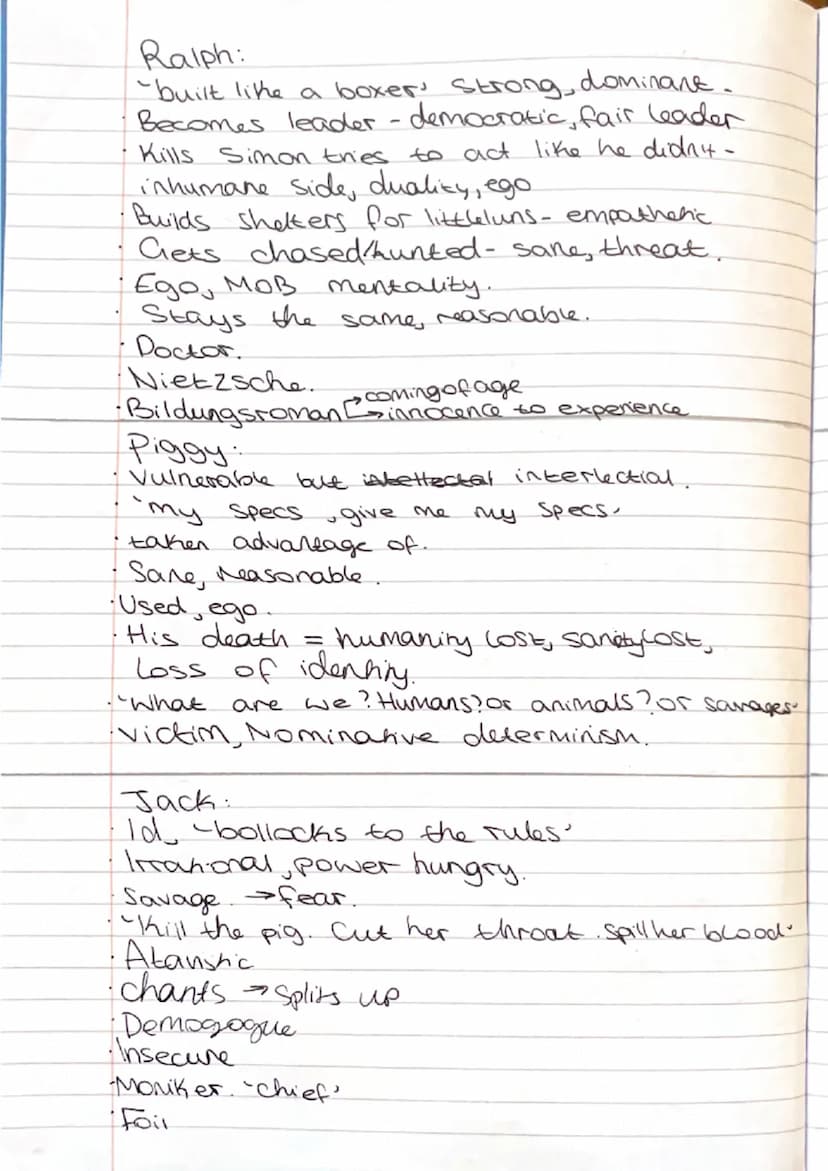
The novel explores the question "What are we? Humans? or animals? or savages?" through Ralph's experiences and observations. His struggle to maintain his humanity in the face of overwhelming odds becomes a central focus of the narrative.
Definition: Nominative determinism - The idea that people tend to gravitate towards areas of work that fit their names. In Ralph's case, his name's meaning ("counsel wolf") ironically contrasts with his role as a voice of reason.
2
of 6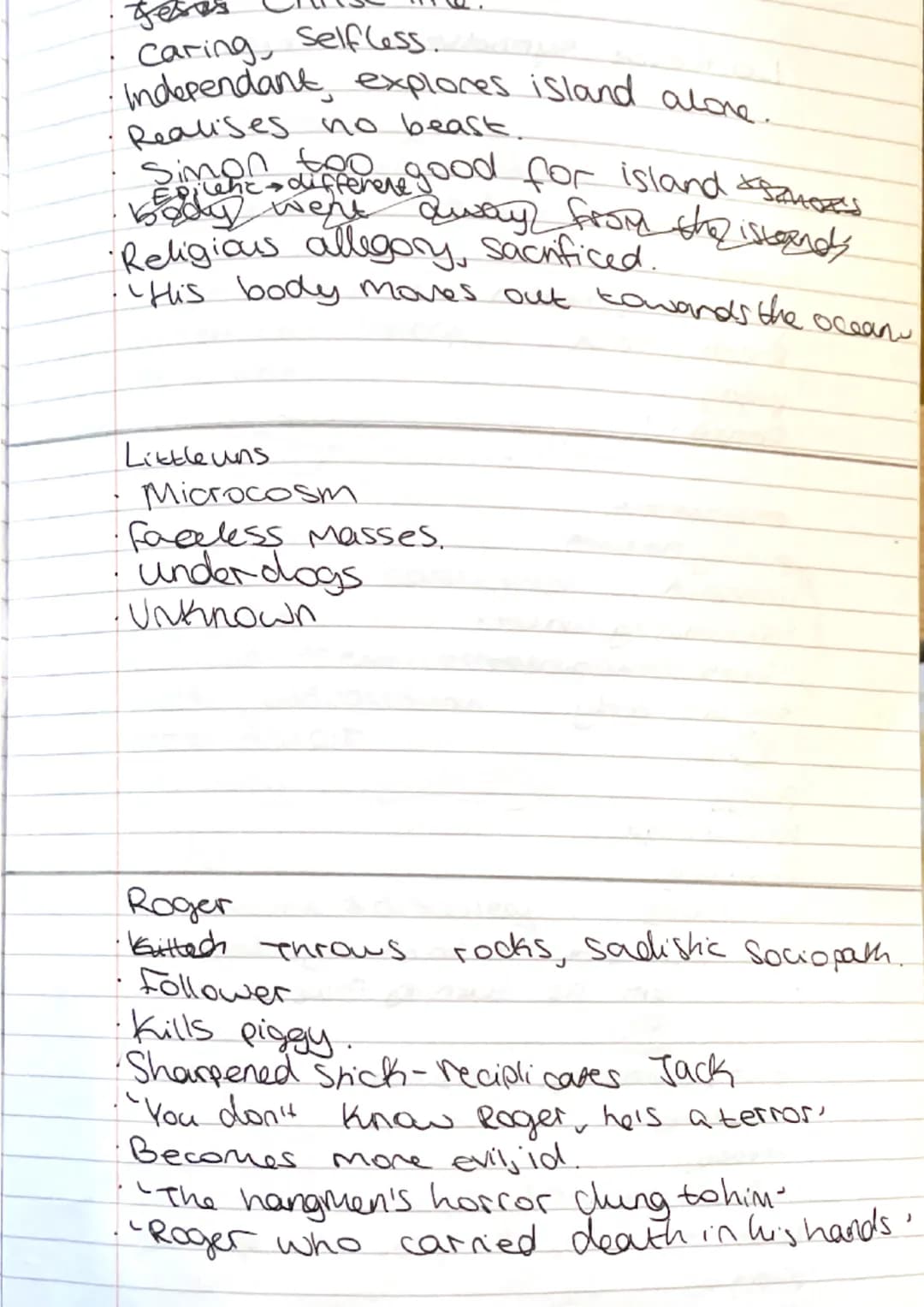
Themes of Power and Human Nature
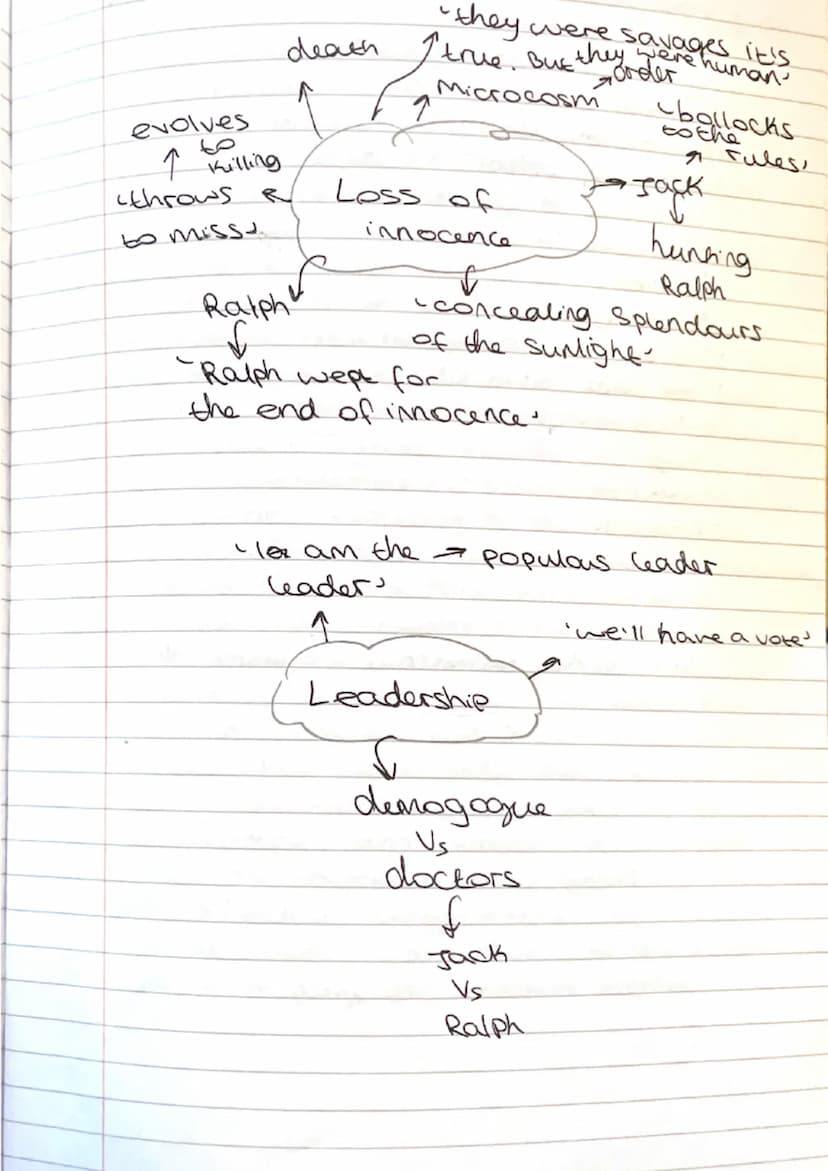
Golding uses Ralph's character to delve into complex themes of power, leadership, and the nature of evil. The contrast between Ralph's democratic leadership and Jack's demagogic approach highlights the different forms power can take in society.
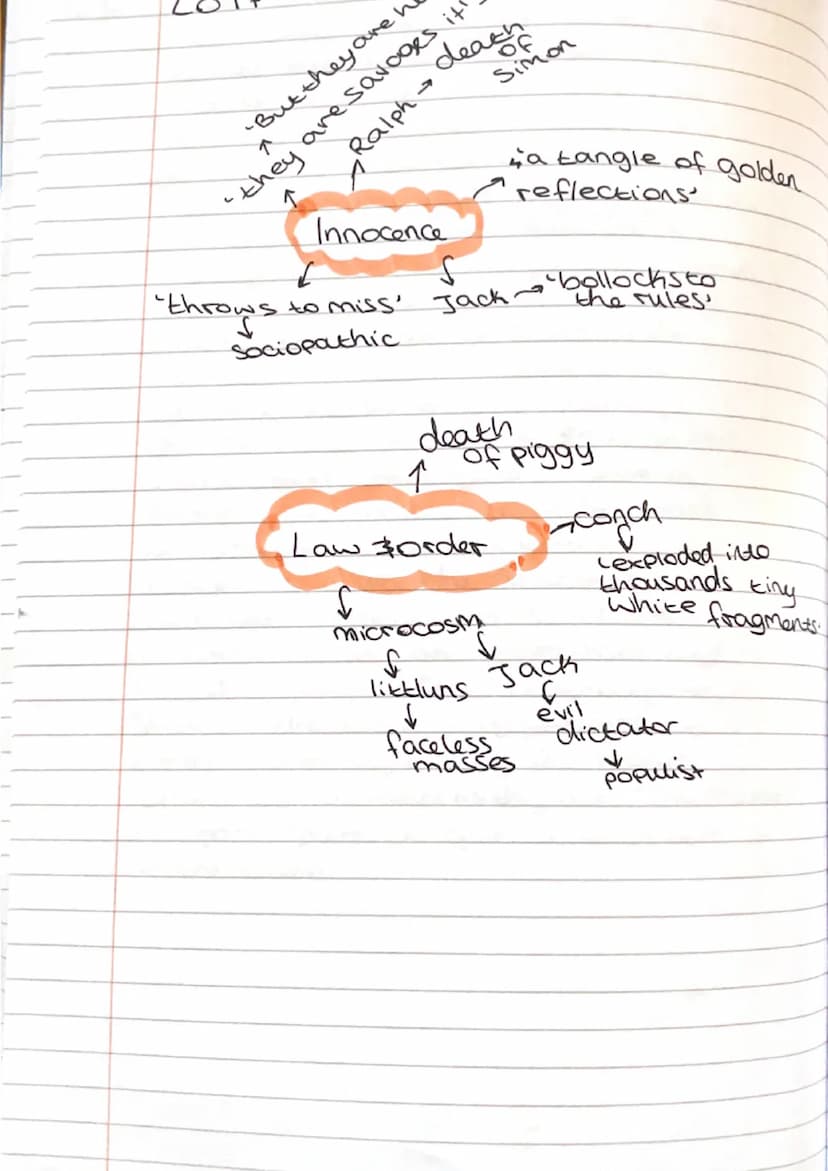
Highlight: The conch shell, initially a symbol of order and civilization, loses its power as Jack's influence grows, symbolizing the erosion of democratic principles.
The novel explores various philosophical and psychological concepts through its characters. Ralph's experiences align with ideas from thinkers like Nietzsche, questioning the nature of morality in extreme situations.
Example: The concept of the "id" in Freudian psychology is reflected in the boys' behavior, particularly in characters like Jack and Roger who give in to their primal instincts.
Ralph's ultimate fate - being hunted by his former companions - serves as a powerful metaphor for the fragility of civilization and the potential for humanity to revert to a primitive state when societal structures break down.
Quote: "Ralph wept for the end of innocence, the darkness of man's heart, and the fall through the air of the true, wise friend called Piggy."
3
of 6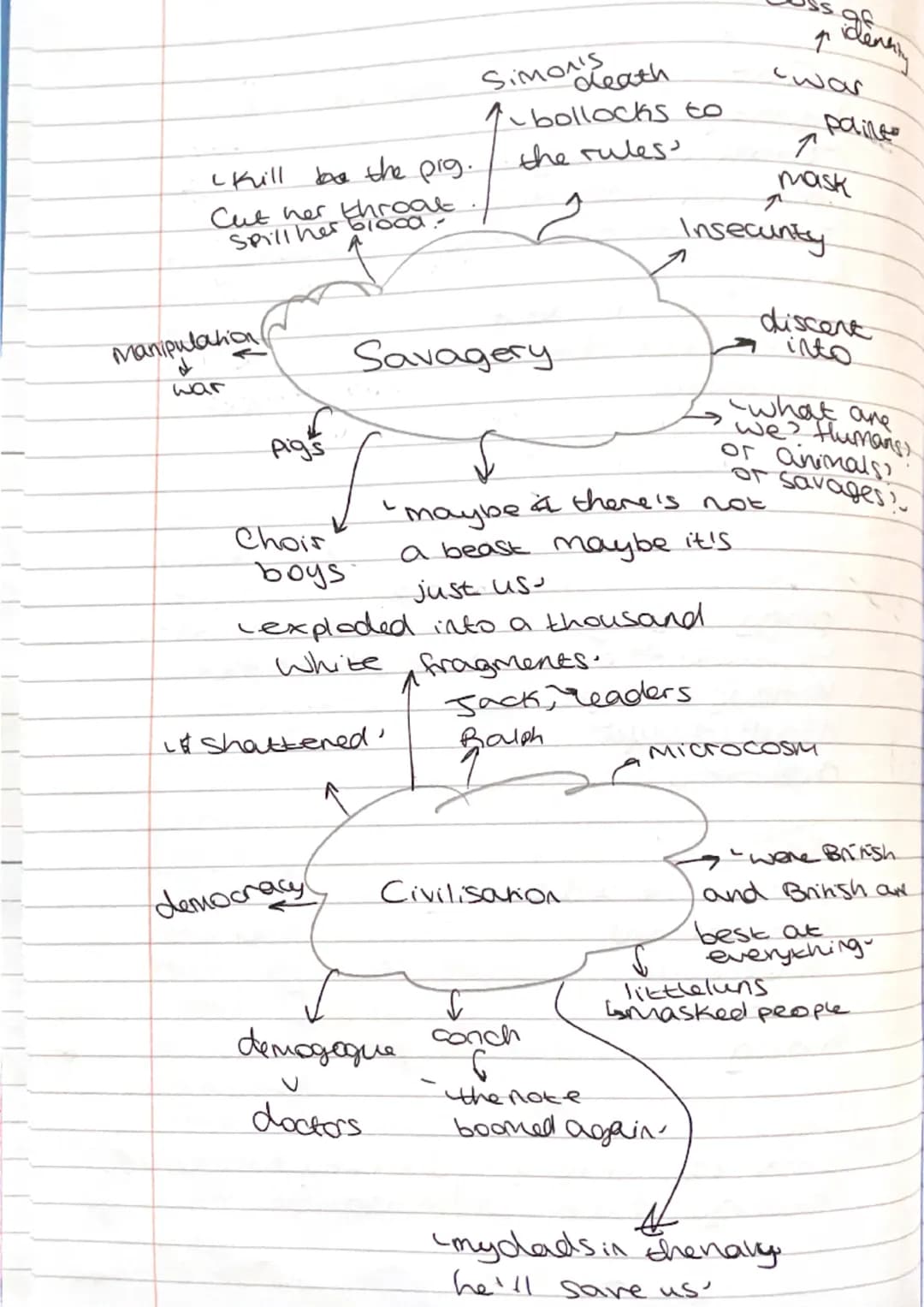
Symbolism and Allegory in Lord of the Flies
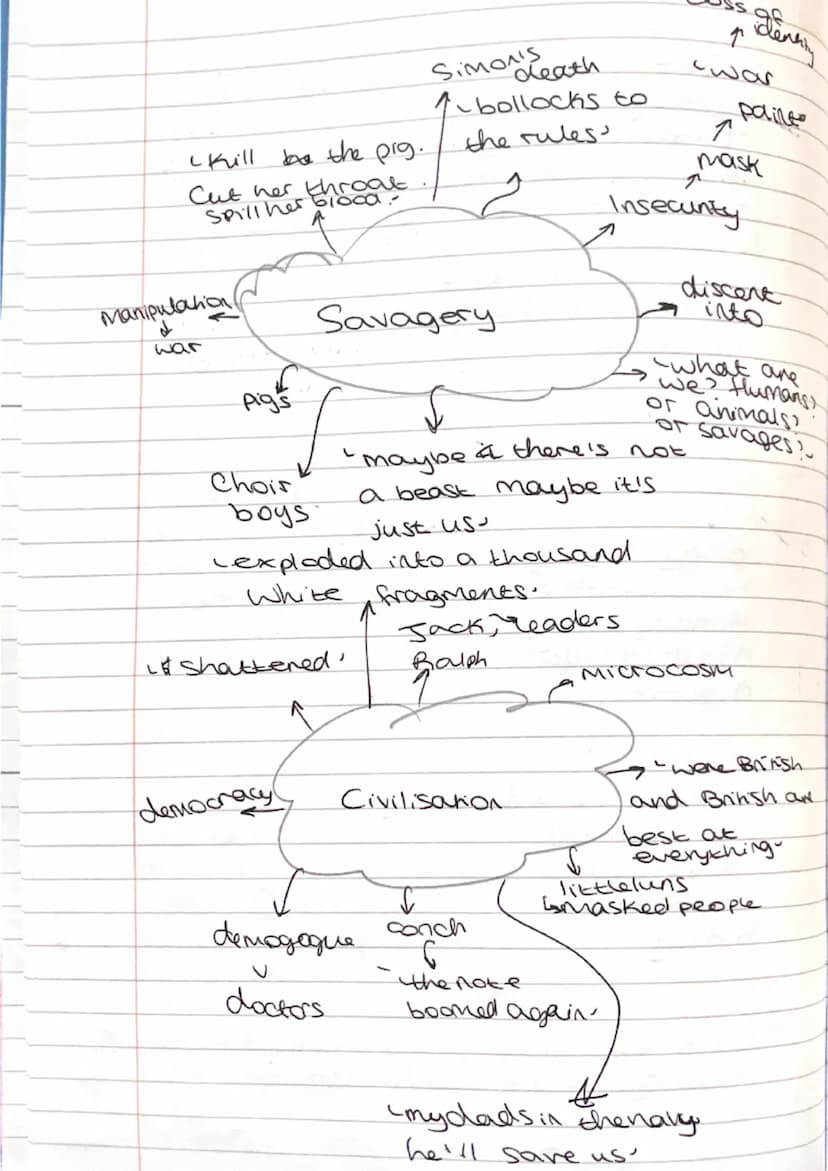
Golding's novel is rich in symbolism, with Ralph often at the center of these symbolic elements. The conch shell, closely associated with Ralph, represents order and democracy. Its destruction symbolizes the complete breakdown of civilization on the island.
Vocabulary: Allegory - A story, poem, or picture that can be interpreted to reveal a hidden meaning, typically a moral or political one.
The novel can be read as an allegory for broader societal and political issues. Ralph's struggle against Jack's authoritarian rule mirrors real-world conflicts between democracy and totalitarianism.
Example: The boys' descent into savagery can be seen as a microcosm of human society, reflecting the potential for barbarism that exists within civilization.
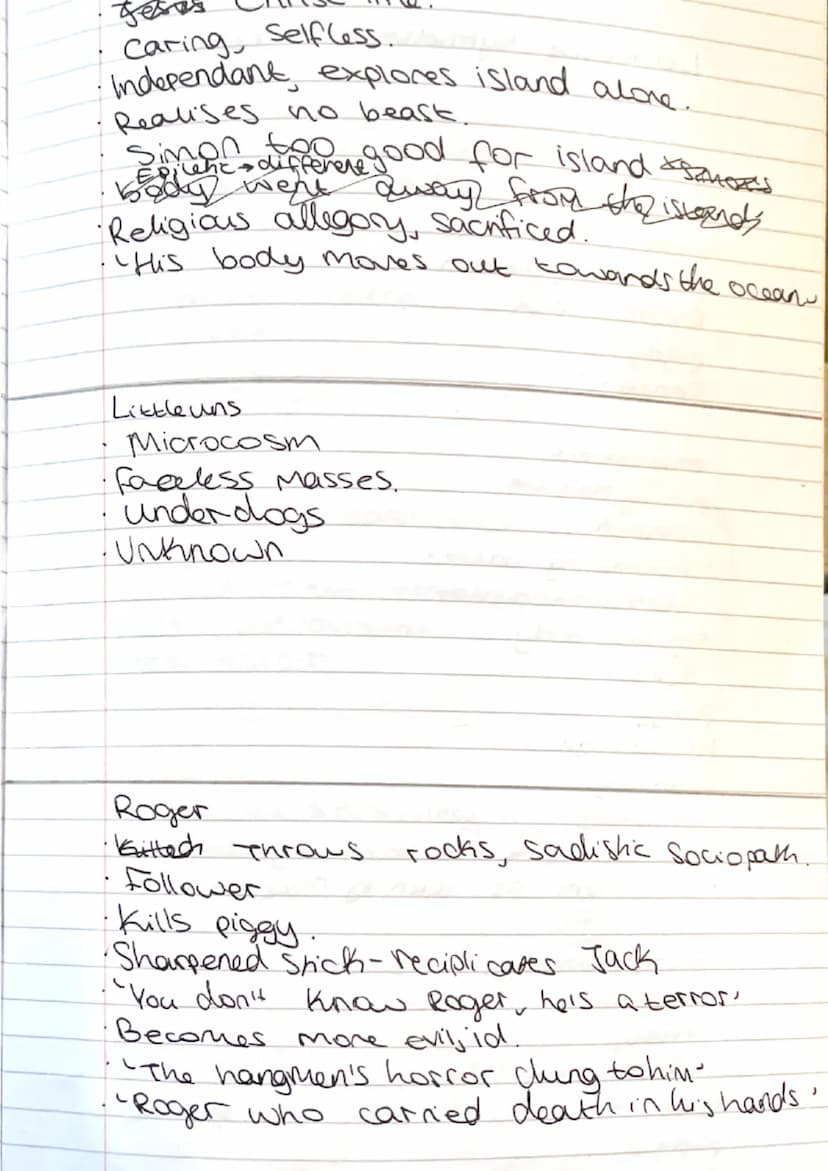
The character of Simon, often aligned with Ralph's more civilized approach, takes on Christ-like qualities in the novel. His death at the hands of the other boys, including Ralph, represents a pivotal moment in the loss of innocence and the triumph of savagery.
Quote: "His body moves out towards the ocean" - This description of Simon's death carries religious overtones, reinforcing the allegorical nature of the novel.
4
of 6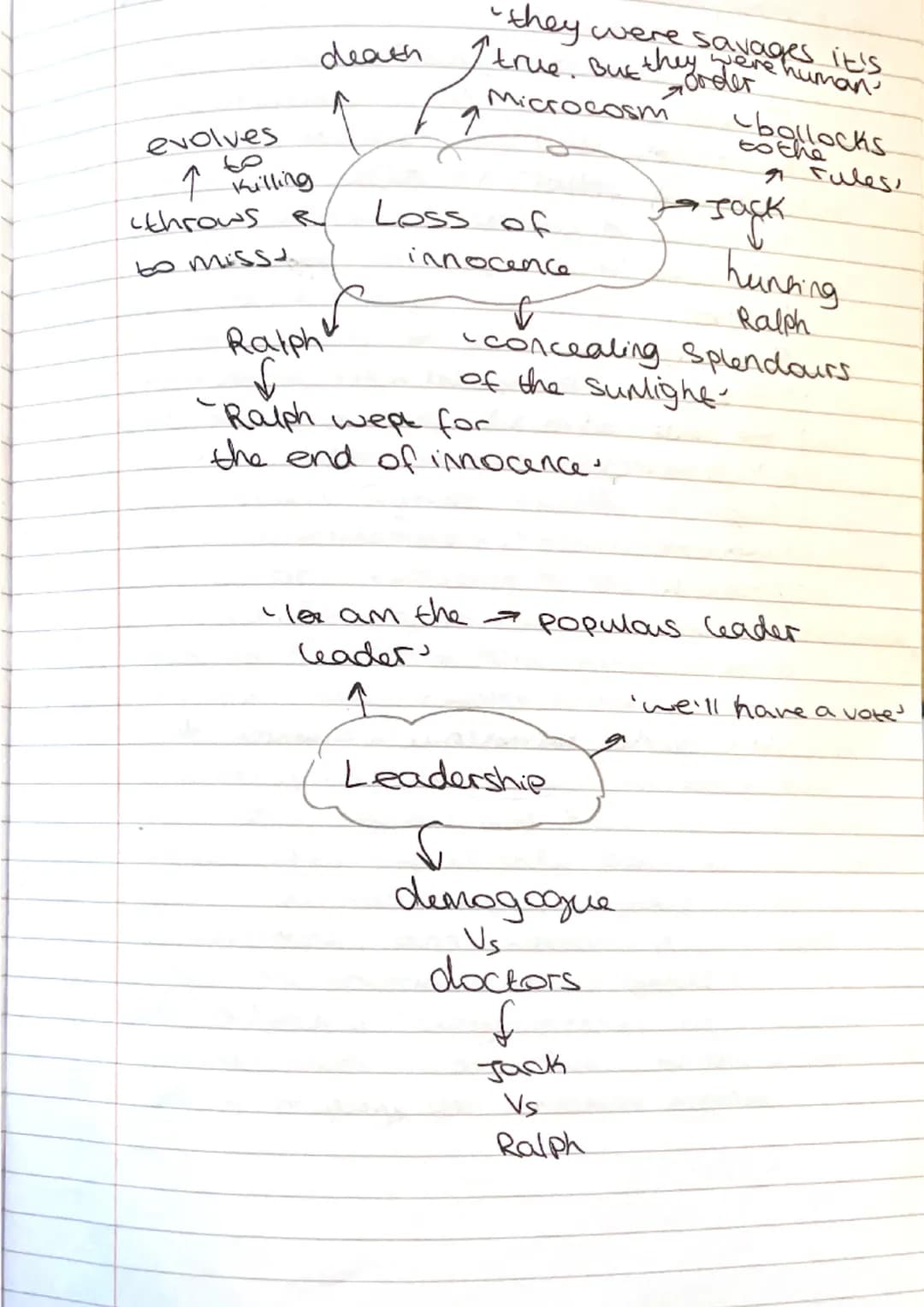
The Legacy of Lord of the Flies
The themes explored through Ralph's character in Lord of the Flies continue to resonate with readers and scholars. The novel's exploration of the thin veneer of civilization and the potential for savagery within human nature remains relevant in contemporary discussions of society and politics.
Highlight: The concept of the "beast" in the novel, which Ralph initially dismisses but later comes to fear, serves as a powerful metaphor for the darkness within human nature.
Ralph's journey from innocence to experience, and his ultimate fight for survival against the forces of savagery, make him a compelling and complex character. His struggles encapsulate the central themes of the novel and provide a lens through which readers can examine their own humanity.
Quote: "What are we? Humans? or animals? or savages?" - This question, central to Ralph's experience, continues to challenge readers to examine the nature of humanity and civilization.
The novel's themes of savagery and civilization are intricately woven throughout Ralph's narrative, making his character essential to understanding Golding's critique of human nature and society. Ralph's story serves as a warning about the fragility of civilization and the constant vigilance required to maintain it.
5
of 6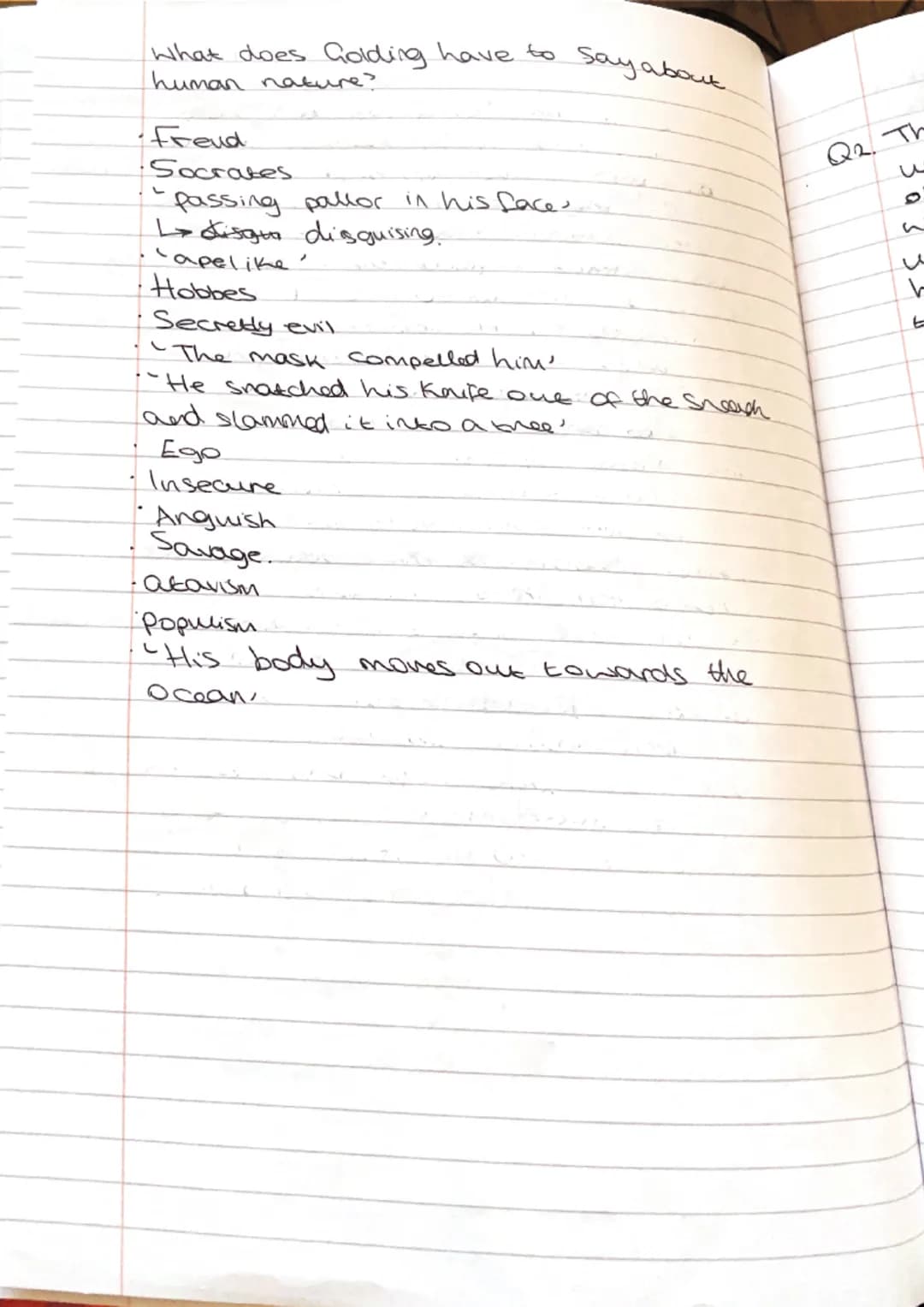
Page 6: Final Themes and Symbolism
The conclusion examines the ultimate consequences of the boys' descent into savagery, focusing on the destruction of innocence and civilization.
Quote: "But they are savages it's"
Highlight: The fragmentation of the conch into "thousands of white fragments" symbolizes the complete breakdown of civilized order.
6
of 6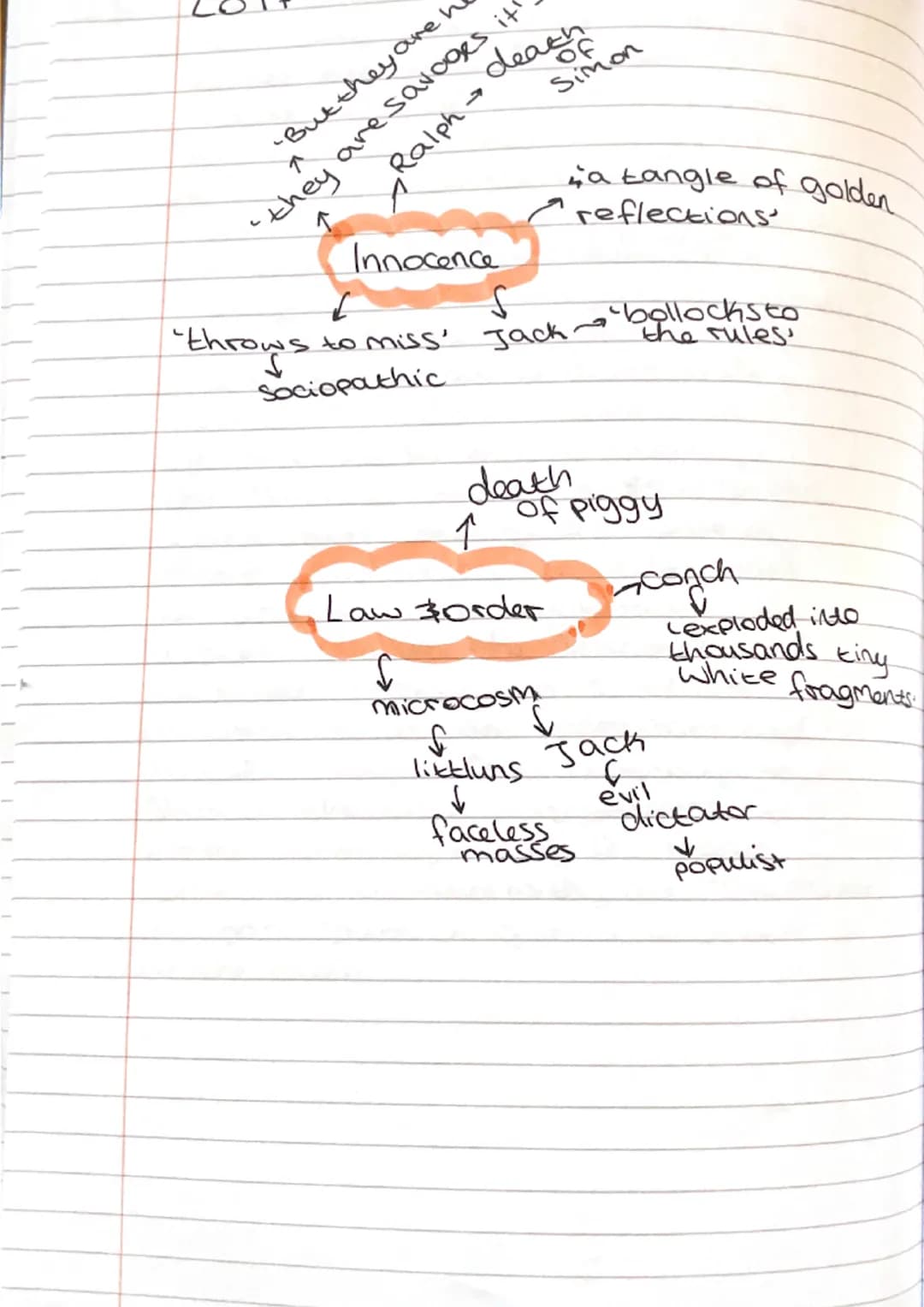
Ralph's Character and Leadership in Lord of the Flies
Ralph emerges as a central figure in William Golding's Lord of the Flies, embodying the struggle between civilization and savagery. His character is introduced as physically strong and dominant, "built like a boxer," which initially contributes to his selection as leader. Ralph's leadership style is characterized by democratic principles and fairness, setting him apart from the more authoritarian Jack.
Highlight: Ralph's democratic approach to leadership is exemplified by his use of the conch shell to maintain order and give everyone a voice in group discussions.
Throughout the novel, Ralph demonstrates empathy and responsibility, particularly in his efforts to build shelters for the younger boys (littluns). This caring nature contrasts sharply with the growing savagery on the island.
Example: Ralph's commitment to maintaining a signal fire demonstrates his focus on rescue and connection to civilization, while others become increasingly focused on hunting and immediate gratification.
The character's journey is a bildungsroman, tracing his loss of innocence as he confronts the darker aspects of human nature. Ralph's involvement in Simon's death marks a pivotal moment, revealing the duality within him and the struggle between his civilized ideals and primal instincts.
Quote: "Ralph wept for the end of innocence, the darkness of man's heart."
We thought you’d never ask...
Our AI Companion is a student-focused AI tool that offers more than just answers. Built on millions of Knowunity resources, it provides relevant information, personalised study plans, quizzes, and content directly in the chat, adapting to your individual learning journey.
You can download the app from Google Play Store and Apple App Store.
That's right! Enjoy free access to study content, connect with fellow students, and get instant help – all at your fingertips.
Similar content
Most popular content: Lord of the Flies
9English LiteratureKey Quotations in Lord of the Flies
Explore essential quotations from 'Lord of the Flies' that illuminate key themes such as Civilisation vs Savagery, Human Nature, and Leadership. This summary highlights significant symbols and character insights, providing a comprehensive understanding of the novel's core messages.
104,410114
English LiteratureCivilisation vs Savagery in Lord of the Flies
Explore the key themes of 'Civilisation vs Savagery' in William Golding's 'Lord of the Flies'. This comprehensive knowledge organiser covers essential concepts, character analysis, and thematic insights to enhance your understanding of the novel. Ideal for exam preparation and in-depth study.
103,24378
English LiteratureBreakdown of piggy
Full breakdown including context, themes and quotes complete with analysis
111403
English LiteratureLord of the Flies Insights
Explore key quotes and in-depth analysis from 'Lord of the Flies' focusing on themes of individualism, civilization versus savagery, and the nature of evil. This summary highlights Simon's unique perspective on the beast and the boys' behavior, providing essential insights for GCSE English Literature students.
103,35179
English LiteratureLord of the Flies Overview
Explore a concise chapter-by-chapter summary of 'Lord of the Flies', detailing key events and character developments. This overview highlights the descent into savagery, the struggle for power, and the loss of innocence among the boys stranded on the island. Ideal for students seeking a quick reference for understanding the novel's plot and themes.
102,04261
English LiteratureRalph's Leadership Analysis
Explore Ralph's character in 'Lord of the Flies' through key quotes, pivotal moments, and his leadership qualities. This summary highlights his democratic approach, struggles with authority, and the theme of innocence lost, making it essential for GCSE English literature students.
119798
English LiteratureEnglish literature Lord of the flies in depth quote bank with essay plan
Lord of the flies essay plans for all characters and themes
113235
English LiteraturePiggy's Role in Lord of the Flies
Explore the character of Piggy in 'Lord of the Flies' as a symbol of reason and intellect amidst chaos. This analysis delves into his marginalized status, the dynamics of group behavior, and the tragic implications of his fate. Understand how Piggy's insights challenge the moral decay of the boys on the island and his significant relationship with Ralph. Ideal for literature students studying character development and themes in classic novels.
94386
English LiteraturePiggy: Character Analysis
Explore the complex character of Piggy in 'Lord of the Flies'. This analysis covers his physical appearance, intelligence, loyalty, and the themes of civilization versus savagery. Understand Piggy's role as an outsider and his relationships with other boys, including his support for Ralph and his tragic fate. Ideal for students studying character development and thematic elements in literature.
1069422
Most popular content in English Literature
9English LiteratureAn Inspector Calls: Character Insights
Explore in-depth analysis and key quotes for characters in J.B. Priestley's 'An Inspector Calls'. This resource covers Gerald Croft, Inspector Goole, Sheila Birling, Mrs. Birling, Eric Birling, and Eva Smith, focusing on themes of class, gender roles, and social responsibility. Ideal for students aiming for Grade 8 and above.
1025,475907
English LiteratureMacbeth: Guilt and Ambition
Explore the complex themes of guilt and ambition in Shakespeare's 'Macbeth'. This analysis covers key characters, including Macbeth and Lady Macbeth, their moral dilemmas, and the tragic consequences of their ambition. Ideal for students studying character motivations, thematic elements, and the psychological impact of power. Includes insights on the natural order, manipulation, and the descent into madness.
919,131400
I
English LiteratureInspector Calls Quiz (YR 10 MOCKS)
for YR 10 GCSE mock on Inspector Calls
102,1601
English LiteratureRomeo and Juliet: Key themes
Key Romeo and Juliet themes and analysed quotes
106,722197
E
English LiteratureExplore the World of English Literature
Master the key concepts and works of English literature with this comprehensive flashcard set designed for grade 10 students.
112,0951
E
English LiteratureExploring 'A Christmas Carol': Themes, Characters, and Lessons
Delve into the main themes, key characters, and valuable lessons in Charles Dickens' 'A Christmas Carol'. Discover the impact of Scrooge's transformation and the significance of love, redemption, and the true meaning of Christmas.
101,2500
E
English LiteratureExploring English Literature: A Journey through Medium
Discover the captivating world of English Literature with this comprehensive medium-level flashcard set. Dive into the works of renowned authors and explore the themes, characters, and literary techniques that make their writing truly remarkable.
111,0580
M
English LiteratureMacbeth Quotes Quiz!!
Quiz on key quotes in Macbeth and who said them- Answer with who said the quote
101,8333
M
English LiteratureMastering Medium: A Comprehensive Guide
Unlock the power of Medium with this comprehensive guide that covers everything from writing techniques to building a following.
107121
Most popular content
9 Sociology
Sociology of Education Overview
Explore comprehensive A-Level Sociology notes on the education system, covering key theories, policies, and sociological perspectives. This resource includes insights on marketisation, gender roles, cultural deprivation, and educational inequalities, providing a thorough understanding of how education shapes social stratification and individual achievement. Ideal for exam preparation and in-depth study.
12102,9673,040
SociologySociology of Families: Comprehensive Revision
Dive into an extensive overview of family dynamics, perspectives, and patterns in sociology. This resource covers key concepts such as family diversity, gender roles, marriage, and the impact of social policies on family structures. Perfect for A-Level Sociology students preparing for Paper 2.
1273,7752,306
CriminologyCriminology: Crime & Punishment Overview
Comprehensive mindmaps covering key concepts in the Crime and Punishment topic for WJEC Criminology Unit 4. This resource includes detailed insights into the Criminal Justice System, crime prevention strategies, sentencing models, and the roles of various agencies. Ideal for A-Level revision, ensuring you grasp essential theories and legislative processes to excel in your exams.
1254,8961,060
SociologyComprehensive Crime & Deviance Overview
Explore an extensive revision of crime and deviance topics, including theories, types of crime, and the impact of media. This resource covers key concepts such as Marxism, functionalism, gender and crime, and the influence of globalization on criminal behavior. Ideal for students seeking a thorough understanding of criminology and its various theories. Type: Full Topic Revision.
1251,6701,400
C
 Biology
Cell Biology and Cell structure
cell structures
93,2870
T
BiologyThe functions of subcellular structures - B1 Biology
Flashcards on the different functions of subcellular structures: cell membrane, nucleus, mitochondria, ribosomes, cytoplasm, permant vacuole, chloroplasts and cell wall.
102,8215
SociologySociological Theories Overview
Comprehensive revision of key sociological theories including Functionalism, Marxism, Feminism, and Interpretivism. Explore concepts like value freedom, identity formation, and the critique of social control. Ideal for AQA A-Level Sociology students preparing for exams. This summary covers essential theories and their implications in sociology, providing a clear understanding of each perspective.
1231,483846
CriminologyWJEC Unit 4 Criminology
Criminology unit 4 detailed revision note
127,176125
1
Biology1.cells Gcse biology question cards
combined science higher biology
92,3694
Students love us — and so will you.
4.6/5App Store
4.7/5Google Play
The app is very easy to use and well designed. I have found everything I was looking for so far and have been able to learn a lot from the presentations! I will definitely use the app for a class assignment! And of course it also helps a lot as an inspiration.
Stefan SiOS user
This app is really great. There are so many study notes and help [...]. My problem subject is French, for example, and the app has so many options for help. Thanks to this app, I have improved my French. I would recommend it to anyone.
Samantha KlichAndroid user
Wow, I am really amazed. I just tried the app because I've seen it advertised many times and was absolutely stunned. This app is THE HELP you want for school and above all, it offers so many things, such as workouts and fact sheets, which have been VERY helpful to me personally.
AnnaiOS user
English Literature763 views·Updated 22 Jul 2026·6 pagesExploring Ralph's Leadership and Themes in Lord of the Flies
X
xrosemiax @xrosemiax_hetc
A comprehensive analysis of leadership, civilization, and savagery in Lord of the Flies, focusing on the character developmentand thematic elements that shape William Golding's masterpiece. The narrative explores the descent from civilization to savagery through key characters like...
1
of 6
Sign up to see the content. It's free!
- Access to all documents
- Improve your grades
- Join milions of students
By signing up you accept Terms of Service and Privacy Policy
Ralph's Moral Dilemmas and the Descent into Savagery
As the situation on the island deteriorates, Ralph faces increasing challenges to his leadership and moral convictions. The conflict between Ralph and Jack represents the broader theme of civilization versus savagery, with Ralph striving to maintain order and reason in the face of growing chaos.
Ralph's character remains relatively consistent throughout the novel, serving as a beacon of sanity and reason amidst the growing madness. However, his experiences force him to confront the fragility of civilized behavior and the ease with which society can descend into barbarism.
Vocabulary: Atavism - The reversion to primitive behavior, a key concept in understanding the boys' descent into savagery.
The novel explores the question "What are we? Humans? or animals? or savages?" through Ralph's experiences and observations. His struggle to maintain his humanity in the face of overwhelming odds becomes a central focus of the narrative.
Definition: Nominative determinism - The idea that people tend to gravitate towards areas of work that fit their names. In Ralph's case, his name's meaning ("counsel wolf") ironically contrasts with his role as a voice of reason.
2
of 6Sign up to see the content. It's free!
- Access to all documents
- Improve your grades
- Join milions of students
By signing up you accept Terms of Service and Privacy Policy
Themes of Power and Human Nature
Golding uses Ralph's character to delve into complex themes of power, leadership, and the nature of evil. The contrast between Ralph's democratic leadership and Jack's demagogic approach highlights the different forms power can take in society.
Highlight: The conch shell, initially a symbol of order and civilization, loses its power as Jack's influence grows, symbolizing the erosion of democratic principles.
The novel explores various philosophical and psychological concepts through its characters. Ralph's experiences align with ideas from thinkers like Nietzsche, questioning the nature of morality in extreme situations.
Example: The concept of the "id" in Freudian psychology is reflected in the boys' behavior, particularly in characters like Jack and Roger who give in to their primal instincts.
Ralph's ultimate fate - being hunted by his former companions - serves as a powerful metaphor for the fragility of civilization and the potential for humanity to revert to a primitive state when societal structures break down.
Quote: "Ralph wept for the end of innocence, the darkness of man's heart, and the fall through the air of the true, wise friend called Piggy."
3
of 6Sign up to see the content. It's free!
- Access to all documents
- Improve your grades
- Join milions of students
By signing up you accept Terms of Service and Privacy Policy
Symbolism and Allegory in Lord of the Flies
Golding's novel is rich in symbolism, with Ralph often at the center of these symbolic elements. The conch shell, closely associated with Ralph, represents order and democracy. Its destruction symbolizes the complete breakdown of civilization on the island.
Vocabulary: Allegory - A story, poem, or picture that can be interpreted to reveal a hidden meaning, typically a moral or political one.
The novel can be read as an allegory for broader societal and political issues. Ralph's struggle against Jack's authoritarian rule mirrors real-world conflicts between democracy and totalitarianism.
Example: The boys' descent into savagery can be seen as a microcosm of human society, reflecting the potential for barbarism that exists within civilization.
The character of Simon, often aligned with Ralph's more civilized approach, takes on Christ-like qualities in the novel. His death at the hands of the other boys, including Ralph, represents a pivotal moment in the loss of innocence and the triumph of savagery.
Quote: "His body moves out towards the ocean" - This description of Simon's death carries religious overtones, reinforcing the allegorical nature of the novel.
4
of 6Sign up to see the content. It's free!
- Access to all documents
- Improve your grades
- Join milions of students
By signing up you accept Terms of Service and Privacy Policy
The Legacy of Lord of the Flies
The themes explored through Ralph's character in Lord of the Flies continue to resonate with readers and scholars. The novel's exploration of the thin veneer of civilization and the potential for savagery within human nature remains relevant in contemporary discussions of society and politics.
Highlight: The concept of the "beast" in the novel, which Ralph initially dismisses but later comes to fear, serves as a powerful metaphor for the darkness within human nature.
Ralph's journey from innocence to experience, and his ultimate fight for survival against the forces of savagery, make him a compelling and complex character. His struggles encapsulate the central themes of the novel and provide a lens through which readers can examine their own humanity.
Quote: "What are we? Humans? or animals? or savages?" - This question, central to Ralph's experience, continues to challenge readers to examine the nature of humanity and civilization.
The novel's themes of savagery and civilization are intricately woven throughout Ralph's narrative, making his character essential to understanding Golding's critique of human nature and society. Ralph's story serves as a warning about the fragility of civilization and the constant vigilance required to maintain it.
5
of 6Sign up to see the content. It's free!
- Access to all documents
- Improve your grades
- Join milions of students
By signing up you accept Terms of Service and Privacy Policy
Page 6: Final Themes and Symbolism
The conclusion examines the ultimate consequences of the boys' descent into savagery, focusing on the destruction of innocence and civilization.
Quote: "But they are savages it's"
Highlight: The fragmentation of the conch into "thousands of white fragments" symbolizes the complete breakdown of civilized order.
6
of 6Sign up to see the content. It's free!
- Access to all documents
- Improve your grades
- Join milions of students
By signing up you accept Terms of Service and Privacy Policy
Ralph's Character and Leadership in Lord of the Flies
Ralph emerges as a central figure in William Golding's Lord of the Flies, embodying the struggle between civilization and savagery. His character is introduced as physically strong and dominant, "built like a boxer," which initially contributes to his selection as leader. Ralph's leadership style is characterized by democratic principles and fairness, setting him apart from the more authoritarian Jack.
Highlight: Ralph's democratic approach to leadership is exemplified by his use of the conch shell to maintain order and give everyone a voice in group discussions.
Throughout the novel, Ralph demonstrates empathy and responsibility, particularly in his efforts to build shelters for the younger boys (littluns). This caring nature contrasts sharply with the growing savagery on the island.
Example: Ralph's commitment to maintaining a signal fire demonstrates his focus on rescue and connection to civilization, while others become increasingly focused on hunting and immediate gratification.
The character's journey is a bildungsroman, tracing his loss of innocence as he confronts the darker aspects of human nature. Ralph's involvement in Simon's death marks a pivotal moment, revealing the duality within him and the struggle between his civilized ideals and primal instincts.
Quote: "Ralph wept for the end of innocence, the darkness of man's heart."
We thought you’d never ask...
Our AI Companion is a student-focused AI tool that offers more than just answers. Built on millions of Knowunity resources, it provides relevant information, personalised study plans, quizzes, and content directly in the chat, adapting to your individual learning journey.
You can download the app from Google Play Store and Apple App Store.
That's right! Enjoy free access to study content, connect with fellow students, and get instant help – all at your fingertips.
Similar content
Most popular content: Lord of the Flies
9English LiteratureKey Quotations in Lord of the Flies
Explore essential quotations from 'Lord of the Flies' that illuminate key themes such as Civilisation vs Savagery, Human Nature, and Leadership. This summary highlights significant symbols and character insights, providing a comprehensive understanding of the novel's core messages.
104,410114
English LiteratureCivilisation vs Savagery in Lord of the Flies
Explore the key themes of 'Civilisation vs Savagery' in William Golding's 'Lord of the Flies'. This comprehensive knowledge organiser covers essential concepts, character analysis, and thematic insights to enhance your understanding of the novel. Ideal for exam preparation and in-depth study.
103,24378
English LiteratureBreakdown of piggy
Full breakdown including context, themes and quotes complete with analysis
111403
English LiteratureLord of the Flies Insights
Explore key quotes and in-depth analysis from 'Lord of the Flies' focusing on themes of individualism, civilization versus savagery, and the nature of evil. This summary highlights Simon's unique perspective on the beast and the boys' behavior, providing essential insights for GCSE English Literature students.
103,35179
English LiteratureLord of the Flies Overview
Explore a concise chapter-by-chapter summary of 'Lord of the Flies', detailing key events and character developments. This overview highlights the descent into savagery, the struggle for power, and the loss of innocence among the boys stranded on the island. Ideal for students seeking a quick reference for understanding the novel's plot and themes.
102,04261
English LiteratureRalph's Leadership Analysis
Explore Ralph's character in 'Lord of the Flies' through key quotes, pivotal moments, and his leadership qualities. This summary highlights his democratic approach, struggles with authority, and the theme of innocence lost, making it essential for GCSE English literature students.
119798
English LiteratureEnglish literature Lord of the flies in depth quote bank with essay plan
Lord of the flies essay plans for all characters and themes
113235
English LiteraturePiggy's Role in Lord of the Flies
Explore the character of Piggy in 'Lord of the Flies' as a symbol of reason and intellect amidst chaos. This analysis delves into his marginalized status, the dynamics of group behavior, and the tragic implications of his fate. Understand how Piggy's insights challenge the moral decay of the boys on the island and his significant relationship with Ralph. Ideal for literature students studying character development and themes in classic novels.
94386
English LiteraturePiggy: Character Analysis
Explore the complex character of Piggy in 'Lord of the Flies'. This analysis covers his physical appearance, intelligence, loyalty, and the themes of civilization versus savagery. Understand Piggy's role as an outsider and his relationships with other boys, including his support for Ralph and his tragic fate. Ideal for students studying character development and thematic elements in literature.
1069422
Most popular content in English Literature
9English LiteratureAn Inspector Calls: Character Insights
Explore in-depth analysis and key quotes for characters in J.B. Priestley's 'An Inspector Calls'. This resource covers Gerald Croft, Inspector Goole, Sheila Birling, Mrs. Birling, Eric Birling, and Eva Smith, focusing on themes of class, gender roles, and social responsibility. Ideal for students aiming for Grade 8 and above.
1025,475907
English LiteratureMacbeth: Guilt and Ambition
Explore the complex themes of guilt and ambition in Shakespeare's 'Macbeth'. This analysis covers key characters, including Macbeth and Lady Macbeth, their moral dilemmas, and the tragic consequences of their ambition. Ideal for students studying character motivations, thematic elements, and the psychological impact of power. Includes insights on the natural order, manipulation, and the descent into madness.
919,131400
I
English LiteratureInspector Calls Quiz (YR 10 MOCKS)
for YR 10 GCSE mock on Inspector Calls
102,1601
English LiteratureRomeo and Juliet: Key themes
Key Romeo and Juliet themes and analysed quotes
106,722197
E
English LiteratureExplore the World of English Literature
Master the key concepts and works of English literature with this comprehensive flashcard set designed for grade 10 students.
112,0951
E
English LiteratureExploring 'A Christmas Carol': Themes, Characters, and Lessons
Delve into the main themes, key characters, and valuable lessons in Charles Dickens' 'A Christmas Carol'. Discover the impact of Scrooge's transformation and the significance of love, redemption, and the true meaning of Christmas.
101,2500
E
English LiteratureExploring English Literature: A Journey through Medium
Discover the captivating world of English Literature with this comprehensive medium-level flashcard set. Dive into the works of renowned authors and explore the themes, characters, and literary techniques that make their writing truly remarkable.
111,0580
M
English LiteratureMacbeth Quotes Quiz!!
Quiz on key quotes in Macbeth and who said them- Answer with who said the quote
101,8333
M
English LiteratureMastering Medium: A Comprehensive Guide
Unlock the power of Medium with this comprehensive guide that covers everything from writing techniques to building a following.
107121
Most popular content
9SociologySociology of Education Overview
Explore comprehensive A-Level Sociology notes on the education system, covering key theories, policies, and sociological perspectives. This resource includes insights on marketisation, gender roles, cultural deprivation, and educational inequalities, providing a thorough understanding of how education shapes social stratification and individual achievement. Ideal for exam preparation and in-depth study.
12102,9673,040
SociologySociology of Families: Comprehensive Revision
Dive into an extensive overview of family dynamics, perspectives, and patterns in sociology. This resource covers key concepts such as family diversity, gender roles, marriage, and the impact of social policies on family structures. Perfect for A-Level Sociology students preparing for Paper 2.
1273,7752,306
CriminologyCriminology: Crime & Punishment Overview
Comprehensive mindmaps covering key concepts in the Crime and Punishment topic for WJEC Criminology Unit 4. This resource includes detailed insights into the Criminal Justice System, crime prevention strategies, sentencing models, and the roles of various agencies. Ideal for A-Level revision, ensuring you grasp essential theories and legislative processes to excel in your exams.
1254,8961,060
SociologyComprehensive Crime & Deviance Overview
Explore an extensive revision of crime and deviance topics, including theories, types of crime, and the impact of media. This resource covers key concepts such as Marxism, functionalism, gender and crime, and the influence of globalization on criminal behavior. Ideal for students seeking a thorough understanding of criminology and its various theories. Type: Full Topic Revision.
1251,6701,400
C
BiologyCell Biology and Cell structure
cell structures
93,2870
T
BiologyThe functions of subcellular structures - B1 Biology
Flashcards on the different functions of subcellular structures: cell membrane, nucleus, mitochondria, ribosomes, cytoplasm, permant vacuole, chloroplasts and cell wall.
102,8215
SociologySociological Theories Overview
Comprehensive revision of key sociological theories including Functionalism, Marxism, Feminism, and Interpretivism. Explore concepts like value freedom, identity formation, and the critique of social control. Ideal for AQA A-Level Sociology students preparing for exams. This summary covers essential theories and their implications in sociology, providing a clear understanding of each perspective.
1231,483846
CriminologyWJEC Unit 4 Criminology
Criminology unit 4 detailed revision note
127,176125
1
Biology1.cells Gcse biology question cards
combined science higher biology
92,3694
Students love us — and so will you.
4.6/5App Store
4.7/5Google Play
The app is very easy to use and well designed. I have found everything I was looking for so far and have been able to learn a lot from the presentations! I will definitely use the app for a class assignment! And of course it also helps a lot as an inspiration.
Stefan SiOS user
This app is really great. There are so many study notes and help [...]. My problem subject is French, for example, and the app has so many options for help. Thanks to this app, I have improved my French. I would recommend it to anyone.
Samantha KlichAndroid user
Wow, I am really amazed. I just tried the app because I've seen it advertised many times and was absolutely stunned. This app is THE HELP you want for school and above all, it offers so many things, such as workouts and fact sheets, which have been VERY helpful to me personally.
AnnaiOS user