
Response to stimuliis a crucial aspect of biology, involving...
 Biology359 views·Updated Jun 13, 2026·13 pages
Fun Biology Notes: How Plants and Bodies Respond to Stuff!

m_xrwaaaaaaaaaaaa:)@m_xrwaaaaaaaa
1 / 10
1
of 10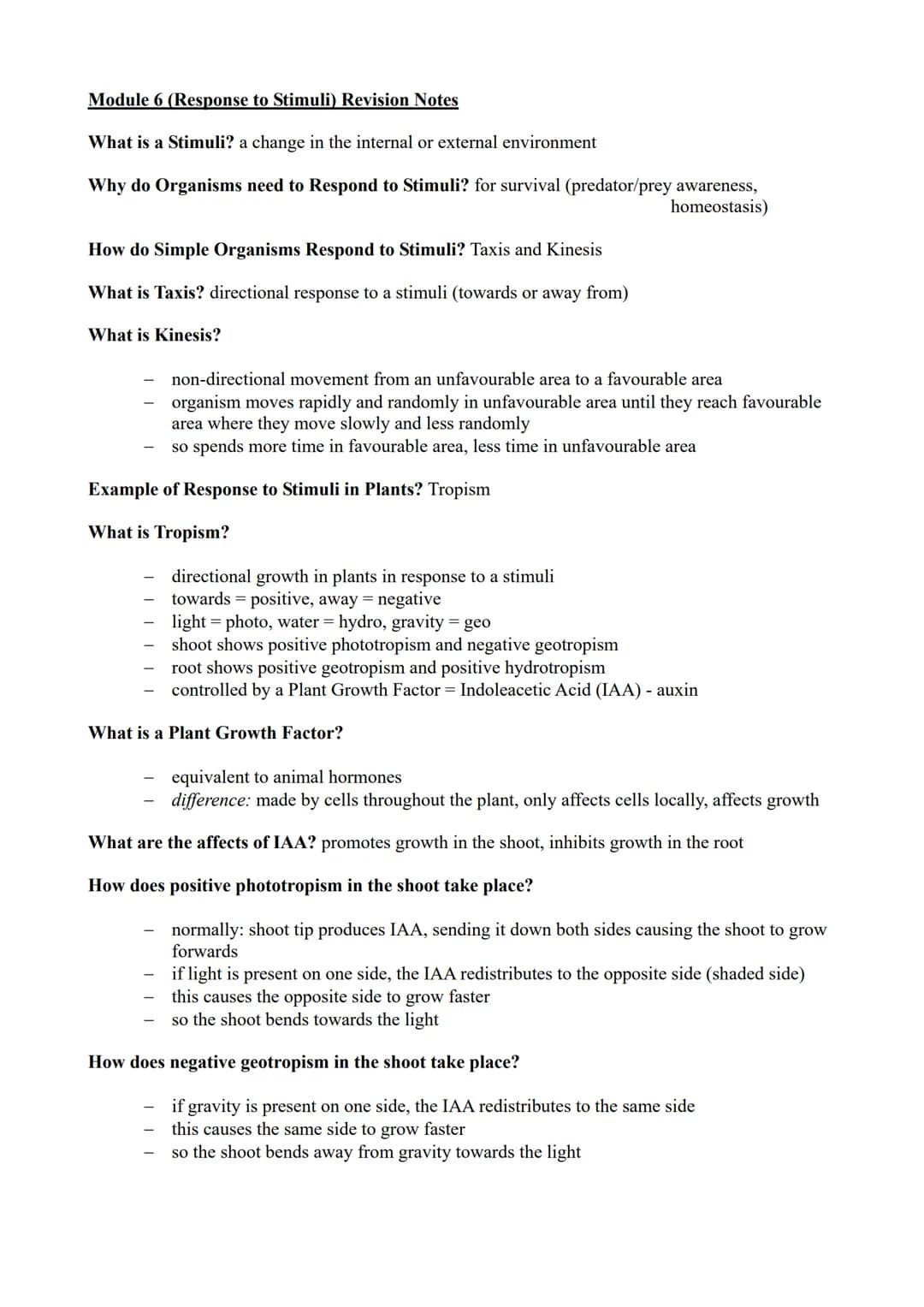
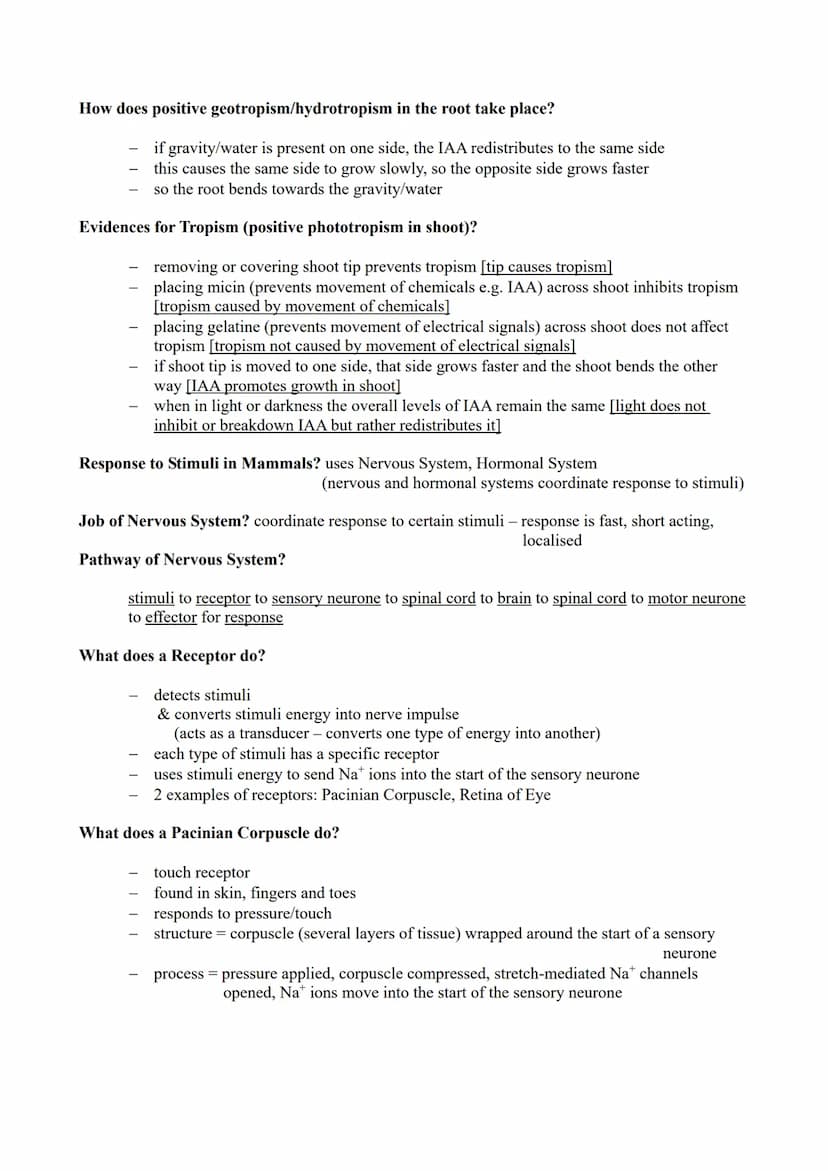
Plant Tropisms and Mammalian Response Systems
This page continues the discussion on plant tropisms, focusing on root responses and providing evidence for tropism mechanisms.
Example: Positive geotropism in roots occurs when IAA redistributes to the side facing gravity, causing slower growth on that side and bending the root towards gravity.
The page lists several pieces of evidence supporting the role of IAA in tropisms, such as the effects of removing the shoot tip or using chemicals to block IAA movement.
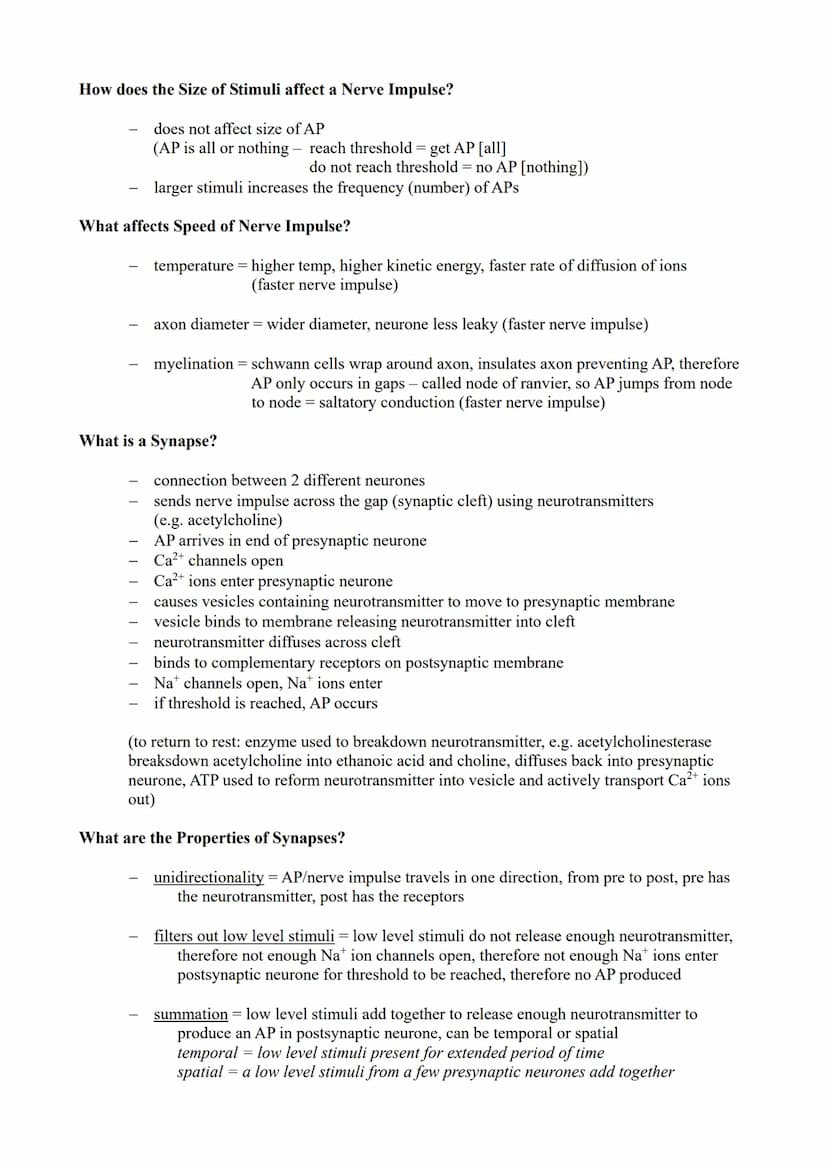
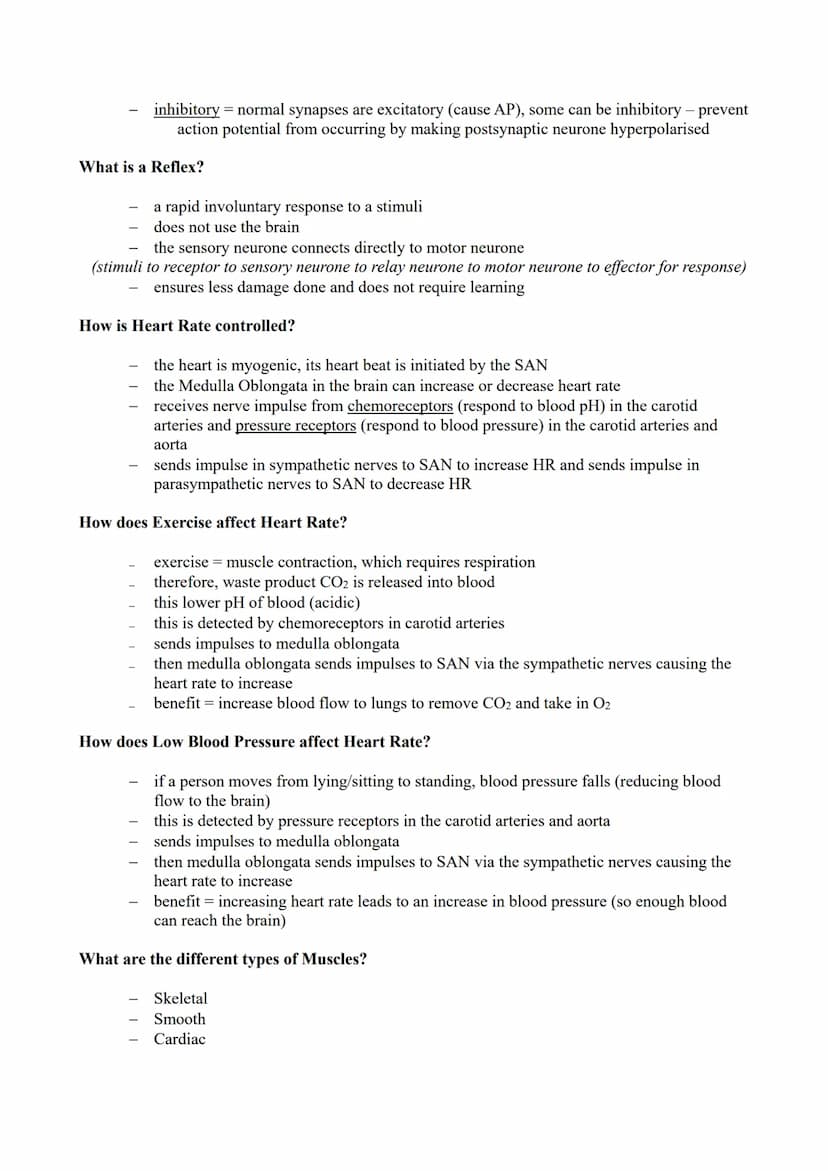
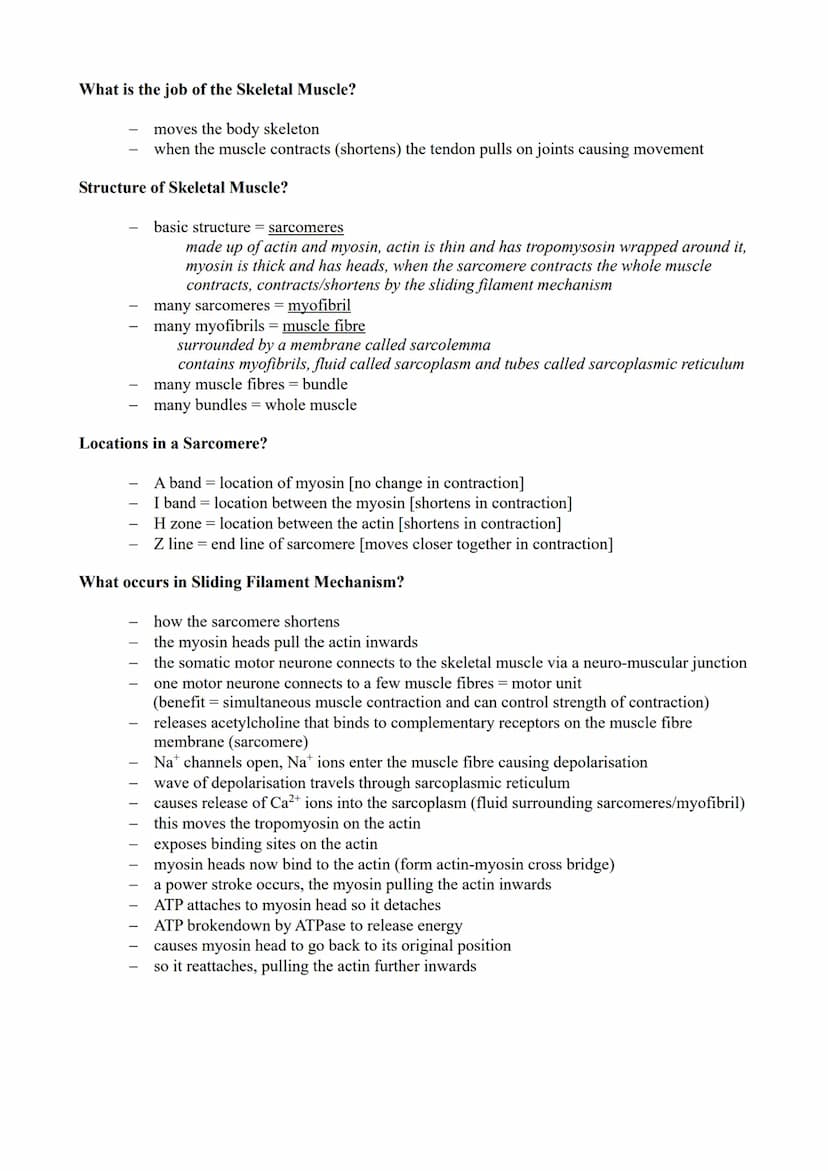
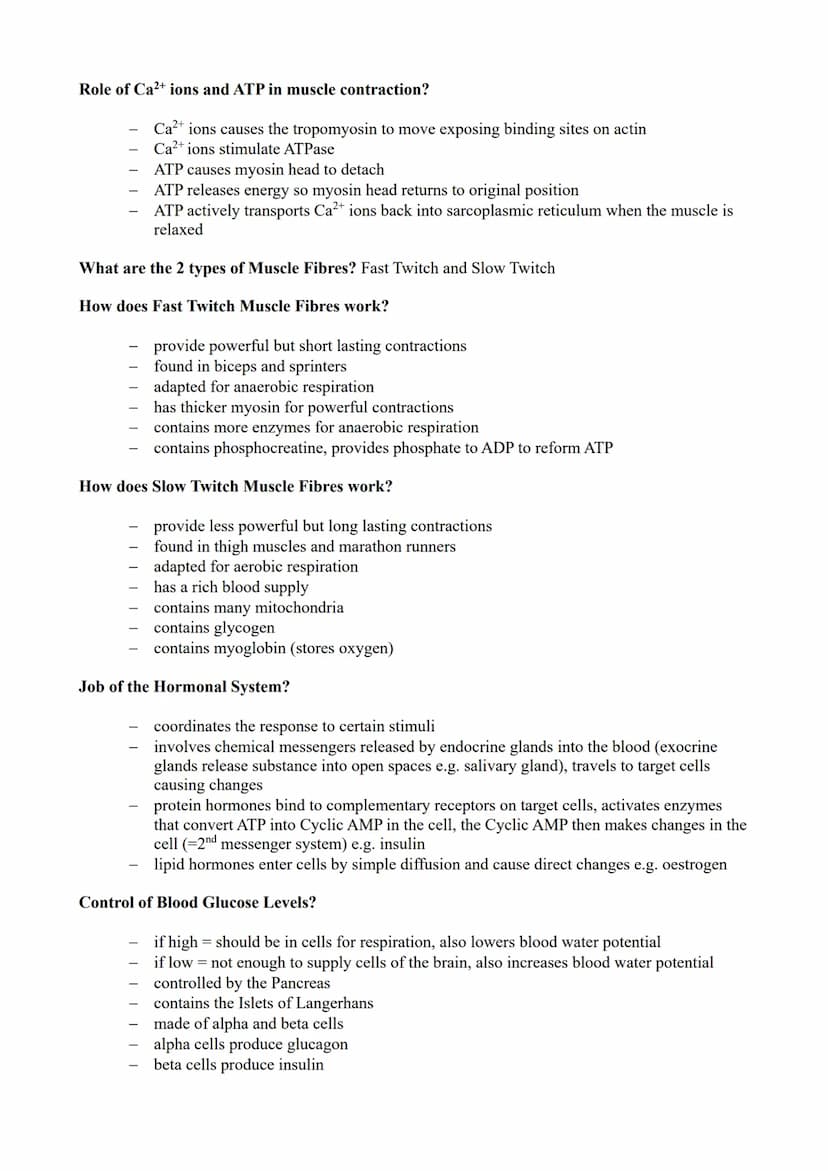
The second half of the page introduces mammalian response systems, highlighting the roles of the nervous and hormonal systems.
Definition: The nervous system coordinates fast, short-acting, and localized responses to stimuli.
The pathway of the nervous system is outlined, from stimulus detection to response execution.
Highlight: Receptors act as transducers, converting stimulus energy into nerve impulses.
Two examples of receptors are introduced: the Pacinian corpuscle and the retina of the eye.
2
of 10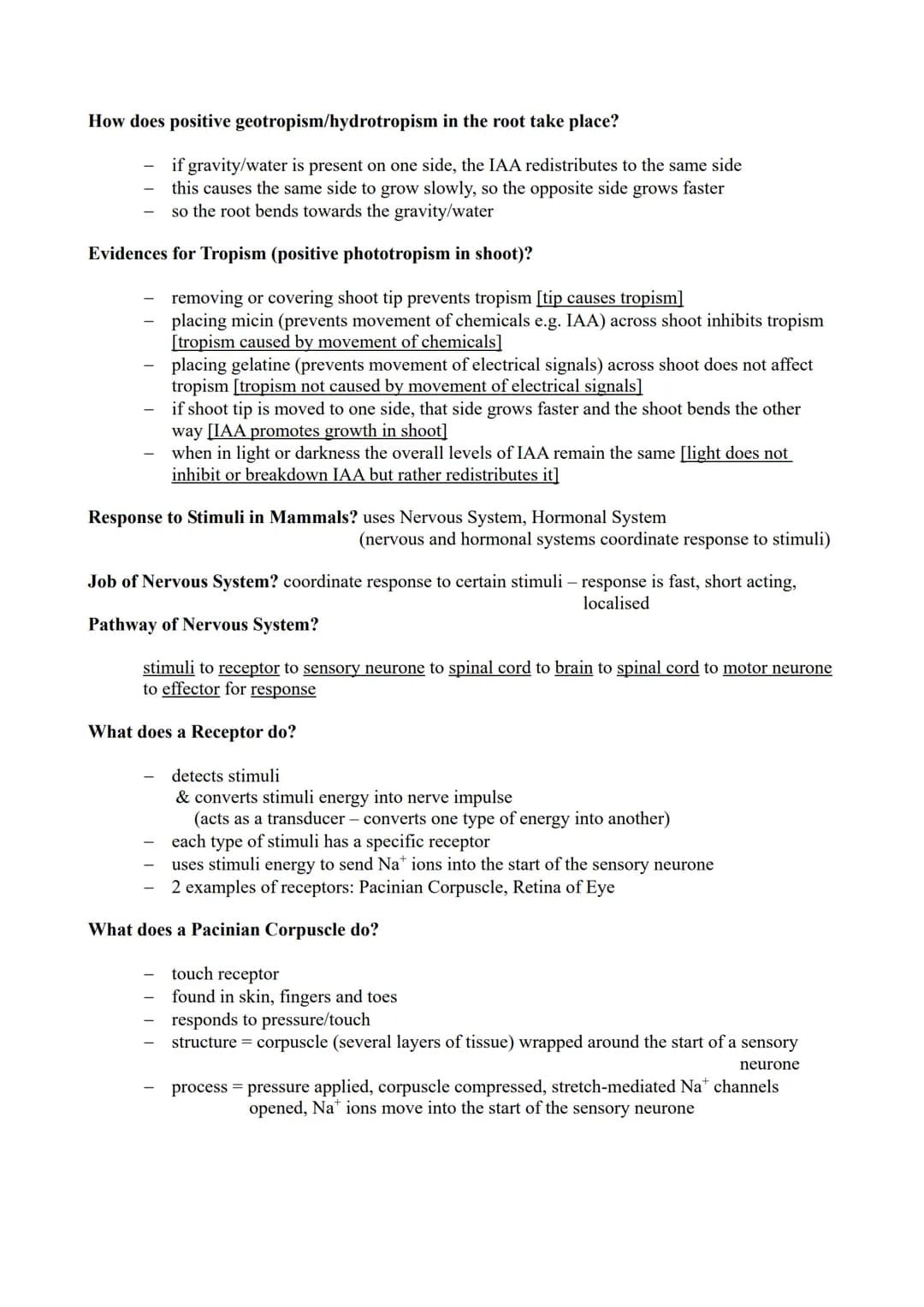
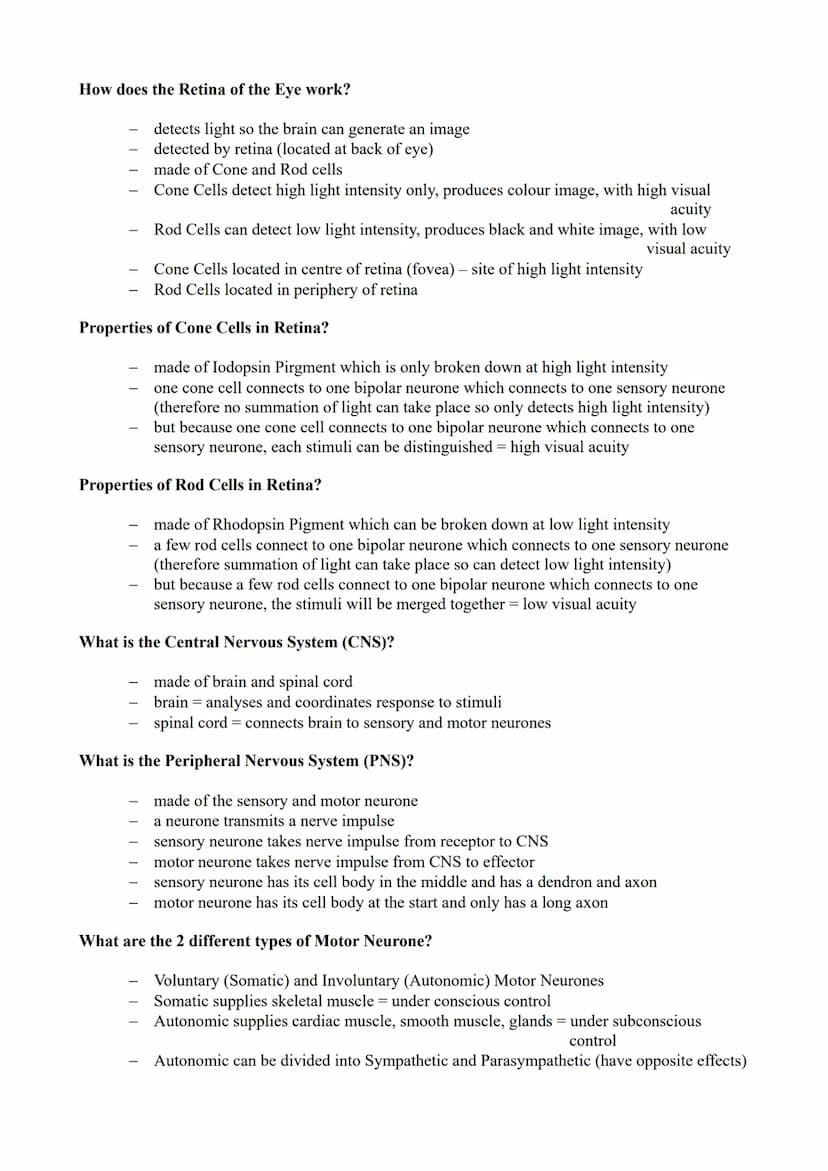
Sensory Receptors: Pacinian Corpuscle and Retina
This page provides detailed information on the structure and function of two important sensory receptors: the Pacinian corpuscle and the retina of the eye.
Definition: The Pacinian corpuscle is a touch receptor found in the skin, fingers, and toes that responds to pressure.
The structure and process of the Pacinian corpuscle's response to pressure are explained, involving the opening of stretch-mediated Na+ channels.
The retina's role in detecting light and generating visual information is described, focusing on the two types of photoreceptor cells: cone cells and rod cells.
Vocabulary:
- Cone cells: Detect high light intensity, produce color images, and provide high visual acuity.
- Rod cells: Can detect low light intensity, produce black and white images, and have low visual acuity.
The properties of cone and rod cells are compared, including their pigments (iodopsin and rhodopsin), light sensitivity, and connections to neural pathways.
Highlight: The arrangement of cone cells allows for high visual acuity, while the convergence of multiple rod cells onto single neurons enables detection of low light intensities through summation.
3
of 10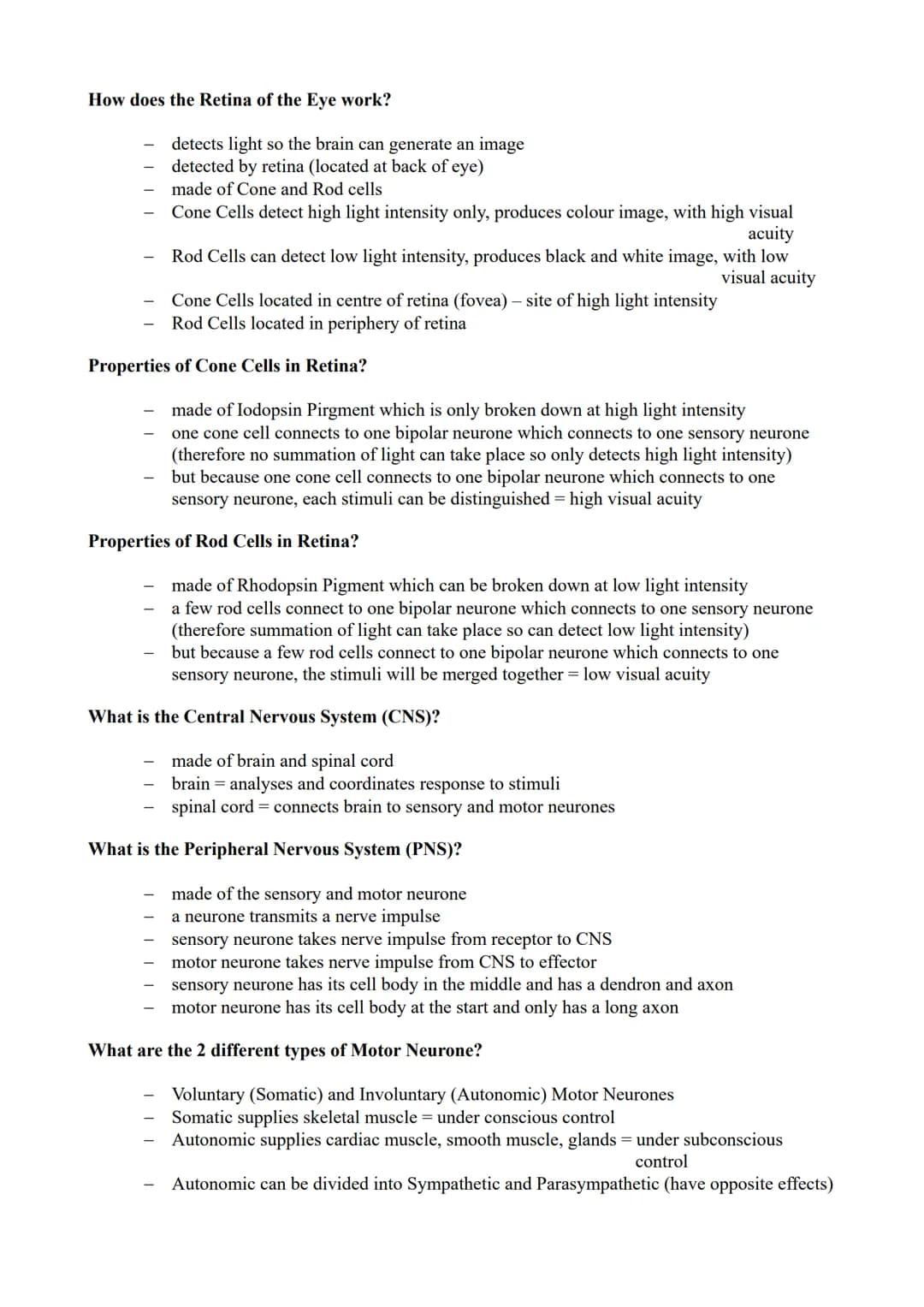
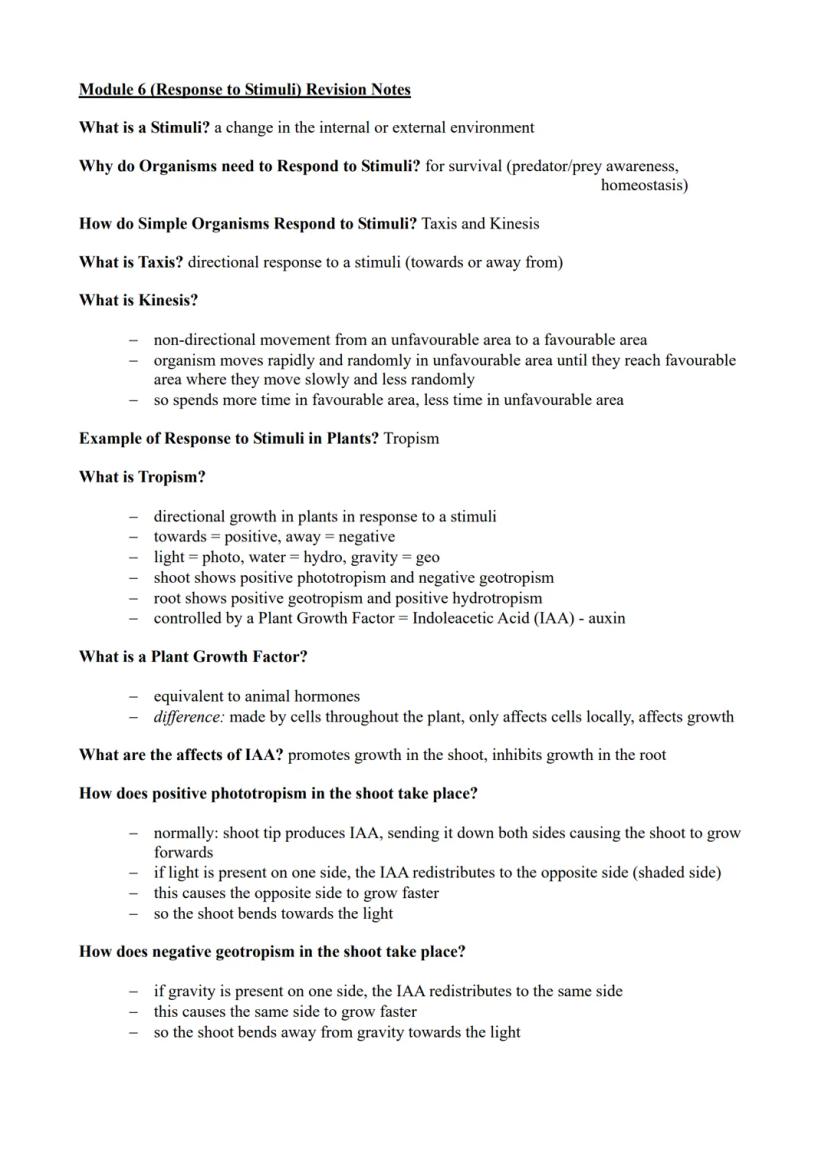
Module 6: Response to Stimuli Revision Notes
This page introduces the concept of stimuli and why organisms need to respond to them. It covers simple organism responses and plant tropisms.
Definition: A stimulus is a change in the internal or external environment that organisms respond to for survival.
Highlight: Simple organisms respond to stimuli through taxis (directional) and kinesis movements.
Plants respond to stimuli through tropisms, which are directional growth responses controlled by the plant growth factor Indoleacetic Acid (IAA), also known as auxin.
Example: Shoots exhibit positive phototropism (growth towards light) and negative geotropism (growth away from gravity), while roots show positive geotropism and positive hydrotropism (growth towards water).
The page explains the mechanism of positive phototropism and negative geotropism in shoots, detailing how IAA redistribution causes differential growth rates on opposite sides of the plant stem.
Vocabulary: IAA (Indoleacetic Acid) - A plant hormone that promotes growth in shoots and inhibits growth in roots.
4
of 10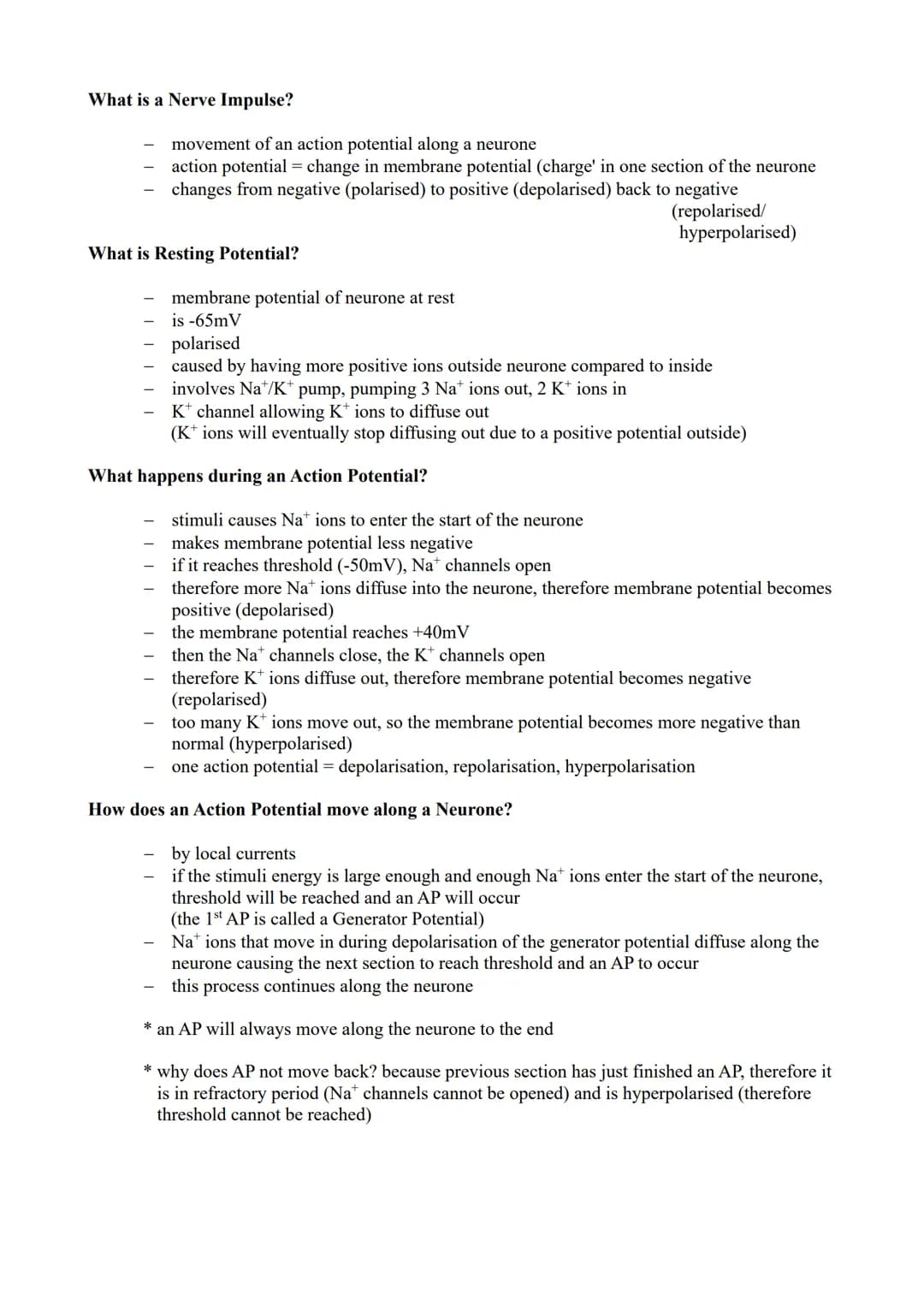
5
of 10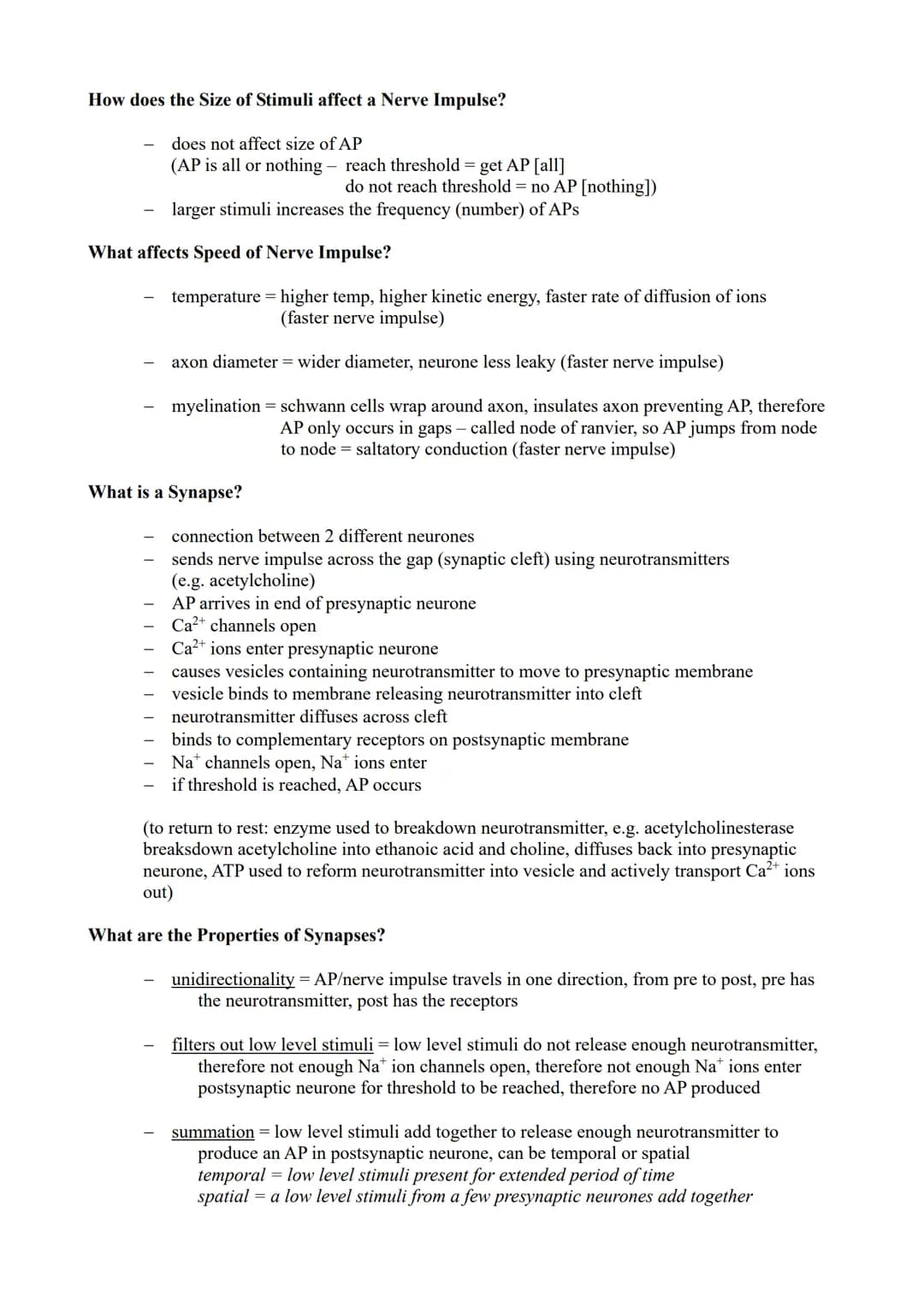
6
of 10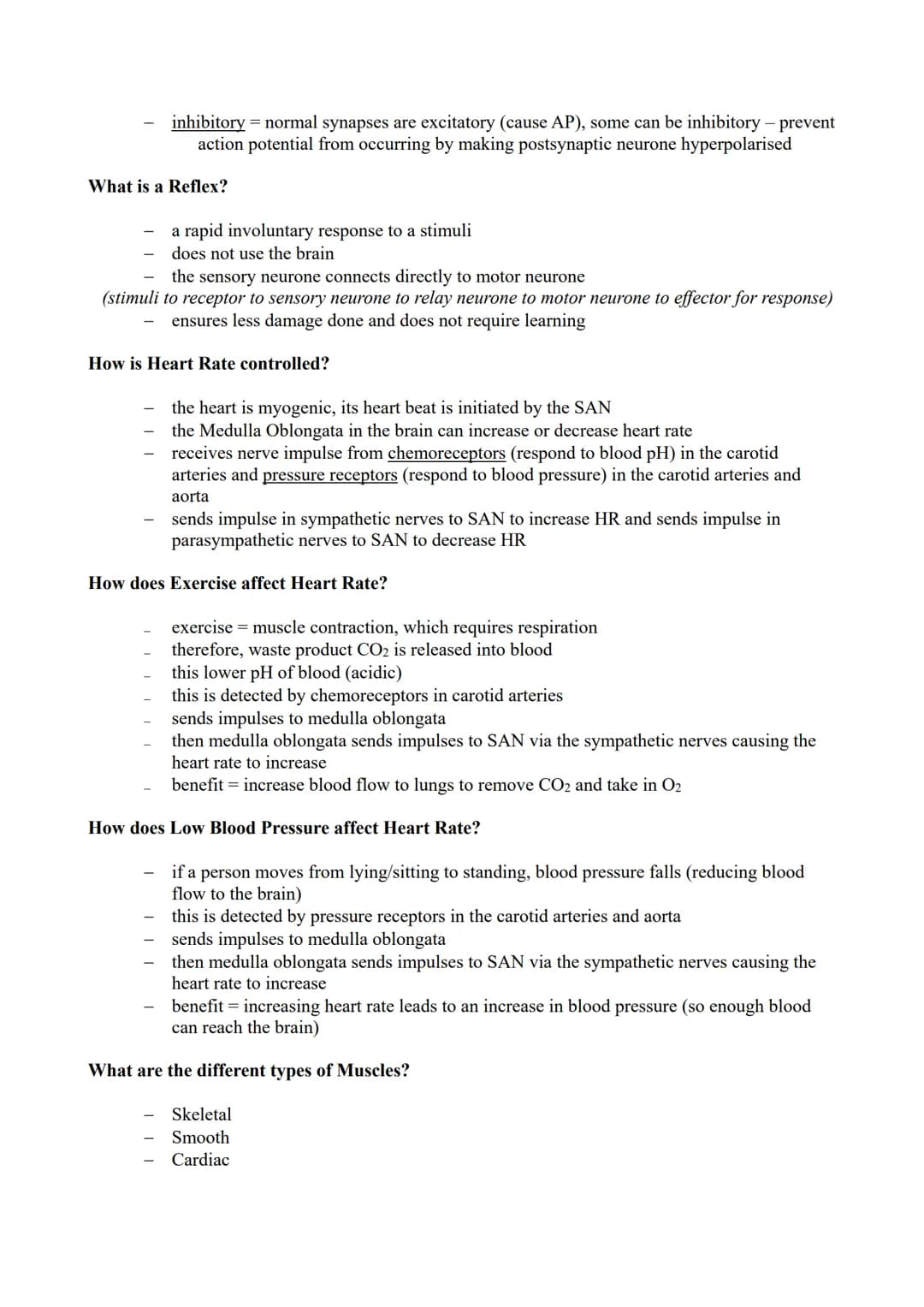
7
of 10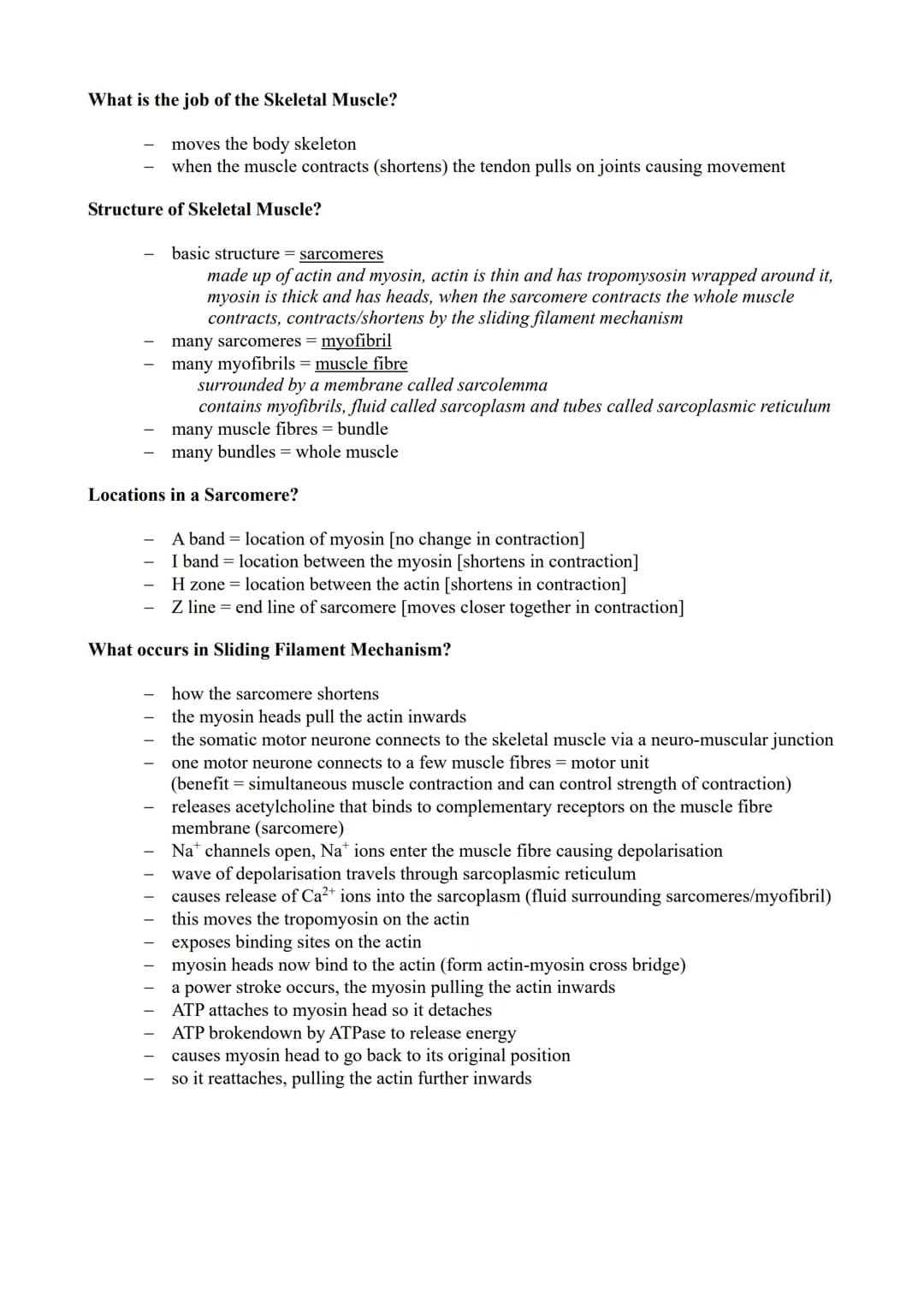
8
of 10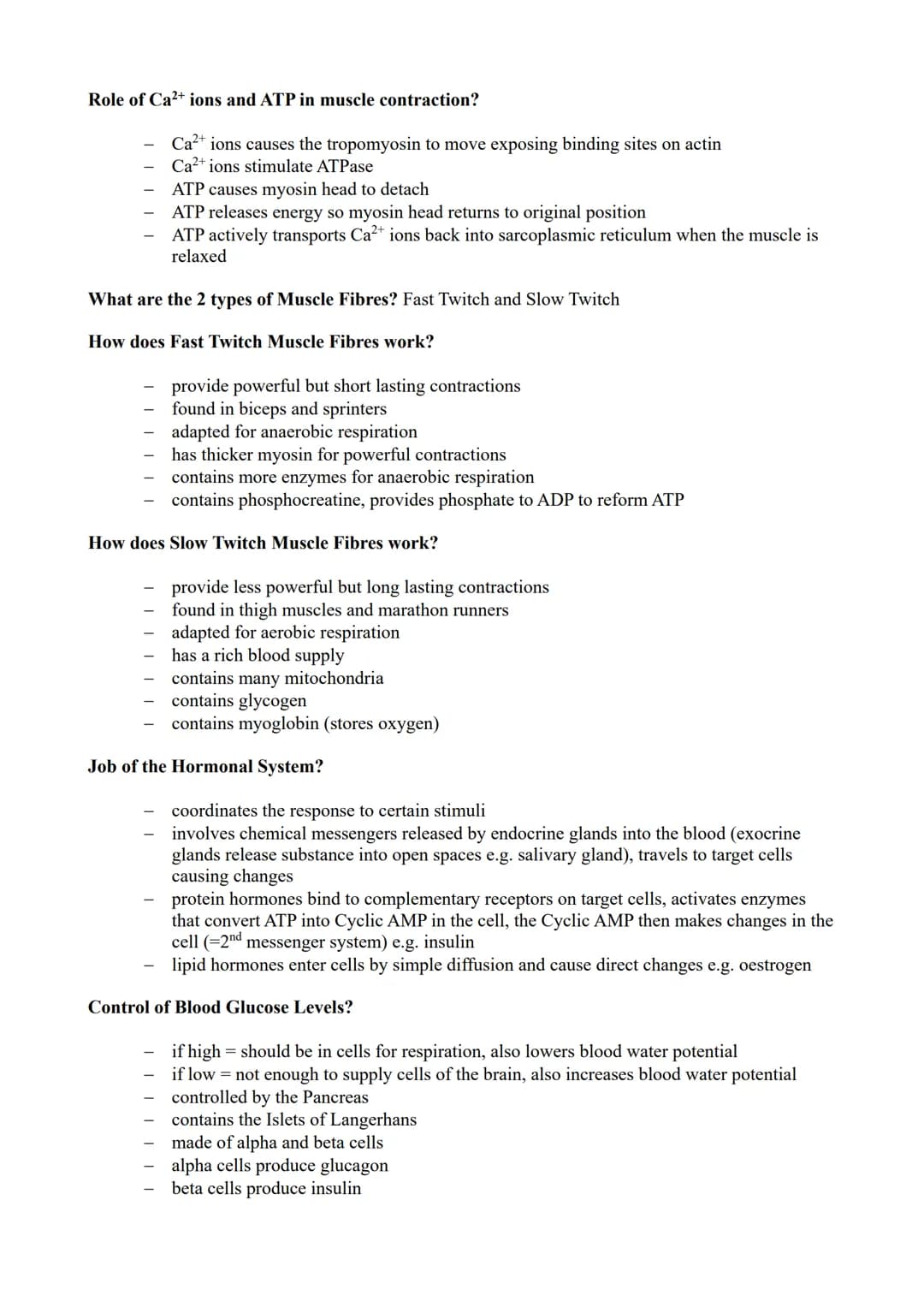
9
of 10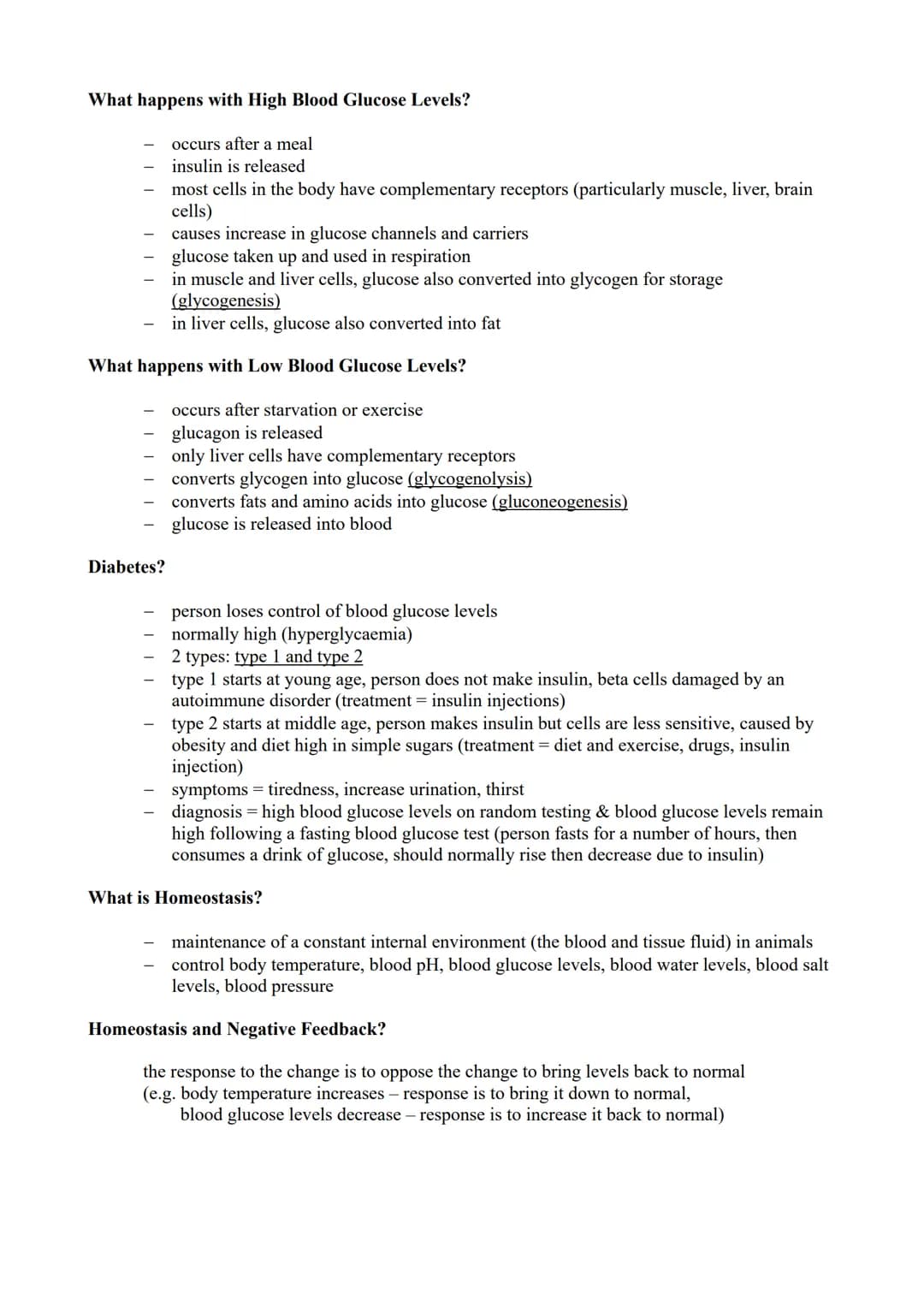
10
of 10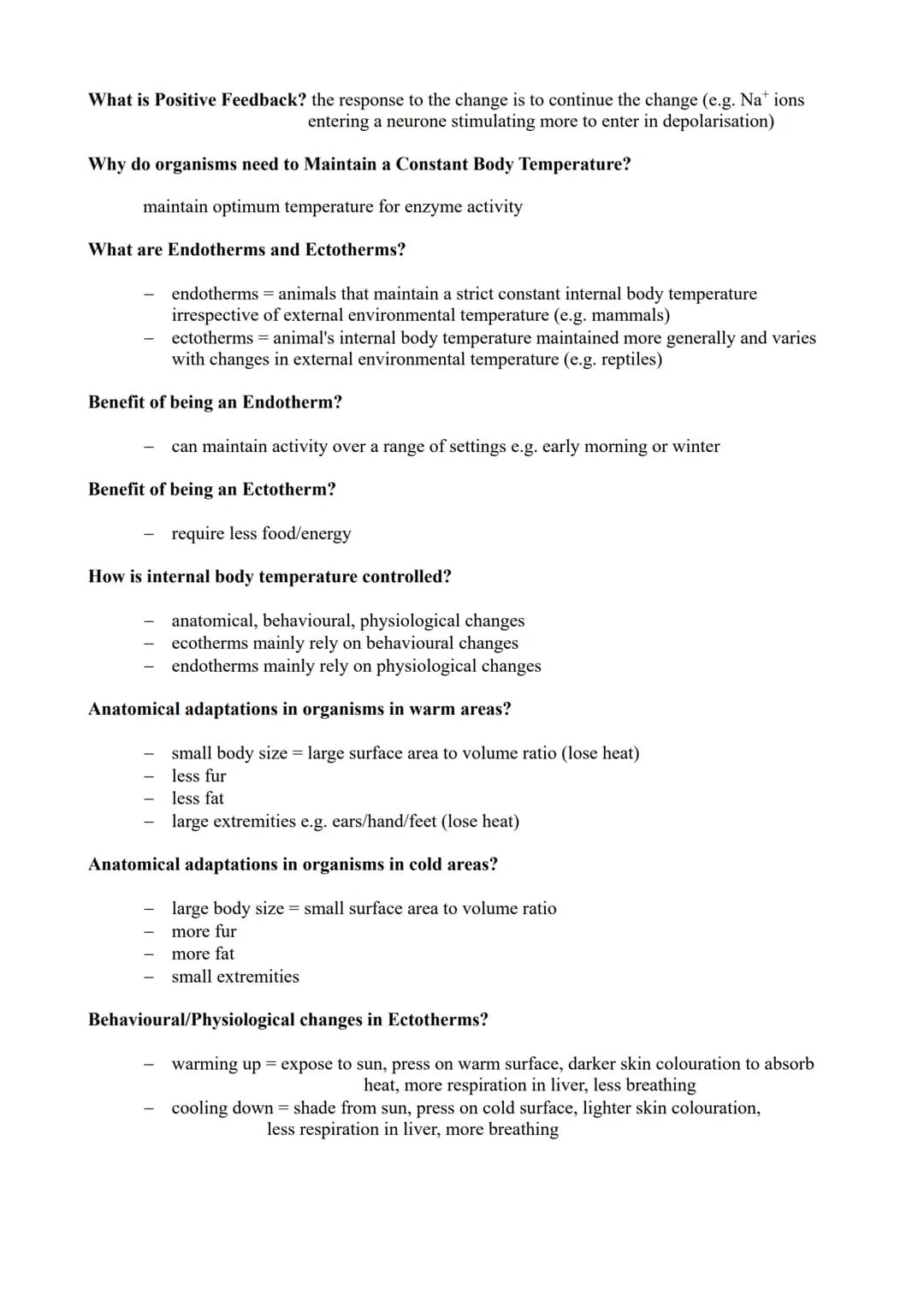
We thought you’d never ask...
What is the Knowunity AI companion?
Our AI Companion is a student-focused AI tool that offers more than just answers. Built on millions of Knowunity resources, it provides relevant information, personalised study plans, quizzes, and content directly in the chat, adapting to your individual learning journey.
Where can I download the Knowunity app?
You can download the app from Google Play Store and Apple App Store.
Is Knowunity really free of charge?
That's right! Enjoy free access to study content, connect with fellow students, and get instant help – all at your fingertips.
Similar content
Most popular content in Biology
9Most popular content
9Can't find what you're looking for? Explore other subjects.
Students love us — and so will you.
4.6/5App Store
4.7/5Google Play
The app is very easy to use and well designed. I have found everything I was looking for so far and have been able to learn a lot from the presentations! I will definitely use the app for a class assignment! And of course it also helps a lot as an inspiration.
Stefan SiOS user
This app is really great. There are so many study notes and help [...]. My problem subject is French, for example, and the app has so many options for help. Thanks to this app, I have improved my French. I would recommend it to anyone.
Samantha KlichAndroid user
Wow, I am really amazed. I just tried the app because I've seen it advertised many times and was absolutely stunned. This app is THE HELP you want for school and above all, it offers so many things, such as workouts and fact sheets, which have been VERY helpful to me personally.
AnnaiOS user
Biology359 views·Updated Jun 13, 2026·13 pagesFun Biology Notes: How Plants and Bodies Respond to Stuff!
m_xrwaaaaaaaaaaaa:)@m_xrwaaaaaaaa
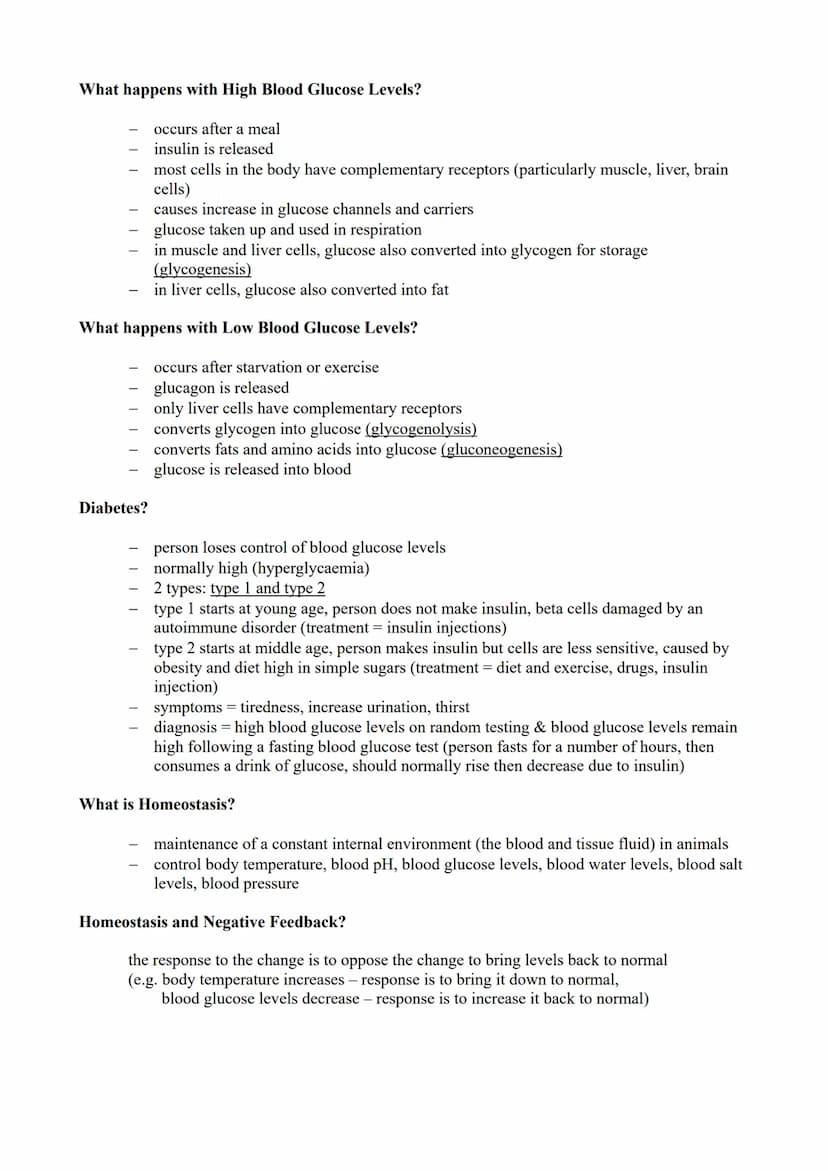
Response to stimuli is a crucial aspect of biology, involving organisms' reactions to changes in their environment for survival and homeostasis. This summary covers key concepts in plant and animal responses, including tropisms, nervous system function, and sensory receptors.
1
of 10
Sign up to see the content. It's free!
- Access to all documents
- Improve your grades
- Join milions of students
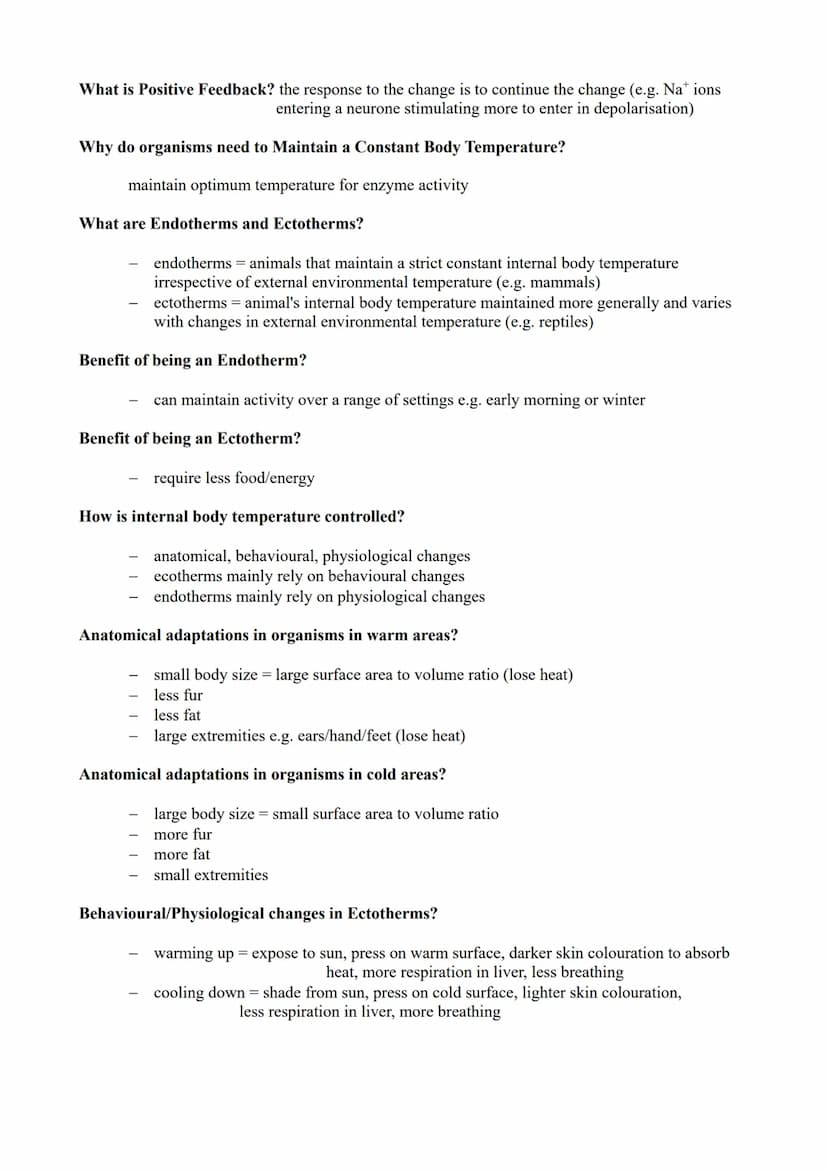
Plant Tropisms and Mammalian Response Systems
This page continues the discussion on plant tropisms, focusing on root responses and providing evidence for tropism mechanisms.
Example: Positive geotropism in roots occurs when IAA redistributes to the side facing gravity, causing slower growth on that side and bending the root towards gravity.
The page lists several pieces of evidence supporting the role of IAA in tropisms, such as the effects of removing the shoot tip or using chemicals to block IAA movement.
The second half of the page introduces mammalian response systems, highlighting the roles of the nervous and hormonal systems.
Definition: The nervous system coordinates fast, short-acting, and localized responses to stimuli.
The pathway of the nervous system is outlined, from stimulus detection to response execution.
Highlight: Receptors act as transducers, converting stimulus energy into nerve impulses.
Two examples of receptors are introduced: the Pacinian corpuscle and the retina of the eye.
2
of 10Sign up to see the content. It's free!
- Access to all documents
- Improve your grades
- Join milions of students
Sensory Receptors: Pacinian Corpuscle and Retina
This page provides detailed information on the structure and function of two important sensory receptors: the Pacinian corpuscle and the retina of the eye.
Definition: The Pacinian corpuscle is a touch receptor found in the skin, fingers, and toes that responds to pressure.
The structure and process of the Pacinian corpuscle's response to pressure are explained, involving the opening of stretch-mediated Na+ channels.
The retina's role in detecting light and generating visual information is described, focusing on the two types of photoreceptor cells: cone cells and rod cells.
Vocabulary:
- Cone cells: Detect high light intensity, produce color images, and provide high visual acuity.
- Rod cells: Can detect low light intensity, produce black and white images, and have low visual acuity.
The properties of cone and rod cells are compared, including their pigments (iodopsin and rhodopsin), light sensitivity, and connections to neural pathways.
Highlight: The arrangement of cone cells allows for high visual acuity, while the convergence of multiple rod cells onto single neurons enables detection of low light intensities through summation.
3
of 10Sign up to see the content. It's free!
- Access to all documents
- Improve your grades
- Join milions of students
Module 6: Response to Stimuli Revision Notes
This page introduces the concept of stimuli and why organisms need to respond to them. It covers simple organism responses and plant tropisms.
Definition: A stimulus is a change in the internal or external environment that organisms respond to for survival.
Highlight: Simple organisms respond to stimuli through taxis (directional) and kinesis movements.
Plants respond to stimuli through tropisms, which are directional growth responses controlled by the plant growth factor Indoleacetic Acid (IAA), also known as auxin.
Example: Shoots exhibit positive phototropism (growth towards light) and negative geotropism (growth away from gravity), while roots show positive geotropism and positive hydrotropism (growth towards water).
The page explains the mechanism of positive phototropism and negative geotropism in shoots, detailing how IAA redistribution causes differential growth rates on opposite sides of the plant stem.
Vocabulary: IAA (Indoleacetic Acid) - A plant hormone that promotes growth in shoots and inhibits growth in roots.
4
of 10Sign up to see the content. It's free!
- Access to all documents
- Improve your grades
- Join milions of students
5
of 10Sign up to see the content. It's free!
- Access to all documents
- Improve your grades
- Join milions of students
6
of 10Sign up to see the content. It's free!
- Access to all documents
- Improve your grades
- Join milions of students
7
of 10Sign up to see the content. It's free!
- Access to all documents
- Improve your grades
- Join milions of students
8
of 10Sign up to see the content. It's free!
- Access to all documents
- Improve your grades
- Join milions of students
9
of 10Sign up to see the content. It's free!
- Access to all documents
- Improve your grades
- Join milions of students
10
of 10Sign up to see the content. It's free!
- Access to all documents
- Improve your grades
- Join milions of students
We thought you’d never ask...
What is the Knowunity AI companion?
Our AI Companion is a student-focused AI tool that offers more than just answers. Built on millions of Knowunity resources, it provides relevant information, personalised study plans, quizzes, and content directly in the chat, adapting to your individual learning journey.
Where can I download the Knowunity app?
You can download the app from Google Play Store and Apple App Store.
Is Knowunity really free of charge?
That's right! Enjoy free access to study content, connect with fellow students, and get instant help – all at your fingertips.
Similar content
Most popular content in Biology
9Most popular content
9Can't find what you're looking for? Explore other subjects.
Students love us — and so will you.
4.6/5App Store
4.7/5Google Play
The app is very easy to use and well designed. I have found everything I was looking for so far and have been able to learn a lot from the presentations! I will definitely use the app for a class assignment! And of course it also helps a lot as an inspiration.
Stefan SiOS user
This app is really great. There are so many study notes and help [...]. My problem subject is French, for example, and the app has so many options for help. Thanks to this app, I have improved my French. I would recommend it to anyone.
Samantha KlichAndroid user
Wow, I am really amazed. I just tried the app because I've seen it advertised many times and was absolutely stunned. This app is THE HELP you want for school and above all, it offers so many things, such as workouts and fact sheets, which have been VERY helpful to me personally.
AnnaiOS user