
A comprehensive guide to eukaryotic cell structure and function,...
 Biology352 views·Updated Jun 7, 2026·7 pages
What Makes Eukaryotic Cells Special? Discover Their Parts and How They Help Plants Make Food!

Liza Saiyad@liza_saiyad
1 / 7
1
of 7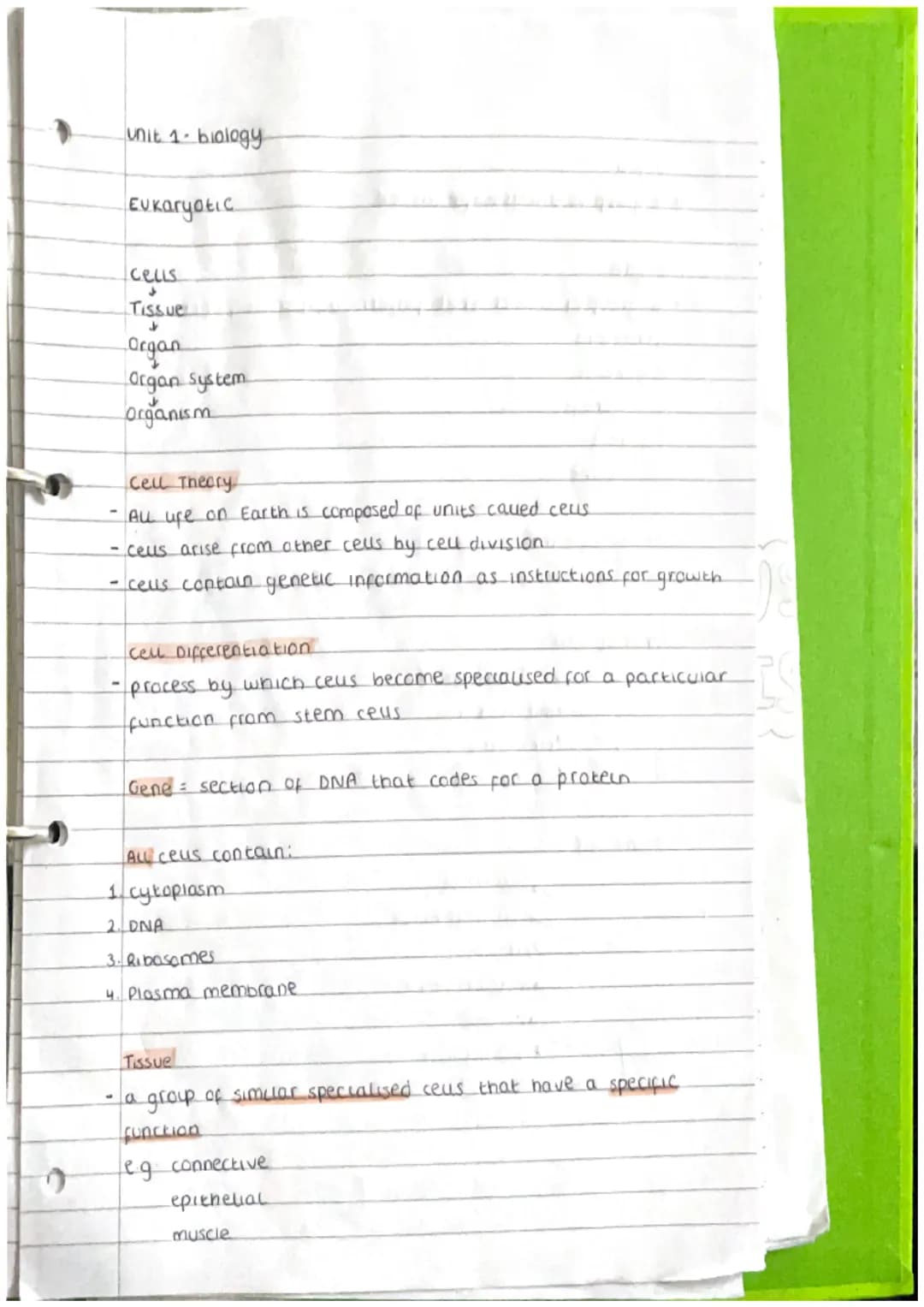
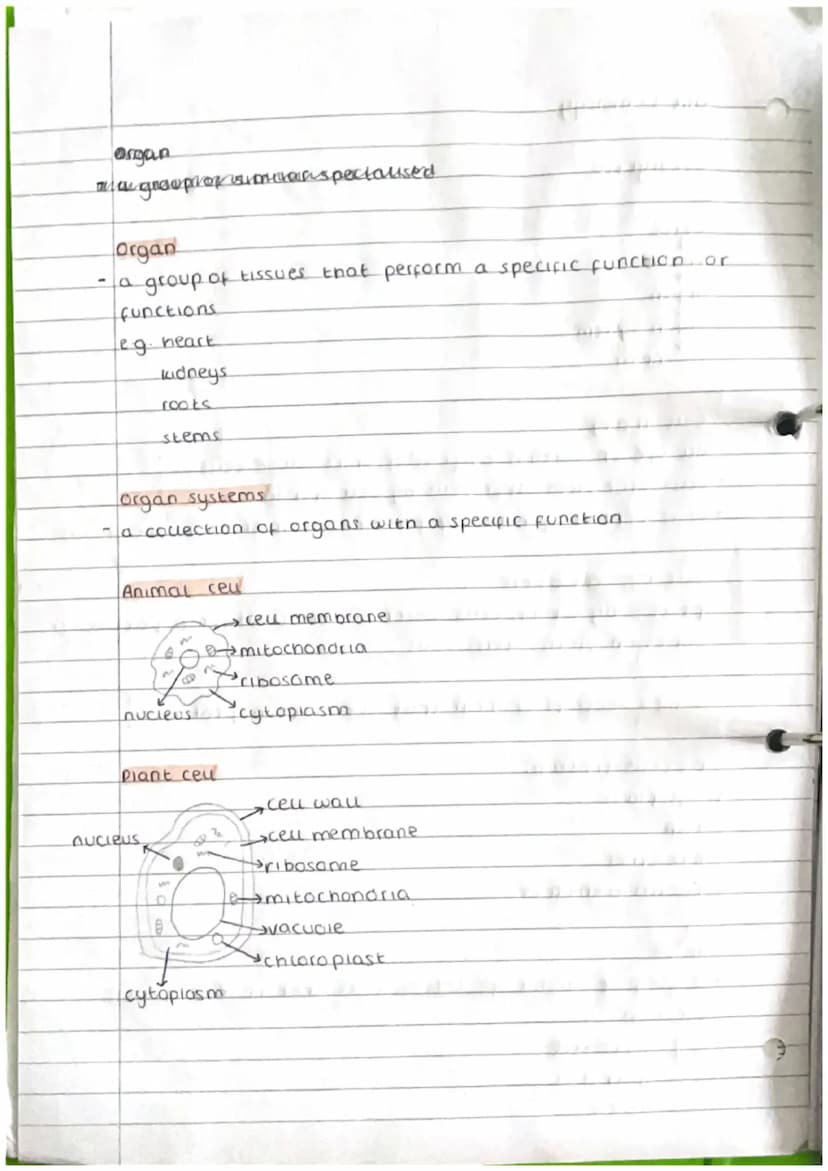
Cell Types and Basic Structure
This section compares the basic structure of plant and animal cells, highlighting their key components and differences.
Example: Animal cells contain mitochondria, ribosomes, nucleus, and cytoplasm, while plant cells additionally have cell walls, chloroplasts, and large vacuoles.
Highlight: Plant cells are distinguished by their rigid cell wall and presence of chloroplasts for photosynthesis.
The page provides detailed illustrations of both cell types, emphasizing their structural differences and specialized components.
2
of 7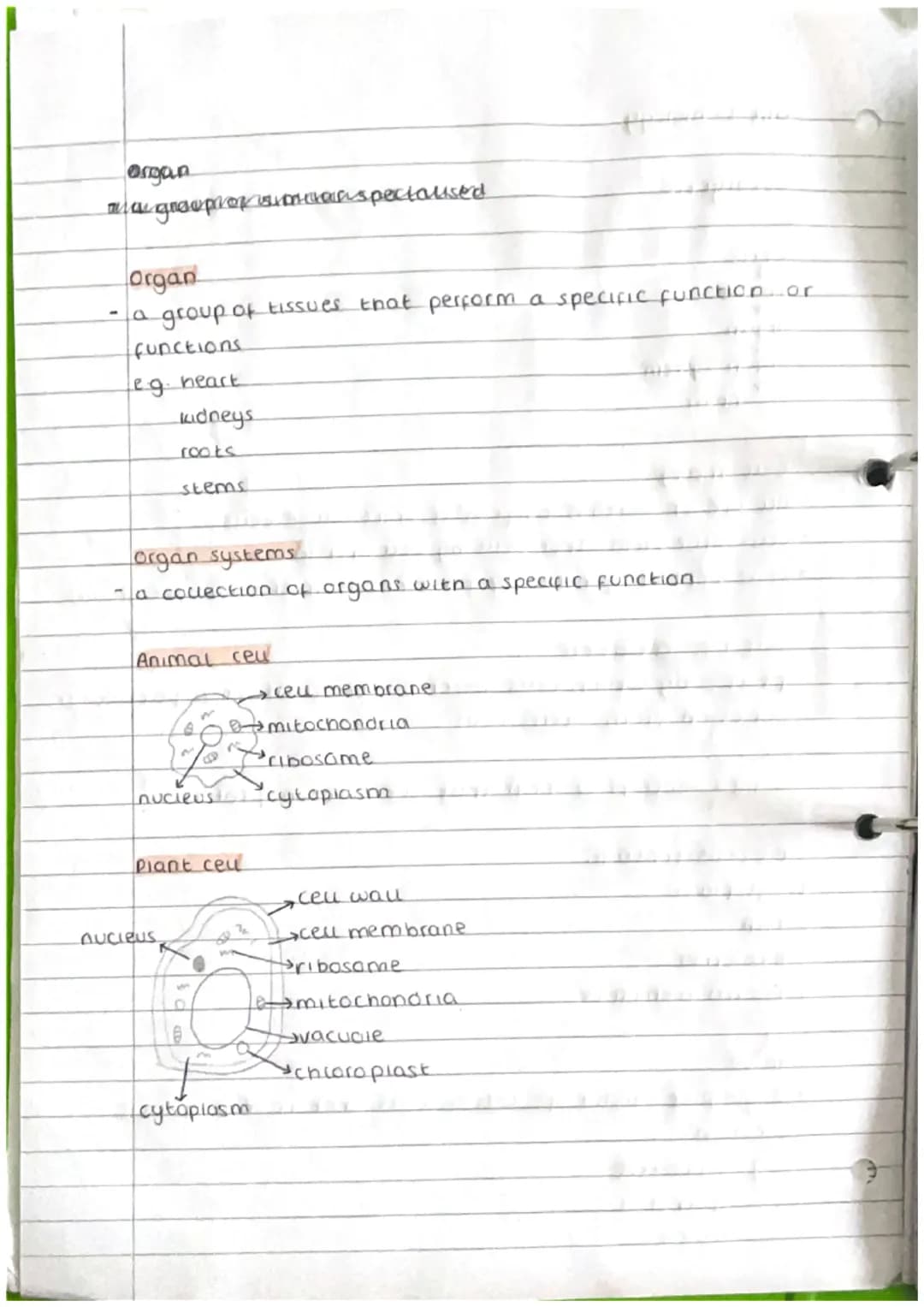
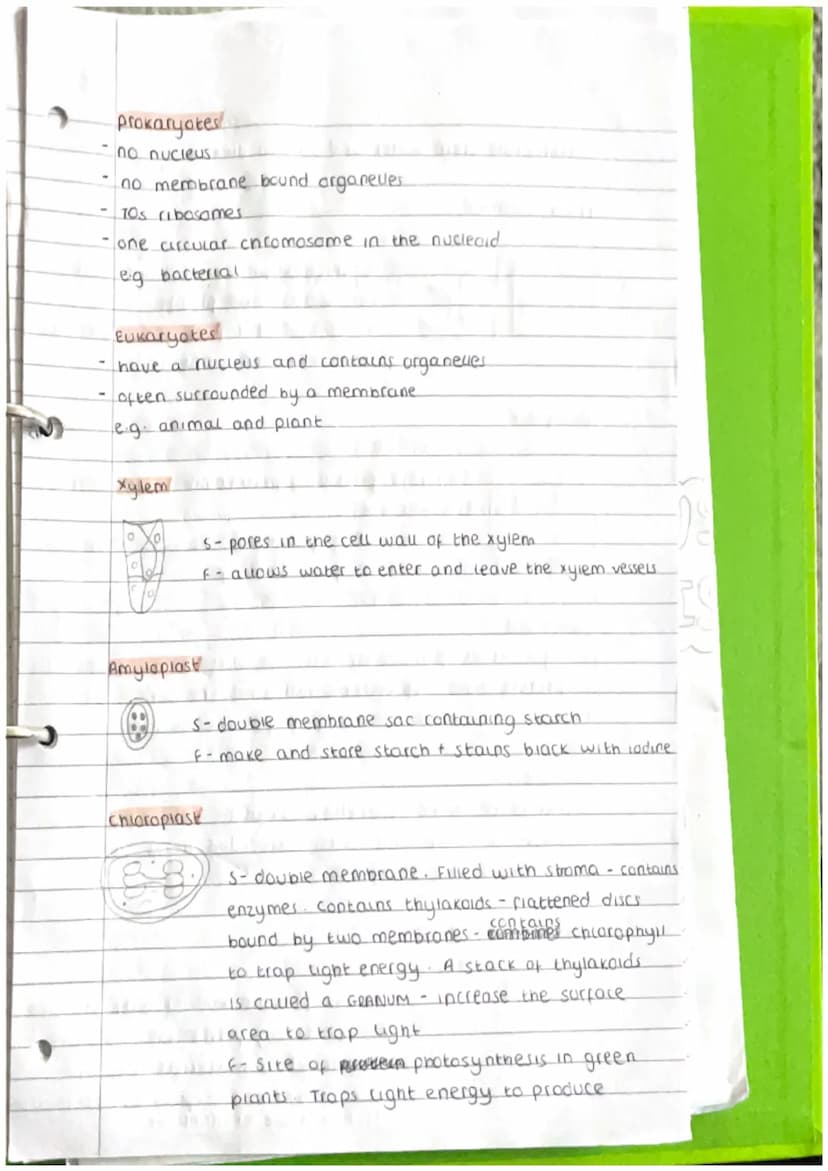
Prokaryotic and Eukaryotic Cell Comparison
This page details the fundamental differences between prokaryotic and eukaryotic cells, with special attention to cellular components and specialized structures.
Definition: Prokaryotes are simpler organisms without a nucleus or membrane-bound organelles, while eukaryotes have a nucleus and various membrane-bound organelles.
Highlight: Chloroplasts are crucial for photosynthesis, containing thylakoids arranged in grana to maximize light absorption.
Vocabulary: Xylem vessels contain pores in their cell walls to facilitate water transport.
3
of 7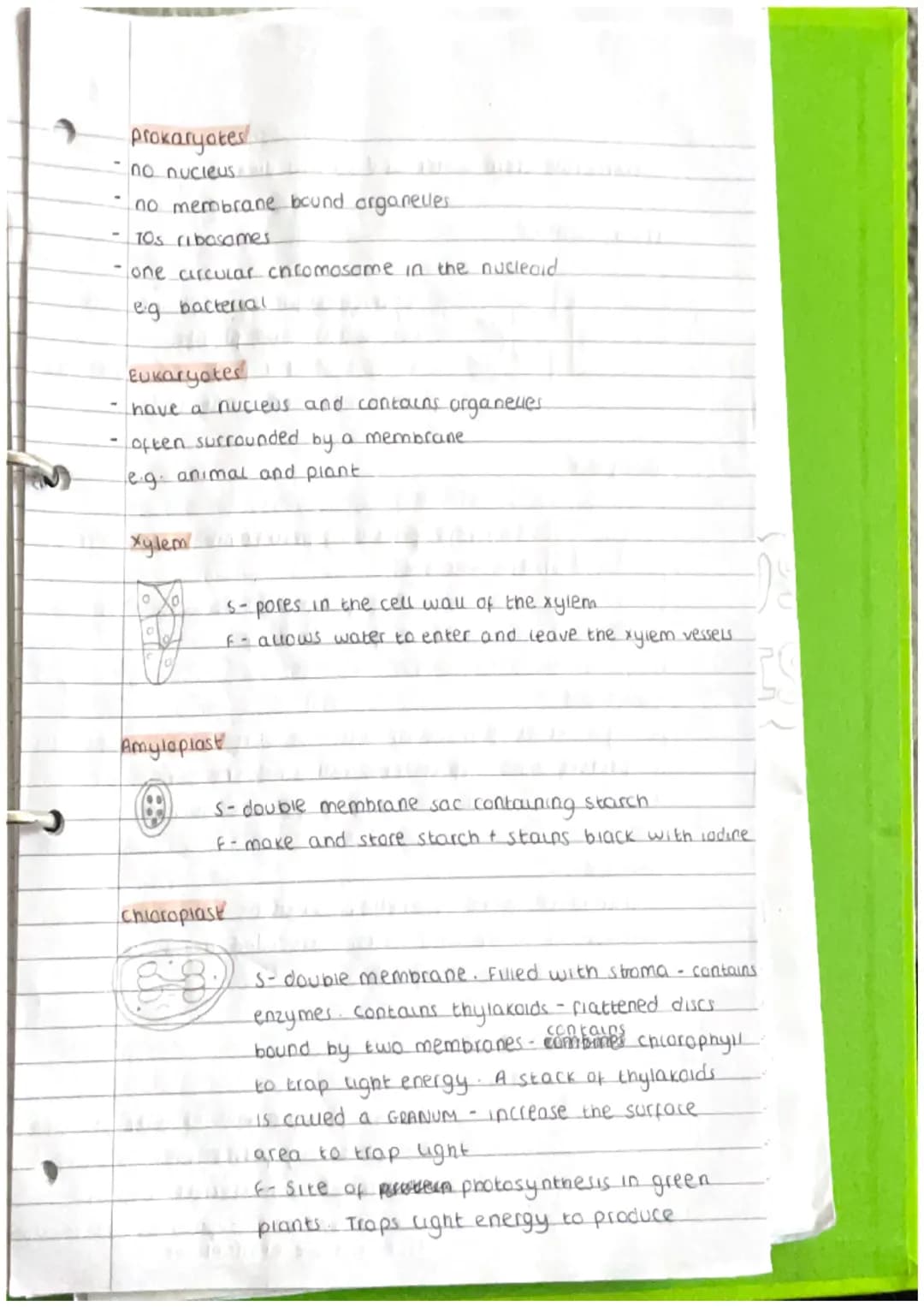
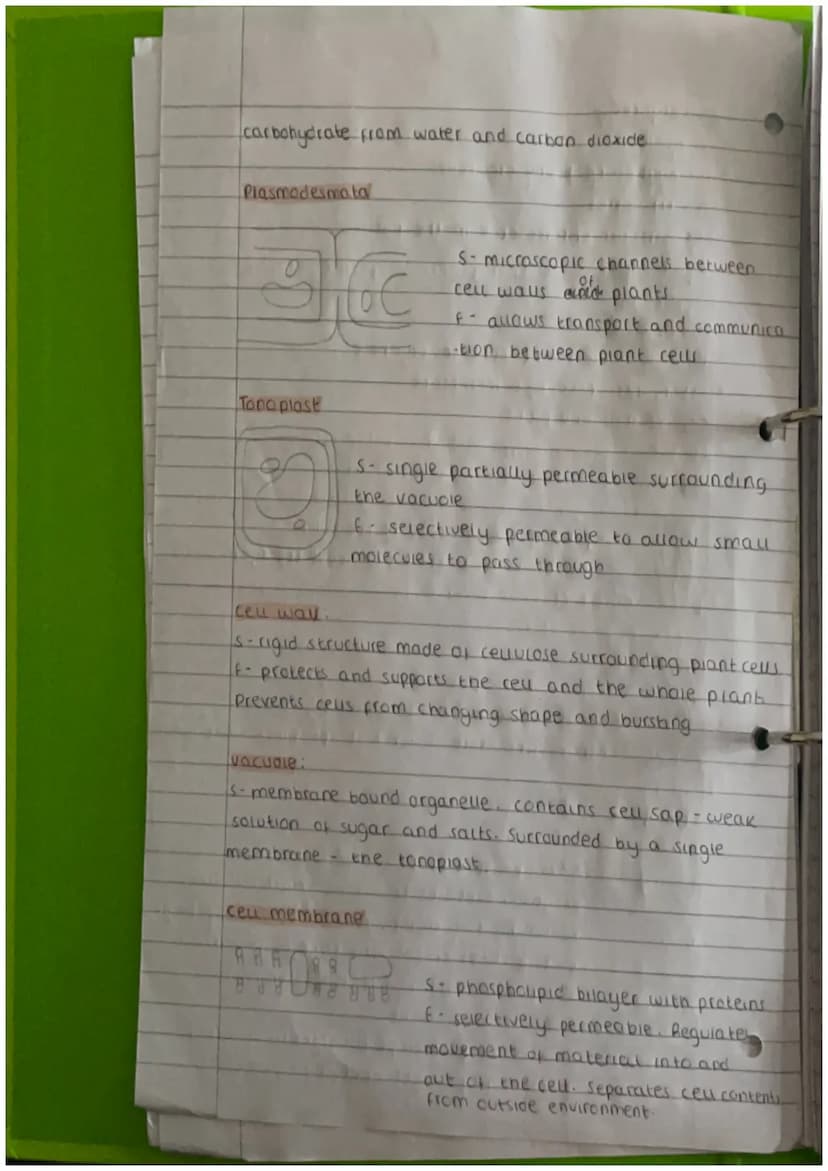
Cell Membrane and Wall Structure
This section focuses on the cellular boundaries and transport structures.
Definition: The cell membrane is a phospholipid bilayer with proteins that regulates material movement into and out of the cell.
Example: Plasmodesmata are channels between plant cells that enable intercellular communication and transport.
Highlight: The cell wall provides structural support and protection while preventing cell bursting from osmotic pressure.
4
of 7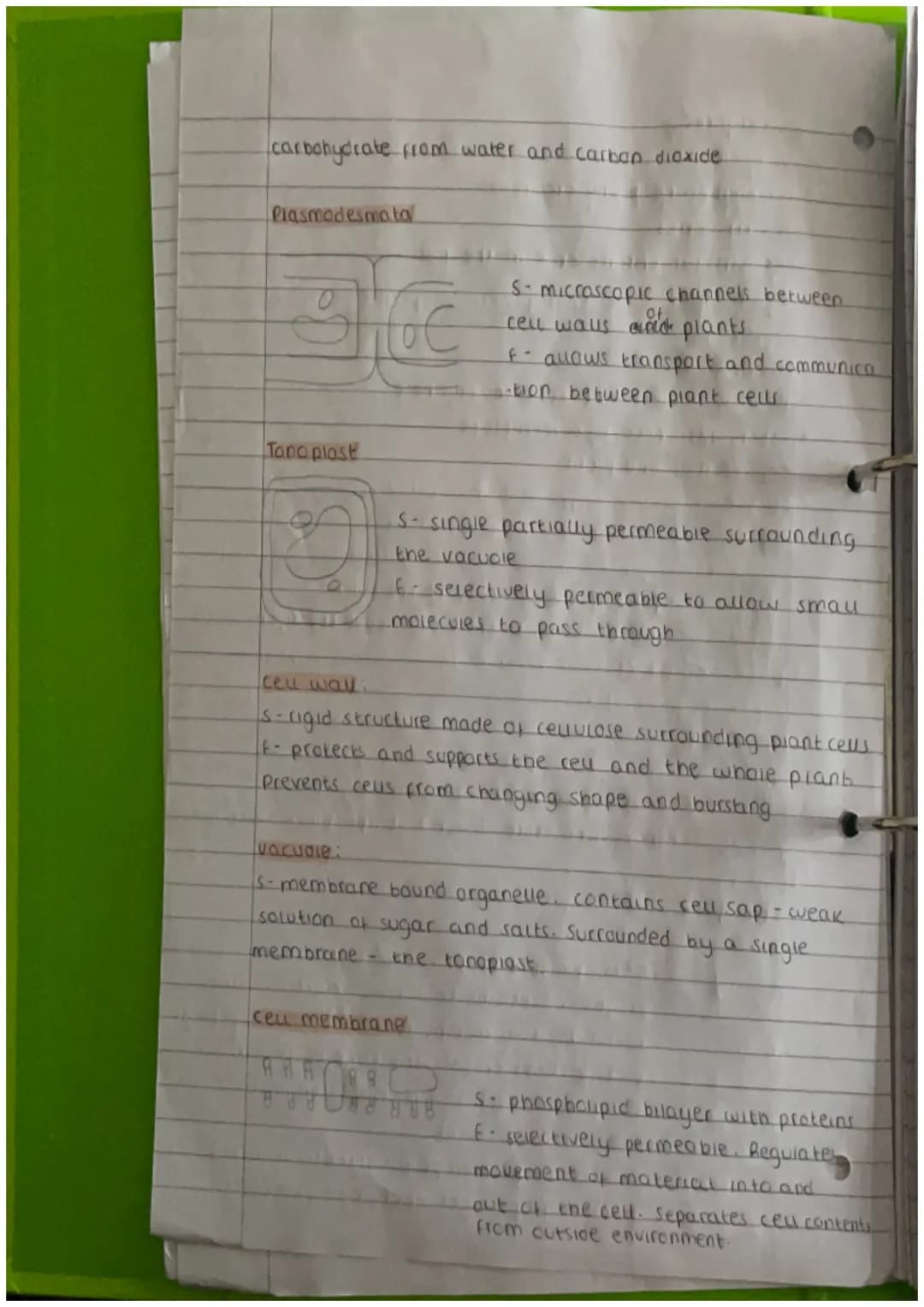
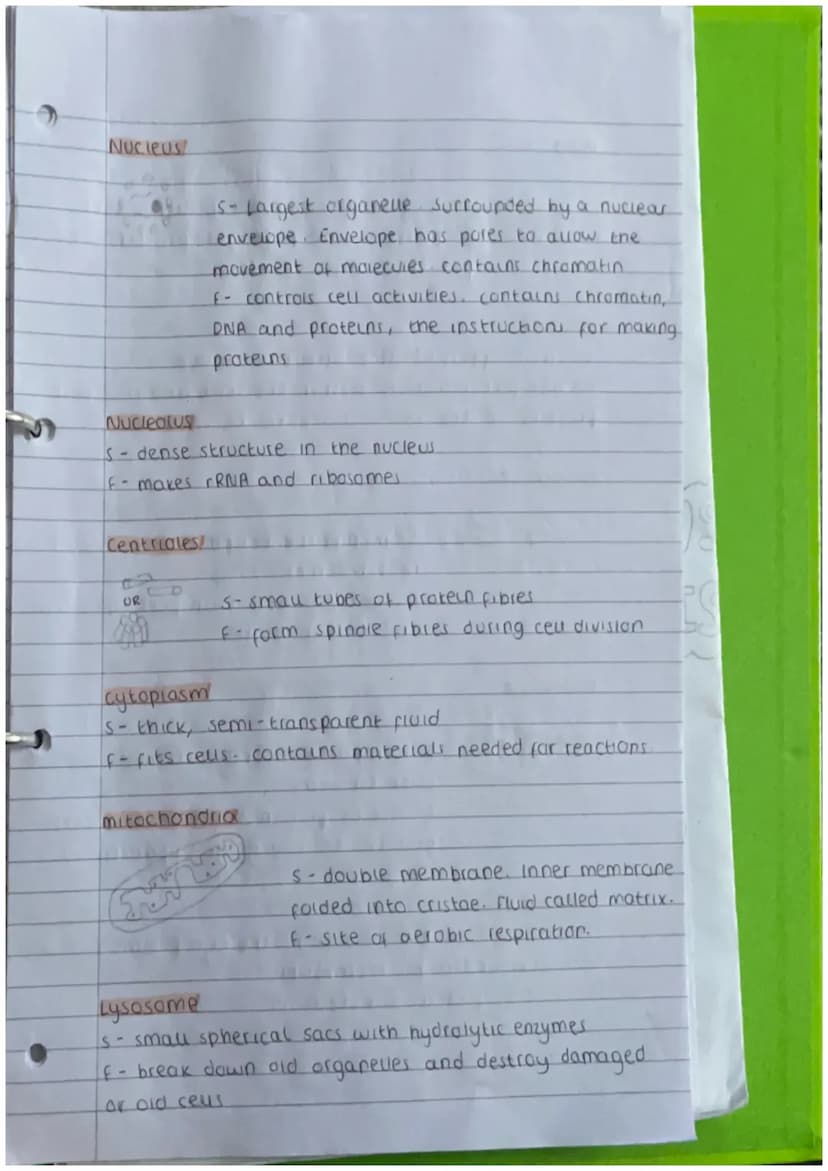
Nuclear and Cytoplasmic Components
This page examines the nucleus and various cytoplasmic organelles.
Definition: The nucleus is the largest organelle, containing genetic material and controlling cell activities through its nuclear envelope with pores.
Vocabulary: Nucleolus is a dense structure within the nucleus responsible for rRNA and ribosome production.
Highlight: Mitochondria are the powerhouses of the cell, containing cristae for efficient aerobic respiration.
5
of 7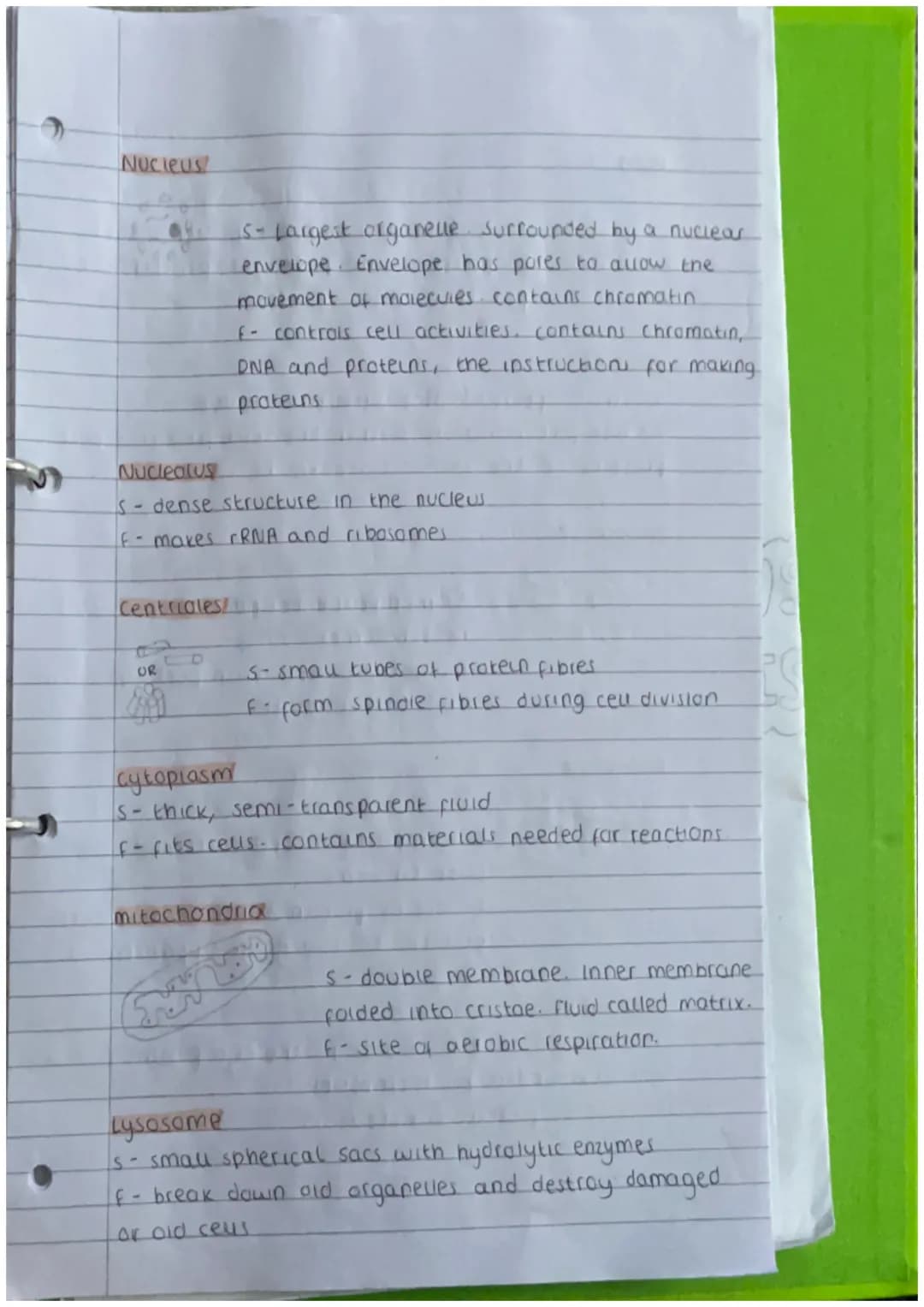
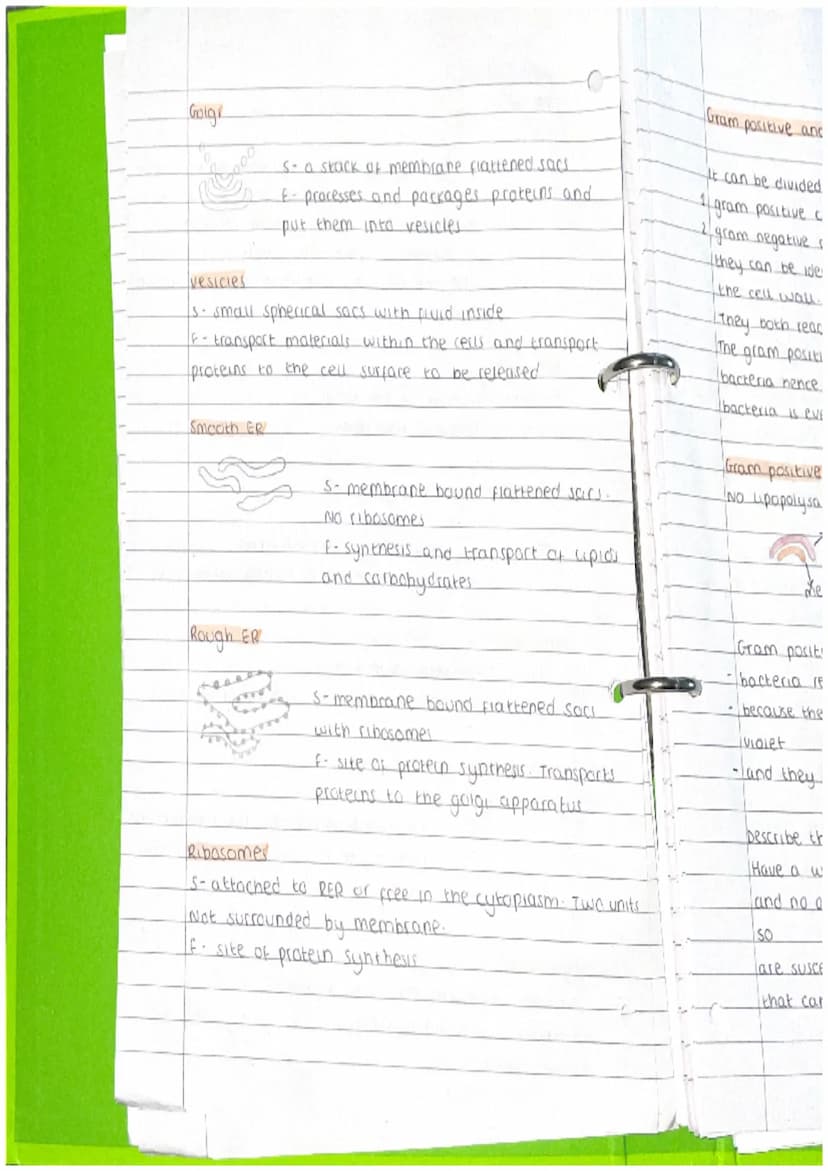
Cellular Transport and Protein Synthesis
This section details the cellular components involved in protein synthesis and transport.
Definition: The Golgi apparatus processes and packages proteins for transport within and outside the cell.
Vocabulary: Rough ER contains ribosomes for protein synthesis, while smooth ER handles lipids and carbohydrates.
Highlight: Vesicles are essential for intracellular transport of materials and protein secretion.
6
of 7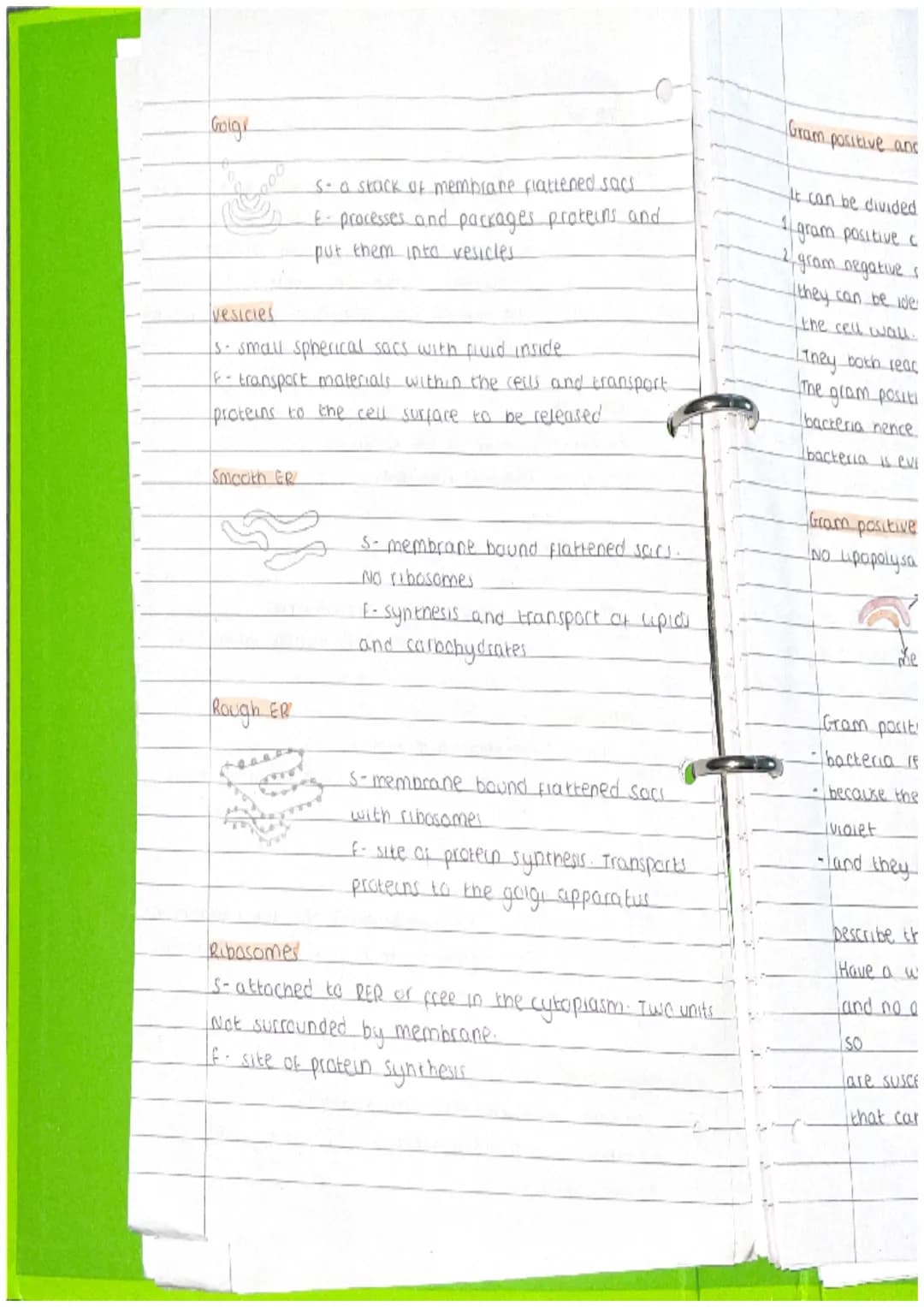
Bacterial Cell Structure
The final page focuses on bacterial cell structure and classification.
Definition: Gram-positive and gram-negative bacteria are distinguished by their cell wall composition and reaction to staining.
Highlight: The presence or absence of specific cell wall components determines bacterial classification and antibiotic susceptibility.
Example: The gram staining technique helps identify bacterial types based on their cell wall characteristics.
7
of 7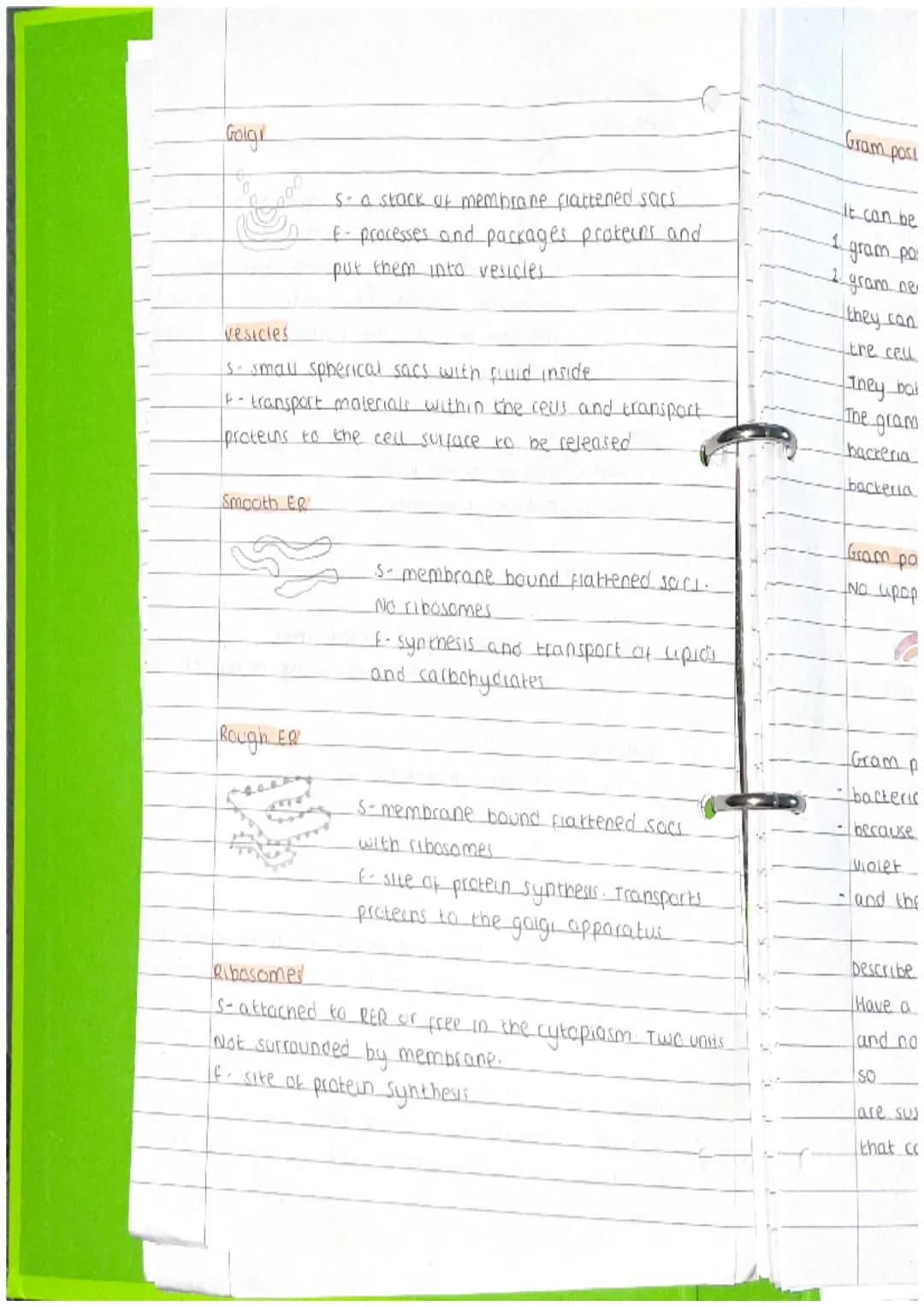
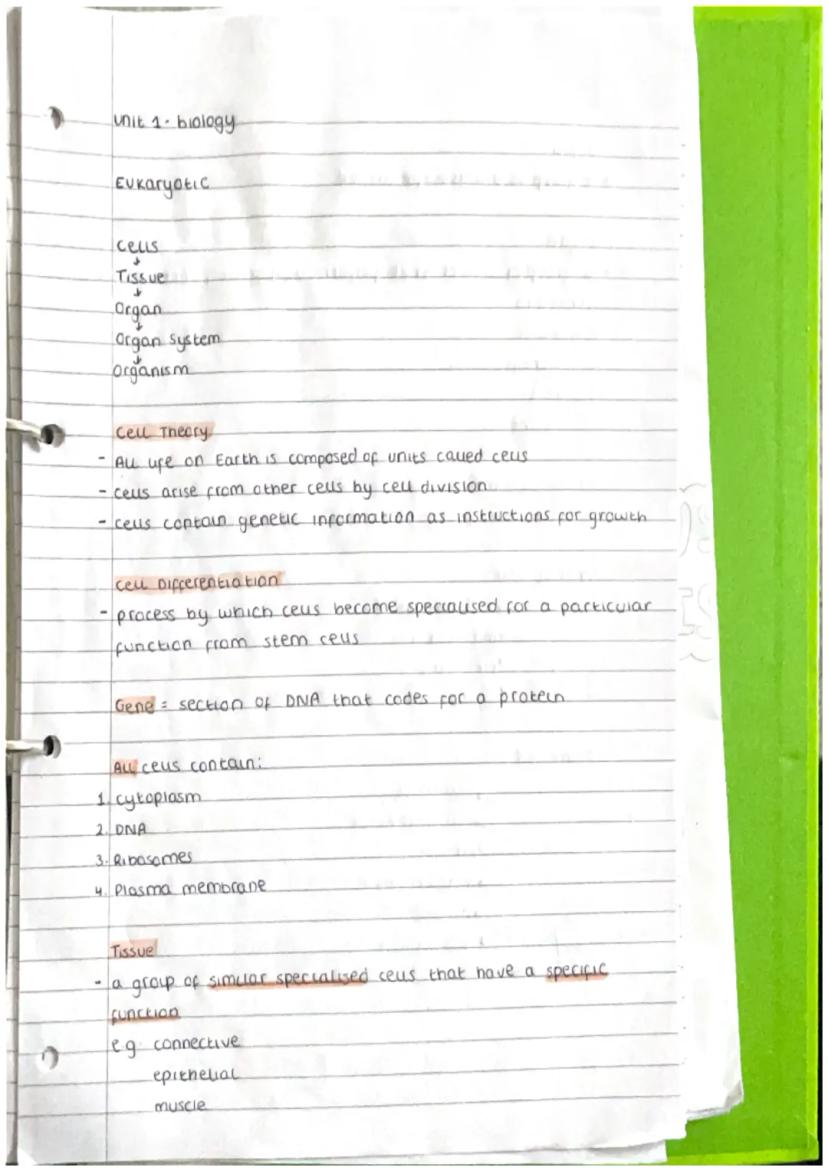
Understanding Cell Structure and Organization
This page introduces fundamental concepts of cellular biology and organization. The cellular hierarchy progresses from individual cells to complex organisms through various levels of organization.
Definition: Cell Theory states that all life is composed of cells, cells arise from other cells through division, and cells contain genetic information for growth.
Highlight: Cell differentiation is crucial for specialized function development from stem cells.
Vocabulary: Genes are sections of DNA that code for specific proteins.
Essential components present in all cells include cytoplasm, DNA, ribosomes, and plasma membrane. Tissues are formed by groups of specialized cells working together for specific functions.
We thought you’d never ask...
What is the Knowunity AI companion?
Our AI Companion is a student-focused AI tool that offers more than just answers. Built on millions of Knowunity resources, it provides relevant information, personalised study plans, quizzes, and content directly in the chat, adapting to your individual learning journey.
Where can I download the Knowunity app?
You can download the app from Google Play Store and Apple App Store.
Is Knowunity really free of charge?
That's right! Enjoy free access to study content, connect with fellow students, and get instant help – all at your fingertips.
Similar content
Most popular content: Cell Wall
9Most popular content in Biology
9Most popular content
9Can't find what you're looking for? Explore other subjects.
Students love us — and so will you.
4.6/5App Store
4.7/5Google Play
The app is very easy to use and well designed. I have found everything I was looking for so far and have been able to learn a lot from the presentations! I will definitely use the app for a class assignment! And of course it also helps a lot as an inspiration.
Stefan SiOS user
This app is really great. There are so many study notes and help [...]. My problem subject is French, for example, and the app has so many options for help. Thanks to this app, I have improved my French. I would recommend it to anyone.
Samantha KlichAndroid user
Wow, I am really amazed. I just tried the app because I've seen it advertised many times and was absolutely stunned. This app is THE HELP you want for school and above all, it offers so many things, such as workouts and fact sheets, which have been VERY helpful to me personally.
AnnaiOS user
Biology352 views·Updated Jun 7, 2026·7 pagesWhat Makes Eukaryotic Cells Special? Discover Their Parts and How They Help Plants Make Food!
Liza Saiyad@liza_saiyad
A comprehensive guide to eukaryotic cell structure and function, exploring cellular organization from basic components to complex systems, including detailed examination of organelles and their roles in cellular processes.
- Cell theory establishes that all life is composed of cells,...
1
of 7
Sign up to see the content. It's free!
- Access to all documents
- Improve your grades
- Join milions of students
Cell Types and Basic Structure
This section compares the basic structure of plant and animal cells, highlighting their key components and differences.
Example: Animal cells contain mitochondria, ribosomes, nucleus, and cytoplasm, while plant cells additionally have cell walls, chloroplasts, and large vacuoles.
Highlight: Plant cells are distinguished by their rigid cell wall and presence of chloroplasts for photosynthesis.
The page provides detailed illustrations of both cell types, emphasizing their structural differences and specialized components.
2
of 7Sign up to see the content. It's free!
- Access to all documents
- Improve your grades
- Join milions of students
Prokaryotic and Eukaryotic Cell Comparison
This page details the fundamental differences between prokaryotic and eukaryotic cells, with special attention to cellular components and specialized structures.
Definition: Prokaryotes are simpler organisms without a nucleus or membrane-bound organelles, while eukaryotes have a nucleus and various membrane-bound organelles.
Highlight: Chloroplasts are crucial for photosynthesis, containing thylakoids arranged in grana to maximize light absorption.
Vocabulary: Xylem vessels contain pores in their cell walls to facilitate water transport.
3
of 7Sign up to see the content. It's free!
- Access to all documents
- Improve your grades
- Join milions of students
Cell Membrane and Wall Structure
This section focuses on the cellular boundaries and transport structures.
Definition: The cell membrane is a phospholipid bilayer with proteins that regulates material movement into and out of the cell.
Example: Plasmodesmata are channels between plant cells that enable intercellular communication and transport.
Highlight: The cell wall provides structural support and protection while preventing cell bursting from osmotic pressure.
4
of 7Sign up to see the content. It's free!
- Access to all documents
- Improve your grades
- Join milions of students
Nuclear and Cytoplasmic Components
This page examines the nucleus and various cytoplasmic organelles.
Definition: The nucleus is the largest organelle, containing genetic material and controlling cell activities through its nuclear envelope with pores.
Vocabulary: Nucleolus is a dense structure within the nucleus responsible for rRNA and ribosome production.
Highlight: Mitochondria are the powerhouses of the cell, containing cristae for efficient aerobic respiration.
5
of 7Sign up to see the content. It's free!
- Access to all documents
- Improve your grades
- Join milions of students
Cellular Transport and Protein Synthesis
This section details the cellular components involved in protein synthesis and transport.
Definition: The Golgi apparatus processes and packages proteins for transport within and outside the cell.
Vocabulary: Rough ER contains ribosomes for protein synthesis, while smooth ER handles lipids and carbohydrates.
Highlight: Vesicles are essential for intracellular transport of materials and protein secretion.
6
of 7Sign up to see the content. It's free!
- Access to all documents
- Improve your grades
- Join milions of students
Bacterial Cell Structure
The final page focuses on bacterial cell structure and classification.
Definition: Gram-positive and gram-negative bacteria are distinguished by their cell wall composition and reaction to staining.
Highlight: The presence or absence of specific cell wall components determines bacterial classification and antibiotic susceptibility.
Example: The gram staining technique helps identify bacterial types based on their cell wall characteristics.
7
of 7Sign up to see the content. It's free!
- Access to all documents
- Improve your grades
- Join milions of students
Understanding Cell Structure and Organization
This page introduces fundamental concepts of cellular biology and organization. The cellular hierarchy progresses from individual cells to complex organisms through various levels of organization.
Definition: Cell Theory states that all life is composed of cells, cells arise from other cells through division, and cells contain genetic information for growth.
Highlight: Cell differentiation is crucial for specialized function development from stem cells.
Vocabulary: Genes are sections of DNA that code for specific proteins.
Essential components present in all cells include cytoplasm, DNA, ribosomes, and plasma membrane. Tissues are formed by groups of specialized cells working together for specific functions.
We thought you’d never ask...
What is the Knowunity AI companion?
Our AI Companion is a student-focused AI tool that offers more than just answers. Built on millions of Knowunity resources, it provides relevant information, personalised study plans, quizzes, and content directly in the chat, adapting to your individual learning journey.
Where can I download the Knowunity app?
You can download the app from Google Play Store and Apple App Store.
Is Knowunity really free of charge?
That's right! Enjoy free access to study content, connect with fellow students, and get instant help – all at your fingertips.
Similar content
Most popular content: Cell Wall
9Most popular content in Biology
9Most popular content
9Can't find what you're looking for? Explore other subjects.
Students love us — and so will you.
4.6/5App Store
4.7/5Google Play
The app is very easy to use and well designed. I have found everything I was looking for so far and have been able to learn a lot from the presentations! I will definitely use the app for a class assignment! And of course it also helps a lot as an inspiration.
Stefan SiOS user
This app is really great. There are so many study notes and help [...]. My problem subject is French, for example, and the app has so many options for help. Thanks to this app, I have improved my French. I would recommend it to anyone.
Samantha KlichAndroid user
Wow, I am really amazed. I just tried the app because I've seen it advertised many times and was absolutely stunned. This app is THE HELP you want for school and above all, it offers so many things, such as workouts and fact sheets, which have been VERY helpful to me personally.
AnnaiOS user