
An Inspector Callsis a powerful examination of social responsibility,...
 English Literature8,625 views·Updated Jun 16, 2026·8 pages
An Inspector Calls Character Analysis PDF – Easy GCSE Summary & Revision Sheets
1 / 8
1
of 8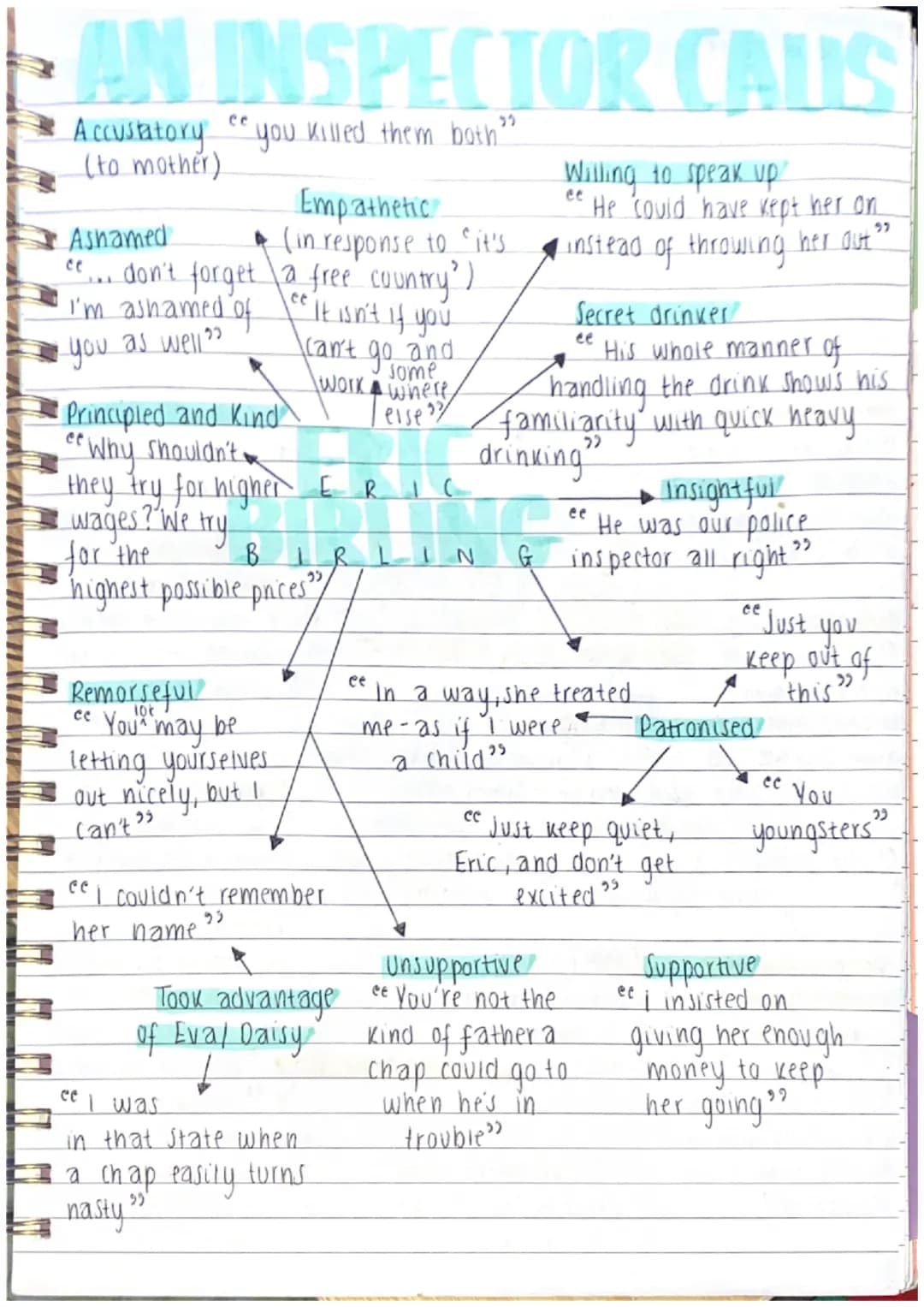
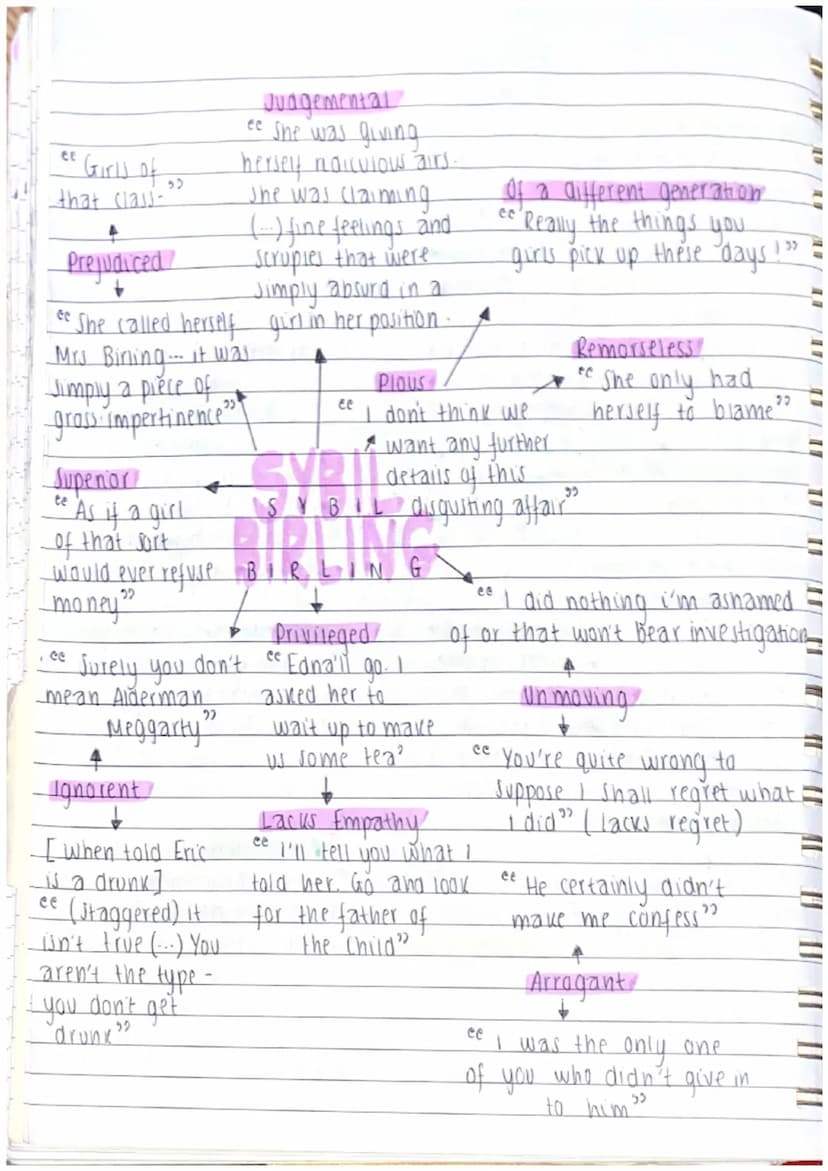
Sybil Birling: The Matriarch of Prejudice
Sybil Birling, the matriarch of the Birling family, represents the entrenched class prejudices of Edwardian society. Her character is crucial in understanding the themes of social inequality and moral hypocrisy in An Inspector Calls.
Highlight: Mrs. Birling's judgmental attitude towards Eva Smith reveals her deep-seated prejudice against the working class.
Key aspects of Sybil's character include:
- Prejudiced against the lower classes
- Self-righteous and morally inflexible
- Lacks empathy for those she considers beneath her
- Protective of her family's reputation
Her dialogue demonstrates her biases:
Quote: "Girls of that class—"
This phrase, frequently used by Sybil, underscores her belief in rigid class distinctions and her inability to see working-class individuals as equals.
Example: Sybil's refusal to help Eva Smith when she came to the charity committee exemplifies her lack of compassion and her adherence to class-based judgments.
Throughout the play, Sybil struggles to accept her role in Eva's demise, maintaining her sense of moral superiority even in the face of damning evidence.
Definition: Class prejudice - preconceived opinions or attitudes about people based on their social or economic status, often leading to discrimination.
2
of 8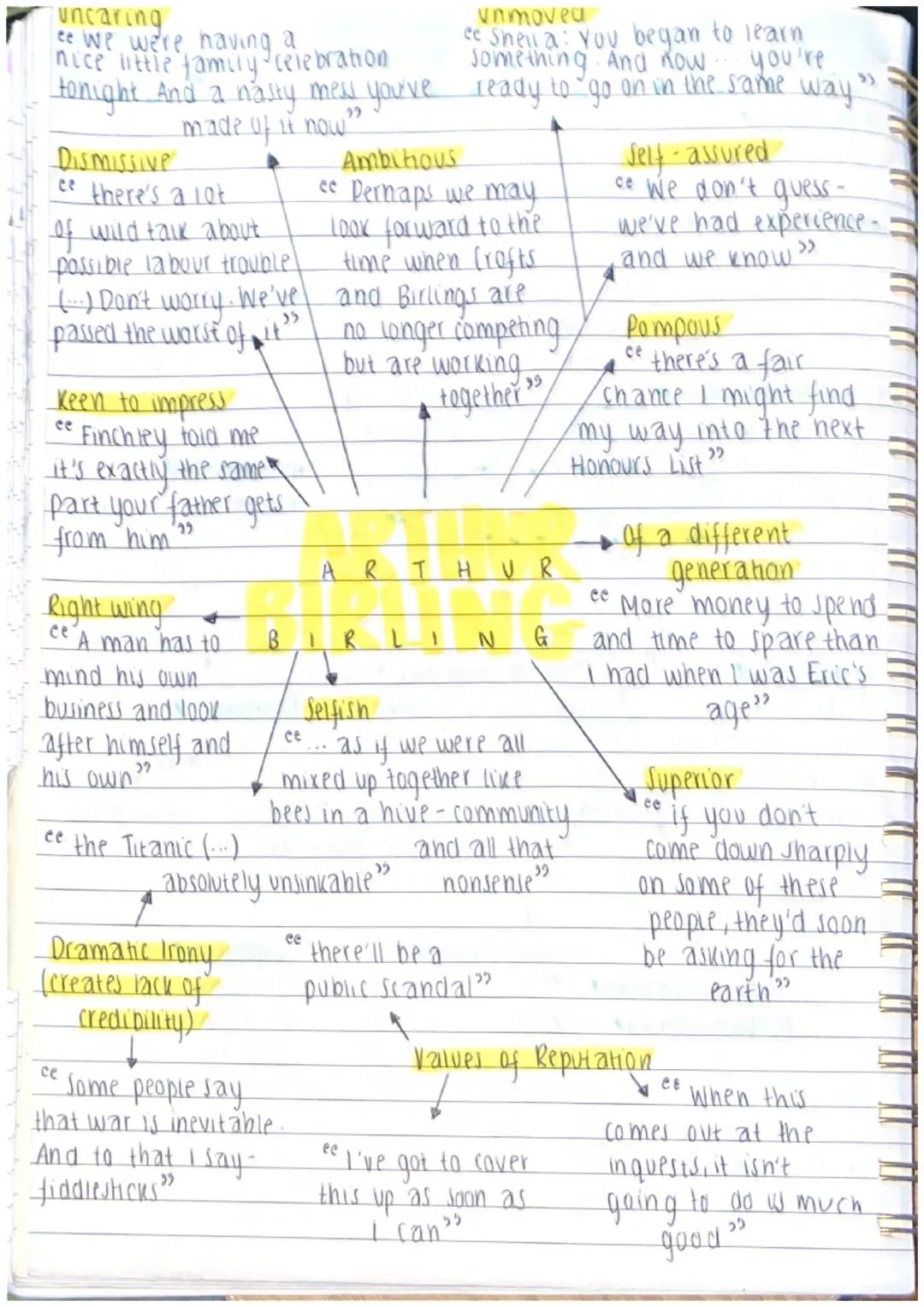
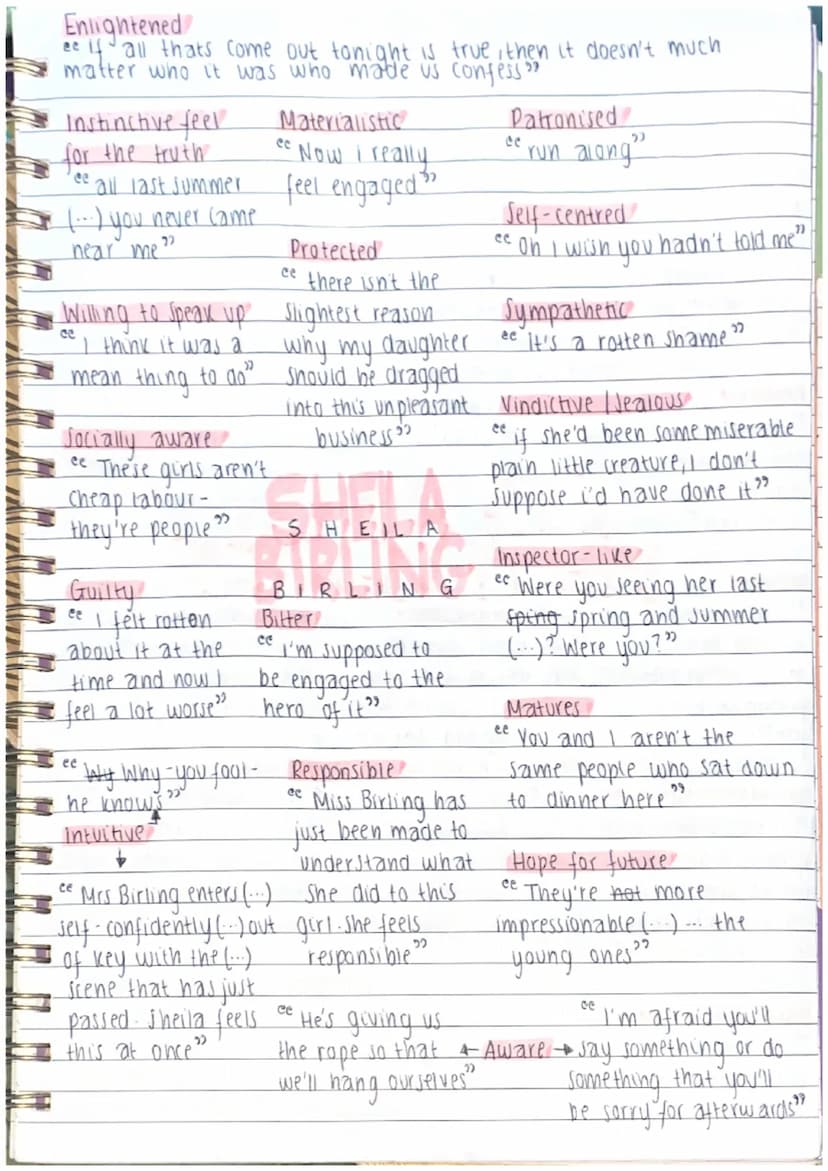
Sheila Birling: The Voice of Conscience
Sheila Birling, the daughter of Arthur and Sybil, undergoes the most significant transformation in An Inspector Calls. Her character arc is essential to understanding the themes of personal growth and moral awakening in the play.
Highlight: Sheila's ability to recognize and admit her mistakes sets her apart from her parents and represents hope for social change.
Key aspects of Sheila's character development include:
- Initially naive and privileged
- Develops a strong sense of empathy and guilt
- Becomes more insightful and questioning of societal norms
- Serves as a bridge between generations
Her dialogue reflects her growing awareness:
Quote: "But these girls aren't cheap labour - they're people."
This statement marks Sheila's shift from viewing workers as commodities to recognizing their humanity.
Example: Sheila's remorse over her role in Eva's dismissal from Milwards demonstrates her capacity for empathy and her willingness to confront uncomfortable truths.
As the play progresses, Sheila becomes increasingly critical of her family's attitudes and actions, embodying the potential for positive change in society.
Vocabulary: Moral awakening - a process of becoming aware of ethical issues and developing a stronger sense of right and wrong.
3
of 8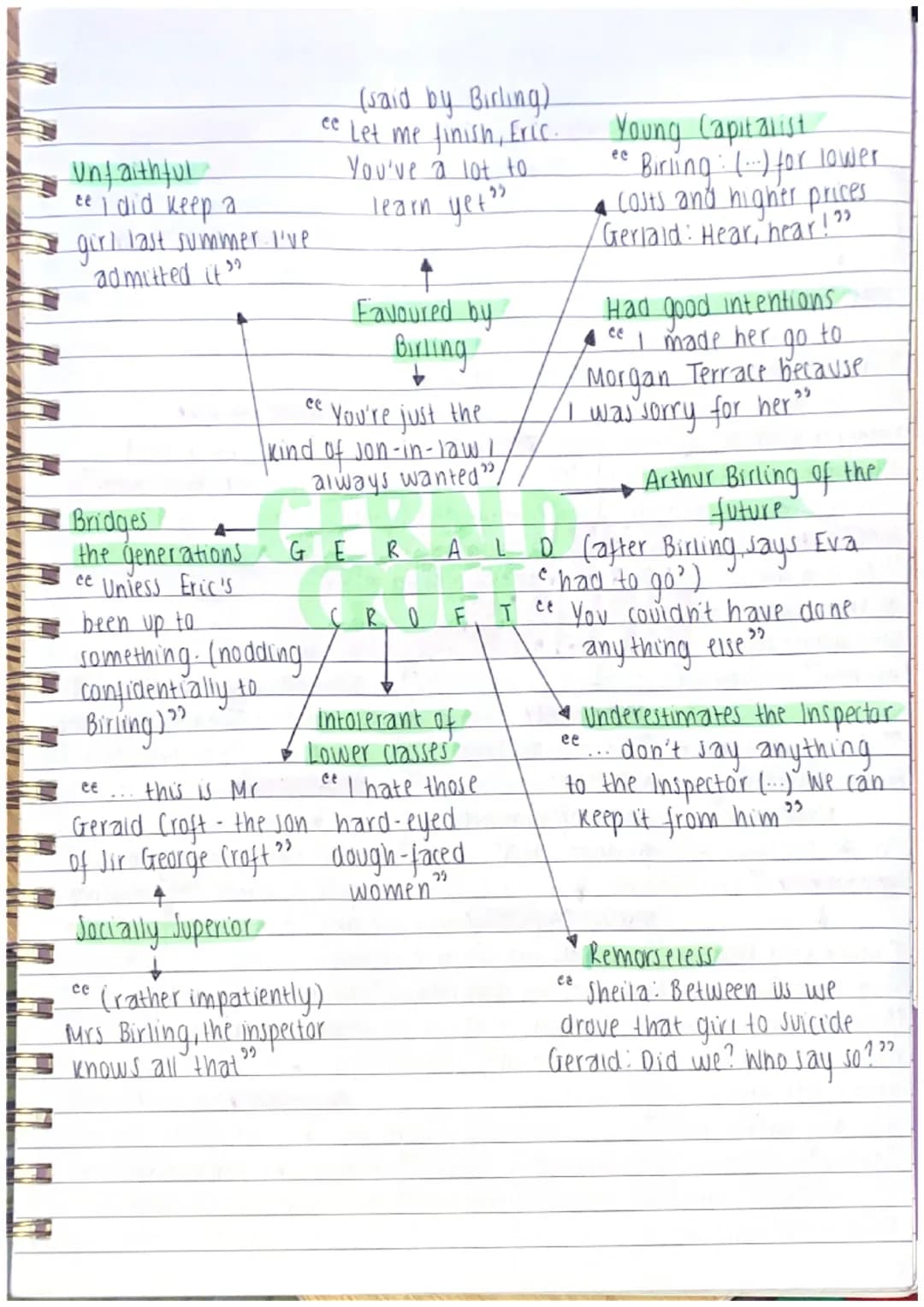
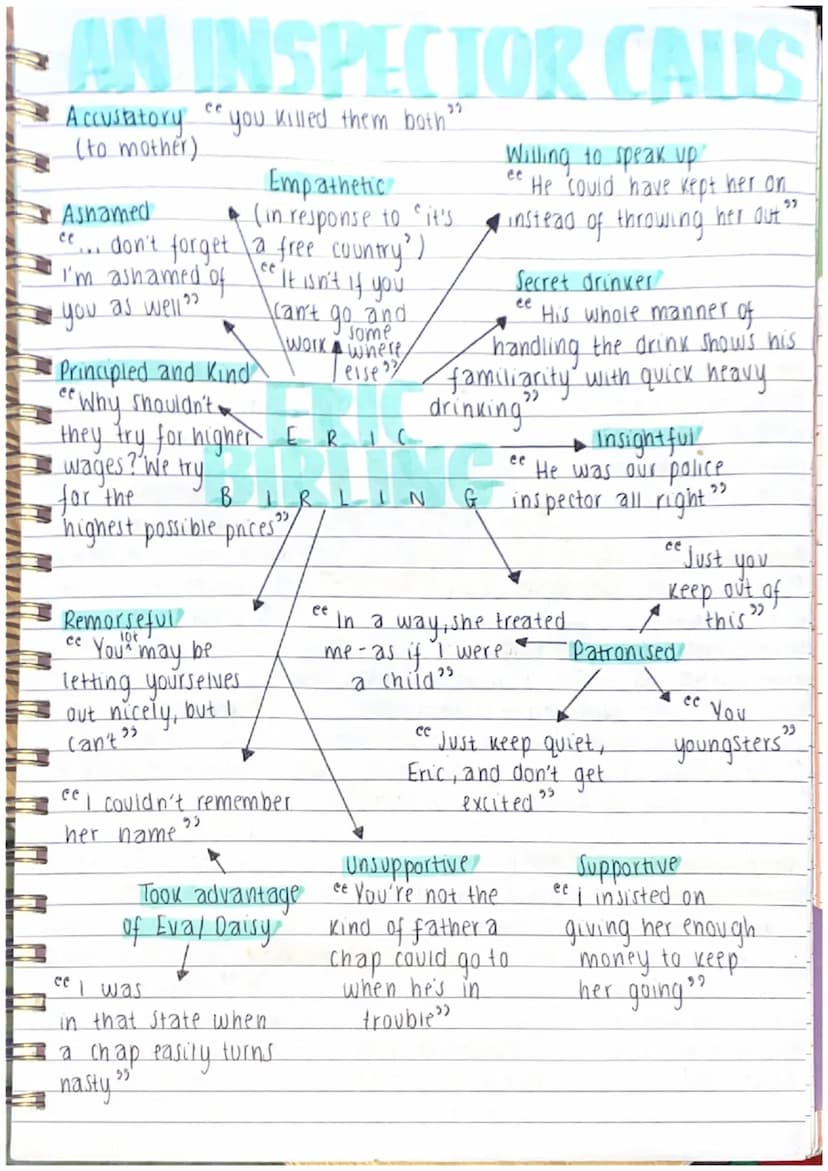
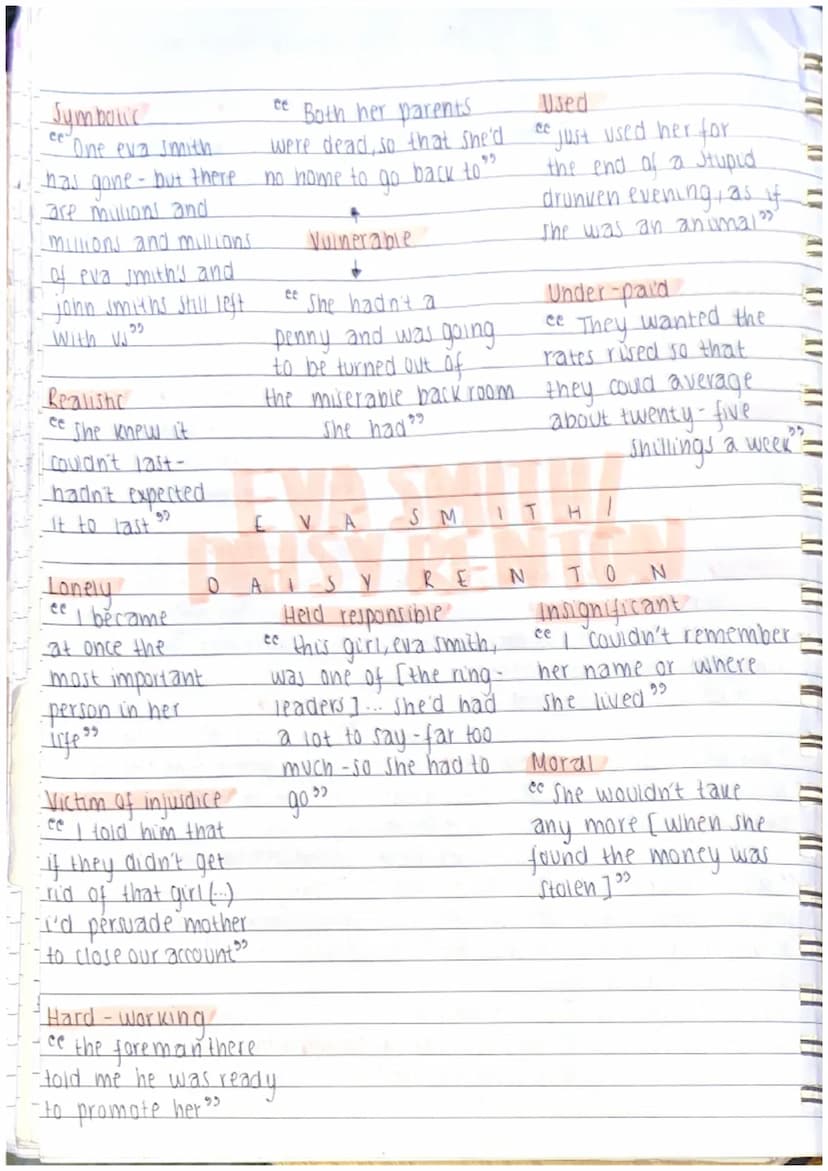
Eric Birling: The Troubled Son
Eric Birling, the son of Arthur and Sybil, represents the younger generation grappling with the consequences of their actions in An Inspector Calls. His character is crucial to understanding the themes of responsibility and the impact of privilege on moral behavior.
Highlight: Eric's struggle with alcoholism and his exploitation of Eva Smith reveal the darker side of upper-class entitlement.
Key aspects of Eric's character include:
- Secret alcoholic
- Took advantage of Eva Smith
- Feels remorse and shame for his actions
- Willing to speak up against his parents' views
His dialogue reveals his inner conflict:
Quote: "You're not the kind of father a chap could go to when he's in trouble."
This statement highlights the disconnect between Eric and his father, as well as the lack of support he feels within his family.
Example: Eric's insistence on giving Eva money after getting her pregnant shows a sense of responsibility, albeit misguided and too late.
Throughout the play, Eric becomes increasingly aware of the consequences of his actions and the flaws in his upbringing.
Definition: Entitlement - the belief that one is inherently deserving of privileges or special treatment, often associated with social class or status.
4
of 8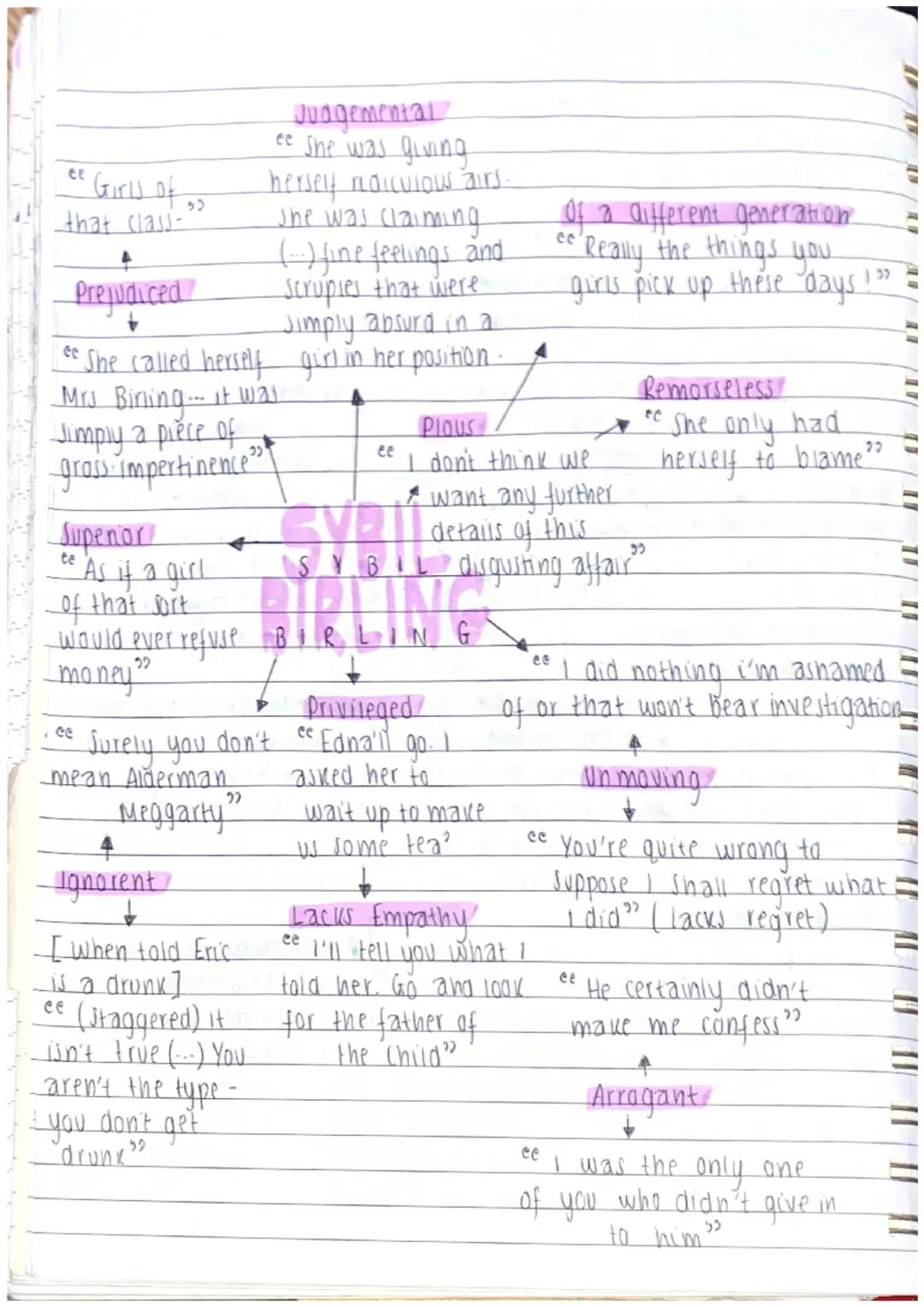
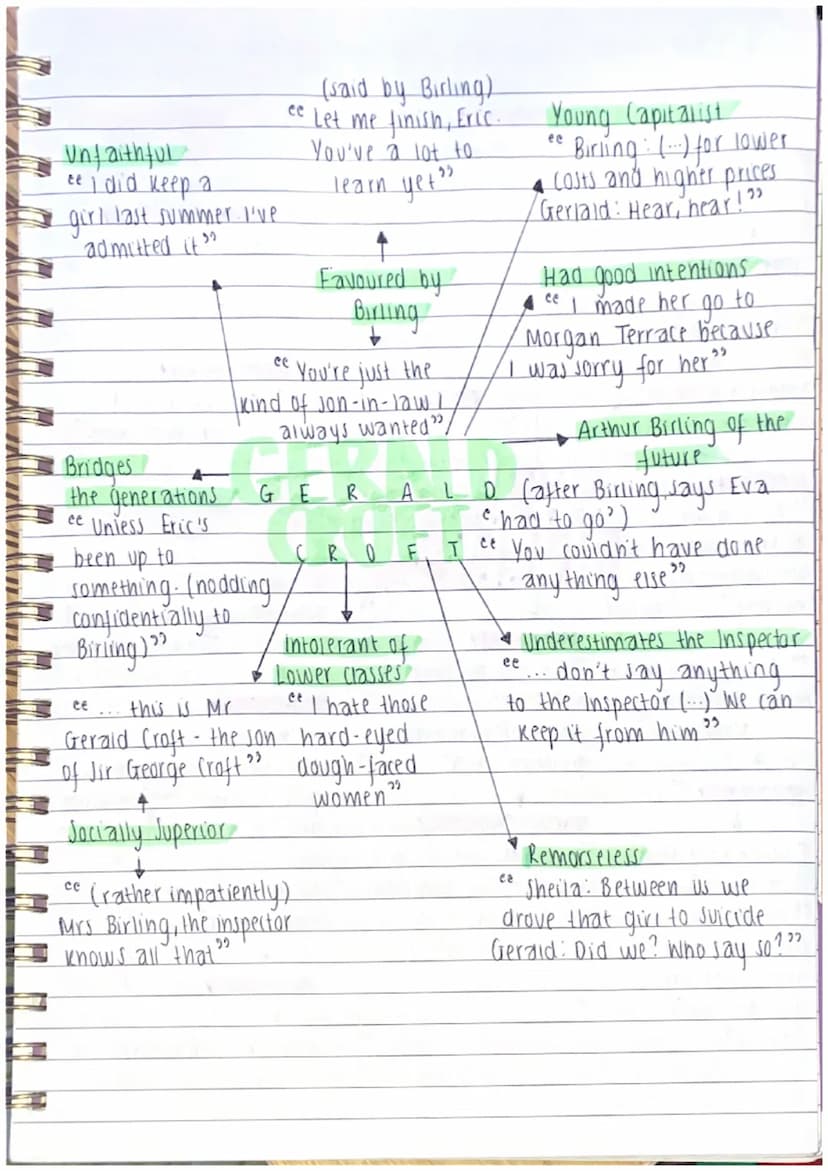
Gerald Croft: The Conflicted Suitor
Gerald Croft, Sheila's fiancé and son of a business rival, represents a bridge between the older and younger generations in An Inspector Calls. His character is essential in exploring themes of social responsibility and personal integrity.
Highlight: Gerald's affair with Eva Smith (Daisy Renton) reveals the complex nature of cross-class relationships and the power dynamics at play.
Key aspects of Gerald's character include:
- Socially superior to the Birlings
- Initially supportive of capitalist values
- Had an affair with Eva Smith
- Shows some remorse but also tries to minimize his responsibility
His dialogue reflects his conflicted nature:
Quote: "I didn't feel about her as she felt about me."
This statement reveals Gerald's awareness of the imbalance in his relationship with Eva, yet also his attempt to distance himself emotionally.
Example: Gerald's initial attempt to hide his involvement with Eva from the Inspector demonstrates his instinct for self-preservation.
As the play progresses, Gerald struggles to reconcile his actions with his self-image and social standing.
Vocabulary: Power dynamics - the way different people or groups interact with and influence each other, often based on social, economic, or political factors.
5
of 8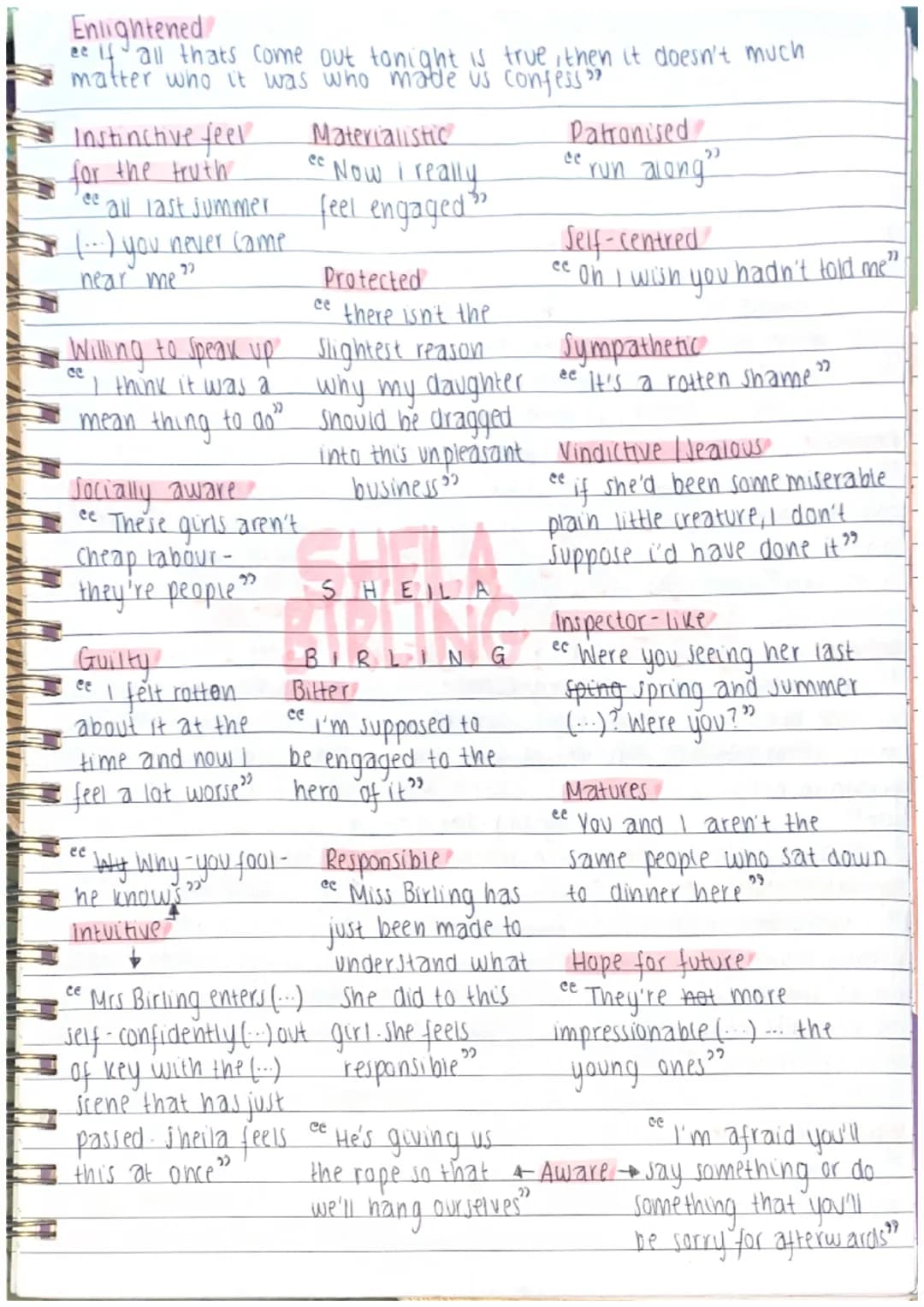
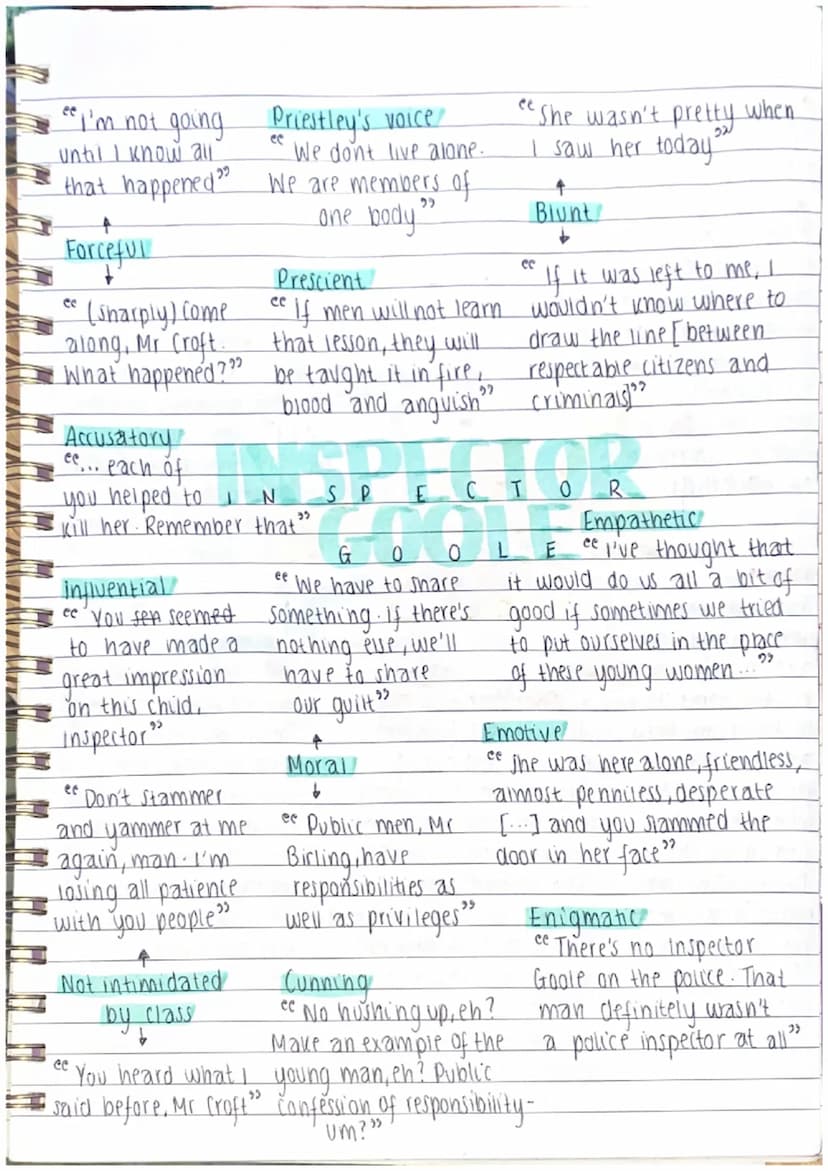
Inspector Goole: The Catalyst for Change
Inspector Goole, the mysterious interrogator in An Inspector Calls, serves as a driving force for the play's exploration of social responsibility and moral accountability. His character is crucial in understanding the themes of justice and collective guilt.
Highlight: The Inspector's methodical questioning and revelations force each character to confront their role in Eva Smith's demise.
Key aspects of Inspector Goole's character include:
- Omniscient and authoritative
- Represents social conscience
- Challenges the Birlings' and Gerald's worldviews
- May be supernatural or symbolic rather than a real police inspector
His dialogue often carries deeper meaning:
Quote: "We are members of one body. We are responsible for each other."
This statement encapsulates the Inspector's central message about social interconnectedness and shared responsibility.
Example: The Inspector's refusal to show everyone the photograph at once creates tension and allows for individual confessions, revealing the characters' true natures.
Throughout the play, Inspector Goole acts as a catalyst for self-reflection and moral awakening among the other characters.
Definition: Catalyst - a person or thing that precipitates an event or change, often without being affected themselves.
6
of 8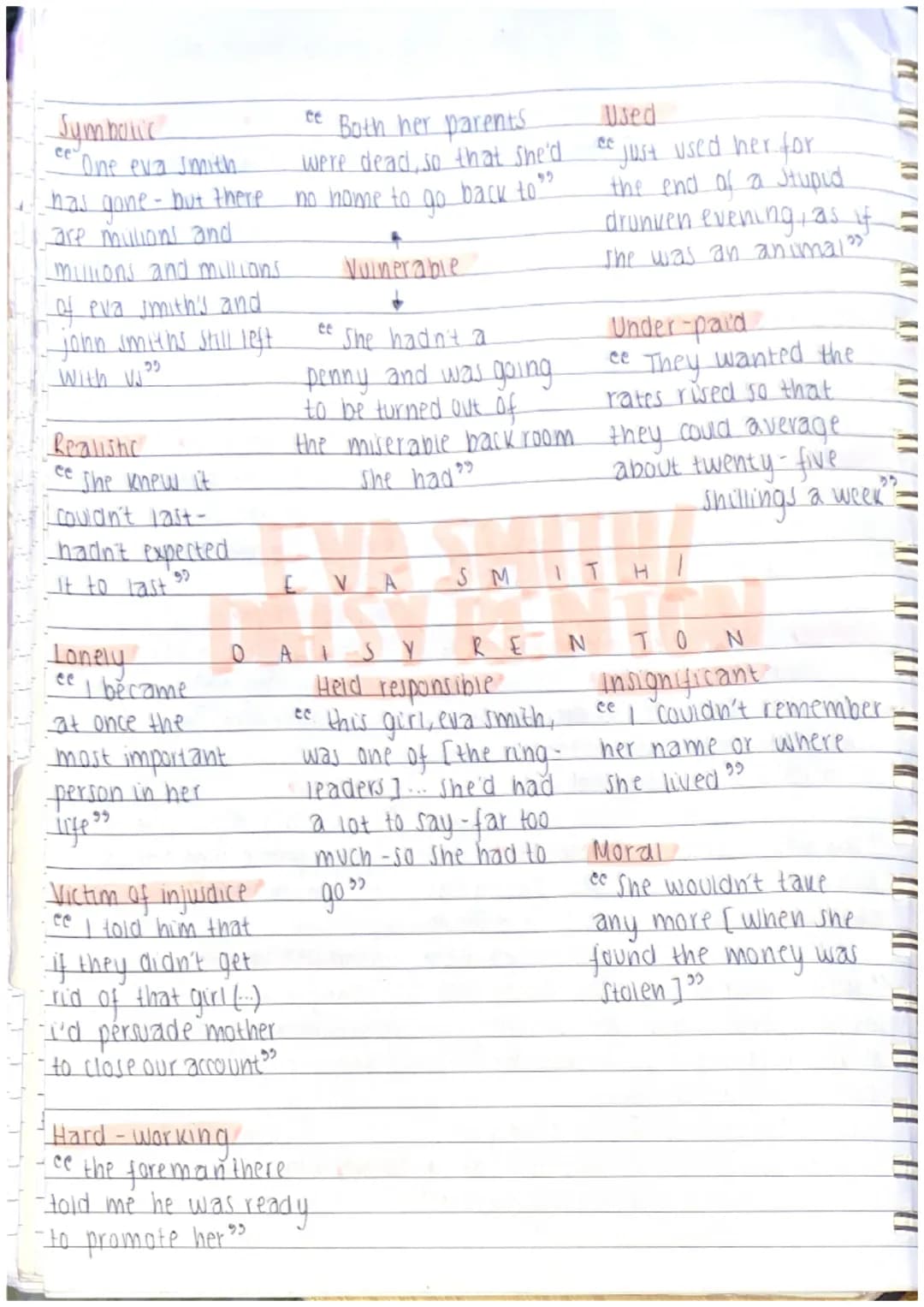
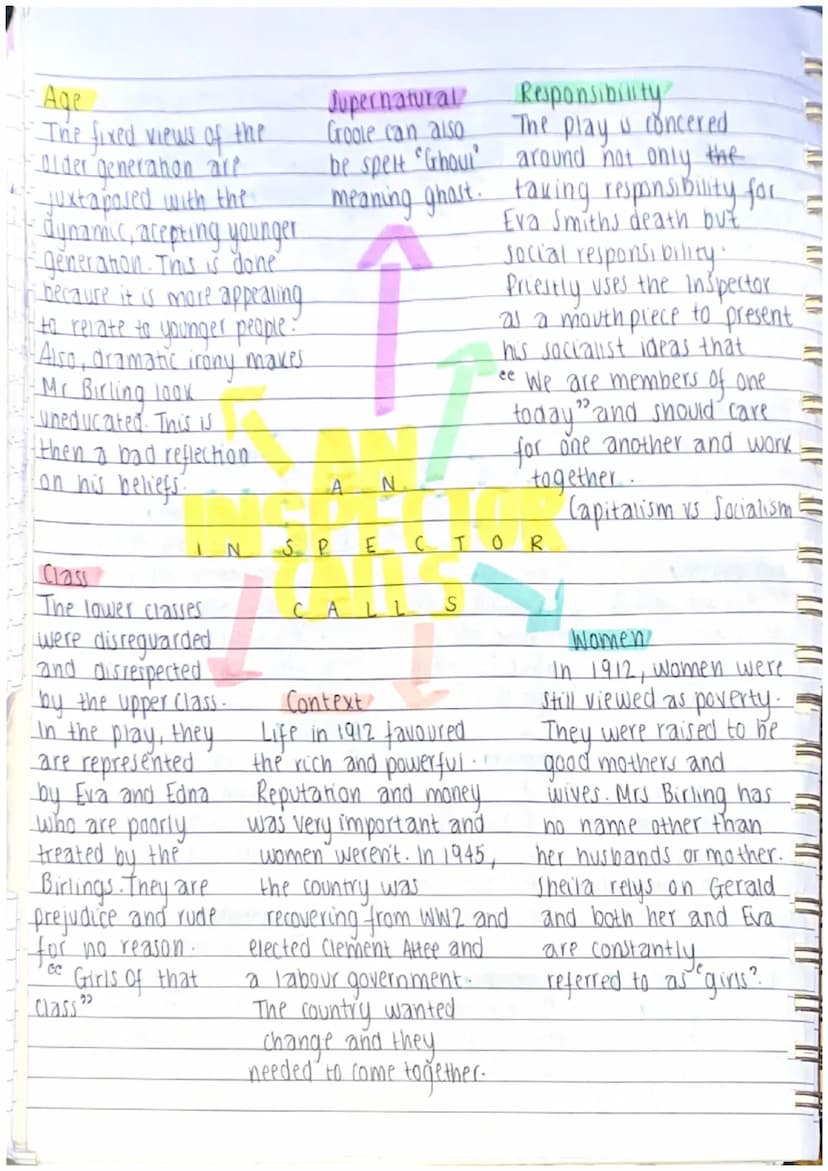
Themes and Character Interactions
The characters in An Inspector Calls interact in ways that highlight the play's central themes and create a complex web of relationships and responsibilities.
Highlight: The generational divide between the older Birlings and their children reflects changing attitudes towards social responsibility.
Key themes explored through character interactions include:
- Class divide and social inequality
- Personal responsibility vs. collective guilt
- The impact of actions on others
- Generational differences in values and beliefs
The characters' responses to the Inspector's questioning reveal their true natures:
Quote: "We don't live alone. We are members of one body. We are responsible for each other."
This statement by the Inspector challenges the individualistic views of characters like Mr. Birling and Mrs. Birling.
Example: The contrast between Sheila and Eric's willingness to accept responsibility and their parents' attempts to deny culpability highlights the play's message about moral growth and social change.
As the play progresses, the characters' interactions become increasingly strained, reflecting the breakdown of their previously held beliefs and social structures.
Vocabulary: Social responsibility - the idea that individuals and organizations have a duty to act in the best interests of society and the environment.
7
of 8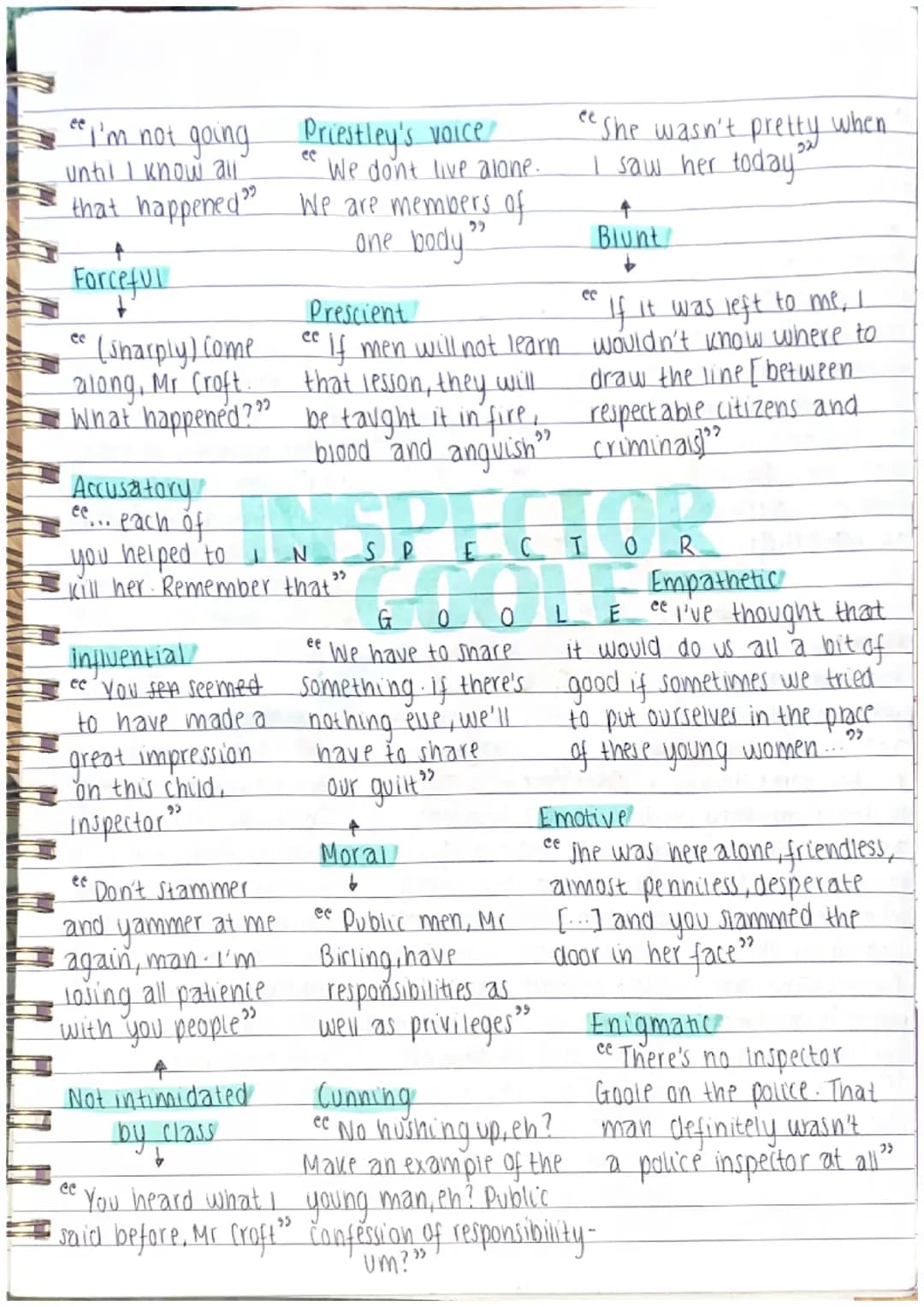
Page 7: The Inspector's Role and Social Message
The page focuses on Inspector Goole's character and his moral message.
Quote: "We don't live alone. We are members of one body"
Highlight: The Inspector's role as a moral catalyst and voice of social conscience.
8
of 8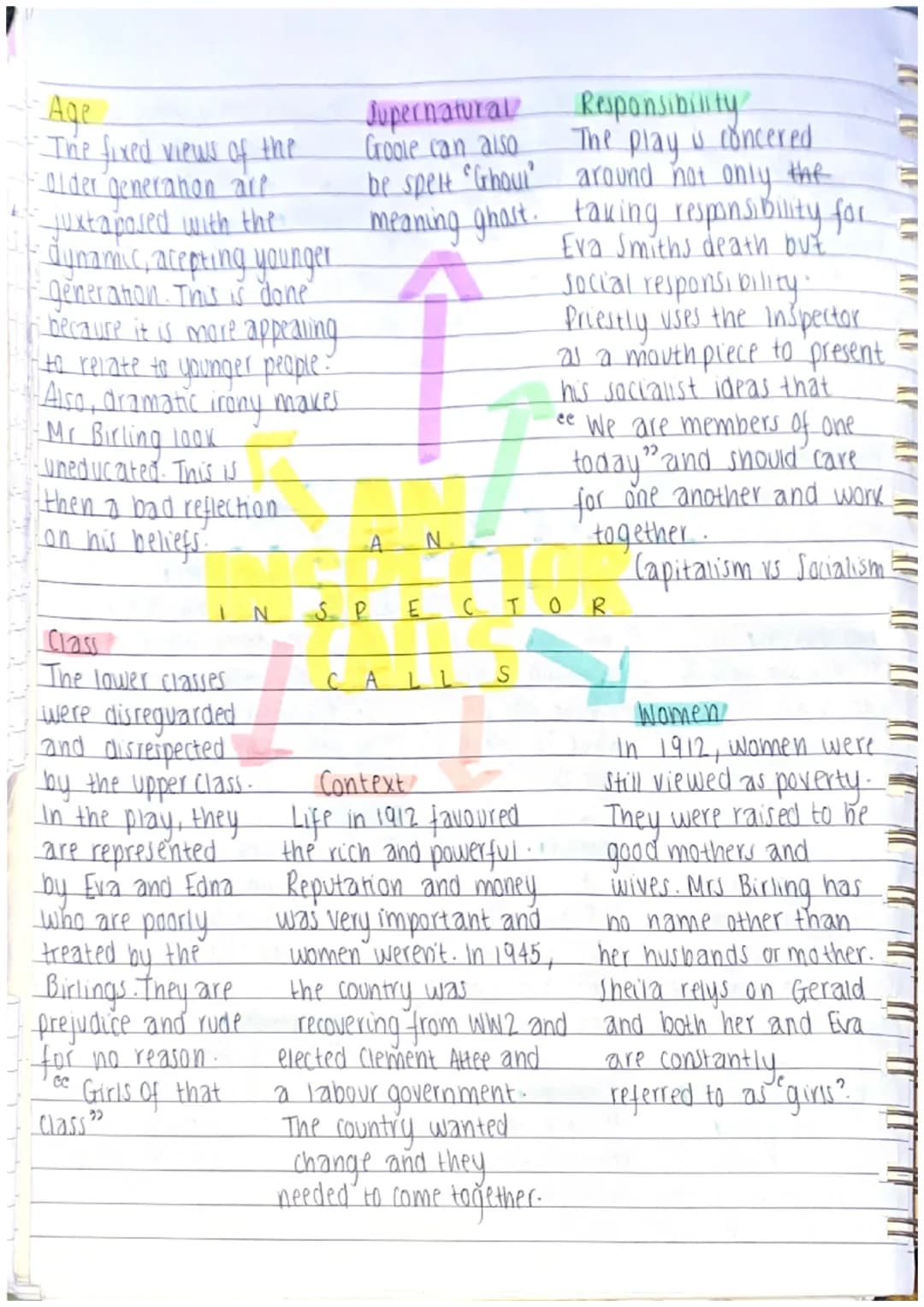
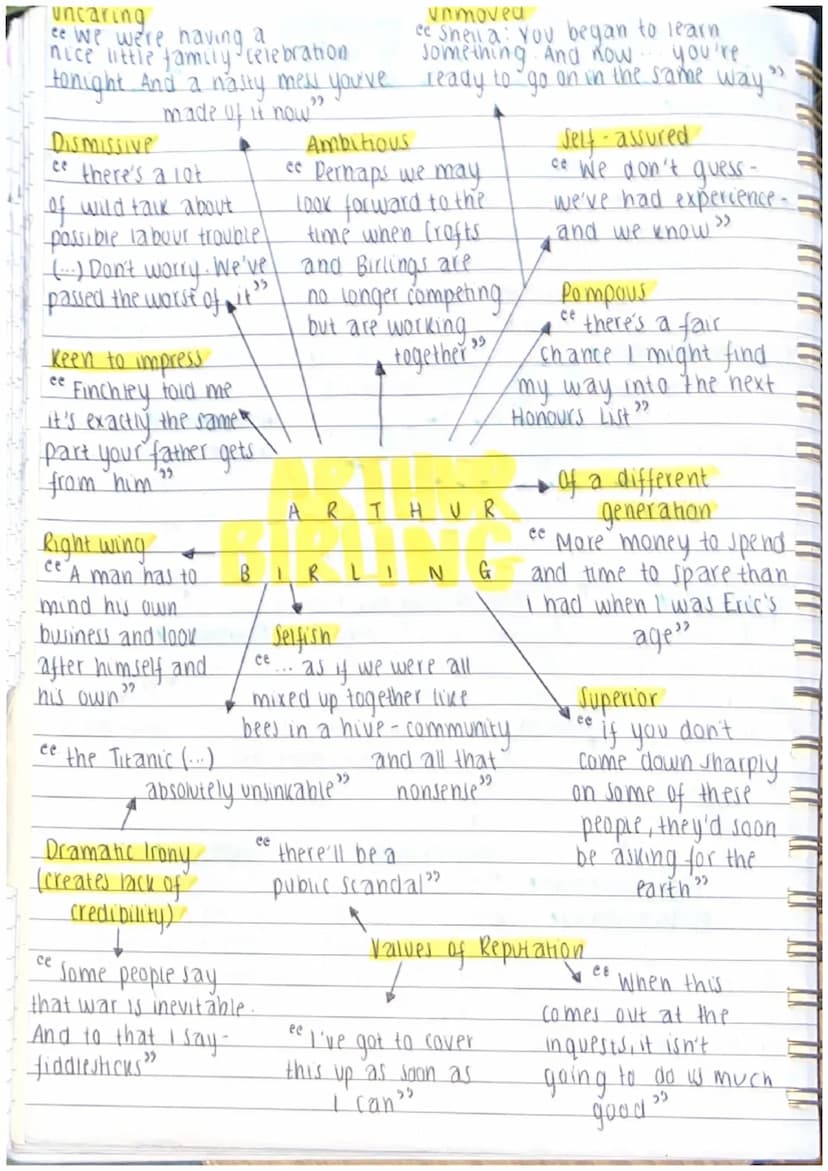
Arthur Birling: The Capitalist Patriarch
Arthur Birling, the head of the Birling family, embodies the capitalist mindset of early 20th century Britain. His character is central to understanding the themes of social responsibility and class divide in An Inspector Calls.
Highlight: Mr. Birling's dismissive attitude towards potential labor troubles reflects his disconnection from the working class.
Birling's personality traits include:
- Self-assured and pompous
- Dismissive of social responsibility
- Keen to impress and climb the social ladder
- Right-wing political views
His dialogue reveals his priorities:
Quote: "A man has to mind his own business and look after himself and his own."
This statement encapsulates Birling's individualistic philosophy, which contrasts sharply with the Inspector's message of collective responsibility.
Example: Birling's prediction about the Titanic being "unsinkable" serves as dramatic irony, undermining his credibility and foreshadowing his flawed judgment.
Birling's character arc shows little growth throughout the play, as he remains largely unmoved by the revelations about Eva Smith's fate.
Vocabulary: Dramatic irony - a literary device where the audience knows more than the characters, often used to create tension or highlight a character's flaws.
We thought you’d never ask...
What is the Knowunity AI companion?
Our AI Companion is a student-focused AI tool that offers more than just answers. Built on millions of Knowunity resources, it provides relevant information, personalised study plans, quizzes, and content directly in the chat, adapting to your individual learning journey.
Where can I download the Knowunity app?
You can download the app from Google Play Store and Apple App Store.
Is Knowunity really free of charge?
That's right! Enjoy free access to study content, connect with fellow students, and get instant help – all at your fingertips.
Similar content
Most popular content: An Inspector Calls
9English LiteratureAn Inspector Calls: Character Insights
Explore in-depth analysis and key quotes for characters in J.B. Priestley's 'An Inspector Calls'. This resource covers Gerald Croft, Inspector Goole, Sheila Birling, Mrs. Birling, Eric Birling, and Eva Smith, focusing on themes of class, gender roles, and social responsibility. Ideal for students aiming for Grade 8 and above.
1025,412907
English LiteratureAn Inspector Calls: Character Insights
Explore the intricate character dynamics and themes in J.B. Priestley's 'An Inspector Calls'. This analysis covers key characters like Mrs. Birling, Sheila, Eric, and the Inspector, alongside themes of social responsibility, class, and gender inequality. Understand the historical context and Priestley's critique of capitalism. Ideal for students seeking a comprehensive understanding of the play's moral messages.
1013,184682
English LiteratureAn Inspector Calls: Character Quotes
Explore key quotes and analyses from JB Priestley's 'An Inspector Calls', focusing on characters like Inspector Goole, Eva Smith, and the Birling family. This resource provides insights into themes of social responsibility, class conflict, and gender roles, making it essential for GCSE English Literature students. Ideal for exam preparation and deepening understanding of the play's critical messages.
1017,805452
English Literaturean inspector calls character quotes
character mind maps with quotes for sheila,eric,mr birling,mrs birling,eva,inspector goole and gerald. concise notes with quotes that can be easily analysed.
111,16223
English LiteratureSheila Birling's Transformation
Explore the character development of Sheila Birling in J.B. Priestley's 'An Inspector Calls'. This analysis delves into her journey from naivety to social awareness, highlighting key themes such as patriarchy, responsibility, and the changing attitudes towards women's rights. Understand how Sheila's evolution reflects Priestley's message of hope for societal change. Type: Character Analysis.
97,099150
English LiteratureCapitalism vs. Socialism
Explore the contrasting ideologies of capitalism and socialism in J.B. Priestley's 'An Inspector Calls'. This analysis includes key character insights, thematic discussions, and critical quotations that highlight the moral responsibilities of the wealthy towards the working class. Ideal for students studying political ideologies and social responsibility in literature.
112,826128
English LiteratureSocial Context in AIC
Explore the socio-political context of J.B. Priestley's 'An Inspector Calls' through key themes of capitalism and socialism. This summary highlights the historical backdrop of 1912 and 1945, the impact of class systems, and the evolving roles of women. Ideal for understanding the play's critique of social inequality and the moral responsibilities of individuals. Type: Context Summary.
98,590278
English LiteratureCharacter Analysis in An Inspector Calls
Explore the key characters and themes in J.B. Priestley's 'An Inspector Calls' with this comprehensive analysis. Delve into the roles of women, the significance of Inspector Goole, and the impact of social responsibility as portrayed through characters like Mrs. Birling, Eric Birling, Gerald Croft, and Sheila Birling. This annotated guide provides insights into the play's critique of capitalism and its relevance to women's rights. Ideal for students and literature enthusiasts.
92,23750
English LiteratureCharacter Insights in An Inspector Calls
Explore in-depth character analyses, thematic discussions, and contextual insights from J.B. Priestley's 'An Inspector Calls'. This resource includes detailed mind maps and essays on key characters like Sheila, Eric, Gerald, and the Inspector, as well as themes of social responsibility and gender roles. Perfect for students seeking to understand the complexities of the play and its social commentary.
99,181260
Most popular content in English Literature
9English LiteratureAn Inspector Calls: Character Insights
Explore in-depth analysis and key quotes for characters in J.B. Priestley's 'An Inspector Calls'. This resource covers Gerald Croft, Inspector Goole, Sheila Birling, Mrs. Birling, Eric Birling, and Eva Smith, focusing on themes of class, gender roles, and social responsibility. Ideal for students aiming for Grade 8 and above.
1025,412907
English LiteratureRomeo and Juliet: Key themes
Key Romeo and Juliet themes and analysed quotes
106,695198
English LiteratureMacbeth: Guilt and Ambition
Explore the complex themes of guilt and ambition in Shakespeare's 'Macbeth'. This analysis covers key characters, including Macbeth and Lady Macbeth, their moral dilemmas, and the tragic consequences of their ambition. Ideal for students studying character motivations, thematic elements, and the psychological impact of power. Includes insights on the natural order, manipulation, and the descent into madness.
919,045397
E
English LiteratureExplore the World of English Literature
Master the key concepts and works of English literature with this comprehensive flashcard set designed for grade 10 students.
112,0761
I
English LiteratureInspector Calls Quiz (YR 10 MOCKS)
for YR 10 GCSE mock on Inspector Calls
102,1111
English LiteratureExploring Macbeth's Themes
Dive into the intricate themes of Shakespeare's Macbeth, including the supernatural, ambition, guilt, and kingship. This analysis features key quotes and insights that reveal how these themes intertwine to shape the characters and the narrative. Ideal for students seeking a deeper understanding of the play's moral complexities and psychological depth.
1015,843524
English LiteraturePower & Conflict Poetry Analysis
Explore in-depth analyses of key poems for GCSE English Literature, including Ozymandias, Storm on the Island, London, My Last Duchess, and more. This resource covers themes, structure, and key quotes to enhance your understanding of war and conflict in poetry. Ideal for exam preparation and comparative studies.
1050,0112,921
E
English LiteratureExploring 'A Christmas Carol': Themes, Characters, and Lessons
Delve into the main themes, key characters, and valuable lessons in Charles Dickens' 'A Christmas Carol'. Discover the impact of Scrooge's transformation and the significance of love, redemption, and the true meaning of Christmas.
101,2430
English LiteratureDuality in Jekyll and Hyde
Explore the intricate themes of duality, repression, and morality in 'Dr. Jekyll and Mr. Hyde' through key quotes and in-depth analysis. This summary highlights the contrasting personas of Jekyll and Hyde, the struggle between good and evil, and the societal implications of secrecy and identity. Ideal for students studying Robert Louis Stevenson's classic work.
1010,544275
Most popular content
9 Sociology
Sociology of Education Overview
Explore comprehensive A-Level Sociology notes on the education system, covering key theories, policies, and sociological perspectives. This resource includes insights on marketisation, gender roles, cultural deprivation, and educational inequalities, providing a thorough understanding of how education shapes social stratification and individual achievement. Ideal for exam preparation and in-depth study.
12102,8093,040
SociologySociology of Families: Comprehensive Revision
Dive into an extensive overview of family dynamics, perspectives, and patterns in sociology. This resource covers key concepts such as family diversity, gender roles, marriage, and the impact of social policies on family structures. Perfect for A-Level Sociology students preparing for Paper 2.
1273,5592,306
CriminologyCriminology: Crime & Punishment Overview
Comprehensive mindmaps covering key concepts in the Crime and Punishment topic for WJEC Criminology Unit 4. This resource includes detailed insights into the Criminal Justice System, crime prevention strategies, sentencing models, and the roles of various agencies. Ideal for A-Level revision, ensuring you grasp essential theories and legislative processes to excel in your exams.
1254,8511,059
SociologyComprehensive Crime & Deviance Overview
Explore an extensive revision of crime and deviance topics, including theories, types of crime, and the impact of media. This resource covers key concepts such as Marxism, functionalism, gender and crime, and the influence of globalization on criminal behavior. Ideal for students seeking a thorough understanding of criminology and its various theories. Type: Full Topic Revision.
1251,6311,399
English LiteratureAn Inspector Calls: Character Insights
Explore in-depth analysis and key quotes for characters in J.B. Priestley's 'An Inspector Calls'. This resource covers Gerald Croft, Inspector Goole, Sheila Birling, Mrs. Birling, Eric Birling, and Eva Smith, focusing on themes of class, gender roles, and social responsibility. Ideal for students aiming for Grade 8 and above.
1025,412907
CriminologyWJEC Unit 4 Criminology
Criminology unit 4 detailed revision note
127,146125
C
 Biology
Cell Biology and Cell structure
cell structures
93,1780
CriminologyCriminology Theories Overview
Explore key criminology theories and their implications on crime and deviance. This comprehensive summary covers biological, psychological, and sociological perspectives, including labelling theory, right realism, and the impact of social campaigns on policy development. Ideal for A-Level criminology students seeking to understand the complexities of criminal behaviour and the factors influencing crime prevention strategies.
129,754210
English LiteratureRomeo and Juliet: Key themes
Key Romeo and Juliet themes and analysed quotes
106,695198
Can't find what you're looking for? Explore other subjects.
Students love us — and so will you.
4.6/5App Store
4.7/5Google Play
The app is very easy to use and well designed. I have found everything I was looking for so far and have been able to learn a lot from the presentations! I will definitely use the app for a class assignment! And of course it also helps a lot as an inspiration.
Stefan SiOS user
This app is really great. There are so many study notes and help [...]. My problem subject is French, for example, and the app has so many options for help. Thanks to this app, I have improved my French. I would recommend it to anyone.
Samantha KlichAndroid user
Wow, I am really amazed. I just tried the app because I've seen it advertised many times and was absolutely stunned. This app is THE HELP you want for school and above all, it offers so many things, such as workouts and fact sheets, which have been VERY helpful to me personally.
AnnaiOS user
English Literature8,625 views·Updated Jun 16, 2026·8 pagesAn Inspector Calls Character Analysis PDF – Easy GCSE Summary & Revision Sheets
An Inspector Calls is a powerful examination of social responsibility, class dynamics, and moral accountability in early 20th century Britain. The play's character analysis reveals complex personalities shaped by their social positions and personal choices.
Key aspects:
- The Inspector serves...
1
of 8
Sign up to see the content. It's free!
- Access to all documents
- Improve your grades
- Join milions of students
Sybil Birling: The Matriarch of Prejudice
Sybil Birling, the matriarch of the Birling family, represents the entrenched class prejudices of Edwardian society. Her character is crucial in understanding the themes of social inequality and moral hypocrisy in An Inspector Calls.
Highlight: Mrs. Birling's judgmental attitude towards Eva Smith reveals her deep-seated prejudice against the working class.
Key aspects of Sybil's character include:
- Prejudiced against the lower classes
- Self-righteous and morally inflexible
- Lacks empathy for those she considers beneath her
- Protective of her family's reputation
Her dialogue demonstrates her biases:
Quote: "Girls of that class—"
This phrase, frequently used by Sybil, underscores her belief in rigid class distinctions and her inability to see working-class individuals as equals.
Example: Sybil's refusal to help Eva Smith when she came to the charity committee exemplifies her lack of compassion and her adherence to class-based judgments.
Throughout the play, Sybil struggles to accept her role in Eva's demise, maintaining her sense of moral superiority even in the face of damning evidence.
Definition: Class prejudice - preconceived opinions or attitudes about people based on their social or economic status, often leading to discrimination.
2
of 8Sign up to see the content. It's free!
- Access to all documents
- Improve your grades
- Join milions of students
Sheila Birling: The Voice of Conscience
Sheila Birling, the daughter of Arthur and Sybil, undergoes the most significant transformation in An Inspector Calls. Her character arc is essential to understanding the themes of personal growth and moral awakening in the play.
Highlight: Sheila's ability to recognize and admit her mistakes sets her apart from her parents and represents hope for social change.
Key aspects of Sheila's character development include:
- Initially naive and privileged
- Develops a strong sense of empathy and guilt
- Becomes more insightful and questioning of societal norms
- Serves as a bridge between generations
Her dialogue reflects her growing awareness:
Quote: "But these girls aren't cheap labour - they're people."
This statement marks Sheila's shift from viewing workers as commodities to recognizing their humanity.
Example: Sheila's remorse over her role in Eva's dismissal from Milwards demonstrates her capacity for empathy and her willingness to confront uncomfortable truths.
As the play progresses, Sheila becomes increasingly critical of her family's attitudes and actions, embodying the potential for positive change in society.
Vocabulary: Moral awakening - a process of becoming aware of ethical issues and developing a stronger sense of right and wrong.
3
of 8Sign up to see the content. It's free!
- Access to all documents
- Improve your grades
- Join milions of students
Eric Birling: The Troubled Son
Eric Birling, the son of Arthur and Sybil, represents the younger generation grappling with the consequences of their actions in An Inspector Calls. His character is crucial to understanding the themes of responsibility and the impact of privilege on moral behavior.
Highlight: Eric's struggle with alcoholism and his exploitation of Eva Smith reveal the darker side of upper-class entitlement.
Key aspects of Eric's character include:
- Secret alcoholic
- Took advantage of Eva Smith
- Feels remorse and shame for his actions
- Willing to speak up against his parents' views
His dialogue reveals his inner conflict:
Quote: "You're not the kind of father a chap could go to when he's in trouble."
This statement highlights the disconnect between Eric and his father, as well as the lack of support he feels within his family.
Example: Eric's insistence on giving Eva money after getting her pregnant shows a sense of responsibility, albeit misguided and too late.
Throughout the play, Eric becomes increasingly aware of the consequences of his actions and the flaws in his upbringing.
Definition: Entitlement - the belief that one is inherently deserving of privileges or special treatment, often associated with social class or status.
4
of 8Sign up to see the content. It's free!
- Access to all documents
- Improve your grades
- Join milions of students
Gerald Croft: The Conflicted Suitor
Gerald Croft, Sheila's fiancé and son of a business rival, represents a bridge between the older and younger generations in An Inspector Calls. His character is essential in exploring themes of social responsibility and personal integrity.
Highlight: Gerald's affair with Eva Smith (Daisy Renton) reveals the complex nature of cross-class relationships and the power dynamics at play.
Key aspects of Gerald's character include:
- Socially superior to the Birlings
- Initially supportive of capitalist values
- Had an affair with Eva Smith
- Shows some remorse but also tries to minimize his responsibility
His dialogue reflects his conflicted nature:
Quote: "I didn't feel about her as she felt about me."
This statement reveals Gerald's awareness of the imbalance in his relationship with Eva, yet also his attempt to distance himself emotionally.
Example: Gerald's initial attempt to hide his involvement with Eva from the Inspector demonstrates his instinct for self-preservation.
As the play progresses, Gerald struggles to reconcile his actions with his self-image and social standing.
Vocabulary: Power dynamics - the way different people or groups interact with and influence each other, often based on social, economic, or political factors.
5
of 8Sign up to see the content. It's free!
- Access to all documents
- Improve your grades
- Join milions of students
Inspector Goole: The Catalyst for Change
Inspector Goole, the mysterious interrogator in An Inspector Calls, serves as a driving force for the play's exploration of social responsibility and moral accountability. His character is crucial in understanding the themes of justice and collective guilt.
Highlight: The Inspector's methodical questioning and revelations force each character to confront their role in Eva Smith's demise.
Key aspects of Inspector Goole's character include:
- Omniscient and authoritative
- Represents social conscience
- Challenges the Birlings' and Gerald's worldviews
- May be supernatural or symbolic rather than a real police inspector
His dialogue often carries deeper meaning:
Quote: "We are members of one body. We are responsible for each other."
This statement encapsulates the Inspector's central message about social interconnectedness and shared responsibility.
Example: The Inspector's refusal to show everyone the photograph at once creates tension and allows for individual confessions, revealing the characters' true natures.
Throughout the play, Inspector Goole acts as a catalyst for self-reflection and moral awakening among the other characters.
Definition: Catalyst - a person or thing that precipitates an event or change, often without being affected themselves.
6
of 8Sign up to see the content. It's free!
- Access to all documents
- Improve your grades
- Join milions of students
Themes and Character Interactions
The characters in An Inspector Calls interact in ways that highlight the play's central themes and create a complex web of relationships and responsibilities.
Highlight: The generational divide between the older Birlings and their children reflects changing attitudes towards social responsibility.
Key themes explored through character interactions include:
- Class divide and social inequality
- Personal responsibility vs. collective guilt
- The impact of actions on others
- Generational differences in values and beliefs
The characters' responses to the Inspector's questioning reveal their true natures:
Quote: "We don't live alone. We are members of one body. We are responsible for each other."
This statement by the Inspector challenges the individualistic views of characters like Mr. Birling and Mrs. Birling.
Example: The contrast between Sheila and Eric's willingness to accept responsibility and their parents' attempts to deny culpability highlights the play's message about moral growth and social change.
As the play progresses, the characters' interactions become increasingly strained, reflecting the breakdown of their previously held beliefs and social structures.
Vocabulary: Social responsibility - the idea that individuals and organizations have a duty to act in the best interests of society and the environment.
7
of 8Sign up to see the content. It's free!
- Access to all documents
- Improve your grades
- Join milions of students
Page 7: The Inspector's Role and Social Message
The page focuses on Inspector Goole's character and his moral message.
Quote: "We don't live alone. We are members of one body"
Highlight: The Inspector's role as a moral catalyst and voice of social conscience.
8
of 8Sign up to see the content. It's free!
- Access to all documents
- Improve your grades
- Join milions of students
Arthur Birling: The Capitalist Patriarch
Arthur Birling, the head of the Birling family, embodies the capitalist mindset of early 20th century Britain. His character is central to understanding the themes of social responsibility and class divide in An Inspector Calls.
Highlight: Mr. Birling's dismissive attitude towards potential labor troubles reflects his disconnection from the working class.
Birling's personality traits include:
- Self-assured and pompous
- Dismissive of social responsibility
- Keen to impress and climb the social ladder
- Right-wing political views
His dialogue reveals his priorities:
Quote: "A man has to mind his own business and look after himself and his own."
This statement encapsulates Birling's individualistic philosophy, which contrasts sharply with the Inspector's message of collective responsibility.
Example: Birling's prediction about the Titanic being "unsinkable" serves as dramatic irony, undermining his credibility and foreshadowing his flawed judgment.
Birling's character arc shows little growth throughout the play, as he remains largely unmoved by the revelations about Eva Smith's fate.
Vocabulary: Dramatic irony - a literary device where the audience knows more than the characters, often used to create tension or highlight a character's flaws.
We thought you’d never ask...
What is the Knowunity AI companion?
Our AI Companion is a student-focused AI tool that offers more than just answers. Built on millions of Knowunity resources, it provides relevant information, personalised study plans, quizzes, and content directly in the chat, adapting to your individual learning journey.
Where can I download the Knowunity app?
You can download the app from Google Play Store and Apple App Store.
Is Knowunity really free of charge?
That's right! Enjoy free access to study content, connect with fellow students, and get instant help – all at your fingertips.
Similar content
Most popular content: An Inspector Calls
9English LiteratureAn Inspector Calls: Character Insights
Explore in-depth analysis and key quotes for characters in J.B. Priestley's 'An Inspector Calls'. This resource covers Gerald Croft, Inspector Goole, Sheila Birling, Mrs. Birling, Eric Birling, and Eva Smith, focusing on themes of class, gender roles, and social responsibility. Ideal for students aiming for Grade 8 and above.
1025,412907
English LiteratureAn Inspector Calls: Character Insights
Explore the intricate character dynamics and themes in J.B. Priestley's 'An Inspector Calls'. This analysis covers key characters like Mrs. Birling, Sheila, Eric, and the Inspector, alongside themes of social responsibility, class, and gender inequality. Understand the historical context and Priestley's critique of capitalism. Ideal for students seeking a comprehensive understanding of the play's moral messages.
1013,184682
English LiteratureAn Inspector Calls: Character Quotes
Explore key quotes and analyses from JB Priestley's 'An Inspector Calls', focusing on characters like Inspector Goole, Eva Smith, and the Birling family. This resource provides insights into themes of social responsibility, class conflict, and gender roles, making it essential for GCSE English Literature students. Ideal for exam preparation and deepening understanding of the play's critical messages.
1017,805452
English Literaturean inspector calls character quotes
character mind maps with quotes for sheila,eric,mr birling,mrs birling,eva,inspector goole and gerald. concise notes with quotes that can be easily analysed.
111,16223
English LiteratureSheila Birling's Transformation
Explore the character development of Sheila Birling in J.B. Priestley's 'An Inspector Calls'. This analysis delves into her journey from naivety to social awareness, highlighting key themes such as patriarchy, responsibility, and the changing attitudes towards women's rights. Understand how Sheila's evolution reflects Priestley's message of hope for societal change. Type: Character Analysis.
97,099150
English LiteratureCapitalism vs. Socialism
Explore the contrasting ideologies of capitalism and socialism in J.B. Priestley's 'An Inspector Calls'. This analysis includes key character insights, thematic discussions, and critical quotations that highlight the moral responsibilities of the wealthy towards the working class. Ideal for students studying political ideologies and social responsibility in literature.
112,826128
English LiteratureSocial Context in AIC
Explore the socio-political context of J.B. Priestley's 'An Inspector Calls' through key themes of capitalism and socialism. This summary highlights the historical backdrop of 1912 and 1945, the impact of class systems, and the evolving roles of women. Ideal for understanding the play's critique of social inequality and the moral responsibilities of individuals. Type: Context Summary.
98,590278
English LiteratureCharacter Analysis in An Inspector Calls
Explore the key characters and themes in J.B. Priestley's 'An Inspector Calls' with this comprehensive analysis. Delve into the roles of women, the significance of Inspector Goole, and the impact of social responsibility as portrayed through characters like Mrs. Birling, Eric Birling, Gerald Croft, and Sheila Birling. This annotated guide provides insights into the play's critique of capitalism and its relevance to women's rights. Ideal for students and literature enthusiasts.
92,23750
English LiteratureCharacter Insights in An Inspector Calls
Explore in-depth character analyses, thematic discussions, and contextual insights from J.B. Priestley's 'An Inspector Calls'. This resource includes detailed mind maps and essays on key characters like Sheila, Eric, Gerald, and the Inspector, as well as themes of social responsibility and gender roles. Perfect for students seeking to understand the complexities of the play and its social commentary.
99,181260
Most popular content in English Literature
9English LiteratureAn Inspector Calls: Character Insights
Explore in-depth analysis and key quotes for characters in J.B. Priestley's 'An Inspector Calls'. This resource covers Gerald Croft, Inspector Goole, Sheila Birling, Mrs. Birling, Eric Birling, and Eva Smith, focusing on themes of class, gender roles, and social responsibility. Ideal for students aiming for Grade 8 and above.
1025,412907
English LiteratureRomeo and Juliet: Key themes
Key Romeo and Juliet themes and analysed quotes
106,695198
English LiteratureMacbeth: Guilt and Ambition
Explore the complex themes of guilt and ambition in Shakespeare's 'Macbeth'. This analysis covers key characters, including Macbeth and Lady Macbeth, their moral dilemmas, and the tragic consequences of their ambition. Ideal for students studying character motivations, thematic elements, and the psychological impact of power. Includes insights on the natural order, manipulation, and the descent into madness.
919,045397
E
English LiteratureExplore the World of English Literature
Master the key concepts and works of English literature with this comprehensive flashcard set designed for grade 10 students.
112,0761
I
English LiteratureInspector Calls Quiz (YR 10 MOCKS)
for YR 10 GCSE mock on Inspector Calls
102,1111
English LiteratureExploring Macbeth's Themes
Dive into the intricate themes of Shakespeare's Macbeth, including the supernatural, ambition, guilt, and kingship. This analysis features key quotes and insights that reveal how these themes intertwine to shape the characters and the narrative. Ideal for students seeking a deeper understanding of the play's moral complexities and psychological depth.
1015,843524
English LiteraturePower & Conflict Poetry Analysis
Explore in-depth analyses of key poems for GCSE English Literature, including Ozymandias, Storm on the Island, London, My Last Duchess, and more. This resource covers themes, structure, and key quotes to enhance your understanding of war and conflict in poetry. Ideal for exam preparation and comparative studies.
1050,0112,921
E
English LiteratureExploring 'A Christmas Carol': Themes, Characters, and Lessons
Delve into the main themes, key characters, and valuable lessons in Charles Dickens' 'A Christmas Carol'. Discover the impact of Scrooge's transformation and the significance of love, redemption, and the true meaning of Christmas.
101,2430
English LiteratureDuality in Jekyll and Hyde
Explore the intricate themes of duality, repression, and morality in 'Dr. Jekyll and Mr. Hyde' through key quotes and in-depth analysis. This summary highlights the contrasting personas of Jekyll and Hyde, the struggle between good and evil, and the societal implications of secrecy and identity. Ideal for students studying Robert Louis Stevenson's classic work.
1010,544275
Most popular content
9SociologySociology of Education Overview
Explore comprehensive A-Level Sociology notes on the education system, covering key theories, policies, and sociological perspectives. This resource includes insights on marketisation, gender roles, cultural deprivation, and educational inequalities, providing a thorough understanding of how education shapes social stratification and individual achievement. Ideal for exam preparation and in-depth study.
12102,8093,040
SociologySociology of Families: Comprehensive Revision
Dive into an extensive overview of family dynamics, perspectives, and patterns in sociology. This resource covers key concepts such as family diversity, gender roles, marriage, and the impact of social policies on family structures. Perfect for A-Level Sociology students preparing for Paper 2.
1273,5592,306
CriminologyCriminology: Crime & Punishment Overview
Comprehensive mindmaps covering key concepts in the Crime and Punishment topic for WJEC Criminology Unit 4. This resource includes detailed insights into the Criminal Justice System, crime prevention strategies, sentencing models, and the roles of various agencies. Ideal for A-Level revision, ensuring you grasp essential theories and legislative processes to excel in your exams.
1254,8511,059
SociologyComprehensive Crime & Deviance Overview
Explore an extensive revision of crime and deviance topics, including theories, types of crime, and the impact of media. This resource covers key concepts such as Marxism, functionalism, gender and crime, and the influence of globalization on criminal behavior. Ideal for students seeking a thorough understanding of criminology and its various theories. Type: Full Topic Revision.
1251,6311,399
English LiteratureAn Inspector Calls: Character Insights
Explore in-depth analysis and key quotes for characters in J.B. Priestley's 'An Inspector Calls'. This resource covers Gerald Croft, Inspector Goole, Sheila Birling, Mrs. Birling, Eric Birling, and Eva Smith, focusing on themes of class, gender roles, and social responsibility. Ideal for students aiming for Grade 8 and above.
1025,412907
CriminologyWJEC Unit 4 Criminology
Criminology unit 4 detailed revision note
127,146125
C
BiologyCell Biology and Cell structure
cell structures
93,1780
CriminologyCriminology Theories Overview
Explore key criminology theories and their implications on crime and deviance. This comprehensive summary covers biological, psychological, and sociological perspectives, including labelling theory, right realism, and the impact of social campaigns on policy development. Ideal for A-Level criminology students seeking to understand the complexities of criminal behaviour and the factors influencing crime prevention strategies.
129,754210
English LiteratureRomeo and Juliet: Key themes
Key Romeo and Juliet themes and analysed quotes
106,695198
Can't find what you're looking for? Explore other subjects.
Students love us — and so will you.
4.6/5App Store
4.7/5Google Play
The app is very easy to use and well designed. I have found everything I was looking for so far and have been able to learn a lot from the presentations! I will definitely use the app for a class assignment! And of course it also helps a lot as an inspiration.
Stefan SiOS user
This app is really great. There are so many study notes and help [...]. My problem subject is French, for example, and the app has so many options for help. Thanks to this app, I have improved my French. I would recommend it to anyone.
Samantha KlichAndroid user
Wow, I am really amazed. I just tried the app because I've seen it advertised many times and was absolutely stunned. This app is THE HELP you want for school and above all, it offers so many things, such as workouts and fact sheets, which have been VERY helpful to me personally.
AnnaiOS user