Heart Anatomy and Cardiovascular System
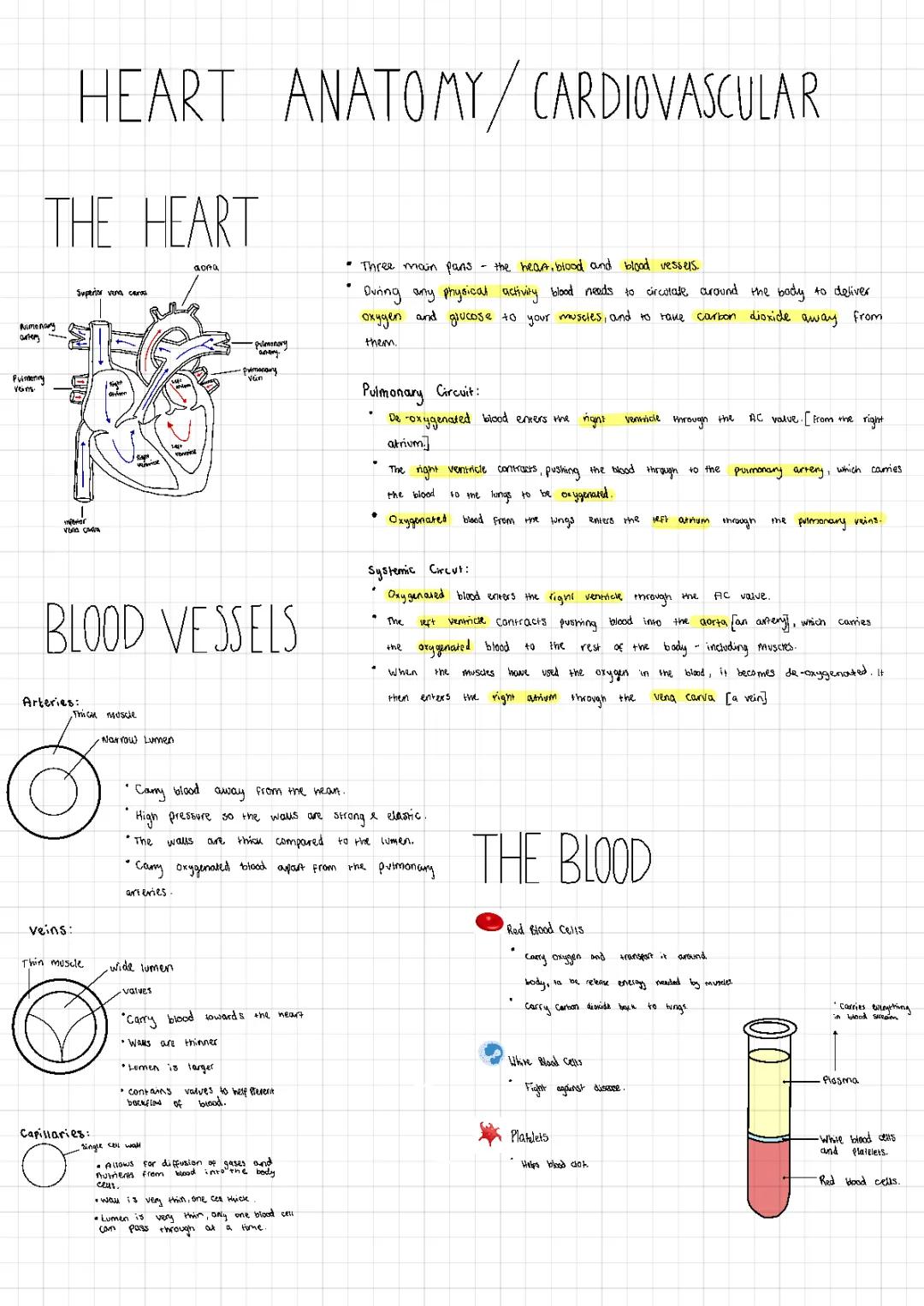
Ever wondered why your heart pounds during a sprint? Your cardiovascular system has three main parts - the heart, blood, and blood vessels - all working together to keep your muscles supplied with what they need during physical activity.
Your heart works like a double pump with two separate circuits. The pulmonary circuit handles the "dirty" blood - deoxygenated blood flows from your right ventricle through the pulmonary artery to your lungs, gets cleaned up with fresh oxygen, then returns to your left atrium via pulmonary veins.
The systemic circuit delivers the goods to your body. Oxygenated blood shoots out from your left ventricle through the massive aorta, travels to all your muscles and organs, then returns as deoxygenated blood through the vena cava to your right atrium. It's like a perfectly timed relay race that never stops!
Quick Tip: Remember the circuits by thinking "Right = Respiratory" (pulmonary circuit starts from right side) and "Left = Life" (systemic circuit starts from left side to supply your whole body).
Blood Vessels - Your Body's Highway System
Think of blood vessels as a three-tier transport system, each designed for different jobs. Arteries are like motorways - they've got thick, muscular walls and narrow lumens because they handle high-pressure blood rushing away from your heart. Most carry oxygenated blood, except for those sneaky pulmonary arteries heading to your lungs.
Veins are more like country roads - they have thinner walls, wider lumens, and special valves to prevent blood from flowing backwards as it travels back to your heart under much lower pressure. Capillaries are the tiny back streets where all the real action happens - their walls are just one cell thick, allowing oxygen and nutrients to slip through to your tissues.
Each type of vessel is perfectly designed for its job. The thick, elastic artery walls can stretch and bounce back with each heartbeat, whilst the wide vein lumens make it easier for blood to flow back to your heart against gravity.
Blood Components - The Delivery Crew
Your blood is like a busy transport network with different workers doing specific jobs. Red blood cells are the oxygen delivery drivers - they pick up oxygen from your lungs and drop it off at your muscles, then collect carbon dioxide waste for the return journey.
White blood cells act as your personal security team, fighting off infections and diseases that try to invade your body. Platelets are like emergency repair workers - when you get a cut, they rush to the scene and help your blood clot to stop the bleeding.
All these cells float around in plasma, which is basically the liquid motorway that carries everything through your bloodstream. Plasma also transports nutrients, hormones, and waste products around your body, making it essential for keeping everything running smoothly.