
The heart's intricate cycle of blood pumping is essential for...
 Biology66 views·Updated Jun 16, 2026·2 pages
The Human Circulatory System - A Level Biology Edexcel B Topic 4

Hannah @hannah_studys1012
1
of 2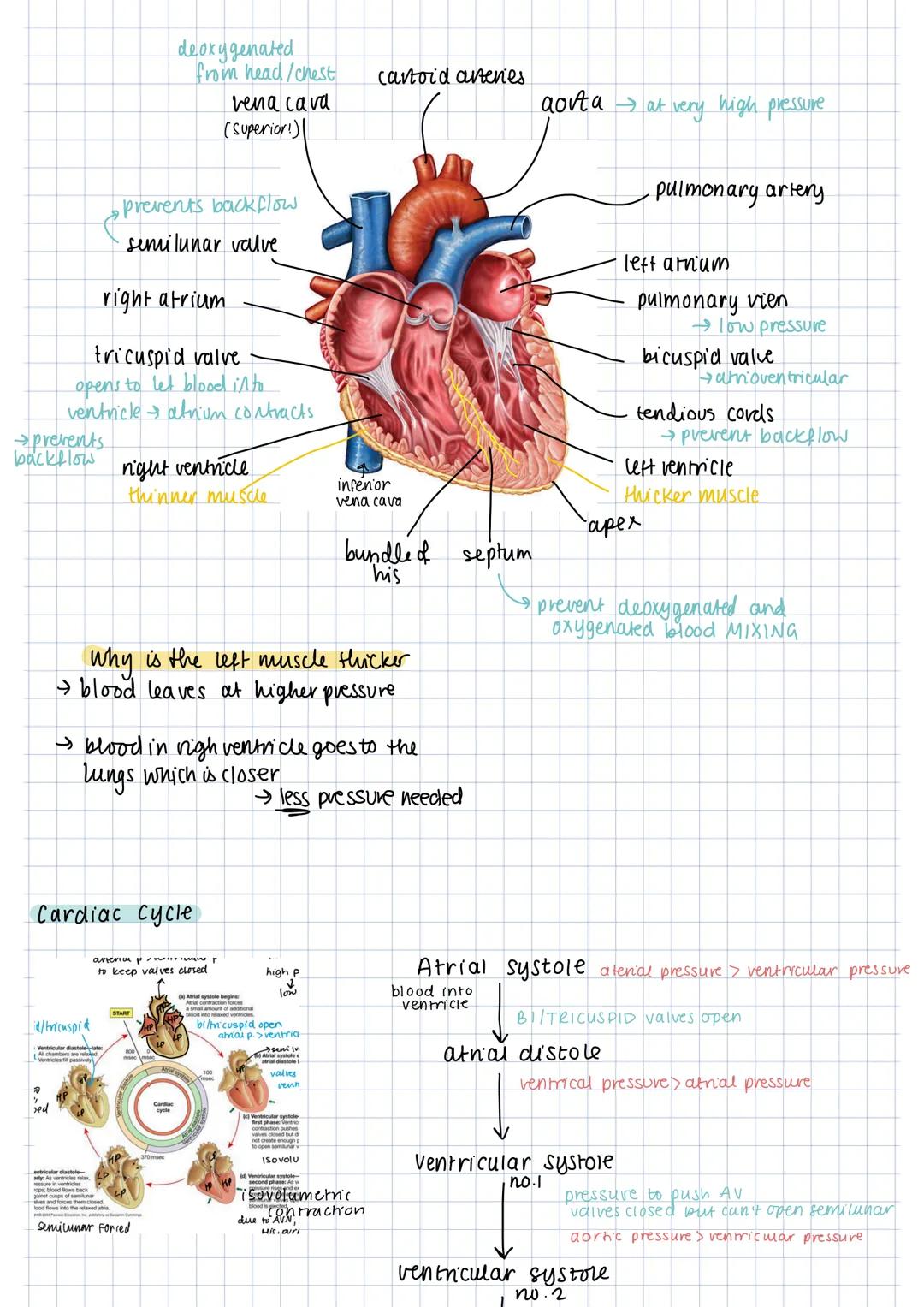
The Heart's Structure and Blood Flow
Your heart has four chambers working in perfect harmony to move blood through your body. Deoxygenated blood returns from the body through the vena cava into the right atrium, then passes through the tricuspid valve to the right ventricle. From there, it travels to the lungs via the pulmonary artery.
After picking up oxygen, blood returns through the pulmonary vein to the left atrium, passes through the bicuspid valve into the left ventricle, and finally exits through the aorta to the body. Special tendinous cords prevent valve backflow, while semilunar valves ensure blood flows in one direction.
The left ventricle has a thicker muscle wall than the right because it needs to generate higher pressure to pump blood throughout the entire body. The right ventricle only needs to pump blood to the nearby lungs, requiring less pressure. The septum separates the chambers, preventing oxygenated and deoxygenated blood from mixing.
Did you know? The pressure difference between chambers is crucial for proper blood flow. When ventricle pressure exceeds atrial pressure, the atrioventricular valves close, preventing backflow and creating the first heart sound ("lub").
2
of 2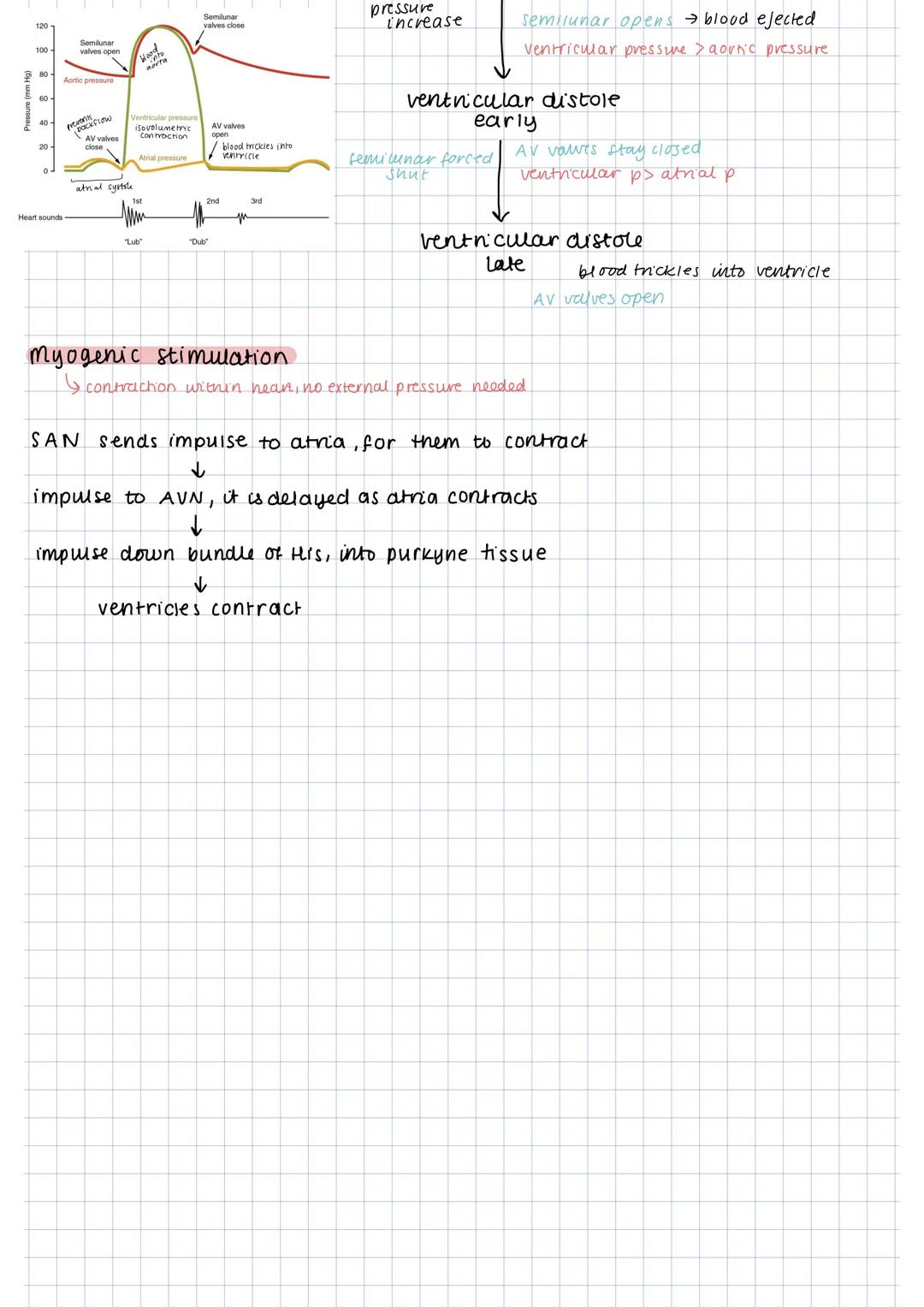
The Cardiac Cycle and Electrical System
The cardiac cycle consists of coordinated contractions (systole) and relaxations (diastole) of the heart chambers. During atrial systole, the atria contract, pushing additional blood into relaxed ventricles through open AV valves. This is followed by ventricular systole, where ventricles contract, closing the AV valves and opening semilunar valves to eject blood.
Blood pressure fluctuates throughout this cycle. When ventricular pressure exceeds aortic pressure , the semilunar valves open. When ventricles relax, pressure drops, closing the semilunar valves and creating the second heart sound ("dub"). Eventually, atrial pressure exceeds ventricular pressure, opening the AV valves for the cycle to repeat.
The heart's electrical system controls these contractions through myogenic stimulation - the heart's ability to contract without external nerve signals. The sinoatrial node (SAN) initiates impulses that spread through the atria. These impulses reach the atrioventricular node (AVN) where they're briefly delayed, allowing atria to fully contract before ventricles.
Remember: The AVN delay is crucial - it ensures atria finish contracting before ventricles begin, optimizing blood flow. Without this delay, the heart's pumping efficiency would be significantly reduced.
We thought you’d never ask...
What is the Knowunity AI companion?
Our AI Companion is a student-focused AI tool that offers more than just answers. Built on millions of Knowunity resources, it provides relevant information, personalised study plans, quizzes, and content directly in the chat, adapting to your individual learning journey.
Where can I download the Knowunity app?
You can download the app from Google Play Store and Apple App Store.
Is Knowunity really free of charge?
That's right! Enjoy free access to study content, connect with fellow students, and get instant help – all at your fingertips.
Similar content
Most popular content in Biology
9C
BiologyCell Biology and Cell structure
cell structures
93,1680
BiologyAQA Biology: Key Concepts
Explore essential AQA Biology topics including Photosynthesis, Respiration, Homeostasis, Genetics, and Ecology. This comprehensive knowledge organizer covers key concepts such as energy transfer, hormonal control, and genetic variation, providing a solid foundation for your studies. Ideal for exam preparation and understanding biological processes.
108,760305
T
BiologyThe functions of subcellular structures - B1 Biology
Flashcards on the different functions of subcellular structures: cell membrane, nucleus, mitochondria, ribosomes, cytoplasm, permant vacuole, chloroplasts and cell wall.
102,7275
1
Biology1.cells Gcse biology question cards
combined science higher biology
92,3144
BiologyA-Level Biology Year 1 Overview
Comprehensive summary of AQA A-Level Biology Year 1, covering key topics such as cellular structure, protein synthesis, immune response, gas exchange, and more. Ideal for exam preparation and understanding biological concepts. Includes detailed insights into cellular processes, biological classification, and the circulatory system.
1214,846691
BiologyBiology paper 1 Summary
Notes for Biology paper 1 contains the full course for AQA higher combined!
104,112106
T
BiologyTypes of cells
biology
101,1860
B
BiologyBiology Paper 1 quiz
this is a simple quiz on key knowledge needed for paper 1
102,7515
C
BiologyCells part 1 function of cells.
About cells and function of cells etc.
119781
Most popular content
9 Sociology
Sociology of Education Overview
Explore comprehensive A-Level Sociology notes on the education system, covering key theories, policies, and sociological perspectives. This resource includes insights on marketisation, gender roles, cultural deprivation, and educational inequalities, providing a thorough understanding of how education shapes social stratification and individual achievement. Ideal for exam preparation and in-depth study.
12102,7953,040
SociologySociology of Families: Comprehensive Revision
Dive into an extensive overview of family dynamics, perspectives, and patterns in sociology. This resource covers key concepts such as family diversity, gender roles, marriage, and the impact of social policies on family structures. Perfect for A-Level Sociology students preparing for Paper 2.
1273,5482,306
CriminologyCriminology: Crime & Punishment Overview
Comprehensive mindmaps covering key concepts in the Crime and Punishment topic for WJEC Criminology Unit 4. This resource includes detailed insights into the Criminal Justice System, crime prevention strategies, sentencing models, and the roles of various agencies. Ideal for A-Level revision, ensuring you grasp essential theories and legislative processes to excel in your exams.
1254,8511,059
SociologyComprehensive Crime & Deviance Overview
Explore an extensive revision of crime and deviance topics, including theories, types of crime, and the impact of media. This resource covers key concepts such as Marxism, functionalism, gender and crime, and the influence of globalization on criminal behavior. Ideal for students seeking a thorough understanding of criminology and its various theories. Type: Full Topic Revision.
1251,6271,399
 English Literature
An Inspector Calls: Character Insights
Explore in-depth analysis and key quotes for characters in J.B. Priestley's 'An Inspector Calls'. This resource covers Gerald Croft, Inspector Goole, Sheila Birling, Mrs. Birling, Eric Birling, and Eva Smith, focusing on themes of class, gender roles, and social responsibility. Ideal for students aiming for Grade 8 and above.
1025,410907
CriminologyWJEC Unit 4 Criminology
Criminology unit 4 detailed revision note
127,144124
C
BiologyCell Biology and Cell structure
cell structures
93,1680
CriminologyCriminology Theories Overview
Explore key criminology theories and their implications on crime and deviance. This comprehensive summary covers biological, psychological, and sociological perspectives, including labelling theory, right realism, and the impact of social campaigns on policy development. Ideal for A-Level criminology students seeking to understand the complexities of criminal behaviour and the factors influencing crime prevention strategies.
129,753210
English LiteratureRomeo and Juliet: Key themes
Key Romeo and Juliet themes and analysed quotes
106,695198
Can't find what you're looking for? Explore other subjects.
Students love us — and so will you.
4.6/5App Store
4.7/5Google Play
The app is very easy to use and well designed. I have found everything I was looking for so far and have been able to learn a lot from the presentations! I will definitely use the app for a class assignment! And of course it also helps a lot as an inspiration.
Stefan SiOS user
This app is really great. There are so many study notes and help [...]. My problem subject is French, for example, and the app has so many options for help. Thanks to this app, I have improved my French. I would recommend it to anyone.
Samantha KlichAndroid user
Wow, I am really amazed. I just tried the app because I've seen it advertised many times and was absolutely stunned. This app is THE HELP you want for school and above all, it offers so many things, such as workouts and fact sheets, which have been VERY helpful to me personally.
AnnaiOS user
Biology66 views·Updated Jun 16, 2026·2 pagesThe Human Circulatory System - A Level Biology Edexcel B Topic 4
Hannah @hannah_studys1012
The heart's intricate cycle of blood pumping is essential for delivering oxygen throughout the body. Understanding how the chambers, valves and electrical system work together reveals how this remarkable organ functions continuously throughout our lives.
1
of 2
Sign up to see the content. It's free!
- Access to all documents
- Improve your grades
- Join milions of students
The Heart's Structure and Blood Flow
Your heart has four chambers working in perfect harmony to move blood through your body. Deoxygenated blood returns from the body through the vena cava into the right atrium, then passes through the tricuspid valve to the right ventricle. From there, it travels to the lungs via the pulmonary artery.
After picking up oxygen, blood returns through the pulmonary vein to the left atrium, passes through the bicuspid valve into the left ventricle, and finally exits through the aorta to the body. Special tendinous cords prevent valve backflow, while semilunar valves ensure blood flows in one direction.
The left ventricle has a thicker muscle wall than the right because it needs to generate higher pressure to pump blood throughout the entire body. The right ventricle only needs to pump blood to the nearby lungs, requiring less pressure. The septum separates the chambers, preventing oxygenated and deoxygenated blood from mixing.
Did you know? The pressure difference between chambers is crucial for proper blood flow. When ventricle pressure exceeds atrial pressure, the atrioventricular valves close, preventing backflow and creating the first heart sound ("lub").
2
of 2Sign up to see the content. It's free!
- Access to all documents
- Improve your grades
- Join milions of students
The Cardiac Cycle and Electrical System
The cardiac cycle consists of coordinated contractions (systole) and relaxations (diastole) of the heart chambers. During atrial systole, the atria contract, pushing additional blood into relaxed ventricles through open AV valves. This is followed by ventricular systole, where ventricles contract, closing the AV valves and opening semilunar valves to eject blood.
Blood pressure fluctuates throughout this cycle. When ventricular pressure exceeds aortic pressure , the semilunar valves open. When ventricles relax, pressure drops, closing the semilunar valves and creating the second heart sound ("dub"). Eventually, atrial pressure exceeds ventricular pressure, opening the AV valves for the cycle to repeat.
The heart's electrical system controls these contractions through myogenic stimulation - the heart's ability to contract without external nerve signals. The sinoatrial node (SAN) initiates impulses that spread through the atria. These impulses reach the atrioventricular node (AVN) where they're briefly delayed, allowing atria to fully contract before ventricles.
Remember: The AVN delay is crucial - it ensures atria finish contracting before ventricles begin, optimizing blood flow. Without this delay, the heart's pumping efficiency would be significantly reduced.
We thought you’d never ask...
What is the Knowunity AI companion?
Our AI Companion is a student-focused AI tool that offers more than just answers. Built on millions of Knowunity resources, it provides relevant information, personalised study plans, quizzes, and content directly in the chat, adapting to your individual learning journey.
Where can I download the Knowunity app?
You can download the app from Google Play Store and Apple App Store.
Is Knowunity really free of charge?
That's right! Enjoy free access to study content, connect with fellow students, and get instant help – all at your fingertips.
Similar content
Most popular content in Biology
9C
BiologyCell Biology and Cell structure
cell structures
93,1680
BiologyAQA Biology: Key Concepts
Explore essential AQA Biology topics including Photosynthesis, Respiration, Homeostasis, Genetics, and Ecology. This comprehensive knowledge organizer covers key concepts such as energy transfer, hormonal control, and genetic variation, providing a solid foundation for your studies. Ideal for exam preparation and understanding biological processes.
108,760305
T
BiologyThe functions of subcellular structures - B1 Biology
Flashcards on the different functions of subcellular structures: cell membrane, nucleus, mitochondria, ribosomes, cytoplasm, permant vacuole, chloroplasts and cell wall.
102,7275
1
Biology1.cells Gcse biology question cards
combined science higher biology
92,3144
BiologyA-Level Biology Year 1 Overview
Comprehensive summary of AQA A-Level Biology Year 1, covering key topics such as cellular structure, protein synthesis, immune response, gas exchange, and more. Ideal for exam preparation and understanding biological concepts. Includes detailed insights into cellular processes, biological classification, and the circulatory system.
1214,846691
BiologyBiology paper 1 Summary
Notes for Biology paper 1 contains the full course for AQA higher combined!
104,112106
T
BiologyTypes of cells
biology
101,1860
B
BiologyBiology Paper 1 quiz
this is a simple quiz on key knowledge needed for paper 1
102,7515
C
BiologyCells part 1 function of cells.
About cells and function of cells etc.
119781
Most popular content
9SociologySociology of Education Overview
Explore comprehensive A-Level Sociology notes on the education system, covering key theories, policies, and sociological perspectives. This resource includes insights on marketisation, gender roles, cultural deprivation, and educational inequalities, providing a thorough understanding of how education shapes social stratification and individual achievement. Ideal for exam preparation and in-depth study.
12102,7953,040
SociologySociology of Families: Comprehensive Revision
Dive into an extensive overview of family dynamics, perspectives, and patterns in sociology. This resource covers key concepts such as family diversity, gender roles, marriage, and the impact of social policies on family structures. Perfect for A-Level Sociology students preparing for Paper 2.
1273,5482,306
CriminologyCriminology: Crime & Punishment Overview
Comprehensive mindmaps covering key concepts in the Crime and Punishment topic for WJEC Criminology Unit 4. This resource includes detailed insights into the Criminal Justice System, crime prevention strategies, sentencing models, and the roles of various agencies. Ideal for A-Level revision, ensuring you grasp essential theories and legislative processes to excel in your exams.
1254,8511,059
SociologyComprehensive Crime & Deviance Overview
Explore an extensive revision of crime and deviance topics, including theories, types of crime, and the impact of media. This resource covers key concepts such as Marxism, functionalism, gender and crime, and the influence of globalization on criminal behavior. Ideal for students seeking a thorough understanding of criminology and its various theories. Type: Full Topic Revision.
1251,6271,399
English LiteratureAn Inspector Calls: Character Insights
Explore in-depth analysis and key quotes for characters in J.B. Priestley's 'An Inspector Calls'. This resource covers Gerald Croft, Inspector Goole, Sheila Birling, Mrs. Birling, Eric Birling, and Eva Smith, focusing on themes of class, gender roles, and social responsibility. Ideal for students aiming for Grade 8 and above.
1025,410907
CriminologyWJEC Unit 4 Criminology
Criminology unit 4 detailed revision note
127,144124
C
BiologyCell Biology and Cell structure
cell structures
93,1680
CriminologyCriminology Theories Overview
Explore key criminology theories and their implications on crime and deviance. This comprehensive summary covers biological, psychological, and sociological perspectives, including labelling theory, right realism, and the impact of social campaigns on policy development. Ideal for A-Level criminology students seeking to understand the complexities of criminal behaviour and the factors influencing crime prevention strategies.
129,753210
English LiteratureRomeo and Juliet: Key themes
Key Romeo and Juliet themes and analysed quotes
106,695198
Can't find what you're looking for? Explore other subjects.
Students love us — and so will you.
4.6/5App Store
4.7/5Google Play
The app is very easy to use and well designed. I have found everything I was looking for so far and have been able to learn a lot from the presentations! I will definitely use the app for a class assignment! And of course it also helps a lot as an inspiration.
Stefan SiOS user
This app is really great. There are so many study notes and help [...]. My problem subject is French, for example, and the app has so many options for help. Thanks to this app, I have improved my French. I would recommend it to anyone.
Samantha KlichAndroid user
Wow, I am really amazed. I just tried the app because I've seen it advertised many times and was absolutely stunned. This app is THE HELP you want for school and above all, it offers so many things, such as workouts and fact sheets, which have been VERY helpful to me personally.
AnnaiOS user