
Biology required practicals are essential hands-on investigations that help you...
 Biology248 views·Updated 15 Jul 2026·6 pages
GCSE Biology Paper 1 Required Practicals (Combined Science)
S
Sophie@sophie_vxxs

1 / 6
1
of 6
Required Practicals - Biology Paper 1
Biology practicals are your chance to see science come alive! In Paper 1, you'll encounter several required experiments that test your practical skills and understanding of biological concepts.
These hands-on activities help you apply what you've learned in class to real scientific investigations. Each practical follows specific methods that you'll need to know for your exams.
Mastering these practicals will boost your confidence in the lab and prepare you for exam questions about experimental procedures and results.
2
of 6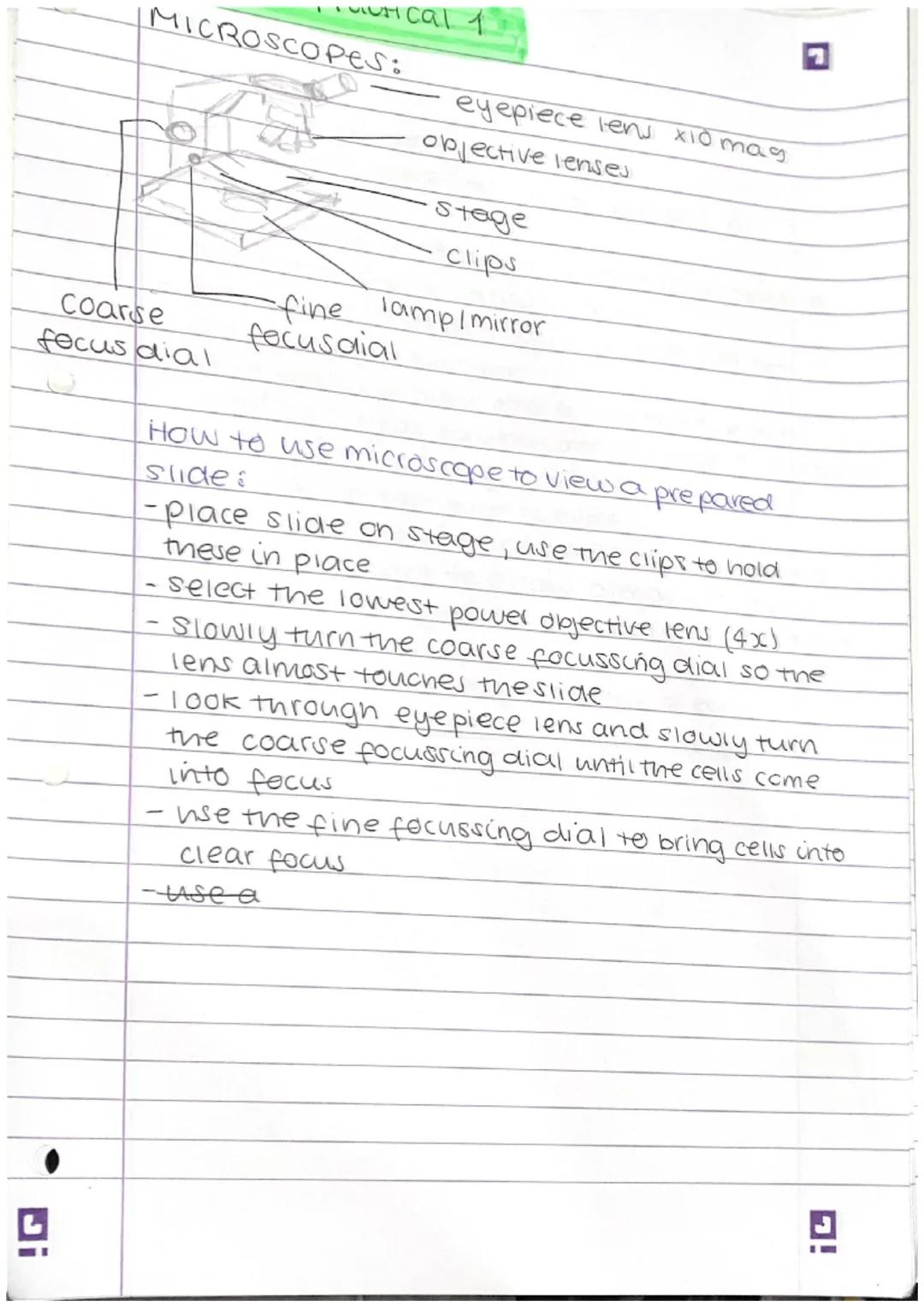
Using Microscopes
Ever wondered how scientists see things too small for the naked eye? Using a microscope properly is a fundamental skill in biology that lets you explore the microscopic world!
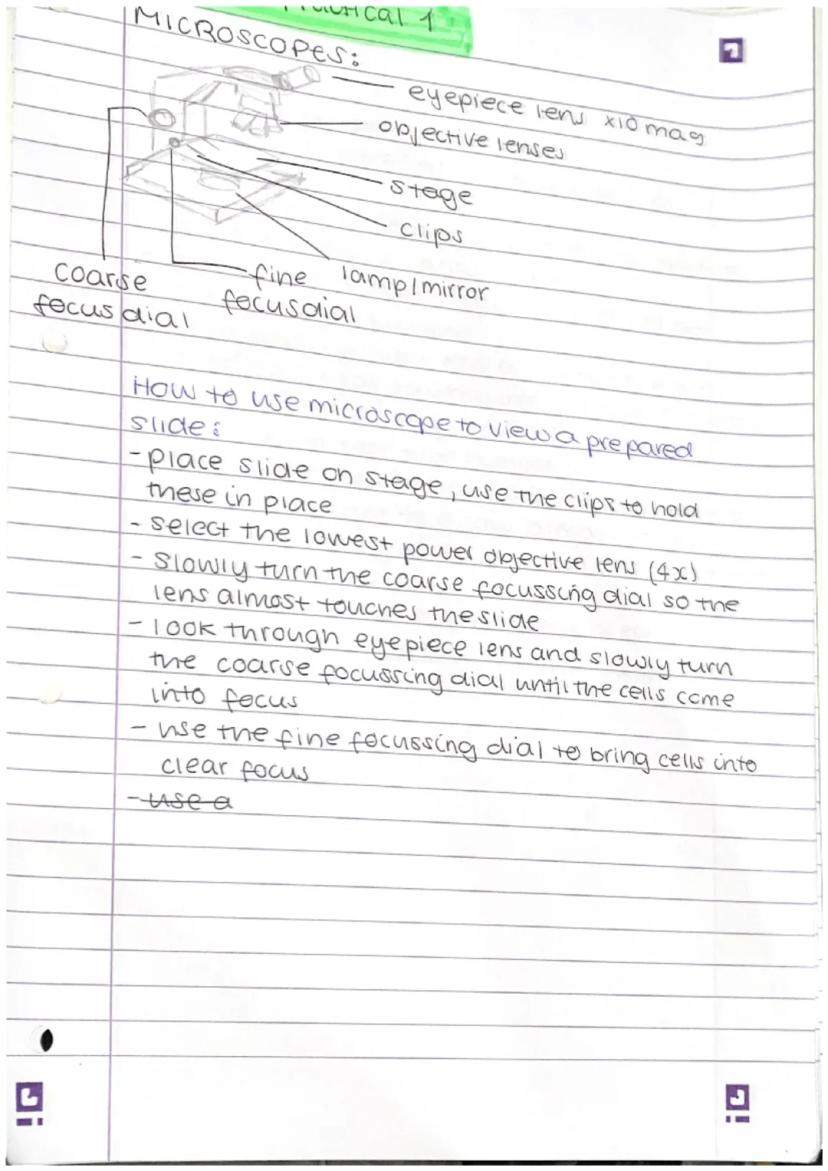
To view a prepared slide, first place it on the stage and secure it with the clips. Select the lowest power objective lens (usually 4x) and carefully turn the coarse focus dial until the lens nearly touches the slide. Looking through the eyepiece lens, slowly adjust the coarse dial until cells become visible, then use the fine focusing dial for a crisp, clear image.
Remember to start with the lowest magnification and work your way up. This technique prevents damaging the slide and helps you locate specimens more easily.
Quick Tip: Total magnification = eyepiece lens magnification × objective lens magnification. For example, if your eyepiece is 10× and your objective lens is 4×, your total magnification is 40×.
3
of 6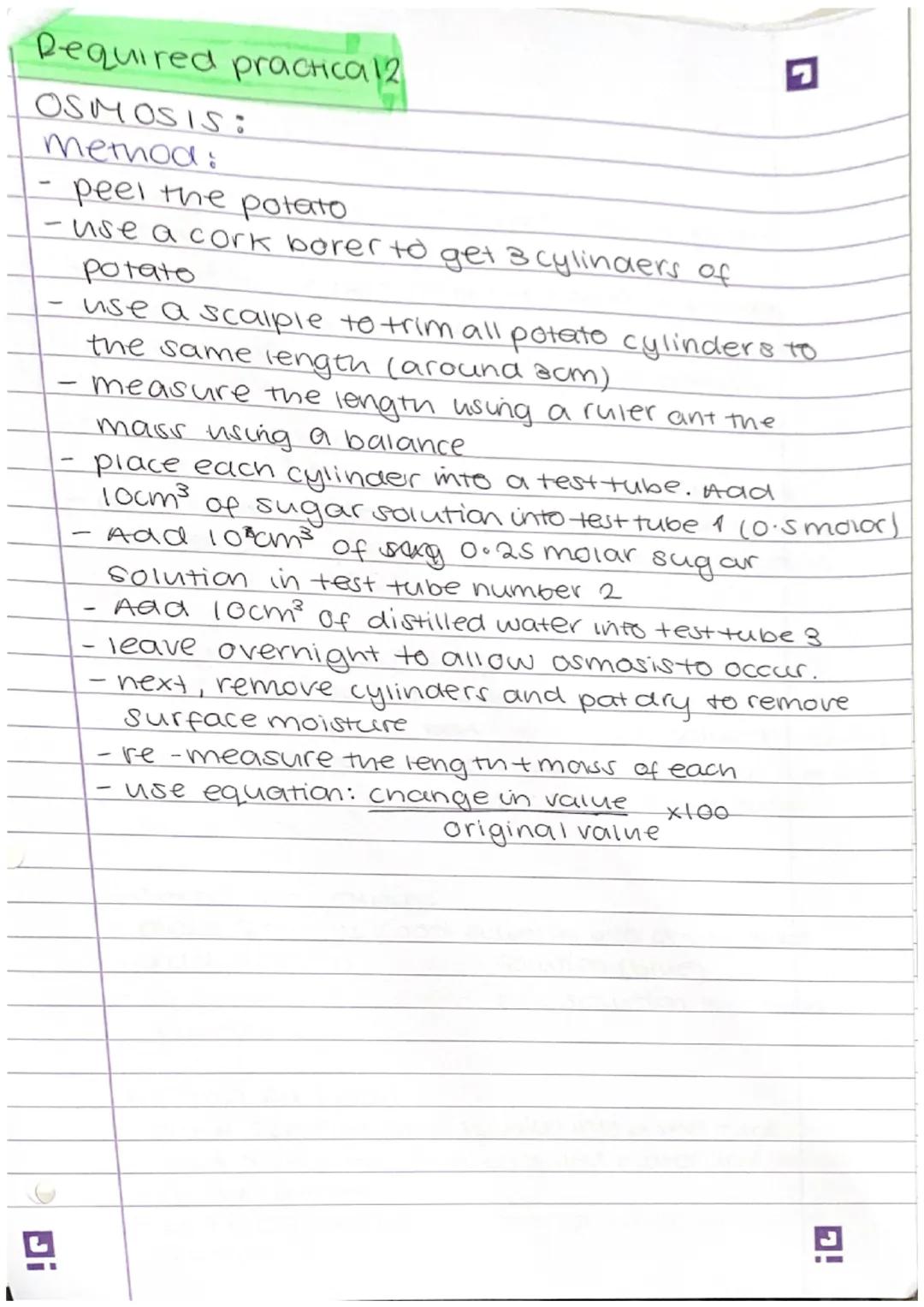
Investigating Osmosis
Osmosis is fascinating! This practical shows how water moves across cell membranes from an area of high water concentration to an area of lower water concentration.
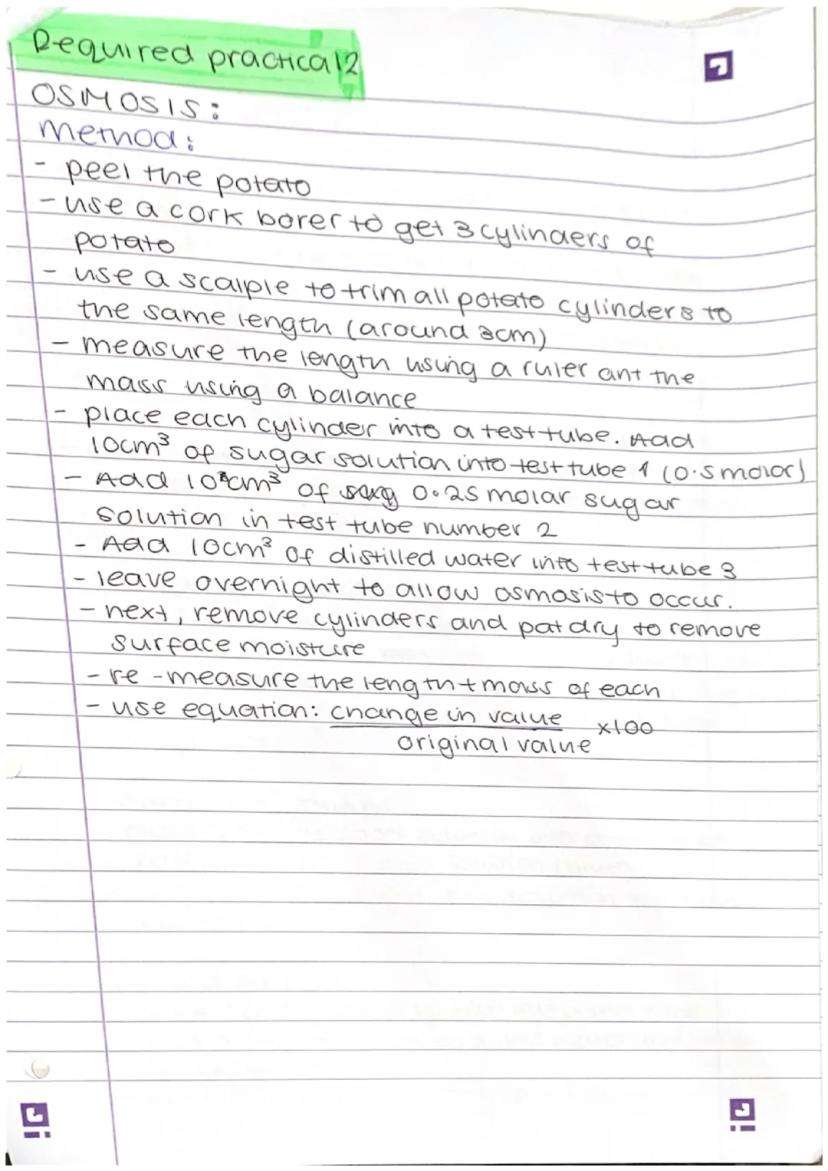
To investigate, you'll prepare potato cylinders of equal length (about 3cm) using a cork borer and scalpel. Carefully measure both the length and mass of each cylinder before placing them in different solutions: 0.5 molar sugar solution, 0.25 molar sugar solution, and distilled water. Leave overnight to allow osmosis to occur.
The next day, pat the cylinders dry and re-measure their length and mass. Calculate the percentage change using the equation: change in value ÷ original value × 100. This shows you exactly how much water moved in or out of the potato tissue.
Remember: Positive values indicate water moving into the potato (gaining mass/length), while negative values show water leaving the potato (losing mass/length).
4
of 6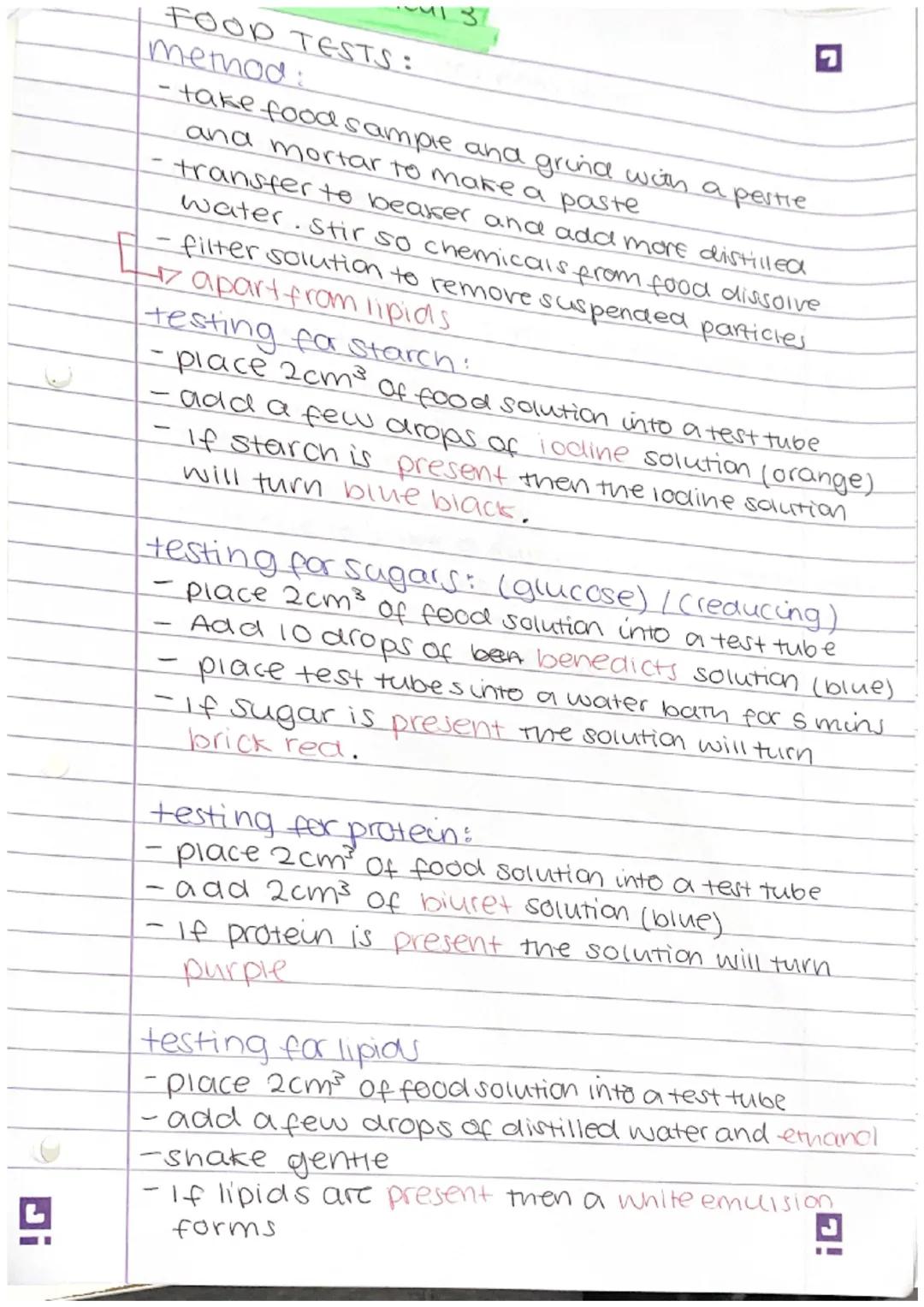
Food Tests
Detecting what nutrients are in food is like being a food detective! These simple tests reveal the presence of key biological molecules.
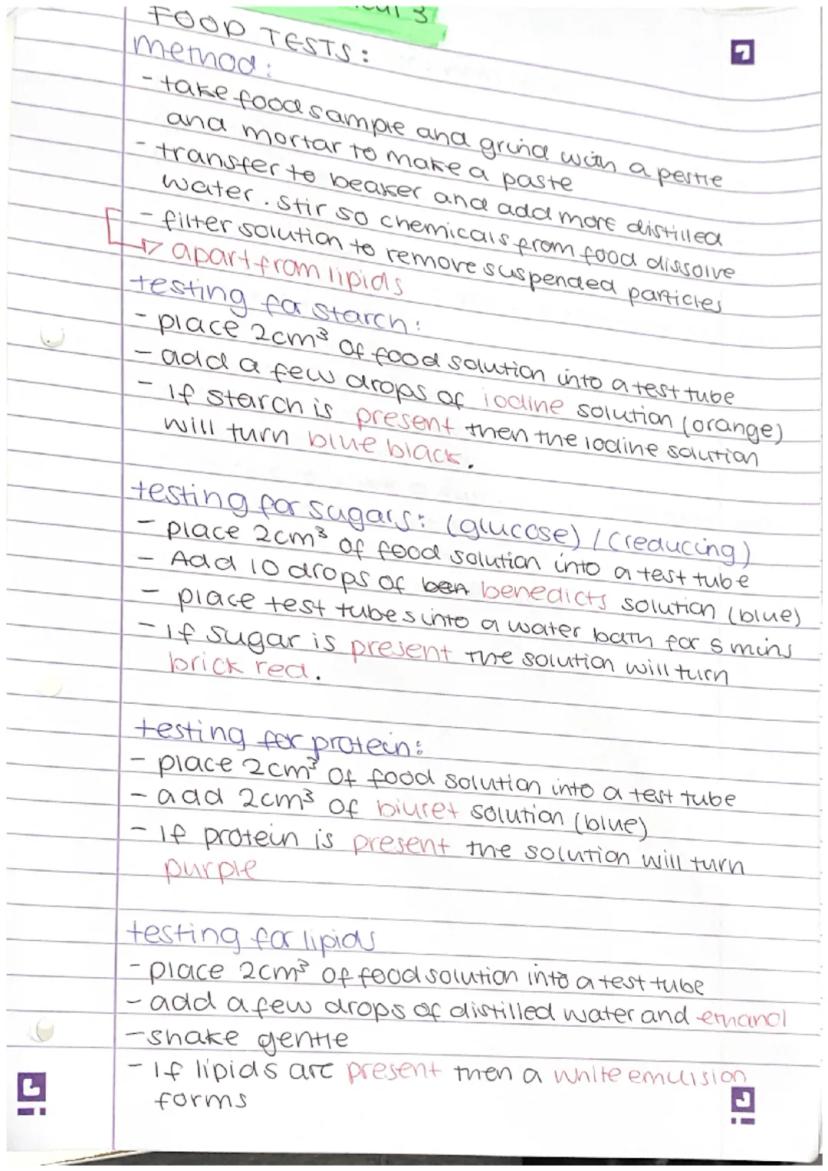
First, prepare your food sample by grinding it into a paste, adding distilled water, and filtering (except for lipid tests). For starch, add iodine solution to your food sample – a blue-black colour confirms its presence. For reducing sugars like glucose, mix with Benedict's solution and heat in a water bath for 5 minutes – a brick-red colour is positive.
Proteins can be detected using Biuret solution, which turns purple when proteins are present. For lipids, mix your food sample with distilled water and ethanol, then shake gently – a white emulsion forms if lipids are present.
Pro Tip: Always use a control sample alongside your test to ensure your reagents are working properly and to compare your results.
5
of 6
Effect of pH on Amylase Activity
Enzymes are picky about their working conditions! This practical investigates how pH affects the rate of amylase enzyme activity when breaking down starch.
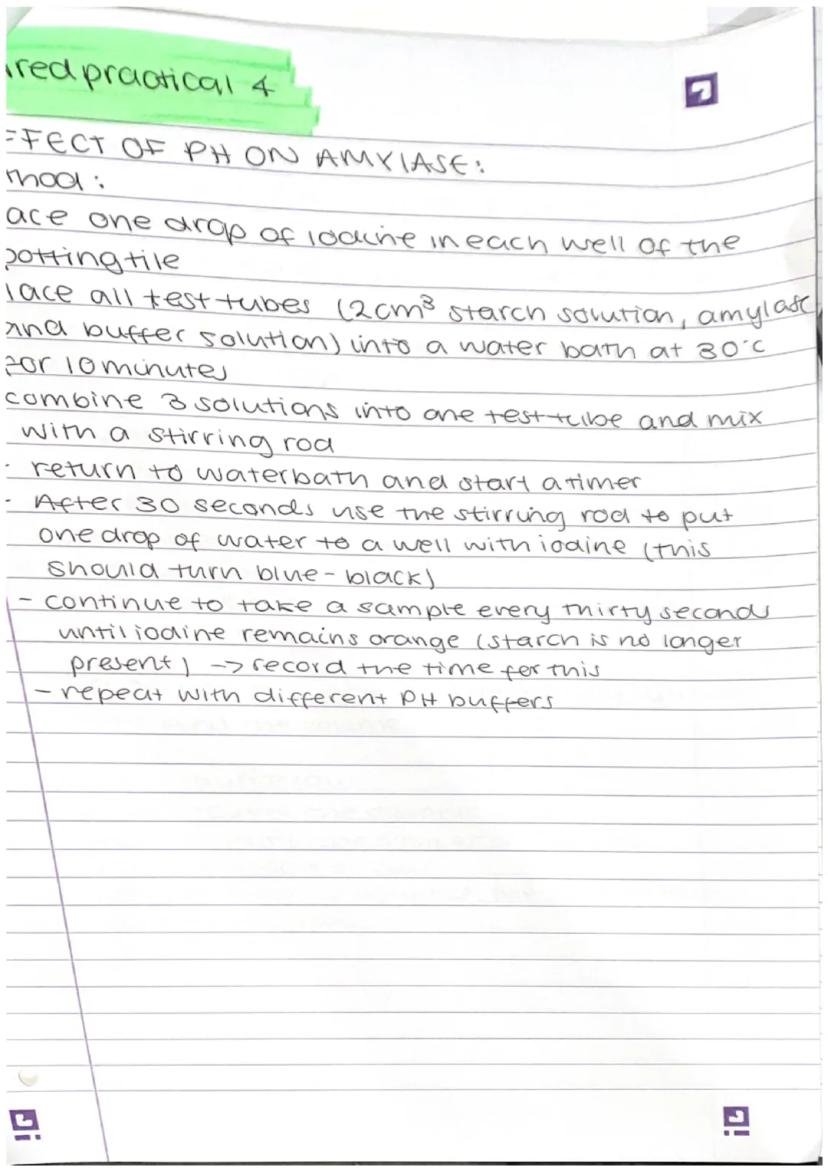
Begin by placing iodine drops in a spotting tile's wells. Then prepare test tubes containing starch solution, amylase and buffer solutions at different pH levels. Place these in a water bath at 30°C for 10 minutes to reach optimal temperature. After combining the solutions in one tube, start timing and take samples every 30 seconds.
Test each sample by adding a drop to the iodine – initially turning blue-black (starch present). Continue until the iodine remains orange, indicating all starch has been digested. Record this time and repeat with different pH buffers.
Understanding Point: The pH where starch disappears fastest is the optimal pH for amylase. For human amylase, this is typically around pH 7 (neutral).
6
of 6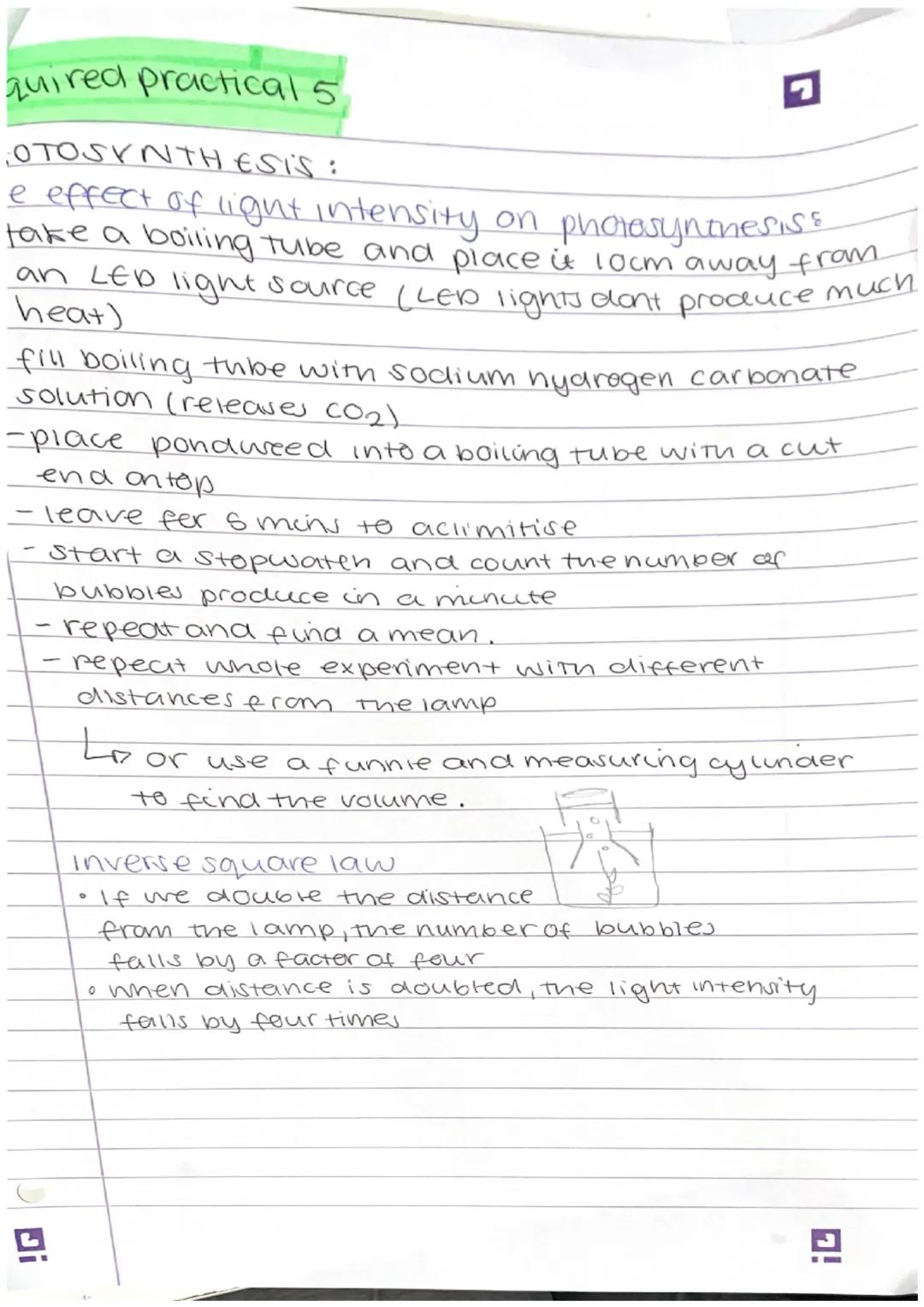
Photosynthesis Investigation
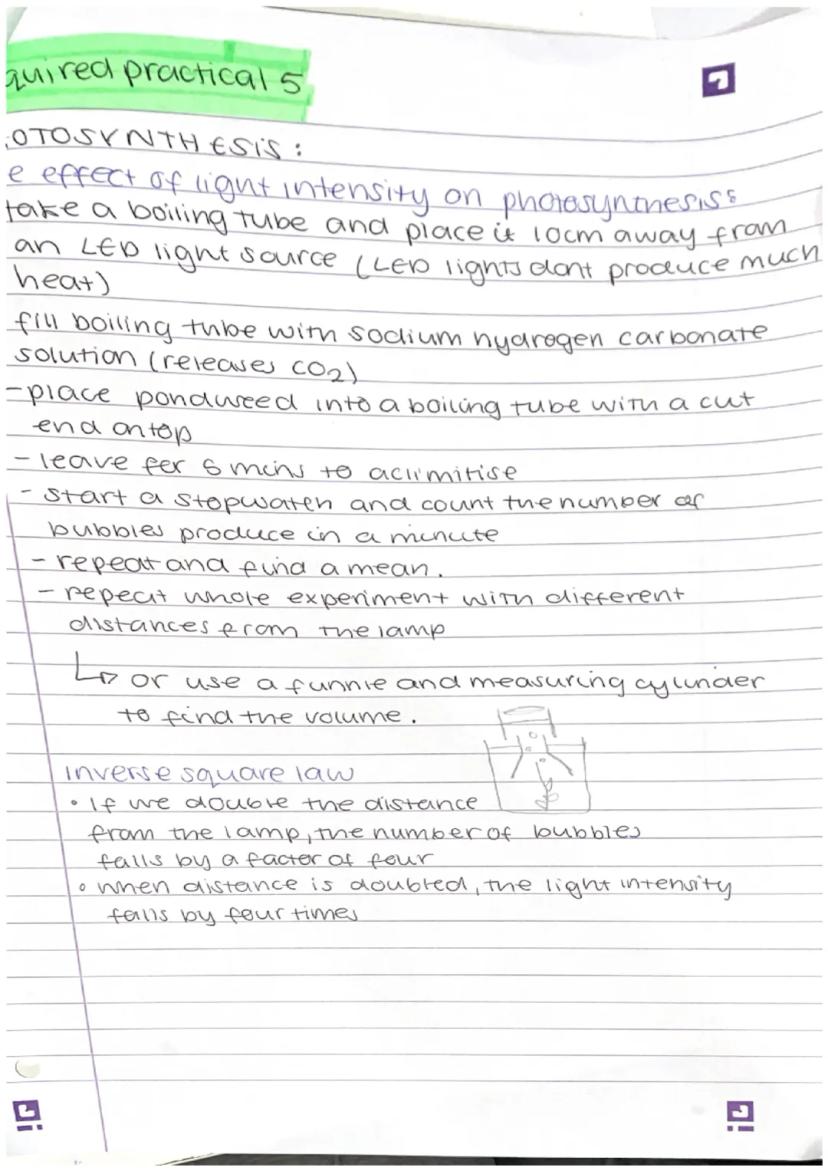
Light powers plant life! This practical shows how light intensity affects the rate of photosynthesis by counting oxygen bubbles produced by pondweed.
Set up your experiment by positioning an LED light source 10cm from a boiling tube filled with sodium hydrogen carbonate solution (which provides CO₂). Place pondweed in the tube with its cut end facing upward and allow 5 minutes for it to adjust. Count the number of bubbles produced in one minute, repeat for accuracy, and calculate the mean.
Next, change the distance between the light and pondweed, and repeat your measurements. The inverse square law explains your results: when you double the distance, the light intensity decreases by a factor of four, which significantly reduces bubble production.
Fascinating Fact: You can also collect the oxygen bubbles using an inverted funnel and measuring cylinder to determine the exact volume of gas produced, giving you more precise data.
We thought you’d never ask...
Our AI Companion is a student-focused AI tool that offers more than just answers. Built on millions of Knowunity resources, it provides relevant information, personalised study plans, quizzes, and content directly in the chat, adapting to your individual learning journey.
You can download the app from Google Play Store and Apple App Store.
That's right! Enjoy free access to study content, connect with fellow students, and get instant help – all at your fingertips.
Similar content
 Combined Science
Most popular content: Experiment
9BiologyGCSE Biology Practicals Overview
Explore essential GCSE Biology practicals covering key concepts such as photosynthesis, enzyme activity, microbial growth, and experimental design. This comprehensive guide includes step-by-step procedures, potential errors, and calculations for each practical, ensuring a solid understanding of biological processes and laboratory techniques.
1016,7621,392
 Physics
GCSE Physics Practical Experiments
Explore essential GCSE Physics practicals for AQA, covering key concepts such as Hooke's Law, wave properties, thermal insulation, and electrical circuits. This comprehensive guide includes step-by-step procedures, variables, and safety considerations for each experiment, ensuring a thorough understanding of practical applications in physics.
1011,413477
BiologyEssential Biology Practicals
Master key AQA Biology practicals with this comprehensive guide covering photosynthesis, microscopy, osmosis, microorganism culture, and enzyme experiments. Perfect for exam preparation, this resource provides step-by-step procedures, safety tips, and essential concepts to enhance your understanding and performance in practical assessments.
91,17226
BiologyBiology Practical Experiments
Explore essential biology practicals including enzyme activity, photosynthesis, microscopy, osmosis, and food tests. This comprehensive guide provides step-by-step procedures and key concepts for each experiment, perfect for students preparing for exams. Enhance your understanding of biological processes and laboratory techniques.
104,395153
BiologyBiology Practical Techniques
Explore essential biology practicals including enzyme activity, osmosis, and food tests. This resource covers step-by-step procedures for experiments on pH effects on enzymes, microbial growth, and photosynthesis rates. Ideal for students preparing for Biology Paper 1, it includes key concepts, potential errors, and calculation methods for accurate results.
106,402313
BiologyEssential Food Tests
Explore key laboratory techniques for testing proteins, sugars, and starch in food samples. This summary covers the Biuret test for proteins, Benedict's test for reducing sugars, and iodine test for starch, providing step-by-step procedures and expected results. Ideal for students studying biological macromolecules and chemical analysis.
93419
BiologyBiology Practical Techniques
Explore essential methods for various biology practicals, including cellular respiration, microscopy, microbial growth, and enzyme activity. This resource covers equipment, procedures, safety precautions, and potential errors, providing a comprehensive guide for students. Ideal for lab preparation and understanding biological processes.
112937
BiologyNutrient Testing Methods
Explore essential food tests for identifying glucose, starch, lipids, and proteins. This summary provides step-by-step procedures for each test, including the use of Sudan III for lipids, iodine for starch, Benedict's solution for glucose, and Biuret for proteins. Perfect for students studying food science and nutrition.
1196626
BiologyGCSE Biology Exam Insights
Explore key concepts from the GCSE Combined Science Biology Paper 1 Higher Tier, including pathogens, nitrate absorption, and heart rate regulation. This summary covers essential topics and exam strategies to enhance your understanding and performance. Ideal for students preparing for their biology exams.
108635
Most popular content in Biology
9C
BiologyCell Biology and Cell structure
cell structures
93,2720
1
Biology1.cells Gcse biology question cards
combined science higher biology
92,3604
T
BiologyThe functions of subcellular structures - B1 Biology
Flashcards on the different functions of subcellular structures: cell membrane, nucleus, mitochondria, ribosomes, cytoplasm, permant vacuole, chloroplasts and cell wall.
102,8215
BiologyAQA Biology: Key Concepts
Explore essential AQA Biology topics including Photosynthesis, Respiration, Homeostasis, Genetics, and Ecology. This comprehensive knowledge organizer covers key concepts such as energy transfer, hormonal control, and genetic variation, providing a solid foundation for your studies. Ideal for exam preparation and understanding biological processes.
108,848307
BiologyA-Level Biology Year 1 Overview
Comprehensive summary of AQA A-Level Biology Year 1, covering key topics such as cellular structure, protein synthesis, immune response, gas exchange, and more. Ideal for exam preparation and understanding biological concepts. Includes detailed insights into cellular processes, biological classification, and the circulatory system.
1214,923697
B
BiologyBiology Paper 1 quiz
this is a simple quiz on key knowledge needed for paper 1
102,7825
T
BiologyTypes of cells
biology
101,2150
C
BiologyCells part 1 function of cells.
About cells and function of cells etc.
119861
B
Biologybiology paper 1
these are some exam questions for biology paper which are more likely to come up in exams
101,8030
Most popular content
9 Sociology
Sociology of Education Overview
Explore comprehensive A-Level Sociology notes on the education system, covering key theories, policies, and sociological perspectives. This resource includes insights on marketisation, gender roles, cultural deprivation, and educational inequalities, providing a thorough understanding of how education shapes social stratification and individual achievement. Ideal for exam preparation and in-depth study.
12102,9303,041
SociologySociology of Families: Comprehensive Revision
Dive into an extensive overview of family dynamics, perspectives, and patterns in sociology. This resource covers key concepts such as family diversity, gender roles, marriage, and the impact of social policies on family structures. Perfect for A-Level Sociology students preparing for Paper 2.
1273,7382,307
CriminologyCriminology: Crime & Punishment Overview
Comprehensive mindmaps covering key concepts in the Crime and Punishment topic for WJEC Criminology Unit 4. This resource includes detailed insights into the Criminal Justice System, crime prevention strategies, sentencing models, and the roles of various agencies. Ideal for A-Level revision, ensuring you grasp essential theories and legislative processes to excel in your exams.
1254,8921,060
SociologyComprehensive Crime & Deviance Overview
Explore an extensive revision of crime and deviance topics, including theories, types of crime, and the impact of media. This resource covers key concepts such as Marxism, functionalism, gender and crime, and the influence of globalization on criminal behavior. Ideal for students seeking a thorough understanding of criminology and its various theories. Type: Full Topic Revision.
1251,6681,400
C
BiologyCell Biology and Cell structure
cell structures
93,2720
CriminologyWJEC Unit 4 Criminology
Criminology unit 4 detailed revision note
127,173125
 English Literature
An Inspector Calls: Character Insights
Explore in-depth analysis and key quotes for characters in J.B. Priestley's 'An Inspector Calls'. This resource covers Gerald Croft, Inspector Goole, Sheila Birling, Mrs. Birling, Eric Birling, and Eva Smith, focusing on themes of class, gender roles, and social responsibility. Ideal for students aiming for Grade 8 and above.
1025,466907
CriminologyCriminology Theories Overview
Explore key criminology theories and their implications on crime and deviance. This comprehensive summary covers biological, psychological, and sociological perspectives, including labelling theory, right realism, and the impact of social campaigns on policy development. Ideal for A-Level criminology students seeking to understand the complexities of criminal behaviour and the factors influencing crime prevention strategies.
129,769210
SociologySociological Theories Overview
Comprehensive revision of key sociological theories including Functionalism, Marxism, Feminism, and Interpretivism. Explore concepts like value freedom, identity formation, and the critique of social control. Ideal for AQA A-Level Sociology students preparing for exams. This summary covers essential theories and their implications in sociology, providing a clear understanding of each perspective.
1231,474846
Students love us — and so will you.
4.6/5App Store
4.7/5Google Play
The app is very easy to use and well designed. I have found everything I was looking for so far and have been able to learn a lot from the presentations! I will definitely use the app for a class assignment! And of course it also helps a lot as an inspiration.
Stefan SiOS user
This app is really great. There are so many study notes and help [...]. My problem subject is French, for example, and the app has so many options for help. Thanks to this app, I have improved my French. I would recommend it to anyone.
Samantha KlichAndroid user
Wow, I am really amazed. I just tried the app because I've seen it advertised many times and was absolutely stunned. This app is THE HELP you want for school and above all, it offers so many things, such as workouts and fact sheets, which have been VERY helpful to me personally.
AnnaiOS user
Biology248 views·Updated 15 Jul 2026·6 pagesGCSE Biology Paper 1 Required Practicals (Combined Science)
S
Sophie@sophie_vxxs
Biology required practicals are essential hands-on investigations that help you understand key biological concepts. These practicals develop your scientific skills while demonstrating important biological processes in action.
1
of 6
Sign up to see the content. It's free!
- Access to all documents
- Improve your grades
- Join milions of students
By signing up you accept Terms of Service and Privacy Policy
Required Practicals - Biology Paper 1
Biology practicals are your chance to see science come alive! In Paper 1, you'll encounter several required experiments that test your practical skills and understanding of biological concepts.
These hands-on activities help you apply what you've learned in class to real scientific investigations. Each practical follows specific methods that you'll need to know for your exams.
Mastering these practicals will boost your confidence in the lab and prepare you for exam questions about experimental procedures and results.
2
of 6Sign up to see the content. It's free!
- Access to all documents
- Improve your grades
- Join milions of students
By signing up you accept Terms of Service and Privacy Policy
Using Microscopes
Ever wondered how scientists see things too small for the naked eye? Using a microscope properly is a fundamental skill in biology that lets you explore the microscopic world!
To view a prepared slide, first place it on the stage and secure it with the clips. Select the lowest power objective lens (usually 4x) and carefully turn the coarse focus dial until the lens nearly touches the slide. Looking through the eyepiece lens, slowly adjust the coarse dial until cells become visible, then use the fine focusing dial for a crisp, clear image.
Remember to start with the lowest magnification and work your way up. This technique prevents damaging the slide and helps you locate specimens more easily.
Quick Tip: Total magnification = eyepiece lens magnification × objective lens magnification. For example, if your eyepiece is 10× and your objective lens is 4×, your total magnification is 40×.
3
of 6Sign up to see the content. It's free!
- Access to all documents
- Improve your grades
- Join milions of students
By signing up you accept Terms of Service and Privacy Policy
Investigating Osmosis
Osmosis is fascinating! This practical shows how water moves across cell membranes from an area of high water concentration to an area of lower water concentration.
To investigate, you'll prepare potato cylinders of equal length (about 3cm) using a cork borer and scalpel. Carefully measure both the length and mass of each cylinder before placing them in different solutions: 0.5 molar sugar solution, 0.25 molar sugar solution, and distilled water. Leave overnight to allow osmosis to occur.
The next day, pat the cylinders dry and re-measure their length and mass. Calculate the percentage change using the equation: change in value ÷ original value × 100. This shows you exactly how much water moved in or out of the potato tissue.
Remember: Positive values indicate water moving into the potato (gaining mass/length), while negative values show water leaving the potato (losing mass/length).
4
of 6Sign up to see the content. It's free!
- Access to all documents
- Improve your grades
- Join milions of students
By signing up you accept Terms of Service and Privacy Policy
Food Tests
Detecting what nutrients are in food is like being a food detective! These simple tests reveal the presence of key biological molecules.
First, prepare your food sample by grinding it into a paste, adding distilled water, and filtering (except for lipid tests). For starch, add iodine solution to your food sample – a blue-black colour confirms its presence. For reducing sugars like glucose, mix with Benedict's solution and heat in a water bath for 5 minutes – a brick-red colour is positive.
Proteins can be detected using Biuret solution, which turns purple when proteins are present. For lipids, mix your food sample with distilled water and ethanol, then shake gently – a white emulsion forms if lipids are present.
Pro Tip: Always use a control sample alongside your test to ensure your reagents are working properly and to compare your results.
5
of 6Sign up to see the content. It's free!
- Access to all documents
- Improve your grades
- Join milions of students
By signing up you accept Terms of Service and Privacy Policy
Effect of pH on Amylase Activity
Enzymes are picky about their working conditions! This practical investigates how pH affects the rate of amylase enzyme activity when breaking down starch.
Begin by placing iodine drops in a spotting tile's wells. Then prepare test tubes containing starch solution, amylase and buffer solutions at different pH levels. Place these in a water bath at 30°C for 10 minutes to reach optimal temperature. After combining the solutions in one tube, start timing and take samples every 30 seconds.
Test each sample by adding a drop to the iodine – initially turning blue-black (starch present). Continue until the iodine remains orange, indicating all starch has been digested. Record this time and repeat with different pH buffers.
Understanding Point: The pH where starch disappears fastest is the optimal pH for amylase. For human amylase, this is typically around pH 7 (neutral).
6
of 6Sign up to see the content. It's free!
- Access to all documents
- Improve your grades
- Join milions of students
By signing up you accept Terms of Service and Privacy Policy
Photosynthesis Investigation
Light powers plant life! This practical shows how light intensity affects the rate of photosynthesis by counting oxygen bubbles produced by pondweed.
Set up your experiment by positioning an LED light source 10cm from a boiling tube filled with sodium hydrogen carbonate solution (which provides CO₂). Place pondweed in the tube with its cut end facing upward and allow 5 minutes for it to adjust. Count the number of bubbles produced in one minute, repeat for accuracy, and calculate the mean.
Next, change the distance between the light and pondweed, and repeat your measurements. The inverse square law explains your results: when you double the distance, the light intensity decreases by a factor of four, which significantly reduces bubble production.
Fascinating Fact: You can also collect the oxygen bubbles using an inverted funnel and measuring cylinder to determine the exact volume of gas produced, giving you more precise data.
We thought you’d never ask...
Our AI Companion is a student-focused AI tool that offers more than just answers. Built on millions of Knowunity resources, it provides relevant information, personalised study plans, quizzes, and content directly in the chat, adapting to your individual learning journey.
You can download the app from Google Play Store and Apple App Store.
That's right! Enjoy free access to study content, connect with fellow students, and get instant help – all at your fingertips.
Similar content
Most popular content: Experiment
9BiologyGCSE Biology Practicals Overview
Explore essential GCSE Biology practicals covering key concepts such as photosynthesis, enzyme activity, microbial growth, and experimental design. This comprehensive guide includes step-by-step procedures, potential errors, and calculations for each practical, ensuring a solid understanding of biological processes and laboratory techniques.
1016,7621,392
PhysicsGCSE Physics Practical Experiments
Explore essential GCSE Physics practicals for AQA, covering key concepts such as Hooke's Law, wave properties, thermal insulation, and electrical circuits. This comprehensive guide includes step-by-step procedures, variables, and safety considerations for each experiment, ensuring a thorough understanding of practical applications in physics.
1011,413477
BiologyEssential Biology Practicals
Master key AQA Biology practicals with this comprehensive guide covering photosynthesis, microscopy, osmosis, microorganism culture, and enzyme experiments. Perfect for exam preparation, this resource provides step-by-step procedures, safety tips, and essential concepts to enhance your understanding and performance in practical assessments.
91,17226
BiologyBiology Practical Experiments
Explore essential biology practicals including enzyme activity, photosynthesis, microscopy, osmosis, and food tests. This comprehensive guide provides step-by-step procedures and key concepts for each experiment, perfect for students preparing for exams. Enhance your understanding of biological processes and laboratory techniques.
104,395153
BiologyBiology Practical Techniques
Explore essential biology practicals including enzyme activity, osmosis, and food tests. This resource covers step-by-step procedures for experiments on pH effects on enzymes, microbial growth, and photosynthesis rates. Ideal for students preparing for Biology Paper 1, it includes key concepts, potential errors, and calculation methods for accurate results.
106,402313
BiologyEssential Food Tests
Explore key laboratory techniques for testing proteins, sugars, and starch in food samples. This summary covers the Biuret test for proteins, Benedict's test for reducing sugars, and iodine test for starch, providing step-by-step procedures and expected results. Ideal for students studying biological macromolecules and chemical analysis.
93419
BiologyBiology Practical Techniques
Explore essential methods for various biology practicals, including cellular respiration, microscopy, microbial growth, and enzyme activity. This resource covers equipment, procedures, safety precautions, and potential errors, providing a comprehensive guide for students. Ideal for lab preparation and understanding biological processes.
112937
BiologyNutrient Testing Methods
Explore essential food tests for identifying glucose, starch, lipids, and proteins. This summary provides step-by-step procedures for each test, including the use of Sudan III for lipids, iodine for starch, Benedict's solution for glucose, and Biuret for proteins. Perfect for students studying food science and nutrition.
1196626
BiologyGCSE Biology Exam Insights
Explore key concepts from the GCSE Combined Science Biology Paper 1 Higher Tier, including pathogens, nitrate absorption, and heart rate regulation. This summary covers essential topics and exam strategies to enhance your understanding and performance. Ideal for students preparing for their biology exams.
108635
Most popular content in Biology
9C
BiologyCell Biology and Cell structure
cell structures
93,2720
1
Biology1.cells Gcse biology question cards
combined science higher biology
92,3604
T
BiologyThe functions of subcellular structures - B1 Biology
Flashcards on the different functions of subcellular structures: cell membrane, nucleus, mitochondria, ribosomes, cytoplasm, permant vacuole, chloroplasts and cell wall.
102,8215
BiologyAQA Biology: Key Concepts
Explore essential AQA Biology topics including Photosynthesis, Respiration, Homeostasis, Genetics, and Ecology. This comprehensive knowledge organizer covers key concepts such as energy transfer, hormonal control, and genetic variation, providing a solid foundation for your studies. Ideal for exam preparation and understanding biological processes.
108,848307
BiologyA-Level Biology Year 1 Overview
Comprehensive summary of AQA A-Level Biology Year 1, covering key topics such as cellular structure, protein synthesis, immune response, gas exchange, and more. Ideal for exam preparation and understanding biological concepts. Includes detailed insights into cellular processes, biological classification, and the circulatory system.
1214,923697
B
BiologyBiology Paper 1 quiz
this is a simple quiz on key knowledge needed for paper 1
102,7825
T
BiologyTypes of cells
biology
101,2150
C
BiologyCells part 1 function of cells.
About cells and function of cells etc.
119861
B
Biologybiology paper 1
these are some exam questions for biology paper which are more likely to come up in exams
101,8030
Most popular content
9SociologySociology of Education Overview
Explore comprehensive A-Level Sociology notes on the education system, covering key theories, policies, and sociological perspectives. This resource includes insights on marketisation, gender roles, cultural deprivation, and educational inequalities, providing a thorough understanding of how education shapes social stratification and individual achievement. Ideal for exam preparation and in-depth study.
12102,9303,041
SociologySociology of Families: Comprehensive Revision
Dive into an extensive overview of family dynamics, perspectives, and patterns in sociology. This resource covers key concepts such as family diversity, gender roles, marriage, and the impact of social policies on family structures. Perfect for A-Level Sociology students preparing for Paper 2.
1273,7382,307
CriminologyCriminology: Crime & Punishment Overview
Comprehensive mindmaps covering key concepts in the Crime and Punishment topic for WJEC Criminology Unit 4. This resource includes detailed insights into the Criminal Justice System, crime prevention strategies, sentencing models, and the roles of various agencies. Ideal for A-Level revision, ensuring you grasp essential theories and legislative processes to excel in your exams.
1254,8921,060
SociologyComprehensive Crime & Deviance Overview
Explore an extensive revision of crime and deviance topics, including theories, types of crime, and the impact of media. This resource covers key concepts such as Marxism, functionalism, gender and crime, and the influence of globalization on criminal behavior. Ideal for students seeking a thorough understanding of criminology and its various theories. Type: Full Topic Revision.
1251,6681,400
C
BiologyCell Biology and Cell structure
cell structures
93,2720
CriminologyWJEC Unit 4 Criminology
Criminology unit 4 detailed revision note
127,173125
English LiteratureAn Inspector Calls: Character Insights
Explore in-depth analysis and key quotes for characters in J.B. Priestley's 'An Inspector Calls'. This resource covers Gerald Croft, Inspector Goole, Sheila Birling, Mrs. Birling, Eric Birling, and Eva Smith, focusing on themes of class, gender roles, and social responsibility. Ideal for students aiming for Grade 8 and above.
1025,466907
CriminologyCriminology Theories Overview
Explore key criminology theories and their implications on crime and deviance. This comprehensive summary covers biological, psychological, and sociological perspectives, including labelling theory, right realism, and the impact of social campaigns on policy development. Ideal for A-Level criminology students seeking to understand the complexities of criminal behaviour and the factors influencing crime prevention strategies.
129,769210
SociologySociological Theories Overview
Comprehensive revision of key sociological theories including Functionalism, Marxism, Feminism, and Interpretivism. Explore concepts like value freedom, identity formation, and the critique of social control. Ideal for AQA A-Level Sociology students preparing for exams. This summary covers essential theories and their implications in sociology, providing a clear understanding of each perspective.
1231,474846
Students love us — and so will you.
4.6/5App Store
4.7/5Google Play
The app is very easy to use and well designed. I have found everything I was looking for so far and have been able to learn a lot from the presentations! I will definitely use the app for a class assignment! And of course it also helps a lot as an inspiration.
Stefan SiOS user
This app is really great. There are so many study notes and help [...]. My problem subject is French, for example, and the app has so many options for help. Thanks to this app, I have improved my French. I would recommend it to anyone.
Samantha KlichAndroid user
Wow, I am really amazed. I just tried the app because I've seen it advertised many times and was absolutely stunned. This app is THE HELP you want for school and above all, it offers so many things, such as workouts and fact sheets, which have been VERY helpful to me personally.
AnnaiOS user