
The circulatory system, reproductive cycles, plant biology, and biodiversity might... Show more
 Sociology
 English Literature
Sign up to see the contentIt's free!
Access to all documents
Improve your grades
Join milions of students
Knowunity AI
Subjects
Triangle Congruence and Similarity Theorems
Triangle Properties and Classification
Linear Equations and Graphs
Geometric Angle Relationships
Trigonometric Functions and Identities
Equation Solving Techniques
Circle Geometry Fundamentals
Division Operations and Methods
Basic Differentiation Rules
Exponent and Logarithm Properties
Show all topics
Human Organ Systems
Reproductive Cell Cycles
Biological Sciences Subdisciplines
Cellular Energy Metabolism
Autotrophic Energy Processes
Inheritance Patterns and Principles
Biomolecular Structure and Organization
Cell Cycle and Division Mechanics
Cellular Organization and Development
Biological Structural Organization
Show all topics
Chemical Sciences and Applications
Atomic Structure and Composition
Molecular Electron Structure Representation
Atomic Electron Behavior
Matter Properties and Water
Mole Concept and Calculations
Gas Laws and Behavior
Periodic Table Organization
Chemical Thermodynamics Fundamentals
Chemical Bond Types and Properties
Show all topics
European Renaissance and Enlightenment
European Cultural Movements 800-1920
American Revolution Era 1763-1797
American Civil War 1861-1865
Global Imperial Systems
Mongol and Chinese Dynasties
U.S. Presidents and World Leaders
Historical Sources and Documentation
World Wars Era and Impact
World Religious Systems
Show all topics
Classic and Contemporary Novels
Literary Character Analysis
Rhetorical Theory and Practice
Classic Literary Narratives
Reading Analysis and Interpretation
Narrative Structure and Techniques
English Language Components
Influential English-Language Authors
Basic Sentence Structure
Narrative Voice and Perspective
Show all topics
94
•
Updated Mar 30, 2026
•
shannon b
@shannon07
The circulatory system, reproductive cycles, plant biology, and biodiversity might... Show more
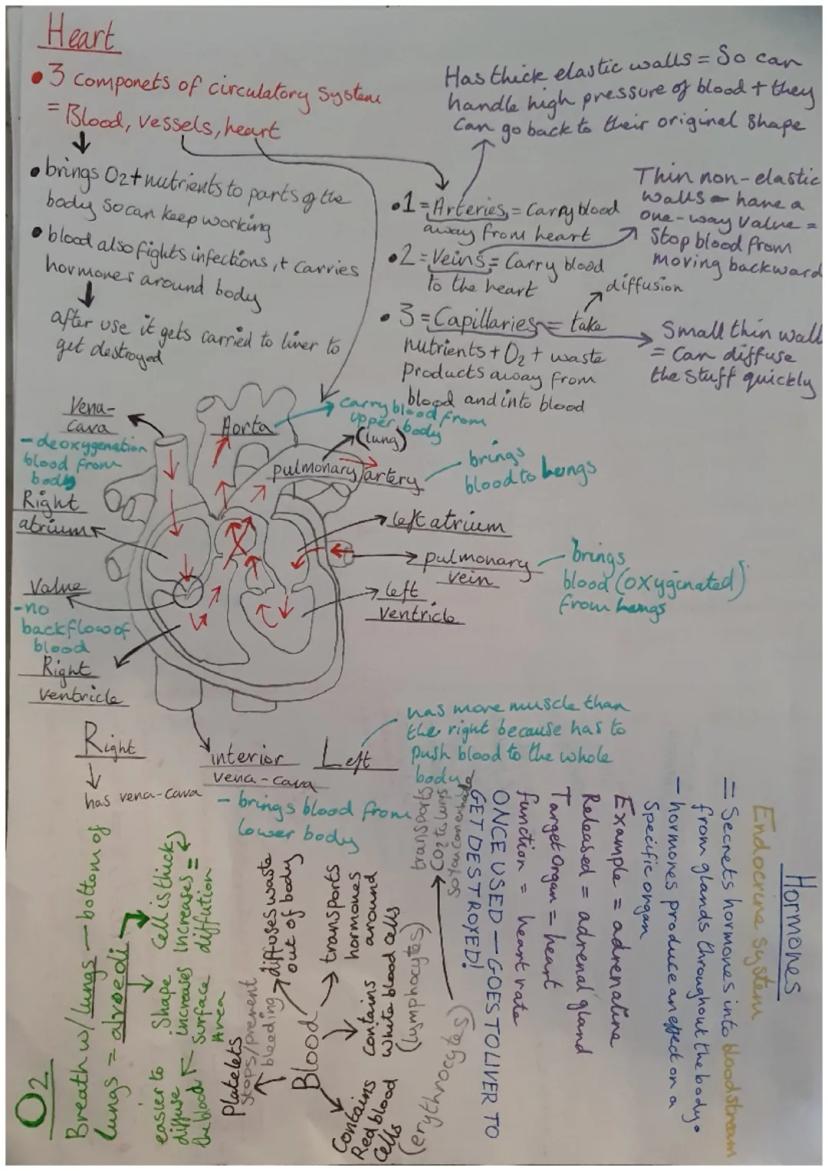
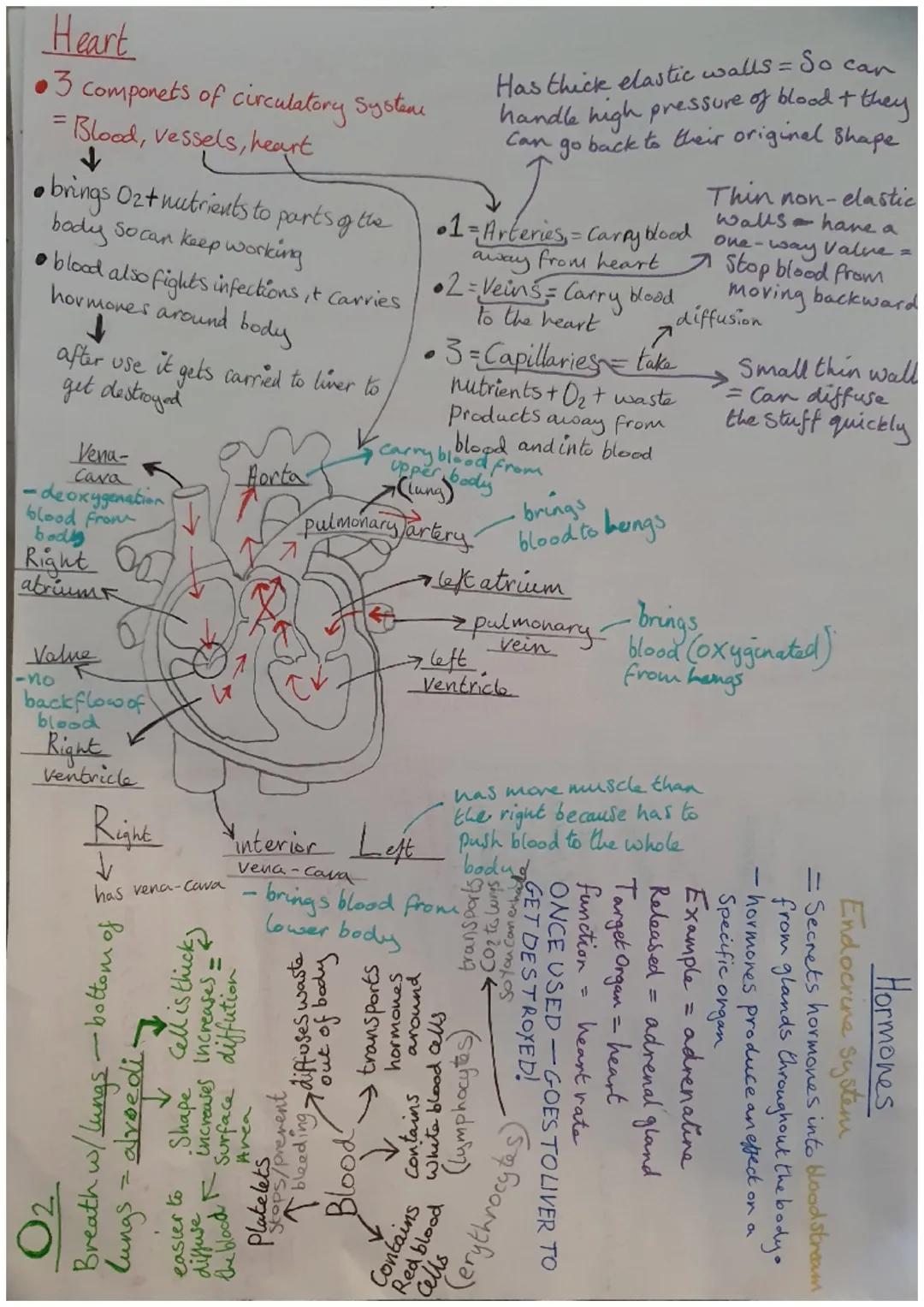
Your circulatory system has three main parts that work like a delivery service for your body - blood, vessels, and your heart. Blood carries oxygen and nutrients to every part of your body whilst also fighting infections and transporting hormones.
Your heart has four chambers that pump blood in a specific pattern. The right side receives deoxygenated blood from your body and sends it to your lungs, whilst the left side pumps oxygenated blood back around your entire body. The left ventricle is stronger because it has to push blood much further.
Blood vessels come in three types: arteries carry blood away from your heart with thick, elastic walls to handle high pressure. Veins bring blood back to your heart with thin walls and one-way valves to prevent backflow. Capillaries are tiny vessels where the actual exchange happens - they're so thin that oxygen, nutrients, and waste can easily move between blood and body tissues.
Quick Tip: Remember that your adrenaline hormone from your adrenal glands directly affects your heart rate - that's why your heart races when you're excited or scared!
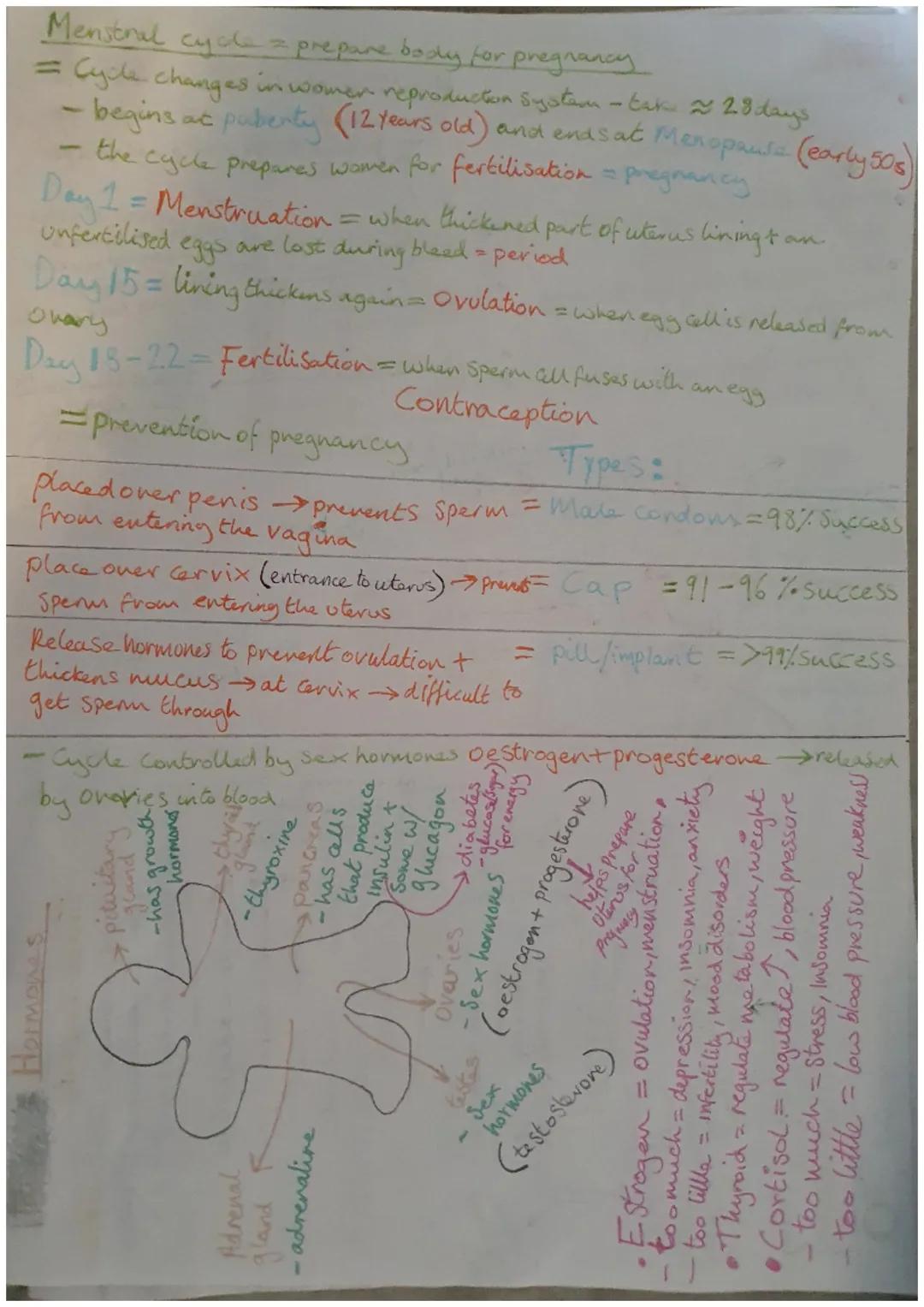
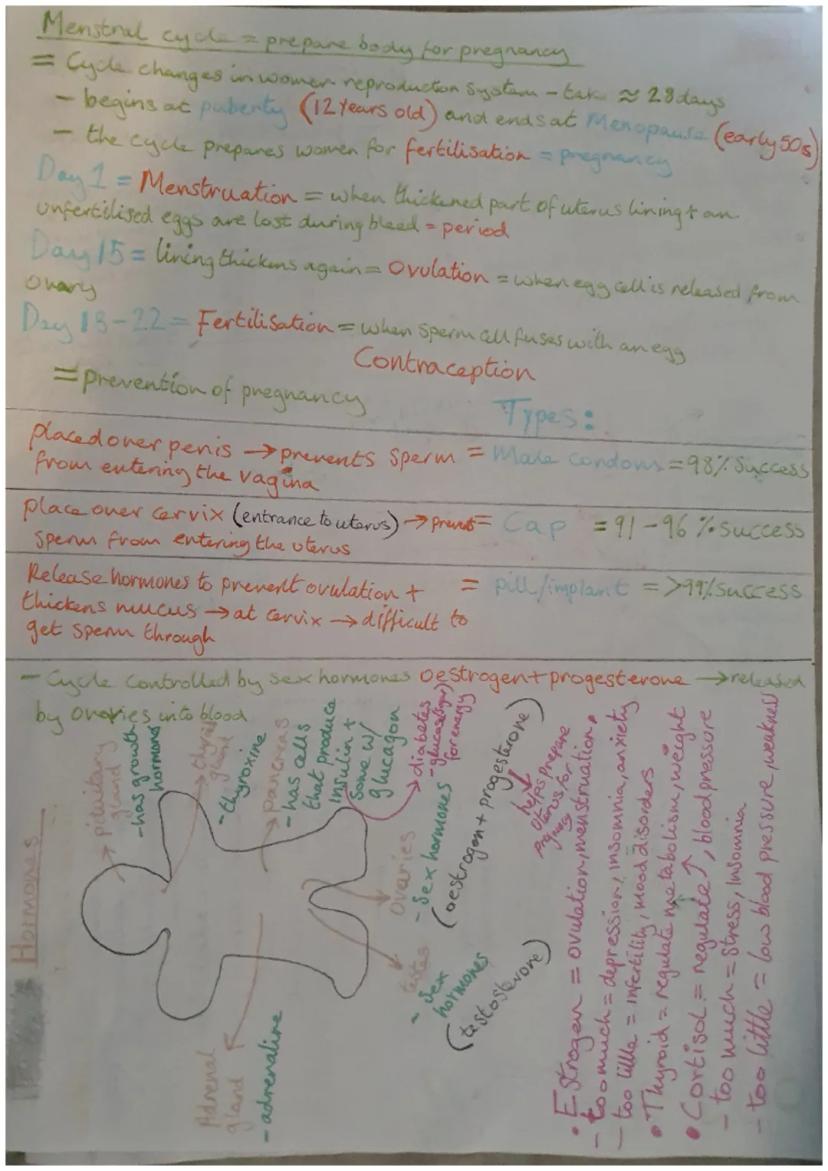
The menstrual cycle is your body's monthly preparation for potential pregnancy, lasting about 28 days from puberty to menopause. Day 1 starts with menstruation (your period), when the thick uterus lining breaks down. Around day 15, ovulation happens - that's when an egg gets released from the ovary.
Sex hormones like oestrogen and progesterone control this entire cycle. Oestrogen helps prepare your uterus and triggers ovulation, whilst progesterone maintains the uterus lining. When these hormones are out of balance, you might experience mood changes, fertility issues, or other health problems.
Contraception prevents pregnancy through different methods with varying success rates. Condoms (98% effective) block sperm physically, whilst hormonal methods like the pill or implants (99% effective) prevent ovulation and thicken cervical mucus to stop sperm getting through.
Your body produces loads of other important hormones too - your thyroid makes thyroxine for metabolism, your pancreas produces insulin for blood sugar, and your adrenal glands release adrenaline for stress responses. Each one has a specific job keeping you healthy.
Key Point: Your endocrine system releases hormones into your bloodstream, but once they're used, they get destroyed by your liver - that's why your body needs to keep making more!
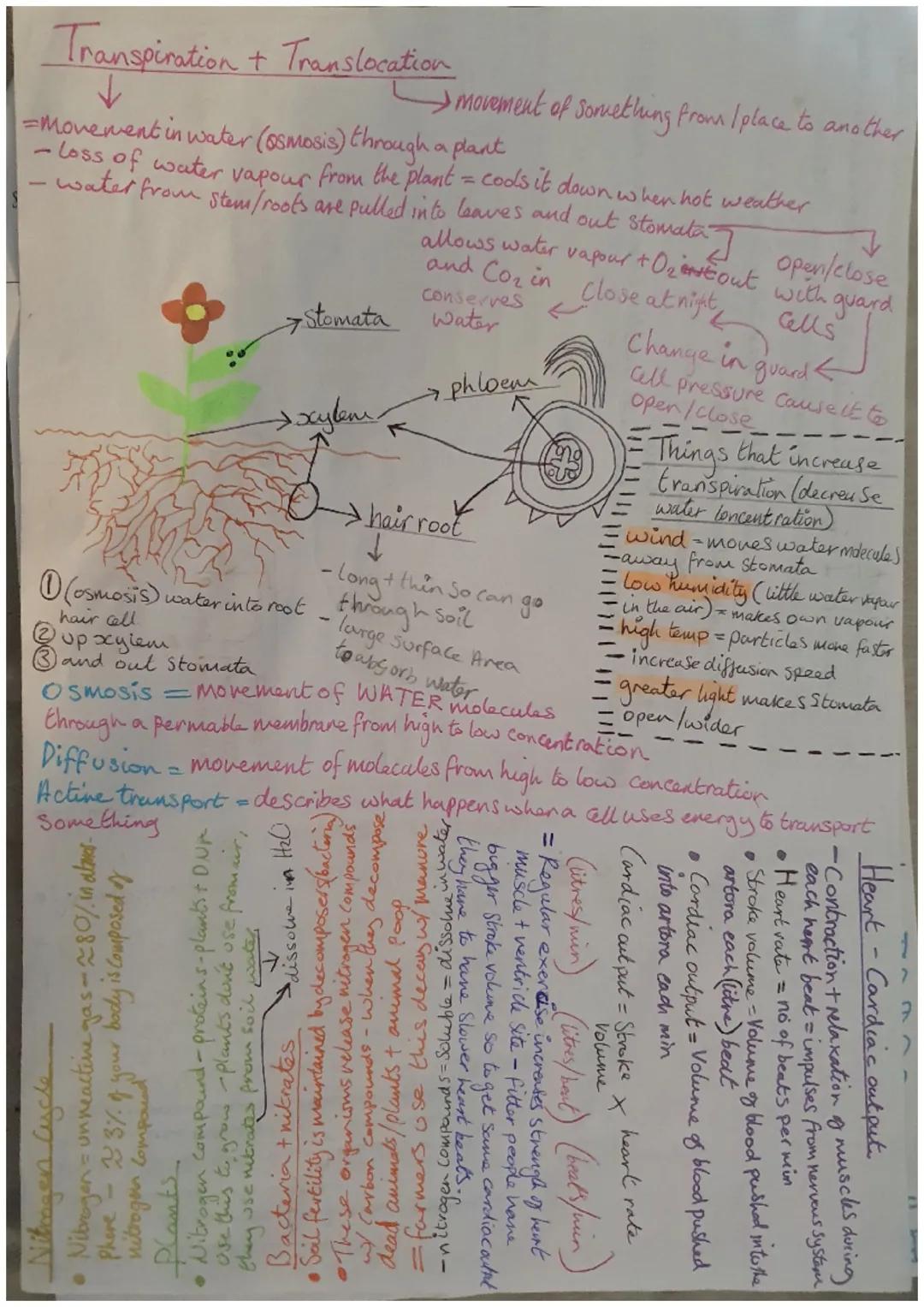
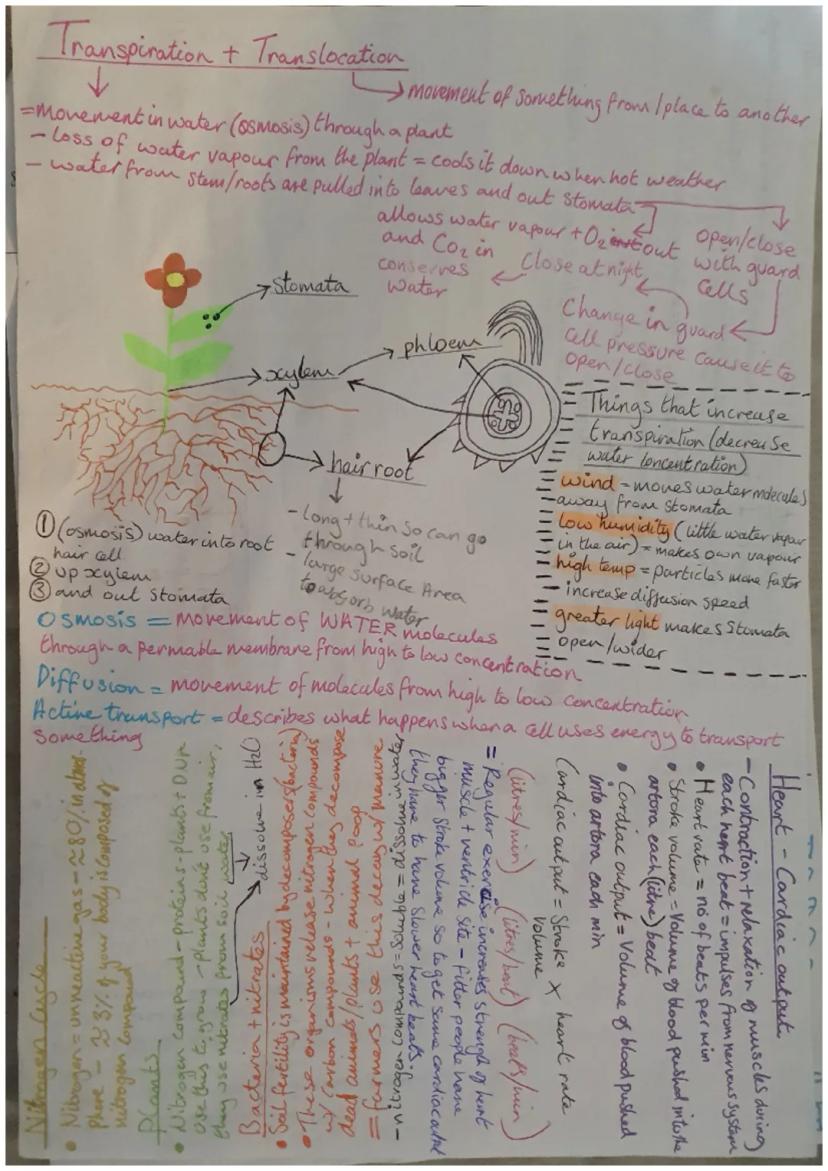
Transpiration is basically how plants sweat - water moves up from roots through the xylem and evaporates out through tiny holes called stomata. This cooling system works faster when it's windy, hot, bright, or when humidity is low. Plants can open and close their stomata using guard cells to control water loss.
Osmosis moves water from high to low concentration through membranes, whilst diffusion moves any molecules the same way. When cells need energy to transport something against the natural flow, that's called active transport.
Plants need nitrogen compounds to make proteins and DNA, but they can't use the nitrogen gas that makes up 80% of our atmosphere. Instead, they rely on soil bacteria that convert nitrogen gas into nitrates that dissolve in water. When plants and animals decompose, bacteria release these nitrogen compounds back into the soil.
Your cardiac output (how much blood your heart pumps per minute) equals your heart rate times stroke volume. Regular exercise makes your heart muscle stronger, so fit people actually have slower heart rates because each heartbeat pumps more blood.
Cool Fact: About 23% of your body is made of nitrogen compounds - you're literally built from the same stuff that plants use to grow!
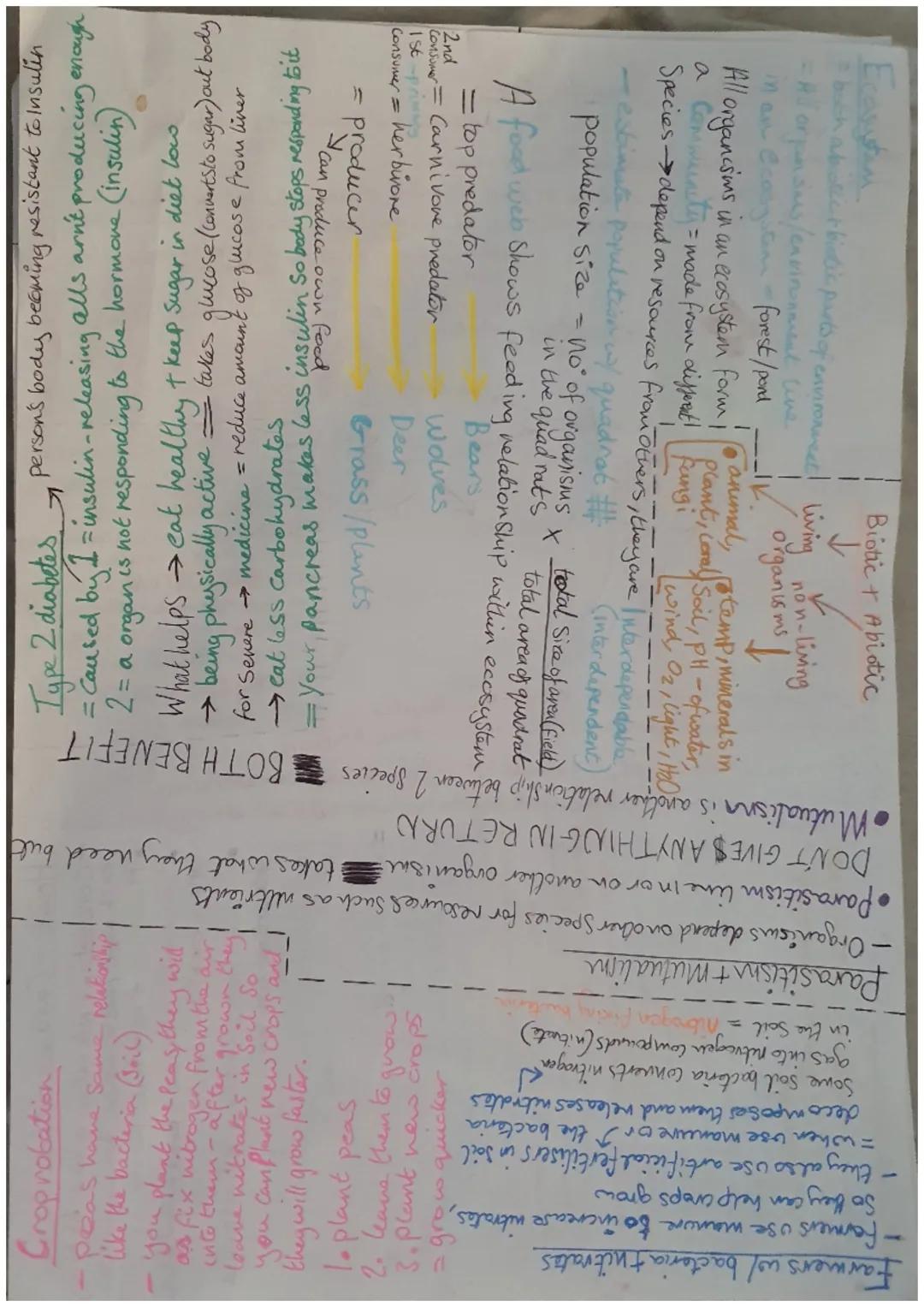
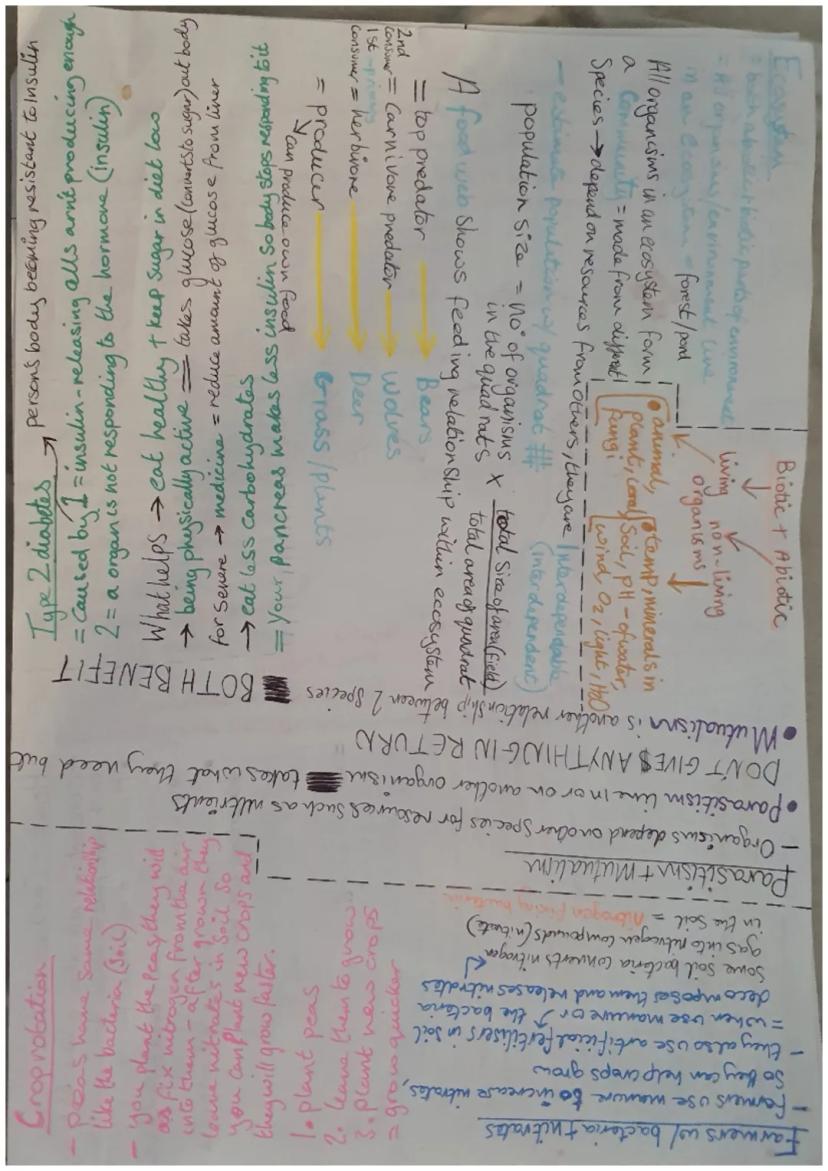
Farmers boost soil fertility by adding manure or artificial fertilisers that bacteria break down into nitrates. Clever farmers plant peas first because they work with nitrogen-fixing bacteria - these bacteria convert air nitrogen into soil nitrates, making the next crops grow faster.
Parasitism is when one organism benefits whilst harming another (like ticks on animals), but mutualism means both species benefit . These relationships show how species in ecosystems are interdependent - they all rely on each other for survival.
An ecosystem includes both living (biotic) and non-living (abiotic) parts. Scientists count populations using quadrats - small sampling squares that help estimate how many organisms live in larger areas. Food webs show who eats whom, from producers (plants) through primary consumers (herbivores) to top predators.
Type 2 diabetes happens when your pancreas doesn't make enough insulin or your body becomes resistant to it. You can manage it by eating less sugar and carbs, staying physically active to use up glucose, and sometimes taking medicine to reduce glucose production.
Smart Strategy: The nitrogen cycle shows how nothing gets wasted in nature - bacteria constantly recycle nitrogen compounds between soil, plants, animals, and the atmosphere!
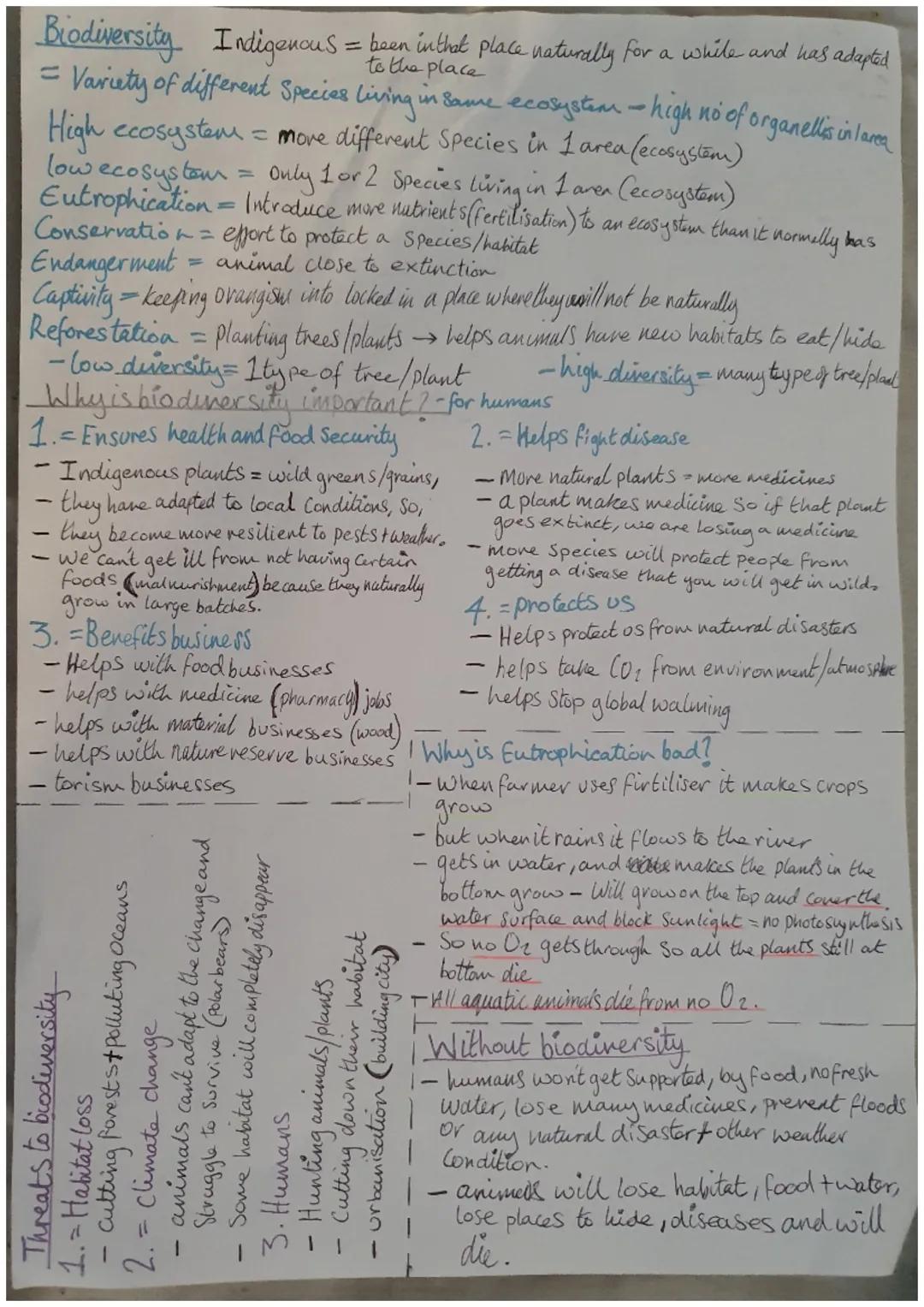
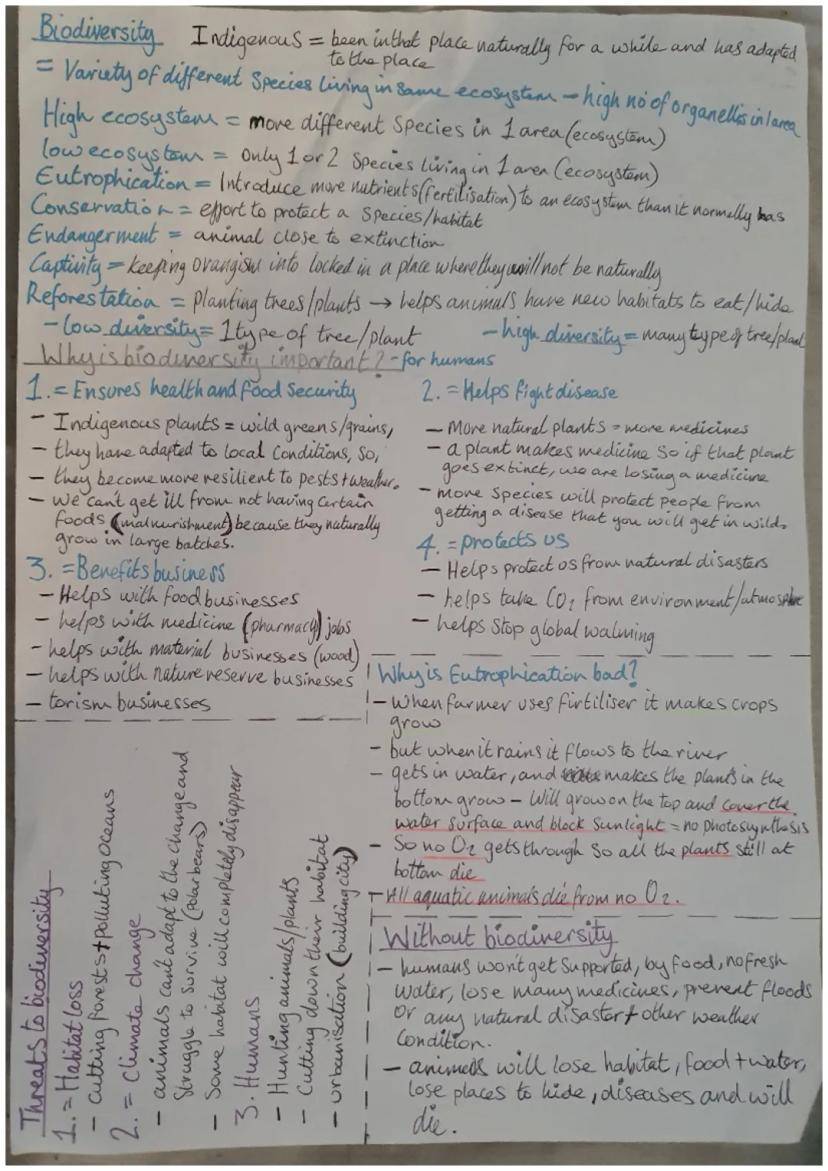
Biodiversity means having lots of different species living in the same ecosystem - high biodiversity is like a bustling city with many different residents, whilst low biodiversity is more like a quiet village. Indigenous species have naturally adapted to their local environment over time, making them perfectly suited to their habitat.
Why should you care about biodiversity? First, it ensures food security because indigenous plants are naturally resistant to local pests and weather. Second, more plant species means more potential medicines - many drugs come from natural compounds. Third, biodiversity supports businesses from farming to tourism.
The biggest threats to biodiversity come from habitat loss (cutting forests, building cities), climate change (animals can't adapt fast enough), and human activities like hunting. Eutrophication happens when fertilisers wash into rivers, causing algae to bloom and block sunlight, killing underwater plants and fish.
Conservation efforts try to protect endangered species and their habitats. Methods include creating nature reserves, breeding programmes, habitat restoration, and laws protecting threatened animals. Without biodiversity, humans lose food sources, medicines, flood protection, and natural disaster defence.
Reality Check: Eutrophication might sound harmless, but it creates dead zones in water where nothing can survive - that's why responsible farming matters!
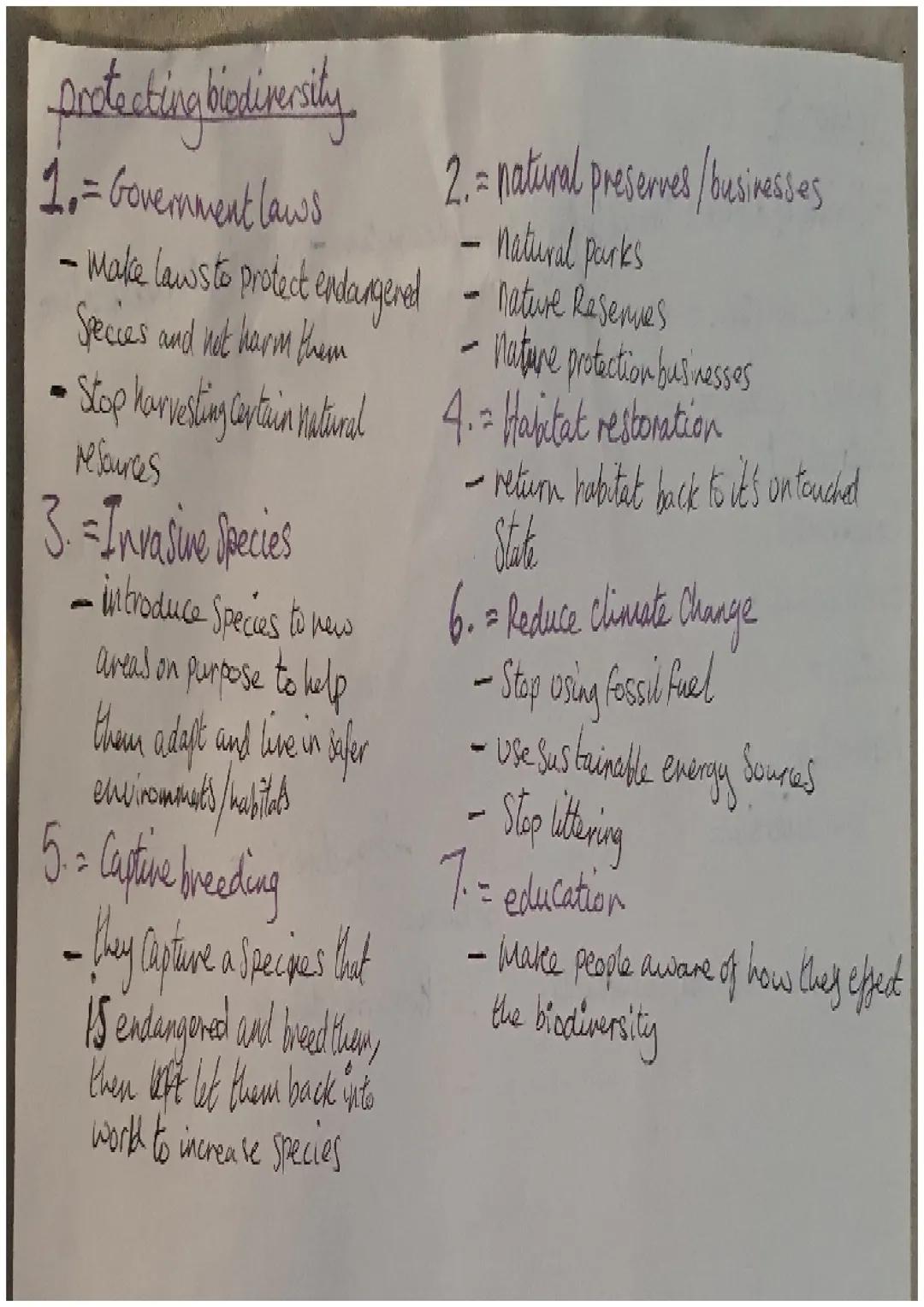
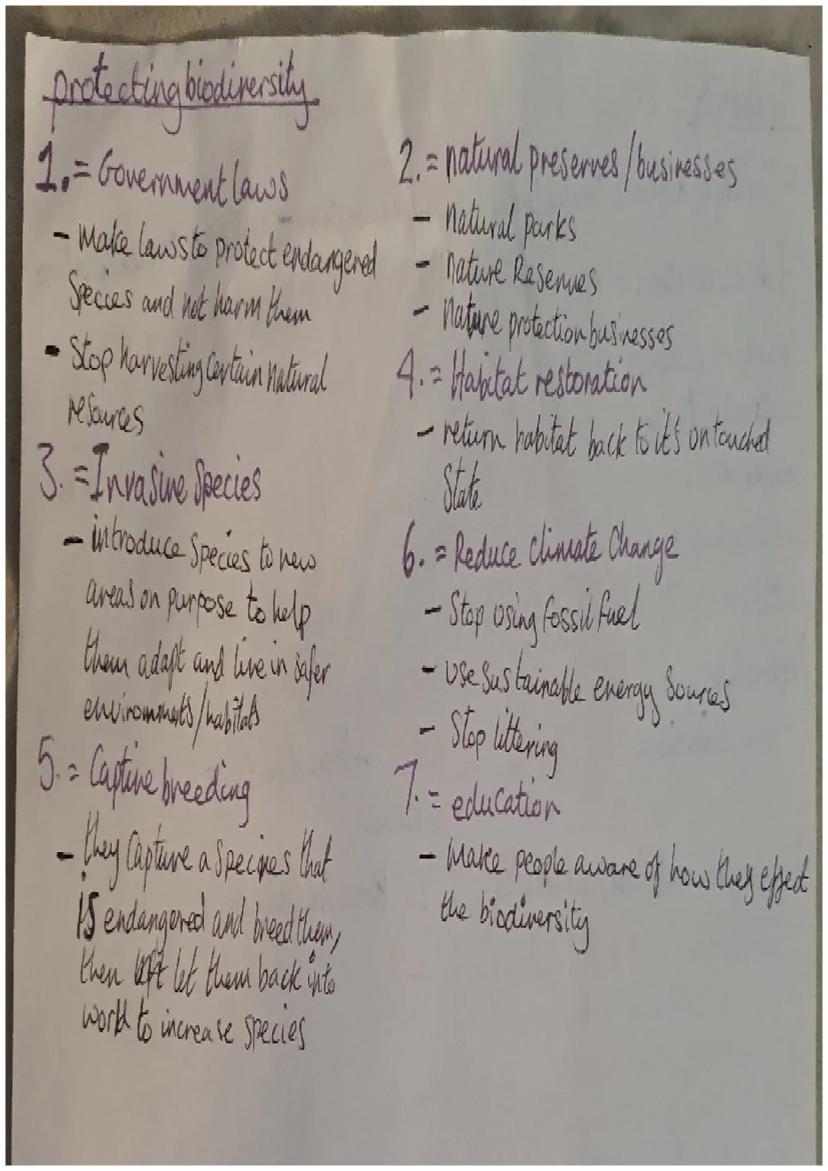
Governments can protect biodiversity through laws that prevent hunting endangered species and limit harvesting of natural resources. They also create nature reserves and national parks where wildlife can live safely without human interference.
Sometimes scientists introduce invasive species to new areas on purpose - but this needs careful planning to help endangered animals find safer homes. Captive breeding programmes take endangered animals, help them reproduce in safety, then release their offspring back into the wild to boost population numbers.
Habitat restoration means returning damaged areas back to their natural state, giving wildlife their homes back. We can also fight climate change by using sustainable energy instead of fossil fuels and reducing pollution.
Education might be the most powerful tool - when people understand how their actions affect biodiversity, they're more likely to make better choices. Simple actions like not littering, supporting conservation businesses, and choosing sustainable products all help protect the variety of life on Earth.
Your Power: Every choice you make - from what you buy to how you travel - affects biodiversity. Young people like you are already leading the fight for our planet's future!
Our AI Companion is a student-focused AI tool that offers more than just answers. Built on millions of Knowunity resources, it provides relevant information, personalised study plans, quizzes, and content directly in the chat, adapting to your individual learning journey.
You can download the app from Google Play Store and Apple App Store.
That's right! Enjoy free access to study content, connect with fellow students, and get instant help – all at your fingertips.
App Store
Google Play
The app is very easy to use and well designed. I have found everything I was looking for so far and have been able to learn a lot from the presentations! I will definitely use the app for a class assignment! And of course it also helps a lot as an inspiration.
Stefan S
iOS user
This app is really great. There are so many study notes and help [...]. My problem subject is French, for example, and the app has so many options for help. Thanks to this app, I have improved my French. I would recommend it to anyone.
Samantha Klich
Android user
Wow, I am really amazed. I just tried the app because I've seen it advertised many times and was absolutely stunned. This app is THE HELP you want for school and above all, it offers so many things, such as workouts and fact sheets, which have been VERY helpful to me personally.
Anna
iOS user
Best app on earth! no words because it’s too good
Thomas R
iOS user
Just amazing. Let's me revise 10x better, this app is a quick 10/10. I highly recommend it to anyone. I can watch and search for notes. I can save them in the subject folder. I can revise it any time when I come back. If you haven't tried this app, you're really missing out.
Basil
Android user
This app has made me feel so much more confident in my exam prep, not only through boosting my own self confidence through the features that allow you to connect with others and feel less alone, but also through the way the app itself is centred around making you feel better. It is easy to navigate, fun to use, and helpful to anyone struggling in absolutely any way.
David K
iOS user
The app's just great! All I have to do is enter the topic in the search bar and I get the response real fast. I don't have to watch 10 YouTube videos to understand something, so I'm saving my time. Highly recommended!
Sudenaz Ocak
Android user
In school I was really bad at maths but thanks to the app, I am doing better now. I am so grateful that you made the app.
Greenlight Bonnie
Android user
very reliable app to help and grow your ideas of Maths, English and other related topics in your works. please use this app if your struggling in areas, this app is key for that. wish I'd of done a review before. and it's also free so don't worry about that.
Rohan U
Android user
I know a lot of apps use fake accounts to boost their reviews but this app deserves it all. Originally I was getting 4 in my English exams and this time I got a grade 7. I didn’t even know about this app three days until the exam and it has helped A LOT. Please actually trust me and use it as I’m sure you too will see developments.
Xander S
iOS user
THE QUIZES AND FLASHCARDS ARE SO USEFUL AND I LOVE Knowunity AI. IT ALSO IS LITREALLY LIKE CHATGPT BUT SMARTER!! HELPED ME WITH MY MASCARA PROBLEMS TOO!! AS WELL AS MY REAL SUBJECTS ! DUHHH 😍😁😲🤑💗✨🎀😮
Elisha
iOS user
This apps acc the goat. I find revision so boring but this app makes it so easy to organize it all and then you can ask the freeeee ai to test yourself so good and you can easily upload your own stuff. highly recommend as someone taking mocks now
Paul T
iOS user
The app is very easy to use and well designed. I have found everything I was looking for so far and have been able to learn a lot from the presentations! I will definitely use the app for a class assignment! And of course it also helps a lot as an inspiration.
Stefan S
iOS user
This app is really great. There are so many study notes and help [...]. My problem subject is French, for example, and the app has so many options for help. Thanks to this app, I have improved my French. I would recommend it to anyone.
Samantha Klich
Android user
Wow, I am really amazed. I just tried the app because I've seen it advertised many times and was absolutely stunned. This app is THE HELP you want for school and above all, it offers so many things, such as workouts and fact sheets, which have been VERY helpful to me personally.
Anna
iOS user
Best app on earth! no words because it’s too good
Thomas R
iOS user
Just amazing. Let's me revise 10x better, this app is a quick 10/10. I highly recommend it to anyone. I can watch and search for notes. I can save them in the subject folder. I can revise it any time when I come back. If you haven't tried this app, you're really missing out.
Basil
Android user
This app has made me feel so much more confident in my exam prep, not only through boosting my own self confidence through the features that allow you to connect with others and feel less alone, but also through the way the app itself is centred around making you feel better. It is easy to navigate, fun to use, and helpful to anyone struggling in absolutely any way.
David K
iOS user
The app's just great! All I have to do is enter the topic in the search bar and I get the response real fast. I don't have to watch 10 YouTube videos to understand something, so I'm saving my time. Highly recommended!
Sudenaz Ocak
Android user
In school I was really bad at maths but thanks to the app, I am doing better now. I am so grateful that you made the app.
Greenlight Bonnie
Android user
very reliable app to help and grow your ideas of Maths, English and other related topics in your works. please use this app if your struggling in areas, this app is key for that. wish I'd of done a review before. and it's also free so don't worry about that.
Rohan U
Android user
I know a lot of apps use fake accounts to boost their reviews but this app deserves it all. Originally I was getting 4 in my English exams and this time I got a grade 7. I didn’t even know about this app three days until the exam and it has helped A LOT. Please actually trust me and use it as I’m sure you too will see developments.
Xander S
iOS user
THE QUIZES AND FLASHCARDS ARE SO USEFUL AND I LOVE Knowunity AI. IT ALSO IS LITREALLY LIKE CHATGPT BUT SMARTER!! HELPED ME WITH MY MASCARA PROBLEMS TOO!! AS WELL AS MY REAL SUBJECTS ! DUHHH 😍😁😲🤑💗✨🎀😮
Elisha
iOS user
This apps acc the goat. I find revision so boring but this app makes it so easy to organize it all and then you can ask the freeeee ai to test yourself so good and you can easily upload your own stuff. highly recommend as someone taking mocks now
Paul T
iOS user
shannon b
@shannon07
The circulatory system, reproductive cycles, plant biology, and biodiversity might seem like separate topics, but they're all connected through how living organisms maintain life and adapt to their environments. These systems work together to keep us alive, help species reproduce,... Show more
Access to all documents
Improve your grades
Join milions of students
Your circulatory system has three main parts that work like a delivery service for your body - blood, vessels, and your heart. Blood carries oxygen and nutrients to every part of your body whilst also fighting infections and transporting hormones.
Your heart has four chambers that pump blood in a specific pattern. The right side receives deoxygenated blood from your body and sends it to your lungs, whilst the left side pumps oxygenated blood back around your entire body. The left ventricle is stronger because it has to push blood much further.
Blood vessels come in three types: arteries carry blood away from your heart with thick, elastic walls to handle high pressure. Veins bring blood back to your heart with thin walls and one-way valves to prevent backflow. Capillaries are tiny vessels where the actual exchange happens - they're so thin that oxygen, nutrients, and waste can easily move between blood and body tissues.
Quick Tip: Remember that your adrenaline hormone from your adrenal glands directly affects your heart rate - that's why your heart races when you're excited or scared!
Access to all documents
Improve your grades
Join milions of students
The menstrual cycle is your body's monthly preparation for potential pregnancy, lasting about 28 days from puberty to menopause. Day 1 starts with menstruation (your period), when the thick uterus lining breaks down. Around day 15, ovulation happens - that's when an egg gets released from the ovary.
Sex hormones like oestrogen and progesterone control this entire cycle. Oestrogen helps prepare your uterus and triggers ovulation, whilst progesterone maintains the uterus lining. When these hormones are out of balance, you might experience mood changes, fertility issues, or other health problems.
Contraception prevents pregnancy through different methods with varying success rates. Condoms (98% effective) block sperm physically, whilst hormonal methods like the pill or implants (99% effective) prevent ovulation and thicken cervical mucus to stop sperm getting through.
Your body produces loads of other important hormones too - your thyroid makes thyroxine for metabolism, your pancreas produces insulin for blood sugar, and your adrenal glands release adrenaline for stress responses. Each one has a specific job keeping you healthy.
Key Point: Your endocrine system releases hormones into your bloodstream, but once they're used, they get destroyed by your liver - that's why your body needs to keep making more!
Access to all documents
Improve your grades
Join milions of students
Transpiration is basically how plants sweat - water moves up from roots through the xylem and evaporates out through tiny holes called stomata. This cooling system works faster when it's windy, hot, bright, or when humidity is low. Plants can open and close their stomata using guard cells to control water loss.
Osmosis moves water from high to low concentration through membranes, whilst diffusion moves any molecules the same way. When cells need energy to transport something against the natural flow, that's called active transport.
Plants need nitrogen compounds to make proteins and DNA, but they can't use the nitrogen gas that makes up 80% of our atmosphere. Instead, they rely on soil bacteria that convert nitrogen gas into nitrates that dissolve in water. When plants and animals decompose, bacteria release these nitrogen compounds back into the soil.
Your cardiac output (how much blood your heart pumps per minute) equals your heart rate times stroke volume. Regular exercise makes your heart muscle stronger, so fit people actually have slower heart rates because each heartbeat pumps more blood.
Cool Fact: About 23% of your body is made of nitrogen compounds - you're literally built from the same stuff that plants use to grow!
Access to all documents
Improve your grades
Join milions of students
Farmers boost soil fertility by adding manure or artificial fertilisers that bacteria break down into nitrates. Clever farmers plant peas first because they work with nitrogen-fixing bacteria - these bacteria convert air nitrogen into soil nitrates, making the next crops grow faster.
Parasitism is when one organism benefits whilst harming another (like ticks on animals), but mutualism means both species benefit . These relationships show how species in ecosystems are interdependent - they all rely on each other for survival.
An ecosystem includes both living (biotic) and non-living (abiotic) parts. Scientists count populations using quadrats - small sampling squares that help estimate how many organisms live in larger areas. Food webs show who eats whom, from producers (plants) through primary consumers (herbivores) to top predators.
Type 2 diabetes happens when your pancreas doesn't make enough insulin or your body becomes resistant to it. You can manage it by eating less sugar and carbs, staying physically active to use up glucose, and sometimes taking medicine to reduce glucose production.
Smart Strategy: The nitrogen cycle shows how nothing gets wasted in nature - bacteria constantly recycle nitrogen compounds between soil, plants, animals, and the atmosphere!
Access to all documents
Improve your grades
Join milions of students
Biodiversity means having lots of different species living in the same ecosystem - high biodiversity is like a bustling city with many different residents, whilst low biodiversity is more like a quiet village. Indigenous species have naturally adapted to their local environment over time, making them perfectly suited to their habitat.
Why should you care about biodiversity? First, it ensures food security because indigenous plants are naturally resistant to local pests and weather. Second, more plant species means more potential medicines - many drugs come from natural compounds. Third, biodiversity supports businesses from farming to tourism.
The biggest threats to biodiversity come from habitat loss (cutting forests, building cities), climate change (animals can't adapt fast enough), and human activities like hunting. Eutrophication happens when fertilisers wash into rivers, causing algae to bloom and block sunlight, killing underwater plants and fish.
Conservation efforts try to protect endangered species and their habitats. Methods include creating nature reserves, breeding programmes, habitat restoration, and laws protecting threatened animals. Without biodiversity, humans lose food sources, medicines, flood protection, and natural disaster defence.
Reality Check: Eutrophication might sound harmless, but it creates dead zones in water where nothing can survive - that's why responsible farming matters!
Access to all documents
Improve your grades
Join milions of students
Governments can protect biodiversity through laws that prevent hunting endangered species and limit harvesting of natural resources. They also create nature reserves and national parks where wildlife can live safely without human interference.
Sometimes scientists introduce invasive species to new areas on purpose - but this needs careful planning to help endangered animals find safer homes. Captive breeding programmes take endangered animals, help them reproduce in safety, then release their offspring back into the wild to boost population numbers.
Habitat restoration means returning damaged areas back to their natural state, giving wildlife their homes back. We can also fight climate change by using sustainable energy instead of fossil fuels and reducing pollution.
Education might be the most powerful tool - when people understand how their actions affect biodiversity, they're more likely to make better choices. Simple actions like not littering, supporting conservation businesses, and choosing sustainable products all help protect the variety of life on Earth.
Your Power: Every choice you make - from what you buy to how you travel - affects biodiversity. Young people like you are already leading the fight for our planet's future!
Our AI Companion is a student-focused AI tool that offers more than just answers. Built on millions of Knowunity resources, it provides relevant information, personalised study plans, quizzes, and content directly in the chat, adapting to your individual learning journey.
You can download the app from Google Play Store and Apple App Store.
That's right! Enjoy free access to study content, connect with fellow students, and get instant help – all at your fingertips.
4
Smart Tools NEW
Transform this note into: ✓ 50+ Practice Questions ✓ Interactive Flashcards ✓ Full Mock Exam ✓ Essay Outlines
revision notes on all of B7~ ecology
 Biology
Comprehensive checklist covering essential GCSE Biology topics including genetics, ecology, human impact, and practical experiments. Ideal for higher-level students preparing for exams, this resource highlights key concepts such as biodiversity, homeostasis, and biological processes.
BiologyExplore key concepts in ecology and evolution, including biotic and abiotic factors, nutrient cycles, and speciation. This summary provides essential insights for the National 5 Biology course, featuring mind maps that clarify complex topics like GMOs, natural selection, and ecological interactions. Ideal for students preparing for exams.
BiologyExplore the key concepts of ecology, including competition, interdependence, and biodiversity. This summary covers essential topics such as ecosystems, biotic and abiotic factors, food chains, and the impact of human activities on the environment. Ideal for AQA Biology Paper 2, Topic 7, this resource provides a comprehensive overview for students preparing for exams.
BiologyApp Store
Google Play
The app is very easy to use and well designed. I have found everything I was looking for so far and have been able to learn a lot from the presentations! I will definitely use the app for a class assignment! And of course it also helps a lot as an inspiration.
Stefan S
iOS user
This app is really great. There are so many study notes and help [...]. My problem subject is French, for example, and the app has so many options for help. Thanks to this app, I have improved my French. I would recommend it to anyone.
Samantha Klich
Android user
Wow, I am really amazed. I just tried the app because I've seen it advertised many times and was absolutely stunned. This app is THE HELP you want for school and above all, it offers so many things, such as workouts and fact sheets, which have been VERY helpful to me personally.
Anna
iOS user
Best app on earth! no words because it’s too good
Thomas R
iOS user
Just amazing. Let's me revise 10x better, this app is a quick 10/10. I highly recommend it to anyone. I can watch and search for notes. I can save them in the subject folder. I can revise it any time when I come back. If you haven't tried this app, you're really missing out.
Basil
Android user
This app has made me feel so much more confident in my exam prep, not only through boosting my own self confidence through the features that allow you to connect with others and feel less alone, but also through the way the app itself is centred around making you feel better. It is easy to navigate, fun to use, and helpful to anyone struggling in absolutely any way.
David K
iOS user
The app's just great! All I have to do is enter the topic in the search bar and I get the response real fast. I don't have to watch 10 YouTube videos to understand something, so I'm saving my time. Highly recommended!
Sudenaz Ocak
Android user
In school I was really bad at maths but thanks to the app, I am doing better now. I am so grateful that you made the app.
Greenlight Bonnie
Android user
very reliable app to help and grow your ideas of Maths, English and other related topics in your works. please use this app if your struggling in areas, this app is key for that. wish I'd of done a review before. and it's also free so don't worry about that.
Rohan U
Android user
I know a lot of apps use fake accounts to boost their reviews but this app deserves it all. Originally I was getting 4 in my English exams and this time I got a grade 7. I didn’t even know about this app three days until the exam and it has helped A LOT. Please actually trust me and use it as I’m sure you too will see developments.
Xander S
iOS user
THE QUIZES AND FLASHCARDS ARE SO USEFUL AND I LOVE Knowunity AI. IT ALSO IS LITREALLY LIKE CHATGPT BUT SMARTER!! HELPED ME WITH MY MASCARA PROBLEMS TOO!! AS WELL AS MY REAL SUBJECTS ! DUHHH 😍😁😲🤑💗✨🎀😮
Elisha
iOS user
This apps acc the goat. I find revision so boring but this app makes it so easy to organize it all and then you can ask the freeeee ai to test yourself so good and you can easily upload your own stuff. highly recommend as someone taking mocks now
Paul T
iOS user
The app is very easy to use and well designed. I have found everything I was looking for so far and have been able to learn a lot from the presentations! I will definitely use the app for a class assignment! And of course it also helps a lot as an inspiration.
Stefan S
iOS user
This app is really great. There are so many study notes and help [...]. My problem subject is French, for example, and the app has so many options for help. Thanks to this app, I have improved my French. I would recommend it to anyone.
Samantha Klich
Android user
Wow, I am really amazed. I just tried the app because I've seen it advertised many times and was absolutely stunned. This app is THE HELP you want for school and above all, it offers so many things, such as workouts and fact sheets, which have been VERY helpful to me personally.
Anna
iOS user
Best app on earth! no words because it’s too good
Thomas R
iOS user
Just amazing. Let's me revise 10x better, this app is a quick 10/10. I highly recommend it to anyone. I can watch and search for notes. I can save them in the subject folder. I can revise it any time when I come back. If you haven't tried this app, you're really missing out.
Basil
Android user
This app has made me feel so much more confident in my exam prep, not only through boosting my own self confidence through the features that allow you to connect with others and feel less alone, but also through the way the app itself is centred around making you feel better. It is easy to navigate, fun to use, and helpful to anyone struggling in absolutely any way.
David K
iOS user
The app's just great! All I have to do is enter the topic in the search bar and I get the response real fast. I don't have to watch 10 YouTube videos to understand something, so I'm saving my time. Highly recommended!
Sudenaz Ocak
Android user
In school I was really bad at maths but thanks to the app, I am doing better now. I am so grateful that you made the app.
Greenlight Bonnie
Android user
very reliable app to help and grow your ideas of Maths, English and other related topics in your works. please use this app if your struggling in areas, this app is key for that. wish I'd of done a review before. and it's also free so don't worry about that.
Rohan U
Android user
I know a lot of apps use fake accounts to boost their reviews but this app deserves it all. Originally I was getting 4 in my English exams and this time I got a grade 7. I didn’t even know about this app three days until the exam and it has helped A LOT. Please actually trust me and use it as I’m sure you too will see developments.
Xander S
iOS user
THE QUIZES AND FLASHCARDS ARE SO USEFUL AND I LOVE Knowunity AI. IT ALSO IS LITREALLY LIKE CHATGPT BUT SMARTER!! HELPED ME WITH MY MASCARA PROBLEMS TOO!! AS WELL AS MY REAL SUBJECTS ! DUHHH 😍😁😲🤑💗✨🎀😮
Elisha
iOS user
This apps acc the goat. I find revision so boring but this app makes it so easy to organize it all and then you can ask the freeeee ai to test yourself so good and you can easily upload your own stuff. highly recommend as someone taking mocks now
Paul T
iOS user