
Ecosystems are like nature's neighbourhoods where different living things interact... Show more
 Biology124 views·Updated May 19, 2026·16 pages
Flashcards for Biology GCSE: Ecology Essentials

raniya@raniya

1 / 10
1
of 10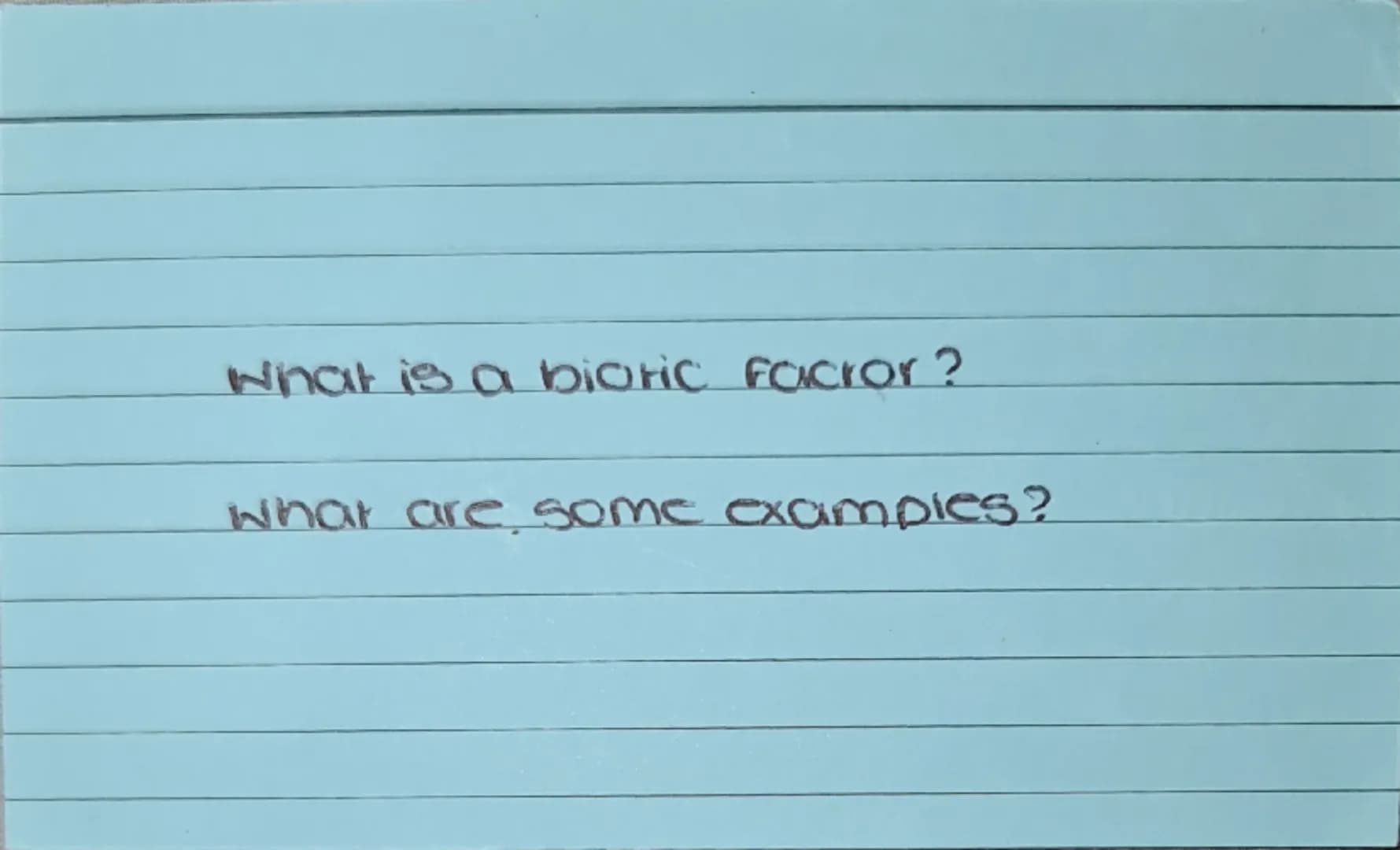
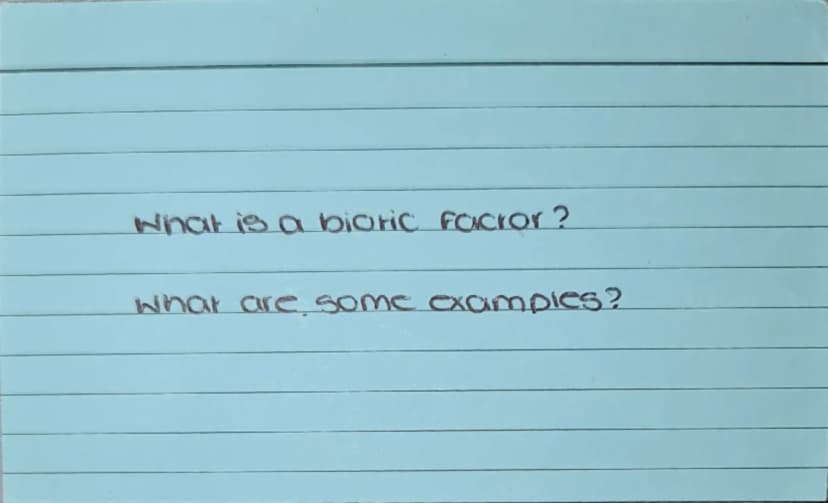
Biotic Factors - The Living Elements
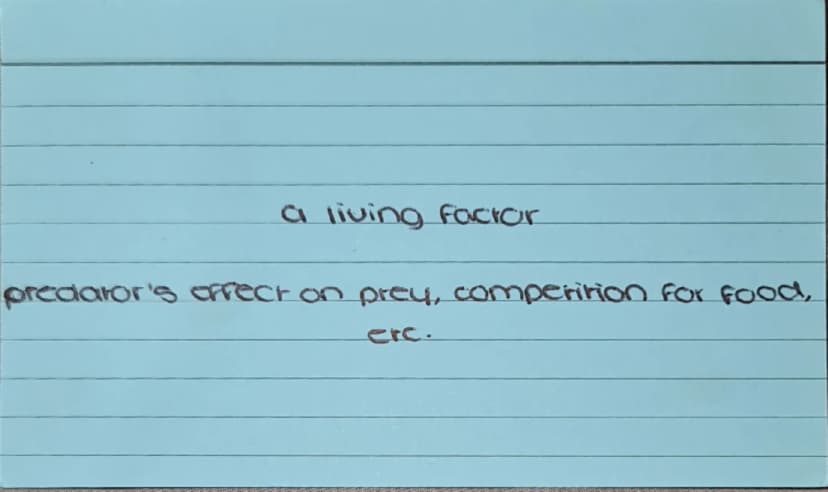
Biotic factors are all the living things that affect an organism's life. Think of them as the biological influences in nature's community.
These factors create a web of relationships between different species. When a fox hunts rabbits, that's a biotic factor affecting the rabbit population. Similarly, when plants compete for sunlight in a forest, they're experiencing biotic interactions.
Quick Tip: Remember "bio" = life, so biotic factors are always about living things interacting with each other.
2
of 10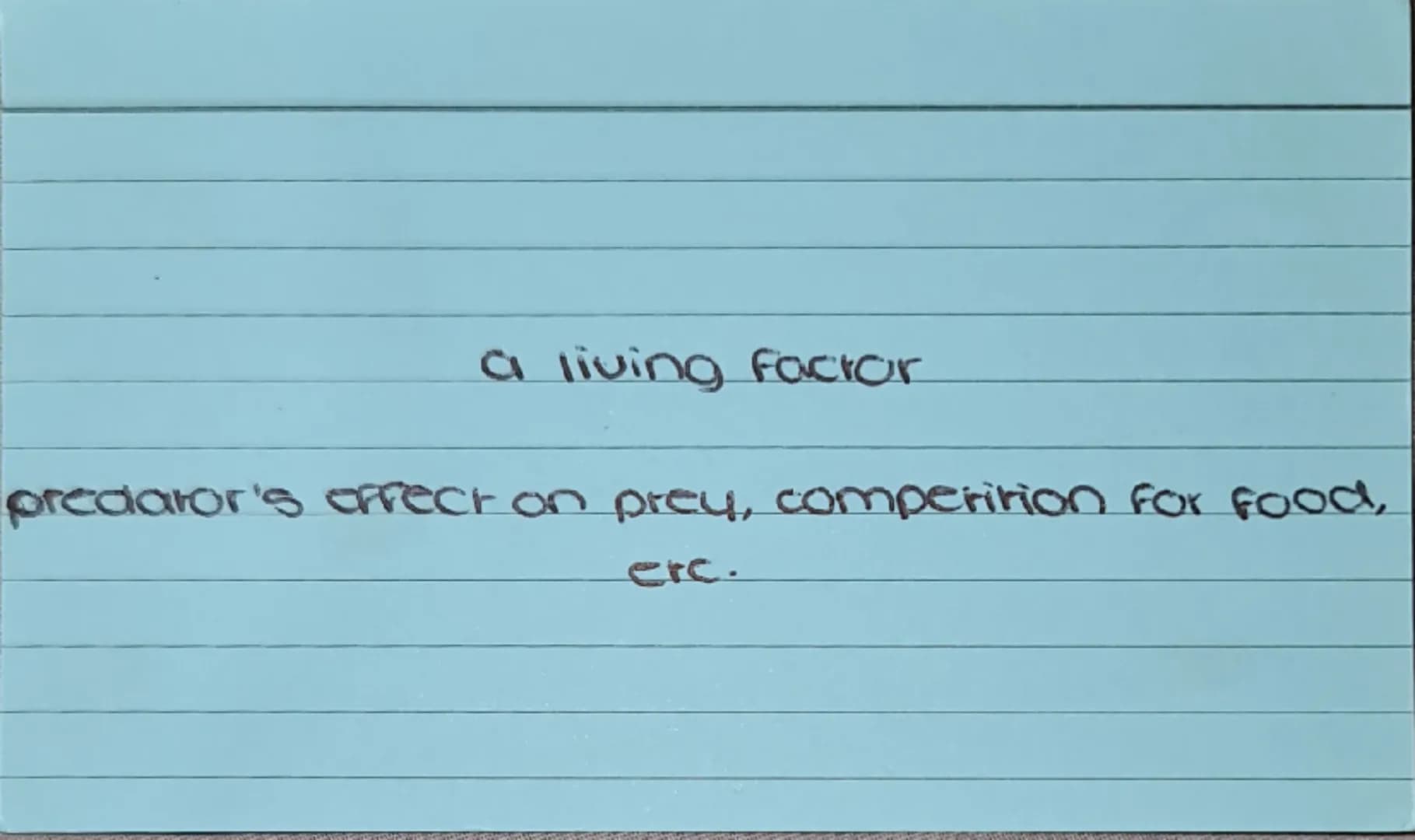
Examples of Biotic Factors in Action
The most common biotic factors you'll encounter include predator-prey relationships and competition for resources. When a hawk swoops down to catch a mouse, it's directly affecting that mouse population through predation.
Competition for food is another major biotic factor. Imagine two bird species fighting over the same berry bushes - they're competing for a limited resource. This competition can determine which species thrives in that area.
Disease, parasitism, and even helpful relationships like pollination are all biotic factors that shape how organisms survive and reproduce.
3
of 10
Abiotic Factors - The Non-Living Influences
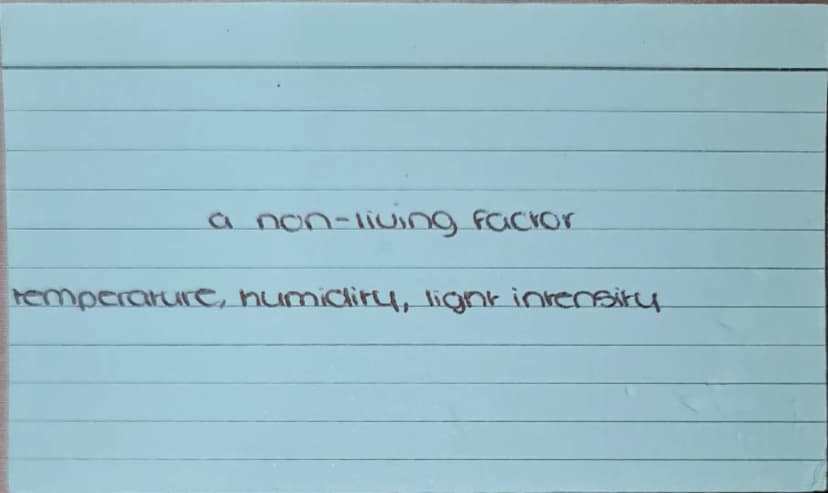
Abiotic factors are the non-living, physical and chemical elements that affect organisms. These are the environmental conditions that don't breathe, grow, or reproduce, but still have massive impacts on life.
Unlike biotic factors, abiotic factors come from the physical world around us. They set the stage for life but aren't alive themselves.
Memory Trick: "A-biotic" means "not biological" - so these are all the non-living environmental influences.
4
of 10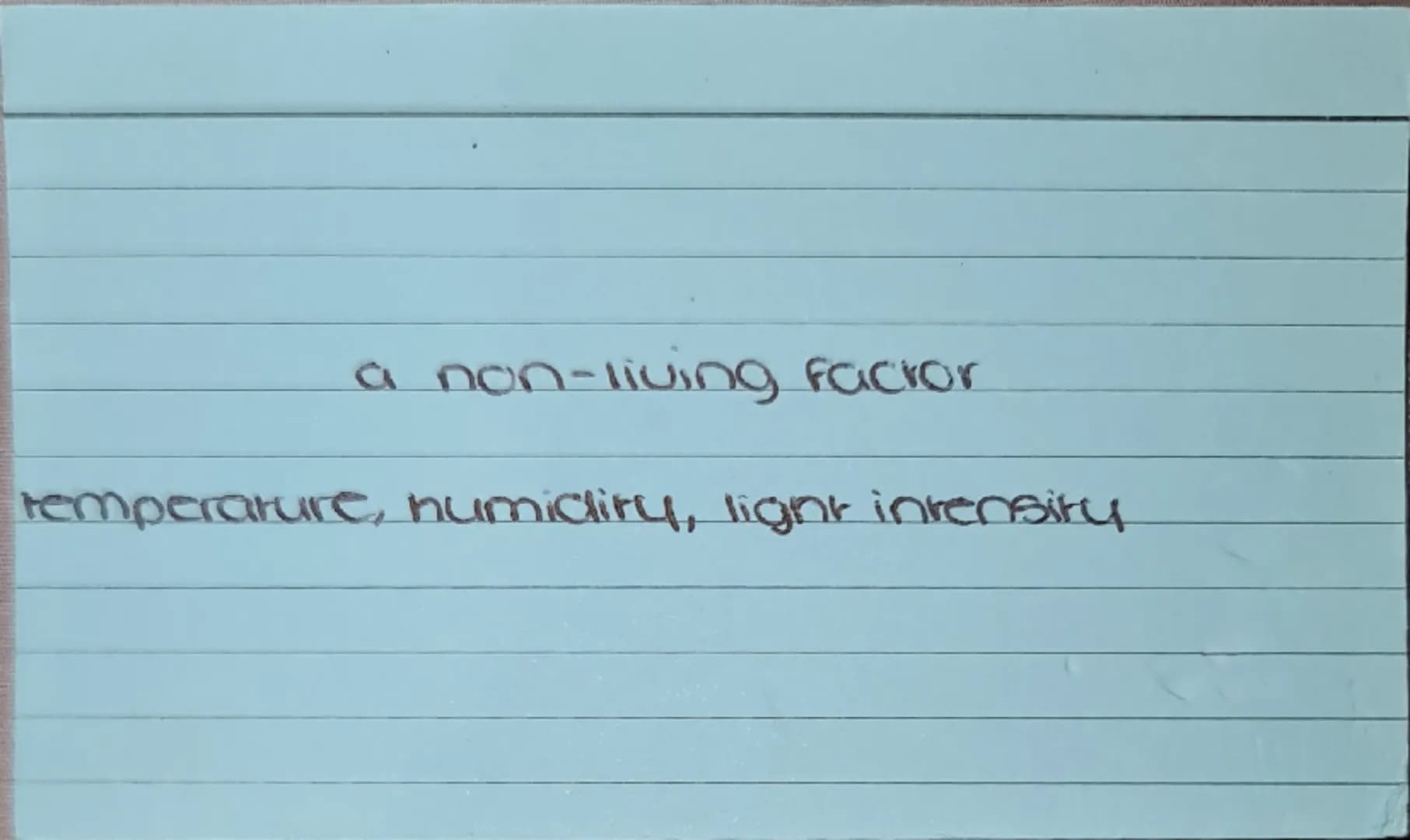
Key Abiotic Factors You Need to Know
The main abiotic factors include temperature, humidity, and light intensity. Temperature affects how fast chemical reactions happen in living things, which is why reptiles are sluggish in cold weather.
Humidity (moisture in the air) determines whether organisms can maintain proper water balance. Desert animals have special adaptations to cope with low humidity.
Light intensity is crucial for plants doing photosynthesis, but it also affects animal behaviour patterns. Many creatures are more active at dawn and dusk when light levels are just right.
5
of 10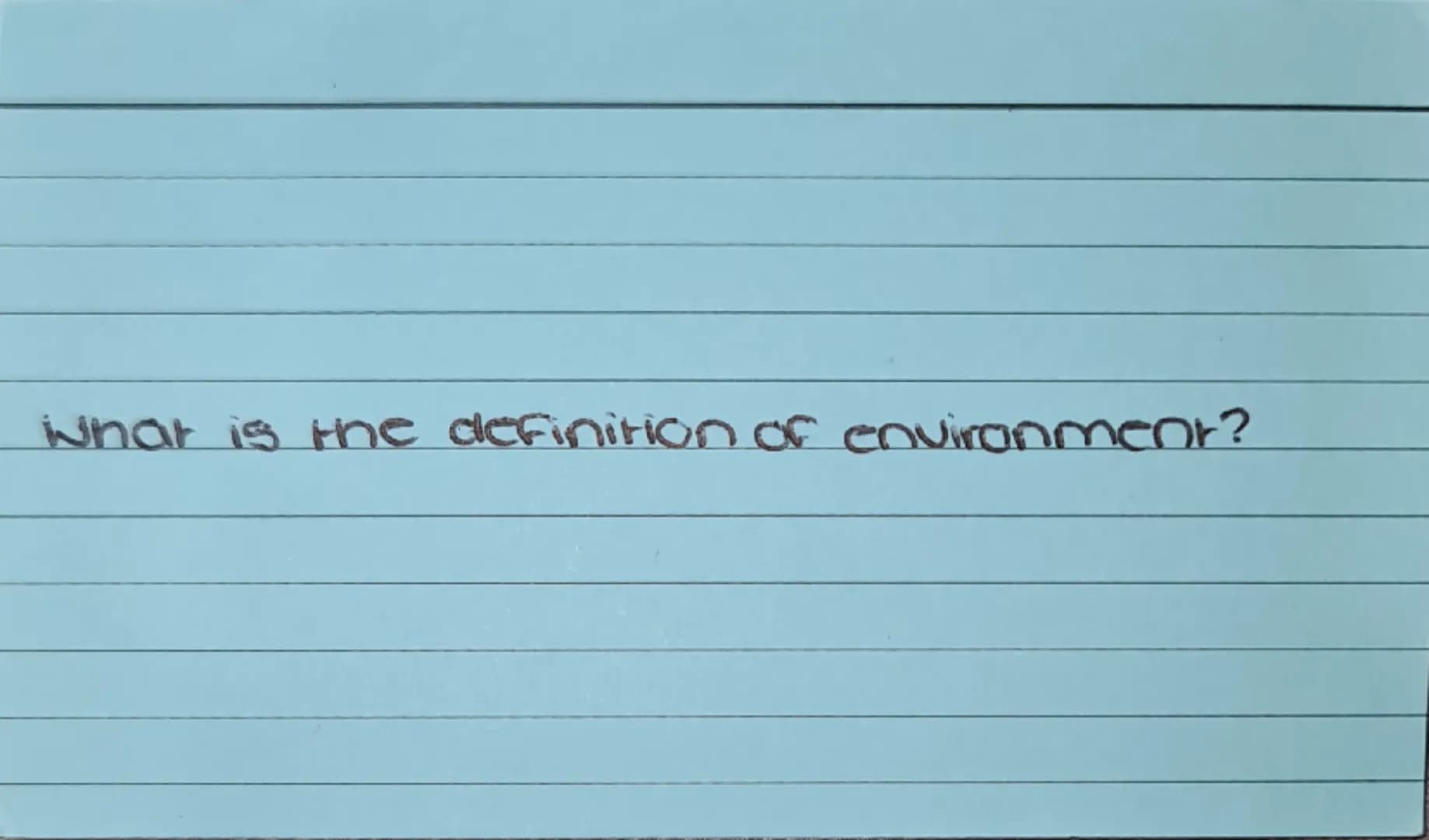
What Makes Up an Environment?
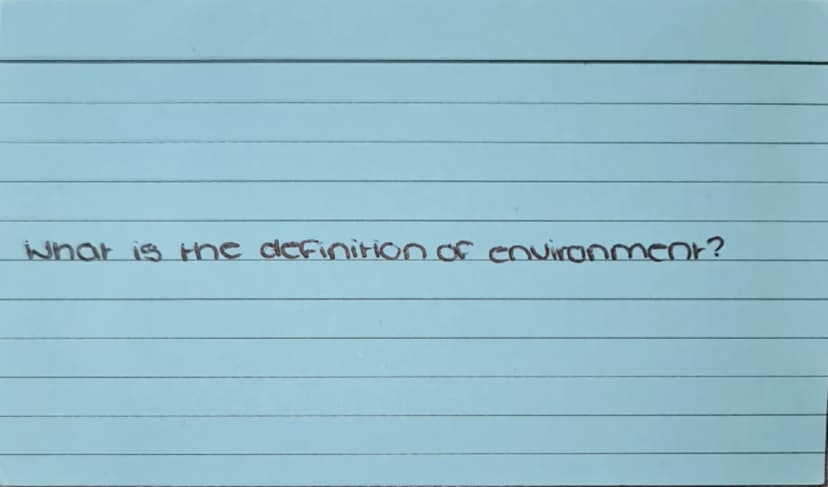
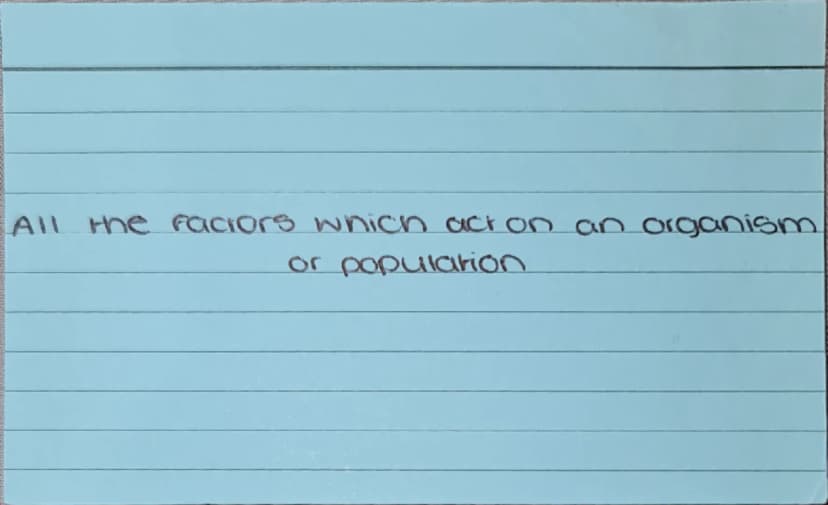
The environment includes absolutely everything that acts on an organism or population. It's like the complete package of influences surrounding any living thing.
Your environment isn't just the air you breathe - it's every single factor that could possibly affect you, from the temperature outside to the bacteria in your gut.
This definition is beautifully simple but incredibly comprehensive, covering both living and non-living factors working together.
6
of 10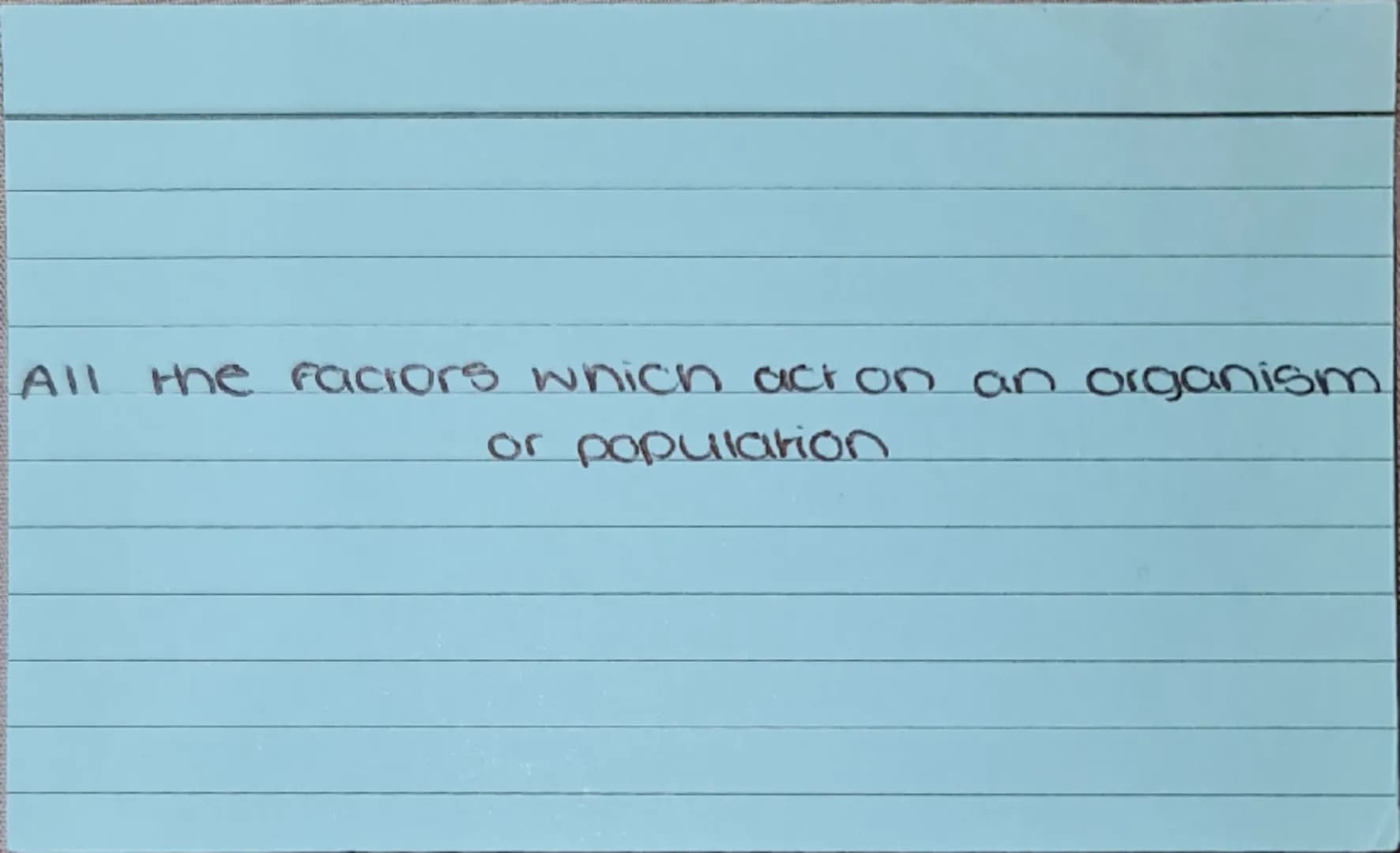
Environment - The Complete Picture
An environment encompasses all factors which act on an organism or population. This means both biotic and abiotic factors combined into one massive system of influences.
Think about a pond environment: it includes the water temperature (abiotic), the fish swimming around (biotic), the pH of the water (abiotic), and the competition between different algae species (biotic). Everything matters.
Exam Focus: Environmental factors work together, not separately - this interconnection is often tested in exam questions.
7
of 10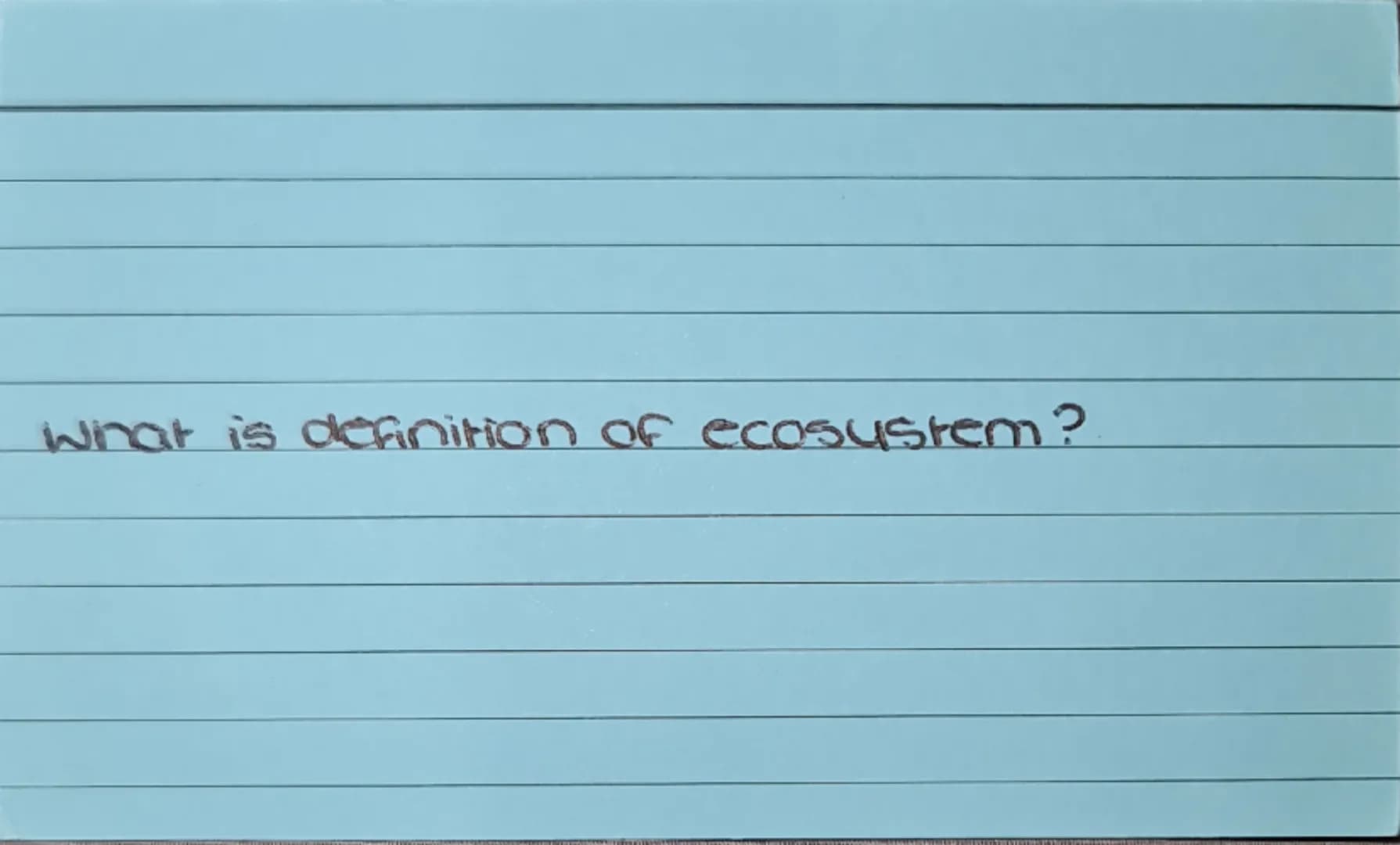
Ecosystems - Nature's Complete Communities
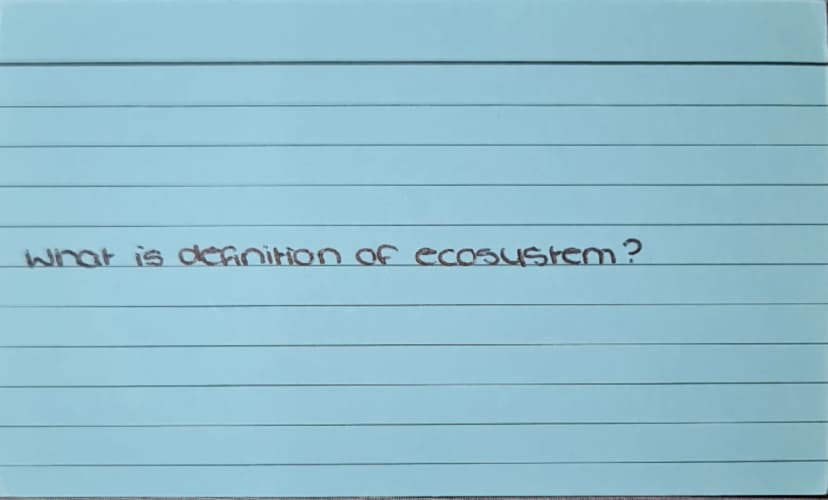
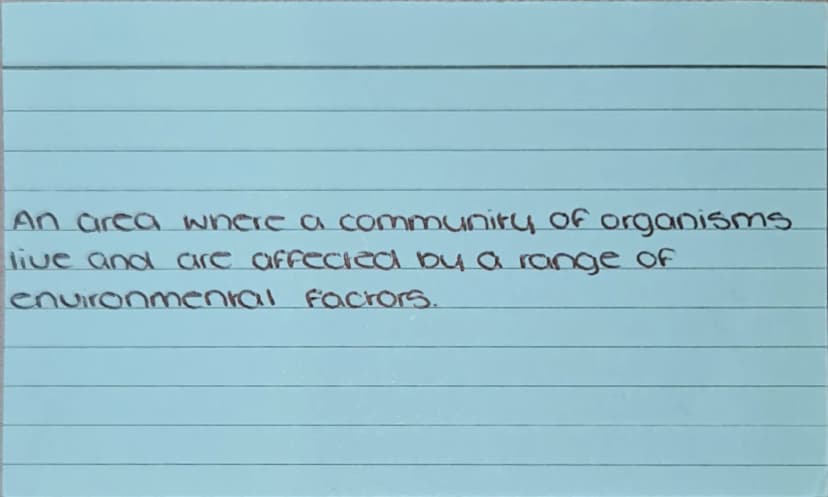
An ecosystem is basically a specific area where a community of organisms live together and get affected by various environmental factors. It's like a natural neighbourhood with clear boundaries.
Ecosystems can be huge (like the Amazon rainforest) or tiny (like a small pond). What matters is that there's a defined space where organisms interact with each other and their surroundings.
The key point is that ecosystems combine living communities with their physical environment in one specific location.
8
of 10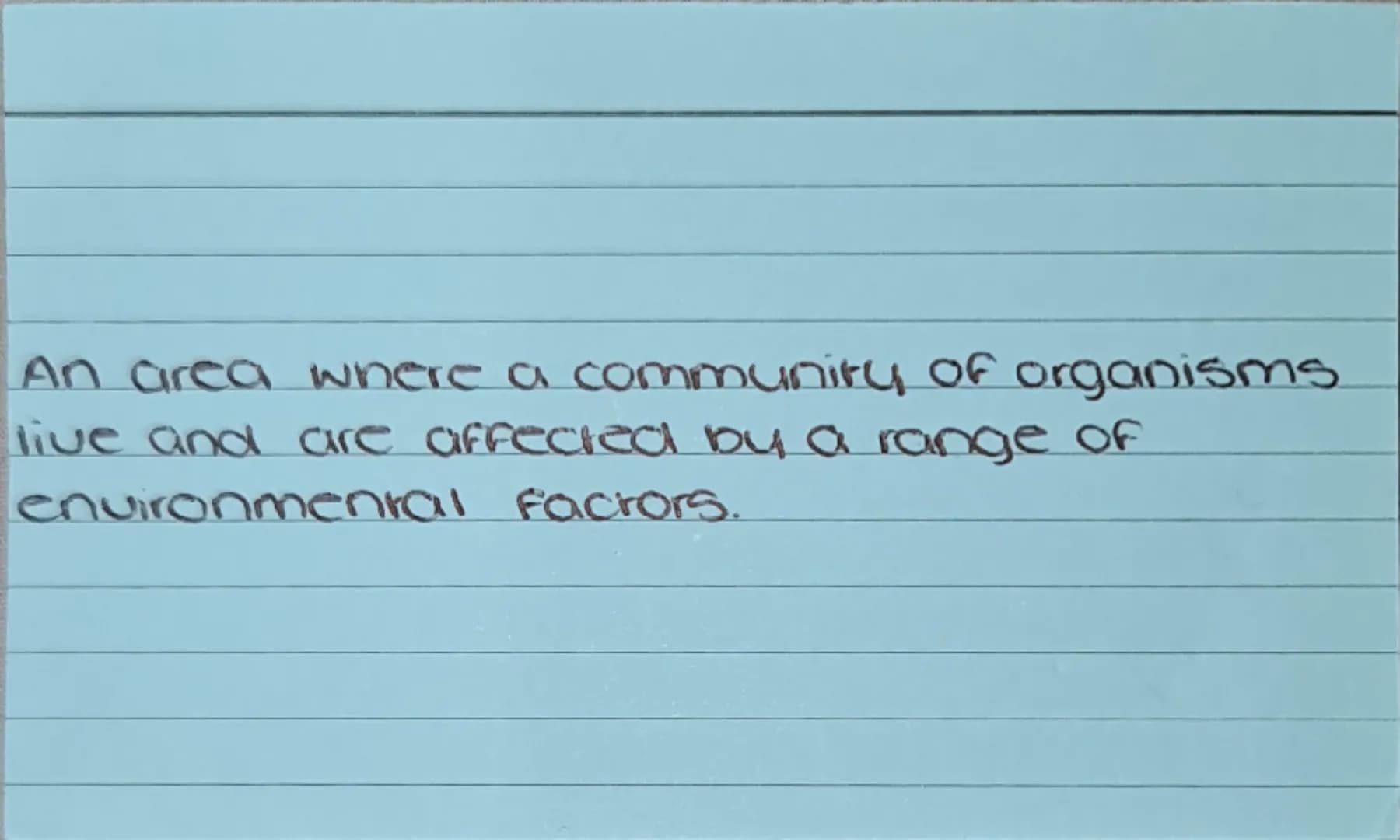
Understanding Ecosystem Boundaries
An ecosystem is an area where a community of organisms live and are affected by a range of environmental factors. The important word here is "area" - ecosystems have spatial boundaries.
These boundaries might be obvious (like the edge of a lake) or more subtle (like where a forest gradually becomes grassland). What defines the ecosystem is the unique combination of species and environmental conditions found there.
Every ecosystem has its own character based on the particular mix of biotic and abiotic factors present.
9
of 10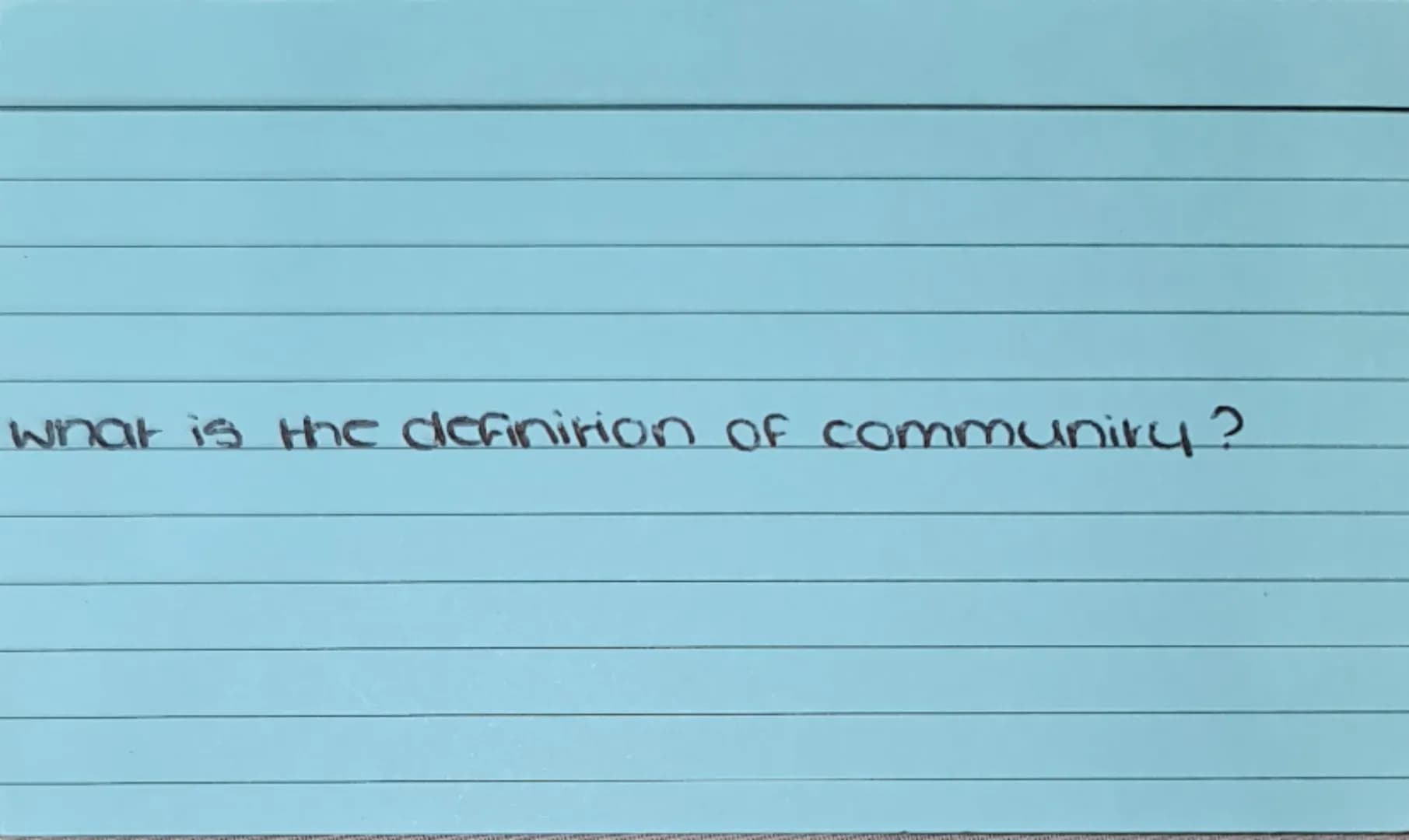
Communities - Multiple Species Living Together
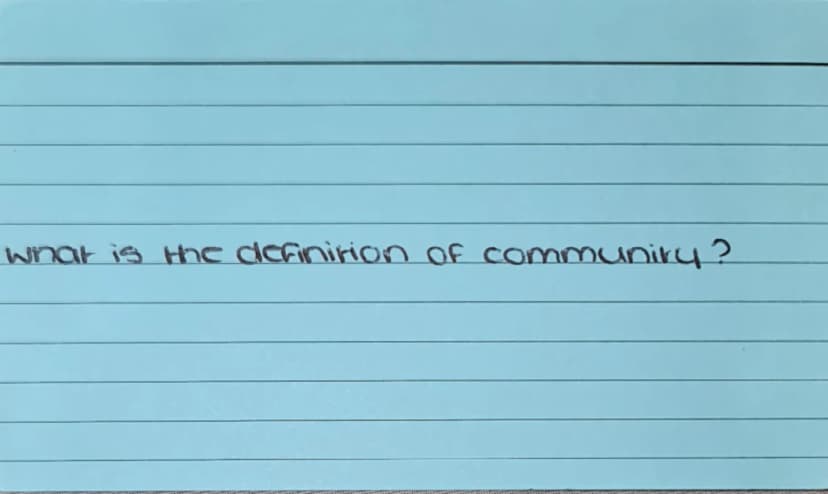
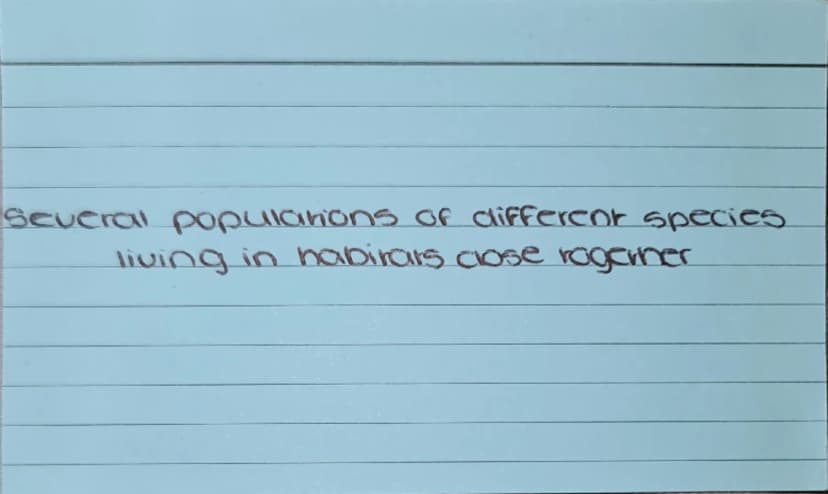
A community refers to several populations of different species living in habitats close together. It's all about different species sharing the same general area.
Communities are the social aspect of ecology - they're about who lives with whom. Think of a woodland community including oak trees, squirrels, beetles, fungi, and dozens of other species all sharing that forest space.
Key Point: Communities are just the living parts - they don't include the non-living environmental factors.
10
of 10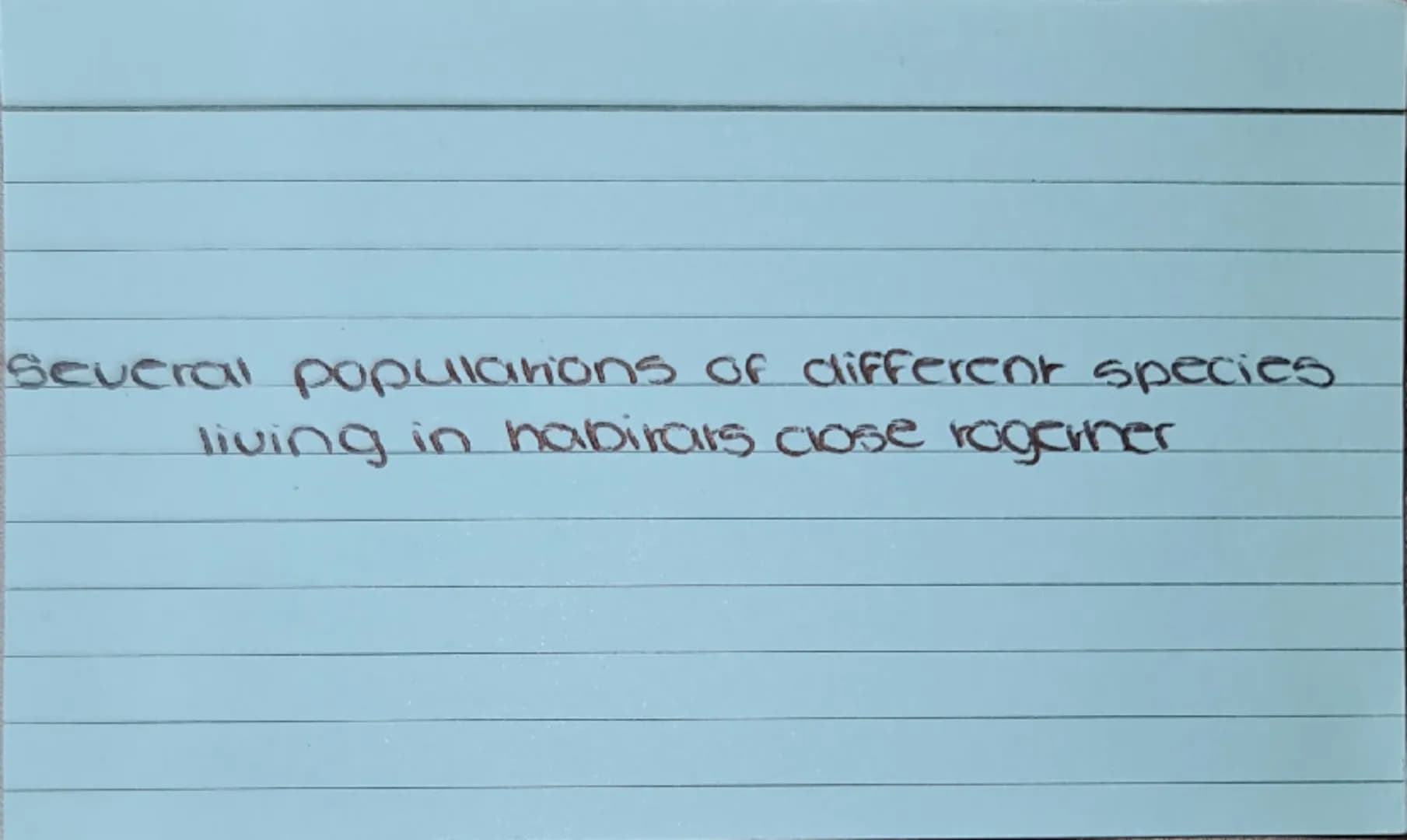
How Communities Form and Function
A community consists of several populations of different species living in habitats close together. Each species has its own population, but they're all neighbours in the same ecological area.
The "close together" part is crucial because it means these species can potentially interact with each other. They might compete, help each other, or have predator-prey relationships.
Understanding communities helps you see how biodiversity works - it's not just about individual species, but about how different species live alongside each other in nature's neighbourhoods.
We thought you’d never ask...
What is the Knowunity AI companion?
Our AI Companion is a student-focused AI tool that offers more than just answers. Built on millions of Knowunity resources, it provides relevant information, personalised study plans, quizzes, and content directly in the chat, adapting to your individual learning journey.
Where can I download the Knowunity app?
You can download the app from Google Play Store and Apple App Store.
Is Knowunity really free of charge?
That's right! Enjoy free access to study content, connect with fellow students, and get instant help – all at your fingertips.
Most popular content in Biology
9C
BiologyCell Biology and Cell structure
cell structures
92,5720
BiologyAQA Biology: Key Concepts
Explore essential AQA Biology topics including Photosynthesis, Respiration, Homeostasis, Genetics, and Ecology. This comprehensive knowledge organizer covers key concepts such as energy transfer, hormonal control, and genetic variation, providing a solid foundation for your studies. Ideal for exam preparation and understanding biological processes.
108,432297
T
BiologyThe functions of subcellular structures - B1 Biology
Flashcards on the different functions of subcellular structures: cell membrane, nucleus, mitochondria, ribosomes, cytoplasm, permant vacuole, chloroplasts and cell wall.
102,1585
BiologyA-Level Biology Year 1 Overview
Comprehensive summary of AQA A-Level Biology Year 1, covering key topics such as cellular structure, protein synthesis, immune response, gas exchange, and more. Ideal for exam preparation and understanding biological concepts. Includes detailed insights into cellular processes, biological classification, and the circulatory system.
1214,584686
1
Biology1.cells Gcse biology question cards
combined science higher biology
91,8624
BiologyBiology paper 1 Summary
Notes for Biology paper 1 contains the full course for AQA higher combined!
103,989107
T
BiologyTypes of cells
biology
109900
B
BiologyBiology Paper 1 quiz
this is a simple quiz on key knowledge needed for paper 1
102,4305
C
BiologyCells part 1 function of cells.
About cells and function of cells etc.
118221
Most popular content
9 Sociology
Sociology of Education Overview
Explore comprehensive A-Level Sociology notes on the education system, covering key theories, policies, and sociological perspectives. This resource includes insights on marketisation, gender roles, cultural deprivation, and educational inequalities, providing a thorough understanding of how education shapes social stratification and individual achievement. Ideal for exam preparation and in-depth study.
12102,2683,038
SociologySociology of Families: Comprehensive Revision
Dive into an extensive overview of family dynamics, perspectives, and patterns in sociology. This resource covers key concepts such as family diversity, gender roles, marriage, and the impact of social policies on family structures. Perfect for A-Level Sociology students preparing for Paper 2.
1273,1372,302
CriminologyCriminology: Crime & Punishment Overview
Comprehensive mindmaps covering key concepts in the Crime and Punishment topic for WJEC Criminology Unit 4. This resource includes detailed insights into the Criminal Justice System, crime prevention strategies, sentencing models, and the roles of various agencies. Ideal for A-Level revision, ensuring you grasp essential theories and legislative processes to excel in your exams.
1254,7861,060
 English Literature
An Inspector Calls: Character Insights
Explore in-depth analysis and key quotes for characters in J.B. Priestley's 'An Inspector Calls'. This resource covers Gerald Croft, Inspector Goole, Sheila Birling, Mrs. Birling, Eric Birling, and Eva Smith, focusing on themes of class, gender roles, and social responsibility. Ideal for students aiming for Grade 8 and above.
1025,185899
CriminologyWJEC Unit 4 Criminology
Criminology unit 4 detailed revision note
127,109124
CriminologyCriminology Theories Overview
Explore key criminology theories and their implications on crime and deviance. This comprehensive summary covers biological, psychological, and sociological perspectives, including labelling theory, right realism, and the impact of social campaigns on policy development. Ideal for A-Level criminology students seeking to understand the complexities of criminal behaviour and the factors influencing crime prevention strategies.
129,745211
English LiteratureRomeo and Juliet: Key themes
Key Romeo and Juliet themes and analysed quotes
106,598197
English LiteratureMacbeth: Guilt and Ambition
Explore the complex themes of guilt and ambition in Shakespeare's 'Macbeth'. This analysis covers key characters, including Macbeth and Lady Macbeth, their moral dilemmas, and the tragic consequences of their ambition. Ideal for students studying character motivations, thematic elements, and the psychological impact of power. Includes insights on the natural order, manipulation, and the descent into madness.
918,758390
C
BiologyCell Biology and Cell structure
cell structures
92,5720
Can't find what you're looking for? Explore other subjects.
Students love us — and so will you.
4.6/5App Store
4.7/5Google Play
The app is very easy to use and well designed. I have found everything I was looking for so far and have been able to learn a lot from the presentations! I will definitely use the app for a class assignment! And of course it also helps a lot as an inspiration.
Stefan SiOS user
This app is really great. There are so many study notes and help [...]. My problem subject is French, for example, and the app has so many options for help. Thanks to this app, I have improved my French. I would recommend it to anyone.
Samantha KlichAndroid user
Wow, I am really amazed. I just tried the app because I've seen it advertised many times and was absolutely stunned. This app is THE HELP you want for school and above all, it offers so many things, such as workouts and fact sheets, which have been VERY helpful to me personally.
AnnaiOS user
Biology124 views·Updated May 19, 2026·16 pagesFlashcards for Biology GCSE: Ecology Essentials
raniya@raniya
Ecosystems are like nature's neighbourhoods where different living things interact with each other and their surroundings. Understanding how organisms relate to their environment is crucial for GCSE Biology, and these key terms will help you make sense of how life... Show more
1
of 10Sign up to see the content. It's free!
- Access to all documents
- Improve your grades
- Join milions of students
Biotic Factors - The Living Elements
Biotic factors are all the living things that affect an organism's life. Think of them as the biological influences in nature's community.
These factors create a web of relationships between different species. When a fox hunts rabbits, that's a biotic factor affecting the rabbit population. Similarly, when plants compete for sunlight in a forest, they're experiencing biotic interactions.
Quick Tip: Remember "bio" = life, so biotic factors are always about living things interacting with each other.
2
of 10Sign up to see the content. It's free!
- Access to all documents
- Improve your grades
- Join milions of students
Examples of Biotic Factors in Action
The most common biotic factors you'll encounter include predator-prey relationships and competition for resources. When a hawk swoops down to catch a mouse, it's directly affecting that mouse population through predation.
Competition for food is another major biotic factor. Imagine two bird species fighting over the same berry bushes - they're competing for a limited resource. This competition can determine which species thrives in that area.
Disease, parasitism, and even helpful relationships like pollination are all biotic factors that shape how organisms survive and reproduce.
3
of 10Sign up to see the content. It's free!
- Access to all documents
- Improve your grades
- Join milions of students
Abiotic Factors - The Non-Living Influences
Abiotic factors are the non-living, physical and chemical elements that affect organisms. These are the environmental conditions that don't breathe, grow, or reproduce, but still have massive impacts on life.
Unlike biotic factors, abiotic factors come from the physical world around us. They set the stage for life but aren't alive themselves.
Memory Trick: "A-biotic" means "not biological" - so these are all the non-living environmental influences.
4
of 10Sign up to see the content. It's free!
- Access to all documents
- Improve your grades
- Join milions of students
Key Abiotic Factors You Need to Know
The main abiotic factors include temperature, humidity, and light intensity. Temperature affects how fast chemical reactions happen in living things, which is why reptiles are sluggish in cold weather.
Humidity (moisture in the air) determines whether organisms can maintain proper water balance. Desert animals have special adaptations to cope with low humidity.
Light intensity is crucial for plants doing photosynthesis, but it also affects animal behaviour patterns. Many creatures are more active at dawn and dusk when light levels are just right.
5
of 10Sign up to see the content. It's free!
- Access to all documents
- Improve your grades
- Join milions of students
What Makes Up an Environment?
The environment includes absolutely everything that acts on an organism or population. It's like the complete package of influences surrounding any living thing.
Your environment isn't just the air you breathe - it's every single factor that could possibly affect you, from the temperature outside to the bacteria in your gut.
This definition is beautifully simple but incredibly comprehensive, covering both living and non-living factors working together.
6
of 10Sign up to see the content. It's free!
- Access to all documents
- Improve your grades
- Join milions of students
Environment - The Complete Picture
An environment encompasses all factors which act on an organism or population. This means both biotic and abiotic factors combined into one massive system of influences.
Think about a pond environment: it includes the water temperature (abiotic), the fish swimming around (biotic), the pH of the water (abiotic), and the competition between different algae species (biotic). Everything matters.
Exam Focus: Environmental factors work together, not separately - this interconnection is often tested in exam questions.
7
of 10Sign up to see the content. It's free!
- Access to all documents
- Improve your grades
- Join milions of students
Ecosystems - Nature's Complete Communities
An ecosystem is basically a specific area where a community of organisms live together and get affected by various environmental factors. It's like a natural neighbourhood with clear boundaries.
Ecosystems can be huge (like the Amazon rainforest) or tiny (like a small pond). What matters is that there's a defined space where organisms interact with each other and their surroundings.
The key point is that ecosystems combine living communities with their physical environment in one specific location.
8
of 10Sign up to see the content. It's free!
- Access to all documents
- Improve your grades
- Join milions of students
Understanding Ecosystem Boundaries
An ecosystem is an area where a community of organisms live and are affected by a range of environmental factors. The important word here is "area" - ecosystems have spatial boundaries.
These boundaries might be obvious (like the edge of a lake) or more subtle (like where a forest gradually becomes grassland). What defines the ecosystem is the unique combination of species and environmental conditions found there.
Every ecosystem has its own character based on the particular mix of biotic and abiotic factors present.
9
of 10Sign up to see the content. It's free!
- Access to all documents
- Improve your grades
- Join milions of students
Communities - Multiple Species Living Together
A community refers to several populations of different species living in habitats close together. It's all about different species sharing the same general area.
Communities are the social aspect of ecology - they're about who lives with whom. Think of a woodland community including oak trees, squirrels, beetles, fungi, and dozens of other species all sharing that forest space.
Key Point: Communities are just the living parts - they don't include the non-living environmental factors.
10
of 10Sign up to see the content. It's free!
- Access to all documents
- Improve your grades
- Join milions of students
How Communities Form and Function
A community consists of several populations of different species living in habitats close together. Each species has its own population, but they're all neighbours in the same ecological area.
The "close together" part is crucial because it means these species can potentially interact with each other. They might compete, help each other, or have predator-prey relationships.
Understanding communities helps you see how biodiversity works - it's not just about individual species, but about how different species live alongside each other in nature's neighbourhoods.
We thought you’d never ask...
What is the Knowunity AI companion?
Our AI Companion is a student-focused AI tool that offers more than just answers. Built on millions of Knowunity resources, it provides relevant information, personalised study plans, quizzes, and content directly in the chat, adapting to your individual learning journey.
Where can I download the Knowunity app?
You can download the app from Google Play Store and Apple App Store.
Is Knowunity really free of charge?
That's right! Enjoy free access to study content, connect with fellow students, and get instant help – all at your fingertips.
Most popular content in Biology
9C
BiologyCell Biology and Cell structure
cell structures
92,5720
BiologyAQA Biology: Key Concepts
Explore essential AQA Biology topics including Photosynthesis, Respiration, Homeostasis, Genetics, and Ecology. This comprehensive knowledge organizer covers key concepts such as energy transfer, hormonal control, and genetic variation, providing a solid foundation for your studies. Ideal for exam preparation and understanding biological processes.
108,432297
T
BiologyThe functions of subcellular structures - B1 Biology
Flashcards on the different functions of subcellular structures: cell membrane, nucleus, mitochondria, ribosomes, cytoplasm, permant vacuole, chloroplasts and cell wall.
102,1585
BiologyA-Level Biology Year 1 Overview
Comprehensive summary of AQA A-Level Biology Year 1, covering key topics such as cellular structure, protein synthesis, immune response, gas exchange, and more. Ideal for exam preparation and understanding biological concepts. Includes detailed insights into cellular processes, biological classification, and the circulatory system.
1214,584686
1
Biology1.cells Gcse biology question cards
combined science higher biology
91,8624
BiologyBiology paper 1 Summary
Notes for Biology paper 1 contains the full course for AQA higher combined!
103,989107
T
BiologyTypes of cells
biology
109900
B
BiologyBiology Paper 1 quiz
this is a simple quiz on key knowledge needed for paper 1
102,4305
C
BiologyCells part 1 function of cells.
About cells and function of cells etc.
118221
Most popular content
9SociologySociology of Education Overview
Explore comprehensive A-Level Sociology notes on the education system, covering key theories, policies, and sociological perspectives. This resource includes insights on marketisation, gender roles, cultural deprivation, and educational inequalities, providing a thorough understanding of how education shapes social stratification and individual achievement. Ideal for exam preparation and in-depth study.
12102,2683,038
SociologySociology of Families: Comprehensive Revision
Dive into an extensive overview of family dynamics, perspectives, and patterns in sociology. This resource covers key concepts such as family diversity, gender roles, marriage, and the impact of social policies on family structures. Perfect for A-Level Sociology students preparing for Paper 2.
1273,1372,302
CriminologyCriminology: Crime & Punishment Overview
Comprehensive mindmaps covering key concepts in the Crime and Punishment topic for WJEC Criminology Unit 4. This resource includes detailed insights into the Criminal Justice System, crime prevention strategies, sentencing models, and the roles of various agencies. Ideal for A-Level revision, ensuring you grasp essential theories and legislative processes to excel in your exams.
1254,7861,060
English LiteratureAn Inspector Calls: Character Insights
Explore in-depth analysis and key quotes for characters in J.B. Priestley's 'An Inspector Calls'. This resource covers Gerald Croft, Inspector Goole, Sheila Birling, Mrs. Birling, Eric Birling, and Eva Smith, focusing on themes of class, gender roles, and social responsibility. Ideal for students aiming for Grade 8 and above.
1025,185899
CriminologyWJEC Unit 4 Criminology
Criminology unit 4 detailed revision note
127,109124
CriminologyCriminology Theories Overview
Explore key criminology theories and their implications on crime and deviance. This comprehensive summary covers biological, psychological, and sociological perspectives, including labelling theory, right realism, and the impact of social campaigns on policy development. Ideal for A-Level criminology students seeking to understand the complexities of criminal behaviour and the factors influencing crime prevention strategies.
129,745211
English LiteratureRomeo and Juliet: Key themes
Key Romeo and Juliet themes and analysed quotes
106,598197
English LiteratureMacbeth: Guilt and Ambition
Explore the complex themes of guilt and ambition in Shakespeare's 'Macbeth'. This analysis covers key characters, including Macbeth and Lady Macbeth, their moral dilemmas, and the tragic consequences of their ambition. Ideal for students studying character motivations, thematic elements, and the psychological impact of power. Includes insights on the natural order, manipulation, and the descent into madness.
918,758390
C
BiologyCell Biology and Cell structure
cell structures
92,5720
Can't find what you're looking for? Explore other subjects.
Students love us — and so will you.
4.6/5App Store
4.7/5Google Play
The app is very easy to use and well designed. I have found everything I was looking for so far and have been able to learn a lot from the presentations! I will definitely use the app for a class assignment! And of course it also helps a lot as an inspiration.
Stefan SiOS user
This app is really great. There are so many study notes and help [...]. My problem subject is French, for example, and the app has so many options for help. Thanks to this app, I have improved my French. I would recommend it to anyone.
Samantha KlichAndroid user
Wow, I am really amazed. I just tried the app because I've seen it advertised many times and was absolutely stunned. This app is THE HELP you want for school and above all, it offers so many things, such as workouts and fact sheets, which have been VERY helpful to me personally.
AnnaiOS user