
Your body runs on chemical messengers called hormones that travel...
 Biology96 views·Updated Jun 13, 2026·6 pages
Understanding Animal Coordination, Control, and Homeostasis for GCSE Biology (Edexcel)

~@user2856739
1 / 6
1
of 6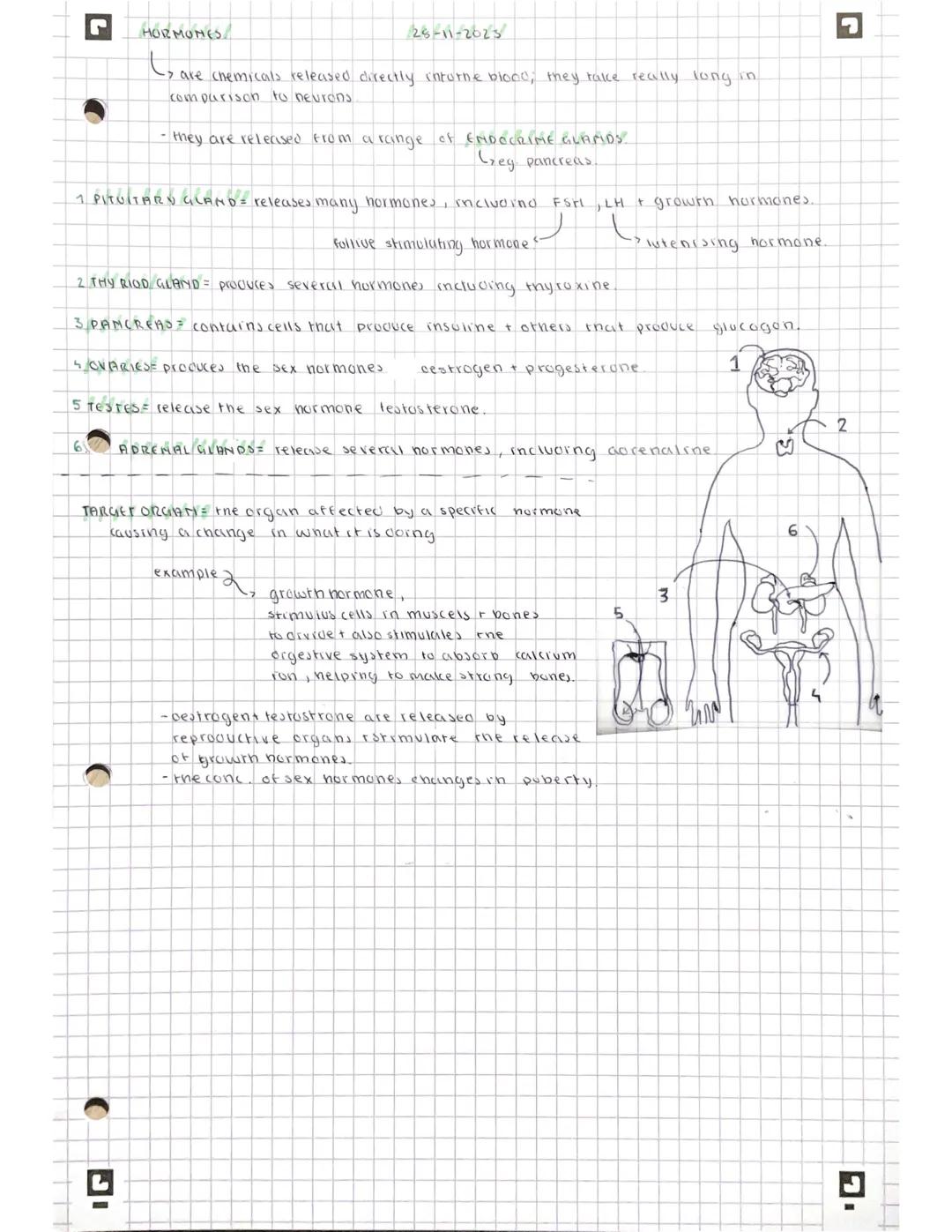
Introduction to Hormones
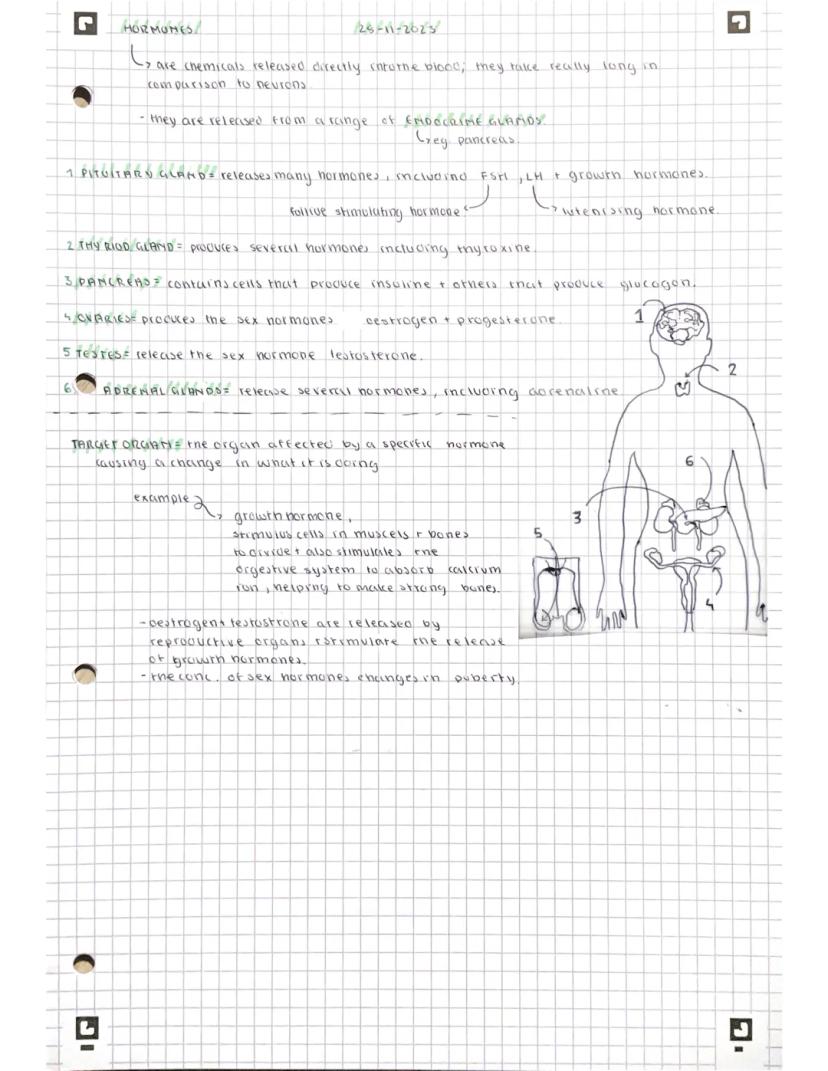
Think of hormones as your body's postal service - they're chemical messengers that travel through your bloodstream to deliver important instructions to different organs. Unlike nerve signals that work instantly, hormones take their time but have longer-lasting effects.
Endocrine glands are like hormone factories scattered throughout your body. The pituitary gland acts as the master controller, releasing growth hormone, FSH, and LH. Your thyroid produces thyroxine, whilst your pancreas makes insulin and glucagon to control blood sugar.
Your reproductive organs get in on the action too - ovaries produce oestrogen and progesterone, whilst testes release testosterone. The adrenal glands pump out adrenaline when you need that fight-or-flight boost.
Quick Tip: Remember that each hormone has a specific target organ - think of it like a key that only fits one particular lock!
2
of 6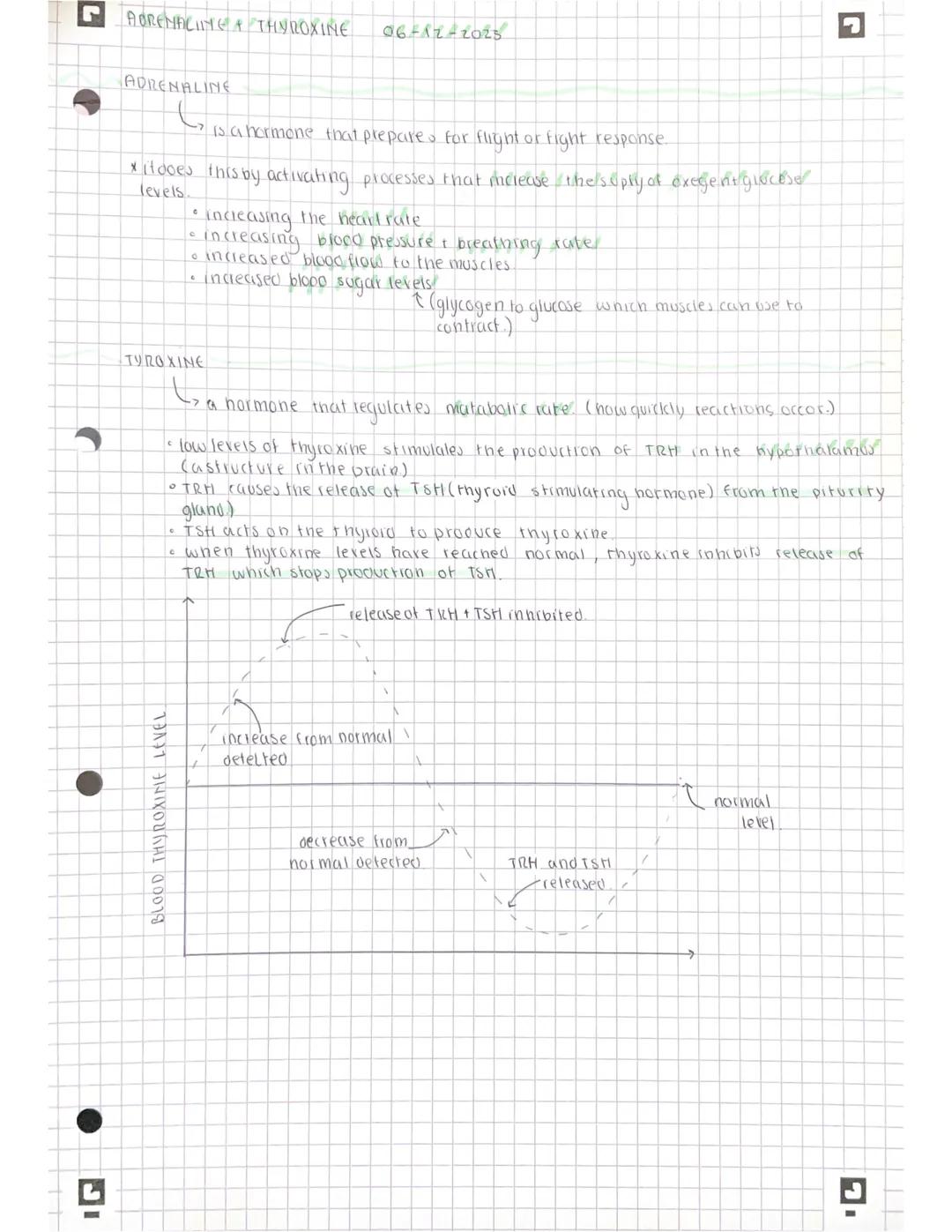
Key Hormones: Adrenaline and Thyroxine
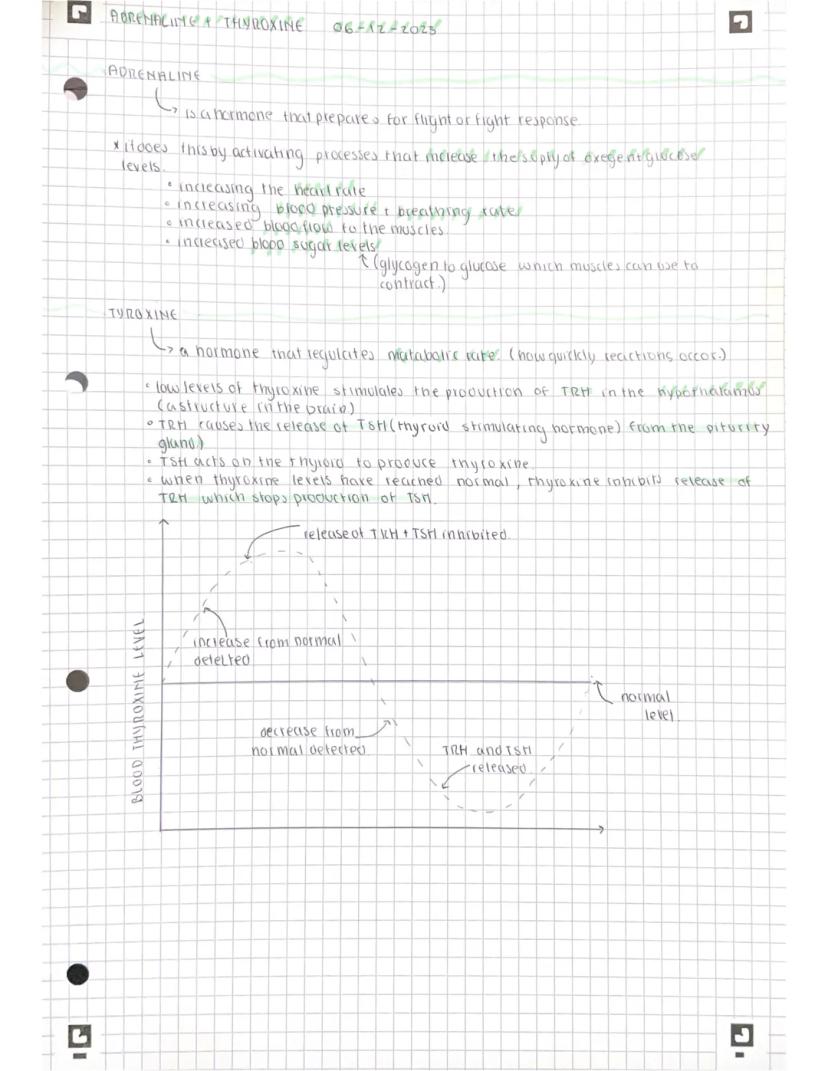
Adrenaline is your body's emergency alarm system, preparing you for fight-or-flight situations. When danger strikes, it cranks up your heart rate, increases blood pressure, and floods your muscles with glucose for instant energy. It's why you feel that rush during scary films or before big exams!
Thyroxine works like your body's speed controller, regulating your metabolic rate - basically how fast your body's chemical reactions happen. When thyroxine levels drop, your brain's hypothalamus releases TRH, which tells your pituitary to produce TSH.
TSH then signals your thyroid to make more thyroxine. Once levels return to normal, thyroxine cleverly switches off its own production - this is called negative feedback. It's like a thermostat that turns off the heating when your room gets warm enough.
Remember: This negative feedback system prevents hormone levels from getting dangerously high or low!
3
of 6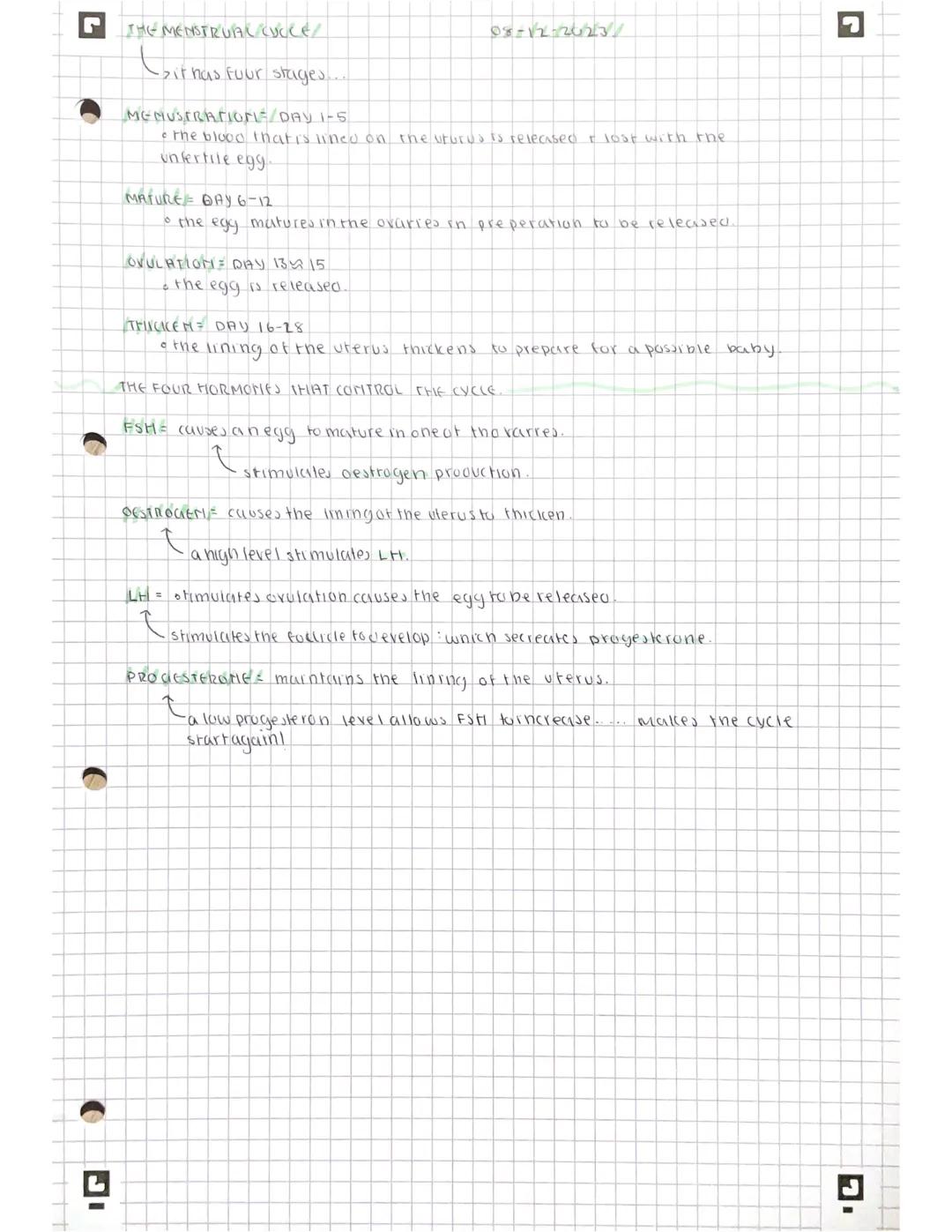
The Menstrual Cycle Basics
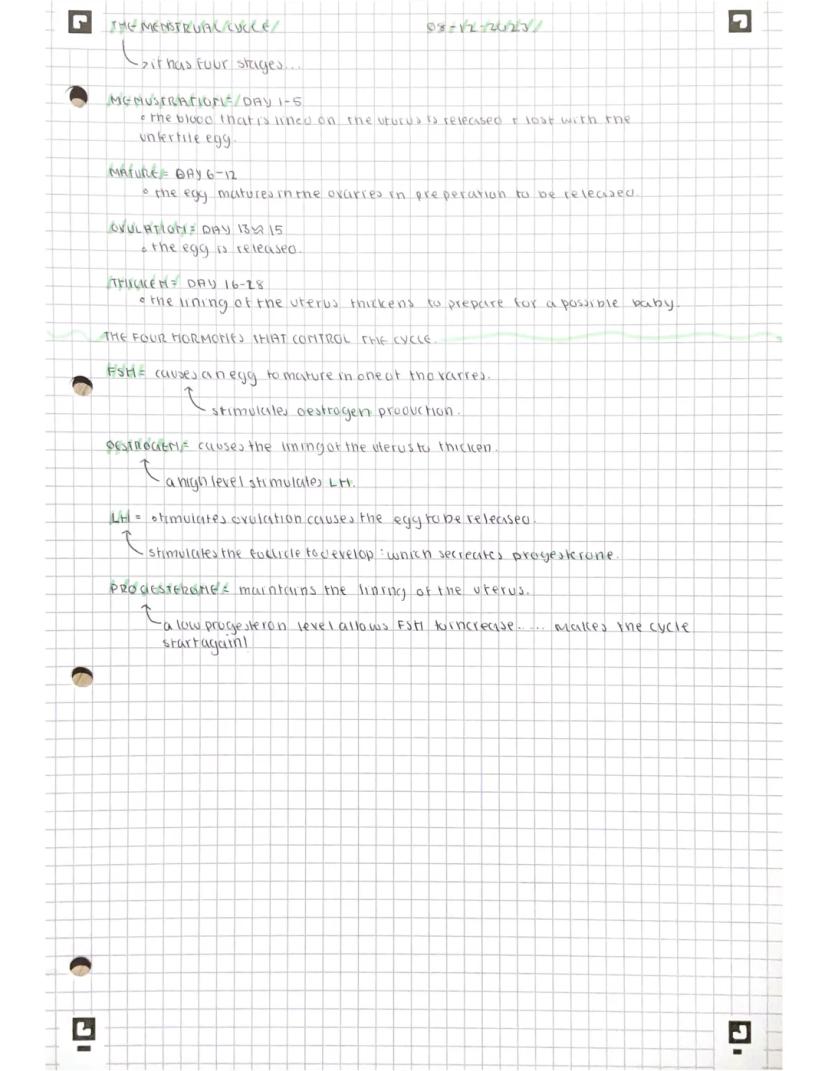
The menstrual cycle is a 28-day process that prepares the female body for potential pregnancy. Days 1-5 involve menstruation (your period), when the uterus lining breaks down. Days 6-12 see egg maturation in the ovaries, followed by ovulation around days 13-15 when the egg is released.
From day 16-28, the uterus lining thickens again, ready for a possible fertilised egg. If pregnancy doesn't occur, the cycle starts over.
Four key hormones control this process like a perfectly timed orchestra. FSH kicks things off by maturing an egg and stimulating oestrogen production. Oestrogen then thickens the uterus lining and triggers a surge of LH, which causes ovulation.
Exam Tip: Remember the sequence - FSH starts it, oestrogen builds it up, LH releases the egg, and progesterone maintains everything!
4
of 6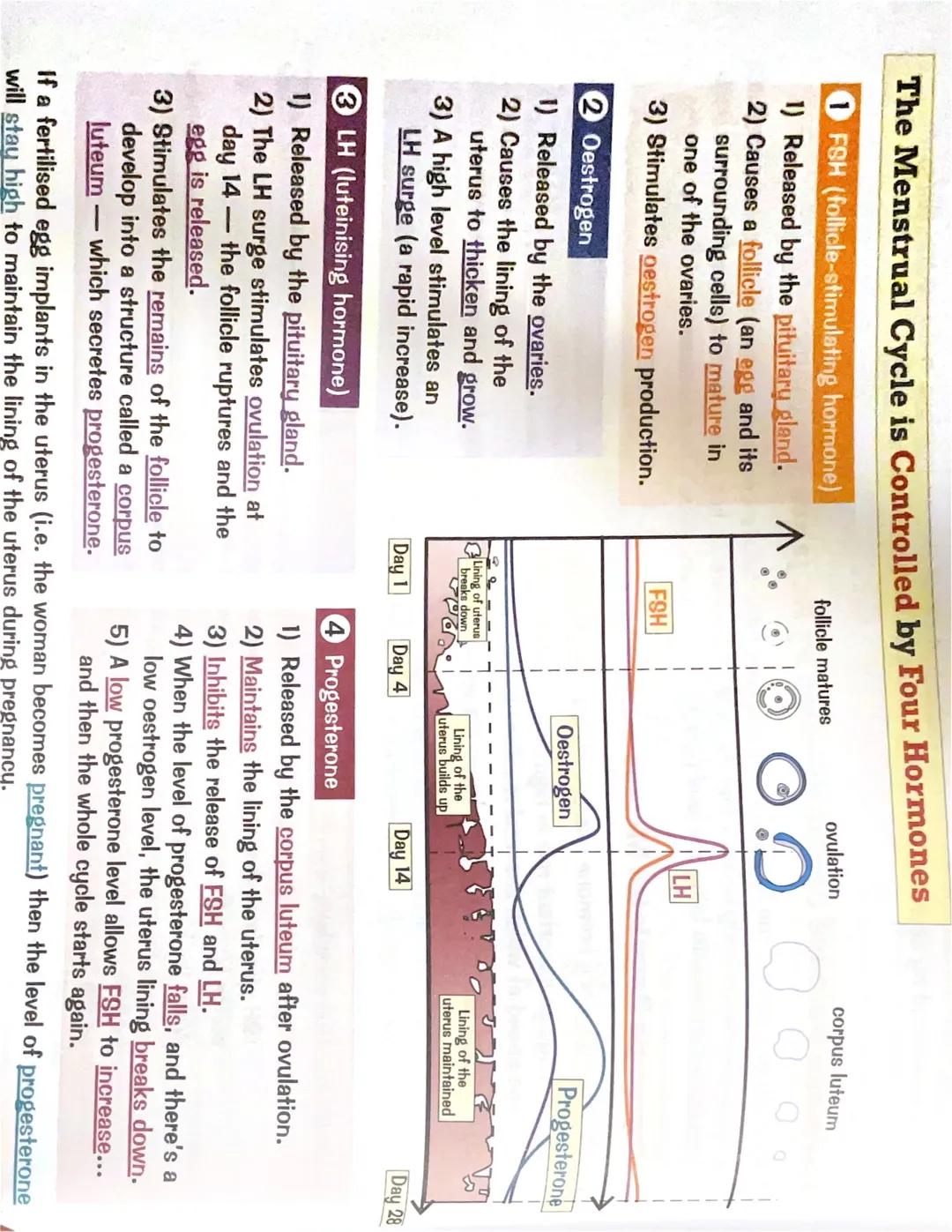
Detailed Hormone Control of Menstruation
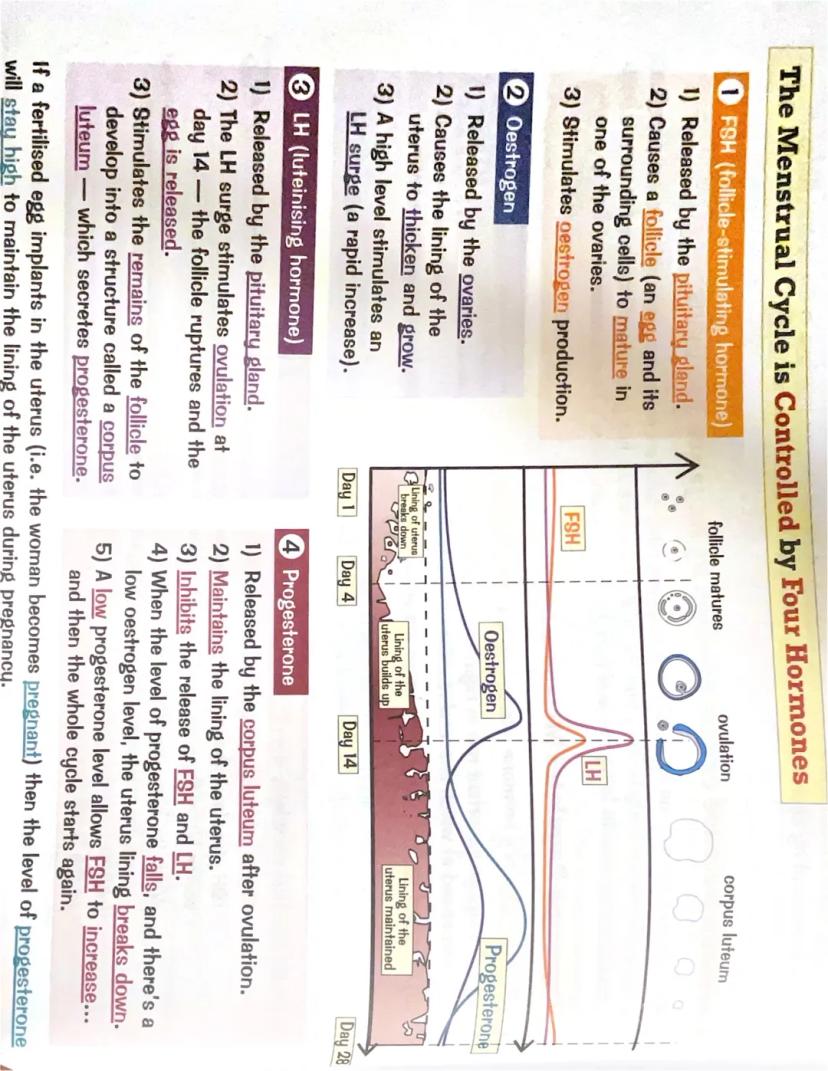
The menstrual cycle is like a carefully choreographed dance between four hormones. FSH from your pituitary gland gets the party started by maturing a follicle (egg plus surrounding cells) and boosting oestrogen production.
Oestrogen from the ovaries builds up the uterus lining and creates an LH surge around day 14. This LH surge is crucial - it triggers ovulation and transforms the empty follicle into the corpus luteum, which produces progesterone.
Progesterone maintains the thick uterus lining and cleverly inhibits FSH and LH to prevent more eggs from developing. If pregnancy doesn't happen, progesterone levels crash, the lining breaks down, and low progesterone allows FSH to rise again - restarting the whole cycle.
If pregnancy occurs, progesterone stays high throughout to maintain the lining. This is why pregnant women don't have periods!
Key Point: Each hormone triggers the next one in sequence, creating a self-regulating cycle that repeats every 28 days.
5
of 6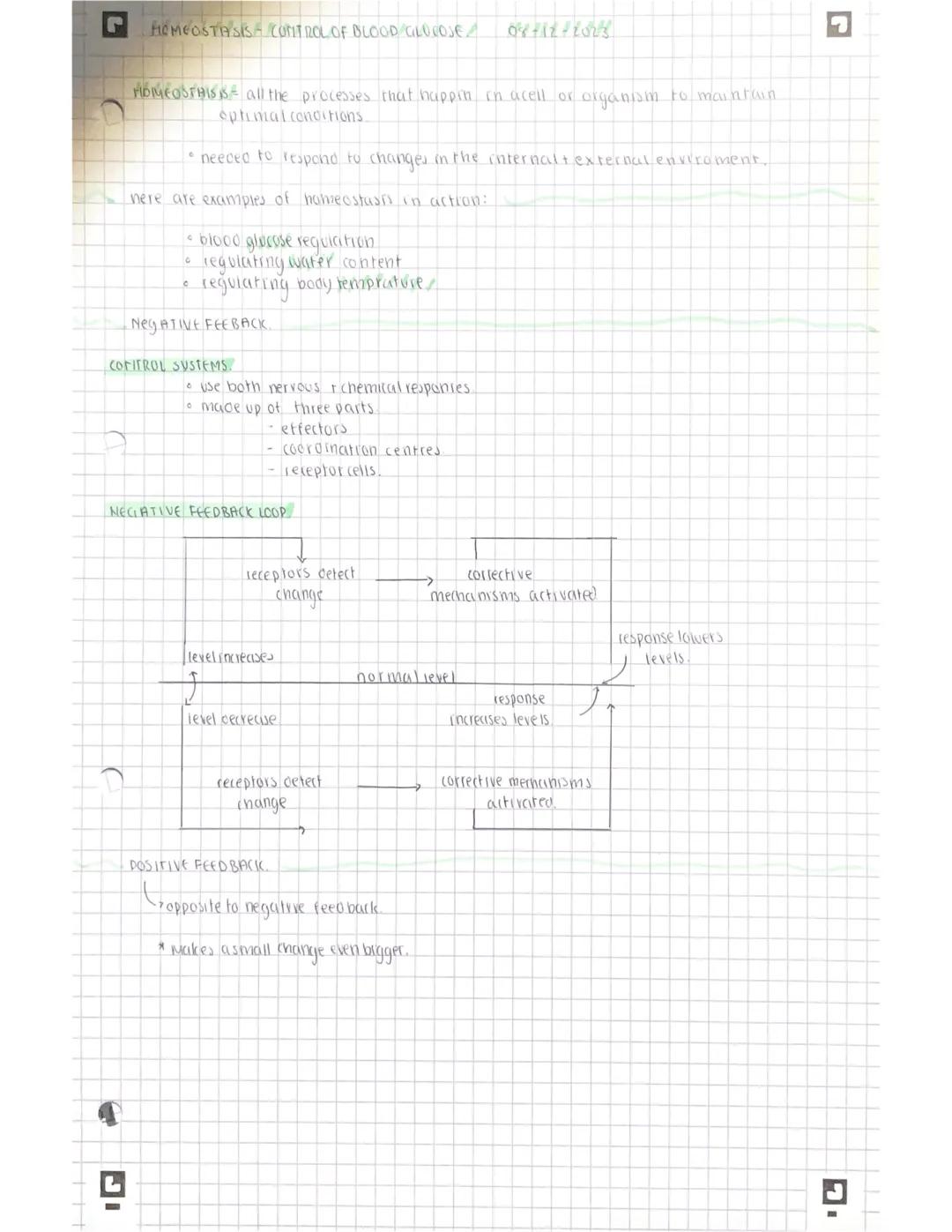
Homeostasis and Blood Glucose Control
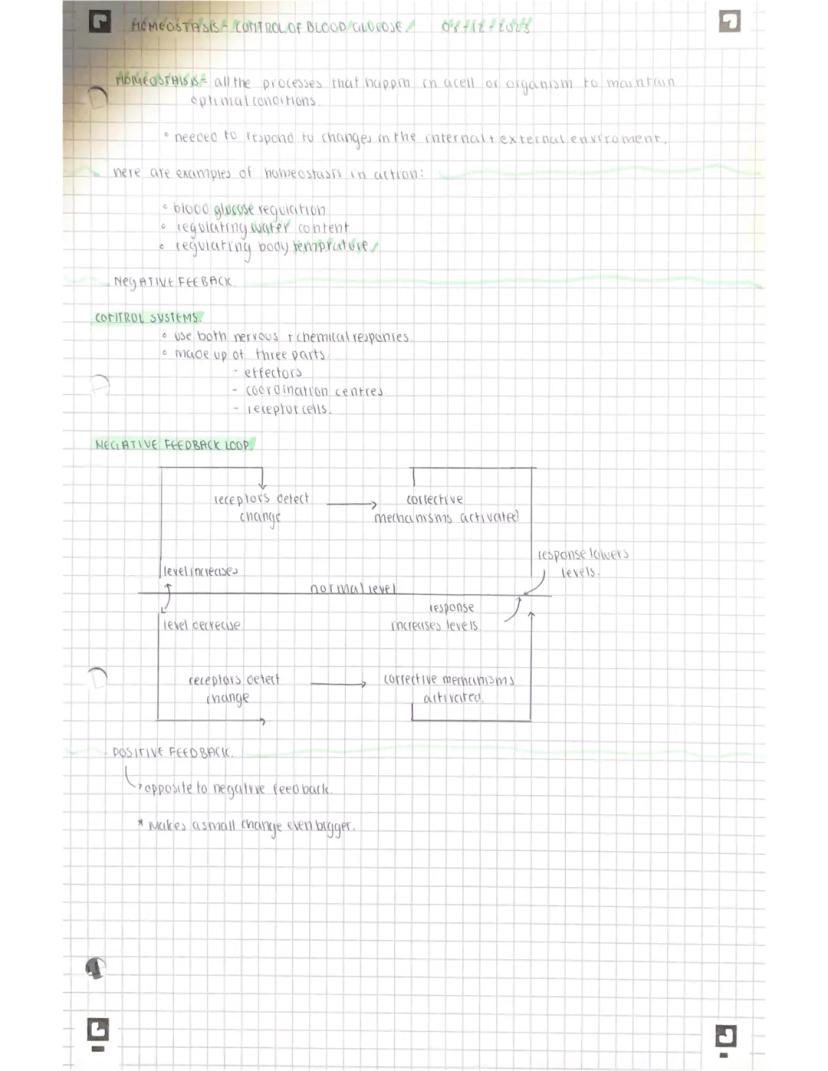
Homeostasis is your body's way of keeping everything perfectly balanced - like an internal quality control system. It maintains optimal conditions by responding to changes in your internal and external environment, controlling things like blood glucose, water content, and body temperature.
Your body uses negative feedback systems with three main components: receptor cells that detect changes, coordination centres that process information, and effectors that make corrections. Think of it like a thermostat system for your entire body.
Negative feedback loops work by detecting changes and activating corrective mechanisms that bring levels back to normal. When levels rise, responses kick in to lower them. When levels drop, different responses increase them again.
Positive feedback does the opposite - it amplifies small changes to make them bigger. This is less common but important in processes like childbirth.
Remember: Negative feedback is like a see-saw that keeps returning to balance - it's what keeps you alive and healthy!
6
of 6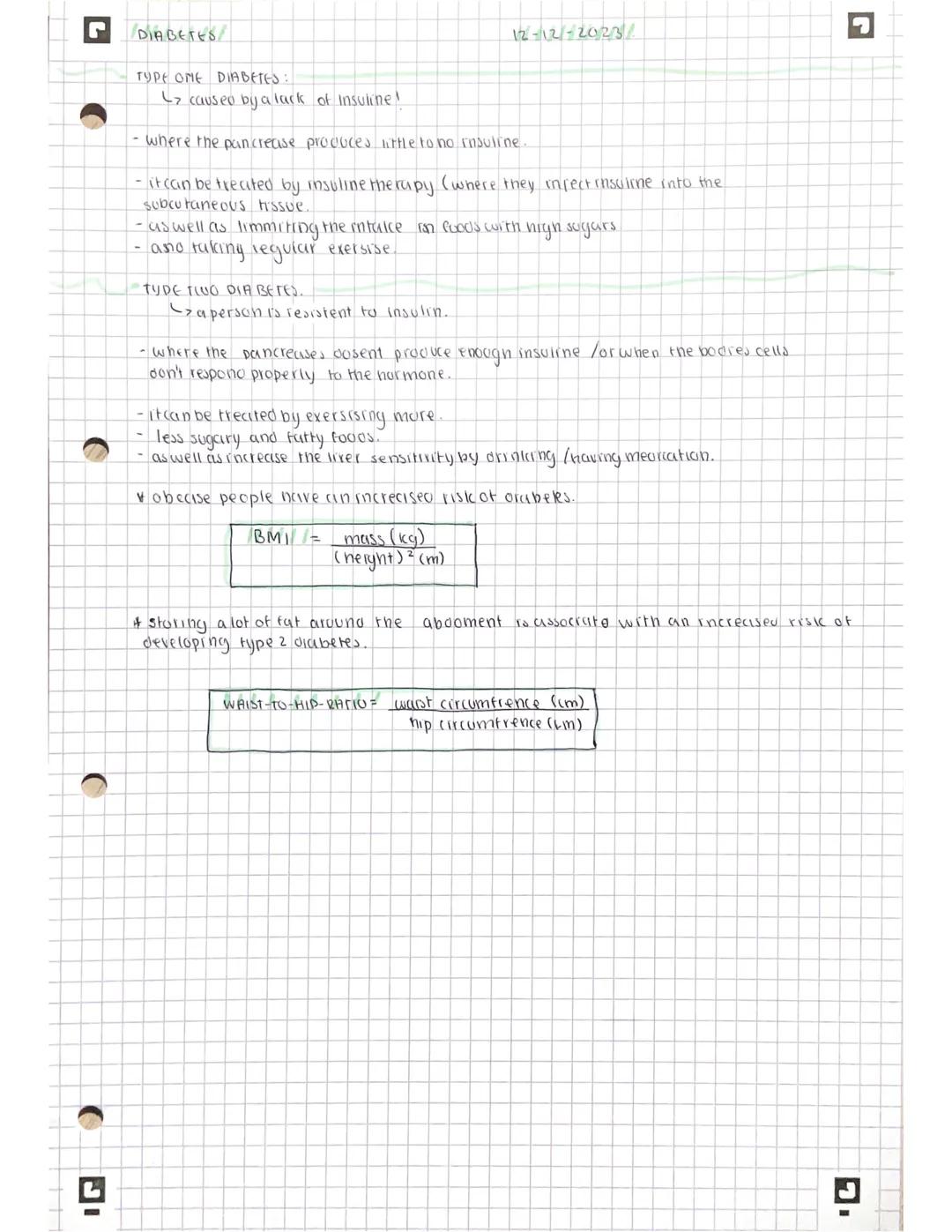
Diabetes: When Blood Sugar Goes Wrong
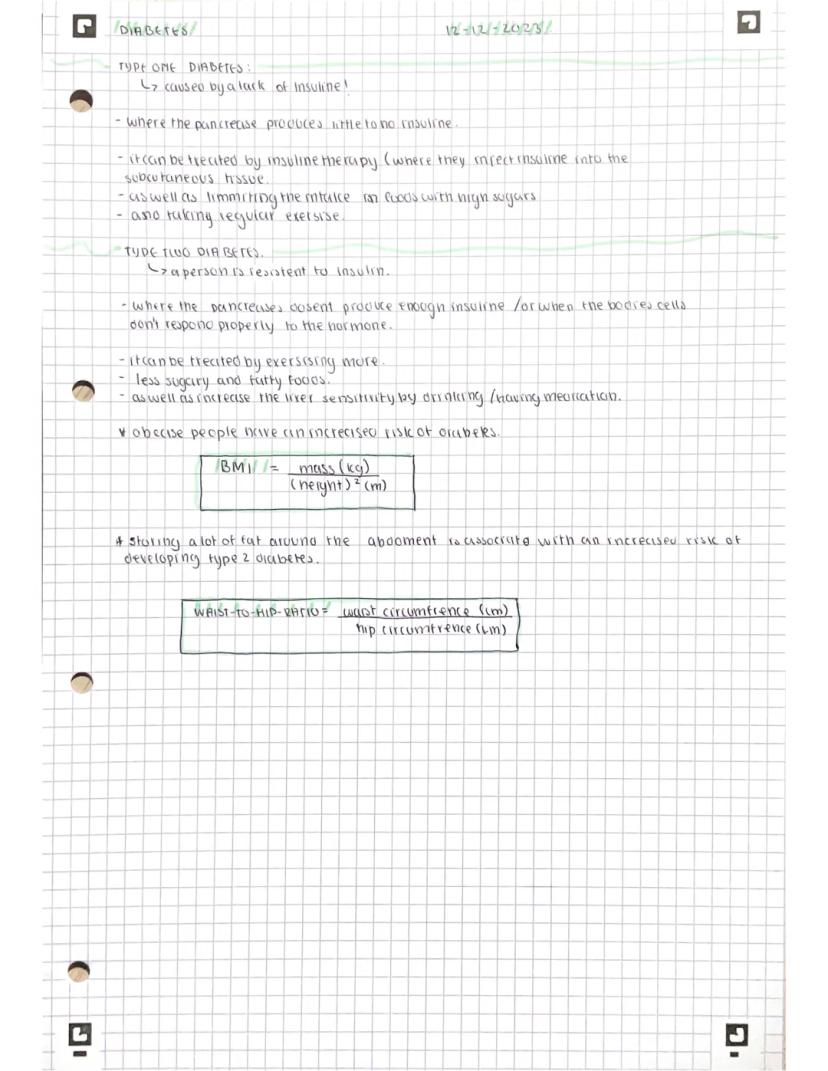
Diabetes occurs when your body can't properly control blood glucose levels. Type 1 diabetes happens when your pancreas produces little or no insulin - it's like having a broken key that can't unlock your cells to let glucose in.
Treatment involves insulin therapy (regular injections), limiting sugary foods, and taking regular exercise. People with Type 1 diabetes need to carefully balance their insulin doses with food intake and activity levels.
Type 2 diabetes develops when your body becomes resistant to insulin or doesn't produce enough. Your cells basically ignore insulin's signals. This type can often be managed through increased exercise, reducing sugary and fatty foods, and sometimes medication to improve liver sensitivity.
Obesity significantly increases Type 2 diabetes risk. BMI (Body Mass Index) and waist-to-hip ratio help assess this risk - storing fat around your abdomen is particularly dangerous for developing diabetes.
Health Tip: Regular exercise and a balanced diet are your best weapons against Type 2 diabetes!
We thought you’d never ask...
What is the Knowunity AI companion?
Our AI Companion is a student-focused AI tool that offers more than just answers. Built on millions of Knowunity resources, it provides relevant information, personalised study plans, quizzes, and content directly in the chat, adapting to your individual learning journey.
Where can I download the Knowunity app?
You can download the app from Google Play Store and Apple App Store.
Is Knowunity really free of charge?
That's right! Enjoy free access to study content, connect with fellow students, and get instant help – all at your fingertips.
Similar content
Most popular content: Homeostasis
9BiologyHomeostasis
Very detailed notes on homeostasis from Biology paper 2 AQA (Combined higher)
112421
BiologyGCSE Biology Key Concepts
Explore essential GCSE Biology topics including homeostasis, human anatomy, plant hormones, and disease management. This comprehensive guide covers key terms and concepts such as the nervous system, genetic variation, and the impact of environmental factors on health. Perfect for revision and understanding complex biological processes.
91,24642
Biologybiology paper 2 summery notes
biology paper 2 summery notes
102091
Biologybiology booklet higher tier
I hope this helps for higher tier biology
1076938
BiologyGCSE AQA homeostasis and response
Grade 9 spec based revision notes for AQA higher triple bio
111950
BiologyHomeostasis Mechanisms Explained
Explore the essential mechanisms of homeostasis, including the regulation of internal conditions, enzyme functioning, and the role of negative feedback loops. This summary covers how control systems and receptors work together to maintain optimal body conditions, ensuring metabolic reactions function effectively. Ideal for students studying biology and physiology.
102310
BiologyHomeostasis Mechanisms Explained
Explore the essential mechanisms of homeostasis, including the roles of the nervous and endocrine systems in maintaining optimal internal conditions. This summary covers key concepts such as feedback systems, receptor functions, and the brain's involvement in regulating body temperature, blood glucose, and water levels. Ideal for students preparing for exams or seeking a deeper understanding of physiological processes.
105736
BiologyHormonal Regulation Overview
Explore the key concepts of hormonal regulation and homeostasis in the human body. This summary covers the roles of various hormones, including estrogen, testosterone, and insulin, in maintaining internal balance through negative feedback mechanisms. Ideal for students studying the endocrine system and its impact on biological processes.
103955
BiologyHomeostasis Mechanisms Explained
Explore the essential processes of homeostasis, including the roles of the nervous and endocrine systems in maintaining a stable internal environment. This summary covers key concepts such as feedback mechanisms and automatic control systems, providing a clear understanding of how the body responds to internal and external changes. Ideal for students studying biology.
1162211
Most popular content in Biology
9C
BiologyCell Biology and Cell structure
cell structures
93,2160
1
Biology1.cells Gcse biology question cards
combined science higher biology
92,3384
BiologyAQA Biology: Key Concepts
Explore essential AQA Biology topics including Photosynthesis, Respiration, Homeostasis, Genetics, and Ecology. This comprehensive knowledge organizer covers key concepts such as energy transfer, hormonal control, and genetic variation, providing a solid foundation for your studies. Ideal for exam preparation and understanding biological processes.
108,787306
T
BiologyThe functions of subcellular structures - B1 Biology
Flashcards on the different functions of subcellular structures: cell membrane, nucleus, mitochondria, ribosomes, cytoplasm, permant vacuole, chloroplasts and cell wall.
102,7655
BiologyA-Level Biology Year 1 Overview
Comprehensive summary of AQA A-Level Biology Year 1, covering key topics such as cellular structure, protein synthesis, immune response, gas exchange, and more. Ideal for exam preparation and understanding biological concepts. Includes detailed insights into cellular processes, biological classification, and the circulatory system.
1214,876694
T
BiologyTypes of cells
biology
101,2010
B
BiologyBiology Paper 1 quiz
this is a simple quiz on key knowledge needed for paper 1
102,7685
BiologyBiology paper 1 Summary
Notes for Biology paper 1 contains the full course for AQA higher combined!
104,127106
C
BiologyCells part 1 function of cells.
About cells and function of cells etc.
119841
Most popular content
9 Sociology
Sociology of Education Overview
Explore comprehensive A-Level Sociology notes on the education system, covering key theories, policies, and sociological perspectives. This resource includes insights on marketisation, gender roles, cultural deprivation, and educational inequalities, providing a thorough understanding of how education shapes social stratification and individual achievement. Ideal for exam preparation and in-depth study.
12102,8383,040
SociologySociology of Families: Comprehensive Revision
Dive into an extensive overview of family dynamics, perspectives, and patterns in sociology. This resource covers key concepts such as family diversity, gender roles, marriage, and the impact of social policies on family structures. Perfect for A-Level Sociology students preparing for Paper 2.
1273,6332,306
CriminologyCriminology: Crime & Punishment Overview
Comprehensive mindmaps covering key concepts in the Crime and Punishment topic for WJEC Criminology Unit 4. This resource includes detailed insights into the Criminal Justice System, crime prevention strategies, sentencing models, and the roles of various agencies. Ideal for A-Level revision, ensuring you grasp essential theories and legislative processes to excel in your exams.
1254,8591,059
SociologyComprehensive Crime & Deviance Overview
Explore an extensive revision of crime and deviance topics, including theories, types of crime, and the impact of media. This resource covers key concepts such as Marxism, functionalism, gender and crime, and the influence of globalization on criminal behavior. Ideal for students seeking a thorough understanding of criminology and its various theories. Type: Full Topic Revision.
1251,6441,399
C
BiologyCell Biology and Cell structure
cell structures
93,2160
 English Literature
An Inspector Calls: Character Insights
Explore in-depth analysis and key quotes for characters in J.B. Priestley's 'An Inspector Calls'. This resource covers Gerald Croft, Inspector Goole, Sheila Birling, Mrs. Birling, Eric Birling, and Eva Smith, focusing on themes of class, gender roles, and social responsibility. Ideal for students aiming for Grade 8 and above.
1025,418907
CriminologyWJEC Unit 4 Criminology
Criminology unit 4 detailed revision note
127,146125
CriminologyCriminology Theories Overview
Explore key criminology theories and their implications on crime and deviance. This comprehensive summary covers biological, psychological, and sociological perspectives, including labelling theory, right realism, and the impact of social campaigns on policy development. Ideal for A-Level criminology students seeking to understand the complexities of criminal behaviour and the factors influencing crime prevention strategies.
129,757210
English LiteratureRomeo and Juliet: Key themes
Key Romeo and Juliet themes and analysed quotes
106,698198
Can't find what you're looking for? Explore other subjects.
Students love us — and so will you.
4.6/5App Store
4.7/5Google Play
The app is very easy to use and well designed. I have found everything I was looking for so far and have been able to learn a lot from the presentations! I will definitely use the app for a class assignment! And of course it also helps a lot as an inspiration.
Stefan SiOS user
This app is really great. There are so many study notes and help [...]. My problem subject is French, for example, and the app has so many options for help. Thanks to this app, I have improved my French. I would recommend it to anyone.
Samantha KlichAndroid user
Wow, I am really amazed. I just tried the app because I've seen it advertised many times and was absolutely stunned. This app is THE HELP you want for school and above all, it offers so many things, such as workouts and fact sheets, which have been VERY helpful to me personally.
AnnaiOS user
Biology96 views·Updated Jun 13, 2026·6 pagesUnderstanding Animal Coordination, Control, and Homeostasis for GCSE Biology (Edexcel)
~@user2856739
Your body runs on chemical messengers called hormones that travel through your blood to control everything from growth to reproduction. Understanding how these hormones work is crucial for grasping human biology and will definitely come up in your exams.
1
of 6
Sign up to see the content. It's free!
- Access to all documents
- Improve your grades
- Join milions of students
Introduction to Hormones
Think of hormones as your body's postal service - they're chemical messengers that travel through your bloodstream to deliver important instructions to different organs. Unlike nerve signals that work instantly, hormones take their time but have longer-lasting effects.
Endocrine glands are like hormone factories scattered throughout your body. The pituitary gland acts as the master controller, releasing growth hormone, FSH, and LH. Your thyroid produces thyroxine, whilst your pancreas makes insulin and glucagon to control blood sugar.
Your reproductive organs get in on the action too - ovaries produce oestrogen and progesterone, whilst testes release testosterone. The adrenal glands pump out adrenaline when you need that fight-or-flight boost.
Quick Tip: Remember that each hormone has a specific target organ - think of it like a key that only fits one particular lock!
2
of 6Sign up to see the content. It's free!
- Access to all documents
- Improve your grades
- Join milions of students
Key Hormones: Adrenaline and Thyroxine
Adrenaline is your body's emergency alarm system, preparing you for fight-or-flight situations. When danger strikes, it cranks up your heart rate, increases blood pressure, and floods your muscles with glucose for instant energy. It's why you feel that rush during scary films or before big exams!
Thyroxine works like your body's speed controller, regulating your metabolic rate - basically how fast your body's chemical reactions happen. When thyroxine levels drop, your brain's hypothalamus releases TRH, which tells your pituitary to produce TSH.
TSH then signals your thyroid to make more thyroxine. Once levels return to normal, thyroxine cleverly switches off its own production - this is called negative feedback. It's like a thermostat that turns off the heating when your room gets warm enough.
Remember: This negative feedback system prevents hormone levels from getting dangerously high or low!
3
of 6Sign up to see the content. It's free!
- Access to all documents
- Improve your grades
- Join milions of students
The Menstrual Cycle Basics
The menstrual cycle is a 28-day process that prepares the female body for potential pregnancy. Days 1-5 involve menstruation (your period), when the uterus lining breaks down. Days 6-12 see egg maturation in the ovaries, followed by ovulation around days 13-15 when the egg is released.
From day 16-28, the uterus lining thickens again, ready for a possible fertilised egg. If pregnancy doesn't occur, the cycle starts over.
Four key hormones control this process like a perfectly timed orchestra. FSH kicks things off by maturing an egg and stimulating oestrogen production. Oestrogen then thickens the uterus lining and triggers a surge of LH, which causes ovulation.
Exam Tip: Remember the sequence - FSH starts it, oestrogen builds it up, LH releases the egg, and progesterone maintains everything!
4
of 6Sign up to see the content. It's free!
- Access to all documents
- Improve your grades
- Join milions of students
Detailed Hormone Control of Menstruation
The menstrual cycle is like a carefully choreographed dance between four hormones. FSH from your pituitary gland gets the party started by maturing a follicle (egg plus surrounding cells) and boosting oestrogen production.
Oestrogen from the ovaries builds up the uterus lining and creates an LH surge around day 14. This LH surge is crucial - it triggers ovulation and transforms the empty follicle into the corpus luteum, which produces progesterone.
Progesterone maintains the thick uterus lining and cleverly inhibits FSH and LH to prevent more eggs from developing. If pregnancy doesn't happen, progesterone levels crash, the lining breaks down, and low progesterone allows FSH to rise again - restarting the whole cycle.
If pregnancy occurs, progesterone stays high throughout to maintain the lining. This is why pregnant women don't have periods!
Key Point: Each hormone triggers the next one in sequence, creating a self-regulating cycle that repeats every 28 days.
5
of 6Sign up to see the content. It's free!
- Access to all documents
- Improve your grades
- Join milions of students
Homeostasis and Blood Glucose Control
Homeostasis is your body's way of keeping everything perfectly balanced - like an internal quality control system. It maintains optimal conditions by responding to changes in your internal and external environment, controlling things like blood glucose, water content, and body temperature.
Your body uses negative feedback systems with three main components: receptor cells that detect changes, coordination centres that process information, and effectors that make corrections. Think of it like a thermostat system for your entire body.
Negative feedback loops work by detecting changes and activating corrective mechanisms that bring levels back to normal. When levels rise, responses kick in to lower them. When levels drop, different responses increase them again.
Positive feedback does the opposite - it amplifies small changes to make them bigger. This is less common but important in processes like childbirth.
Remember: Negative feedback is like a see-saw that keeps returning to balance - it's what keeps you alive and healthy!
6
of 6Sign up to see the content. It's free!
- Access to all documents
- Improve your grades
- Join milions of students
Diabetes: When Blood Sugar Goes Wrong
Diabetes occurs when your body can't properly control blood glucose levels. Type 1 diabetes happens when your pancreas produces little or no insulin - it's like having a broken key that can't unlock your cells to let glucose in.
Treatment involves insulin therapy (regular injections), limiting sugary foods, and taking regular exercise. People with Type 1 diabetes need to carefully balance their insulin doses with food intake and activity levels.
Type 2 diabetes develops when your body becomes resistant to insulin or doesn't produce enough. Your cells basically ignore insulin's signals. This type can often be managed through increased exercise, reducing sugary and fatty foods, and sometimes medication to improve liver sensitivity.
Obesity significantly increases Type 2 diabetes risk. BMI (Body Mass Index) and waist-to-hip ratio help assess this risk - storing fat around your abdomen is particularly dangerous for developing diabetes.
Health Tip: Regular exercise and a balanced diet are your best weapons against Type 2 diabetes!
We thought you’d never ask...
What is the Knowunity AI companion?
Our AI Companion is a student-focused AI tool that offers more than just answers. Built on millions of Knowunity resources, it provides relevant information, personalised study plans, quizzes, and content directly in the chat, adapting to your individual learning journey.
Where can I download the Knowunity app?
You can download the app from Google Play Store and Apple App Store.
Is Knowunity really free of charge?
That's right! Enjoy free access to study content, connect with fellow students, and get instant help – all at your fingertips.
Similar content
Most popular content: Homeostasis
9BiologyHomeostasis
Very detailed notes on homeostasis from Biology paper 2 AQA (Combined higher)
112421
BiologyGCSE Biology Key Concepts
Explore essential GCSE Biology topics including homeostasis, human anatomy, plant hormones, and disease management. This comprehensive guide covers key terms and concepts such as the nervous system, genetic variation, and the impact of environmental factors on health. Perfect for revision and understanding complex biological processes.
91,24642
Biologybiology paper 2 summery notes
biology paper 2 summery notes
102091
Biologybiology booklet higher tier
I hope this helps for higher tier biology
1076938
BiologyGCSE AQA homeostasis and response
Grade 9 spec based revision notes for AQA higher triple bio
111950
BiologyHomeostasis Mechanisms Explained
Explore the essential mechanisms of homeostasis, including the regulation of internal conditions, enzyme functioning, and the role of negative feedback loops. This summary covers how control systems and receptors work together to maintain optimal body conditions, ensuring metabolic reactions function effectively. Ideal for students studying biology and physiology.
102310
BiologyHomeostasis Mechanisms Explained
Explore the essential mechanisms of homeostasis, including the roles of the nervous and endocrine systems in maintaining optimal internal conditions. This summary covers key concepts such as feedback systems, receptor functions, and the brain's involvement in regulating body temperature, blood glucose, and water levels. Ideal for students preparing for exams or seeking a deeper understanding of physiological processes.
105736
BiologyHormonal Regulation Overview
Explore the key concepts of hormonal regulation and homeostasis in the human body. This summary covers the roles of various hormones, including estrogen, testosterone, and insulin, in maintaining internal balance through negative feedback mechanisms. Ideal for students studying the endocrine system and its impact on biological processes.
103955
BiologyHomeostasis Mechanisms Explained
Explore the essential processes of homeostasis, including the roles of the nervous and endocrine systems in maintaining a stable internal environment. This summary covers key concepts such as feedback mechanisms and automatic control systems, providing a clear understanding of how the body responds to internal and external changes. Ideal for students studying biology.
1162211
Most popular content in Biology
9C
BiologyCell Biology and Cell structure
cell structures
93,2160
1
Biology1.cells Gcse biology question cards
combined science higher biology
92,3384
BiologyAQA Biology: Key Concepts
Explore essential AQA Biology topics including Photosynthesis, Respiration, Homeostasis, Genetics, and Ecology. This comprehensive knowledge organizer covers key concepts such as energy transfer, hormonal control, and genetic variation, providing a solid foundation for your studies. Ideal for exam preparation and understanding biological processes.
108,787306
T
BiologyThe functions of subcellular structures - B1 Biology
Flashcards on the different functions of subcellular structures: cell membrane, nucleus, mitochondria, ribosomes, cytoplasm, permant vacuole, chloroplasts and cell wall.
102,7655
BiologyA-Level Biology Year 1 Overview
Comprehensive summary of AQA A-Level Biology Year 1, covering key topics such as cellular structure, protein synthesis, immune response, gas exchange, and more. Ideal for exam preparation and understanding biological concepts. Includes detailed insights into cellular processes, biological classification, and the circulatory system.
1214,876694
T
BiologyTypes of cells
biology
101,2010
B
BiologyBiology Paper 1 quiz
this is a simple quiz on key knowledge needed for paper 1
102,7685
BiologyBiology paper 1 Summary
Notes for Biology paper 1 contains the full course for AQA higher combined!
104,127106
C
BiologyCells part 1 function of cells.
About cells and function of cells etc.
119841
Most popular content
9SociologySociology of Education Overview
Explore comprehensive A-Level Sociology notes on the education system, covering key theories, policies, and sociological perspectives. This resource includes insights on marketisation, gender roles, cultural deprivation, and educational inequalities, providing a thorough understanding of how education shapes social stratification and individual achievement. Ideal for exam preparation and in-depth study.
12102,8383,040
SociologySociology of Families: Comprehensive Revision
Dive into an extensive overview of family dynamics, perspectives, and patterns in sociology. This resource covers key concepts such as family diversity, gender roles, marriage, and the impact of social policies on family structures. Perfect for A-Level Sociology students preparing for Paper 2.
1273,6332,306
CriminologyCriminology: Crime & Punishment Overview
Comprehensive mindmaps covering key concepts in the Crime and Punishment topic for WJEC Criminology Unit 4. This resource includes detailed insights into the Criminal Justice System, crime prevention strategies, sentencing models, and the roles of various agencies. Ideal for A-Level revision, ensuring you grasp essential theories and legislative processes to excel in your exams.
1254,8591,059
SociologyComprehensive Crime & Deviance Overview
Explore an extensive revision of crime and deviance topics, including theories, types of crime, and the impact of media. This resource covers key concepts such as Marxism, functionalism, gender and crime, and the influence of globalization on criminal behavior. Ideal for students seeking a thorough understanding of criminology and its various theories. Type: Full Topic Revision.
1251,6441,399
C
BiologyCell Biology and Cell structure
cell structures
93,2160
English LiteratureAn Inspector Calls: Character Insights
Explore in-depth analysis and key quotes for characters in J.B. Priestley's 'An Inspector Calls'. This resource covers Gerald Croft, Inspector Goole, Sheila Birling, Mrs. Birling, Eric Birling, and Eva Smith, focusing on themes of class, gender roles, and social responsibility. Ideal for students aiming for Grade 8 and above.
1025,418907
CriminologyWJEC Unit 4 Criminology
Criminology unit 4 detailed revision note
127,146125
CriminologyCriminology Theories Overview
Explore key criminology theories and their implications on crime and deviance. This comprehensive summary covers biological, psychological, and sociological perspectives, including labelling theory, right realism, and the impact of social campaigns on policy development. Ideal for A-Level criminology students seeking to understand the complexities of criminal behaviour and the factors influencing crime prevention strategies.
129,757210
English LiteratureRomeo and Juliet: Key themes
Key Romeo and Juliet themes and analysed quotes
106,698198
Can't find what you're looking for? Explore other subjects.
Students love us — and so will you.
4.6/5App Store
4.7/5Google Play
The app is very easy to use and well designed. I have found everything I was looking for so far and have been able to learn a lot from the presentations! I will definitely use the app for a class assignment! And of course it also helps a lot as an inspiration.
Stefan SiOS user
This app is really great. There are so many study notes and help [...]. My problem subject is French, for example, and the app has so many options for help. Thanks to this app, I have improved my French. I would recommend it to anyone.
Samantha KlichAndroid user
Wow, I am really amazed. I just tried the app because I've seen it advertised many times and was absolutely stunned. This app is THE HELP you want for school and above all, it offers so many things, such as workouts and fact sheets, which have been VERY helpful to me personally.
AnnaiOS user