
Your DNA contains the blueprint for life, but how does... Show more
 Combined Science
 Sociology
Sign up to see the contentIt's free!
Access to all documents
Improve your grades
Join milions of students
By signing up you accept Terms of Service and Privacy Policy

Maths

Chemistry

Biology

English Language

History
Responding to change (a2 only)
Infection and response
Homeostasis and response
Energy transfers (a2 only)
Cell biology
Organisms respond to changes in their internal and external environments (a-level only)
Biological molecules
Organisation
Substance exchange
Bioenergetics
Genetic information & variation
Inheritance, variation and evolution
Genetics & ecosystems (a2 only)
Ecology
Cells
Show all topics
Britain & the wider world: 1745 -1901
1l the quest for political stability: germany, 1871-1991
The cold war
Inter-war germany
Medieval period: 1066 -1509
2d religious conflict and the church in england, c1529-c1570
2o democracy and nazism: germany, 1918-1945
1f industrialisation and the people: britain, c1783-1885
1c the tudors: england, 1485-1603
2m wars and welfare: britain in transition, 1906-1957
World war two & the holocaust
2n revolution and dictatorship: russia, 1917-1953
2s the making of modern britain, 1951-2007
World war one
Britain: 1509 -1745
Show all topics
328
•
24 Dec 2025
•

Charlie Chomanicz
@charliechomanicz
Your DNA contains the blueprint for life, but how does... Show more
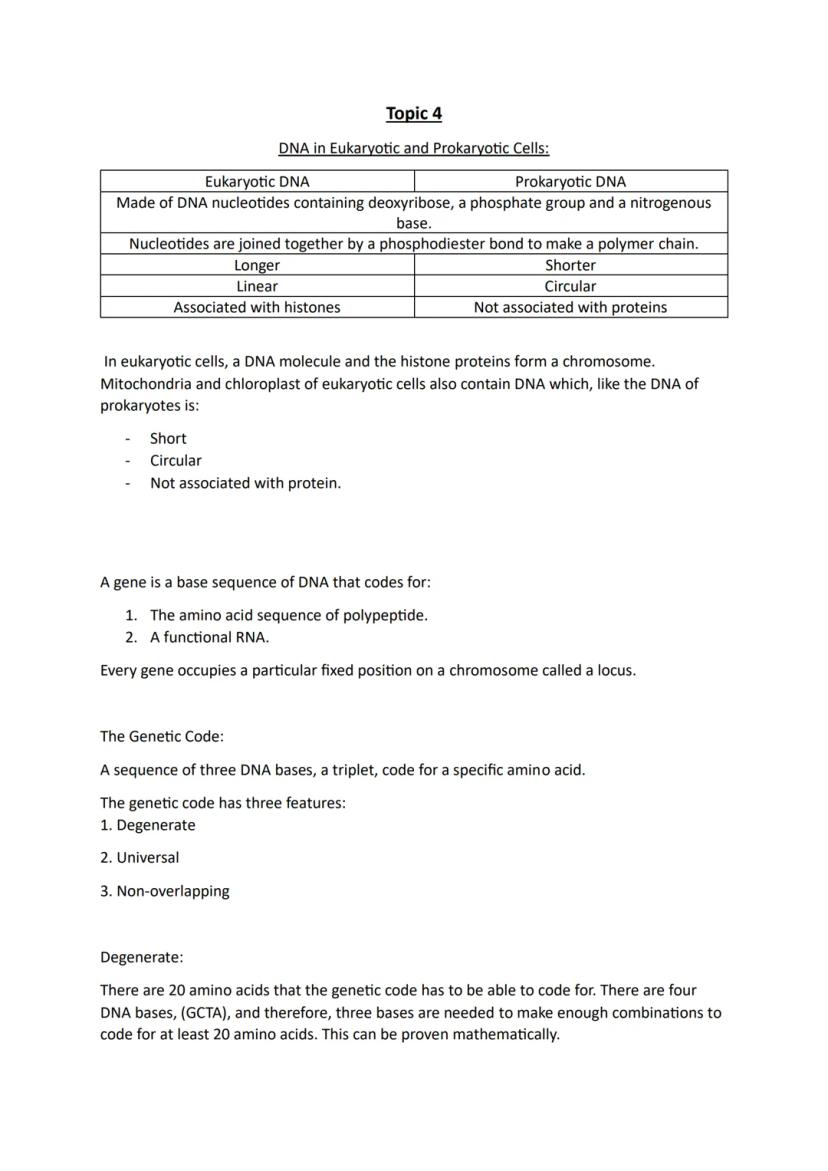
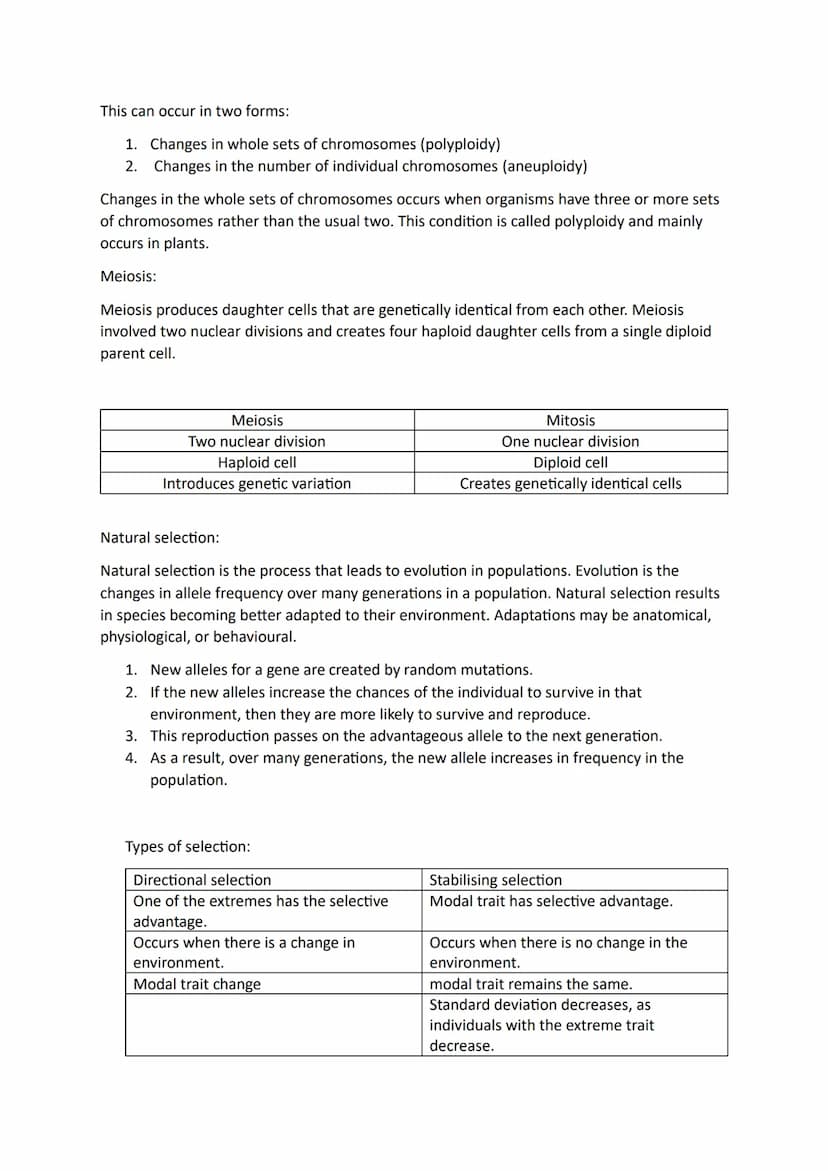
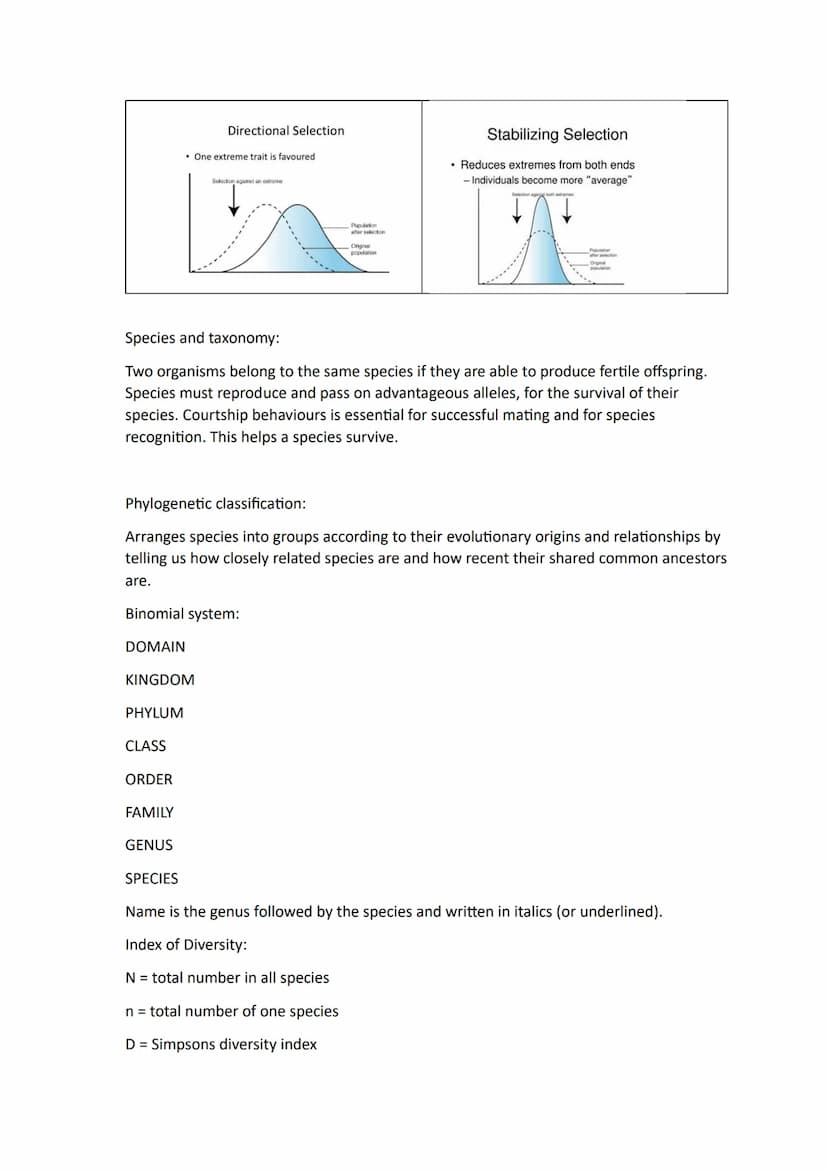
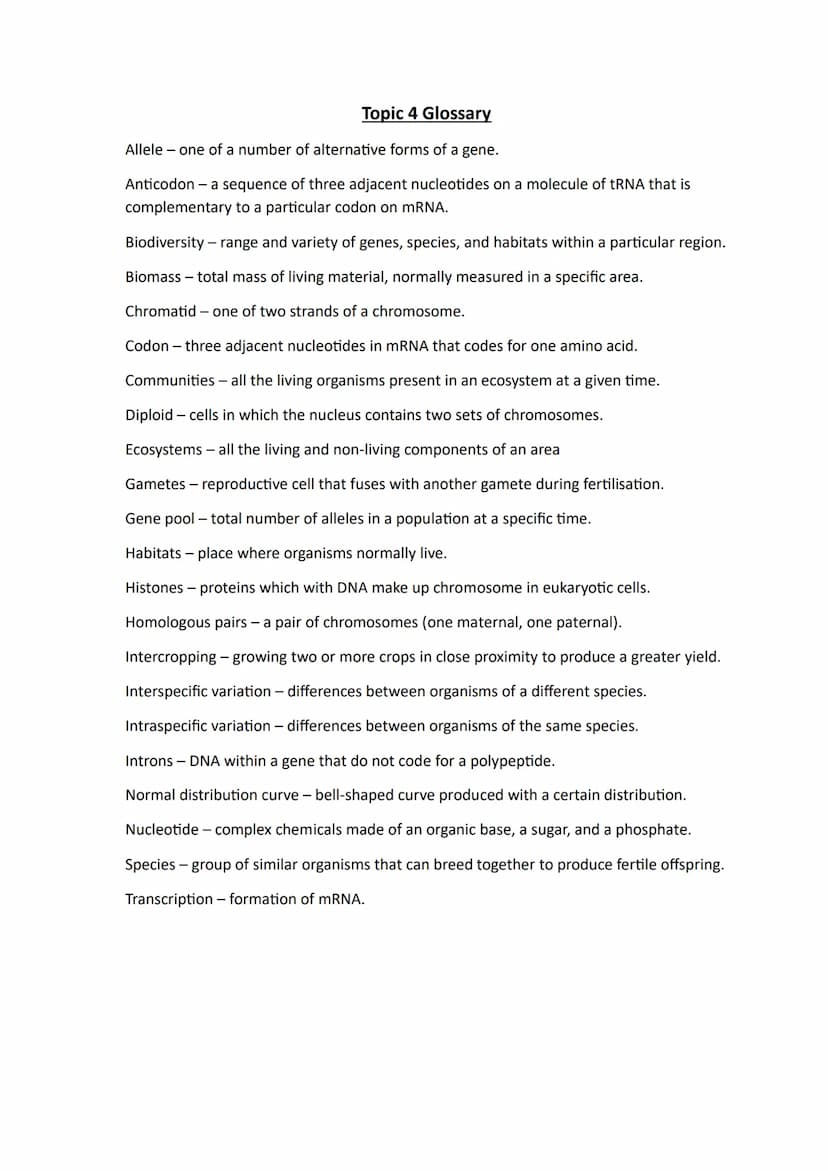
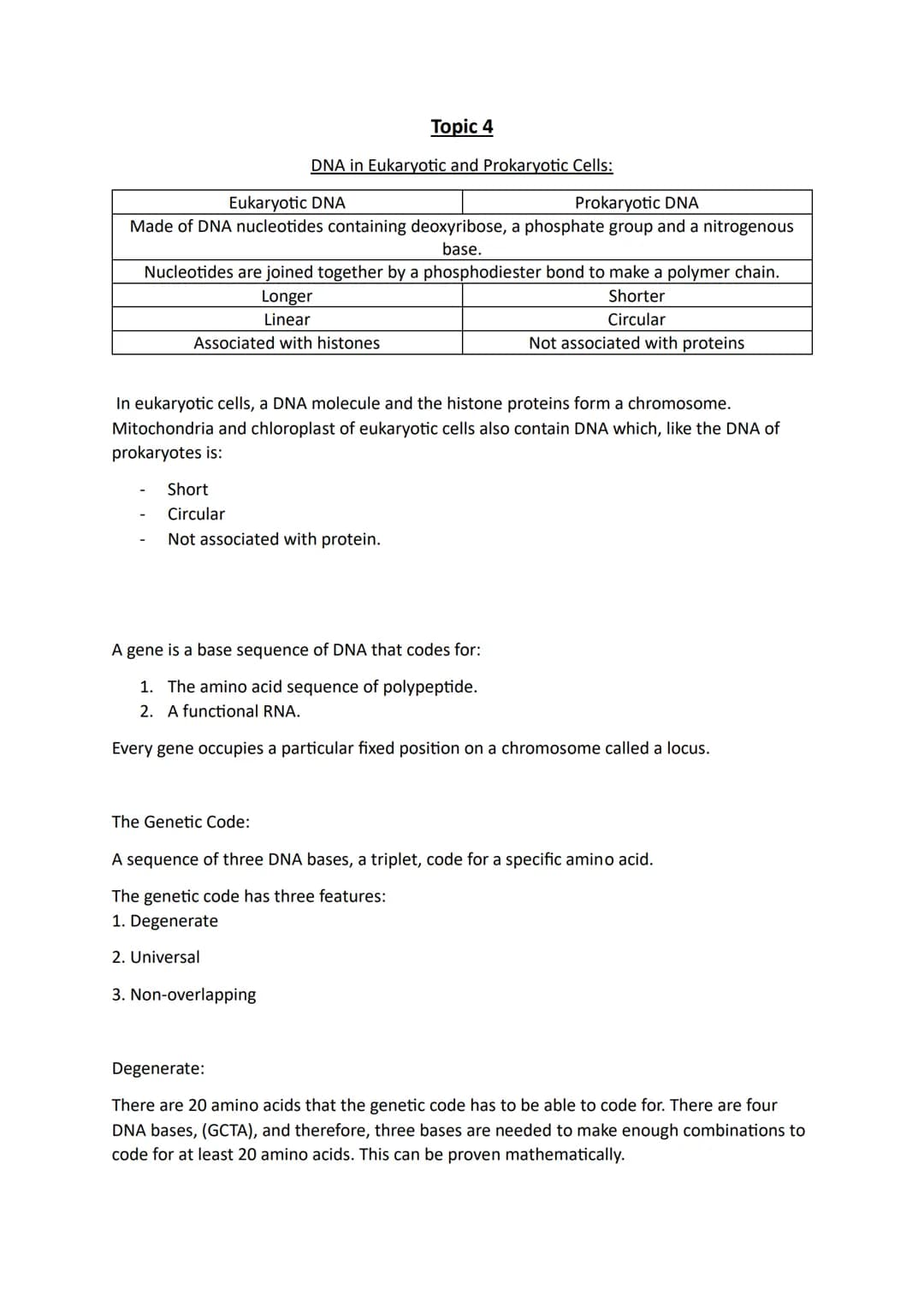
Ever wondered why human cells are so much more complex than bacterial cells? It all comes down to how DNA is organised. In eukaryotic cells (like yours), DNA is linear, much longer, and wrapped around special proteins called histones to form chromosomes. Prokaryotic cells (bacteria) keep things simpler with shorter, circular DNA that floats freely without any protein packaging.
Here's something interesting - your mitochondria and chloroplasts (if you were a plant) actually contain DNA that looks exactly like bacterial DNA. This supports the theory that these organelles were once independent bacteria that got absorbed into larger cells millions of years ago.
Genes are specific sequences of DNA bases that code for either amino acid sequences in proteins or functional RNA molecules. Each gene has a fixed address on a chromosome called a locus - think of it like a postcode for genetic information.
Key Point: The way DNA is packaged tells us a lot about how complex an organism's cells are - neat packaging usually means more complexity!
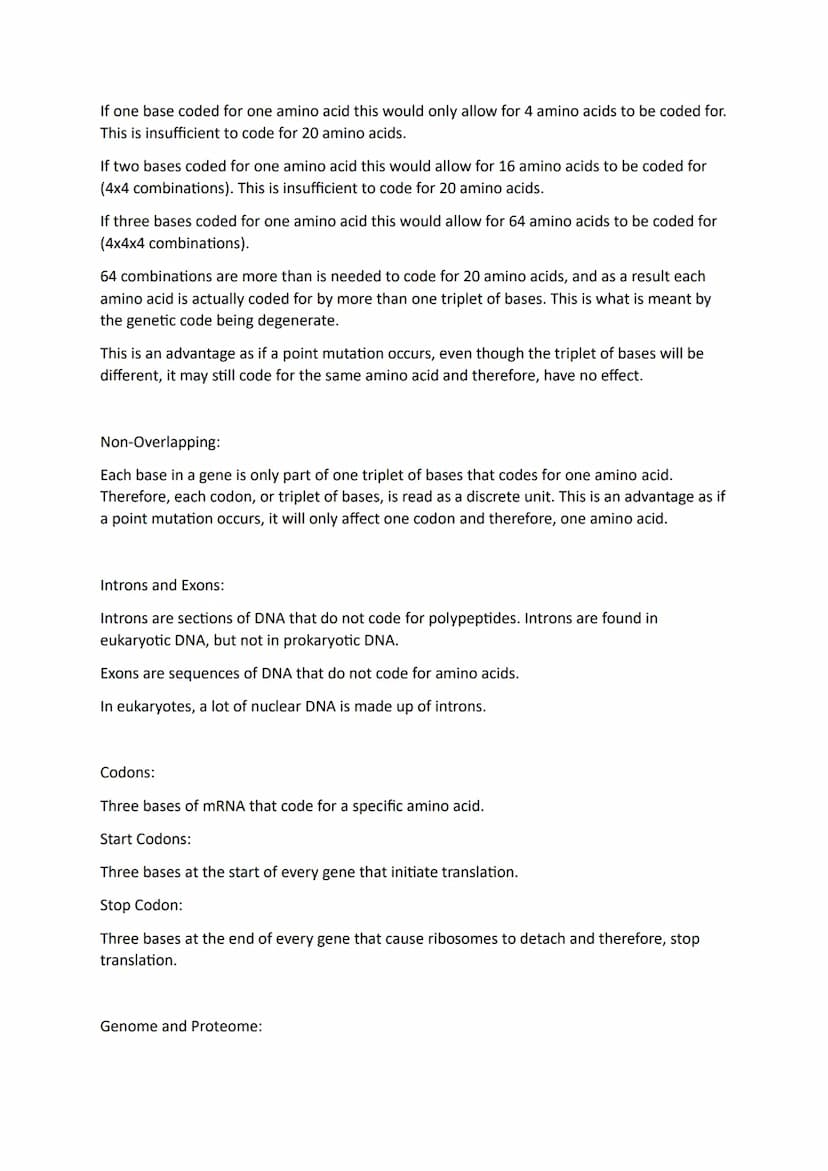
The genetic code is essentially nature's language for converting DNA instructions into proteins. Since there are only four DNA bases (G, C, T, A) but 20 different amino acids to code for, DNA uses a triplet system - three bases together code for one amino acid.
The maths is quite elegant: 4³ = 64 possible combinations, which is more than enough for 20 amino acids. This creates a degenerate code where multiple triplets can code for the same amino acid. This redundancy is actually brilliant - if a mutation changes one base, you might still get the same amino acid, so no harm done!
The code is also non-overlapping, meaning each base belongs to only one triplet. Think of reading a sentence where each three-letter word has a clear meaning - there's no confusion about where one word ends and another begins.
Introns and exons make eukaryotic genes more complex. Exons are the coding sequences that actually make proteins, whilst introns are non-coding sections that get removed during processing.
Key Point: The genetic code's redundancy acts like a safety net - many mutations won't actually change the final protein!
Your genome (complete set of genes) stays constant throughout your life, but your proteome (all the proteins you can make) changes constantly depending on what your cells need. This flexibility is what allows the same DNA to create different cell types.
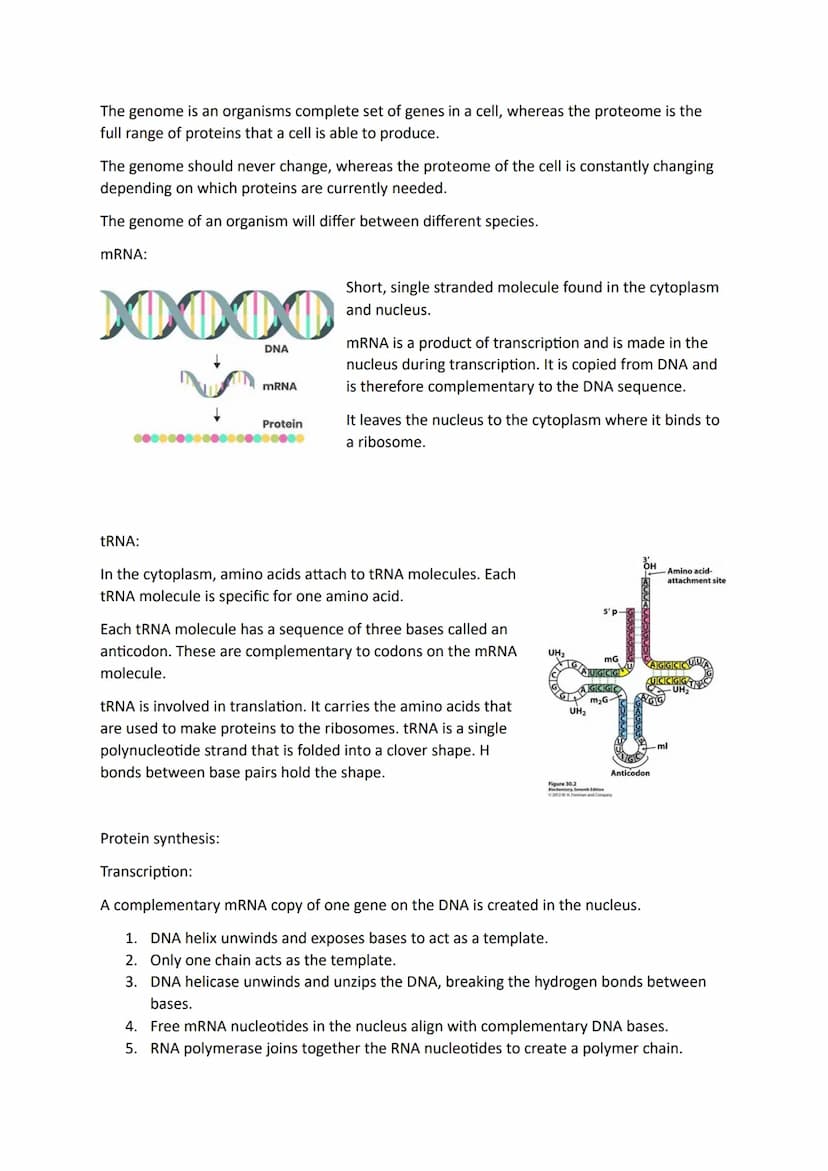
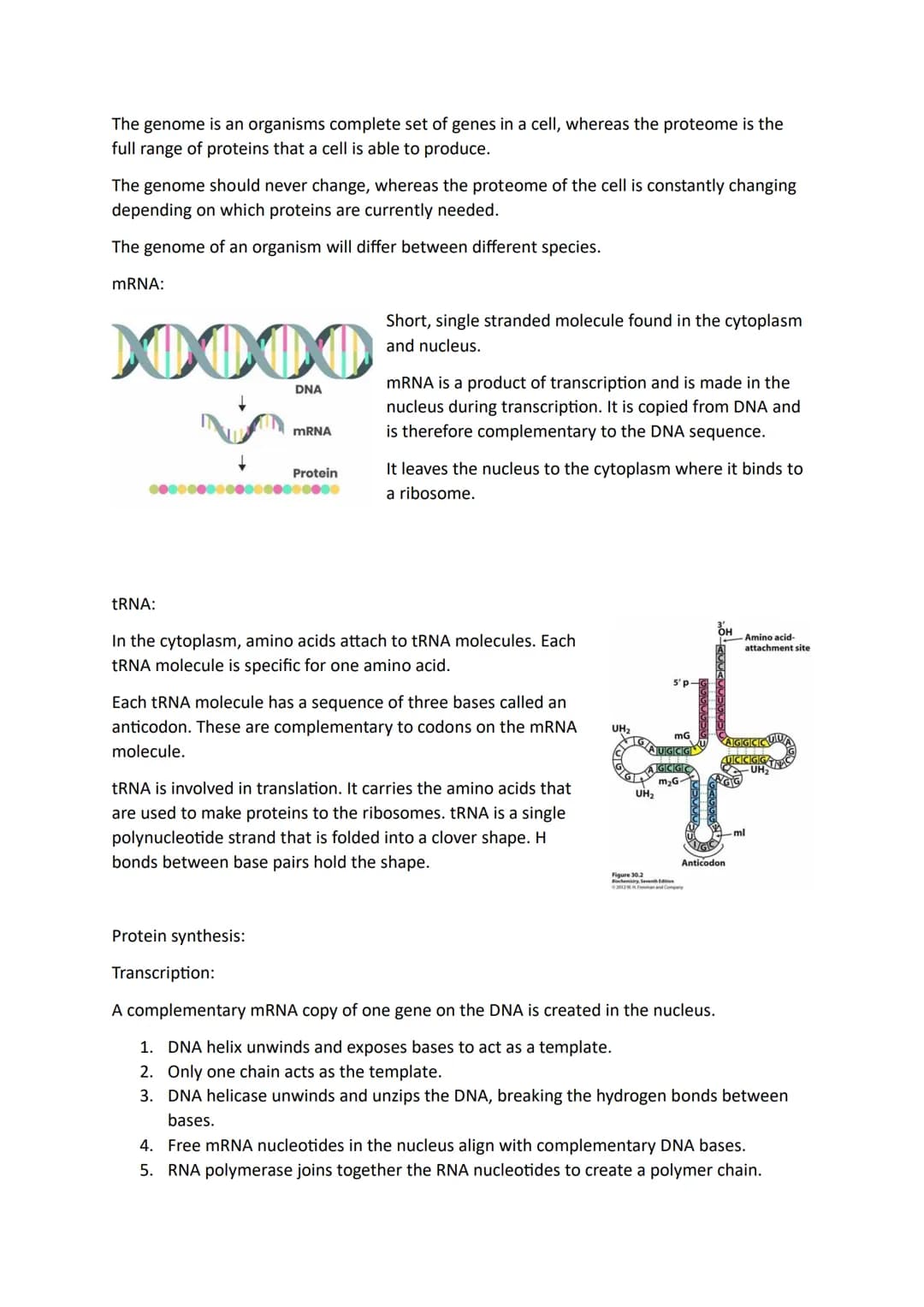
mRNA acts as a messenger, carrying genetic instructions from DNA in the nucleus to protein-making machinery in the cytoplasm. It's single-stranded and complementary to the DNA template. tRNA molecules are the delivery service - each one carries a specific amino acid and has an anticodon that matches up with codons on the mRNA.
Transcription happens in the nucleus where DNA helicase unzips the double helix, and RNA polymerase builds a complementary mRNA strand. The initial transcript gets processed by removing introns before leaving the nucleus.
Translation occurs at ribosomes in the cytoplasm. The ribosome reads mRNA codons one by one, matching them with tRNA molecules carrying the correct amino acids, then links the amino acids together with peptide bonds.
Key Point: Think of transcription as photocopying instructions, and translation as following those instructions to build something!
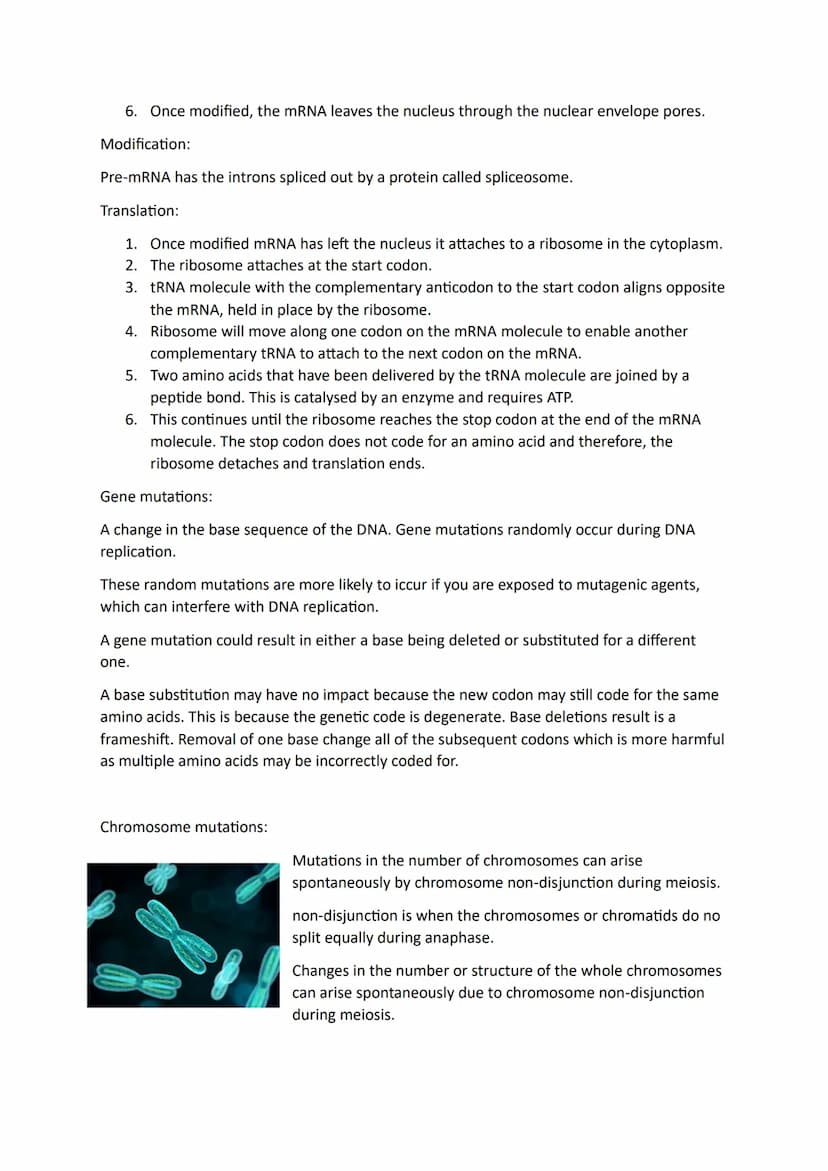
Gene mutations are random changes in DNA sequence that occur during replication, though exposure to mutagenic agents increases the likelihood. These mutations can involve base substitutions or deletions, each having different consequences.
Base substitutions might have no effect thanks to the degenerate genetic code - the new triplet might still code for the same amino acid. However, base deletions cause frameshift mutations where all subsequent codons are altered, potentially changing multiple amino acids in the final protein.
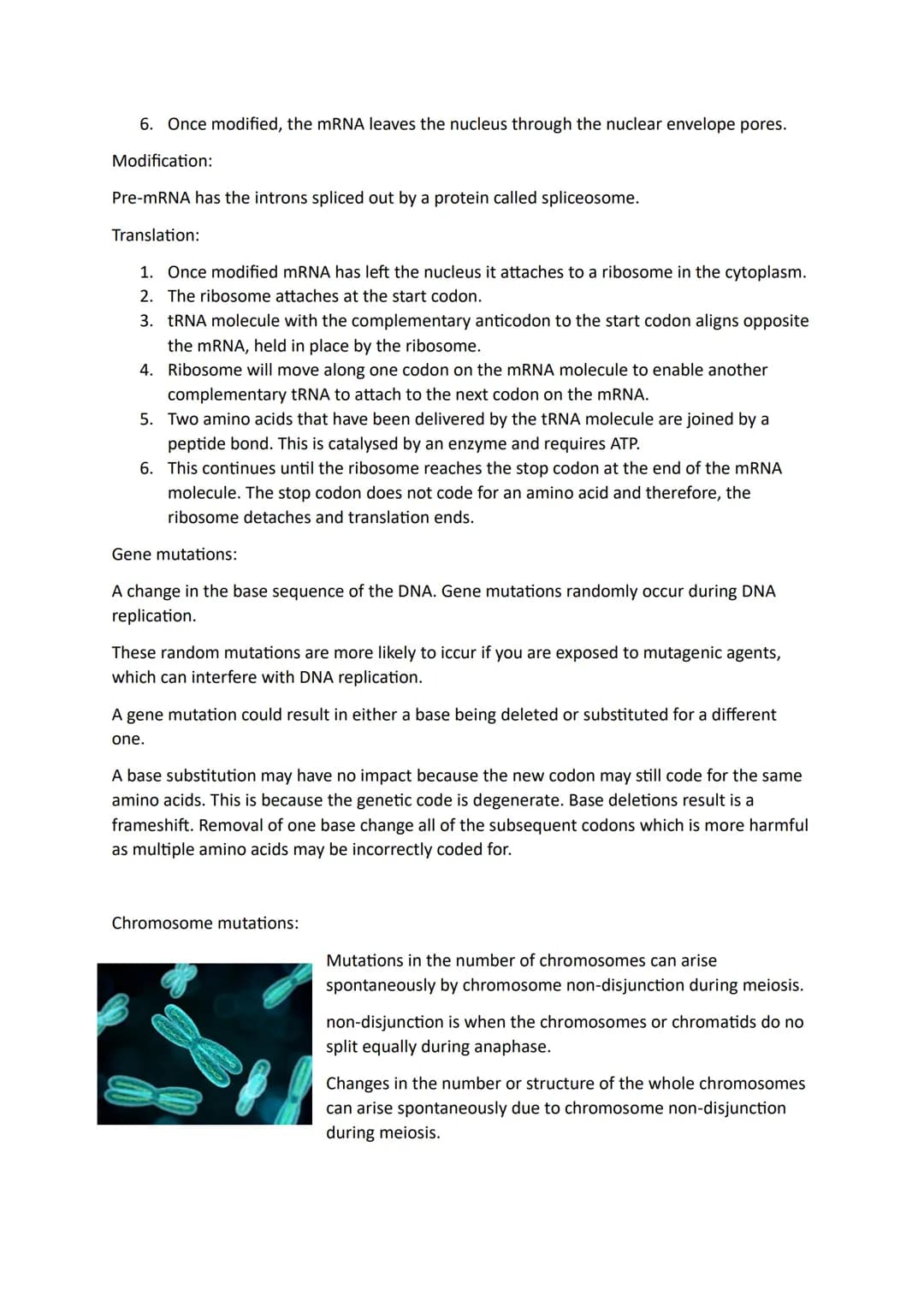
Chromosome mutations involve changes in whole chromosome numbers, occurring when chromosomes fail to separate properly during meiosis (non-disjunction). This can result in polyploidy (extra chromosome sets) or aneuploidy (extra individual chromosomes).
Meiosis creates genetic variation through two nuclear divisions, producing four genetically different haploid gametes from one diploid parent cell. This contrasts with mitosis, which produces two identical diploid cells.
Key Point: Most mutations are harmful or neutral, but the rare beneficial ones provide the raw material for evolution!
Natural selection drives evolution by changing allele frequencies in populations over generations. When random mutations create new alleles that improve survival chances, those individuals are more likely to reproduce and pass on the advantageous genes.
The process follows a clear pattern: random mutations create new alleles, beneficial ones increase survival and reproduction rates, advantageous alleles get passed to offspring, and over many generations, these alleles become more common in the population.
Directional selection favours one extreme trait when environments change - think of bacteria evolving antibiotic resistance. Stabilising selection favours the average trait in stable environments, reducing variation by selecting against extremes.
Species are defined as groups that can produce fertile offspring together. Courtship behaviours ensure species recognition and successful mating, which is essential for species survival and passing on beneficial alleles.
Key Point: Evolution isn't random - it's the non-random survival of random mutations that happen to be beneficial!
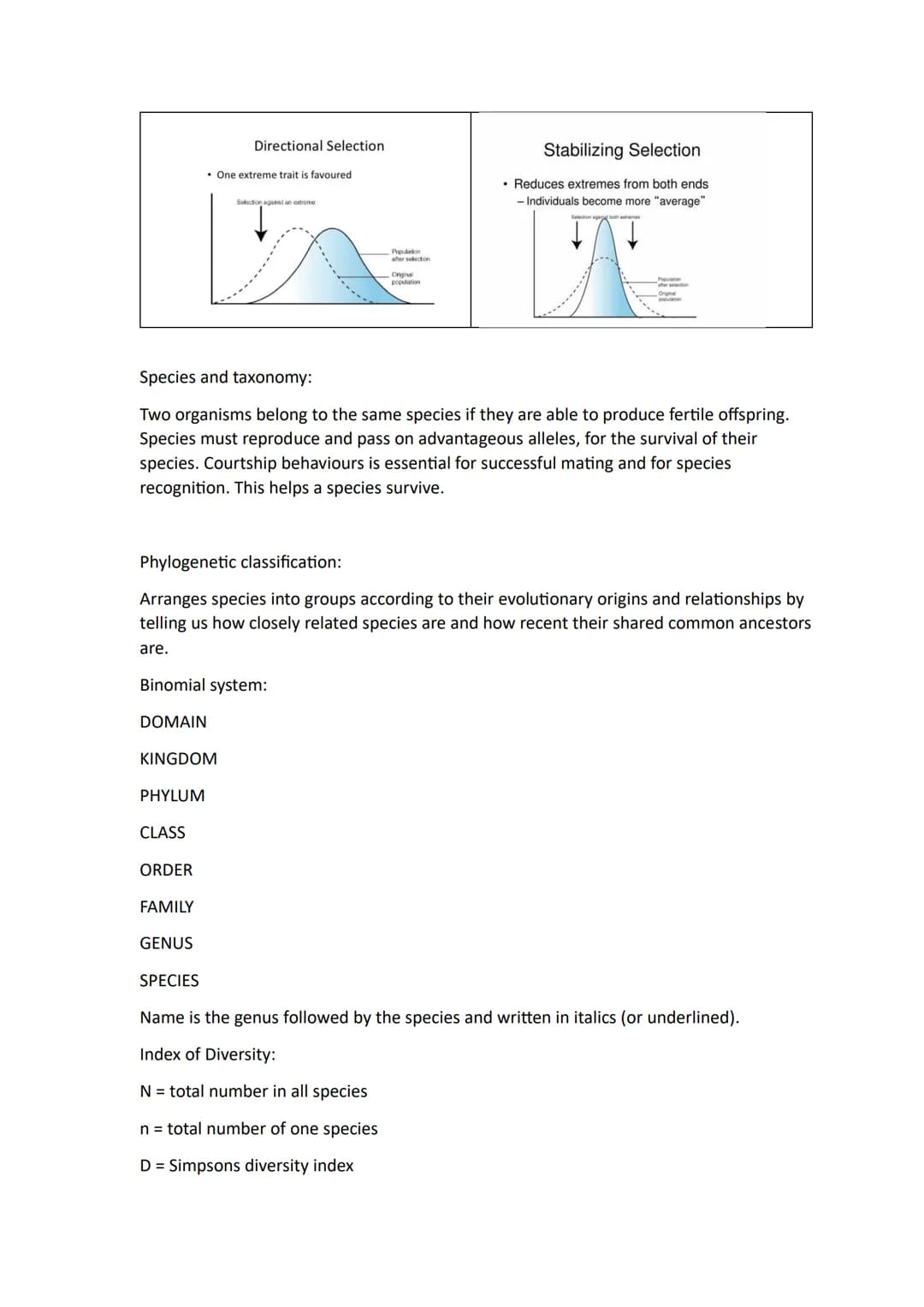
Phylogenetic classification organises species according to evolutionary relationships rather than just physical similarities. This system tells us how closely related different species are and when they shared common ancestors.
The binomial system gives each species a two-part scientific name: genus followed by species (written in italics). The classification hierarchy runs from Domain (largest) down to Species (smallest): Domain → Kingdom → Phylum → Class → Order → Family → Genus → Species.
Simpson's diversity index measures biodiversity in ecosystems using the formula D = N/Σn, where N is the total number of organisms and n is the number in each species. Higher values indicate greater diversity.
Understanding biodiversity is crucial for conservation efforts and ecosystem management. Different ecosystems support different levels of diversity, and human activities can significantly impact these natural patterns.
Key Point: Classification systems help us understand the tree of life - every species has a unique evolutionary story that connects it to all other life forms!
Our AI Companion is a student-focused AI tool that offers more than just answers. Built on millions of Knowunity resources, it provides relevant information, personalised study plans, quizzes, and content directly in the chat, adapting to your individual learning journey.
You can download the app from Google Play Store and Apple App Store.
That's right! Enjoy free access to study content, connect with fellow students, and get instant help – all at your fingertips.
App Store
Google Play
The app is very easy to use and well designed. I have found everything I was looking for so far and have been able to learn a lot from the presentations! I will definitely use the app for a class assignment! And of course it also helps a lot as an inspiration.
Stefan S
iOS user
This app is really great. There are so many study notes and help [...]. My problem subject is French, for example, and the app has so many options for help. Thanks to this app, I have improved my French. I would recommend it to anyone.
Samantha Klich
Android user
Wow, I am really amazed. I just tried the app because I've seen it advertised many times and was absolutely stunned. This app is THE HELP you want for school and above all, it offers so many things, such as workouts and fact sheets, which have been VERY helpful to me personally.
Anna
iOS user
Best app on earth! no words because it’s too good
Thomas R
iOS user
Just amazing. Let's me revise 10x better, this app is a quick 10/10. I highly recommend it to anyone. I can watch and search for notes. I can save them in the subject folder. I can revise it any time when I come back. If you haven't tried this app, you're really missing out.
Basil
Android user
This app has made me feel so much more confident in my exam prep, not only through boosting my own self confidence through the features that allow you to connect with others and feel less alone, but also through the way the app itself is centred around making you feel better. It is easy to navigate, fun to use, and helpful to anyone struggling in absolutely any way.
David K
iOS user
The app's just great! All I have to do is enter the topic in the search bar and I get the response real fast. I don't have to watch 10 YouTube videos to understand something, so I'm saving my time. Highly recommended!
Sudenaz Ocak
Android user
In school I was really bad at maths but thanks to the app, I am doing better now. I am so grateful that you made the app.
Greenlight Bonnie
Android user
very reliable app to help and grow your ideas of Maths, English and other related topics in your works. please use this app if your struggling in areas, this app is key for that. wish I'd of done a review before. and it's also free so don't worry about that.
Rohan U
Android user
I know a lot of apps use fake accounts to boost their reviews but this app deserves it all. Originally I was getting 4 in my English exams and this time I got a grade 7. I didn’t even know about this app three days until the exam and it has helped A LOT. Please actually trust me and use it as I’m sure you too will see developments.
Xander S
iOS user
THE QUIZES AND FLASHCARDS ARE SO USEFUL AND I LOVE THE SCHOOLGPT. IT ALSO IS LITREALLY LIKE CHATGPT BUT SMARTER!! HELPED ME WITH MY MASCARA PROBLEMS TOO!! AS WELL AS MY REAL SUBJECTS ! DUHHH 😍😁😲🤑💗✨🎀😮
Elisha
iOS user
This apps acc the goat. I find revision so boring but this app makes it so easy to organize it all and then you can ask the freeeee ai to test yourself so good and you can easily upload your own stuff. highly recommend as someone taking mocks now
Paul T
iOS user
The app is very easy to use and well designed. I have found everything I was looking for so far and have been able to learn a lot from the presentations! I will definitely use the app for a class assignment! And of course it also helps a lot as an inspiration.
Stefan S
iOS user
This app is really great. There are so many study notes and help [...]. My problem subject is French, for example, and the app has so many options for help. Thanks to this app, I have improved my French. I would recommend it to anyone.
Samantha Klich
Android user
Wow, I am really amazed. I just tried the app because I've seen it advertised many times and was absolutely stunned. This app is THE HELP you want for school and above all, it offers so many things, such as workouts and fact sheets, which have been VERY helpful to me personally.
Anna
iOS user
Best app on earth! no words because it’s too good
Thomas R
iOS user
Just amazing. Let's me revise 10x better, this app is a quick 10/10. I highly recommend it to anyone. I can watch and search for notes. I can save them in the subject folder. I can revise it any time when I come back. If you haven't tried this app, you're really missing out.
Basil
Android user
This app has made me feel so much more confident in my exam prep, not only through boosting my own self confidence through the features that allow you to connect with others and feel less alone, but also through the way the app itself is centred around making you feel better. It is easy to navigate, fun to use, and helpful to anyone struggling in absolutely any way.
David K
iOS user
The app's just great! All I have to do is enter the topic in the search bar and I get the response real fast. I don't have to watch 10 YouTube videos to understand something, so I'm saving my time. Highly recommended!
Sudenaz Ocak
Android user
In school I was really bad at maths but thanks to the app, I am doing better now. I am so grateful that you made the app.
Greenlight Bonnie
Android user
very reliable app to help and grow your ideas of Maths, English and other related topics in your works. please use this app if your struggling in areas, this app is key for that. wish I'd of done a review before. and it's also free so don't worry about that.
Rohan U
Android user
I know a lot of apps use fake accounts to boost their reviews but this app deserves it all. Originally I was getting 4 in my English exams and this time I got a grade 7. I didn’t even know about this app three days until the exam and it has helped A LOT. Please actually trust me and use it as I’m sure you too will see developments.
Xander S
iOS user
THE QUIZES AND FLASHCARDS ARE SO USEFUL AND I LOVE THE SCHOOLGPT. IT ALSO IS LITREALLY LIKE CHATGPT BUT SMARTER!! HELPED ME WITH MY MASCARA PROBLEMS TOO!! AS WELL AS MY REAL SUBJECTS ! DUHHH 😍😁😲🤑💗✨🎀😮
Elisha
iOS user
This apps acc the goat. I find revision so boring but this app makes it so easy to organize it all and then you can ask the freeeee ai to test yourself so good and you can easily upload your own stuff. highly recommend as someone taking mocks now
Paul T
iOS user
Charlie Chomanicz
@charliechomanicz
Your DNA contains the blueprint for life, but how does this genetic code actually work to build proteins? This topic explores how DNA differs between complex cells (eukaryotic) and simple cells (prokaryotic), how the genetic code translates into proteins, and... Show more
Access to all documents
Improve your grades
Join milions of students
By signing up you accept Terms of Service and Privacy Policy
Ever wondered why human cells are so much more complex than bacterial cells? It all comes down to how DNA is organised. In eukaryotic cells (like yours), DNA is linear, much longer, and wrapped around special proteins called histones to form chromosomes. Prokaryotic cells (bacteria) keep things simpler with shorter, circular DNA that floats freely without any protein packaging.
Here's something interesting - your mitochondria and chloroplasts (if you were a plant) actually contain DNA that looks exactly like bacterial DNA. This supports the theory that these organelles were once independent bacteria that got absorbed into larger cells millions of years ago.
Genes are specific sequences of DNA bases that code for either amino acid sequences in proteins or functional RNA molecules. Each gene has a fixed address on a chromosome called a locus - think of it like a postcode for genetic information.
Key Point: The way DNA is packaged tells us a lot about how complex an organism's cells are - neat packaging usually means more complexity!
Access to all documents
Improve your grades
Join milions of students
By signing up you accept Terms of Service and Privacy Policy
The genetic code is essentially nature's language for converting DNA instructions into proteins. Since there are only four DNA bases (G, C, T, A) but 20 different amino acids to code for, DNA uses a triplet system - three bases together code for one amino acid.
The maths is quite elegant: 4³ = 64 possible combinations, which is more than enough for 20 amino acids. This creates a degenerate code where multiple triplets can code for the same amino acid. This redundancy is actually brilliant - if a mutation changes one base, you might still get the same amino acid, so no harm done!
The code is also non-overlapping, meaning each base belongs to only one triplet. Think of reading a sentence where each three-letter word has a clear meaning - there's no confusion about where one word ends and another begins.
Introns and exons make eukaryotic genes more complex. Exons are the coding sequences that actually make proteins, whilst introns are non-coding sections that get removed during processing.
Key Point: The genetic code's redundancy acts like a safety net - many mutations won't actually change the final protein!
Access to all documents
Improve your grades
Join milions of students
By signing up you accept Terms of Service and Privacy Policy
Your genome (complete set of genes) stays constant throughout your life, but your proteome (all the proteins you can make) changes constantly depending on what your cells need. This flexibility is what allows the same DNA to create different cell types.
mRNA acts as a messenger, carrying genetic instructions from DNA in the nucleus to protein-making machinery in the cytoplasm. It's single-stranded and complementary to the DNA template. tRNA molecules are the delivery service - each one carries a specific amino acid and has an anticodon that matches up with codons on the mRNA.
Transcription happens in the nucleus where DNA helicase unzips the double helix, and RNA polymerase builds a complementary mRNA strand. The initial transcript gets processed by removing introns before leaving the nucleus.
Translation occurs at ribosomes in the cytoplasm. The ribosome reads mRNA codons one by one, matching them with tRNA molecules carrying the correct amino acids, then links the amino acids together with peptide bonds.
Key Point: Think of transcription as photocopying instructions, and translation as following those instructions to build something!
Access to all documents
Improve your grades
Join milions of students
By signing up you accept Terms of Service and Privacy Policy
Gene mutations are random changes in DNA sequence that occur during replication, though exposure to mutagenic agents increases the likelihood. These mutations can involve base substitutions or deletions, each having different consequences.
Base substitutions might have no effect thanks to the degenerate genetic code - the new triplet might still code for the same amino acid. However, base deletions cause frameshift mutations where all subsequent codons are altered, potentially changing multiple amino acids in the final protein.
Chromosome mutations involve changes in whole chromosome numbers, occurring when chromosomes fail to separate properly during meiosis (non-disjunction). This can result in polyploidy (extra chromosome sets) or aneuploidy (extra individual chromosomes).
Meiosis creates genetic variation through two nuclear divisions, producing four genetically different haploid gametes from one diploid parent cell. This contrasts with mitosis, which produces two identical diploid cells.
Key Point: Most mutations are harmful or neutral, but the rare beneficial ones provide the raw material for evolution!
Access to all documents
Improve your grades
Join milions of students
By signing up you accept Terms of Service and Privacy Policy
Natural selection drives evolution by changing allele frequencies in populations over generations. When random mutations create new alleles that improve survival chances, those individuals are more likely to reproduce and pass on the advantageous genes.
The process follows a clear pattern: random mutations create new alleles, beneficial ones increase survival and reproduction rates, advantageous alleles get passed to offspring, and over many generations, these alleles become more common in the population.
Directional selection favours one extreme trait when environments change - think of bacteria evolving antibiotic resistance. Stabilising selection favours the average trait in stable environments, reducing variation by selecting against extremes.
Species are defined as groups that can produce fertile offspring together. Courtship behaviours ensure species recognition and successful mating, which is essential for species survival and passing on beneficial alleles.
Key Point: Evolution isn't random - it's the non-random survival of random mutations that happen to be beneficial!
Access to all documents
Improve your grades
Join milions of students
By signing up you accept Terms of Service and Privacy Policy
Phylogenetic classification organises species according to evolutionary relationships rather than just physical similarities. This system tells us how closely related different species are and when they shared common ancestors.
The binomial system gives each species a two-part scientific name: genus followed by species (written in italics). The classification hierarchy runs from Domain (largest) down to Species (smallest): Domain → Kingdom → Phylum → Class → Order → Family → Genus → Species.
Simpson's diversity index measures biodiversity in ecosystems using the formula D = N/Σn, where N is the total number of organisms and n is the number in each species. Higher values indicate greater diversity.
Understanding biodiversity is crucial for conservation efforts and ecosystem management. Different ecosystems support different levels of diversity, and human activities can significantly impact these natural patterns.
Key Point: Classification systems help us understand the tree of life - every species has a unique evolutionary story that connects it to all other life forms!
Access to all documents
Improve your grades
Join milions of students
By signing up you accept Terms of Service and Privacy Policy
Our AI Companion is a student-focused AI tool that offers more than just answers. Built on millions of Knowunity resources, it provides relevant information, personalised study plans, quizzes, and content directly in the chat, adapting to your individual learning journey.
You can download the app from Google Play Store and Apple App Store.
That's right! Enjoy free access to study content, connect with fellow students, and get instant help – all at your fingertips.
8
Smart Tools NEW
Transform this note into: ✓ 50+ Practice Questions ✓ Interactive Flashcards ✓ Full Mock Exam ✓ Essay Outlines
Explore essential genetics terms including homozygous, heterozygous, dominant, recessive, and codominance. This summary provides clear definitions and explanations relevant for GCSE biology students, enhancing your understanding of genetic concepts and their applications.
BiologyExplore the eight stages of meiosis, including Prophase I, Metaphase I, Anaphase I, Telophase I, and their counterparts in Meiosis II. Understand key processes like crossing over, independent assortment, and the formation of haploid gametes. This summary provides a clear breakdown of meiosis, essential for biology students studying cell division.
BiologyRevision for units in anatomy and physiology
BiologyExplore the detailed stages of meiosis, including meiosis I and II, and their significance in producing haploid gametes. This summary covers key concepts such as crossing over, independent assortment, and cytokinesis, essential for understanding cell division in A Level Biology. Ideal for students preparing for exams or needing a concise reference.
BiologyExplore the key stages and significance of meiosis in sexual reproduction. This summary covers the differences between meiosis and mitosis, the process of crossing over, and how genetic variation is achieved through independent segregation. Ideal for A-level biology students.
BiologyExplore key concepts in cell biology and genetics, including somatic cell division, stem cell types, DNA structure, gene expression, and mutations. This resource provides essential insights for Higher Human Biology Unit 1, featuring flashcards and mindmap points for effective study.
BiologyApp Store
Google Play
The app is very easy to use and well designed. I have found everything I was looking for so far and have been able to learn a lot from the presentations! I will definitely use the app for a class assignment! And of course it also helps a lot as an inspiration.
Stefan S
iOS user
This app is really great. There are so many study notes and help [...]. My problem subject is French, for example, and the app has so many options for help. Thanks to this app, I have improved my French. I would recommend it to anyone.
Samantha Klich
Android user
Wow, I am really amazed. I just tried the app because I've seen it advertised many times and was absolutely stunned. This app is THE HELP you want for school and above all, it offers so many things, such as workouts and fact sheets, which have been VERY helpful to me personally.
Anna
iOS user
Best app on earth! no words because it’s too good
Thomas R
iOS user
Just amazing. Let's me revise 10x better, this app is a quick 10/10. I highly recommend it to anyone. I can watch and search for notes. I can save them in the subject folder. I can revise it any time when I come back. If you haven't tried this app, you're really missing out.
Basil
Android user
This app has made me feel so much more confident in my exam prep, not only through boosting my own self confidence through the features that allow you to connect with others and feel less alone, but also through the way the app itself is centred around making you feel better. It is easy to navigate, fun to use, and helpful to anyone struggling in absolutely any way.
David K
iOS user
The app's just great! All I have to do is enter the topic in the search bar and I get the response real fast. I don't have to watch 10 YouTube videos to understand something, so I'm saving my time. Highly recommended!
Sudenaz Ocak
Android user
In school I was really bad at maths but thanks to the app, I am doing better now. I am so grateful that you made the app.
Greenlight Bonnie
Android user
very reliable app to help and grow your ideas of Maths, English and other related topics in your works. please use this app if your struggling in areas, this app is key for that. wish I'd of done a review before. and it's also free so don't worry about that.
Rohan U
Android user
I know a lot of apps use fake accounts to boost their reviews but this app deserves it all. Originally I was getting 4 in my English exams and this time I got a grade 7. I didn’t even know about this app three days until the exam and it has helped A LOT. Please actually trust me and use it as I’m sure you too will see developments.
Xander S
iOS user
THE QUIZES AND FLASHCARDS ARE SO USEFUL AND I LOVE THE SCHOOLGPT. IT ALSO IS LITREALLY LIKE CHATGPT BUT SMARTER!! HELPED ME WITH MY MASCARA PROBLEMS TOO!! AS WELL AS MY REAL SUBJECTS ! DUHHH 😍😁😲🤑💗✨🎀😮
Elisha
iOS user
This apps acc the goat. I find revision so boring but this app makes it so easy to organize it all and then you can ask the freeeee ai to test yourself so good and you can easily upload your own stuff. highly recommend as someone taking mocks now
Paul T
iOS user
The app is very easy to use and well designed. I have found everything I was looking for so far and have been able to learn a lot from the presentations! I will definitely use the app for a class assignment! And of course it also helps a lot as an inspiration.
Stefan S
iOS user
This app is really great. There are so many study notes and help [...]. My problem subject is French, for example, and the app has so many options for help. Thanks to this app, I have improved my French. I would recommend it to anyone.
Samantha Klich
Android user
Wow, I am really amazed. I just tried the app because I've seen it advertised many times and was absolutely stunned. This app is THE HELP you want for school and above all, it offers so many things, such as workouts and fact sheets, which have been VERY helpful to me personally.
Anna
iOS user
Best app on earth! no words because it’s too good
Thomas R
iOS user
Just amazing. Let's me revise 10x better, this app is a quick 10/10. I highly recommend it to anyone. I can watch and search for notes. I can save them in the subject folder. I can revise it any time when I come back. If you haven't tried this app, you're really missing out.
Basil
Android user
This app has made me feel so much more confident in my exam prep, not only through boosting my own self confidence through the features that allow you to connect with others and feel less alone, but also through the way the app itself is centred around making you feel better. It is easy to navigate, fun to use, and helpful to anyone struggling in absolutely any way.
David K
iOS user
The app's just great! All I have to do is enter the topic in the search bar and I get the response real fast. I don't have to watch 10 YouTube videos to understand something, so I'm saving my time. Highly recommended!
Sudenaz Ocak
Android user
In school I was really bad at maths but thanks to the app, I am doing better now. I am so grateful that you made the app.
Greenlight Bonnie
Android user
very reliable app to help and grow your ideas of Maths, English and other related topics in your works. please use this app if your struggling in areas, this app is key for that. wish I'd of done a review before. and it's also free so don't worry about that.
Rohan U
Android user
I know a lot of apps use fake accounts to boost their reviews but this app deserves it all. Originally I was getting 4 in my English exams and this time I got a grade 7. I didn’t even know about this app three days until the exam and it has helped A LOT. Please actually trust me and use it as I’m sure you too will see developments.
Xander S
iOS user
THE QUIZES AND FLASHCARDS ARE SO USEFUL AND I LOVE THE SCHOOLGPT. IT ALSO IS LITREALLY LIKE CHATGPT BUT SMARTER!! HELPED ME WITH MY MASCARA PROBLEMS TOO!! AS WELL AS MY REAL SUBJECTS ! DUHHH 😍😁😲🤑💗✨🎀😮
Elisha
iOS user
This apps acc the goat. I find revision so boring but this app makes it so easy to organize it all and then you can ask the freeeee ai to test yourself so good and you can easily upload your own stuff. highly recommend as someone taking mocks now
Paul T
iOS user