
Ever wondered how people tried to cure diseases before modern... Show more
 History
 English Literature
 Sociology
 Biology
Sign up to see the contentIt's free!
Access to all documents
Improve your grades
Join milions of students
Knowunity AI
Subjects
Triangle Congruence and Similarity Theorems
Triangle Properties and Classification
Linear Equations and Graphs
Geometric Angle Relationships
Trigonometric Functions and Identities
Equation Solving Techniques
Circle Geometry Fundamentals
Division Operations and Methods
Basic Differentiation Rules
Exponent and Logarithm Properties
Show all topics
Human Organ Systems
Reproductive Cell Cycles
Biological Sciences Subdisciplines
Cellular Energy Metabolism
Autotrophic Energy Processes
Inheritance Patterns and Principles
Biomolecular Structure and Organization
Cell Cycle and Division Mechanics
Cellular Organization and Development
Biological Structural Organization
Show all topics
Chemical Sciences and Applications
Atomic Structure and Composition
Molecular Electron Structure Representation
Atomic Electron Behavior
Matter Properties and Water
Mole Concept and Calculations
Gas Laws and Behavior
Periodic Table Organization
Chemical Thermodynamics Fundamentals
Chemical Bond Types and Properties
Show all topics
European Renaissance and Enlightenment
European Cultural Movements 800-1920
American Revolution Era 1763-1797
American Civil War 1861-1865
Global Imperial Systems
Mongol and Chinese Dynasties
U.S. Presidents and World Leaders
Historical Sources and Documentation
World Wars Era and Impact
World Religious Systems
Show all topics
Classic and Contemporary Novels
Literary Character Analysis
Rhetorical Theory and Practice
Classic Literary Narratives
Reading Analysis and Interpretation
Narrative Structure and Techniques
English Language Components
Influential English-Language Authors
Basic Sentence Structure
Narrative Voice and Perspective
Show all topics
2,461
•
Updated Mar 21, 2026
•

shanai
@shanai_lock
Ever wondered how people tried to cure diseases before modern... Show more

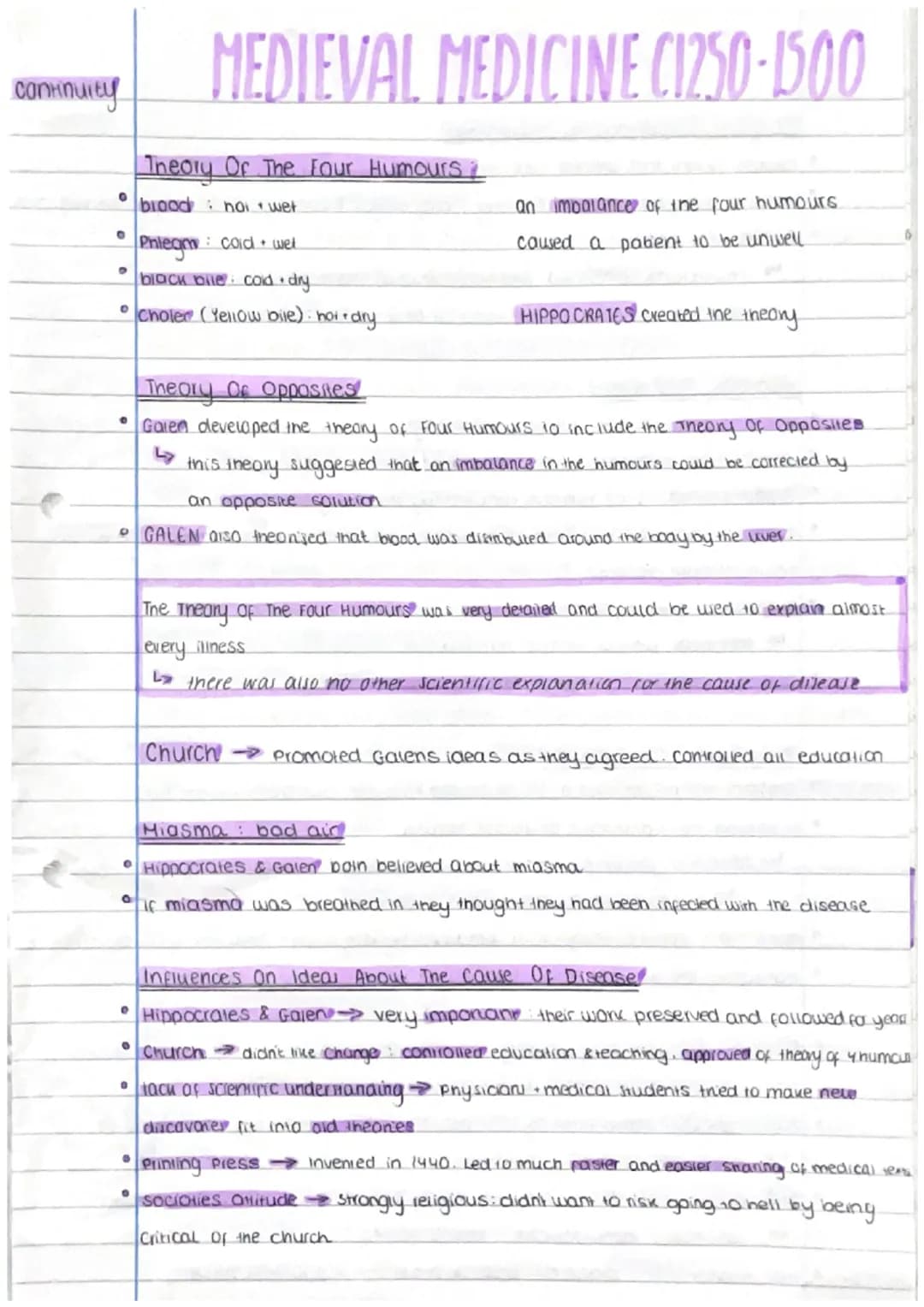
Your medieval ancestors had some pretty wild ideas about what made people sick! The Theory of Four Humours dominated everything - blood (hot and wet), phlegm (cold and wet), black bile (cold and dry), and yellow bile (hot and dry). When these got out of balance, you were supposedly ill.
Hippocrates created this theory, but Galen made it even more detailed with his Theory of Opposites. Got too much heat? Cool yourself down with cold treatments. This system was brilliant because it could "explain" literally any illness, even though it was completely wrong.
The Church loved Galen's ideas and controlled all education, so nobody dared question them. People also believed in miasma - the idea that "bad air" caused disease. Without any real scientific understanding, these theories ruled medicine for over a thousand years.
Quick Fact: Medieval doctors thought your liver distributed blood around your body - they had no idea your heart was actually pumping it!
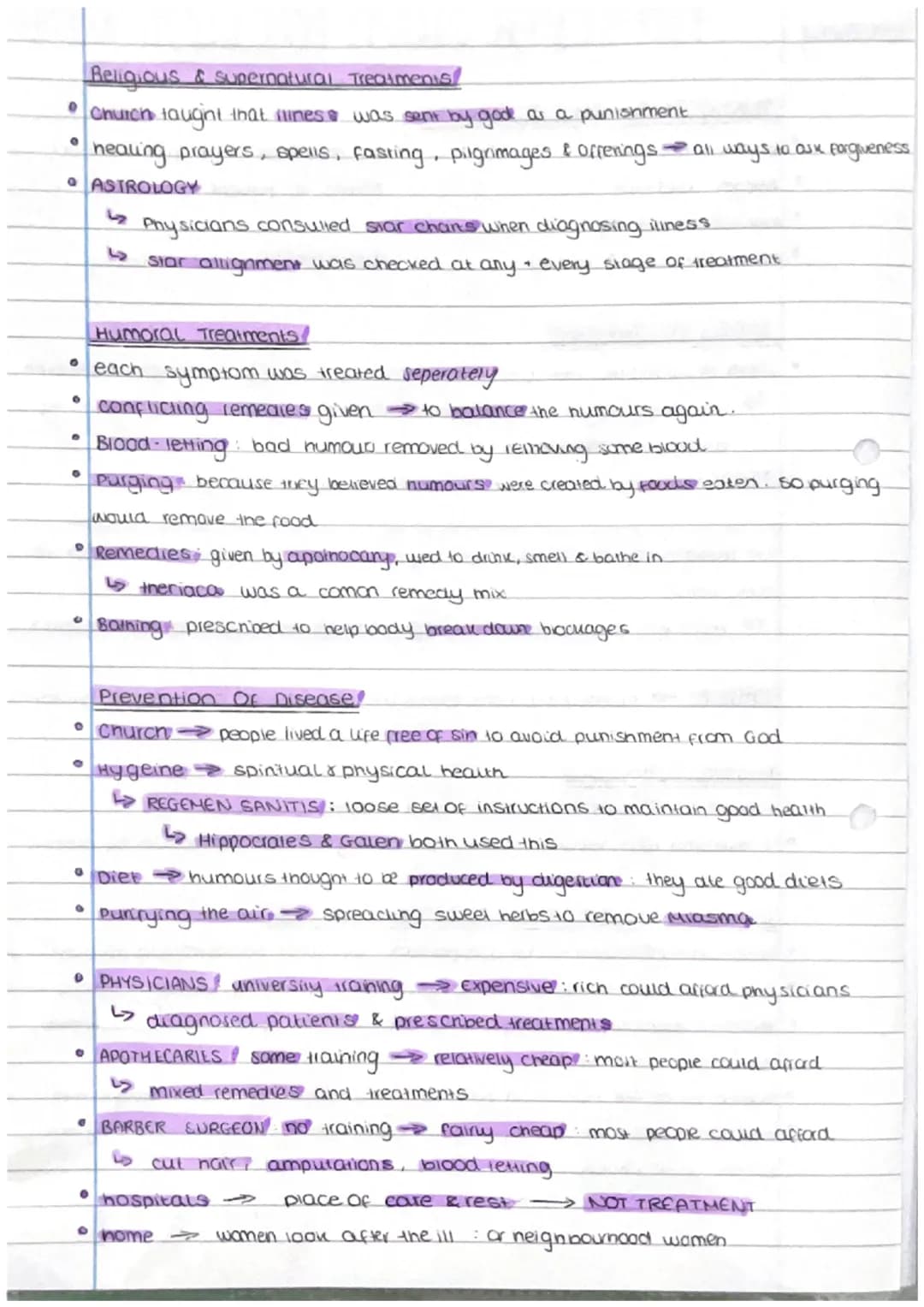
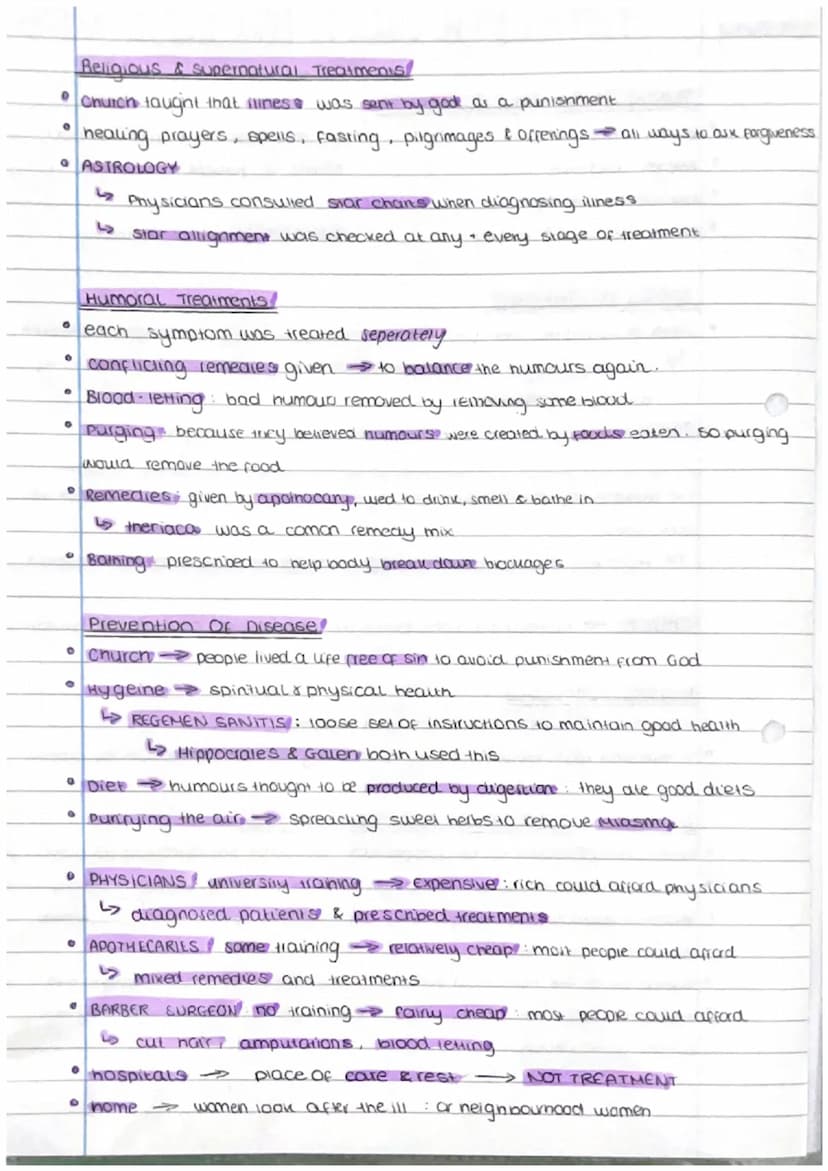
Medieval treatments were a mix of religious rituals and physical remedies that often did more harm than good. Since the Church taught that illness was God's punishment for sin, people tried healing through prayers, fasting, pilgrimages and offerings.
Physicians were expensive university-trained doctors who consulted star charts before treating anyone. They practiced bloodletting (removing "bad" blood) and purging (making patients vomit to balance the humours). Most people couldn't afford physicians, so they visited apothecaries for herbal remedies or barber surgeons for basic procedures like tooth pulling and amputations.
Hospitals weren't places for treatment - they were just somewhere to rest and pray. Most sick people were cared for at home by women using traditional family remedies. Prevention focused on living a sinless life and following Regimen Sanitatis - loose health guidelines about diet, exercise and avoiding bad air.
Reality Check: Medieval "hospitals" were more like hostels - you went there to die comfortably, not to get better!
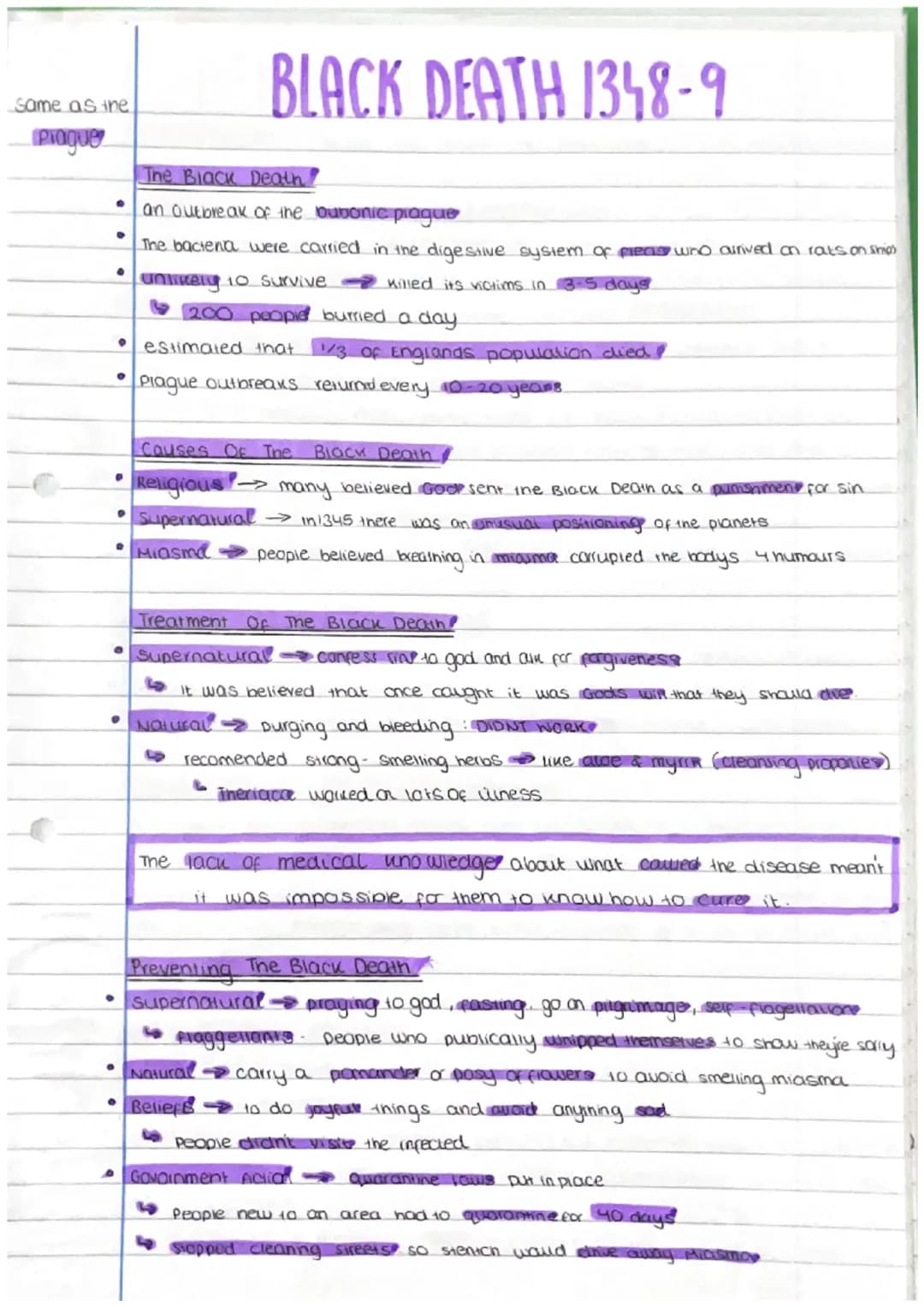
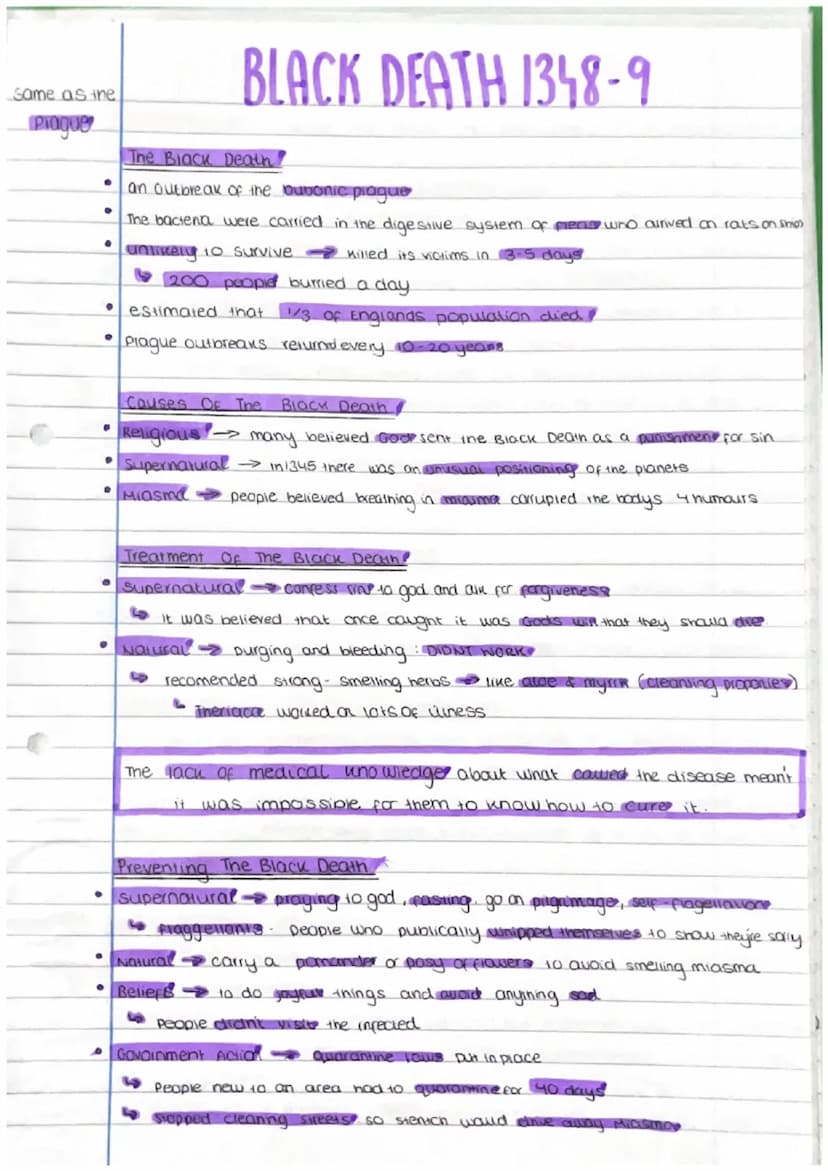
The Black Death was medieval Europe's worst nightmare - a plague outbreak that killed one-third of England's population in just two years. This bacterial infection, spread by fleas on rats from ships, killed victims within 3-5 days and returned every 10-20 years.
Medieval explanations were completely off the mark. People blamed God's punishment for sin, unusual planetary alignments, or breathing in miasma. Since they had no clue about bacteria, their treatments were useless - bloodletting, purging, and strong-smelling herbs like theriaca.
Prevention attempts were equally hopeless. Religious people tried self-flagellation (public whipping to show God they were sorry), pilgrimages, and constant prayer. Others carried posies of flowers or pomanders to ward off "bad air." The government did try quarantine laws and stopped cleaning streets (thinking the stench would drive away miasma), but nothing worked.
Shocking Stat: London buried 200 people per day at the height of the Black Death - that's one person every 7 minutes!
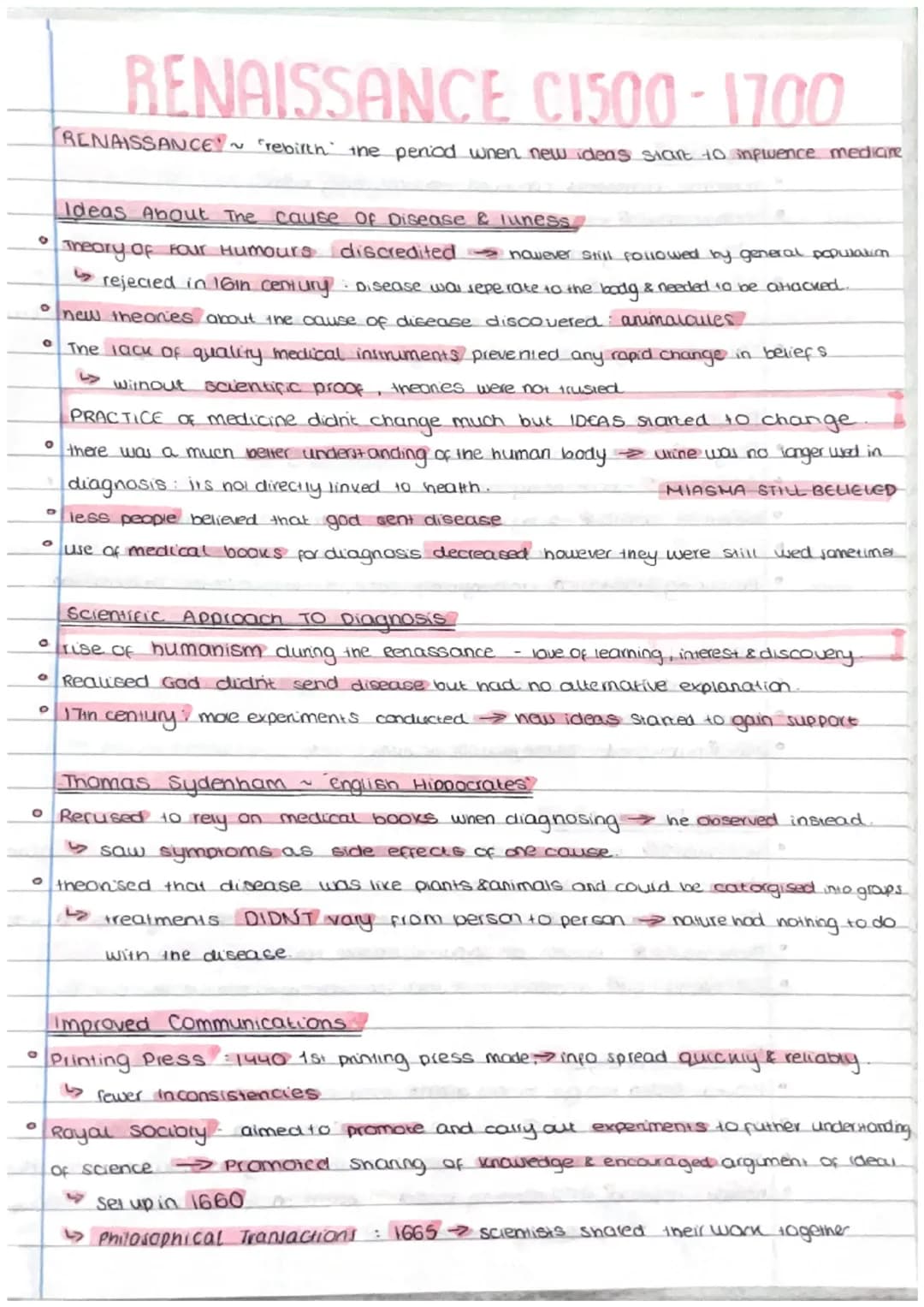
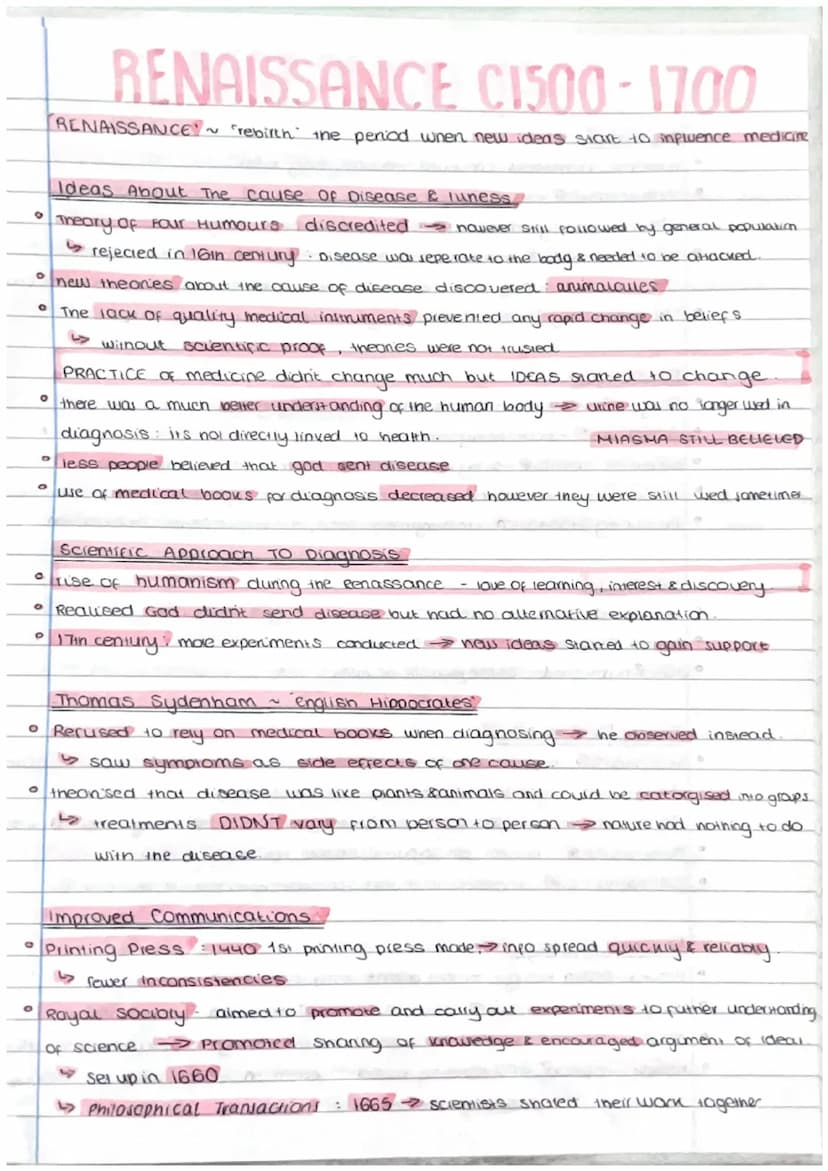
The Renaissance (meaning "rebirth") finally started challenging medieval medicine, though change was painfully slow. While the Theory of Four Humours was officially discredited by the 16th century, ordinary people kept believing it for decades longer.
Thomas Sydenham, nicknamed the "English Hippocrates," revolutionised diagnosis by actually observing patients instead of just reading old medical books. He realised that diseases were separate entities that could be categorised like plants and animals - a massive breakthrough in thinking.
The printing press (invented 1440) spread new medical ideas faster than ever before. The Royal Society (established 1660) promoted scientific experiments and encouraged debate. Their journal Philosophical Transactions let scientists share discoveries across Europe, creating a proper scientific community for the first time.
Humanism encouraged people to think for themselves rather than blindly following ancient authorities. However, without quality microscopes and scientific instruments, theories couldn't be properly tested, so change remained frustratingly slow.
Game Changer: The printing press meant medical knowledge could spread in months rather than decades!
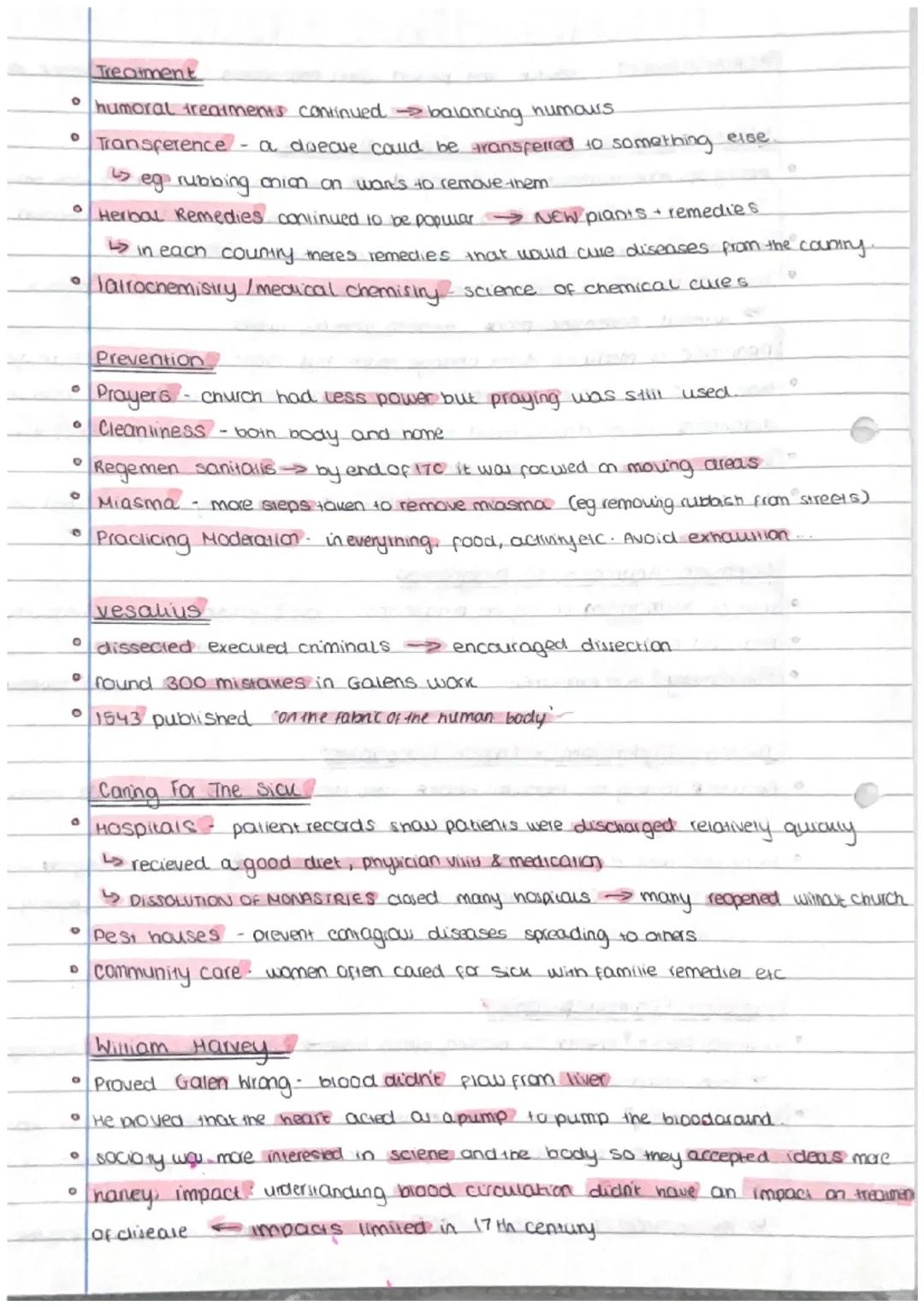
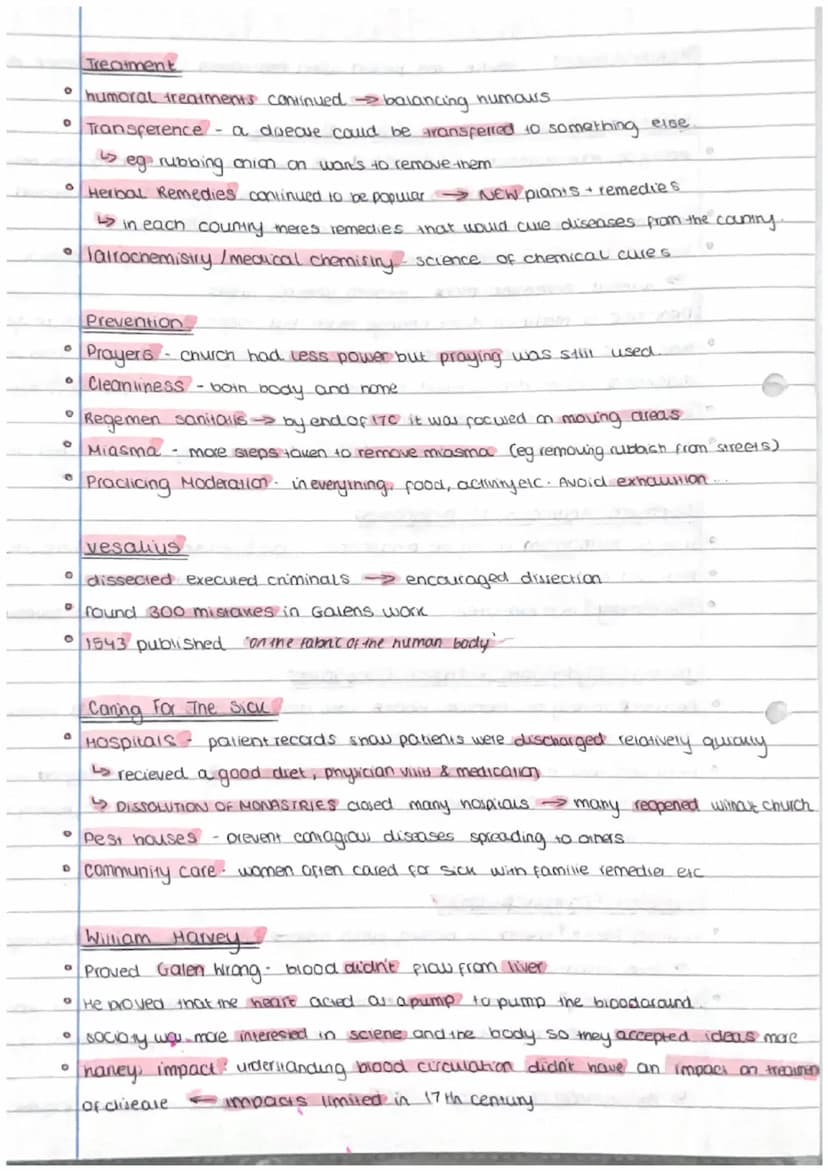
Two Renaissance superstars completely transformed our understanding of human anatomy. Andreas Vesalius dissected executed criminals and found over 300 mistakes in Galen's work! His 1543 book On the Fabric of the Human Body used detailed illustrations to show what bodies actually looked like inside.
William Harvey proved Galen spectacularly wrong about blood circulation. Through careful experiments, Harvey demonstrated that the heart acts as a pump, pushing blood around the body in a circuit. This wasn't just correcting a mistake - it was proving that ancient authorities could be completely wrong about basic facts.
Treatments remained largely unchanged - herbal remedies, transference (rubbing onions on warts), and iatrochemistry (chemical cures) were popular. Prevention focused on cleanliness, moderation in everything, and still avoiding miasma.
Hospitals improved dramatically. Patient records show people were being discharged quickly with proper diets and physician visits. The dissolution of monasteries closed many church-run hospitals, but they reopened under secular management.
Mind-Blowing Fact: Harvey's blood circulation discovery didn't improve treatments for over 100 years - understanding anatomy and treating disease were still separate skills!
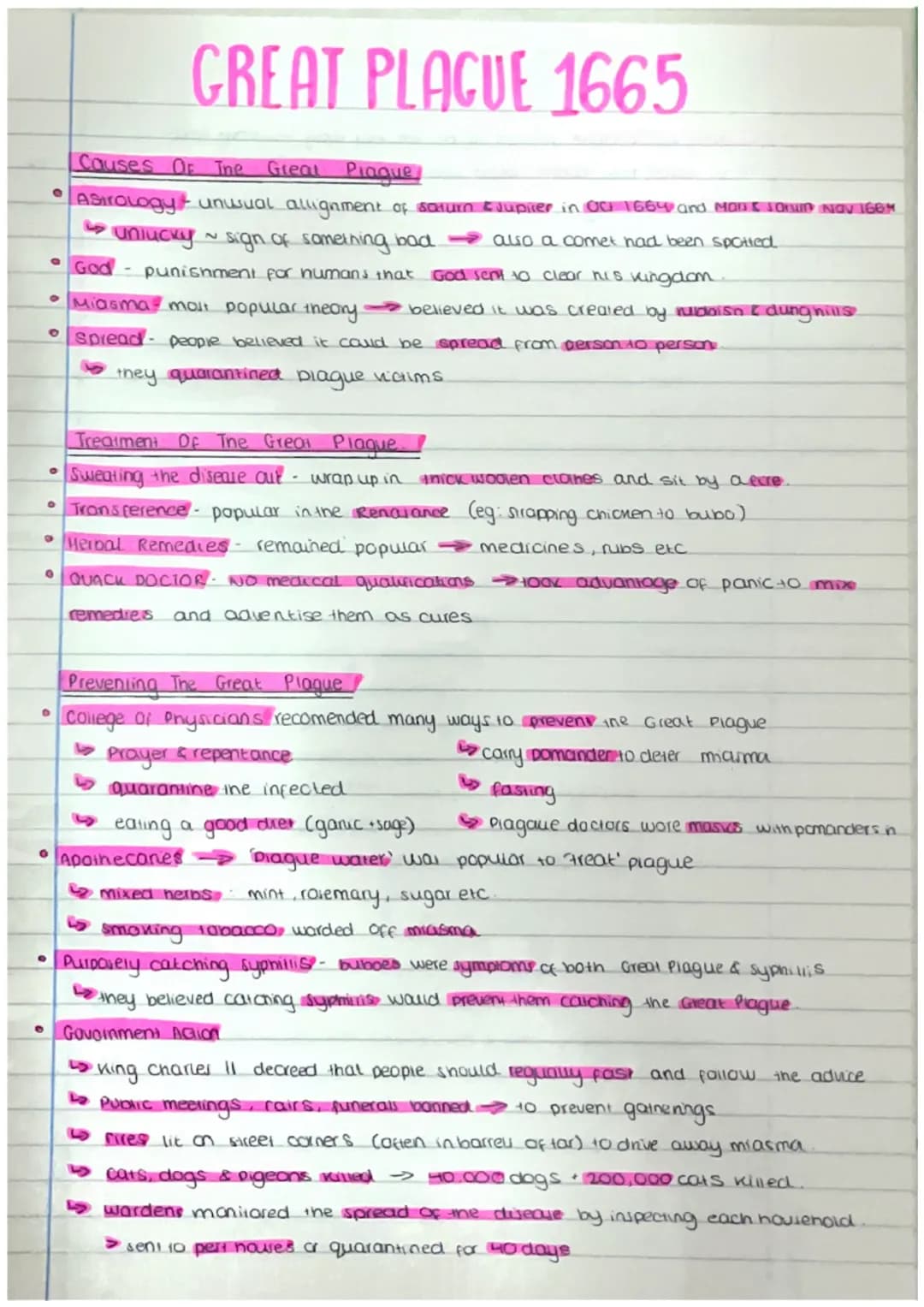
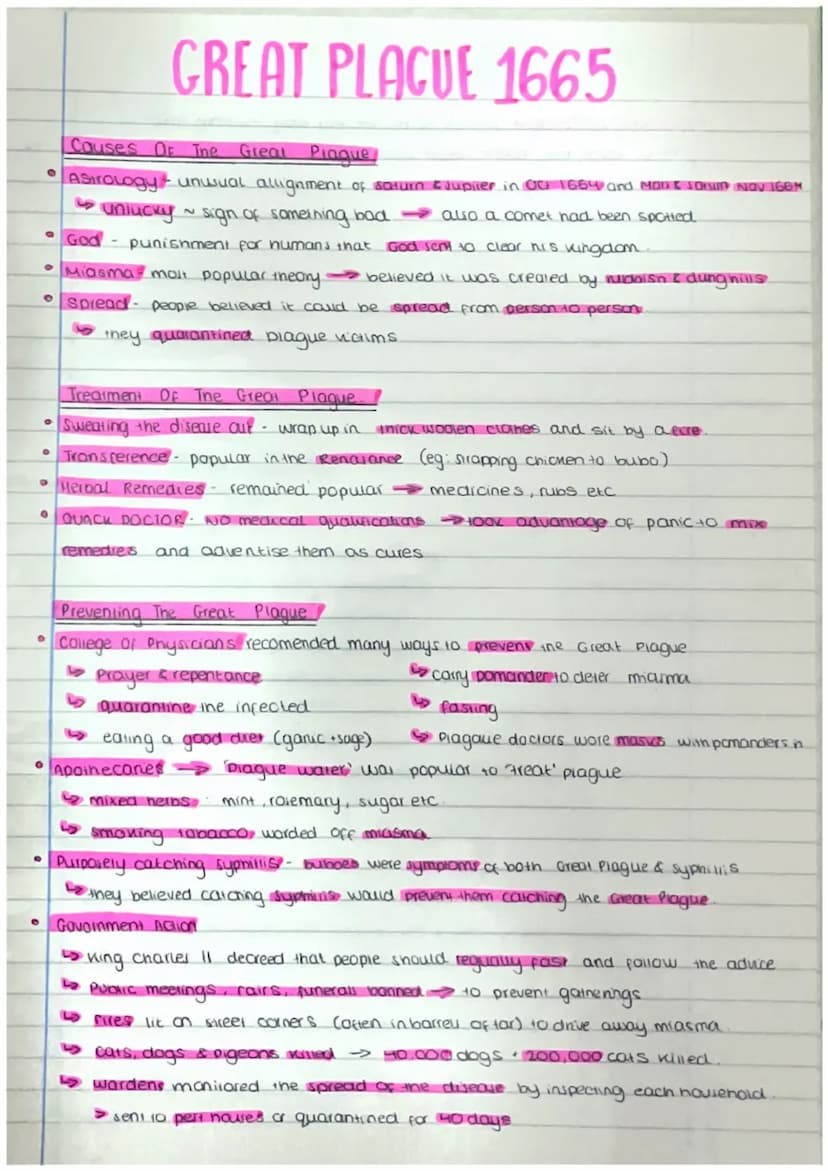
You'd think 300 years of medical progress would help with another plague outbreak - you'd be wrong! The Great Plague of 1665 killed thousands in London, and people's explanations were barely different from medieval times.
Causes blamed included unusual alignment of Saturn and Jupiter, God's punishment for sin, and miasma from rubbish and dung hills. At least people now understood it spread person-to-person, leading to proper quarantine measures.
Treatments were still useless: sweating the disease out, transference (strapping live chickens to infected buboes), and herbal remedies. Quack doctors with no qualifications took advantage of panic to sell fake cures, while plague doctors wore creepy beaked masks filled with sweet-smelling herbs.
Government action was more organised this time. King Charles II banned public meetings and funerals, lit fires on street corners to "drive away miasma," and killed 40,000 dogs plus 200,000 cats (thinking they spread disease). Wardens monitored households and enforced 40-day quarantines.
Bizarre Belief: Some people deliberately caught syphilis, thinking it would prevent plague because both diseases caused similar symptoms!
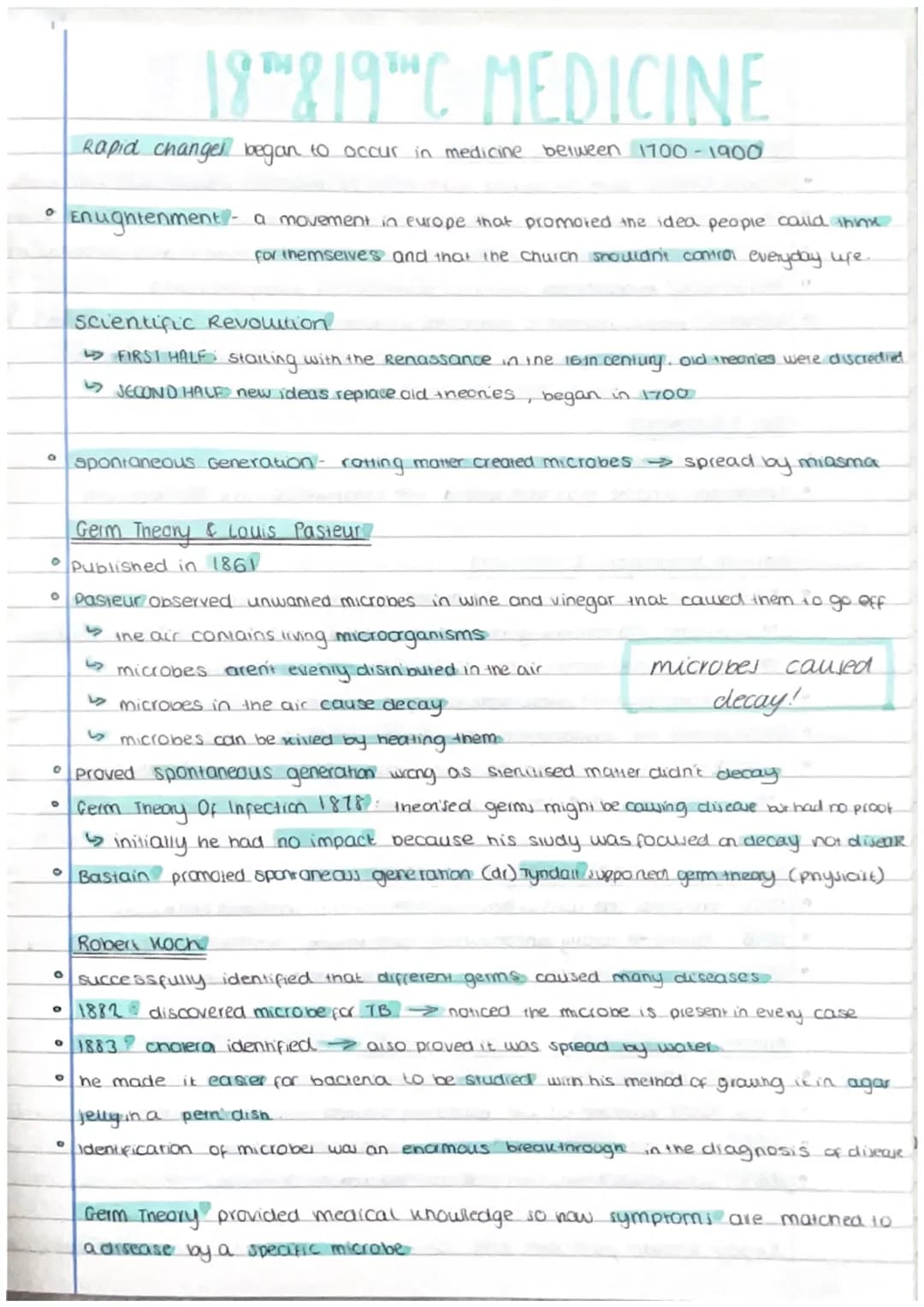
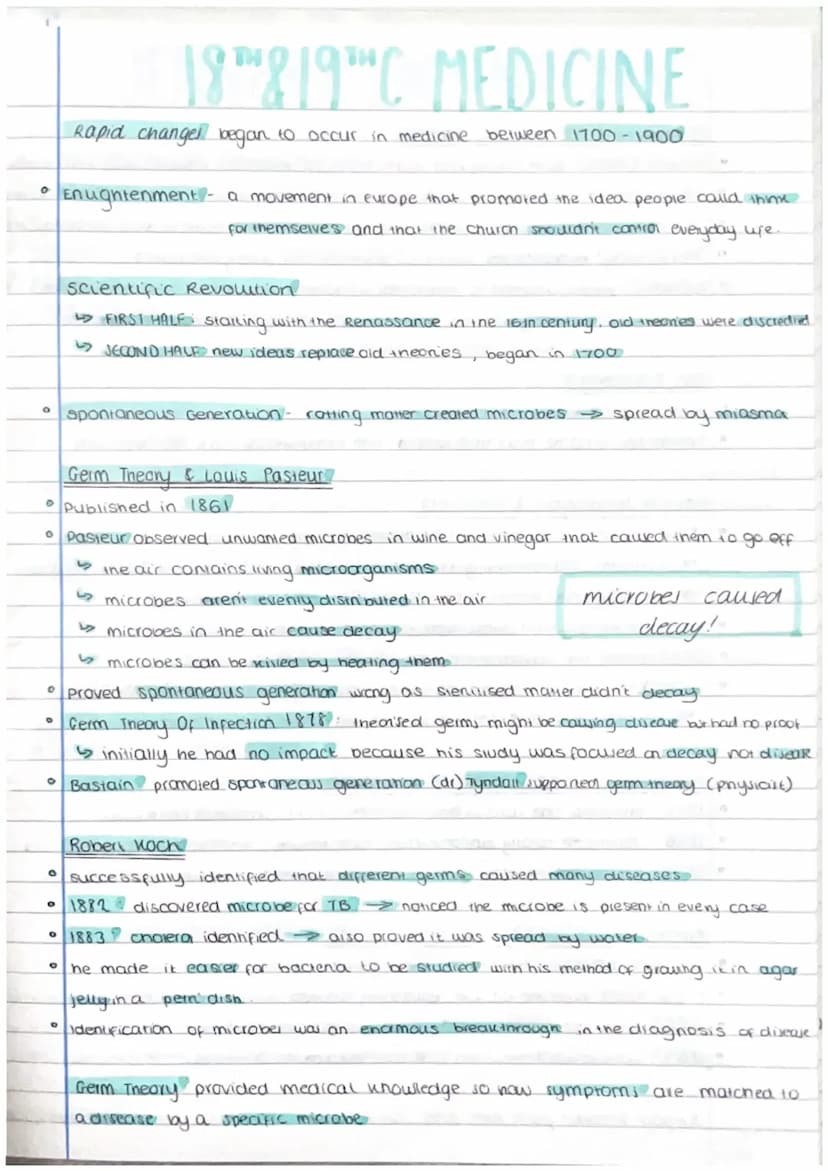
The Enlightenment finally freed medicine from church control, encouraging people to think for themselves. This led to the most important medical discovery ever - germ theory.
Louis Pasteur revolutionised medicine in 1861 by proving that microbes in the air cause decay, not "spontaneous generation" from rotting matter. His experiments with wine and vinegar showed that microbes could be killed by heating, laying the foundation for germ theory of infection (1878).
Robert Koch took this further by identifying specific germs that caused specific diseases. In 1882 he discovered the tuberculosis microbe, and in 1883 he identified cholera bacteria and proved it spread through water. His method of growing bacteria in agar jelly in petri dishes made studying microbes much easier.
This was a massive breakthrough! For the first time, doctors could match symptoms to diseases by identifying specific microbes. However, it took decades for people to accept germ theory because it contradicted centuries of medical beliefs.
Revolutionary Moment: When Koch first showed people disease-causing bacteria under a microscope, it was like revealing an invisible enemy that had been killing humans for millennia!
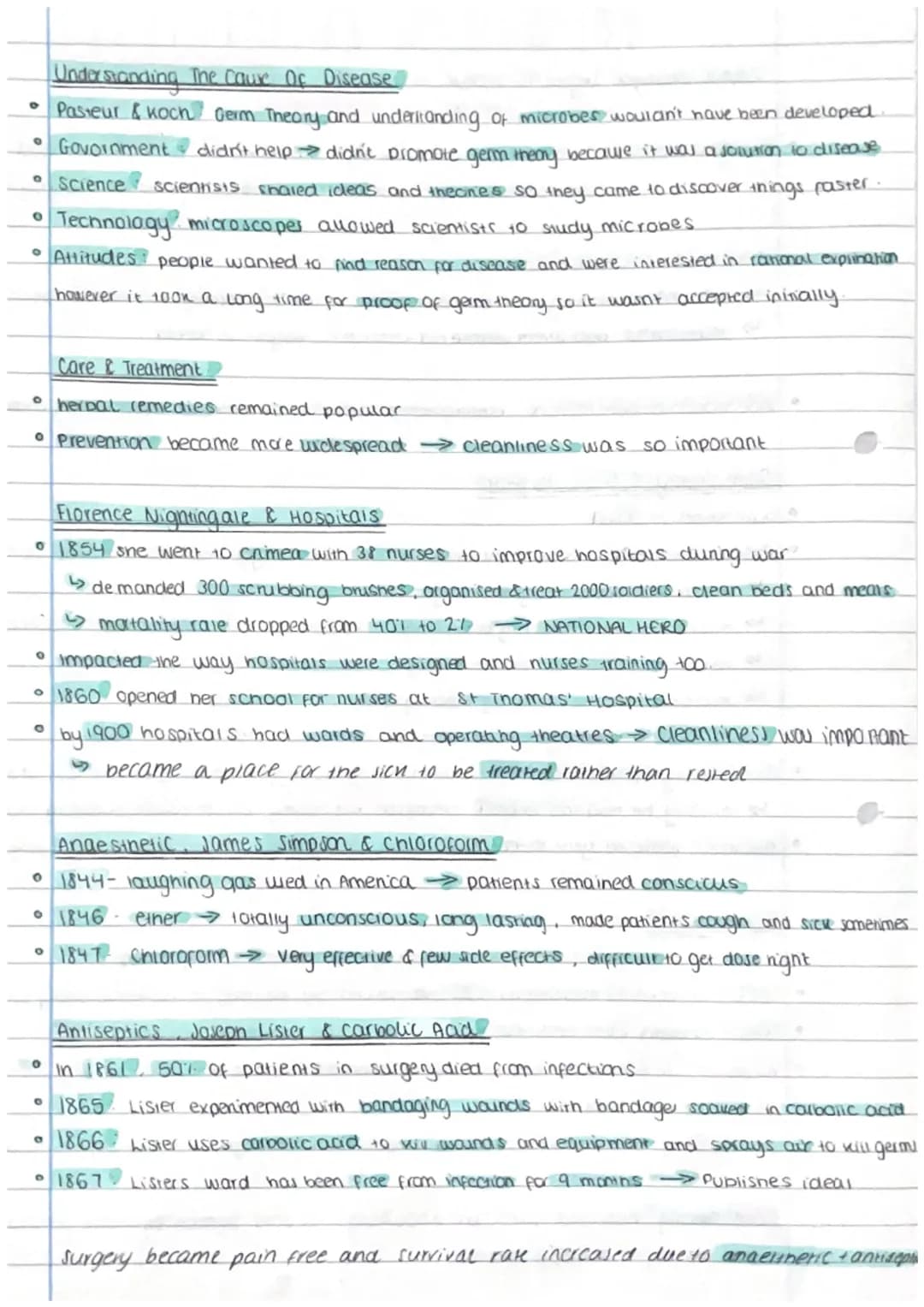
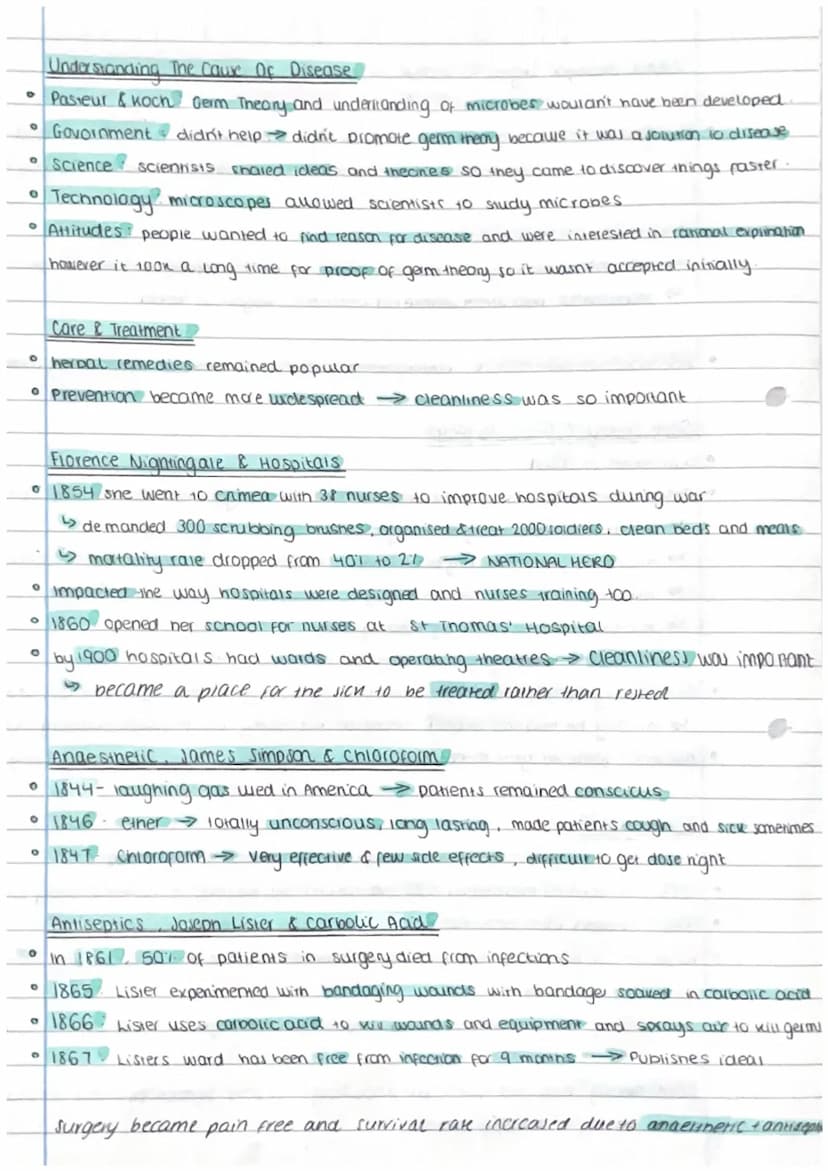
Once people accepted germ theory, medicine transformed rapidly. Florence Nightingale revolutionised nursing during the Crimean War (1854), demanding proper cleaning supplies and organisation. She treated 2,000 soldiers and reduced the mortality rate from 40% to 2%, becoming a national hero.
Surgery became bearable thanks to anaesthetics. James Simpson introduced chloroform in 1847 - much more effective than laughing gas or ether, with fewer side effects. Finally, patients could undergo major operations without excruciating pain.
Joseph Lister made surgery safe with antiseptics. In 1865, when 50% of surgery patients died from infection, Lister began using carbolic acid to sterilise wounds, equipment and even spray the air. By 1867, his ward had been infection-free for 9 months.
Hospitals transformed from places where you went to die into proper medical institutions. By 1900 they had specialised wards and operating theatres where cleanliness was paramount. Prevention became focused on cleanliness rather than prayer, and herbal remedies remained popular alongside new scientific treatments.
Life-Saver: The combination of anaesthetics and antiseptics meant surgery finally became both pain-free and survivable!
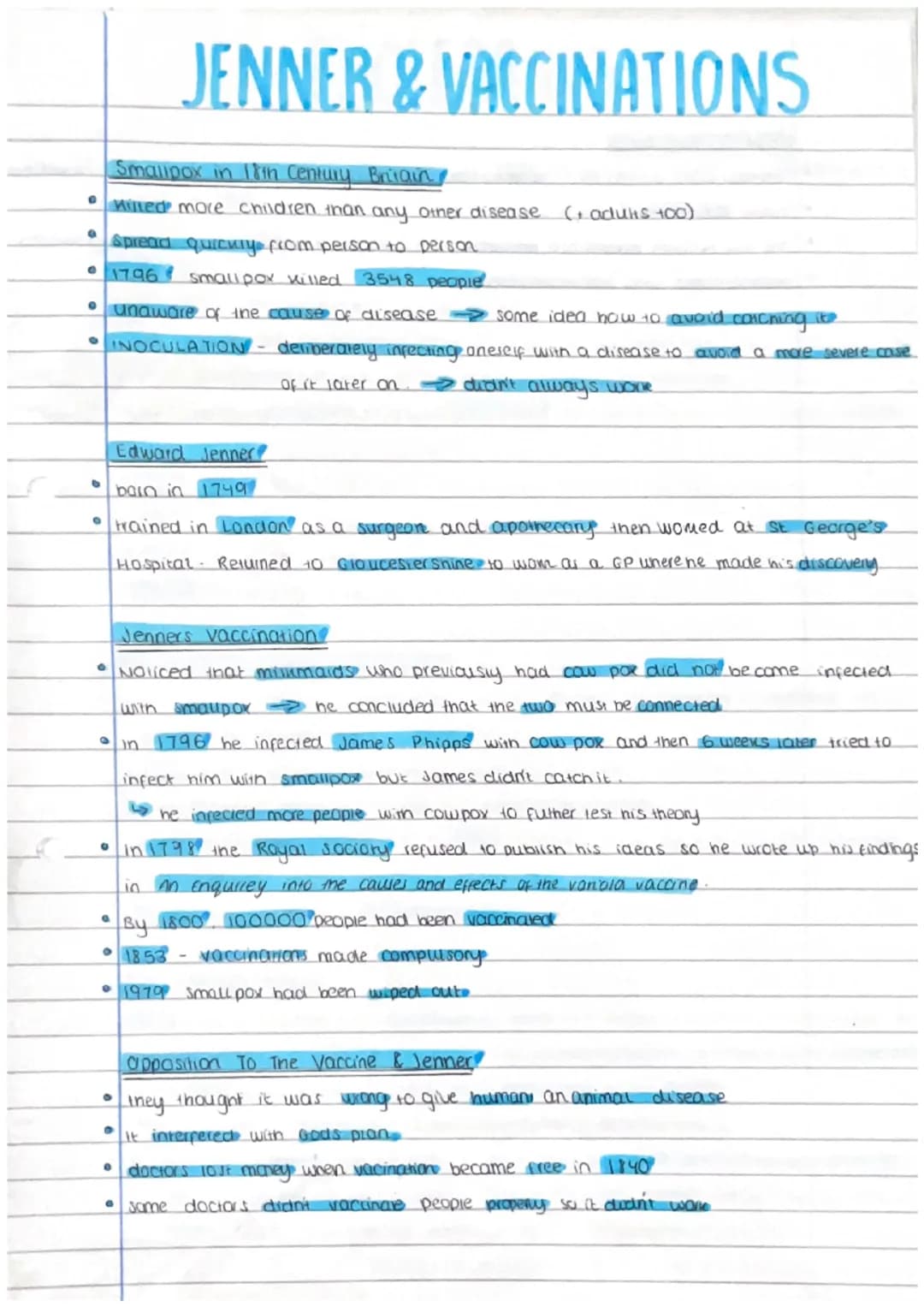
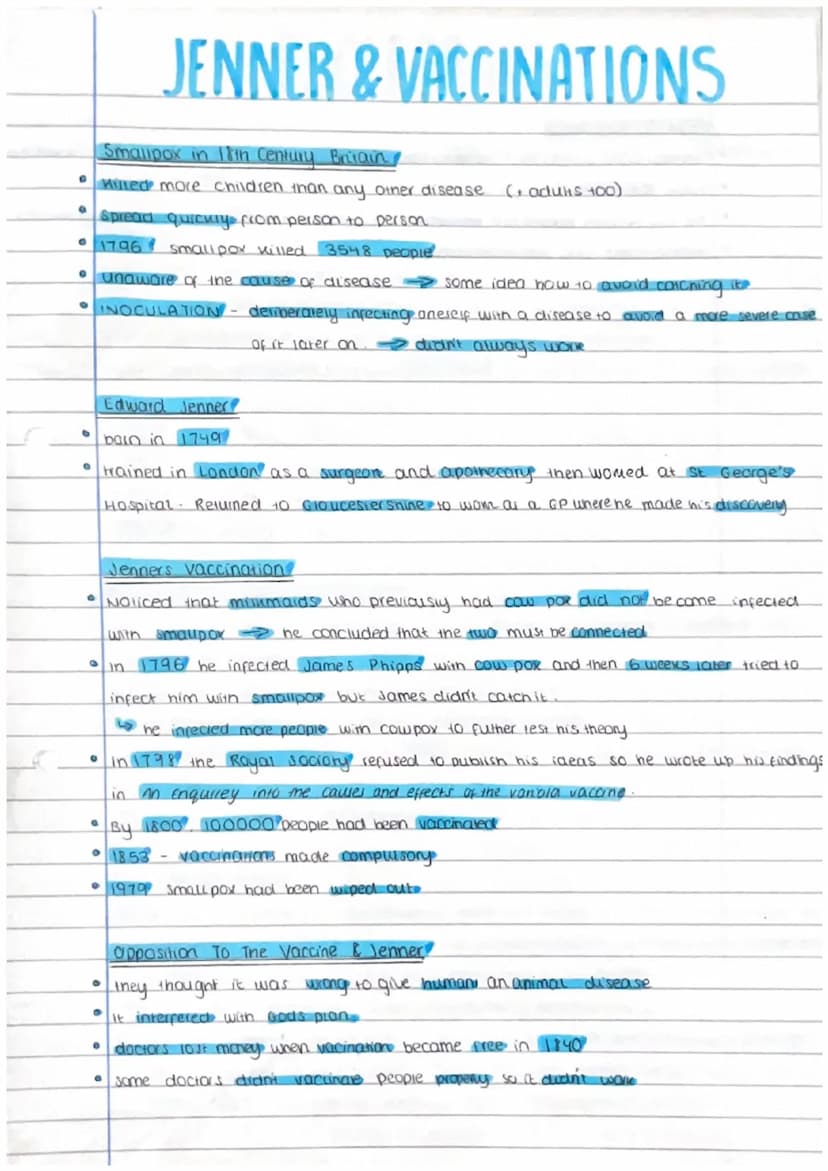
Edward Jenner achieved something medieval doctors could only dream of - actually preventing a deadly disease. Smallpox was the biggest child killer in 18th-century Britain, and existing inoculation methods (deliberately catching a mild form) were risky and unreliable.
Jenner noticed that milkmaids who caught cowpox never got smallpox. In 1796, he tested his theory by infecting 8-year-old James Phipps with cowpox, then trying to infect him with smallpox six weeks later. James didn't catch it!
After more successful tests, Jenner published his findings in 1798 when the Royal Society refused his work. By 1800, 100,000 people had been vaccinated. The government made vaccination compulsory in 1853, and by 1979, smallpox was completely wiped out worldwide.
Opposition was fierce though. People thought giving humans an animal disease was wrong and interfered with God's plan. Some doctors lost money when vaccination became free in 1840, and poor vaccination techniques sometimes made the treatment ineffective.
Amazing Achievement: Jenner's vaccination was so successful that smallpox became the first disease in human history to be completely eliminated!
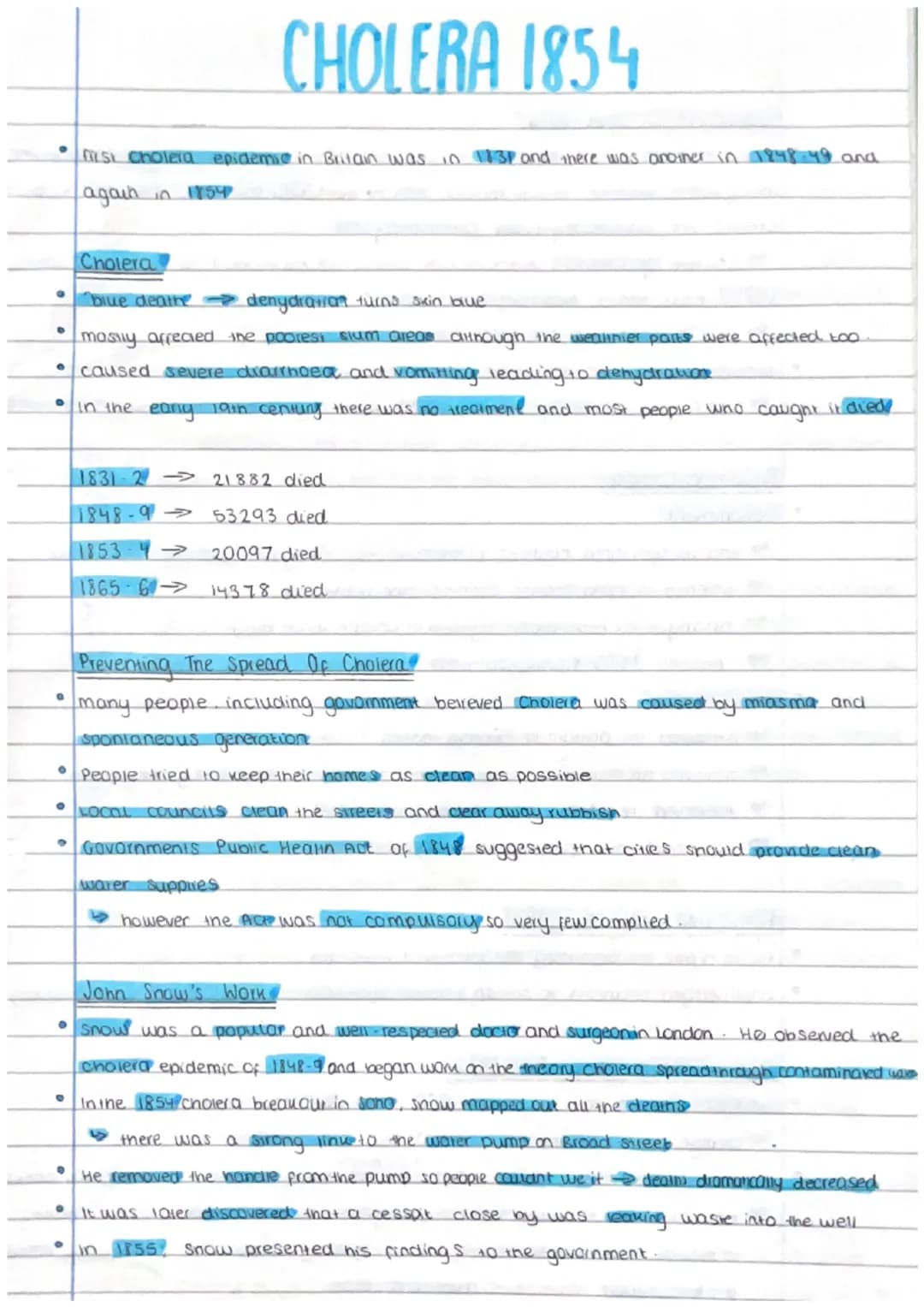
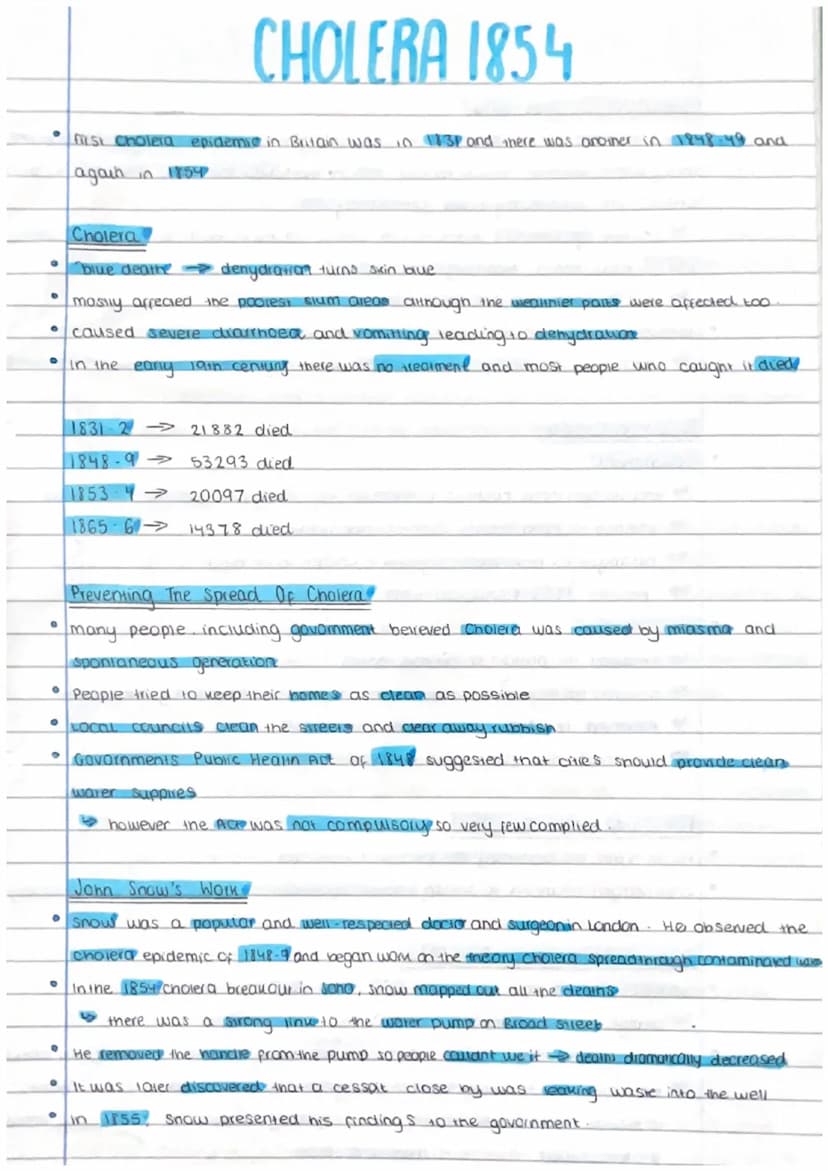
Cholera terrorised 19th-century Britain with four major epidemics. This "blue death" (dehydration turned skin blue) caused severe diarrhoea and vomiting, killing most victims. The worst outbreak (1848-49) killed over 53,000 people, mainly in poor slum areas.
Government and medical authorities blamed miasma and spontaneous generation, focusing on cleaning streets and providing clean water (though the 1848 Public Health Act wasn't compulsory, so few cities bothered).
John Snow, a respected London doctor, had different ideas. During the 1854 outbreak in Soho, he mapped every death and noticed they clustered around the Broad Street water pump. When Snow removed the pump handle, deaths dropped dramatically.
Snow discovered a leaking cesspit was contaminating the well, proving cholera spread through contaminated water, not bad air. He presented his findings to the government in 1855, but they largely ignored him because it contradicted accepted medical theory.
Detective Skills: Snow's disease mapping technique became a cornerstone of modern epidemiology - the science of tracking disease outbreaks!
Our AI Companion is a student-focused AI tool that offers more than just answers. Built on millions of Knowunity resources, it provides relevant information, personalised study plans, quizzes, and content directly in the chat, adapting to your individual learning journey.
You can download the app from Google Play Store and Apple App Store.
That's right! Enjoy free access to study content, connect with fellow students, and get instant help – all at your fingertips.
App Store
Google Play
The app is very easy to use and well designed. I have found everything I was looking for so far and have been able to learn a lot from the presentations! I will definitely use the app for a class assignment! And of course it also helps a lot as an inspiration.
Stefan S
iOS user
This app is really great. There are so many study notes and help [...]. My problem subject is French, for example, and the app has so many options for help. Thanks to this app, I have improved my French. I would recommend it to anyone.
Samantha Klich
Android user
Wow, I am really amazed. I just tried the app because I've seen it advertised many times and was absolutely stunned. This app is THE HELP you want for school and above all, it offers so many things, such as workouts and fact sheets, which have been VERY helpful to me personally.
Anna
iOS user
Best app on earth! no words because it’s too good
Thomas R
iOS user
Just amazing. Let's me revise 10x better, this app is a quick 10/10. I highly recommend it to anyone. I can watch and search for notes. I can save them in the subject folder. I can revise it any time when I come back. If you haven't tried this app, you're really missing out.
Basil
Android user
This app has made me feel so much more confident in my exam prep, not only through boosting my own self confidence through the features that allow you to connect with others and feel less alone, but also through the way the app itself is centred around making you feel better. It is easy to navigate, fun to use, and helpful to anyone struggling in absolutely any way.
David K
iOS user
The app's just great! All I have to do is enter the topic in the search bar and I get the response real fast. I don't have to watch 10 YouTube videos to understand something, so I'm saving my time. Highly recommended!
Sudenaz Ocak
Android user
In school I was really bad at maths but thanks to the app, I am doing better now. I am so grateful that you made the app.
Greenlight Bonnie
Android user
very reliable app to help and grow your ideas of Maths, English and other related topics in your works. please use this app if your struggling in areas, this app is key for that. wish I'd of done a review before. and it's also free so don't worry about that.
Rohan U
Android user
I know a lot of apps use fake accounts to boost their reviews but this app deserves it all. Originally I was getting 4 in my English exams and this time I got a grade 7. I didn’t even know about this app three days until the exam and it has helped A LOT. Please actually trust me and use it as I’m sure you too will see developments.
Xander S
iOS user
THE QUIZES AND FLASHCARDS ARE SO USEFUL AND I LOVE Knowunity AI. IT ALSO IS LITREALLY LIKE CHATGPT BUT SMARTER!! HELPED ME WITH MY MASCARA PROBLEMS TOO!! AS WELL AS MY REAL SUBJECTS ! DUHHH 😍😁😲🤑💗✨🎀😮
Elisha
iOS user
This apps acc the goat. I find revision so boring but this app makes it so easy to organize it all and then you can ask the freeeee ai to test yourself so good and you can easily upload your own stuff. highly recommend as someone taking mocks now
Paul T
iOS user
The app is very easy to use and well designed. I have found everything I was looking for so far and have been able to learn a lot from the presentations! I will definitely use the app for a class assignment! And of course it also helps a lot as an inspiration.
Stefan S
iOS user
This app is really great. There are so many study notes and help [...]. My problem subject is French, for example, and the app has so many options for help. Thanks to this app, I have improved my French. I would recommend it to anyone.
Samantha Klich
Android user
Wow, I am really amazed. I just tried the app because I've seen it advertised many times and was absolutely stunned. This app is THE HELP you want for school and above all, it offers so many things, such as workouts and fact sheets, which have been VERY helpful to me personally.
Anna
iOS user
Best app on earth! no words because it’s too good
Thomas R
iOS user
Just amazing. Let's me revise 10x better, this app is a quick 10/10. I highly recommend it to anyone. I can watch and search for notes. I can save them in the subject folder. I can revise it any time when I come back. If you haven't tried this app, you're really missing out.
Basil
Android user
This app has made me feel so much more confident in my exam prep, not only through boosting my own self confidence through the features that allow you to connect with others and feel less alone, but also through the way the app itself is centred around making you feel better. It is easy to navigate, fun to use, and helpful to anyone struggling in absolutely any way.
David K
iOS user
The app's just great! All I have to do is enter the topic in the search bar and I get the response real fast. I don't have to watch 10 YouTube videos to understand something, so I'm saving my time. Highly recommended!
Sudenaz Ocak
Android user
In school I was really bad at maths but thanks to the app, I am doing better now. I am so grateful that you made the app.
Greenlight Bonnie
Android user
very reliable app to help and grow your ideas of Maths, English and other related topics in your works. please use this app if your struggling in areas, this app is key for that. wish I'd of done a review before. and it's also free so don't worry about that.
Rohan U
Android user
I know a lot of apps use fake accounts to boost their reviews but this app deserves it all. Originally I was getting 4 in my English exams and this time I got a grade 7. I didn’t even know about this app three days until the exam and it has helped A LOT. Please actually trust me and use it as I’m sure you too will see developments.
Xander S
iOS user
THE QUIZES AND FLASHCARDS ARE SO USEFUL AND I LOVE Knowunity AI. IT ALSO IS LITREALLY LIKE CHATGPT BUT SMARTER!! HELPED ME WITH MY MASCARA PROBLEMS TOO!! AS WELL AS MY REAL SUBJECTS ! DUHHH 😍😁😲🤑💗✨🎀😮
Elisha
iOS user
This apps acc the goat. I find revision so boring but this app makes it so easy to organize it all and then you can ask the freeeee ai to test yourself so good and you can easily upload your own stuff. highly recommend as someone taking mocks now
Paul T
iOS user
shanai
@shanai_lock
Ever wondered how people tried to cure diseases before modern medicine existed? From medieval beliefs about "bad air" to the groundbreaking discovery of germs, medical history shows us how our understanding of illness has completely transformed over centuries.
Access to all documents
Improve your grades
Join milions of students
Your medieval ancestors had some pretty wild ideas about what made people sick! The Theory of Four Humours dominated everything - blood (hot and wet), phlegm (cold and wet), black bile (cold and dry), and yellow bile (hot and dry). When these got out of balance, you were supposedly ill.
Hippocrates created this theory, but Galen made it even more detailed with his Theory of Opposites. Got too much heat? Cool yourself down with cold treatments. This system was brilliant because it could "explain" literally any illness, even though it was completely wrong.
The Church loved Galen's ideas and controlled all education, so nobody dared question them. People also believed in miasma - the idea that "bad air" caused disease. Without any real scientific understanding, these theories ruled medicine for over a thousand years.
Quick Fact: Medieval doctors thought your liver distributed blood around your body - they had no idea your heart was actually pumping it!
Access to all documents
Improve your grades
Join milions of students
Medieval treatments were a mix of religious rituals and physical remedies that often did more harm than good. Since the Church taught that illness was God's punishment for sin, people tried healing through prayers, fasting, pilgrimages and offerings.
Physicians were expensive university-trained doctors who consulted star charts before treating anyone. They practiced bloodletting (removing "bad" blood) and purging (making patients vomit to balance the humours). Most people couldn't afford physicians, so they visited apothecaries for herbal remedies or barber surgeons for basic procedures like tooth pulling and amputations.
Hospitals weren't places for treatment - they were just somewhere to rest and pray. Most sick people were cared for at home by women using traditional family remedies. Prevention focused on living a sinless life and following Regimen Sanitatis - loose health guidelines about diet, exercise and avoiding bad air.
Reality Check: Medieval "hospitals" were more like hostels - you went there to die comfortably, not to get better!
Access to all documents
Improve your grades
Join milions of students
The Black Death was medieval Europe's worst nightmare - a plague outbreak that killed one-third of England's population in just two years. This bacterial infection, spread by fleas on rats from ships, killed victims within 3-5 days and returned every 10-20 years.
Medieval explanations were completely off the mark. People blamed God's punishment for sin, unusual planetary alignments, or breathing in miasma. Since they had no clue about bacteria, their treatments were useless - bloodletting, purging, and strong-smelling herbs like theriaca.
Prevention attempts were equally hopeless. Religious people tried self-flagellation (public whipping to show God they were sorry), pilgrimages, and constant prayer. Others carried posies of flowers or pomanders to ward off "bad air." The government did try quarantine laws and stopped cleaning streets (thinking the stench would drive away miasma), but nothing worked.
Shocking Stat: London buried 200 people per day at the height of the Black Death - that's one person every 7 minutes!
Access to all documents
Improve your grades
Join milions of students
The Renaissance (meaning "rebirth") finally started challenging medieval medicine, though change was painfully slow. While the Theory of Four Humours was officially discredited by the 16th century, ordinary people kept believing it for decades longer.
Thomas Sydenham, nicknamed the "English Hippocrates," revolutionised diagnosis by actually observing patients instead of just reading old medical books. He realised that diseases were separate entities that could be categorised like plants and animals - a massive breakthrough in thinking.
The printing press (invented 1440) spread new medical ideas faster than ever before. The Royal Society (established 1660) promoted scientific experiments and encouraged debate. Their journal Philosophical Transactions let scientists share discoveries across Europe, creating a proper scientific community for the first time.
Humanism encouraged people to think for themselves rather than blindly following ancient authorities. However, without quality microscopes and scientific instruments, theories couldn't be properly tested, so change remained frustratingly slow.
Game Changer: The printing press meant medical knowledge could spread in months rather than decades!
Access to all documents
Improve your grades
Join milions of students
Two Renaissance superstars completely transformed our understanding of human anatomy. Andreas Vesalius dissected executed criminals and found over 300 mistakes in Galen's work! His 1543 book On the Fabric of the Human Body used detailed illustrations to show what bodies actually looked like inside.
William Harvey proved Galen spectacularly wrong about blood circulation. Through careful experiments, Harvey demonstrated that the heart acts as a pump, pushing blood around the body in a circuit. This wasn't just correcting a mistake - it was proving that ancient authorities could be completely wrong about basic facts.
Treatments remained largely unchanged - herbal remedies, transference (rubbing onions on warts), and iatrochemistry (chemical cures) were popular. Prevention focused on cleanliness, moderation in everything, and still avoiding miasma.
Hospitals improved dramatically. Patient records show people were being discharged quickly with proper diets and physician visits. The dissolution of monasteries closed many church-run hospitals, but they reopened under secular management.
Mind-Blowing Fact: Harvey's blood circulation discovery didn't improve treatments for over 100 years - understanding anatomy and treating disease were still separate skills!
Access to all documents
Improve your grades
Join milions of students
You'd think 300 years of medical progress would help with another plague outbreak - you'd be wrong! The Great Plague of 1665 killed thousands in London, and people's explanations were barely different from medieval times.
Causes blamed included unusual alignment of Saturn and Jupiter, God's punishment for sin, and miasma from rubbish and dung hills. At least people now understood it spread person-to-person, leading to proper quarantine measures.
Treatments were still useless: sweating the disease out, transference (strapping live chickens to infected buboes), and herbal remedies. Quack doctors with no qualifications took advantage of panic to sell fake cures, while plague doctors wore creepy beaked masks filled with sweet-smelling herbs.
Government action was more organised this time. King Charles II banned public meetings and funerals, lit fires on street corners to "drive away miasma," and killed 40,000 dogs plus 200,000 cats (thinking they spread disease). Wardens monitored households and enforced 40-day quarantines.
Bizarre Belief: Some people deliberately caught syphilis, thinking it would prevent plague because both diseases caused similar symptoms!
Access to all documents
Improve your grades
Join milions of students
The Enlightenment finally freed medicine from church control, encouraging people to think for themselves. This led to the most important medical discovery ever - germ theory.
Louis Pasteur revolutionised medicine in 1861 by proving that microbes in the air cause decay, not "spontaneous generation" from rotting matter. His experiments with wine and vinegar showed that microbes could be killed by heating, laying the foundation for germ theory of infection (1878).
Robert Koch took this further by identifying specific germs that caused specific diseases. In 1882 he discovered the tuberculosis microbe, and in 1883 he identified cholera bacteria and proved it spread through water. His method of growing bacteria in agar jelly in petri dishes made studying microbes much easier.
This was a massive breakthrough! For the first time, doctors could match symptoms to diseases by identifying specific microbes. However, it took decades for people to accept germ theory because it contradicted centuries of medical beliefs.
Revolutionary Moment: When Koch first showed people disease-causing bacteria under a microscope, it was like revealing an invisible enemy that had been killing humans for millennia!
Access to all documents
Improve your grades
Join milions of students
Once people accepted germ theory, medicine transformed rapidly. Florence Nightingale revolutionised nursing during the Crimean War (1854), demanding proper cleaning supplies and organisation. She treated 2,000 soldiers and reduced the mortality rate from 40% to 2%, becoming a national hero.
Surgery became bearable thanks to anaesthetics. James Simpson introduced chloroform in 1847 - much more effective than laughing gas or ether, with fewer side effects. Finally, patients could undergo major operations without excruciating pain.
Joseph Lister made surgery safe with antiseptics. In 1865, when 50% of surgery patients died from infection, Lister began using carbolic acid to sterilise wounds, equipment and even spray the air. By 1867, his ward had been infection-free for 9 months.
Hospitals transformed from places where you went to die into proper medical institutions. By 1900 they had specialised wards and operating theatres where cleanliness was paramount. Prevention became focused on cleanliness rather than prayer, and herbal remedies remained popular alongside new scientific treatments.
Life-Saver: The combination of anaesthetics and antiseptics meant surgery finally became both pain-free and survivable!
Access to all documents
Improve your grades
Join milions of students
Edward Jenner achieved something medieval doctors could only dream of - actually preventing a deadly disease. Smallpox was the biggest child killer in 18th-century Britain, and existing inoculation methods (deliberately catching a mild form) were risky and unreliable.
Jenner noticed that milkmaids who caught cowpox never got smallpox. In 1796, he tested his theory by infecting 8-year-old James Phipps with cowpox, then trying to infect him with smallpox six weeks later. James didn't catch it!
After more successful tests, Jenner published his findings in 1798 when the Royal Society refused his work. By 1800, 100,000 people had been vaccinated. The government made vaccination compulsory in 1853, and by 1979, smallpox was completely wiped out worldwide.
Opposition was fierce though. People thought giving humans an animal disease was wrong and interfered with God's plan. Some doctors lost money when vaccination became free in 1840, and poor vaccination techniques sometimes made the treatment ineffective.
Amazing Achievement: Jenner's vaccination was so successful that smallpox became the first disease in human history to be completely eliminated!
Access to all documents
Improve your grades
Join milions of students
Cholera terrorised 19th-century Britain with four major epidemics. This "blue death" (dehydration turned skin blue) caused severe diarrhoea and vomiting, killing most victims. The worst outbreak (1848-49) killed over 53,000 people, mainly in poor slum areas.
Government and medical authorities blamed miasma and spontaneous generation, focusing on cleaning streets and providing clean water (though the 1848 Public Health Act wasn't compulsory, so few cities bothered).
John Snow, a respected London doctor, had different ideas. During the 1854 outbreak in Soho, he mapped every death and noticed they clustered around the Broad Street water pump. When Snow removed the pump handle, deaths dropped dramatically.
Snow discovered a leaking cesspit was contaminating the well, proving cholera spread through contaminated water, not bad air. He presented his findings to the government in 1855, but they largely ignored him because it contradicted accepted medical theory.
Detective Skills: Snow's disease mapping technique became a cornerstone of modern epidemiology - the science of tracking disease outbreaks!
Our AI Companion is a student-focused AI tool that offers more than just answers. Built on millions of Knowunity resources, it provides relevant information, personalised study plans, quizzes, and content directly in the chat, adapting to your individual learning journey.
You can download the app from Google Play Store and Apple App Store.
That's right! Enjoy free access to study content, connect with fellow students, and get instant help – all at your fingertips.
94
Smart Tools NEW
Transform this note into: ✓ 50+ Practice Questions ✓ Interactive Flashcards ✓ Full Mock Exam ✓ Essay Outlines
App Store
Google Play
The app is very easy to use and well designed. I have found everything I was looking for so far and have been able to learn a lot from the presentations! I will definitely use the app for a class assignment! And of course it also helps a lot as an inspiration.
Stefan S
iOS user
This app is really great. There are so many study notes and help [...]. My problem subject is French, for example, and the app has so many options for help. Thanks to this app, I have improved my French. I would recommend it to anyone.
Samantha Klich
Android user
Wow, I am really amazed. I just tried the app because I've seen it advertised many times and was absolutely stunned. This app is THE HELP you want for school and above all, it offers so many things, such as workouts and fact sheets, which have been VERY helpful to me personally.
Anna
iOS user
Best app on earth! no words because it’s too good
Thomas R
iOS user
Just amazing. Let's me revise 10x better, this app is a quick 10/10. I highly recommend it to anyone. I can watch and search for notes. I can save them in the subject folder. I can revise it any time when I come back. If you haven't tried this app, you're really missing out.
Basil
Android user
This app has made me feel so much more confident in my exam prep, not only through boosting my own self confidence through the features that allow you to connect with others and feel less alone, but also through the way the app itself is centred around making you feel better. It is easy to navigate, fun to use, and helpful to anyone struggling in absolutely any way.
David K
iOS user
The app's just great! All I have to do is enter the topic in the search bar and I get the response real fast. I don't have to watch 10 YouTube videos to understand something, so I'm saving my time. Highly recommended!
Sudenaz Ocak
Android user
In school I was really bad at maths but thanks to the app, I am doing better now. I am so grateful that you made the app.
Greenlight Bonnie
Android user
very reliable app to help and grow your ideas of Maths, English and other related topics in your works. please use this app if your struggling in areas, this app is key for that. wish I'd of done a review before. and it's also free so don't worry about that.
Rohan U
Android user
I know a lot of apps use fake accounts to boost their reviews but this app deserves it all. Originally I was getting 4 in my English exams and this time I got a grade 7. I didn’t even know about this app three days until the exam and it has helped A LOT. Please actually trust me and use it as I’m sure you too will see developments.
Xander S
iOS user
THE QUIZES AND FLASHCARDS ARE SO USEFUL AND I LOVE Knowunity AI. IT ALSO IS LITREALLY LIKE CHATGPT BUT SMARTER!! HELPED ME WITH MY MASCARA PROBLEMS TOO!! AS WELL AS MY REAL SUBJECTS ! DUHHH 😍😁😲🤑💗✨🎀😮
Elisha
iOS user
This apps acc the goat. I find revision so boring but this app makes it so easy to organize it all and then you can ask the freeeee ai to test yourself so good and you can easily upload your own stuff. highly recommend as someone taking mocks now
Paul T
iOS user
The app is very easy to use and well designed. I have found everything I was looking for so far and have been able to learn a lot from the presentations! I will definitely use the app for a class assignment! And of course it also helps a lot as an inspiration.
Stefan S
iOS user
This app is really great. There are so many study notes and help [...]. My problem subject is French, for example, and the app has so many options for help. Thanks to this app, I have improved my French. I would recommend it to anyone.
Samantha Klich
Android user
Wow, I am really amazed. I just tried the app because I've seen it advertised many times and was absolutely stunned. This app is THE HELP you want for school and above all, it offers so many things, such as workouts and fact sheets, which have been VERY helpful to me personally.
Anna
iOS user
Best app on earth! no words because it’s too good
Thomas R
iOS user
Just amazing. Let's me revise 10x better, this app is a quick 10/10. I highly recommend it to anyone. I can watch and search for notes. I can save them in the subject folder. I can revise it any time when I come back. If you haven't tried this app, you're really missing out.
Basil
Android user
This app has made me feel so much more confident in my exam prep, not only through boosting my own self confidence through the features that allow you to connect with others and feel less alone, but also through the way the app itself is centred around making you feel better. It is easy to navigate, fun to use, and helpful to anyone struggling in absolutely any way.
David K
iOS user
The app's just great! All I have to do is enter the topic in the search bar and I get the response real fast. I don't have to watch 10 YouTube videos to understand something, so I'm saving my time. Highly recommended!
Sudenaz Ocak
Android user
In school I was really bad at maths but thanks to the app, I am doing better now. I am so grateful that you made the app.
Greenlight Bonnie
Android user
very reliable app to help and grow your ideas of Maths, English and other related topics in your works. please use this app if your struggling in areas, this app is key for that. wish I'd of done a review before. and it's also free so don't worry about that.
Rohan U
Android user
I know a lot of apps use fake accounts to boost their reviews but this app deserves it all. Originally I was getting 4 in my English exams and this time I got a grade 7. I didn’t even know about this app three days until the exam and it has helped A LOT. Please actually trust me and use it as I’m sure you too will see developments.
Xander S
iOS user
THE QUIZES AND FLASHCARDS ARE SO USEFUL AND I LOVE Knowunity AI. IT ALSO IS LITREALLY LIKE CHATGPT BUT SMARTER!! HELPED ME WITH MY MASCARA PROBLEMS TOO!! AS WELL AS MY REAL SUBJECTS ! DUHHH 😍😁😲🤑💗✨🎀😮
Elisha
iOS user
This apps acc the goat. I find revision so boring but this app makes it so easy to organize it all and then you can ask the freeeee ai to test yourself so good and you can easily upload your own stuff. highly recommend as someone taking mocks now
Paul T
iOS user