
The cell structure and function in eukaryotic organisms, focusing on... Show more
 Biology330 views·Updated Jun 7, 2026·10 pages
Understanding the Structure and Function of Eukaryotic Cells
Poppy Agg@p.agg
1 / 10
1
of 10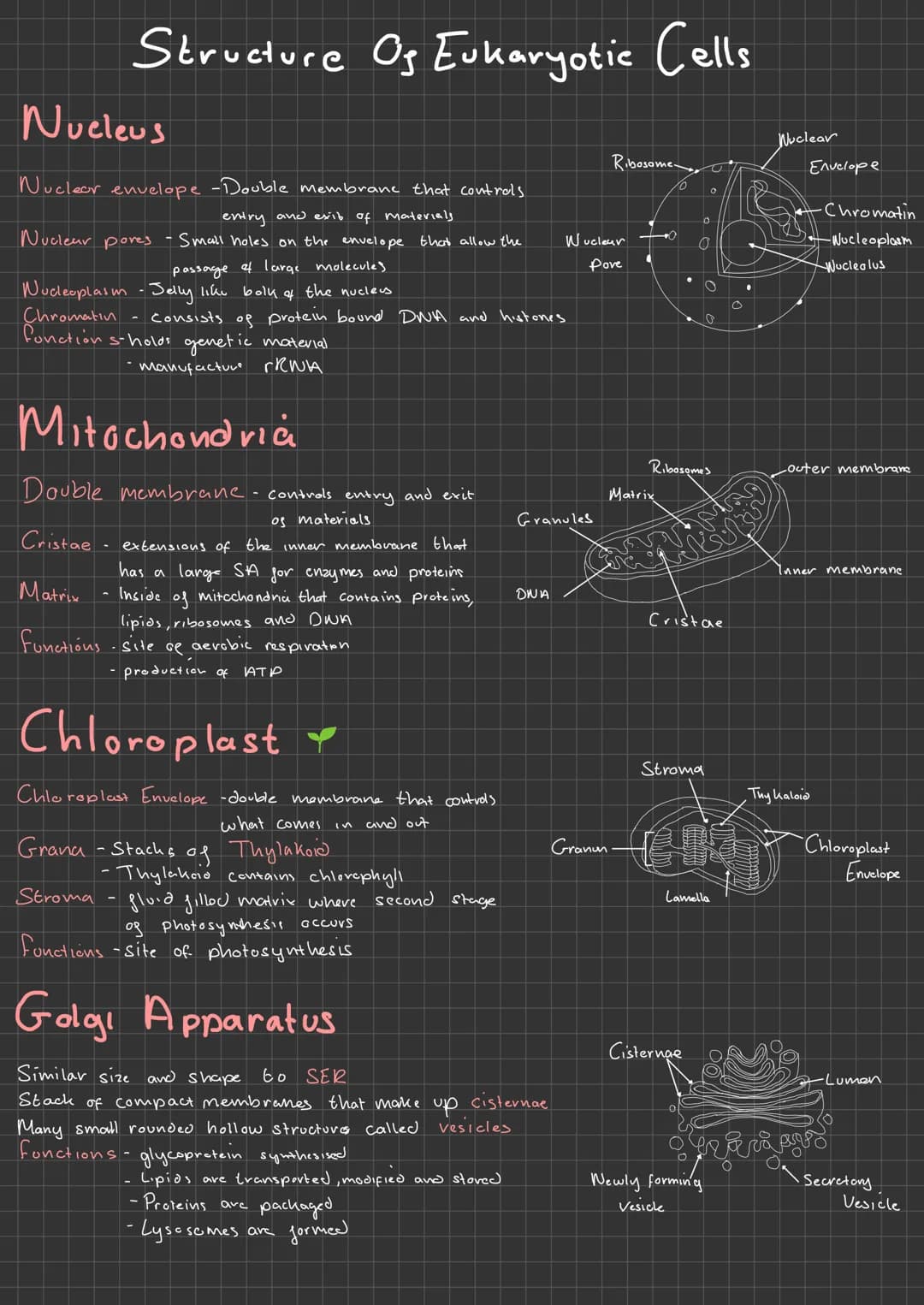
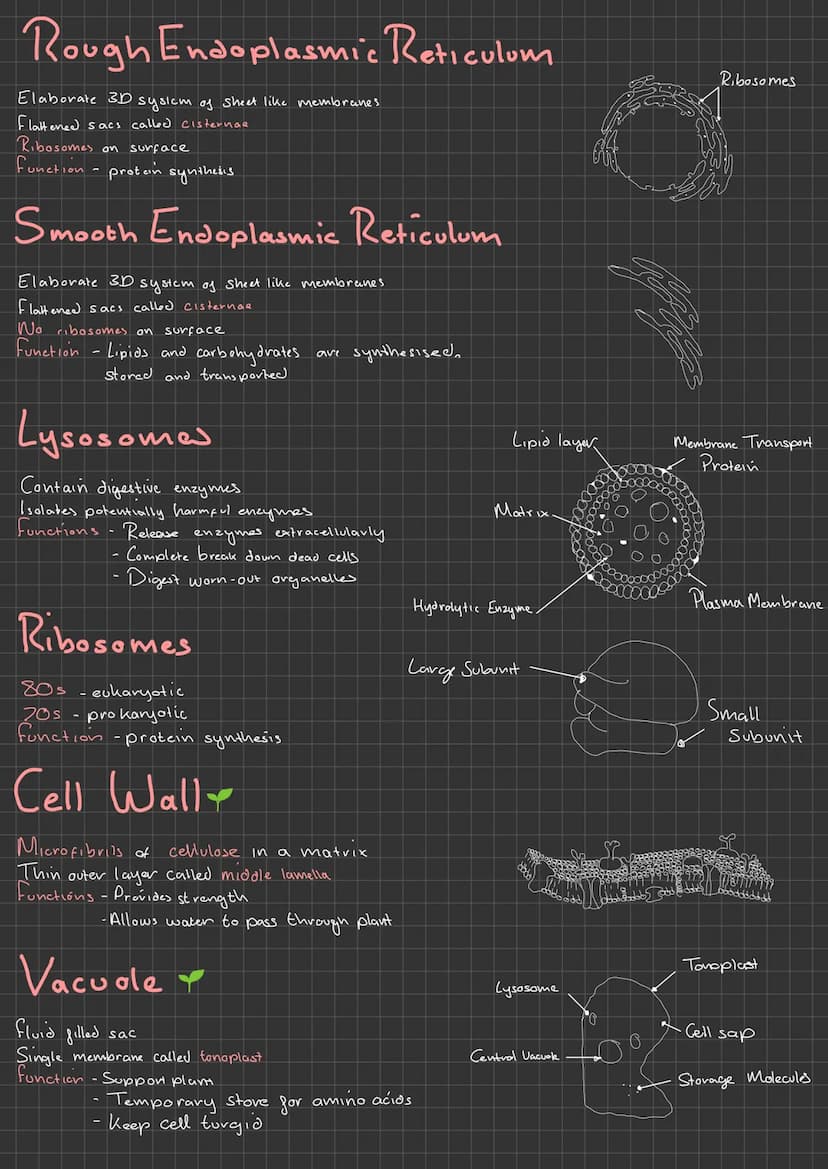
Page 2: Cellular Components and Organelles
This page focuses on the endoplasmic reticulum, lysosomes, ribosomes, and vacuoles.
Definition: Rough Endoplasmic Reticulum (RER) is an elaborate 3D system of membranes with attached ribosomes, specialized for protein synthesis.
Example: The cell wall contains microfibrils of cellulose arranged in a matrix, providing structural support while allowing water passage.
Highlight: Lysosomes contain digestive enzymes and play crucial roles in breaking down cellular components and dead cells.
2
of 10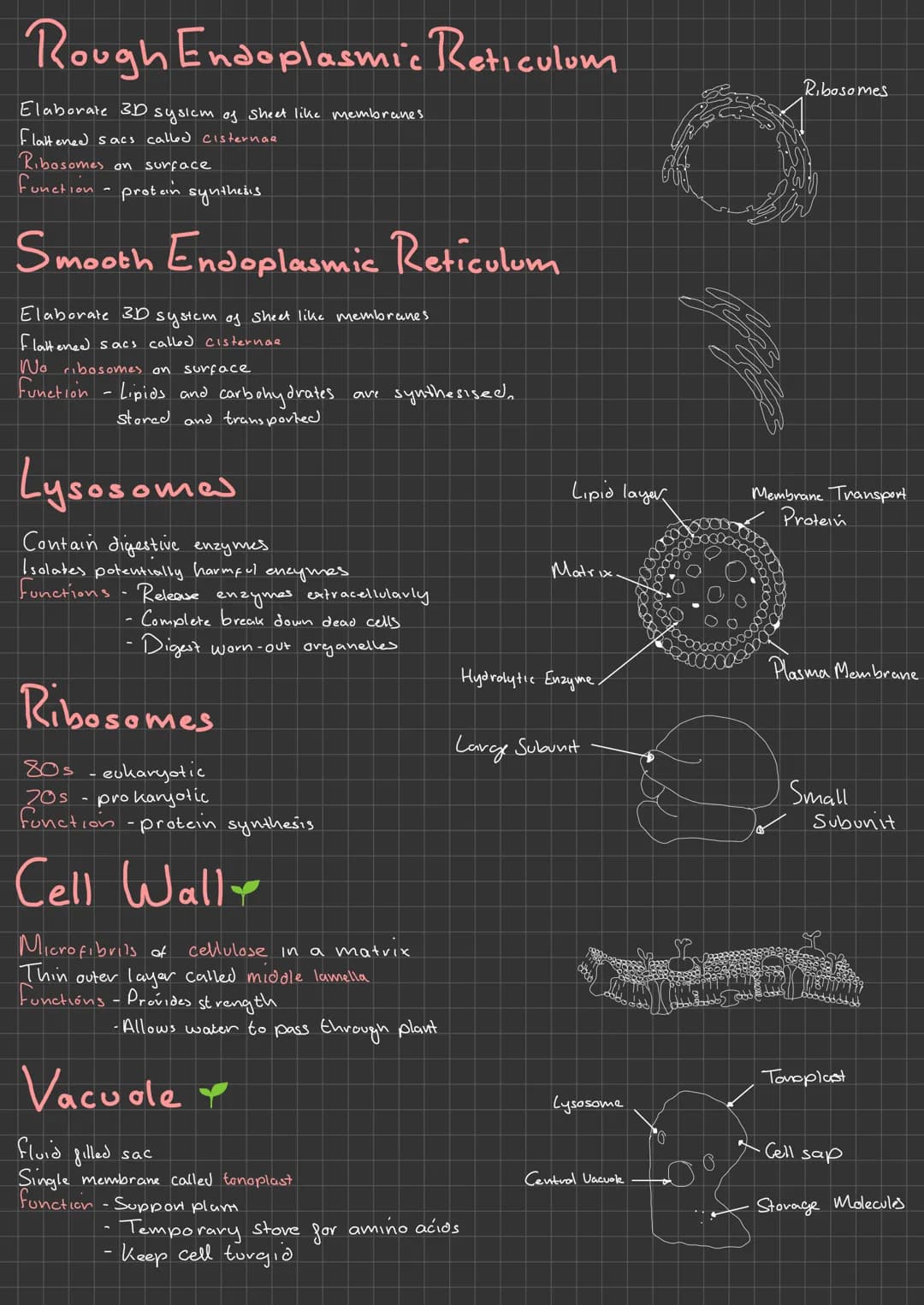
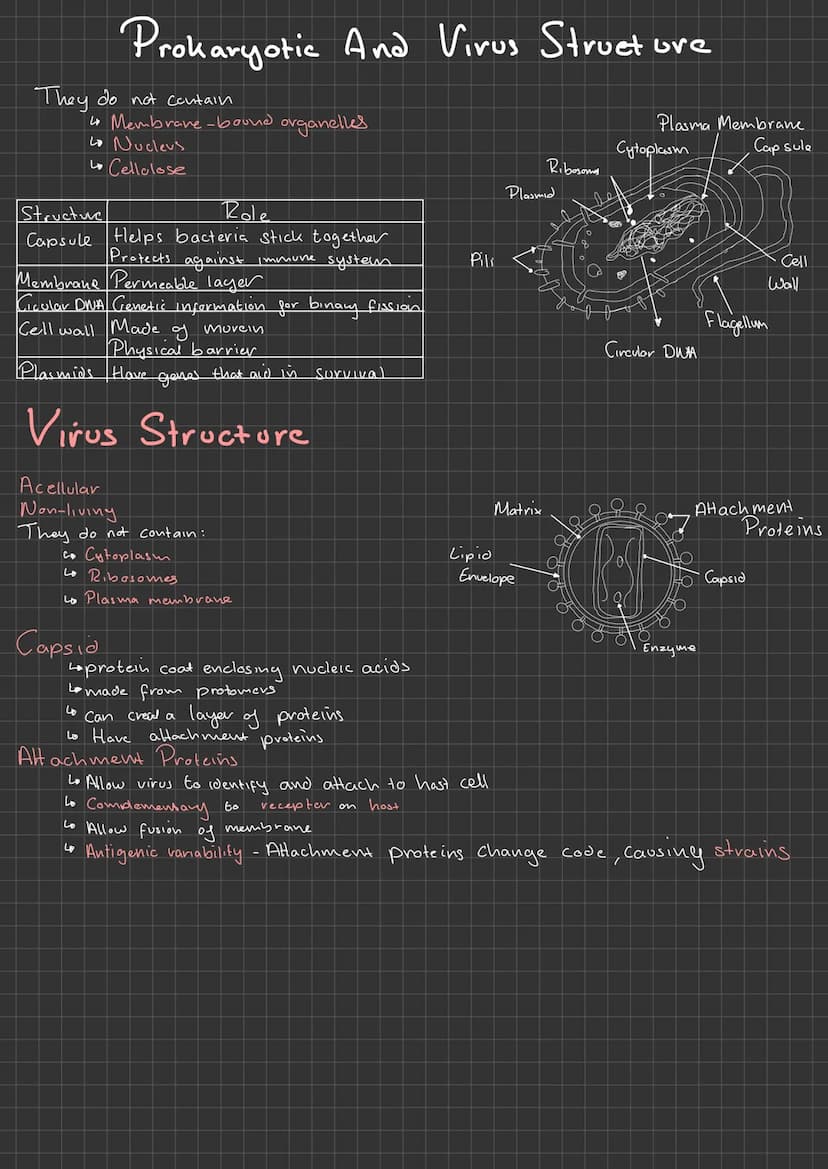
Page 3: Prokaryotic and Virus Structure
This section compares prokaryotic cells with viruses, highlighting their unique characteristics.
Definition: Prokaryotic cells lack membrane-bound organelles and a true nucleus.
Vocabulary: Capsid - A protein coat that encloses viral nucleic acids.
Highlight: Viral attachment proteins are complementary to host cell receptors, enabling specific host recognition.
3
of 10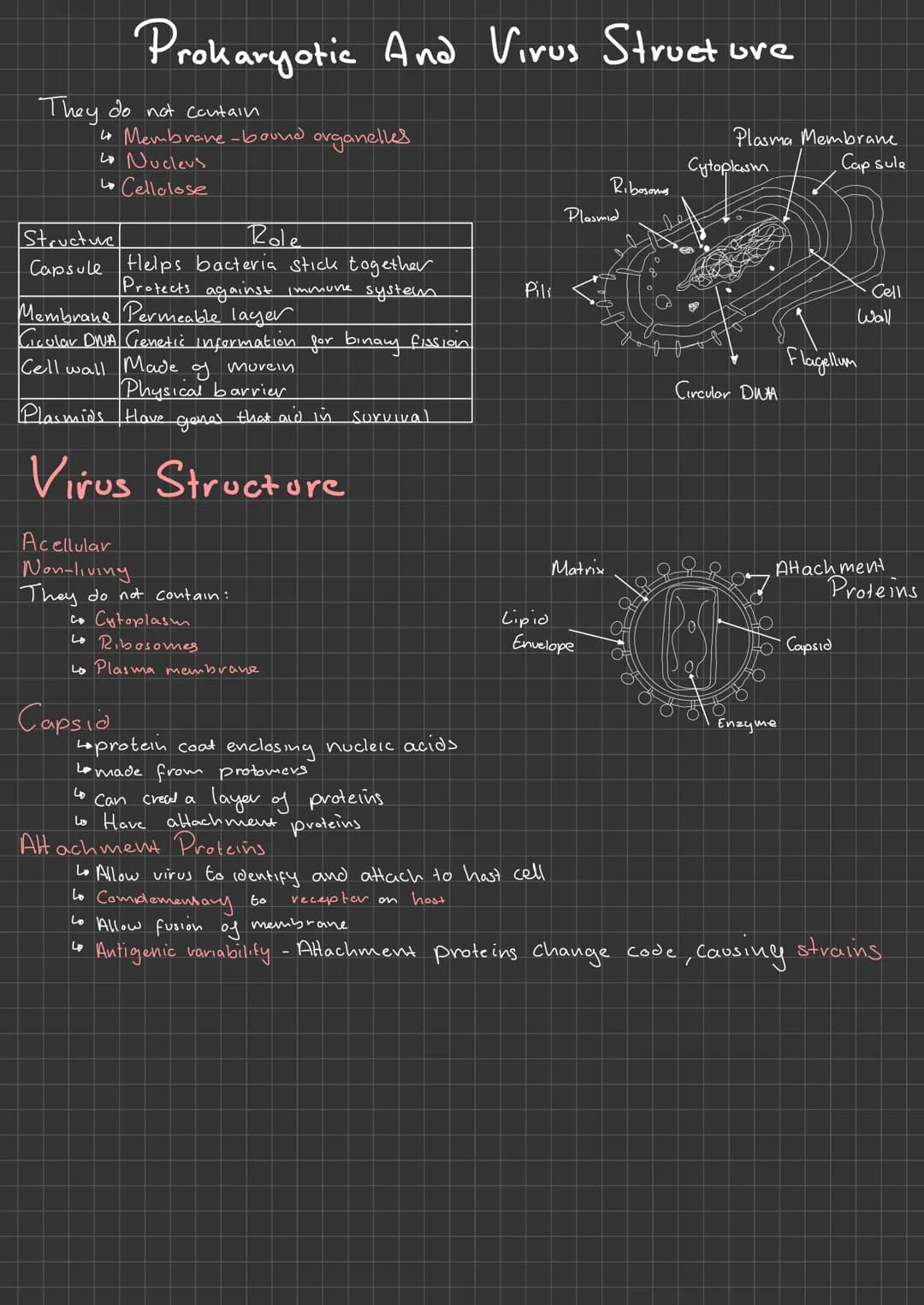
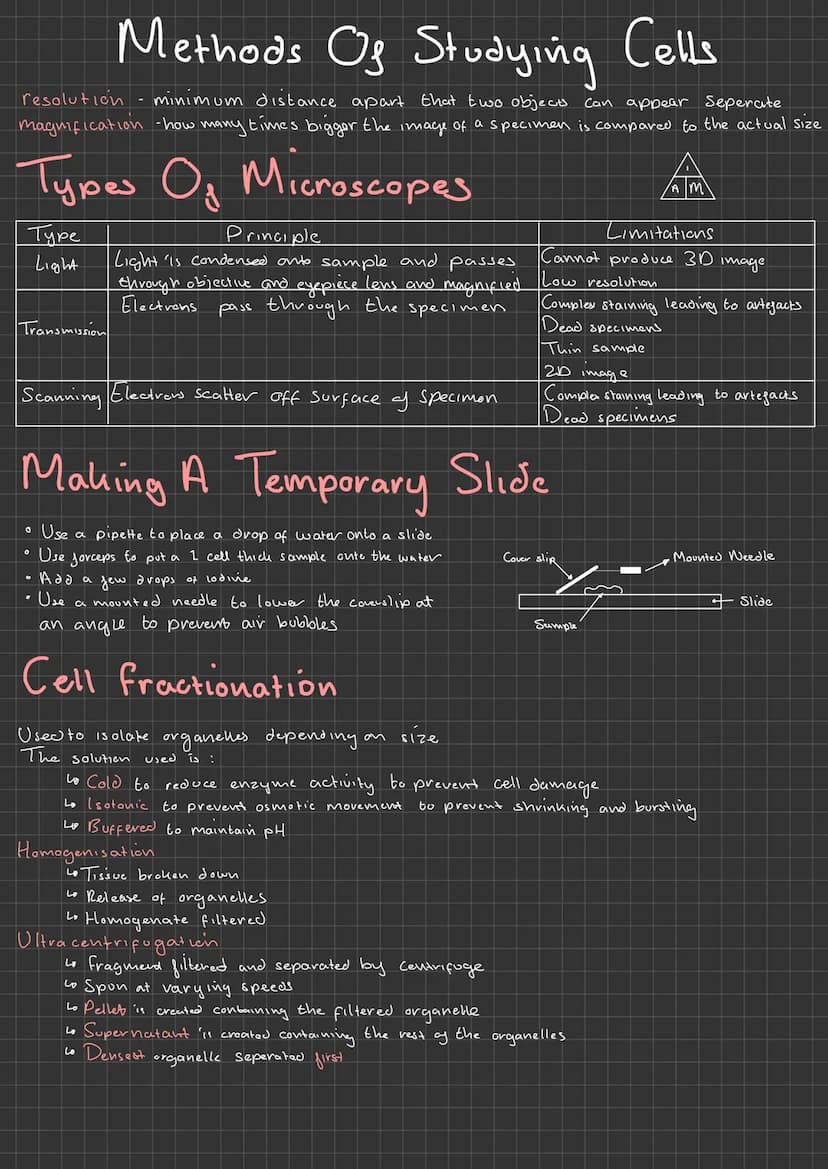
Page 4: Methods of Studying Cells
This page details various microscopy techniques and cell study methods.
Definition: Resolution is the minimum distance at which two objects can appear separate under microscopic observation.
Example: Cell fractionation involves homogenization and ultracentrifugation to isolate specific organelles.
Highlight: Different types of microscopes (Light, Transmission, Scanning) offer various advantages and limitations in cell study.
4
of 10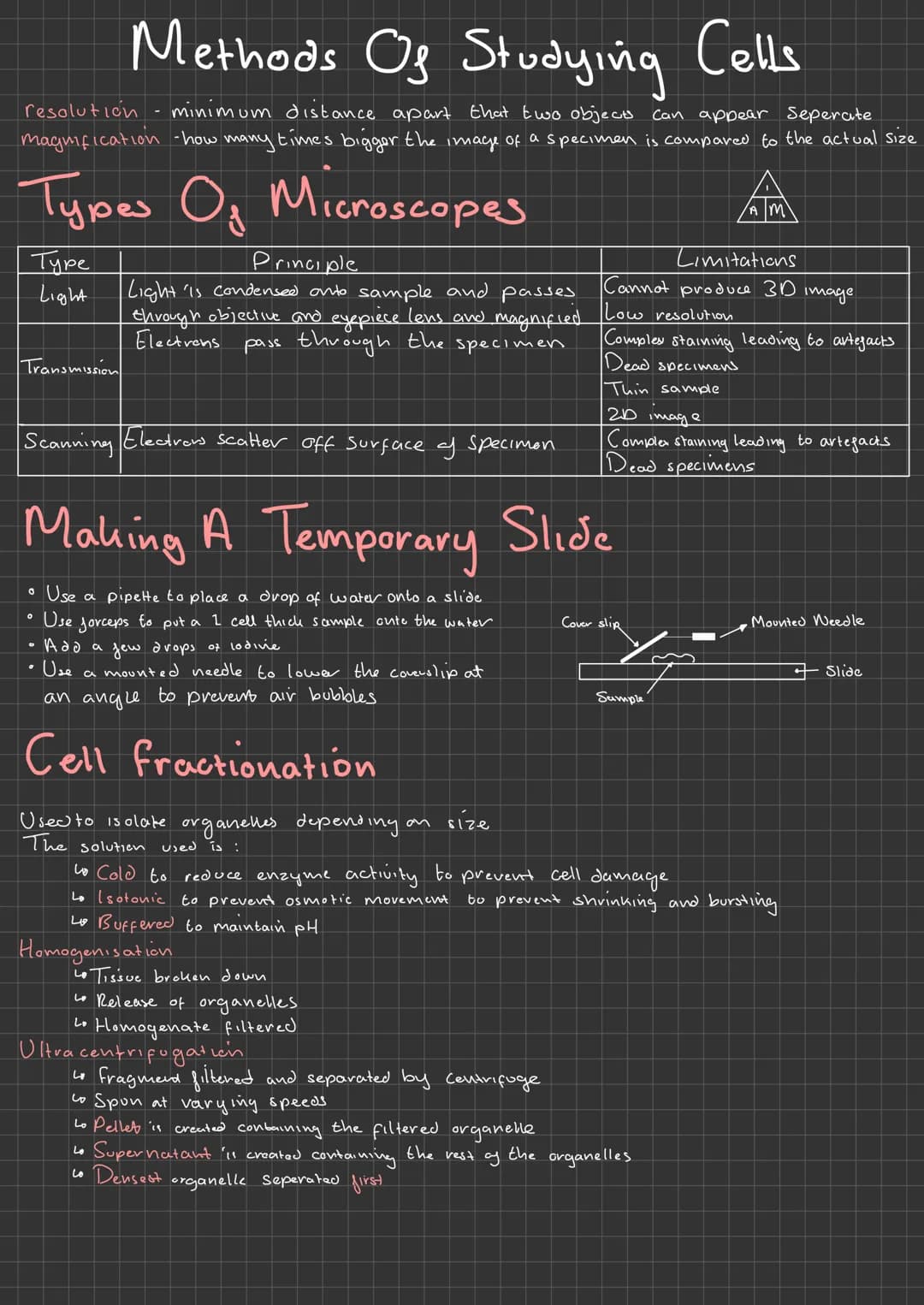
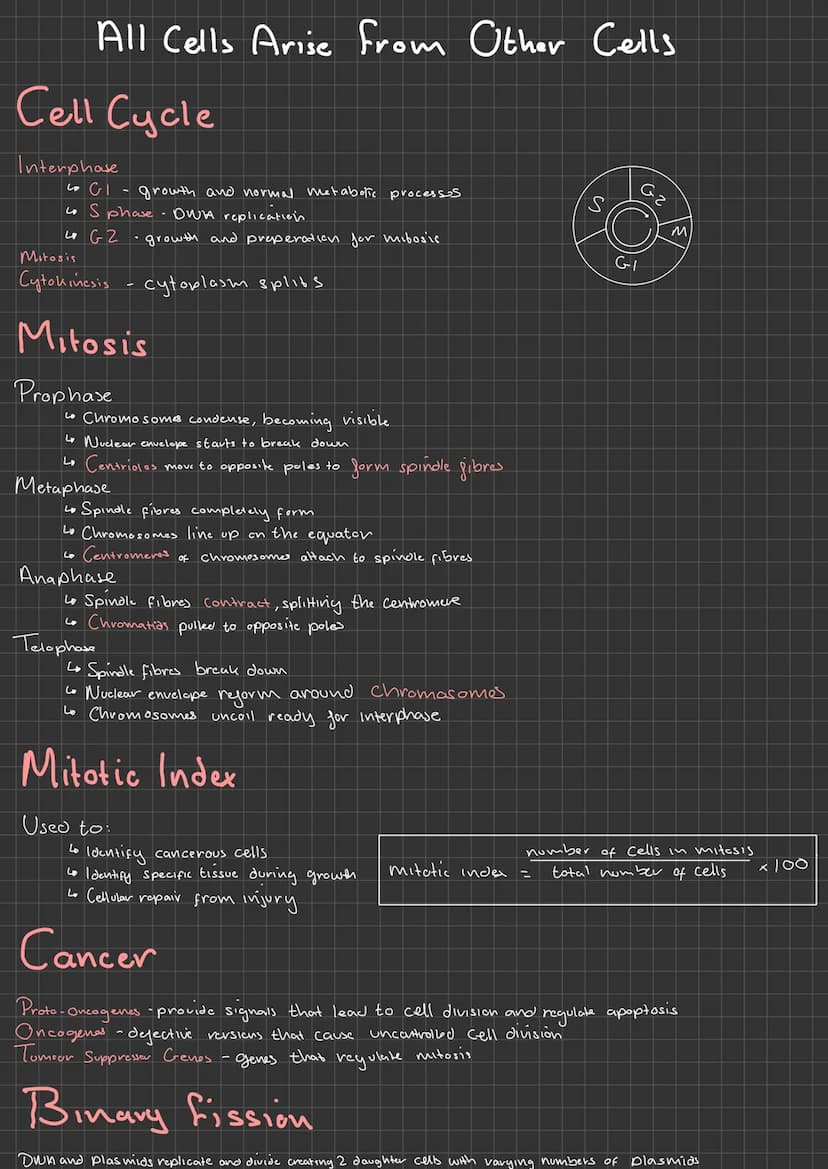
Page 5: Cell Division and Reproduction
The final page introduces the concept that all cells arise from pre-existing cells.
Quote: "All Cells Arise from Other Cells"
This fundamental principle underlies cellular reproduction and division processes.
5
of 10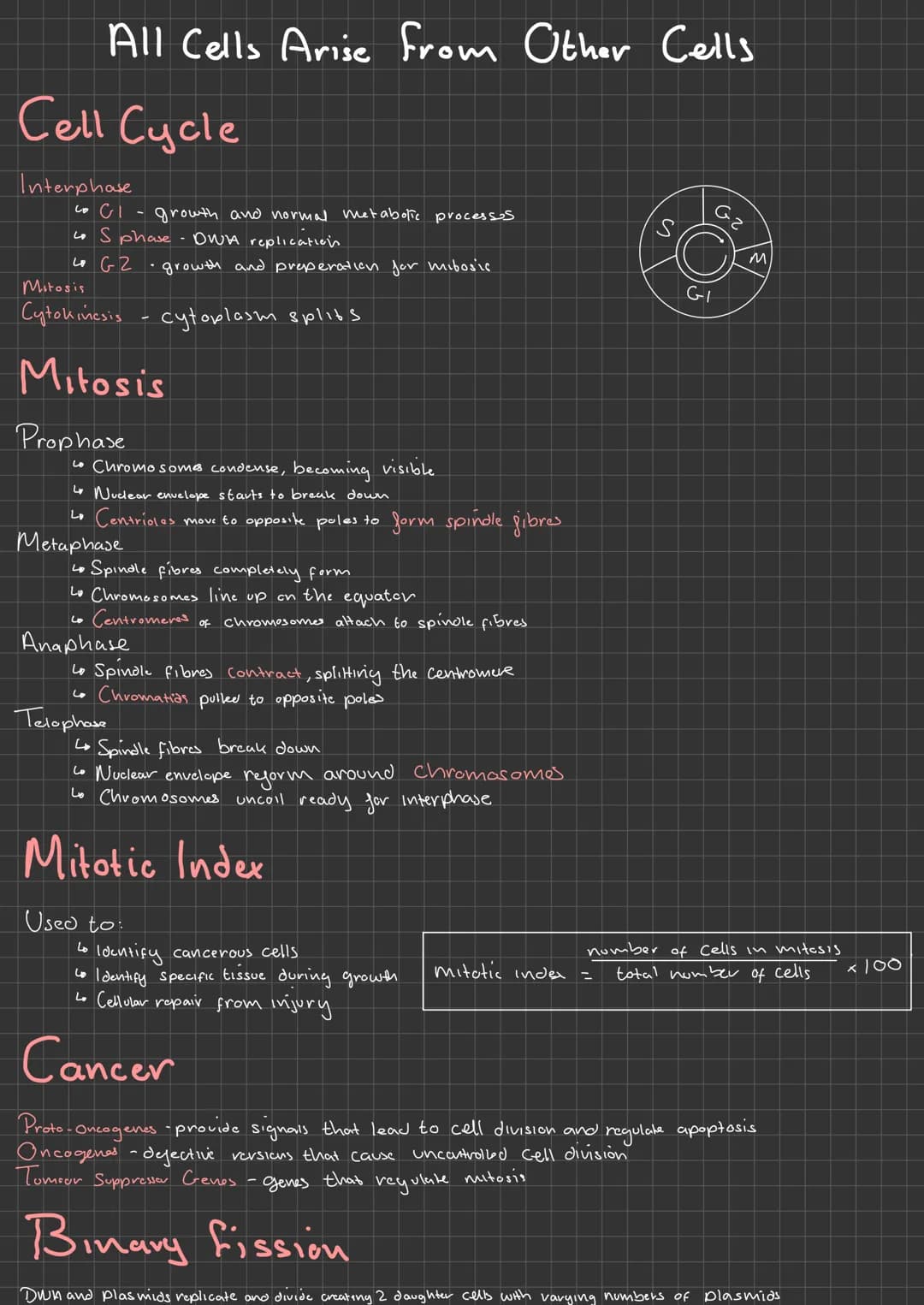
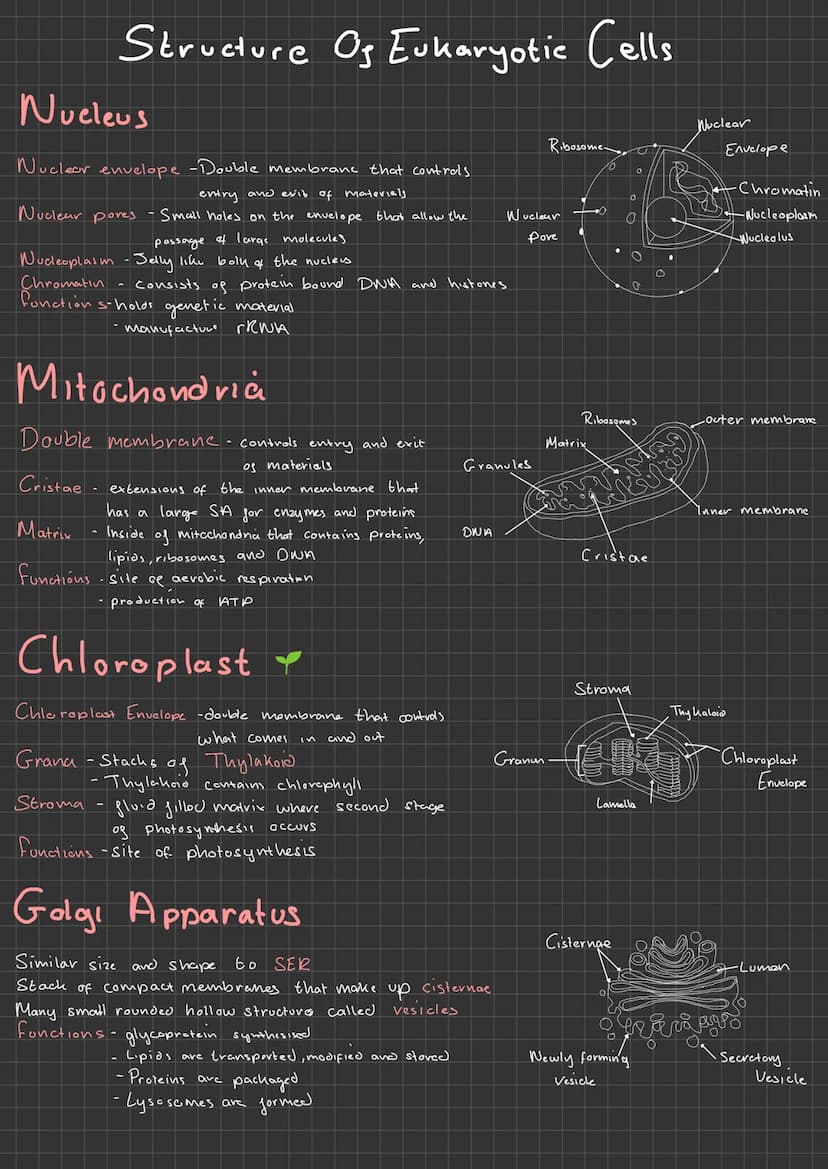
Page 1: Structure of Eukaryotic Cells
The first page introduces fundamental cellular structures with detailed diagrams of key organelles. The structure of nucleus and other major organelles are thoroughly explained.
Definition: The nuclear envelope is a double membrane structure that regulates material transport in and out of the nucleus through nuclear pores.
Highlight: The Mitochondria double membrane structure plays a crucial role in cellular respiration and ATP production.
Vocabulary: Nucleoplasm - The gel-like substance within the nucleus containing DNA and proteins.
The page details the Chloroplast envelope double membrane function and structure, including:
- Grana (stacked thylakoids)
- Stroma
- Chlorophyll-containing thylakoids
6
of 10
7
of 10
8
of 10
9
of 10
10
of 10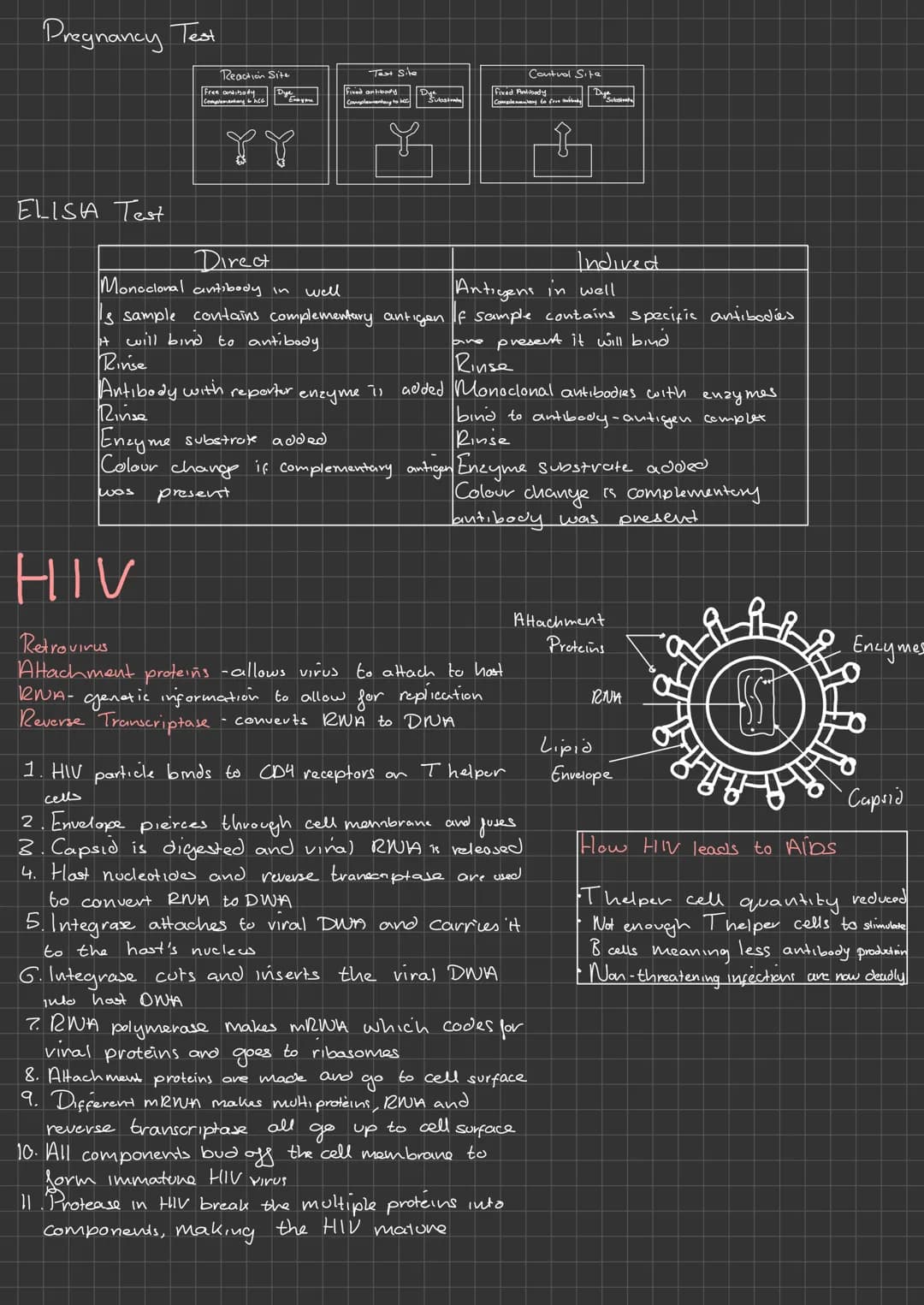
We thought you’d never ask...
What is the Knowunity AI companion?
Our AI Companion is a student-focused AI tool that offers more than just answers. Built on millions of Knowunity resources, it provides relevant information, personalised study plans, quizzes, and content directly in the chat, adapting to your individual learning journey.
Where can I download the Knowunity app?
You can download the app from Google Play Store and Apple App Store.
Is Knowunity really free of charge?
That's right! Enjoy free access to study content, connect with fellow students, and get instant help – all at your fingertips.
Similar content
Most popular content: Antibodies
6Most popular content in Biology
9Most popular content
9Can't find what you're looking for? Explore other subjects.
Students love us — and so will you.
4.6/5App Store
4.7/5Google Play
The app is very easy to use and well designed. I have found everything I was looking for so far and have been able to learn a lot from the presentations! I will definitely use the app for a class assignment! And of course it also helps a lot as an inspiration.
Stefan SiOS user
This app is really great. There are so many study notes and help [...]. My problem subject is French, for example, and the app has so many options for help. Thanks to this app, I have improved my French. I would recommend it to anyone.
Samantha KlichAndroid user
Wow, I am really amazed. I just tried the app because I've seen it advertised many times and was absolutely stunned. This app is THE HELP you want for school and above all, it offers so many things, such as workouts and fact sheets, which have been VERY helpful to me personally.
AnnaiOS user
Biology330 views·Updated Jun 7, 2026·10 pagesUnderstanding the Structure and Function of Eukaryotic Cells
Poppy Agg@p.agg
The cell structure and function in eukaryotic organisms, focusing on key organelles and their roles in cellular processes. The document covers detailed information about cellular components, microscopy techniques, and comparisons between different cell types.
Key points:
- Detailed examination of eukaryotic... Show more
1
of 10Sign up to see the content. It's free!
- Access to all documents
- Improve your grades
- Join milions of students
Page 2: Cellular Components and Organelles
This page focuses on the endoplasmic reticulum, lysosomes, ribosomes, and vacuoles.
Definition: Rough Endoplasmic Reticulum (RER) is an elaborate 3D system of membranes with attached ribosomes, specialized for protein synthesis.
Example: The cell wall contains microfibrils of cellulose arranged in a matrix, providing structural support while allowing water passage.
Highlight: Lysosomes contain digestive enzymes and play crucial roles in breaking down cellular components and dead cells.
2
of 10Sign up to see the content. It's free!
- Access to all documents
- Improve your grades
- Join milions of students
Page 3: Prokaryotic and Virus Structure
This section compares prokaryotic cells with viruses, highlighting their unique characteristics.
Definition: Prokaryotic cells lack membrane-bound organelles and a true nucleus.
Vocabulary: Capsid - A protein coat that encloses viral nucleic acids.
Highlight: Viral attachment proteins are complementary to host cell receptors, enabling specific host recognition.
3
of 10Sign up to see the content. It's free!
- Access to all documents
- Improve your grades
- Join milions of students
Page 4: Methods of Studying Cells
This page details various microscopy techniques and cell study methods.
Definition: Resolution is the minimum distance at which two objects can appear separate under microscopic observation.
Example: Cell fractionation involves homogenization and ultracentrifugation to isolate specific organelles.
Highlight: Different types of microscopes (Light, Transmission, Scanning) offer various advantages and limitations in cell study.
4
of 10Sign up to see the content. It's free!
- Access to all documents
- Improve your grades
- Join milions of students
Page 5: Cell Division and Reproduction
The final page introduces the concept that all cells arise from pre-existing cells.
Quote: "All Cells Arise from Other Cells"
This fundamental principle underlies cellular reproduction and division processes.
5
of 10Sign up to see the content. It's free!
- Access to all documents
- Improve your grades
- Join milions of students
Page 1: Structure of Eukaryotic Cells
The first page introduces fundamental cellular structures with detailed diagrams of key organelles. The structure of nucleus and other major organelles are thoroughly explained.
Definition: The nuclear envelope is a double membrane structure that regulates material transport in and out of the nucleus through nuclear pores.
Highlight: The Mitochondria double membrane structure plays a crucial role in cellular respiration and ATP production.
Vocabulary: Nucleoplasm - The gel-like substance within the nucleus containing DNA and proteins.
The page details the Chloroplast envelope double membrane function and structure, including:
- Grana (stacked thylakoids)
- Stroma
- Chlorophyll-containing thylakoids
6
of 10Sign up to see the content. It's free!
- Access to all documents
- Improve your grades
- Join milions of students
7
of 10Sign up to see the content. It's free!
- Access to all documents
- Improve your grades
- Join milions of students
8
of 10Sign up to see the content. It's free!
- Access to all documents
- Improve your grades
- Join milions of students
9
of 10Sign up to see the content. It's free!
- Access to all documents
- Improve your grades
- Join milions of students
10
of 10Sign up to see the content. It's free!
- Access to all documents
- Improve your grades
- Join milions of students
We thought you’d never ask...
What is the Knowunity AI companion?
Our AI Companion is a student-focused AI tool that offers more than just answers. Built on millions of Knowunity resources, it provides relevant information, personalised study plans, quizzes, and content directly in the chat, adapting to your individual learning journey.
Where can I download the Knowunity app?
You can download the app from Google Play Store and Apple App Store.
Is Knowunity really free of charge?
That's right! Enjoy free access to study content, connect with fellow students, and get instant help – all at your fingertips.
Similar content
Most popular content: Antibodies
6Most popular content in Biology
9Most popular content
9Can't find what you're looking for? Explore other subjects.
Students love us — and so will you.
4.6/5App Store
4.7/5Google Play
The app is very easy to use and well designed. I have found everything I was looking for so far and have been able to learn a lot from the presentations! I will definitely use the app for a class assignment! And of course it also helps a lot as an inspiration.
Stefan SiOS user
This app is really great. There are so many study notes and help [...]. My problem subject is French, for example, and the app has so many options for help. Thanks to this app, I have improved my French. I would recommend it to anyone.
Samantha KlichAndroid user
Wow, I am really amazed. I just tried the app because I've seen it advertised many times and was absolutely stunned. This app is THE HELP you want for school and above all, it offers so many things, such as workouts and fact sheets, which have been VERY helpful to me personally.
AnnaiOS user