
Ever wonder why some behaviours are considered criminal whilst others... Show more
 Sociology
 Psychology
 English Literature
 Biology
Sign up to see the contentIt's free!
Access to all documents
Improve your grades
Join milions of students
Knowunity AI
Subjects
Triangle Congruence and Similarity Theorems
Triangle Properties and Classification
Linear Equations and Graphs
Geometric Angle Relationships
Trigonometric Functions and Identities
Equation Solving Techniques
Circle Geometry Fundamentals
Division Operations and Methods
Basic Differentiation Rules
Exponent and Logarithm Properties
Show all topics
Human Organ Systems
Reproductive Cell Cycles
Biological Sciences Subdisciplines
Cellular Energy Metabolism
Autotrophic Energy Processes
Inheritance Patterns and Principles
Biomolecular Structure and Organization
Cell Cycle and Division Mechanics
Cellular Organization and Development
Biological Structural Organization
Show all topics
Chemical Sciences and Applications
Atomic Structure and Composition
Molecular Electron Structure Representation
Atomic Electron Behavior
Matter Properties and Water
Mole Concept and Calculations
Gas Laws and Behavior
Periodic Table Organization
Chemical Thermodynamics Fundamentals
Chemical Bond Types and Properties
Show all topics
European Renaissance and Enlightenment
European Cultural Movements 800-1920
American Revolution Era 1763-1797
American Civil War 1861-1865
Global Imperial Systems
Mongol and Chinese Dynasties
U.S. Presidents and World Leaders
Historical Sources and Documentation
World Wars Era and Impact
World Religious Systems
Show all topics
Classic and Contemporary Novels
Literary Character Analysis
Rhetorical Theory and Practice
Classic Literary Narratives
Reading Analysis and Interpretation
Narrative Structure and Techniques
English Language Components
Influential English-Language Authors
Basic Sentence Structure
Narrative Voice and Perspective
Show all topics
366
•
Updated May 11, 2026
•
Arthur Waters
@arthurwaters
Ever wonder why some behaviours are considered criminal whilst others... Show more
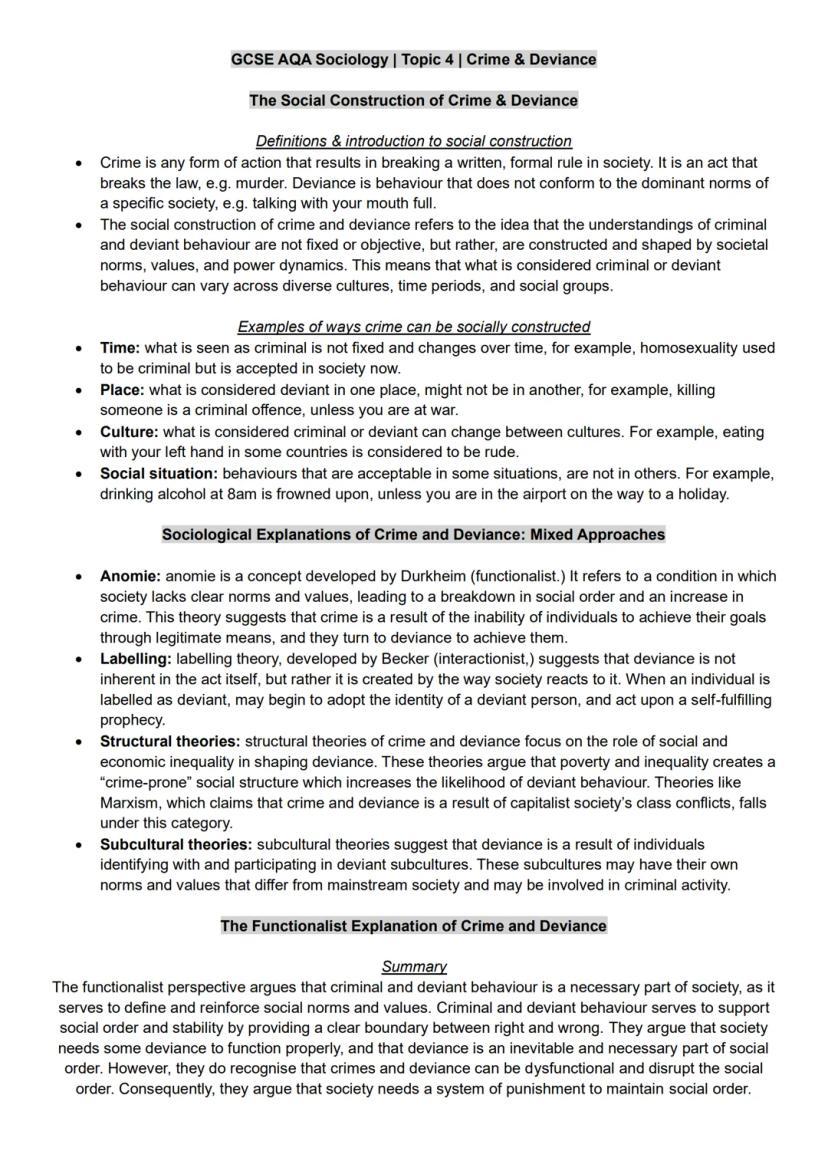
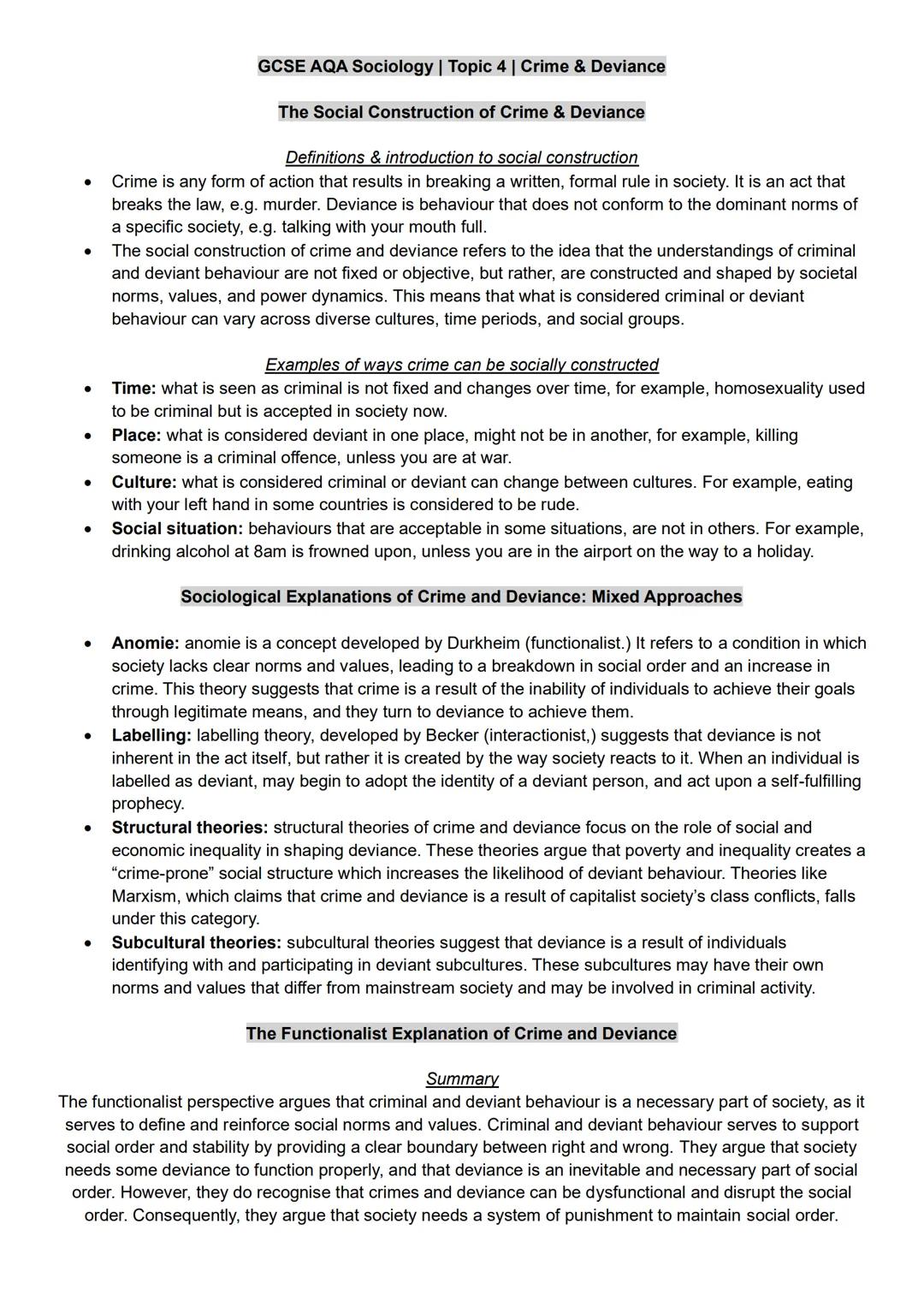
Here's something that might surprise you: what counts as crime and deviance isn't set in stone. Crime breaks written laws (like murder), whilst deviance goes against society's unwritten rules (like talking with your mouth full).
The key idea you need to grasp is social construction - this means society creates and shapes what we consider criminal or deviant behaviour. It's not fixed or natural, but changes based on culture, time, and power dynamics.
Think about how this works in practice. Homosexuality used to be illegal but is now accepted. Killing someone is murder unless you're at war. Drinking at 8am seems wrong unless you're at an airport heading on holiday. These examples show how context matters.
Remember: Crime and deviance are socially constructed, meaning they vary across time, place, culture, and situation.
Different sociologists explain crime in completely different ways, and you'll need to know the main approaches for your exams.
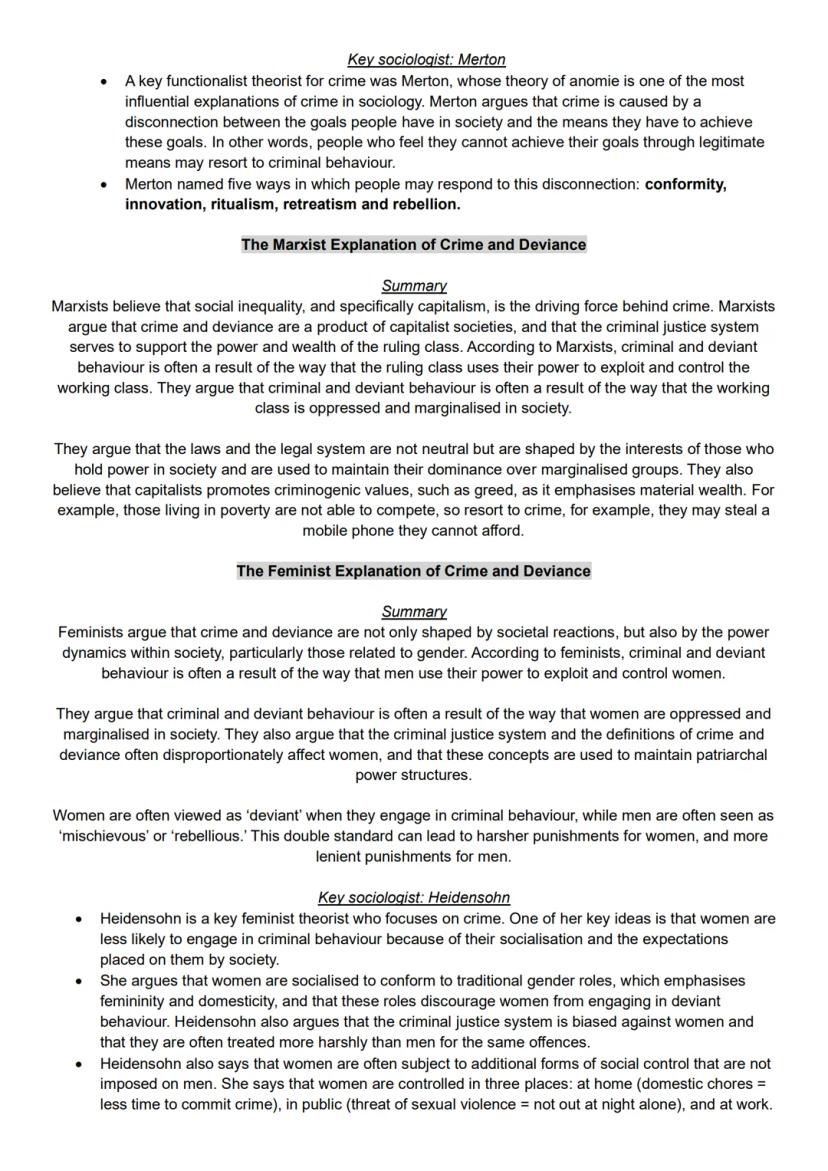
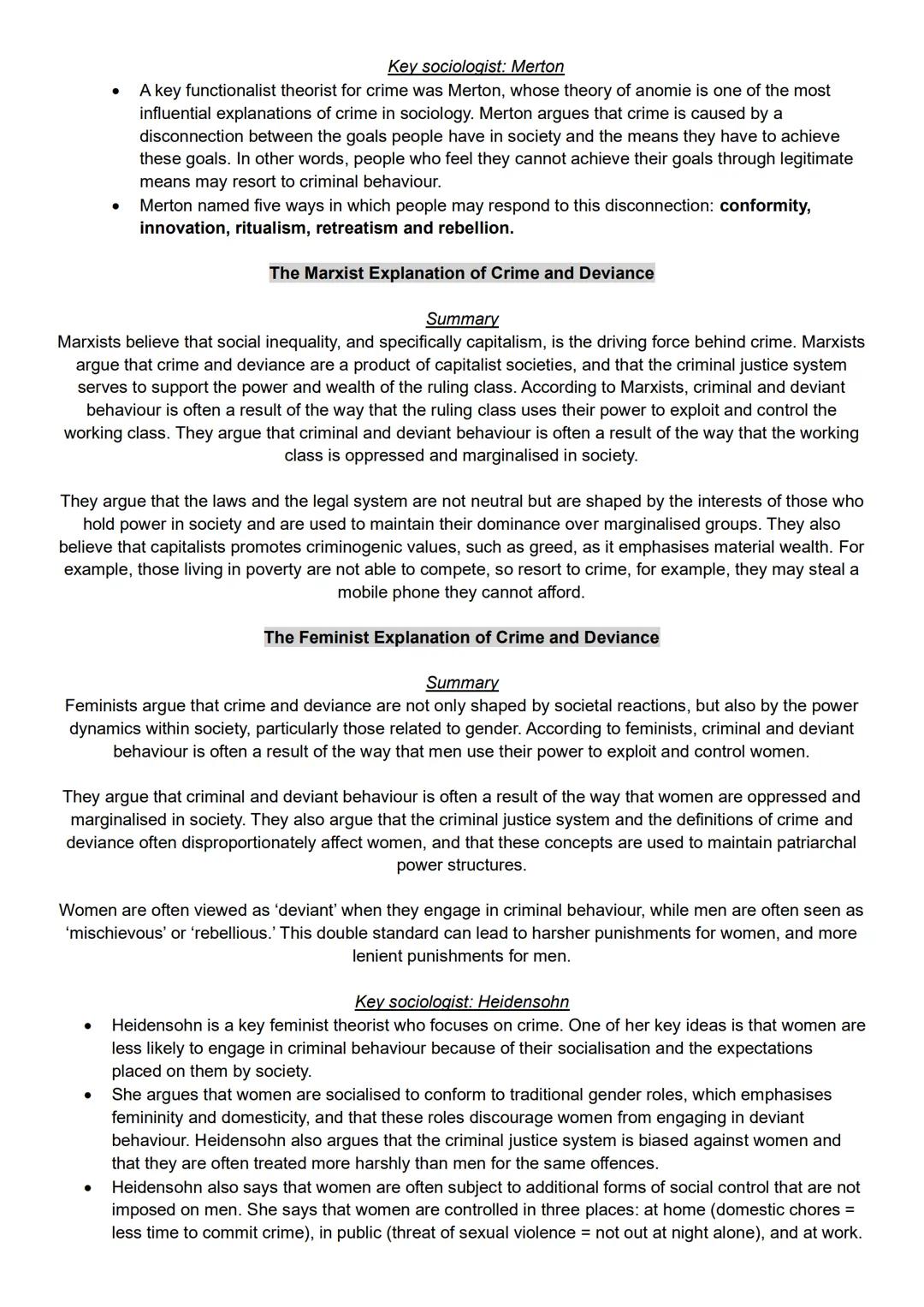
Functionalists like Durkheim focus on anomie - when society lacks clear rules, people turn to crime. Merton expanded this, arguing people commit crimes when they can't achieve society's goals through legitimate means. He identified five responses: conformity, innovation, ritualism, retreatism, and rebellion.
Marxists blame capitalism and inequality. They argue the ruling class creates laws that protect their interests whilst the working class turns to crime because they're exploited and marginalised. The legal system isn't neutral - it serves the wealthy.
Feminists like Heidensohn examine how gender shapes crime. Women commit fewer crimes because they're controlled more - at home through domestic duties, in public through fear of violence, and at work. When women do commit crimes, they're often judged more harshly than men.
Key Point: Each theory offers a different lens for understanding why crime happens - structural inequality, gender control, or social breakdown.
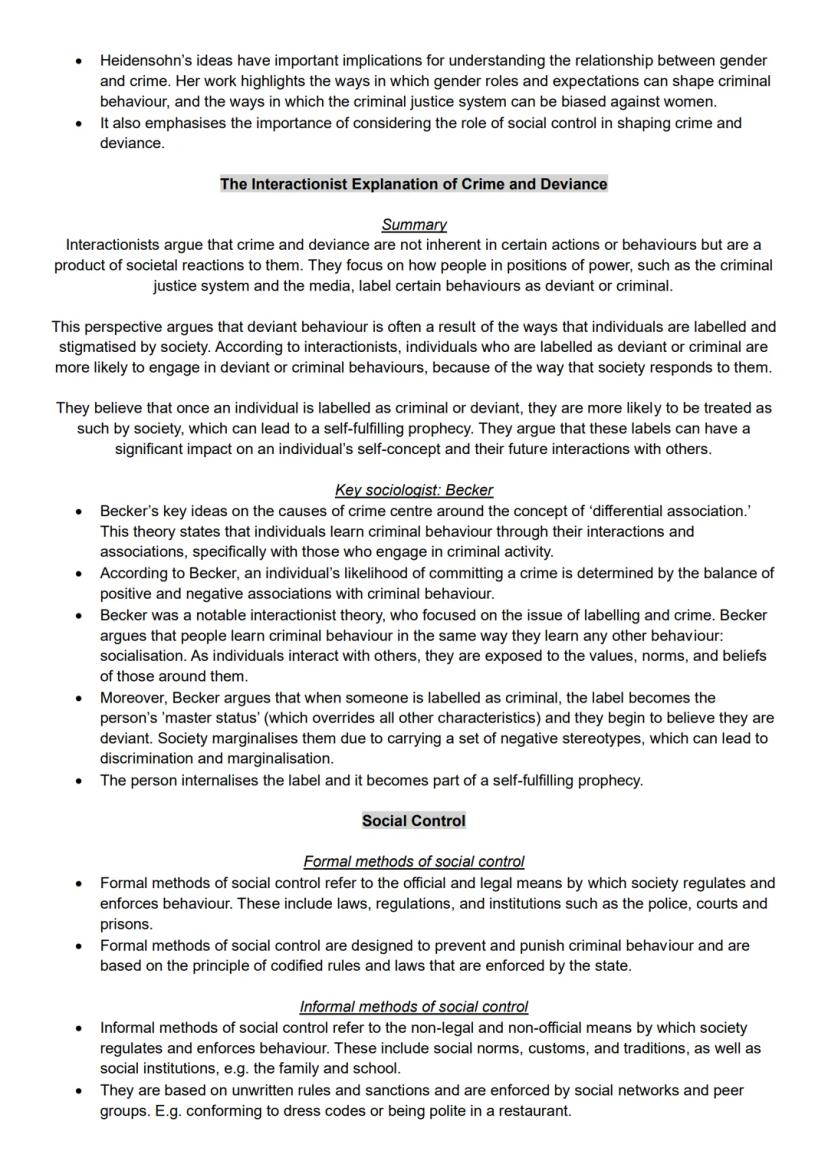
Interactionists have a completely different take - they argue crime isn't inherent in actions but created by society's reactions. This is where labelling theory comes in.
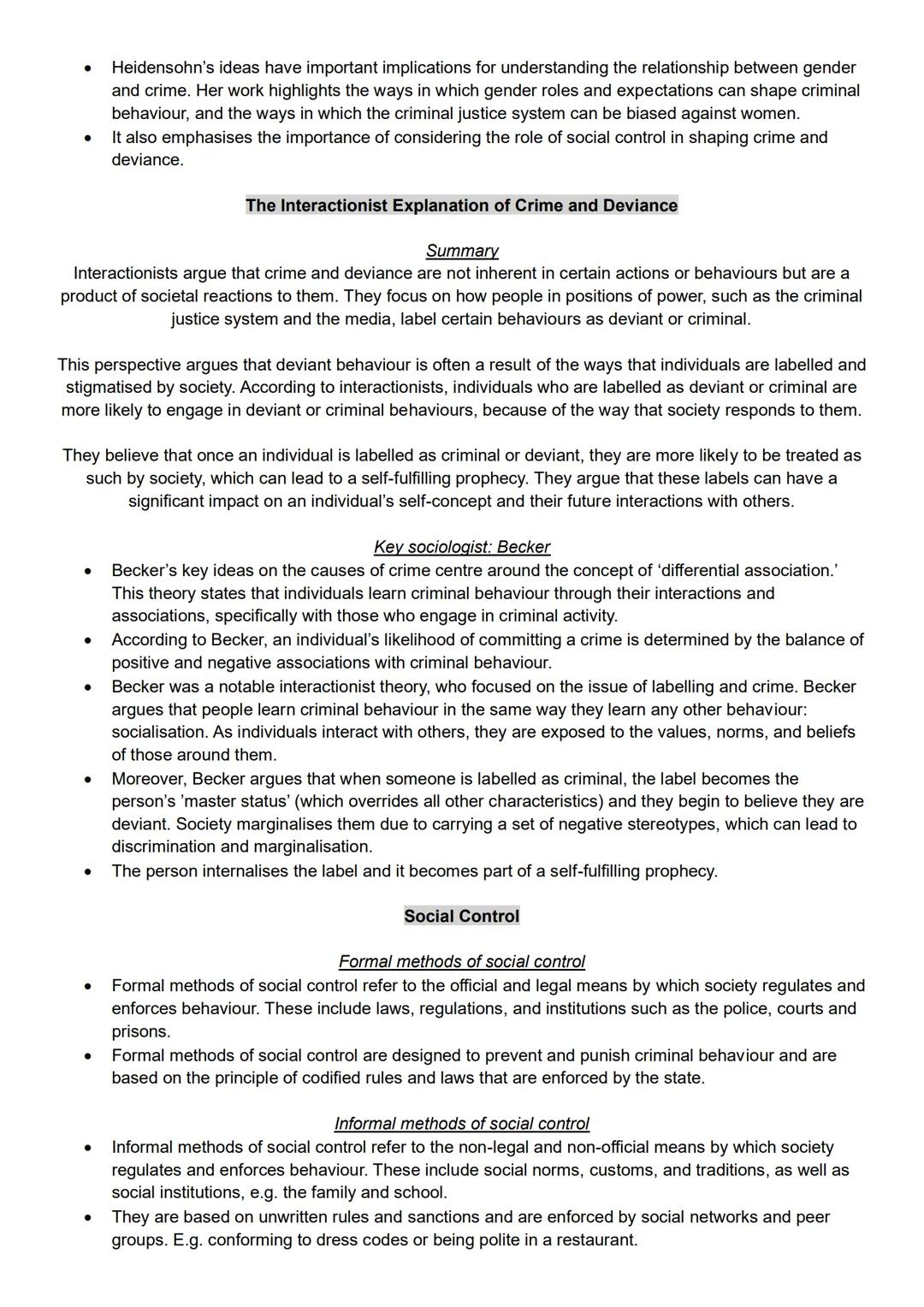
Becker's labelling theory suggests people learn criminal behaviour through socialisation, just like any other behaviour. More importantly, when someone gets labelled as criminal, this becomes their 'master status' - overriding everything else about them. Society treats them as deviant, which can become a self-fulfilling prophecy.
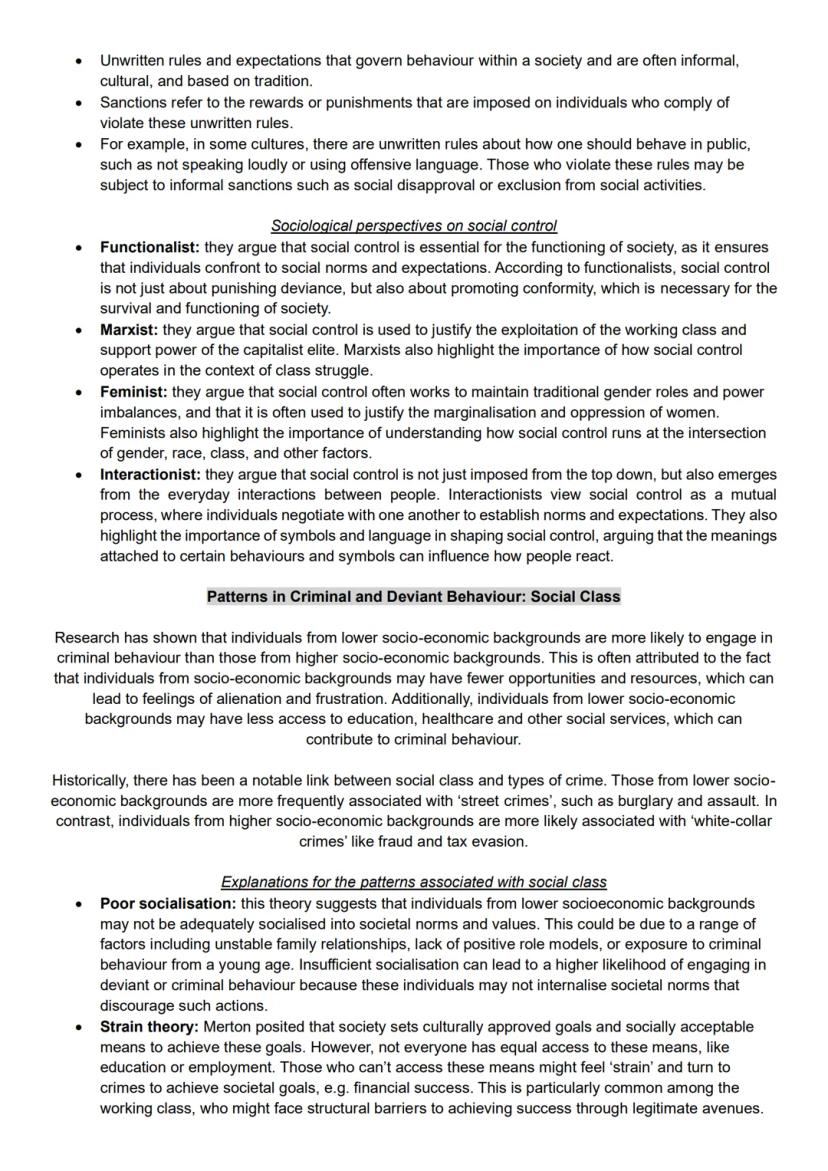
Understanding social control is equally important for your studies. Formal control includes police, courts, and prisons - the official stuff. Informal control covers family expectations, peer pressure, and social norms - the unwritten rules we follow daily.
Different perspectives view social control differently. Functionalists see it as necessary for society's stability. Marxists argue it maintains class inequality. Feminists highlight how it reinforces gender roles. Interactionists focus on how it emerges through everyday interactions.
Essential: Labelling can create more deviance - once someone's branded as criminal, society's treatment can push them further into crime.
You'll definitely get exam questions about who commits crime and why, so understanding these patterns is crucial for your grades.
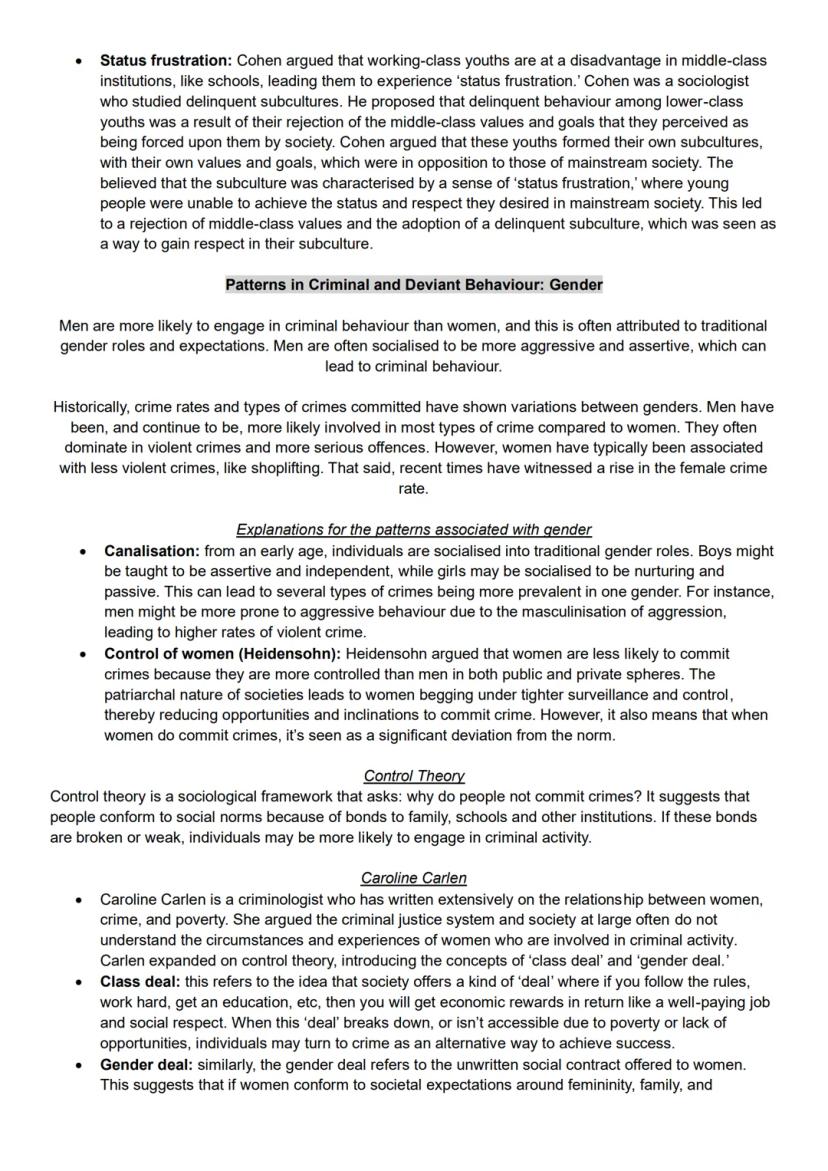
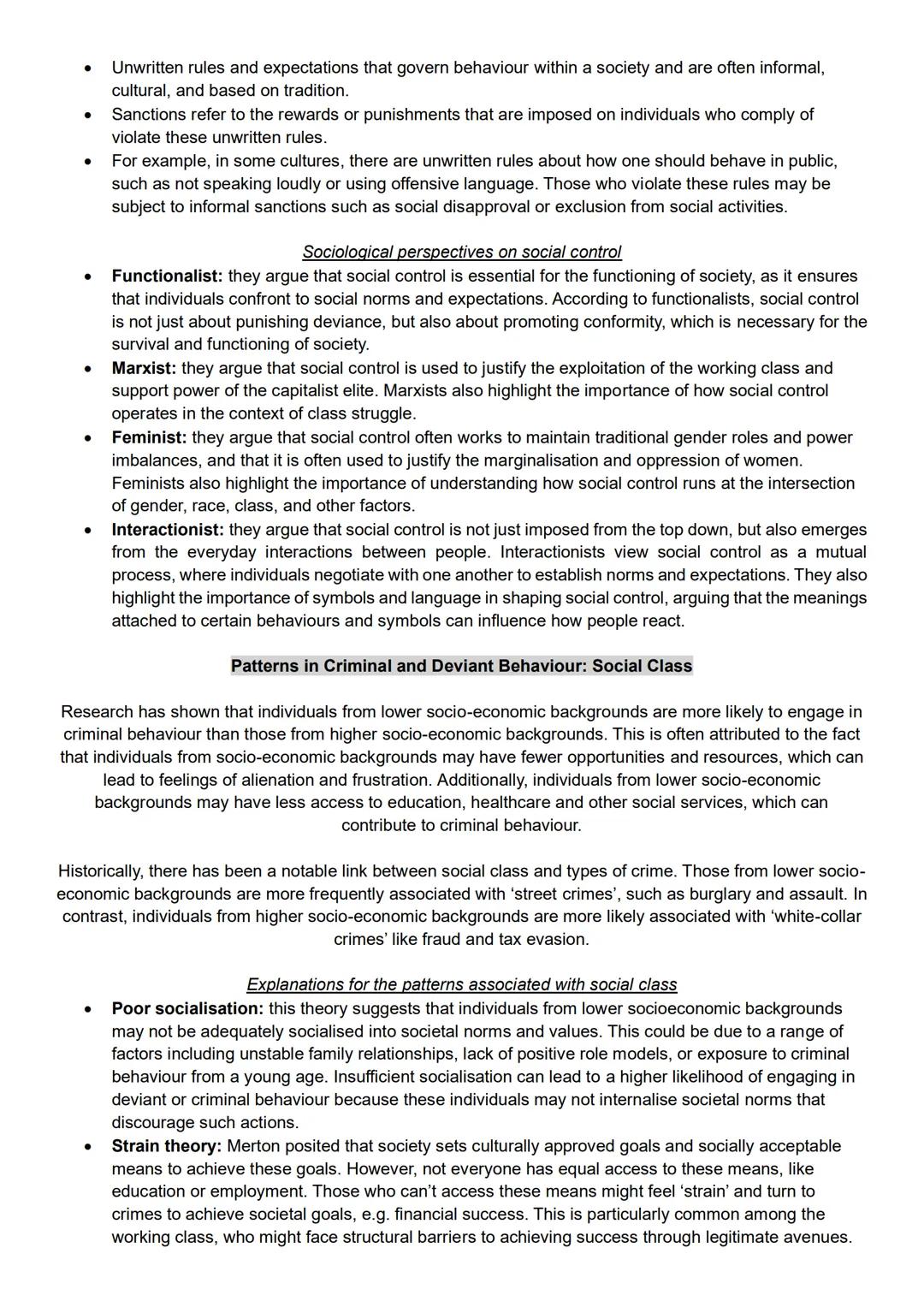
Social class strongly influences crime rates. People from lower socio-economic backgrounds are more likely to commit 'street crimes' like burglary, whilst those from higher backgrounds engage in 'white-collar crimes' like fraud and tax evasion.
Three key explanations help explain class patterns. Poor socialisation suggests working-class families might not teach mainstream values effectively. Strain theory (Merton again) argues people turn to crime when they can't achieve society's goals legitimately - think wanting expensive trainers but having no legal way to afford them.
Status frustration (Cohen's theory) explains why working-class youths form delinquent subcultures. When they fail in middle-class institutions like schools, they reject mainstream values and create their own alternative status systems where deviant behaviour gains respect.
Exam Tip: Remember that social class affects both the types of crime committed and how the criminal justice system responds to offenders.
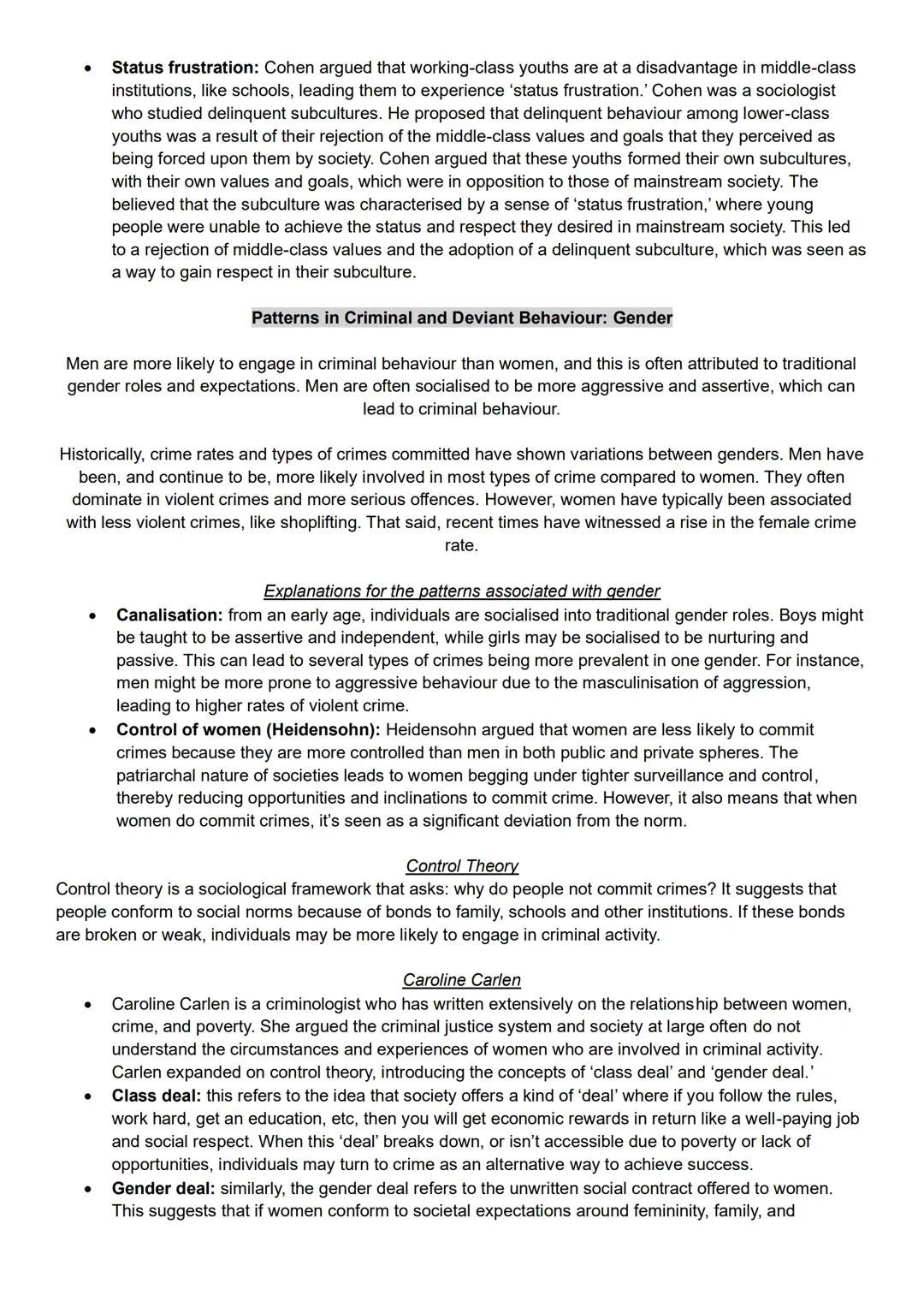
Gender creates fascinating patterns in crime that you need to understand for your exams. Men commit significantly more crimes than women, particularly violent offences, whilst women are more associated with shoplifting and less serious crimes.
Canalisation explains this through early socialisation - boys learn to be aggressive and independent, girls learn to be nurturing and passive. This shapes the types of crimes each gender might commit later.
Heidensohn's control theory argues women face tighter surveillance and control, reducing their opportunities for crime. However, recent decades have seen female crime rates rising, suggesting these traditional controls might be weakening.
Carlen's work introduces brilliant concepts you should remember. The 'class deal' suggests society promises economic rewards for following rules - when this breaks down, people turn to crime. The 'gender deal' offers women protection and privileges for conforming to feminine roles - when women find this unsatisfying, they may commit crimes.
Key Insight: Women's lower crime rates aren't natural but result from social control and different socialisation experiences.
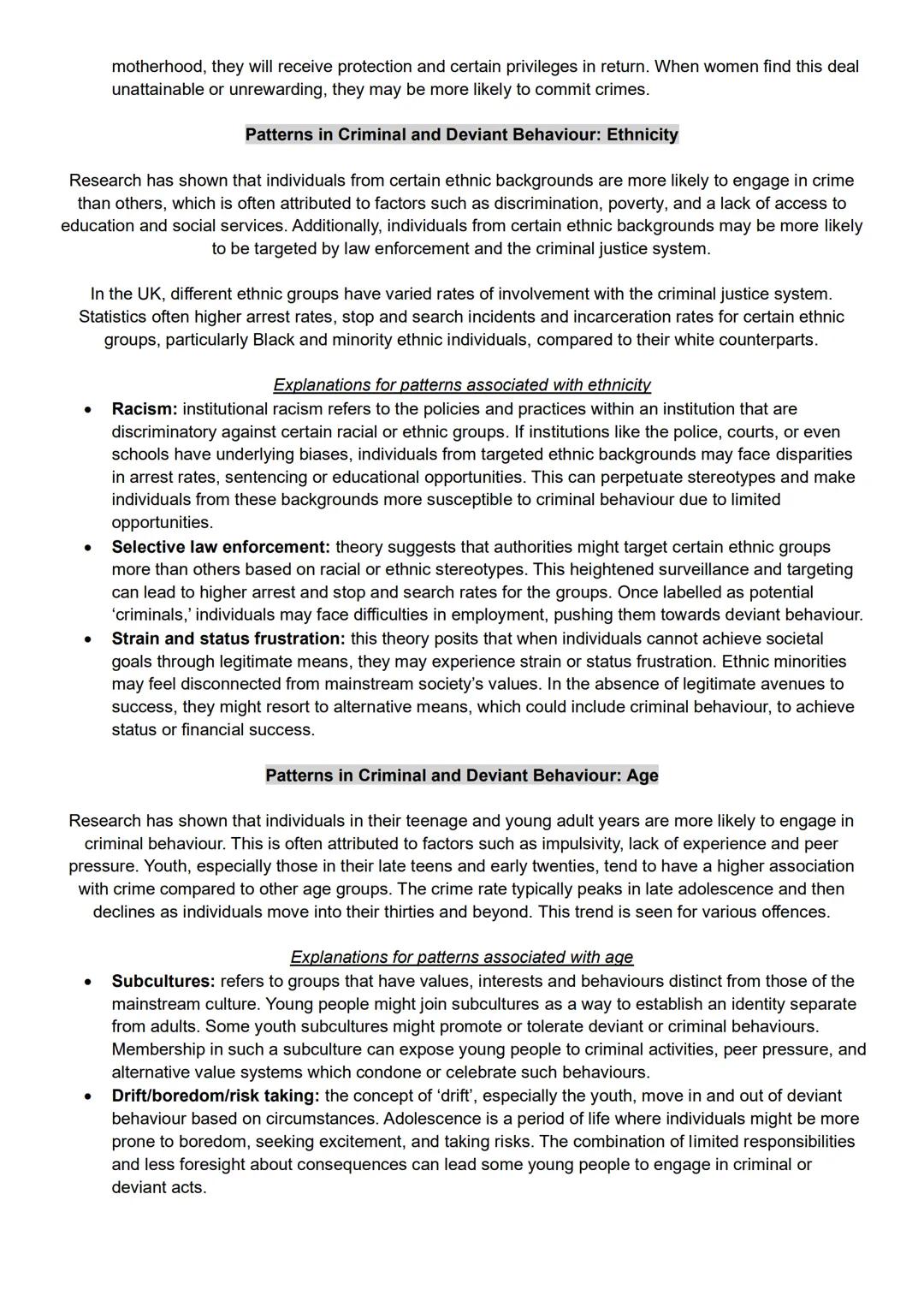
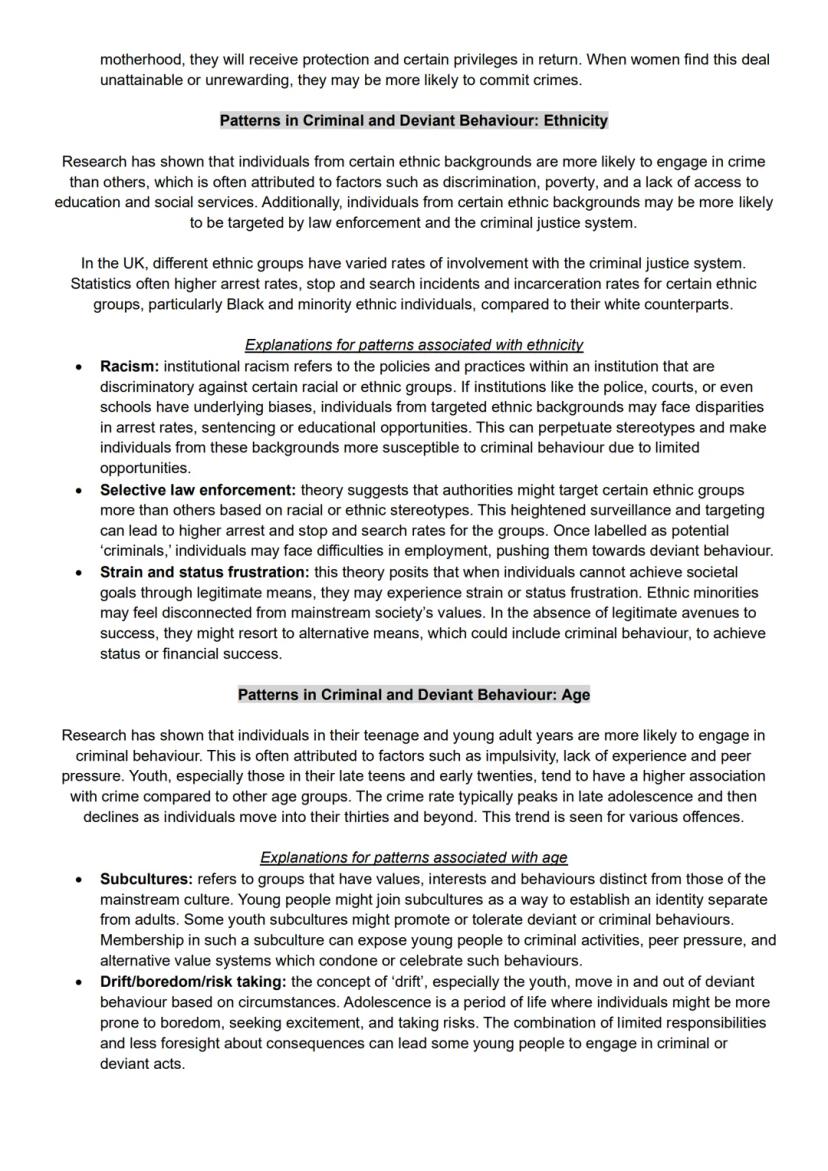
Ethnic patterns in crime statistics show concerning disparities that you need to understand critically. Certain ethnic groups, particularly Black and minority ethnic individuals, face higher arrest rates and stop-and-search incidents compared to white people.
Three explanations help understand this. Institutional racism means discriminatory practices within police and courts create unequal treatment. Selective law enforcement suggests authorities target certain ethnic groups based on stereotypes. Strain and status frustration occur when ethnic minorities feel disconnected from mainstream opportunities.
Age patterns are clearer - crime peaks in late adolescence and early twenties, then declines. Young people face unique pressures including peer influence, risk-taking behaviour, and identity formation.
Youth subcultures can promote deviant behaviour as young people seek identity separate from adults. The concept of 'drift' suggests teenagers move in and out of criminal behaviour based on circumstances, boredom, and excitement-seeking rather than committed criminal careers.
Critical Thinking: Always question whether higher crime statistics for certain groups reflect actual behaviour or biased policing and justice systems.
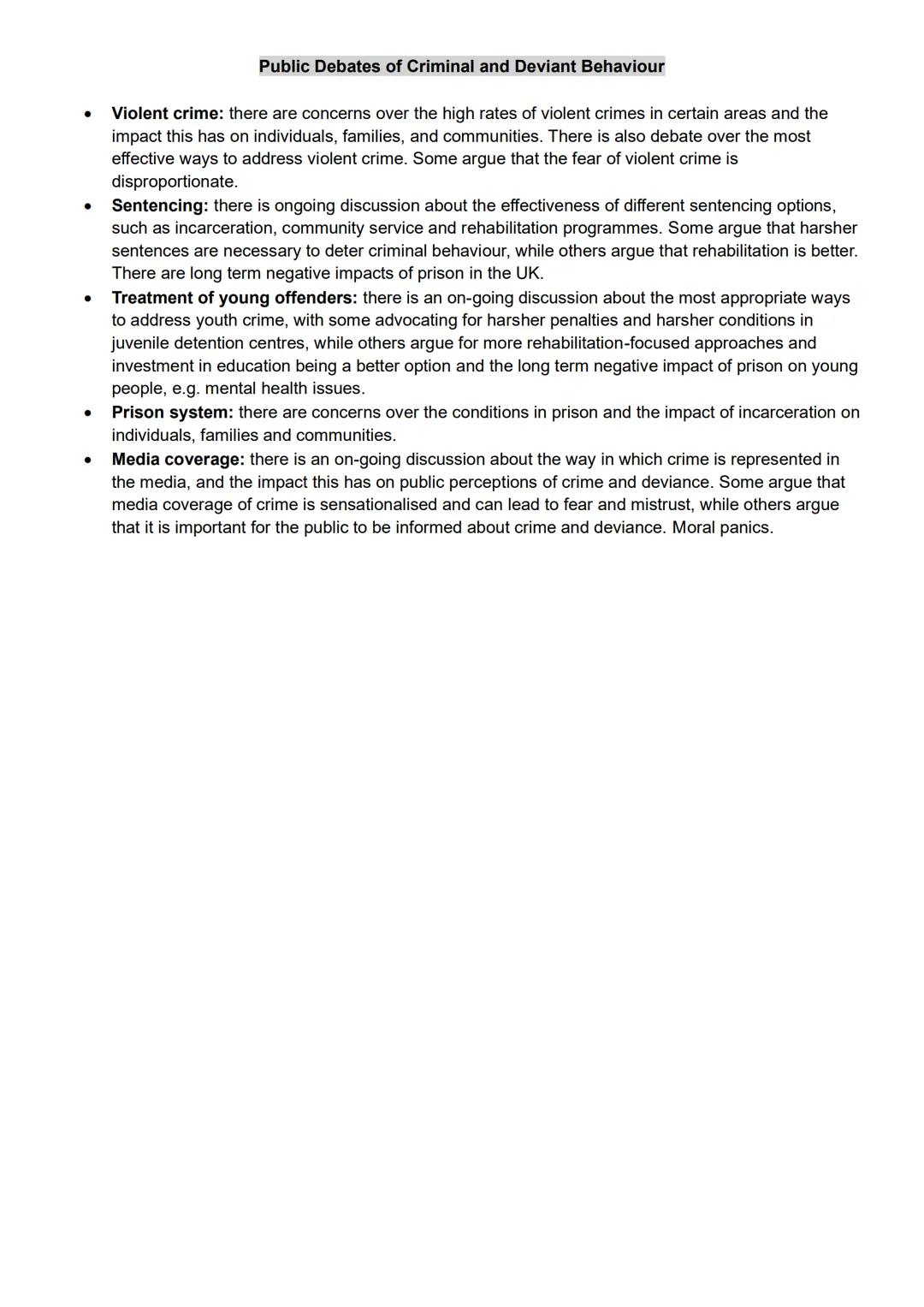
Understanding current debates about crime helps you analyse contemporary issues for top marks in your exams.
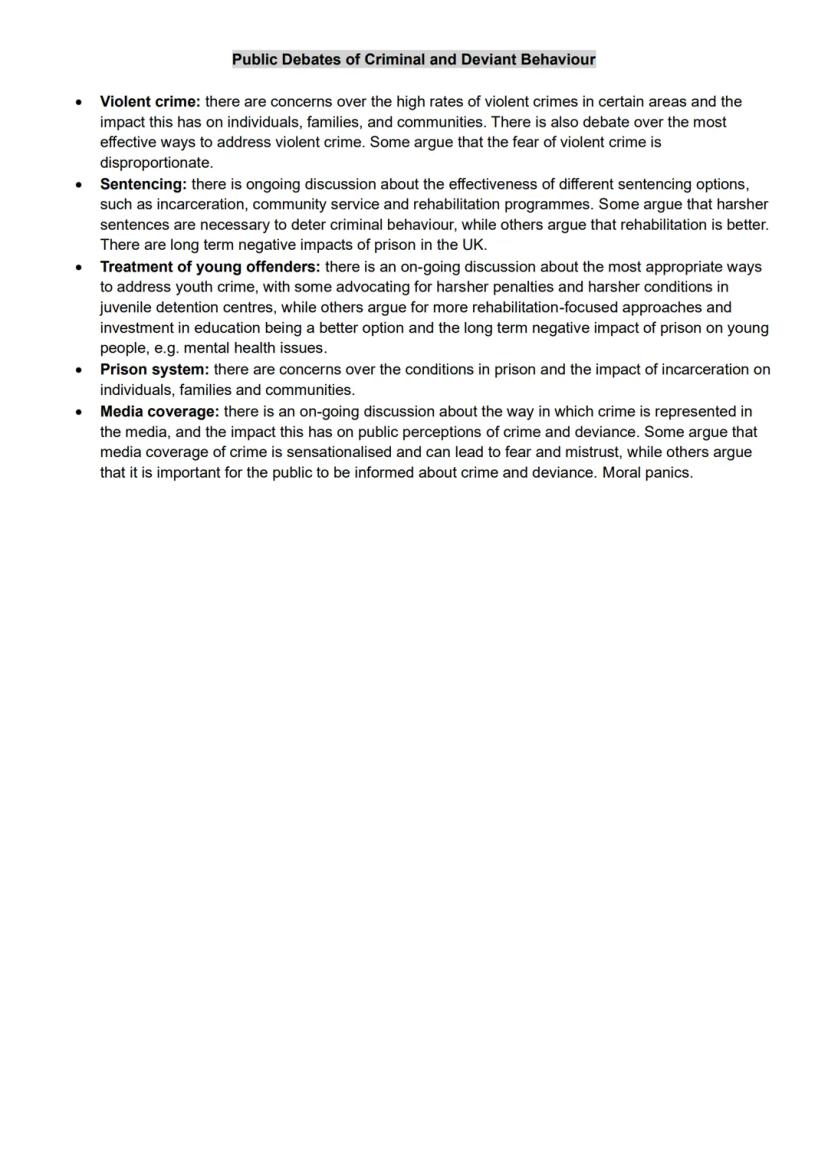
Violent crime generates significant concern, though some argue public fear exceeds actual risk. Sentencing debates divide people - should we focus on punishment and deterrence, or rehabilitation and addressing root causes?
Treatment of young offenders particularly matters. Some advocate harsher penalties whilst others argue for education and support, highlighting the long-term negative impacts of prison on young people's mental health and future prospects.
Media coverage significantly shapes public perceptions of crime. Sensationalised reporting can create moral panics - exaggerated fears about particular crimes or groups. This influences public opinion and potentially government policy, even when statistics don't support the panic.
The prison system faces ongoing criticism regarding conditions, effectiveness, and impact on families and communities. These debates reflect deeper questions about justice, rehabilitation, and social responsibility.
Media Literacy: Always consider how crime reporting might distort reality and influence public attitudes towards different social groups.
Our AI Companion is a student-focused AI tool that offers more than just answers. Built on millions of Knowunity resources, it provides relevant information, personalised study plans, quizzes, and content directly in the chat, adapting to your individual learning journey.
You can download the app from Google Play Store and Apple App Store.
That's right! Enjoy free access to study content, connect with fellow students, and get instant help – all at your fingertips.
App Store
Google Play
The app is very easy to use and well designed. I have found everything I was looking for so far and have been able to learn a lot from the presentations! I will definitely use the app for a class assignment! And of course it also helps a lot as an inspiration.
Stefan S
iOS user
This app is really great. There are so many study notes and help [...]. My problem subject is French, for example, and the app has so many options for help. Thanks to this app, I have improved my French. I would recommend it to anyone.
Samantha Klich
Android user
Wow, I am really amazed. I just tried the app because I've seen it advertised many times and was absolutely stunned. This app is THE HELP you want for school and above all, it offers so many things, such as workouts and fact sheets, which have been VERY helpful to me personally.
Anna
iOS user
Best app on earth! no words because it’s too good
Thomas R
iOS user
Just amazing. Let's me revise 10x better, this app is a quick 10/10. I highly recommend it to anyone. I can watch and search for notes. I can save them in the subject folder. I can revise it any time when I come back. If you haven't tried this app, you're really missing out.
Basil
Android user
This app has made me feel so much more confident in my exam prep, not only through boosting my own self confidence through the features that allow you to connect with others and feel less alone, but also through the way the app itself is centred around making you feel better. It is easy to navigate, fun to use, and helpful to anyone struggling in absolutely any way.
David K
iOS user
The app's just great! All I have to do is enter the topic in the search bar and I get the response real fast. I don't have to watch 10 YouTube videos to understand something, so I'm saving my time. Highly recommended!
Sudenaz Ocak
Android user
In school I was really bad at maths but thanks to the app, I am doing better now. I am so grateful that you made the app.
Greenlight Bonnie
Android user
very reliable app to help and grow your ideas of Maths, English and other related topics in your works. please use this app if your struggling in areas, this app is key for that. wish I'd of done a review before. and it's also free so don't worry about that.
Rohan U
Android user
I know a lot of apps use fake accounts to boost their reviews but this app deserves it all. Originally I was getting 4 in my English exams and this time I got a grade 7. I didn’t even know about this app three days until the exam and it has helped A LOT. Please actually trust me and use it as I’m sure you too will see developments.
Xander S
iOS user
THE QUIZES AND FLASHCARDS ARE SO USEFUL AND I LOVE Knowunity AI. IT ALSO IS LITREALLY LIKE CHATGPT BUT SMARTER!! HELPED ME WITH MY MASCARA PROBLEMS TOO!! AS WELL AS MY REAL SUBJECTS ! DUHHH 😍😁😲🤑💗✨🎀😮
Elisha
iOS user
This apps acc the goat. I find revision so boring but this app makes it so easy to organize it all and then you can ask the freeeee ai to test yourself so good and you can easily upload your own stuff. highly recommend as someone taking mocks now
Paul T
iOS user
The app is very easy to use and well designed. I have found everything I was looking for so far and have been able to learn a lot from the presentations! I will definitely use the app for a class assignment! And of course it also helps a lot as an inspiration.
Stefan S
iOS user
This app is really great. There are so many study notes and help [...]. My problem subject is French, for example, and the app has so many options for help. Thanks to this app, I have improved my French. I would recommend it to anyone.
Samantha Klich
Android user
Wow, I am really amazed. I just tried the app because I've seen it advertised many times and was absolutely stunned. This app is THE HELP you want for school and above all, it offers so many things, such as workouts and fact sheets, which have been VERY helpful to me personally.
Anna
iOS user
Best app on earth! no words because it’s too good
Thomas R
iOS user
Just amazing. Let's me revise 10x better, this app is a quick 10/10. I highly recommend it to anyone. I can watch and search for notes. I can save them in the subject folder. I can revise it any time when I come back. If you haven't tried this app, you're really missing out.
Basil
Android user
This app has made me feel so much more confident in my exam prep, not only through boosting my own self confidence through the features that allow you to connect with others and feel less alone, but also through the way the app itself is centred around making you feel better. It is easy to navigate, fun to use, and helpful to anyone struggling in absolutely any way.
David K
iOS user
The app's just great! All I have to do is enter the topic in the search bar and I get the response real fast. I don't have to watch 10 YouTube videos to understand something, so I'm saving my time. Highly recommended!
Sudenaz Ocak
Android user
In school I was really bad at maths but thanks to the app, I am doing better now. I am so grateful that you made the app.
Greenlight Bonnie
Android user
very reliable app to help and grow your ideas of Maths, English and other related topics in your works. please use this app if your struggling in areas, this app is key for that. wish I'd of done a review before. and it's also free so don't worry about that.
Rohan U
Android user
I know a lot of apps use fake accounts to boost their reviews but this app deserves it all. Originally I was getting 4 in my English exams and this time I got a grade 7. I didn’t even know about this app three days until the exam and it has helped A LOT. Please actually trust me and use it as I’m sure you too will see developments.
Xander S
iOS user
THE QUIZES AND FLASHCARDS ARE SO USEFUL AND I LOVE Knowunity AI. IT ALSO IS LITREALLY LIKE CHATGPT BUT SMARTER!! HELPED ME WITH MY MASCARA PROBLEMS TOO!! AS WELL AS MY REAL SUBJECTS ! DUHHH 😍😁😲🤑💗✨🎀😮
Elisha
iOS user
This apps acc the goat. I find revision so boring but this app makes it so easy to organize it all and then you can ask the freeeee ai to test yourself so good and you can easily upload your own stuff. highly recommend as someone taking mocks now
Paul T
iOS user
Arthur Waters
@arthurwaters
Ever wonder why some behaviours are considered criminal whilst others aren't? Crime and deviance aren't as straightforward as you might think - what's seen as wrong in one place or time might be perfectly normal in another. Understanding how society... Show more
Access to all documents
Improve your grades
Join milions of students
Here's something that might surprise you: what counts as crime and deviance isn't set in stone. Crime breaks written laws (like murder), whilst deviance goes against society's unwritten rules (like talking with your mouth full).
The key idea you need to grasp is social construction - this means society creates and shapes what we consider criminal or deviant behaviour. It's not fixed or natural, but changes based on culture, time, and power dynamics.
Think about how this works in practice. Homosexuality used to be illegal but is now accepted. Killing someone is murder unless you're at war. Drinking at 8am seems wrong unless you're at an airport heading on holiday. These examples show how context matters.
Remember: Crime and deviance are socially constructed, meaning they vary across time, place, culture, and situation.
Access to all documents
Improve your grades
Join milions of students
Different sociologists explain crime in completely different ways, and you'll need to know the main approaches for your exams.
Functionalists like Durkheim focus on anomie - when society lacks clear rules, people turn to crime. Merton expanded this, arguing people commit crimes when they can't achieve society's goals through legitimate means. He identified five responses: conformity, innovation, ritualism, retreatism, and rebellion.
Marxists blame capitalism and inequality. They argue the ruling class creates laws that protect their interests whilst the working class turns to crime because they're exploited and marginalised. The legal system isn't neutral - it serves the wealthy.
Feminists like Heidensohn examine how gender shapes crime. Women commit fewer crimes because they're controlled more - at home through domestic duties, in public through fear of violence, and at work. When women do commit crimes, they're often judged more harshly than men.
Key Point: Each theory offers a different lens for understanding why crime happens - structural inequality, gender control, or social breakdown.
Access to all documents
Improve your grades
Join milions of students
Interactionists have a completely different take - they argue crime isn't inherent in actions but created by society's reactions. This is where labelling theory comes in.
Becker's labelling theory suggests people learn criminal behaviour through socialisation, just like any other behaviour. More importantly, when someone gets labelled as criminal, this becomes their 'master status' - overriding everything else about them. Society treats them as deviant, which can become a self-fulfilling prophecy.
Understanding social control is equally important for your studies. Formal control includes police, courts, and prisons - the official stuff. Informal control covers family expectations, peer pressure, and social norms - the unwritten rules we follow daily.
Different perspectives view social control differently. Functionalists see it as necessary for society's stability. Marxists argue it maintains class inequality. Feminists highlight how it reinforces gender roles. Interactionists focus on how it emerges through everyday interactions.
Essential: Labelling can create more deviance - once someone's branded as criminal, society's treatment can push them further into crime.
Access to all documents
Improve your grades
Join milions of students
You'll definitely get exam questions about who commits crime and why, so understanding these patterns is crucial for your grades.
Social class strongly influences crime rates. People from lower socio-economic backgrounds are more likely to commit 'street crimes' like burglary, whilst those from higher backgrounds engage in 'white-collar crimes' like fraud and tax evasion.
Three key explanations help explain class patterns. Poor socialisation suggests working-class families might not teach mainstream values effectively. Strain theory (Merton again) argues people turn to crime when they can't achieve society's goals legitimately - think wanting expensive trainers but having no legal way to afford them.
Status frustration (Cohen's theory) explains why working-class youths form delinquent subcultures. When they fail in middle-class institutions like schools, they reject mainstream values and create their own alternative status systems where deviant behaviour gains respect.
Exam Tip: Remember that social class affects both the types of crime committed and how the criminal justice system responds to offenders.
Access to all documents
Improve your grades
Join milions of students
Gender creates fascinating patterns in crime that you need to understand for your exams. Men commit significantly more crimes than women, particularly violent offences, whilst women are more associated with shoplifting and less serious crimes.
Canalisation explains this through early socialisation - boys learn to be aggressive and independent, girls learn to be nurturing and passive. This shapes the types of crimes each gender might commit later.
Heidensohn's control theory argues women face tighter surveillance and control, reducing their opportunities for crime. However, recent decades have seen female crime rates rising, suggesting these traditional controls might be weakening.
Carlen's work introduces brilliant concepts you should remember. The 'class deal' suggests society promises economic rewards for following rules - when this breaks down, people turn to crime. The 'gender deal' offers women protection and privileges for conforming to feminine roles - when women find this unsatisfying, they may commit crimes.
Key Insight: Women's lower crime rates aren't natural but result from social control and different socialisation experiences.
Access to all documents
Improve your grades
Join milions of students
Ethnic patterns in crime statistics show concerning disparities that you need to understand critically. Certain ethnic groups, particularly Black and minority ethnic individuals, face higher arrest rates and stop-and-search incidents compared to white people.
Three explanations help understand this. Institutional racism means discriminatory practices within police and courts create unequal treatment. Selective law enforcement suggests authorities target certain ethnic groups based on stereotypes. Strain and status frustration occur when ethnic minorities feel disconnected from mainstream opportunities.
Age patterns are clearer - crime peaks in late adolescence and early twenties, then declines. Young people face unique pressures including peer influence, risk-taking behaviour, and identity formation.
Youth subcultures can promote deviant behaviour as young people seek identity separate from adults. The concept of 'drift' suggests teenagers move in and out of criminal behaviour based on circumstances, boredom, and excitement-seeking rather than committed criminal careers.
Critical Thinking: Always question whether higher crime statistics for certain groups reflect actual behaviour or biased policing and justice systems.
Access to all documents
Improve your grades
Join milions of students
Understanding current debates about crime helps you analyse contemporary issues for top marks in your exams.
Violent crime generates significant concern, though some argue public fear exceeds actual risk. Sentencing debates divide people - should we focus on punishment and deterrence, or rehabilitation and addressing root causes?
Treatment of young offenders particularly matters. Some advocate harsher penalties whilst others argue for education and support, highlighting the long-term negative impacts of prison on young people's mental health and future prospects.
Media coverage significantly shapes public perceptions of crime. Sensationalised reporting can create moral panics - exaggerated fears about particular crimes or groups. This influences public opinion and potentially government policy, even when statistics don't support the panic.
The prison system faces ongoing criticism regarding conditions, effectiveness, and impact on families and communities. These debates reflect deeper questions about justice, rehabilitation, and social responsibility.
Media Literacy: Always consider how crime reporting might distort reality and influence public attitudes towards different social groups.
Our AI Companion is a student-focused AI tool that offers more than just answers. Built on millions of Knowunity resources, it provides relevant information, personalised study plans, quizzes, and content directly in the chat, adapting to your individual learning journey.
You can download the app from Google Play Store and Apple App Store.
That's right! Enjoy free access to study content, connect with fellow students, and get instant help – all at your fingertips.
10
Smart Tools NEW
Transform this note into: ✓ 50+ Practice Questions ✓ Interactive Flashcards ✓ Full Mock Exam ✓ Essay Outlines
App Store
Google Play
The app is very easy to use and well designed. I have found everything I was looking for so far and have been able to learn a lot from the presentations! I will definitely use the app for a class assignment! And of course it also helps a lot as an inspiration.
Stefan S
iOS user
This app is really great. There are so many study notes and help [...]. My problem subject is French, for example, and the app has so many options for help. Thanks to this app, I have improved my French. I would recommend it to anyone.
Samantha Klich
Android user
Wow, I am really amazed. I just tried the app because I've seen it advertised many times and was absolutely stunned. This app is THE HELP you want for school and above all, it offers so many things, such as workouts and fact sheets, which have been VERY helpful to me personally.
Anna
iOS user
Best app on earth! no words because it’s too good
Thomas R
iOS user
Just amazing. Let's me revise 10x better, this app is a quick 10/10. I highly recommend it to anyone. I can watch and search for notes. I can save them in the subject folder. I can revise it any time when I come back. If you haven't tried this app, you're really missing out.
Basil
Android user
This app has made me feel so much more confident in my exam prep, not only through boosting my own self confidence through the features that allow you to connect with others and feel less alone, but also through the way the app itself is centred around making you feel better. It is easy to navigate, fun to use, and helpful to anyone struggling in absolutely any way.
David K
iOS user
The app's just great! All I have to do is enter the topic in the search bar and I get the response real fast. I don't have to watch 10 YouTube videos to understand something, so I'm saving my time. Highly recommended!
Sudenaz Ocak
Android user
In school I was really bad at maths but thanks to the app, I am doing better now. I am so grateful that you made the app.
Greenlight Bonnie
Android user
very reliable app to help and grow your ideas of Maths, English and other related topics in your works. please use this app if your struggling in areas, this app is key for that. wish I'd of done a review before. and it's also free so don't worry about that.
Rohan U
Android user
I know a lot of apps use fake accounts to boost their reviews but this app deserves it all. Originally I was getting 4 in my English exams and this time I got a grade 7. I didn’t even know about this app three days until the exam and it has helped A LOT. Please actually trust me and use it as I’m sure you too will see developments.
Xander S
iOS user
THE QUIZES AND FLASHCARDS ARE SO USEFUL AND I LOVE Knowunity AI. IT ALSO IS LITREALLY LIKE CHATGPT BUT SMARTER!! HELPED ME WITH MY MASCARA PROBLEMS TOO!! AS WELL AS MY REAL SUBJECTS ! DUHHH 😍😁😲🤑💗✨🎀😮
Elisha
iOS user
This apps acc the goat. I find revision so boring but this app makes it so easy to organize it all and then you can ask the freeeee ai to test yourself so good and you can easily upload your own stuff. highly recommend as someone taking mocks now
Paul T
iOS user
The app is very easy to use and well designed. I have found everything I was looking for so far and have been able to learn a lot from the presentations! I will definitely use the app for a class assignment! And of course it also helps a lot as an inspiration.
Stefan S
iOS user
This app is really great. There are so many study notes and help [...]. My problem subject is French, for example, and the app has so many options for help. Thanks to this app, I have improved my French. I would recommend it to anyone.
Samantha Klich
Android user
Wow, I am really amazed. I just tried the app because I've seen it advertised many times and was absolutely stunned. This app is THE HELP you want for school and above all, it offers so many things, such as workouts and fact sheets, which have been VERY helpful to me personally.
Anna
iOS user
Best app on earth! no words because it’s too good
Thomas R
iOS user
Just amazing. Let's me revise 10x better, this app is a quick 10/10. I highly recommend it to anyone. I can watch and search for notes. I can save them in the subject folder. I can revise it any time when I come back. If you haven't tried this app, you're really missing out.
Basil
Android user
This app has made me feel so much more confident in my exam prep, not only through boosting my own self confidence through the features that allow you to connect with others and feel less alone, but also through the way the app itself is centred around making you feel better. It is easy to navigate, fun to use, and helpful to anyone struggling in absolutely any way.
David K
iOS user
The app's just great! All I have to do is enter the topic in the search bar and I get the response real fast. I don't have to watch 10 YouTube videos to understand something, so I'm saving my time. Highly recommended!
Sudenaz Ocak
Android user
In school I was really bad at maths but thanks to the app, I am doing better now. I am so grateful that you made the app.
Greenlight Bonnie
Android user
very reliable app to help and grow your ideas of Maths, English and other related topics in your works. please use this app if your struggling in areas, this app is key for that. wish I'd of done a review before. and it's also free so don't worry about that.
Rohan U
Android user
I know a lot of apps use fake accounts to boost their reviews but this app deserves it all. Originally I was getting 4 in my English exams and this time I got a grade 7. I didn’t even know about this app three days until the exam and it has helped A LOT. Please actually trust me and use it as I’m sure you too will see developments.
Xander S
iOS user
THE QUIZES AND FLASHCARDS ARE SO USEFUL AND I LOVE Knowunity AI. IT ALSO IS LITREALLY LIKE CHATGPT BUT SMARTER!! HELPED ME WITH MY MASCARA PROBLEMS TOO!! AS WELL AS MY REAL SUBJECTS ! DUHHH 😍😁😲🤑💗✨🎀😮
Elisha
iOS user
This apps acc the goat. I find revision so boring but this app makes it so easy to organize it all and then you can ask the freeeee ai to test yourself so good and you can easily upload your own stuff. highly recommend as someone taking mocks now
Paul T
iOS user