Space Basics: Earth, Moon and Solar System
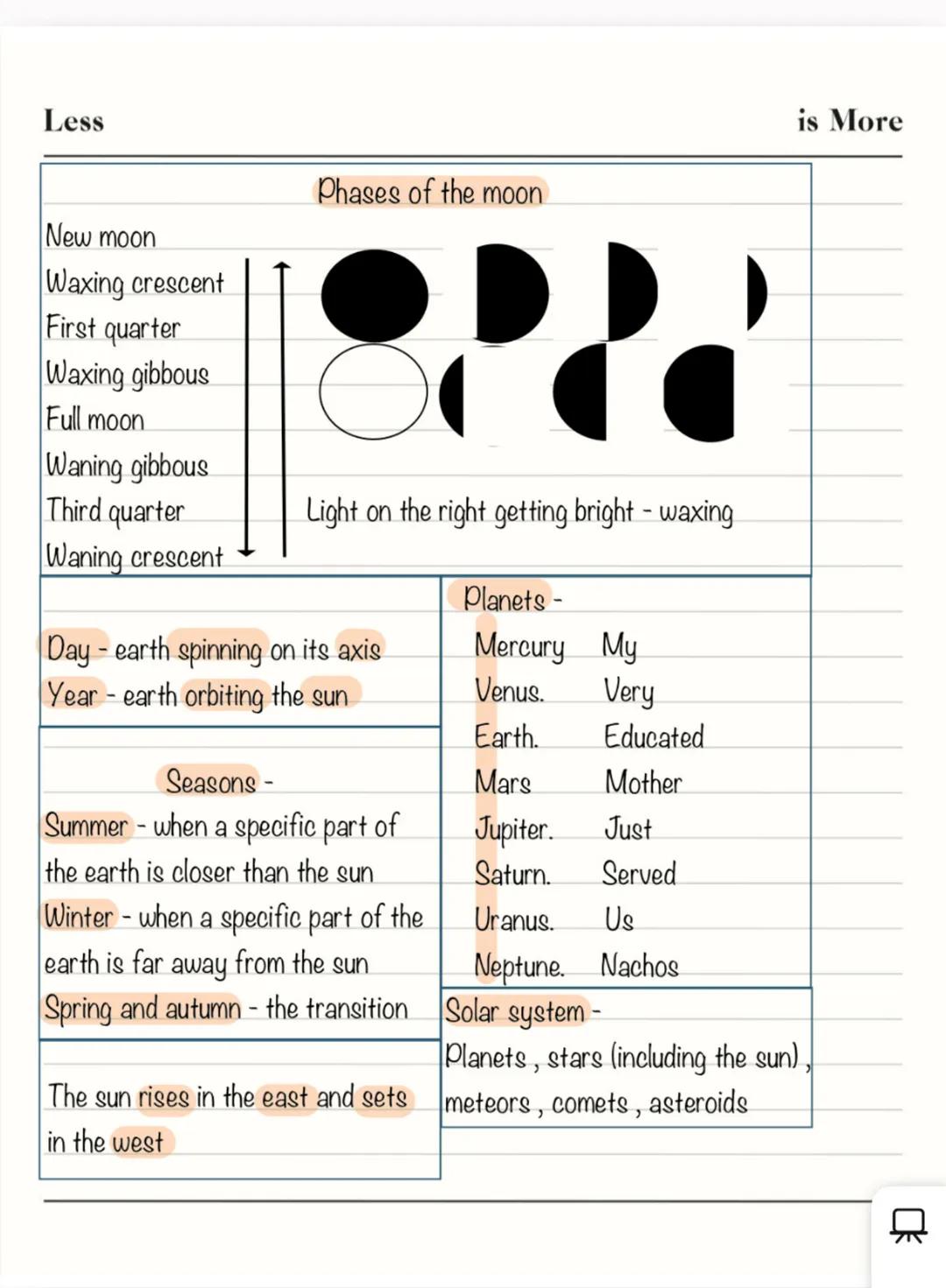
Ever wondered why we have day and night? It's because Earth spins on its axis like a spinning top - one complete spin takes 24 hours, giving us our daily cycle. Meanwhile, Earth is also travelling around the sun in a huge circle, which takes a whole year to complete.
The seasons happen because different parts of Earth get closer to or further from the sun during this yearly journey. Summer occurs when your part of Earth tilts towards the sun, whilst winter happens when you're tilted away. Spring and autumn are simply the transition periods between these extremes.
You'll always see the sun rise in the east and set in the west because of Earth's spinning direction. This reliable pattern has helped humans navigate for thousands of years.
Quick Tip: Remember that Earth does two things at once - spinning daily and orbiting yearly!
The moon phases follow a predictable cycle too. When you see light on the right side of the moon, it's waxing (getting brighter). The eight main phases are: new moon, waxing crescent, first quarter, waxing gibbous, full moon, waning gibbous, third quarter, and waning crescent.
Our solar system contains much more than just Earth and the moon. Remember the planets in order using this mnemonic: "My Very Educated Mother Just Served Us Nachos" - Mercury, Venus, Earth, Mars, Jupiter, Saturn, Uranus, Neptune. The solar system also includes stars (including our sun), meteors, comets, and asteroids.