Report Writing Structure
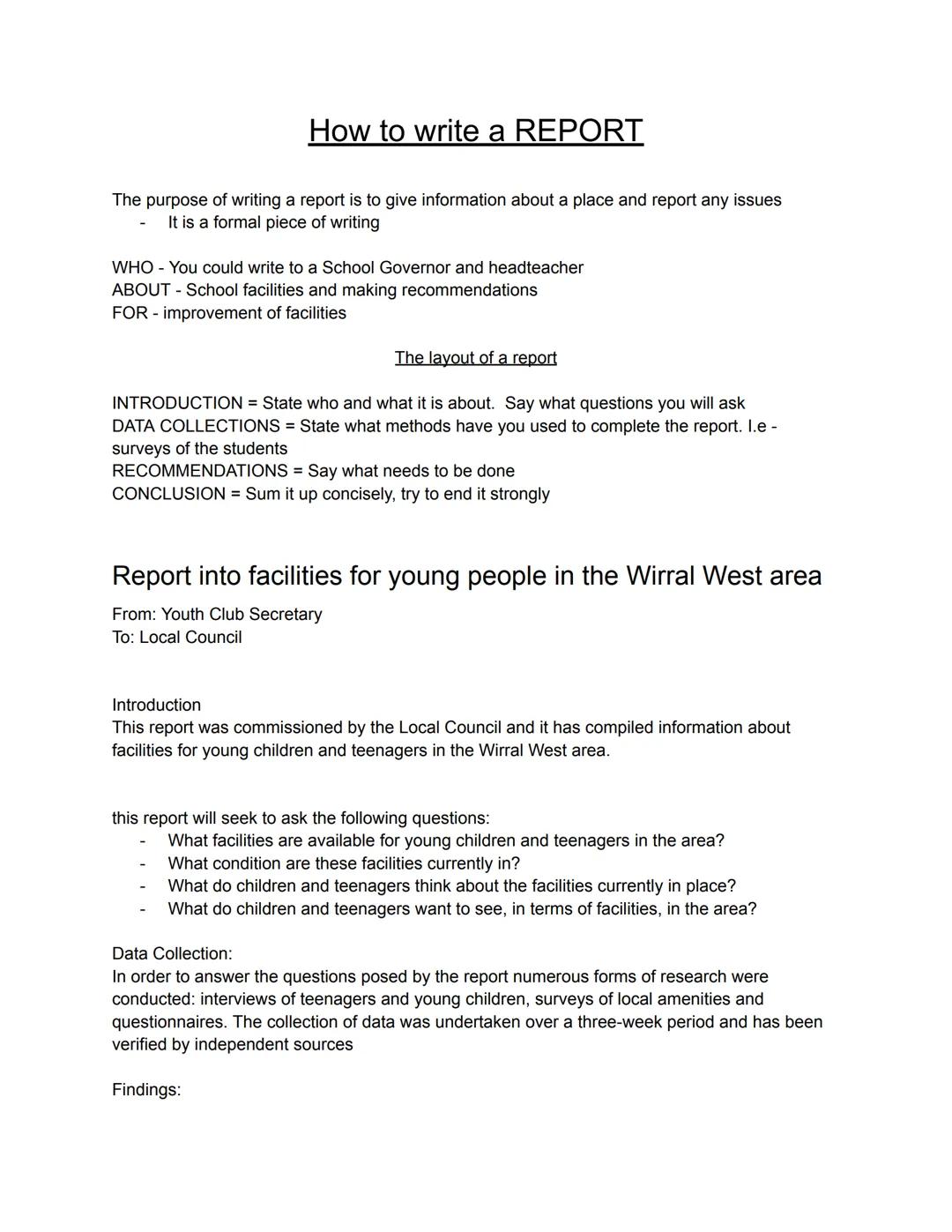
Reports are formal documents that provide information and make recommendations. You'll typically write to authority figures like school governors or local councils about facilities or issues that need addressing.
Use clear subheadings to organise your report: Introduction, Data Collection, Findings, Recommendations, and Conclusion. Your introduction states who the report is for, what it's about, and what questions you'll answer. Data Collection explains your research methods - surveys, interviews, questionnaires.
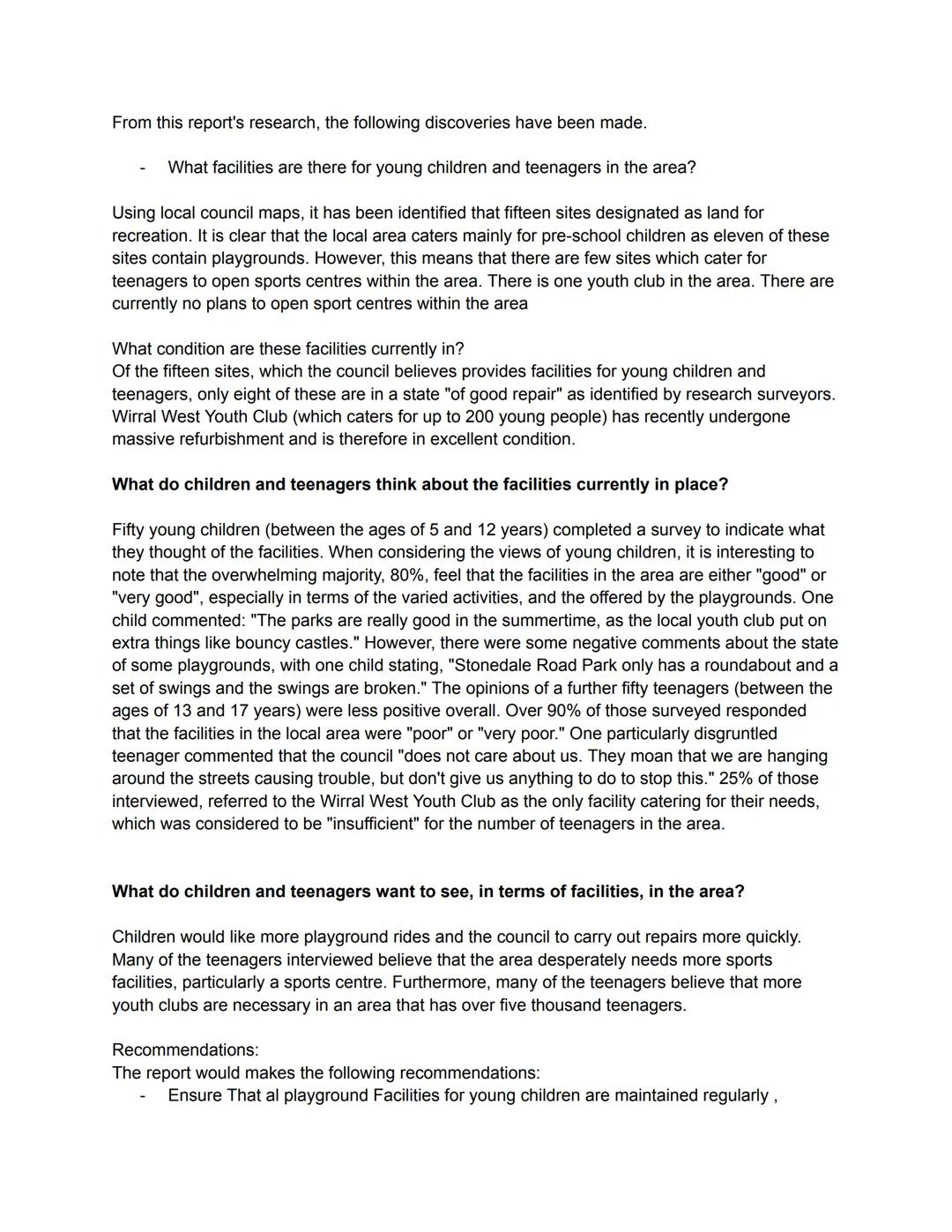
The Findings section is your longest part, answering each question systematically with evidence and statistics. Use specific percentages and quotes from your "research" to make it credible - like "80% feel facilities are either good or very good" or direct quotes from respondents.
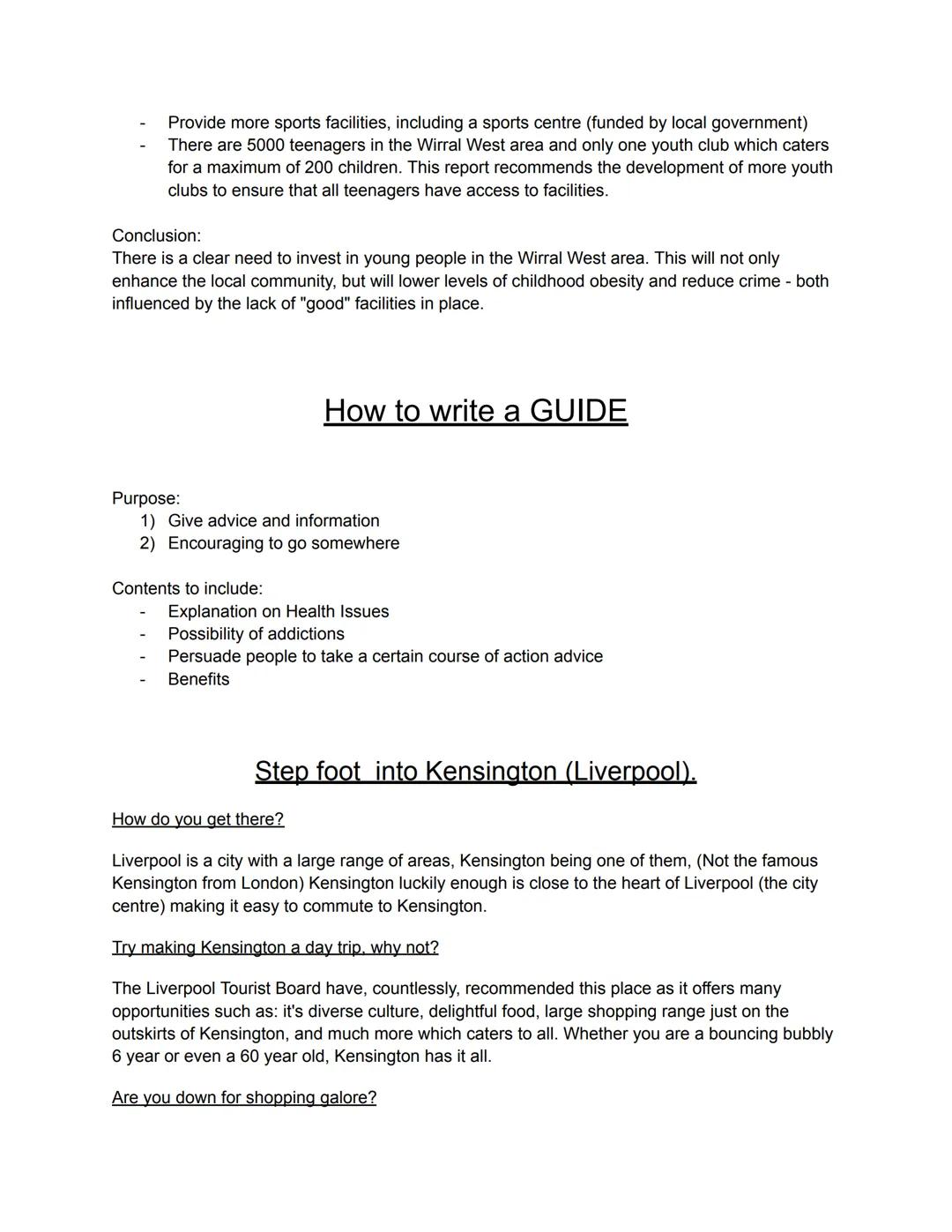
Recommendations should be practical bullet points that address the problems you've identified. Your conclusion summarises why action is needed and mentions broader benefits like "reducing crime" or "enhancing the community".
Key Point: Reports need to sound official and evidence-based - use formal language and specific data throughout.