
"A Taste of Honey" stands as a groundbreaking...
 English Language791 views·Updated 16 Jul 2026·22 pages
A Taste of Honey: Summary, Reviews, and Insights on the Play

Rox Foster@roxyfoster_etam
1 / 10
1
of 10
A Taste of Honey: Origins and Historical Context
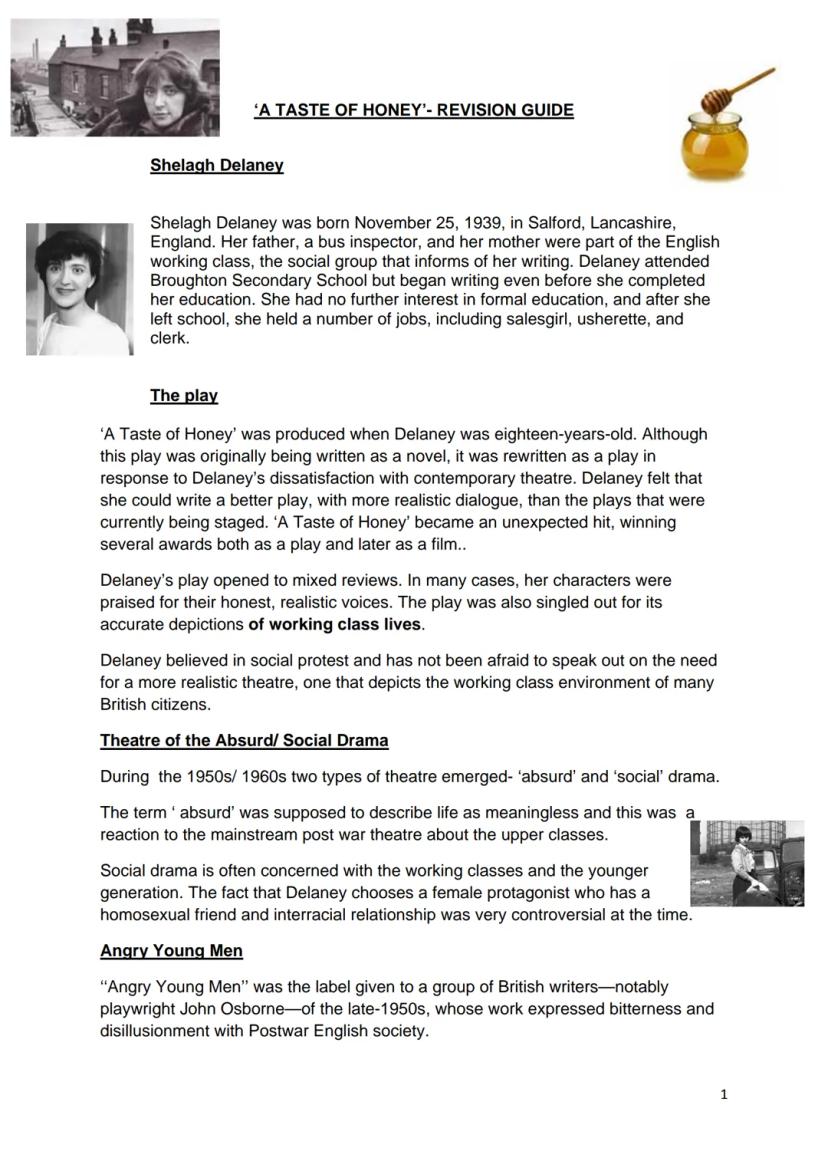
A Taste of Honey emerged as a groundbreaking work of kitchen sink drama in 1958, written by teenage playwright Shelagh Delaney. Born in working-class Salford, Lancashire in 1939, Delaney crafted this revolutionary play at just 18 years old, challenging the theatrical conventions of her time. Originally conceived as a novel, she transformed it into a stage play out of frustration with the unrealistic portrayal of working-class life in contemporary theatre.
The play achieved unexpected success, garnering critical acclaim for its authentic depiction of working-class British life and controversial themes. Delaney's work became associated with the "Angry Young Men" movement of the late 1950s, though she hadn't intentionally aligned herself with this group of disillusioned post-war writers.
Definition: Kitchen sink drama refers to British cultural works that focus on domestic working-class life, featuring realistic portrayals of social issues and everyday struggles.
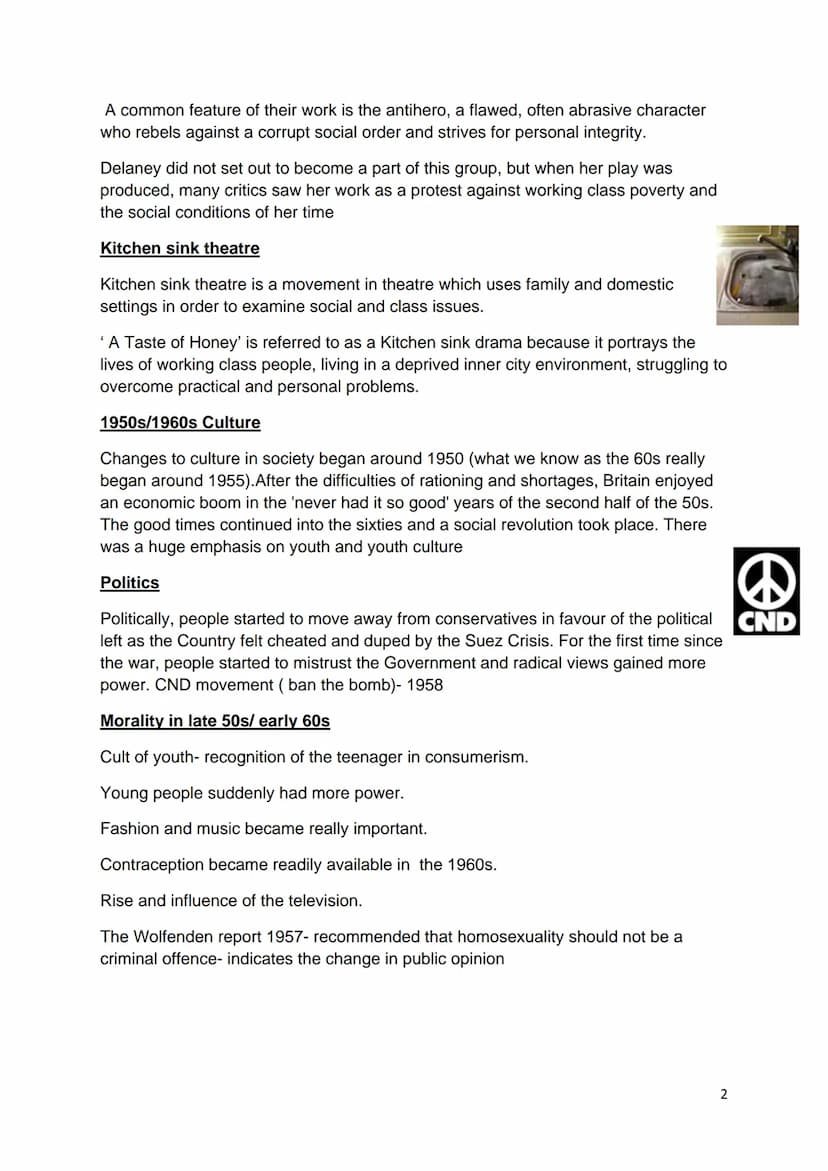
The social and cultural context of 1950s Britain proved crucial to the play's impact. The period marked significant shifts in British society, including the rise of youth culture, changing sexual attitudes, and growing political dissatisfaction. The Wolfenden Report of 1957, which recommended decriminalizing homosexuality, reflected the evolving social landscape that A Taste of Honey both captured and challenged.
2
of 10
Theatrical Movements and Social Commentary
The late 1950s witnessed the emergence of two distinct theatrical movements: Theatre of the Absurd and Social Drama. While absurdist theatre portrayed life as meaningless, social drama focused on working-class experiences and generational conflicts. A Taste of Honey exemplifies social drama, tackling controversial themes including interracial relationships, homosexuality, and single motherhood.
Highlight: The play broke new ground by featuring a female protagonist with a gay friend and an interracial relationship - themes that were highly controversial for 1950s Britain.
The concept of kitchen sink theatre became fundamental to understanding works like A Taste of Honey. This movement deliberately used domestic settings to examine class issues and social problems, making the everyday struggles of working-class life visible to mainstream audiences. Delaney's play perfectly embodied this approach, setting its action in cramped, impoverished living spaces that reflected the characters' circumstances.
The cultural revolution of the late 1950s and early 1960s provided the backdrop for these theatrical innovations. Britain experienced an economic boom, yet social inequalities persisted. The rise of youth culture, availability of contraception, and growing influence of television all contributed to changing social attitudes that the play both reflected and challenged.
3
of 10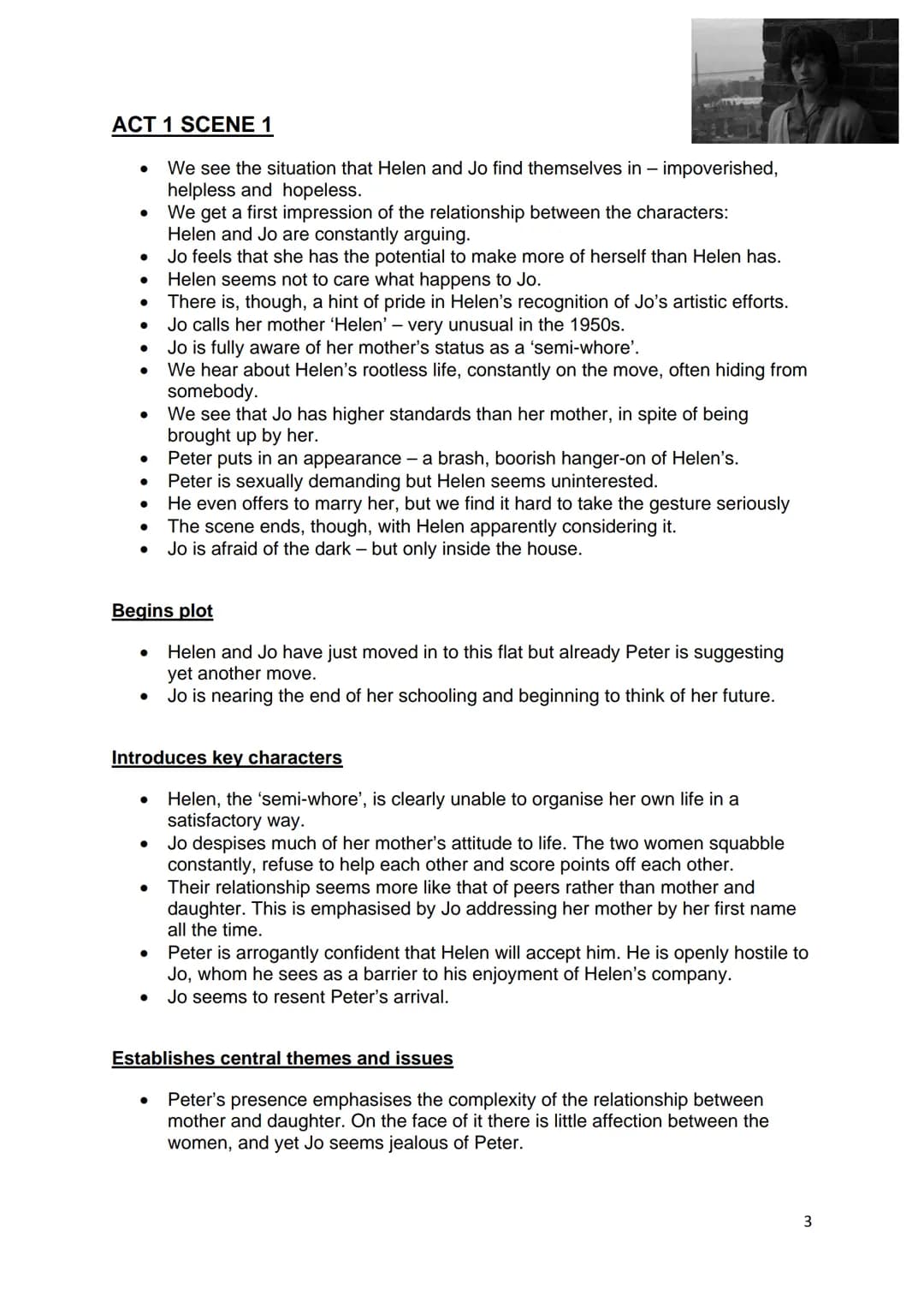
Plot Structure and Character Development
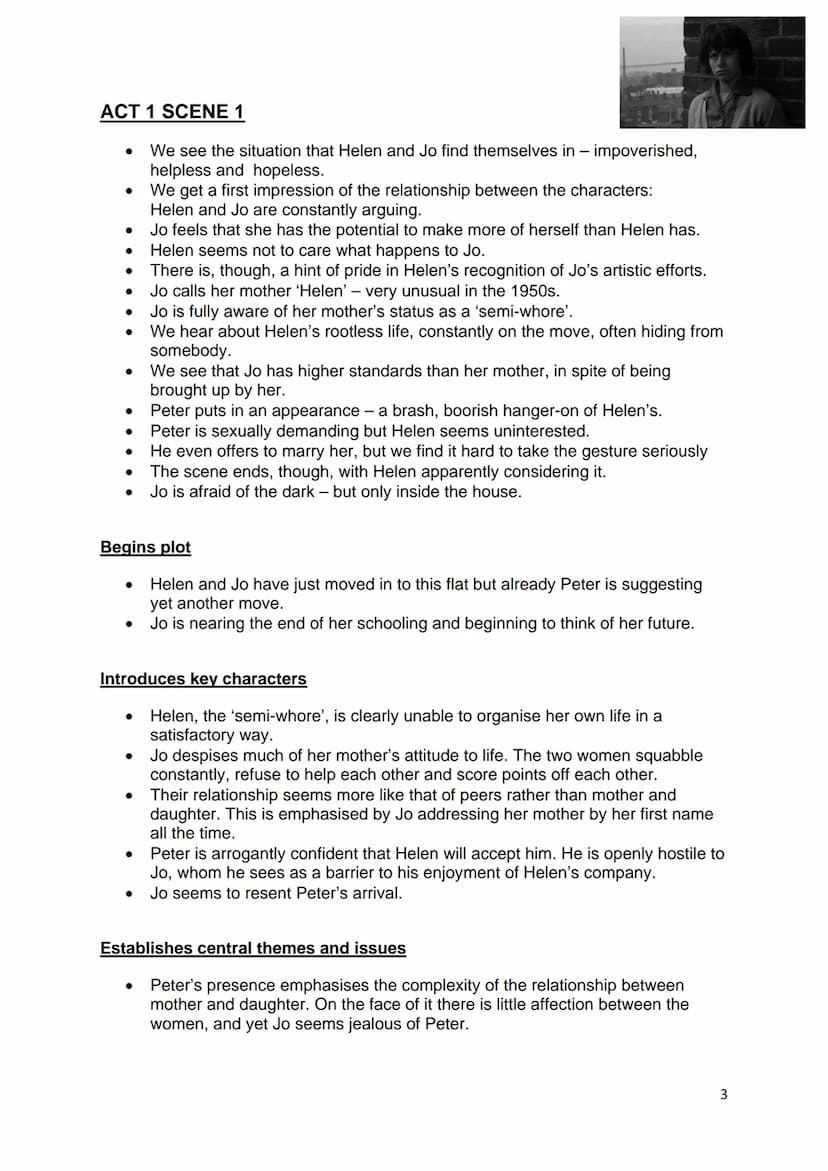
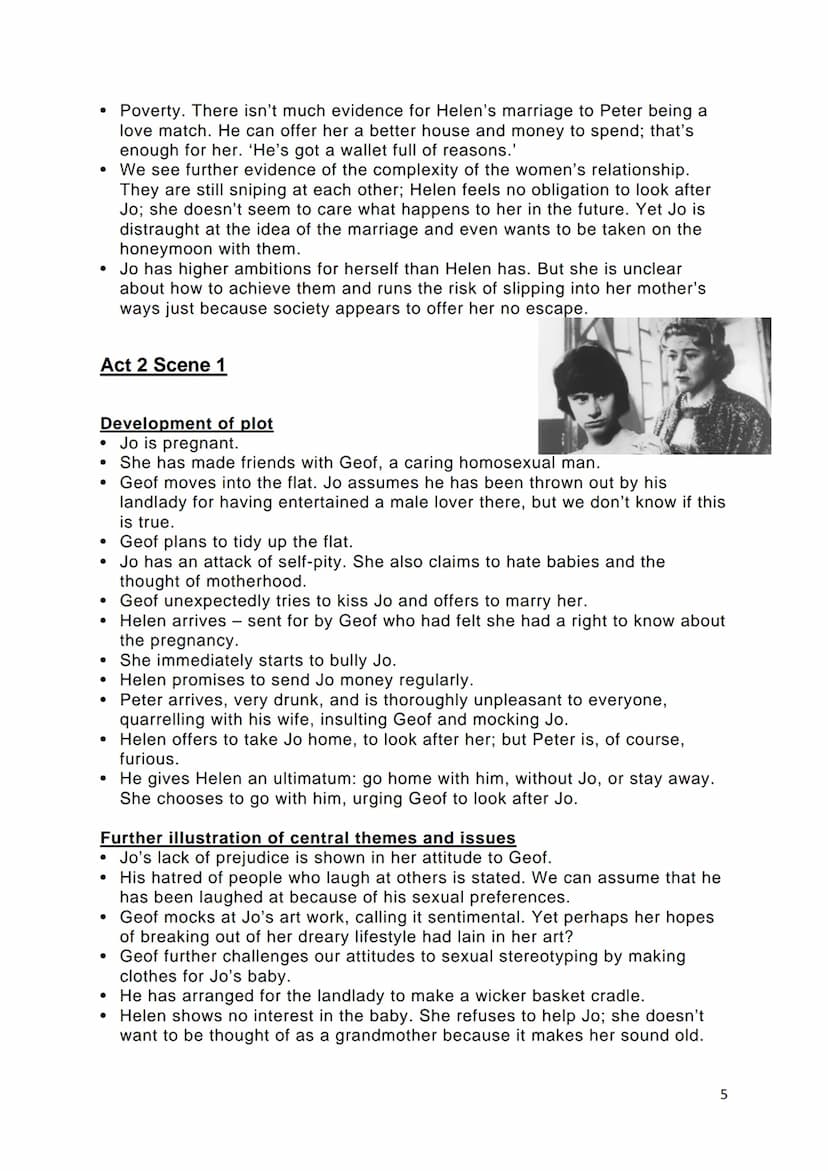
A Taste of Honey centers on Jo and Helen, a mother-daughter pair whose complex relationship drives the narrative. The first act establishes their impoverished circumstances and dysfunctional dynamic, with Jo calling her mother by her first name - a shocking detail for 1950s audiences.
Example: The relationship between Jo and Helen defies traditional mother-daughter expectations, illustrated by their constant bickering and Jo's use of Helen's first name instead of "mother."
The introduction of Peter, Helen's younger love interest, creates additional tension. His presence highlights the economic dependence of women in 1950s society while complicating the already strained mother-daughter relationship. The play's structure carefully builds these interpersonal dynamics while maintaining focus on broader social issues.
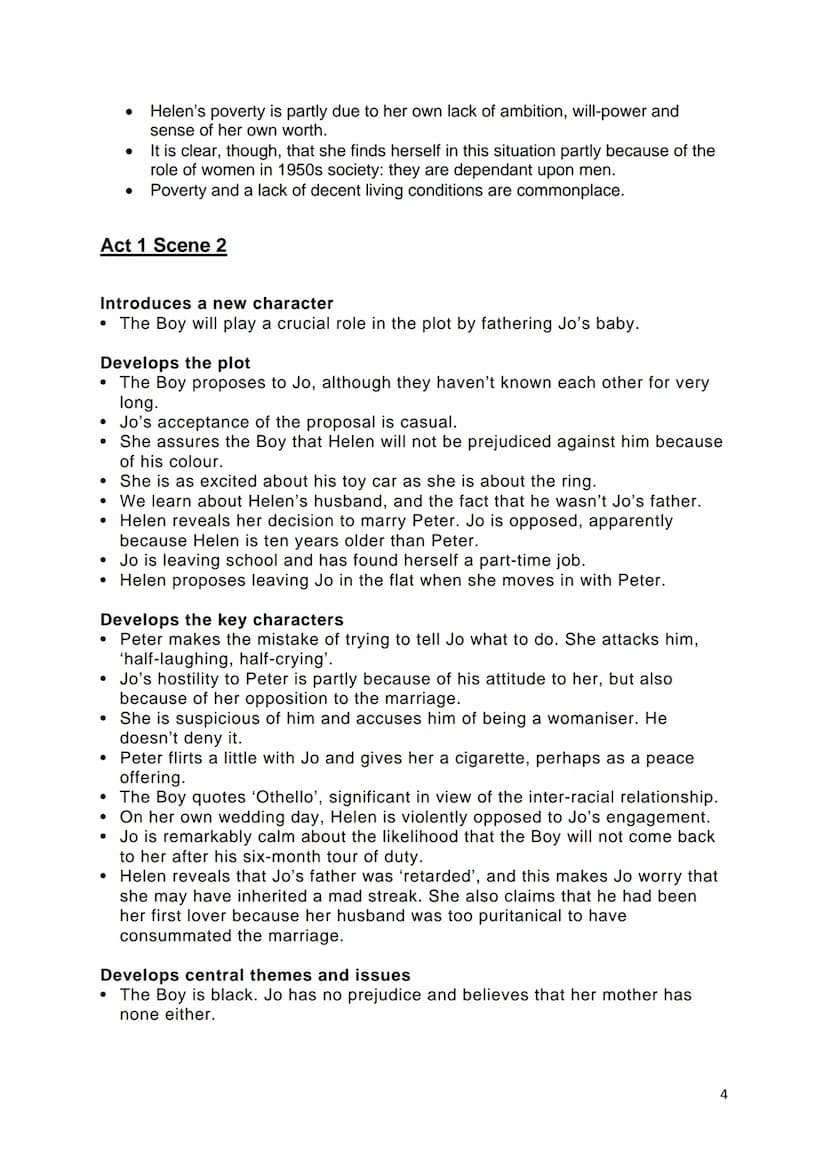
The arrival of the Boy, Jo's black sailor boyfriend, introduces the controversial theme of interracial romance. Delaney handles this plot development with remarkable subtlety, using it to explore prejudice and acceptance in working-class communities.
4
of 10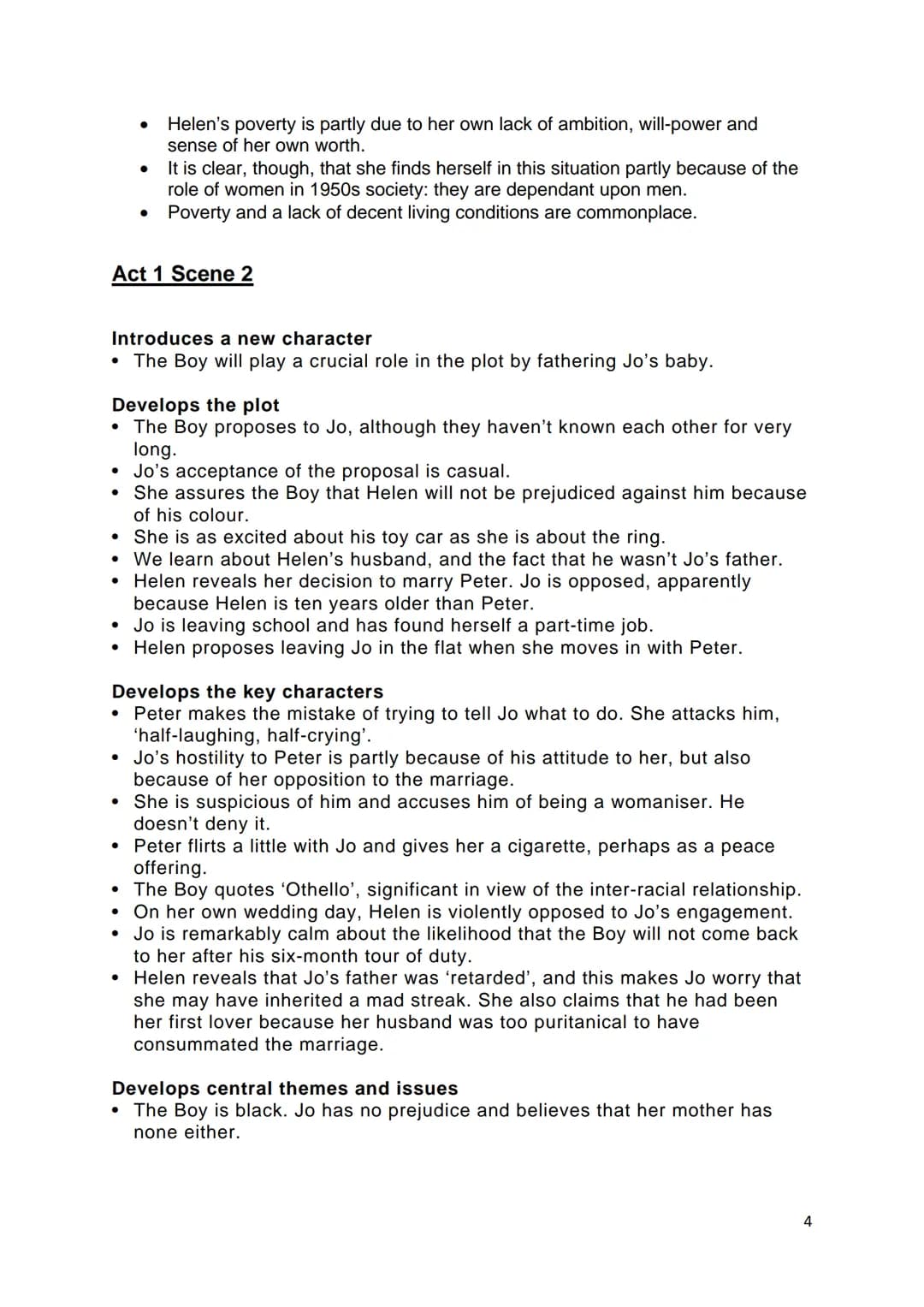
Themes and Social Commentary
The play masterfully weaves together personal and social themes. Poverty emerges as a constant presence, shaping characters' choices and limiting their opportunities. The role of women in 1950s society receives particular attention, with both Helen and Jo struggling against economic dependence on men.
Quote: "Everything in its place and a place for everything... and every so often the world is bound to get untidy." - This line encapsulates the play's examination of social order and disorder.
Delaney's treatment of controversial subjects like interracial relationships and homosexuality was groundbreaking for its time. The play presents these themes matter-of-factly, refusing to sensationalize them while acknowledging their social significance. The revelation about Jo's father being "retarded" adds another layer to the play's exploration of prejudice and inheritance.
The play's enduring relevance stems from its honest portrayal of working-class life and its progressive handling of social issues. Its influence on British kitchen sink drama continues to resonate, making it a crucial text in the development of modern British theatre.
5
of 10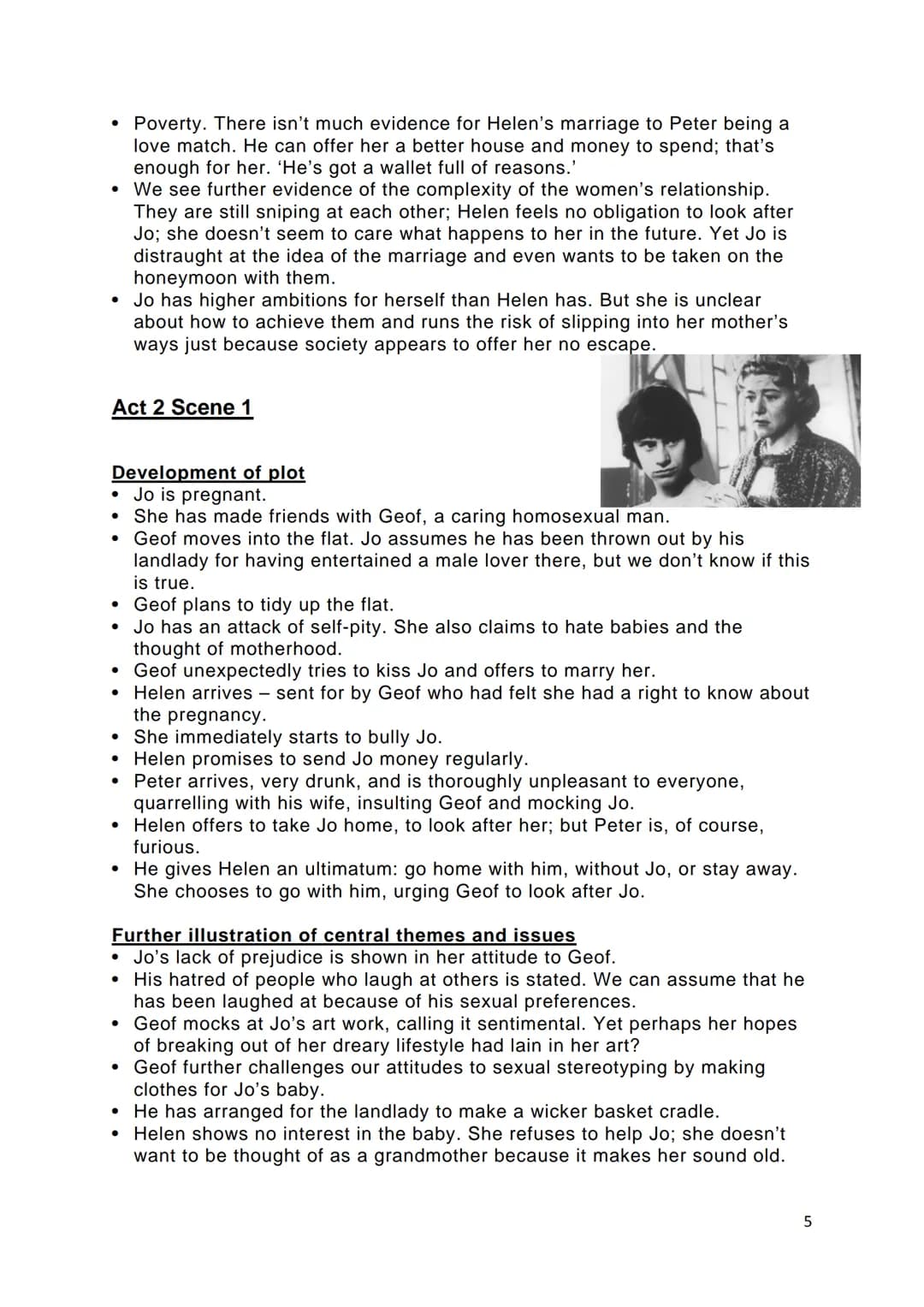
A Taste of Honey: Exploring Poverty and Social Class in 1960s Britain
A Taste of Honey presents a raw portrayal of working-class life in 1950s Manchester through the complex relationship between Helen and her daughter Jo. The play, written by Shelagh Delaney, masterfully weaves themes of poverty, sexuality, and family dynamics into a compelling social drama.
Helen's marriage to Peter exemplifies how economic necessity often trumped romantic love in working-class communities. Her infamous line "He's got a wallet full of reasons" perfectly captures this pragmatic approach to relationships. The mother-daughter dynamic between Helen and Jo reveals generational tensions, with Jo harboring higher ambitions while simultaneously risking falling into the same patterns as her mother due to limited social mobility.
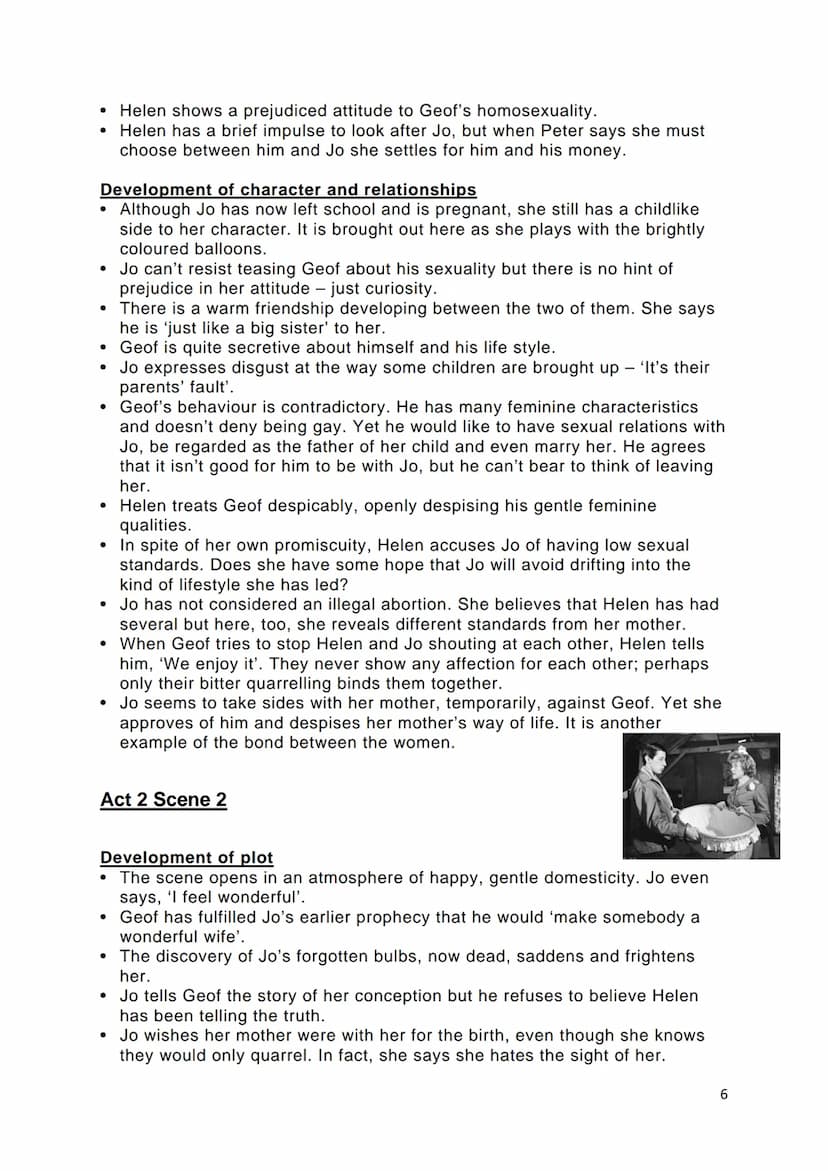
The introduction of Geof, a gay man who moves in with Jo during her pregnancy, challenges contemporary social norms and prejudices. His presence highlights the play's progressive handling of sexuality and gender roles, unusual for its time. The kitchen sink drama elements are evident in the realistic portrayal of domestic life and social issues.
Definition: Kitchen sink drama refers to cultural works that depict the domestic situations of working-class British life, characterized by social realism and focusing on everyday struggles.
6
of 10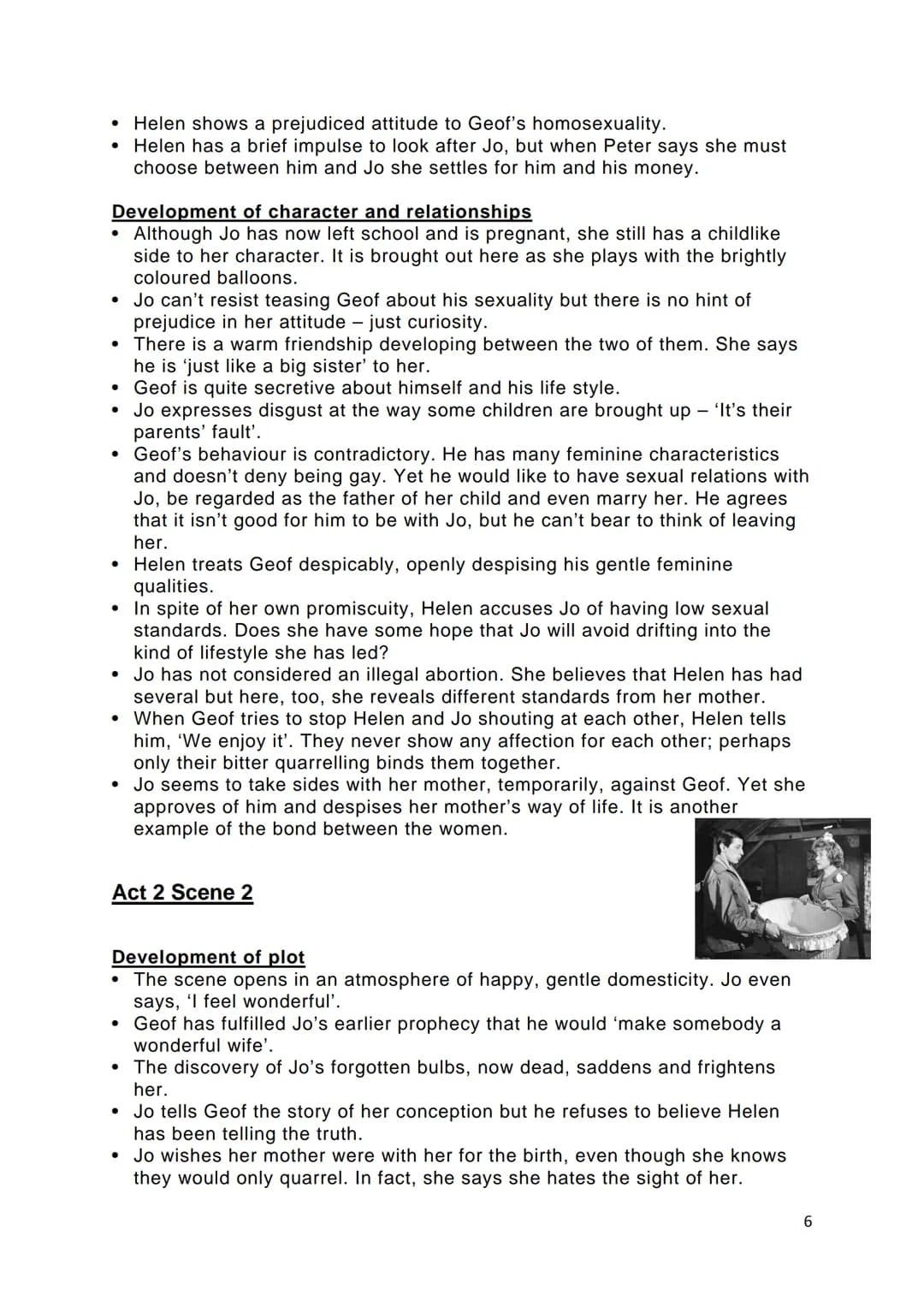
Character Development and Relationships in A Taste of Honey
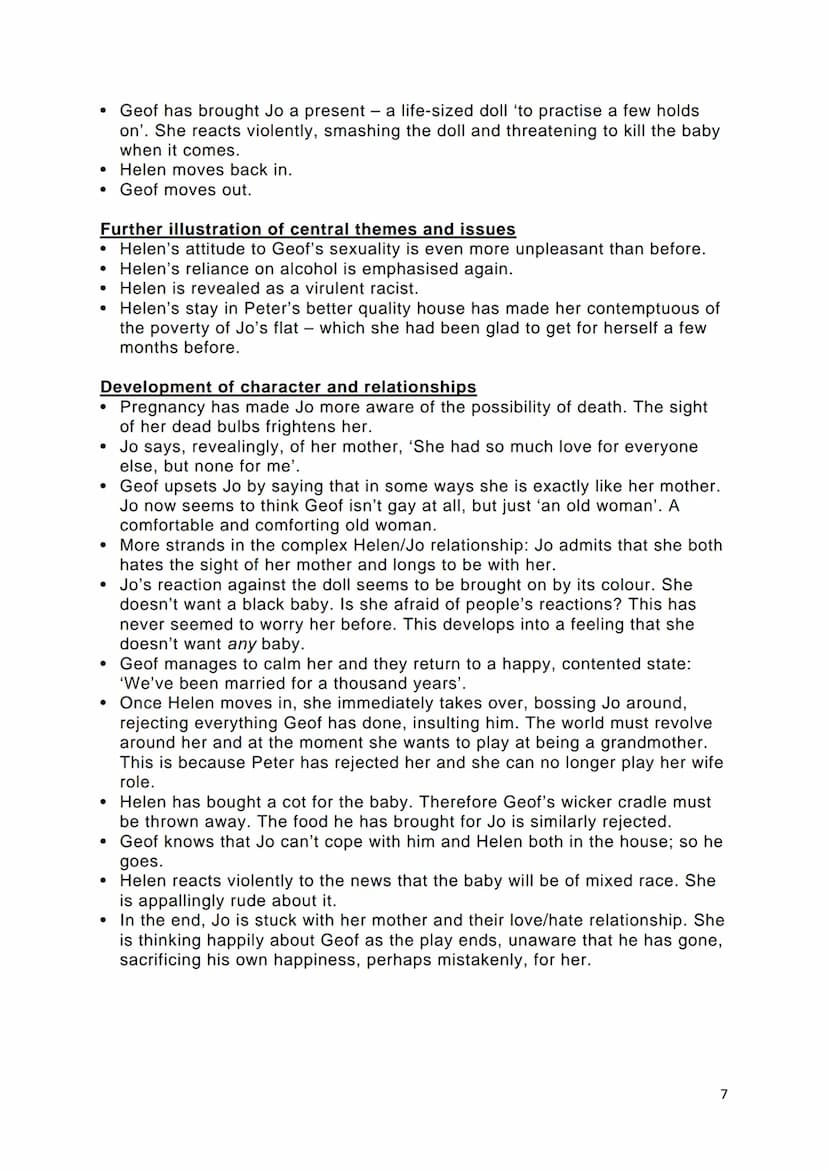
The relationship between Jo and Geof demonstrates the play's nuanced approach to friendship and sexuality. While Jo teases Geof about his sexuality, their bond transcends conventional relationships, with Jo describing him as "just like a big sister." This dynamic challenges traditional gender roles and expectations in 1960s England.
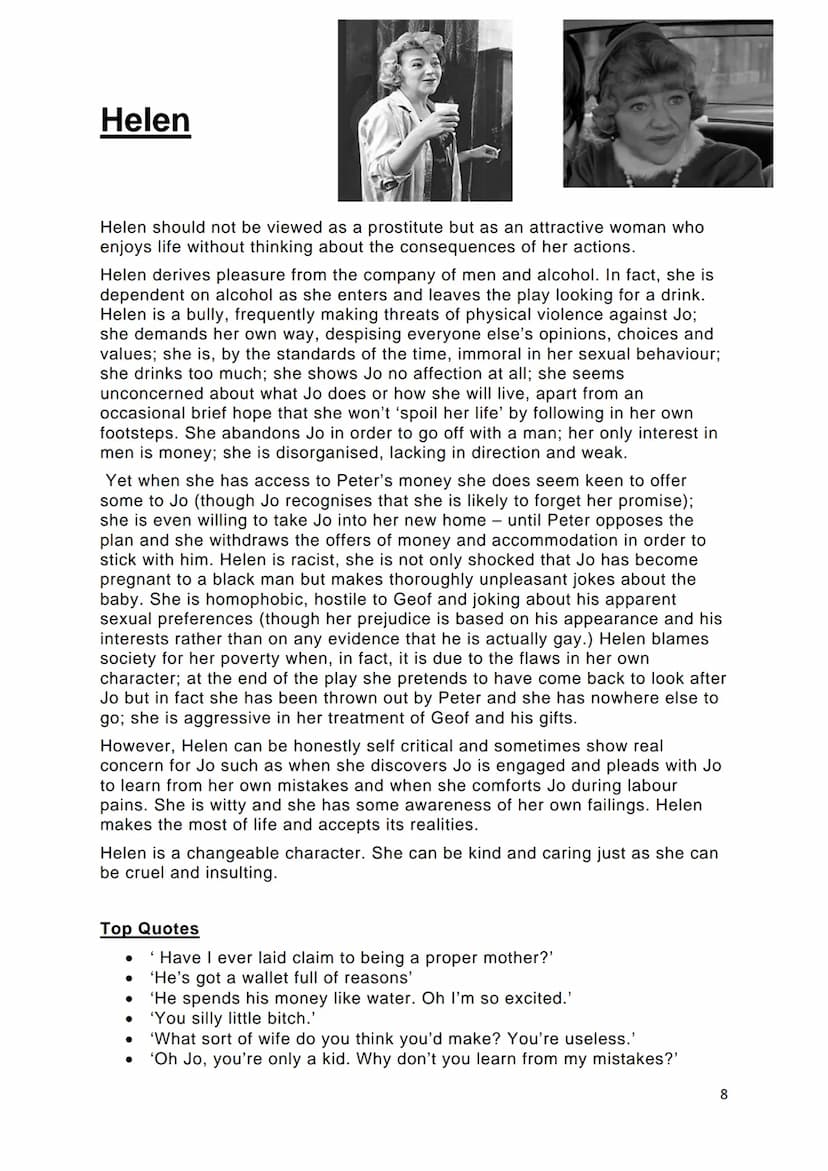
Helen's character embodies contradictions typical of kitchen sink theatre. Despite her apparent negligence as a mother, she occasionally shows genuine concern for Jo's welfare. Her prejudices against Geof's homosexuality and her racist reactions to Jo's pregnancy reveal deeply ingrained societal attitudes of the period.
The play's exploration of motherhood through Jo's pregnancy creates parallel narratives between her and Helen's experiences. Jo's fear of becoming like her mother while simultaneously seeking her approval demonstrates the complex nature of generational patterns.
Highlight: The play's treatment of controversial themes like interracial relationships, homosexuality, and single motherhood was groundbreaking for its time.
7
of 10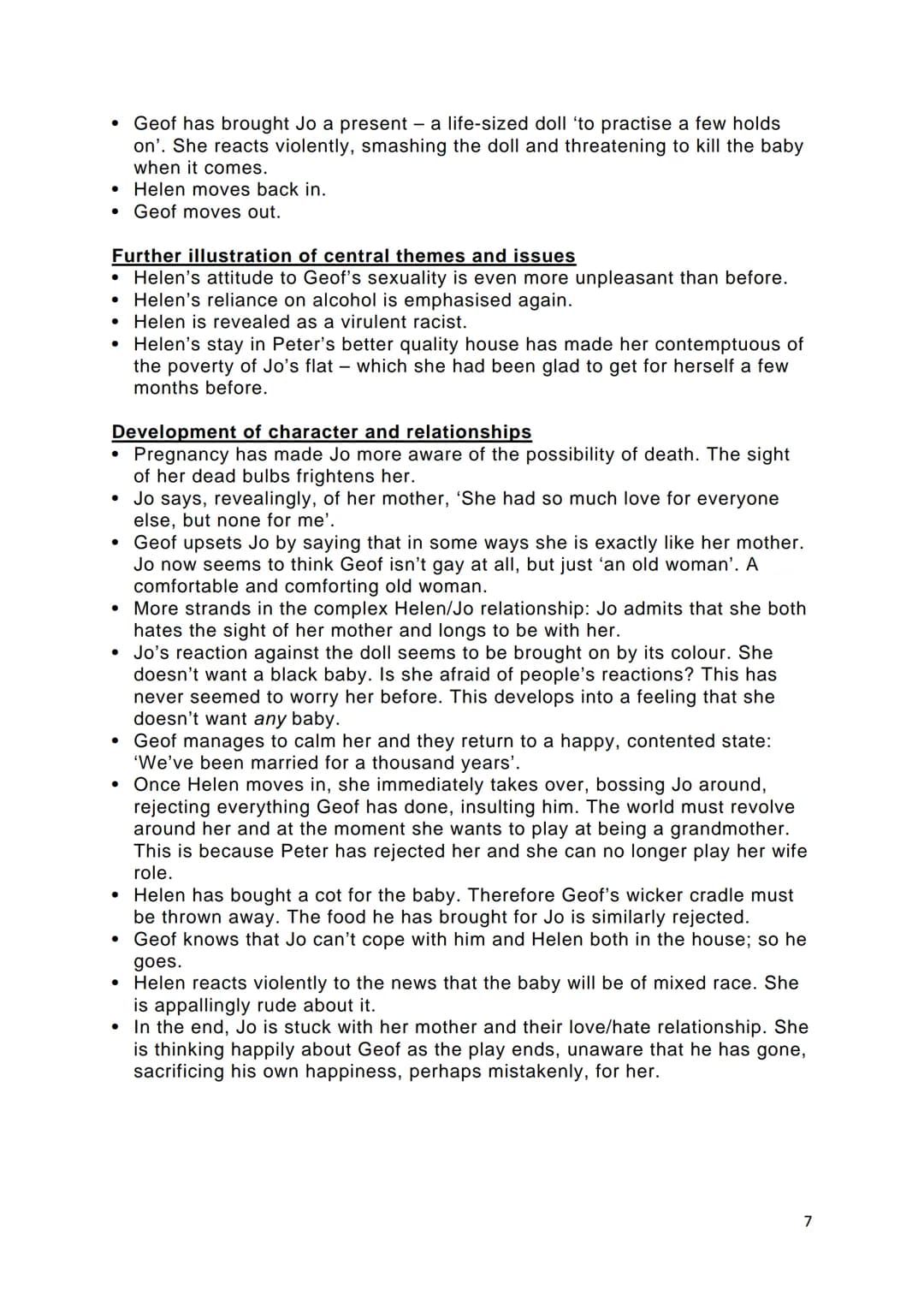
Themes and Social Commentary in A Taste of Honey
The social drama aspects of A Taste of Honey are particularly evident in its treatment of class mobility and social prejudice. The play presents a critical view of how society's limitations affect working-class women's choices and opportunities.
Housing conditions, financial struggles, and the search for stability are recurring motifs that underscore the broader social commentary. The contrast between Helen's pursuit of material comfort through Peter and Jo's artistic aspirations reflects different responses to poverty and social constraints.
The play's setting in a working-class neighborhood of Manchester provides more than just backdrop - it becomes a character itself, influencing and limiting the characters' choices and dreams. This attention to environmental detail is characteristic of the British kitchen sink drama movement.
Quote: "Have I ever laid claim to being a proper mother?" - Helen's self-awareness reveals both personal failing and societal pressures.
8
of 10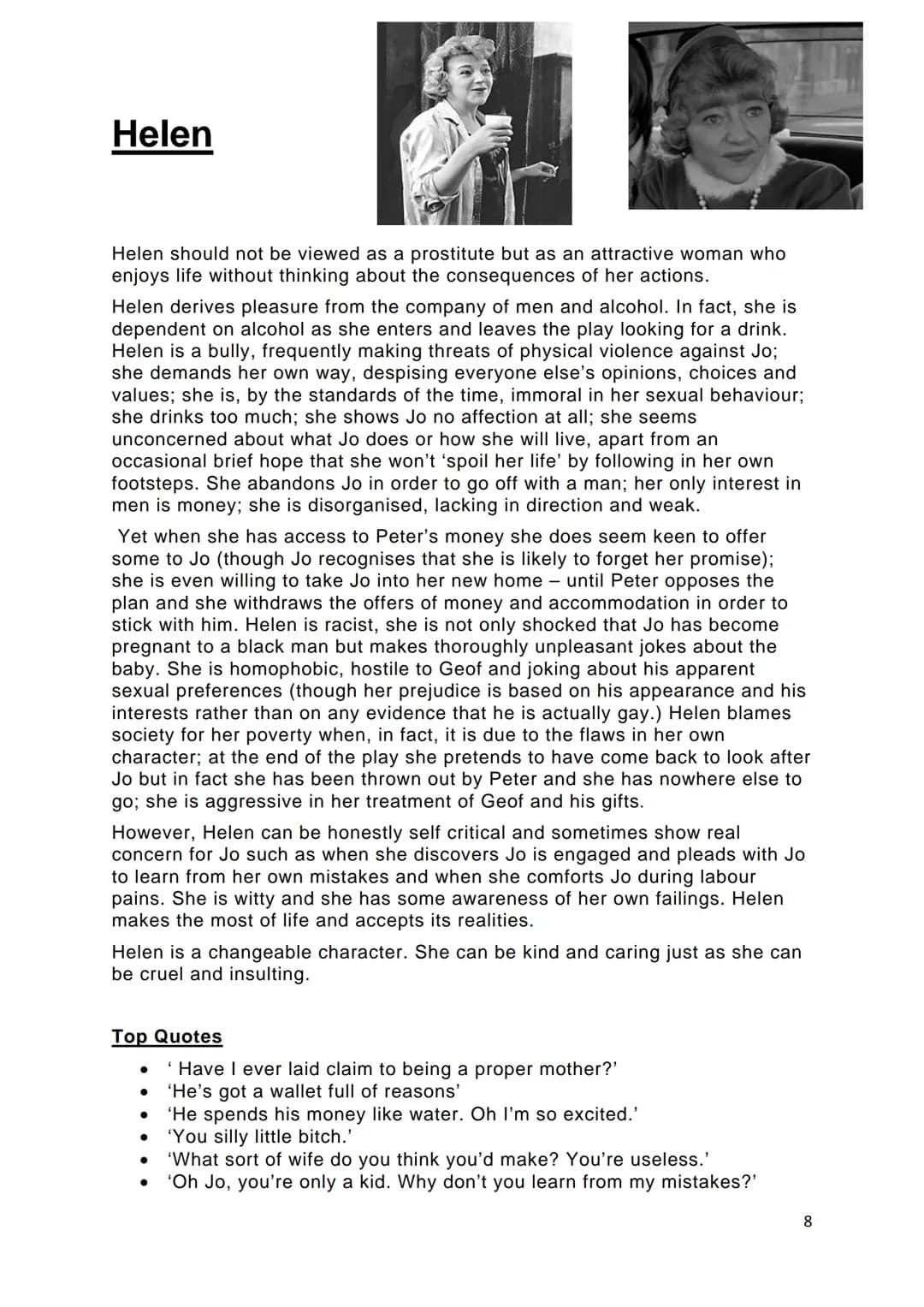
Legacy and Impact of A Taste of Honey
The enduring relevance of A Taste of Honey lies in its unflinching examination of social issues that remain pertinent today. Its influence on subsequent kitchen sink drama works and British theater is significant, particularly in its portrayal of working-class women's experiences.
The play's treatment of controversial themes helped pave the way for more diverse and challenging theatrical works. Its success demonstrated that audiences were ready for realistic portrayals of contemporary social issues, influencing both theatre and film.
Modern productions, including those at the Royal Exchange and National Theatre, continue to find new relevance in the play's themes of class, sexuality, and family relationships. The work remains a powerful example of how theater can address social issues while maintaining dramatic impact.
Example: Recent revivals have emphasized how issues of class mobility and social prejudice continue to resonate with contemporary audiences, particularly in post-Brexit Britain.
9
of 10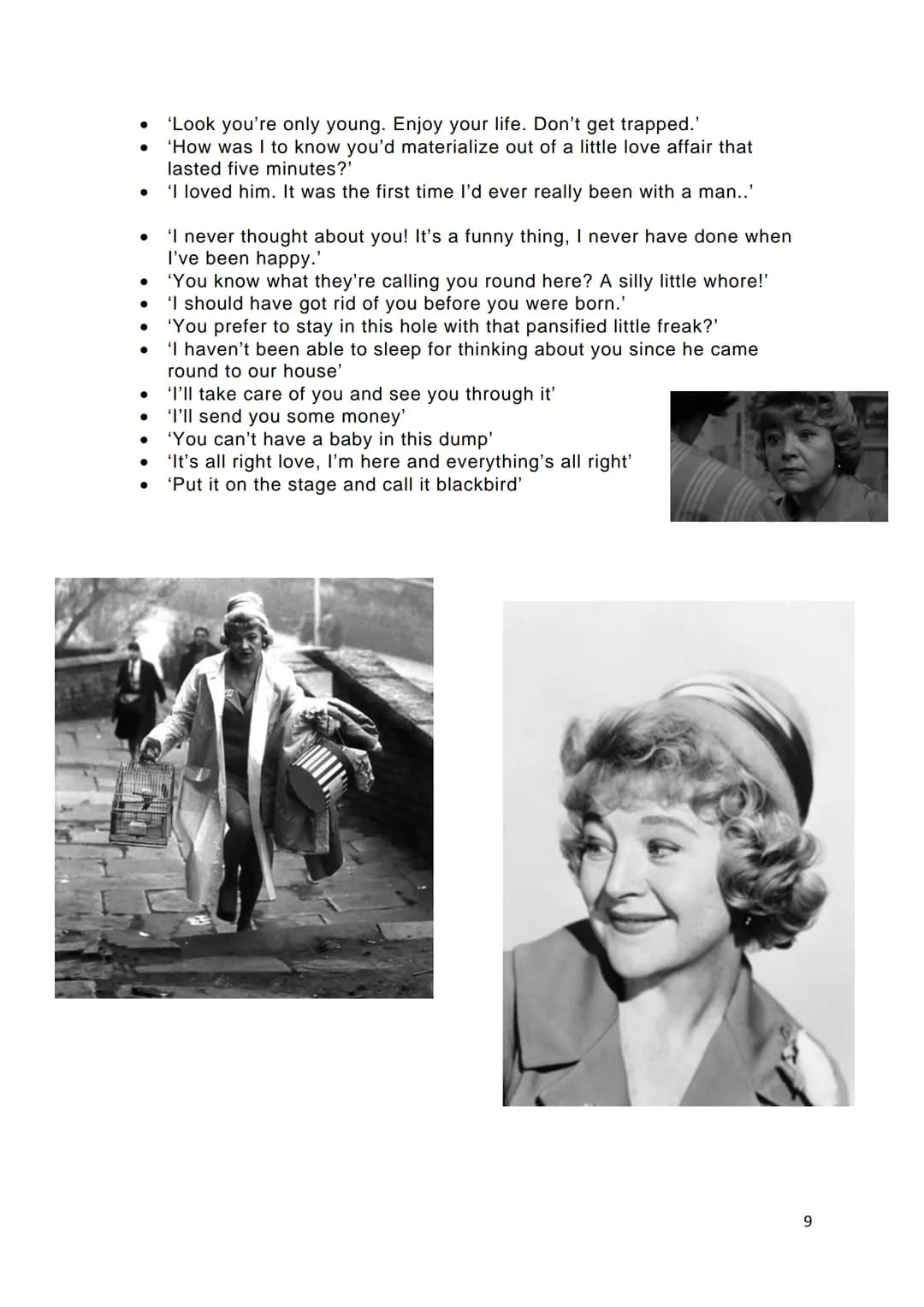
Character Analysis: Jo in "A Taste of Honey"
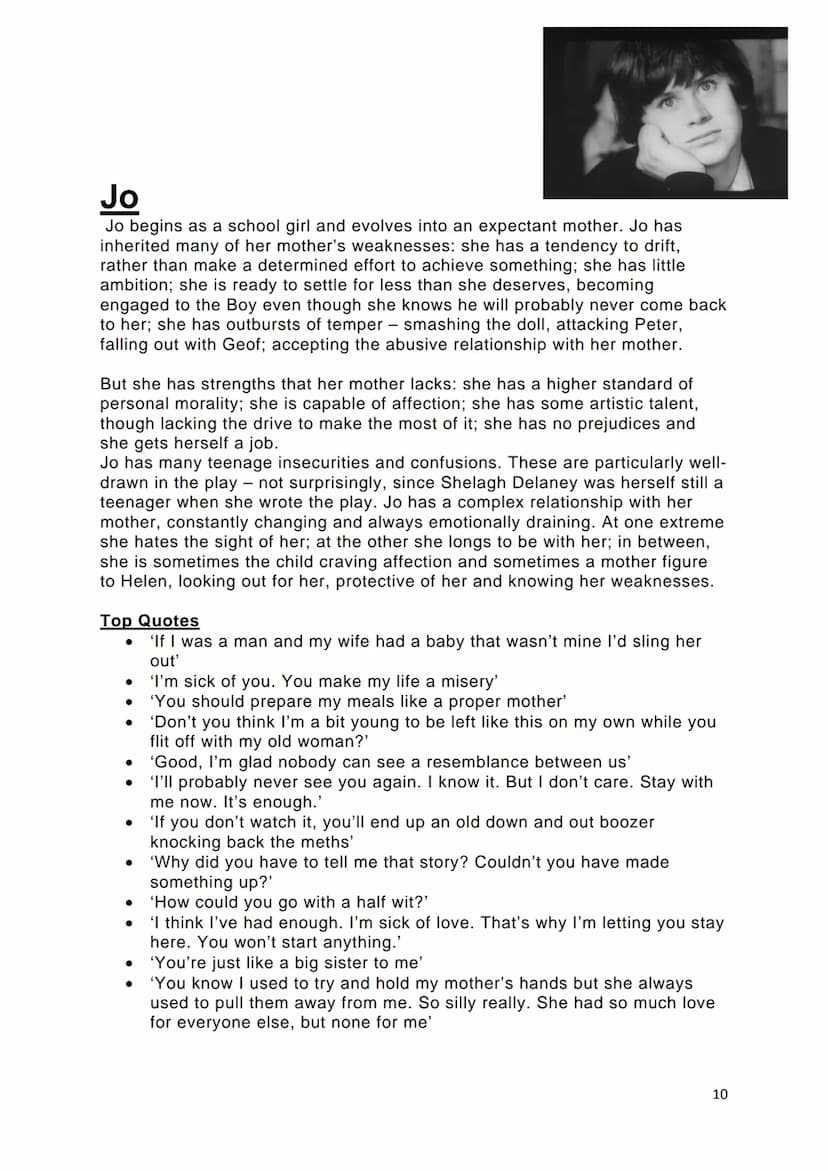
A Taste of Honey presents Jo as a complex character who transforms from a vulnerable schoolgirl into an expectant mother, embodying both inherited flaws and unique strengths. Her character development offers deep insights into working-class youth in 1950s Britain, making this social drama particularly compelling.
Jo's character reflects many of her mother Helen's traits while developing her own distinct personality. Like Helen, she shows a tendency to drift rather than pursue clear goals, often settling for less than she deserves - as evidenced by her engagement to a sailor she knows may never return. However, Jo possesses admirable qualities that set her apart: a stronger moral compass, genuine capacity for affection, and artistic inclinations, though these remain largely undeveloped due to her circumstances.
The mother-daughter relationship in A Taste of Honey showcases intense emotional complexity. Jo's feelings toward Helen oscillate dramatically - from outright hatred to desperate longing for maternal affection. This dynamic shifts throughout the play, with Jo sometimes appearing as the child seeking love and other times assuming a protective, maternal role toward her own mother. Shelagh Delaney's teenage perspective when writing the play lends authenticity to Jo's adolescent struggles and insecurities.
Highlight: Key quotes revealing Jo's character:
- "You know I used to try and hold my mother's hands but she always used to pull them away from me. She had so much love for everyone else, but none for me"
- "I think I've had enough. I'm sick of love. That's why I'm letting you stay here. You won't start anything."
- "You're just like a big sister to me"
10
of 10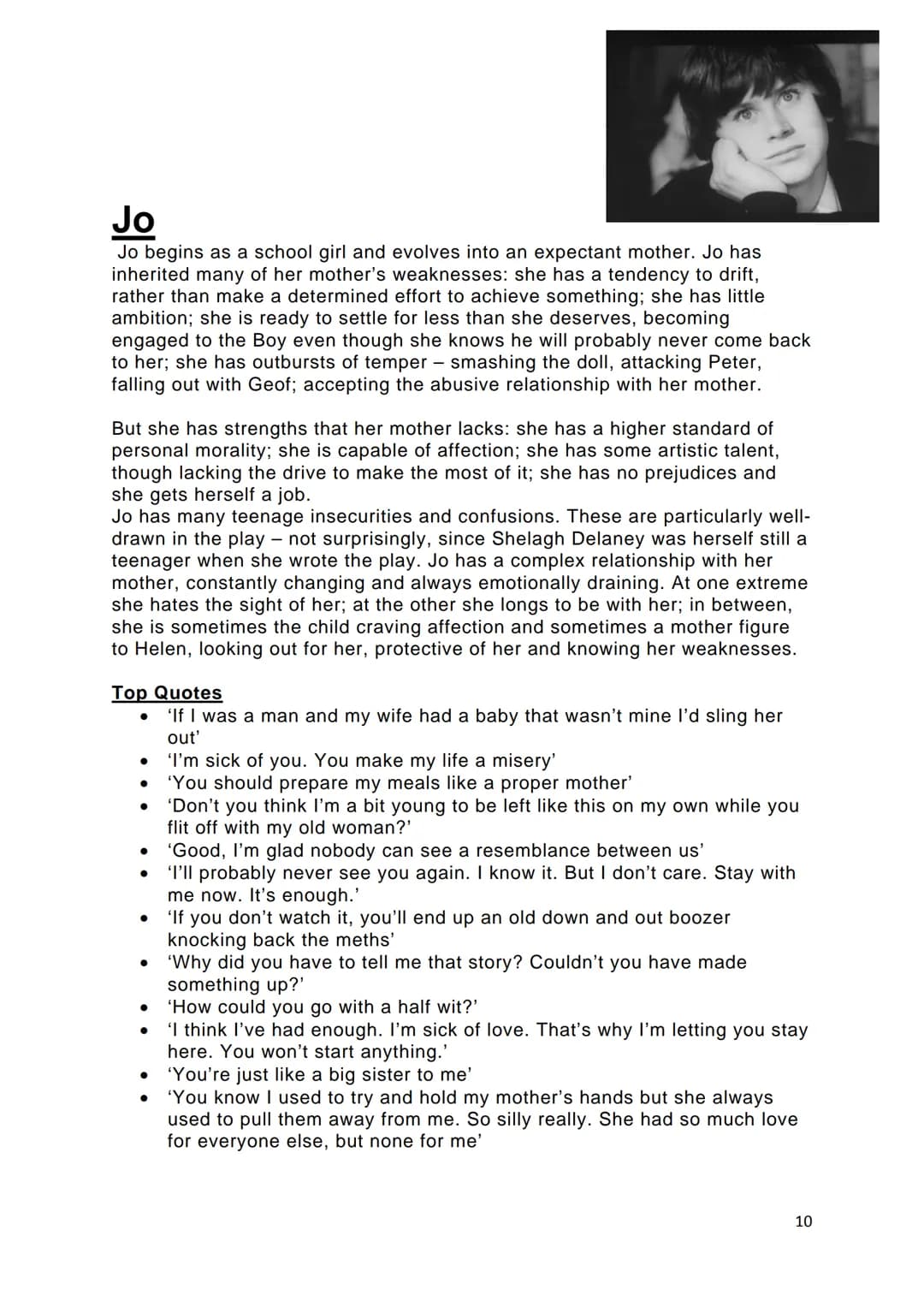
Themes and Social Context in "A Taste of Honey"
As a quintessential example of kitchen sink drama, A Taste of Honey explores profound themes of class, gender, and family dynamics in post-war Britain. The play's setting in working-class Manchester provides a raw backdrop for examining social issues that defined the era's theatrical movement.
The play's treatment of teenage pregnancy, race relations, and sexuality was groundbreaking for its time. Through Jo's relationship with a black sailor and her friendship with Geoffrey, a gay art student, Delaney challenged societal prejudices prevalent in 1950s Britain. The play's honest portrayal of these relationships, free from melodrama or moral judgment, marked a significant departure from traditional theatrical conventions.
A Taste of Honey exemplifies the characteristics of kitchen sink theatre in 1960s England, presenting realistic depictions of working-class life with unprecedented authenticity. The play's focus on domestic struggles, generational conflict, and social mobility reflects broader cultural changes in post-war Britain, making it a seminal work in British theatrical history.
Definition: Kitchen Sink Drama Kitchen sink drama refers to a British cultural movement in theatre and film that emerged in the late 1950s and early 1960s, characterized by realistic portrayals of working-class domestic life and social issues, often set in industrial Northern England.
We thought you’d never ask...
Our AI Companion is a student-focused AI tool that offers more than just answers. Built on millions of Knowunity resources, it provides relevant information, personalised study plans, quizzes, and content directly in the chat, adapting to your individual learning journey.
You can download the app from Google Play Store and Apple App Store.
That's right! Enjoy free access to study content, connect with fellow students, and get instant help – all at your fingertips.
Similar content
Most popular content: A Streetcar Named Desire
9English LiteratureA Streetcar Named Desire: Thematic Quotes
Explore a comprehensive collection of quotes from Tennessee Williams' 'A Streetcar Named Desire', organized thematically. This resource covers key themes such as mental health, female sexuality, and family dynamics, providing insightful analysis for English Literature students. Perfect for exam preparation and deepening your understanding of the play's complex characters and motifs.
129,822584
English LanguageA Streetcar Named Desire Themes
Explore the key themes and character dynamics in Tennessee Williams' 'A Streetcar Named Desire'. This summary covers the intricate relationships, class tensions, and psychological struggles depicted throughout the play, providing insights into Blanche's tragic journey and the impact of Stanley's dominance. Ideal for students studying literature and drama.
123,098123
English LiteratureCharacter Analysis: A Streetcar Named Desire
Explore in-depth character profiles of Blanche Dubois, Stanley Kowalski, and Stella Kowalski from Tennessee Williams' 'A Streetcar Named Desire'. This analysis covers their backgrounds, relationships, personality traits, and key quotes, providing insights into their roles and dynamics within the play. Ideal for literature students and enthusiasts.
1290023
English LiteratureA Streetcar Named Desire: Scene Analysis
Explore a detailed scene analysis of Tennessee Williams' 'A Streetcar Named Desire'. This summary covers key events, character dynamics, and themes from the play, including Blanche's tragic past, her interactions with Mitch and Stanley, and the unfolding drama in the Kowalski household. Ideal for students seeking to understand the complexities of the narrative and character relationships.
121,76661
EnglishA Streetcar Named Desire: Key Themes
Explore the pivotal themes in Tennessee Williams' 'A Streetcar Named Desire', including social class dynamics, the interplay of desire and fate, the impact of death and madness, and gender roles. This summary highlights Blanche's tragic journey, her struggles with mental instability, and the contrasting attitudes of characters like Stanley and Mitch. Ideal for students seeking a deeper understanding of the play's complex themes.
S593724
English LiteratureA Streetcar Named Desire: Key Themes
Explore the pivotal themes in Tennessee Williams' 'A Streetcar Named Desire', including desire, madness, death, social class, and gender dynamics. This summary highlights Blanche's tragic journey and the complex relationships between characters, providing insights into the play's deeper meanings. Ideal for AQA exam preparation.
111,47941
English LiteratureA Streetcar Named Desire Analysis
Explore the intricate themes, character dynamics, and critical interpretations of Tennessee Williams' 'A Streetcar Named Desire'. This study sheet covers key quotes, historical context, and the psychological underpinnings of the characters, including Blanche's tragic descent and Stanley's dominance. Ideal for A-Level English Literature students seeking a comprehensive understanding of this classic play.
125409
English LiteratureA Streetcar Named Desire: Key Themes
Explore the pivotal themes in Tennessee Williams' 'A Streetcar Named Desire', including social class, madness, gender roles, and the interplay of fantasy and reality. This summary highlights character dynamics, significant scenes, and the impact of male dominance on female characters, providing a comprehensive understanding of the play's critical elements.
121,25326
English LiteratureCritical Insights: A Streetcar Named Desire
Explore essential critical quotes and analyses of Tennessee Williams' 'A Streetcar Named Desire'. This summary highlights key themes such as madness, desire, and the clash between illusion and reality, providing a comprehensive understanding for AQA AS English Literature students.
1285511
Most popular content in English Language
9English LanguageLanguage Paper 1 Strategies
Master the AQA English Language Paper 1 with this comprehensive guide. Explore key strategies for language and structural analysis, critical evaluation, and creative writing. Learn how to effectively analyze texts, utilize literary techniques, and enhance your writing skills to excel in your exams.
928,548895
English LanguageAnalyzing Conflict in The Pearl
Explore the intricate language and structure used by John Steinbeck in 'The Pearl' to depict the intense conflict between Kino and the scorpion. This study note provides a detailed analysis of key language features, character responses, and narrative techniques, essential for mastering AQA GCSE English Language Paper 1. Ideal for students preparing for their exams, this resource emphasizes critical reading and writing skills.
97,912330
English LanguageEnglish Language Exam Strategies
This comprehensive revision booklet for AQA English Language Paper 1 covers essential topics such as narrative structure, character analysis, and language techniques. It includes model answers, practice questions, and key concepts from various texts like 'The Woman in Black', 'The Hunger Games', and 'To Kill a Mockingbird'. Perfect for students preparing for their exams, this resource enhances understanding of literary devices and effective writing strategies.
1015,9361,309
E
English LanguageEnglish quiz about writing techniques.
It's just a short english quiz.
75461
English LanguageEnglish Language Exam Strategies
Master the English Language Paper 2 with this comprehensive guide. Discover effective strategies for each question, including skimming techniques, writing structures, and language analysis methods. Perfect for exam preparation, this resource covers question formats, time management tips, and essential writing techniques to enhance your performance. Ideal for students aiming to excel in their English Language assessments.
1019,528338
M
English LanguageMastering English Language: Advanced Flashcards
Boost your English language skills with these challenging flashcards designed for advanced learners. Perfect for grade 11 students!
113410
M
English LanguageMastering English Language: Advanced Vocabulary Flashcards
Expand your English vocabulary with this comprehensive set of advanced flashcards. Perfect for grade 11 students looking to excel in English Language exams.
114052
M
English LanguageMastering English Language: Intermediate Level
Boost your English language skills with this comprehensive flashcard set designed for intermediate learners. Perfect for grade 11 students!
113331
E
English LanguageEnglish language devices
Master the fundamental principles of biology with this comprehensive flashcard set designed specifically for grade 9 students. Explore key concepts, terms, and processes to excel in your biology studies.
93435
Most popular content
9 Sociology
Sociology of Education Overview
Explore comprehensive A-Level Sociology notes on the education system, covering key theories, policies, and sociological perspectives. This resource includes insights on marketisation, gender roles, cultural deprivation, and educational inequalities, providing a thorough understanding of how education shapes social stratification and individual achievement. Ideal for exam preparation and in-depth study.
12102,9283,041
SociologySociology of Families: Comprehensive Revision
Dive into an extensive overview of family dynamics, perspectives, and patterns in sociology. This resource covers key concepts such as family diversity, gender roles, marriage, and the impact of social policies on family structures. Perfect for A-Level Sociology students preparing for Paper 2.
1273,7342,307
CriminologyCriminology: Crime & Punishment Overview
Comprehensive mindmaps covering key concepts in the Crime and Punishment topic for WJEC Criminology Unit 4. This resource includes detailed insights into the Criminal Justice System, crime prevention strategies, sentencing models, and the roles of various agencies. Ideal for A-Level revision, ensuring you grasp essential theories and legislative processes to excel in your exams.
1254,8921,060
SociologyComprehensive Crime & Deviance Overview
Explore an extensive revision of crime and deviance topics, including theories, types of crime, and the impact of media. This resource covers key concepts such as Marxism, functionalism, gender and crime, and the influence of globalization on criminal behavior. Ideal for students seeking a thorough understanding of criminology and its various theories. Type: Full Topic Revision.
1251,6681,400
C
 Biology
Cell Biology and Cell structure
cell structures
93,2720
CriminologyWJEC Unit 4 Criminology
Criminology unit 4 detailed revision note
127,173125
English LiteratureAn Inspector Calls: Character Insights
Explore in-depth analysis and key quotes for characters in J.B. Priestley's 'An Inspector Calls'. This resource covers Gerald Croft, Inspector Goole, Sheila Birling, Mrs. Birling, Eric Birling, and Eva Smith, focusing on themes of class, gender roles, and social responsibility. Ideal for students aiming for Grade 8 and above.
1025,466907
CriminologyCriminology Theories Overview
Explore key criminology theories and their implications on crime and deviance. This comprehensive summary covers biological, psychological, and sociological perspectives, including labelling theory, right realism, and the impact of social campaigns on policy development. Ideal for A-Level criminology students seeking to understand the complexities of criminal behaviour and the factors influencing crime prevention strategies.
129,769210
SociologySociological Theories Overview
Comprehensive revision of key sociological theories including Functionalism, Marxism, Feminism, and Interpretivism. Explore concepts like value freedom, identity formation, and the critique of social control. Ideal for AQA A-Level Sociology students preparing for exams. This summary covers essential theories and their implications in sociology, providing a clear understanding of each perspective.
1231,474846
Students love us — and so will you.
4.6/5App Store
4.7/5Google Play
The app is very easy to use and well designed. I have found everything I was looking for so far and have been able to learn a lot from the presentations! I will definitely use the app for a class assignment! And of course it also helps a lot as an inspiration.
Stefan SiOS user
This app is really great. There are so many study notes and help [...]. My problem subject is French, for example, and the app has so many options for help. Thanks to this app, I have improved my French. I would recommend it to anyone.
Samantha KlichAndroid user
Wow, I am really amazed. I just tried the app because I've seen it advertised many times and was absolutely stunned. This app is THE HELP you want for school and above all, it offers so many things, such as workouts and fact sheets, which have been VERY helpful to me personally.
AnnaiOS user
English Language791 views·Updated 16 Jul 2026·22 pagesA Taste of Honey: Summary, Reviews, and Insights on the Play
Rox Foster@roxyfoster_etam
"A Taste of Honey" stands as a groundbreaking piece of British kitchen sink dramathat revolutionized theatre in the late 1950s. Written by Shelagh Delaney when she was just 19 years old, this powerful social commentary explores the...
1
of 10
Sign up to see the content. It's free!
- Access to all documents
- Improve your grades
- Join milions of students
By signing up you accept Terms of Service and Privacy Policy
A Taste of Honey: Origins and Historical Context
A Taste of Honey emerged as a groundbreaking work of kitchen sink drama in 1958, written by teenage playwright Shelagh Delaney. Born in working-class Salford, Lancashire in 1939, Delaney crafted this revolutionary play at just 18 years old, challenging the theatrical conventions of her time. Originally conceived as a novel, she transformed it into a stage play out of frustration with the unrealistic portrayal of working-class life in contemporary theatre.
The play achieved unexpected success, garnering critical acclaim for its authentic depiction of working-class British life and controversial themes. Delaney's work became associated with the "Angry Young Men" movement of the late 1950s, though she hadn't intentionally aligned herself with this group of disillusioned post-war writers.
Definition: Kitchen sink drama refers to British cultural works that focus on domestic working-class life, featuring realistic portrayals of social issues and everyday struggles.
The social and cultural context of 1950s Britain proved crucial to the play's impact. The period marked significant shifts in British society, including the rise of youth culture, changing sexual attitudes, and growing political dissatisfaction. The Wolfenden Report of 1957, which recommended decriminalizing homosexuality, reflected the evolving social landscape that A Taste of Honey both captured and challenged.
2
of 10Sign up to see the content. It's free!
- Access to all documents
- Improve your grades
- Join milions of students
By signing up you accept Terms of Service and Privacy Policy
Theatrical Movements and Social Commentary
The late 1950s witnessed the emergence of two distinct theatrical movements: Theatre of the Absurd and Social Drama. While absurdist theatre portrayed life as meaningless, social drama focused on working-class experiences and generational conflicts. A Taste of Honey exemplifies social drama, tackling controversial themes including interracial relationships, homosexuality, and single motherhood.
Highlight: The play broke new ground by featuring a female protagonist with a gay friend and an interracial relationship - themes that were highly controversial for 1950s Britain.
The concept of kitchen sink theatre became fundamental to understanding works like A Taste of Honey. This movement deliberately used domestic settings to examine class issues and social problems, making the everyday struggles of working-class life visible to mainstream audiences. Delaney's play perfectly embodied this approach, setting its action in cramped, impoverished living spaces that reflected the characters' circumstances.
The cultural revolution of the late 1950s and early 1960s provided the backdrop for these theatrical innovations. Britain experienced an economic boom, yet social inequalities persisted. The rise of youth culture, availability of contraception, and growing influence of television all contributed to changing social attitudes that the play both reflected and challenged.
3
of 10Sign up to see the content. It's free!
- Access to all documents
- Improve your grades
- Join milions of students
By signing up you accept Terms of Service and Privacy Policy
Plot Structure and Character Development
A Taste of Honey centers on Jo and Helen, a mother-daughter pair whose complex relationship drives the narrative. The first act establishes their impoverished circumstances and dysfunctional dynamic, with Jo calling her mother by her first name - a shocking detail for 1950s audiences.
Example: The relationship between Jo and Helen defies traditional mother-daughter expectations, illustrated by their constant bickering and Jo's use of Helen's first name instead of "mother."
The introduction of Peter, Helen's younger love interest, creates additional tension. His presence highlights the economic dependence of women in 1950s society while complicating the already strained mother-daughter relationship. The play's structure carefully builds these interpersonal dynamics while maintaining focus on broader social issues.
The arrival of the Boy, Jo's black sailor boyfriend, introduces the controversial theme of interracial romance. Delaney handles this plot development with remarkable subtlety, using it to explore prejudice and acceptance in working-class communities.
4
of 10Sign up to see the content. It's free!
- Access to all documents
- Improve your grades
- Join milions of students
By signing up you accept Terms of Service and Privacy Policy
Themes and Social Commentary
The play masterfully weaves together personal and social themes. Poverty emerges as a constant presence, shaping characters' choices and limiting their opportunities. The role of women in 1950s society receives particular attention, with both Helen and Jo struggling against economic dependence on men.
Quote: "Everything in its place and a place for everything... and every so often the world is bound to get untidy." - This line encapsulates the play's examination of social order and disorder.
Delaney's treatment of controversial subjects like interracial relationships and homosexuality was groundbreaking for its time. The play presents these themes matter-of-factly, refusing to sensationalize them while acknowledging their social significance. The revelation about Jo's father being "retarded" adds another layer to the play's exploration of prejudice and inheritance.
The play's enduring relevance stems from its honest portrayal of working-class life and its progressive handling of social issues. Its influence on British kitchen sink drama continues to resonate, making it a crucial text in the development of modern British theatre.
5
of 10Sign up to see the content. It's free!
- Access to all documents
- Improve your grades
- Join milions of students
By signing up you accept Terms of Service and Privacy Policy
A Taste of Honey: Exploring Poverty and Social Class in 1960s Britain
A Taste of Honey presents a raw portrayal of working-class life in 1950s Manchester through the complex relationship between Helen and her daughter Jo. The play, written by Shelagh Delaney, masterfully weaves themes of poverty, sexuality, and family dynamics into a compelling social drama.
Helen's marriage to Peter exemplifies how economic necessity often trumped romantic love in working-class communities. Her infamous line "He's got a wallet full of reasons" perfectly captures this pragmatic approach to relationships. The mother-daughter dynamic between Helen and Jo reveals generational tensions, with Jo harboring higher ambitions while simultaneously risking falling into the same patterns as her mother due to limited social mobility.
The introduction of Geof, a gay man who moves in with Jo during her pregnancy, challenges contemporary social norms and prejudices. His presence highlights the play's progressive handling of sexuality and gender roles, unusual for its time. The kitchen sink drama elements are evident in the realistic portrayal of domestic life and social issues.
Definition: Kitchen sink drama refers to cultural works that depict the domestic situations of working-class British life, characterized by social realism and focusing on everyday struggles.
6
of 10Sign up to see the content. It's free!
- Access to all documents
- Improve your grades
- Join milions of students
By signing up you accept Terms of Service and Privacy Policy
Character Development and Relationships in A Taste of Honey
The relationship between Jo and Geof demonstrates the play's nuanced approach to friendship and sexuality. While Jo teases Geof about his sexuality, their bond transcends conventional relationships, with Jo describing him as "just like a big sister." This dynamic challenges traditional gender roles and expectations in 1960s England.
Helen's character embodies contradictions typical of kitchen sink theatre. Despite her apparent negligence as a mother, she occasionally shows genuine concern for Jo's welfare. Her prejudices against Geof's homosexuality and her racist reactions to Jo's pregnancy reveal deeply ingrained societal attitudes of the period.
The play's exploration of motherhood through Jo's pregnancy creates parallel narratives between her and Helen's experiences. Jo's fear of becoming like her mother while simultaneously seeking her approval demonstrates the complex nature of generational patterns.
Highlight: The play's treatment of controversial themes like interracial relationships, homosexuality, and single motherhood was groundbreaking for its time.
7
of 10Sign up to see the content. It's free!
- Access to all documents
- Improve your grades
- Join milions of students
By signing up you accept Terms of Service and Privacy Policy
Themes and Social Commentary in A Taste of Honey
The social drama aspects of A Taste of Honey are particularly evident in its treatment of class mobility and social prejudice. The play presents a critical view of how society's limitations affect working-class women's choices and opportunities.
Housing conditions, financial struggles, and the search for stability are recurring motifs that underscore the broader social commentary. The contrast between Helen's pursuit of material comfort through Peter and Jo's artistic aspirations reflects different responses to poverty and social constraints.
The play's setting in a working-class neighborhood of Manchester provides more than just backdrop - it becomes a character itself, influencing and limiting the characters' choices and dreams. This attention to environmental detail is characteristic of the British kitchen sink drama movement.
Quote: "Have I ever laid claim to being a proper mother?" - Helen's self-awareness reveals both personal failing and societal pressures.
8
of 10Sign up to see the content. It's free!
- Access to all documents
- Improve your grades
- Join milions of students
By signing up you accept Terms of Service and Privacy Policy
Legacy and Impact of A Taste of Honey
The enduring relevance of A Taste of Honey lies in its unflinching examination of social issues that remain pertinent today. Its influence on subsequent kitchen sink drama works and British theater is significant, particularly in its portrayal of working-class women's experiences.
The play's treatment of controversial themes helped pave the way for more diverse and challenging theatrical works. Its success demonstrated that audiences were ready for realistic portrayals of contemporary social issues, influencing both theatre and film.
Modern productions, including those at the Royal Exchange and National Theatre, continue to find new relevance in the play's themes of class, sexuality, and family relationships. The work remains a powerful example of how theater can address social issues while maintaining dramatic impact.
Example: Recent revivals have emphasized how issues of class mobility and social prejudice continue to resonate with contemporary audiences, particularly in post-Brexit Britain.
9
of 10Sign up to see the content. It's free!
- Access to all documents
- Improve your grades
- Join milions of students
By signing up you accept Terms of Service and Privacy Policy
Character Analysis: Jo in "A Taste of Honey"
A Taste of Honey presents Jo as a complex character who transforms from a vulnerable schoolgirl into an expectant mother, embodying both inherited flaws and unique strengths. Her character development offers deep insights into working-class youth in 1950s Britain, making this social drama particularly compelling.
Jo's character reflects many of her mother Helen's traits while developing her own distinct personality. Like Helen, she shows a tendency to drift rather than pursue clear goals, often settling for less than she deserves - as evidenced by her engagement to a sailor she knows may never return. However, Jo possesses admirable qualities that set her apart: a stronger moral compass, genuine capacity for affection, and artistic inclinations, though these remain largely undeveloped due to her circumstances.
The mother-daughter relationship in A Taste of Honey showcases intense emotional complexity. Jo's feelings toward Helen oscillate dramatically - from outright hatred to desperate longing for maternal affection. This dynamic shifts throughout the play, with Jo sometimes appearing as the child seeking love and other times assuming a protective, maternal role toward her own mother. Shelagh Delaney's teenage perspective when writing the play lends authenticity to Jo's adolescent struggles and insecurities.
Highlight: Key quotes revealing Jo's character:
- "You know I used to try and hold my mother's hands but she always used to pull them away from me. She had so much love for everyone else, but none for me"
- "I think I've had enough. I'm sick of love. That's why I'm letting you stay here. You won't start anything."
- "You're just like a big sister to me"
10
of 10Sign up to see the content. It's free!
- Access to all documents
- Improve your grades
- Join milions of students
By signing up you accept Terms of Service and Privacy Policy
Themes and Social Context in "A Taste of Honey"
As a quintessential example of kitchen sink drama, A Taste of Honey explores profound themes of class, gender, and family dynamics in post-war Britain. The play's setting in working-class Manchester provides a raw backdrop for examining social issues that defined the era's theatrical movement.
The play's treatment of teenage pregnancy, race relations, and sexuality was groundbreaking for its time. Through Jo's relationship with a black sailor and her friendship with Geoffrey, a gay art student, Delaney challenged societal prejudices prevalent in 1950s Britain. The play's honest portrayal of these relationships, free from melodrama or moral judgment, marked a significant departure from traditional theatrical conventions.
A Taste of Honey exemplifies the characteristics of kitchen sink theatre in 1960s England, presenting realistic depictions of working-class life with unprecedented authenticity. The play's focus on domestic struggles, generational conflict, and social mobility reflects broader cultural changes in post-war Britain, making it a seminal work in British theatrical history.
Definition: Kitchen Sink Drama Kitchen sink drama refers to a British cultural movement in theatre and film that emerged in the late 1950s and early 1960s, characterized by realistic portrayals of working-class domestic life and social issues, often set in industrial Northern England.
We thought you’d never ask...
Our AI Companion is a student-focused AI tool that offers more than just answers. Built on millions of Knowunity resources, it provides relevant information, personalised study plans, quizzes, and content directly in the chat, adapting to your individual learning journey.
You can download the app from Google Play Store and Apple App Store.
That's right! Enjoy free access to study content, connect with fellow students, and get instant help – all at your fingertips.
Similar content
Most popular content: A Streetcar Named Desire
9English LiteratureA Streetcar Named Desire: Thematic Quotes
Explore a comprehensive collection of quotes from Tennessee Williams' 'A Streetcar Named Desire', organized thematically. This resource covers key themes such as mental health, female sexuality, and family dynamics, providing insightful analysis for English Literature students. Perfect for exam preparation and deepening your understanding of the play's complex characters and motifs.
129,822584
English LanguageA Streetcar Named Desire Themes
Explore the key themes and character dynamics in Tennessee Williams' 'A Streetcar Named Desire'. This summary covers the intricate relationships, class tensions, and psychological struggles depicted throughout the play, providing insights into Blanche's tragic journey and the impact of Stanley's dominance. Ideal for students studying literature and drama.
123,098123
English LiteratureCharacter Analysis: A Streetcar Named Desire
Explore in-depth character profiles of Blanche Dubois, Stanley Kowalski, and Stella Kowalski from Tennessee Williams' 'A Streetcar Named Desire'. This analysis covers their backgrounds, relationships, personality traits, and key quotes, providing insights into their roles and dynamics within the play. Ideal for literature students and enthusiasts.
1290023
English LiteratureA Streetcar Named Desire: Scene Analysis
Explore a detailed scene analysis of Tennessee Williams' 'A Streetcar Named Desire'. This summary covers key events, character dynamics, and themes from the play, including Blanche's tragic past, her interactions with Mitch and Stanley, and the unfolding drama in the Kowalski household. Ideal for students seeking to understand the complexities of the narrative and character relationships.
121,76661
EnglishA Streetcar Named Desire: Key Themes
Explore the pivotal themes in Tennessee Williams' 'A Streetcar Named Desire', including social class dynamics, the interplay of desire and fate, the impact of death and madness, and gender roles. This summary highlights Blanche's tragic journey, her struggles with mental instability, and the contrasting attitudes of characters like Stanley and Mitch. Ideal for students seeking a deeper understanding of the play's complex themes.
S593724
English LiteratureA Streetcar Named Desire: Key Themes
Explore the pivotal themes in Tennessee Williams' 'A Streetcar Named Desire', including desire, madness, death, social class, and gender dynamics. This summary highlights Blanche's tragic journey and the complex relationships between characters, providing insights into the play's deeper meanings. Ideal for AQA exam preparation.
111,47941
English LiteratureA Streetcar Named Desire Analysis
Explore the intricate themes, character dynamics, and critical interpretations of Tennessee Williams' 'A Streetcar Named Desire'. This study sheet covers key quotes, historical context, and the psychological underpinnings of the characters, including Blanche's tragic descent and Stanley's dominance. Ideal for A-Level English Literature students seeking a comprehensive understanding of this classic play.
125409
English LiteratureA Streetcar Named Desire: Key Themes
Explore the pivotal themes in Tennessee Williams' 'A Streetcar Named Desire', including social class, madness, gender roles, and the interplay of fantasy and reality. This summary highlights character dynamics, significant scenes, and the impact of male dominance on female characters, providing a comprehensive understanding of the play's critical elements.
121,25326
English LiteratureCritical Insights: A Streetcar Named Desire
Explore essential critical quotes and analyses of Tennessee Williams' 'A Streetcar Named Desire'. This summary highlights key themes such as madness, desire, and the clash between illusion and reality, providing a comprehensive understanding for AQA AS English Literature students.
1285511
Most popular content in English Language
9English LanguageLanguage Paper 1 Strategies
Master the AQA English Language Paper 1 with this comprehensive guide. Explore key strategies for language and structural analysis, critical evaluation, and creative writing. Learn how to effectively analyze texts, utilize literary techniques, and enhance your writing skills to excel in your exams.
928,548895
English LanguageAnalyzing Conflict in The Pearl
Explore the intricate language and structure used by John Steinbeck in 'The Pearl' to depict the intense conflict between Kino and the scorpion. This study note provides a detailed analysis of key language features, character responses, and narrative techniques, essential for mastering AQA GCSE English Language Paper 1. Ideal for students preparing for their exams, this resource emphasizes critical reading and writing skills.
97,912330
English LanguageEnglish Language Exam Strategies
This comprehensive revision booklet for AQA English Language Paper 1 covers essential topics such as narrative structure, character analysis, and language techniques. It includes model answers, practice questions, and key concepts from various texts like 'The Woman in Black', 'The Hunger Games', and 'To Kill a Mockingbird'. Perfect for students preparing for their exams, this resource enhances understanding of literary devices and effective writing strategies.
1015,9361,309
E
English LanguageEnglish quiz about writing techniques.
It's just a short english quiz.
75461
English LanguageEnglish Language Exam Strategies
Master the English Language Paper 2 with this comprehensive guide. Discover effective strategies for each question, including skimming techniques, writing structures, and language analysis methods. Perfect for exam preparation, this resource covers question formats, time management tips, and essential writing techniques to enhance your performance. Ideal for students aiming to excel in their English Language assessments.
1019,528338
M
English LanguageMastering English Language: Advanced Flashcards
Boost your English language skills with these challenging flashcards designed for advanced learners. Perfect for grade 11 students!
113410
M
English LanguageMastering English Language: Advanced Vocabulary Flashcards
Expand your English vocabulary with this comprehensive set of advanced flashcards. Perfect for grade 11 students looking to excel in English Language exams.
114052
M
English LanguageMastering English Language: Intermediate Level
Boost your English language skills with this comprehensive flashcard set designed for intermediate learners. Perfect for grade 11 students!
113331
E
English LanguageEnglish language devices
Master the fundamental principles of biology with this comprehensive flashcard set designed specifically for grade 9 students. Explore key concepts, terms, and processes to excel in your biology studies.
93435
Most popular content
9SociologySociology of Education Overview
Explore comprehensive A-Level Sociology notes on the education system, covering key theories, policies, and sociological perspectives. This resource includes insights on marketisation, gender roles, cultural deprivation, and educational inequalities, providing a thorough understanding of how education shapes social stratification and individual achievement. Ideal for exam preparation and in-depth study.
12102,9283,041
SociologySociology of Families: Comprehensive Revision
Dive into an extensive overview of family dynamics, perspectives, and patterns in sociology. This resource covers key concepts such as family diversity, gender roles, marriage, and the impact of social policies on family structures. Perfect for A-Level Sociology students preparing for Paper 2.
1273,7342,307
CriminologyCriminology: Crime & Punishment Overview
Comprehensive mindmaps covering key concepts in the Crime and Punishment topic for WJEC Criminology Unit 4. This resource includes detailed insights into the Criminal Justice System, crime prevention strategies, sentencing models, and the roles of various agencies. Ideal for A-Level revision, ensuring you grasp essential theories and legislative processes to excel in your exams.
1254,8921,060
SociologyComprehensive Crime & Deviance Overview
Explore an extensive revision of crime and deviance topics, including theories, types of crime, and the impact of media. This resource covers key concepts such as Marxism, functionalism, gender and crime, and the influence of globalization on criminal behavior. Ideal for students seeking a thorough understanding of criminology and its various theories. Type: Full Topic Revision.
1251,6681,400
C
BiologyCell Biology and Cell structure
cell structures
93,2720
CriminologyWJEC Unit 4 Criminology
Criminology unit 4 detailed revision note
127,173125
English LiteratureAn Inspector Calls: Character Insights
Explore in-depth analysis and key quotes for characters in J.B. Priestley's 'An Inspector Calls'. This resource covers Gerald Croft, Inspector Goole, Sheila Birling, Mrs. Birling, Eric Birling, and Eva Smith, focusing on themes of class, gender roles, and social responsibility. Ideal for students aiming for Grade 8 and above.
1025,466907
CriminologyCriminology Theories Overview
Explore key criminology theories and their implications on crime and deviance. This comprehensive summary covers biological, psychological, and sociological perspectives, including labelling theory, right realism, and the impact of social campaigns on policy development. Ideal for A-Level criminology students seeking to understand the complexities of criminal behaviour and the factors influencing crime prevention strategies.
129,769210
SociologySociological Theories Overview
Comprehensive revision of key sociological theories including Functionalism, Marxism, Feminism, and Interpretivism. Explore concepts like value freedom, identity formation, and the critique of social control. Ideal for AQA A-Level Sociology students preparing for exams. This summary covers essential theories and their implications in sociology, providing a clear understanding of each perspective.
1231,474846
Students love us — and so will you.
4.6/5App Store
4.7/5Google Play
The app is very easy to use and well designed. I have found everything I was looking for so far and have been able to learn a lot from the presentations! I will definitely use the app for a class assignment! And of course it also helps a lot as an inspiration.
Stefan SiOS user
This app is really great. There are so many study notes and help [...]. My problem subject is French, for example, and the app has so many options for help. Thanks to this app, I have improved my French. I would recommend it to anyone.
Samantha KlichAndroid user
Wow, I am really amazed. I just tried the app because I've seen it advertised many times and was absolutely stunned. This app is THE HELP you want for school and above all, it offers so many things, such as workouts and fact sheets, which have been VERY helpful to me personally.
AnnaiOS user