
Hamlet has fascinated critics and audiences for centuries, with each... Show more
Sign up to see the contentIt's free!
Access to all documents
Improve your grades
Join milions of students
By signing up you accept Terms of Service and Privacy Policy
Subjects

Maths

Chemistry

Biology

English Language

History
Responding to change (a2 only)
Infection and response
Homeostasis and response
Energy transfers (a2 only)
Cell biology
Organisms respond to changes in their internal and external environments (a-level only)
Biological molecules
Organisation
Substance exchange
Bioenergetics
Genetic information & variation
Inheritance, variation and evolution
Genetics & ecosystems (a2 only)
Ecology
Cells
Show all topics
1l the quest for political stability: germany, 1871-1991
Britain & the wider world: 1745 -1901
The cold war
Inter-war germany
Medieval period: 1066 -1509
2d religious conflict and the church in england, c1529-c1570
2o democracy and nazism: germany, 1918-1945
1f industrialisation and the people: britain, c1783-1885
1c the tudors: england, 1485-1603
2m wars and welfare: britain in transition, 1906-1957
World war two & the holocaust
2n revolution and dictatorship: russia, 1917-1953
2s the making of modern britain, 1951-2007
World war one
Britain: 1509 -1745
Show all topics
31
0

lily wilkes
28/11/2025
English Language
Hamlet: Critical Interpretations
1,065
•
28 Nov 2025
•
lily wilkes
@lilywilkes
Hamlet has fascinated critics and audiences for centuries, with each... Show more
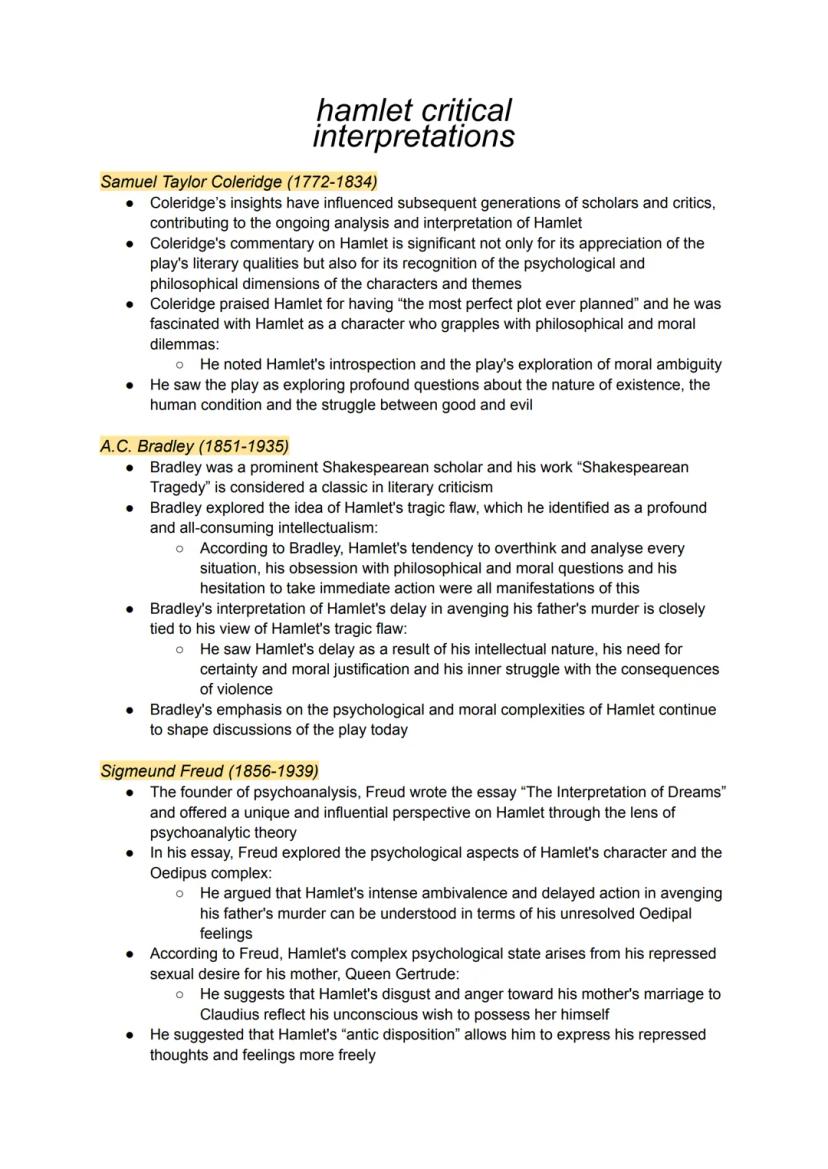
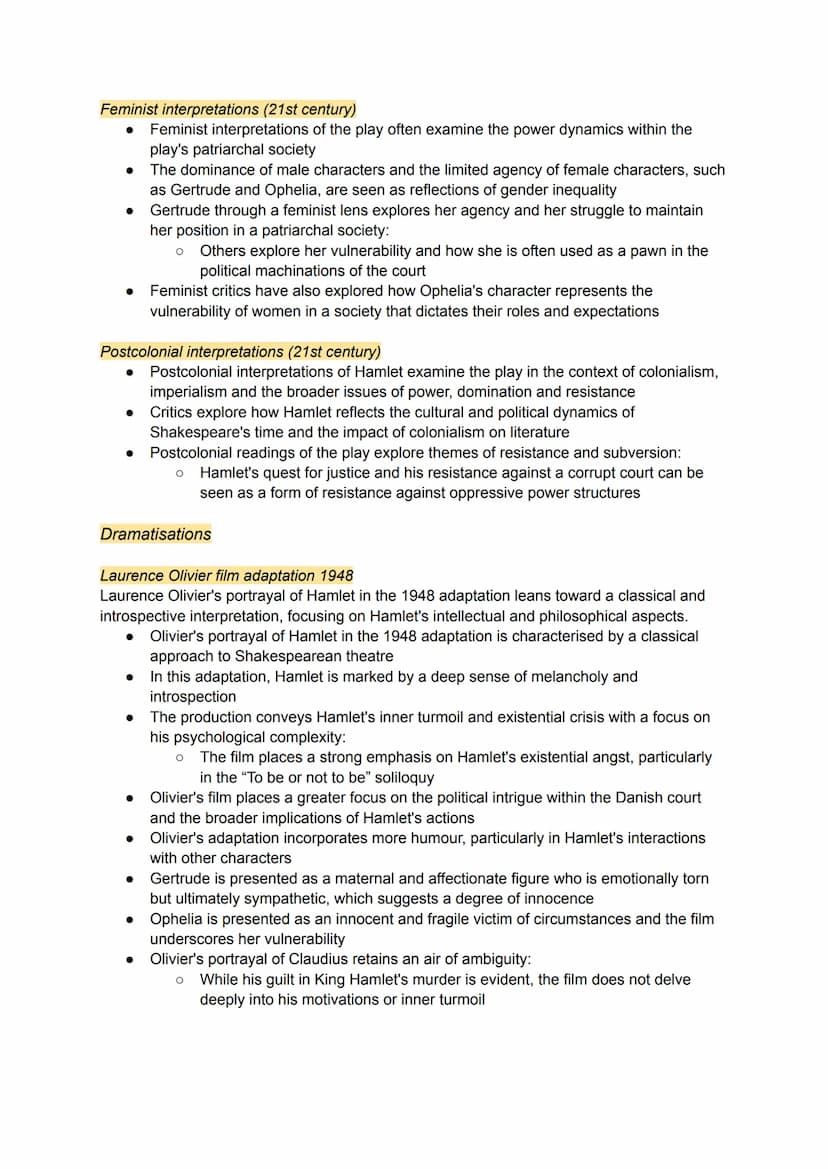
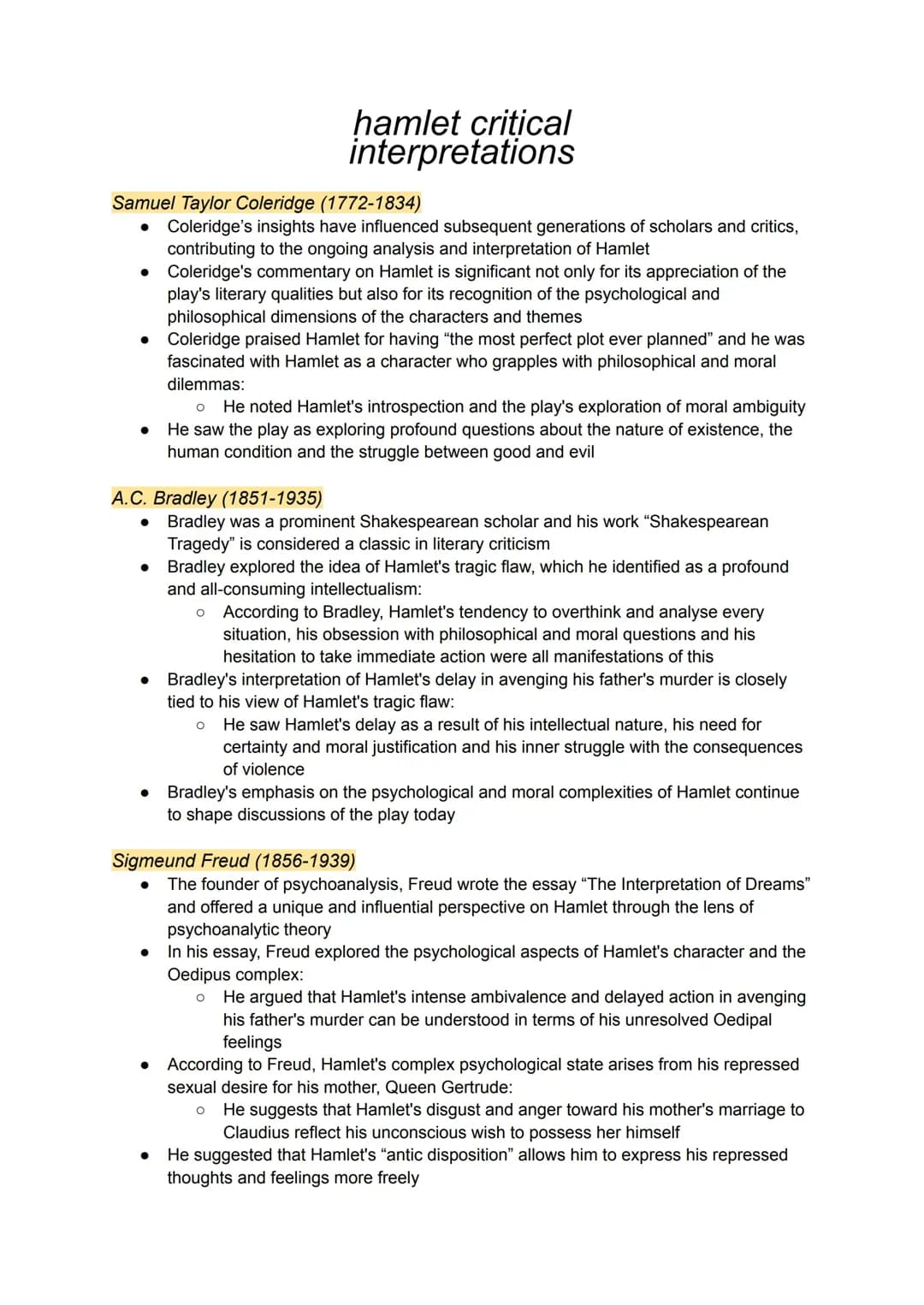
Samuel Taylor Coleridge revolutionised how we think about Hamlet by recognising it as more than just entertainment. He praised the play for having "the most perfect plot ever planned" and was fascinated by Hamlet's introspection and moral struggles. Coleridge saw the play tackling massive questions about existence and the human condition.
A.C. Bradley took this further by identifying Hamlet's tragic flaw as his overwhelming intellectualism. According to Bradley, Hamlet thinks too much - his constant analysis and need for moral certainty cause his famous delay in seeking revenge. This psychological approach to understanding characters was groundbreaking for its time.
Sigmund Freud brought psychoanalysis to Shakespeare, arguing that Hamlet's behaviour stems from the Oedipal complex. Freud suggested that Hamlet's delayed action comes from repressed sexual feelings for his mother, Gertrude. His "antic disposition" (pretending to be mad) allows him to express these forbidden thoughts safely.
Key insight: These early critics moved beyond surface-level analysis to explore the psychological depths of Shakespeare's characters, laying the groundwork for modern literary criticism.
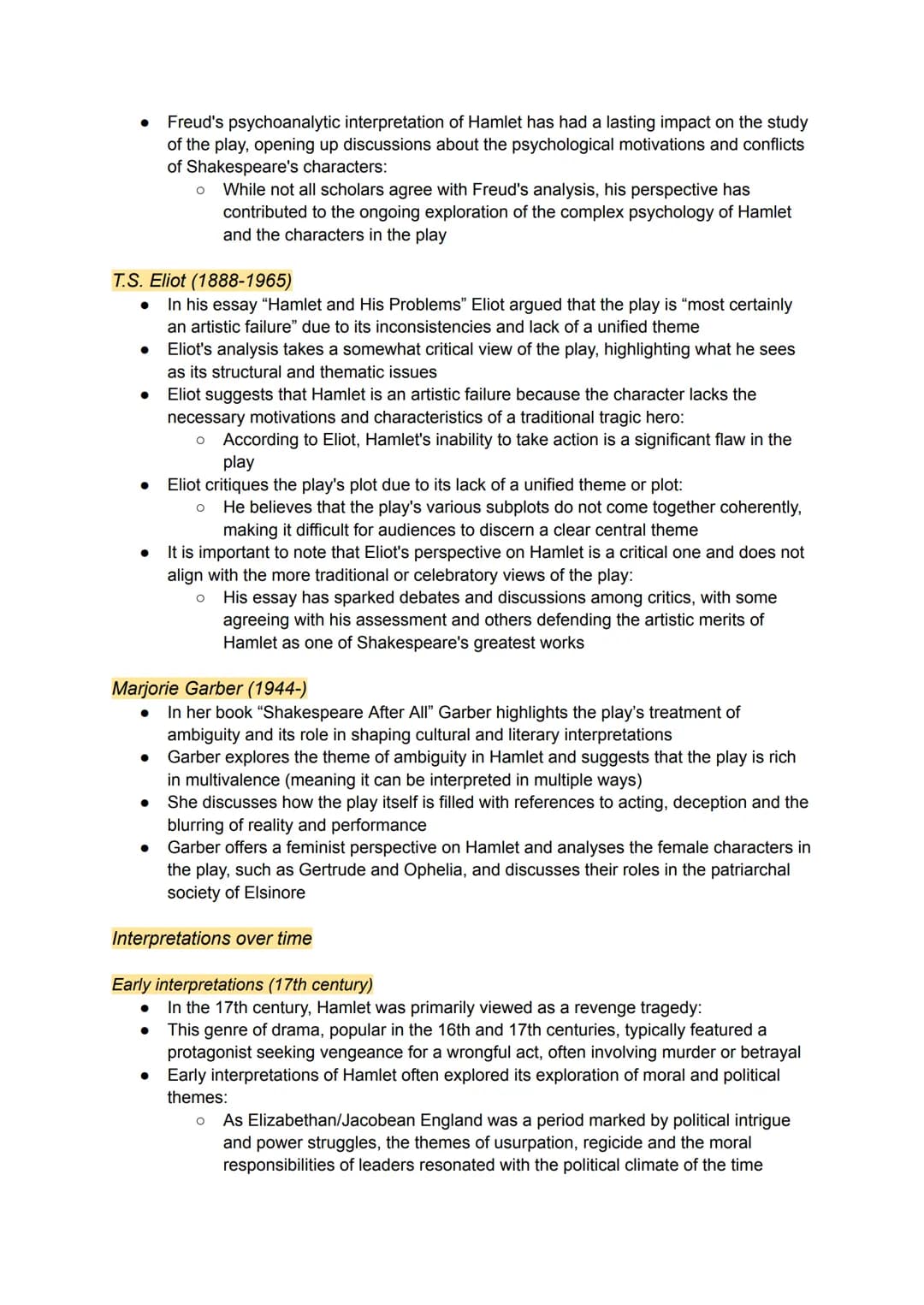
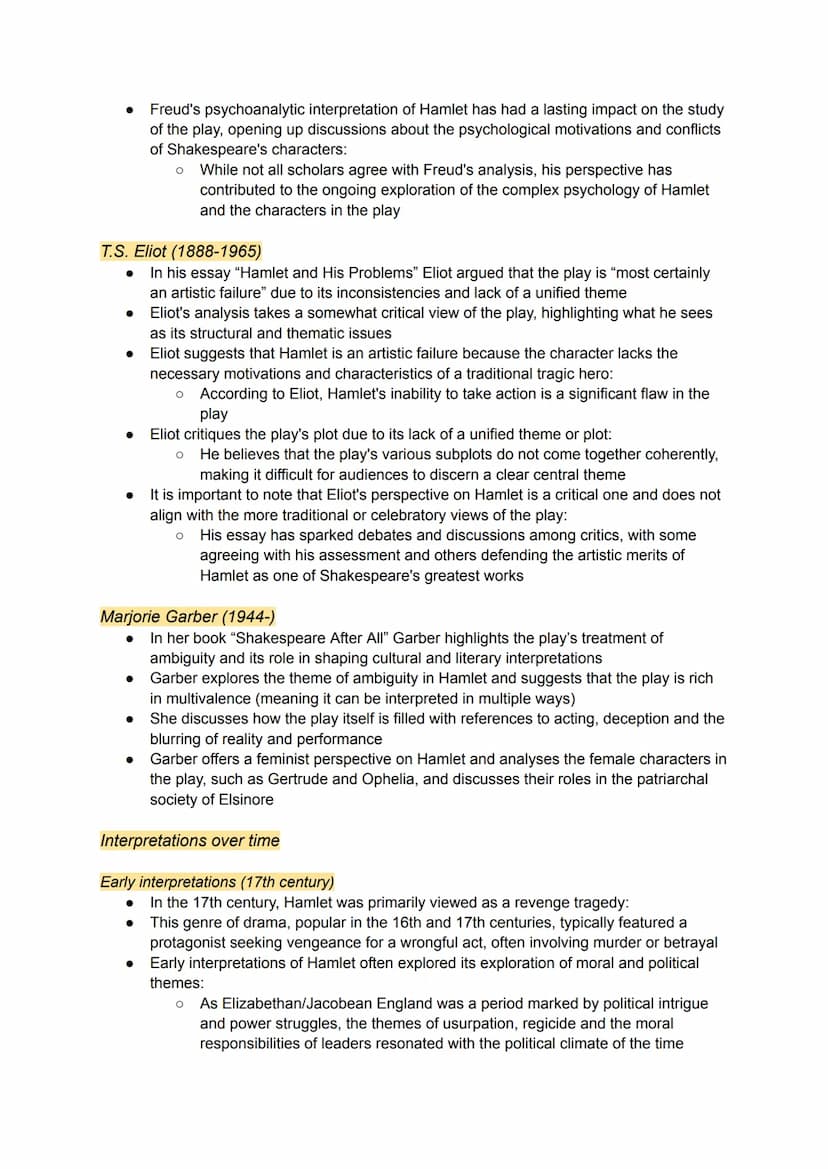
T.S. Eliot shocked the literary world by calling Hamlet "an artistic failure" in his essay "Hamlet and His Problems". He argued that the play lacks unity and that Hamlet himself doesn't have proper motivation for a tragic hero. Eliot believed the various subplots don't connect coherently, making it difficult to find a clear central theme.
Marjorie Garber offers a more positive view, celebrating the play's ambiguity and multiple meanings. In "Shakespeare After All", she explores how the play deliberately blurs the lines between reality and performance. Garber also brings a feminist perspective, analysing how female characters like Gertrude and Ophelia function within the patriarchal world of Elsinore.
These contrasting views show how Hamlet continues to provoke debate. Whilst Eliot saw confusion and failure, Garber sees richness and complexity. This ongoing disagreement amongst critics actually proves the play's enduring power to generate new interpretations.
Key insight: Modern critics don't always agree - and that's perfectly fine! Different perspectives help us understand the play's complexity rather than finding one "correct" interpretation.
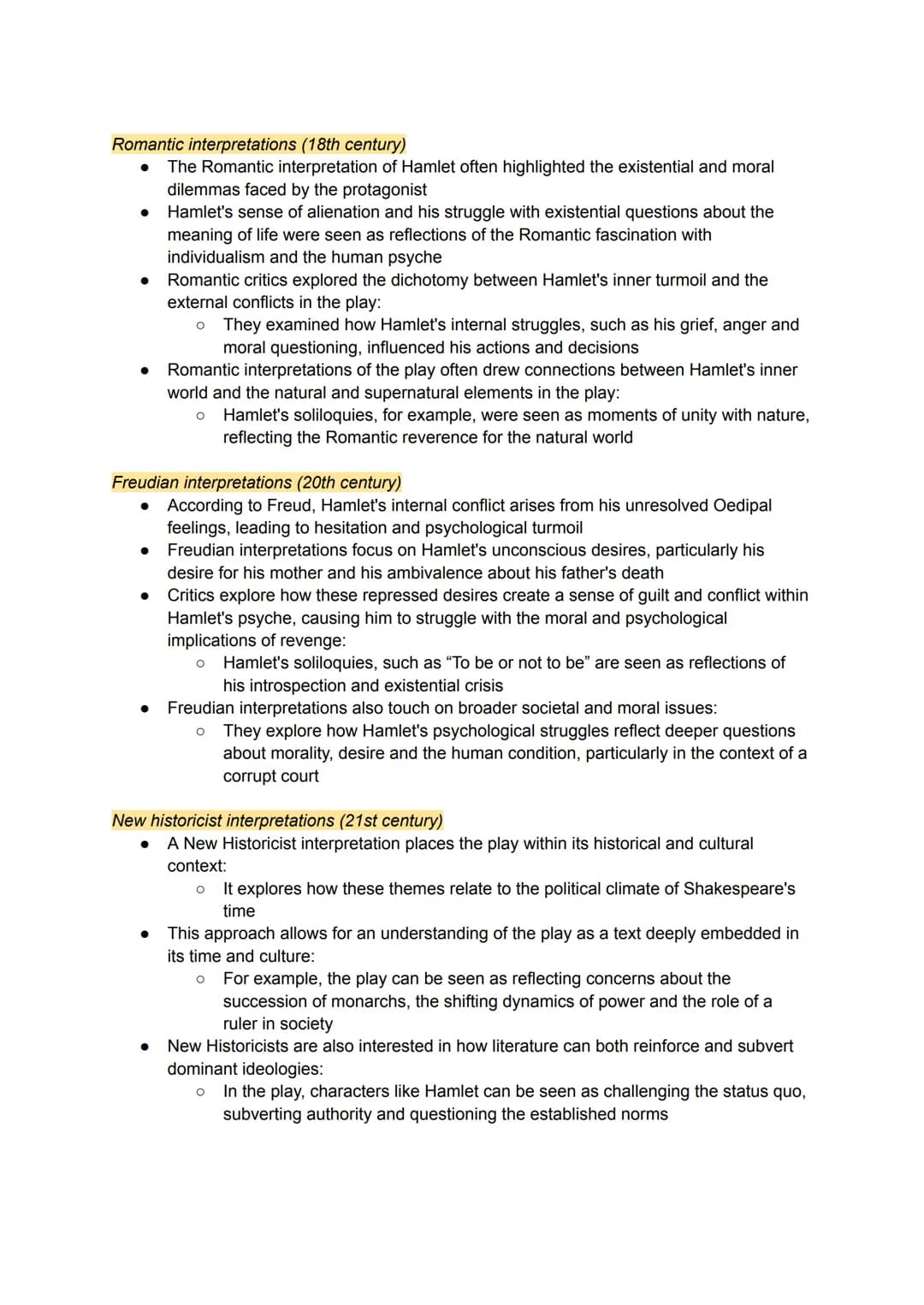
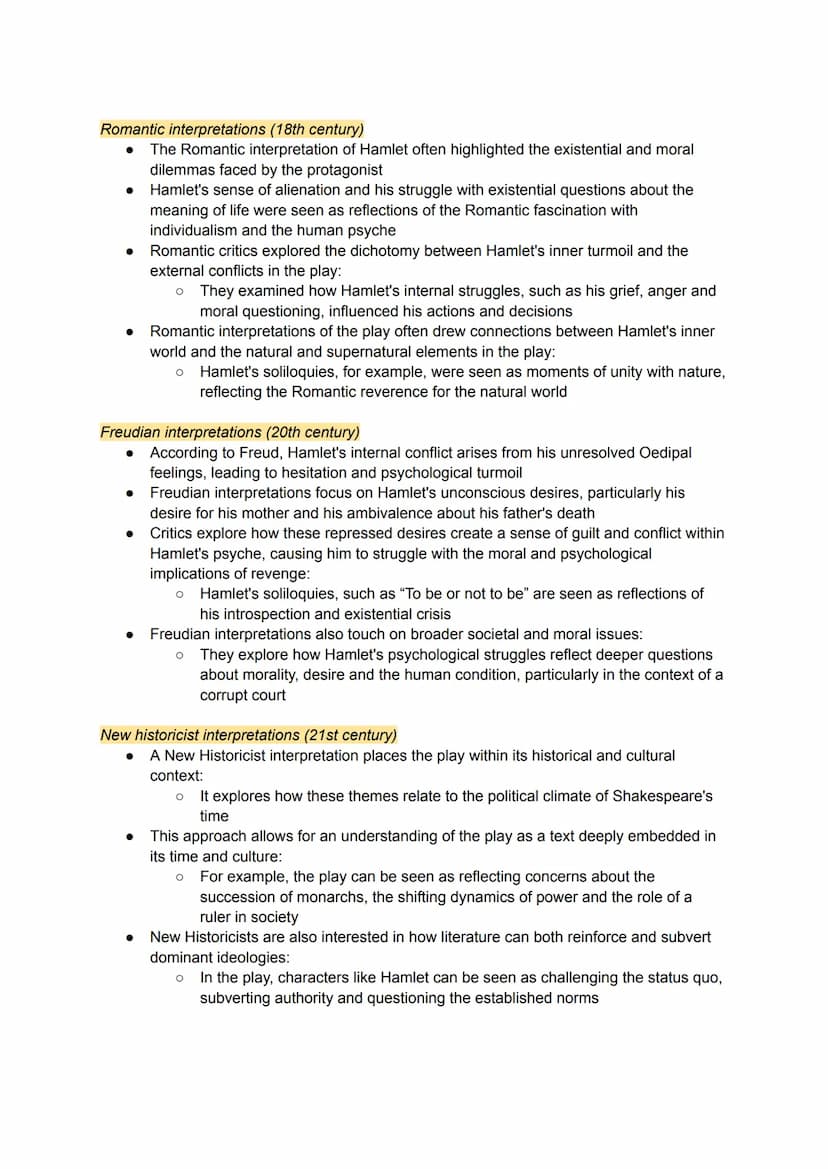
Understanding how interpretations change over time reveals as much about society as it does about the play itself. In the 17th century, audiences saw Hamlet primarily as a revenge tragedy - a popular genre focusing on vengeance for wrongdoing. The political themes resonated with Elizabethan and Jacobean audiences living through real political intrigue.
The 18th century brought Romantic interpretations that emphasised Hamlet's existential struggles and alienation. Romantic critics connected Hamlet's inner turmoil with nature and the supernatural, seeing his soliloquies as moments of unity with the natural world. This reflected the Romantic movement's fascination with individualism and the human psyche.
Freudian interpretations dominated the 20th century, focusing on unconscious desires and psychological conflict. The famous "To be or not to be" soliloquy became viewed as an expression of Hamlet's introspective crisis and unresolved feelings about his parents.
21st-century approaches include New Historicism (examining the play within Shakespeare's historical context), feminism (analysing gender power dynamics), and postcolonialism (exploring themes of resistance and oppression). These modern lenses help us understand how the play speaks to contemporary issues of power, gender, and social justice.
Key insight: Each era finds what it needs in Hamlet - whether political commentary, psychological insight, or social critique. The play's meaning evolves with its audience.
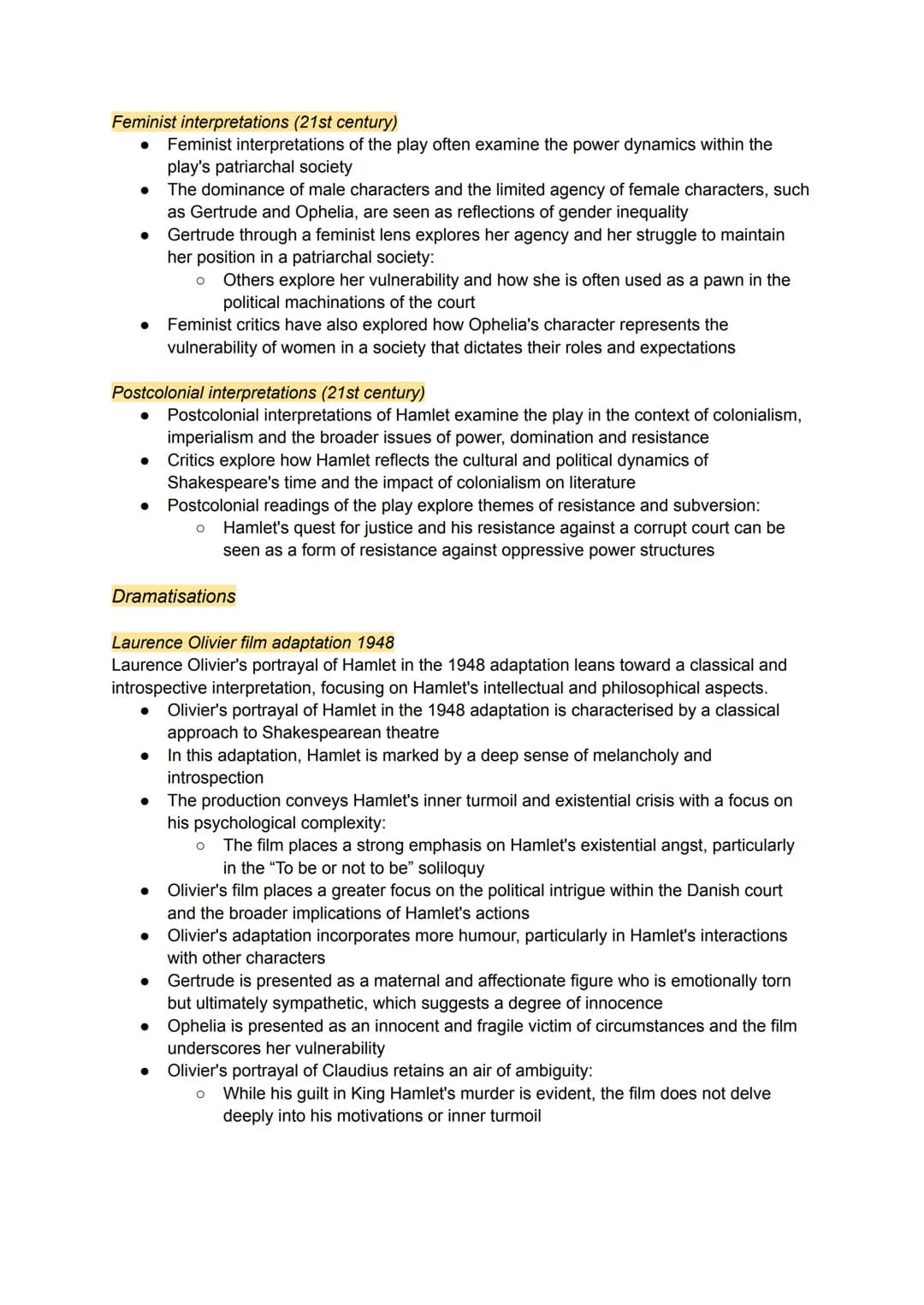
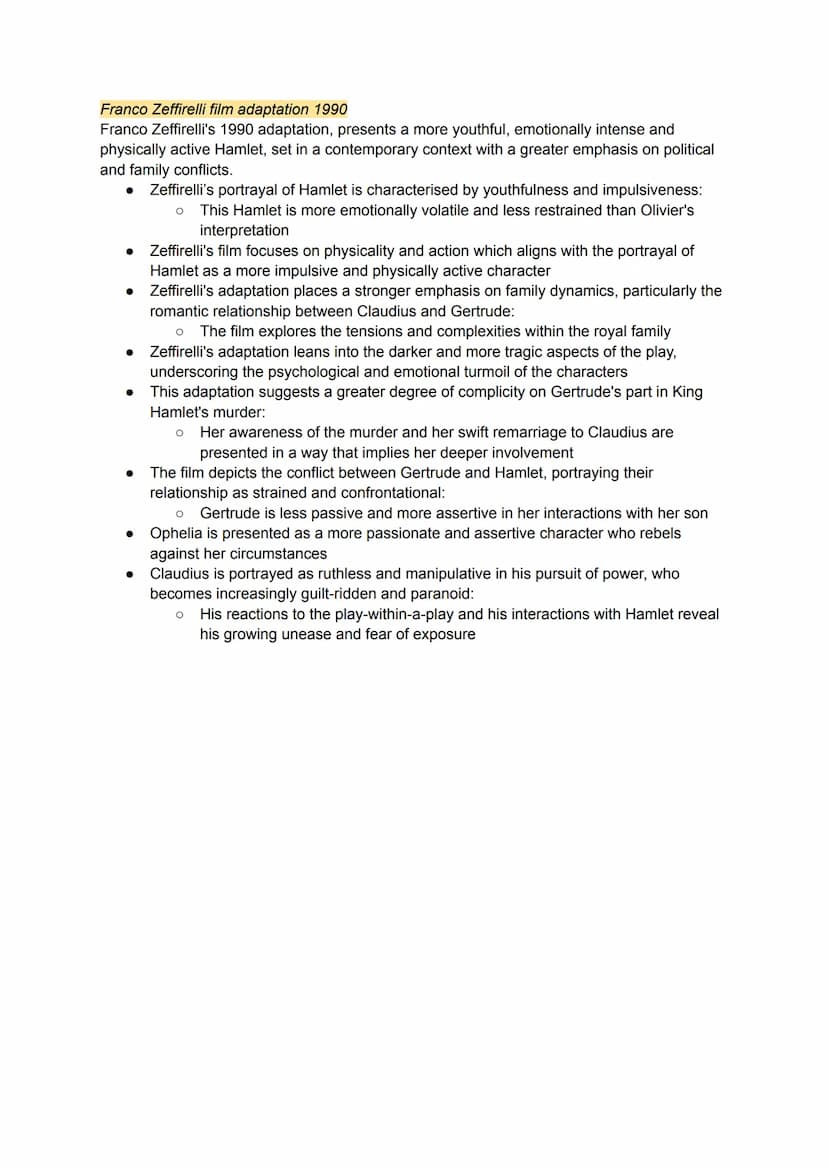
Laurence Olivier's 1948 film adaptation presents a classical, introspective Hamlet that emphasises intellectual and philosophical aspects. This version focuses heavily on Hamlet's melancholy and existential crisis, particularly in the famous "To be or not to be" soliloquy, which becomes a meditation on life's meaning.
Olivier's Hamlet is characterised by psychological complexity rather than physical action. The film places greater emphasis on political intrigue within the Danish court and incorporates more humour in Hamlet's interactions with other characters. This creates a more nuanced, contemplative protagonist.
The supporting characters receive sympathetic treatment in Olivier's version. Gertrude appears as a maternal, emotionally torn figure who seems relatively innocent, whilst Ophelia is presented as a fragile victim of circumstances. Claudius remains ambiguous - clearly guilty but without deep exploration of his motivations.
This adaptation reflects mid-20th century theatrical traditions and post-war audiences' interest in psychological depth and moral complexity. Olivier's classical approach treats the text with reverence whilst making it accessible to film audiences.
Key insight: Olivier's interpretation reflects 1940s values - emphasising intellectual struggle over physical action, and presenting a more sympathetic view of the female characters.
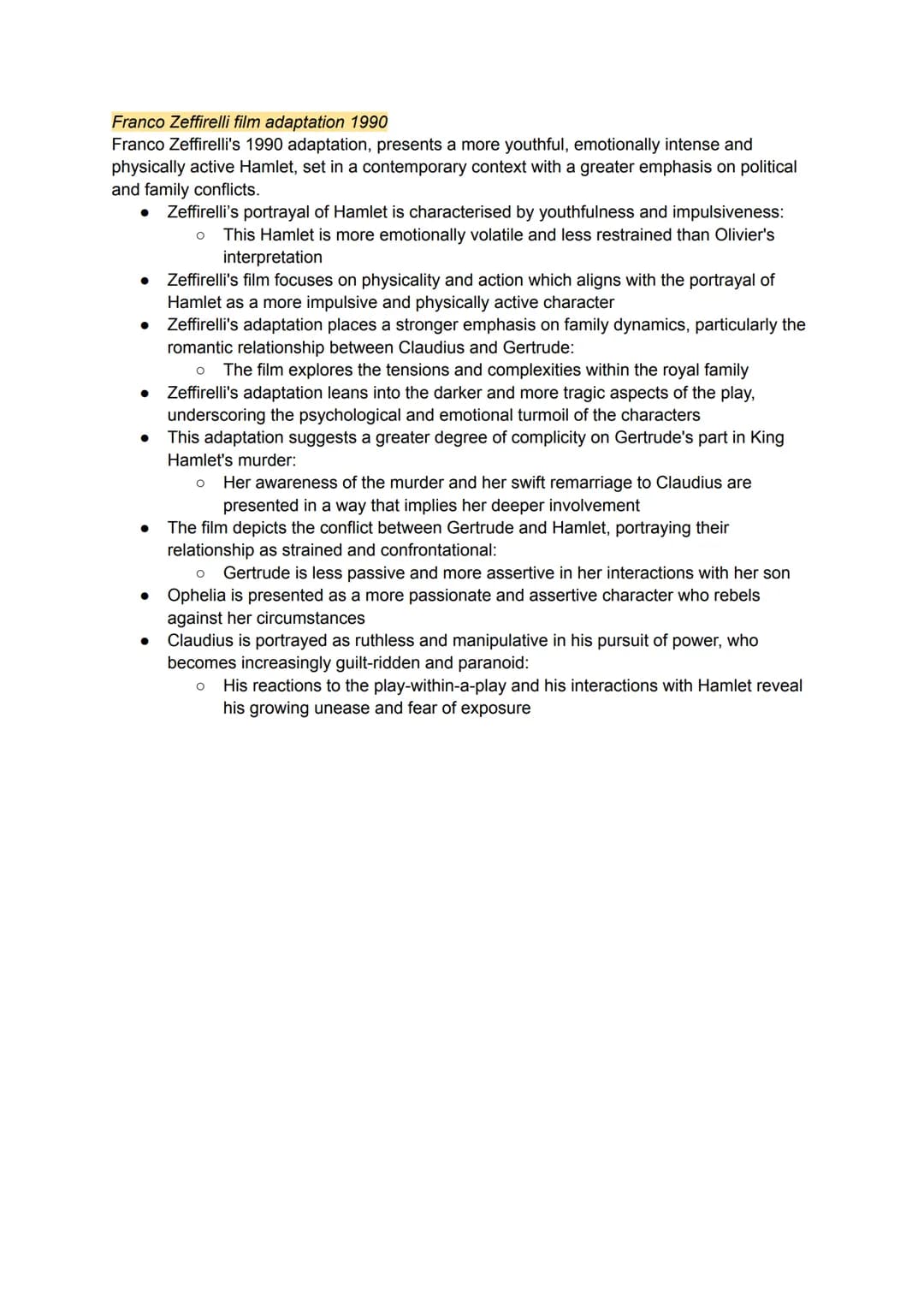
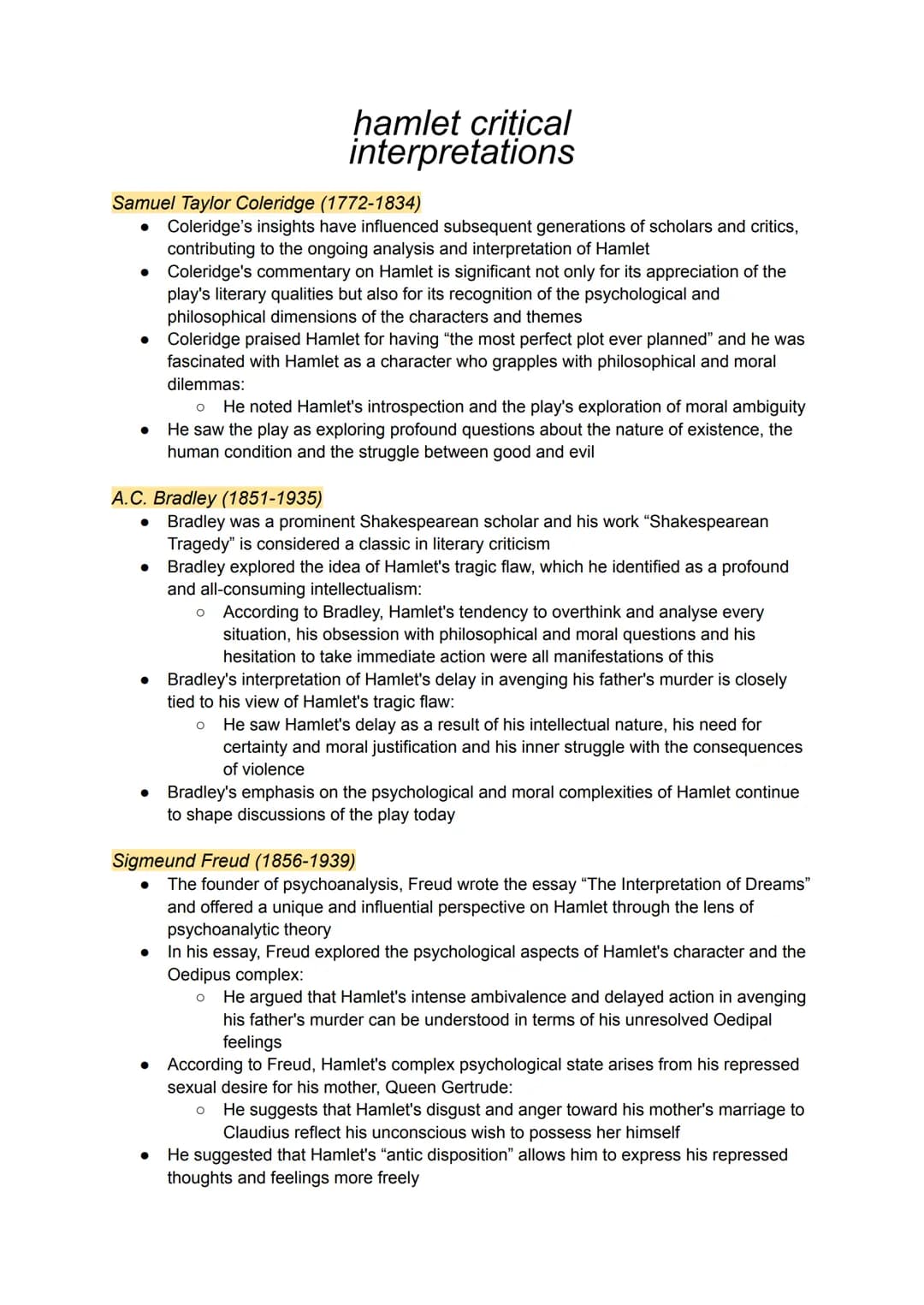
Franco Zeffirelli's 1990 adaptation presents a dramatically different Hamlet - youthful, emotionally volatile, and physically active. This version emphasises impulsiveness over intellectualism, creating a more emotionally intense and less restrained protagonist than Olivier's contemplative prince.
The film focuses on physicality and action, aligning with contemporary cinema's preference for dynamic storytelling. Zeffirelli places stronger emphasis on family dynamics, particularly the romantic relationship between Claudius and Gertrude, exploring the tensions within the royal family more explicitly.
The supporting characters become more complex and morally ambiguous. Gertrude is presented with greater complicity in King Hamlet's murder, appearing less passive and more assertive in confrontations with her son. Ophelia transforms into a more passionate, rebellious character rather than a simple victim.
Claudius emerges as thoroughly ruthless and manipulative, becoming increasingly paranoid as his guilt overwhelms him. This darker interpretation reflects 1990s audiences' appetite for psychological complexity and moral ambiguity in their heroes and villains.
Key insight: Zeffirelli's adaptation shows how the same text can support radically different interpretations, reflecting changing cultural values and cinematic styles between 1948 and 1990.
Our AI Companion is a student-focused AI tool that offers more than just answers. Built on millions of Knowunity resources, it provides relevant information, personalised study plans, quizzes, and content directly in the chat, adapting to your individual learning journey.
You can download the app from Google Play Store and Apple App Store.
That's right! Enjoy free access to study content, connect with fellow students, and get instant help – all at your fingertips.
App Store
Google Play
The app is very easy to use and well designed. I have found everything I was looking for so far and have been able to learn a lot from the presentations! I will definitely use the app for a class assignment! And of course it also helps a lot as an inspiration.
Stefan S
iOS user
This app is really great. There are so many study notes and help [...]. My problem subject is French, for example, and the app has so many options for help. Thanks to this app, I have improved my French. I would recommend it to anyone.
Samantha Klich
Android user
Wow, I am really amazed. I just tried the app because I've seen it advertised many times and was absolutely stunned. This app is THE HELP you want for school and above all, it offers so many things, such as workouts and fact sheets, which have been VERY helpful to me personally.
Anna
iOS user
Best app on earth! no words because it’s too good
Thomas R
iOS user
Just amazing. Let's me revise 10x better, this app is a quick 10/10. I highly recommend it to anyone. I can watch and search for notes. I can save them in the subject folder. I can revise it any time when I come back. If you haven't tried this app, you're really missing out.
Basil
Android user
This app has made me feel so much more confident in my exam prep, not only through boosting my own self confidence through the features that allow you to connect with others and feel less alone, but also through the way the app itself is centred around making you feel better. It is easy to navigate, fun to use, and helpful to anyone struggling in absolutely any way.
David K
iOS user
The app's just great! All I have to do is enter the topic in the search bar and I get the response real fast. I don't have to watch 10 YouTube videos to understand something, so I'm saving my time. Highly recommended!
Sudenaz Ocak
Android user
In school I was really bad at maths but thanks to the app, I am doing better now. I am so grateful that you made the app.
Greenlight Bonnie
Android user
very reliable app to help and grow your ideas of Maths, English and other related topics in your works. please use this app if your struggling in areas, this app is key for that. wish I'd of done a review before. and it's also free so don't worry about that.
Rohan U
Android user
I know a lot of apps use fake accounts to boost their reviews but this app deserves it all. Originally I was getting 4 in my English exams and this time I got a grade 7. I didn’t even know about this app three days until the exam and it has helped A LOT. Please actually trust me and use it as I’m sure you too will see developments.
Xander S
iOS user
THE QUIZES AND FLASHCARDS ARE SO USEFUL AND I LOVE THE SCHOOLGPT. IT ALSO IS LITREALLY LIKE CHATGPT BUT SMARTER!! HELPED ME WITH MY MASCARA PROBLEMS TOO!! AS WELL AS MY REAL SUBJECTS ! DUHHH 😍😁😲🤑💗✨🎀😮
Elisha
iOS user
This apps acc the goat. I find revision so boring but this app makes it so easy to organize it all and then you can ask the freeeee ai to test yourself so good and you can easily upload your own stuff. highly recommend as someone taking mocks now
Paul T
iOS user
The app is very easy to use and well designed. I have found everything I was looking for so far and have been able to learn a lot from the presentations! I will definitely use the app for a class assignment! And of course it also helps a lot as an inspiration.
Stefan S
iOS user
This app is really great. There are so many study notes and help [...]. My problem subject is French, for example, and the app has so many options for help. Thanks to this app, I have improved my French. I would recommend it to anyone.
Samantha Klich
Android user
Wow, I am really amazed. I just tried the app because I've seen it advertised many times and was absolutely stunned. This app is THE HELP you want for school and above all, it offers so many things, such as workouts and fact sheets, which have been VERY helpful to me personally.
Anna
iOS user
Best app on earth! no words because it’s too good
Thomas R
iOS user
Just amazing. Let's me revise 10x better, this app is a quick 10/10. I highly recommend it to anyone. I can watch and search for notes. I can save them in the subject folder. I can revise it any time when I come back. If you haven't tried this app, you're really missing out.
Basil
Android user
This app has made me feel so much more confident in my exam prep, not only through boosting my own self confidence through the features that allow you to connect with others and feel less alone, but also through the way the app itself is centred around making you feel better. It is easy to navigate, fun to use, and helpful to anyone struggling in absolutely any way.
David K
iOS user
The app's just great! All I have to do is enter the topic in the search bar and I get the response real fast. I don't have to watch 10 YouTube videos to understand something, so I'm saving my time. Highly recommended!
Sudenaz Ocak
Android user
In school I was really bad at maths but thanks to the app, I am doing better now. I am so grateful that you made the app.
Greenlight Bonnie
Android user
very reliable app to help and grow your ideas of Maths, English and other related topics in your works. please use this app if your struggling in areas, this app is key for that. wish I'd of done a review before. and it's also free so don't worry about that.
Rohan U
Android user
I know a lot of apps use fake accounts to boost their reviews but this app deserves it all. Originally I was getting 4 in my English exams and this time I got a grade 7. I didn’t even know about this app three days until the exam and it has helped A LOT. Please actually trust me and use it as I’m sure you too will see developments.
Xander S
iOS user
THE QUIZES AND FLASHCARDS ARE SO USEFUL AND I LOVE THE SCHOOLGPT. IT ALSO IS LITREALLY LIKE CHATGPT BUT SMARTER!! HELPED ME WITH MY MASCARA PROBLEMS TOO!! AS WELL AS MY REAL SUBJECTS ! DUHHH 😍😁😲🤑💗✨🎀😮
Elisha
iOS user
This apps acc the goat. I find revision so boring but this app makes it so easy to organize it all and then you can ask the freeeee ai to test yourself so good and you can easily upload your own stuff. highly recommend as someone taking mocks now
Paul T
iOS user
lily wilkes
@lilywilkes
Hamlet has fascinated critics and audiences for centuries, with each generation finding new ways to understand Shakespeare's complex tragedy. From psychological analysis to feminist readings, these different interpretations reveal how the play continues to speak to contemporary concerns and themes.
Access to all documents
Improve your grades
Join milions of students
By signing up you accept Terms of Service and Privacy Policy
Samuel Taylor Coleridge revolutionised how we think about Hamlet by recognising it as more than just entertainment. He praised the play for having "the most perfect plot ever planned" and was fascinated by Hamlet's introspection and moral struggles. Coleridge saw the play tackling massive questions about existence and the human condition.
A.C. Bradley took this further by identifying Hamlet's tragic flaw as his overwhelming intellectualism. According to Bradley, Hamlet thinks too much - his constant analysis and need for moral certainty cause his famous delay in seeking revenge. This psychological approach to understanding characters was groundbreaking for its time.
Sigmund Freud brought psychoanalysis to Shakespeare, arguing that Hamlet's behaviour stems from the Oedipal complex. Freud suggested that Hamlet's delayed action comes from repressed sexual feelings for his mother, Gertrude. His "antic disposition" (pretending to be mad) allows him to express these forbidden thoughts safely.
Key insight: These early critics moved beyond surface-level analysis to explore the psychological depths of Shakespeare's characters, laying the groundwork for modern literary criticism.
Access to all documents
Improve your grades
Join milions of students
By signing up you accept Terms of Service and Privacy Policy
T.S. Eliot shocked the literary world by calling Hamlet "an artistic failure" in his essay "Hamlet and His Problems". He argued that the play lacks unity and that Hamlet himself doesn't have proper motivation for a tragic hero. Eliot believed the various subplots don't connect coherently, making it difficult to find a clear central theme.
Marjorie Garber offers a more positive view, celebrating the play's ambiguity and multiple meanings. In "Shakespeare After All", she explores how the play deliberately blurs the lines between reality and performance. Garber also brings a feminist perspective, analysing how female characters like Gertrude and Ophelia function within the patriarchal world of Elsinore.
These contrasting views show how Hamlet continues to provoke debate. Whilst Eliot saw confusion and failure, Garber sees richness and complexity. This ongoing disagreement amongst critics actually proves the play's enduring power to generate new interpretations.
Key insight: Modern critics don't always agree - and that's perfectly fine! Different perspectives help us understand the play's complexity rather than finding one "correct" interpretation.
Access to all documents
Improve your grades
Join milions of students
By signing up you accept Terms of Service and Privacy Policy
Understanding how interpretations change over time reveals as much about society as it does about the play itself. In the 17th century, audiences saw Hamlet primarily as a revenge tragedy - a popular genre focusing on vengeance for wrongdoing. The political themes resonated with Elizabethan and Jacobean audiences living through real political intrigue.
The 18th century brought Romantic interpretations that emphasised Hamlet's existential struggles and alienation. Romantic critics connected Hamlet's inner turmoil with nature and the supernatural, seeing his soliloquies as moments of unity with the natural world. This reflected the Romantic movement's fascination with individualism and the human psyche.
Freudian interpretations dominated the 20th century, focusing on unconscious desires and psychological conflict. The famous "To be or not to be" soliloquy became viewed as an expression of Hamlet's introspective crisis and unresolved feelings about his parents.
21st-century approaches include New Historicism (examining the play within Shakespeare's historical context), feminism (analysing gender power dynamics), and postcolonialism (exploring themes of resistance and oppression). These modern lenses help us understand how the play speaks to contemporary issues of power, gender, and social justice.
Key insight: Each era finds what it needs in Hamlet - whether political commentary, psychological insight, or social critique. The play's meaning evolves with its audience.
Access to all documents
Improve your grades
Join milions of students
By signing up you accept Terms of Service and Privacy Policy
Laurence Olivier's 1948 film adaptation presents a classical, introspective Hamlet that emphasises intellectual and philosophical aspects. This version focuses heavily on Hamlet's melancholy and existential crisis, particularly in the famous "To be or not to be" soliloquy, which becomes a meditation on life's meaning.
Olivier's Hamlet is characterised by psychological complexity rather than physical action. The film places greater emphasis on political intrigue within the Danish court and incorporates more humour in Hamlet's interactions with other characters. This creates a more nuanced, contemplative protagonist.
The supporting characters receive sympathetic treatment in Olivier's version. Gertrude appears as a maternal, emotionally torn figure who seems relatively innocent, whilst Ophelia is presented as a fragile victim of circumstances. Claudius remains ambiguous - clearly guilty but without deep exploration of his motivations.
This adaptation reflects mid-20th century theatrical traditions and post-war audiences' interest in psychological depth and moral complexity. Olivier's classical approach treats the text with reverence whilst making it accessible to film audiences.
Key insight: Olivier's interpretation reflects 1940s values - emphasising intellectual struggle over physical action, and presenting a more sympathetic view of the female characters.
Access to all documents
Improve your grades
Join milions of students
By signing up you accept Terms of Service and Privacy Policy
Franco Zeffirelli's 1990 adaptation presents a dramatically different Hamlet - youthful, emotionally volatile, and physically active. This version emphasises impulsiveness over intellectualism, creating a more emotionally intense and less restrained protagonist than Olivier's contemplative prince.
The film focuses on physicality and action, aligning with contemporary cinema's preference for dynamic storytelling. Zeffirelli places stronger emphasis on family dynamics, particularly the romantic relationship between Claudius and Gertrude, exploring the tensions within the royal family more explicitly.
The supporting characters become more complex and morally ambiguous. Gertrude is presented with greater complicity in King Hamlet's murder, appearing less passive and more assertive in confrontations with her son. Ophelia transforms into a more passionate, rebellious character rather than a simple victim.
Claudius emerges as thoroughly ruthless and manipulative, becoming increasingly paranoid as his guilt overwhelms him. This darker interpretation reflects 1990s audiences' appetite for psychological complexity and moral ambiguity in their heroes and villains.
Key insight: Zeffirelli's adaptation shows how the same text can support radically different interpretations, reflecting changing cultural values and cinematic styles between 1948 and 1990.
Our AI Companion is a student-focused AI tool that offers more than just answers. Built on millions of Knowunity resources, it provides relevant information, personalised study plans, quizzes, and content directly in the chat, adapting to your individual learning journey.
You can download the app from Google Play Store and Apple App Store.
That's right! Enjoy free access to study content, connect with fellow students, and get instant help – all at your fingertips.
31
Smart Tools NEW
Transform this note into: ✓ 50+ Practice Questions ✓ Interactive Flashcards ✓ Full Mock Exam ✓ Essay Outlines
Explore the dynamics of gendered communication through a detailed analysis of a transcript from 'The Apprentice'. This study note examines how male and female candidates use language differently, highlighting key theories such as Deborah Tannen's Difference Theory and Jennifer Coates' Politeness Theory. Ideal for A-Level English Language students, this resource provides insights into language use, interruptions, and conversational strategies, making it a valuable tool for essay writing and exam preparation.
English Lang.Explore key gender theories in language, focusing on the works of Bodine, Cameron, Tannen, and Lakoff. This summary highlights androcentric language, language asymmetry, and communication styles between genders. Ideal for A Level English Language students seeking to understand the nuances of gendered communication and its implications in literature and society.
English Lang.Explore the effects of communication technologies on the evolution of the English language. This summary discusses key arguments from prescriptivists and descriptivists, including insights from linguists like David Crystal. Understand how text speak and social media influence language efficiency and literacy among young people. Ideal for A-Level English Language students preparing for essays and discussions on language change.
English Lang.This study note delves into the key themes of dystopian literature as presented in 'The Handmaid's Tale' and its connections to works like 'Animal Farm' and '1984'. It covers the exploration of authoritarian regimes, the impact of patriarchy, and the moral implications of power and control. Ideal for students studying dystopian narratives and their societal critiques.
English LanguageExplore the intricate role of memory and color symbolism in Margaret Atwood's 'The Handmaid's Tale'. This analysis delves into how Offred's memories shape her identity and resistance against the oppressive regime of Gilead. Key themes include the manipulation of truth, the significance of color in representing societal roles, and the impact of personal history on the present. Ideal for students studying literary analysis and thematic exploration.
English LanguageExplore the intricate portrayal of supernatural elements in Shakespeare's 'Macbeth' through this high-grade model answer. Delve into the connections between the supernatural, gender dynamics, and patriarchal critique, highlighting key moments such as the witches' chants and Lady Macbeth's soliloquy. Ideal for AQA English Literature students seeking to enhance their understanding and achieve top marks.
English Lang.App Store
Google Play
The app is very easy to use and well designed. I have found everything I was looking for so far and have been able to learn a lot from the presentations! I will definitely use the app for a class assignment! And of course it also helps a lot as an inspiration.
Stefan S
iOS user
This app is really great. There are so many study notes and help [...]. My problem subject is French, for example, and the app has so many options for help. Thanks to this app, I have improved my French. I would recommend it to anyone.
Samantha Klich
Android user
Wow, I am really amazed. I just tried the app because I've seen it advertised many times and was absolutely stunned. This app is THE HELP you want for school and above all, it offers so many things, such as workouts and fact sheets, which have been VERY helpful to me personally.
Anna
iOS user
Best app on earth! no words because it’s too good
Thomas R
iOS user
Just amazing. Let's me revise 10x better, this app is a quick 10/10. I highly recommend it to anyone. I can watch and search for notes. I can save them in the subject folder. I can revise it any time when I come back. If you haven't tried this app, you're really missing out.
Basil
Android user
This app has made me feel so much more confident in my exam prep, not only through boosting my own self confidence through the features that allow you to connect with others and feel less alone, but also through the way the app itself is centred around making you feel better. It is easy to navigate, fun to use, and helpful to anyone struggling in absolutely any way.
David K
iOS user
The app's just great! All I have to do is enter the topic in the search bar and I get the response real fast. I don't have to watch 10 YouTube videos to understand something, so I'm saving my time. Highly recommended!
Sudenaz Ocak
Android user
In school I was really bad at maths but thanks to the app, I am doing better now. I am so grateful that you made the app.
Greenlight Bonnie
Android user
very reliable app to help and grow your ideas of Maths, English and other related topics in your works. please use this app if your struggling in areas, this app is key for that. wish I'd of done a review before. and it's also free so don't worry about that.
Rohan U
Android user
I know a lot of apps use fake accounts to boost their reviews but this app deserves it all. Originally I was getting 4 in my English exams and this time I got a grade 7. I didn’t even know about this app three days until the exam and it has helped A LOT. Please actually trust me and use it as I’m sure you too will see developments.
Xander S
iOS user
THE QUIZES AND FLASHCARDS ARE SO USEFUL AND I LOVE THE SCHOOLGPT. IT ALSO IS LITREALLY LIKE CHATGPT BUT SMARTER!! HELPED ME WITH MY MASCARA PROBLEMS TOO!! AS WELL AS MY REAL SUBJECTS ! DUHHH 😍😁😲🤑💗✨🎀😮
Elisha
iOS user
This apps acc the goat. I find revision so boring but this app makes it so easy to organize it all and then you can ask the freeeee ai to test yourself so good and you can easily upload your own stuff. highly recommend as someone taking mocks now
Paul T
iOS user
The app is very easy to use and well designed. I have found everything I was looking for so far and have been able to learn a lot from the presentations! I will definitely use the app for a class assignment! And of course it also helps a lot as an inspiration.
Stefan S
iOS user
This app is really great. There are so many study notes and help [...]. My problem subject is French, for example, and the app has so many options for help. Thanks to this app, I have improved my French. I would recommend it to anyone.
Samantha Klich
Android user
Wow, I am really amazed. I just tried the app because I've seen it advertised many times and was absolutely stunned. This app is THE HELP you want for school and above all, it offers so many things, such as workouts and fact sheets, which have been VERY helpful to me personally.
Anna
iOS user
Best app on earth! no words because it’s too good
Thomas R
iOS user
Just amazing. Let's me revise 10x better, this app is a quick 10/10. I highly recommend it to anyone. I can watch and search for notes. I can save them in the subject folder. I can revise it any time when I come back. If you haven't tried this app, you're really missing out.
Basil
Android user
This app has made me feel so much more confident in my exam prep, not only through boosting my own self confidence through the features that allow you to connect with others and feel less alone, but also through the way the app itself is centred around making you feel better. It is easy to navigate, fun to use, and helpful to anyone struggling in absolutely any way.
David K
iOS user
The app's just great! All I have to do is enter the topic in the search bar and I get the response real fast. I don't have to watch 10 YouTube videos to understand something, so I'm saving my time. Highly recommended!
Sudenaz Ocak
Android user
In school I was really bad at maths but thanks to the app, I am doing better now. I am so grateful that you made the app.
Greenlight Bonnie
Android user
very reliable app to help and grow your ideas of Maths, English and other related topics in your works. please use this app if your struggling in areas, this app is key for that. wish I'd of done a review before. and it's also free so don't worry about that.
Rohan U
Android user
I know a lot of apps use fake accounts to boost their reviews but this app deserves it all. Originally I was getting 4 in my English exams and this time I got a grade 7. I didn’t even know about this app three days until the exam and it has helped A LOT. Please actually trust me and use it as I’m sure you too will see developments.
Xander S
iOS user
THE QUIZES AND FLASHCARDS ARE SO USEFUL AND I LOVE THE SCHOOLGPT. IT ALSO IS LITREALLY LIKE CHATGPT BUT SMARTER!! HELPED ME WITH MY MASCARA PROBLEMS TOO!! AS WELL AS MY REAL SUBJECTS ! DUHHH 😍😁😲🤑💗✨🎀😮
Elisha
iOS user
This apps acc the goat. I find revision so boring but this app makes it so easy to organize it all and then you can ask the freeeee ai to test yourself so good and you can easily upload your own stuff. highly recommend as someone taking mocks now
Paul T
iOS user