
Die Sapir-Whorf-Hypothese ist eine faszinierende linguistische Theorie, die den Zusammenhang...
 Deutsch7,628 views·Updated Jun 1, 2026·4 pages
Die Sapir-Whorf-Hypothese: Sprache und Denken im Fokus
1 / 4
1
of 4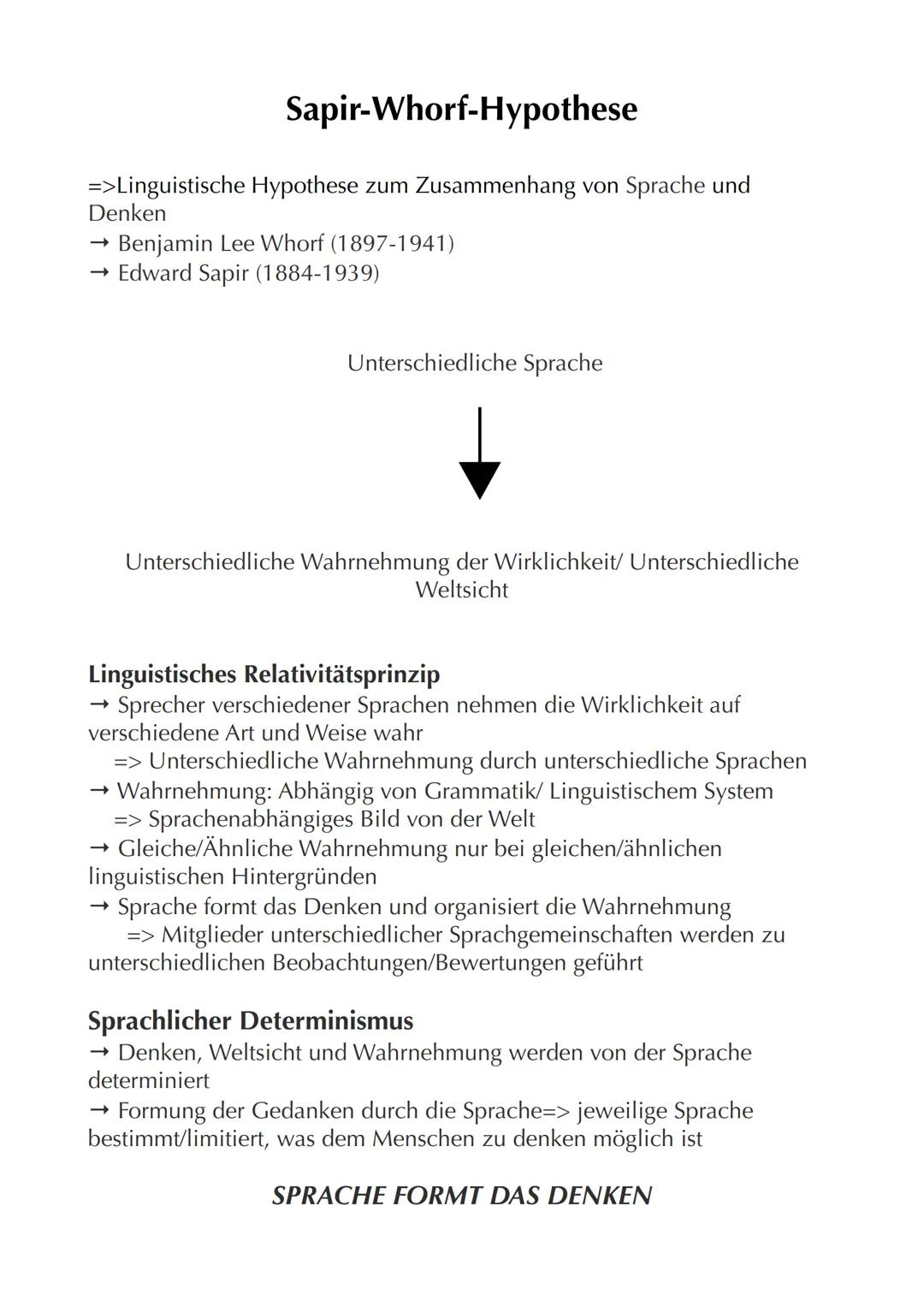
Sapir-Whorf-Hypothese
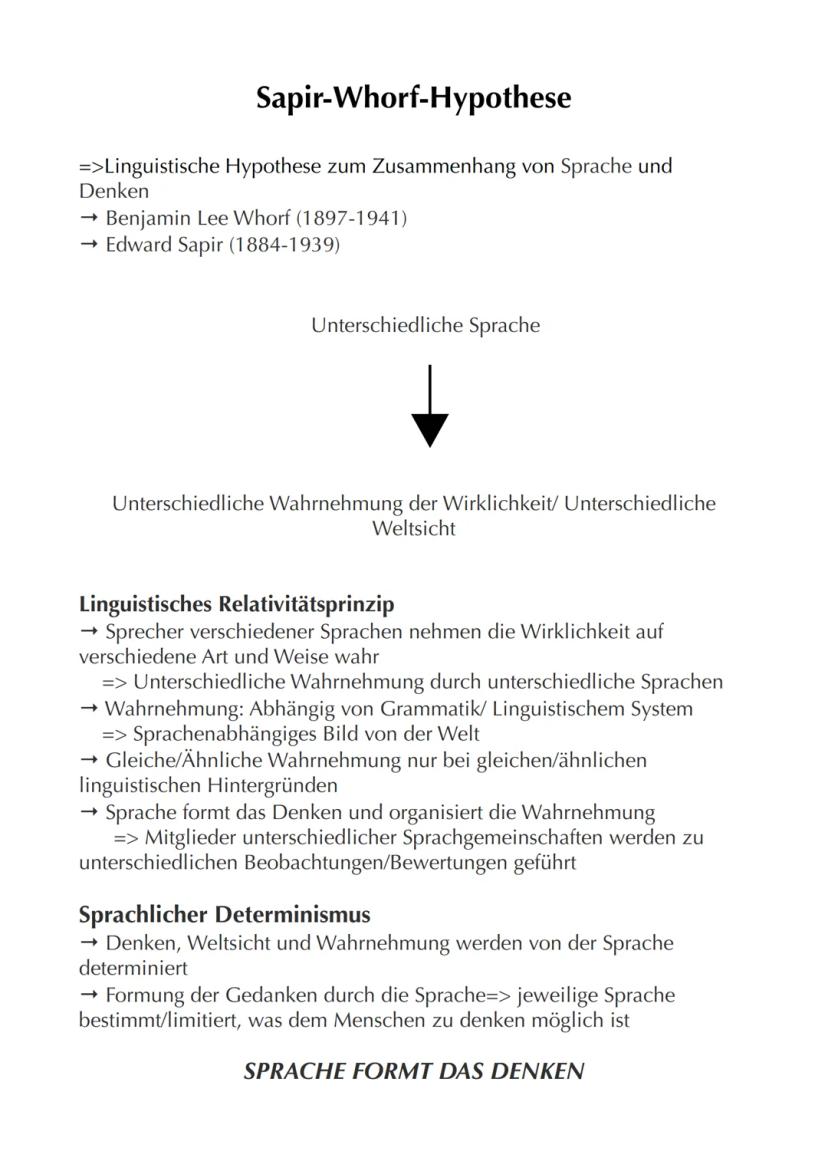
Die Sapir-Whorf-Hypothese ist eine linguistische Theorie, die von Benjamin Lee Whorf (1897-1941) und Edward Sapir (1884-1939) entwickelt wurde. Sie untersucht den Zusammenhang zwischen Sprache und Denken.
Die Kernidee lässt sich in zwei Hauptkonzepte unterteilen:
-
Linguistisches Relativitätsprinzip:
- Sprecher verschiedener Sprachen nehmen die Wirklichkeit unterschiedlich wahr
- Die Wahrnehmung ist abhängig vom grammatischen und linguistischen System
- Nur Menschen mit ähnlichen sprachlichen Hintergründen haben ähnliche Weltbilder
- Die Sprache organisiert aktiv unsere Wahrnehmung
-
Sprachlicher Determinismus:
- Das Denken, die Weltsicht und die Wahrnehmung werden von der Sprache bestimmt
- Die jeweilige Sprache limitiert, was dem Menschen zu denken möglich ist
- SPRACHE FORMT DAS DENKEN
Schlüsselkonzept: Der sprachliche Determinismus ist die stärkere Version der Sapir-Whorf-Hypothese. Er besagt, dass unsere Muttersprache nicht nur beeinflusst, wie wir die Welt sehen, sondern tatsächlich bestimmt, was wir überhaupt denken können.
Die Sapir-Whorf-Hypothese hat sowohl in ihrer starken Form (Determinismus) als auch in ihrer schwächeren Form (Relativitätsprinzip) zu vielen Diskussionen in der Linguistik und Kognitionswissenschaft geführt.
Diese Theorie stellt die traditionelle Auffassung in Frage, dass Sprache lediglich ein Werkzeug zur Wiedergabe von Gedanken ist. Stattdessen wird Sprache als ein Mittel zur Welterkenntnis verstanden.
2
of 4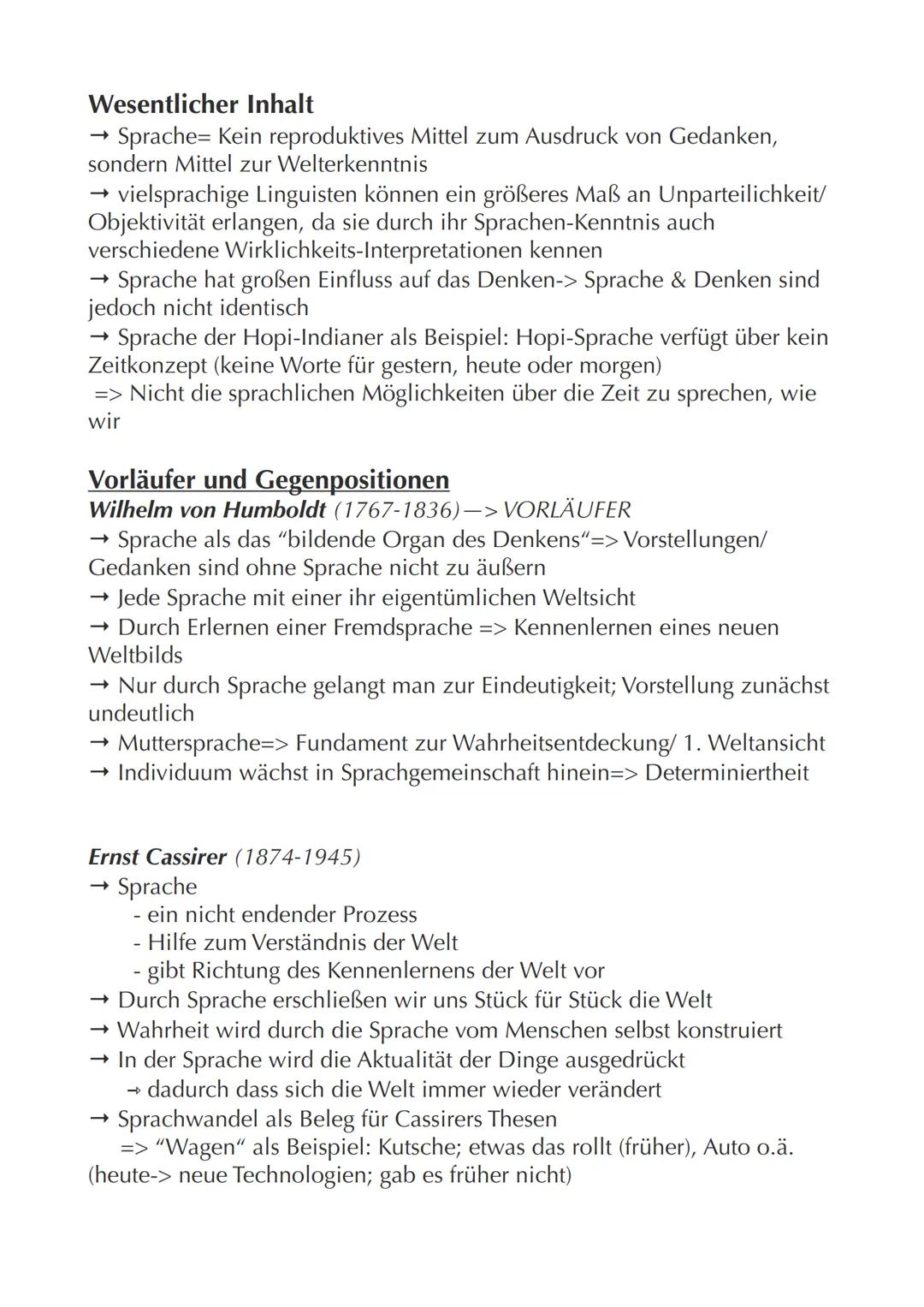
Wesentlicher Inhalt und Gegenpositionen
Kernaussagen der Sapir-Whorf-Hypothese
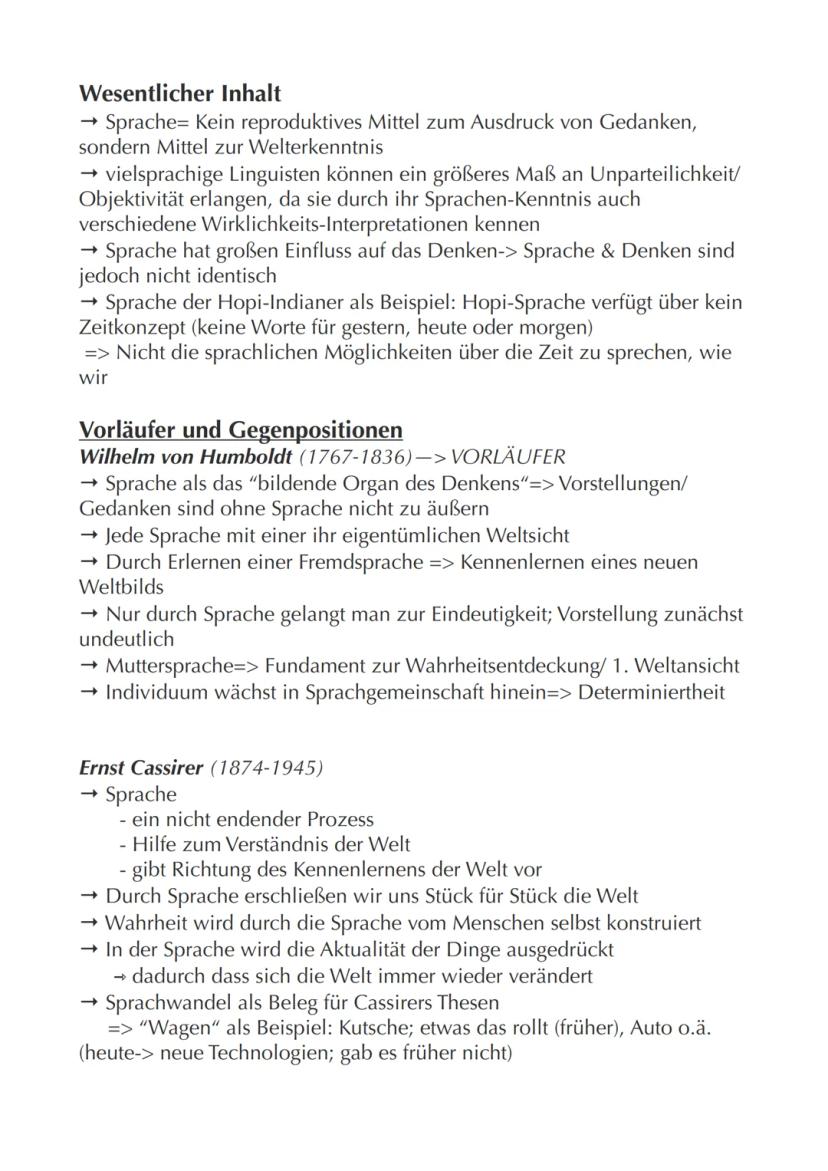
- Sprache ist kein reproduktives Mittel zum Ausdruck von Gedanken, sondern ein Werkzeug zur Welterkenntnis
- Mehrsprachige Menschen können objektiver sein, da sie verschiedene Wirklichkeits-Interpretationen kennen
- Sprache beeinflusst das Denken stark, ist aber nicht mit ihm identisch
Ein bekanntes Beispiel für den Zusammenhang zwischen Sprache und Denken ist die Hopi-Sprache der Indianer. Diese Sprache verfügt über kein Zeitkonzept wie wir es kennen – es gibt keine direkten Entsprechungen für "gestern", "heute" oder "morgen".
Vorläufer und verwandte Theorien
Wilhelm von Humboldt (1767-1836)
- Beschrieb Sprache als "bildendes Organ des Denkens"
- Jede Sprache trägt eine eigentümliche Weltsicht in sich
- Durch das Erlernen einer Fremdsprache lernt man ein neues Weltbild kennen
- Die Muttersprache bildet das Fundament zur Wahrheitsentdeckung
Ernst Cassirer (1874-1945)
- Sprache ist ein nicht endender Prozess
- Sie hilft zum Verständnis der Welt und gibt die Richtung vor
- Die Wahrheit wird durch Sprache vom Menschen selbst konstruiert
- Sprachwandel belegt seine Thesen – Beispiel: "Wagen" bedeutete früher Kutsche, heute Auto
Wichtiges Beispiel: Der Sprachwandel zeigt den Zusammenhang zwischen Sprache und Denken. Das Wort "Wagen" bezeichnete früher eine Kutsche, heute ein Auto – die Sprache passt sich den neuen technologischen Realitäten an und formt damit unser Verständnis der Welt.
Diese Theorien zeigen, dass die Sapir-Whorf-Hypothese Teil einer langen Tradition linguistischer Überlegungen zum Zusammenhang von Sprache und Denken ist.
3
of 4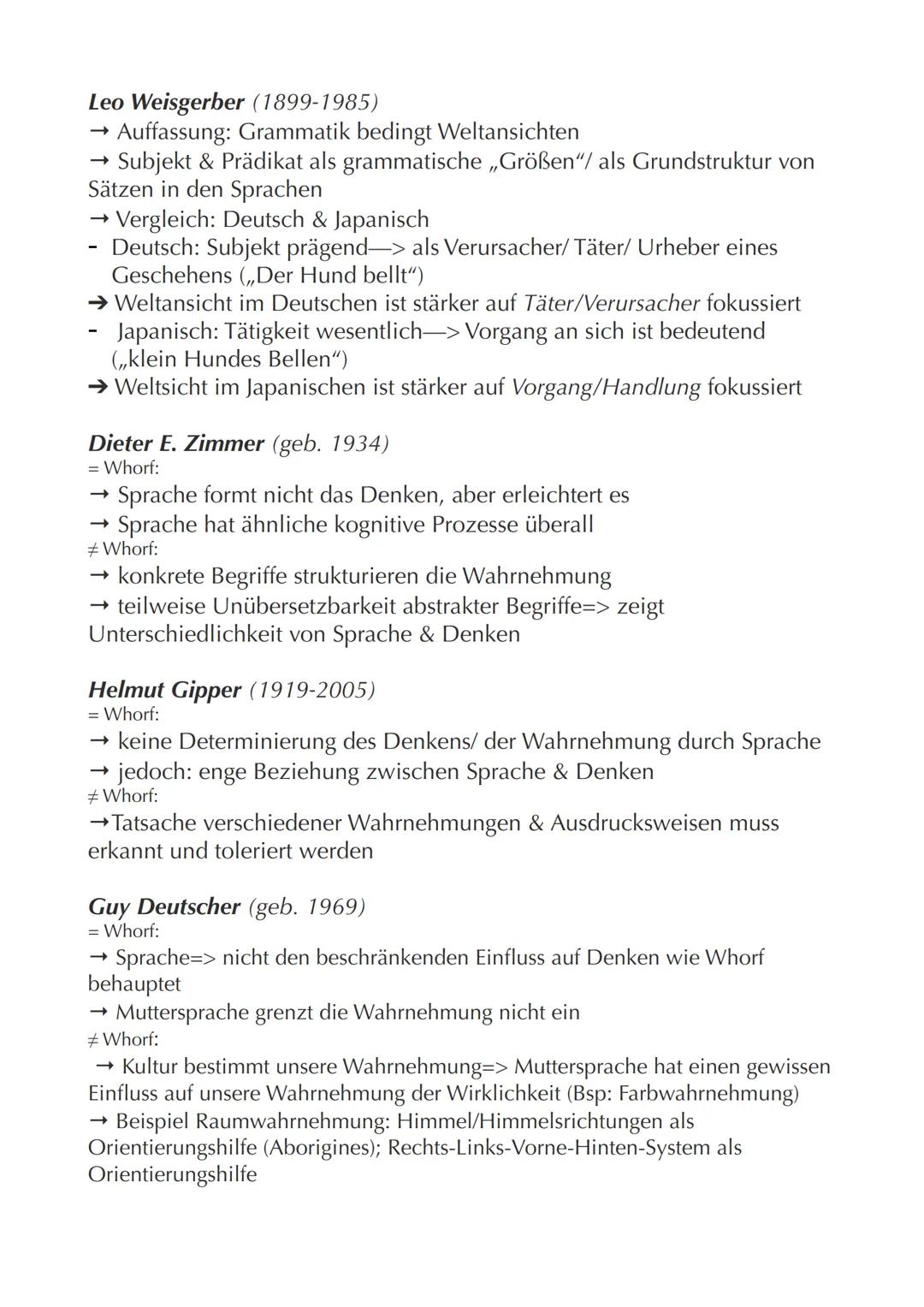
Weitere Positionen zur Sapir-Whorf-Hypothese
Leo Weisgerber (1899-1985)
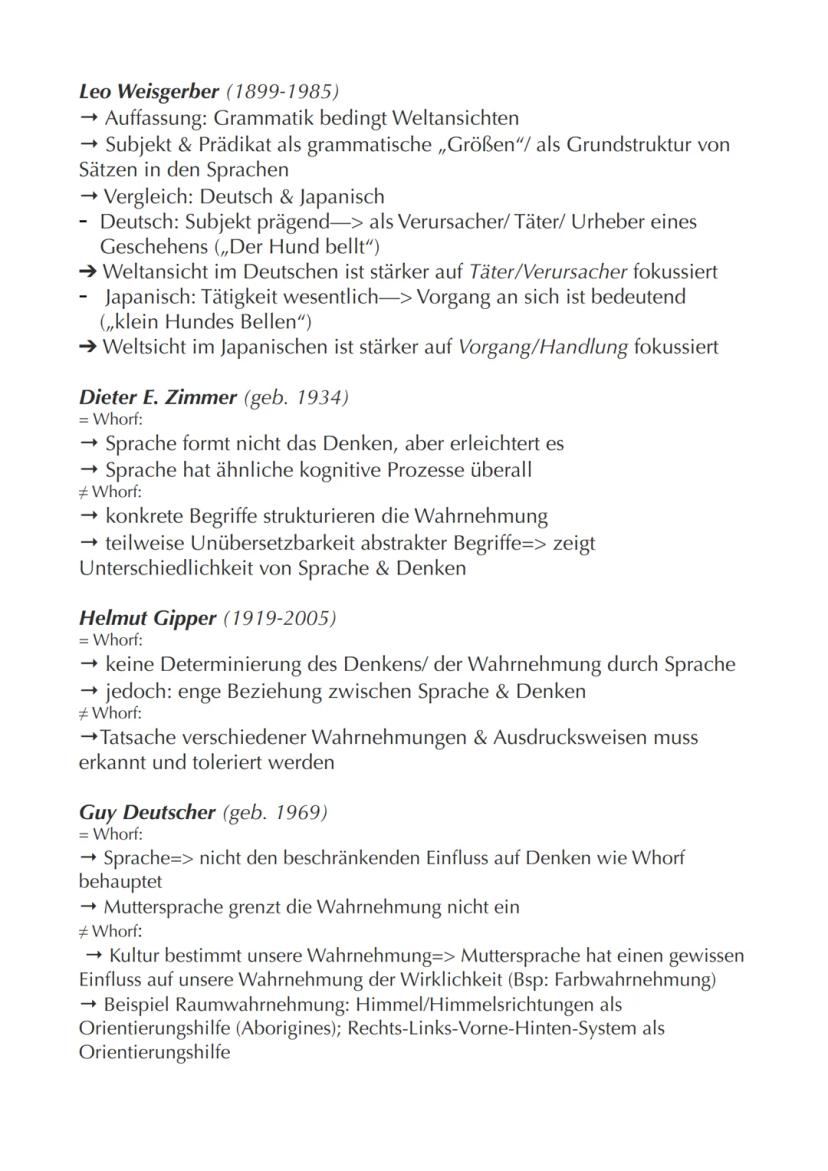
- Vertrat die Auffassung, dass die Grammatik Weltansichten bedingt
- Verglich Deutsch und Japanisch:
- Deutsche Sprache: fokussiert auf Subjekt/Täter (z.B. "Der Hund bellt")
- Japanische Sprache: betont den Vorgang selbst (z.B. "klein Hundes Bellen")
- Die grammatische Struktur prägt also unterschiedliche Weltansichten
Dieter E. Zimmer (geb. 1934)
Übereinstimmungen mit Whorf:
- Sprache erleichtert das Denken, formt es aber nicht vollständig
- Ähnliche kognitive Prozesse existieren in allen Sprachen
Unterschiede zu Whorf:
- Konkrete Begriffe strukturieren die Wahrnehmung
- Die teilweise Unübersetzbarkeit abstrakter Begriffe zeigt die Unterschiedlichkeit von Sprache und Denken
Helmut Gipper (1919-2005)
- Stimmt zu: Enge Beziehung zwischen Sprache und Denken besteht
- Widerspricht: Keine vollständige Determinierung des Denkens durch Sprache
- Betont: Verschiedene Wahrnehmungen und Ausdrucksweisen müssen toleriert werden
Guy Deutscher (geb. 1969)
- Kritisiert Whorfs Ansicht vom beschränkenden Einfluss der Sprache
- Die Muttersprache grenzt die Wahrnehmung nicht ein
- Betont jedoch: Die Kultur bestimmt unsere Wahrnehmung
- Interessante Beispiele:
- Farbwahrnehmung variiert je nach Sprache
- Raumwahrnehmung: Aborigines orientieren sich an Himmelsrichtungen statt am Rechts-Links-System
Gegenposition: Guy Deutscher vertritt eine gemäßigte Kritik an der Sapir-Whorf-Hypothese. Er erkennt an, dass Sprache einen gewissen Einfluss auf unsere Wahrnehmung hat, lehnt aber den starken sprachlichen Determinismus ab. Seine Forschung zu kulturellen Unterschieden in der Raum- und Farbwahrnehmung bietet interessante Belege für das linguistische Relativitätsprinzip.
Diese verschiedenen Positionen zeigen, dass die Sapir-Whorf-Hypothese bis heute kontrovers diskutiert wird, wobei die meisten modernen Linguisten eine gemäßigte Form der sprachlichen Relativität befürworten.
4
of 4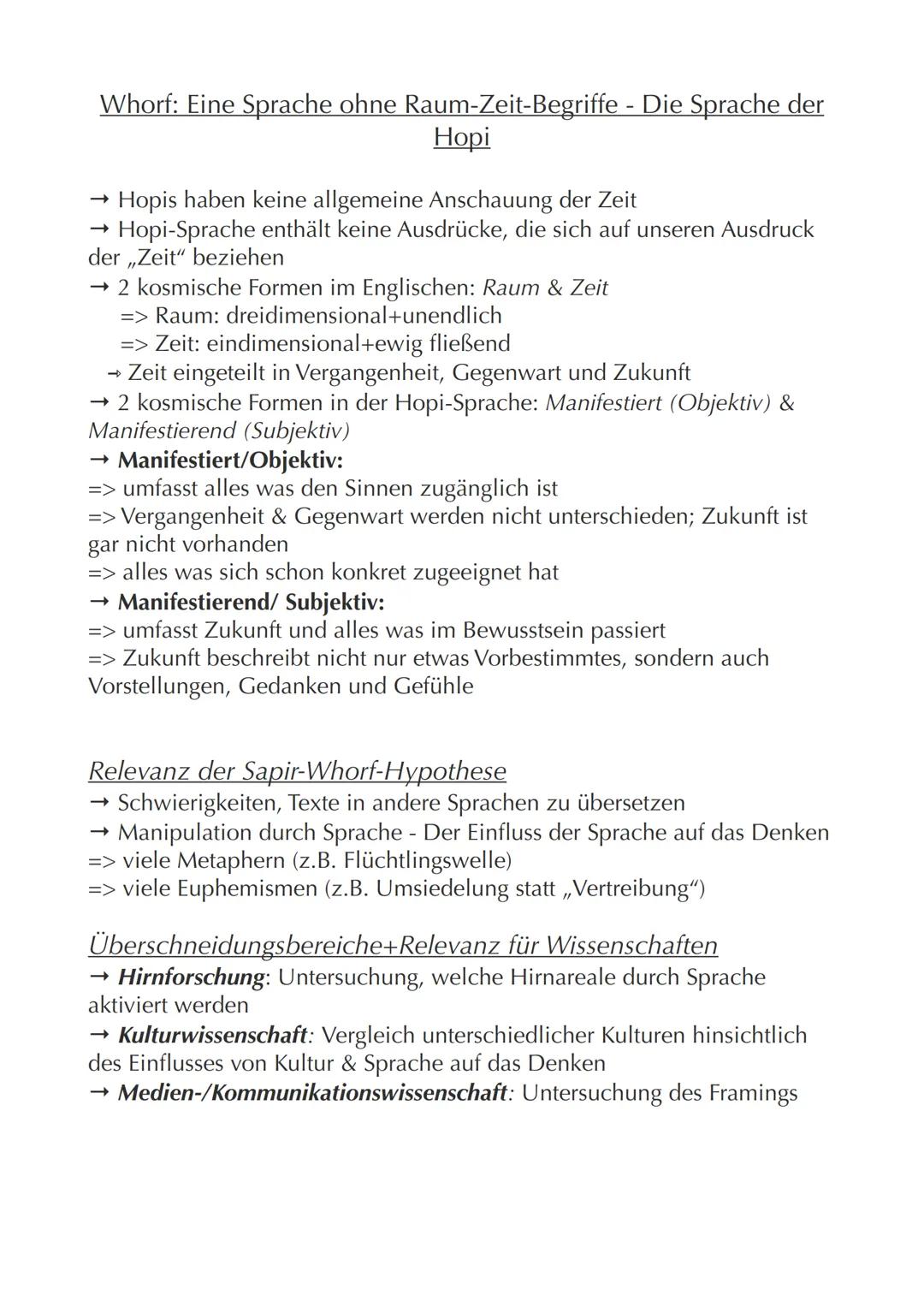
Die Hopi-Sprache und die Relevanz der Hypothese
Whorfs Analyse der Hopi-Sprache
Whorf untersuchte die Sprache der Hopi-Indianer als Beweis für seine Hypothese:
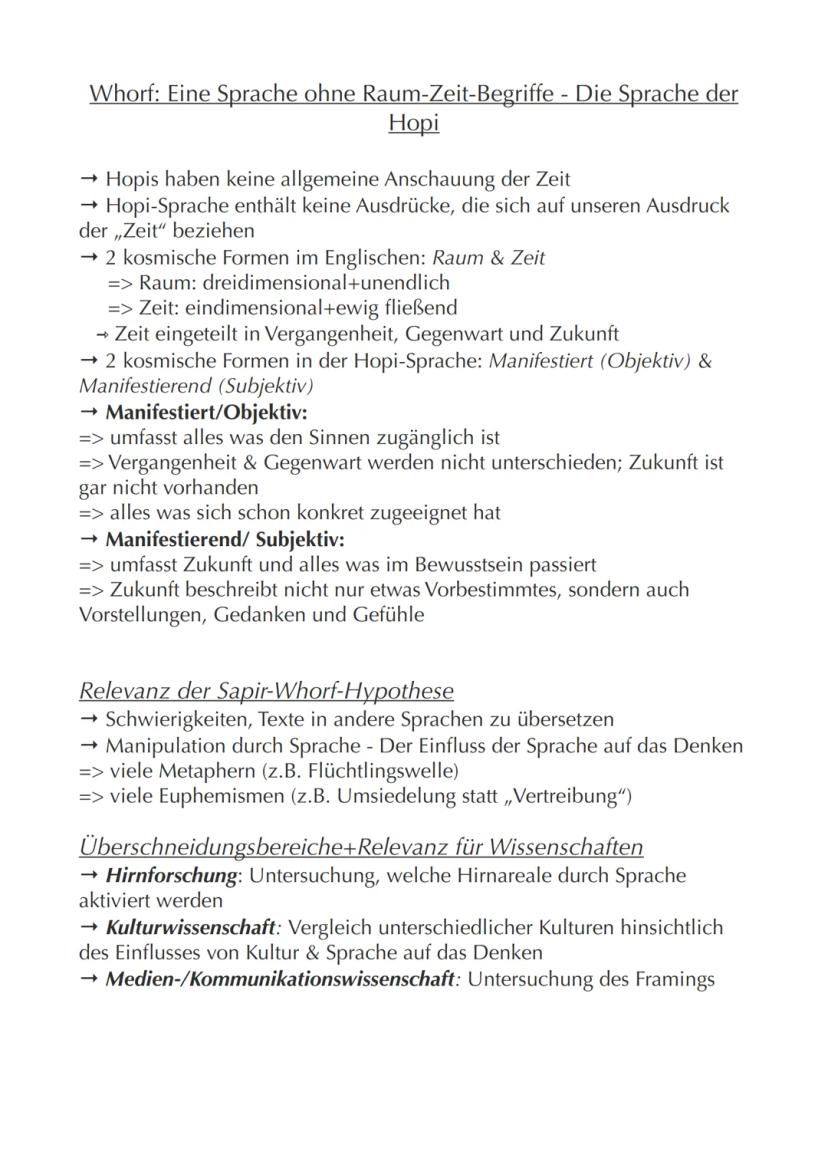
- Die Hopi haben keine allgemeine Anschauung der Zeit, wie wir sie kennen
- In ihrer Sprache fehlen Ausdrücke, die unserem Konzept von "Zeit" entsprechen
- Statt der westlichen Konzepte von Raum (dreidimensional) und Zeit (eindimensional, fließend) kennen die Hopi:
- Manifestiert/Objektiv: Alles, was den Sinnen zugänglich ist (Vergangenheit und Gegenwart werden nicht unterschieden)
- Manifestierend/Subjektiv: Umfasst die Zukunft und alles, was im Bewusstsein passiert
Dieses Beispiel zeigt, wie fundamental unterschiedlich Weltbilder aufgrund sprachlicher Unterschiede sein können.
Praktische Relevanz der Sapir-Whorf-Hypothese
Die Theorie hat wichtige Implikationen für verschiedene Bereiche:
- Übersetzungswissenschaft: Erklärt Schwierigkeiten bei der Übersetzung zwischen Sprachen
- Sprachliche Manipulation: Zeigt den Einfluss der Sprache auf das Denken durch:
- Metaphern (z.B. "Flüchtlingswelle")
- Euphemismen (z.B. "Umsiedlung" statt "Vertreibung")
Interdisziplinäre Bedeutung
Die Sapir-Whorf-Hypothese ist relevant für verschiedene Wissenschaften:
- Hirnforschung: Untersucht, welche Hirnareale durch Sprache aktiviert werden
- Kulturwissenschaft: Vergleicht Kulturen hinsichtlich des Einflusses von Sprache auf das Denken
- Medien- und Kommunikationswissenschaft: Analysiert Framing und sprachliche Beeinflussung
Die Macht der Sprache: Ein besonders relevanter Aspekt der Sapir-Whorf-Hypothese ist die Erkenntnis, dass Sprache zur Manipulation genutzt werden kann. Durch bewusste Wortwahl, Metaphern und Euphemismen können Einstellungen und Wahrnehmungen beeinflusst werden – ein Phänomen, das in Politik, Medien und Werbung allgegenwärtig ist.
Die Sapir-Whorf-Hypothese bleibt ein faszinierendes Forschungsgebiet, das uns dazu anregt, über den Zusammenhang zwischen Sprache und Denken nachzudenken und kritisch zu reflektieren, wie Sprache unsere Weltwahrnehmung prägt.
We thought you’d never ask...
What is the Knowunity AI companion?
Our AI Companion is a student-focused AI tool that offers more than just answers. Built on millions of Knowunity resources, it provides relevant information, personalised study plans, quizzes, and content directly in the chat, adapting to your individual learning journey.
Where can I download the Knowunity app?
You can download the app from Google Play Store and Apple App Store.
Is Knowunity really free of charge?
That's right! Enjoy free access to study content, connect with fellow students, and get instant help – all at your fingertips.
Similar content
Most popular content: deutsche sprache
9Most popular content in Deutsch
9Most popular content
9Can't find what you're looking for? Explore other subjects.
Students love us — and so will you.
4.6/5App Store
4.7/5Google Play
The app is very easy to use and well designed. I have found everything I was looking for so far and have been able to learn a lot from the presentations! I will definitely use the app for a class assignment! And of course it also helps a lot as an inspiration.
Stefan SiOS user
This app is really great. There are so many study notes and help [...]. My problem subject is French, for example, and the app has so many options for help. Thanks to this app, I have improved my French. I would recommend it to anyone.
Samantha KlichAndroid user
Wow, I am really amazed. I just tried the app because I've seen it advertised many times and was absolutely stunned. This app is THE HELP you want for school and above all, it offers so many things, such as workouts and fact sheets, which have been VERY helpful to me personally.
AnnaiOS user
Deutsch7,628 views·Updated Jun 1, 2026·4 pagesDie Sapir-Whorf-Hypothese: Sprache und Denken im Fokus
Die Sapir-Whorf-Hypothese ist eine faszinierende linguistische Theorie, die den Zusammenhang zwischen Sprache und Denken erforscht. Entwickelt von Benjamin Lee Whorf und Edward Sapir, behauptet diese Hypothese, dass unsere Muttersprache unsere Wahrnehmung der Welt maßgeblich beeinflusst und formt. Das linguistische Relativitätsprinzip...
1
of 4
Sign up to see the content. It's free!
- Access to all documents
- Improve your grades
- Join milions of students
Sapir-Whorf-Hypothese
Die Sapir-Whorf-Hypothese ist eine linguistische Theorie, die von Benjamin Lee Whorf (1897-1941) und Edward Sapir (1884-1939) entwickelt wurde. Sie untersucht den Zusammenhang zwischen Sprache und Denken.
Die Kernidee lässt sich in zwei Hauptkonzepte unterteilen:
-
Linguistisches Relativitätsprinzip:
- Sprecher verschiedener Sprachen nehmen die Wirklichkeit unterschiedlich wahr
- Die Wahrnehmung ist abhängig vom grammatischen und linguistischen System
- Nur Menschen mit ähnlichen sprachlichen Hintergründen haben ähnliche Weltbilder
- Die Sprache organisiert aktiv unsere Wahrnehmung
-
Sprachlicher Determinismus:
- Das Denken, die Weltsicht und die Wahrnehmung werden von der Sprache bestimmt
- Die jeweilige Sprache limitiert, was dem Menschen zu denken möglich ist
- SPRACHE FORMT DAS DENKEN
Schlüsselkonzept: Der sprachliche Determinismus ist die stärkere Version der Sapir-Whorf-Hypothese. Er besagt, dass unsere Muttersprache nicht nur beeinflusst, wie wir die Welt sehen, sondern tatsächlich bestimmt, was wir überhaupt denken können.
Die Sapir-Whorf-Hypothese hat sowohl in ihrer starken Form (Determinismus) als auch in ihrer schwächeren Form (Relativitätsprinzip) zu vielen Diskussionen in der Linguistik und Kognitionswissenschaft geführt.
Diese Theorie stellt die traditionelle Auffassung in Frage, dass Sprache lediglich ein Werkzeug zur Wiedergabe von Gedanken ist. Stattdessen wird Sprache als ein Mittel zur Welterkenntnis verstanden.
2
of 4Sign up to see the content. It's free!
- Access to all documents
- Improve your grades
- Join milions of students
Wesentlicher Inhalt und Gegenpositionen
Kernaussagen der Sapir-Whorf-Hypothese
- Sprache ist kein reproduktives Mittel zum Ausdruck von Gedanken, sondern ein Werkzeug zur Welterkenntnis
- Mehrsprachige Menschen können objektiver sein, da sie verschiedene Wirklichkeits-Interpretationen kennen
- Sprache beeinflusst das Denken stark, ist aber nicht mit ihm identisch
Ein bekanntes Beispiel für den Zusammenhang zwischen Sprache und Denken ist die Hopi-Sprache der Indianer. Diese Sprache verfügt über kein Zeitkonzept wie wir es kennen – es gibt keine direkten Entsprechungen für "gestern", "heute" oder "morgen".
Vorläufer und verwandte Theorien
Wilhelm von Humboldt (1767-1836)
- Beschrieb Sprache als "bildendes Organ des Denkens"
- Jede Sprache trägt eine eigentümliche Weltsicht in sich
- Durch das Erlernen einer Fremdsprache lernt man ein neues Weltbild kennen
- Die Muttersprache bildet das Fundament zur Wahrheitsentdeckung
Ernst Cassirer (1874-1945)
- Sprache ist ein nicht endender Prozess
- Sie hilft zum Verständnis der Welt und gibt die Richtung vor
- Die Wahrheit wird durch Sprache vom Menschen selbst konstruiert
- Sprachwandel belegt seine Thesen – Beispiel: "Wagen" bedeutete früher Kutsche, heute Auto
Wichtiges Beispiel: Der Sprachwandel zeigt den Zusammenhang zwischen Sprache und Denken. Das Wort "Wagen" bezeichnete früher eine Kutsche, heute ein Auto – die Sprache passt sich den neuen technologischen Realitäten an und formt damit unser Verständnis der Welt.
Diese Theorien zeigen, dass die Sapir-Whorf-Hypothese Teil einer langen Tradition linguistischer Überlegungen zum Zusammenhang von Sprache und Denken ist.
3
of 4Sign up to see the content. It's free!
- Access to all documents
- Improve your grades
- Join milions of students
Weitere Positionen zur Sapir-Whorf-Hypothese
Leo Weisgerber (1899-1985)
- Vertrat die Auffassung, dass die Grammatik Weltansichten bedingt
- Verglich Deutsch und Japanisch:
- Deutsche Sprache: fokussiert auf Subjekt/Täter (z.B. "Der Hund bellt")
- Japanische Sprache: betont den Vorgang selbst (z.B. "klein Hundes Bellen")
- Die grammatische Struktur prägt also unterschiedliche Weltansichten
Dieter E. Zimmer (geb. 1934)
Übereinstimmungen mit Whorf:
- Sprache erleichtert das Denken, formt es aber nicht vollständig
- Ähnliche kognitive Prozesse existieren in allen Sprachen
Unterschiede zu Whorf:
- Konkrete Begriffe strukturieren die Wahrnehmung
- Die teilweise Unübersetzbarkeit abstrakter Begriffe zeigt die Unterschiedlichkeit von Sprache und Denken
Helmut Gipper (1919-2005)
- Stimmt zu: Enge Beziehung zwischen Sprache und Denken besteht
- Widerspricht: Keine vollständige Determinierung des Denkens durch Sprache
- Betont: Verschiedene Wahrnehmungen und Ausdrucksweisen müssen toleriert werden
Guy Deutscher (geb. 1969)
- Kritisiert Whorfs Ansicht vom beschränkenden Einfluss der Sprache
- Die Muttersprache grenzt die Wahrnehmung nicht ein
- Betont jedoch: Die Kultur bestimmt unsere Wahrnehmung
- Interessante Beispiele:
- Farbwahrnehmung variiert je nach Sprache
- Raumwahrnehmung: Aborigines orientieren sich an Himmelsrichtungen statt am Rechts-Links-System
Gegenposition: Guy Deutscher vertritt eine gemäßigte Kritik an der Sapir-Whorf-Hypothese. Er erkennt an, dass Sprache einen gewissen Einfluss auf unsere Wahrnehmung hat, lehnt aber den starken sprachlichen Determinismus ab. Seine Forschung zu kulturellen Unterschieden in der Raum- und Farbwahrnehmung bietet interessante Belege für das linguistische Relativitätsprinzip.
Diese verschiedenen Positionen zeigen, dass die Sapir-Whorf-Hypothese bis heute kontrovers diskutiert wird, wobei die meisten modernen Linguisten eine gemäßigte Form der sprachlichen Relativität befürworten.
4
of 4Sign up to see the content. It's free!
- Access to all documents
- Improve your grades
- Join milions of students
Die Hopi-Sprache und die Relevanz der Hypothese
Whorfs Analyse der Hopi-Sprache
Whorf untersuchte die Sprache der Hopi-Indianer als Beweis für seine Hypothese:
- Die Hopi haben keine allgemeine Anschauung der Zeit, wie wir sie kennen
- In ihrer Sprache fehlen Ausdrücke, die unserem Konzept von "Zeit" entsprechen
- Statt der westlichen Konzepte von Raum (dreidimensional) und Zeit (eindimensional, fließend) kennen die Hopi:
- Manifestiert/Objektiv: Alles, was den Sinnen zugänglich ist (Vergangenheit und Gegenwart werden nicht unterschieden)
- Manifestierend/Subjektiv: Umfasst die Zukunft und alles, was im Bewusstsein passiert
Dieses Beispiel zeigt, wie fundamental unterschiedlich Weltbilder aufgrund sprachlicher Unterschiede sein können.
Praktische Relevanz der Sapir-Whorf-Hypothese
Die Theorie hat wichtige Implikationen für verschiedene Bereiche:
- Übersetzungswissenschaft: Erklärt Schwierigkeiten bei der Übersetzung zwischen Sprachen
- Sprachliche Manipulation: Zeigt den Einfluss der Sprache auf das Denken durch:
- Metaphern (z.B. "Flüchtlingswelle")
- Euphemismen (z.B. "Umsiedlung" statt "Vertreibung")
Interdisziplinäre Bedeutung
Die Sapir-Whorf-Hypothese ist relevant für verschiedene Wissenschaften:
- Hirnforschung: Untersucht, welche Hirnareale durch Sprache aktiviert werden
- Kulturwissenschaft: Vergleicht Kulturen hinsichtlich des Einflusses von Sprache auf das Denken
- Medien- und Kommunikationswissenschaft: Analysiert Framing und sprachliche Beeinflussung
Die Macht der Sprache: Ein besonders relevanter Aspekt der Sapir-Whorf-Hypothese ist die Erkenntnis, dass Sprache zur Manipulation genutzt werden kann. Durch bewusste Wortwahl, Metaphern und Euphemismen können Einstellungen und Wahrnehmungen beeinflusst werden – ein Phänomen, das in Politik, Medien und Werbung allgegenwärtig ist.
Die Sapir-Whorf-Hypothese bleibt ein faszinierendes Forschungsgebiet, das uns dazu anregt, über den Zusammenhang zwischen Sprache und Denken nachzudenken und kritisch zu reflektieren, wie Sprache unsere Weltwahrnehmung prägt.
We thought you’d never ask...
What is the Knowunity AI companion?
Our AI Companion is a student-focused AI tool that offers more than just answers. Built on millions of Knowunity resources, it provides relevant information, personalised study plans, quizzes, and content directly in the chat, adapting to your individual learning journey.
Where can I download the Knowunity app?
You can download the app from Google Play Store and Apple App Store.
Is Knowunity really free of charge?
That's right! Enjoy free access to study content, connect with fellow students, and get instant help – all at your fingertips.
Similar content
Most popular content: deutsche sprache
9Most popular content in Deutsch
9Most popular content
9Can't find what you're looking for? Explore other subjects.
Students love us — and so will you.
4.6/5App Store
4.7/5Google Play
The app is very easy to use and well designed. I have found everything I was looking for so far and have been able to learn a lot from the presentations! I will definitely use the app for a class assignment! And of course it also helps a lot as an inspiration.
Stefan SiOS user
This app is really great. There are so many study notes and help [...]. My problem subject is French, for example, and the app has so many options for help. Thanks to this app, I have improved my French. I would recommend it to anyone.
Samantha KlichAndroid user
Wow, I am really amazed. I just tried the app because I've seen it advertised many times and was absolutely stunned. This app is THE HELP you want for school and above all, it offers so many things, such as workouts and fact sheets, which have been VERY helpful to me personally.
AnnaiOS user