
Das lyrische Ich ist ein zentrales Element der Lyrik, das... Show more
 Deutsch2,710 views·Updated Jun 5, 2026·2 pages
Das lyrische Ich und Du: Beispiele und Arten leicht erklärt
1
of 2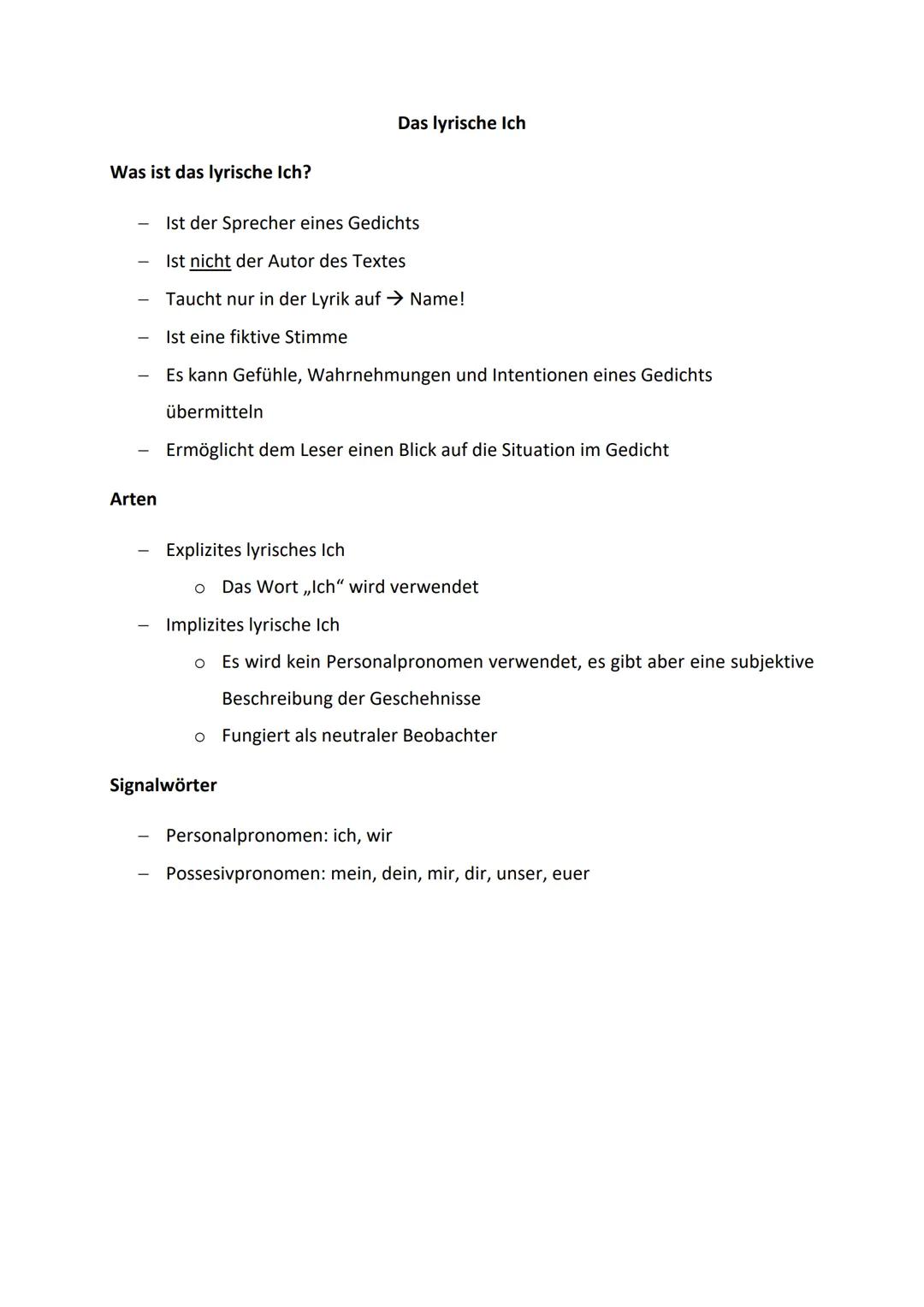
Beispiel und Analyse des lyrischen Ichs
Um das Konzept des lyrischen Ichs besser zu verstehen, betrachten wir ein Beispiel des lyrischen Ichs anhand der ersten Strophe des Gedichts "Sehnsucht" von Joseph von Eichendorff:
Quote: "Es schienen so golden die Sterne, Am Fenster ich einsam stand Und hörte aus weiter Ferne Ein Posthorn im stillen Land. Das Herz mir im Leib entbrennte, Da hab ich mir heimlich gedacht: Ach, wer da mitreisen könnte In der prächtigen Sommernacht!"
In diesem Beispiel des lyrischen Ichs können wir mehrere Aspekte beobachten:
-
Die Situation wird zunächst beschrieben (Sterne, Fenster, Posthorn), was einen Rahmen für die Erfahrung des lyrischen Ichs schafft.
-
Das Wort "ich" taucht als klares Signalwort für das explizite lyrische Ich auf.
-
Der Ausdruck "entbrennte" deutet auf starke Gefühle hin, die das lyrische Ich erlebt.
-
Die Erwähnung des "stillen Lands" vermittelt ein Gefühl der Einsamkeit des lyrischen Ichs.
-
Die Wahrnehmung des lyrischen Ichs wird durch Verben wie "gedacht" und "hörte" ausgedrückt.
Highlight: Die Wirkung des lyrischen Ichs in diesem Gedicht ist besonders stark, da es dem Leser ermöglicht, die Sehnsucht und Einsamkeit des Sprechers nachzuempfinden.
Diese Analyse zeigt, wie das lyrische Ich als literarisches Mittel verwendet wird, um Emotionen und Erfahrungen zu vermitteln. Es ist ein wesentlicher Bestandteil der Gedichtinterpretation und oft Gegenstand von Unterrichtsmaterial zum lyrischen Ich.
Example: Ein weiteres Beispiel für ein implizites lyrisches Ich könnte ein Gedicht sein, das eine Landschaft beschreibt, ohne "ich" zu verwenden, aber dennoch subjektive Eindrücke vermittelt.
Die Vielfalt der Arten des lyrischen Ichs und ihre unterschiedlichen Ausdrucksformen machen die Analyse von Gedichten zu einer faszinierenden Aufgabe in der Literaturwissenschaft.
2
of 2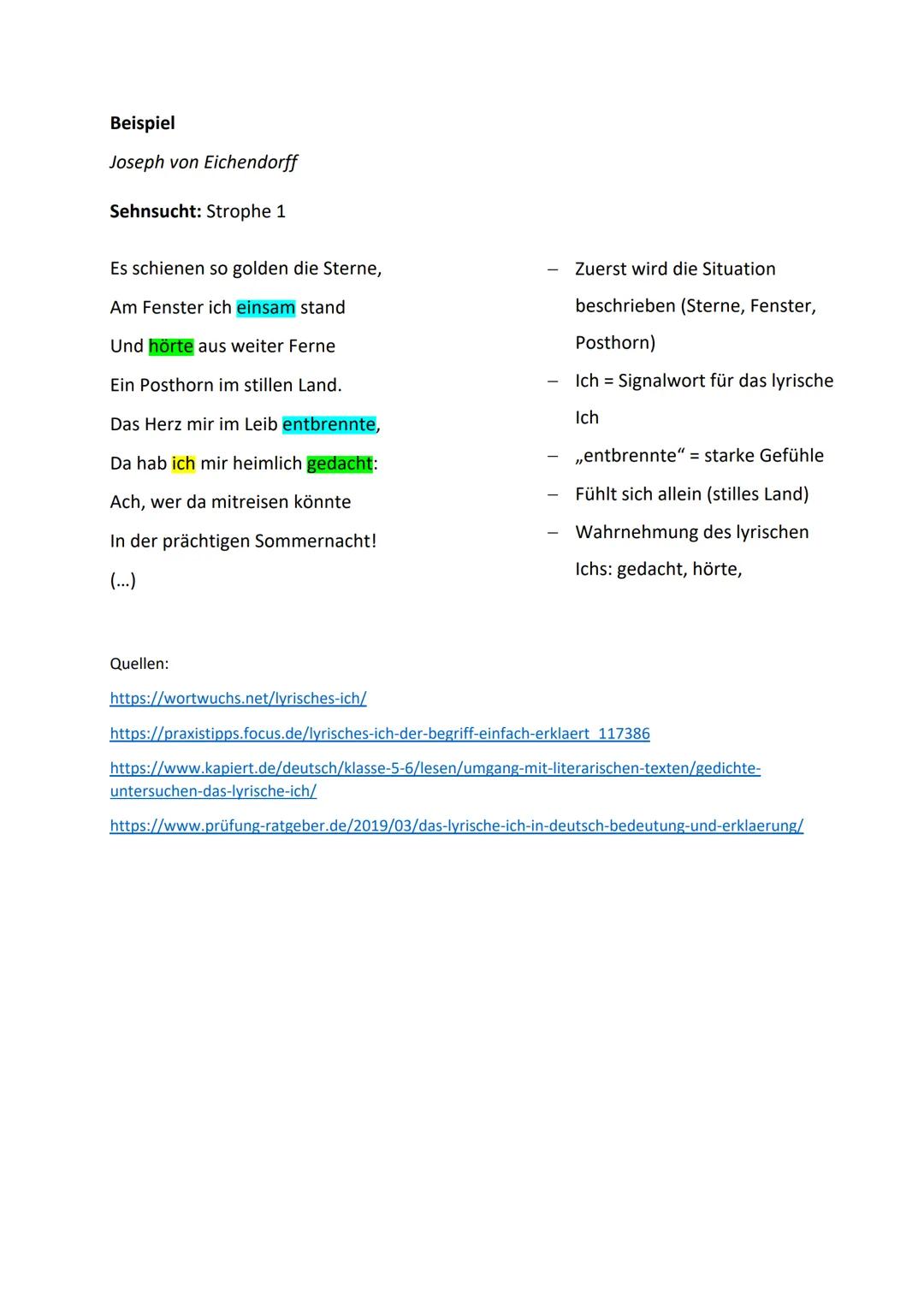
Das lyrische Ich: Definition und Arten
Das lyrische Ich ist ein fundamentales Konzept in der Lyrik, das als Sprecher eines Gedichts fungiert. Es ist wichtig zu verstehen, dass das lyrische Ich nicht mit dem Autor des Textes gleichzusetzen ist, sondern eine fiktive Stimme darstellt, die ausschließlich in der Lyrik auftaucht.
Definition: Das lyrische Ich ist eine fiktive Stimme in einem Gedicht, die Gefühle, Wahrnehmungen und Intentionen übermittelt und dem Leser einen Einblick in die dargestellte Situation ermöglicht.
Es gibt verschiedene Arten des lyrischen Ichs:
- Explizites lyrisches Ich: Hier wird das Wort "Ich" direkt verwendet.
- Implizites lyrisches Ich: Es werden keine Personalpronomen verwendet, aber es gibt eine subjektive Beschreibung der Ereignisse. In diesem Fall fungiert das lyrische Ich oft als neutraler Beobachter.
Highlight: Die Verwendung von Personalpronomen wie "ich" oder "wir" und Possessivpronomen wie "mein", "dein", "unser" oder "euer" sind wichtige Signalwörter, um das lyrische Ich zu erkennen.
Es ist wichtig zu beachten, dass es nicht immer ein explizites lyrisches Ich in einem Gedicht geben muss. Die Frage "Gibt es immer ein lyrisches Ich?" kann also mit Nein beantwortet werden, da es auch Gedichte ohne lyrisches Ich gibt.
Vocabulary:
- Explizites lyrisches Ich: Ein lyrisches Ich, das durch direkte Verwendung des Wortes "Ich" erkennbar ist.
- Implizites lyrisches Ich: Ein lyrisches Ich, das ohne direkte Verwendung von Personalpronomen durch subjektive Beschreibungen erkennbar ist.
We thought you’d never ask...
Was ist das lyrische Ich in einem Gedicht?
Das lyrische Ich ist die Stimme oder Sprechinstanz, die in einem Gedicht zu uns spricht. Es ist wichtig zu verstehen, dass das lyrische Ich nicht mit dem Autor identisch ist, sondern eine fiktive Figur darstellt. In Gedichten ermöglicht diese Stimme uns einen Einblick in die Gefühle und Wahrnehmungen, die im Text vermittelt werden sollen. Man kann das lyrische Ich erkennen, wenn in der ersten Person gesprochen wird, wie im Beispiel "Am Fenster ich einsam stand".
Wie kann ich das lyrische Ich in einem Gedicht erkennen?
Du kannst das lyrische Ich erkennen, indem du nach Signalwörtern wie "ich", "mir" oder "mein" suchst. In Eichendorffs Gedicht "Sehnsucht" finden wir Hinweise wie "ich einsam stand" oder "Das Herz mir im Leib entbrennte". Manchmal gibt es auch ein implizites lyrisches Ich Beispiel, bei dem kein direktes "ich" vorkommt, aber trotzdem eine subjektive Perspektive erkennbar ist. Achte auch auf persönliche Gefühle oder Gedanken, die im Text ausgedrückt werden.
Was ist der Unterschied zwischen dem lyrischen Ich und dem Autor eines Gedichts?
Der grundlegende Unterschied liegt darin, dass das lyrische Ich eine erfundene Stimme ist, während der Autor die reale Person ist, die das Gedicht verfasst hat. Das lyrische Ich kann völlig andere Eigenschaften, Erfahrungen oder sogar ein anderes Geschlecht haben als der Dichter selbst. Ein Beispiel des lyrischen Ichs findest du in Eichendorffs "Sehnsucht", wo das lyrische Ich am Fenster steht und sich nach Reisen sehnt - was nicht bedeutet, dass Eichendorff selbst genau diese Situation erlebt hat.
Gibt es in jedem Gedicht ein lyrisches Ich?
Nein, es gibt nicht immer ein lyrisches Ich in jedem Gedicht. Es existieren auch Gedichte ohne erkennbare Ich-Perspektive, die eher beschreibend oder berichtend wirken. Manchmal gibt es statt eines lyrischen Ich auch ein lyrisches Du oder ein lyrisches Wir. In manchen modernen Gedichten wird bewusst auf ein lyrisches Ich verzichtet, um eine objektivere oder distanziertere Wirkung zu erzielen. Die Abwesenheit eines lyrischen Ichs kann also auch ein bewusstes Stilmittel sein.
Additional Sources
-
Deutsche Gedichte verstehen: Das lyrische Ich von Maria Schmidt, Klett Verlag 2020, Schülerheft, Einfache Erklärungen zum lyrischen Ich mit vielen Beispielen für die Mittelstufe
-
Lyrik-Werkstatt für junge Leser von Thomas Möbius, Cornelsen 2019, Arbeitsbuch, Enthält Übungen zum Erkennen des lyrischen Ichs und verschiedener Arten wie das lyrische Du oder Wir
-
Gedichte analysieren leicht gemacht von Klaus Bahners, Schöningh 2021, Lehrbuch, Erklärt anschaulich, wie man das lyrische Ich erkennt und seine Wirkung im Gedicht versteht
-
Deutschbuch: Lyrik verstehen vom Westermann Verlag, 2022, Schulbuch, Bietet Unterrichtsmaterial zum lyrischen Ich mit Beispielen von implizitem und explizitem lyrischen Ich
Explore Further
-
Suche in deinen Lieblingsliedern nach dem lyrischen Ich: Schreibe 5 Textstellen auf, wo ein explizites lyrisches Ich vorkommt, und 2 Beispiele für lyrisches Du oder Wir.
-
Schreibe ein kurzes Gedicht aus drei verschiedenen Perspektiven: einmal mit explizitem lyrischen Ich, einmal mit lyrischem Du und einmal ohne lyrisches Ich. Vergleiche die Wirkung.
Similar content
Most popular content: joseph von eichendorff
9Most popular content in Deutsch
9Most popular content
9Can't find what you're looking for? Explore other subjects.
Students love us — and so will you.
4.6/5App Store
4.7/5Google Play
The app is very easy to use and well designed. I have found everything I was looking for so far and have been able to learn a lot from the presentations! I will definitely use the app for a class assignment! And of course it also helps a lot as an inspiration.
Stefan SiOS user
This app is really great. There are so many study notes and help [...]. My problem subject is French, for example, and the app has so many options for help. Thanks to this app, I have improved my French. I would recommend it to anyone.
Samantha KlichAndroid user
Wow, I am really amazed. I just tried the app because I've seen it advertised many times and was absolutely stunned. This app is THE HELP you want for school and above all, it offers so many things, such as workouts and fact sheets, which have been VERY helpful to me personally.
AnnaiOS user
We thought you’d never ask...
What is the Knowunity AI companion?
Our AI Companion is a student-focused AI tool that offers more than just answers. Built on millions of Knowunity resources, it provides relevant information, personalised study plans, quizzes, and content directly in the chat, adapting to your individual learning journey.
Where can I download the Knowunity app?
You can download the app from Google Play Store and Apple App Store.
Is Knowunity really free of charge?
That's right! Enjoy free access to study content, connect with fellow students, and get instant help – all at your fingertips.
Deutsch2,710 views·Updated Jun 5, 2026·2 pagesDas lyrische Ich und Du: Beispiele und Arten leicht erklärt
Das lyrische Ich ist ein zentrales Element der Lyrik, das als fiktive Stimme in Gedichten fungiert und dem Leser einen einzigartigen Blick auf die dargestellte Situation ermöglicht. Es unterscheidet sich vom Autor und kann in verschiedenen Formen auftreten, wobei es... Show more
1
of 2Sign up to see the content. It's free!
- Access to all documents
- Improve your grades
- Join milions of students
Beispiel und Analyse des lyrischen Ichs
Um das Konzept des lyrischen Ichs besser zu verstehen, betrachten wir ein Beispiel des lyrischen Ichs anhand der ersten Strophe des Gedichts "Sehnsucht" von Joseph von Eichendorff:
Quote: "Es schienen so golden die Sterne, Am Fenster ich einsam stand Und hörte aus weiter Ferne Ein Posthorn im stillen Land. Das Herz mir im Leib entbrennte, Da hab ich mir heimlich gedacht: Ach, wer da mitreisen könnte In der prächtigen Sommernacht!"
In diesem Beispiel des lyrischen Ichs können wir mehrere Aspekte beobachten:
-
Die Situation wird zunächst beschrieben (Sterne, Fenster, Posthorn), was einen Rahmen für die Erfahrung des lyrischen Ichs schafft.
-
Das Wort "ich" taucht als klares Signalwort für das explizite lyrische Ich auf.
-
Der Ausdruck "entbrennte" deutet auf starke Gefühle hin, die das lyrische Ich erlebt.
-
Die Erwähnung des "stillen Lands" vermittelt ein Gefühl der Einsamkeit des lyrischen Ichs.
-
Die Wahrnehmung des lyrischen Ichs wird durch Verben wie "gedacht" und "hörte" ausgedrückt.
Highlight: Die Wirkung des lyrischen Ichs in diesem Gedicht ist besonders stark, da es dem Leser ermöglicht, die Sehnsucht und Einsamkeit des Sprechers nachzuempfinden.
Diese Analyse zeigt, wie das lyrische Ich als literarisches Mittel verwendet wird, um Emotionen und Erfahrungen zu vermitteln. Es ist ein wesentlicher Bestandteil der Gedichtinterpretation und oft Gegenstand von Unterrichtsmaterial zum lyrischen Ich.
Example: Ein weiteres Beispiel für ein implizites lyrisches Ich könnte ein Gedicht sein, das eine Landschaft beschreibt, ohne "ich" zu verwenden, aber dennoch subjektive Eindrücke vermittelt.
Die Vielfalt der Arten des lyrischen Ichs und ihre unterschiedlichen Ausdrucksformen machen die Analyse von Gedichten zu einer faszinierenden Aufgabe in der Literaturwissenschaft.
2
of 2Sign up to see the content. It's free!
- Access to all documents
- Improve your grades
- Join milions of students
Das lyrische Ich: Definition und Arten
Das lyrische Ich ist ein fundamentales Konzept in der Lyrik, das als Sprecher eines Gedichts fungiert. Es ist wichtig zu verstehen, dass das lyrische Ich nicht mit dem Autor des Textes gleichzusetzen ist, sondern eine fiktive Stimme darstellt, die ausschließlich in der Lyrik auftaucht.
Definition: Das lyrische Ich ist eine fiktive Stimme in einem Gedicht, die Gefühle, Wahrnehmungen und Intentionen übermittelt und dem Leser einen Einblick in die dargestellte Situation ermöglicht.
Es gibt verschiedene Arten des lyrischen Ichs:
- Explizites lyrisches Ich: Hier wird das Wort "Ich" direkt verwendet.
- Implizites lyrisches Ich: Es werden keine Personalpronomen verwendet, aber es gibt eine subjektive Beschreibung der Ereignisse. In diesem Fall fungiert das lyrische Ich oft als neutraler Beobachter.
Highlight: Die Verwendung von Personalpronomen wie "ich" oder "wir" und Possessivpronomen wie "mein", "dein", "unser" oder "euer" sind wichtige Signalwörter, um das lyrische Ich zu erkennen.
Es ist wichtig zu beachten, dass es nicht immer ein explizites lyrisches Ich in einem Gedicht geben muss. Die Frage "Gibt es immer ein lyrisches Ich?" kann also mit Nein beantwortet werden, da es auch Gedichte ohne lyrisches Ich gibt.
Vocabulary:
- Explizites lyrisches Ich: Ein lyrisches Ich, das durch direkte Verwendung des Wortes "Ich" erkennbar ist.
- Implizites lyrisches Ich: Ein lyrisches Ich, das ohne direkte Verwendung von Personalpronomen durch subjektive Beschreibungen erkennbar ist.
We thought you’d never ask...
Was ist das lyrische Ich in einem Gedicht?
Das lyrische Ich ist die Stimme oder Sprechinstanz, die in einem Gedicht zu uns spricht. Es ist wichtig zu verstehen, dass das lyrische Ich nicht mit dem Autor identisch ist, sondern eine fiktive Figur darstellt. In Gedichten ermöglicht diese Stimme uns einen Einblick in die Gefühle und Wahrnehmungen, die im Text vermittelt werden sollen. Man kann das lyrische Ich erkennen, wenn in der ersten Person gesprochen wird, wie im Beispiel "Am Fenster ich einsam stand".
Wie kann ich das lyrische Ich in einem Gedicht erkennen?
Du kannst das lyrische Ich erkennen, indem du nach Signalwörtern wie "ich", "mir" oder "mein" suchst. In Eichendorffs Gedicht "Sehnsucht" finden wir Hinweise wie "ich einsam stand" oder "Das Herz mir im Leib entbrennte". Manchmal gibt es auch ein implizites lyrisches Ich Beispiel, bei dem kein direktes "ich" vorkommt, aber trotzdem eine subjektive Perspektive erkennbar ist. Achte auch auf persönliche Gefühle oder Gedanken, die im Text ausgedrückt werden.
Was ist der Unterschied zwischen dem lyrischen Ich und dem Autor eines Gedichts?
Der grundlegende Unterschied liegt darin, dass das lyrische Ich eine erfundene Stimme ist, während der Autor die reale Person ist, die das Gedicht verfasst hat. Das lyrische Ich kann völlig andere Eigenschaften, Erfahrungen oder sogar ein anderes Geschlecht haben als der Dichter selbst. Ein Beispiel des lyrischen Ichs findest du in Eichendorffs "Sehnsucht", wo das lyrische Ich am Fenster steht und sich nach Reisen sehnt - was nicht bedeutet, dass Eichendorff selbst genau diese Situation erlebt hat.
Gibt es in jedem Gedicht ein lyrisches Ich?
Nein, es gibt nicht immer ein lyrisches Ich in jedem Gedicht. Es existieren auch Gedichte ohne erkennbare Ich-Perspektive, die eher beschreibend oder berichtend wirken. Manchmal gibt es statt eines lyrischen Ich auch ein lyrisches Du oder ein lyrisches Wir. In manchen modernen Gedichten wird bewusst auf ein lyrisches Ich verzichtet, um eine objektivere oder distanziertere Wirkung zu erzielen. Die Abwesenheit eines lyrischen Ichs kann also auch ein bewusstes Stilmittel sein.
Additional Sources
-
Deutsche Gedichte verstehen: Das lyrische Ich von Maria Schmidt, Klett Verlag 2020, Schülerheft, Einfache Erklärungen zum lyrischen Ich mit vielen Beispielen für die Mittelstufe
-
Lyrik-Werkstatt für junge Leser von Thomas Möbius, Cornelsen 2019, Arbeitsbuch, Enthält Übungen zum Erkennen des lyrischen Ichs und verschiedener Arten wie das lyrische Du oder Wir
-
Gedichte analysieren leicht gemacht von Klaus Bahners, Schöningh 2021, Lehrbuch, Erklärt anschaulich, wie man das lyrische Ich erkennt und seine Wirkung im Gedicht versteht
-
Deutschbuch: Lyrik verstehen vom Westermann Verlag, 2022, Schulbuch, Bietet Unterrichtsmaterial zum lyrischen Ich mit Beispielen von implizitem und explizitem lyrischen Ich
Explore Further
-
Suche in deinen Lieblingsliedern nach dem lyrischen Ich: Schreibe 5 Textstellen auf, wo ein explizites lyrisches Ich vorkommt, und 2 Beispiele für lyrisches Du oder Wir.
-
Schreibe ein kurzes Gedicht aus drei verschiedenen Perspektiven: einmal mit explizitem lyrischen Ich, einmal mit lyrischem Du und einmal ohne lyrisches Ich. Vergleiche die Wirkung.
Similar content
Most popular content: joseph von eichendorff
9Most popular content in Deutsch
9Most popular content
9Can't find what you're looking for? Explore other subjects.
Students love us — and so will you.
4.6/5App Store
4.7/5Google Play
The app is very easy to use and well designed. I have found everything I was looking for so far and have been able to learn a lot from the presentations! I will definitely use the app for a class assignment! And of course it also helps a lot as an inspiration.
Stefan SiOS user
This app is really great. There are so many study notes and help [...]. My problem subject is French, for example, and the app has so many options for help. Thanks to this app, I have improved my French. I would recommend it to anyone.
Samantha KlichAndroid user
Wow, I am really amazed. I just tried the app because I've seen it advertised many times and was absolutely stunned. This app is THE HELP you want for school and above all, it offers so many things, such as workouts and fact sheets, which have been VERY helpful to me personally.
AnnaiOS user
We thought you’d never ask...
What is the Knowunity AI companion?
Our AI Companion is a student-focused AI tool that offers more than just answers. Built on millions of Knowunity resources, it provides relevant information, personalised study plans, quizzes, and content directly in the chat, adapting to your individual learning journey.
Where can I download the Knowunity app?
You can download the app from Google Play Store and Apple App Store.
Is Knowunity really free of charge?
That's right! Enjoy free access to study content, connect with fellow students, and get instant help – all at your fingertips.