
Power tools are game-changers in the workshop - they make...
 Construction Studies4 views·Updated May 30, 2026·6 pages
Basic Power Tools: Safety Tips and Maintenance Guide
1 / 6
1
of 6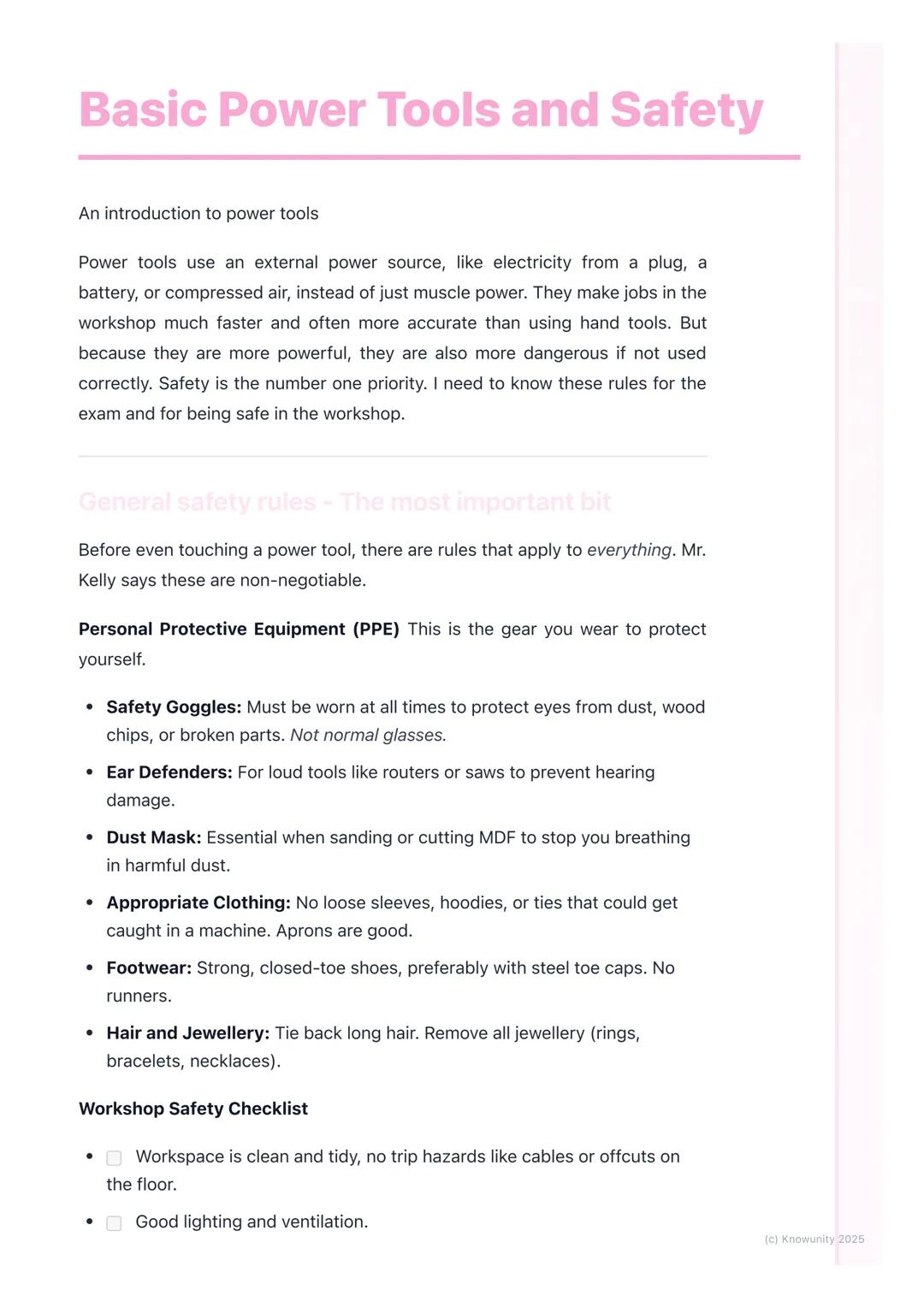
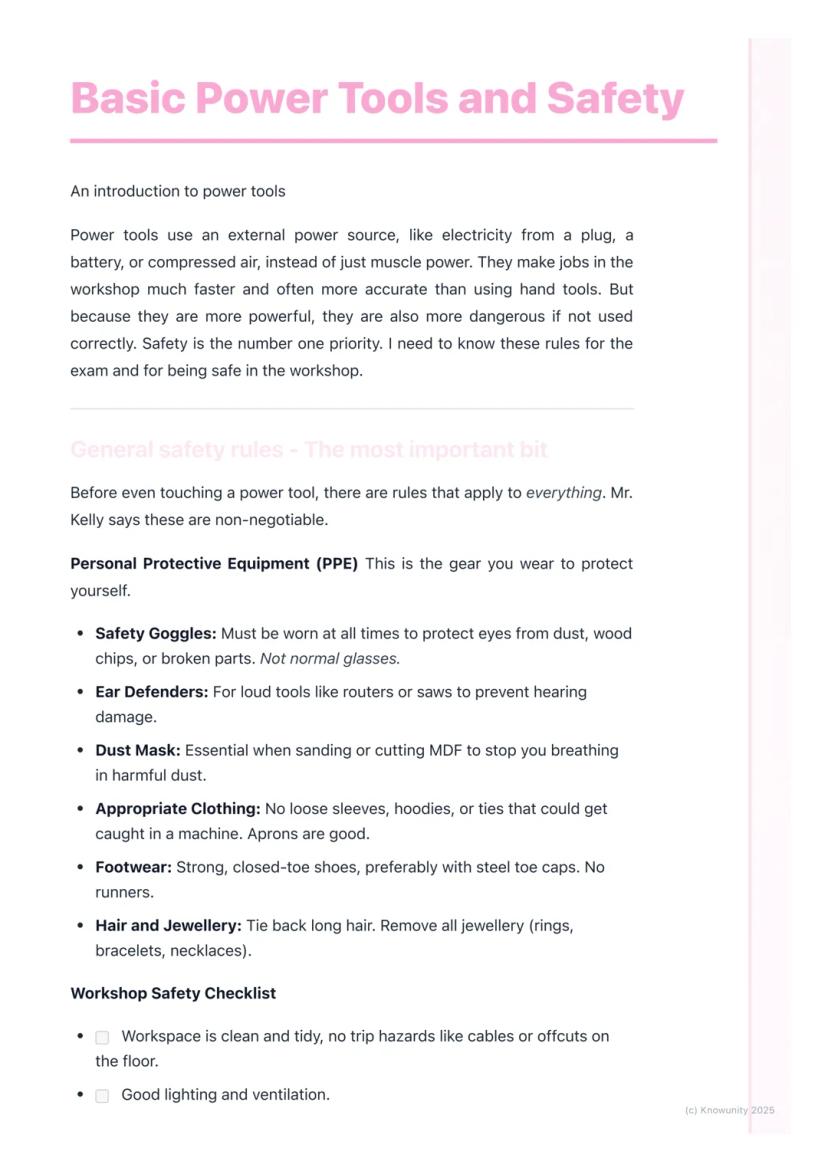
Basic Power Tools and Safety
Power tools run on electricity, batteries, or compressed air instead of just muscle power. They're brilliant for getting jobs done quickly and accurately, but they can be dangerous if you're not careful.
Personal Protective Equipment (PPE) is absolutely non-negotiable. You'll need safety goggles (not regular glasses), ear defenders for loud tools, and a dust mask when cutting or sanding. Wear appropriate clothing - no loose sleeves or hoodies that could get caught. Strong, closed-toe shoes are essential, and tie back long hair whilst removing all jewellery.
Your workspace needs to be spotless and well-lit. Know where the emergency stop buttons and fire extinguishers are located. Always clamp your workpiece securely to the bench - never hold small pieces by hand whilst using power tools on them.
Remember: The RCD (Residual Current Device) is a life-saving feature that instantly cuts power if there's an electrical fault, preventing serious electric shocks.
2
of 6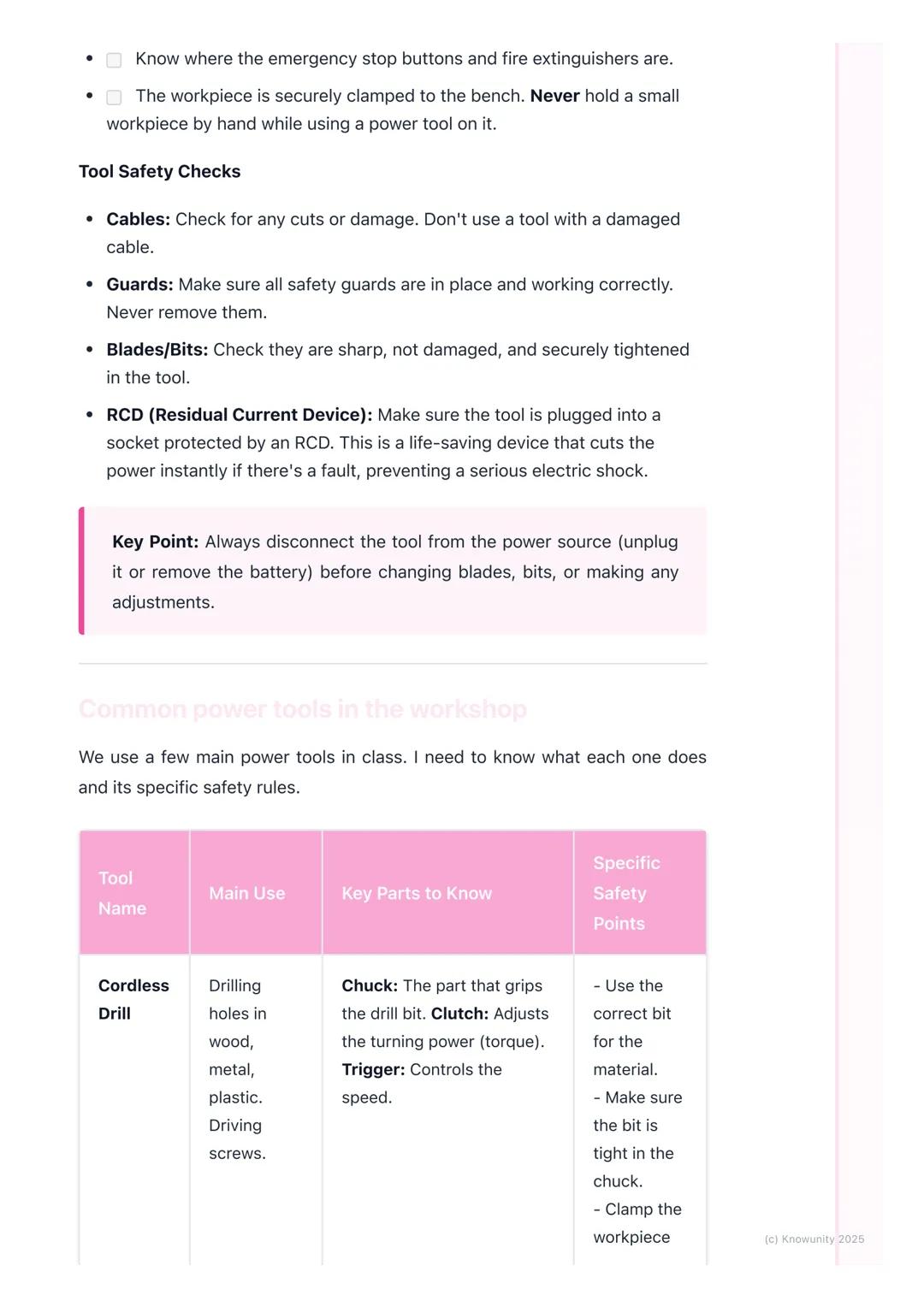
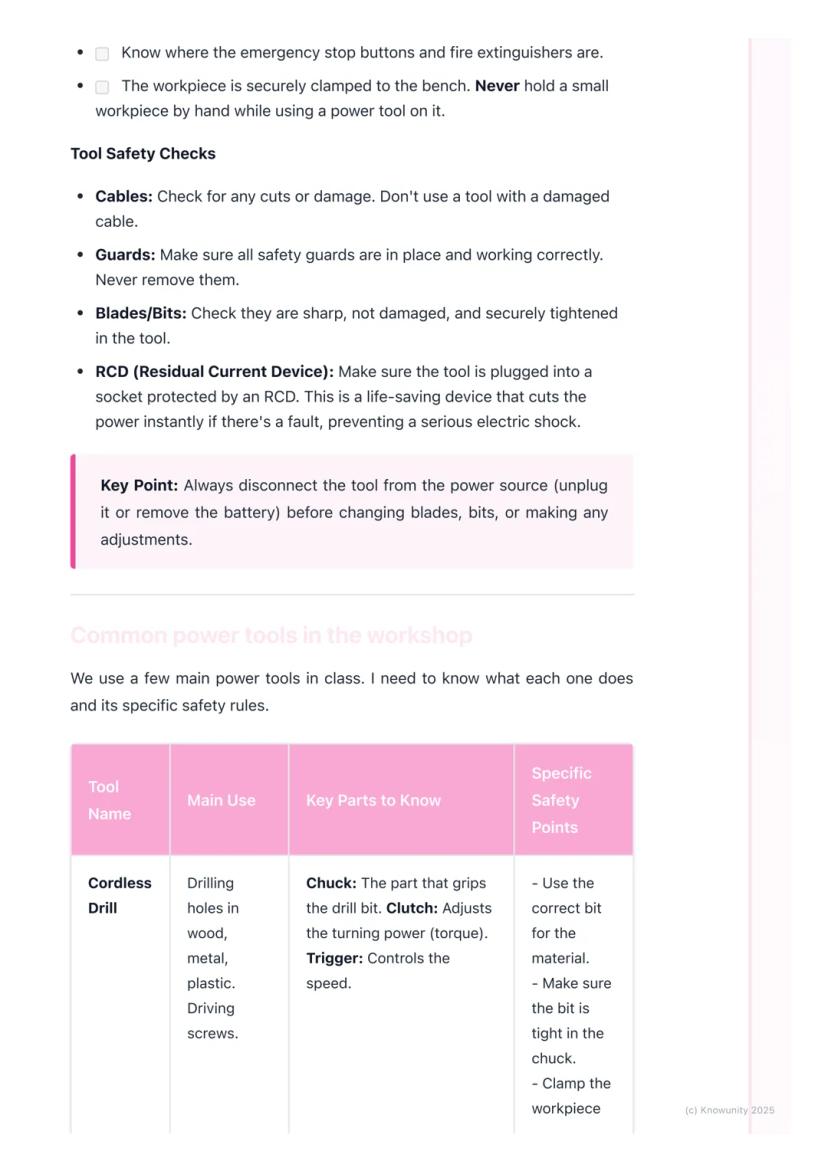
Tool Safety Checks
Before touching any power tool, you need to do essential safety checks. Inspect cables for cuts or damage - never use a tool with a damaged cable. All safety guards must be in place and working properly - never remove them.
Check that blades and bits are sharp, undamaged, and securely tightened. Make sure your tool is plugged into a socket protected by an RCD.
The golden rule is simple: always disconnect the power (unplug or remove the battery) before changing blades, bits, or making any adjustments. This prevents accidental starts that could cause serious injuries.
Key Point: Most workshop accidents happen when people skip the basic safety checks - don't be that person!
3
of 6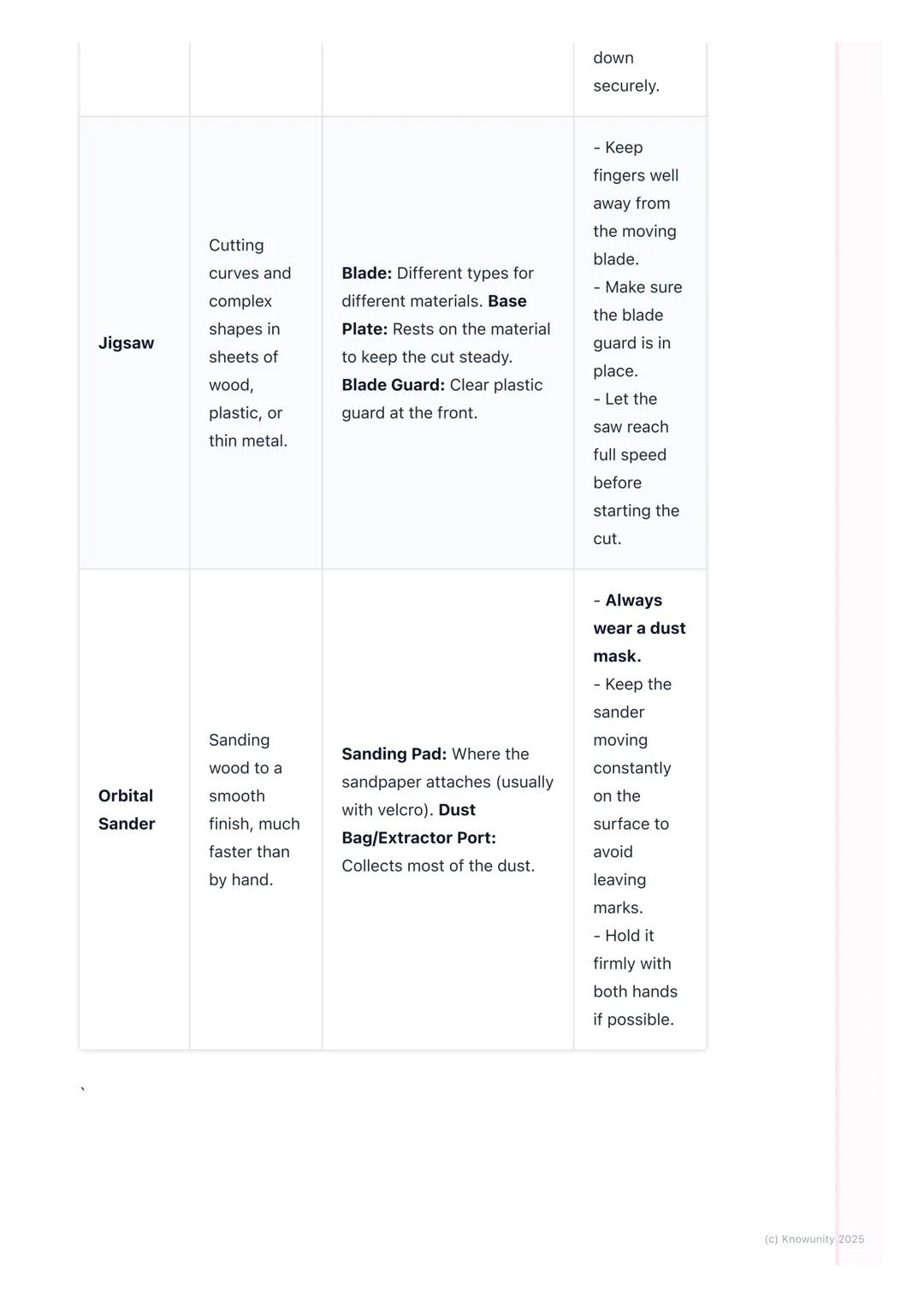
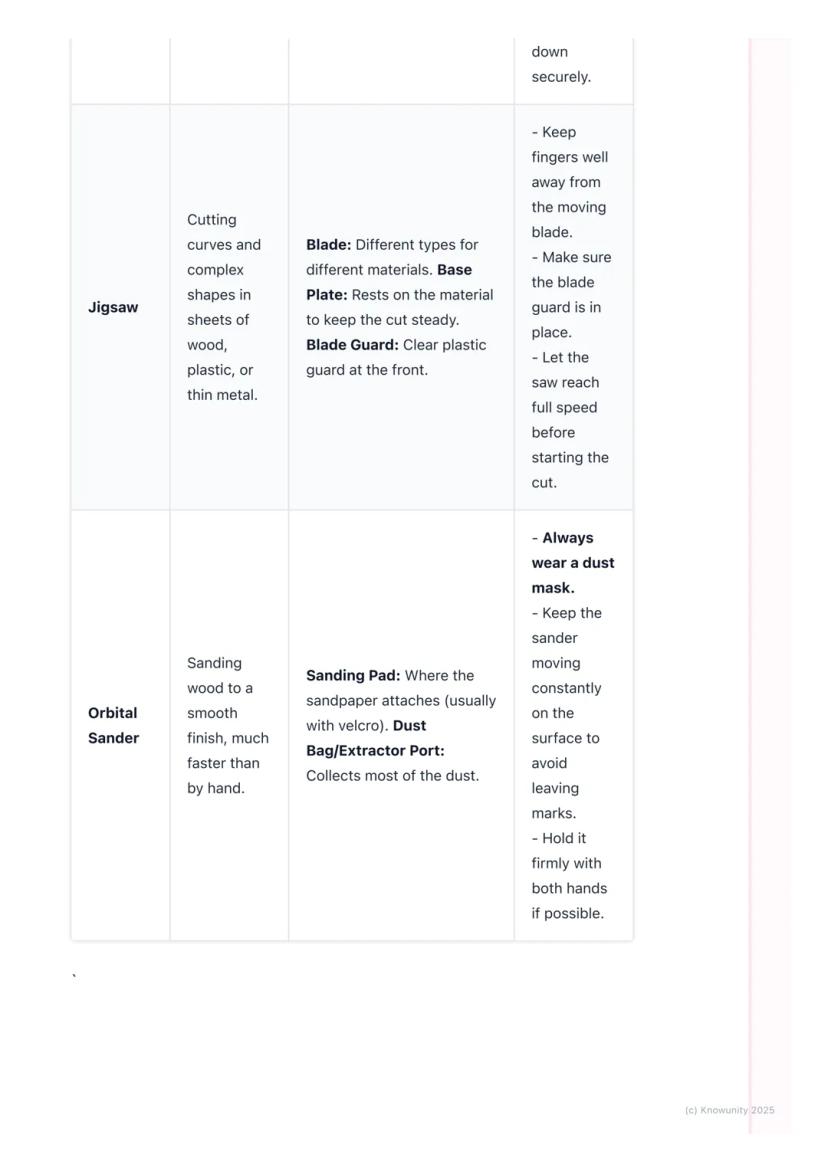
Common Workshop Power Tools
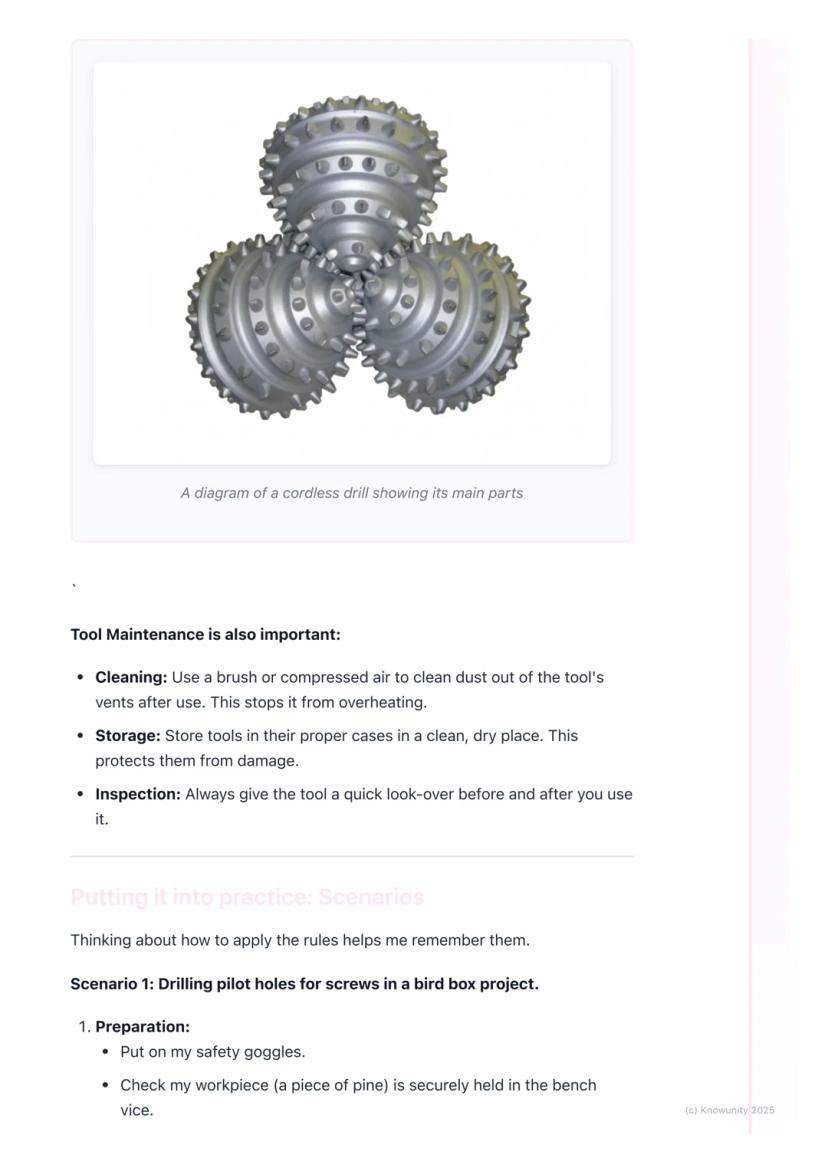
You'll mainly work with three essential power tools. The cordless drill is perfect for drilling holes and driving screws - learn about the chuck (grips the bit), clutch (adjusts turning power), and trigger (controls speed).
The jigsaw cuts curves and complex shapes in wood, plastic, or thin metal. Key parts include the blade (different types for different materials), base plate (keeps cuts steady), and blade guard (clear plastic protection).
The orbital sander smooths wood surfaces much faster than hand sanding. It has a sanding pad where sandpaper attaches and a dust bag to collect most particles.
Safety Tip: Always let jigsaws reach full speed before starting your cut, and keep orbital sanders moving constantly to avoid leaving marks.
4
of 6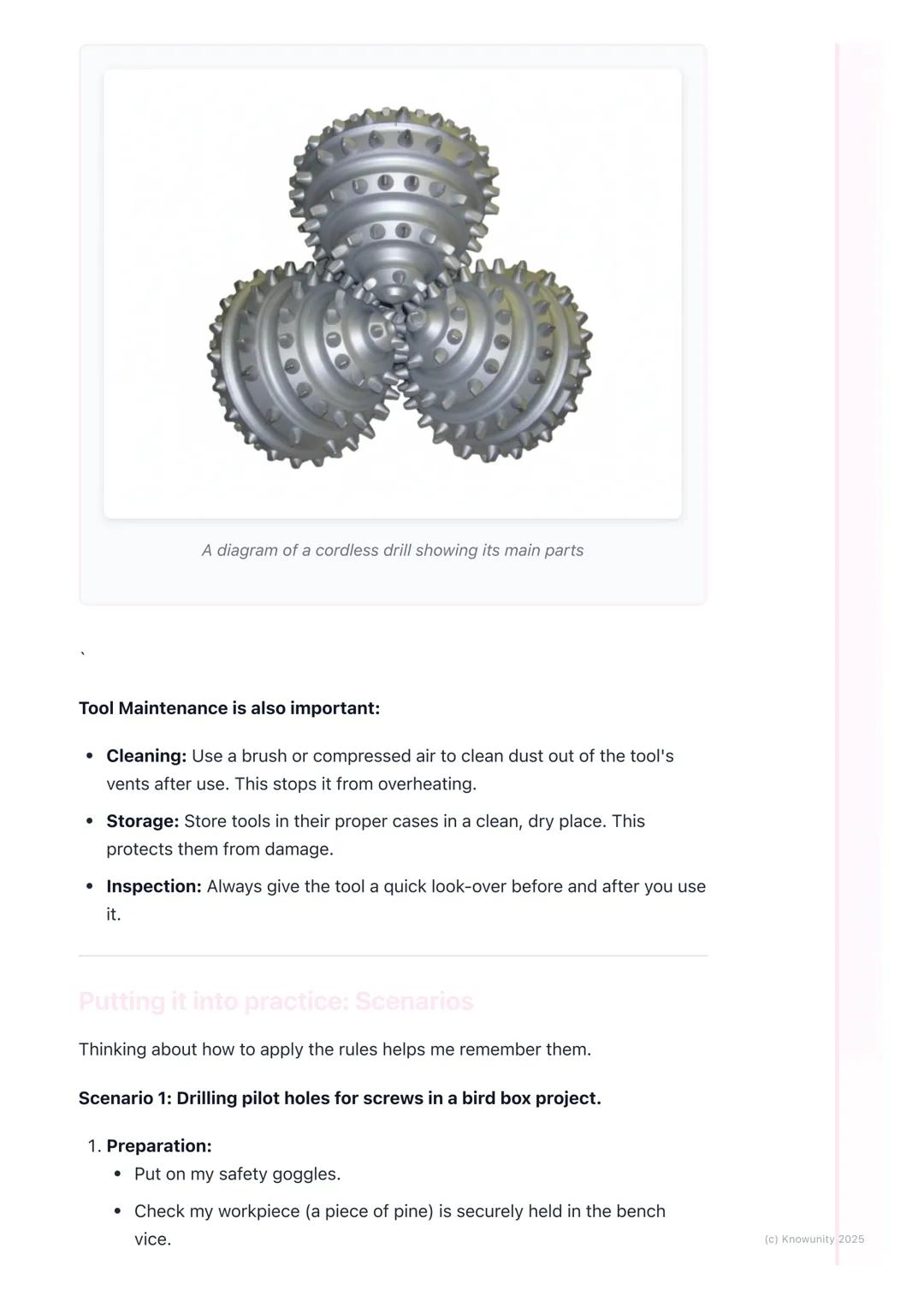
Tool Maintenance and Practical Application
Keep your tools in top condition by cleaning dust from vents with a brush after use - this prevents overheating. Store tools in proper cases in clean, dry places, and always inspect them before and after use.
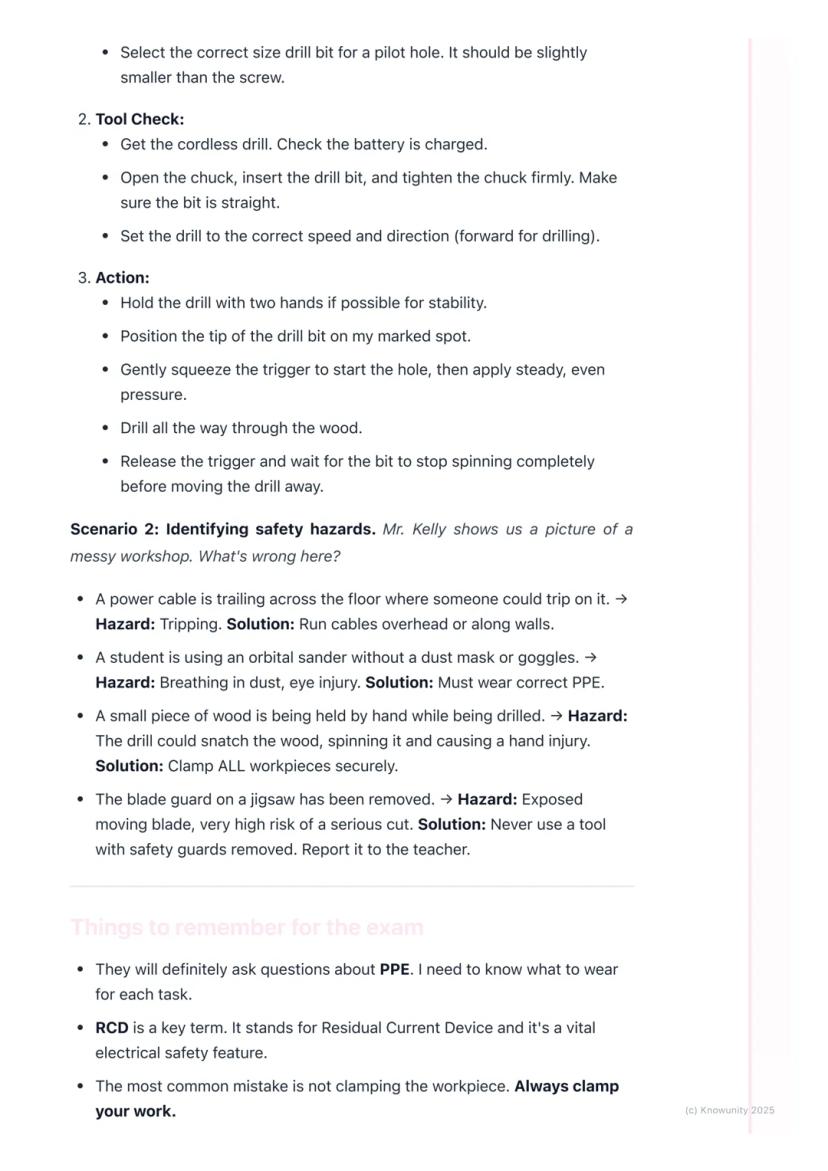
When drilling pilot holes, prepare by putting on safety goggles and securing your workpiece in a bench vice. Select the correct drill bit size (slightly smaller than your screw), check the battery is charged, and tighten the chuck firmly.
Hold the drill with both hands for stability. Position the bit on your marked spot, gently squeeze the trigger to start, then apply steady pressure. Always wait for the bit to stop spinning completely before moving the drill away.
Workshop Wisdom: Taking time to prepare properly always saves time in the long run and prevents accidents.
5
of 6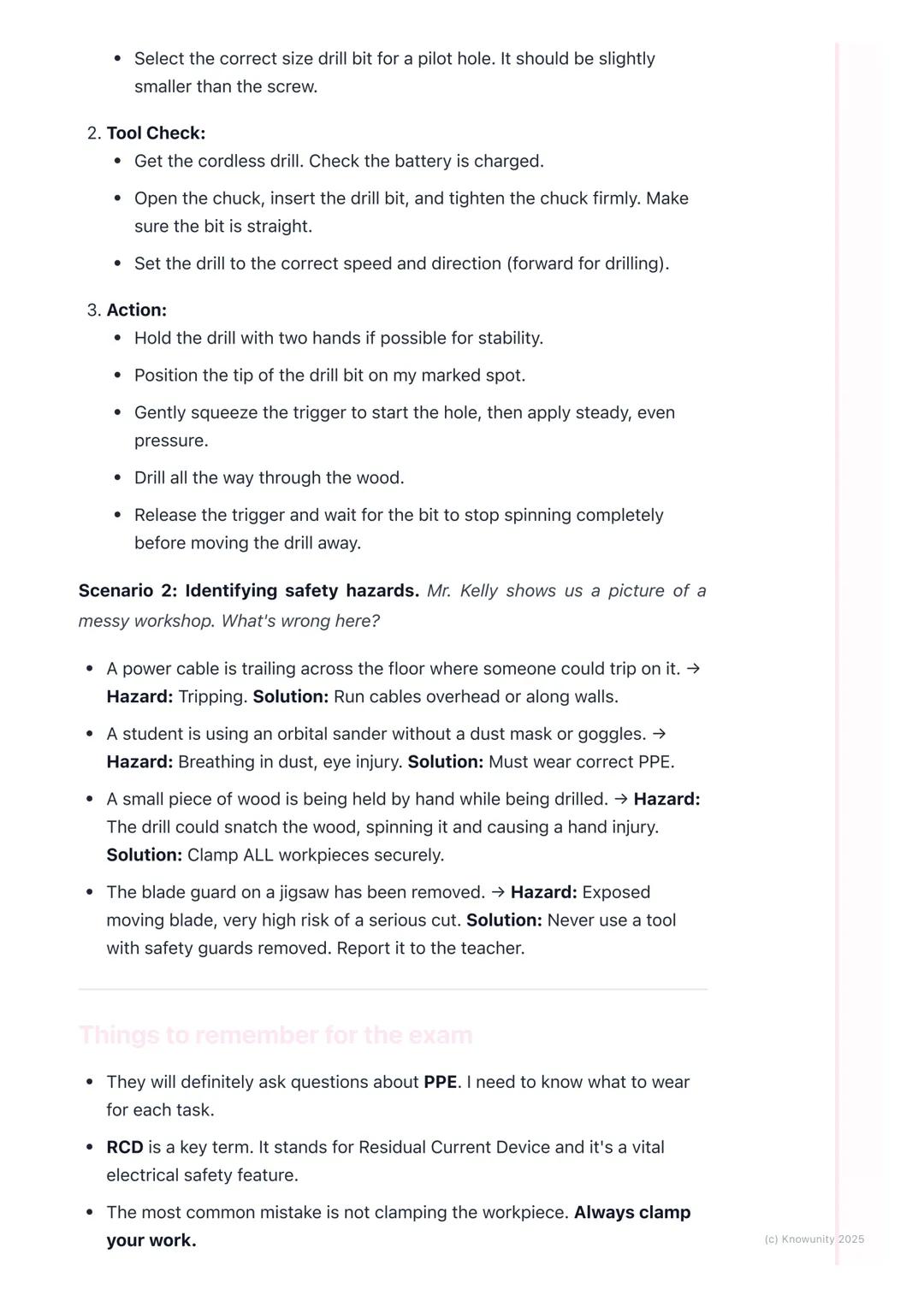
Identifying Safety Hazards
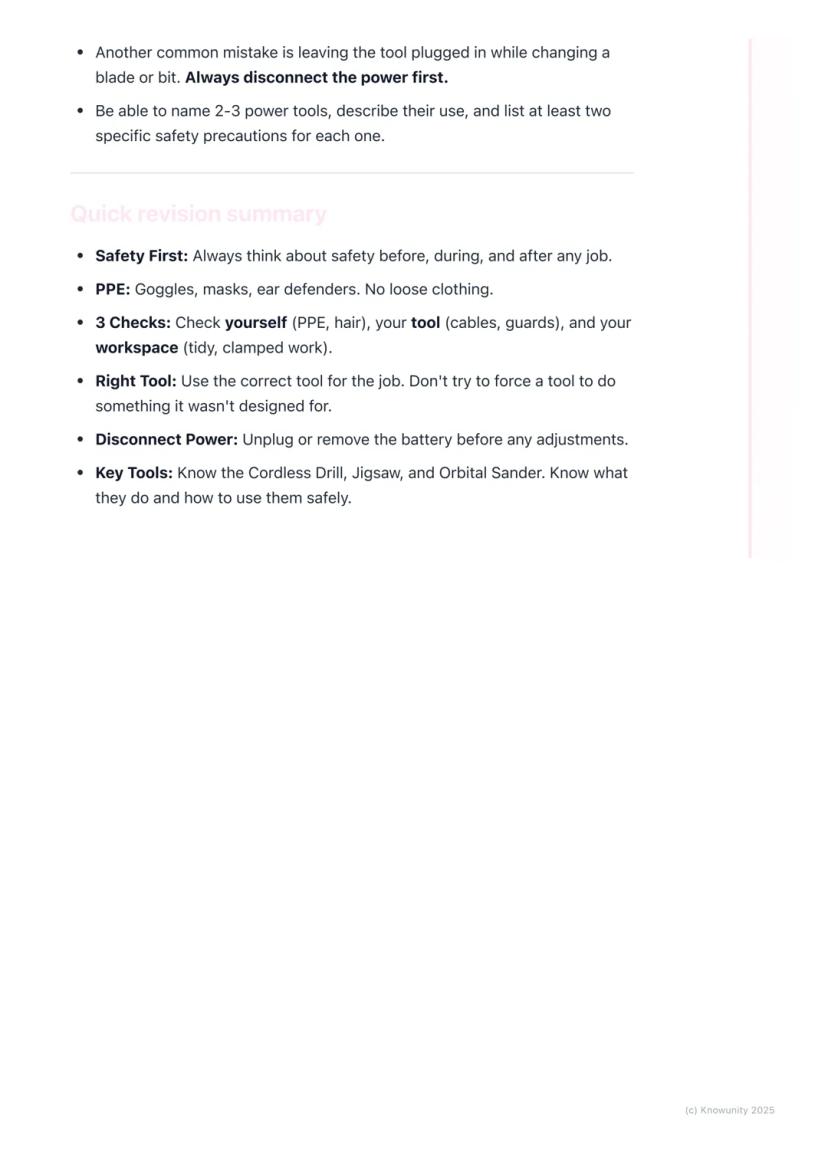
Learning to spot hazards keeps you safe. Trailing cables create tripping hazards - run them overhead or along walls instead. Students using sanders without dust masks or goggles risk breathing problems and eye injuries.
Never hold small pieces by hand whilst drilling - the drill can snatch the wood and spin it, causing hand injuries. Always clamp workpieces securely. If you see a tool with its safety guard removed, don't use it and report it immediately to your teacher.
The most common mistakes include not clamping workpieces and leaving tools plugged in whilst changing blades or bits. These simple errors cause the majority of workshop accidents.
Exam Alert: You'll definitely get questions about PPE and the importance of RCDs - make sure you know what each piece of safety equipment protects against.
6
of 6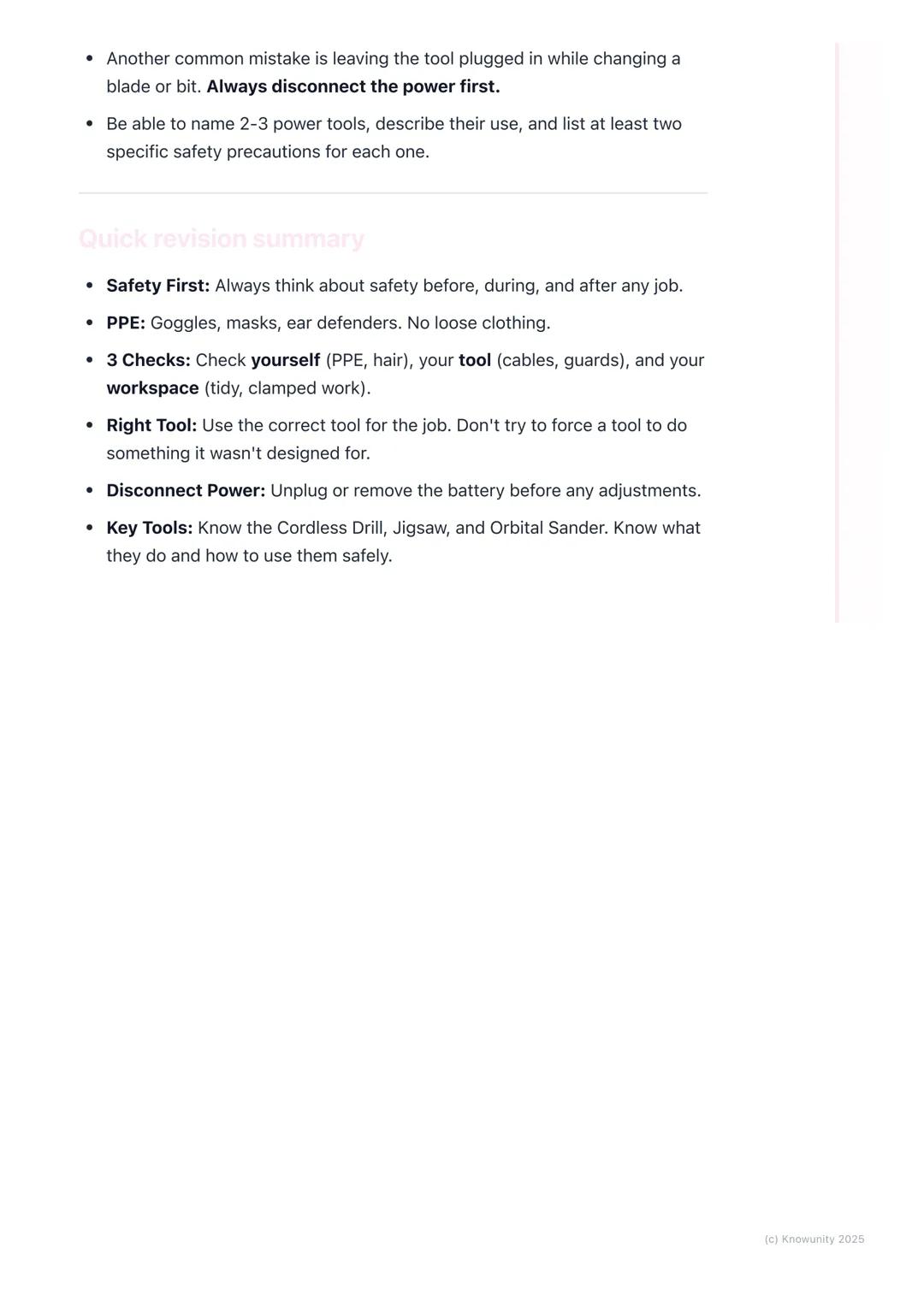
Quick Revision Summary
Remember the three essential checks: yourself (PPE, hair tied back), your tool (cables, guards, sharp bits), and your workspace (tidy, with work clamped securely). Always use the right tool for each job - don't force tools to do things they weren't designed for.
Disconnect power before making any adjustments. Know your three main tools: cordless drill for holes and screws, jigsaw for curves and complex cuts, and orbital sander for smooth finishes.
Safety isn't just about following rules - it's about developing good habits that'll serve you well in any workshop situation. Master these basics now, and you'll be confident using power tools for years to come.
Success Strategy: Practice identifying the specific safety requirements for each tool - this knowledge will boost your exam performance and keep you safe in practical work.
We thought you’d never ask...
What is the Knowunity AI companion?
Our AI Companion is a student-focused AI tool that offers more than just answers. Built on millions of Knowunity resources, it provides relevant information, personalised study plans, quizzes, and content directly in the chat, adapting to your individual learning journey.
Where can I download the Knowunity app?
You can download the app from Google Play Store and Apple App Store.
Is Knowunity really free of charge?
That's right! Enjoy free access to study content, connect with fellow students, and get instant help – all at your fingertips.
Can't find what you're looking for? Explore other subjects.
Students love us — and so will you.
4.6/5App Store
4.7/5Google Play
The app is very easy to use and well designed. I have found everything I was looking for so far and have been able to learn a lot from the presentations! I will definitely use the app for a class assignment! And of course it also helps a lot as an inspiration.
Stefan SiOS user
This app is really great. There are so many study notes and help [...]. My problem subject is French, for example, and the app has so many options for help. Thanks to this app, I have improved my French. I would recommend it to anyone.
Samantha KlichAndroid user
Wow, I am really amazed. I just tried the app because I've seen it advertised many times and was absolutely stunned. This app is THE HELP you want for school and above all, it offers so many things, such as workouts and fact sheets, which have been VERY helpful to me personally.
AnnaiOS user
Construction Studies4 views·Updated May 30, 2026·6 pagesBasic Power Tools: Safety Tips and Maintenance Guide
Power tools are game-changers in the workshop - they make everything faster and more precise than hand tools. But with great power comes great responsibility, and safety must always come first.
1
of 6
Sign up to see the content. It's free!
- Access to all documents
- Improve your grades
- Join milions of students
Basic Power Tools and Safety
Power tools run on electricity, batteries, or compressed air instead of just muscle power. They're brilliant for getting jobs done quickly and accurately, but they can be dangerous if you're not careful.
Personal Protective Equipment (PPE) is absolutely non-negotiable. You'll need safety goggles (not regular glasses), ear defenders for loud tools, and a dust mask when cutting or sanding. Wear appropriate clothing - no loose sleeves or hoodies that could get caught. Strong, closed-toe shoes are essential, and tie back long hair whilst removing all jewellery.
Your workspace needs to be spotless and well-lit. Know where the emergency stop buttons and fire extinguishers are located. Always clamp your workpiece securely to the bench - never hold small pieces by hand whilst using power tools on them.
Remember: The RCD (Residual Current Device) is a life-saving feature that instantly cuts power if there's an electrical fault, preventing serious electric shocks.
2
of 6Sign up to see the content. It's free!
- Access to all documents
- Improve your grades
- Join milions of students
Tool Safety Checks
Before touching any power tool, you need to do essential safety checks. Inspect cables for cuts or damage - never use a tool with a damaged cable. All safety guards must be in place and working properly - never remove them.
Check that blades and bits are sharp, undamaged, and securely tightened. Make sure your tool is plugged into a socket protected by an RCD.
The golden rule is simple: always disconnect the power (unplug or remove the battery) before changing blades, bits, or making any adjustments. This prevents accidental starts that could cause serious injuries.
Key Point: Most workshop accidents happen when people skip the basic safety checks - don't be that person!
3
of 6Sign up to see the content. It's free!
- Access to all documents
- Improve your grades
- Join milions of students
Common Workshop Power Tools
You'll mainly work with three essential power tools. The cordless drill is perfect for drilling holes and driving screws - learn about the chuck (grips the bit), clutch (adjusts turning power), and trigger (controls speed).
The jigsaw cuts curves and complex shapes in wood, plastic, or thin metal. Key parts include the blade (different types for different materials), base plate (keeps cuts steady), and blade guard (clear plastic protection).
The orbital sander smooths wood surfaces much faster than hand sanding. It has a sanding pad where sandpaper attaches and a dust bag to collect most particles.
Safety Tip: Always let jigsaws reach full speed before starting your cut, and keep orbital sanders moving constantly to avoid leaving marks.
4
of 6Sign up to see the content. It's free!
- Access to all documents
- Improve your grades
- Join milions of students
Tool Maintenance and Practical Application
Keep your tools in top condition by cleaning dust from vents with a brush after use - this prevents overheating. Store tools in proper cases in clean, dry places, and always inspect them before and after use.
When drilling pilot holes, prepare by putting on safety goggles and securing your workpiece in a bench vice. Select the correct drill bit size (slightly smaller than your screw), check the battery is charged, and tighten the chuck firmly.
Hold the drill with both hands for stability. Position the bit on your marked spot, gently squeeze the trigger to start, then apply steady pressure. Always wait for the bit to stop spinning completely before moving the drill away.
Workshop Wisdom: Taking time to prepare properly always saves time in the long run and prevents accidents.
5
of 6Sign up to see the content. It's free!
- Access to all documents
- Improve your grades
- Join milions of students
Identifying Safety Hazards
Learning to spot hazards keeps you safe. Trailing cables create tripping hazards - run them overhead or along walls instead. Students using sanders without dust masks or goggles risk breathing problems and eye injuries.
Never hold small pieces by hand whilst drilling - the drill can snatch the wood and spin it, causing hand injuries. Always clamp workpieces securely. If you see a tool with its safety guard removed, don't use it and report it immediately to your teacher.
The most common mistakes include not clamping workpieces and leaving tools plugged in whilst changing blades or bits. These simple errors cause the majority of workshop accidents.
Exam Alert: You'll definitely get questions about PPE and the importance of RCDs - make sure you know what each piece of safety equipment protects against.
6
of 6Sign up to see the content. It's free!
- Access to all documents
- Improve your grades
- Join milions of students
Quick Revision Summary
Remember the three essential checks: yourself (PPE, hair tied back), your tool (cables, guards, sharp bits), and your workspace (tidy, with work clamped securely). Always use the right tool for each job - don't force tools to do things they weren't designed for.
Disconnect power before making any adjustments. Know your three main tools: cordless drill for holes and screws, jigsaw for curves and complex cuts, and orbital sander for smooth finishes.
Safety isn't just about following rules - it's about developing good habits that'll serve you well in any workshop situation. Master these basics now, and you'll be confident using power tools for years to come.
Success Strategy: Practice identifying the specific safety requirements for each tool - this knowledge will boost your exam performance and keep you safe in practical work.
We thought you’d never ask...
What is the Knowunity AI companion?
Our AI Companion is a student-focused AI tool that offers more than just answers. Built on millions of Knowunity resources, it provides relevant information, personalised study plans, quizzes, and content directly in the chat, adapting to your individual learning journey.
Where can I download the Knowunity app?
You can download the app from Google Play Store and Apple App Store.
Is Knowunity really free of charge?
That's right! Enjoy free access to study content, connect with fellow students, and get instant help – all at your fingertips.
Can't find what you're looking for? Explore other subjects.
Students love us — and so will you.
4.6/5App Store
4.7/5Google Play
The app is very easy to use and well designed. I have found everything I was looking for so far and have been able to learn a lot from the presentations! I will definitely use the app for a class assignment! And of course it also helps a lot as an inspiration.
Stefan SiOS user
This app is really great. There are so many study notes and help [...]. My problem subject is French, for example, and the app has so many options for help. Thanks to this app, I have improved my French. I would recommend it to anyone.
Samantha KlichAndroid user
Wow, I am really amazed. I just tried the app because I've seen it advertised many times and was absolutely stunned. This app is THE HELP you want for school and above all, it offers so many things, such as workouts and fact sheets, which have been VERY helpful to me personally.
AnnaiOS user