
Biology is everywhere around you - from the food you... Show more
 Sociology
Sign up to see the contentIt's free!
Access to all documents
Improve your grades
Join milions of students
By signing up you accept Terms of Service and Privacy Policy
Subjects

Maths

Chemistry

Biology

English Language

History
Responding to change (a2 only)
Infection and response
Homeostasis and response
Energy transfers (a2 only)
Cell biology
Organisms respond to changes in their internal and external environments (a-level only)
Biological molecules
Organisation
Substance exchange
Bioenergetics
Genetic information & variation
Inheritance, variation and evolution
Genetics & ecosystems (a2 only)
Ecology
Cells
Show all topics
Britain & the wider world: 1745 -1901
1l the quest for political stability: germany, 1871-1991
The cold war
Inter-war germany
Medieval period: 1066 -1509
2d religious conflict and the church in england, c1529-c1570
2o democracy and nazism: germany, 1918-1945
1f industrialisation and the people: britain, c1783-1885
1c the tudors: england, 1485-1603
2m wars and welfare: britain in transition, 1906-1957
World war two & the holocaust
2n revolution and dictatorship: russia, 1917-1953
2s the making of modern britain, 1951-2007
World war one
Britain: 1509 -1745
Show all topics
450
•
3 Dec 2025
•
_gxhg
@_gxhg
Biology is everywhere around you - from the food you... Show more
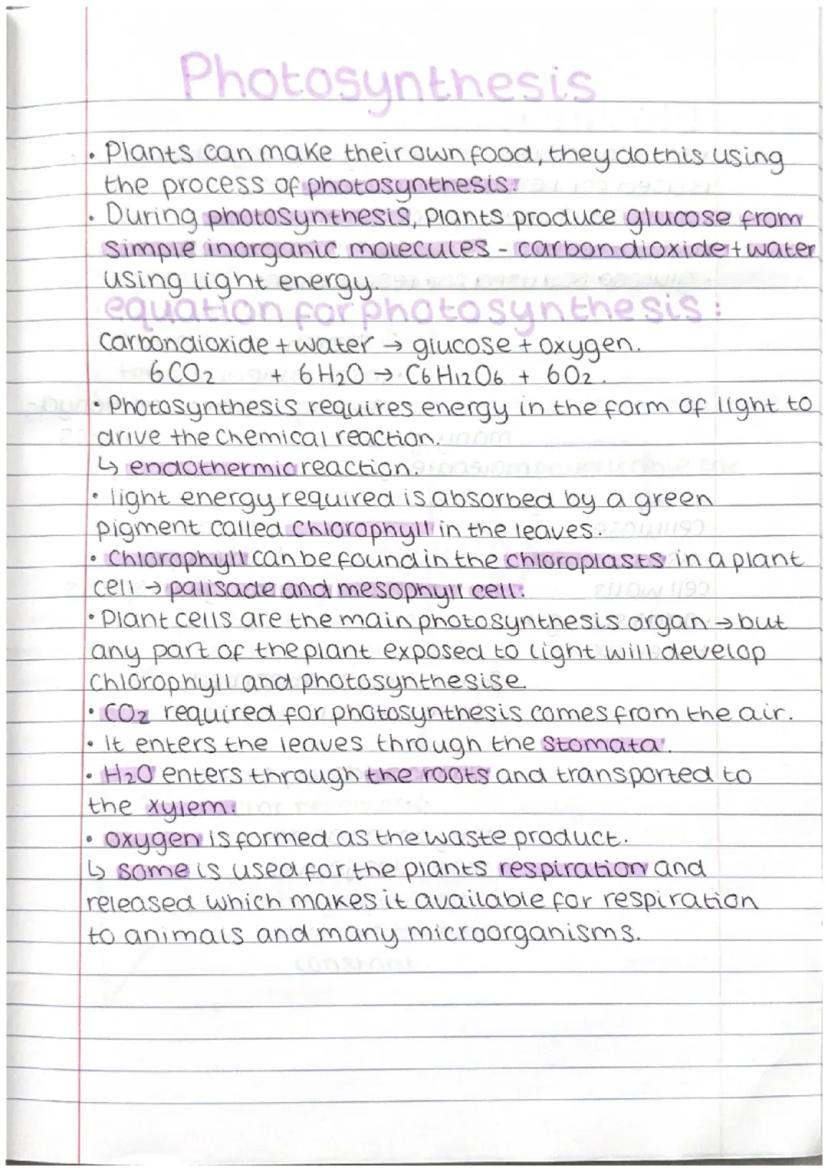
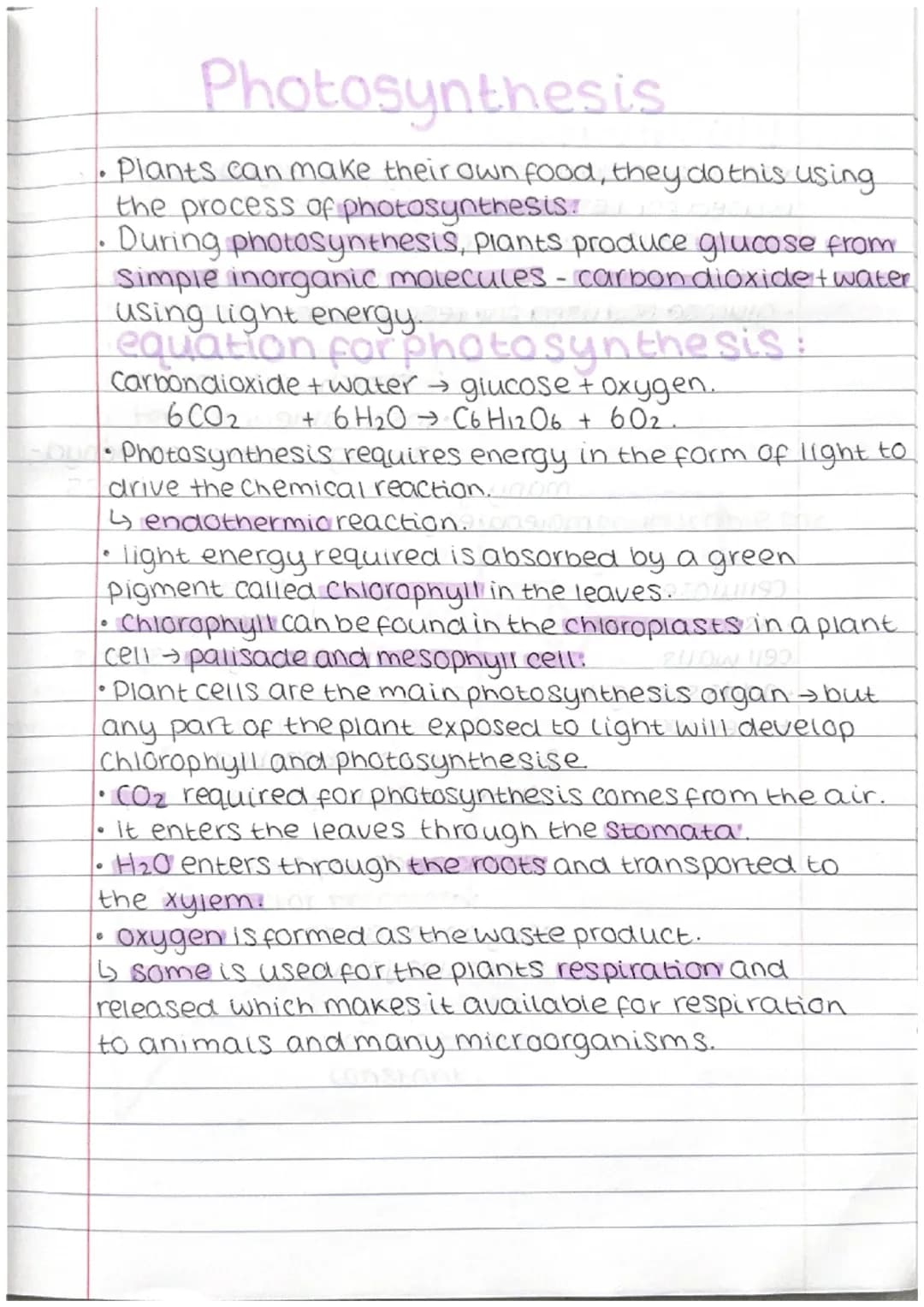
Ever wondered how plants survive without popping to Tesco for a meal? They've got their own incredible food-making process called photosynthesis, and it's happening in every green leaf around you right now.
The basic equation is simple: carbon dioxide + water → glucose + oxygen (using light energy). Plants absorb CO₂ through tiny pores called stomata in their leaves, whilst water travels up from the roots through the xylem. The magic happens in chloroplasts, which contain the green pigment chlorophyll that captures light energy.
This process is endothermic - it needs energy input to work. The glucose produced becomes the plant's food source, whilst oxygen gets released as a waste product (lucky for us, since we need it to breathe!). Any green part of a plant can photosynthesise, but leaves are the main photosynthesis factories.
Quick Fact: The oxygen you're breathing right now was probably made by a plant through photosynthesis!
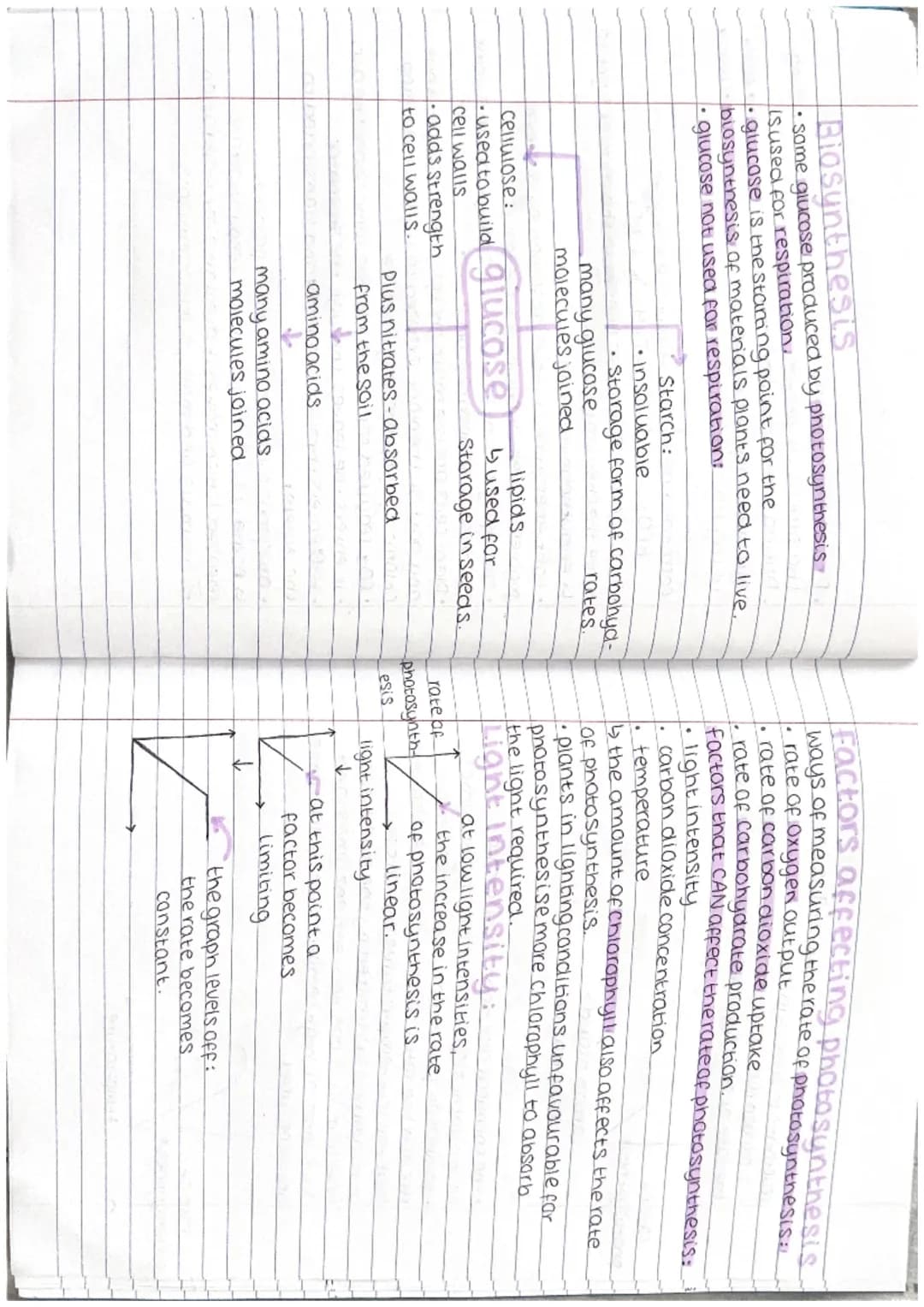
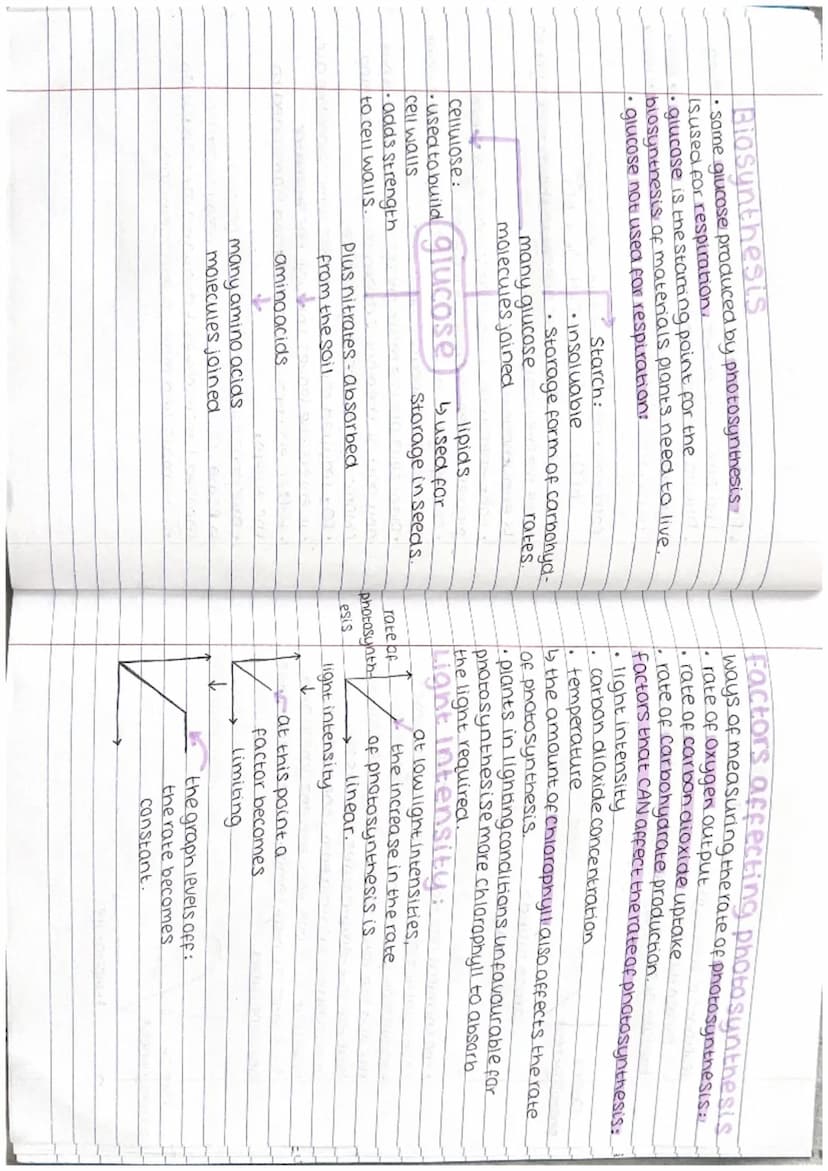
Plants don't just make glucose to sit around - they're busy converting it into everything they need to grow and survive. It's like having the ultimate building material that can be transformed into anything!
Some glucose gets used immediately for respiration (plants need energy too!). The rest gets converted into starch for storage - think of it as the plant's emergency food cupboard. Cellulose is made to build strong cell walls, whilst lipids get stored in seeds for future plant growth.
Plants also combine glucose with nitrates from the soil to create amino acids, which then link together to form proteins. It's basically plant biochemistry at its finest - one simple sugar molecule becomes the foundation for everything the plant needs.
The rate of photosynthesis can be measured by tracking oxygen production, CO₂ uptake, or carbohydrate production. Light intensity, CO₂ concentration, temperature, and chlorophyll levels all affect how fast photosynthesis happens.
Remember: When light becomes limiting, plants actually produce more chlorophyll to capture every available photon!
Understanding what speeds up or slows down photosynthesis is crucial for everything from growing crops to predicting climate change effects. Think of it like tuning a car engine - multiple factors need to work together perfectly.
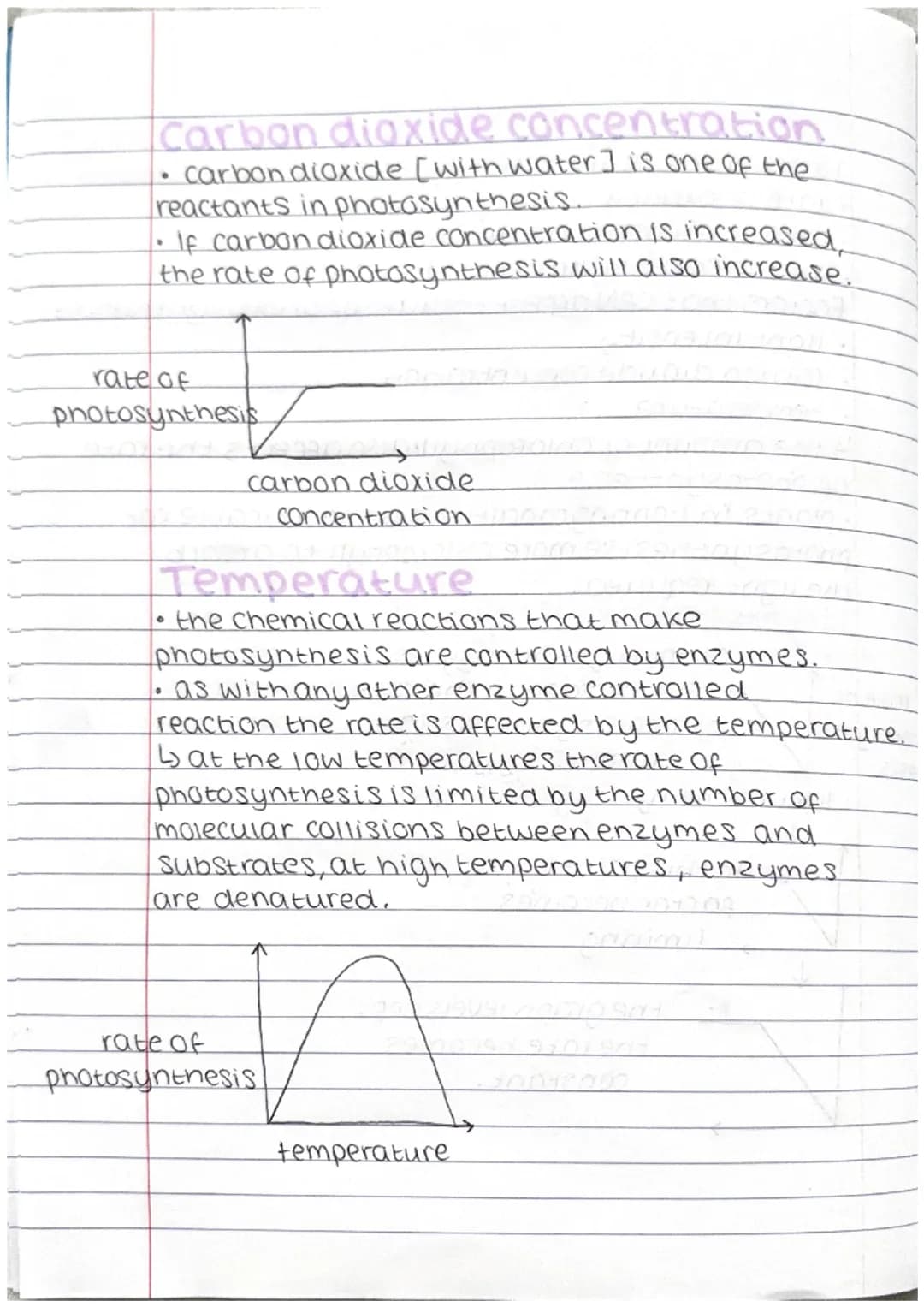
Light intensity shows a linear relationship at low levels - more light equals faster photosynthesis. But eventually, the graph levels off because something else becomes the limiting factor. It's like having a bottleneck in a production line.
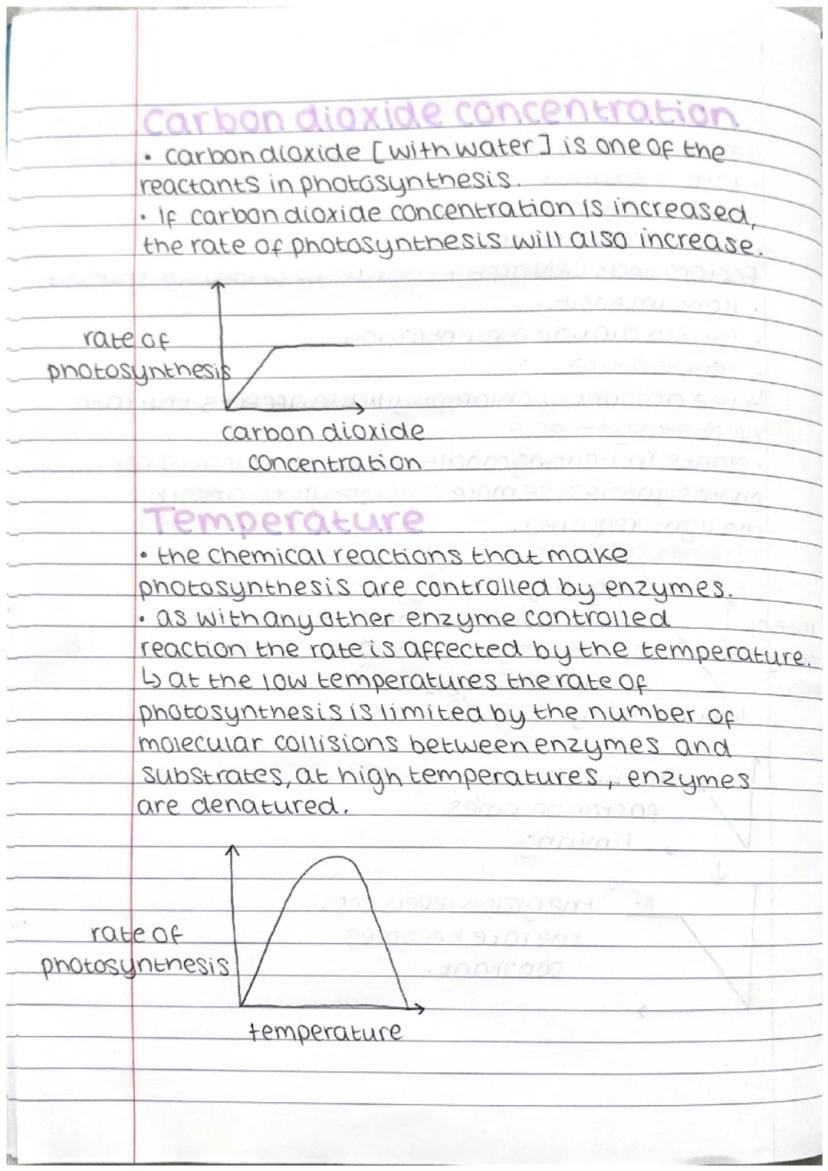
Carbon dioxide concentration works similarly - increase the CO₂ and photosynthesis speeds up, until another factor becomes limiting. Remember, CO₂ is literally one of the raw materials, so running out slows everything down.
Temperature affects photosynthesis because enzymes control the chemical reactions involved. Too cold and molecular collisions happen too slowly. Too hot and the enzymes get denatured (permanently damaged), causing the rate to crash dramatically.
Exam Tip: Look for the point where graphs level off - that's when a limiting factor kicks in!
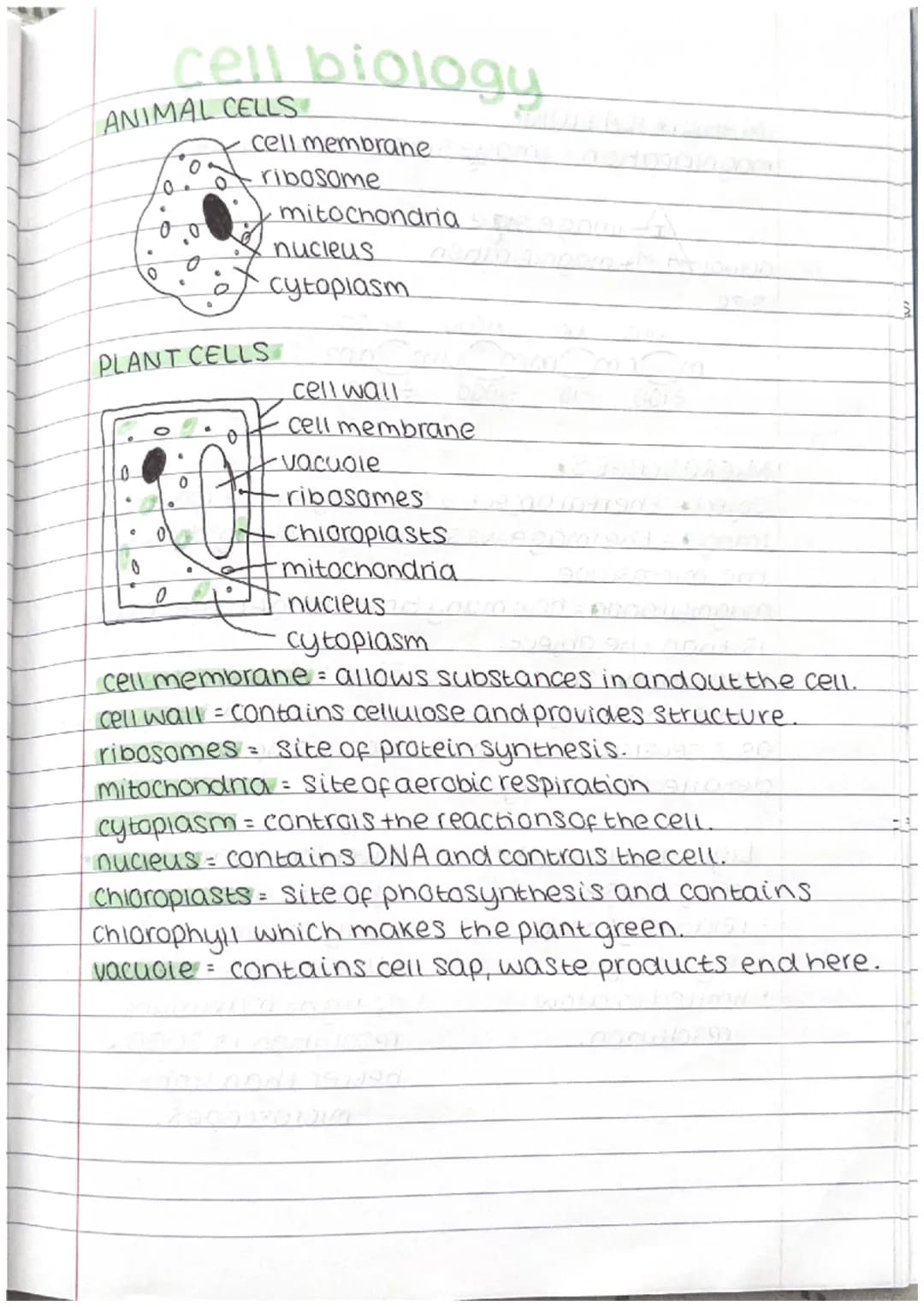
Cells are like tiny factories, each with specialised parts doing specific jobs. Knowing the difference between animal and plant cells is fundamental to understanding how life works at the smallest level.
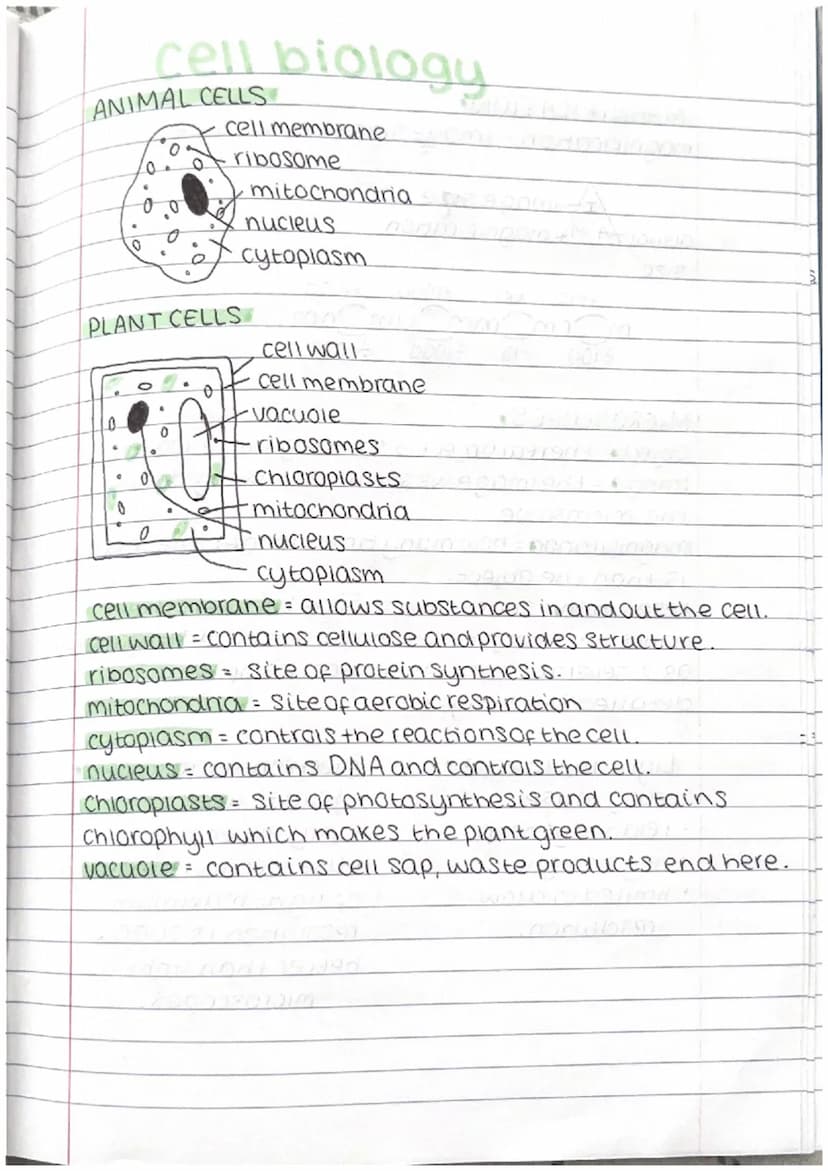
Animal cells contain five key structures: the cell membrane (controls what goes in and out), nucleus (contains DNA and controls everything), cytoplasm (where reactions happen), ribosomes (protein factories), and mitochondria (powerhouses that release energy).
Plant cells have everything animal cells do, plus three extras. The cell wall made of cellulose provides structure and strength. Chloroplasts contain chlorophyll and carry out photosynthesis. The vacuole stores cell sap and waste products - it's like the plant's storage and recycling centre.
Each organelle has evolved to do its job perfectly. Mitochondria are where aerobic respiration happens, ribosomes are the sites of protein synthesis, and chloroplasts make plants green whilst powering photosynthesis.
Memory Trick: Plant cells have "extras" because they need to make their own food and stand upright without a skeleton!
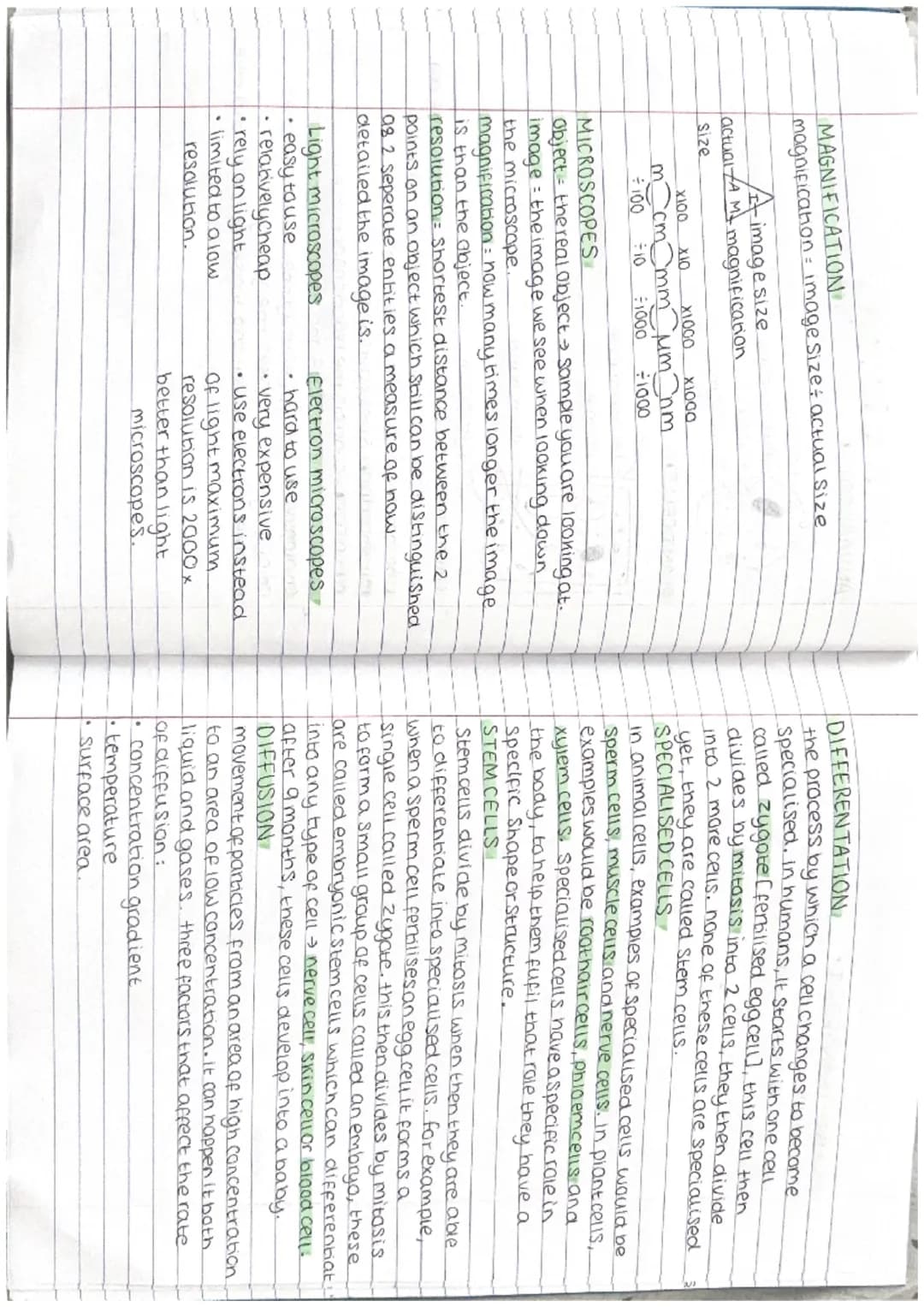
Modern biology wouldn't exist without microscopes - they've opened up the invisible world of cells and shown us how complex life really is at the microscopic level.
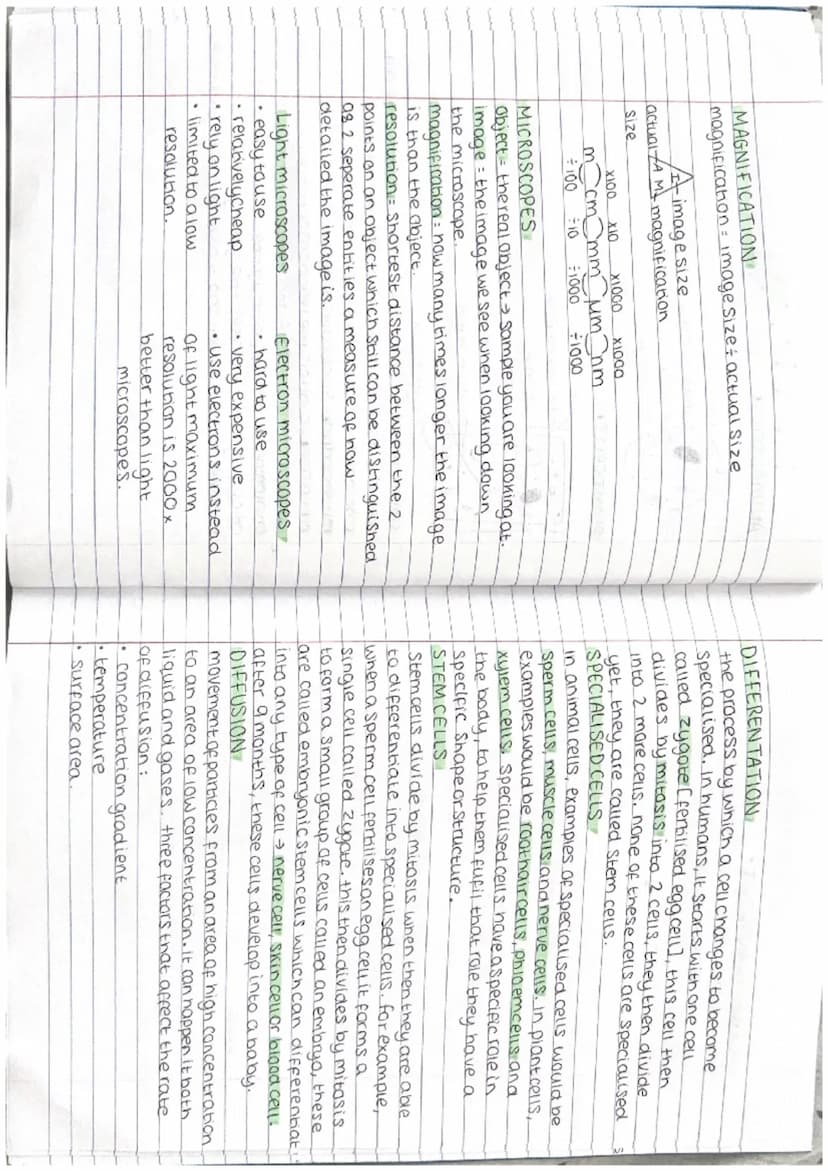
Light microscopes are the workhorses of school labs - cheap, easy to use, but limited in resolution (how much detail you can see). Electron microscopes use electrons instead of light, giving 2000 times better resolution but costing a fortune and requiring serious training to operate.
Magnification = image size ÷ actual size. Converting between units is crucial: multiply by 1000 going from mm to μm to nm. Getting this wrong in exams is easily avoidable with practice!
Stem cells are the ultimate multitaskers - they can differentiate into any specialised cell type through mitosis. A zygote (fertilised egg) divides repeatedly, creating embryonic stem cells that eventually become every cell in your body. Diffusion moves particles from high to low concentration, affected by concentration gradient, temperature, and surface area.
Key Point: Resolution matters more than magnification - there's no point making a blurry image bigger!
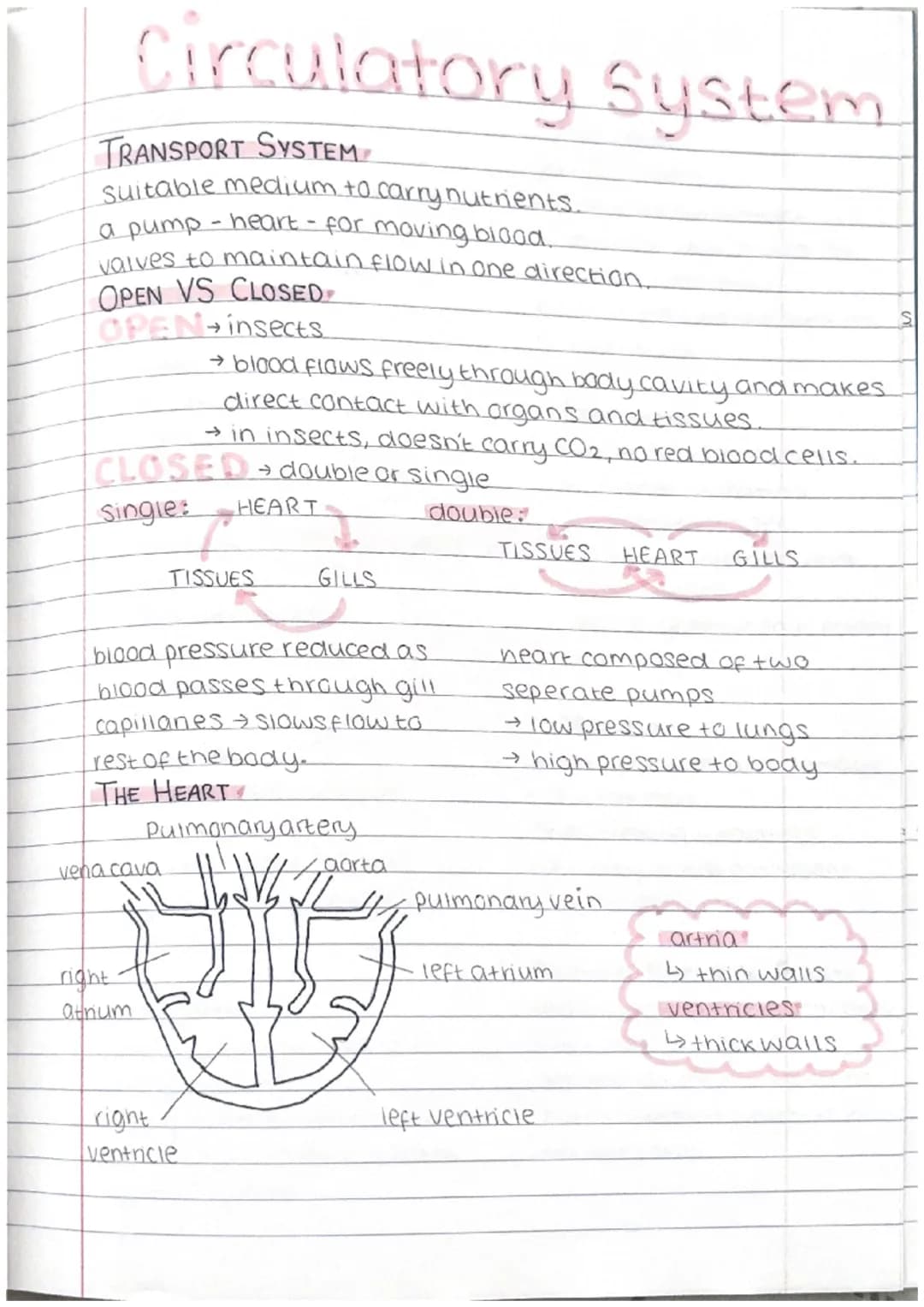
Your circulatory system is like a sophisticated delivery service, moving nutrients, oxygen, and waste products around your body 24/7. Understanding how it works reveals why you feel dizzy when you stand up too quickly!
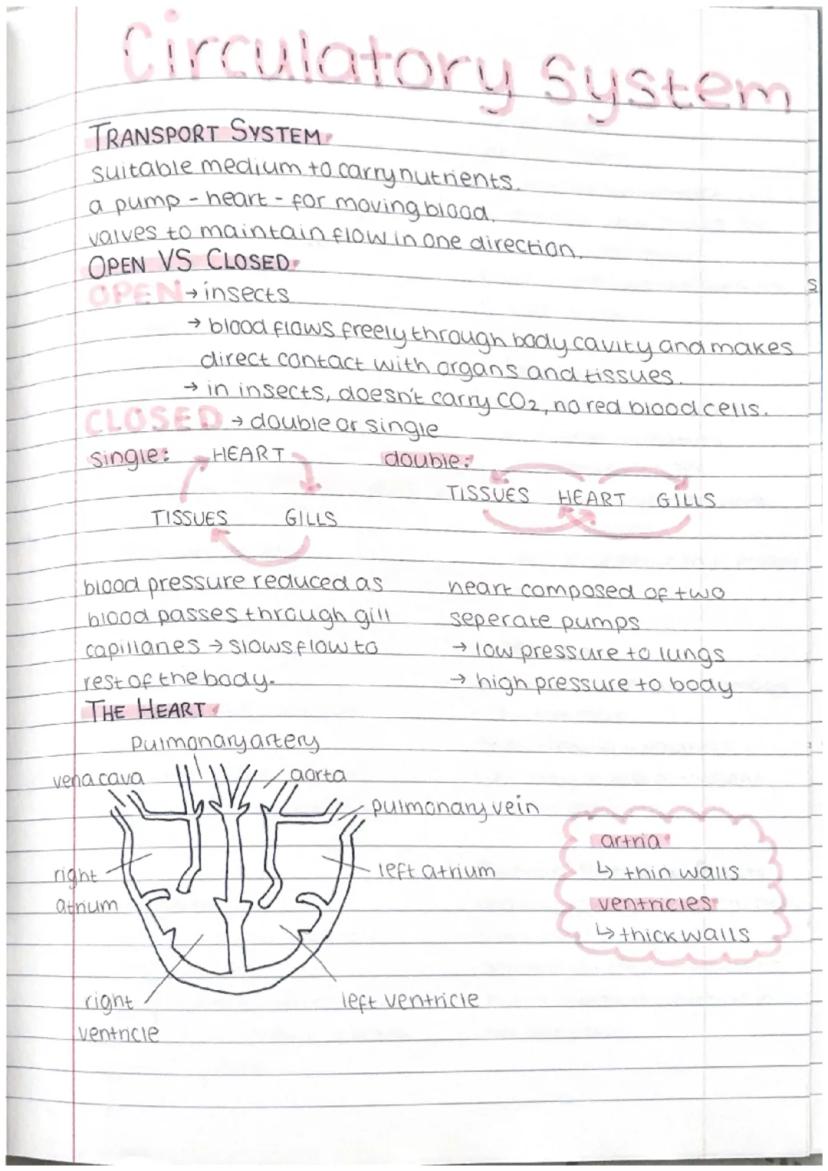
Animals have either open or closed circulatory systems. Insects have open systems where blood flows freely through body cavities, making direct contact with organs. Their blood doesn't carry CO₂ and lacks red blood cells.
Most animals (including humans) have closed systems where blood stays in vessels. Single circulation (like in fish) sends blood from heart to gills to body tissues, but blood pressure drops significantly at the gills. Double circulation (like in mammals) is more efficient - blood goes heart → lungs → heart → body tissues.
The heart has four chambers: thin-walled atria receive blood, whilst thick-walled ventricles pump it out. The pulmonary artery carries blood to lungs, the aorta supplies the body, and valves ensure one-way flow.
Think About It: Double circulation means your heart works twice as hard, but delivers oxygen much more efficiently!
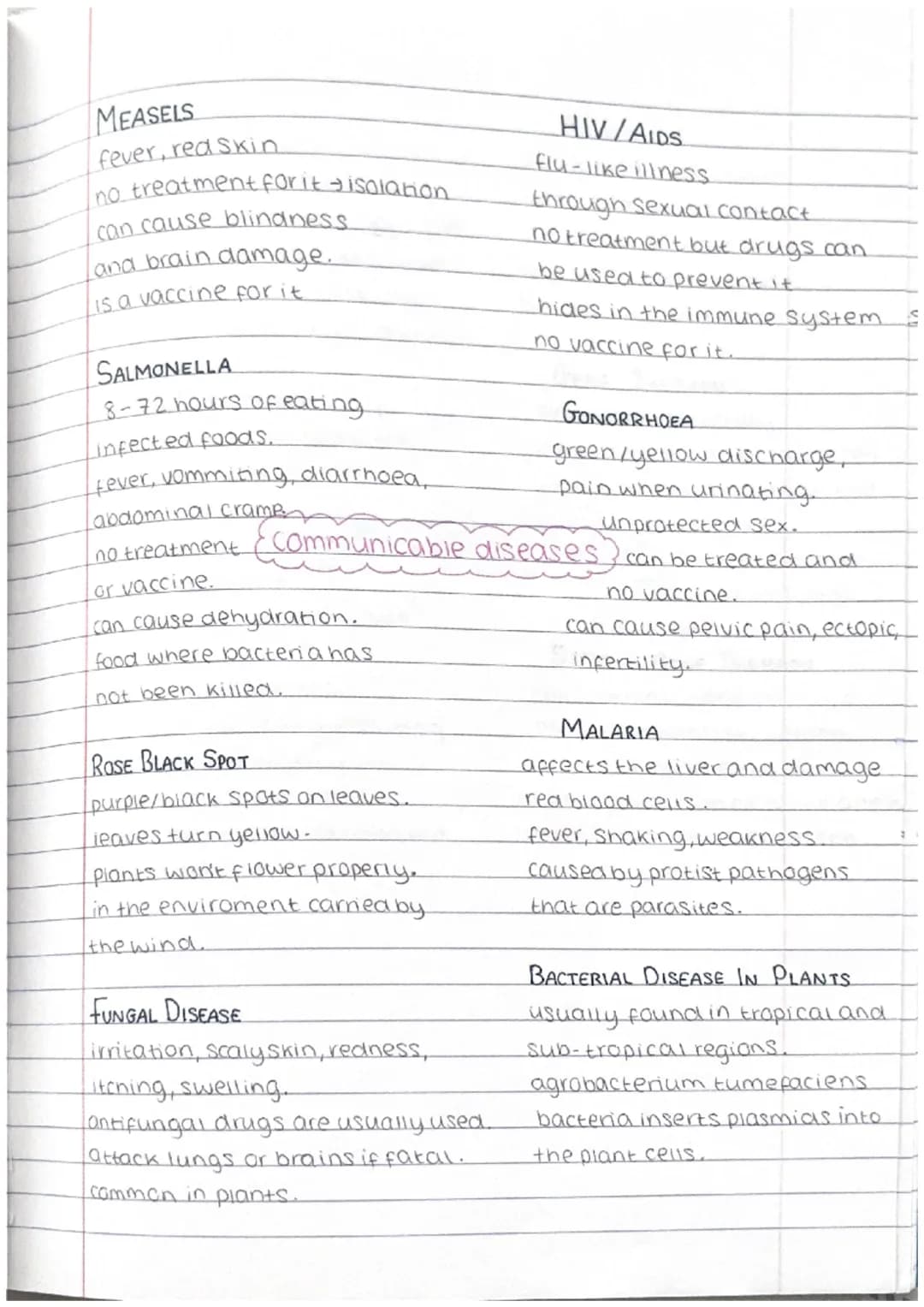
Communicable diseases spread between people and can seriously disrupt your life. Knowing how they spread and what they do helps you stay healthy and understand public health measures.
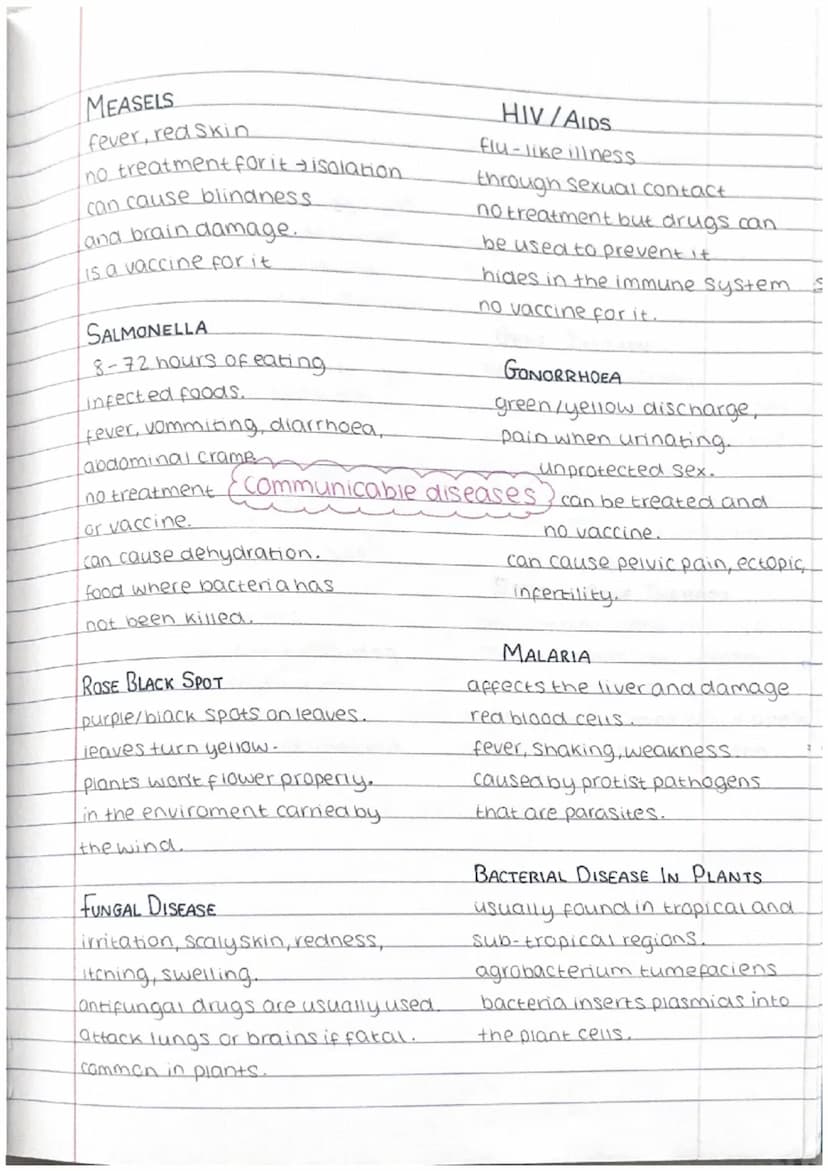
Viral diseases like measles cause fever and red skin, potentially leading to blindness and brain damage. There's no treatment, but vaccines prevent infection. HIV/AIDS starts with flu-like symptoms, spreads through sexual contact, and hides in the immune system - no vaccine exists yet, but drugs can manage it.
Bacterial diseases include salmonella and gonorrhoea (sexually transmitted, causing discharge and painful urination, potentially leading to infertility).
Fungal diseases create irritated, scaly, itchy skin and can attack lungs or brain if severe. Malaria is caused by protist pathogens that damage the liver and red blood cells, causing fever and weakness in tropical regions.
Remember: Prevention is always better than cure - vaccines, safe sex, and good hygiene stop most communicable diseases!
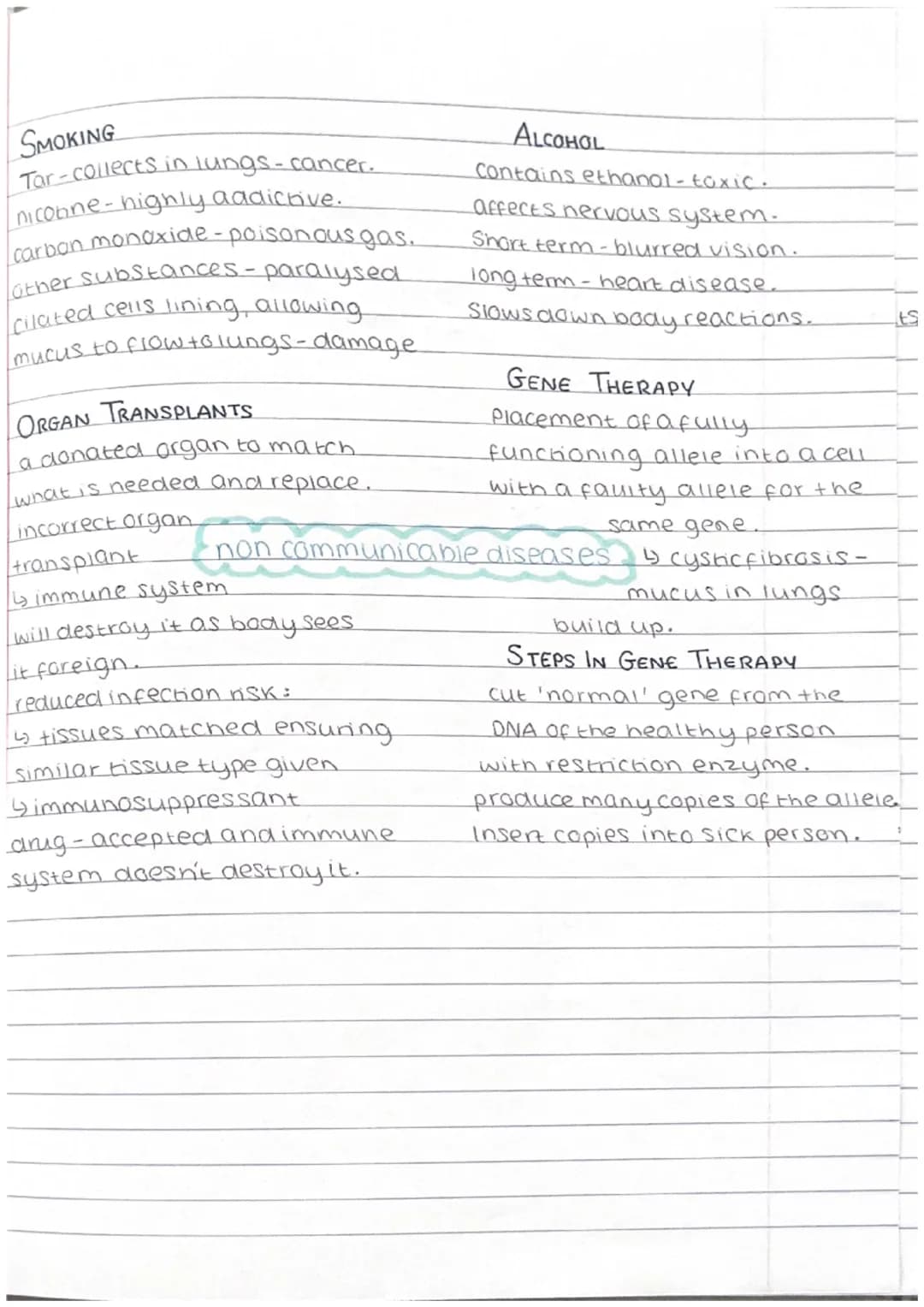
Your lifestyle choices today affect your health for decades to come. Understanding the science behind these effects helps you make informed decisions about your body.
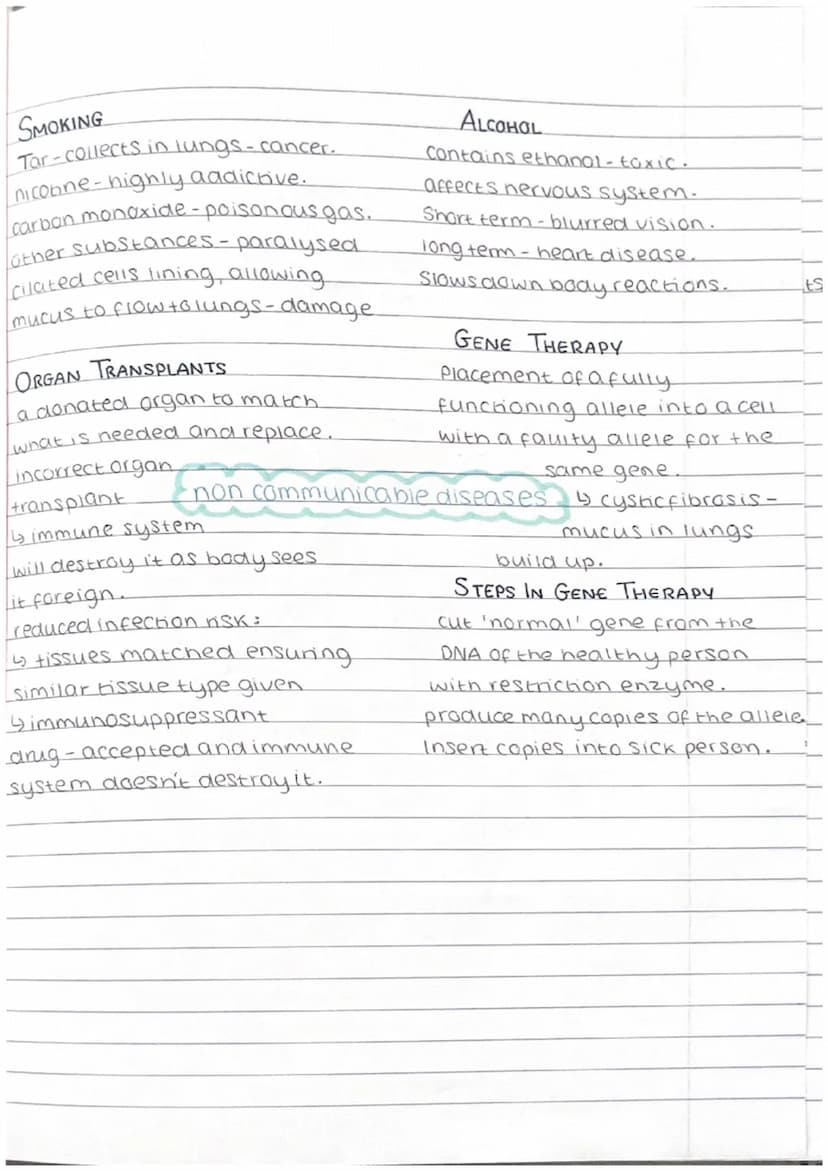
Smoking delivers tar (causing cancer), nicotine (highly addictive), and carbon monoxide (poisonous gas) to your lungs. Other chemicals paralyse ciliated cells that normally clear mucus, allowing harmful substances to build up.
Alcohol contains ethanol, which is toxic and affects your nervous system. Short-term effects include blurred vision and slowed reactions, whilst long-term use causes heart disease and other serious health problems.
Organ transplants can save lives but require careful tissue matching to prevent rejection. The immune system sees donated organs as foreign invaders, so immunosuppressant drugs are needed to prevent destruction of the transplanted organ.
Gene therapy involves inserting functioning alleles into cells with faulty genes. Scientists use restriction enzymes to cut out healthy genes, make multiple copies, then insert them into patients with genetic disorders like cystic fibrosis.
Life Tip: Most lifestyle diseases are preventable - the choices you make now determine your future health!
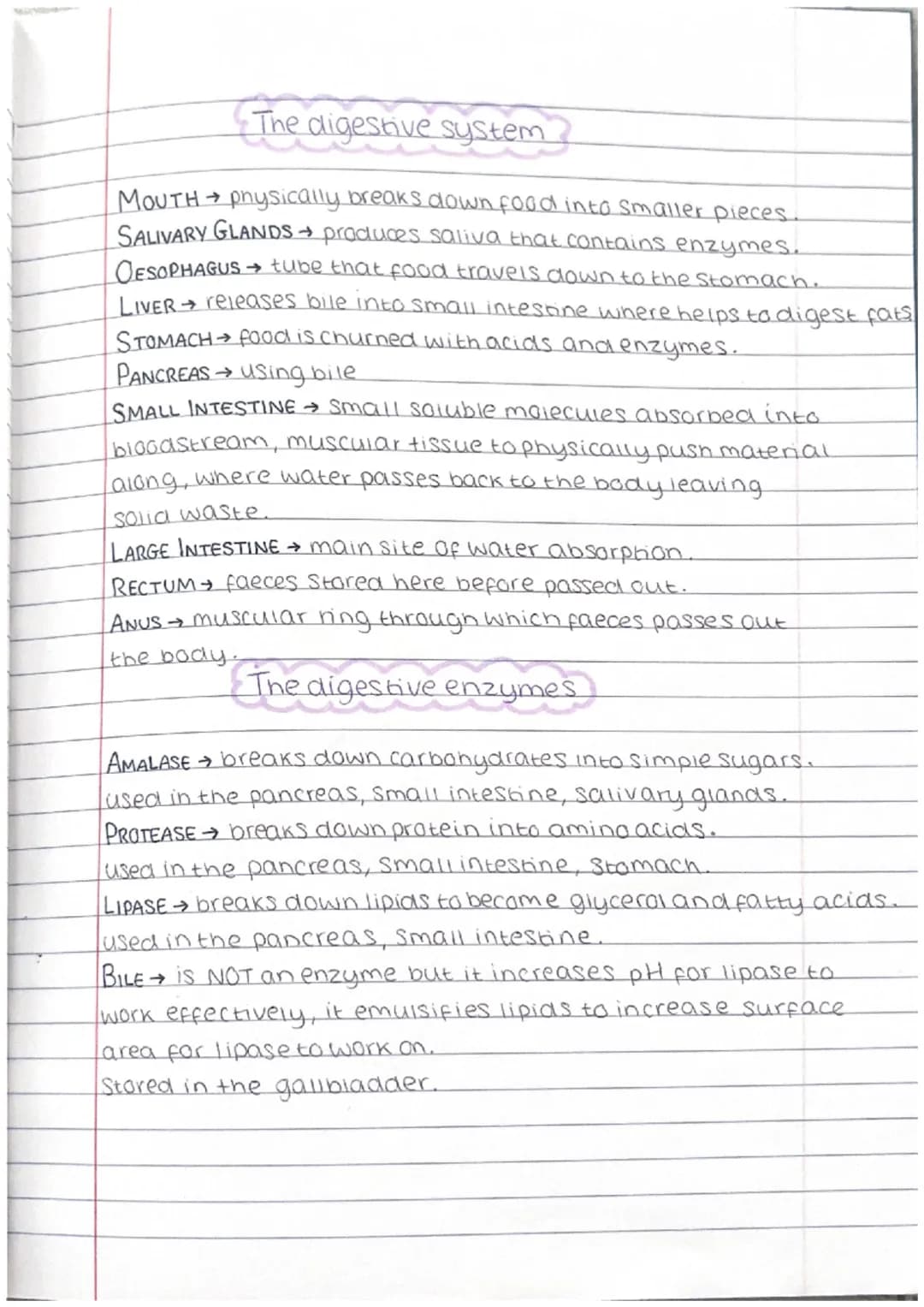
Every bite you take goes on an incredible journey through your digestive system, getting broken down from complex food into simple molecules your body can actually use.
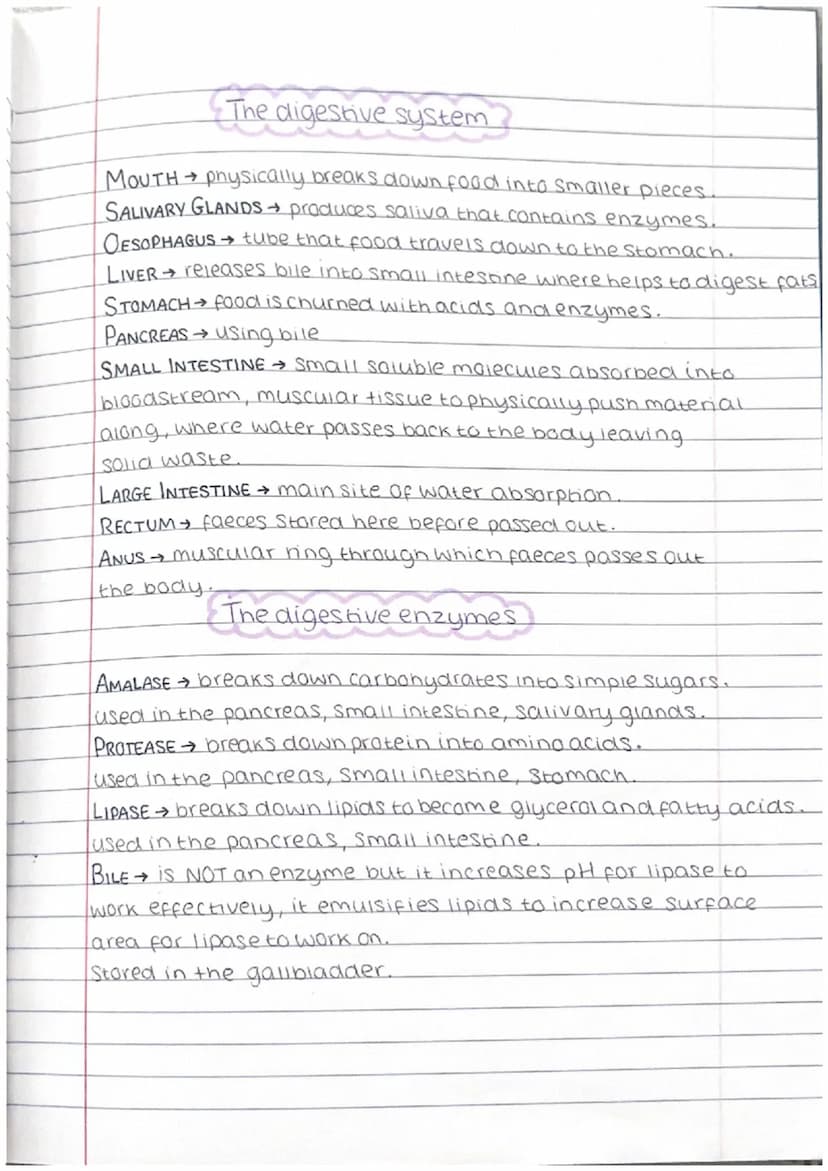
The process starts in your mouth where teeth physically break food down, whilst salivary glands release amylase enzymes. Food travels down the oesophagus to your stomach, where acid and enzymes churn everything into a soup-like mixture.
The liver produces bile (stored in the gallbladder) which isn't an enzyme but helps lipase work effectively by increasing pH and emulsifying fats. The pancreas releases multiple enzymes into the small intestine, where most absorption happens.
Three key enzymes do the heavy lifting: amylase breaks carbohydrates into simple sugars, protease converts proteins into amino acids, and lipase splits lipids into glycerol and fatty acids. The large intestine absorbs water, whilst the rectum stores waste before elimination through the anus.
Amazing Fact: Your small intestine is about 6 metres long but coiled up to fit in your abdomen - that's a lot of surface area for absorption!
Our AI Companion is a student-focused AI tool that offers more than just answers. Built on millions of Knowunity resources, it provides relevant information, personalised study plans, quizzes, and content directly in the chat, adapting to your individual learning journey.
You can download the app from Google Play Store and Apple App Store.
That's right! Enjoy free access to study content, connect with fellow students, and get instant help – all at your fingertips.
App Store
Google Play
The app is very easy to use and well designed. I have found everything I was looking for so far and have been able to learn a lot from the presentations! I will definitely use the app for a class assignment! And of course it also helps a lot as an inspiration.
Stefan S
iOS user
This app is really great. There are so many study notes and help [...]. My problem subject is French, for example, and the app has so many options for help. Thanks to this app, I have improved my French. I would recommend it to anyone.
Samantha Klich
Android user
Wow, I am really amazed. I just tried the app because I've seen it advertised many times and was absolutely stunned. This app is THE HELP you want for school and above all, it offers so many things, such as workouts and fact sheets, which have been VERY helpful to me personally.
Anna
iOS user
Best app on earth! no words because it’s too good
Thomas R
iOS user
Just amazing. Let's me revise 10x better, this app is a quick 10/10. I highly recommend it to anyone. I can watch and search for notes. I can save them in the subject folder. I can revise it any time when I come back. If you haven't tried this app, you're really missing out.
Basil
Android user
This app has made me feel so much more confident in my exam prep, not only through boosting my own self confidence through the features that allow you to connect with others and feel less alone, but also through the way the app itself is centred around making you feel better. It is easy to navigate, fun to use, and helpful to anyone struggling in absolutely any way.
David K
iOS user
The app's just great! All I have to do is enter the topic in the search bar and I get the response real fast. I don't have to watch 10 YouTube videos to understand something, so I'm saving my time. Highly recommended!
Sudenaz Ocak
Android user
In school I was really bad at maths but thanks to the app, I am doing better now. I am so grateful that you made the app.
Greenlight Bonnie
Android user
very reliable app to help and grow your ideas of Maths, English and other related topics in your works. please use this app if your struggling in areas, this app is key for that. wish I'd of done a review before. and it's also free so don't worry about that.
Rohan U
Android user
I know a lot of apps use fake accounts to boost their reviews but this app deserves it all. Originally I was getting 4 in my English exams and this time I got a grade 7. I didn’t even know about this app three days until the exam and it has helped A LOT. Please actually trust me and use it as I’m sure you too will see developments.
Xander S
iOS user
THE QUIZES AND FLASHCARDS ARE SO USEFUL AND I LOVE THE SCHOOLGPT. IT ALSO IS LITREALLY LIKE CHATGPT BUT SMARTER!! HELPED ME WITH MY MASCARA PROBLEMS TOO!! AS WELL AS MY REAL SUBJECTS ! DUHHH 😍😁😲🤑💗✨🎀😮
Elisha
iOS user
This apps acc the goat. I find revision so boring but this app makes it so easy to organize it all and then you can ask the freeeee ai to test yourself so good and you can easily upload your own stuff. highly recommend as someone taking mocks now
Paul T
iOS user
The app is very easy to use and well designed. I have found everything I was looking for so far and have been able to learn a lot from the presentations! I will definitely use the app for a class assignment! And of course it also helps a lot as an inspiration.
Stefan S
iOS user
This app is really great. There are so many study notes and help [...]. My problem subject is French, for example, and the app has so many options for help. Thanks to this app, I have improved my French. I would recommend it to anyone.
Samantha Klich
Android user
Wow, I am really amazed. I just tried the app because I've seen it advertised many times and was absolutely stunned. This app is THE HELP you want for school and above all, it offers so many things, such as workouts and fact sheets, which have been VERY helpful to me personally.
Anna
iOS user
Best app on earth! no words because it’s too good
Thomas R
iOS user
Just amazing. Let's me revise 10x better, this app is a quick 10/10. I highly recommend it to anyone. I can watch and search for notes. I can save them in the subject folder. I can revise it any time when I come back. If you haven't tried this app, you're really missing out.
Basil
Android user
This app has made me feel so much more confident in my exam prep, not only through boosting my own self confidence through the features that allow you to connect with others and feel less alone, but also through the way the app itself is centred around making you feel better. It is easy to navigate, fun to use, and helpful to anyone struggling in absolutely any way.
David K
iOS user
The app's just great! All I have to do is enter the topic in the search bar and I get the response real fast. I don't have to watch 10 YouTube videos to understand something, so I'm saving my time. Highly recommended!
Sudenaz Ocak
Android user
In school I was really bad at maths but thanks to the app, I am doing better now. I am so grateful that you made the app.
Greenlight Bonnie
Android user
very reliable app to help and grow your ideas of Maths, English and other related topics in your works. please use this app if your struggling in areas, this app is key for that. wish I'd of done a review before. and it's also free so don't worry about that.
Rohan U
Android user
I know a lot of apps use fake accounts to boost their reviews but this app deserves it all. Originally I was getting 4 in my English exams and this time I got a grade 7. I didn’t even know about this app three days until the exam and it has helped A LOT. Please actually trust me and use it as I’m sure you too will see developments.
Xander S
iOS user
THE QUIZES AND FLASHCARDS ARE SO USEFUL AND I LOVE THE SCHOOLGPT. IT ALSO IS LITREALLY LIKE CHATGPT BUT SMARTER!! HELPED ME WITH MY MASCARA PROBLEMS TOO!! AS WELL AS MY REAL SUBJECTS ! DUHHH 😍😁😲🤑💗✨🎀😮
Elisha
iOS user
This apps acc the goat. I find revision so boring but this app makes it so easy to organize it all and then you can ask the freeeee ai to test yourself so good and you can easily upload your own stuff. highly recommend as someone taking mocks now
Paul T
iOS user
_gxhg
@_gxhg
Biology is everywhere around you - from the food you eat to the air you breathe, and even the cells that make up your body! This collection covers the essential processes that keep living things alive, including how plants make... Show more
Access to all documents
Improve your grades
Join milions of students
By signing up you accept Terms of Service and Privacy Policy
Ever wondered how plants survive without popping to Tesco for a meal? They've got their own incredible food-making process called photosynthesis, and it's happening in every green leaf around you right now.
The basic equation is simple: carbon dioxide + water → glucose + oxygen (using light energy). Plants absorb CO₂ through tiny pores called stomata in their leaves, whilst water travels up from the roots through the xylem. The magic happens in chloroplasts, which contain the green pigment chlorophyll that captures light energy.
This process is endothermic - it needs energy input to work. The glucose produced becomes the plant's food source, whilst oxygen gets released as a waste product (lucky for us, since we need it to breathe!). Any green part of a plant can photosynthesise, but leaves are the main photosynthesis factories.
Quick Fact: The oxygen you're breathing right now was probably made by a plant through photosynthesis!
Access to all documents
Improve your grades
Join milions of students
By signing up you accept Terms of Service and Privacy Policy
Plants don't just make glucose to sit around - they're busy converting it into everything they need to grow and survive. It's like having the ultimate building material that can be transformed into anything!
Some glucose gets used immediately for respiration (plants need energy too!). The rest gets converted into starch for storage - think of it as the plant's emergency food cupboard. Cellulose is made to build strong cell walls, whilst lipids get stored in seeds for future plant growth.
Plants also combine glucose with nitrates from the soil to create amino acids, which then link together to form proteins. It's basically plant biochemistry at its finest - one simple sugar molecule becomes the foundation for everything the plant needs.
The rate of photosynthesis can be measured by tracking oxygen production, CO₂ uptake, or carbohydrate production. Light intensity, CO₂ concentration, temperature, and chlorophyll levels all affect how fast photosynthesis happens.
Remember: When light becomes limiting, plants actually produce more chlorophyll to capture every available photon!
Access to all documents
Improve your grades
Join milions of students
By signing up you accept Terms of Service and Privacy Policy
Understanding what speeds up or slows down photosynthesis is crucial for everything from growing crops to predicting climate change effects. Think of it like tuning a car engine - multiple factors need to work together perfectly.
Light intensity shows a linear relationship at low levels - more light equals faster photosynthesis. But eventually, the graph levels off because something else becomes the limiting factor. It's like having a bottleneck in a production line.
Carbon dioxide concentration works similarly - increase the CO₂ and photosynthesis speeds up, until another factor becomes limiting. Remember, CO₂ is literally one of the raw materials, so running out slows everything down.
Temperature affects photosynthesis because enzymes control the chemical reactions involved. Too cold and molecular collisions happen too slowly. Too hot and the enzymes get denatured (permanently damaged), causing the rate to crash dramatically.
Exam Tip: Look for the point where graphs level off - that's when a limiting factor kicks in!
Access to all documents
Improve your grades
Join milions of students
By signing up you accept Terms of Service and Privacy Policy
Cells are like tiny factories, each with specialised parts doing specific jobs. Knowing the difference between animal and plant cells is fundamental to understanding how life works at the smallest level.
Animal cells contain five key structures: the cell membrane (controls what goes in and out), nucleus (contains DNA and controls everything), cytoplasm (where reactions happen), ribosomes (protein factories), and mitochondria (powerhouses that release energy).
Plant cells have everything animal cells do, plus three extras. The cell wall made of cellulose provides structure and strength. Chloroplasts contain chlorophyll and carry out photosynthesis. The vacuole stores cell sap and waste products - it's like the plant's storage and recycling centre.
Each organelle has evolved to do its job perfectly. Mitochondria are where aerobic respiration happens, ribosomes are the sites of protein synthesis, and chloroplasts make plants green whilst powering photosynthesis.
Memory Trick: Plant cells have "extras" because they need to make their own food and stand upright without a skeleton!
Access to all documents
Improve your grades
Join milions of students
By signing up you accept Terms of Service and Privacy Policy
Modern biology wouldn't exist without microscopes - they've opened up the invisible world of cells and shown us how complex life really is at the microscopic level.
Light microscopes are the workhorses of school labs - cheap, easy to use, but limited in resolution (how much detail you can see). Electron microscopes use electrons instead of light, giving 2000 times better resolution but costing a fortune and requiring serious training to operate.
Magnification = image size ÷ actual size. Converting between units is crucial: multiply by 1000 going from mm to μm to nm. Getting this wrong in exams is easily avoidable with practice!
Stem cells are the ultimate multitaskers - they can differentiate into any specialised cell type through mitosis. A zygote (fertilised egg) divides repeatedly, creating embryonic stem cells that eventually become every cell in your body. Diffusion moves particles from high to low concentration, affected by concentration gradient, temperature, and surface area.
Key Point: Resolution matters more than magnification - there's no point making a blurry image bigger!
Access to all documents
Improve your grades
Join milions of students
By signing up you accept Terms of Service and Privacy Policy
Your circulatory system is like a sophisticated delivery service, moving nutrients, oxygen, and waste products around your body 24/7. Understanding how it works reveals why you feel dizzy when you stand up too quickly!
Animals have either open or closed circulatory systems. Insects have open systems where blood flows freely through body cavities, making direct contact with organs. Their blood doesn't carry CO₂ and lacks red blood cells.
Most animals (including humans) have closed systems where blood stays in vessels. Single circulation (like in fish) sends blood from heart to gills to body tissues, but blood pressure drops significantly at the gills. Double circulation (like in mammals) is more efficient - blood goes heart → lungs → heart → body tissues.
The heart has four chambers: thin-walled atria receive blood, whilst thick-walled ventricles pump it out. The pulmonary artery carries blood to lungs, the aorta supplies the body, and valves ensure one-way flow.
Think About It: Double circulation means your heart works twice as hard, but delivers oxygen much more efficiently!
Access to all documents
Improve your grades
Join milions of students
By signing up you accept Terms of Service and Privacy Policy
Communicable diseases spread between people and can seriously disrupt your life. Knowing how they spread and what they do helps you stay healthy and understand public health measures.
Viral diseases like measles cause fever and red skin, potentially leading to blindness and brain damage. There's no treatment, but vaccines prevent infection. HIV/AIDS starts with flu-like symptoms, spreads through sexual contact, and hides in the immune system - no vaccine exists yet, but drugs can manage it.
Bacterial diseases include salmonella and gonorrhoea (sexually transmitted, causing discharge and painful urination, potentially leading to infertility).
Fungal diseases create irritated, scaly, itchy skin and can attack lungs or brain if severe. Malaria is caused by protist pathogens that damage the liver and red blood cells, causing fever and weakness in tropical regions.
Remember: Prevention is always better than cure - vaccines, safe sex, and good hygiene stop most communicable diseases!
Access to all documents
Improve your grades
Join milions of students
By signing up you accept Terms of Service and Privacy Policy
Your lifestyle choices today affect your health for decades to come. Understanding the science behind these effects helps you make informed decisions about your body.
Smoking delivers tar (causing cancer), nicotine (highly addictive), and carbon monoxide (poisonous gas) to your lungs. Other chemicals paralyse ciliated cells that normally clear mucus, allowing harmful substances to build up.
Alcohol contains ethanol, which is toxic and affects your nervous system. Short-term effects include blurred vision and slowed reactions, whilst long-term use causes heart disease and other serious health problems.
Organ transplants can save lives but require careful tissue matching to prevent rejection. The immune system sees donated organs as foreign invaders, so immunosuppressant drugs are needed to prevent destruction of the transplanted organ.
Gene therapy involves inserting functioning alleles into cells with faulty genes. Scientists use restriction enzymes to cut out healthy genes, make multiple copies, then insert them into patients with genetic disorders like cystic fibrosis.
Life Tip: Most lifestyle diseases are preventable - the choices you make now determine your future health!
Access to all documents
Improve your grades
Join milions of students
By signing up you accept Terms of Service and Privacy Policy
Every bite you take goes on an incredible journey through your digestive system, getting broken down from complex food into simple molecules your body can actually use.
The process starts in your mouth where teeth physically break food down, whilst salivary glands release amylase enzymes. Food travels down the oesophagus to your stomach, where acid and enzymes churn everything into a soup-like mixture.
The liver produces bile (stored in the gallbladder) which isn't an enzyme but helps lipase work effectively by increasing pH and emulsifying fats. The pancreas releases multiple enzymes into the small intestine, where most absorption happens.
Three key enzymes do the heavy lifting: amylase breaks carbohydrates into simple sugars, protease converts proteins into amino acids, and lipase splits lipids into glycerol and fatty acids. The large intestine absorbs water, whilst the rectum stores waste before elimination through the anus.
Amazing Fact: Your small intestine is about 6 metres long but coiled up to fit in your abdomen - that's a lot of surface area for absorption!
Our AI Companion is a student-focused AI tool that offers more than just answers. Built on millions of Knowunity resources, it provides relevant information, personalised study plans, quizzes, and content directly in the chat, adapting to your individual learning journey.
You can download the app from Google Play Store and Apple App Store.
That's right! Enjoy free access to study content, connect with fellow students, and get instant help – all at your fingertips.
22
Smart Tools NEW
Transform this note into: ✓ 50+ Practice Questions ✓ Interactive Flashcards ✓ Full Mock Exam ✓ Essay Outlines
Explore the essential concepts of cell biology, including animal, plant, and bacterial cell structures, mitosis, stem cells, and cellular transport mechanisms like diffusion and osmosis. This summary also covers the digestive and respiratory systems, enzyme functions, and the human cardiovascular system. Ideal for GCSE AQA Combined Science students.
BiologyExplore the intricacies of the circulatory system, including heart structure, blood flow, and cellular respiration. This summary covers key concepts such as gaseous exchange, blood vessels, and the role of haemoglobin in oxygen transport. Ideal for GCSE Biology students preparing for exams.
BiologyComprehensive overview of AQA Biology Paper 1, covering key topics such as cell structure, human anatomy, disease mechanisms, microscopy techniques, and bioenergetics. Ideal for exam preparation and understanding essential biological processes.
BiologyExplore key concepts in Cell Biology, including cell structure, transport mechanisms, the heart's anatomy, and digestive processes. This summary covers essential topics for AQA GCSE Biology Paper 1, providing a clear overview of eukaryotic and prokaryotic cells, enzyme functions, and plant systems. Ideal for quick revision and exam preparation.
BiologyExplore key concepts in human and plant organization with this interactive study resource. Covering blood components, circulatory and digestive systems, plant structures, and the role of enzymes, this resource is designed for GCSE Biology students. Engage with active recall questions to reinforce your understanding of topics such as heart disease, cancer, and nutrient transport. Perfect for exam preparation and enhancing your knowledge of biological systems.
BiologyExplore the key concepts of human body organization, focusing on the circulatory and digestive systems. This summary covers the structure and function of major organs, including the heart, lungs, and digestive tract, essential for AQA Combined Science revision.
BiologyApp Store
Google Play
The app is very easy to use and well designed. I have found everything I was looking for so far and have been able to learn a lot from the presentations! I will definitely use the app for a class assignment! And of course it also helps a lot as an inspiration.
Stefan S
iOS user
This app is really great. There are so many study notes and help [...]. My problem subject is French, for example, and the app has so many options for help. Thanks to this app, I have improved my French. I would recommend it to anyone.
Samantha Klich
Android user
Wow, I am really amazed. I just tried the app because I've seen it advertised many times and was absolutely stunned. This app is THE HELP you want for school and above all, it offers so many things, such as workouts and fact sheets, which have been VERY helpful to me personally.
Anna
iOS user
Best app on earth! no words because it’s too good
Thomas R
iOS user
Just amazing. Let's me revise 10x better, this app is a quick 10/10. I highly recommend it to anyone. I can watch and search for notes. I can save them in the subject folder. I can revise it any time when I come back. If you haven't tried this app, you're really missing out.
Basil
Android user
This app has made me feel so much more confident in my exam prep, not only through boosting my own self confidence through the features that allow you to connect with others and feel less alone, but also through the way the app itself is centred around making you feel better. It is easy to navigate, fun to use, and helpful to anyone struggling in absolutely any way.
David K
iOS user
The app's just great! All I have to do is enter the topic in the search bar and I get the response real fast. I don't have to watch 10 YouTube videos to understand something, so I'm saving my time. Highly recommended!
Sudenaz Ocak
Android user
In school I was really bad at maths but thanks to the app, I am doing better now. I am so grateful that you made the app.
Greenlight Bonnie
Android user
very reliable app to help and grow your ideas of Maths, English and other related topics in your works. please use this app if your struggling in areas, this app is key for that. wish I'd of done a review before. and it's also free so don't worry about that.
Rohan U
Android user
I know a lot of apps use fake accounts to boost their reviews but this app deserves it all. Originally I was getting 4 in my English exams and this time I got a grade 7. I didn’t even know about this app three days until the exam and it has helped A LOT. Please actually trust me and use it as I’m sure you too will see developments.
Xander S
iOS user
THE QUIZES AND FLASHCARDS ARE SO USEFUL AND I LOVE THE SCHOOLGPT. IT ALSO IS LITREALLY LIKE CHATGPT BUT SMARTER!! HELPED ME WITH MY MASCARA PROBLEMS TOO!! AS WELL AS MY REAL SUBJECTS ! DUHHH 😍😁😲🤑💗✨🎀😮
Elisha
iOS user
This apps acc the goat. I find revision so boring but this app makes it so easy to organize it all and then you can ask the freeeee ai to test yourself so good and you can easily upload your own stuff. highly recommend as someone taking mocks now
Paul T
iOS user
The app is very easy to use and well designed. I have found everything I was looking for so far and have been able to learn a lot from the presentations! I will definitely use the app for a class assignment! And of course it also helps a lot as an inspiration.
Stefan S
iOS user
This app is really great. There are so many study notes and help [...]. My problem subject is French, for example, and the app has so many options for help. Thanks to this app, I have improved my French. I would recommend it to anyone.
Samantha Klich
Android user
Wow, I am really amazed. I just tried the app because I've seen it advertised many times and was absolutely stunned. This app is THE HELP you want for school and above all, it offers so many things, such as workouts and fact sheets, which have been VERY helpful to me personally.
Anna
iOS user
Best app on earth! no words because it’s too good
Thomas R
iOS user
Just amazing. Let's me revise 10x better, this app is a quick 10/10. I highly recommend it to anyone. I can watch and search for notes. I can save them in the subject folder. I can revise it any time when I come back. If you haven't tried this app, you're really missing out.
Basil
Android user
This app has made me feel so much more confident in my exam prep, not only through boosting my own self confidence through the features that allow you to connect with others and feel less alone, but also through the way the app itself is centred around making you feel better. It is easy to navigate, fun to use, and helpful to anyone struggling in absolutely any way.
David K
iOS user
The app's just great! All I have to do is enter the topic in the search bar and I get the response real fast. I don't have to watch 10 YouTube videos to understand something, so I'm saving my time. Highly recommended!
Sudenaz Ocak
Android user
In school I was really bad at maths but thanks to the app, I am doing better now. I am so grateful that you made the app.
Greenlight Bonnie
Android user
very reliable app to help and grow your ideas of Maths, English and other related topics in your works. please use this app if your struggling in areas, this app is key for that. wish I'd of done a review before. and it's also free so don't worry about that.
Rohan U
Android user
I know a lot of apps use fake accounts to boost their reviews but this app deserves it all. Originally I was getting 4 in my English exams and this time I got a grade 7. I didn’t even know about this app three days until the exam and it has helped A LOT. Please actually trust me and use it as I’m sure you too will see developments.
Xander S
iOS user
THE QUIZES AND FLASHCARDS ARE SO USEFUL AND I LOVE THE SCHOOLGPT. IT ALSO IS LITREALLY LIKE CHATGPT BUT SMARTER!! HELPED ME WITH MY MASCARA PROBLEMS TOO!! AS WELL AS MY REAL SUBJECTS ! DUHHH 😍😁😲🤑💗✨🎀😮
Elisha
iOS user
This apps acc the goat. I find revision so boring but this app makes it so easy to organize it all and then you can ask the freeeee ai to test yourself so good and you can easily upload your own stuff. highly recommend as someone taking mocks now
Paul T
iOS user