
Gas exchange is how your body swaps oxygen for carbon... Show more
 English Literature
 Sociology
Sign up to see the contentIt's free!
Access to all documents
Improve your grades
Join milions of students
By signing up you accept Terms of Service and Privacy Policy
Subjects
Classic Dramatic Literature
Modern Lyric Poetry
Influential English-Language Authors
Classic and Contemporary Novels
Literary Character Analysis
Romantic and Love Poetry
Reading Analysis and Interpretation
Evidence Analysis and Integration
Author's Stylistic Elements
Figurative Language and Rhetoric
Show all topics
Human Organ Systems
Cellular Organization and Development
Biomolecular Structure and Organization
Enzyme Structure and Regulation
Cellular Organization Types
Biological Homeostatic Processes
Cellular Membrane Structure
Autotrophic Energy Processes
Environmental Sustainability and Impact
Neural Communication Systems
Show all topics
Social Sciences Research & Practice
Social Structure and Mobility
Classic Social Influence Experiments
Social Systems Theories
Family and Relationship Dynamics
Memory Systems and Processes
Neural Bases of Behavior
Social Influence and Attraction
Psychotherapeutic Approaches
Human Agency and Responsibility
Show all topics
Chemical Sciences and Applications
Chemical Bond Types and Properties
Organic Functional Groups
Atomic Structure and Composition
Chromatographic Separation Principles
Chemical Compound Classifications
Electrochemical Cell Systems
Periodic Table Organization
Chemical Reaction Kinetics
Chemical Equation Conservation
Show all topics
Nazi Germany and Holocaust 1933-1945
World Wars and Peace Treaties
European Monarchs and Statesmen
Cold War Global Tensions
Medieval Institutions and Systems
European Renaissance and Enlightenment
Modern Global Environmental-Health Challenges
Modern Military Conflicts
Medieval Migration and Invasions
World Wars Era and Impact
Show all topics
544
•
26 Dec 2025
•

Oscar66
@oscar66
Gas exchange is how your body swaps oxygen for carbon... Show more



This topic covers one of the most essential processes in biology - how organisms get the oxygen they need and remove waste carbon dioxide. You'll discover the clever ways different animals have evolved to solve this vital challenge.
Gas exchange happens through diffusion, a simple but powerful process that doesn't require any energy from your body. The key is having the right conditions and structures to make it work efficiently.
Quick Tip: Gas exchange is literally keeping you alive right now - every breath demonstrates these principles in action!
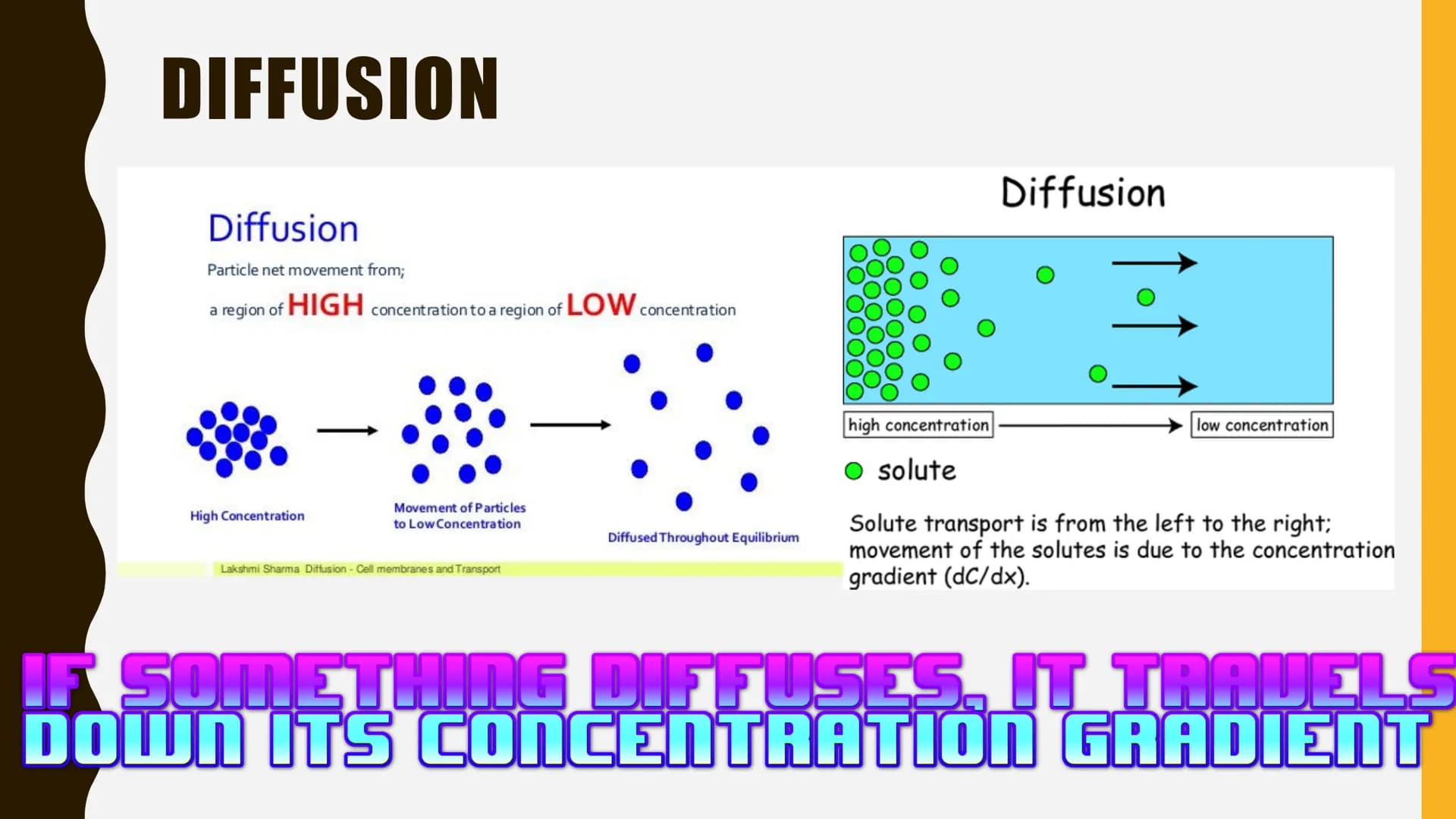
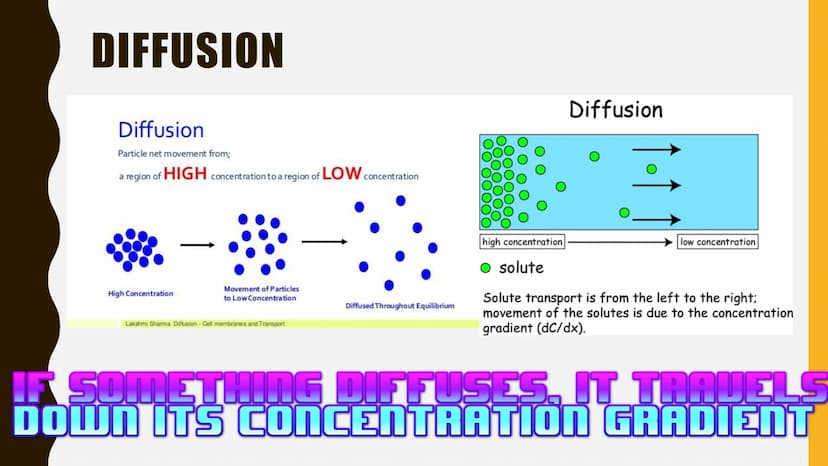
Think of diffusion like people leaving a crowded party - particles naturally move from busy areas to quieter ones until everything evens out. Diffusion is the net movement of particles from a region of high concentration to a region of low concentration.
This movement happens because particles are constantly bouncing around randomly. When there are more particles in one area, more of them will randomly move towards the less crowded space.
The process continues until equilibrium is reached - when particles are evenly spread throughout the available space. This is why a drop of food colouring eventually colours an entire glass of water.
Remember: No energy is needed for diffusion - it happens automatically due to particle movement!
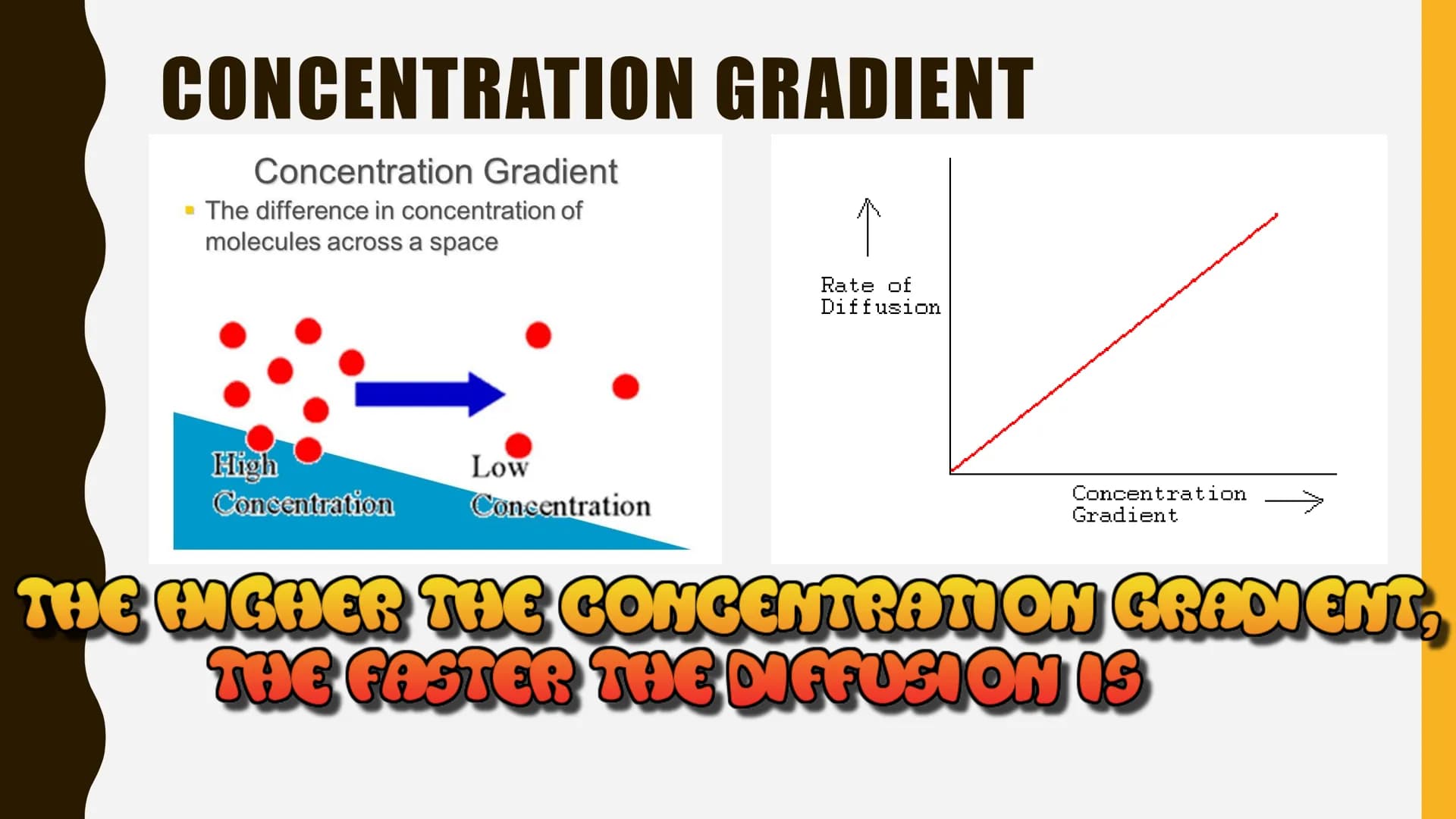
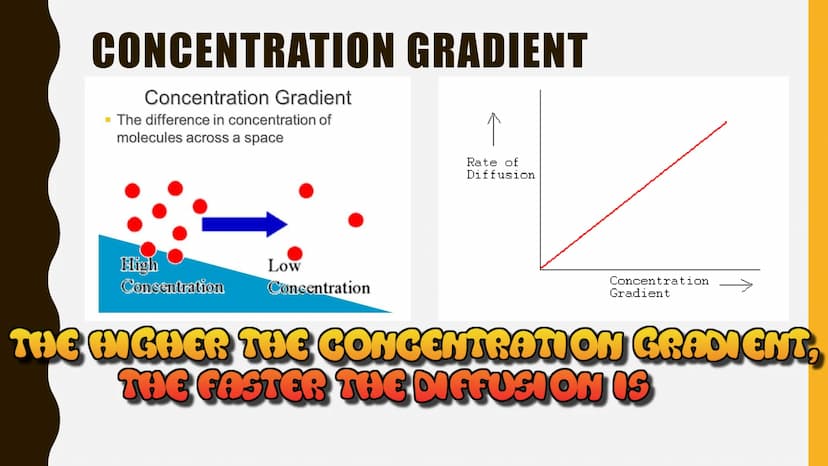
The concentration gradient is simply the difference in concentration between two areas - like the difference between a crowded corridor and an empty classroom. This gradient is what drives diffusion forward.
Here's the crucial bit: the steeper the concentration gradient, the faster diffusion occurs. It's like water flowing down a hill - the steeper the slope, the faster it flows.
This explains why maintaining concentration differences is so important in gas exchange. Your body works hard to keep oxygen levels low in your blood and high in your lungs to keep diffusion happening quickly.
Exam Tip: Always mention concentration gradients when explaining why diffusion happens - it's a key mark-scorer!
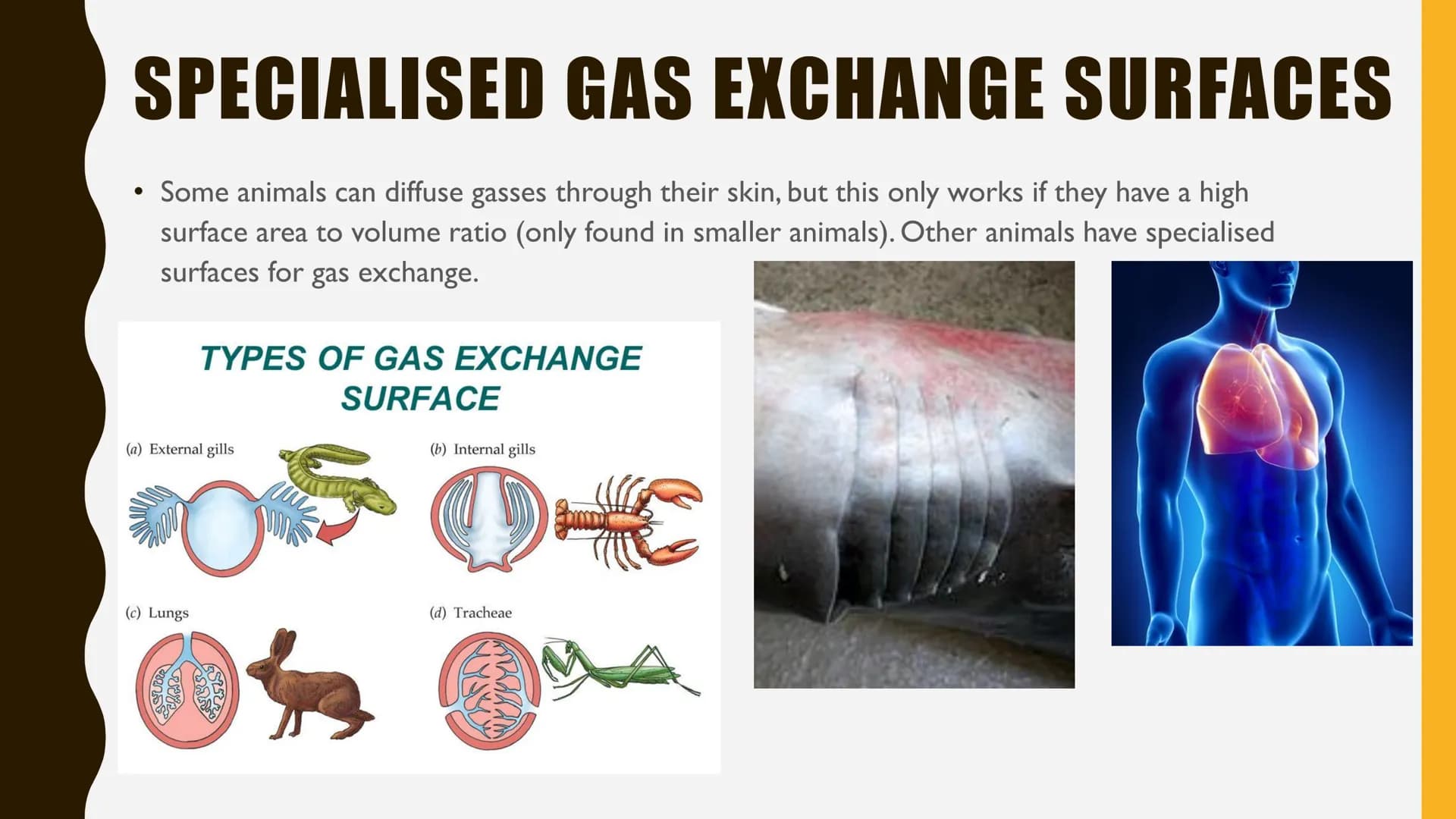
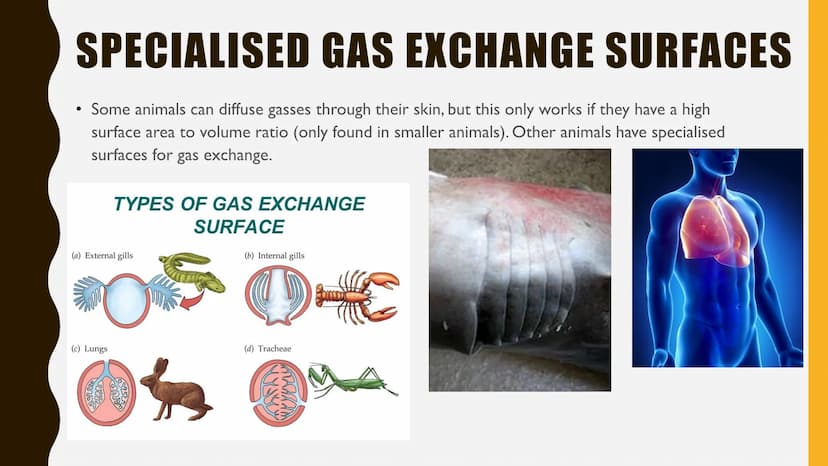
Small animals can get away with gas exchange through their skin because they have a high surface area to volume ratio. But as animals get bigger, they need specialised structures to get enough gas exchange happening.
Different animals have evolved brilliant solutions: external gills (like in young amphibians), internal gills (fish), lungs (mammals and birds), and tracheae (insects). Each system is perfectly adapted to its environment.
These specialised surfaces solve the problem of getting enough oxygen to all the cells in larger, more complex animals. Without them, we simply couldn't exist!
Cool Fact: Insects breathe through tiny tubes called tracheae that deliver air directly to their tissues!
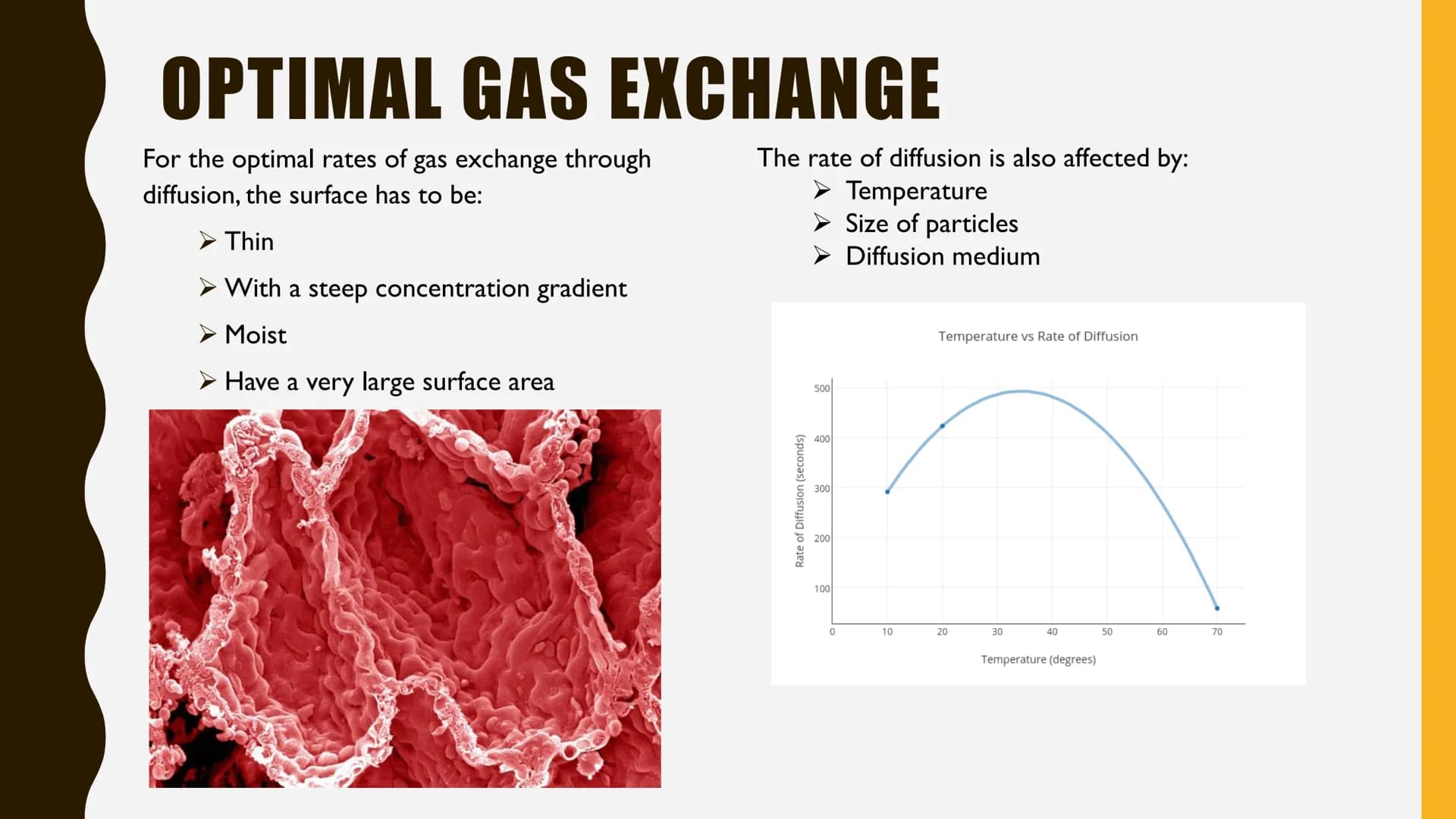
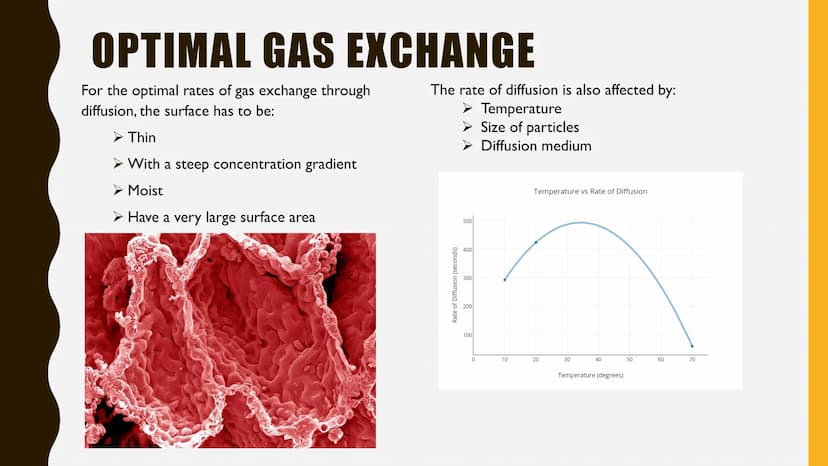
For gas exchange to work brilliantly, surfaces need four key features: they must be thin (for quick diffusion), moist (so gases can dissolve), have a large surface area (more space for exchange), and maintain steep concentration gradients.
Several factors affect how fast diffusion happens. Higher temperature speeds things up because particles move faster when they're warmer. Smaller particles also diffuse more quickly than larger ones.
The diffusion medium matters too - gases diffuse much faster through air than through water, which is why land animals can often be more active than aquatic ones.
Study Hack: Remember "TLMS" - Thin, Large surface area, Moist, Steep gradient for optimal gas exchange!
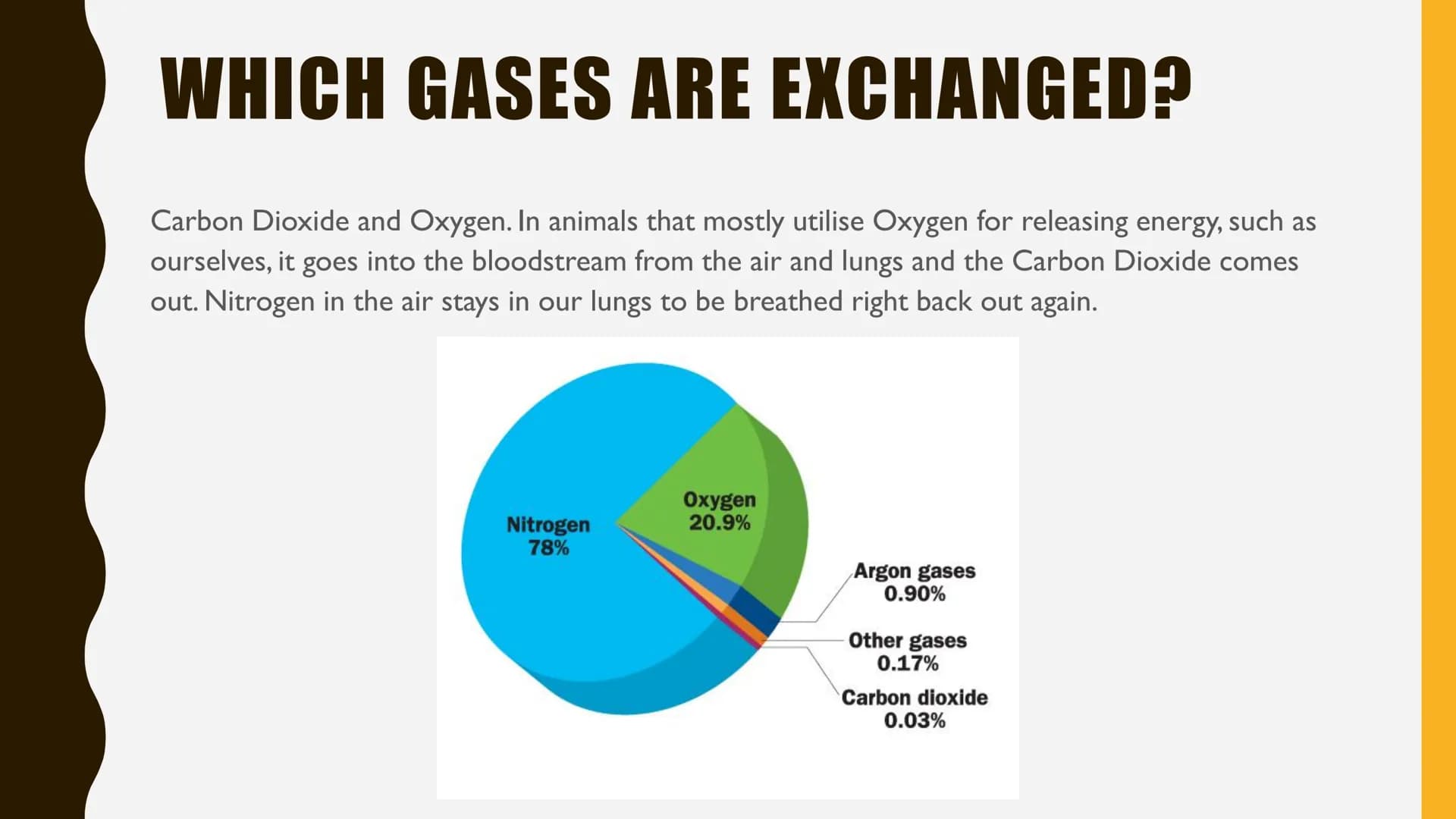
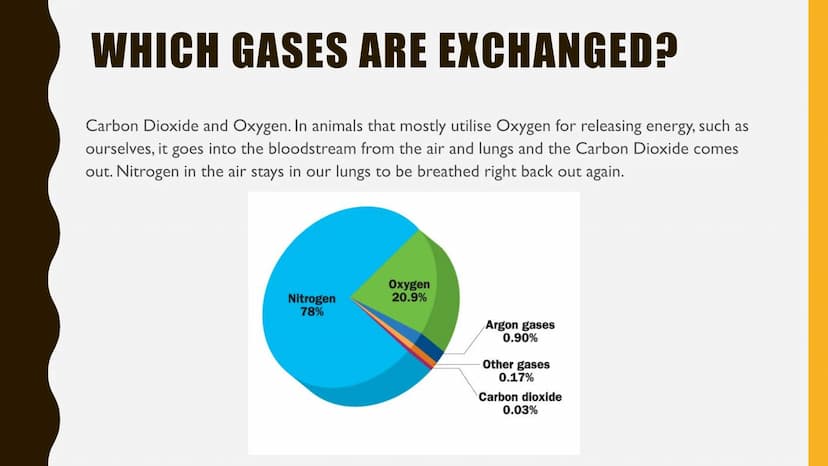
Your body is mainly interested in swapping oxygen and carbon dioxide. Oxygen goes from your lungs into your bloodstream to power cellular respiration, while carbon dioxide (the waste product) travels the opposite direction to be breathed out.
Nitrogen makes up 78% of air but your body largely ignores it - it goes in and comes straight back out again unchanged. Oxygen only makes up about 21% of air, but it's the bit your cells desperately need.
Carbon dioxide is only 0.03% of air normally, but the amount you breathe out is much higher because your cells are constantly producing it as waste. This difference helps maintain the concentration gradient needed for efficient gas exchange.
Interesting: You breathe out roughly 100 times more carbon dioxide than you breathe in!
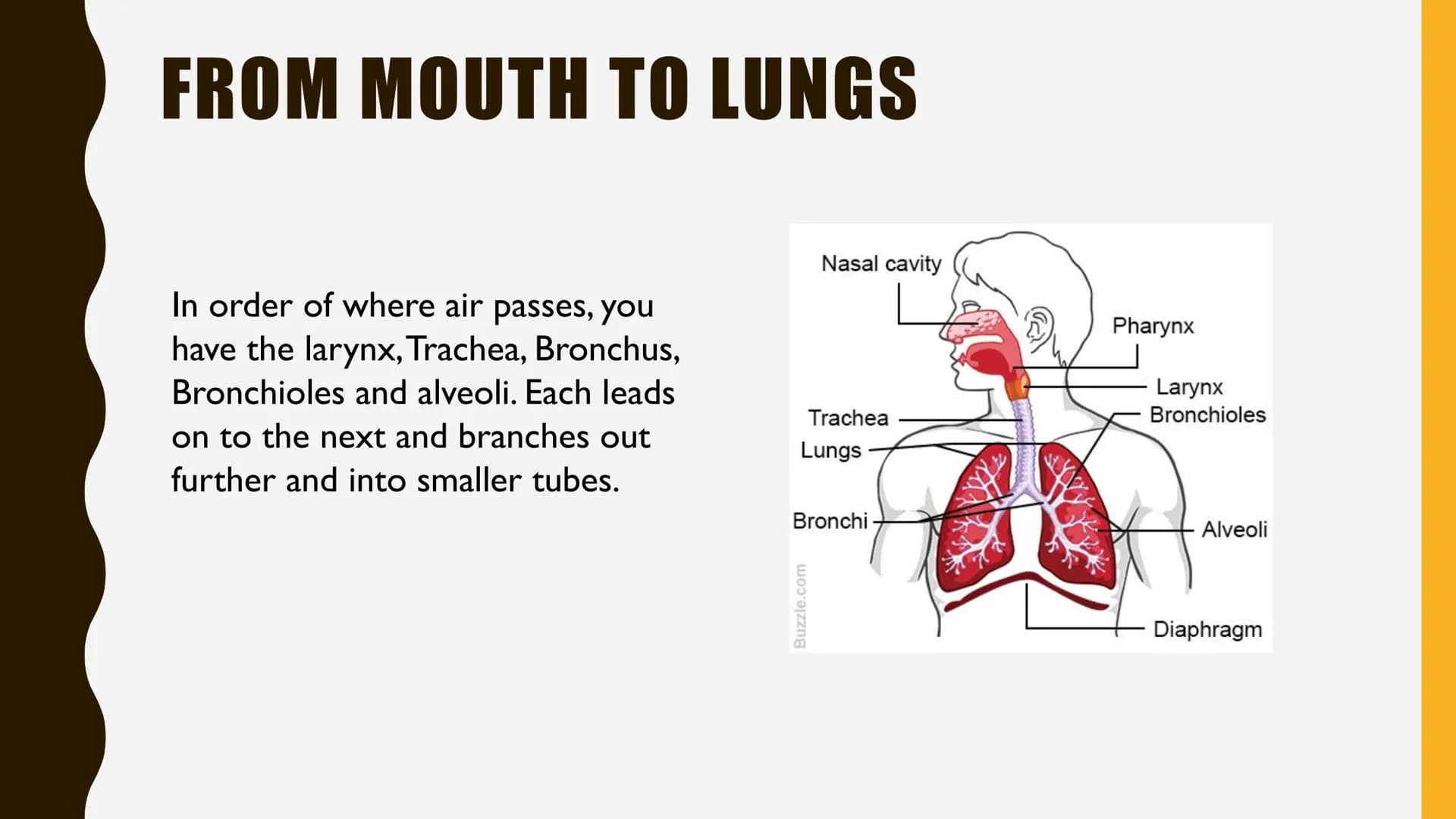
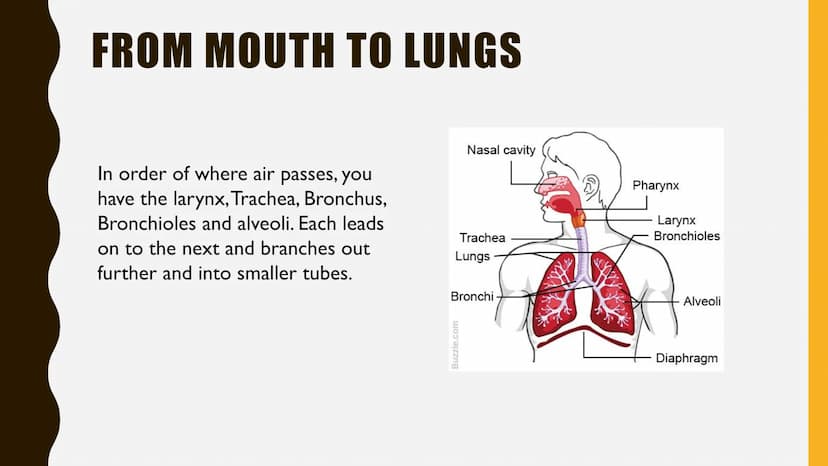
Air takes an amazing journey from your nose and mouth to your lungs. The pathway goes: nasal cavity → pharynx → larynx → trachea → bronchi → bronchioles → alveoli.
Think of it like a tree - the trachea is the trunk, bronchi are major branches, bronchioles are smaller branches, and alveoli are the leaves where all the action happens. This branching design massively increases surface area.
Each step gets smaller and more numerous. You have one trachea, two main bronchi, thousands of bronchioles, and millions of tiny alveoli. This creates an enormous surface area for gas exchange packed into your chest.
Visual Tip: The lung structure really does look like an upside-down tree - use this to remember the pathway!
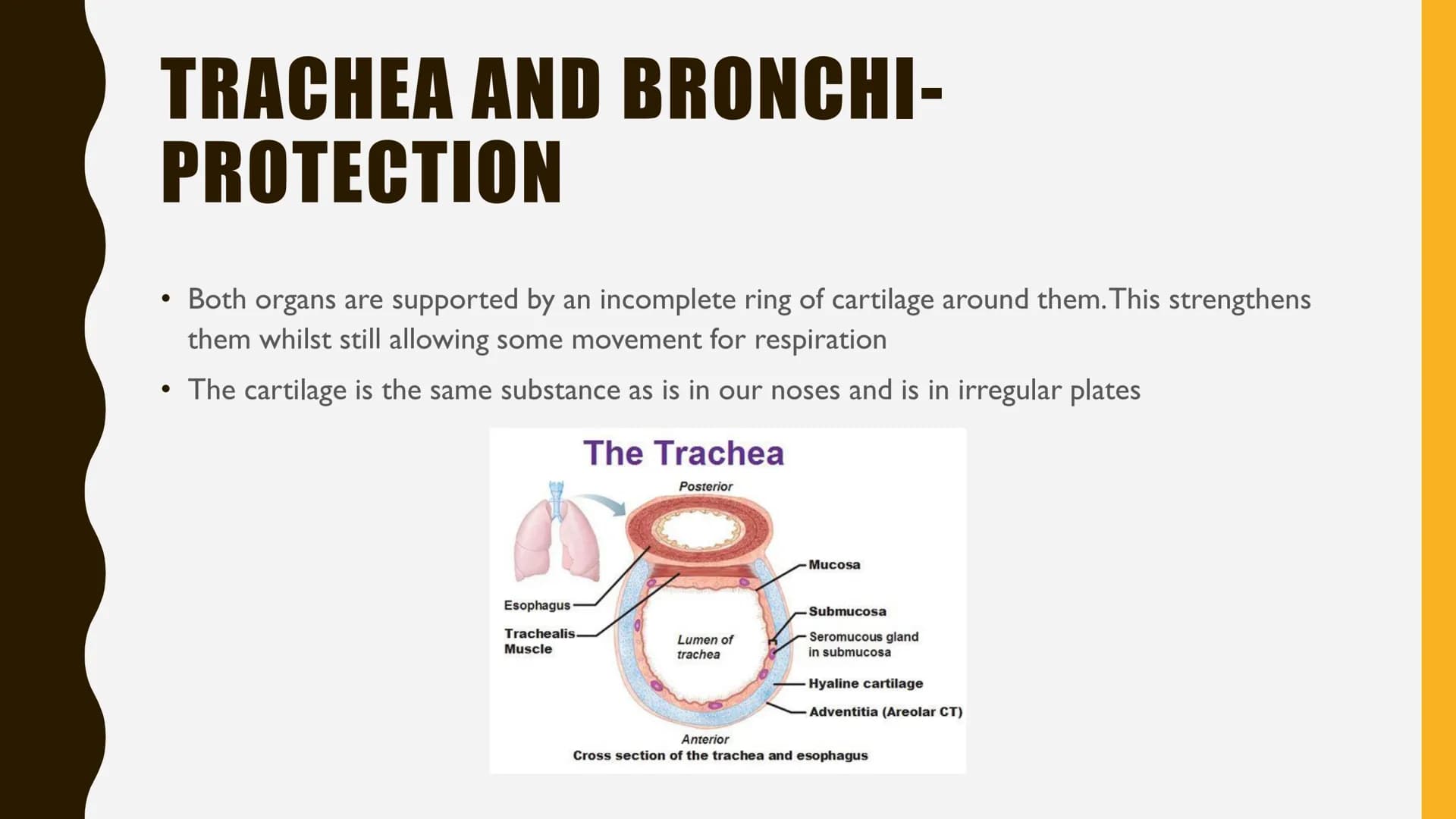
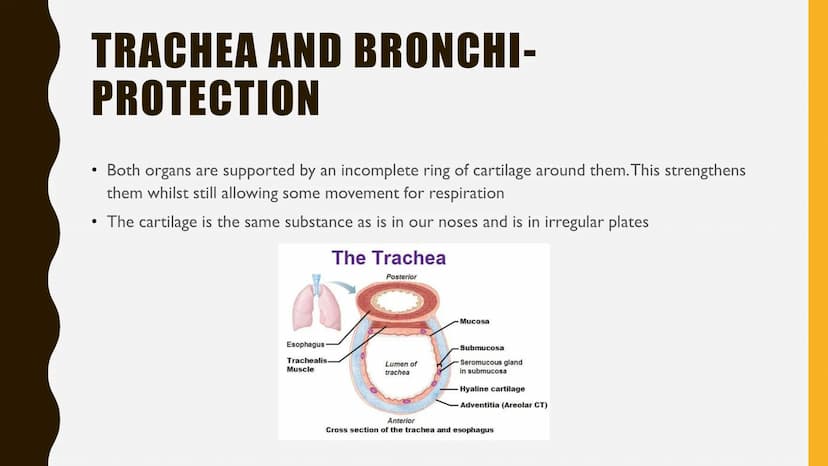
Your trachea and bronchi need to stay open for breathing, but they also need to be flexible for movement. The solution is brilliant: incomplete rings of cartilage that provide strength while allowing flexibility.
These cartilage rings are made of the same stuff as your nose and ears. They're arranged in C-shaped rings rather than complete circles, which lets the tubes compress slightly when needed (like when you swallow).
The cartilage prevents your airways from collapsing when you breathe in hard, which would be like trying to drink through a straw that keeps folding shut. Without this support, your breathing would be much less efficient.
Cool Connection: Feel the front of your throat - those bumps are your cartilage rings protecting your airway!
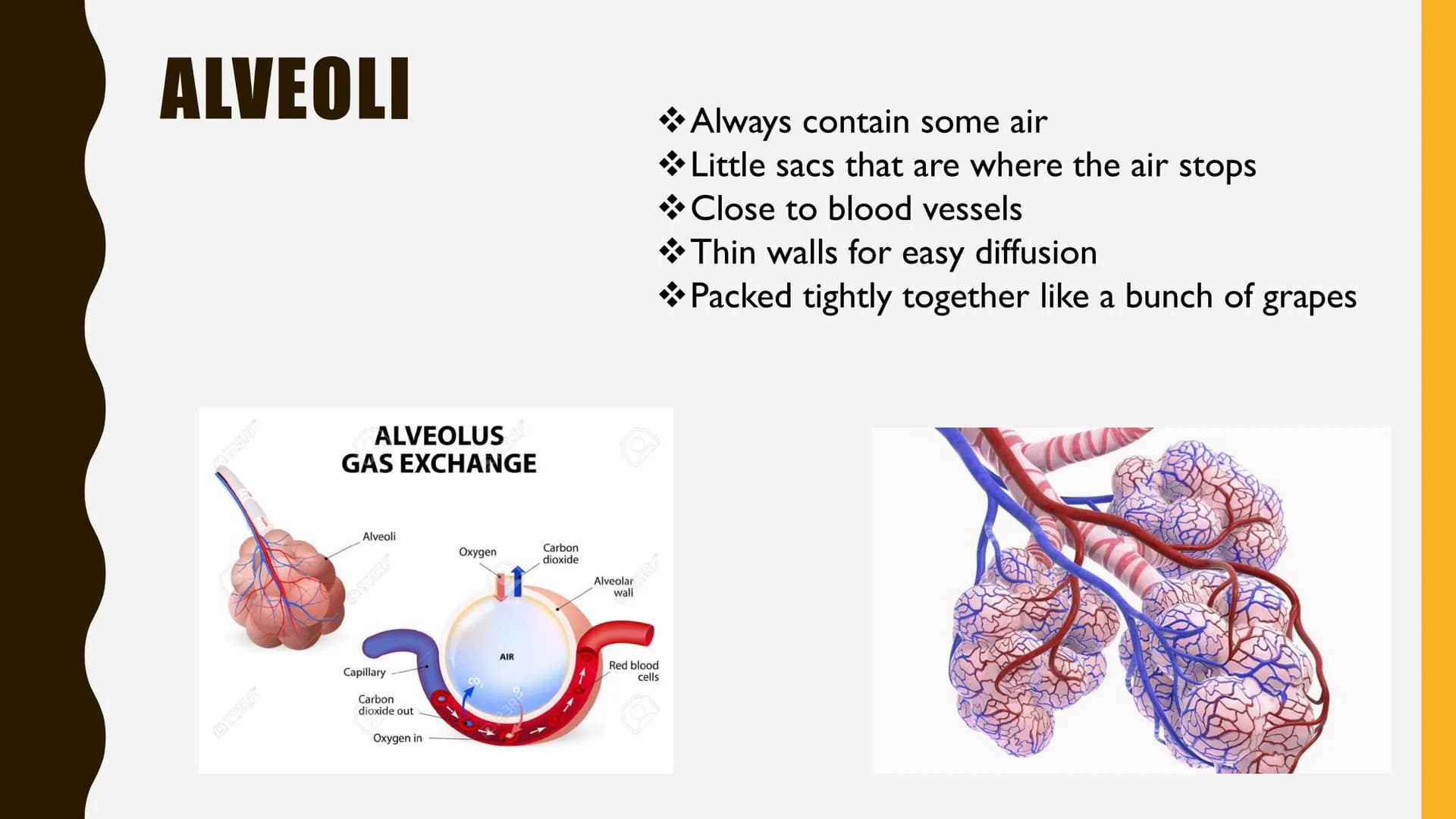
Alveoli are where the magic happens - tiny air sacs where oxygen enters your blood and carbon dioxide leaves. They're perfectly designed for efficient gas exchange with incredibly thin walls and close contact with blood vessels.
These little sacs are packed together like grapes on a vine, creating a massive surface area (about the size of a tennis court!) inside your lungs. Their walls are so thin that gases can easily diffuse across them.
Each alveolus is surrounded by a network of capillaries carrying blood. The close contact and thin barriers mean oxygen can quickly move from air to blood, while carbon dioxide moves the opposite way.
Amazing Fact: You have around 300 million alveoli in your lungs - that's roughly one for every person in the USA!
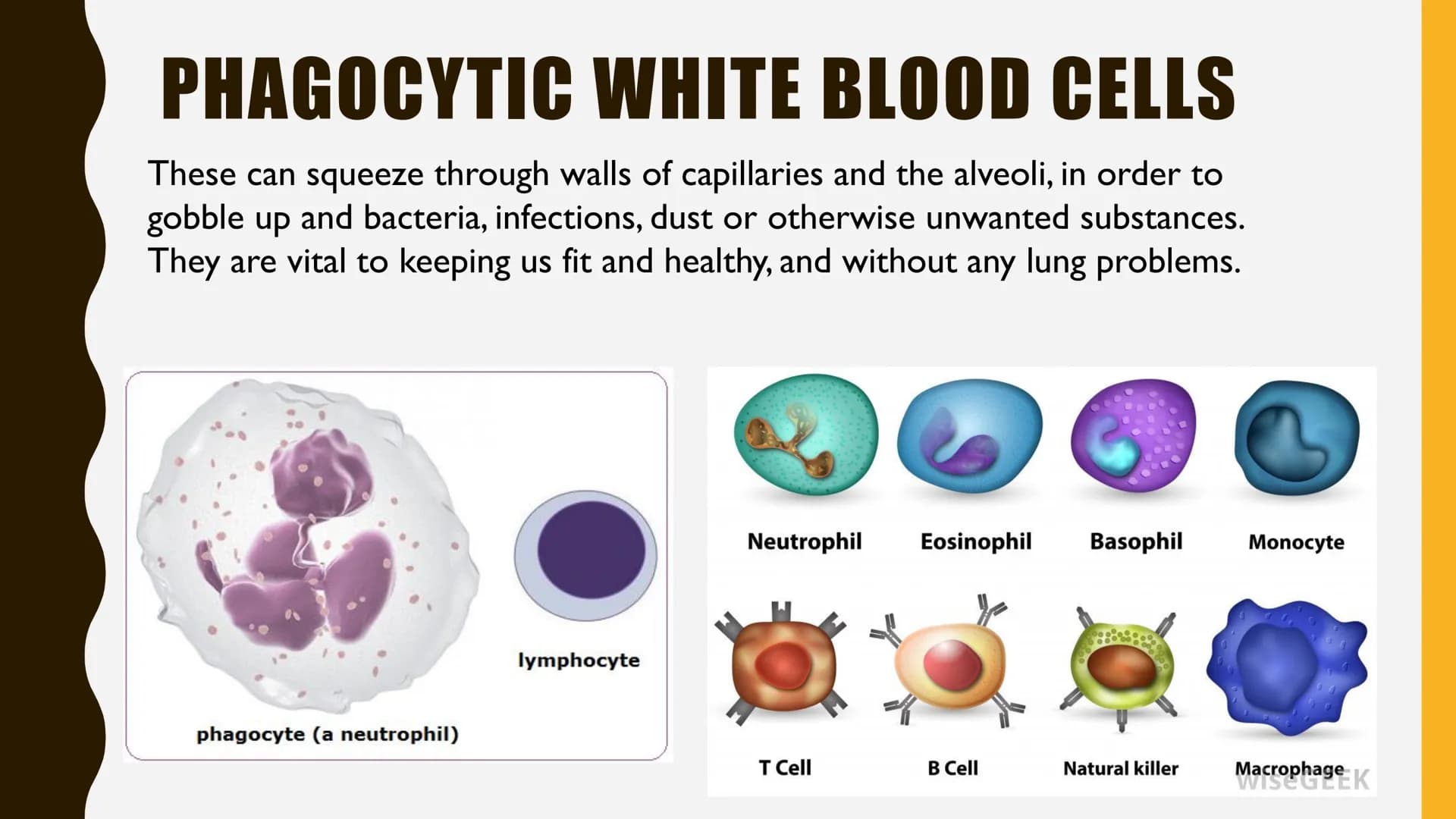
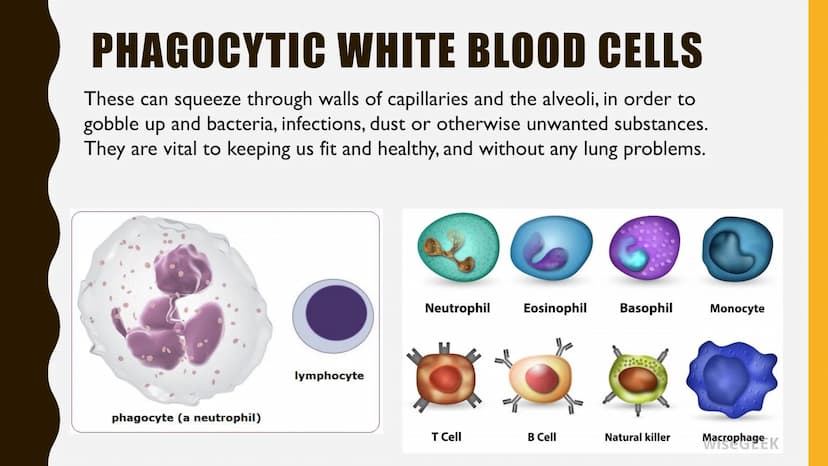
Your lungs need protecting from all the dust, bacteria, and nasties you breathe in daily. Phagocytic white blood cells are like microscopic security guards that patrol your alveoli looking for trouble.
These cells can squeeze through the walls of capillaries and move into your alveoli to "gobble up" any unwanted visitors. They literally eat bacteria, dust particles, and other harmful substances to keep your lungs clean and healthy.
Different types of white blood cells have different jobs - neutrophils are quick first responders, macrophages are the heavy-duty cleaners, and lymphocytes coordinate the immune response. Without them, your lungs would quickly become clogged and infected.
Health Tip: This is why smoking is so dangerous - it overwhelms and damages these protective cells!
Our AI Companion is a student-focused AI tool that offers more than just answers. Built on millions of Knowunity resources, it provides relevant information, personalised study plans, quizzes, and content directly in the chat, adapting to your individual learning journey.
You can download the app from Google Play Store and Apple App Store.
That's right! Enjoy free access to study content, connect with fellow students, and get instant help – all at your fingertips.
App Store
Google Play
The app is very easy to use and well designed. I have found everything I was looking for so far and have been able to learn a lot from the presentations! I will definitely use the app for a class assignment! And of course it also helps a lot as an inspiration.
Stefan S
iOS user
This app is really great. There are so many study notes and help [...]. My problem subject is French, for example, and the app has so many options for help. Thanks to this app, I have improved my French. I would recommend it to anyone.
Samantha Klich
Android user
Wow, I am really amazed. I just tried the app because I've seen it advertised many times and was absolutely stunned. This app is THE HELP you want for school and above all, it offers so many things, such as workouts and fact sheets, which have been VERY helpful to me personally.
Anna
iOS user
Best app on earth! no words because it’s too good
Thomas R
iOS user
Just amazing. Let's me revise 10x better, this app is a quick 10/10. I highly recommend it to anyone. I can watch and search for notes. I can save them in the subject folder. I can revise it any time when I come back. If you haven't tried this app, you're really missing out.
Basil
Android user
This app has made me feel so much more confident in my exam prep, not only through boosting my own self confidence through the features that allow you to connect with others and feel less alone, but also through the way the app itself is centred around making you feel better. It is easy to navigate, fun to use, and helpful to anyone struggling in absolutely any way.
David K
iOS user
The app's just great! All I have to do is enter the topic in the search bar and I get the response real fast. I don't have to watch 10 YouTube videos to understand something, so I'm saving my time. Highly recommended!
Sudenaz Ocak
Android user
In school I was really bad at maths but thanks to the app, I am doing better now. I am so grateful that you made the app.
Greenlight Bonnie
Android user
very reliable app to help and grow your ideas of Maths, English and other related topics in your works. please use this app if your struggling in areas, this app is key for that. wish I'd of done a review before. and it's also free so don't worry about that.
Rohan U
Android user
I know a lot of apps use fake accounts to boost their reviews but this app deserves it all. Originally I was getting 4 in my English exams and this time I got a grade 7. I didn’t even know about this app three days until the exam and it has helped A LOT. Please actually trust me and use it as I’m sure you too will see developments.
Xander S
iOS user
THE QUIZES AND FLASHCARDS ARE SO USEFUL AND I LOVE THE SCHOOLGPT. IT ALSO IS LITREALLY LIKE CHATGPT BUT SMARTER!! HELPED ME WITH MY MASCARA PROBLEMS TOO!! AS WELL AS MY REAL SUBJECTS ! DUHHH 😍😁😲🤑💗✨🎀😮
Elisha
iOS user
This apps acc the goat. I find revision so boring but this app makes it so easy to organize it all and then you can ask the freeeee ai to test yourself so good and you can easily upload your own stuff. highly recommend as someone taking mocks now
Paul T
iOS user
The app is very easy to use and well designed. I have found everything I was looking for so far and have been able to learn a lot from the presentations! I will definitely use the app for a class assignment! And of course it also helps a lot as an inspiration.
Stefan S
iOS user
This app is really great. There are so many study notes and help [...]. My problem subject is French, for example, and the app has so many options for help. Thanks to this app, I have improved my French. I would recommend it to anyone.
Samantha Klich
Android user
Wow, I am really amazed. I just tried the app because I've seen it advertised many times and was absolutely stunned. This app is THE HELP you want for school and above all, it offers so many things, such as workouts and fact sheets, which have been VERY helpful to me personally.
Anna
iOS user
Best app on earth! no words because it’s too good
Thomas R
iOS user
Just amazing. Let's me revise 10x better, this app is a quick 10/10. I highly recommend it to anyone. I can watch and search for notes. I can save them in the subject folder. I can revise it any time when I come back. If you haven't tried this app, you're really missing out.
Basil
Android user
This app has made me feel so much more confident in my exam prep, not only through boosting my own self confidence through the features that allow you to connect with others and feel less alone, but also through the way the app itself is centred around making you feel better. It is easy to navigate, fun to use, and helpful to anyone struggling in absolutely any way.
David K
iOS user
The app's just great! All I have to do is enter the topic in the search bar and I get the response real fast. I don't have to watch 10 YouTube videos to understand something, so I'm saving my time. Highly recommended!
Sudenaz Ocak
Android user
In school I was really bad at maths but thanks to the app, I am doing better now. I am so grateful that you made the app.
Greenlight Bonnie
Android user
very reliable app to help and grow your ideas of Maths, English and other related topics in your works. please use this app if your struggling in areas, this app is key for that. wish I'd of done a review before. and it's also free so don't worry about that.
Rohan U
Android user
I know a lot of apps use fake accounts to boost their reviews but this app deserves it all. Originally I was getting 4 in my English exams and this time I got a grade 7. I didn’t even know about this app three days until the exam and it has helped A LOT. Please actually trust me and use it as I’m sure you too will see developments.
Xander S
iOS user
THE QUIZES AND FLASHCARDS ARE SO USEFUL AND I LOVE THE SCHOOLGPT. IT ALSO IS LITREALLY LIKE CHATGPT BUT SMARTER!! HELPED ME WITH MY MASCARA PROBLEMS TOO!! AS WELL AS MY REAL SUBJECTS ! DUHHH 😍😁😲🤑💗✨🎀😮
Elisha
iOS user
This apps acc the goat. I find revision so boring but this app makes it so easy to organize it all and then you can ask the freeeee ai to test yourself so good and you can easily upload your own stuff. highly recommend as someone taking mocks now
Paul T
iOS user
Oscar66
@oscar66
Gas exchange is how your body swaps oxygen for carbon dioxide to keep you alive. Understanding how diffusion works and how your lungs are perfectly designed for this process is crucial for biology.
Access to all documents
Improve your grades
Join milions of students
By signing up you accept Terms of Service and Privacy Policy
This topic covers one of the most essential processes in biology - how organisms get the oxygen they need and remove waste carbon dioxide. You'll discover the clever ways different animals have evolved to solve this vital challenge.
Gas exchange happens through diffusion, a simple but powerful process that doesn't require any energy from your body. The key is having the right conditions and structures to make it work efficiently.
Quick Tip: Gas exchange is literally keeping you alive right now - every breath demonstrates these principles in action!
Access to all documents
Improve your grades
Join milions of students
By signing up you accept Terms of Service and Privacy Policy
Think of diffusion like people leaving a crowded party - particles naturally move from busy areas to quieter ones until everything evens out. Diffusion is the net movement of particles from a region of high concentration to a region of low concentration.
This movement happens because particles are constantly bouncing around randomly. When there are more particles in one area, more of them will randomly move towards the less crowded space.
The process continues until equilibrium is reached - when particles are evenly spread throughout the available space. This is why a drop of food colouring eventually colours an entire glass of water.
Remember: No energy is needed for diffusion - it happens automatically due to particle movement!
Access to all documents
Improve your grades
Join milions of students
By signing up you accept Terms of Service and Privacy Policy
The concentration gradient is simply the difference in concentration between two areas - like the difference between a crowded corridor and an empty classroom. This gradient is what drives diffusion forward.
Here's the crucial bit: the steeper the concentration gradient, the faster diffusion occurs. It's like water flowing down a hill - the steeper the slope, the faster it flows.
This explains why maintaining concentration differences is so important in gas exchange. Your body works hard to keep oxygen levels low in your blood and high in your lungs to keep diffusion happening quickly.
Exam Tip: Always mention concentration gradients when explaining why diffusion happens - it's a key mark-scorer!
Access to all documents
Improve your grades
Join milions of students
By signing up you accept Terms of Service and Privacy Policy
Small animals can get away with gas exchange through their skin because they have a high surface area to volume ratio. But as animals get bigger, they need specialised structures to get enough gas exchange happening.
Different animals have evolved brilliant solutions: external gills (like in young amphibians), internal gills (fish), lungs (mammals and birds), and tracheae (insects). Each system is perfectly adapted to its environment.
These specialised surfaces solve the problem of getting enough oxygen to all the cells in larger, more complex animals. Without them, we simply couldn't exist!
Cool Fact: Insects breathe through tiny tubes called tracheae that deliver air directly to their tissues!
Access to all documents
Improve your grades
Join milions of students
By signing up you accept Terms of Service and Privacy Policy
For gas exchange to work brilliantly, surfaces need four key features: they must be thin (for quick diffusion), moist (so gases can dissolve), have a large surface area (more space for exchange), and maintain steep concentration gradients.
Several factors affect how fast diffusion happens. Higher temperature speeds things up because particles move faster when they're warmer. Smaller particles also diffuse more quickly than larger ones.
The diffusion medium matters too - gases diffuse much faster through air than through water, which is why land animals can often be more active than aquatic ones.
Study Hack: Remember "TLMS" - Thin, Large surface area, Moist, Steep gradient for optimal gas exchange!
Access to all documents
Improve your grades
Join milions of students
By signing up you accept Terms of Service and Privacy Policy
Your body is mainly interested in swapping oxygen and carbon dioxide. Oxygen goes from your lungs into your bloodstream to power cellular respiration, while carbon dioxide (the waste product) travels the opposite direction to be breathed out.
Nitrogen makes up 78% of air but your body largely ignores it - it goes in and comes straight back out again unchanged. Oxygen only makes up about 21% of air, but it's the bit your cells desperately need.
Carbon dioxide is only 0.03% of air normally, but the amount you breathe out is much higher because your cells are constantly producing it as waste. This difference helps maintain the concentration gradient needed for efficient gas exchange.
Interesting: You breathe out roughly 100 times more carbon dioxide than you breathe in!
Access to all documents
Improve your grades
Join milions of students
By signing up you accept Terms of Service and Privacy Policy
Air takes an amazing journey from your nose and mouth to your lungs. The pathway goes: nasal cavity → pharynx → larynx → trachea → bronchi → bronchioles → alveoli.
Think of it like a tree - the trachea is the trunk, bronchi are major branches, bronchioles are smaller branches, and alveoli are the leaves where all the action happens. This branching design massively increases surface area.
Each step gets smaller and more numerous. You have one trachea, two main bronchi, thousands of bronchioles, and millions of tiny alveoli. This creates an enormous surface area for gas exchange packed into your chest.
Visual Tip: The lung structure really does look like an upside-down tree - use this to remember the pathway!
Access to all documents
Improve your grades
Join milions of students
By signing up you accept Terms of Service and Privacy Policy
Your trachea and bronchi need to stay open for breathing, but they also need to be flexible for movement. The solution is brilliant: incomplete rings of cartilage that provide strength while allowing flexibility.
These cartilage rings are made of the same stuff as your nose and ears. They're arranged in C-shaped rings rather than complete circles, which lets the tubes compress slightly when needed (like when you swallow).
The cartilage prevents your airways from collapsing when you breathe in hard, which would be like trying to drink through a straw that keeps folding shut. Without this support, your breathing would be much less efficient.
Cool Connection: Feel the front of your throat - those bumps are your cartilage rings protecting your airway!
Access to all documents
Improve your grades
Join milions of students
By signing up you accept Terms of Service and Privacy Policy
Alveoli are where the magic happens - tiny air sacs where oxygen enters your blood and carbon dioxide leaves. They're perfectly designed for efficient gas exchange with incredibly thin walls and close contact with blood vessels.
These little sacs are packed together like grapes on a vine, creating a massive surface area (about the size of a tennis court!) inside your lungs. Their walls are so thin that gases can easily diffuse across them.
Each alveolus is surrounded by a network of capillaries carrying blood. The close contact and thin barriers mean oxygen can quickly move from air to blood, while carbon dioxide moves the opposite way.
Amazing Fact: You have around 300 million alveoli in your lungs - that's roughly one for every person in the USA!
Access to all documents
Improve your grades
Join milions of students
By signing up you accept Terms of Service and Privacy Policy
Your lungs need protecting from all the dust, bacteria, and nasties you breathe in daily. Phagocytic white blood cells are like microscopic security guards that patrol your alveoli looking for trouble.
These cells can squeeze through the walls of capillaries and move into your alveoli to "gobble up" any unwanted visitors. They literally eat bacteria, dust particles, and other harmful substances to keep your lungs clean and healthy.
Different types of white blood cells have different jobs - neutrophils are quick first responders, macrophages are the heavy-duty cleaners, and lymphocytes coordinate the immune response. Without them, your lungs would quickly become clogged and infected.
Health Tip: This is why smoking is so dangerous - it overwhelms and damages these protective cells!
Our AI Companion is a student-focused AI tool that offers more than just answers. Built on millions of Knowunity resources, it provides relevant information, personalised study plans, quizzes, and content directly in the chat, adapting to your individual learning journey.
You can download the app from Google Play Store and Apple App Store.
That's right! Enjoy free access to study content, connect with fellow students, and get instant help – all at your fingertips.
6
Smart Tools NEW
Transform this note into: ✓ 50+ Practice Questions ✓ Interactive Flashcards ✓ Full Mock Exam ✓ Essay Outlines
Explore the intricate gas exchange systems in insects, focusing on the role of spiracles, tracheae, and tracheoles. This summary covers adaptations for efficient oxygen delivery and carbon dioxide removal, including the Discontinuous Gas Exchange Cycle and mechanical ventilation strategies. Ideal for biology students studying respiratory systems.
 Biology
Explore the intricacies of gas exchange, including the roles of alveoli, the respiratory system, and the impact of exercise on breathing rates. This summary features diagrams, key concepts, and questions to enhance understanding of inhalation and exhalation processes.
BiologyExplore the intricate gas exchange systems in insects, fish, and mammals. This summary covers key concepts such as spiracles, tracheal systems, gill ventilation, and the transport of oxygen and carbon dioxide in the blood. Ideal for OCR A Level Biology revision, focusing on transport in animals and specialized exchange surfaces.
BiologyExplore the intricate process of gas exchange in the lungs, focusing on the role of alveoli, bronchi, and capillaries. This summary covers key concepts such as the function of haemoglobin, the importance of surface area, and the diffusion of oxygen and carbon dioxide. Ideal for biology students preparing for exams.
BiologyExplore the intricate gaseous exchange system in mammals, detailing the structure and function of the trachea, bronchi, bronchioles, and alveoli. Understand the roles of goblet cells, cilia, elastic fibers, smooth muscle, and cartilage in facilitating efficient gas exchange. This summary is essential for students studying biology and physiology.
BiologyExplore the essential functions of the heart, blood circulation, and the process of gaseous exchange in this comprehensive study note. Key topics include muscle cells, the skeletal system, and the impact of drugs on bodily functions. Ideal for Year 7 science students preparing for exams.
BiologyApp Store
Google Play
The app is very easy to use and well designed. I have found everything I was looking for so far and have been able to learn a lot from the presentations! I will definitely use the app for a class assignment! And of course it also helps a lot as an inspiration.
Stefan S
iOS user
This app is really great. There are so many study notes and help [...]. My problem subject is French, for example, and the app has so many options for help. Thanks to this app, I have improved my French. I would recommend it to anyone.
Samantha Klich
Android user
Wow, I am really amazed. I just tried the app because I've seen it advertised many times and was absolutely stunned. This app is THE HELP you want for school and above all, it offers so many things, such as workouts and fact sheets, which have been VERY helpful to me personally.
Anna
iOS user
Best app on earth! no words because it’s too good
Thomas R
iOS user
Just amazing. Let's me revise 10x better, this app is a quick 10/10. I highly recommend it to anyone. I can watch and search for notes. I can save them in the subject folder. I can revise it any time when I come back. If you haven't tried this app, you're really missing out.
Basil
Android user
This app has made me feel so much more confident in my exam prep, not only through boosting my own self confidence through the features that allow you to connect with others and feel less alone, but also through the way the app itself is centred around making you feel better. It is easy to navigate, fun to use, and helpful to anyone struggling in absolutely any way.
David K
iOS user
The app's just great! All I have to do is enter the topic in the search bar and I get the response real fast. I don't have to watch 10 YouTube videos to understand something, so I'm saving my time. Highly recommended!
Sudenaz Ocak
Android user
In school I was really bad at maths but thanks to the app, I am doing better now. I am so grateful that you made the app.
Greenlight Bonnie
Android user
very reliable app to help and grow your ideas of Maths, English and other related topics in your works. please use this app if your struggling in areas, this app is key for that. wish I'd of done a review before. and it's also free so don't worry about that.
Rohan U
Android user
I know a lot of apps use fake accounts to boost their reviews but this app deserves it all. Originally I was getting 4 in my English exams and this time I got a grade 7. I didn’t even know about this app three days until the exam and it has helped A LOT. Please actually trust me and use it as I’m sure you too will see developments.
Xander S
iOS user
THE QUIZES AND FLASHCARDS ARE SO USEFUL AND I LOVE THE SCHOOLGPT. IT ALSO IS LITREALLY LIKE CHATGPT BUT SMARTER!! HELPED ME WITH MY MASCARA PROBLEMS TOO!! AS WELL AS MY REAL SUBJECTS ! DUHHH 😍😁😲🤑💗✨🎀😮
Elisha
iOS user
This apps acc the goat. I find revision so boring but this app makes it so easy to organize it all and then you can ask the freeeee ai to test yourself so good and you can easily upload your own stuff. highly recommend as someone taking mocks now
Paul T
iOS user
The app is very easy to use and well designed. I have found everything I was looking for so far and have been able to learn a lot from the presentations! I will definitely use the app for a class assignment! And of course it also helps a lot as an inspiration.
Stefan S
iOS user
This app is really great. There are so many study notes and help [...]. My problem subject is French, for example, and the app has so many options for help. Thanks to this app, I have improved my French. I would recommend it to anyone.
Samantha Klich
Android user
Wow, I am really amazed. I just tried the app because I've seen it advertised many times and was absolutely stunned. This app is THE HELP you want for school and above all, it offers so many things, such as workouts and fact sheets, which have been VERY helpful to me personally.
Anna
iOS user
Best app on earth! no words because it’s too good
Thomas R
iOS user
Just amazing. Let's me revise 10x better, this app is a quick 10/10. I highly recommend it to anyone. I can watch and search for notes. I can save them in the subject folder. I can revise it any time when I come back. If you haven't tried this app, you're really missing out.
Basil
Android user
This app has made me feel so much more confident in my exam prep, not only through boosting my own self confidence through the features that allow you to connect with others and feel less alone, but also through the way the app itself is centred around making you feel better. It is easy to navigate, fun to use, and helpful to anyone struggling in absolutely any way.
David K
iOS user
The app's just great! All I have to do is enter the topic in the search bar and I get the response real fast. I don't have to watch 10 YouTube videos to understand something, so I'm saving my time. Highly recommended!
Sudenaz Ocak
Android user
In school I was really bad at maths but thanks to the app, I am doing better now. I am so grateful that you made the app.
Greenlight Bonnie
Android user
very reliable app to help and grow your ideas of Maths, English and other related topics in your works. please use this app if your struggling in areas, this app is key for that. wish I'd of done a review before. and it's also free so don't worry about that.
Rohan U
Android user
I know a lot of apps use fake accounts to boost their reviews but this app deserves it all. Originally I was getting 4 in my English exams and this time I got a grade 7. I didn’t even know about this app three days until the exam and it has helped A LOT. Please actually trust me and use it as I’m sure you too will see developments.
Xander S
iOS user
THE QUIZES AND FLASHCARDS ARE SO USEFUL AND I LOVE THE SCHOOLGPT. IT ALSO IS LITREALLY LIKE CHATGPT BUT SMARTER!! HELPED ME WITH MY MASCARA PROBLEMS TOO!! AS WELL AS MY REAL SUBJECTS ! DUHHH 😍😁😲🤑💗✨🎀😮
Elisha
iOS user
This apps acc the goat. I find revision so boring but this app makes it so easy to organize it all and then you can ask the freeeee ai to test yourself so good and you can easily upload your own stuff. highly recommend as someone taking mocks now
Paul T
iOS user