
With the world's population exploding past 8 billion people, feeding...
 Biology330 views·Updated 24 Jun 2026·32 pages
Understanding Food Production in Biology

Molly Hutton@mollyhutton
1 / 10
1
of 10
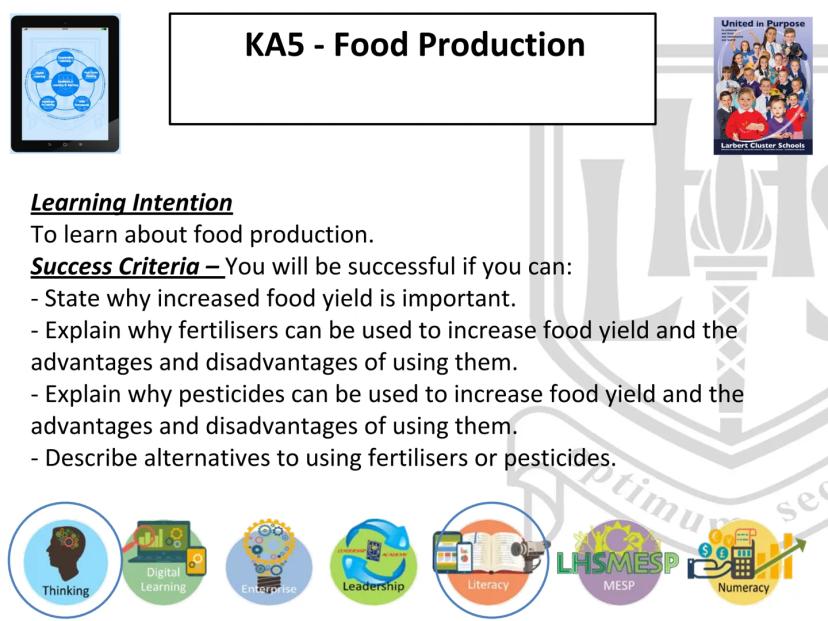
N5 Biology: Food Production Overview
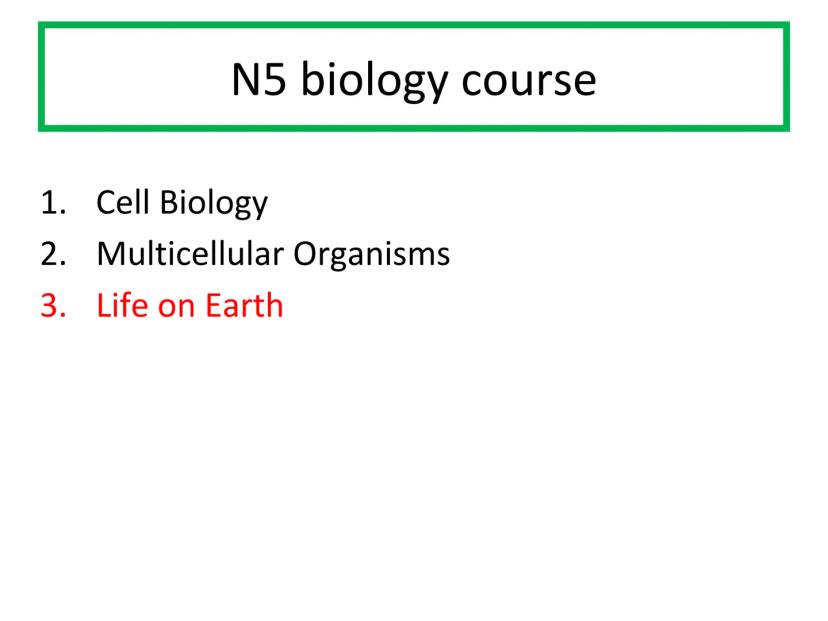
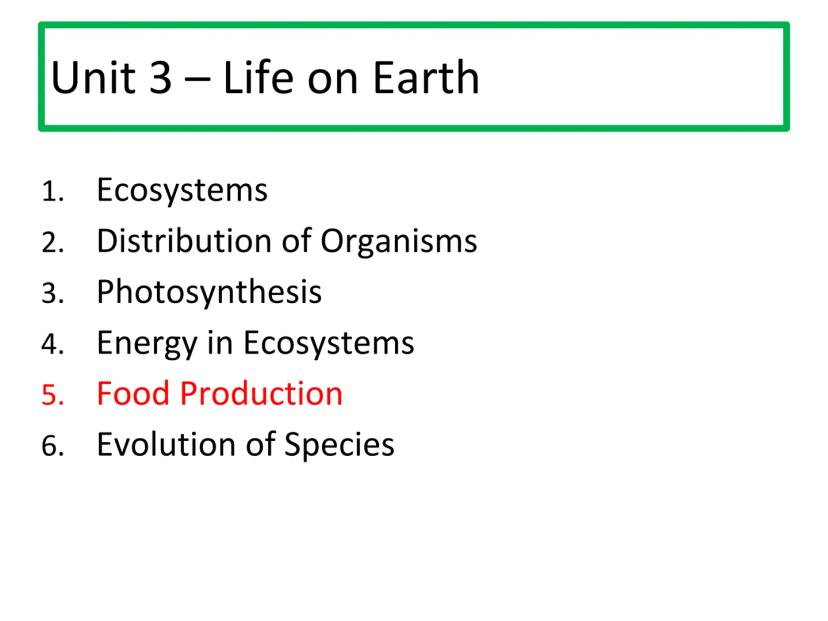
You're diving into one of the most relevant topics in modern biology - how we're going to feed our growing planet! Food production sits within the "Life on Earth" unit of your N5 Biology course, alongside other key areas like ecosystems, photosynthesis, and evolution.
This knowledge area focuses on the science behind modern farming methods. You'll discover why farmers rely on chemicals to boost their harvests and what happens when these chemicals escape into the environment.
Quick Tip: This topic connects directly to current environmental issues you hear about in the news, making it perfect for exam questions about real-world applications!
2
of 10
The Population Problem
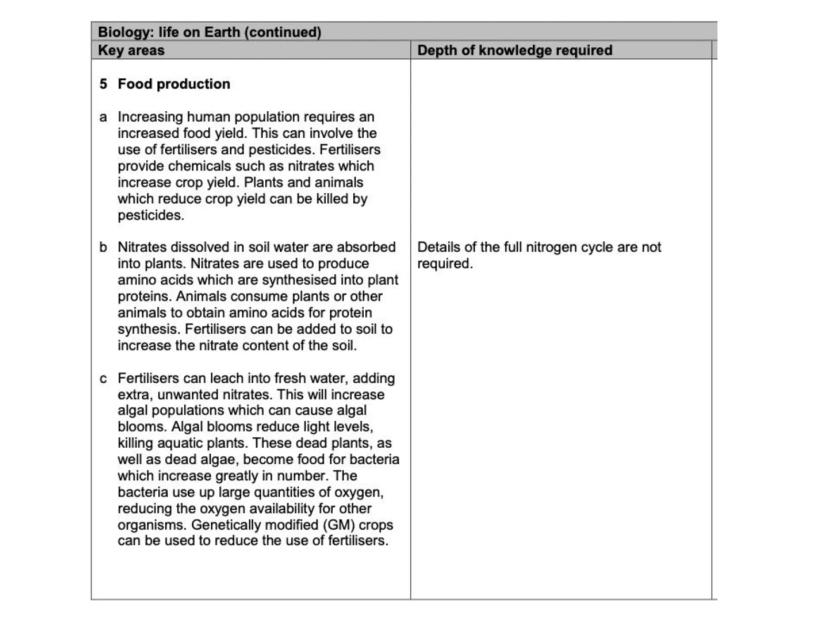
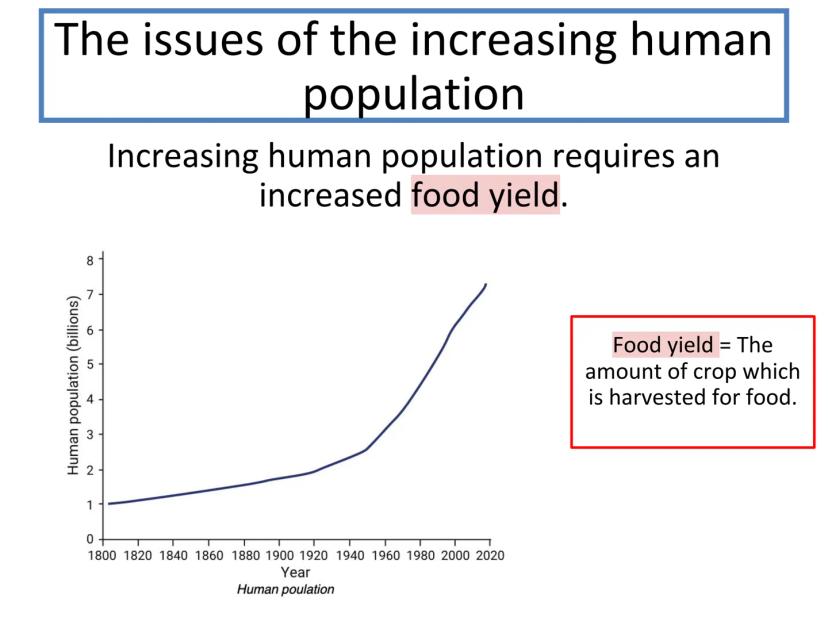
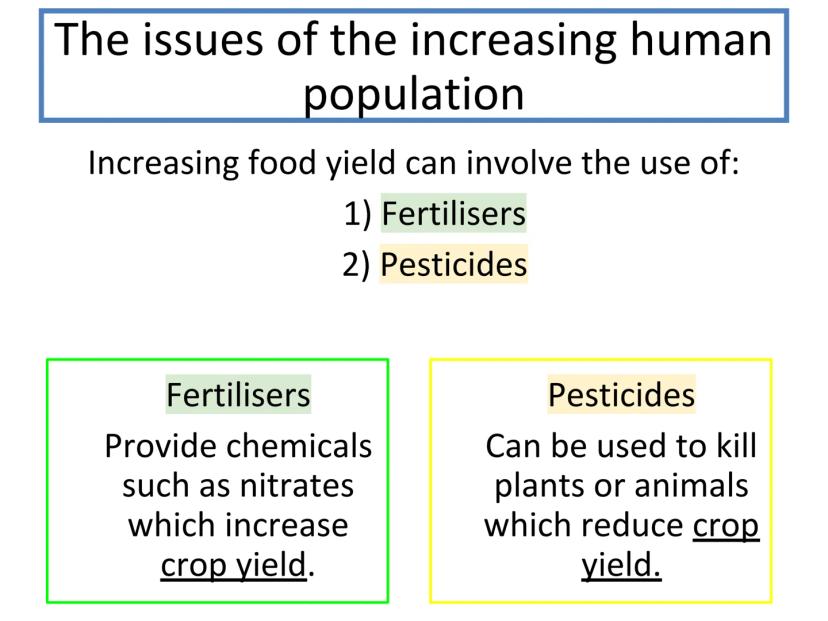
The numbers don't lie - human population has skyrocketed from under 2 billion in 1900 to over 8 billion today. Every single one of these people needs food, which means farmers must produce way more crops than ever before.
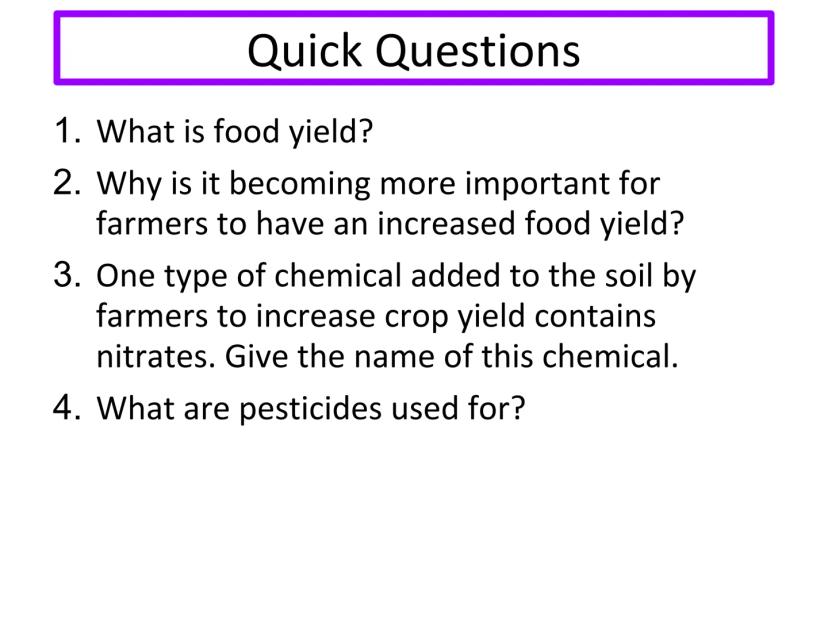
Food yield is simply the amount of crop harvested for food from a given area. Think of it as getting the maximum bang for your buck from every field. As the population curve shoots upward, so must our food production.
This pressure has pushed farmers towards two main solutions: fertilisers (which feed plants the nutrients they crave) and pesticides (which eliminate anything trying to destroy crops). Both work brilliantly - but they come with serious strings attached.
Remember: The key relationship here is simple - more people = need for more food = increased use of agricultural chemicals.
3
of 10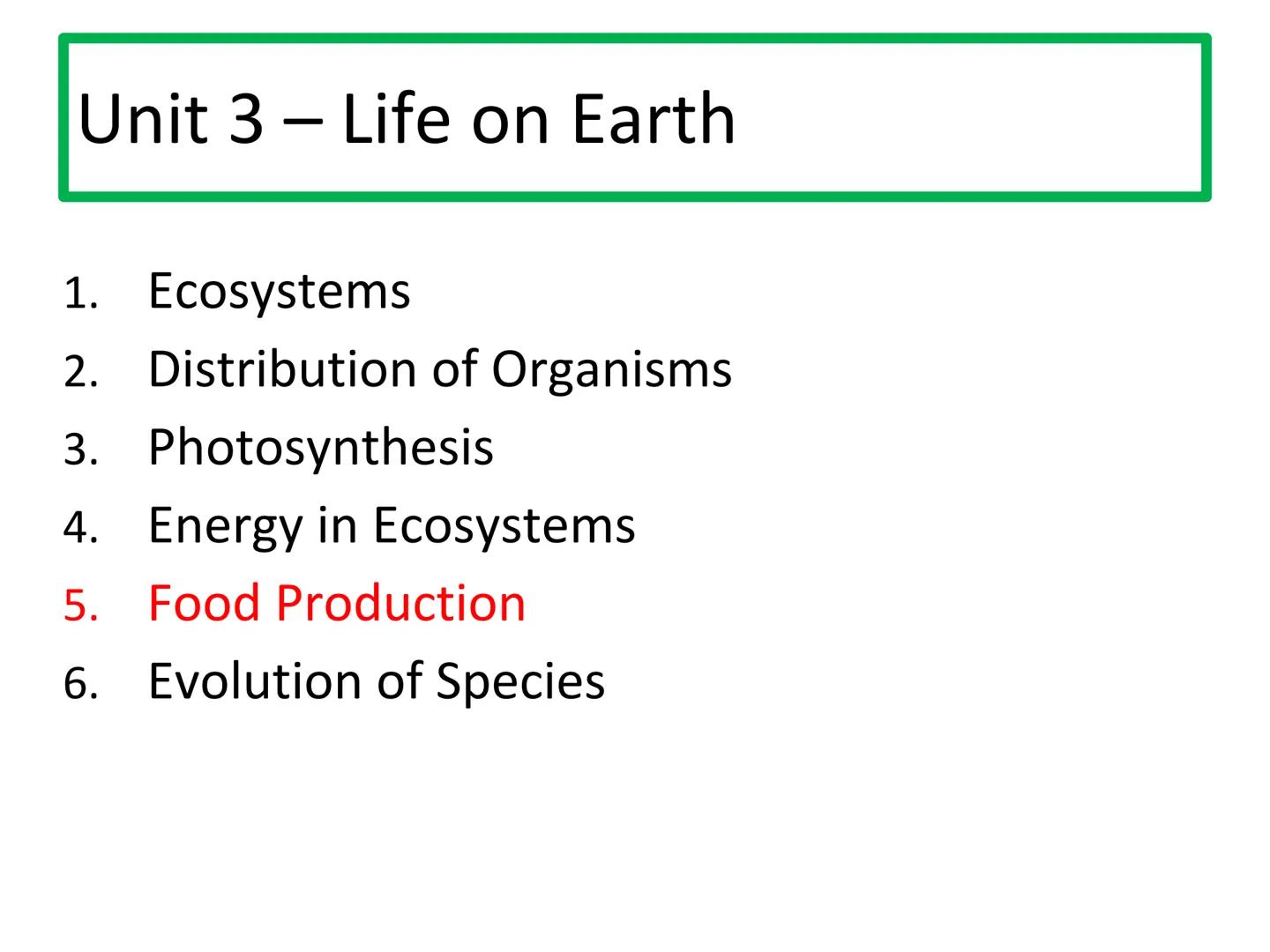
How Fertilisers Work
Here's the science bit that's actually quite clever: plants absorb nitrates from soil water through their roots, then convert these into amino acids, which build up into proteins. It's like giving plants their essential vitamins!
When farmers add fertilisers containing nitrates to soil, they're basically creating a nutrient-rich buffet for their crops. More nitrates mean more proteins, which translates directly into bigger, healthier plants and higher yields.
Animals get their amino acids by munching on plants (or other animals), so this nitrogen boost ripples up through the entire food chain. Without enough nitrates in soil, crops struggle to grow properly - a bit like trying to build muscle without eating enough protein.
Exam Tip: You don't need to memorise the full nitrogen cycle, but understanding this nitrate → amino acid → protein pathway is essential for your exams.
4
of 10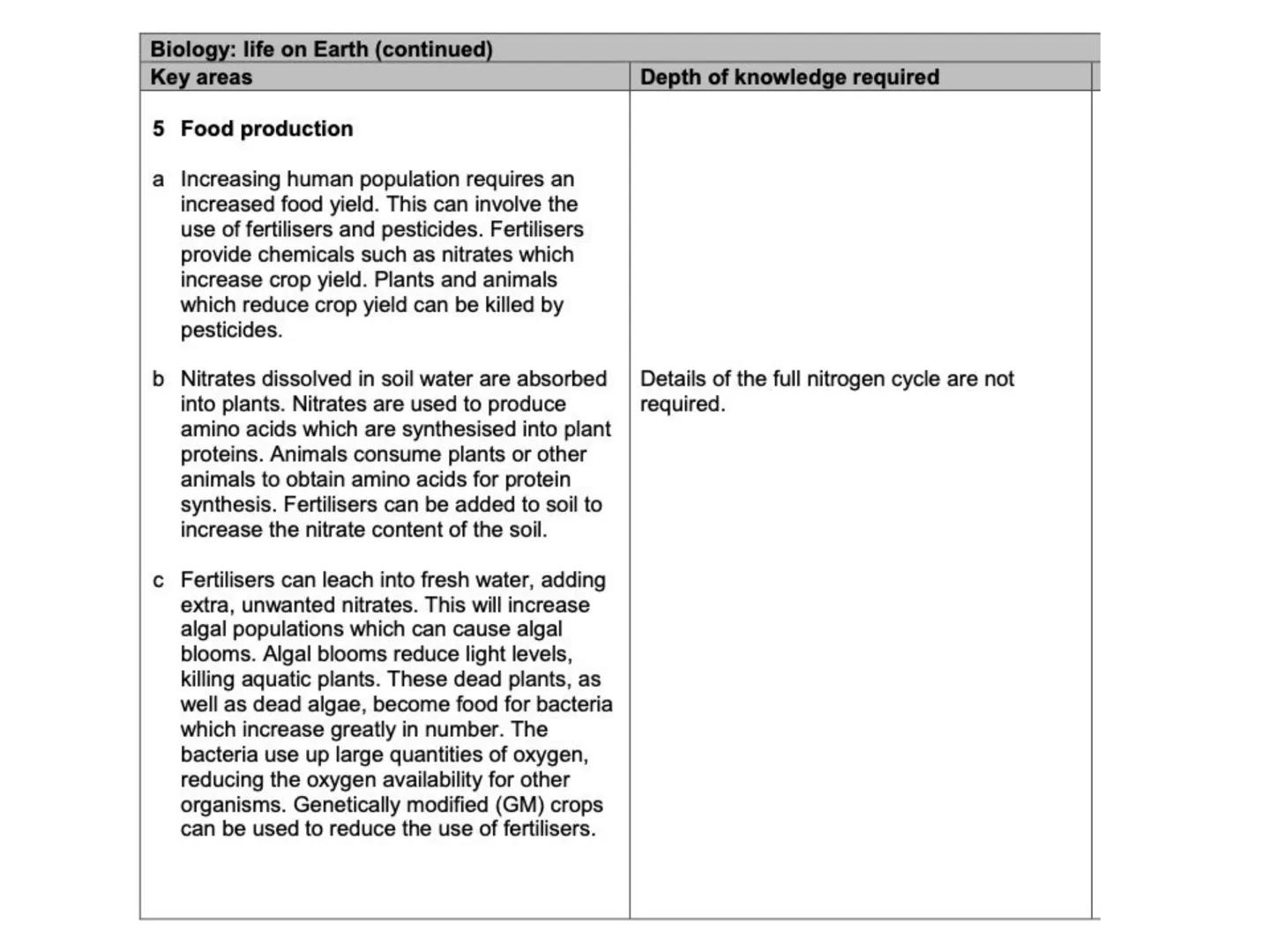
The Dark Side of Fertilisers
Unfortunately, fertilisers don't stay put where farmers want them. They leach into rivers and lakes, creating an environmental disaster called eutrophication that you absolutely need to understand for exams.
Here's the deadly sequence: excess nitrates cause algal blooms (massive algae growth) → these block sunlight → aquatic plants die → bacteria feast on all the dead material → bacteria use up loads of oxygen → fish and other organisms suffocate.
It's like overcrowding a party - initially exciting, but ultimately everything goes wrong. The water becomes a lifeless, stinking mess that can take years to recover.
Genetically modified (GM) crops offer one solution by reducing fertiliser dependence, though this remains controversial.
Key Point: Learn this eutrophication sequence step-by-step - it's a classic exam question that trips up loads of students!
5
of 10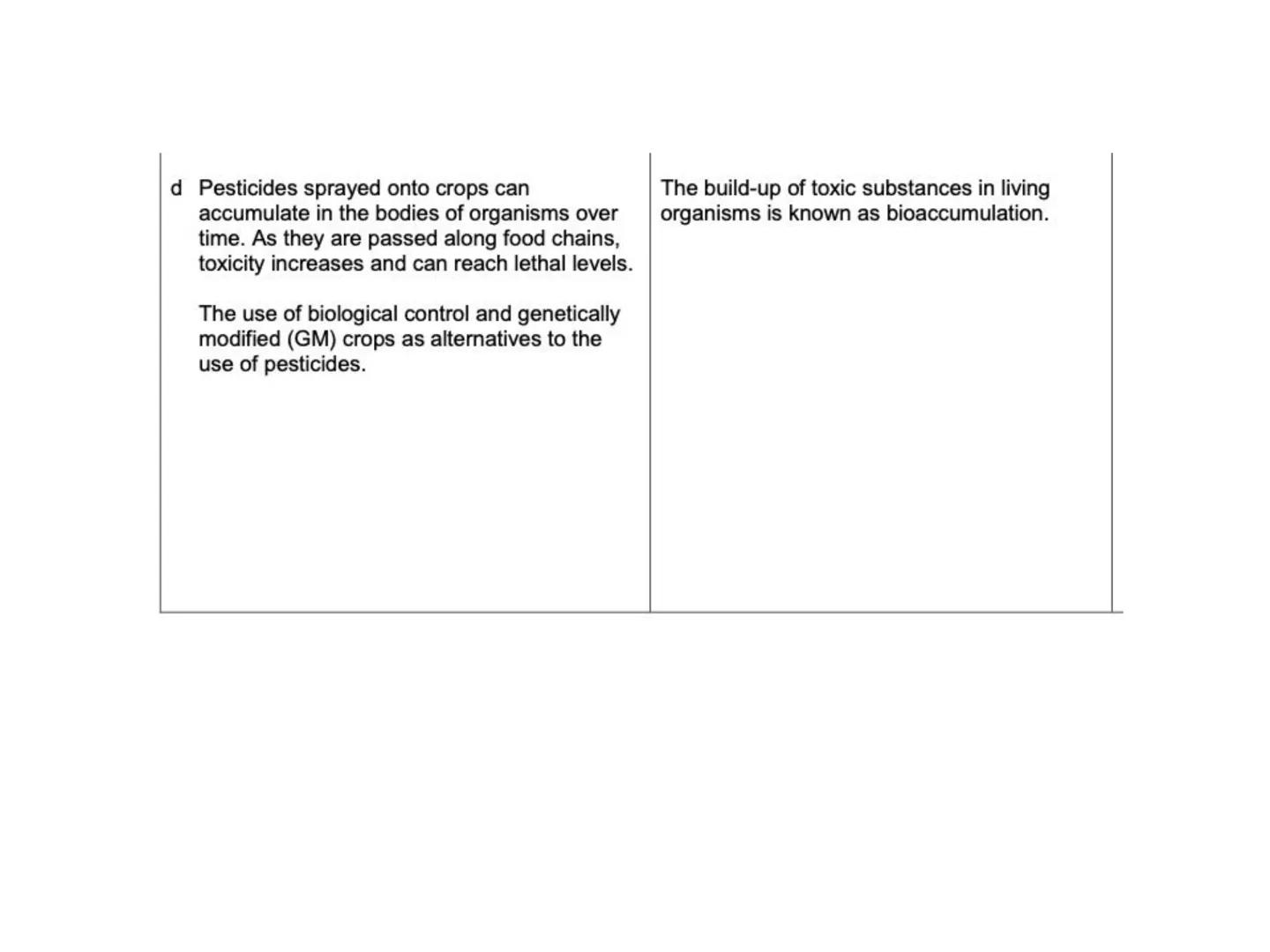
Pesticide Problems and Alternatives
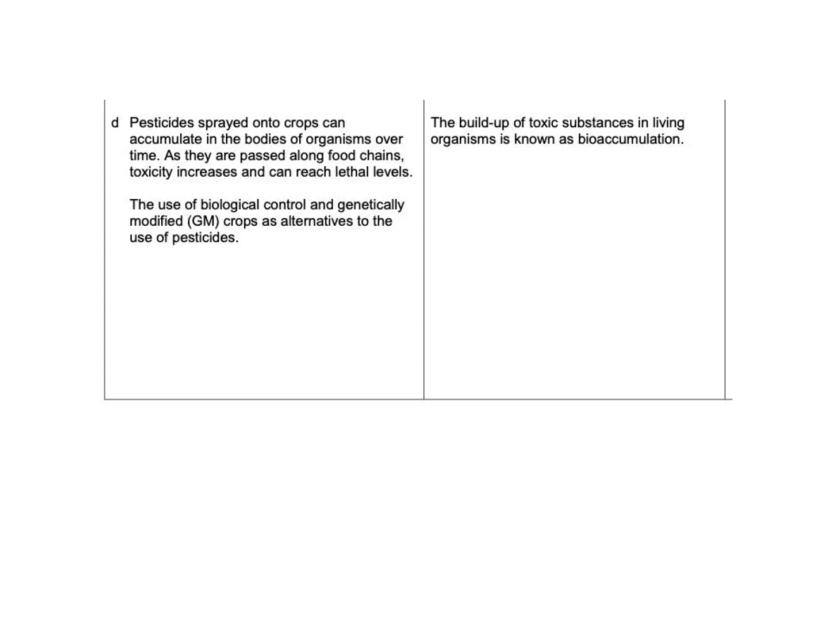
Pesticides seem brilliant at first - they eliminate crop-damaging pests and boost yields dramatically. However, they don't just disappear after doing their job. Instead, they stick around in the environment, building up in organisms through bioaccumulation.
As these toxins pass along food chains, they become more concentrated at each level. A tiny amount on plants becomes deadly by the time it reaches top predators - imagine a snowball rolling downhill, getting bigger and more dangerous.
Fortunately, farmers have alternatives: biological control (using natural predators instead of chemicals) and GM crops (engineered to resist pests naturally). These methods work with nature rather than against it.
Real-World Connection: This bioaccumulation process famously nearly wiped out birds of prey like eagles - their eggshells became so thin they couldn't reproduce successfully.
6
of 10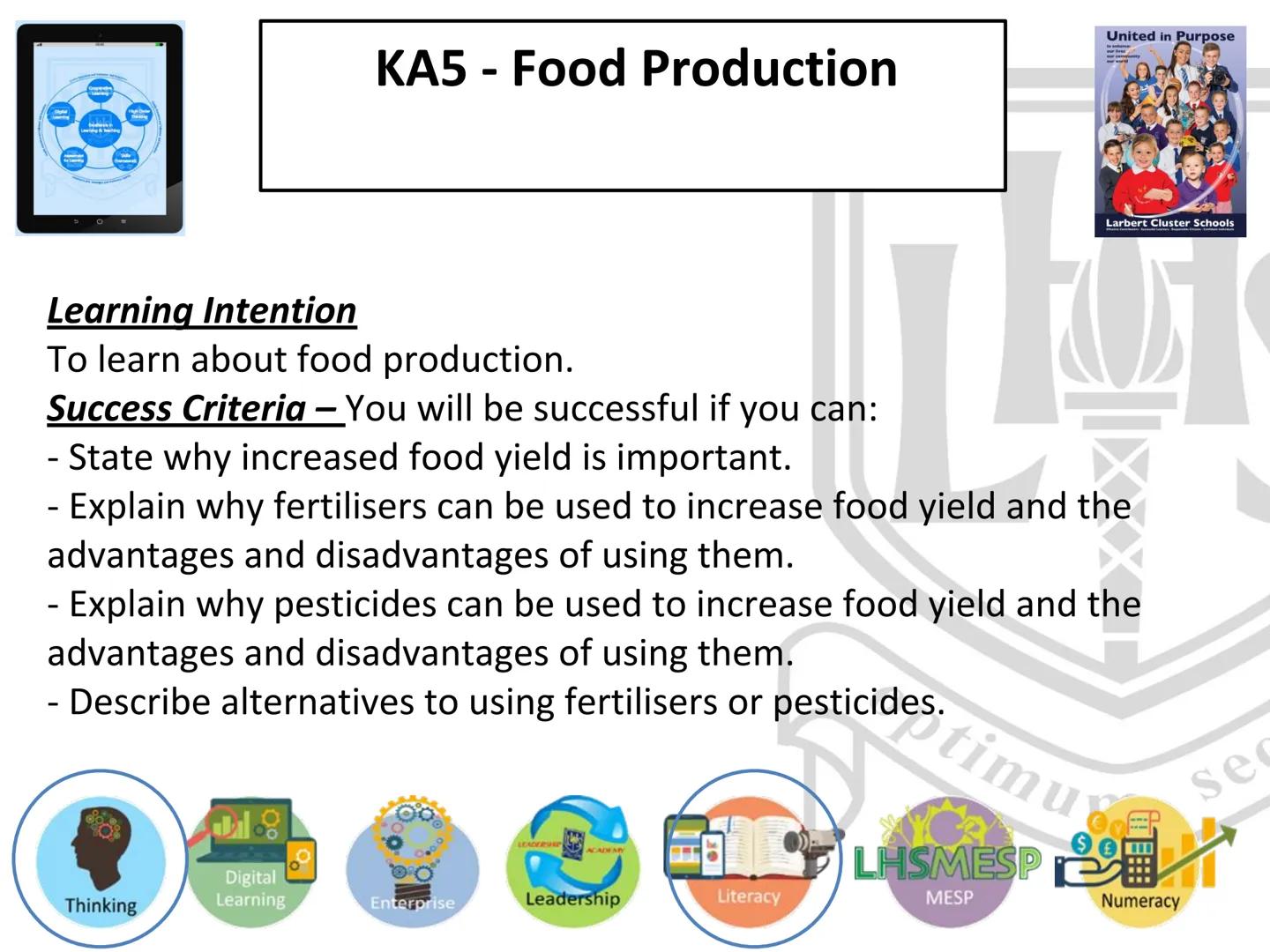
7
of 10
8
of 10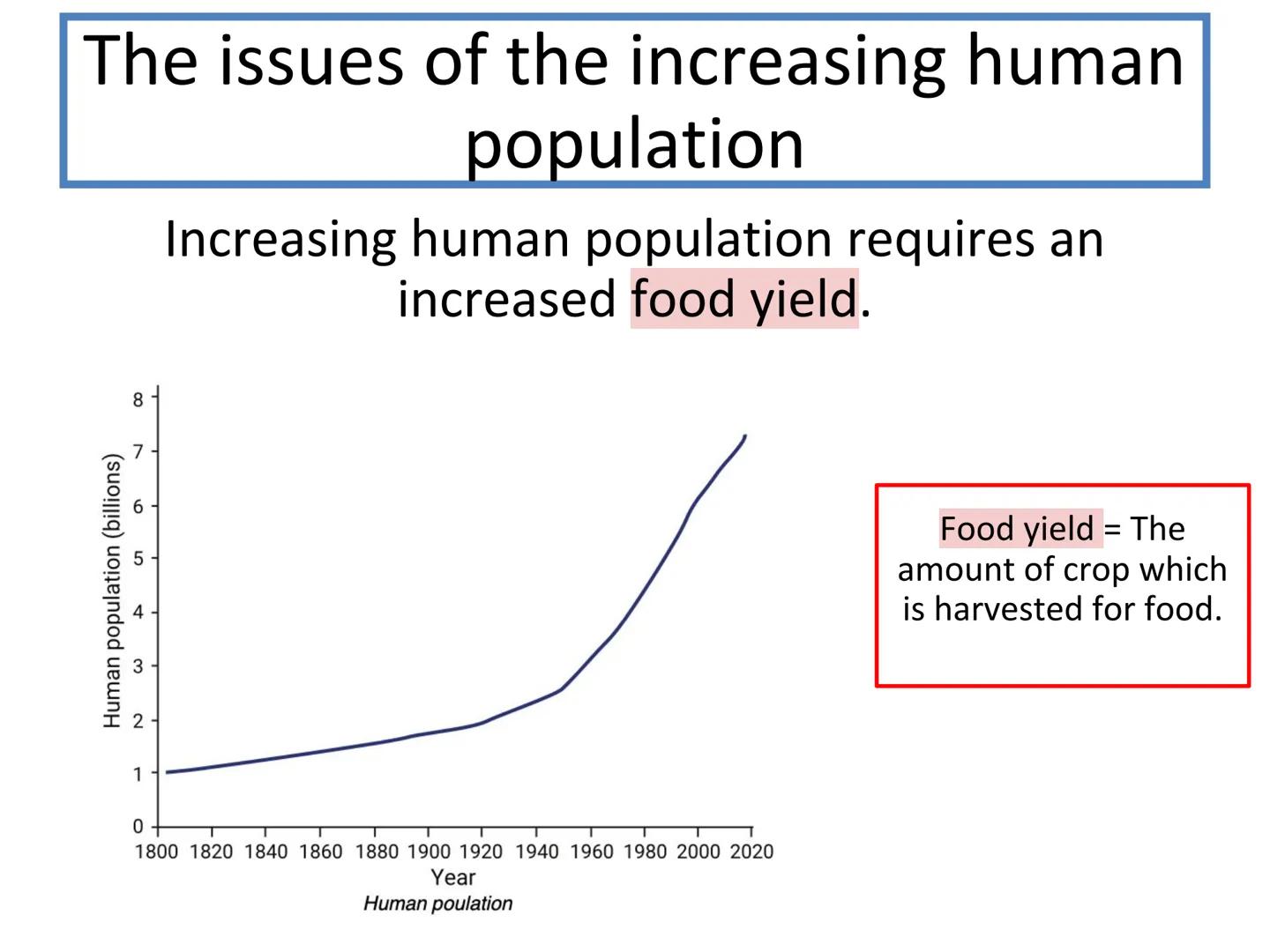
9
of 10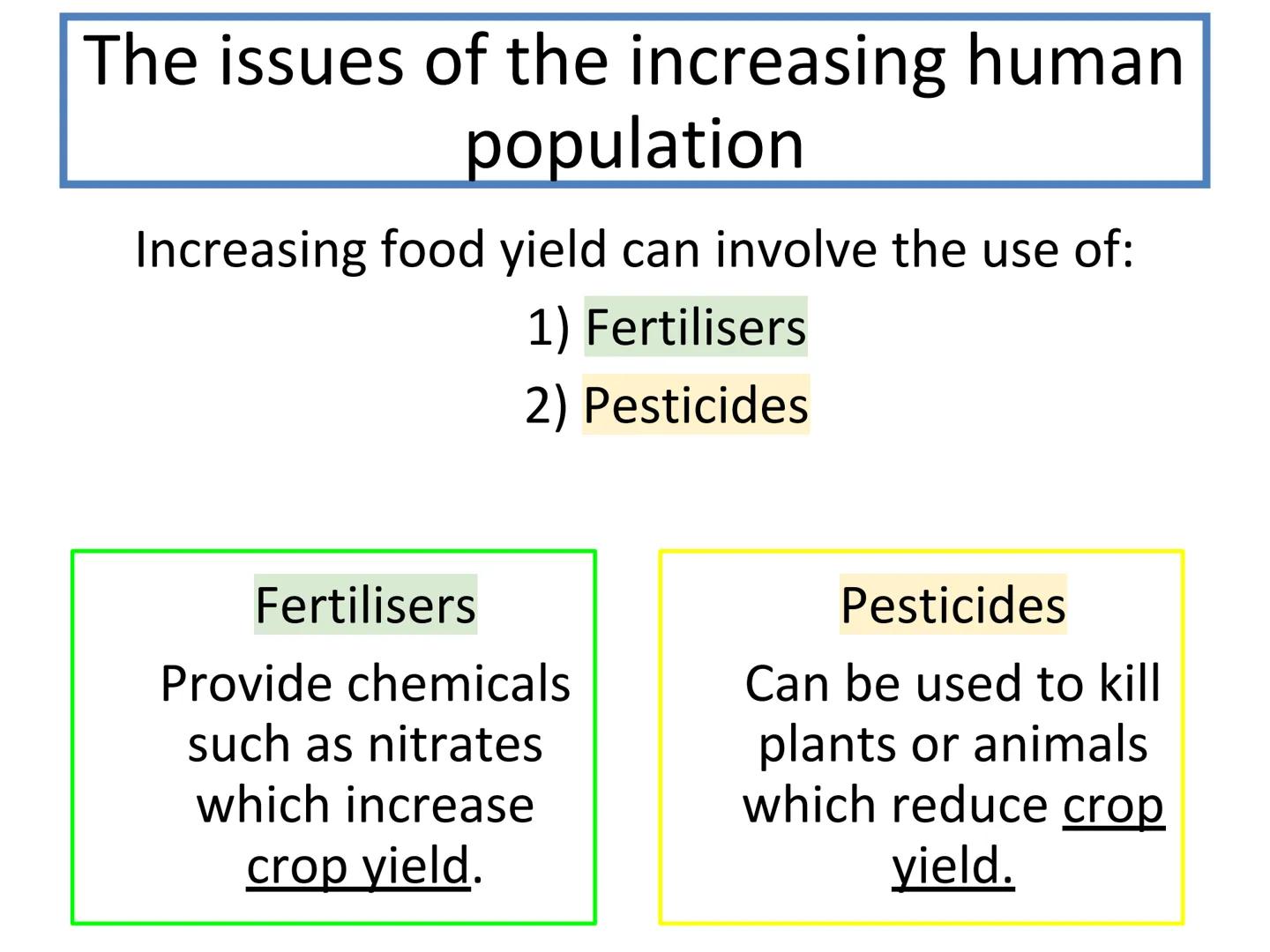
10
of 10
We thought you’d never ask...
What is the Knowunity AI companion?
Our AI Companion is a student-focused AI tool that offers more than just answers. Built on millions of Knowunity resources, it provides relevant information, personalised study plans, quizzes, and content directly in the chat, adapting to your individual learning journey.
Where can I download the Knowunity app?
You can download the app from Google Play Store and Apple App Store.
Is Knowunity really free of charge?
That's right! Enjoy free access to study content, connect with fellow students, and get instant help – all at your fingertips.
Similar content
 Introducción a las ciencias sociales
Most popular content in Biology
9C
BiologyCell Biology and Cell structure
cell structures
93,2520
1
Biology1.cells Gcse biology question cards
combined science higher biology
92,3534
BiologyAQA Biology: Key Concepts
Explore essential AQA Biology topics including Photosynthesis, Respiration, Homeostasis, Genetics, and Ecology. This comprehensive knowledge organizer covers key concepts such as energy transfer, hormonal control, and genetic variation, providing a solid foundation for your studies. Ideal for exam preparation and understanding biological processes.
108,794306
T
BiologyThe functions of subcellular structures - B1 Biology
Flashcards on the different functions of subcellular structures: cell membrane, nucleus, mitochondria, ribosomes, cytoplasm, permant vacuole, chloroplasts and cell wall.
102,8055
BiologyA-Level Biology Year 1 Overview
Comprehensive summary of AQA A-Level Biology Year 1, covering key topics such as cellular structure, protein synthesis, immune response, gas exchange, and more. Ideal for exam preparation and understanding biological concepts. Includes detailed insights into cellular processes, biological classification, and the circulatory system.
1214,894694
T
BiologyTypes of cells
biology
101,2090
B
BiologyBiology Paper 1 quiz
this is a simple quiz on key knowledge needed for paper 1
102,7765
BiologyBiology paper 1 Summary
Notes for Biology paper 1 contains the full course for AQA higher combined!
104,132106
C
BiologyCells part 1 function of cells.
About cells and function of cells etc.
119861
Most popular content
9 Sociology
Sociology of Education Overview
Explore comprehensive A-Level Sociology notes on the education system, covering key theories, policies, and sociological perspectives. This resource includes insights on marketisation, gender roles, cultural deprivation, and educational inequalities, providing a thorough understanding of how education shapes social stratification and individual achievement. Ideal for exam preparation and in-depth study.
12102,8803,041
SociologySociology of Families: Comprehensive Revision
Dive into an extensive overview of family dynamics, perspectives, and patterns in sociology. This resource covers key concepts such as family diversity, gender roles, marriage, and the impact of social policies on family structures. Perfect for A-Level Sociology students preparing for Paper 2.
1273,6782,307
CriminologyCriminology: Crime & Punishment Overview
Comprehensive mindmaps covering key concepts in the Crime and Punishment topic for WJEC Criminology Unit 4. This resource includes detailed insights into the Criminal Justice System, crime prevention strategies, sentencing models, and the roles of various agencies. Ideal for A-Level revision, ensuring you grasp essential theories and legislative processes to excel in your exams.
1254,8731,059
SociologyComprehensive Crime & Deviance Overview
Explore an extensive revision of crime and deviance topics, including theories, types of crime, and the impact of media. This resource covers key concepts such as Marxism, functionalism, gender and crime, and the influence of globalization on criminal behavior. Ideal for students seeking a thorough understanding of criminology and its various theories. Type: Full Topic Revision.
1251,6571,399
C
BiologyCell Biology and Cell structure
cell structures
93,2520
 English Literature
An Inspector Calls: Character Insights
Explore in-depth analysis and key quotes for characters in J.B. Priestley's 'An Inspector Calls'. This resource covers Gerald Croft, Inspector Goole, Sheila Birling, Mrs. Birling, Eric Birling, and Eva Smith, focusing on themes of class, gender roles, and social responsibility. Ideal for students aiming for Grade 8 and above.
1025,434907
CriminologyWJEC Unit 4 Criminology
Criminology unit 4 detailed revision note
127,155125
CriminologyCriminology Theories Overview
Explore key criminology theories and their implications on crime and deviance. This comprehensive summary covers biological, psychological, and sociological perspectives, including labelling theory, right realism, and the impact of social campaigns on policy development. Ideal for A-Level criminology students seeking to understand the complexities of criminal behaviour and the factors influencing crime prevention strategies.
129,761210
English LiteratureRomeo and Juliet: Key themes
Key Romeo and Juliet themes and analysed quotes
106,711198
Can't find what you're looking for? Explore other subjects.
Students love us — and so will you.
4.6/5App Store
4.7/5Google Play
The app is very easy to use and well designed. I have found everything I was looking for so far and have been able to learn a lot from the presentations! I will definitely use the app for a class assignment! And of course it also helps a lot as an inspiration.
Stefan SiOS user
This app is really great. There are so many study notes and help [...]. My problem subject is French, for example, and the app has so many options for help. Thanks to this app, I have improved my French. I would recommend it to anyone.
Samantha KlichAndroid user
Wow, I am really amazed. I just tried the app because I've seen it advertised many times and was absolutely stunned. This app is THE HELP you want for school and above all, it offers so many things, such as workouts and fact sheets, which have been VERY helpful to me personally.
AnnaiOS user
Biology330 views·Updated 24 Jun 2026·32 pagesUnderstanding Food Production in Biology
Molly Hutton@mollyhutton
With the world's population exploding past 8 billion people, feeding everyone has become one of our biggest challenges. This topic explores how farmers are ramping up food production using fertilisers and pesticides, but also reveals the serious environmental costs that...
1
of 10
Sign up to see the content. It's free!
- Access to all documents
- Improve your grades
- Join milions of students
By signing up you accept Terms of Service and Privacy Policy
N5 Biology: Food Production Overview
You're diving into one of the most relevant topics in modern biology - how we're going to feed our growing planet! Food production sits within the "Life on Earth" unit of your N5 Biology course, alongside other key areas like ecosystems, photosynthesis, and evolution.
This knowledge area focuses on the science behind modern farming methods. You'll discover why farmers rely on chemicals to boost their harvests and what happens when these chemicals escape into the environment.
Quick Tip: This topic connects directly to current environmental issues you hear about in the news, making it perfect for exam questions about real-world applications!
2
of 10Sign up to see the content. It's free!
- Access to all documents
- Improve your grades
- Join milions of students
By signing up you accept Terms of Service and Privacy Policy
The Population Problem
The numbers don't lie - human population has skyrocketed from under 2 billion in 1900 to over 8 billion today. Every single one of these people needs food, which means farmers must produce way more crops than ever before.
Food yield is simply the amount of crop harvested for food from a given area. Think of it as getting the maximum bang for your buck from every field. As the population curve shoots upward, so must our food production.
This pressure has pushed farmers towards two main solutions: fertilisers (which feed plants the nutrients they crave) and pesticides (which eliminate anything trying to destroy crops). Both work brilliantly - but they come with serious strings attached.
Remember: The key relationship here is simple - more people = need for more food = increased use of agricultural chemicals.
3
of 10Sign up to see the content. It's free!
- Access to all documents
- Improve your grades
- Join milions of students
By signing up you accept Terms of Service and Privacy Policy
How Fertilisers Work
Here's the science bit that's actually quite clever: plants absorb nitrates from soil water through their roots, then convert these into amino acids, which build up into proteins. It's like giving plants their essential vitamins!
When farmers add fertilisers containing nitrates to soil, they're basically creating a nutrient-rich buffet for their crops. More nitrates mean more proteins, which translates directly into bigger, healthier plants and higher yields.
Animals get their amino acids by munching on plants (or other animals), so this nitrogen boost ripples up through the entire food chain. Without enough nitrates in soil, crops struggle to grow properly - a bit like trying to build muscle without eating enough protein.
Exam Tip: You don't need to memorise the full nitrogen cycle, but understanding this nitrate → amino acid → protein pathway is essential for your exams.
4
of 10Sign up to see the content. It's free!
- Access to all documents
- Improve your grades
- Join milions of students
By signing up you accept Terms of Service and Privacy Policy
The Dark Side of Fertilisers
Unfortunately, fertilisers don't stay put where farmers want them. They leach into rivers and lakes, creating an environmental disaster called eutrophication that you absolutely need to understand for exams.
Here's the deadly sequence: excess nitrates cause algal blooms (massive algae growth) → these block sunlight → aquatic plants die → bacteria feast on all the dead material → bacteria use up loads of oxygen → fish and other organisms suffocate.
It's like overcrowding a party - initially exciting, but ultimately everything goes wrong. The water becomes a lifeless, stinking mess that can take years to recover.
Genetically modified (GM) crops offer one solution by reducing fertiliser dependence, though this remains controversial.
Key Point: Learn this eutrophication sequence step-by-step - it's a classic exam question that trips up loads of students!
5
of 10Sign up to see the content. It's free!
- Access to all documents
- Improve your grades
- Join milions of students
By signing up you accept Terms of Service and Privacy Policy
Pesticide Problems and Alternatives
Pesticides seem brilliant at first - they eliminate crop-damaging pests and boost yields dramatically. However, they don't just disappear after doing their job. Instead, they stick around in the environment, building up in organisms through bioaccumulation.
As these toxins pass along food chains, they become more concentrated at each level. A tiny amount on plants becomes deadly by the time it reaches top predators - imagine a snowball rolling downhill, getting bigger and more dangerous.
Fortunately, farmers have alternatives: biological control (using natural predators instead of chemicals) and GM crops (engineered to resist pests naturally). These methods work with nature rather than against it.
Real-World Connection: This bioaccumulation process famously nearly wiped out birds of prey like eagles - their eggshells became so thin they couldn't reproduce successfully.
6
of 10Sign up to see the content. It's free!
- Access to all documents
- Improve your grades
- Join milions of students
By signing up you accept Terms of Service and Privacy Policy
7
of 10Sign up to see the content. It's free!
- Access to all documents
- Improve your grades
- Join milions of students
By signing up you accept Terms of Service and Privacy Policy
8
of 10Sign up to see the content. It's free!
- Access to all documents
- Improve your grades
- Join milions of students
By signing up you accept Terms of Service and Privacy Policy
9
of 10Sign up to see the content. It's free!
- Access to all documents
- Improve your grades
- Join milions of students
By signing up you accept Terms of Service and Privacy Policy
10
of 10Sign up to see the content. It's free!
- Access to all documents
- Improve your grades
- Join milions of students
By signing up you accept Terms of Service and Privacy Policy
We thought you’d never ask...
What is the Knowunity AI companion?
Our AI Companion is a student-focused AI tool that offers more than just answers. Built on millions of Knowunity resources, it provides relevant information, personalised study plans, quizzes, and content directly in the chat, adapting to your individual learning journey.
Where can I download the Knowunity app?
You can download the app from Google Play Store and Apple App Store.
Is Knowunity really free of charge?
That's right! Enjoy free access to study content, connect with fellow students, and get instant help – all at your fingertips.
Similar content
Most popular content in Biology
9C
BiologyCell Biology and Cell structure
cell structures
93,2520
1
Biology1.cells Gcse biology question cards
combined science higher biology
92,3534
BiologyAQA Biology: Key Concepts
Explore essential AQA Biology topics including Photosynthesis, Respiration, Homeostasis, Genetics, and Ecology. This comprehensive knowledge organizer covers key concepts such as energy transfer, hormonal control, and genetic variation, providing a solid foundation for your studies. Ideal for exam preparation and understanding biological processes.
108,794306
T
BiologyThe functions of subcellular structures - B1 Biology
Flashcards on the different functions of subcellular structures: cell membrane, nucleus, mitochondria, ribosomes, cytoplasm, permant vacuole, chloroplasts and cell wall.
102,8055
BiologyA-Level Biology Year 1 Overview
Comprehensive summary of AQA A-Level Biology Year 1, covering key topics such as cellular structure, protein synthesis, immune response, gas exchange, and more. Ideal for exam preparation and understanding biological concepts. Includes detailed insights into cellular processes, biological classification, and the circulatory system.
1214,894694
T
BiologyTypes of cells
biology
101,2090
B
BiologyBiology Paper 1 quiz
this is a simple quiz on key knowledge needed for paper 1
102,7765
BiologyBiology paper 1 Summary
Notes for Biology paper 1 contains the full course for AQA higher combined!
104,132106
C
BiologyCells part 1 function of cells.
About cells and function of cells etc.
119861
Most popular content
9SociologySociology of Education Overview
Explore comprehensive A-Level Sociology notes on the education system, covering key theories, policies, and sociological perspectives. This resource includes insights on marketisation, gender roles, cultural deprivation, and educational inequalities, providing a thorough understanding of how education shapes social stratification and individual achievement. Ideal for exam preparation and in-depth study.
12102,8803,041
SociologySociology of Families: Comprehensive Revision
Dive into an extensive overview of family dynamics, perspectives, and patterns in sociology. This resource covers key concepts such as family diversity, gender roles, marriage, and the impact of social policies on family structures. Perfect for A-Level Sociology students preparing for Paper 2.
1273,6782,307
CriminologyCriminology: Crime & Punishment Overview
Comprehensive mindmaps covering key concepts in the Crime and Punishment topic for WJEC Criminology Unit 4. This resource includes detailed insights into the Criminal Justice System, crime prevention strategies, sentencing models, and the roles of various agencies. Ideal for A-Level revision, ensuring you grasp essential theories and legislative processes to excel in your exams.
1254,8731,059
SociologyComprehensive Crime & Deviance Overview
Explore an extensive revision of crime and deviance topics, including theories, types of crime, and the impact of media. This resource covers key concepts such as Marxism, functionalism, gender and crime, and the influence of globalization on criminal behavior. Ideal for students seeking a thorough understanding of criminology and its various theories. Type: Full Topic Revision.
1251,6571,399
C
BiologyCell Biology and Cell structure
cell structures
93,2520
English LiteratureAn Inspector Calls: Character Insights
Explore in-depth analysis and key quotes for characters in J.B. Priestley's 'An Inspector Calls'. This resource covers Gerald Croft, Inspector Goole, Sheila Birling, Mrs. Birling, Eric Birling, and Eva Smith, focusing on themes of class, gender roles, and social responsibility. Ideal for students aiming for Grade 8 and above.
1025,434907
CriminologyWJEC Unit 4 Criminology
Criminology unit 4 detailed revision note
127,155125
CriminologyCriminology Theories Overview
Explore key criminology theories and their implications on crime and deviance. This comprehensive summary covers biological, psychological, and sociological perspectives, including labelling theory, right realism, and the impact of social campaigns on policy development. Ideal for A-Level criminology students seeking to understand the complexities of criminal behaviour and the factors influencing crime prevention strategies.
129,761210
English LiteratureRomeo and Juliet: Key themes
Key Romeo and Juliet themes and analysed quotes
106,711198
Can't find what you're looking for? Explore other subjects.
Students love us — and so will you.
4.6/5App Store
4.7/5Google Play
The app is very easy to use and well designed. I have found everything I was looking for so far and have been able to learn a lot from the presentations! I will definitely use the app for a class assignment! And of course it also helps a lot as an inspiration.
Stefan SiOS user
This app is really great. There are so many study notes and help [...]. My problem subject is French, for example, and the app has so many options for help. Thanks to this app, I have improved my French. I would recommend it to anyone.
Samantha KlichAndroid user
Wow, I am really amazed. I just tried the app because I've seen it advertised many times and was absolutely stunned. This app is THE HELP you want for school and above all, it offers so many things, such as workouts and fact sheets, which have been VERY helpful to me personally.
AnnaiOS user