
Biology is all about understanding life at various levels -... Show more
 Biology
 Sociology
 English Literature
Sign up to see the contentIt's free!
Access to all documents
Improve your grades
Join milions of students
Knowunity AI
Subjects
Triangle Congruence and Similarity Theorems
Triangle Properties and Classification
Linear Equations and Graphs
Geometric Angle Relationships
Trigonometric Functions and Identities
Equation Solving Techniques
Circle Geometry Fundamentals
Division Operations and Methods
Basic Differentiation Rules
Exponent and Logarithm Properties
Show all topics
Human Organ Systems
Reproductive Cell Cycles
Biological Sciences Subdisciplines
Cellular Energy Metabolism
Autotrophic Energy Processes
Inheritance Patterns and Principles
Biomolecular Structure and Organization
Cell Cycle and Division Mechanics
Cellular Organization and Development
Biological Structural Organization
Show all topics
Chemical Sciences and Applications
Atomic Structure and Composition
Molecular Electron Structure Representation
Atomic Electron Behavior
Matter Properties and Water
Mole Concept and Calculations
Gas Laws and Behavior
Periodic Table Organization
Chemical Thermodynamics Fundamentals
Chemical Bond Types and Properties
Show all topics
European Renaissance and Enlightenment
European Cultural Movements 800-1920
American Revolution Era 1763-1797
American Civil War 1861-1865
Global Imperial Systems
Mongol and Chinese Dynasties
U.S. Presidents and World Leaders
Historical Sources and Documentation
World Wars Era and Impact
World Religious Systems
Show all topics
Classic and Contemporary Novels
Literary Character Analysis
Rhetorical Theory and Practice
Classic Literary Narratives
Reading Analysis and Interpretation
Narrative Structure and Techniques
English Language Components
Influential English-Language Authors
Basic Sentence Structure
Narrative Voice and Perspective
Show all topics
524
•
Updated Apr 3, 2026
•

🎸🦕🕸️𝔱𝔥𝔢𝔬🕸️🦕🎸
@gh0styb0i
Biology is all about understanding life at various levels -... Show more


Ever wondered what makes up the tiny building blocks of your body? Let's explore cells - the microscopic units of life!
Animal cells are roughly round structures containing several key components. The nucleus acts as the control center, housing DNA and directing all cellular activities. Surrounding this is the cytoplasm, a jelly-like substance where chemical reactions occur. The cell membrane forms the outer boundary and controls what enters and exits the cell.
Animal cells also contain mitochondria (tiny structures for energy production through respiration), small temporary vacuoles , and ribosomes (which help make proteins).
Plant cells share many features with animal cells but have some important differences. They have a rigid cell wall made of cellulose that provides support and structure. Plant cells also contain chloroplasts which capture light energy for photosynthesis, and typically have a large, permanent vacuole that helps maintain rigidity.
Quick Fact: Plant cells can be recognized by their rectangular shape, cell walls, chloroplasts, and large vacuoles - all features that animal cells don't have!

Your body contains trillions of cells, but they're not all the same! Many cells have adapted for specific functions.
Sperm cells have a streamlined design perfect for their job - fertilising an egg. They feature an acrosome (helps break through the egg cell membrane), a haploid nucleus (containing half the genetic material needed), mitochondria (provides energy for swimming), and a tail for movement. Egg cells, meanwhile, have their own haploid nucleus and a special membrane that allows one sperm to enter before sealing.
When sperm and egg unite, fertilisation occurs - creating a zygote with a complete set of chromosomes (diploid). This single cell will eventually develop into a complete organism!
To study cells, scientists use microscopes. Light microscopes are relatively inexpensive and easy to use but have limited magnification (about 1,500×) and resolution (ability to distinguish between close objects). Electron microscopes offer much higher magnification (up to 500,000×) and resolution by using electron beams instead of light, but they're expensive and require special preparation techniques.
Remember: Magnification tells you how many times larger the image is than the actual object. You can calculate it using the formula: Magnification = Image size ÷ Actual size.

Cells are constantly moving materials in and out - but how do they do it? Let's find out!
Diffusion is the movement of particles from areas of high concentration to areas of low concentration. It's how oxygen moves from your lungs into your bloodstream and how carbon dioxide moves out. No energy is required - it just happens naturally!
Osmosis is a special type of diffusion involving water molecules moving across a partially permeable membrane. Water always moves from regions of high water concentration to regions of lower water concentration. This is crucial for plants to absorb water through their roots.
Sometimes cells need to move substances against concentration gradients (from low to high concentration). This requires energy and is called active transport. Plant root hair cells use active transport to absorb mineral ions from the soil.
Enzymes are special proteins that act as biological catalysts, speeding up reactions in your body without being used up themselves. They work using a lock and key mechanism - each enzyme has a specific shape that only fits certain substrate molecules. Digestive enzymes like amylase (breaks down starch), protease (breaks down proteins), and lipase (breaks down fats) are vital for turning your food into usable nutrients.
Cool Fact: Without enzymes, most biochemical reactions would happen too slowly to support life!

What does it mean to be truly healthy? It's more than just not being sick!
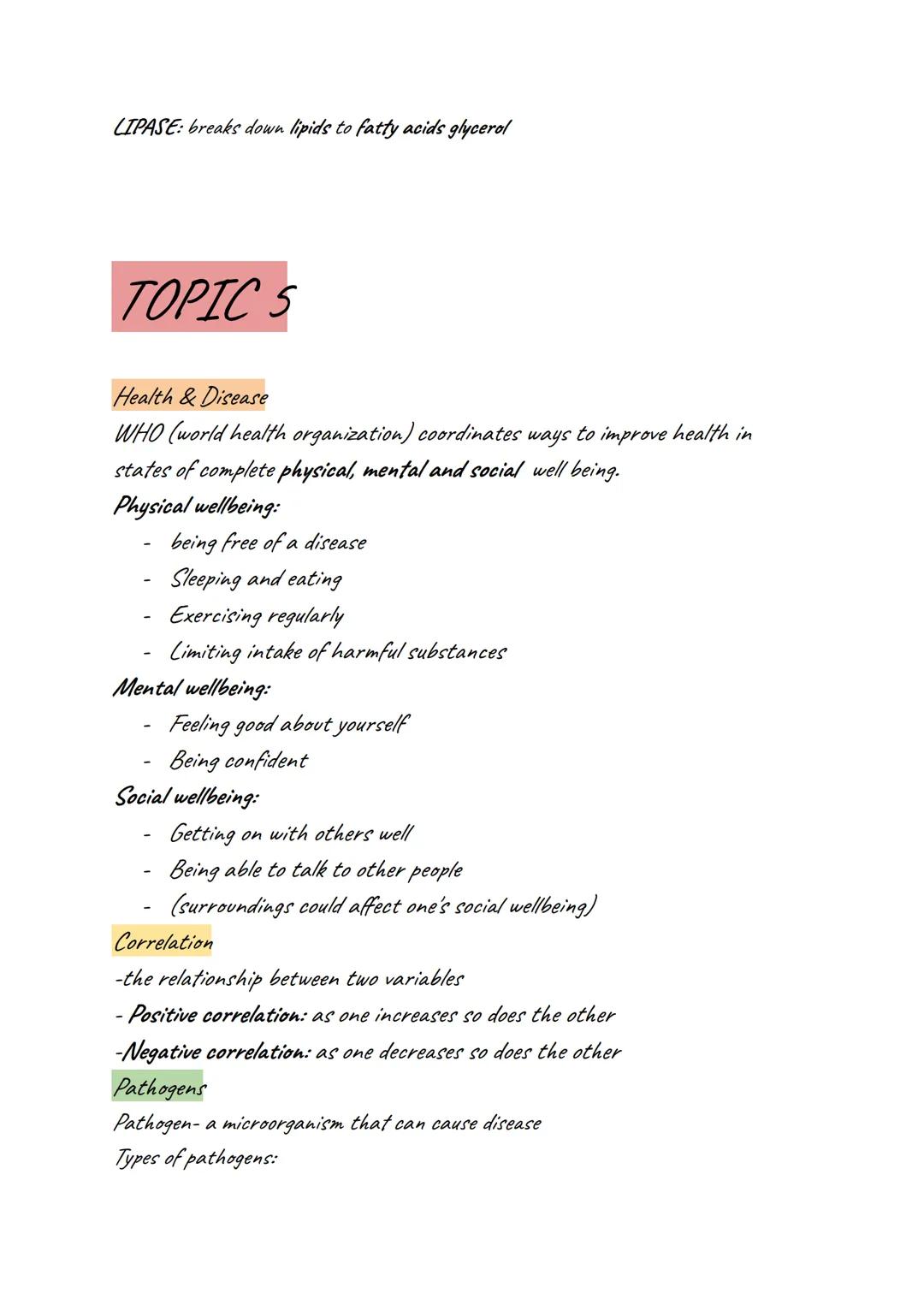
According to the World Health Organization, health is "a state of complete physical, mental and social well-being." Physical wellbeing involves being free from disease, getting enough sleep, eating properly, and exercising regularly. Mental wellbeing includes feeling good about yourself and having confidence. Social wellbeing relates to your relationships with others and your ability to interact positively.
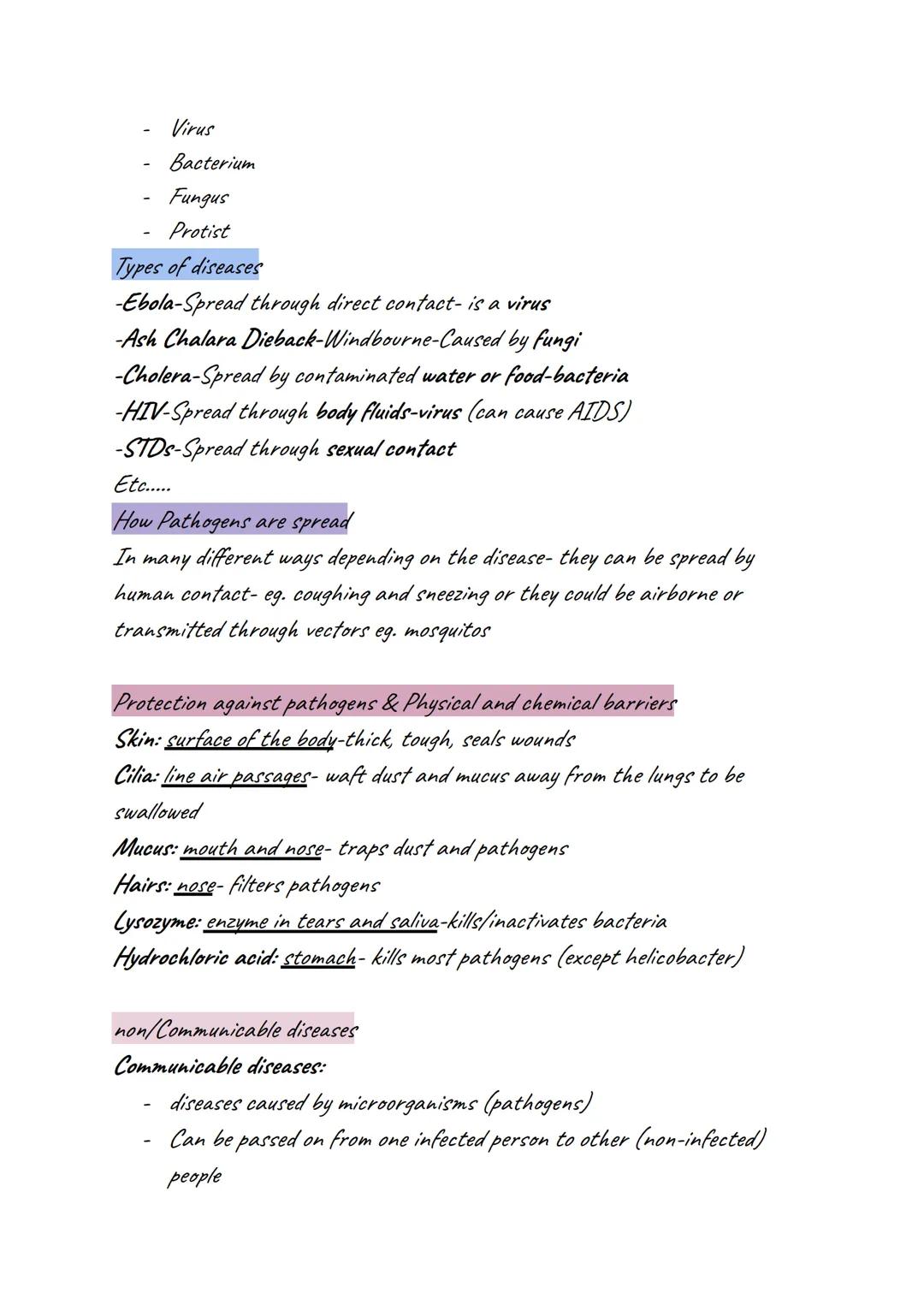
Diseases can be classified as either communicable or non-communicable. Communicable diseases are caused by pathogens and can spread from person to person. There are four main types of pathogens: viruses (like HIV and Ebola), bacteria (like those causing cholera), fungi (like Ash Chalara Dieback in plants), and protists.
Your body has impressive defences against pathogens. Physical barriers include your skin (which forms a tough outer layer), cilia (tiny hairs that trap particles in your airways), mucus (which traps pathogens), and stomach acid (which kills most pathogens). Chemical defences include lysozyme, an enzyme in tears and saliva that kills bacteria.
Did you know? A single sneeze can release up to 40,000 droplets containing pathogens, which can travel at speeds up to 100 miles per hour!

The choices we make every day can have huge impacts on our health - both good and bad!
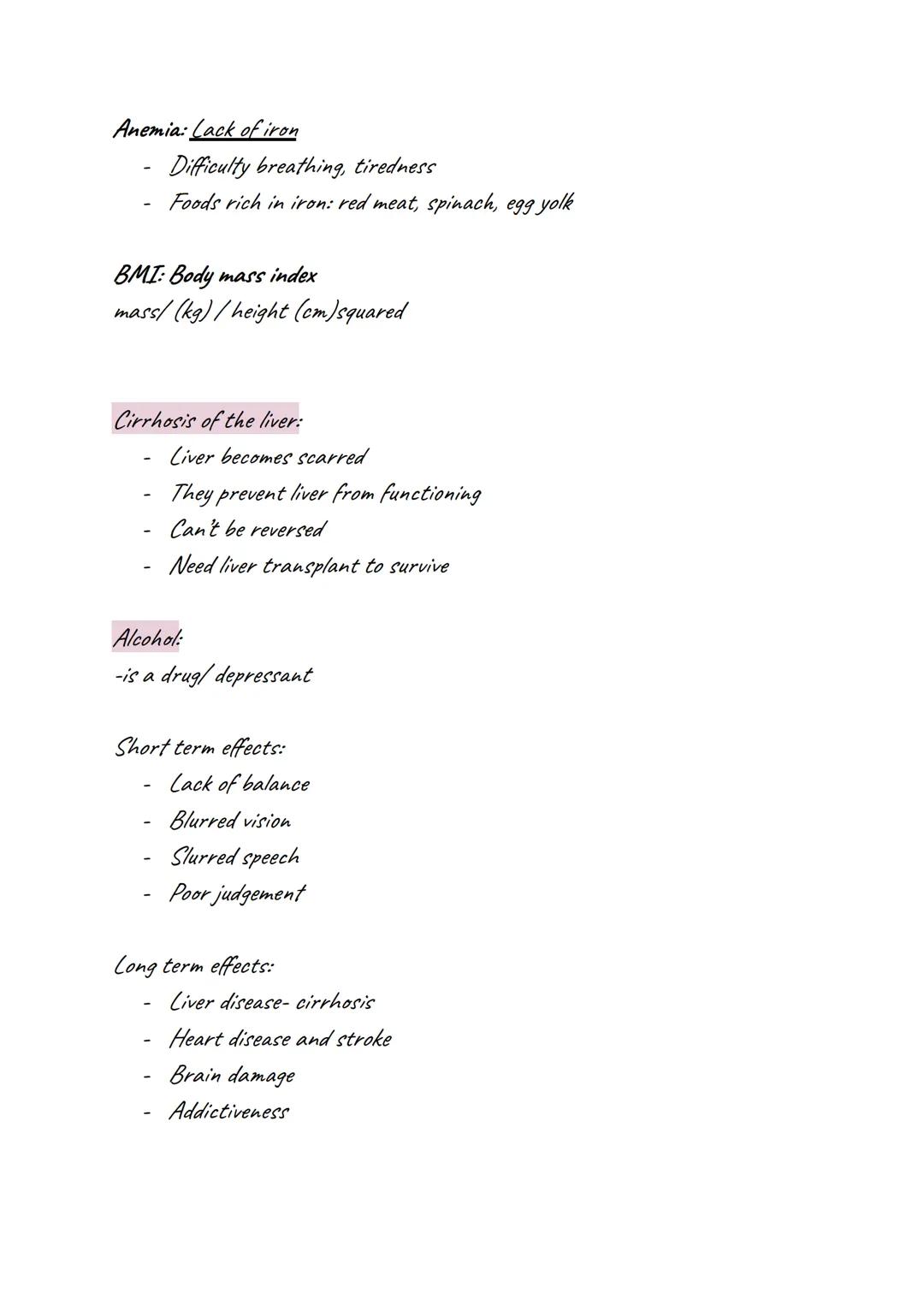
Malnutrition occurs when your diet provides inadequate or excessive nutrients. Consuming too many calories from fats and sugars can lead to obesity, while not getting enough of specific nutrients causes deficiency diseases. For example, lack of protein can cause kwashiorkor (swollen belly, small muscles), insufficient vitamin C leads to scurvy (bleeding gums, lost teeth), and inadequate iron causes anaemia (tiredness, difficulty breathing).
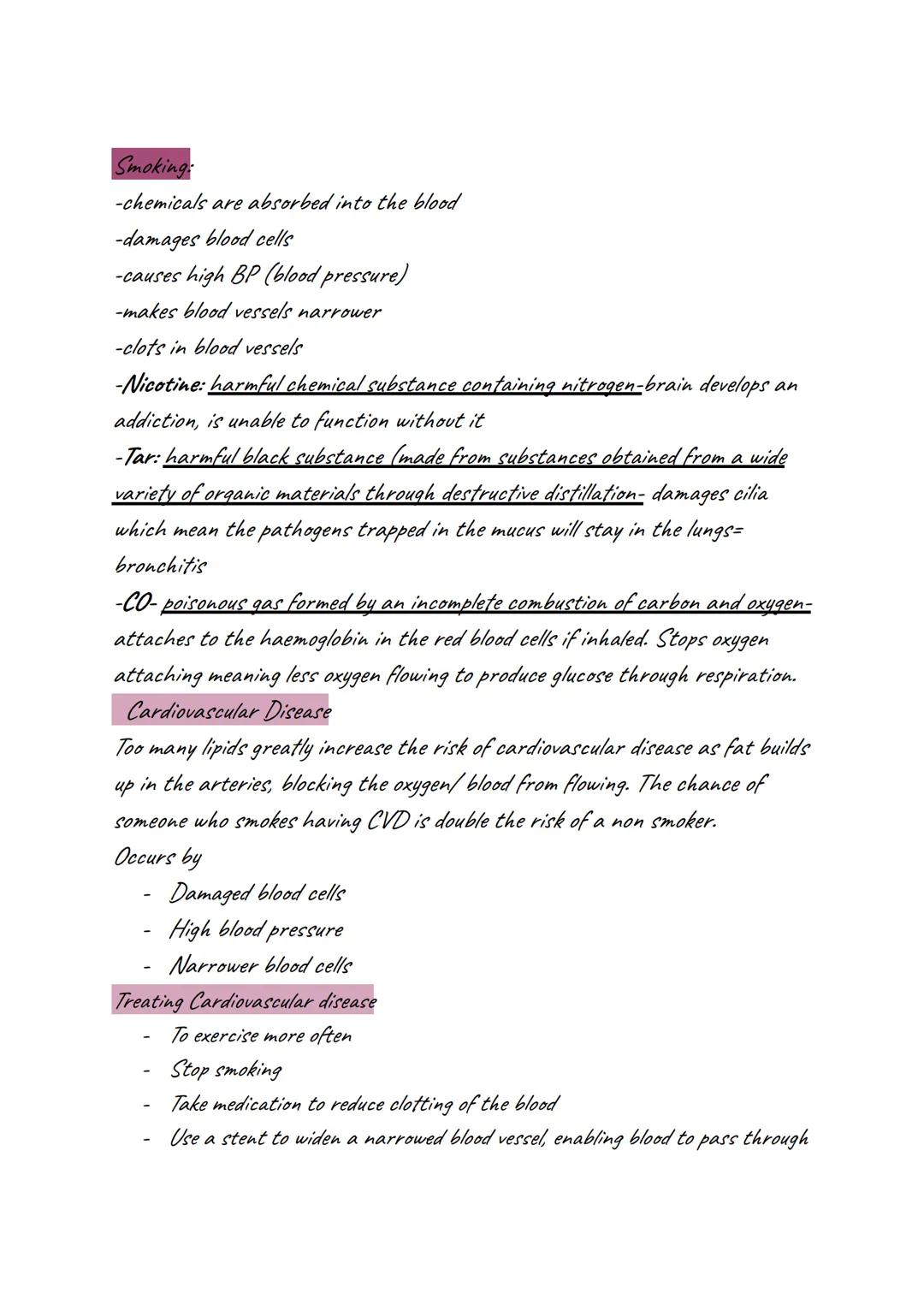
Lifestyle choices like consuming alcohol and smoking tobacco can seriously damage health. Alcohol is a depressant drug with short-term effects (poor balance, impaired judgment) and long-term consequences including cirrhosis (liver scarring) and brain damage. Smoking introduces harmful substances like nicotine (addictive), tar (damages lung cilia), and carbon monoxide (reduces oxygen transport in blood).
These habits significantly increase the risk of cardiovascular disease (CVD) - problems affecting the heart and blood vessels. Too much fat in the diet can lead to fatty deposits in arteries, while smoking doubles the risk of CVD. Treatments include lifestyle changes (more exercise, stopping smoking), medications to reduce blood clotting, stents (to widen narrowed blood vessels), or bypass surgery.
Important: Your BMI (Body Mass Index) is calculated using your weight and height and can indicate if you're underweight, healthy weight, overweight, or obese.
The colour of your eyes, the shape of your nose - these features were passed down to you from your parents through inheritance!
Your body cells contain chromosomes in their nuclei - thread-like structures made of DNA that carry genetic information. Each human body cell has 46 chromosomes arranged in 23 pairs - one chromosome in each pair from your mother and one from your father.
Along each chromosome are sections called genes, which control the development of specific characteristics. For each gene, you might have identical versions (homozygous) or different versions (heterozygous) from each parent. These different versions of genes are called alleles.
Some alleles are dominant (usually shown with capital letters like 'B'), meaning they always show up if present. Others are recessive (shown with lowercase letters like 'b') and only appear if you have two copies. For example, if brown eyes (B) are dominant over blue eyes (b), someone with the genotype Bb would have brown eyes.
Your biological sex is determined by special sex chromosomes - females have two X chromosomes (XX), while males have one X and one Y chromosome (XY). The Y chromosome, which comes from the father, contains genes that trigger male development.
Fascinating Fact: You share about 99.9% of your DNA with every other human on Earth. The 0.1% difference accounts for all the variation we see in humanity!
Look around your classroom - everyone looks different! This diversity is called variation, and it comes from two main sources.
Genetic variation results from the genes we inherit from our parents. Eye colour, blood type, and natural hair colour are examples of genetically determined traits. Environmental variation comes from our surroundings and experiences - like language spoken or scars from injuries. Many characteristics, such as height and skin colour, are influenced by both genetics and environment.
Variation can be continuous (showing a range of values, like height) or discontinuous (having distinct categories, like blood type). This variation arises through sexual reproduction, which involves the fusion of specialized sex cells (gametes) - sperm from males and eggs from females. These gametes are haploid, meaning they have just one set of chromosomes. When they join during fertilization, they form a diploid zygote with a full set of chromosomes.
Sometimes, genes contain mutations that can cause genetic disorders. Cystic fibrosis is an example of a disorder caused by a recessive allele - you need to inherit two copies of the faulty allele to develop the condition. People with just one copy are called carriers; they don't have the disorder but can pass the allele to their children.
Think about this: The endless combinations of genes possible during sexual reproduction mean that (except for identical twins) no two humans who have ever lived or will ever live are genetically identical!

Scientists use special diagrams to track how genes are inherited - like predicting what your children might look like!
Genetic diagrams (sometimes called Punnett squares) help predict the possible genetic combinations in offspring. For example, if we cross a tall pea plant (TT) with a dwarf pea plant (tt), all the offspring would have the genotype Tt and the phenotype (physical appearance) of tall plants, because T (tallness) is dominant over t (dwarfism).
One of the most significant scientific achievements of recent times is the Human Genome Project. Completed in 2003, this international effort mapped all 3.3 billion base pairs in human DNA. Scientists from many countries worked together to identify and locate every human gene.
The results of this project have revolutionized medicine. Doctors can now better diagnose genetic disorders, predict disease risks, and determine which treatments will work best for specific patients. Interestingly, over 99% of DNA sequences are identical in all humans - our genetic differences are found in less than 1% of our DNA!
Understanding your genetic makeup could help you make informed decisions about your health in the future. For instance, if you learned you had a higher risk for a particular disease, you might adjust your lifestyle or undergo regular screening to catch problems early.
Amazing Discovery: The Human Genome Project found that humans have approximately 20,000-25,000 genes - far fewer than scientists initially expected!
Our AI Companion is a student-focused AI tool that offers more than just answers. Built on millions of Knowunity resources, it provides relevant information, personalised study plans, quizzes, and content directly in the chat, adapting to your individual learning journey.
You can download the app from Google Play Store and Apple App Store.
That's right! Enjoy free access to study content, connect with fellow students, and get instant help – all at your fingertips.
App Store
Google Play
The app is very easy to use and well designed. I have found everything I was looking for so far and have been able to learn a lot from the presentations! I will definitely use the app for a class assignment! And of course it also helps a lot as an inspiration.
Stefan S
iOS user
This app is really great. There are so many study notes and help [...]. My problem subject is French, for example, and the app has so many options for help. Thanks to this app, I have improved my French. I would recommend it to anyone.
Samantha Klich
Android user
Wow, I am really amazed. I just tried the app because I've seen it advertised many times and was absolutely stunned. This app is THE HELP you want for school and above all, it offers so many things, such as workouts and fact sheets, which have been VERY helpful to me personally.
Anna
iOS user
Best app on earth! no words because it’s too good
Thomas R
iOS user
Just amazing. Let's me revise 10x better, this app is a quick 10/10. I highly recommend it to anyone. I can watch and search for notes. I can save them in the subject folder. I can revise it any time when I come back. If you haven't tried this app, you're really missing out.
Basil
Android user
This app has made me feel so much more confident in my exam prep, not only through boosting my own self confidence through the features that allow you to connect with others and feel less alone, but also through the way the app itself is centred around making you feel better. It is easy to navigate, fun to use, and helpful to anyone struggling in absolutely any way.
David K
iOS user
The app's just great! All I have to do is enter the topic in the search bar and I get the response real fast. I don't have to watch 10 YouTube videos to understand something, so I'm saving my time. Highly recommended!
Sudenaz Ocak
Android user
In school I was really bad at maths but thanks to the app, I am doing better now. I am so grateful that you made the app.
Greenlight Bonnie
Android user
very reliable app to help and grow your ideas of Maths, English and other related topics in your works. please use this app if your struggling in areas, this app is key for that. wish I'd of done a review before. and it's also free so don't worry about that.
Rohan U
Android user
I know a lot of apps use fake accounts to boost their reviews but this app deserves it all. Originally I was getting 4 in my English exams and this time I got a grade 7. I didn’t even know about this app three days until the exam and it has helped A LOT. Please actually trust me and use it as I’m sure you too will see developments.
Xander S
iOS user
THE QUIZES AND FLASHCARDS ARE SO USEFUL AND I LOVE Knowunity AI. IT ALSO IS LITREALLY LIKE CHATGPT BUT SMARTER!! HELPED ME WITH MY MASCARA PROBLEMS TOO!! AS WELL AS MY REAL SUBJECTS ! DUHHH 😍😁😲🤑💗✨🎀😮
Elisha
iOS user
This apps acc the goat. I find revision so boring but this app makes it so easy to organize it all and then you can ask the freeeee ai to test yourself so good and you can easily upload your own stuff. highly recommend as someone taking mocks now
Paul T
iOS user
The app is very easy to use and well designed. I have found everything I was looking for so far and have been able to learn a lot from the presentations! I will definitely use the app for a class assignment! And of course it also helps a lot as an inspiration.
Stefan S
iOS user
This app is really great. There are so many study notes and help [...]. My problem subject is French, for example, and the app has so many options for help. Thanks to this app, I have improved my French. I would recommend it to anyone.
Samantha Klich
Android user
Wow, I am really amazed. I just tried the app because I've seen it advertised many times and was absolutely stunned. This app is THE HELP you want for school and above all, it offers so many things, such as workouts and fact sheets, which have been VERY helpful to me personally.
Anna
iOS user
Best app on earth! no words because it’s too good
Thomas R
iOS user
Just amazing. Let's me revise 10x better, this app is a quick 10/10. I highly recommend it to anyone. I can watch and search for notes. I can save them in the subject folder. I can revise it any time when I come back. If you haven't tried this app, you're really missing out.
Basil
Android user
This app has made me feel so much more confident in my exam prep, not only through boosting my own self confidence through the features that allow you to connect with others and feel less alone, but also through the way the app itself is centred around making you feel better. It is easy to navigate, fun to use, and helpful to anyone struggling in absolutely any way.
David K
iOS user
The app's just great! All I have to do is enter the topic in the search bar and I get the response real fast. I don't have to watch 10 YouTube videos to understand something, so I'm saving my time. Highly recommended!
Sudenaz Ocak
Android user
In school I was really bad at maths but thanks to the app, I am doing better now. I am so grateful that you made the app.
Greenlight Bonnie
Android user
very reliable app to help and grow your ideas of Maths, English and other related topics in your works. please use this app if your struggling in areas, this app is key for that. wish I'd of done a review before. and it's also free so don't worry about that.
Rohan U
Android user
I know a lot of apps use fake accounts to boost their reviews but this app deserves it all. Originally I was getting 4 in my English exams and this time I got a grade 7. I didn’t even know about this app three days until the exam and it has helped A LOT. Please actually trust me and use it as I’m sure you too will see developments.
Xander S
iOS user
THE QUIZES AND FLASHCARDS ARE SO USEFUL AND I LOVE Knowunity AI. IT ALSO IS LITREALLY LIKE CHATGPT BUT SMARTER!! HELPED ME WITH MY MASCARA PROBLEMS TOO!! AS WELL AS MY REAL SUBJECTS ! DUHHH 😍😁😲🤑💗✨🎀😮
Elisha
iOS user
This apps acc the goat. I find revision so boring but this app makes it so easy to organize it all and then you can ask the freeeee ai to test yourself so good and you can easily upload your own stuff. highly recommend as someone taking mocks now
Paul T
iOS user
🎸🦕🕸️𝔱𝔥𝔢𝔬🕸️🦕🎸
@gh0styb0i
Biology is all about understanding life at various levels - from tiny cells to entire ecosystems. In this revision guide, we'll explore the fundamentals of cells, disease, and inheritance that form the building blocks of biological science. These concepts will... Show more
Access to all documents
Improve your grades
Join milions of students
Ever wondered what makes up the tiny building blocks of your body? Let's explore cells - the microscopic units of life!
Animal cells are roughly round structures containing several key components. The nucleus acts as the control center, housing DNA and directing all cellular activities. Surrounding this is the cytoplasm, a jelly-like substance where chemical reactions occur. The cell membrane forms the outer boundary and controls what enters and exits the cell.
Animal cells also contain mitochondria (tiny structures for energy production through respiration), small temporary vacuoles , and ribosomes (which help make proteins).
Plant cells share many features with animal cells but have some important differences. They have a rigid cell wall made of cellulose that provides support and structure. Plant cells also contain chloroplasts which capture light energy for photosynthesis, and typically have a large, permanent vacuole that helps maintain rigidity.
Quick Fact: Plant cells can be recognized by their rectangular shape, cell walls, chloroplasts, and large vacuoles - all features that animal cells don't have!
Access to all documents
Improve your grades
Join milions of students
Your body contains trillions of cells, but they're not all the same! Many cells have adapted for specific functions.
Sperm cells have a streamlined design perfect for their job - fertilising an egg. They feature an acrosome (helps break through the egg cell membrane), a haploid nucleus (containing half the genetic material needed), mitochondria (provides energy for swimming), and a tail for movement. Egg cells, meanwhile, have their own haploid nucleus and a special membrane that allows one sperm to enter before sealing.
When sperm and egg unite, fertilisation occurs - creating a zygote with a complete set of chromosomes (diploid). This single cell will eventually develop into a complete organism!
To study cells, scientists use microscopes. Light microscopes are relatively inexpensive and easy to use but have limited magnification (about 1,500×) and resolution (ability to distinguish between close objects). Electron microscopes offer much higher magnification (up to 500,000×) and resolution by using electron beams instead of light, but they're expensive and require special preparation techniques.
Remember: Magnification tells you how many times larger the image is than the actual object. You can calculate it using the formula: Magnification = Image size ÷ Actual size.
Access to all documents
Improve your grades
Join milions of students
Cells are constantly moving materials in and out - but how do they do it? Let's find out!
Diffusion is the movement of particles from areas of high concentration to areas of low concentration. It's how oxygen moves from your lungs into your bloodstream and how carbon dioxide moves out. No energy is required - it just happens naturally!
Osmosis is a special type of diffusion involving water molecules moving across a partially permeable membrane. Water always moves from regions of high water concentration to regions of lower water concentration. This is crucial for plants to absorb water through their roots.
Sometimes cells need to move substances against concentration gradients (from low to high concentration). This requires energy and is called active transport. Plant root hair cells use active transport to absorb mineral ions from the soil.
Enzymes are special proteins that act as biological catalysts, speeding up reactions in your body without being used up themselves. They work using a lock and key mechanism - each enzyme has a specific shape that only fits certain substrate molecules. Digestive enzymes like amylase (breaks down starch), protease (breaks down proteins), and lipase (breaks down fats) are vital for turning your food into usable nutrients.
Cool Fact: Without enzymes, most biochemical reactions would happen too slowly to support life!
Access to all documents
Improve your grades
Join milions of students
What does it mean to be truly healthy? It's more than just not being sick!
According to the World Health Organization, health is "a state of complete physical, mental and social well-being." Physical wellbeing involves being free from disease, getting enough sleep, eating properly, and exercising regularly. Mental wellbeing includes feeling good about yourself and having confidence. Social wellbeing relates to your relationships with others and your ability to interact positively.
Diseases can be classified as either communicable or non-communicable. Communicable diseases are caused by pathogens and can spread from person to person. There are four main types of pathogens: viruses (like HIV and Ebola), bacteria (like those causing cholera), fungi (like Ash Chalara Dieback in plants), and protists.
Your body has impressive defences against pathogens. Physical barriers include your skin (which forms a tough outer layer), cilia (tiny hairs that trap particles in your airways), mucus (which traps pathogens), and stomach acid (which kills most pathogens). Chemical defences include lysozyme, an enzyme in tears and saliva that kills bacteria.
Did you know? A single sneeze can release up to 40,000 droplets containing pathogens, which can travel at speeds up to 100 miles per hour!
Access to all documents
Improve your grades
Join milions of students
The choices we make every day can have huge impacts on our health - both good and bad!
Malnutrition occurs when your diet provides inadequate or excessive nutrients. Consuming too many calories from fats and sugars can lead to obesity, while not getting enough of specific nutrients causes deficiency diseases. For example, lack of protein can cause kwashiorkor (swollen belly, small muscles), insufficient vitamin C leads to scurvy (bleeding gums, lost teeth), and inadequate iron causes anaemia (tiredness, difficulty breathing).
Lifestyle choices like consuming alcohol and smoking tobacco can seriously damage health. Alcohol is a depressant drug with short-term effects (poor balance, impaired judgment) and long-term consequences including cirrhosis (liver scarring) and brain damage. Smoking introduces harmful substances like nicotine (addictive), tar (damages lung cilia), and carbon monoxide (reduces oxygen transport in blood).
These habits significantly increase the risk of cardiovascular disease (CVD) - problems affecting the heart and blood vessels. Too much fat in the diet can lead to fatty deposits in arteries, while smoking doubles the risk of CVD. Treatments include lifestyle changes (more exercise, stopping smoking), medications to reduce blood clotting, stents (to widen narrowed blood vessels), or bypass surgery.
Important: Your BMI (Body Mass Index) is calculated using your weight and height and can indicate if you're underweight, healthy weight, overweight, or obese.
Access to all documents
Improve your grades
Join milions of students
The colour of your eyes, the shape of your nose - these features were passed down to you from your parents through inheritance!
Your body cells contain chromosomes in their nuclei - thread-like structures made of DNA that carry genetic information. Each human body cell has 46 chromosomes arranged in 23 pairs - one chromosome in each pair from your mother and one from your father.
Along each chromosome are sections called genes, which control the development of specific characteristics. For each gene, you might have identical versions (homozygous) or different versions (heterozygous) from each parent. These different versions of genes are called alleles.
Some alleles are dominant (usually shown with capital letters like 'B'), meaning they always show up if present. Others are recessive (shown with lowercase letters like 'b') and only appear if you have two copies. For example, if brown eyes (B) are dominant over blue eyes (b), someone with the genotype Bb would have brown eyes.
Your biological sex is determined by special sex chromosomes - females have two X chromosomes (XX), while males have one X and one Y chromosome (XY). The Y chromosome, which comes from the father, contains genes that trigger male development.
Fascinating Fact: You share about 99.9% of your DNA with every other human on Earth. The 0.1% difference accounts for all the variation we see in humanity!
Access to all documents
Improve your grades
Join milions of students
Look around your classroom - everyone looks different! This diversity is called variation, and it comes from two main sources.
Genetic variation results from the genes we inherit from our parents. Eye colour, blood type, and natural hair colour are examples of genetically determined traits. Environmental variation comes from our surroundings and experiences - like language spoken or scars from injuries. Many characteristics, such as height and skin colour, are influenced by both genetics and environment.
Variation can be continuous (showing a range of values, like height) or discontinuous (having distinct categories, like blood type). This variation arises through sexual reproduction, which involves the fusion of specialized sex cells (gametes) - sperm from males and eggs from females. These gametes are haploid, meaning they have just one set of chromosomes. When they join during fertilization, they form a diploid zygote with a full set of chromosomes.
Sometimes, genes contain mutations that can cause genetic disorders. Cystic fibrosis is an example of a disorder caused by a recessive allele - you need to inherit two copies of the faulty allele to develop the condition. People with just one copy are called carriers; they don't have the disorder but can pass the allele to their children.
Think about this: The endless combinations of genes possible during sexual reproduction mean that (except for identical twins) no two humans who have ever lived or will ever live are genetically identical!
Access to all documents
Improve your grades
Join milions of students
Scientists use special diagrams to track how genes are inherited - like predicting what your children might look like!
Genetic diagrams (sometimes called Punnett squares) help predict the possible genetic combinations in offspring. For example, if we cross a tall pea plant (TT) with a dwarf pea plant (tt), all the offspring would have the genotype Tt and the phenotype (physical appearance) of tall plants, because T (tallness) is dominant over t (dwarfism).
One of the most significant scientific achievements of recent times is the Human Genome Project. Completed in 2003, this international effort mapped all 3.3 billion base pairs in human DNA. Scientists from many countries worked together to identify and locate every human gene.
The results of this project have revolutionized medicine. Doctors can now better diagnose genetic disorders, predict disease risks, and determine which treatments will work best for specific patients. Interestingly, over 99% of DNA sequences are identical in all humans - our genetic differences are found in less than 1% of our DNA!
Understanding your genetic makeup could help you make informed decisions about your health in the future. For instance, if you learned you had a higher risk for a particular disease, you might adjust your lifestyle or undergo regular screening to catch problems early.
Amazing Discovery: The Human Genome Project found that humans have approximately 20,000-25,000 genes - far fewer than scientists initially expected!
Access to all documents
Improve your grades
Join milions of students
Access to all documents
Improve your grades
Join milions of students
Our AI Companion is a student-focused AI tool that offers more than just answers. Built on millions of Knowunity resources, it provides relevant information, personalised study plans, quizzes, and content directly in the chat, adapting to your individual learning journey.
You can download the app from Google Play Store and Apple App Store.
That's right! Enjoy free access to study content, connect with fellow students, and get instant help – all at your fingertips.
28
Smart Tools NEW
Transform this note into: ✓ 50+ Practice Questions ✓ Interactive Flashcards ✓ Full Mock Exam ✓ Essay Outlines
App Store
Google Play
The app is very easy to use and well designed. I have found everything I was looking for so far and have been able to learn a lot from the presentations! I will definitely use the app for a class assignment! And of course it also helps a lot as an inspiration.
Stefan S
iOS user
This app is really great. There are so many study notes and help [...]. My problem subject is French, for example, and the app has so many options for help. Thanks to this app, I have improved my French. I would recommend it to anyone.
Samantha Klich
Android user
Wow, I am really amazed. I just tried the app because I've seen it advertised many times and was absolutely stunned. This app is THE HELP you want for school and above all, it offers so many things, such as workouts and fact sheets, which have been VERY helpful to me personally.
Anna
iOS user
Best app on earth! no words because it’s too good
Thomas R
iOS user
Just amazing. Let's me revise 10x better, this app is a quick 10/10. I highly recommend it to anyone. I can watch and search for notes. I can save them in the subject folder. I can revise it any time when I come back. If you haven't tried this app, you're really missing out.
Basil
Android user
This app has made me feel so much more confident in my exam prep, not only through boosting my own self confidence through the features that allow you to connect with others and feel less alone, but also through the way the app itself is centred around making you feel better. It is easy to navigate, fun to use, and helpful to anyone struggling in absolutely any way.
David K
iOS user
The app's just great! All I have to do is enter the topic in the search bar and I get the response real fast. I don't have to watch 10 YouTube videos to understand something, so I'm saving my time. Highly recommended!
Sudenaz Ocak
Android user
In school I was really bad at maths but thanks to the app, I am doing better now. I am so grateful that you made the app.
Greenlight Bonnie
Android user
very reliable app to help and grow your ideas of Maths, English and other related topics in your works. please use this app if your struggling in areas, this app is key for that. wish I'd of done a review before. and it's also free so don't worry about that.
Rohan U
Android user
I know a lot of apps use fake accounts to boost their reviews but this app deserves it all. Originally I was getting 4 in my English exams and this time I got a grade 7. I didn’t even know about this app three days until the exam and it has helped A LOT. Please actually trust me and use it as I’m sure you too will see developments.
Xander S
iOS user
THE QUIZES AND FLASHCARDS ARE SO USEFUL AND I LOVE Knowunity AI. IT ALSO IS LITREALLY LIKE CHATGPT BUT SMARTER!! HELPED ME WITH MY MASCARA PROBLEMS TOO!! AS WELL AS MY REAL SUBJECTS ! DUHHH 😍😁😲🤑💗✨🎀😮
Elisha
iOS user
This apps acc the goat. I find revision so boring but this app makes it so easy to organize it all and then you can ask the freeeee ai to test yourself so good and you can easily upload your own stuff. highly recommend as someone taking mocks now
Paul T
iOS user
The app is very easy to use and well designed. I have found everything I was looking for so far and have been able to learn a lot from the presentations! I will definitely use the app for a class assignment! And of course it also helps a lot as an inspiration.
Stefan S
iOS user
This app is really great. There are so many study notes and help [...]. My problem subject is French, for example, and the app has so many options for help. Thanks to this app, I have improved my French. I would recommend it to anyone.
Samantha Klich
Android user
Wow, I am really amazed. I just tried the app because I've seen it advertised many times and was absolutely stunned. This app is THE HELP you want for school and above all, it offers so many things, such as workouts and fact sheets, which have been VERY helpful to me personally.
Anna
iOS user
Best app on earth! no words because it’s too good
Thomas R
iOS user
Just amazing. Let's me revise 10x better, this app is a quick 10/10. I highly recommend it to anyone. I can watch and search for notes. I can save them in the subject folder. I can revise it any time when I come back. If you haven't tried this app, you're really missing out.
Basil
Android user
This app has made me feel so much more confident in my exam prep, not only through boosting my own self confidence through the features that allow you to connect with others and feel less alone, but also through the way the app itself is centred around making you feel better. It is easy to navigate, fun to use, and helpful to anyone struggling in absolutely any way.
David K
iOS user
The app's just great! All I have to do is enter the topic in the search bar and I get the response real fast. I don't have to watch 10 YouTube videos to understand something, so I'm saving my time. Highly recommended!
Sudenaz Ocak
Android user
In school I was really bad at maths but thanks to the app, I am doing better now. I am so grateful that you made the app.
Greenlight Bonnie
Android user
very reliable app to help and grow your ideas of Maths, English and other related topics in your works. please use this app if your struggling in areas, this app is key for that. wish I'd of done a review before. and it's also free so don't worry about that.
Rohan U
Android user
I know a lot of apps use fake accounts to boost their reviews but this app deserves it all. Originally I was getting 4 in my English exams and this time I got a grade 7. I didn’t even know about this app three days until the exam and it has helped A LOT. Please actually trust me and use it as I’m sure you too will see developments.
Xander S
iOS user
THE QUIZES AND FLASHCARDS ARE SO USEFUL AND I LOVE Knowunity AI. IT ALSO IS LITREALLY LIKE CHATGPT BUT SMARTER!! HELPED ME WITH MY MASCARA PROBLEMS TOO!! AS WELL AS MY REAL SUBJECTS ! DUHHH 😍😁😲🤑💗✨🎀😮
Elisha
iOS user
This apps acc the goat. I find revision so boring but this app makes it so easy to organize it all and then you can ask the freeeee ai to test yourself so good and you can easily upload your own stuff. highly recommend as someone taking mocks now
Paul T
iOS user