
Ever wondered what makes up living things at the molecular... Show more
 Sociology
 English Literature
Sign up to see the contentIt's free!
Access to all documents
Improve your grades
Join milions of students
Knowunity AI
Subjects
Triangle Congruence and Similarity Theorems
Triangle Properties and Classification
Linear Equations and Graphs
Geometric Angle Relationships
Trigonometric Functions and Identities
Equation Solving Techniques
Circle Geometry Fundamentals
Division Operations and Methods
Basic Differentiation Rules
Exponent and Logarithm Properties
Show all topics
Human Organ Systems
Reproductive Cell Cycles
Biological Sciences Subdisciplines
Cellular Energy Metabolism
Autotrophic Energy Processes
Inheritance Patterns and Principles
Biomolecular Structure and Organization
Cell Cycle and Division Mechanics
Cellular Organization and Development
Biological Structural Organization
Show all topics
Chemical Sciences and Applications
Atomic Structure and Composition
Molecular Electron Structure Representation
Atomic Electron Behavior
Matter Properties and Water
Mole Concept and Calculations
Gas Laws and Behavior
Periodic Table Organization
Chemical Thermodynamics Fundamentals
Chemical Bond Types and Properties
Show all topics
European Renaissance and Enlightenment
European Cultural Movements 800-1920
American Revolution Era 1763-1797
American Civil War 1861-1865
Global Imperial Systems
Mongol and Chinese Dynasties
U.S. Presidents and World Leaders
Historical Sources and Documentation
World Wars Era and Impact
World Religious Systems
Show all topics
Classic and Contemporary Novels
Literary Character Analysis
Rhetorical Theory and Practice
Classic Literary Narratives
Reading Analysis and Interpretation
Narrative Structure and Techniques
English Language Components
Influential English-Language Authors
Basic Sentence Structure
Narrative Voice and Perspective
Show all topics
162
•
Updated Mar 27, 2026
•
Molly Gowar
@mollygowar
Ever wondered what makes up living things at the molecular... Show more
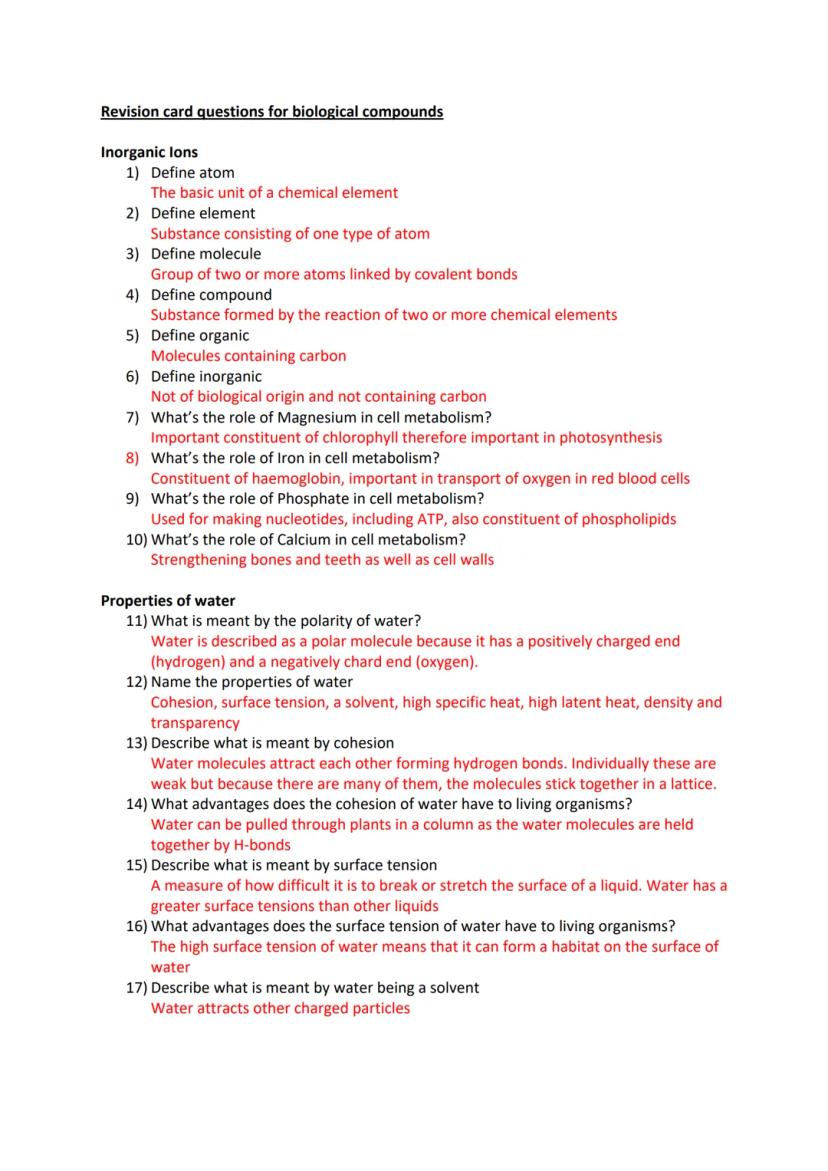
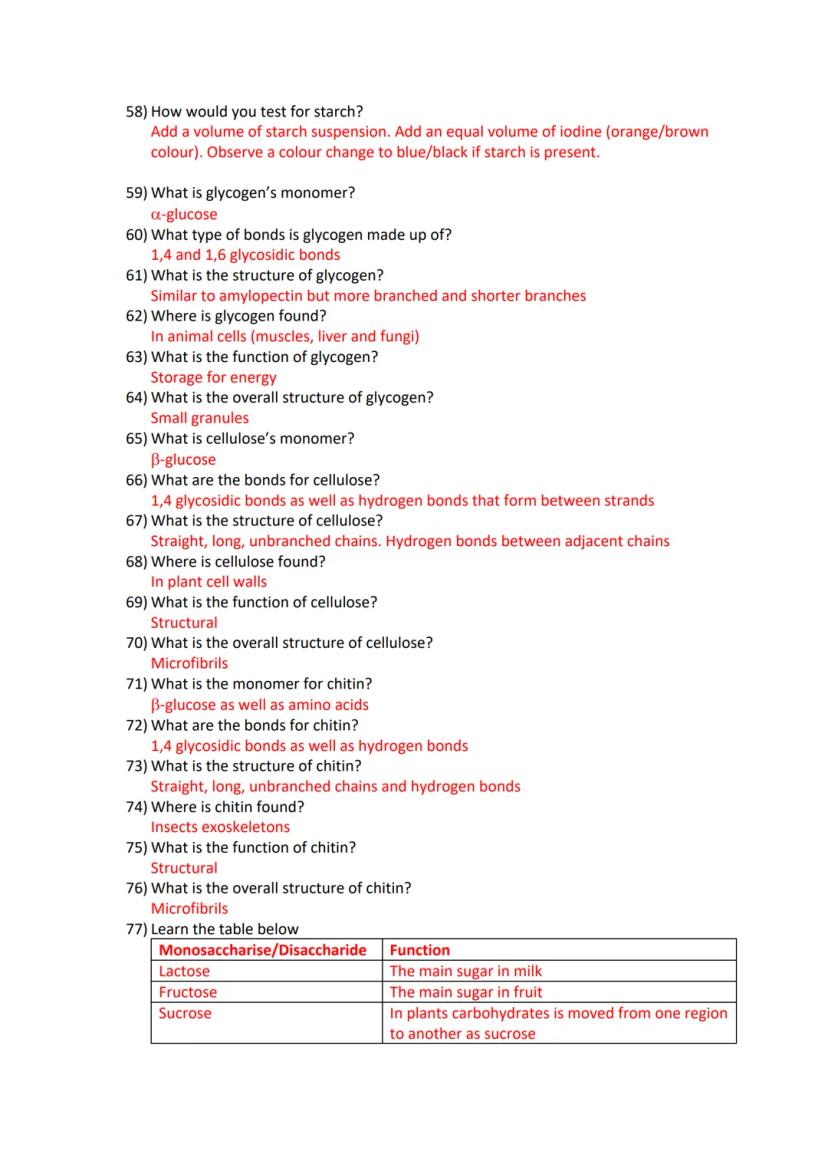

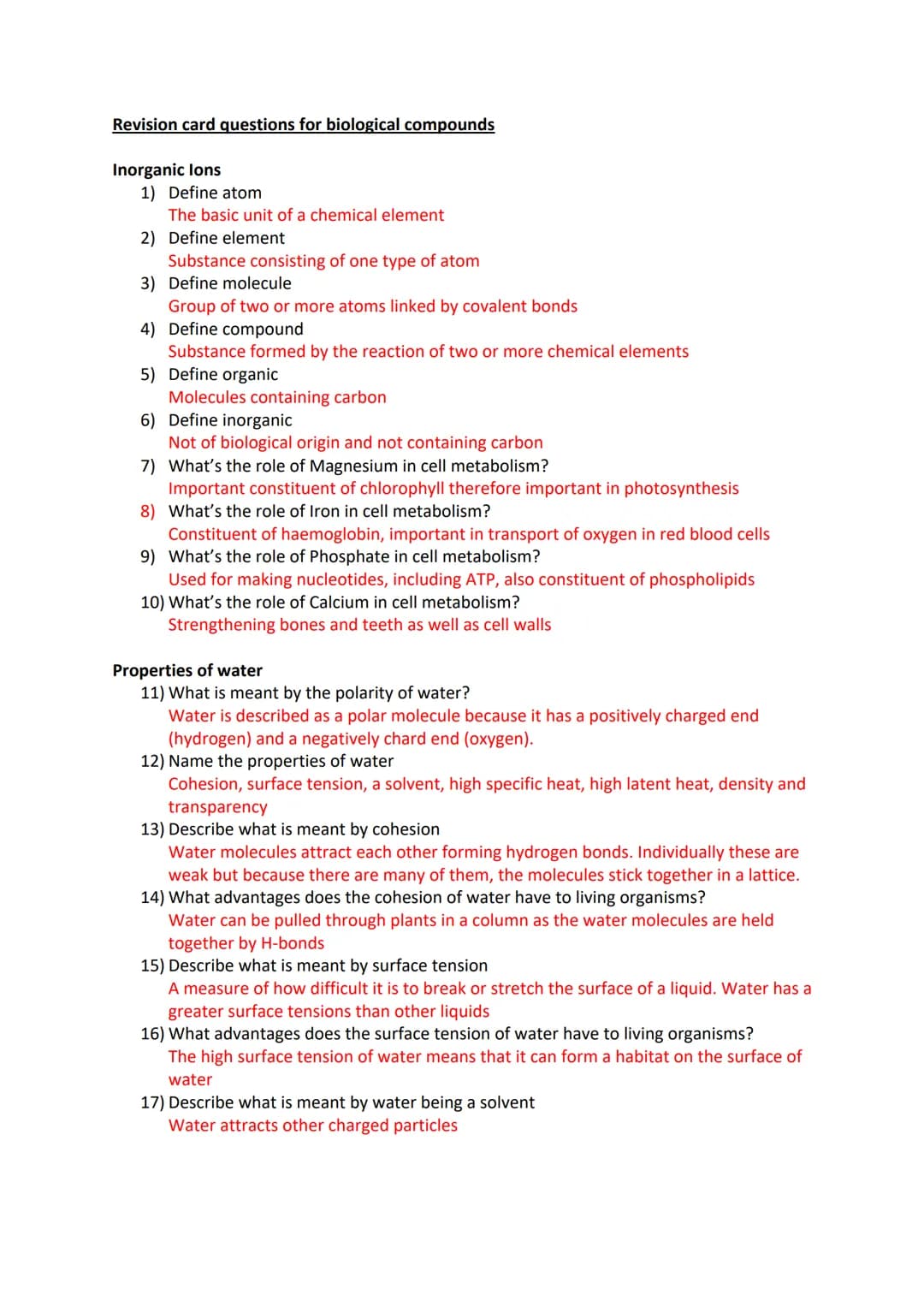
Understanding biological compounds starts with grasping a few key definitions. An atom is the basic unit of a chemical element, whilst an element contains only one type of atom. When atoms join together, they form molecules, and when different elements react, they create compounds.
The distinction between organic and inorganic molecules is crucial for biology. Organic molecules contain carbon and are typically of biological origin, whilst inorganic molecules don't contain carbon and aren't made by living things.
Several inorganic ions play vital roles in your body's metabolism. Magnesium (Mg²⁺) is essential for chlorophyll in photosynthesis, iron (Fe²⁺) forms part of haemoglobin for oxygen transport, phosphate (PO₄³⁻) helps make ATP and nucleotides, and calcium (Ca²⁺) strengthens bones, teeth, and cell walls.
Key Tip: Remember that whilst these ions are inorganic, they're absolutely essential for biological processes - your body can't function without them!
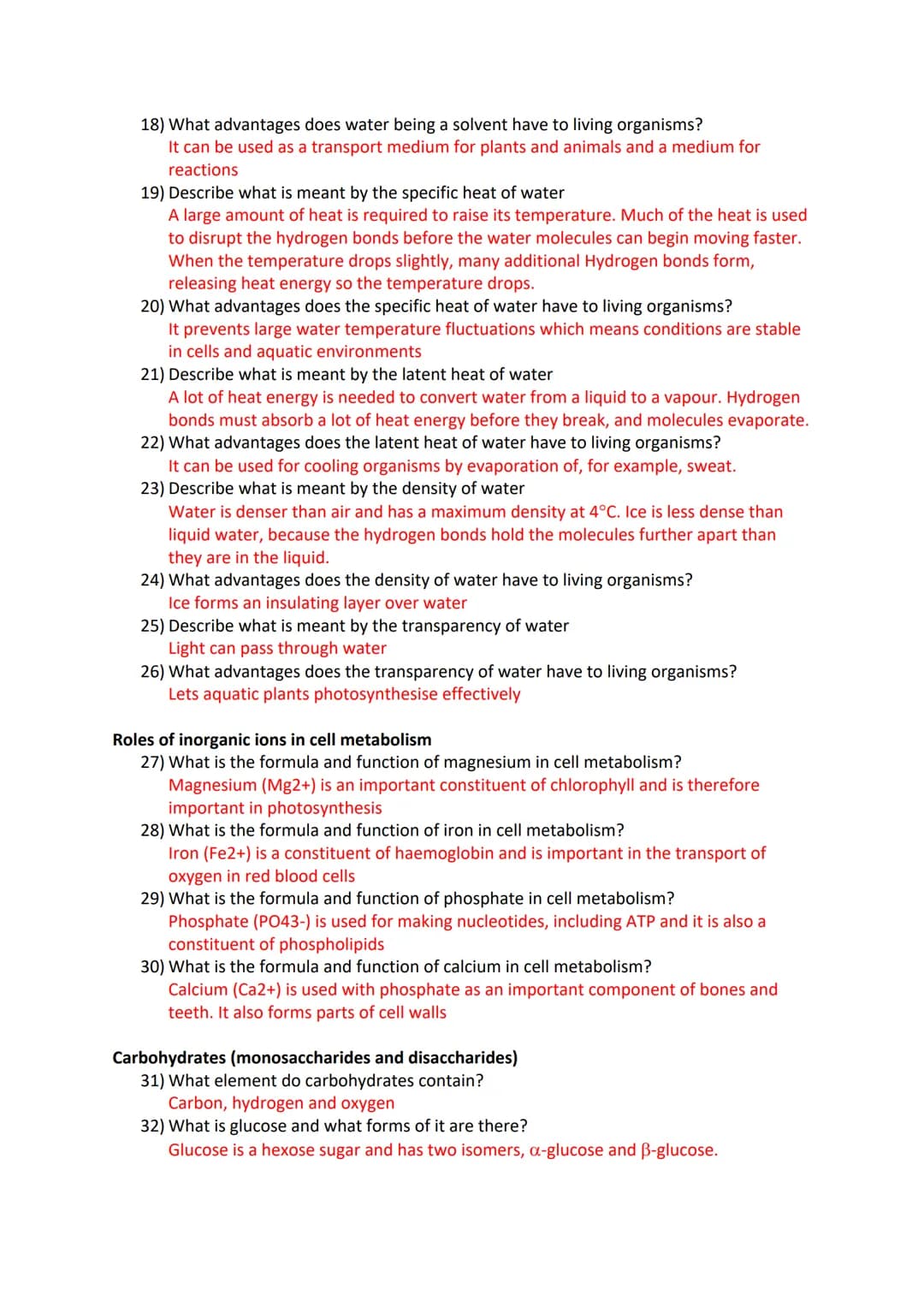
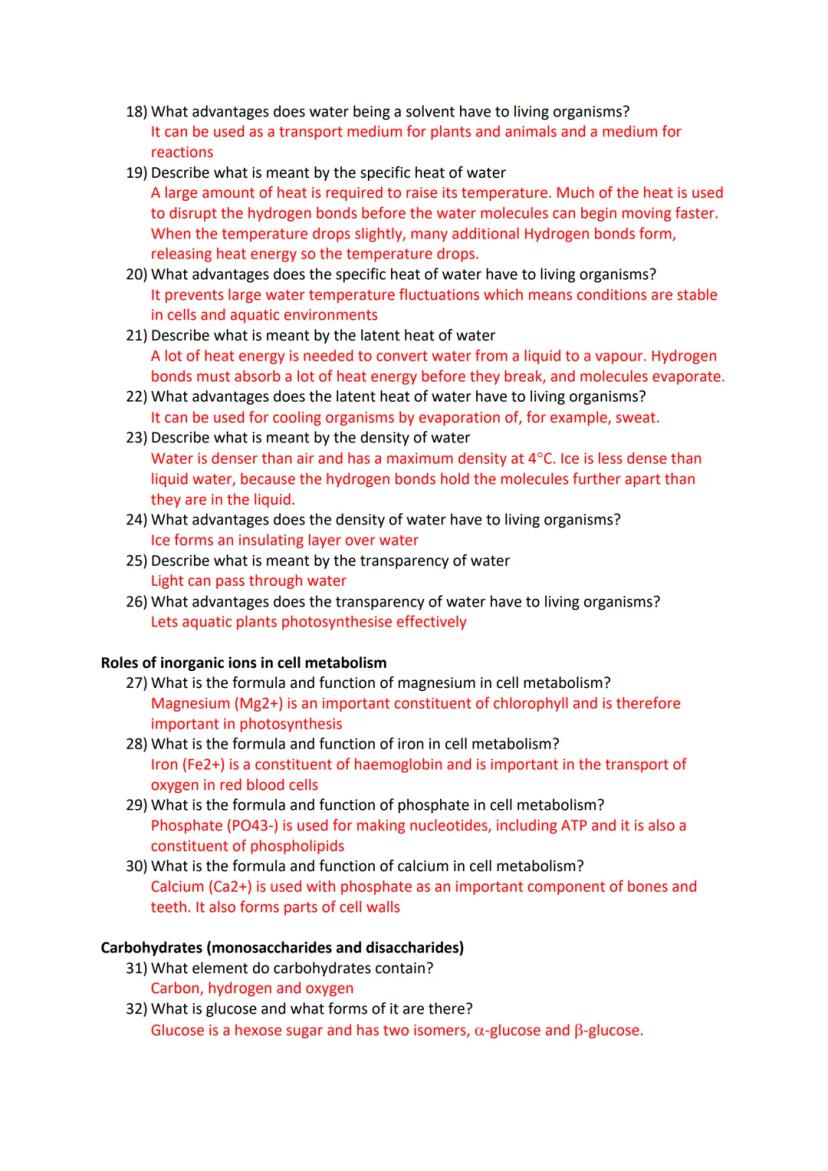
Water isn't just H₂O - it's a polar molecule with incredible properties that make life possible. The hydrogen end is slightly positive whilst the oxygen end is slightly negative, giving water its unique characteristics.
Cohesion occurs because water molecules stick together through hydrogen bonds, creating a lattice structure. This allows water to be pulled up through plants in continuous columns. Surface tension makes water's surface difficult to break, creating habitats for pond skaters and other organisms.
Water's role as a solvent means it can dissolve charged particles, making it perfect for transporting substances around your body. Its high specific heat prevents rapid temperature changes, keeping cells and aquatic environments stable even when external temperatures fluctuate.
The latent heat of vaporisation requires lots of energy to turn water into vapour, which is why sweating cools you down so effectively. Water's density properties mean ice floats, creating an insulating layer over water bodies in winter.
Remember: Water's transparency allows aquatic plants to photosynthesise underwater - without this, aquatic ecosystems couldn't exist!
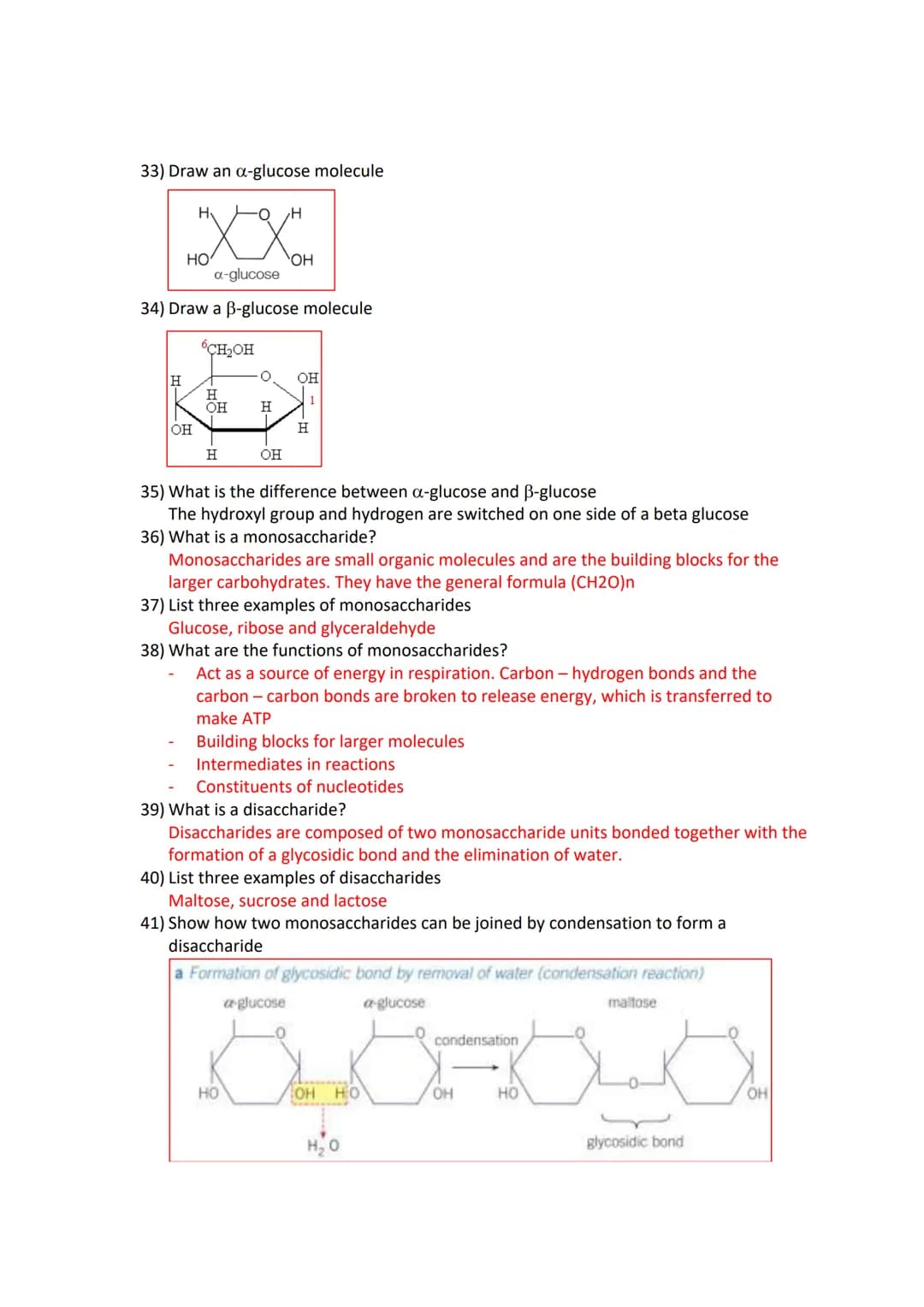
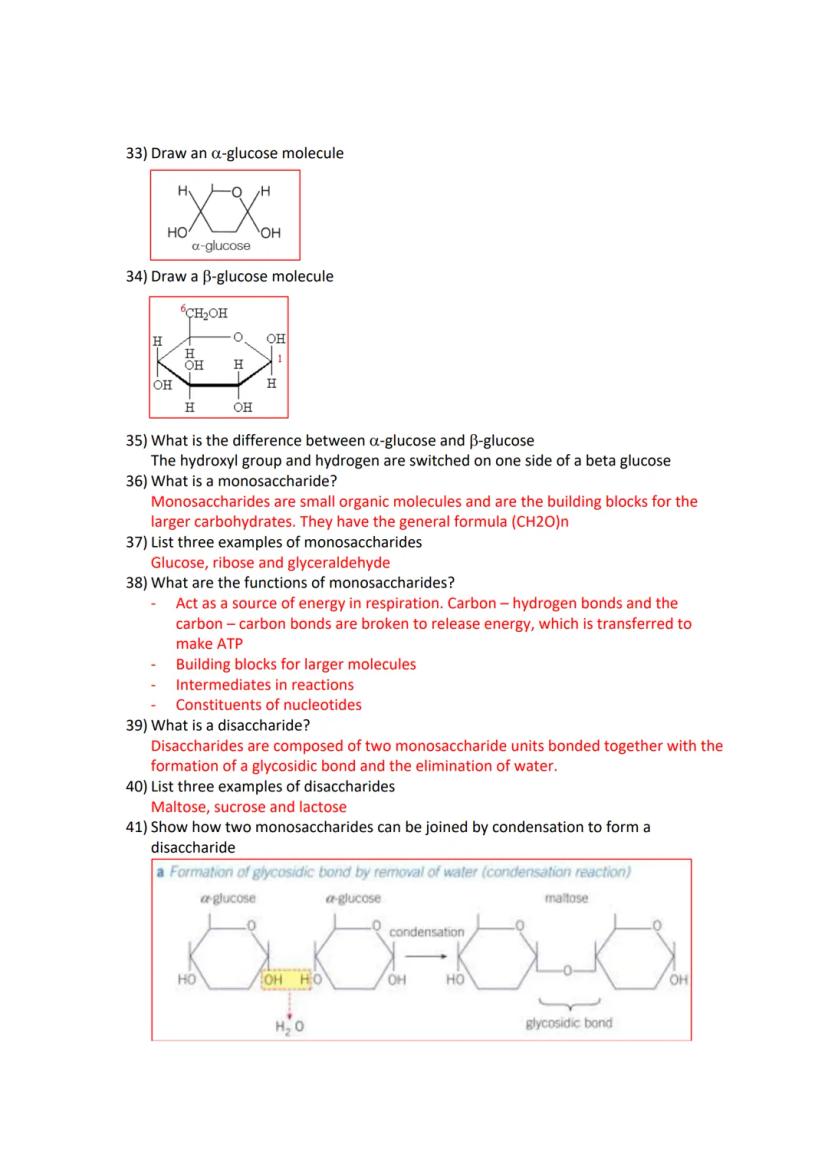
Carbohydrates contain carbon, hydrogen, and oxygen, with monosaccharides being the simplest forms. Glucose is the most important monosaccharide, existing as two isomers: α-glucose and β-glucose. The only difference is that the hydroxyl group and hydrogen are swapped on one carbon atom.
Monosaccharides have the general formula (CH₂O)n and include glucose, ribose, and glyceraldehyde. They're brilliant energy sources because breaking their carbon-hydrogen and carbon-carbon bonds releases energy to make ATP. They also serve as building blocks for larger molecules and intermediates in reactions.
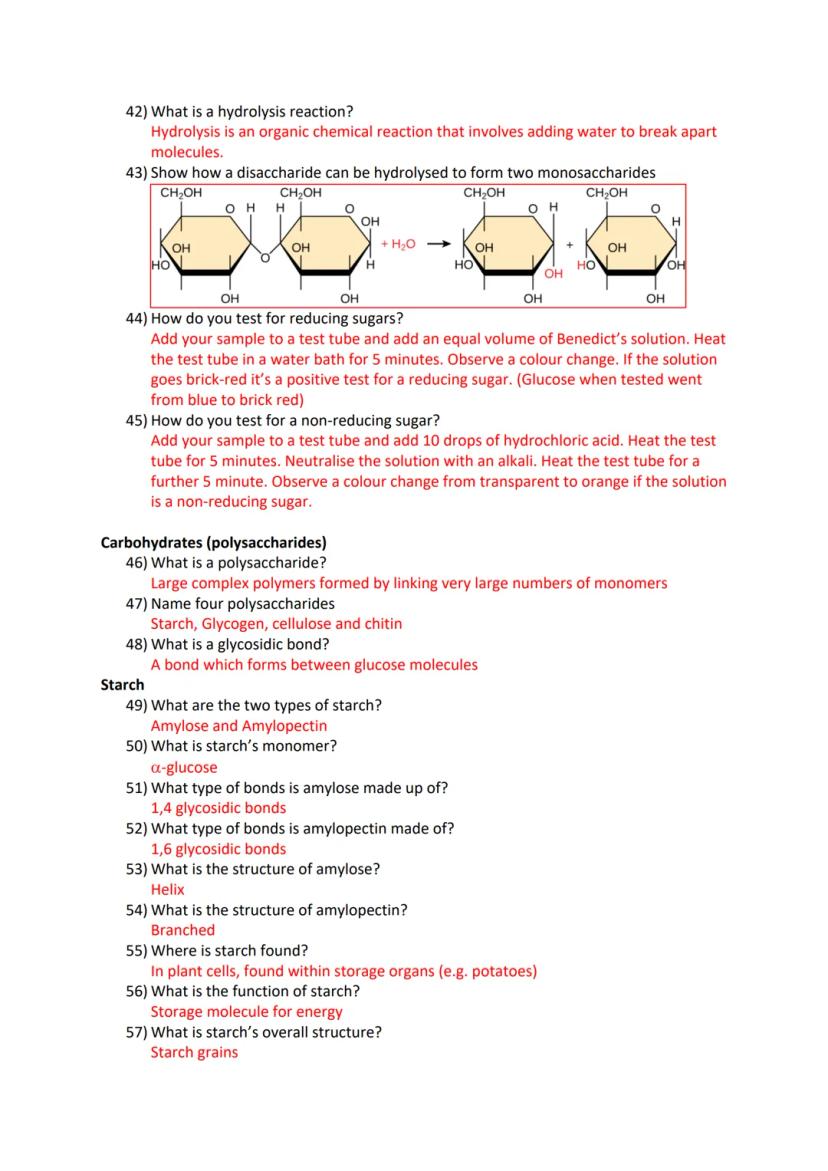
Disaccharides form when two monosaccharides join through a condensation reaction, creating a glycosidic bond and eliminating water. Common examples include maltose, sucrose, and lactose. The reverse process, hydrolysis, breaks disaccharides back into monosaccharides by adding water.
Testing for sugars is straightforward: use Benedict's test for reducing sugars or the non-reducing sugar test involving hydrochloric acid treatment first.
Exam Tip: Always remember that condensation removes water whilst hydrolysis adds water - this concept appears throughout biology!
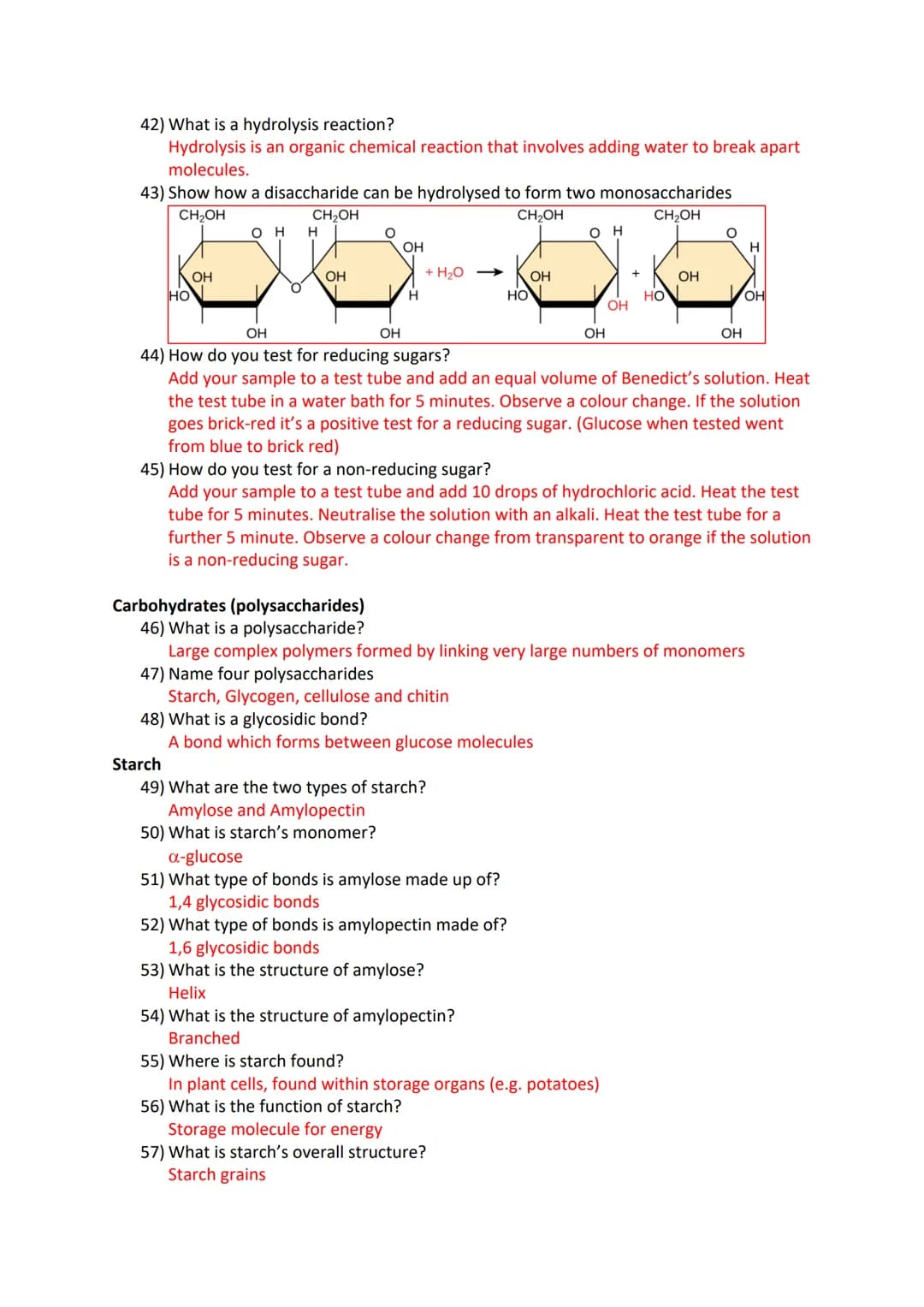
Polysaccharides are massive polymers formed by linking thousands of monosaccharide monomers. The four main types you need to know are starch, glycogen, cellulose, and chitin, each with distinct structures and functions.
Starch comes in two forms: amylose (helical structure with 1,4 glycosidic bonds) and amylopectin (branched with 1,6 glycosidic bonds). Both use α-glucose monomers and serve as energy storage in plant cells like potatoes. Test for starch using iodine solution - it turns blue-black if present.
Glycogen is similar to amylopectin but more highly branched with shorter branches. Found in animal cells (muscles and liver), it's your body's main carbohydrate energy store. Cellulose uses β-glucose monomers in straight, unbranched chains held together by hydrogen bonds, forming microfibrils that strengthen plant cell walls.
Chitin contains β-glucose plus amino acids, creating strong structural material for insect exoskeletons. Like cellulose, it forms straight chains with hydrogen bonding between strands.
Structure-Function Link: Notice how storage molecules (starch, glycogen) are branched for quick access to glucose, whilst structural ones (cellulose, chitin) are straight and strong!
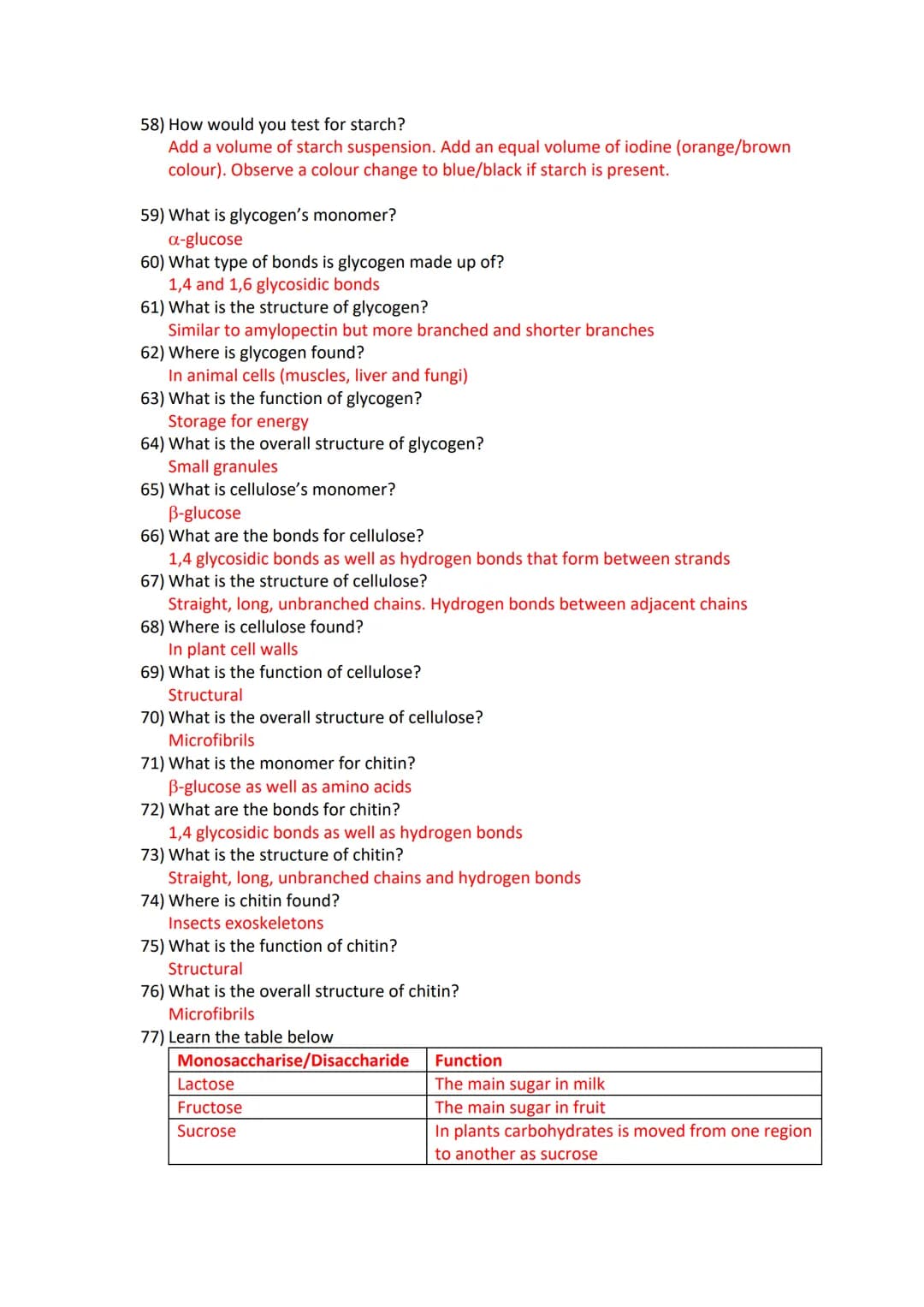
Different sugars have specific roles in living organisms. Lactose is the main sugar in milk, fructose dominates in fruits, sucrose transports carbohydrates around plants, and glucose serves as the primary respiratory substrate and energy source for animals.
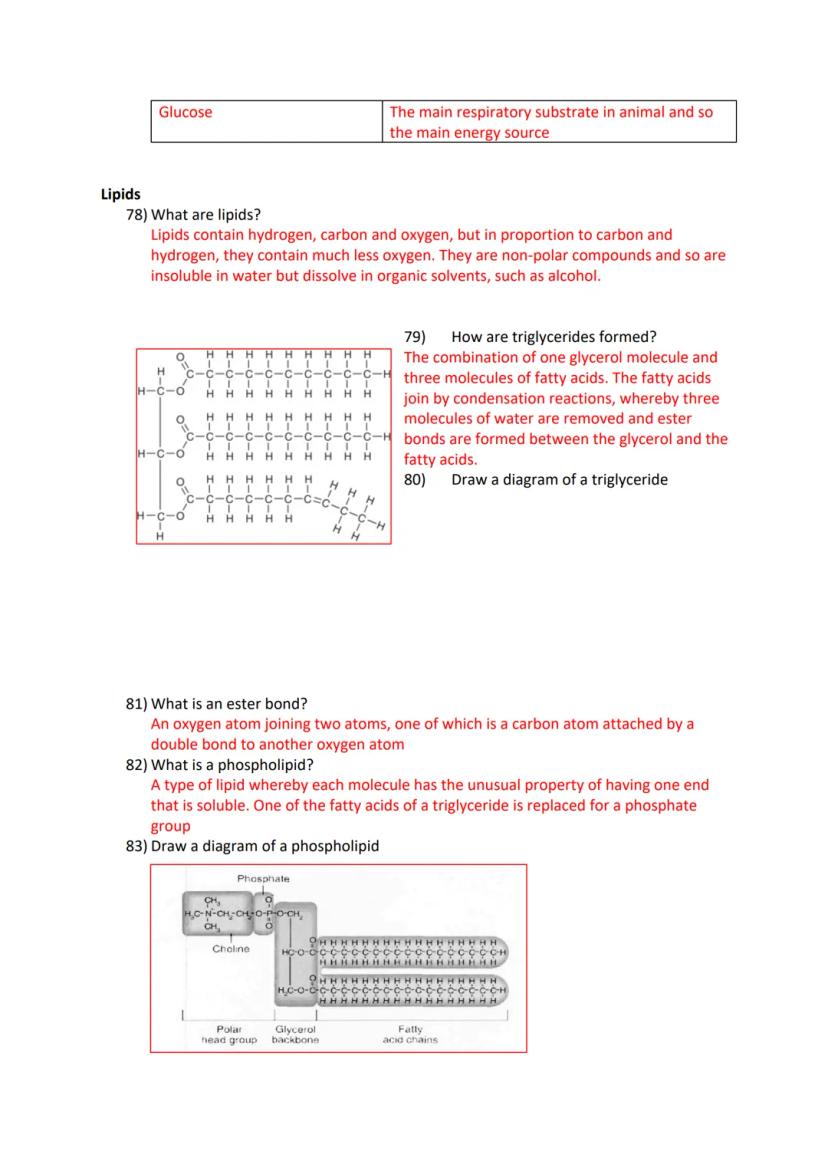
Lipids contain carbon, hydrogen, and oxygen, but with much less oxygen compared to carbon and hydrogen than carbohydrates. They're non-polar compounds, making them insoluble in water but soluble in organic solvents like alcohol.
Triglycerides form when one glycerol molecule combines with three fatty acid molecules through condensation reactions. This creates three ester bonds and removes three water molecules. Triglycerides are excellent energy storage molecules because they contain more carbon-hydrogen bonds than carbohydrates.
Phospholipids replace one fatty acid with a phosphate group, creating molecules with both hydrophilic and hydrophobic ends. This unique property makes them perfect for forming biological membranes.
Energy Fact: Lipids store more than twice as much energy per gram as carbohydrates - that's why your body uses fat for long-term energy storage!
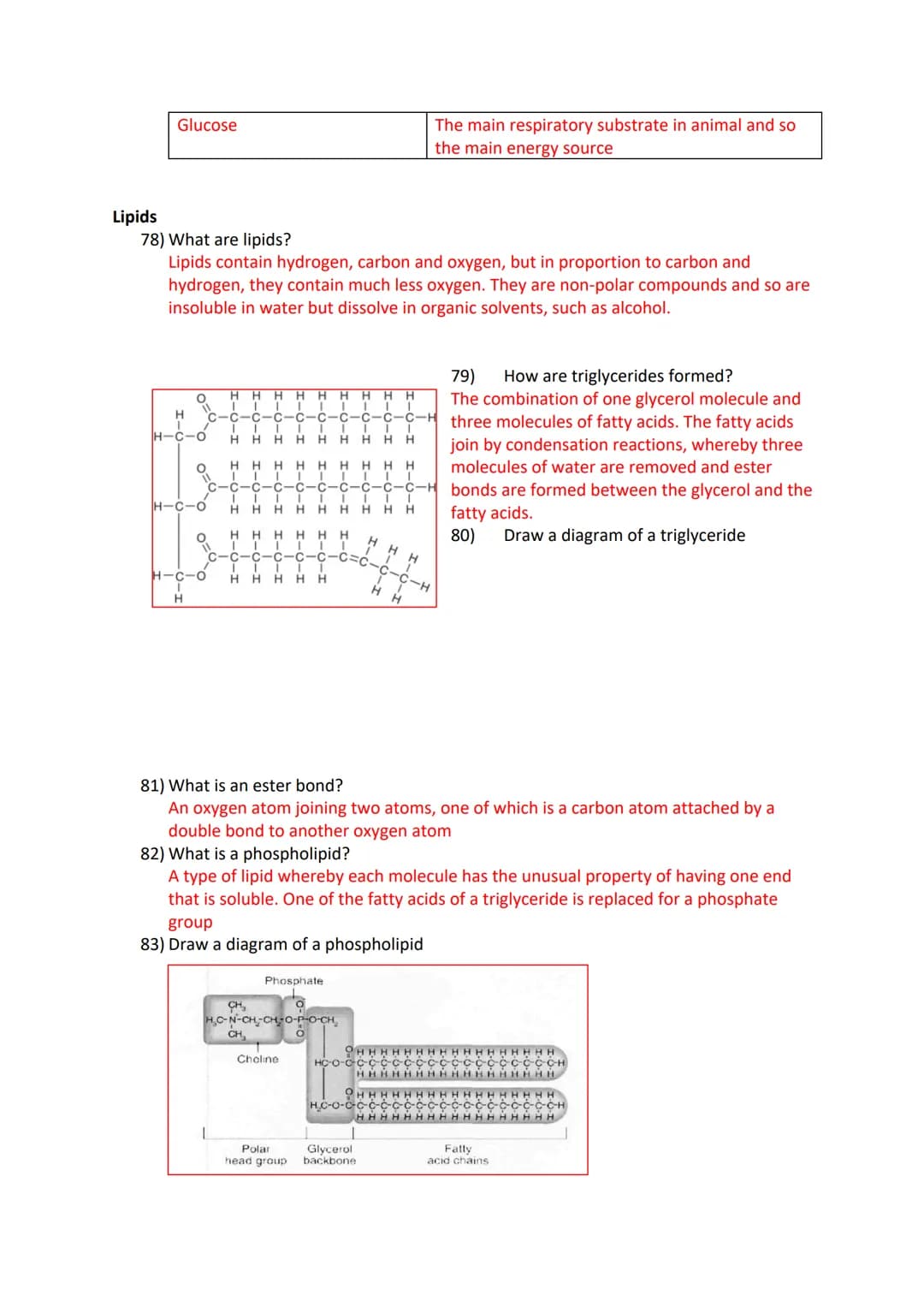
The phospholipid structure is crucial for cell membranes. The phosphate head (containing phosphate, glycerol, and choline) is hydrophilic because it has lots of oxygen atoms that interact with water. The fatty acid tails are hydrophobic because they lack oxygen atoms and don't interact with water.
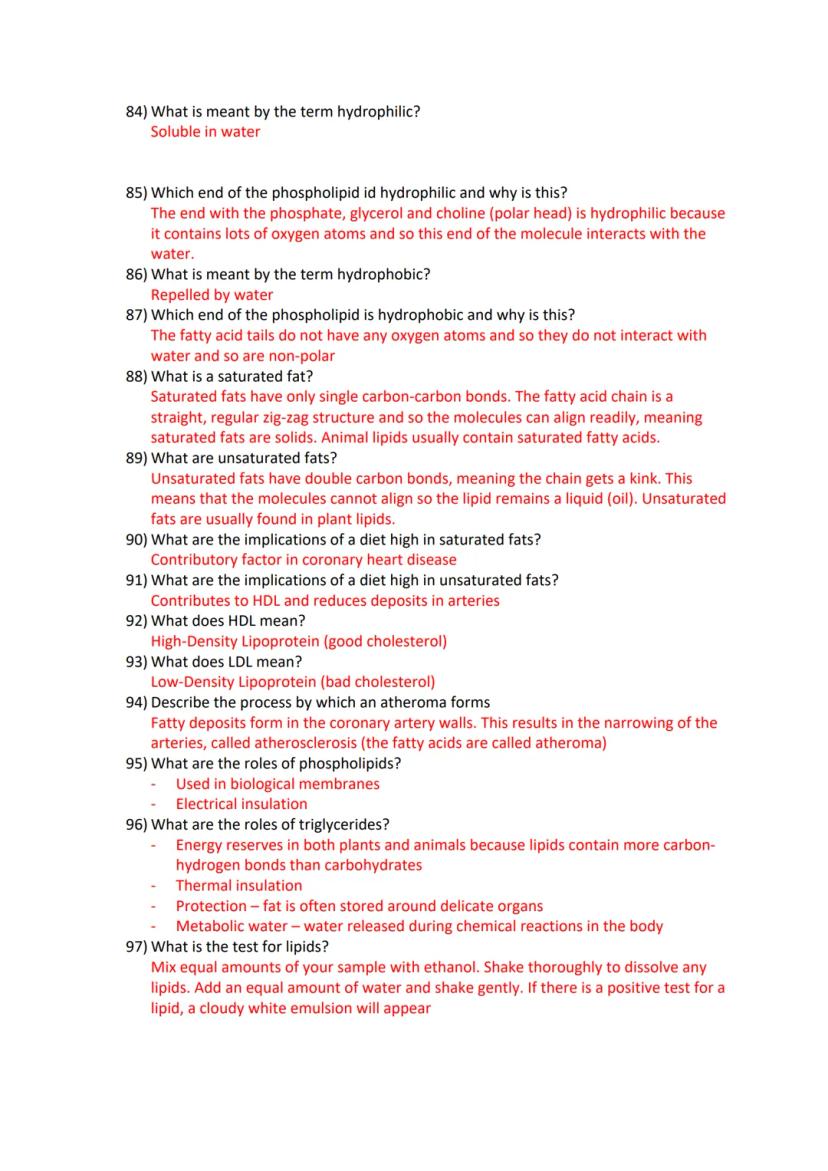
Saturated fats contain only single carbon-carbon bonds, creating straight, regular chains that align easily. This makes them solid at room temperature and they're typically found in animal products. Unfortunately, diets high in saturated fats contribute to coronary heart disease.
Unsaturated fats have double carbon bonds that create kinks in the chain, preventing alignment and keeping them liquid (oils). These are usually plant-based and actually contribute to HDL - the "good cholesterol" that reduces artery deposits.
When fatty deposits form in coronary artery walls, they create atheroma, leading to atherosclerosis (artery narrowing). This process significantly increases heart disease risk, which is why understanding fat types matters for your health.
Health Connection: Your diet's fat composition directly affects your cardiovascular health - choose unsaturated fats when possible!
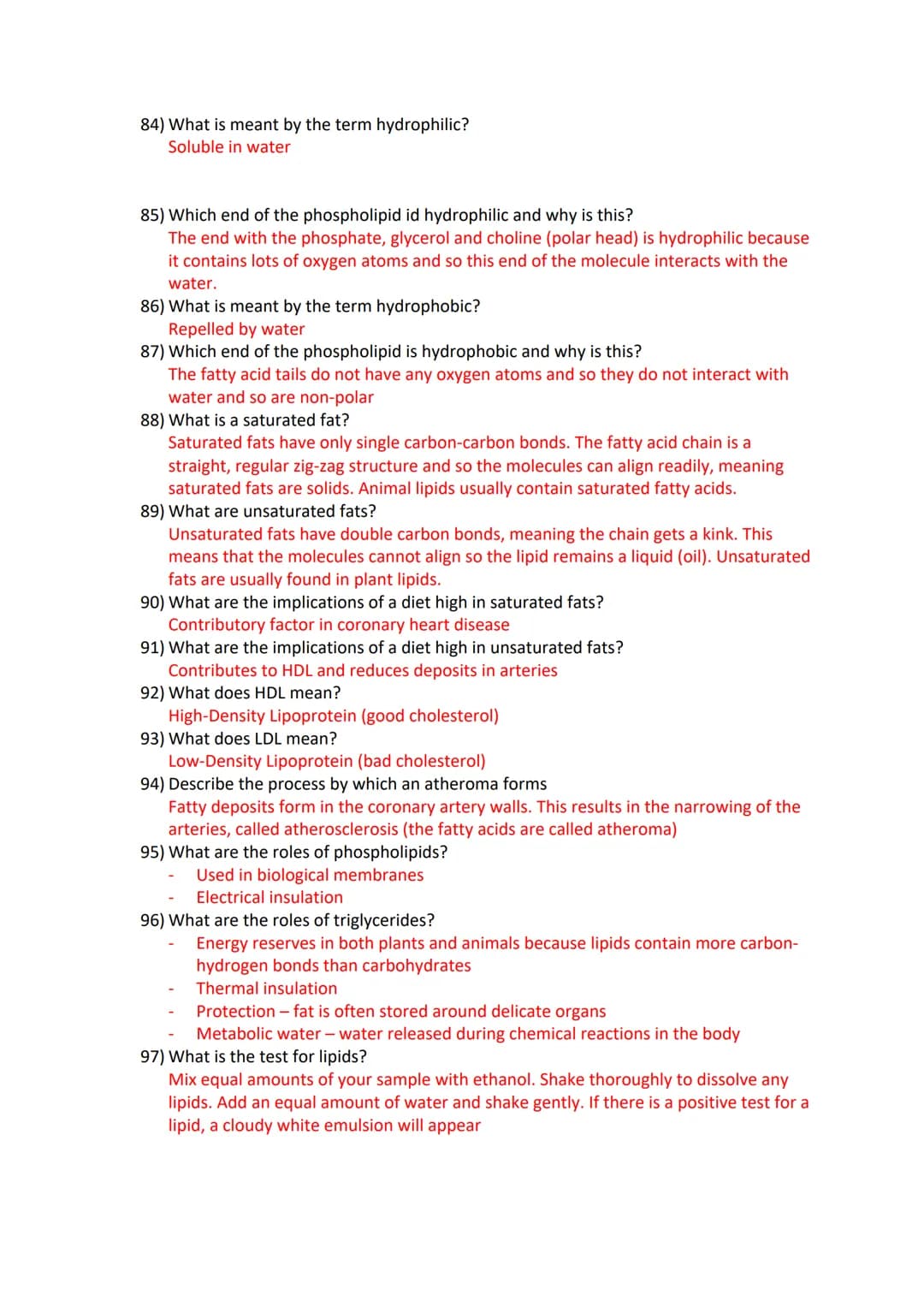
Phospholipids are essential for biological membranes and provide electrical insulation around nerve cells. Triglycerides serve multiple functions: energy reserves (more efficient than carbohydrates), thermal insulation, protection around delicate organs, and metabolic water production during chemical reactions.
Test for lipids using the emulsion test: mix your sample with ethanol, shake thoroughly, then add water and shake gently. A cloudy white emulsion indicates lipids are present.
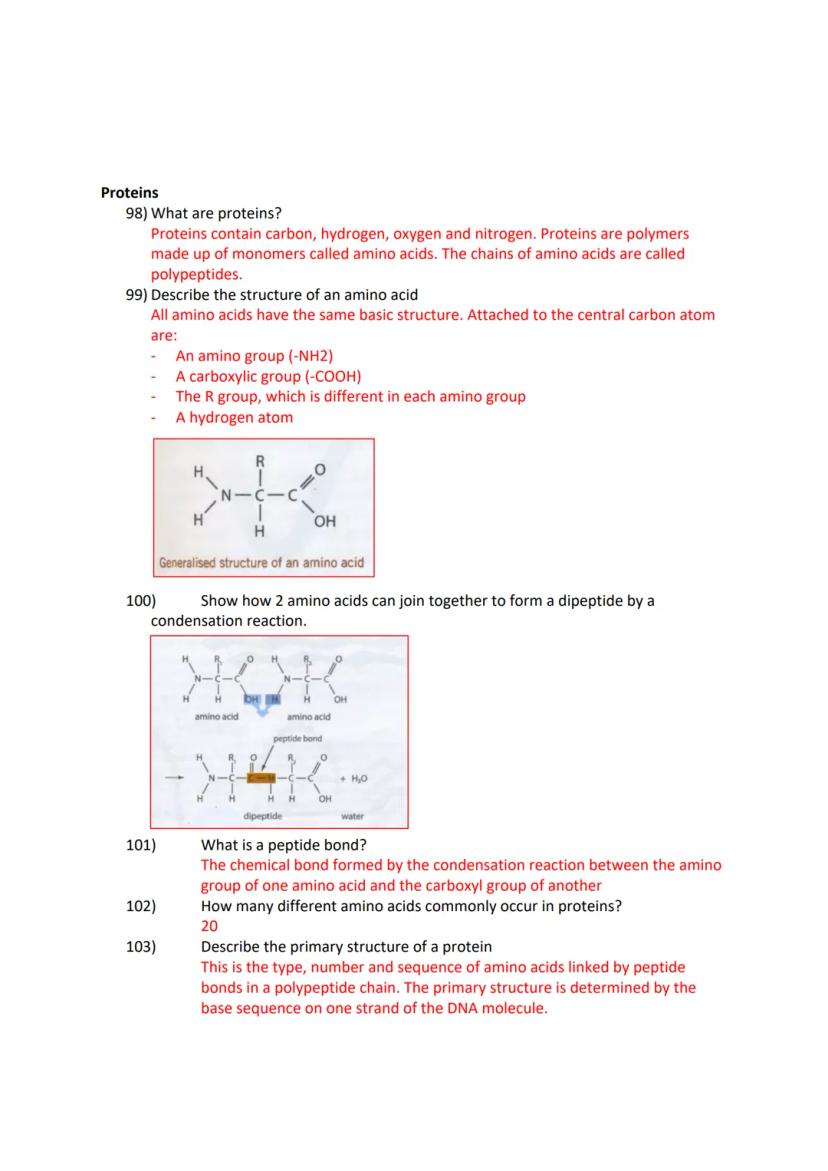
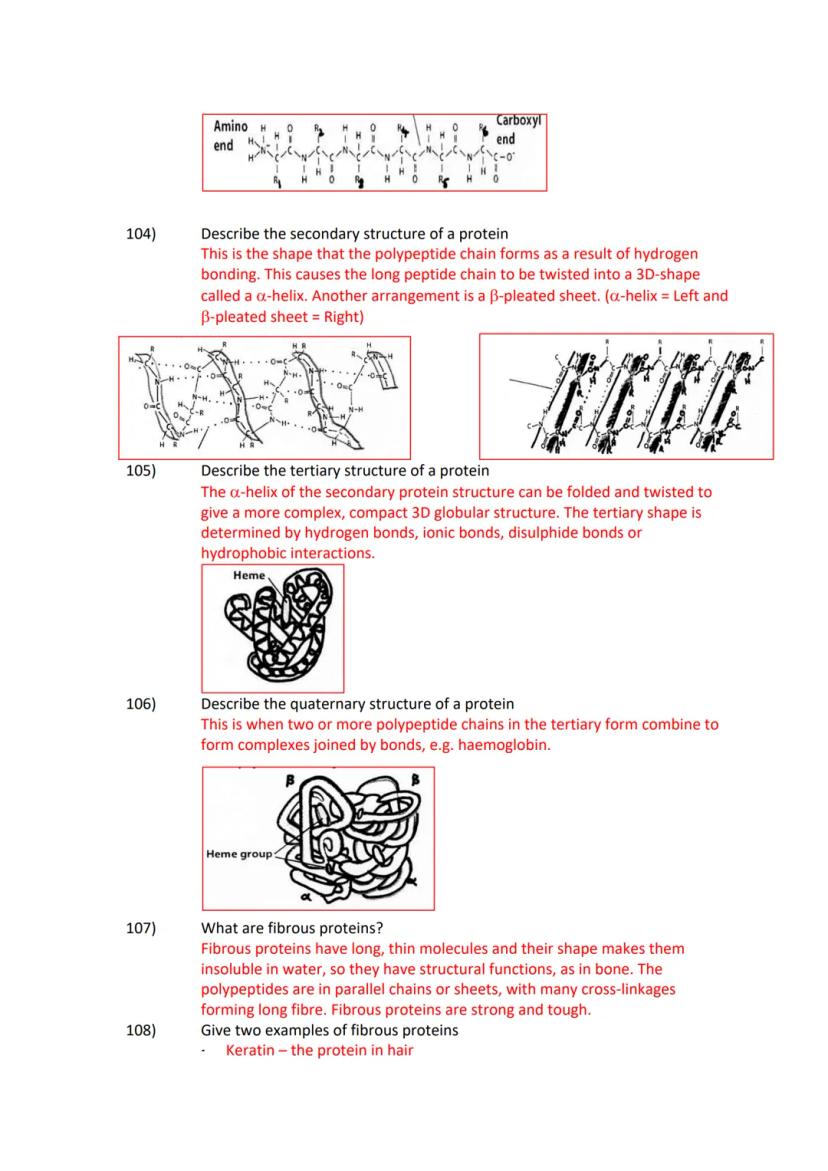
Proteins contain carbon, hydrogen, oxygen, and nitrogen. They're polymers made from amino acid monomers, forming chains called polypeptides. Every amino acid has the same basic structure: a central carbon atom bonded to an amino group , a carboxylic group , a hydrogen atom, and a variable R group.
Amino acids join through condensation reactions, forming peptide bonds between the amino group of one amino acid and the carboxyl group of another. With 20 different amino acids available, the possible protein combinations are virtually endless.
Amazing Fact: Your body contains thousands of different proteins, all made from just 20 amino acids arranged in different sequences!
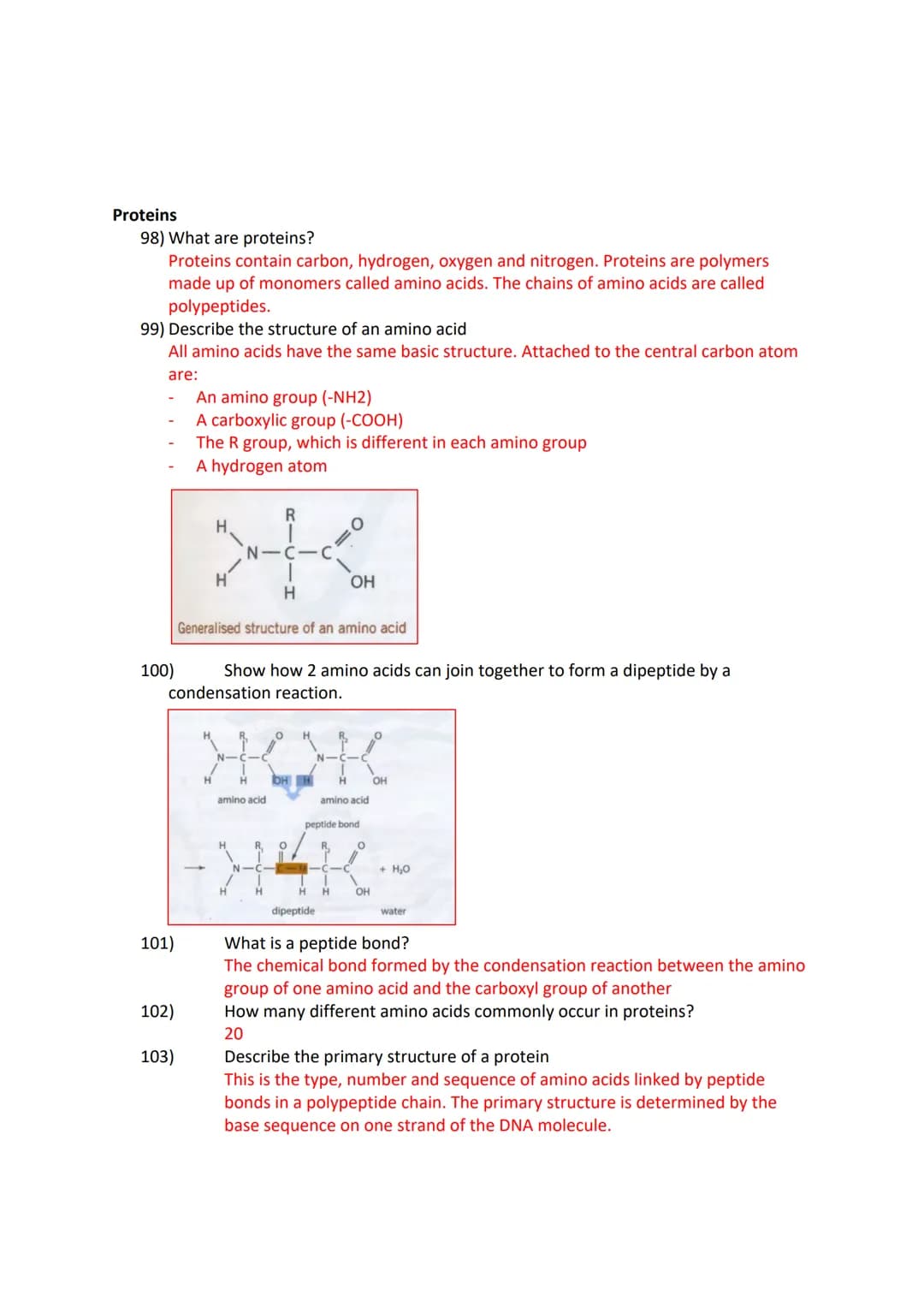
Proteins have four levels of increasingly complex structure. Primary structure refers to the specific sequence, type, and number of amino acids linked by peptide bonds. This sequence is determined by DNA and is absolutely crucial - change one amino acid and you can completely alter the protein's function.
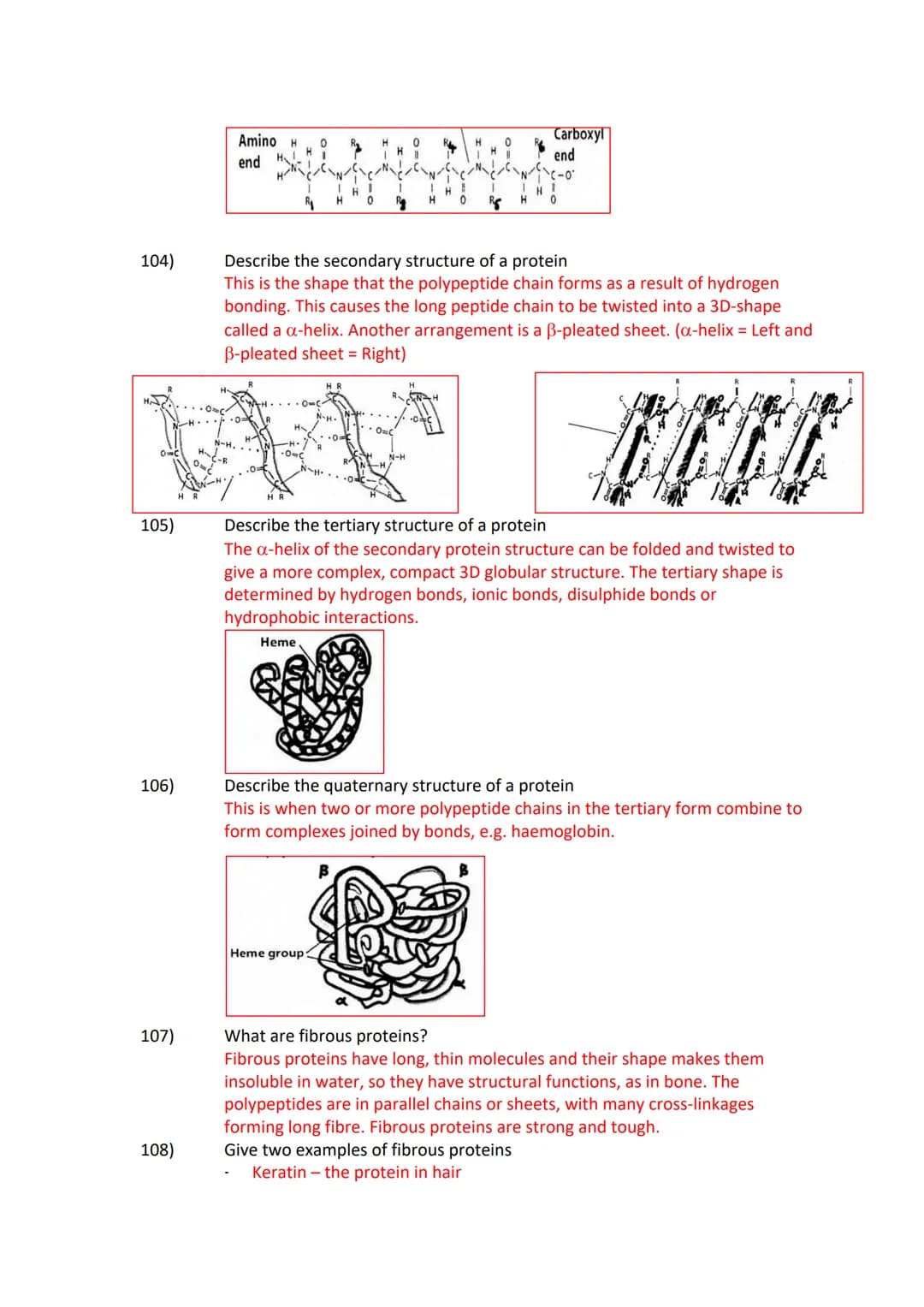
Secondary structure forms when the polypeptide chain twists due to hydrogen bonding. The two main shapes are α-helixes (spiral structures) and β-pleated sheets (folded arrangements). These shapes give proteins their initial 3D form.
Tertiary structure occurs when the secondary structure folds and twists further, creating complex, compact 3D shapes. This folding is maintained by hydrogen bonds, ionic bonds, disulphide bonds, and hydrophobic interactions. The tertiary structure determines the protein's specific function.
Quaternary structure involves two or more polypeptide chains combining to form protein complexes. Haemoglobin is a perfect example, consisting of four polypeptide chains working together to transport oxygen.
Structure = Function: Each level of protein structure is essential - damage any level and the protein may stop working entirely!
Fibrous proteins have long, thin molecules arranged in parallel chains or sheets with many cross-linkages forming strong fibres. Their shape makes them insoluble in water, perfect for structural functions. They're incredibly strong and tough, providing support where it's needed most.
Keratin (found in hair and nails) and collagen (providing strength in tendons and skin) are classic examples of fibrous proteins. These proteins literally hold your body together and give it structural integrity.
Globular proteins are compact and folded into spherical shapes, making them soluble in water. This solubility allows them to have diverse functions including enzymes, antibodies, plasma proteins, and hormones. They're the workhorses of your body's biochemical processes.
Haemoglobin exemplifies globular proteins perfectly - its spherical shape allows it to dissolve in blood plasma and transport oxygen efficiently around your body.
Function Follows Form: Fibrous proteins are built for strength and structure, whilst globular proteins are designed for chemical reactions and transport!

Testing for proteins is straightforward using the biuret test. Simply add biuret solution to your food sample and mix thoroughly. If proteins are present, the solution changes from blue to purple - it's that simple!
This colour change occurs because the biuret reagent reacts specifically with peptide bonds, which are found in all proteins. The intensity of the purple colour can even give you an idea of protein concentration.
Understanding these biological compounds gives you the foundation for advanced biology topics. Whether it's enzyme function, membrane structure, or energy metabolism, these molecules are the building blocks that make life possible.
Exam Success: Master these basic tests and structures now - they're the foundation for understanding more complex biological processes later!
Our AI Companion is a student-focused AI tool that offers more than just answers. Built on millions of Knowunity resources, it provides relevant information, personalised study plans, quizzes, and content directly in the chat, adapting to your individual learning journey.
You can download the app from Google Play Store and Apple App Store.
That's right! Enjoy free access to study content, connect with fellow students, and get instant help – all at your fingertips.
Explore the structure and function of carbohydrates, focusing on monosaccharides and disaccharides. This summary covers key concepts such as glycosidic bonds, condensation and hydrolysis reactions, and the properties of glucose, galactose, and fructose. Ideal for OCR A Level Biology students.
 Biology
App Store
Google Play
The app is very easy to use and well designed. I have found everything I was looking for so far and have been able to learn a lot from the presentations! I will definitely use the app for a class assignment! And of course it also helps a lot as an inspiration.
Stefan S
iOS user
This app is really great. There are so many study notes and help [...]. My problem subject is French, for example, and the app has so many options for help. Thanks to this app, I have improved my French. I would recommend it to anyone.
Samantha Klich
Android user
Wow, I am really amazed. I just tried the app because I've seen it advertised many times and was absolutely stunned. This app is THE HELP you want for school and above all, it offers so many things, such as workouts and fact sheets, which have been VERY helpful to me personally.
Anna
iOS user
Best app on earth! no words because it’s too good
Thomas R
iOS user
Just amazing. Let's me revise 10x better, this app is a quick 10/10. I highly recommend it to anyone. I can watch and search for notes. I can save them in the subject folder. I can revise it any time when I come back. If you haven't tried this app, you're really missing out.
Basil
Android user
This app has made me feel so much more confident in my exam prep, not only through boosting my own self confidence through the features that allow you to connect with others and feel less alone, but also through the way the app itself is centred around making you feel better. It is easy to navigate, fun to use, and helpful to anyone struggling in absolutely any way.
David K
iOS user
The app's just great! All I have to do is enter the topic in the search bar and I get the response real fast. I don't have to watch 10 YouTube videos to understand something, so I'm saving my time. Highly recommended!
Sudenaz Ocak
Android user
In school I was really bad at maths but thanks to the app, I am doing better now. I am so grateful that you made the app.
Greenlight Bonnie
Android user
very reliable app to help and grow your ideas of Maths, English and other related topics in your works. please use this app if your struggling in areas, this app is key for that. wish I'd of done a review before. and it's also free so don't worry about that.
Rohan U
Android user
I know a lot of apps use fake accounts to boost their reviews but this app deserves it all. Originally I was getting 4 in my English exams and this time I got a grade 7. I didn’t even know about this app three days until the exam and it has helped A LOT. Please actually trust me and use it as I’m sure you too will see developments.
Xander S
iOS user
THE QUIZES AND FLASHCARDS ARE SO USEFUL AND I LOVE Knowunity AI. IT ALSO IS LITREALLY LIKE CHATGPT BUT SMARTER!! HELPED ME WITH MY MASCARA PROBLEMS TOO!! AS WELL AS MY REAL SUBJECTS ! DUHHH 😍😁😲🤑💗✨🎀😮
Elisha
iOS user
This apps acc the goat. I find revision so boring but this app makes it so easy to organize it all and then you can ask the freeeee ai to test yourself so good and you can easily upload your own stuff. highly recommend as someone taking mocks now
Paul T
iOS user
The app is very easy to use and well designed. I have found everything I was looking for so far and have been able to learn a lot from the presentations! I will definitely use the app for a class assignment! And of course it also helps a lot as an inspiration.
Stefan S
iOS user
This app is really great. There are so many study notes and help [...]. My problem subject is French, for example, and the app has so many options for help. Thanks to this app, I have improved my French. I would recommend it to anyone.
Samantha Klich
Android user
Wow, I am really amazed. I just tried the app because I've seen it advertised many times and was absolutely stunned. This app is THE HELP you want for school and above all, it offers so many things, such as workouts and fact sheets, which have been VERY helpful to me personally.
Anna
iOS user
Best app on earth! no words because it’s too good
Thomas R
iOS user
Just amazing. Let's me revise 10x better, this app is a quick 10/10. I highly recommend it to anyone. I can watch and search for notes. I can save them in the subject folder. I can revise it any time when I come back. If you haven't tried this app, you're really missing out.
Basil
Android user
This app has made me feel so much more confident in my exam prep, not only through boosting my own self confidence through the features that allow you to connect with others and feel less alone, but also through the way the app itself is centred around making you feel better. It is easy to navigate, fun to use, and helpful to anyone struggling in absolutely any way.
David K
iOS user
The app's just great! All I have to do is enter the topic in the search bar and I get the response real fast. I don't have to watch 10 YouTube videos to understand something, so I'm saving my time. Highly recommended!
Sudenaz Ocak
Android user
In school I was really bad at maths but thanks to the app, I am doing better now. I am so grateful that you made the app.
Greenlight Bonnie
Android user
very reliable app to help and grow your ideas of Maths, English and other related topics in your works. please use this app if your struggling in areas, this app is key for that. wish I'd of done a review before. and it's also free so don't worry about that.
Rohan U
Android user
I know a lot of apps use fake accounts to boost their reviews but this app deserves it all. Originally I was getting 4 in my English exams and this time I got a grade 7. I didn’t even know about this app three days until the exam and it has helped A LOT. Please actually trust me and use it as I’m sure you too will see developments.
Xander S
iOS user
THE QUIZES AND FLASHCARDS ARE SO USEFUL AND I LOVE Knowunity AI. IT ALSO IS LITREALLY LIKE CHATGPT BUT SMARTER!! HELPED ME WITH MY MASCARA PROBLEMS TOO!! AS WELL AS MY REAL SUBJECTS ! DUHHH 😍😁😲🤑💗✨🎀😮
Elisha
iOS user
This apps acc the goat. I find revision so boring but this app makes it so easy to organize it all and then you can ask the freeeee ai to test yourself so good and you can easily upload your own stuff. highly recommend as someone taking mocks now
Paul T
iOS user
Molly Gowar
@mollygowar
Ever wondered what makes up living things at the molecular level? This revision guide covers the essential biological compounds that keep life ticking - from the water in your cells to the proteins in your muscles. These molecules might seem... Show more
Access to all documents
Improve your grades
Join milions of students
Understanding biological compounds starts with grasping a few key definitions. An atom is the basic unit of a chemical element, whilst an element contains only one type of atom. When atoms join together, they form molecules, and when different elements react, they create compounds.
The distinction between organic and inorganic molecules is crucial for biology. Organic molecules contain carbon and are typically of biological origin, whilst inorganic molecules don't contain carbon and aren't made by living things.
Several inorganic ions play vital roles in your body's metabolism. Magnesium (Mg²⁺) is essential for chlorophyll in photosynthesis, iron (Fe²⁺) forms part of haemoglobin for oxygen transport, phosphate (PO₄³⁻) helps make ATP and nucleotides, and calcium (Ca²⁺) strengthens bones, teeth, and cell walls.
Key Tip: Remember that whilst these ions are inorganic, they're absolutely essential for biological processes - your body can't function without them!
Access to all documents
Improve your grades
Join milions of students
Water isn't just H₂O - it's a polar molecule with incredible properties that make life possible. The hydrogen end is slightly positive whilst the oxygen end is slightly negative, giving water its unique characteristics.
Cohesion occurs because water molecules stick together through hydrogen bonds, creating a lattice structure. This allows water to be pulled up through plants in continuous columns. Surface tension makes water's surface difficult to break, creating habitats for pond skaters and other organisms.
Water's role as a solvent means it can dissolve charged particles, making it perfect for transporting substances around your body. Its high specific heat prevents rapid temperature changes, keeping cells and aquatic environments stable even when external temperatures fluctuate.
The latent heat of vaporisation requires lots of energy to turn water into vapour, which is why sweating cools you down so effectively. Water's density properties mean ice floats, creating an insulating layer over water bodies in winter.
Remember: Water's transparency allows aquatic plants to photosynthesise underwater - without this, aquatic ecosystems couldn't exist!
Access to all documents
Improve your grades
Join milions of students
Carbohydrates contain carbon, hydrogen, and oxygen, with monosaccharides being the simplest forms. Glucose is the most important monosaccharide, existing as two isomers: α-glucose and β-glucose. The only difference is that the hydroxyl group and hydrogen are swapped on one carbon atom.
Monosaccharides have the general formula (CH₂O)n and include glucose, ribose, and glyceraldehyde. They're brilliant energy sources because breaking their carbon-hydrogen and carbon-carbon bonds releases energy to make ATP. They also serve as building blocks for larger molecules and intermediates in reactions.
Disaccharides form when two monosaccharides join through a condensation reaction, creating a glycosidic bond and eliminating water. Common examples include maltose, sucrose, and lactose. The reverse process, hydrolysis, breaks disaccharides back into monosaccharides by adding water.
Testing for sugars is straightforward: use Benedict's test for reducing sugars or the non-reducing sugar test involving hydrochloric acid treatment first.
Exam Tip: Always remember that condensation removes water whilst hydrolysis adds water - this concept appears throughout biology!
Access to all documents
Improve your grades
Join milions of students
Polysaccharides are massive polymers formed by linking thousands of monosaccharide monomers. The four main types you need to know are starch, glycogen, cellulose, and chitin, each with distinct structures and functions.
Starch comes in two forms: amylose (helical structure with 1,4 glycosidic bonds) and amylopectin (branched with 1,6 glycosidic bonds). Both use α-glucose monomers and serve as energy storage in plant cells like potatoes. Test for starch using iodine solution - it turns blue-black if present.
Glycogen is similar to amylopectin but more highly branched with shorter branches. Found in animal cells (muscles and liver), it's your body's main carbohydrate energy store. Cellulose uses β-glucose monomers in straight, unbranched chains held together by hydrogen bonds, forming microfibrils that strengthen plant cell walls.
Chitin contains β-glucose plus amino acids, creating strong structural material for insect exoskeletons. Like cellulose, it forms straight chains with hydrogen bonding between strands.
Structure-Function Link: Notice how storage molecules (starch, glycogen) are branched for quick access to glucose, whilst structural ones (cellulose, chitin) are straight and strong!
Access to all documents
Improve your grades
Join milions of students
Different sugars have specific roles in living organisms. Lactose is the main sugar in milk, fructose dominates in fruits, sucrose transports carbohydrates around plants, and glucose serves as the primary respiratory substrate and energy source for animals.
Lipids contain carbon, hydrogen, and oxygen, but with much less oxygen compared to carbon and hydrogen than carbohydrates. They're non-polar compounds, making them insoluble in water but soluble in organic solvents like alcohol.
Triglycerides form when one glycerol molecule combines with three fatty acid molecules through condensation reactions. This creates three ester bonds and removes three water molecules. Triglycerides are excellent energy storage molecules because they contain more carbon-hydrogen bonds than carbohydrates.
Phospholipids replace one fatty acid with a phosphate group, creating molecules with both hydrophilic and hydrophobic ends. This unique property makes them perfect for forming biological membranes.
Energy Fact: Lipids store more than twice as much energy per gram as carbohydrates - that's why your body uses fat for long-term energy storage!
Access to all documents
Improve your grades
Join milions of students
The phospholipid structure is crucial for cell membranes. The phosphate head (containing phosphate, glycerol, and choline) is hydrophilic because it has lots of oxygen atoms that interact with water. The fatty acid tails are hydrophobic because they lack oxygen atoms and don't interact with water.
Saturated fats contain only single carbon-carbon bonds, creating straight, regular chains that align easily. This makes them solid at room temperature and they're typically found in animal products. Unfortunately, diets high in saturated fats contribute to coronary heart disease.
Unsaturated fats have double carbon bonds that create kinks in the chain, preventing alignment and keeping them liquid (oils). These are usually plant-based and actually contribute to HDL - the "good cholesterol" that reduces artery deposits.
When fatty deposits form in coronary artery walls, they create atheroma, leading to atherosclerosis (artery narrowing). This process significantly increases heart disease risk, which is why understanding fat types matters for your health.
Health Connection: Your diet's fat composition directly affects your cardiovascular health - choose unsaturated fats when possible!
Access to all documents
Improve your grades
Join milions of students
Phospholipids are essential for biological membranes and provide electrical insulation around nerve cells. Triglycerides serve multiple functions: energy reserves (more efficient than carbohydrates), thermal insulation, protection around delicate organs, and metabolic water production during chemical reactions.
Test for lipids using the emulsion test: mix your sample with ethanol, shake thoroughly, then add water and shake gently. A cloudy white emulsion indicates lipids are present.
Proteins contain carbon, hydrogen, oxygen, and nitrogen. They're polymers made from amino acid monomers, forming chains called polypeptides. Every amino acid has the same basic structure: a central carbon atom bonded to an amino group , a carboxylic group , a hydrogen atom, and a variable R group.
Amino acids join through condensation reactions, forming peptide bonds between the amino group of one amino acid and the carboxyl group of another. With 20 different amino acids available, the possible protein combinations are virtually endless.
Amazing Fact: Your body contains thousands of different proteins, all made from just 20 amino acids arranged in different sequences!
Access to all documents
Improve your grades
Join milions of students
Proteins have four levels of increasingly complex structure. Primary structure refers to the specific sequence, type, and number of amino acids linked by peptide bonds. This sequence is determined by DNA and is absolutely crucial - change one amino acid and you can completely alter the protein's function.
Secondary structure forms when the polypeptide chain twists due to hydrogen bonding. The two main shapes are α-helixes (spiral structures) and β-pleated sheets (folded arrangements). These shapes give proteins their initial 3D form.
Tertiary structure occurs when the secondary structure folds and twists further, creating complex, compact 3D shapes. This folding is maintained by hydrogen bonds, ionic bonds, disulphide bonds, and hydrophobic interactions. The tertiary structure determines the protein's specific function.
Quaternary structure involves two or more polypeptide chains combining to form protein complexes. Haemoglobin is a perfect example, consisting of four polypeptide chains working together to transport oxygen.
Structure = Function: Each level of protein structure is essential - damage any level and the protein may stop working entirely!
Access to all documents
Improve your grades
Join milions of students
Fibrous proteins have long, thin molecules arranged in parallel chains or sheets with many cross-linkages forming strong fibres. Their shape makes them insoluble in water, perfect for structural functions. They're incredibly strong and tough, providing support where it's needed most.
Keratin (found in hair and nails) and collagen (providing strength in tendons and skin) are classic examples of fibrous proteins. These proteins literally hold your body together and give it structural integrity.
Globular proteins are compact and folded into spherical shapes, making them soluble in water. This solubility allows them to have diverse functions including enzymes, antibodies, plasma proteins, and hormones. They're the workhorses of your body's biochemical processes.
Haemoglobin exemplifies globular proteins perfectly - its spherical shape allows it to dissolve in blood plasma and transport oxygen efficiently around your body.
Function Follows Form: Fibrous proteins are built for strength and structure, whilst globular proteins are designed for chemical reactions and transport!
Access to all documents
Improve your grades
Join milions of students
Testing for proteins is straightforward using the biuret test. Simply add biuret solution to your food sample and mix thoroughly. If proteins are present, the solution changes from blue to purple - it's that simple!
This colour change occurs because the biuret reagent reacts specifically with peptide bonds, which are found in all proteins. The intensity of the purple colour can even give you an idea of protein concentration.
Understanding these biological compounds gives you the foundation for advanced biology topics. Whether it's enzyme function, membrane structure, or energy metabolism, these molecules are the building blocks that make life possible.
Exam Success: Master these basic tests and structures now - they're the foundation for understanding more complex biological processes later!
Our AI Companion is a student-focused AI tool that offers more than just answers. Built on millions of Knowunity resources, it provides relevant information, personalised study plans, quizzes, and content directly in the chat, adapting to your individual learning journey.
You can download the app from Google Play Store and Apple App Store.
That's right! Enjoy free access to study content, connect with fellow students, and get instant help – all at your fingertips.
10
Smart Tools NEW
Transform this note into: ✓ 50+ Practice Questions ✓ Interactive Flashcards ✓ Full Mock Exam ✓ Essay Outlines
Explore the essential components of biological molecules in this concise revision guide. Understand the structure, functions, and examples of carbohydrates, proteins, lipids, and nucleic acids. Ideal for AQA Biology students, this resource includes key concepts such as glycosidic bonds, protein functions, and the role of biomolecules in living organisms.
BiologyExplore key biochemical tests for starch, proteins, lipids, and reducing sugars, along with the unique properties of water essential for life. This summary covers the structure and function of amino acids, proteins, and lipids, highlighting their roles in biological systems. Ideal for AS Level Biology students preparing for exams.
BiologyExplore the essential components of the heart's structure and function in this comprehensive summary for SQA Higher Human Biology, Key Area 2.6. Understand the cardiac cycle, cardiac output, heart conduction system, and the impact of blood pressure on cardiovascular health. Ideal for exam preparation and reinforcing key concepts.
BiologyExplore the critical functions and unique properties of water, including its role as a solvent, reactant, and temperature regulator. Understand hydrogen bonding, cohesion, and how these characteristics support life in various habitats. This summary covers key concepts essential for biology students.
BiologyExplore the critical properties of water, including polarity, cohesion, hydrogen bonding, and its role as a solvent. This summary highlights how these characteristics contribute to water's unique behavior in biological systems, such as its high specific heat capacity and importance in metabolic processes. Ideal for A Level Biology students.
BiologyExplore the essential roles of water and inorganic ions in biological systems. This summary covers the unique properties of water, including polarity, hydrogen bonding, and its function as a solvent, as well as the significance of various inorganic ions in cellular processes. Ideal for CCEA AS Level Biology revision.
BiologyExplore the structure and function of carbohydrates, focusing on monosaccharides and disaccharides. This summary covers key concepts such as glycosidic bonds, condensation and hydrolysis reactions, and the properties of glucose, galactose, and fructose. Ideal for OCR A Level Biology students.
BiologyApp Store
Google Play
The app is very easy to use and well designed. I have found everything I was looking for so far and have been able to learn a lot from the presentations! I will definitely use the app for a class assignment! And of course it also helps a lot as an inspiration.
Stefan S
iOS user
This app is really great. There are so many study notes and help [...]. My problem subject is French, for example, and the app has so many options for help. Thanks to this app, I have improved my French. I would recommend it to anyone.
Samantha Klich
Android user
Wow, I am really amazed. I just tried the app because I've seen it advertised many times and was absolutely stunned. This app is THE HELP you want for school and above all, it offers so many things, such as workouts and fact sheets, which have been VERY helpful to me personally.
Anna
iOS user
Best app on earth! no words because it’s too good
Thomas R
iOS user
Just amazing. Let's me revise 10x better, this app is a quick 10/10. I highly recommend it to anyone. I can watch and search for notes. I can save them in the subject folder. I can revise it any time when I come back. If you haven't tried this app, you're really missing out.
Basil
Android user
This app has made me feel so much more confident in my exam prep, not only through boosting my own self confidence through the features that allow you to connect with others and feel less alone, but also through the way the app itself is centred around making you feel better. It is easy to navigate, fun to use, and helpful to anyone struggling in absolutely any way.
David K
iOS user
The app's just great! All I have to do is enter the topic in the search bar and I get the response real fast. I don't have to watch 10 YouTube videos to understand something, so I'm saving my time. Highly recommended!
Sudenaz Ocak
Android user
In school I was really bad at maths but thanks to the app, I am doing better now. I am so grateful that you made the app.
Greenlight Bonnie
Android user
very reliable app to help and grow your ideas of Maths, English and other related topics in your works. please use this app if your struggling in areas, this app is key for that. wish I'd of done a review before. and it's also free so don't worry about that.
Rohan U
Android user
I know a lot of apps use fake accounts to boost their reviews but this app deserves it all. Originally I was getting 4 in my English exams and this time I got a grade 7. I didn’t even know about this app three days until the exam and it has helped A LOT. Please actually trust me and use it as I’m sure you too will see developments.
Xander S
iOS user
THE QUIZES AND FLASHCARDS ARE SO USEFUL AND I LOVE Knowunity AI. IT ALSO IS LITREALLY LIKE CHATGPT BUT SMARTER!! HELPED ME WITH MY MASCARA PROBLEMS TOO!! AS WELL AS MY REAL SUBJECTS ! DUHHH 😍😁😲🤑💗✨🎀😮
Elisha
iOS user
This apps acc the goat. I find revision so boring but this app makes it so easy to organize it all and then you can ask the freeeee ai to test yourself so good and you can easily upload your own stuff. highly recommend as someone taking mocks now
Paul T
iOS user
The app is very easy to use and well designed. I have found everything I was looking for so far and have been able to learn a lot from the presentations! I will definitely use the app for a class assignment! And of course it also helps a lot as an inspiration.
Stefan S
iOS user
This app is really great. There are so many study notes and help [...]. My problem subject is French, for example, and the app has so many options for help. Thanks to this app, I have improved my French. I would recommend it to anyone.
Samantha Klich
Android user
Wow, I am really amazed. I just tried the app because I've seen it advertised many times and was absolutely stunned. This app is THE HELP you want for school and above all, it offers so many things, such as workouts and fact sheets, which have been VERY helpful to me personally.
Anna
iOS user
Best app on earth! no words because it’s too good
Thomas R
iOS user
Just amazing. Let's me revise 10x better, this app is a quick 10/10. I highly recommend it to anyone. I can watch and search for notes. I can save them in the subject folder. I can revise it any time when I come back. If you haven't tried this app, you're really missing out.
Basil
Android user
This app has made me feel so much more confident in my exam prep, not only through boosting my own self confidence through the features that allow you to connect with others and feel less alone, but also through the way the app itself is centred around making you feel better. It is easy to navigate, fun to use, and helpful to anyone struggling in absolutely any way.
David K
iOS user
The app's just great! All I have to do is enter the topic in the search bar and I get the response real fast. I don't have to watch 10 YouTube videos to understand something, so I'm saving my time. Highly recommended!
Sudenaz Ocak
Android user
In school I was really bad at maths but thanks to the app, I am doing better now. I am so grateful that you made the app.
Greenlight Bonnie
Android user
very reliable app to help and grow your ideas of Maths, English and other related topics in your works. please use this app if your struggling in areas, this app is key for that. wish I'd of done a review before. and it's also free so don't worry about that.
Rohan U
Android user
I know a lot of apps use fake accounts to boost their reviews but this app deserves it all. Originally I was getting 4 in my English exams and this time I got a grade 7. I didn’t even know about this app three days until the exam and it has helped A LOT. Please actually trust me and use it as I’m sure you too will see developments.
Xander S
iOS user
THE QUIZES AND FLASHCARDS ARE SO USEFUL AND I LOVE Knowunity AI. IT ALSO IS LITREALLY LIKE CHATGPT BUT SMARTER!! HELPED ME WITH MY MASCARA PROBLEMS TOO!! AS WELL AS MY REAL SUBJECTS ! DUHHH 😍😁😲🤑💗✨🎀😮
Elisha
iOS user
This apps acc the goat. I find revision so boring but this app makes it so easy to organize it all and then you can ask the freeeee ai to test yourself so good and you can easily upload your own stuff. highly recommend as someone taking mocks now
Paul T
iOS user