
Get ready to dive into key historical developments that shaped... Show more
 AP World History199 views·Updated May 31, 2026·21 pages
AP World History Notes: Unit 10 - Industrial Revolution

amy ☆@amy_.t
1 / 10
1
of 10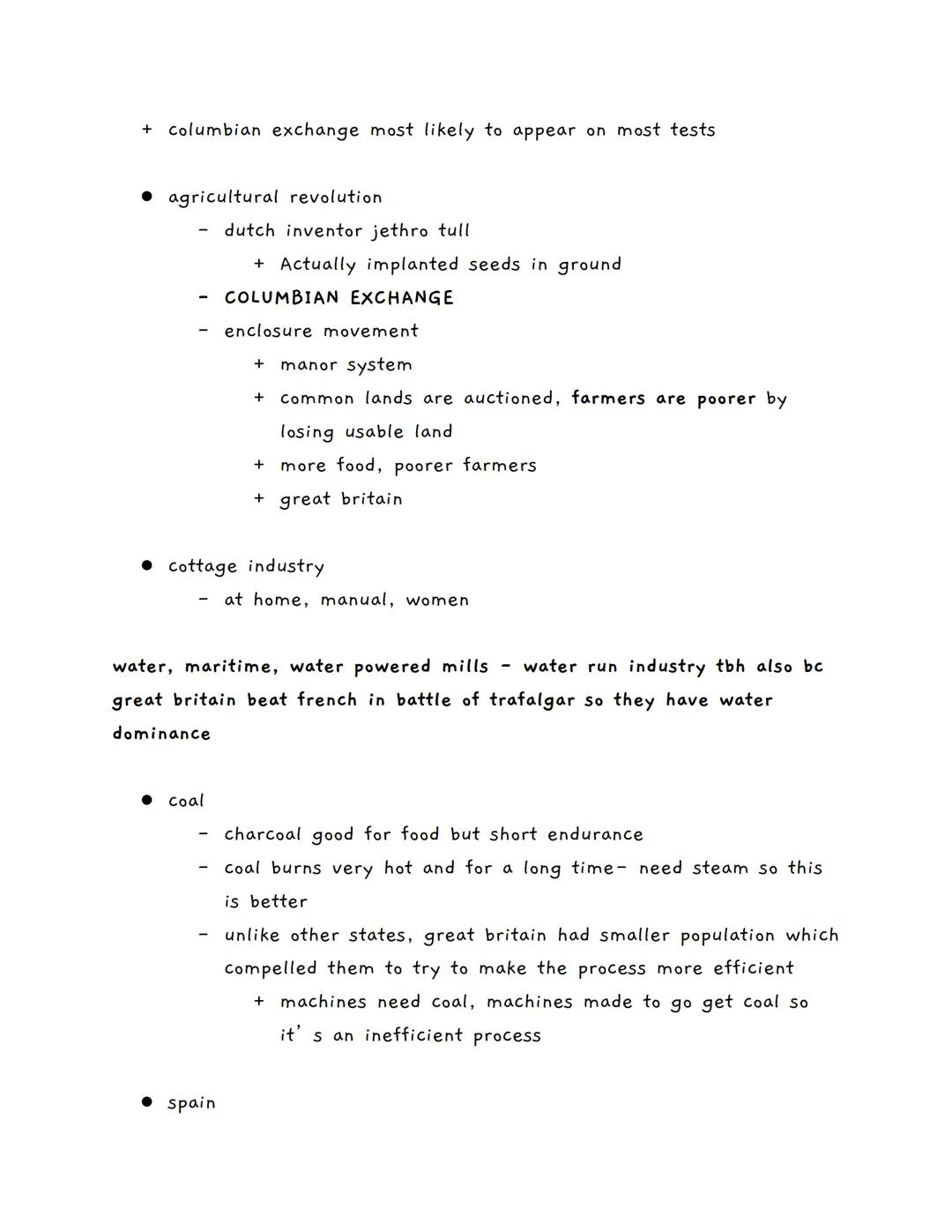
Agricultural Revolution and Early Industrialization
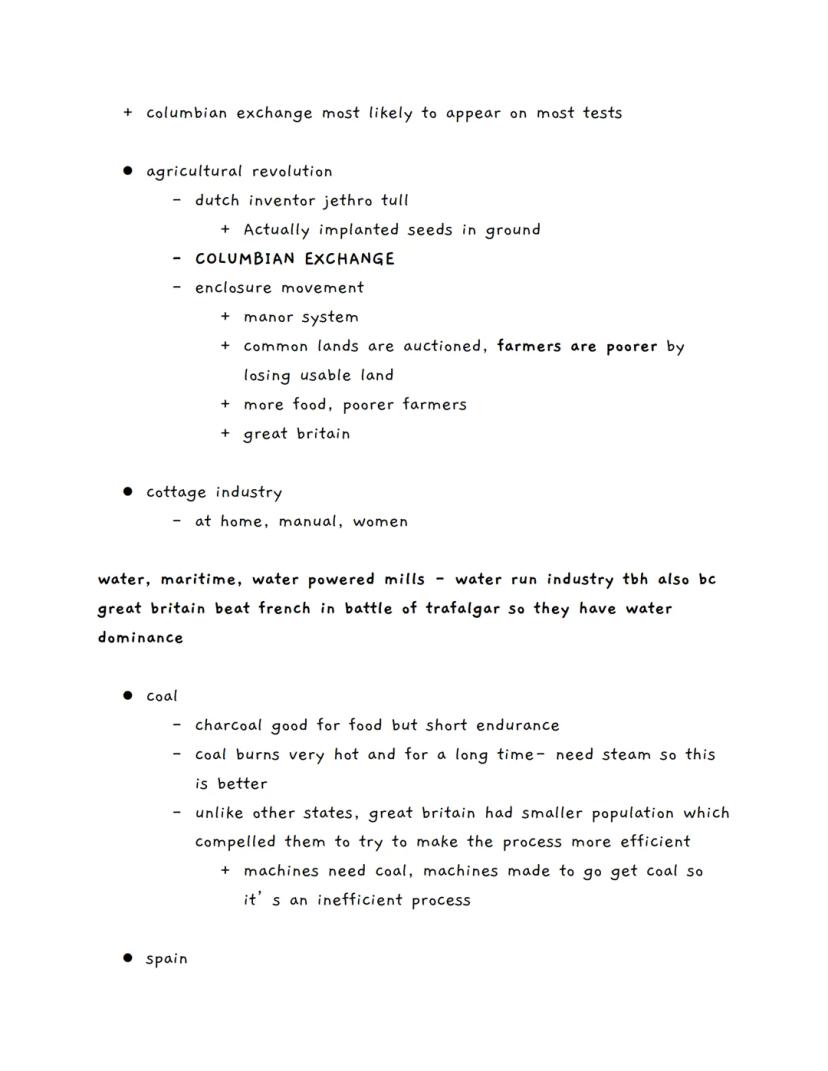
The Agricultural Revolution transformed farming with key innovations like Jethro Tull's seed planting method, which revolutionized crop production. This period also saw the controversial Enclosure Movement in Great Britain, where common lands were auctioned off to wealthy buyers. While this produced more food overall, it left many farmers poorer after losing access to land they had traditionally used.
Great Britain led industrialization partly due to its cottage industry traditions, where manual work was done at home, often by women. Britain's naval dominance after the Battle of Trafalgar gave them control of shipping routes, while their abundant coal resources proved crucial for powering new machines. Coal burned hotter and longer than charcoal, making it perfect for steam engines.
Did you know? Great Britain's relatively small population actually helped drive industrialization - they needed to make work processes more efficient because they had fewer workers available!
While Britain industrialized rapidly, other nations like Spain couldn't follow as quickly because their serfdom system legally prevented peasants from leaving farms to work in factories—showing how social systems could delay industrial development.
2
of 10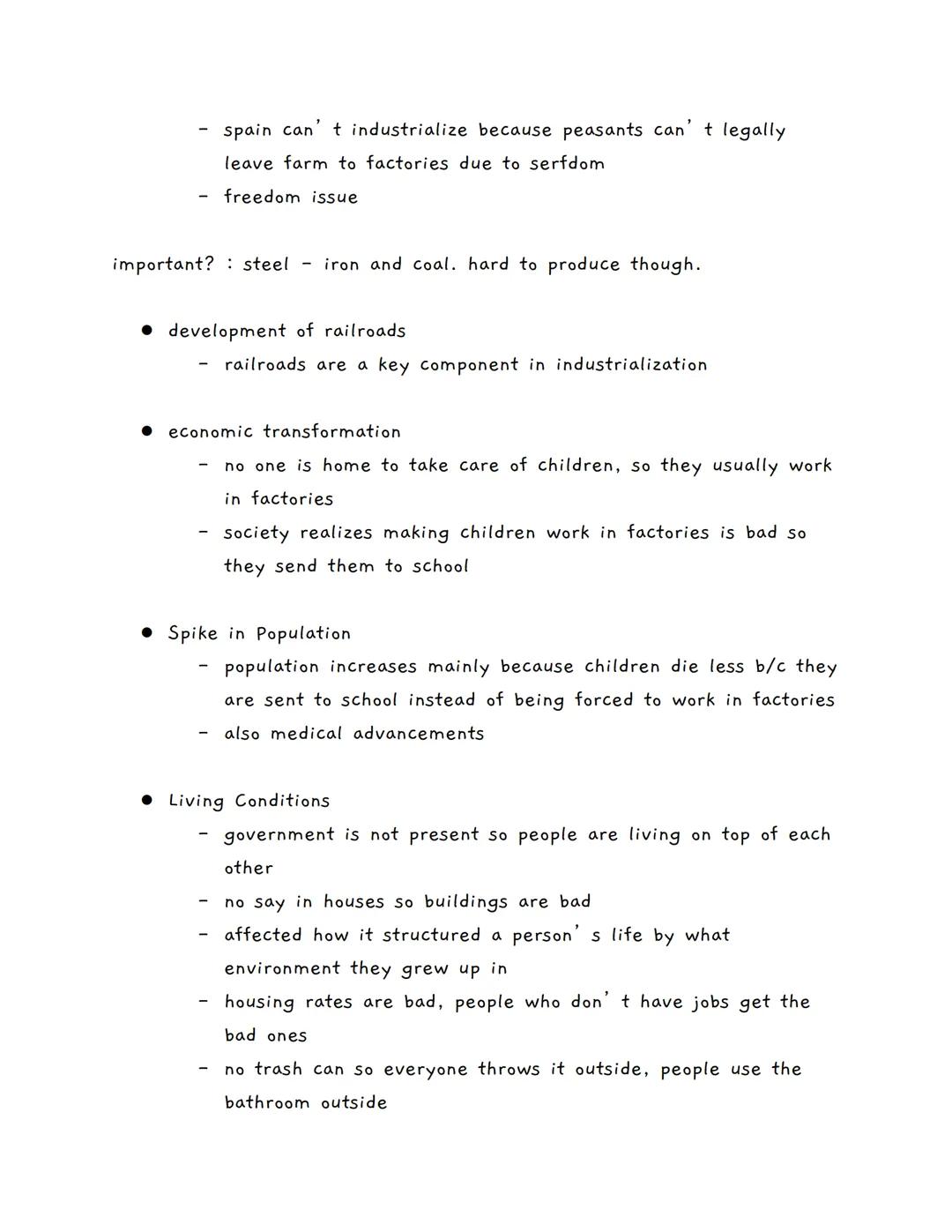
Economic and Social Transformation
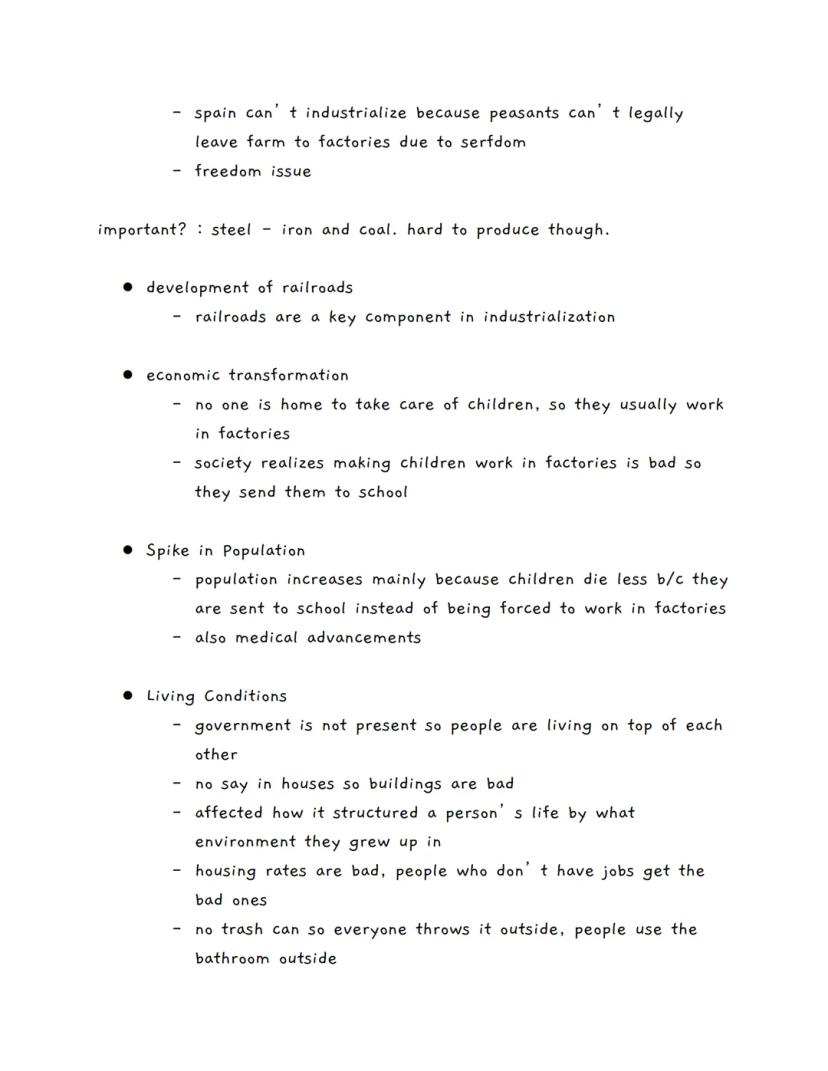
Railroads became a key component of industrialization, allowing factories to be built away from waterways and dramatically improving the transport of goods. This transportation revolution helped create specialized manufacturing and assembly lines, boosting productivity across industries.
As industrialization progressed, society began to shift. Children who once worked in dangerous factories were gradually sent to schools instead, which led to increased education levels and eventually expanded the middle class. This educational shift, combined with medical advancements, resulted in a significant population spike as child mortality decreased.
Living conditions during early industrialization were often terrible. With no government regulation, overcrowded housing became the norm for workers flooding into cities. Buildings were poorly constructed, and without proper infrastructure, people lived in extremely unhygienic environments. Housing rates soared while wages remained low, forcing families to accept whatever shelter they could find.
Imagine this: In early industrial cities, with no trash collection or plumbing, people simply threw waste outside and used the streets as toilets. Now picture getting your drinking water from a well contaminated by all this waste!
3
of 10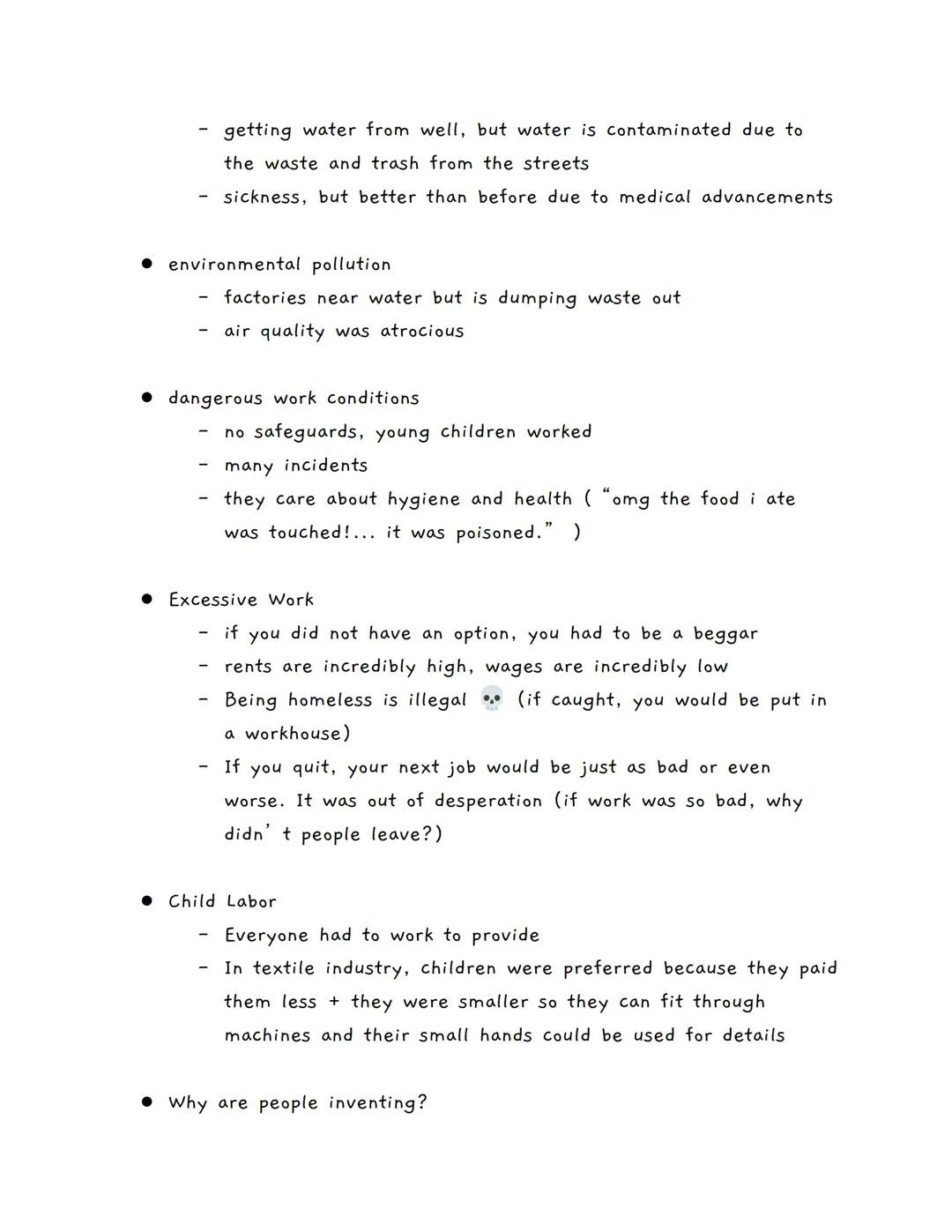
Industrial Challenges and Child Labor
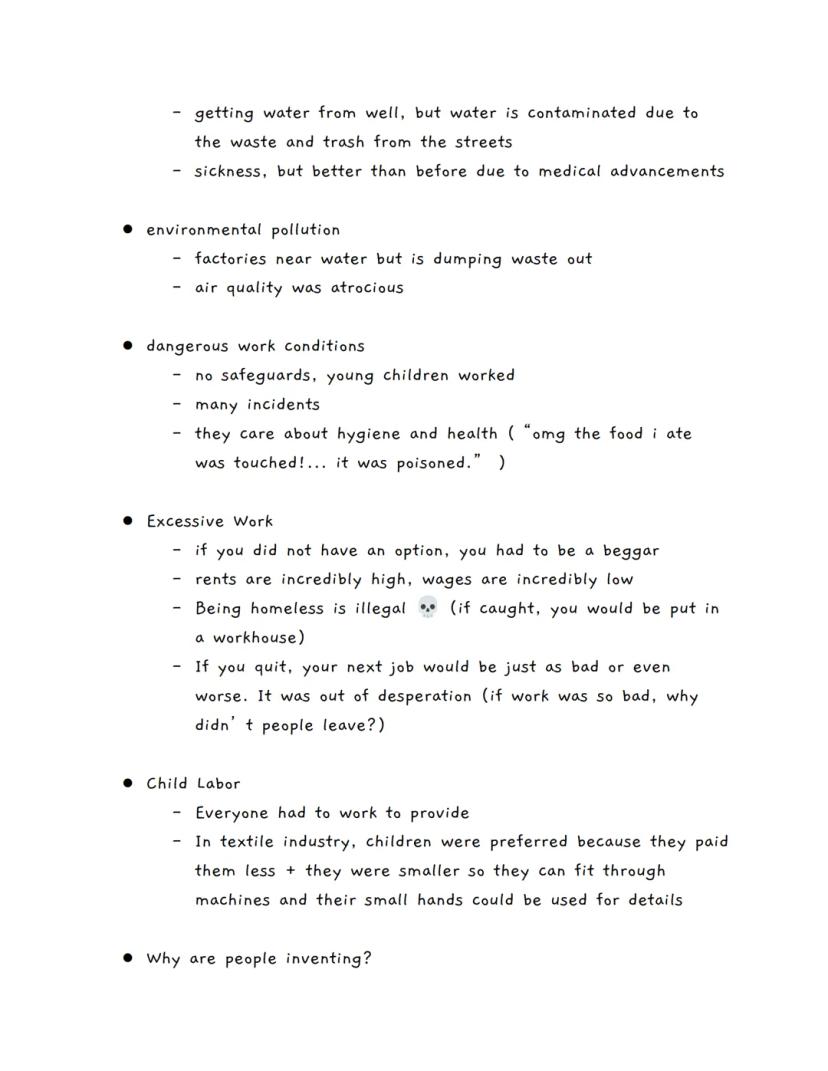
Early industrial cities suffered from severe environmental pollution. Factories built near waterways dumped waste directly into rivers, and thick smoke from coal-burning facilities created terrible air quality. Inside these factories, workers faced dangerous conditions with no safety regulations or protections.
The economic reality for most people was grim. With extremely low wages and high rents, everyone in a family had to work to survive. Being homeless was actually illegal, and those caught without housing would be forced into workhouses. Workers couldn't simply quit bad jobs because their alternatives were equally terrible or worse—they worked out of desperation.
Child labor was particularly widespread during this period. Children were preferred workers in textile factories because they could be paid less and their small hands could reach into tight spaces in machines. Their small size allowed them to move through narrow spaces in factory equipment, making them valuable to factory owners despite the obvious dangers.
Critical insight: Workers couldn't escape terrible conditions because the entire system was designed to maximize profit at their expense. If you quit one dangerous job, your next position would likely be just as hazardous or worse.
4
of 10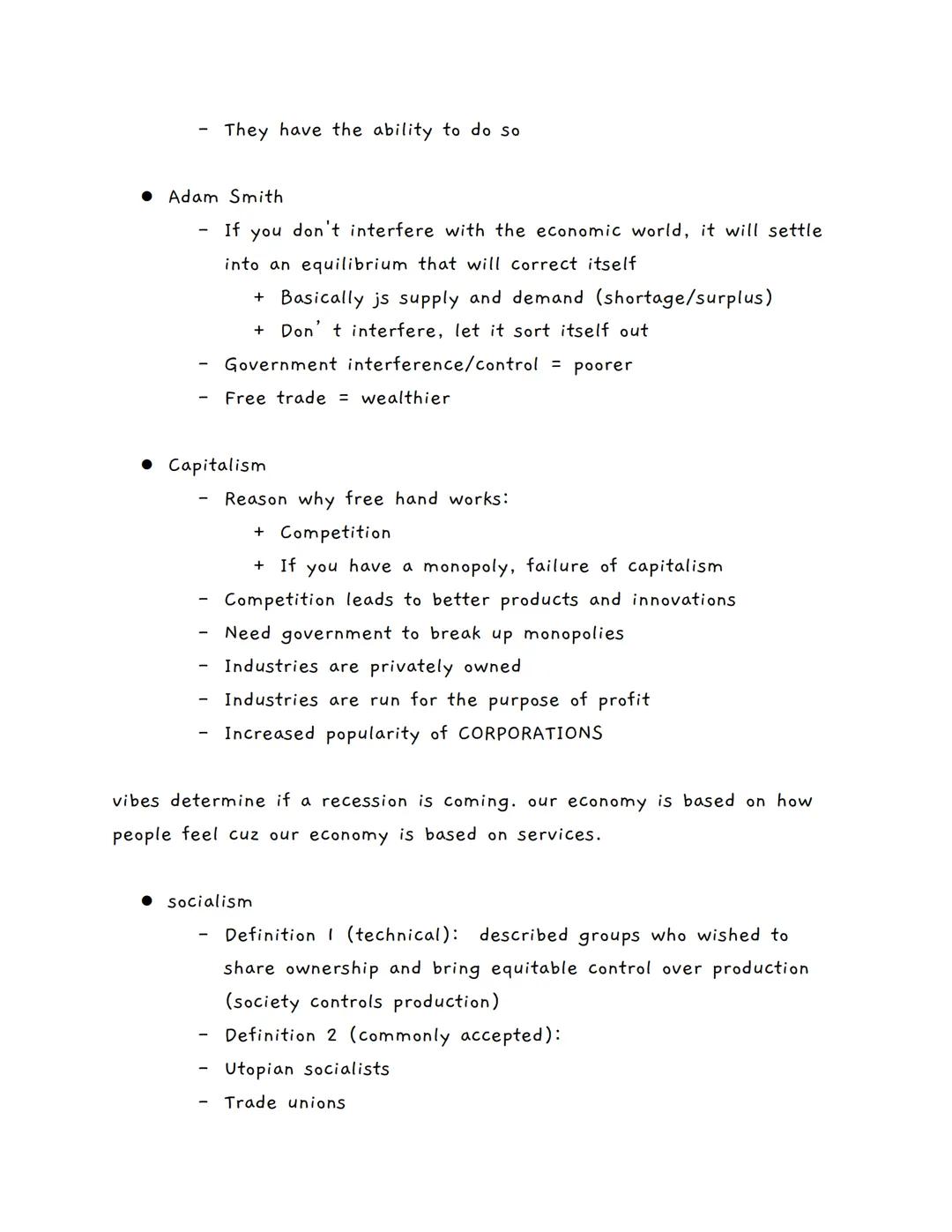
Economic Philosophies and Social Movements
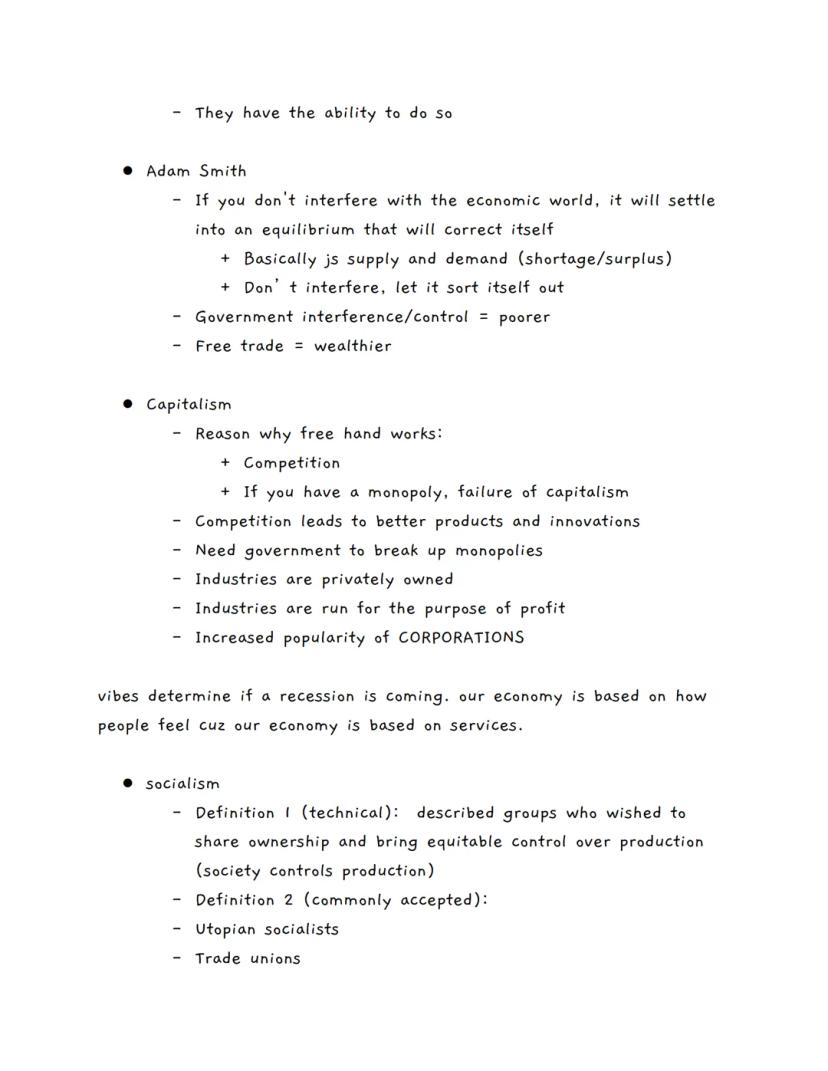
Adam Smith developed the concept of the "invisible hand" of the market, arguing that economies will naturally reach equilibrium through supply and demand if left alone. According to this view, government interference leads to poorer outcomes, while free trade creates more wealth. This philosophy formed the foundation of modern capitalism.
Under the capitalist system, industries are privately owned and operated for profit. For capitalism to work effectively, competition is essential—monopolies represent a failure of the system and typically require government intervention to break them up. The rise of industrialization also saw the increased popularity of corporations, allowing businesses to gather the large amounts of capital needed for new ventures.
As a response to capitalism's inequalities, various forms of socialism emerged. These ranged from utopian socialists who tried to create idealized work communities to trade unions organizing workers to protect their rights. The most influential socialist thinkers, Marx and Engels, advocated for the elimination of private property and a system where workers controlled the means of production.
Think about it: Our modern economy is largely based on feelings and perceptions! As the notes mention, "vibes determine if a recession is coming" because today's service-based economy depends heavily on consumer confidence.
5
of 10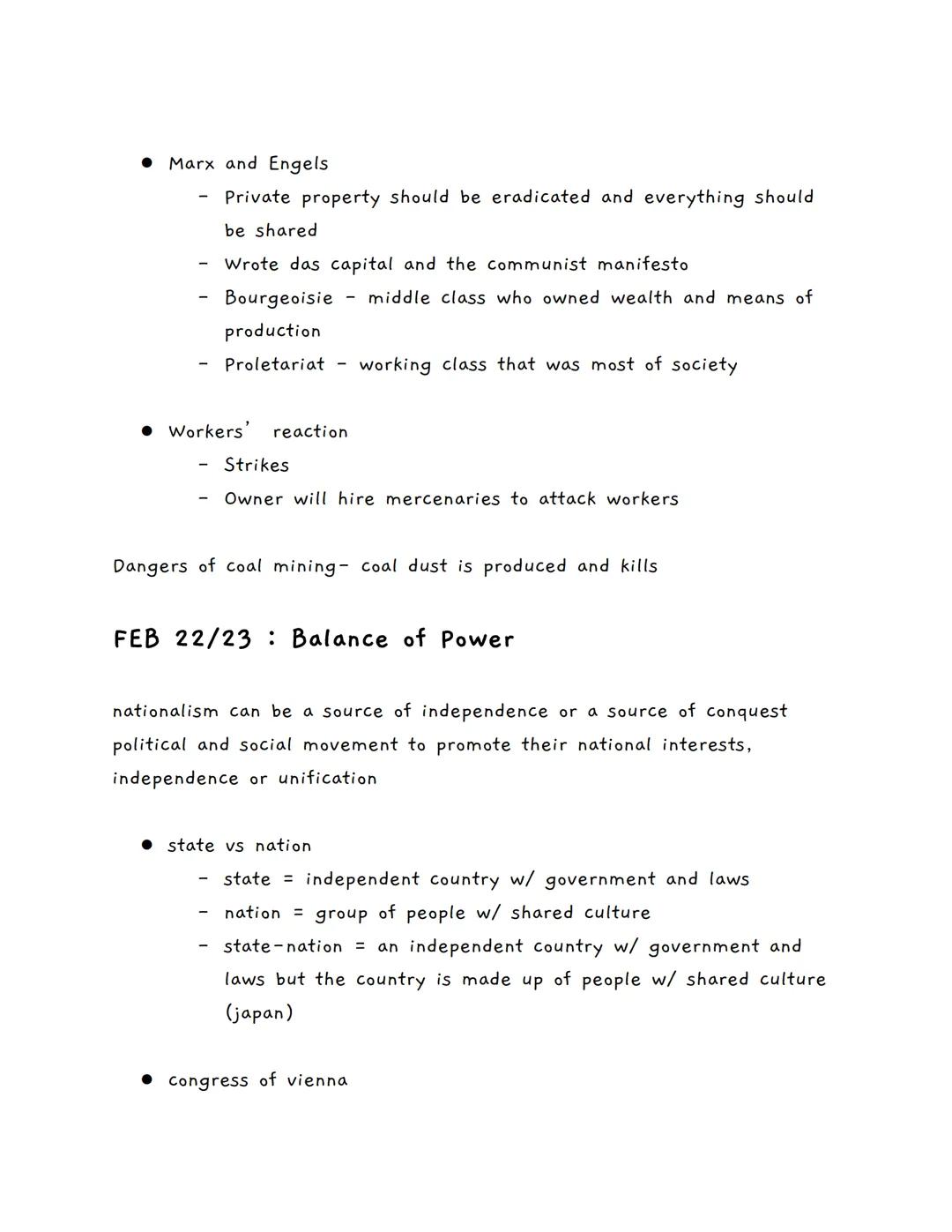
Class Conflict and Nationalism
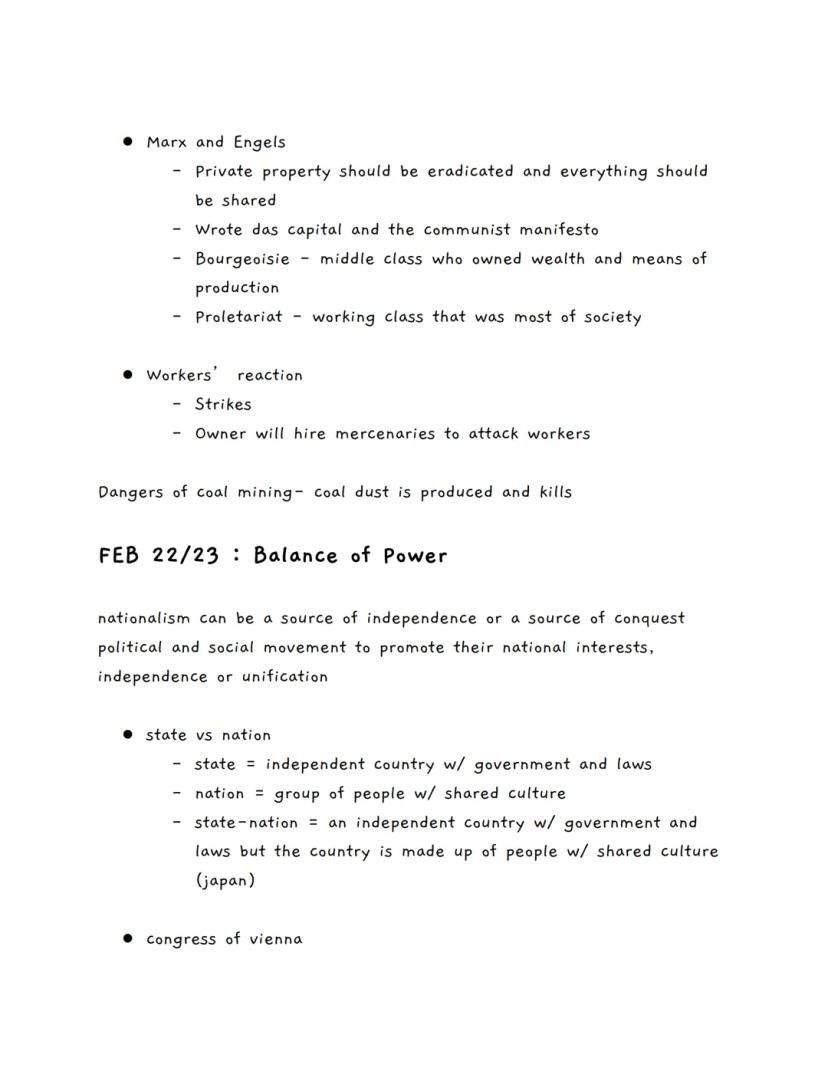
Marx and Engels identified a fundamental class struggle between the bourgeoisie and the proletariat . This analysis formed the basis of their works "Das Capital" and "The Communist Manifesto," which would inspire revolutionary movements for generations.
Worker discontent often led to strikes, which owners frequently responded to by hiring mercenaries to attack protesters. This violent response highlighted the extreme power imbalance in early industrial society. Even basic workplace hazards like coal dust went unaddressed, killing countless miners through respiratory diseases.
Nationalism emerged as a powerful political and social movement during this period. It could either inspire independence movements or fuel conquest and expansion. The distinction between a state (an independent country with a government and laws) and a nation (a group of people with shared culture) became increasingly important.
Key concept: A state-nation like Japan combines both elements - it's an independent country whose population shares a common culture. This alignment of political and cultural boundaries became an ideal that many nationalist movements strived to achieve.
6
of 10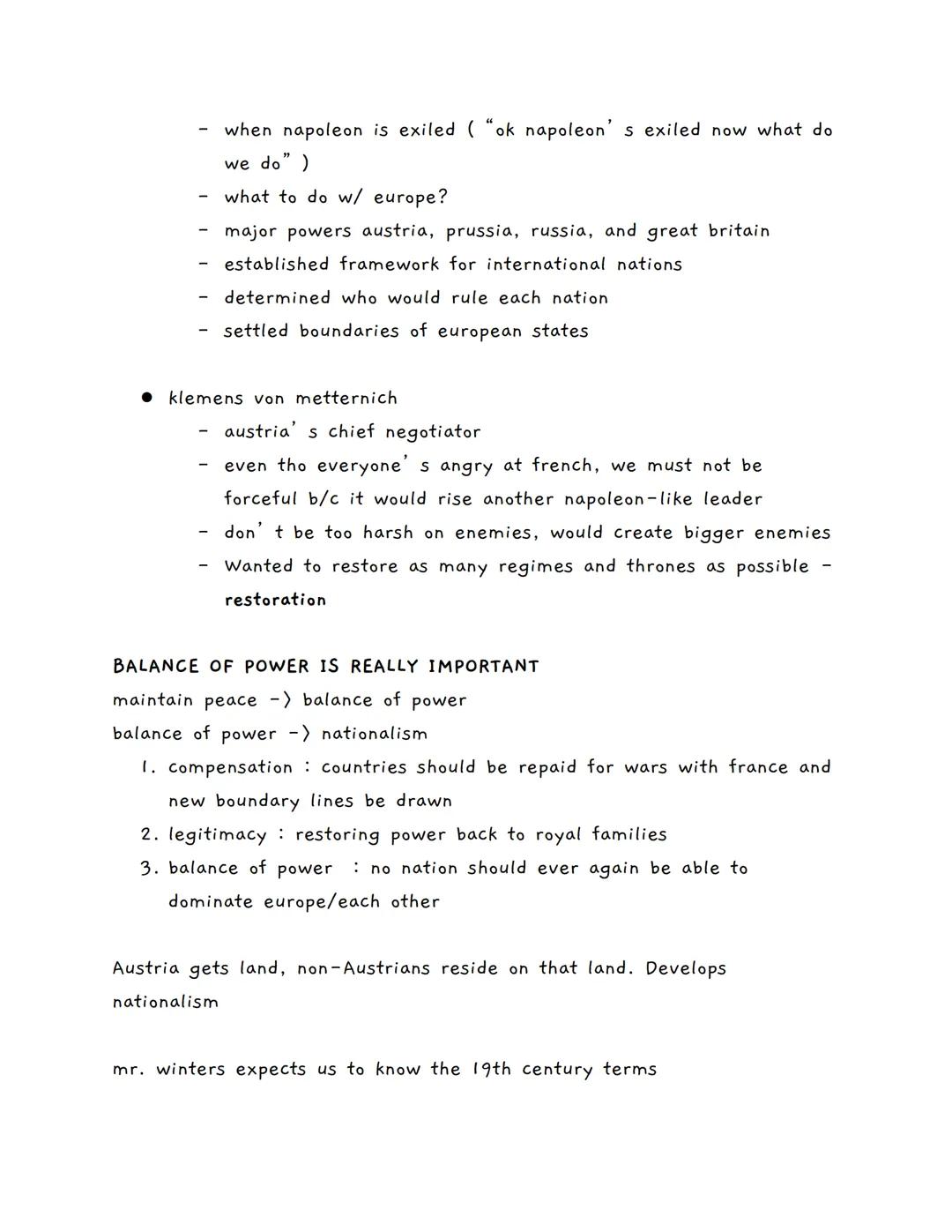
The Congress of Vienna and Balance of Power
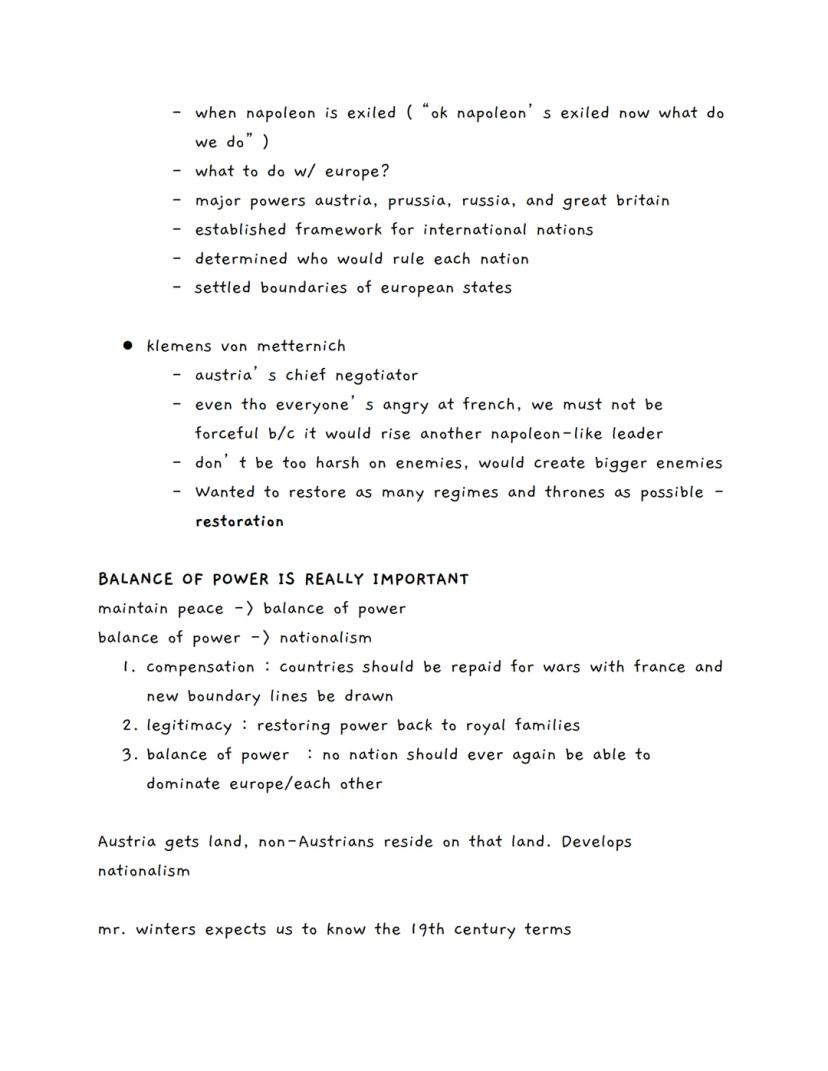
After Napoleon's exile, the major European powers (Austria, Prussia, Russia, and Great Britain) gathered at the Congress of Vienna to determine Europe's future. This pivotal meeting established a framework for international relations, settled boundaries, and decided who would rule each nation.
Austria's chief negotiator, Klemens von Metternich, advocated a careful approach. He warned against being too harsh on defeated France, fearing that extreme punishment would only create conditions for another Napoleon-like leader to rise. Instead, Metternich pushed for restoration of royal families to their thrones.
The Congress established three key principles to maintain peace:
- Compensation: Countries should be repaid for wars with France
- Legitimacy: Power should be restored to royal families
- Balance of Power: No nation should be able to dominate Europe
Important insight: The Congress of Vienna created new boundaries that ironically fueled nationalism. For example, Austria received lands with non-Austrian populations, creating tensions that would eventually contribute to nationalist movements across Europe.
7
of 10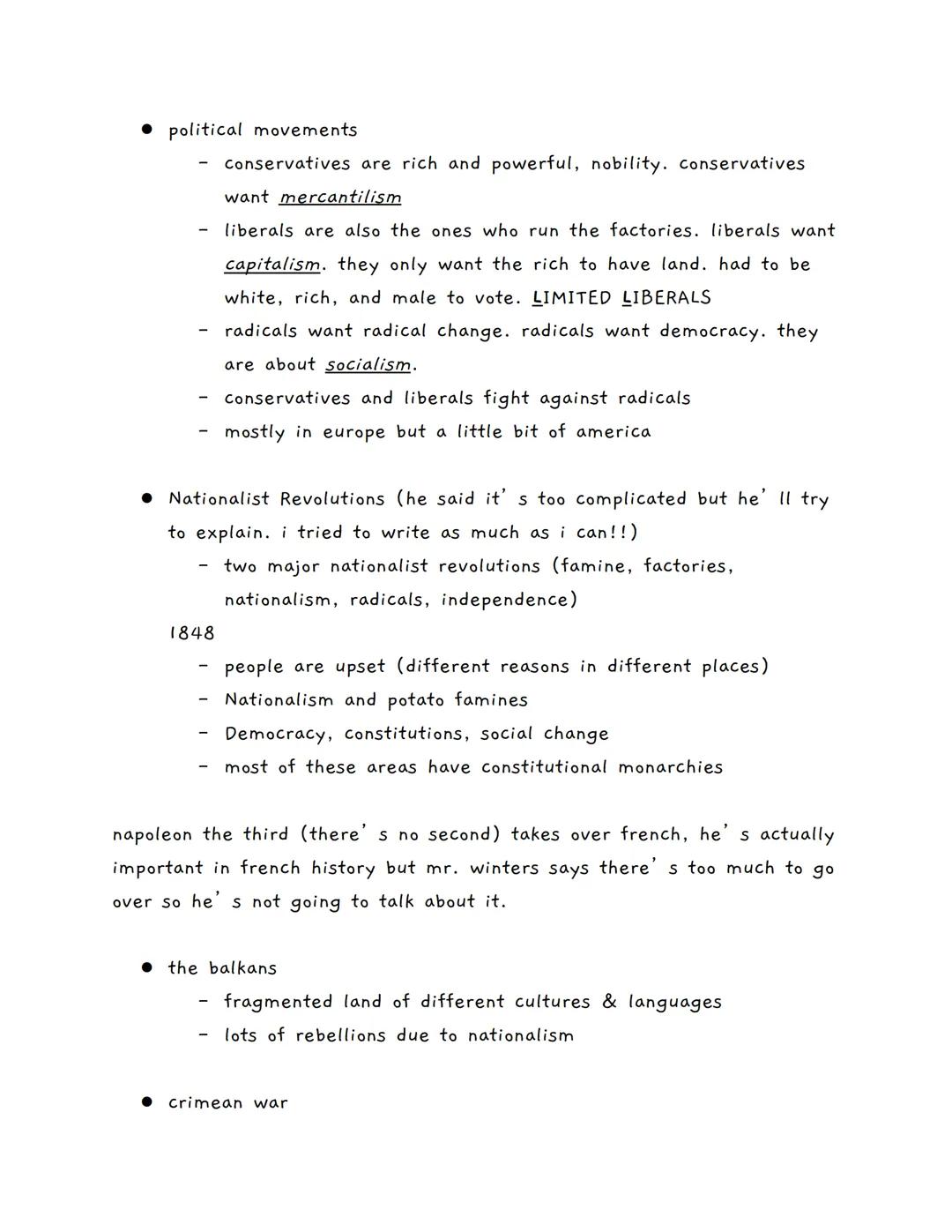
Political Movements and Nationalist Revolutions
Three major political movements competed for influence during this period:
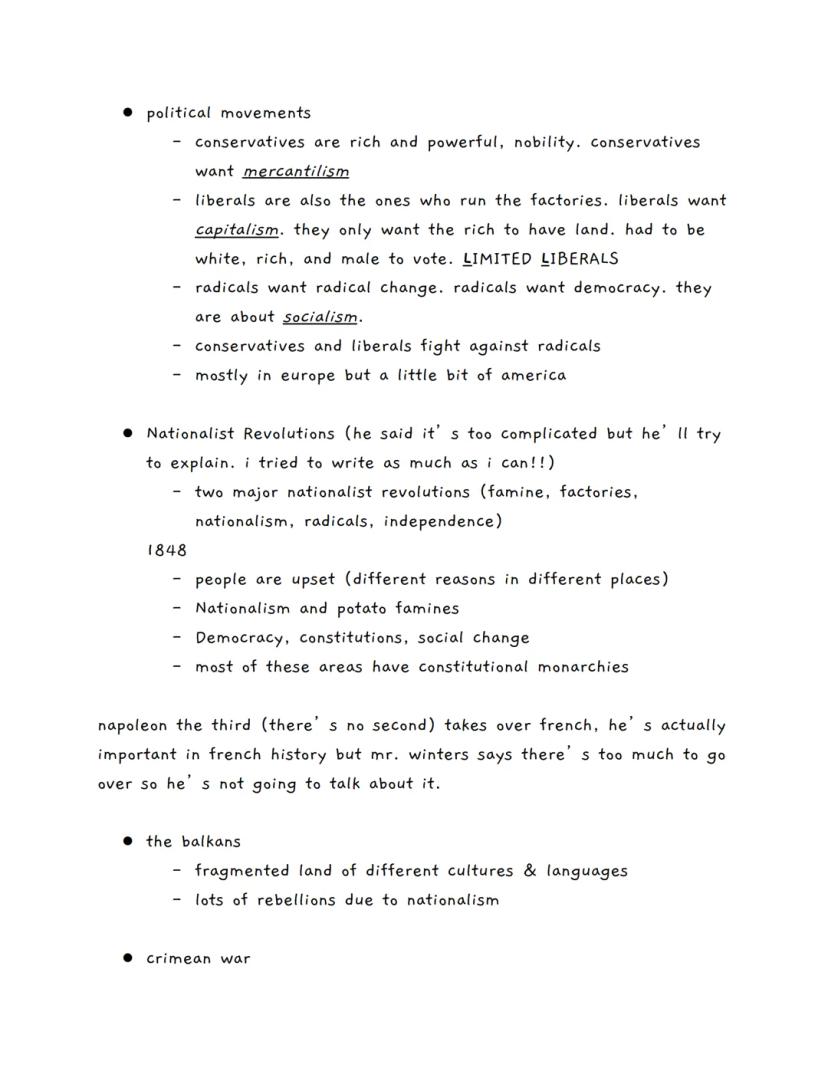
- Conservatives: Typically wealthy nobility who supported monarchies and traditional economic systems like mercantilism
- Liberals: Factory owners and businesspeople who wanted capitalism, but only allowed voting rights to rich, white men (known as "limited liberals")
- Radicals: Supporters of dramatic change who advocated for democracy and socialism
The year 1848 saw major nationalist revolutions across Europe triggered by a combination of factors: potato famines, factory conditions, rising nationalism, and radical political ideas. These revolutions pushed for democracy, constitutions, and social reforms, resulting in constitutional monarchies in many regions.
The Balkans became a particularly volatile region due to its fragmented nature, with different cultures and languages living in close proximity. This diversity led to numerous nationalist rebellions as groups sought independence or unification with culturally similar neighbors.
Remember this: Conservatives and liberals often found common ground in opposing radical movements, despite their other differences. Both groups wanted to maintain certain power structures, while radicals threatened to overturn the entire system.
8
of 10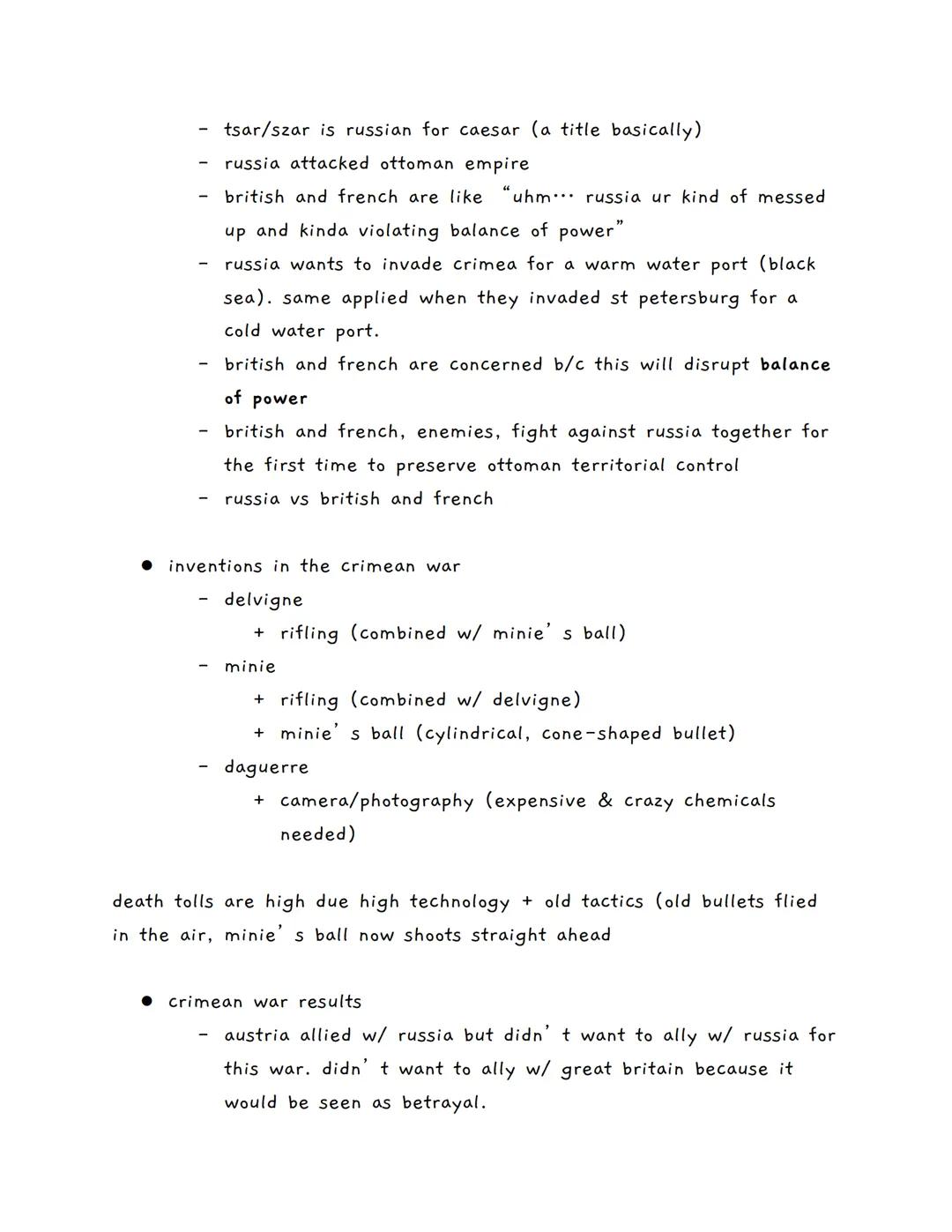
The Crimean War and Military Innovations
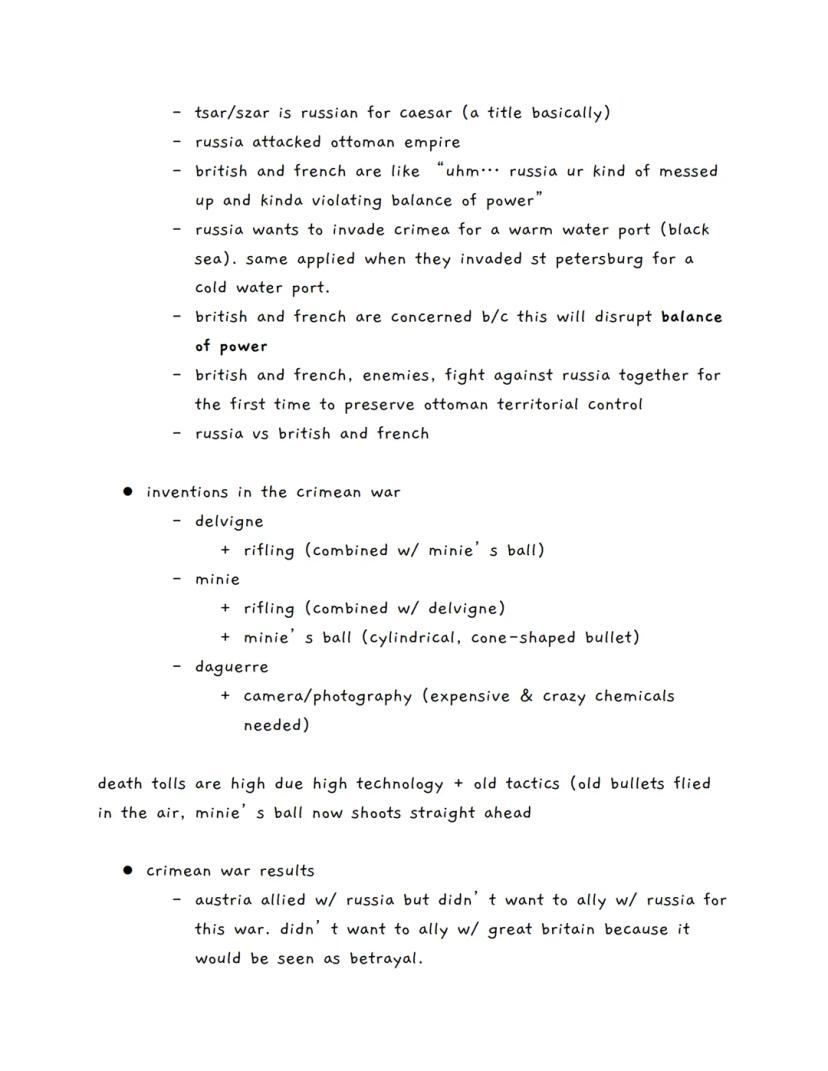
The Crimean War erupted when Russia attacked the Ottoman Empire in search of a warm-water port in the Black Sea. Britain and France, concerned that Russian expansion would disrupt the balance of power in Europe, set aside their traditional enmity to fight together against Russia in defense of Ottoman territory.
This conflict saw several important military innovations that changed warfare forever:
- Rifling technology (developed by Delvigne and Minié) created guns that could fire accurately over longer distances
- The Minié ball bullet revolutionized ammunition with its cone-shaped design
- Photography (pioneered by Daguerre) documented war for the first time, though the process was expensive and chemically complex
The combination of these new technologies with outdated tactics led to horrific casualty rates. Unlike old musket balls that flew unpredictably, the new Minié balls flew straight at their targets, making traditional line formations incredibly deadly.
Technological turning point: The Crimean War marked one of the first times when emerging technology dramatically outpaced military tactics, creating a deadly mismatch that would be repeated in future conflicts like World War I.
9
of 10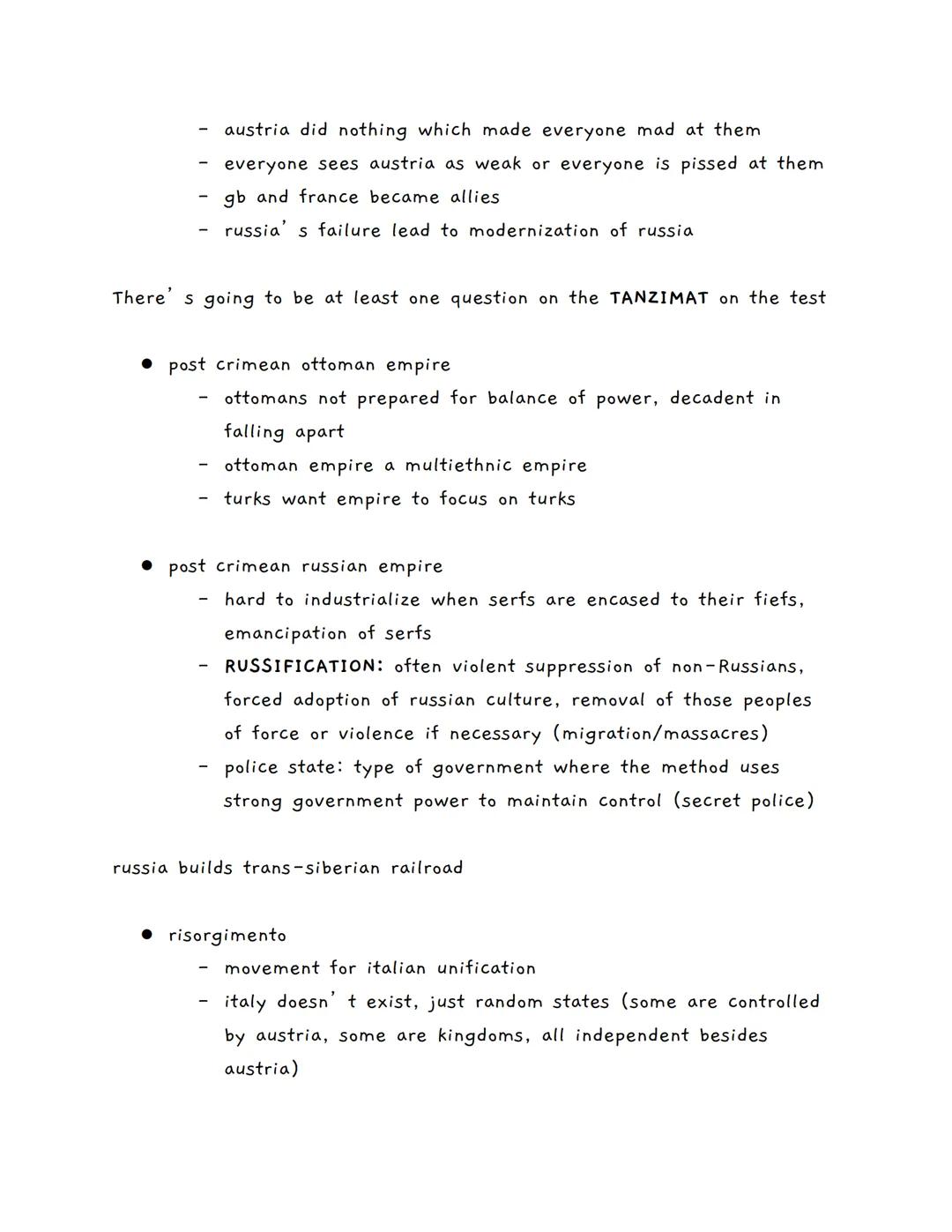
Post-Crimean War Developments
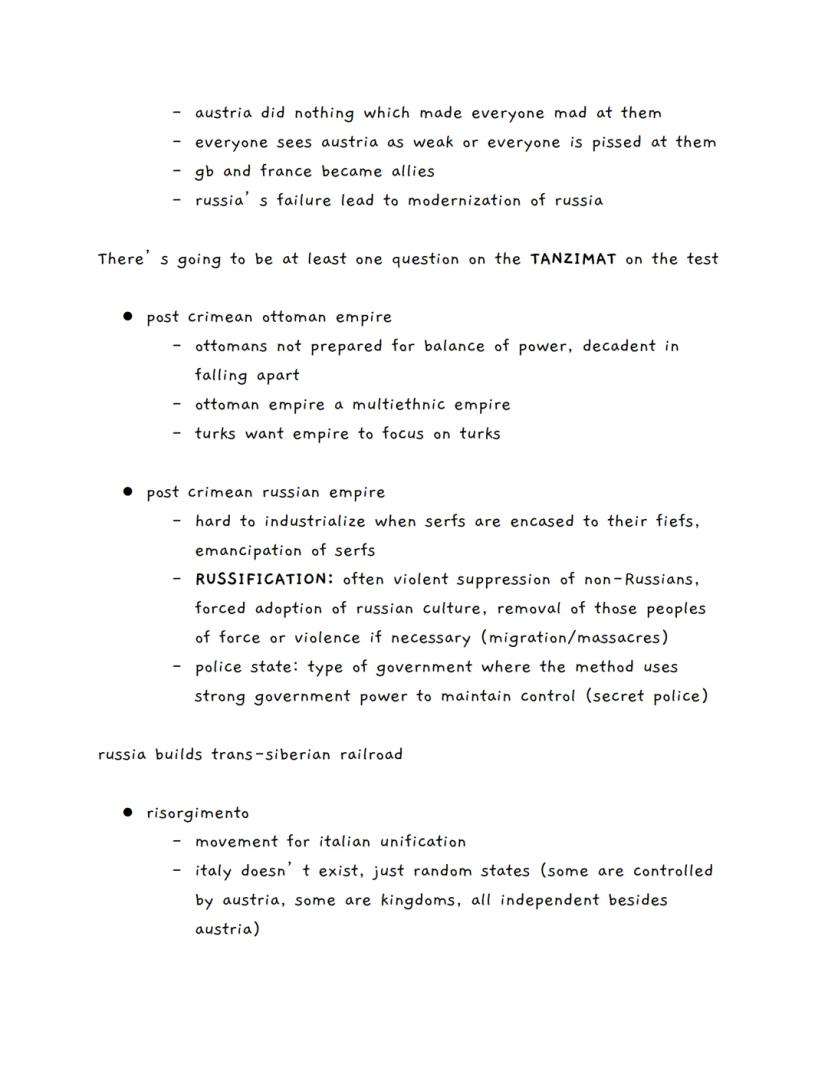
The Crimean War had far-reaching consequences across Europe. Austria's neutrality during the conflict backfired spectacularly—by not supporting either side, they ended up alienating everyone. Russia, humiliated by its defeat, recognized its technological backwardness and launched modernization efforts, including the emancipation of serfs to enable industrialization.
The Ottoman Empire struggled to maintain its position in the European balance of power. As a multi-ethnic empire, it faced growing nationalist movements from within. The Turks increasingly wanted the empire to focus on Turkish interests, creating tensions with other ethnic groups under Ottoman rule.
Russia responded to its own internal nationalist challenges through aggressive Russification policies. These included the violent suppression of non-Russian cultures, forced adoption of Russian language and customs, and sometimes outright removal of minority populations through forced migration or massacres. The government maintained control through a police state with secret police monitoring citizens.
Test tip: Your instructor specifically mentioned that the TANZIMAT reforms (the Ottoman modernization period) will appear on your test, so be sure to remember this term and its connection to post-Crimean Ottoman attempts at reform!
10
of 10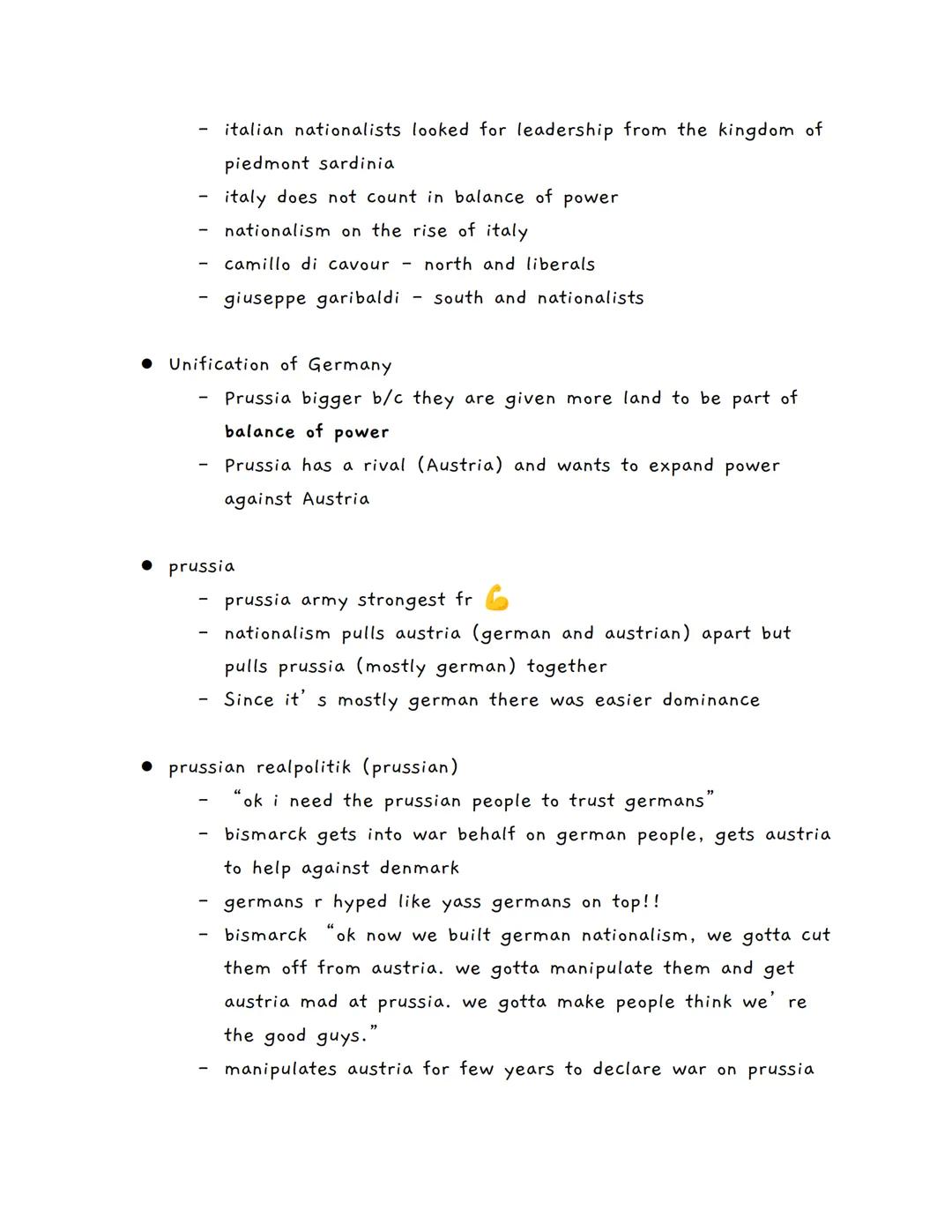
Italian and German Unification
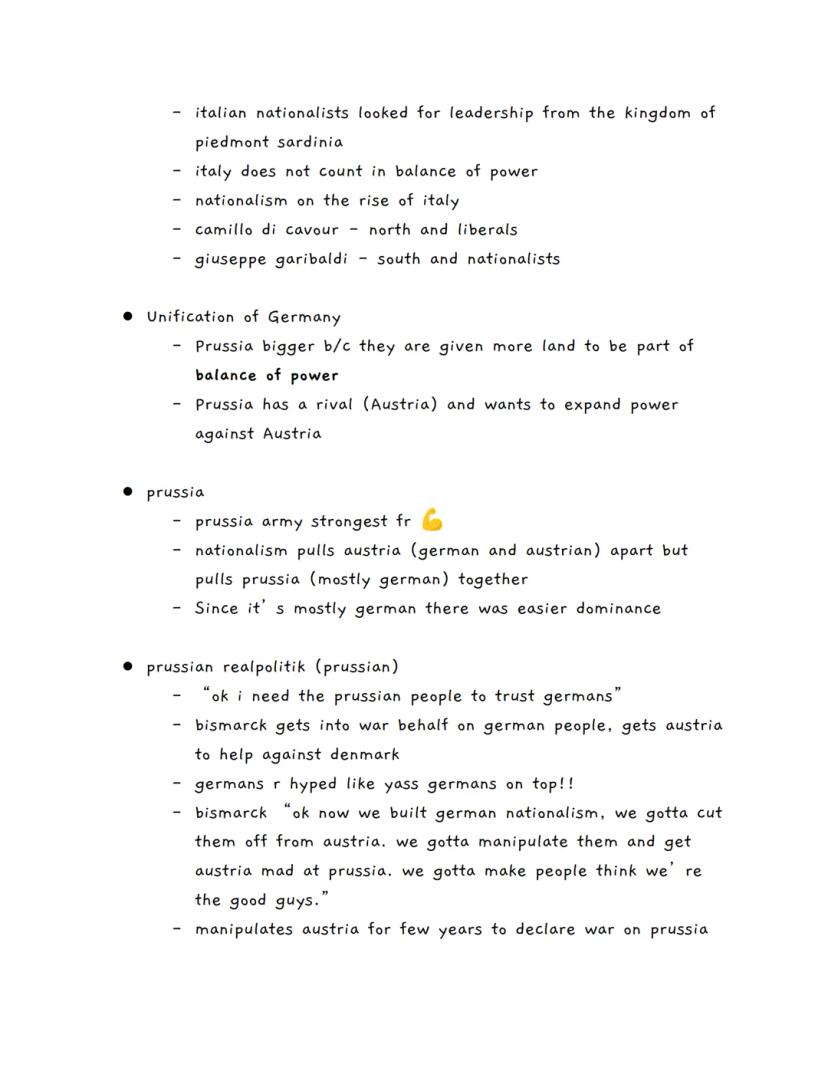
The Risorgimento movement sought to unify the various Italian states into a single nation. Before unification, "Italy" didn't exist as a country—just a collection of independent states, some under Austrian control. Italian nationalists looked to the Kingdom of Piedmont-Sardinia for leadership, with figures like Camillo di Cavour and Giuseppe Garibaldi playing crucial roles in the unification process.
Prussia emerged as the dominant German state in the mid-19th century. Unlike the multi-ethnic Austrian Empire, Prussia was predominantly German, which allowed nationalism to strengthen rather than divide it. Under the leadership of Otto von Bismarck, Prussia employed a calculated Realpolitik approach to unification.
Bismarck masterfully manipulated events to build German nationalism. First, he allied with Austria against Denmark to foster German pride. Then, he maneuvered Austria into declaring war on Prussia, making them appear as the aggressors. Finally, he united the German states against France in the Franco-Prussian War, which culminated in the siege of Paris and widespread famine.
Brilliant strategy: Bismarck's three-war approach to German unification shows how nationalism can be deliberately cultivated. By creating common enemies and positioning Prussia as the defender of German interests, he transformed separate states into a unified nation.
We thought you’d never ask...
What is the Knowunity AI companion?
Our AI Companion is a student-focused AI tool that offers more than just answers. Built on millions of Knowunity resources, it provides relevant information, personalised study plans, quizzes, and content directly in the chat, adapting to your individual learning journey.
Where can I download the Knowunity app?
You can download the app from Google Play Store and Apple App Store.
Is Knowunity really free of charge?
That's right! Enjoy free access to study content, connect with fellow students, and get instant help – all at your fingertips.
Most popular content in AP World History
9Most popular content
9Can't find what you're looking for? Explore other subjects.
Students love us — and so will you.
4.6/5App Store
4.7/5Google Play
The app is very easy to use and well designed. I have found everything I was looking for so far and have been able to learn a lot from the presentations! I will definitely use the app for a class assignment! And of course it also helps a lot as an inspiration.
Stefan SiOS user
This app is really great. There are so many study notes and help [...]. My problem subject is French, for example, and the app has so many options for help. Thanks to this app, I have improved my French. I would recommend it to anyone.
Samantha KlichAndroid user
Wow, I am really amazed. I just tried the app because I've seen it advertised many times and was absolutely stunned. This app is THE HELP you want for school and above all, it offers so many things, such as workouts and fact sheets, which have been VERY helpful to me personally.
AnnaiOS user
AP World History199 views·Updated May 31, 2026·21 pagesAP World History Notes: Unit 10 - Industrial Revolution
amy ☆@amy_.t
Get ready to dive into key historical developments that shaped our world today! From agricultural revolutions to industrial transformations and political movements, these notes cover major turning points that changed how people lived, worked, and organized their societies.
1
of 10Sign up to see the content. It's free!
- Access to all documents
- Improve your grades
- Join milions of students
Agricultural Revolution and Early Industrialization
The Agricultural Revolution transformed farming with key innovations like Jethro Tull's seed planting method, which revolutionized crop production. This period also saw the controversial Enclosure Movement in Great Britain, where common lands were auctioned off to wealthy buyers. While this produced more food overall, it left many farmers poorer after losing access to land they had traditionally used.
Great Britain led industrialization partly due to its cottage industry traditions, where manual work was done at home, often by women. Britain's naval dominance after the Battle of Trafalgar gave them control of shipping routes, while their abundant coal resources proved crucial for powering new machines. Coal burned hotter and longer than charcoal, making it perfect for steam engines.
Did you know? Great Britain's relatively small population actually helped drive industrialization - they needed to make work processes more efficient because they had fewer workers available!
While Britain industrialized rapidly, other nations like Spain couldn't follow as quickly because their serfdom system legally prevented peasants from leaving farms to work in factories—showing how social systems could delay industrial development.
2
of 10Sign up to see the content. It's free!
- Access to all documents
- Improve your grades
- Join milions of students
Economic and Social Transformation
Railroads became a key component of industrialization, allowing factories to be built away from waterways and dramatically improving the transport of goods. This transportation revolution helped create specialized manufacturing and assembly lines, boosting productivity across industries.
As industrialization progressed, society began to shift. Children who once worked in dangerous factories were gradually sent to schools instead, which led to increased education levels and eventually expanded the middle class. This educational shift, combined with medical advancements, resulted in a significant population spike as child mortality decreased.
Living conditions during early industrialization were often terrible. With no government regulation, overcrowded housing became the norm for workers flooding into cities. Buildings were poorly constructed, and without proper infrastructure, people lived in extremely unhygienic environments. Housing rates soared while wages remained low, forcing families to accept whatever shelter they could find.
Imagine this: In early industrial cities, with no trash collection or plumbing, people simply threw waste outside and used the streets as toilets. Now picture getting your drinking water from a well contaminated by all this waste!
3
of 10Sign up to see the content. It's free!
- Access to all documents
- Improve your grades
- Join milions of students
Industrial Challenges and Child Labor
Early industrial cities suffered from severe environmental pollution. Factories built near waterways dumped waste directly into rivers, and thick smoke from coal-burning facilities created terrible air quality. Inside these factories, workers faced dangerous conditions with no safety regulations or protections.
The economic reality for most people was grim. With extremely low wages and high rents, everyone in a family had to work to survive. Being homeless was actually illegal, and those caught without housing would be forced into workhouses. Workers couldn't simply quit bad jobs because their alternatives were equally terrible or worse—they worked out of desperation.
Child labor was particularly widespread during this period. Children were preferred workers in textile factories because they could be paid less and their small hands could reach into tight spaces in machines. Their small size allowed them to move through narrow spaces in factory equipment, making them valuable to factory owners despite the obvious dangers.
Critical insight: Workers couldn't escape terrible conditions because the entire system was designed to maximize profit at their expense. If you quit one dangerous job, your next position would likely be just as hazardous or worse.
4
of 10Sign up to see the content. It's free!
- Access to all documents
- Improve your grades
- Join milions of students
Economic Philosophies and Social Movements
Adam Smith developed the concept of the "invisible hand" of the market, arguing that economies will naturally reach equilibrium through supply and demand if left alone. According to this view, government interference leads to poorer outcomes, while free trade creates more wealth. This philosophy formed the foundation of modern capitalism.
Under the capitalist system, industries are privately owned and operated for profit. For capitalism to work effectively, competition is essential—monopolies represent a failure of the system and typically require government intervention to break them up. The rise of industrialization also saw the increased popularity of corporations, allowing businesses to gather the large amounts of capital needed for new ventures.
As a response to capitalism's inequalities, various forms of socialism emerged. These ranged from utopian socialists who tried to create idealized work communities to trade unions organizing workers to protect their rights. The most influential socialist thinkers, Marx and Engels, advocated for the elimination of private property and a system where workers controlled the means of production.
Think about it: Our modern economy is largely based on feelings and perceptions! As the notes mention, "vibes determine if a recession is coming" because today's service-based economy depends heavily on consumer confidence.
5
of 10Sign up to see the content. It's free!
- Access to all documents
- Improve your grades
- Join milions of students
Class Conflict and Nationalism
Marx and Engels identified a fundamental class struggle between the bourgeoisie and the proletariat . This analysis formed the basis of their works "Das Capital" and "The Communist Manifesto," which would inspire revolutionary movements for generations.
Worker discontent often led to strikes, which owners frequently responded to by hiring mercenaries to attack protesters. This violent response highlighted the extreme power imbalance in early industrial society. Even basic workplace hazards like coal dust went unaddressed, killing countless miners through respiratory diseases.
Nationalism emerged as a powerful political and social movement during this period. It could either inspire independence movements or fuel conquest and expansion. The distinction between a state (an independent country with a government and laws) and a nation (a group of people with shared culture) became increasingly important.
Key concept: A state-nation like Japan combines both elements - it's an independent country whose population shares a common culture. This alignment of political and cultural boundaries became an ideal that many nationalist movements strived to achieve.
6
of 10Sign up to see the content. It's free!
- Access to all documents
- Improve your grades
- Join milions of students
The Congress of Vienna and Balance of Power
After Napoleon's exile, the major European powers (Austria, Prussia, Russia, and Great Britain) gathered at the Congress of Vienna to determine Europe's future. This pivotal meeting established a framework for international relations, settled boundaries, and decided who would rule each nation.
Austria's chief negotiator, Klemens von Metternich, advocated a careful approach. He warned against being too harsh on defeated France, fearing that extreme punishment would only create conditions for another Napoleon-like leader to rise. Instead, Metternich pushed for restoration of royal families to their thrones.
The Congress established three key principles to maintain peace:
- Compensation: Countries should be repaid for wars with France
- Legitimacy: Power should be restored to royal families
- Balance of Power: No nation should be able to dominate Europe
Important insight: The Congress of Vienna created new boundaries that ironically fueled nationalism. For example, Austria received lands with non-Austrian populations, creating tensions that would eventually contribute to nationalist movements across Europe.
7
of 10Sign up to see the content. It's free!
- Access to all documents
- Improve your grades
- Join milions of students
Political Movements and Nationalist Revolutions
Three major political movements competed for influence during this period:
- Conservatives: Typically wealthy nobility who supported monarchies and traditional economic systems like mercantilism
- Liberals: Factory owners and businesspeople who wanted capitalism, but only allowed voting rights to rich, white men (known as "limited liberals")
- Radicals: Supporters of dramatic change who advocated for democracy and socialism
The year 1848 saw major nationalist revolutions across Europe triggered by a combination of factors: potato famines, factory conditions, rising nationalism, and radical political ideas. These revolutions pushed for democracy, constitutions, and social reforms, resulting in constitutional monarchies in many regions.
The Balkans became a particularly volatile region due to its fragmented nature, with different cultures and languages living in close proximity. This diversity led to numerous nationalist rebellions as groups sought independence or unification with culturally similar neighbors.
Remember this: Conservatives and liberals often found common ground in opposing radical movements, despite their other differences. Both groups wanted to maintain certain power structures, while radicals threatened to overturn the entire system.
8
of 10Sign up to see the content. It's free!
- Access to all documents
- Improve your grades
- Join milions of students
The Crimean War and Military Innovations
The Crimean War erupted when Russia attacked the Ottoman Empire in search of a warm-water port in the Black Sea. Britain and France, concerned that Russian expansion would disrupt the balance of power in Europe, set aside their traditional enmity to fight together against Russia in defense of Ottoman territory.
This conflict saw several important military innovations that changed warfare forever:
- Rifling technology (developed by Delvigne and Minié) created guns that could fire accurately over longer distances
- The Minié ball bullet revolutionized ammunition with its cone-shaped design
- Photography (pioneered by Daguerre) documented war for the first time, though the process was expensive and chemically complex
The combination of these new technologies with outdated tactics led to horrific casualty rates. Unlike old musket balls that flew unpredictably, the new Minié balls flew straight at their targets, making traditional line formations incredibly deadly.
Technological turning point: The Crimean War marked one of the first times when emerging technology dramatically outpaced military tactics, creating a deadly mismatch that would be repeated in future conflicts like World War I.
9
of 10Sign up to see the content. It's free!
- Access to all documents
- Improve your grades
- Join milions of students
Post-Crimean War Developments
The Crimean War had far-reaching consequences across Europe. Austria's neutrality during the conflict backfired spectacularly—by not supporting either side, they ended up alienating everyone. Russia, humiliated by its defeat, recognized its technological backwardness and launched modernization efforts, including the emancipation of serfs to enable industrialization.
The Ottoman Empire struggled to maintain its position in the European balance of power. As a multi-ethnic empire, it faced growing nationalist movements from within. The Turks increasingly wanted the empire to focus on Turkish interests, creating tensions with other ethnic groups under Ottoman rule.
Russia responded to its own internal nationalist challenges through aggressive Russification policies. These included the violent suppression of non-Russian cultures, forced adoption of Russian language and customs, and sometimes outright removal of minority populations through forced migration or massacres. The government maintained control through a police state with secret police monitoring citizens.
Test tip: Your instructor specifically mentioned that the TANZIMAT reforms (the Ottoman modernization period) will appear on your test, so be sure to remember this term and its connection to post-Crimean Ottoman attempts at reform!
10
of 10Sign up to see the content. It's free!
- Access to all documents
- Improve your grades
- Join milions of students
Italian and German Unification
The Risorgimento movement sought to unify the various Italian states into a single nation. Before unification, "Italy" didn't exist as a country—just a collection of independent states, some under Austrian control. Italian nationalists looked to the Kingdom of Piedmont-Sardinia for leadership, with figures like Camillo di Cavour and Giuseppe Garibaldi playing crucial roles in the unification process.
Prussia emerged as the dominant German state in the mid-19th century. Unlike the multi-ethnic Austrian Empire, Prussia was predominantly German, which allowed nationalism to strengthen rather than divide it. Under the leadership of Otto von Bismarck, Prussia employed a calculated Realpolitik approach to unification.
Bismarck masterfully manipulated events to build German nationalism. First, he allied with Austria against Denmark to foster German pride. Then, he maneuvered Austria into declaring war on Prussia, making them appear as the aggressors. Finally, he united the German states against France in the Franco-Prussian War, which culminated in the siege of Paris and widespread famine.
Brilliant strategy: Bismarck's three-war approach to German unification shows how nationalism can be deliberately cultivated. By creating common enemies and positioning Prussia as the defender of German interests, he transformed separate states into a unified nation.
We thought you’d never ask...
What is the Knowunity AI companion?
Our AI Companion is a student-focused AI tool that offers more than just answers. Built on millions of Knowunity resources, it provides relevant information, personalised study plans, quizzes, and content directly in the chat, adapting to your individual learning journey.
Where can I download the Knowunity app?
You can download the app from Google Play Store and Apple App Store.
Is Knowunity really free of charge?
That's right! Enjoy free access to study content, connect with fellow students, and get instant help – all at your fingertips.
Most popular content in AP World History
9Most popular content
9Can't find what you're looking for? Explore other subjects.
Students love us — and so will you.
4.6/5App Store
4.7/5Google Play
The app is very easy to use and well designed. I have found everything I was looking for so far and have been able to learn a lot from the presentations! I will definitely use the app for a class assignment! And of course it also helps a lot as an inspiration.
Stefan SiOS user
This app is really great. There are so many study notes and help [...]. My problem subject is French, for example, and the app has so many options for help. Thanks to this app, I have improved my French. I would recommend it to anyone.
Samantha KlichAndroid user
Wow, I am really amazed. I just tried the app because I've seen it advertised many times and was absolutely stunned. This app is THE HELP you want for school and above all, it offers so many things, such as workouts and fact sheets, which have been VERY helpful to me personally.
AnnaiOS user