
The human nervous system is an intricate network that controls... Show more
 Psychology
 Sociology
 English Literature
 Biology
Sign up to see the contentIt's free!
Access to all documents
Improve your grades
Join milions of students
Knowunity AI
Subjects
Triangle Congruence and Similarity Theorems
Triangle Properties and Classification
Linear Equations and Graphs
Geometric Angle Relationships
Trigonometric Functions and Identities
Equation Solving Techniques
Circle Geometry Fundamentals
Division Operations and Methods
Basic Differentiation Rules
Exponent and Logarithm Properties
Show all topics
Human Organ Systems
Reproductive Cell Cycles
Biological Sciences Subdisciplines
Cellular Energy Metabolism
Autotrophic Energy Processes
Inheritance Patterns and Principles
Biomolecular Structure and Organization
Cell Cycle and Division Mechanics
Cellular Organization and Development
Biological Structural Organization
Show all topics
Chemical Sciences and Applications
Atomic Structure and Composition
Molecular Electron Structure Representation
Atomic Electron Behavior
Matter Properties and Water
Mole Concept and Calculations
Gas Laws and Behavior
Periodic Table Organization
Chemical Thermodynamics Fundamentals
Chemical Bond Types and Properties
Show all topics
European Renaissance and Enlightenment
European Cultural Movements 800-1920
American Revolution Era 1763-1797
American Civil War 1861-1865
Global Imperial Systems
Mongol and Chinese Dynasties
U.S. Presidents and World Leaders
Historical Sources and Documentation
World Wars Era and Impact
World Religious Systems
Show all topics
Classic and Contemporary Novels
Literary Character Analysis
Rhetorical Theory and Practice
Classic Literary Narratives
Reading Analysis and Interpretation
Narrative Structure and Techniques
English Language Components
Influential English-Language Authors
Basic Sentence Structure
Narrative Voice and Perspective
Show all topics
3,052
•
Updated May 1, 2026
•
Hriday
@hriday_aocc
The human nervous system is an intricate network that controls... Show more
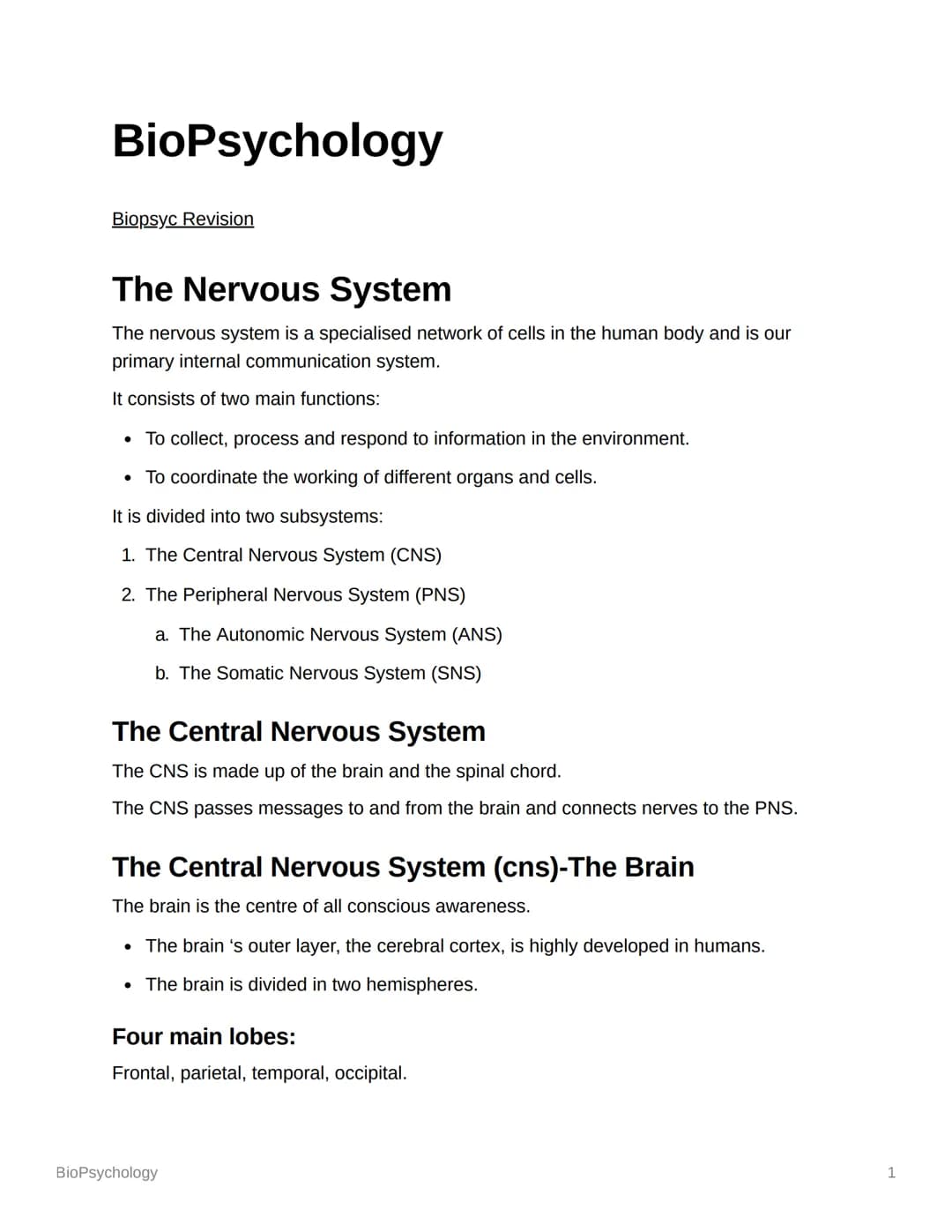
The central nervous system and its components form an intricate network that controls every aspect of human function. This specialized communication system consists of billions of cells working in harmony to maintain life and consciousness.
Definition: The nervous system is a complex network of specialized cells that serves as the body's primary internal communication system, coordinating organ function and processing environmental information.
The human nervous system divides into two major components: the central nervous system (CNS) and the peripheral nervous system (PNS). The CNS, comprising the brain and spinal cord, acts as the command center, while the PNS serves as the communication network extending throughout the body.
The brain, as part of the central nervous system, contains four main lobes - frontal, parietal, temporal, and occipital - each serving distinct functions. The cerebral cortex, the brain's outer layer, is particularly developed in humans, enabling advanced cognitive abilities and consciousness.
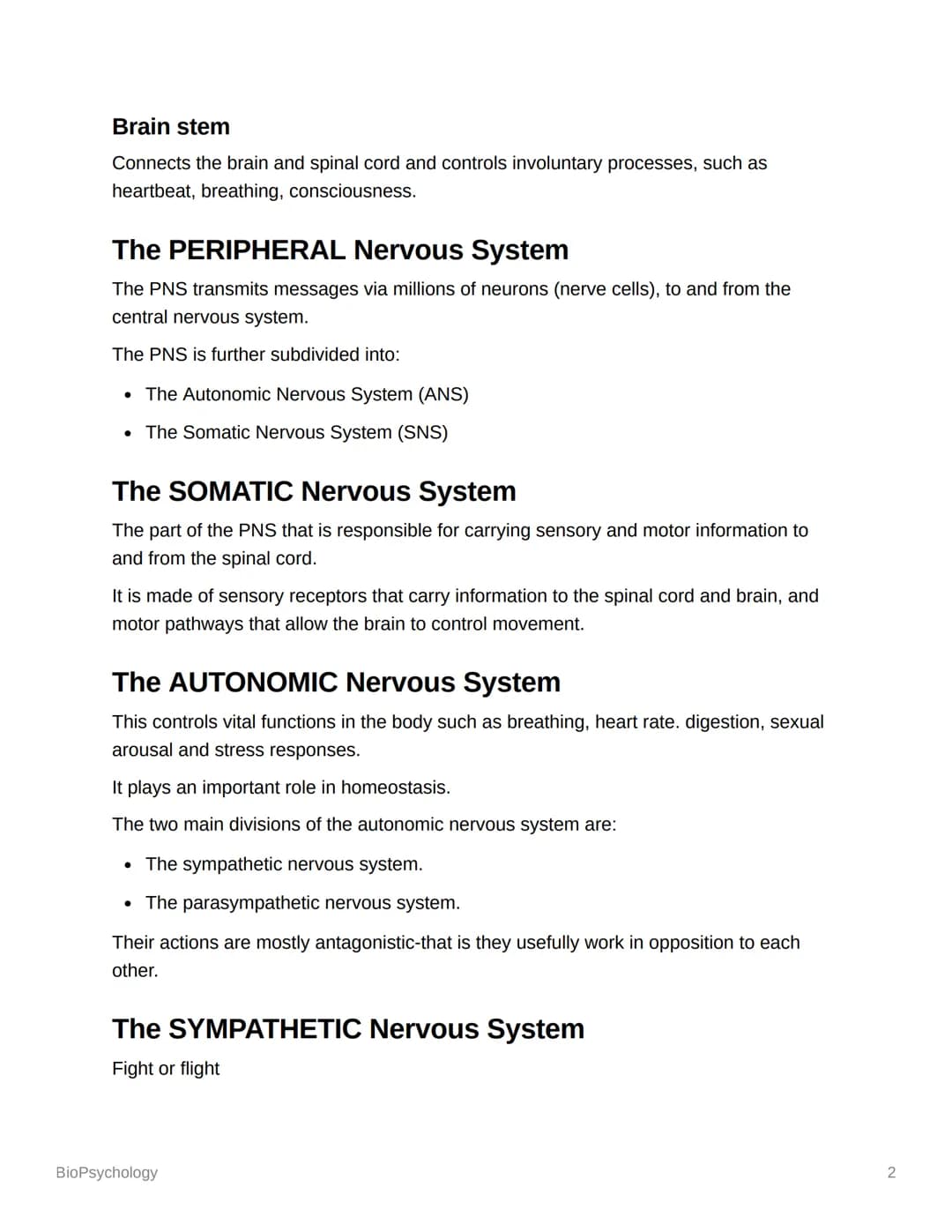
The peripheral nervous system function involves transmitting signals between the CNS and the rest of the body through millions of neurons. It subdivides into two crucial systems: the autonomic nervous system and the somatic nervous system.
Highlight: The somatic nervous system controls voluntary movements and sensory processing, while the autonomic nervous system manages involuntary bodily functions.
The autonomic nervous system function includes maintaining homeostasis through two opposing systems: the sympathetic nervous system and parasympathetic nervous system. These systems work antagonistically to maintain bodily balance.
Example: When faced with danger, the sympathetic system activates "fight or flight" responses, increasing heart rate and blood pressure. The parasympathetic system later promotes "rest and digest" functions, returning the body to a calm state.
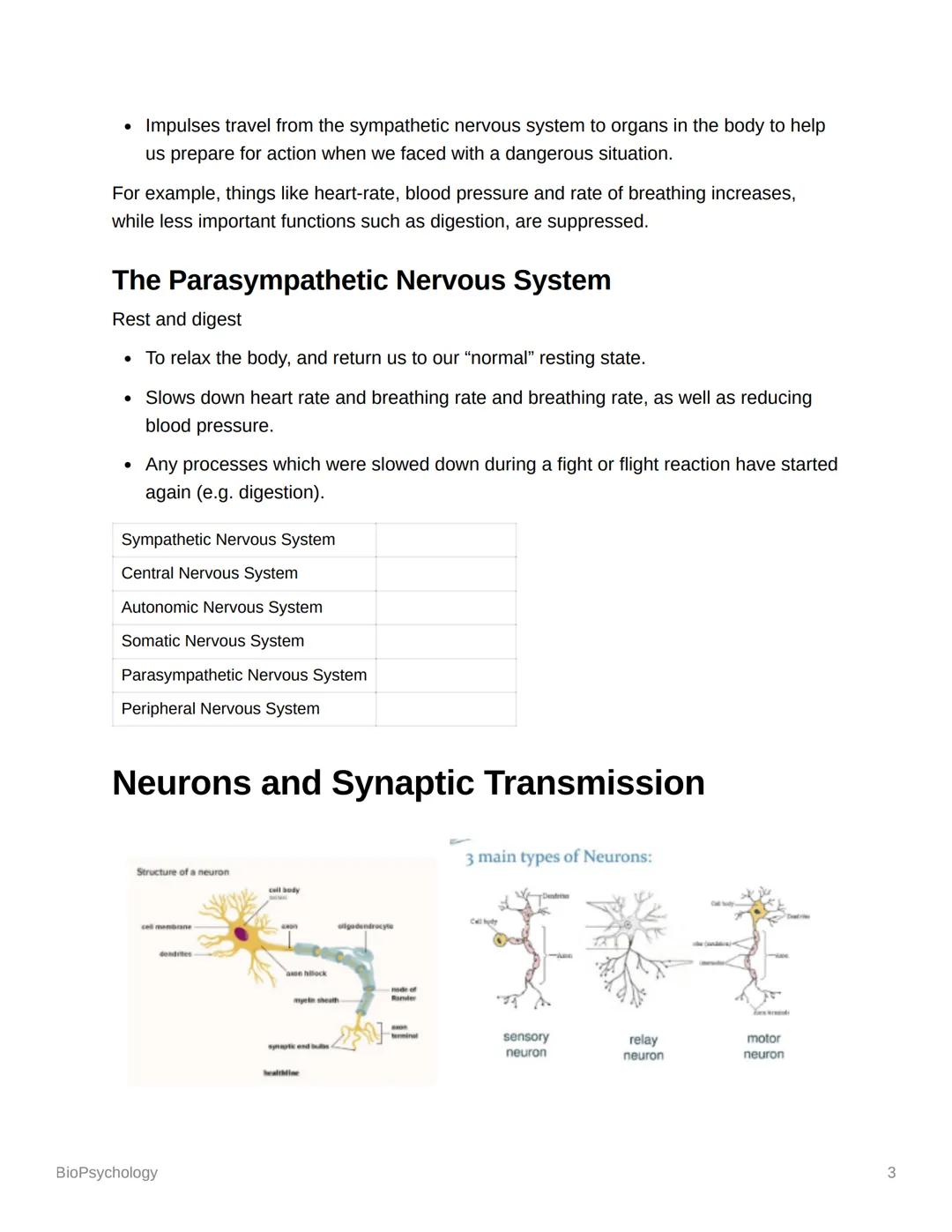
The role of the autonomic nervous system in homeostasis is crucial for survival. The sympathetic and parasympathetic nervous system difference lies in their opposing effects on body functions.
Vocabulary: Homeostasis refers to the body's ability to maintain stable internal conditions despite external changes.
The sympathetic nervous system prepares the body for emergency responses by:
The parasympathetic nervous system examples include:
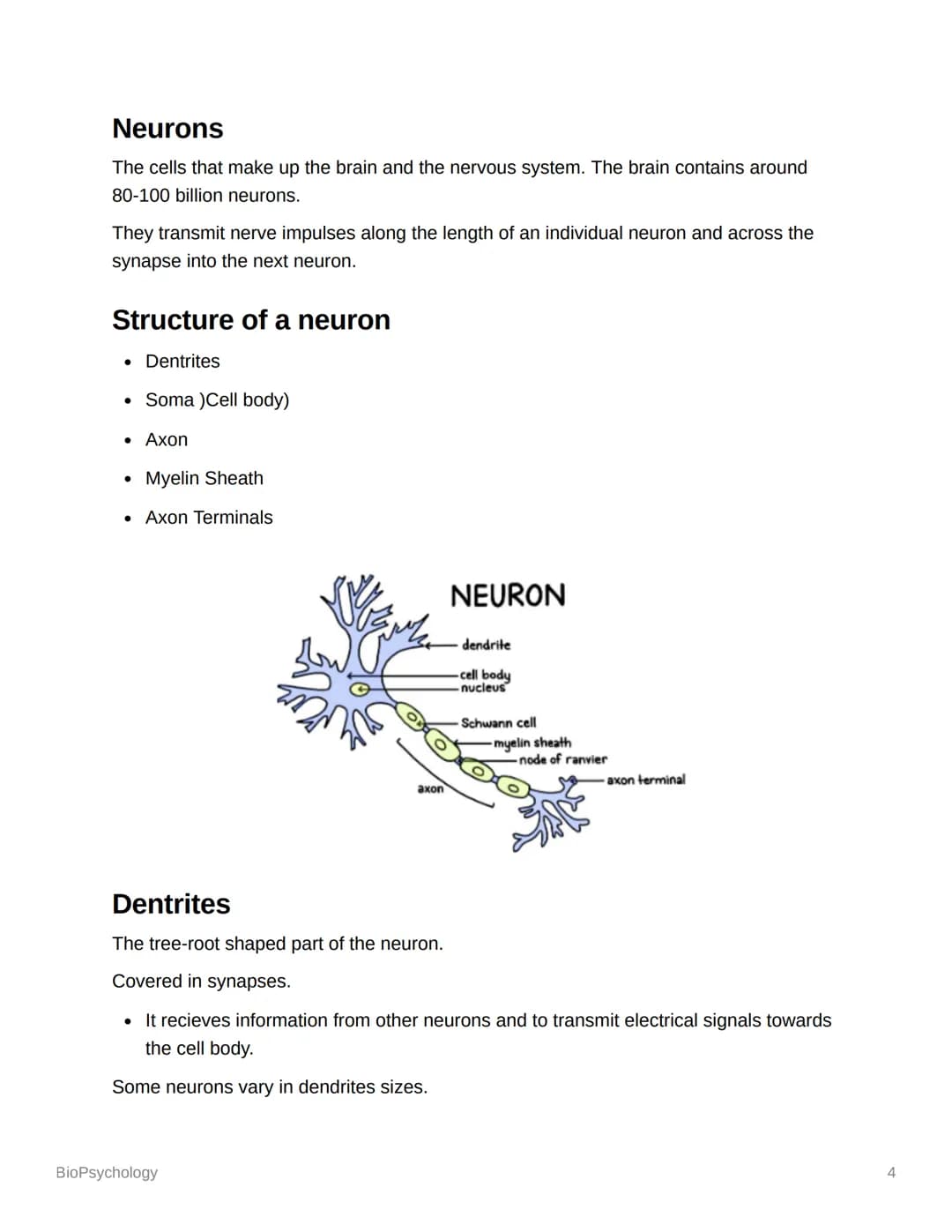
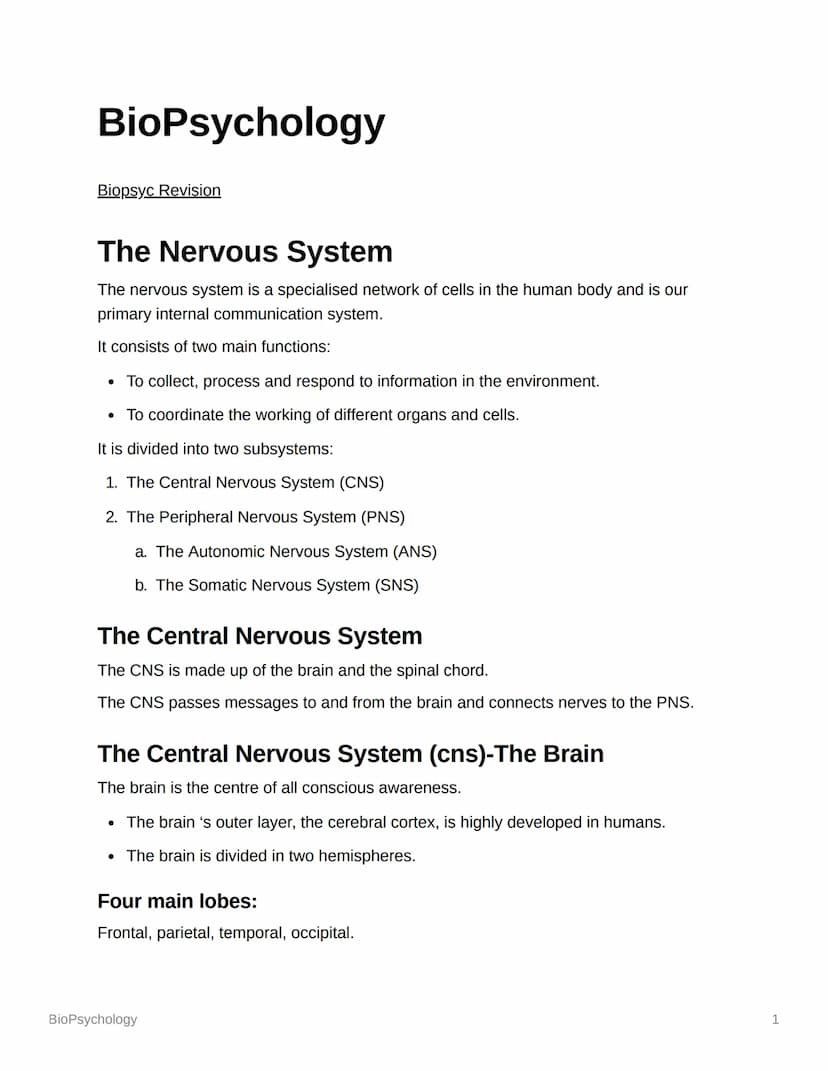
Neurons are the fundamental units of the nervous system, with the human brain containing approximately 80-100 billion of these specialized cells. Their structure enables efficient communication throughout the body.
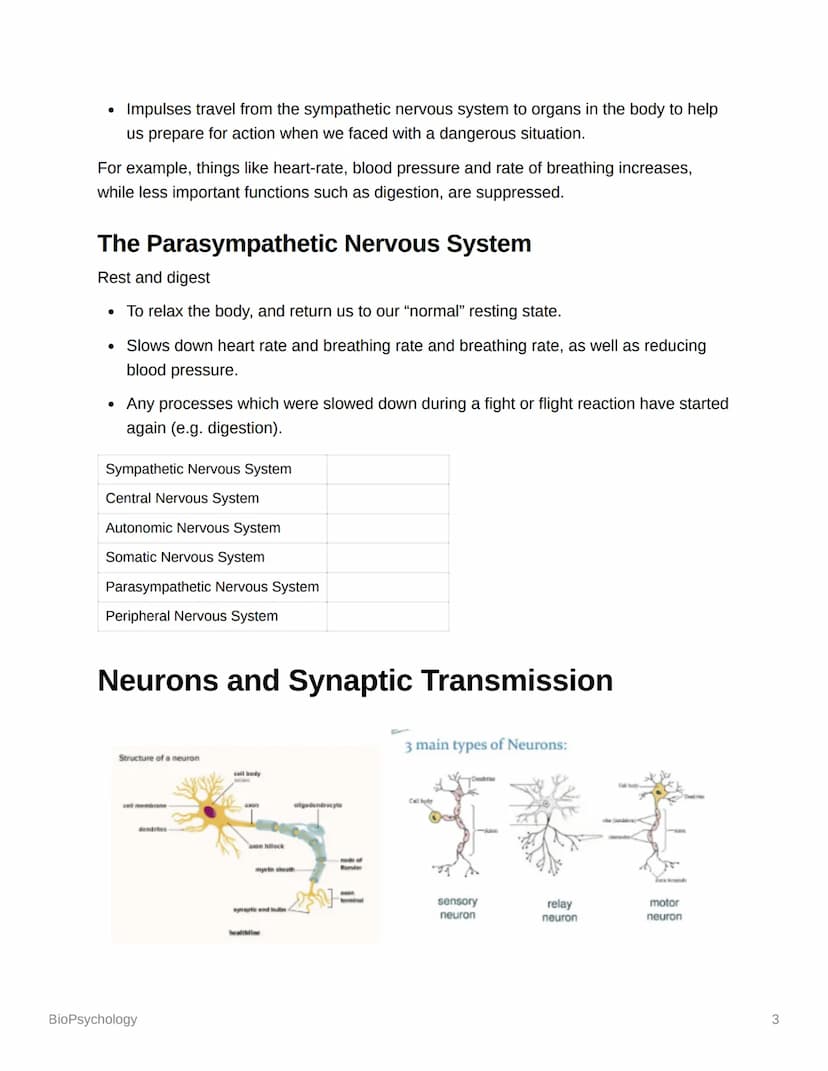
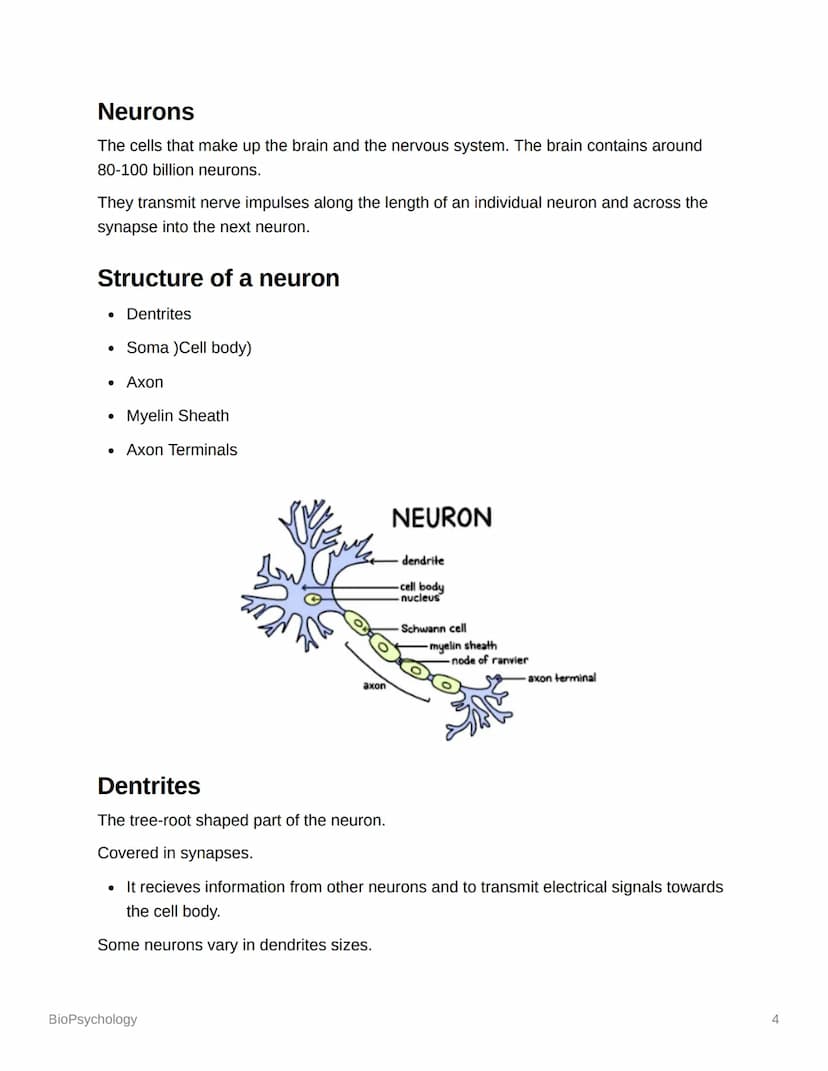
Definition: A neuron consists of dendrites (receiving signals), a cell body (processing information), an axon (conducting signals), and axon terminals (transmitting to other neurons).
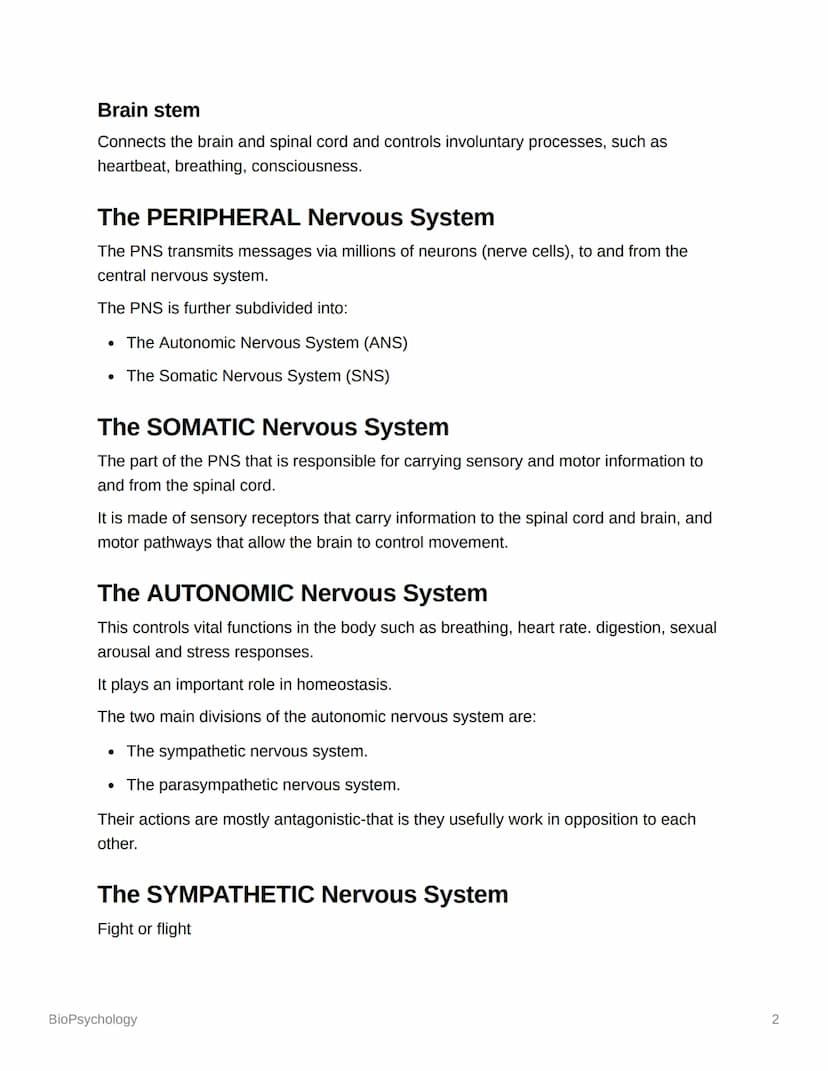
The three main types of neurons are:
These neurons work together through synaptic transmission, allowing for complex information processing and coordinated responses to both internal and external stimuli.
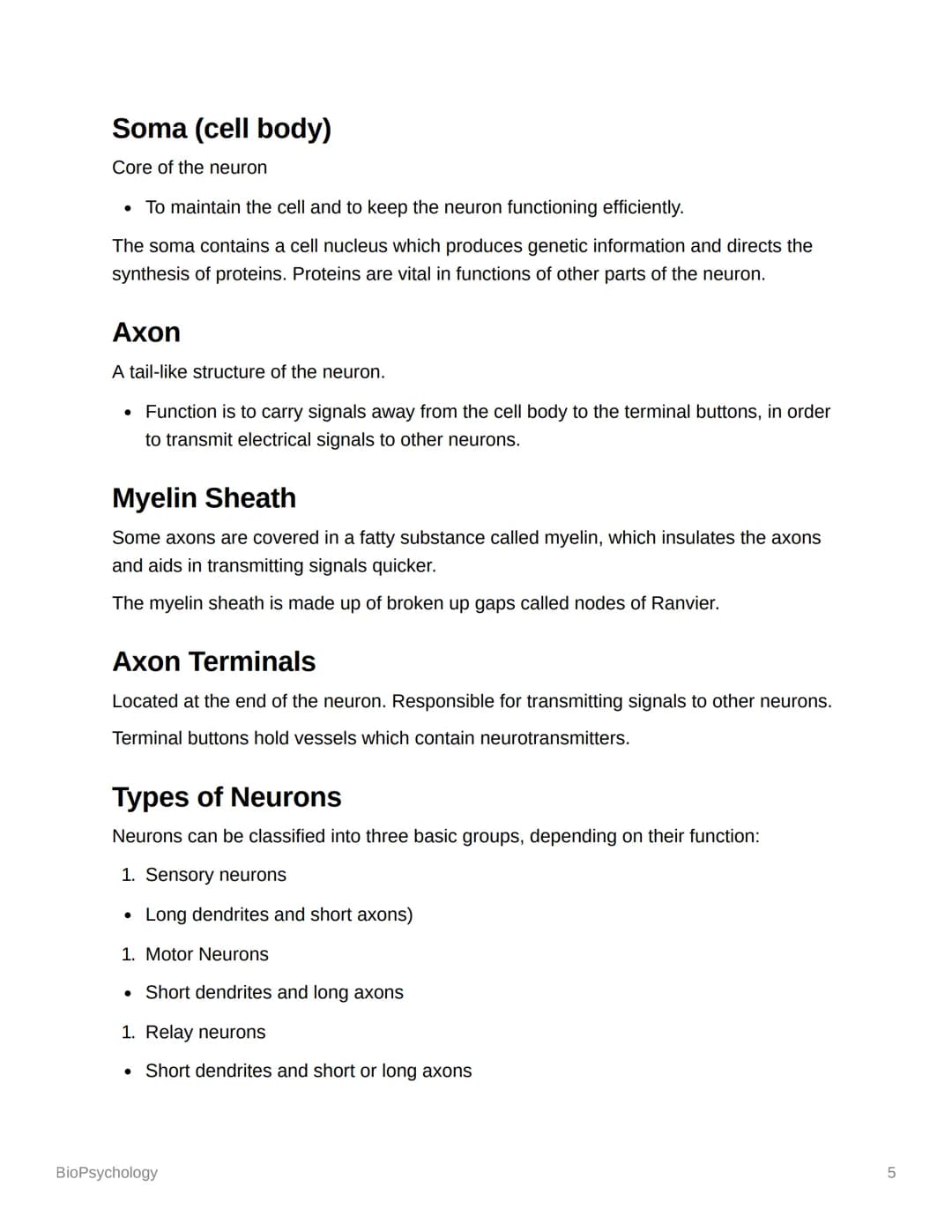
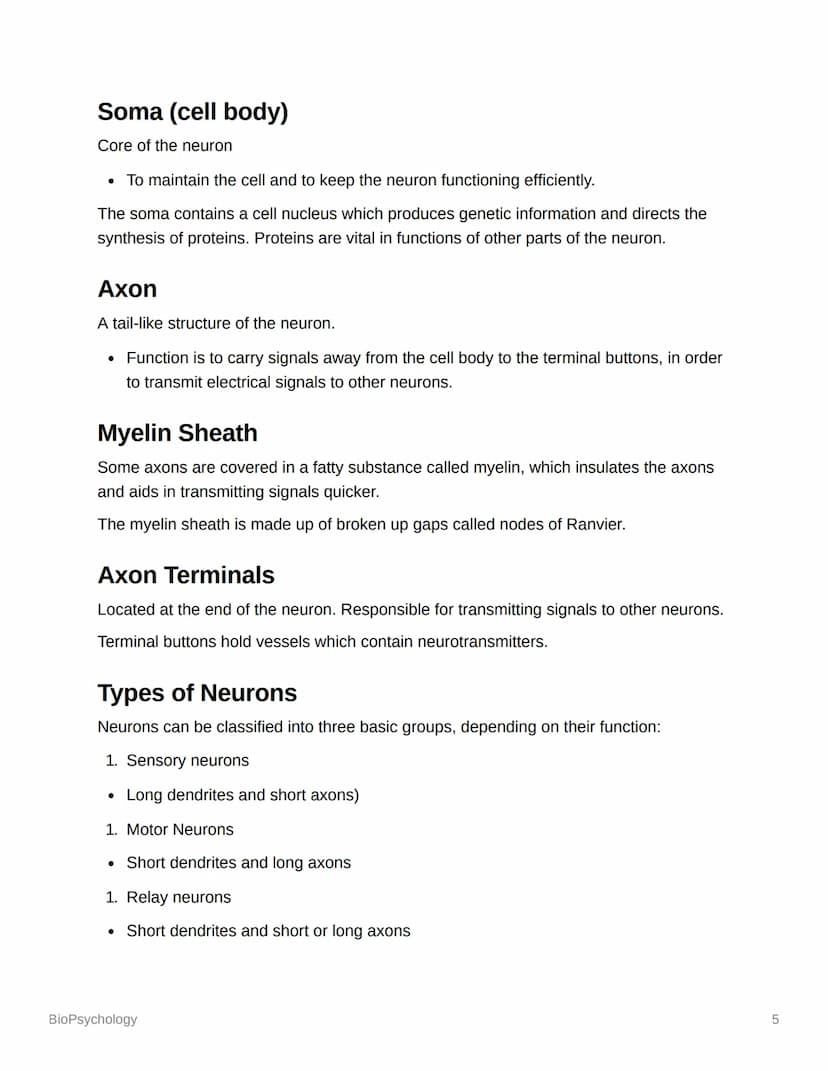
The central nervous system relies on specialized cells called neurons that form the foundation of neural communication. Each neuron consists of distinct components that work together to process and transmit information throughout the body.
Definition: The soma, or cell body, is the core component of the neuron that maintains cellular function and contains the nucleus which produces genetic information and directs protein synthesis essential for neural operations.
The axon extends from the soma like a tail and serves as the primary transmission line, carrying electrical signals away from the cell body to the terminal buttons where communication with other neurons occurs. Many axons are wrapped in myelin sheath - a fatty insulating substance that significantly increases signal transmission speed. This myelin coating is interrupted by gaps called nodes of Ranvier, which play a crucial role in signal propagation.
At the end of each neuron lie the axon terminals, containing specialized vessels filled with neurotransmitters. These chemical messengers are essential for neural communication across synapses. The nervous system employs three main types of neurons based on their functions: sensory neurons (with long dendrites and short axons), motor neurons (featuring short dendrites and long axons), and relay neurons (containing short dendrites and variable axon lengths).
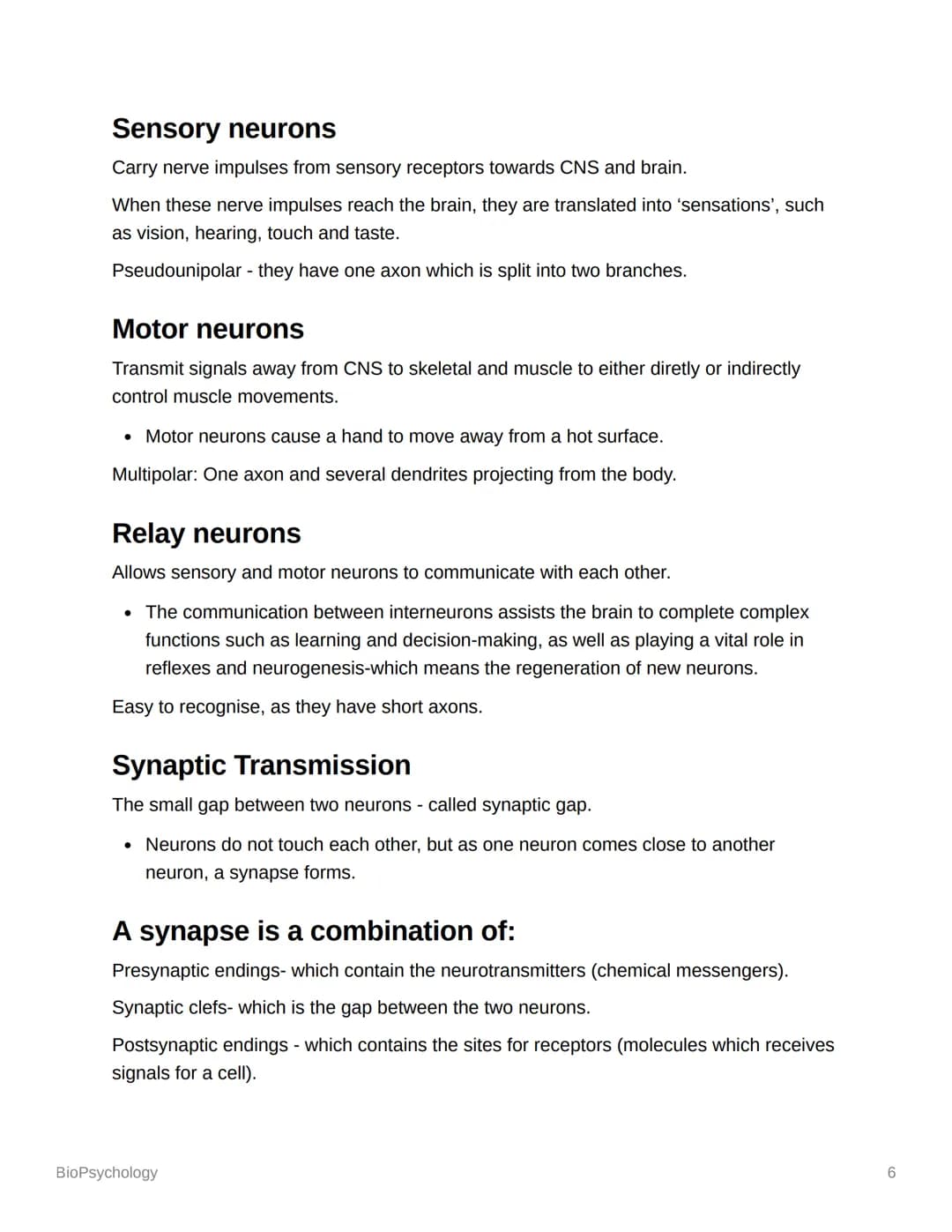
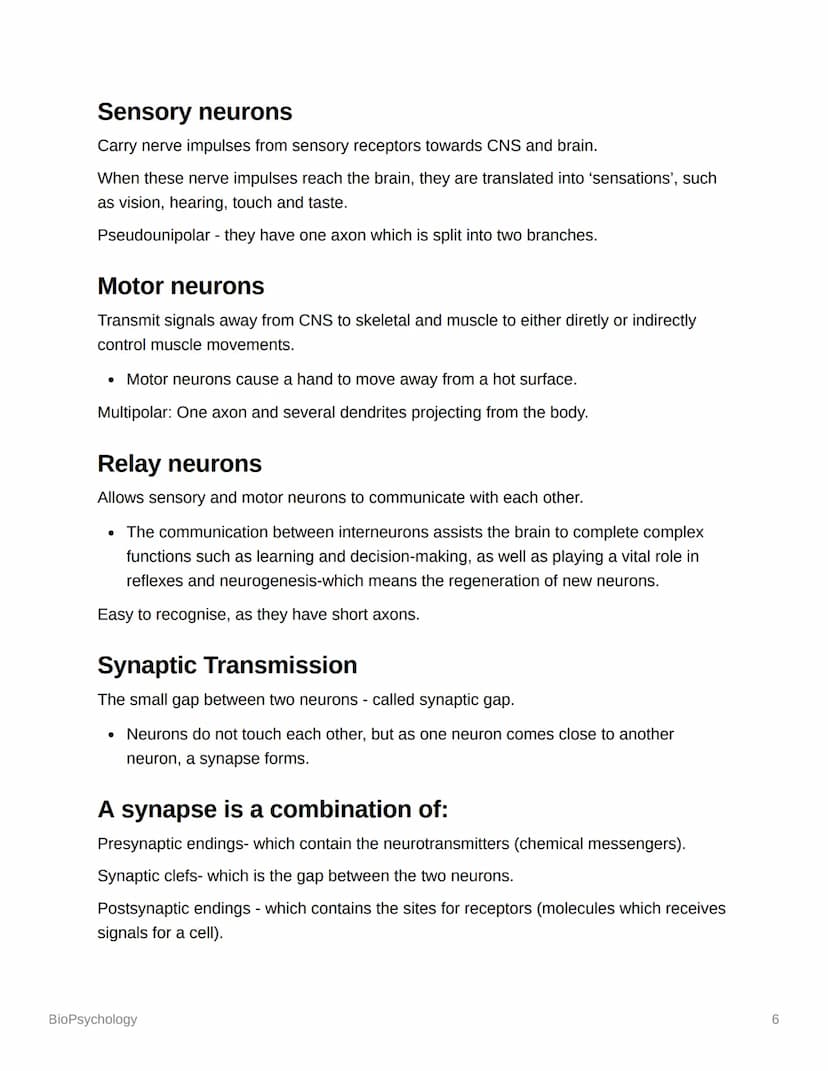
The peripheral nervous system relies on different types of neurons working in concert. Sensory neurons carry impulses from receptors to the CNS, translating environmental stimuli into sensations like vision and touch. These pseudounipolar neurons have a split axon structure. Motor neurons, which are multipolar with multiple dendrites, transmit signals from the CNS to muscles and glands, controlling movement and other responses.
Example: When you touch a hot surface, motor neurons rapidly signal your hand muscles to pull away, protecting you from injury. This demonstrates the somatic nervous system in action.
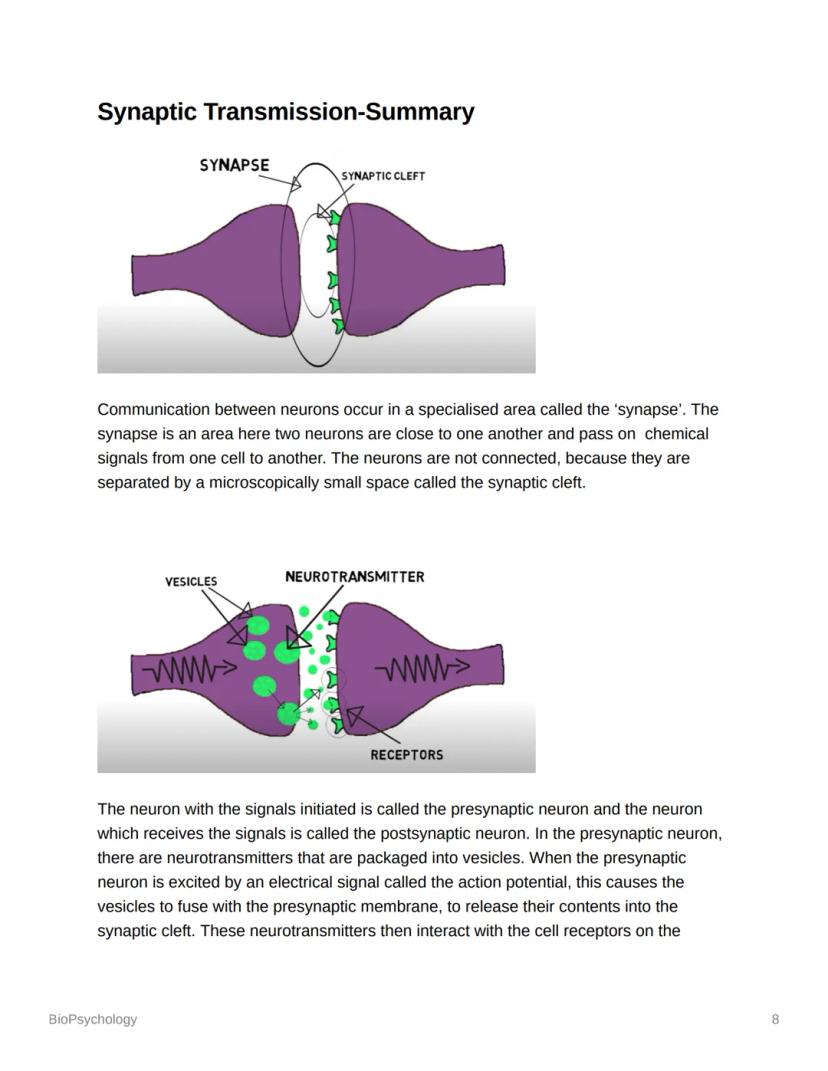
Relay neurons facilitate communication between sensory and motor neurons, enabling complex functions like learning and decision-making. They also play vital roles in reflexes and neurogenesis - the formation of new neurons. The communication between neurons occurs across synapses, which consist of three key components: presynaptic endings containing neurotransmitters, the synaptic cleft (gap), and postsynaptic endings with receptor sites.
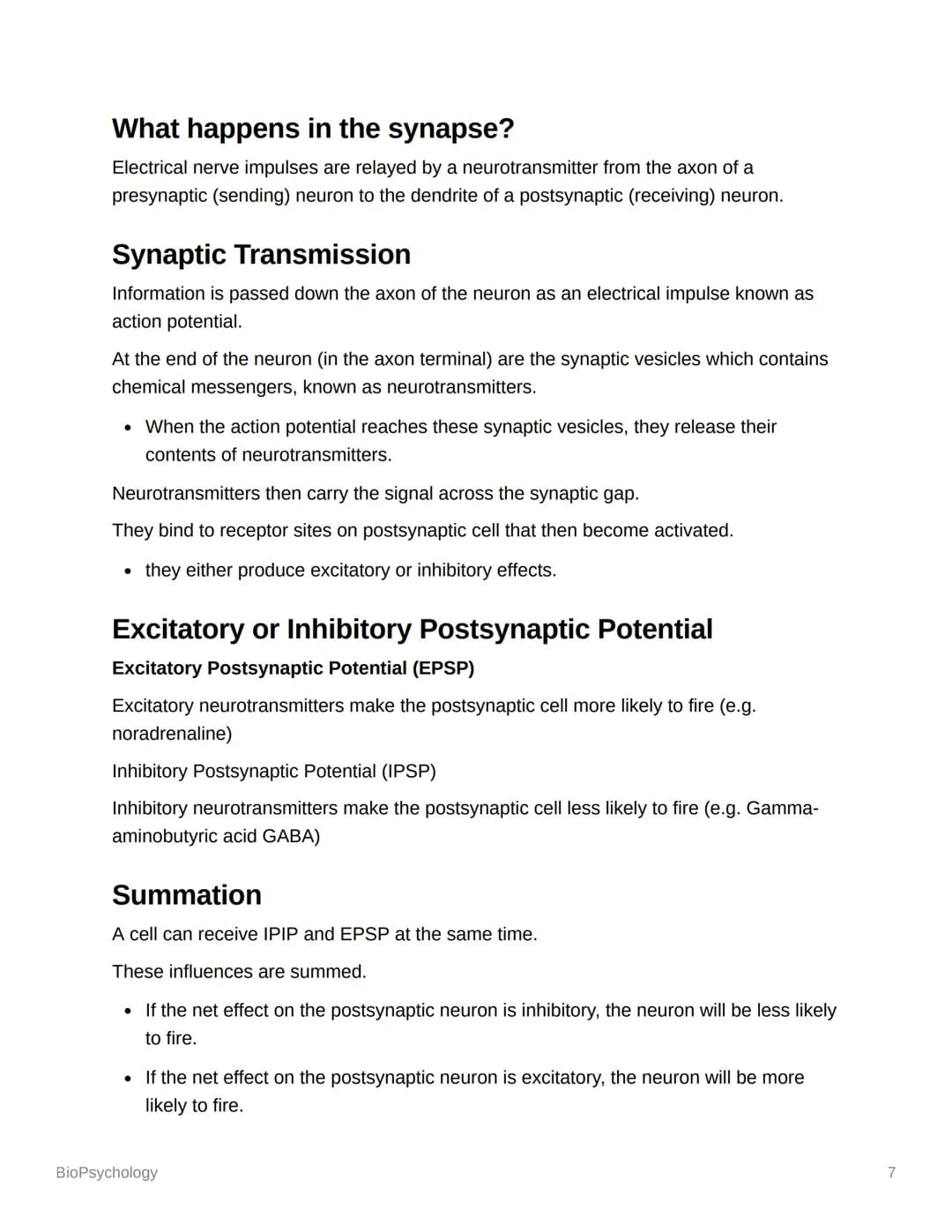
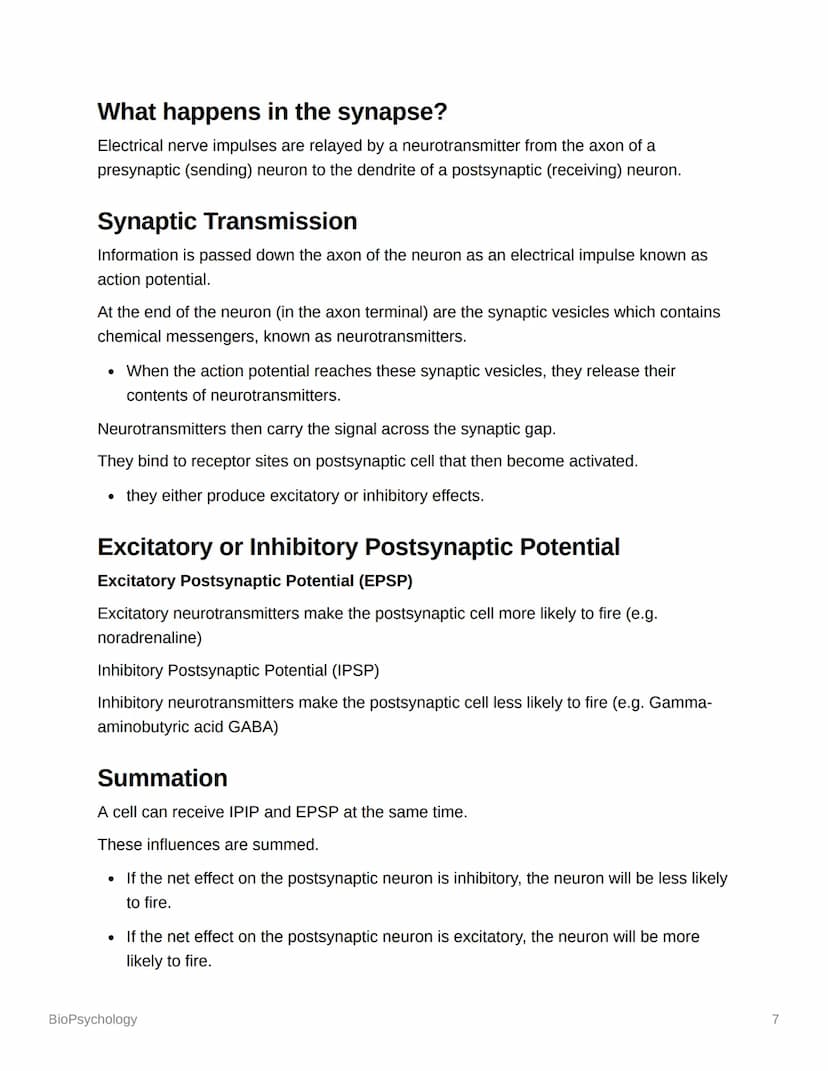
The autonomic nervous system function depends on precise synaptic transmission. When an electrical impulse (action potential) reaches the axon terminal, it triggers the release of neurotransmitters from synaptic vesicles. These chemical messengers cross the synaptic gap and bind to receptors on the receiving neuron, producing either excitatory or inhibitory effects.
Highlight: The sympathetic and parasympathetic nervous system work through different neurotransmitters to maintain homeostasis. Excitatory postsynaptic potentials (EPSP) increase the likelihood of neuron firing, while inhibitory postsynaptic potentials (IPSP) decrease it.
Neurons can receive both excitatory and inhibitory signals simultaneously through a process called summation. The net effect determines whether the neuron will fire - if excitatory influences dominate, the neuron becomes more likely to generate an action potential, while predominant inhibitory effects suppress neuron firing.
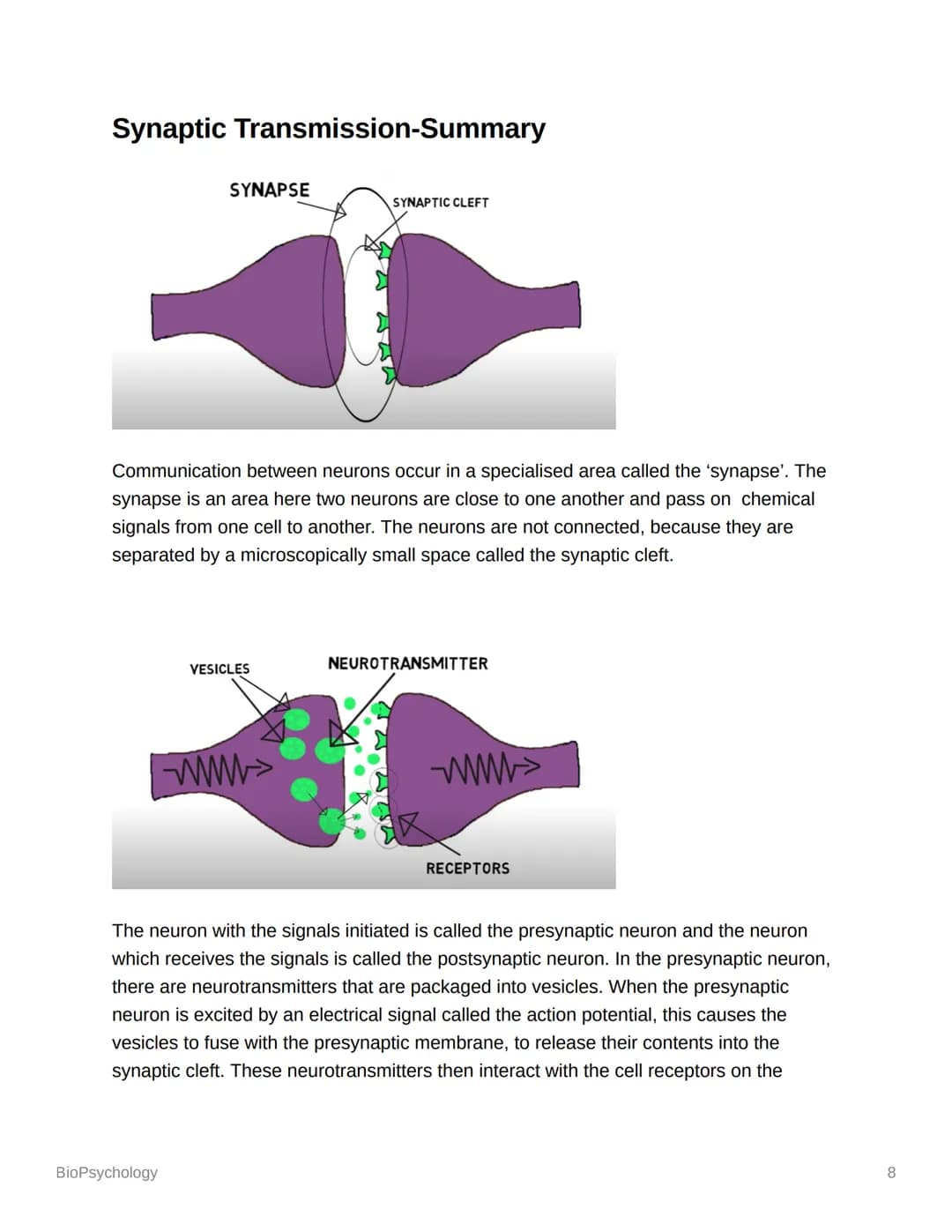
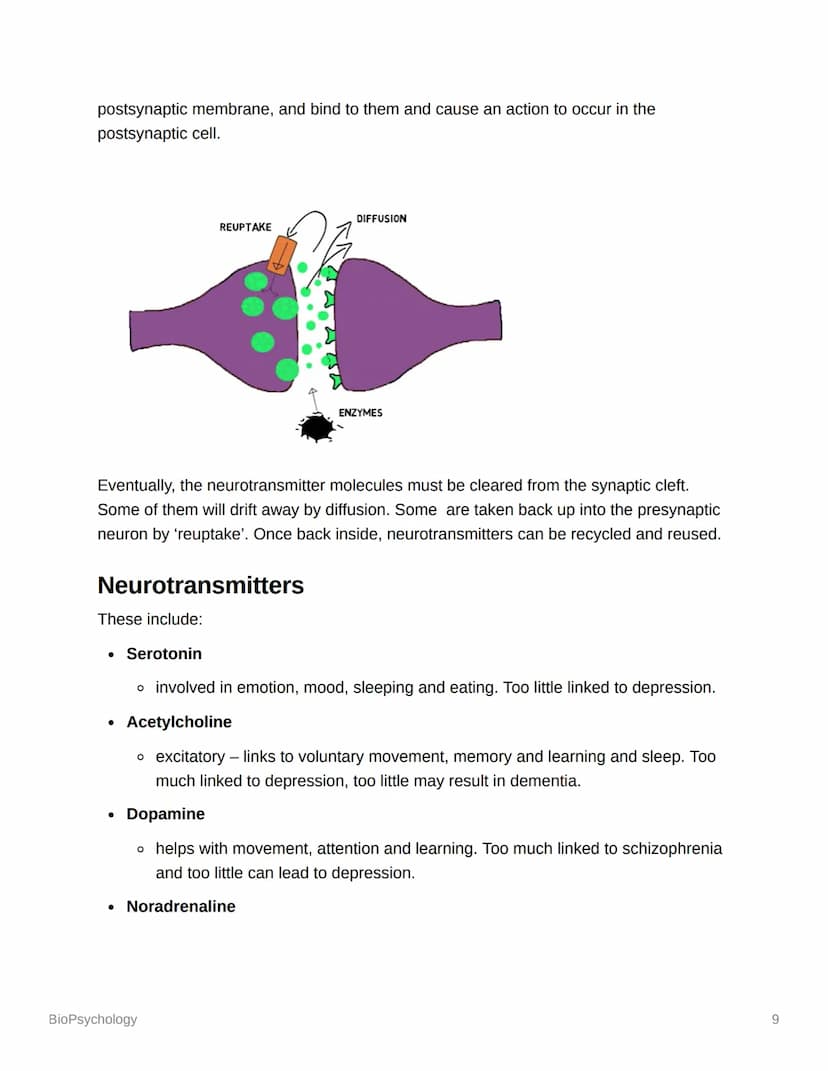
The central nervous system function relies heavily on various neurotransmitters that regulate different aspects of behavior and physiology. Serotonin influences emotion, mood, sleep, and eating patterns, with deficiencies often linked to depression. Acetylcholine, an excitatory neurotransmitter, is crucial for voluntary movement, memory, learning, and sleep regulation.
Vocabulary: Neurotransmitter reuptake is the process by which neurotransmitters are recycled back into the presynaptic neuron after signal transmission, allowing for efficient neural communication.
Dopamine plays essential roles in movement, attention, and learning processes. Imbalances in dopamine levels can lead to various conditions - excessive amounts are associated with schizophrenia, while insufficient levels may contribute to depression. The clearing of neurotransmitters from the synaptic cleft occurs through diffusion and reuptake mechanisms, ensuring proper signal termination and neurotransmitter recycling.
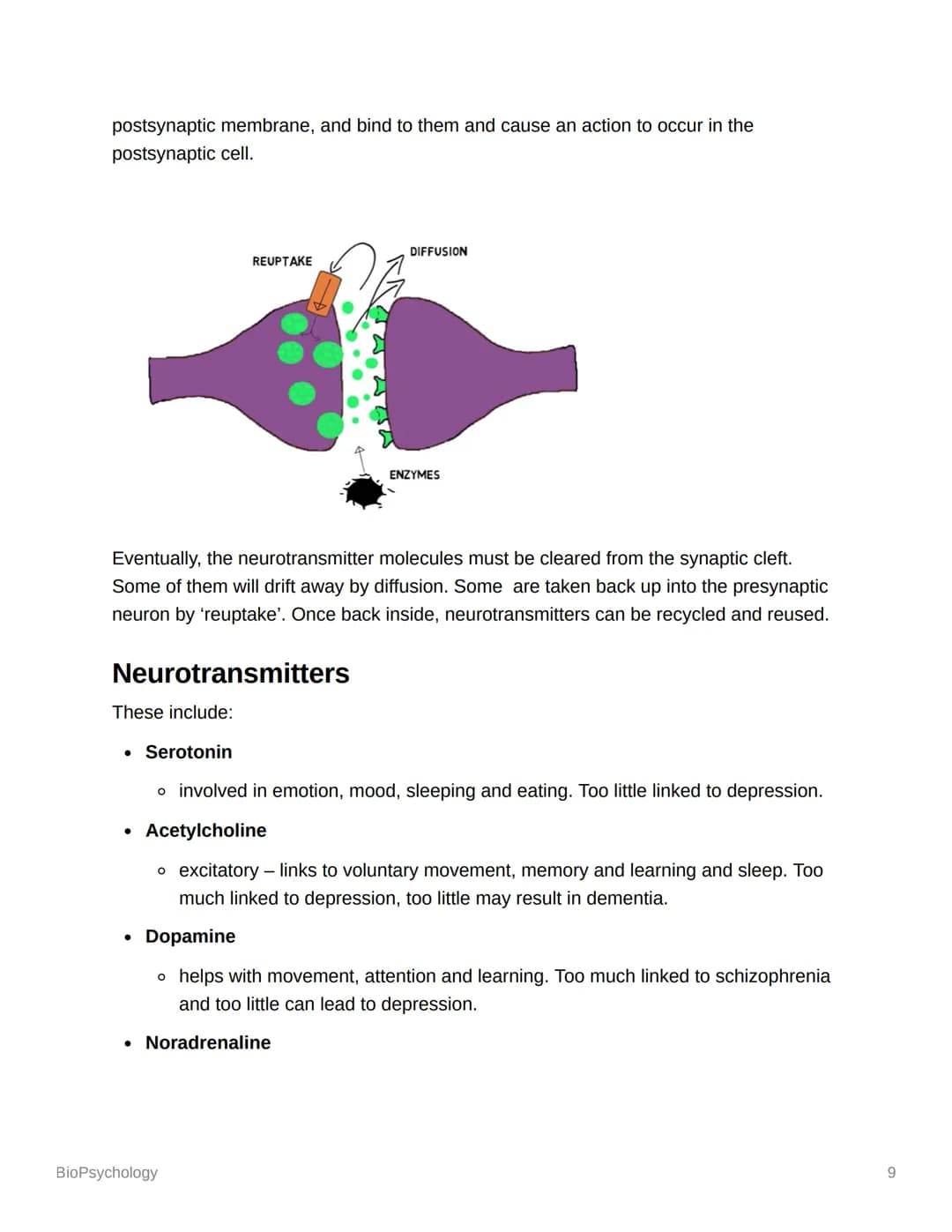
The intricate workings of the human body's communication systems involve complex interactions between the central nervous system and hormonal regulation. This comprehensive exploration delves into neurotransmitters, reflex arcs, and endocrine functions that maintain our physiological and psychological balance.
Definition: The autonomic nervous system function involves two key neurotransmitters: Noradrenaline, which relates to the fight-or-flight response and plays a crucial role in mood regulation, and GABA, an inhibitory neurotransmitter vital for managing anxiety levels.
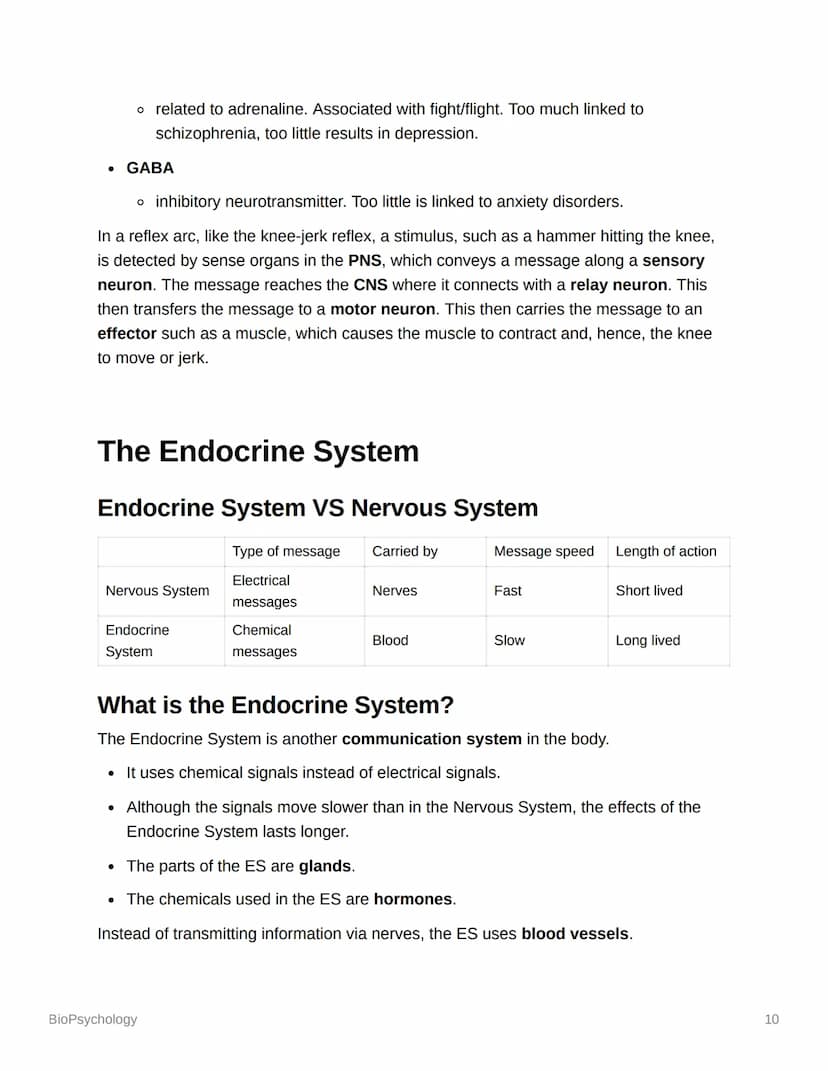
The reflex arc demonstrates how the peripheral nervous system function coordinates with the central nervous system to produce automatic responses. When examining the knee-jerk reflex, we see a perfect example of this coordination: sensory organs in the peripheral nervous system detect the stimulus, relay the information through sensory neurons to the CNS, where relay neurons process it and send signals through motor neurons to trigger muscle contraction.
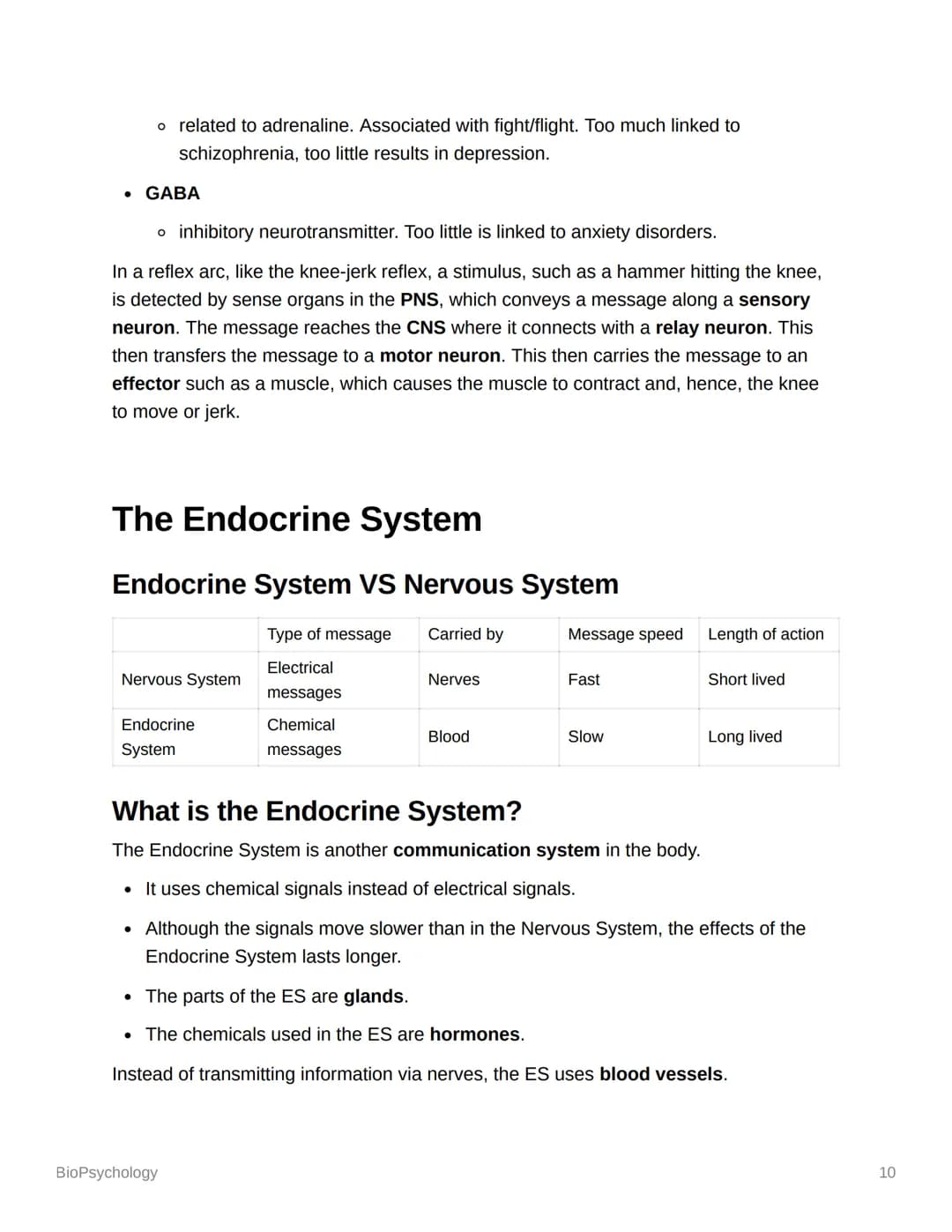
A fascinating comparison emerges when examining the endocrine system alongside the nervous system. While the sympathetic and parasympathetic nervous system utilize rapid electrical signals transmitted through nerves, the endocrine system employs a slower but longer-lasting chemical communication network through blood vessels. This fundamental difference highlights how our bodies maintain homeostasis through complementary systems.
Highlight: The endocrine system's communication method, though slower than neural transmission, produces more sustained effects through hormonal regulation, making it crucial for long-term physiological processes.
The human body's dual communication systems - neural and hormonal - work in concert to maintain optimal functioning. The central nervous system psychology framework helps us understand how these systems complement each other while serving distinct purposes.
Example: Consider how the sympathetic nervous system triggers immediate responses like increased heart rate during stress, while the endocrine system releases cortisol for sustained energy mobilization - demonstrating how both systems work together but on different timescales.
The endocrine system's glandular network represents a sophisticated chemical messaging system that complements neural communication. While the somatic nervous system handles immediate, precise responses, endocrine glands release hormones that create broader, longer-lasting effects throughout the body. This dual-system approach ensures both rapid responses to immediate challenges and sustained adaptation to ongoing conditions.
Understanding the interplay between these systems is crucial for comprehending various psychological and physiological conditions. For instance, anxiety disorders may involve both disrupted GABA neurotransmission and hormonal imbalances, highlighting the importance of considering both systems in treatment approaches.
Vocabulary: Hormones are chemical messengers released by endocrine glands into the bloodstream, affecting target organs and tissues throughout the body, unlike neurotransmitters which act locally at synapses.
Our AI Companion is a student-focused AI tool that offers more than just answers. Built on millions of Knowunity resources, it provides relevant information, personalised study plans, quizzes, and content directly in the chat, adapting to your individual learning journey.
You can download the app from Google Play Store and Apple App Store.
That's right! Enjoy free access to study content, connect with fellow students, and get instant help – all at your fingertips.
App Store
Google Play
The app is very easy to use and well designed. I have found everything I was looking for so far and have been able to learn a lot from the presentations! I will definitely use the app for a class assignment! And of course it also helps a lot as an inspiration.
Stefan S
iOS user
This app is really great. There are so many study notes and help [...]. My problem subject is French, for example, and the app has so many options for help. Thanks to this app, I have improved my French. I would recommend it to anyone.
Samantha Klich
Android user
Wow, I am really amazed. I just tried the app because I've seen it advertised many times and was absolutely stunned. This app is THE HELP you want for school and above all, it offers so many things, such as workouts and fact sheets, which have been VERY helpful to me personally.
Anna
iOS user
Best app on earth! no words because it’s too good
Thomas R
iOS user
Just amazing. Let's me revise 10x better, this app is a quick 10/10. I highly recommend it to anyone. I can watch and search for notes. I can save them in the subject folder. I can revise it any time when I come back. If you haven't tried this app, you're really missing out.
Basil
Android user
This app has made me feel so much more confident in my exam prep, not only through boosting my own self confidence through the features that allow you to connect with others and feel less alone, but also through the way the app itself is centred around making you feel better. It is easy to navigate, fun to use, and helpful to anyone struggling in absolutely any way.
David K
iOS user
The app's just great! All I have to do is enter the topic in the search bar and I get the response real fast. I don't have to watch 10 YouTube videos to understand something, so I'm saving my time. Highly recommended!
Sudenaz Ocak
Android user
In school I was really bad at maths but thanks to the app, I am doing better now. I am so grateful that you made the app.
Greenlight Bonnie
Android user
very reliable app to help and grow your ideas of Maths, English and other related topics in your works. please use this app if your struggling in areas, this app is key for that. wish I'd of done a review before. and it's also free so don't worry about that.
Rohan U
Android user
I know a lot of apps use fake accounts to boost their reviews but this app deserves it all. Originally I was getting 4 in my English exams and this time I got a grade 7. I didn’t even know about this app three days until the exam and it has helped A LOT. Please actually trust me and use it as I’m sure you too will see developments.
Xander S
iOS user
THE QUIZES AND FLASHCARDS ARE SO USEFUL AND I LOVE Knowunity AI. IT ALSO IS LITREALLY LIKE CHATGPT BUT SMARTER!! HELPED ME WITH MY MASCARA PROBLEMS TOO!! AS WELL AS MY REAL SUBJECTS ! DUHHH 😍😁😲🤑💗✨🎀😮
Elisha
iOS user
This apps acc the goat. I find revision so boring but this app makes it so easy to organize it all and then you can ask the freeeee ai to test yourself so good and you can easily upload your own stuff. highly recommend as someone taking mocks now
Paul T
iOS user
The app is very easy to use and well designed. I have found everything I was looking for so far and have been able to learn a lot from the presentations! I will definitely use the app for a class assignment! And of course it also helps a lot as an inspiration.
Stefan S
iOS user
This app is really great. There are so many study notes and help [...]. My problem subject is French, for example, and the app has so many options for help. Thanks to this app, I have improved my French. I would recommend it to anyone.
Samantha Klich
Android user
Wow, I am really amazed. I just tried the app because I've seen it advertised many times and was absolutely stunned. This app is THE HELP you want for school and above all, it offers so many things, such as workouts and fact sheets, which have been VERY helpful to me personally.
Anna
iOS user
Best app on earth! no words because it’s too good
Thomas R
iOS user
Just amazing. Let's me revise 10x better, this app is a quick 10/10. I highly recommend it to anyone. I can watch and search for notes. I can save them in the subject folder. I can revise it any time when I come back. If you haven't tried this app, you're really missing out.
Basil
Android user
This app has made me feel so much more confident in my exam prep, not only through boosting my own self confidence through the features that allow you to connect with others and feel less alone, but also through the way the app itself is centred around making you feel better. It is easy to navigate, fun to use, and helpful to anyone struggling in absolutely any way.
David K
iOS user
The app's just great! All I have to do is enter the topic in the search bar and I get the response real fast. I don't have to watch 10 YouTube videos to understand something, so I'm saving my time. Highly recommended!
Sudenaz Ocak
Android user
In school I was really bad at maths but thanks to the app, I am doing better now. I am so grateful that you made the app.
Greenlight Bonnie
Android user
very reliable app to help and grow your ideas of Maths, English and other related topics in your works. please use this app if your struggling in areas, this app is key for that. wish I'd of done a review before. and it's also free so don't worry about that.
Rohan U
Android user
I know a lot of apps use fake accounts to boost their reviews but this app deserves it all. Originally I was getting 4 in my English exams and this time I got a grade 7. I didn’t even know about this app three days until the exam and it has helped A LOT. Please actually trust me and use it as I’m sure you too will see developments.
Xander S
iOS user
THE QUIZES AND FLASHCARDS ARE SO USEFUL AND I LOVE Knowunity AI. IT ALSO IS LITREALLY LIKE CHATGPT BUT SMARTER!! HELPED ME WITH MY MASCARA PROBLEMS TOO!! AS WELL AS MY REAL SUBJECTS ! DUHHH 😍😁😲🤑💗✨🎀😮
Elisha
iOS user
This apps acc the goat. I find revision so boring but this app makes it so easy to organize it all and then you can ask the freeeee ai to test yourself so good and you can easily upload your own stuff. highly recommend as someone taking mocks now
Paul T
iOS user
Hriday
@hriday_aocc
The human nervous system is an intricate network that controls all bodily functions and responses through specialized cells and signals.
The Central Nervous System(CNS), consisting of the brain and spinal cord, acts as the command center for processing information... Show more
Access to all documents
Improve your grades
Join milions of students
The central nervous system and its components form an intricate network that controls every aspect of human function. This specialized communication system consists of billions of cells working in harmony to maintain life and consciousness.
Definition: The nervous system is a complex network of specialized cells that serves as the body's primary internal communication system, coordinating organ function and processing environmental information.
The human nervous system divides into two major components: the central nervous system (CNS) and the peripheral nervous system (PNS). The CNS, comprising the brain and spinal cord, acts as the command center, while the PNS serves as the communication network extending throughout the body.
The brain, as part of the central nervous system, contains four main lobes - frontal, parietal, temporal, and occipital - each serving distinct functions. The cerebral cortex, the brain's outer layer, is particularly developed in humans, enabling advanced cognitive abilities and consciousness.
Access to all documents
Improve your grades
Join milions of students
The peripheral nervous system function involves transmitting signals between the CNS and the rest of the body through millions of neurons. It subdivides into two crucial systems: the autonomic nervous system and the somatic nervous system.
Highlight: The somatic nervous system controls voluntary movements and sensory processing, while the autonomic nervous system manages involuntary bodily functions.
The autonomic nervous system function includes maintaining homeostasis through two opposing systems: the sympathetic nervous system and parasympathetic nervous system. These systems work antagonistically to maintain bodily balance.
Example: When faced with danger, the sympathetic system activates "fight or flight" responses, increasing heart rate and blood pressure. The parasympathetic system later promotes "rest and digest" functions, returning the body to a calm state.
Access to all documents
Improve your grades
Join milions of students
The role of the autonomic nervous system in homeostasis is crucial for survival. The sympathetic and parasympathetic nervous system difference lies in their opposing effects on body functions.
Vocabulary: Homeostasis refers to the body's ability to maintain stable internal conditions despite external changes.
The sympathetic nervous system prepares the body for emergency responses by:
The parasympathetic nervous system examples include:
Access to all documents
Improve your grades
Join milions of students
Neurons are the fundamental units of the nervous system, with the human brain containing approximately 80-100 billion of these specialized cells. Their structure enables efficient communication throughout the body.
Definition: A neuron consists of dendrites (receiving signals), a cell body (processing information), an axon (conducting signals), and axon terminals (transmitting to other neurons).
The three main types of neurons are:
These neurons work together through synaptic transmission, allowing for complex information processing and coordinated responses to both internal and external stimuli.
Access to all documents
Improve your grades
Join milions of students
The central nervous system relies on specialized cells called neurons that form the foundation of neural communication. Each neuron consists of distinct components that work together to process and transmit information throughout the body.
Definition: The soma, or cell body, is the core component of the neuron that maintains cellular function and contains the nucleus which produces genetic information and directs protein synthesis essential for neural operations.
The axon extends from the soma like a tail and serves as the primary transmission line, carrying electrical signals away from the cell body to the terminal buttons where communication with other neurons occurs. Many axons are wrapped in myelin sheath - a fatty insulating substance that significantly increases signal transmission speed. This myelin coating is interrupted by gaps called nodes of Ranvier, which play a crucial role in signal propagation.
At the end of each neuron lie the axon terminals, containing specialized vessels filled with neurotransmitters. These chemical messengers are essential for neural communication across synapses. The nervous system employs three main types of neurons based on their functions: sensory neurons (with long dendrites and short axons), motor neurons (featuring short dendrites and long axons), and relay neurons (containing short dendrites and variable axon lengths).
Access to all documents
Improve your grades
Join milions of students
The peripheral nervous system relies on different types of neurons working in concert. Sensory neurons carry impulses from receptors to the CNS, translating environmental stimuli into sensations like vision and touch. These pseudounipolar neurons have a split axon structure. Motor neurons, which are multipolar with multiple dendrites, transmit signals from the CNS to muscles and glands, controlling movement and other responses.
Example: When you touch a hot surface, motor neurons rapidly signal your hand muscles to pull away, protecting you from injury. This demonstrates the somatic nervous system in action.
Relay neurons facilitate communication between sensory and motor neurons, enabling complex functions like learning and decision-making. They also play vital roles in reflexes and neurogenesis - the formation of new neurons. The communication between neurons occurs across synapses, which consist of three key components: presynaptic endings containing neurotransmitters, the synaptic cleft (gap), and postsynaptic endings with receptor sites.
Access to all documents
Improve your grades
Join milions of students
The autonomic nervous system function depends on precise synaptic transmission. When an electrical impulse (action potential) reaches the axon terminal, it triggers the release of neurotransmitters from synaptic vesicles. These chemical messengers cross the synaptic gap and bind to receptors on the receiving neuron, producing either excitatory or inhibitory effects.
Highlight: The sympathetic and parasympathetic nervous system work through different neurotransmitters to maintain homeostasis. Excitatory postsynaptic potentials (EPSP) increase the likelihood of neuron firing, while inhibitory postsynaptic potentials (IPSP) decrease it.
Neurons can receive both excitatory and inhibitory signals simultaneously through a process called summation. The net effect determines whether the neuron will fire - if excitatory influences dominate, the neuron becomes more likely to generate an action potential, while predominant inhibitory effects suppress neuron firing.
Access to all documents
Improve your grades
Join milions of students
The central nervous system function relies heavily on various neurotransmitters that regulate different aspects of behavior and physiology. Serotonin influences emotion, mood, sleep, and eating patterns, with deficiencies often linked to depression. Acetylcholine, an excitatory neurotransmitter, is crucial for voluntary movement, memory, learning, and sleep regulation.
Vocabulary: Neurotransmitter reuptake is the process by which neurotransmitters are recycled back into the presynaptic neuron after signal transmission, allowing for efficient neural communication.
Dopamine plays essential roles in movement, attention, and learning processes. Imbalances in dopamine levels can lead to various conditions - excessive amounts are associated with schizophrenia, while insufficient levels may contribute to depression. The clearing of neurotransmitters from the synaptic cleft occurs through diffusion and reuptake mechanisms, ensuring proper signal termination and neurotransmitter recycling.
Access to all documents
Improve your grades
Join milions of students
The intricate workings of the human body's communication systems involve complex interactions between the central nervous system and hormonal regulation. This comprehensive exploration delves into neurotransmitters, reflex arcs, and endocrine functions that maintain our physiological and psychological balance.
Definition: The autonomic nervous system function involves two key neurotransmitters: Noradrenaline, which relates to the fight-or-flight response and plays a crucial role in mood regulation, and GABA, an inhibitory neurotransmitter vital for managing anxiety levels.
The reflex arc demonstrates how the peripheral nervous system function coordinates with the central nervous system to produce automatic responses. When examining the knee-jerk reflex, we see a perfect example of this coordination: sensory organs in the peripheral nervous system detect the stimulus, relay the information through sensory neurons to the CNS, where relay neurons process it and send signals through motor neurons to trigger muscle contraction.
A fascinating comparison emerges when examining the endocrine system alongside the nervous system. While the sympathetic and parasympathetic nervous system utilize rapid electrical signals transmitted through nerves, the endocrine system employs a slower but longer-lasting chemical communication network through blood vessels. This fundamental difference highlights how our bodies maintain homeostasis through complementary systems.
Highlight: The endocrine system's communication method, though slower than neural transmission, produces more sustained effects through hormonal regulation, making it crucial for long-term physiological processes.
Access to all documents
Improve your grades
Join milions of students
The human body's dual communication systems - neural and hormonal - work in concert to maintain optimal functioning. The central nervous system psychology framework helps us understand how these systems complement each other while serving distinct purposes.
Example: Consider how the sympathetic nervous system triggers immediate responses like increased heart rate during stress, while the endocrine system releases cortisol for sustained energy mobilization - demonstrating how both systems work together but on different timescales.
The endocrine system's glandular network represents a sophisticated chemical messaging system that complements neural communication. While the somatic nervous system handles immediate, precise responses, endocrine glands release hormones that create broader, longer-lasting effects throughout the body. This dual-system approach ensures both rapid responses to immediate challenges and sustained adaptation to ongoing conditions.
Understanding the interplay between these systems is crucial for comprehending various psychological and physiological conditions. For instance, anxiety disorders may involve both disrupted GABA neurotransmission and hormonal imbalances, highlighting the importance of considering both systems in treatment approaches.
Vocabulary: Hormones are chemical messengers released by endocrine glands into the bloodstream, affecting target organs and tissues throughout the body, unlike neurotransmitters which act locally at synapses.
Our AI Companion is a student-focused AI tool that offers more than just answers. Built on millions of Knowunity resources, it provides relevant information, personalised study plans, quizzes, and content directly in the chat, adapting to your individual learning journey.
You can download the app from Google Play Store and Apple App Store.
That's right! Enjoy free access to study content, connect with fellow students, and get instant help – all at your fingertips.
207
Smart Tools NEW
Transform this note into: ✓ 50+ Practice Questions ✓ Interactive Flashcards ✓ Full Mock Exam ✓ Essay Outlines
App Store
Google Play
The app is very easy to use and well designed. I have found everything I was looking for so far and have been able to learn a lot from the presentations! I will definitely use the app for a class assignment! And of course it also helps a lot as an inspiration.
Stefan S
iOS user
This app is really great. There are so many study notes and help [...]. My problem subject is French, for example, and the app has so many options for help. Thanks to this app, I have improved my French. I would recommend it to anyone.
Samantha Klich
Android user
Wow, I am really amazed. I just tried the app because I've seen it advertised many times and was absolutely stunned. This app is THE HELP you want for school and above all, it offers so many things, such as workouts and fact sheets, which have been VERY helpful to me personally.
Anna
iOS user
Best app on earth! no words because it’s too good
Thomas R
iOS user
Just amazing. Let's me revise 10x better, this app is a quick 10/10. I highly recommend it to anyone. I can watch and search for notes. I can save them in the subject folder. I can revise it any time when I come back. If you haven't tried this app, you're really missing out.
Basil
Android user
This app has made me feel so much more confident in my exam prep, not only through boosting my own self confidence through the features that allow you to connect with others and feel less alone, but also through the way the app itself is centred around making you feel better. It is easy to navigate, fun to use, and helpful to anyone struggling in absolutely any way.
David K
iOS user
The app's just great! All I have to do is enter the topic in the search bar and I get the response real fast. I don't have to watch 10 YouTube videos to understand something, so I'm saving my time. Highly recommended!
Sudenaz Ocak
Android user
In school I was really bad at maths but thanks to the app, I am doing better now. I am so grateful that you made the app.
Greenlight Bonnie
Android user
very reliable app to help and grow your ideas of Maths, English and other related topics in your works. please use this app if your struggling in areas, this app is key for that. wish I'd of done a review before. and it's also free so don't worry about that.
Rohan U
Android user
I know a lot of apps use fake accounts to boost their reviews but this app deserves it all. Originally I was getting 4 in my English exams and this time I got a grade 7. I didn’t even know about this app three days until the exam and it has helped A LOT. Please actually trust me and use it as I’m sure you too will see developments.
Xander S
iOS user
THE QUIZES AND FLASHCARDS ARE SO USEFUL AND I LOVE Knowunity AI. IT ALSO IS LITREALLY LIKE CHATGPT BUT SMARTER!! HELPED ME WITH MY MASCARA PROBLEMS TOO!! AS WELL AS MY REAL SUBJECTS ! DUHHH 😍😁😲🤑💗✨🎀😮
Elisha
iOS user
This apps acc the goat. I find revision so boring but this app makes it so easy to organize it all and then you can ask the freeeee ai to test yourself so good and you can easily upload your own stuff. highly recommend as someone taking mocks now
Paul T
iOS user
The app is very easy to use and well designed. I have found everything I was looking for so far and have been able to learn a lot from the presentations! I will definitely use the app for a class assignment! And of course it also helps a lot as an inspiration.
Stefan S
iOS user
This app is really great. There are so many study notes and help [...]. My problem subject is French, for example, and the app has so many options for help. Thanks to this app, I have improved my French. I would recommend it to anyone.
Samantha Klich
Android user
Wow, I am really amazed. I just tried the app because I've seen it advertised many times and was absolutely stunned. This app is THE HELP you want for school and above all, it offers so many things, such as workouts and fact sheets, which have been VERY helpful to me personally.
Anna
iOS user
Best app on earth! no words because it’s too good
Thomas R
iOS user
Just amazing. Let's me revise 10x better, this app is a quick 10/10. I highly recommend it to anyone. I can watch and search for notes. I can save them in the subject folder. I can revise it any time when I come back. If you haven't tried this app, you're really missing out.
Basil
Android user
This app has made me feel so much more confident in my exam prep, not only through boosting my own self confidence through the features that allow you to connect with others and feel less alone, but also through the way the app itself is centred around making you feel better. It is easy to navigate, fun to use, and helpful to anyone struggling in absolutely any way.
David K
iOS user
The app's just great! All I have to do is enter the topic in the search bar and I get the response real fast. I don't have to watch 10 YouTube videos to understand something, so I'm saving my time. Highly recommended!
Sudenaz Ocak
Android user
In school I was really bad at maths but thanks to the app, I am doing better now. I am so grateful that you made the app.
Greenlight Bonnie
Android user
very reliable app to help and grow your ideas of Maths, English and other related topics in your works. please use this app if your struggling in areas, this app is key for that. wish I'd of done a review before. and it's also free so don't worry about that.
Rohan U
Android user
I know a lot of apps use fake accounts to boost their reviews but this app deserves it all. Originally I was getting 4 in my English exams and this time I got a grade 7. I didn’t even know about this app three days until the exam and it has helped A LOT. Please actually trust me and use it as I’m sure you too will see developments.
Xander S
iOS user
THE QUIZES AND FLASHCARDS ARE SO USEFUL AND I LOVE Knowunity AI. IT ALSO IS LITREALLY LIKE CHATGPT BUT SMARTER!! HELPED ME WITH MY MASCARA PROBLEMS TOO!! AS WELL AS MY REAL SUBJECTS ! DUHHH 😍😁😲🤑💗✨🎀😮
Elisha
iOS user
This apps acc the goat. I find revision so boring but this app makes it so easy to organize it all and then you can ask the freeeee ai to test yourself so good and you can easily upload your own stuff. highly recommend as someone taking mocks now
Paul T
iOS user