Open the App

Subjects

ChemistryChemistry387 views·Updated Jun 2, 2026·10 pages

Why Ionisation Energy Changes and Cool Giant Structures

user profile picture
Erin Gauntlett@eringauntlett.x

Learn about why the ionisation energy goes up across periods like 2 and 3 and why it goes down in Group 2. Discover the mysteries of ionisation energy and the awesome world of giant covalent structures like diamond and graphite. Find out about the electron configurations of cool elements like magnesium, chlorine, and oxygen. Perfect for curious kids who love science!

1
of 10
# The Periodic Table

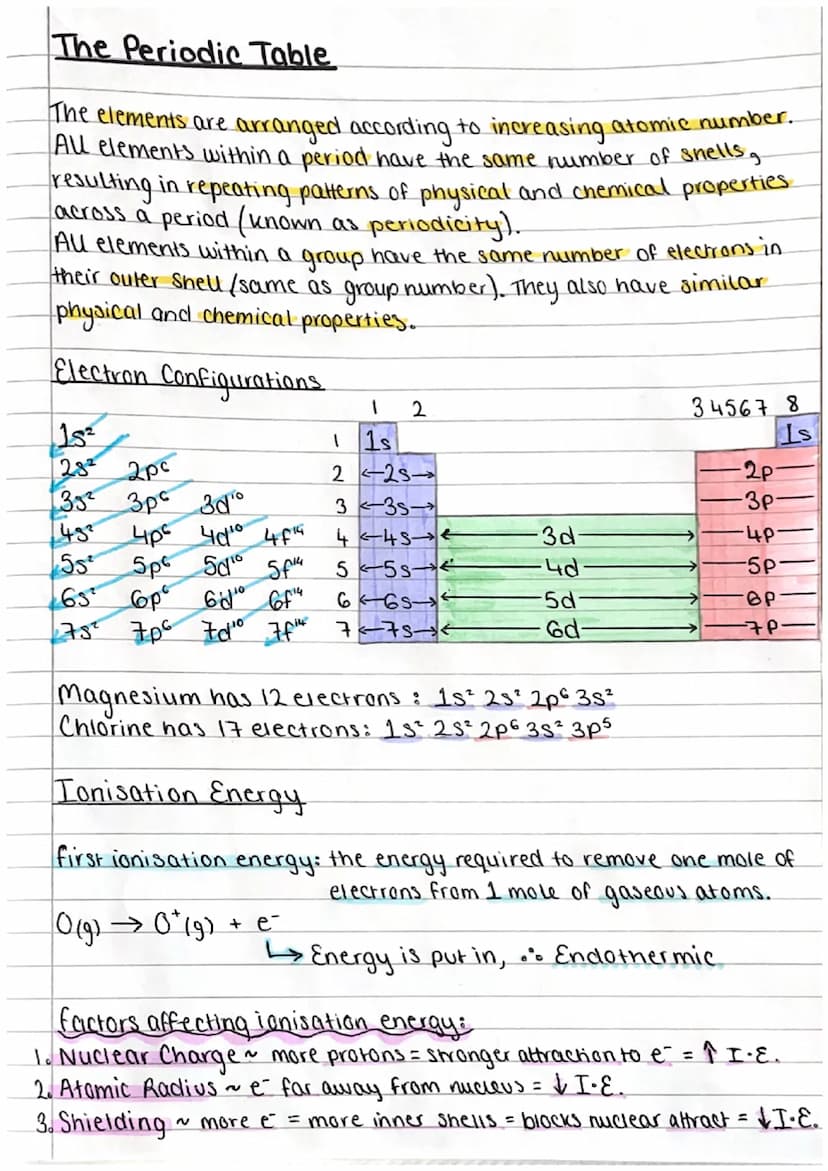
The elements are arranged according to increasing atomic number.
All elements within a period have the same number of

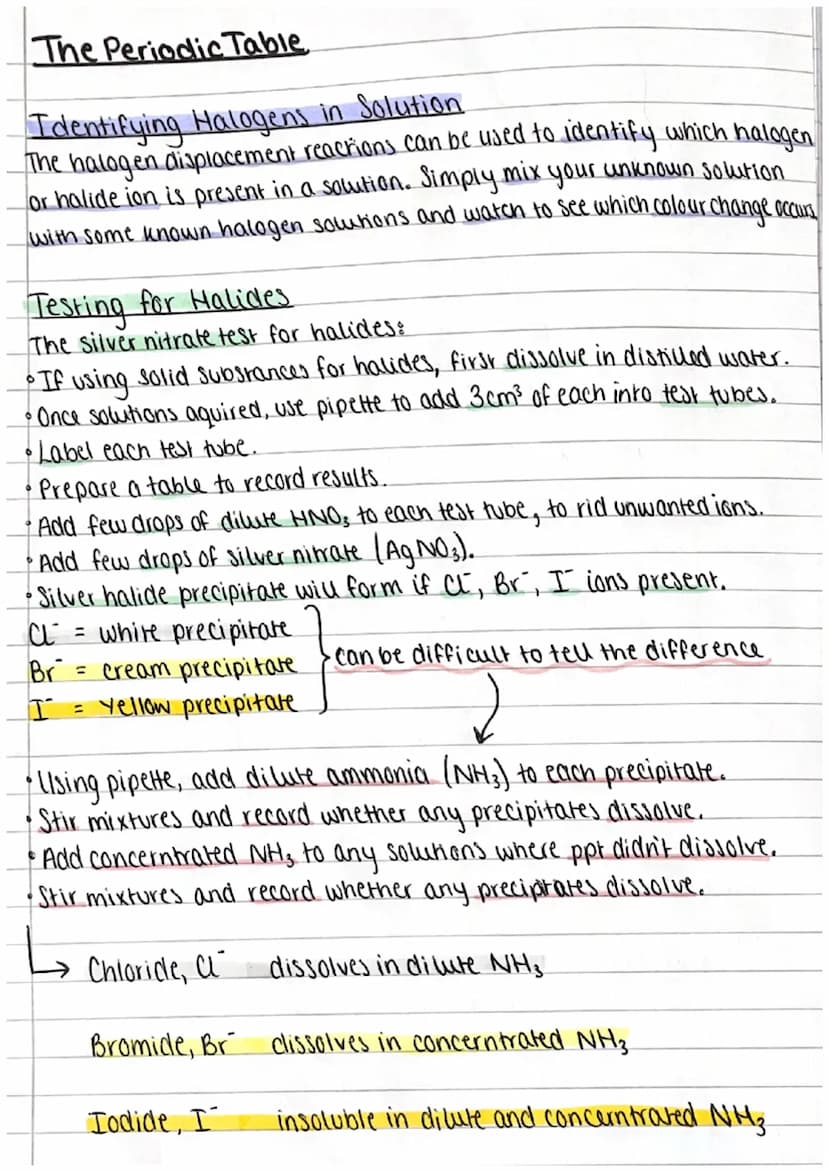
Trends in Ionization Energy

Down a Group

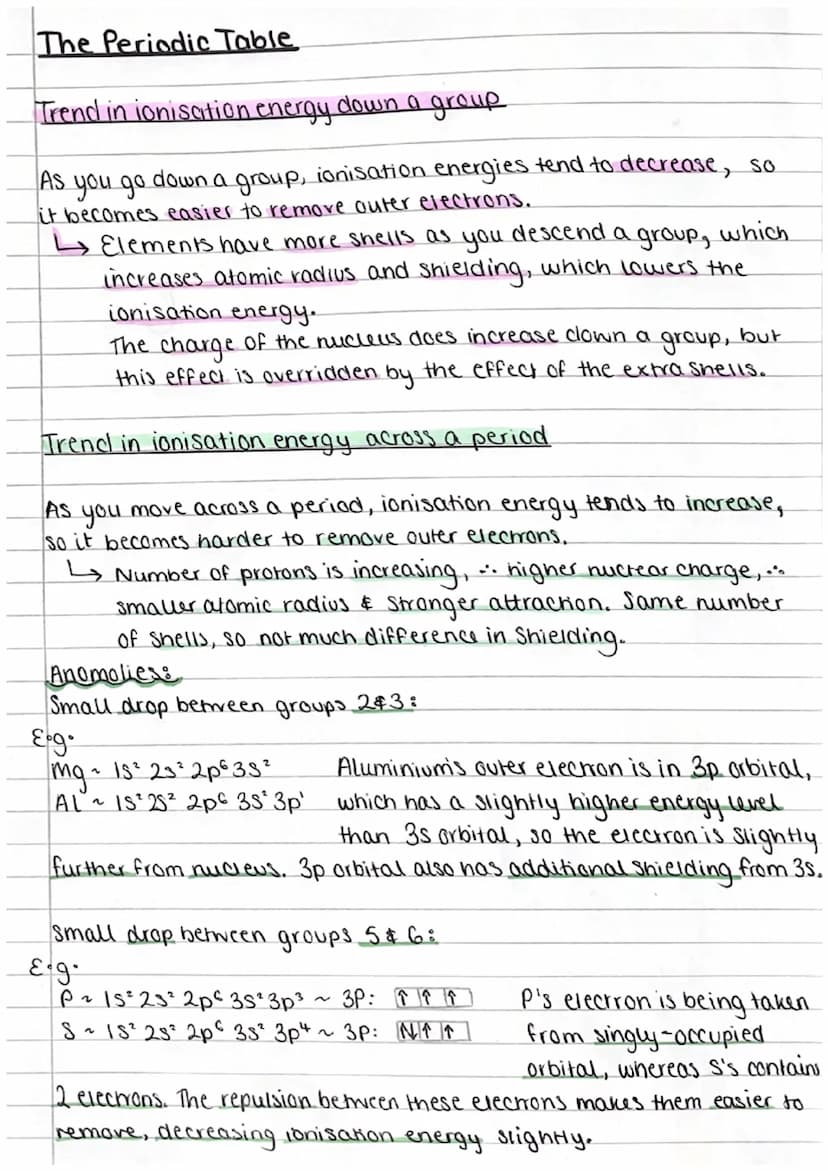
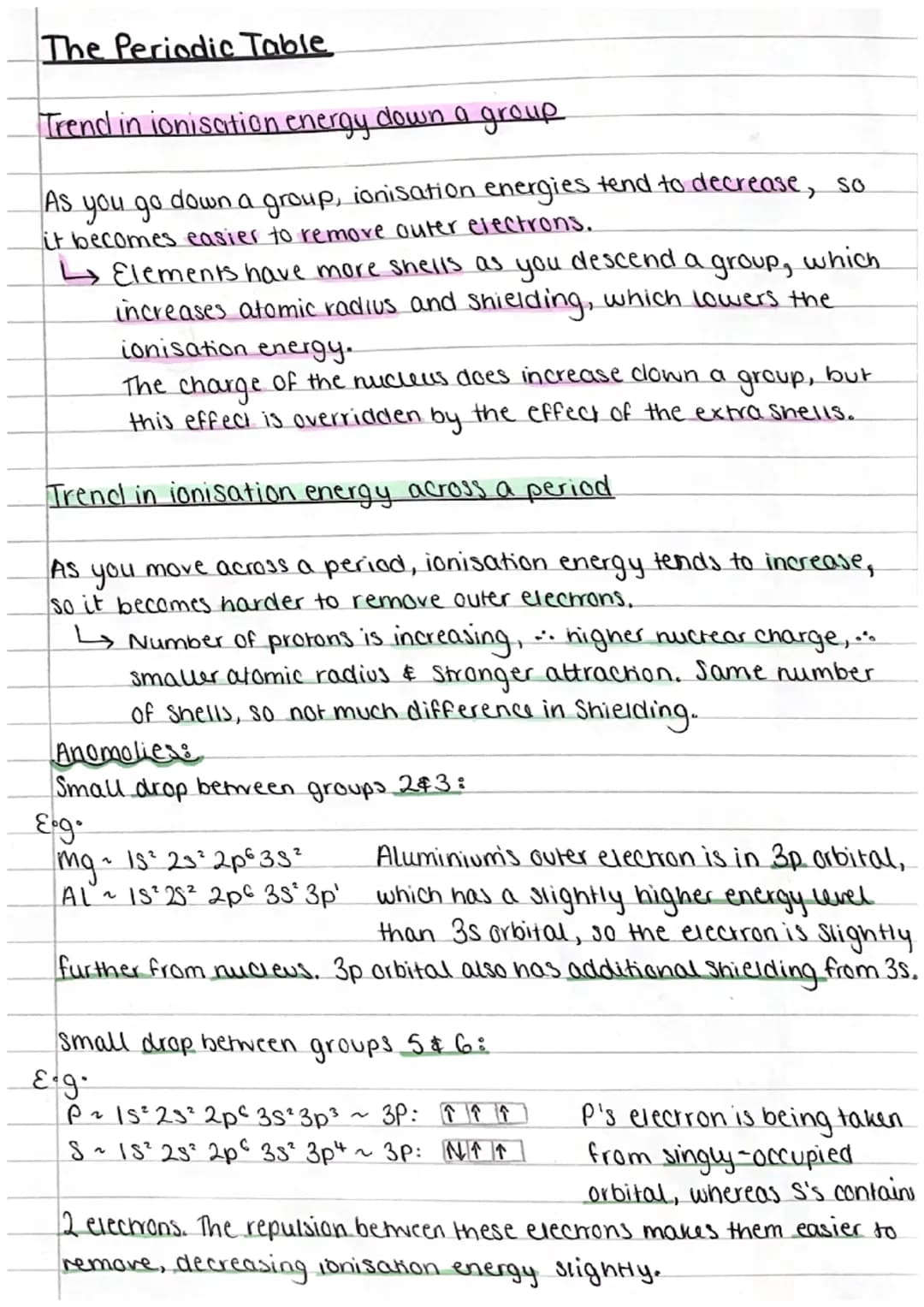
The trend in first ionization energy down group 2 and other groups is generally decreasing. This is due to:

  1. Increasing atomic radius
  2. Enhanced shielding effect from additional electron shells

Highlight: Although nuclear charge increases down a group, the effect of larger atomic radius and increased shielding outweighs this, resulting in lower ionization energies.

Across a Period

The ionization energy across period 3 and other periods generally increases. This trend is explained by:

  1. Increasing nuclear charge
  2. Relatively constant atomic radius
  3. Minimal change in shielding effect

Highlight: The increasing nuclear charge across a period leads to stronger attraction between the nucleus and outer electrons, making it harder to remove electrons.

Anomalies in Periodic Trends

There are two notable anomalies in the trend of ionization energy across period 2 and other periods:

  1. Small drop between groups 2 and 3 (e.g., Mg to Al)
  2. Small drop between groups 5 and 6 (e.g., P to S)

These anomalies are explained by subtle differences in electron configurations and orbital energies.

Example: The drop from Mg to Al is due to Al's outer electron being in the slightly higher energy 3p orbital, which is further from the nucleus and experiences additional shielding from 3s electrons.

Understanding these trends and anomalies is crucial for OCR Chemistry A Level students preparing for exams and OCR Chemistry A Level past papers.
2
of 10
# The Periodic Table

The elements are arranged according to increasing atomic number.
All elements within a period have the same number of

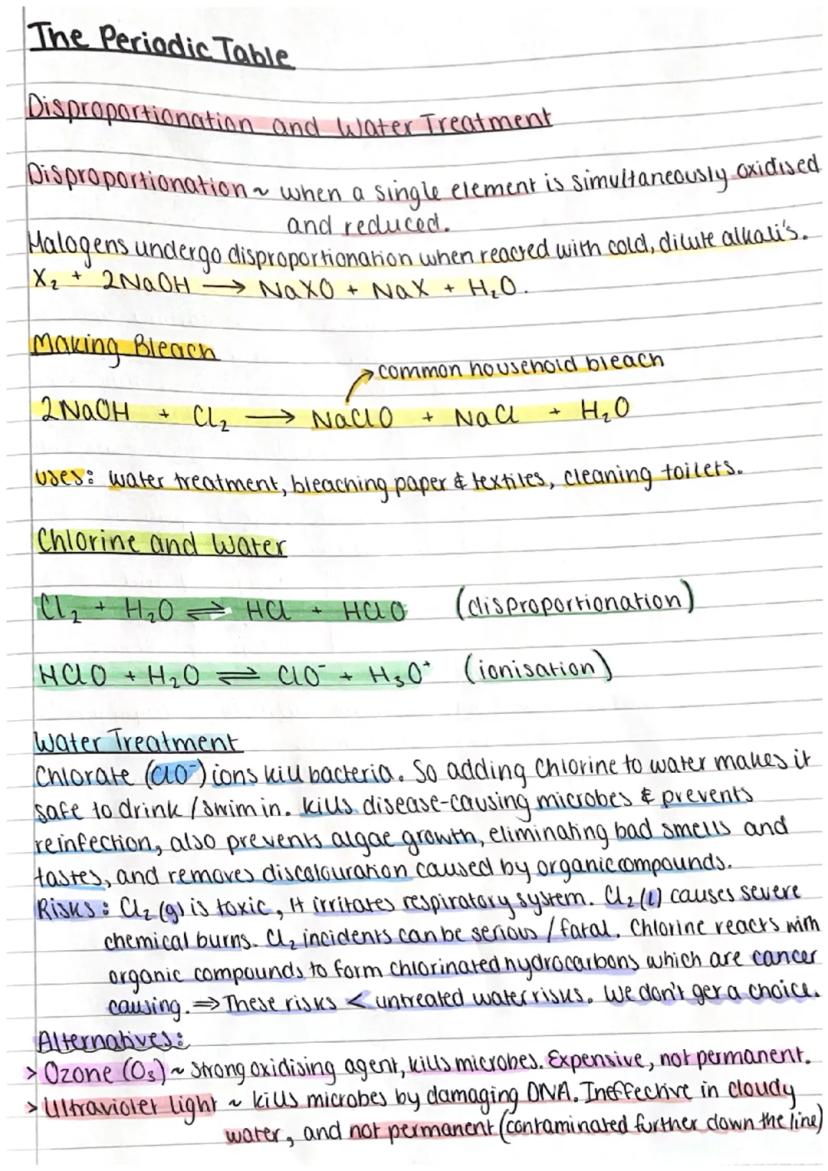
Giant Covalent Lattices

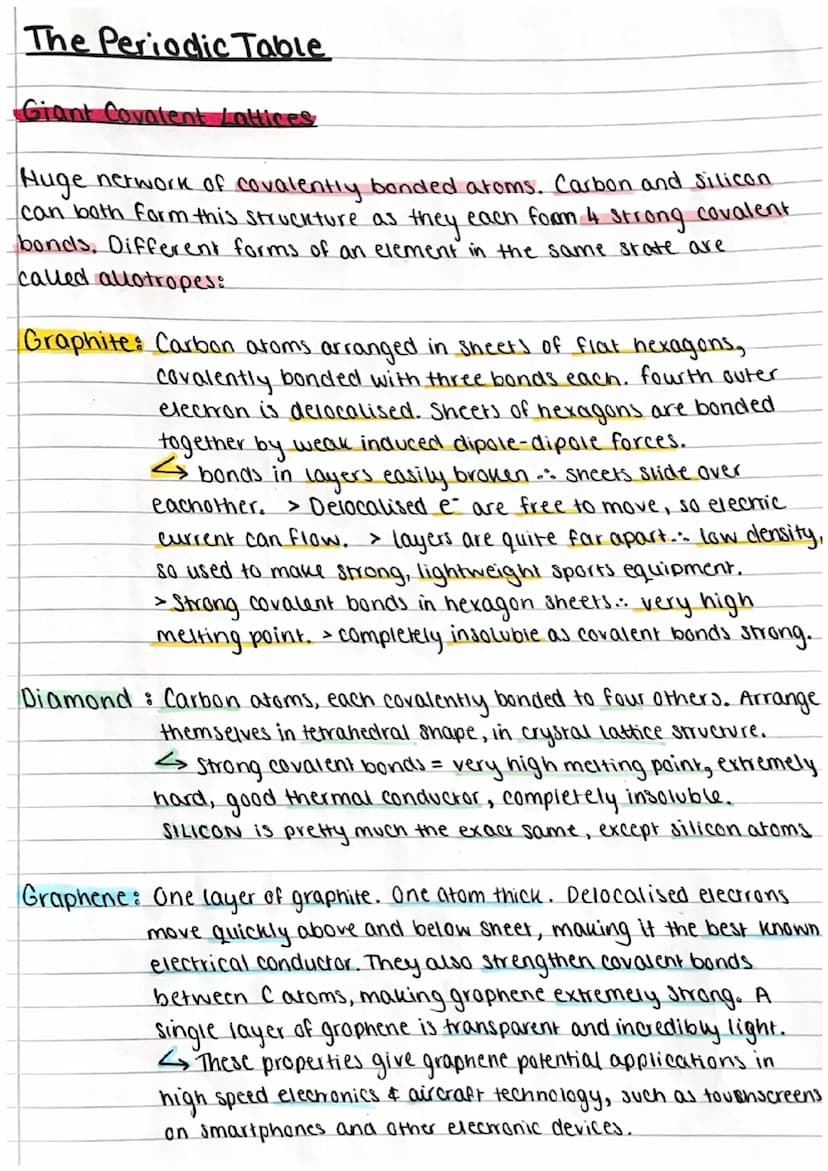
Giant covalent lattices are important structures in chemistry, particularly for elements like carbon and silicon.

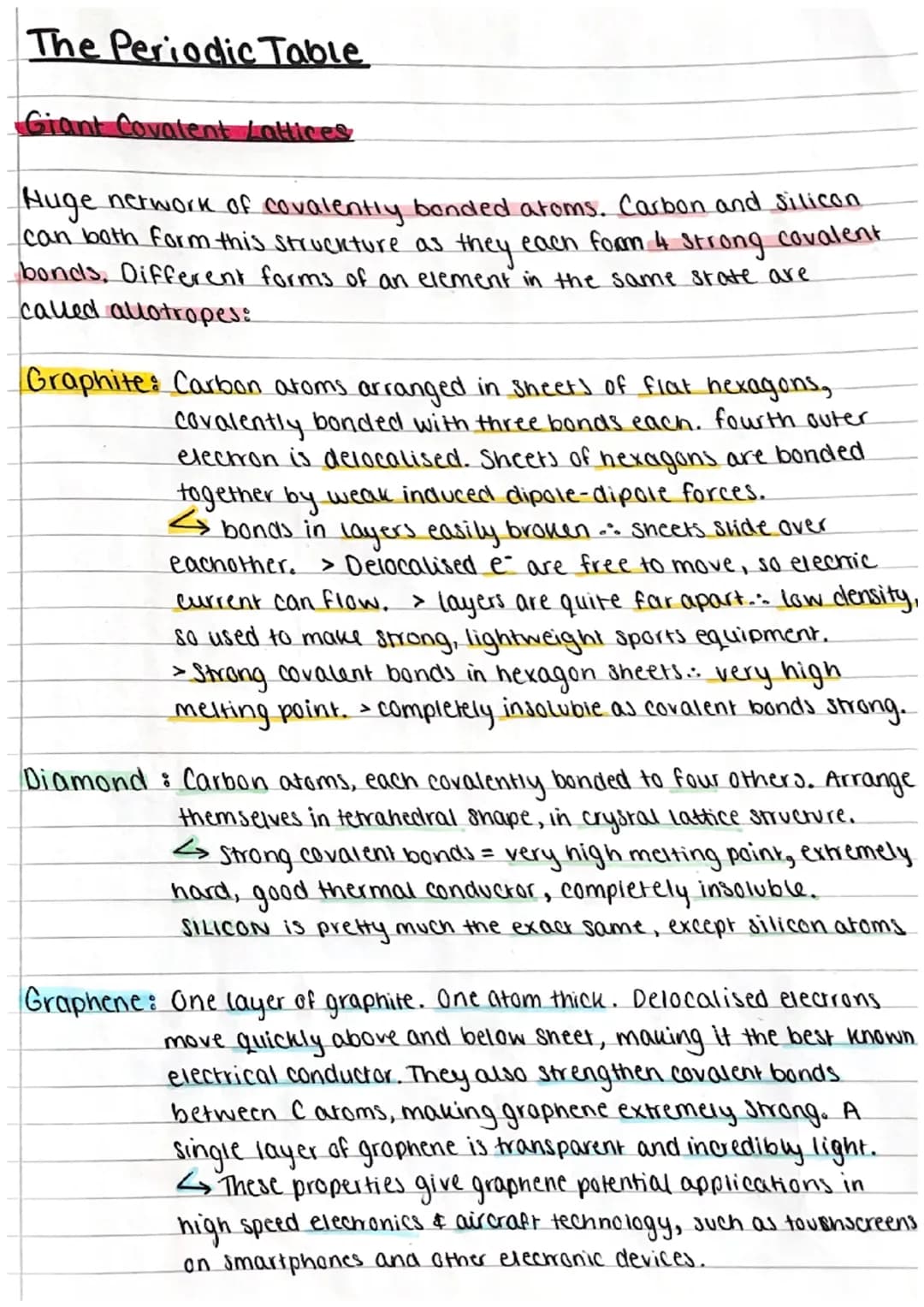
Definition: Giant covalent lattices are huge networks of covalently bonded atoms.

Carbon Allotropes

Carbon forms several allotropes with giant covalent structures:

  1. Graphite
  2. Diamond
  3. Graphene

Graphite

Graphite has a unique layered structure:

  • Carbon atoms arranged in flat hexagonal sheets
  • Three covalent bonds per atom within sheets
  • Weak induced dipole-dipole forces between sheets

Highlight: The delocalised electrons in graphite allow for electrical conductivity, making it useful in various applications.

Diamond

Diamond's structure differs significantly from graphite:

  • Each carbon atom covalently bonded to four others
  • Tetrahedral arrangement in a crystal lattice

Highlight: The strong covalent bonds in diamond result in its extreme hardness and high melting point.

Graphene

Graphene is a single layer of graphite with remarkable properties:

  • One atom thick
  • Excellent electrical conductor
  • Extremely strong and light

Example: Graphene's unique properties make it potentially useful in high-speed electronics and aircraft technology.

Silicon

Silicon forms a giant covalent lattice structure similar to carbon, with some key differences.

Understanding these giant covalent structures examples is essential for grasping the properties of materials and their applications in technology and industry.

3
of 10
# The Periodic Table

The elements are arranged according to increasing atomic number.
All elements within a period have the same number of

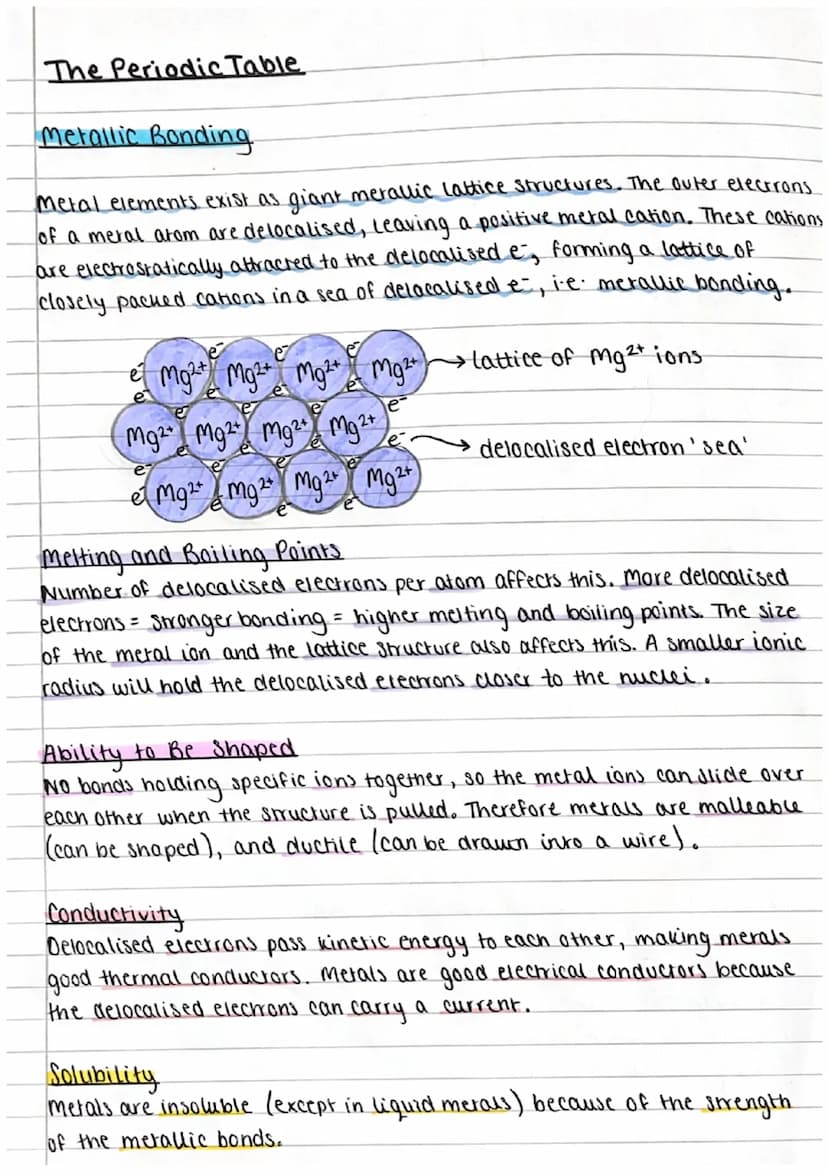
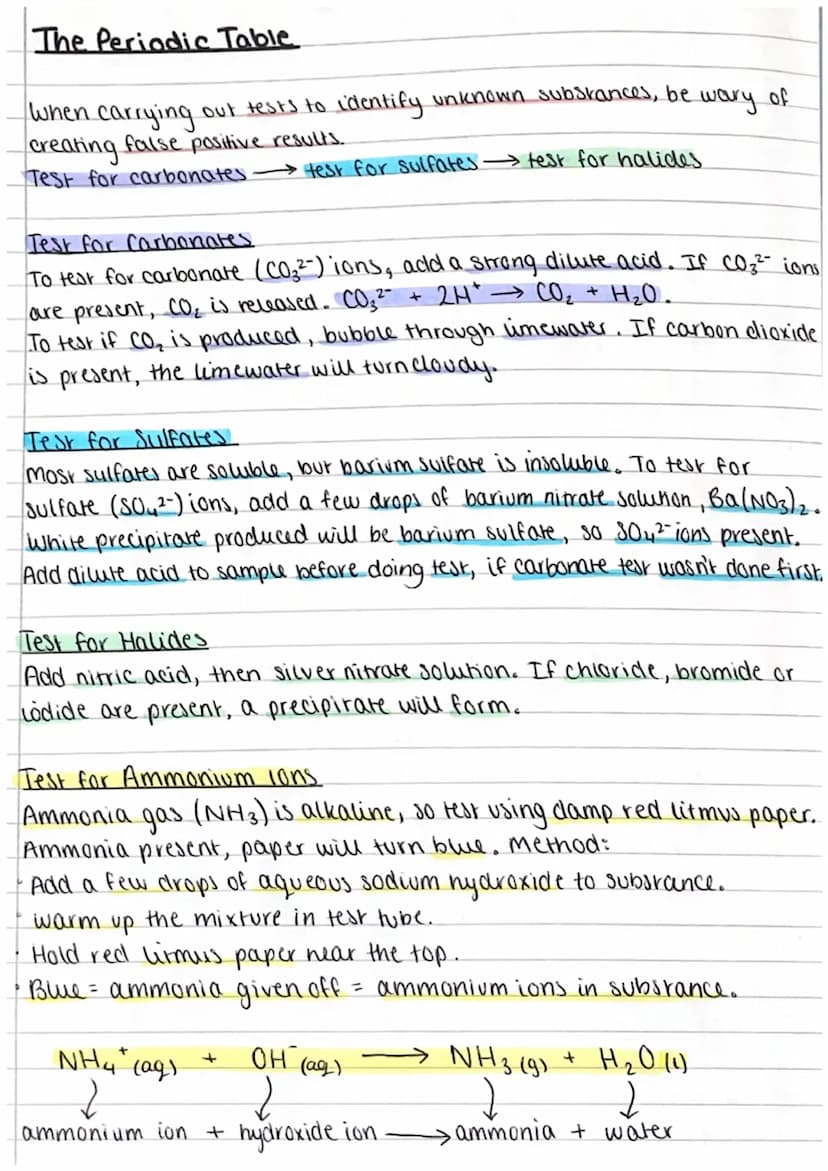
Metallic Bonding and Properties

Metallic bonding is a crucial concept in understanding the properties of metals.

Definition: Metallic bonding involves a lattice of positive metal cations in a sea of delocalised electrons.

Structure of Metallic Bonds

  • Outer electrons of metal atoms are delocalised
  • Positive metal cations form a lattice
  • Electrostatic attraction between cations and delocalised electrons

Example: In magnesium, a lattice of Mg²⁺ ions is surrounded by delocalised electrons.

Properties of Metals

Melting and Boiling Points

Factors affecting melting and boiling points of metals:

  1. Number of delocalised electrons per atom
  2. Size of the metal ion
  3. Lattice structure

Highlight: More delocalised electrons generally lead to stronger bonding and higher melting and boiling points.

Malleability and Ductility

The ability of metals to be shaped is due to their unique bonding:

  • No specific bonds between individual ions
  • Metal ions can slide over each other when force is applied

This property explains why metals are malleable and ductile, making them useful in various applications.

Understanding metallic bonding and its effects on material properties is essential for students studying OCR Chemistry A Level and preparing for exams.

4
of 10
# The Periodic Table

The elements are arranged according to increasing atomic number.
All elements within a period have the same number of

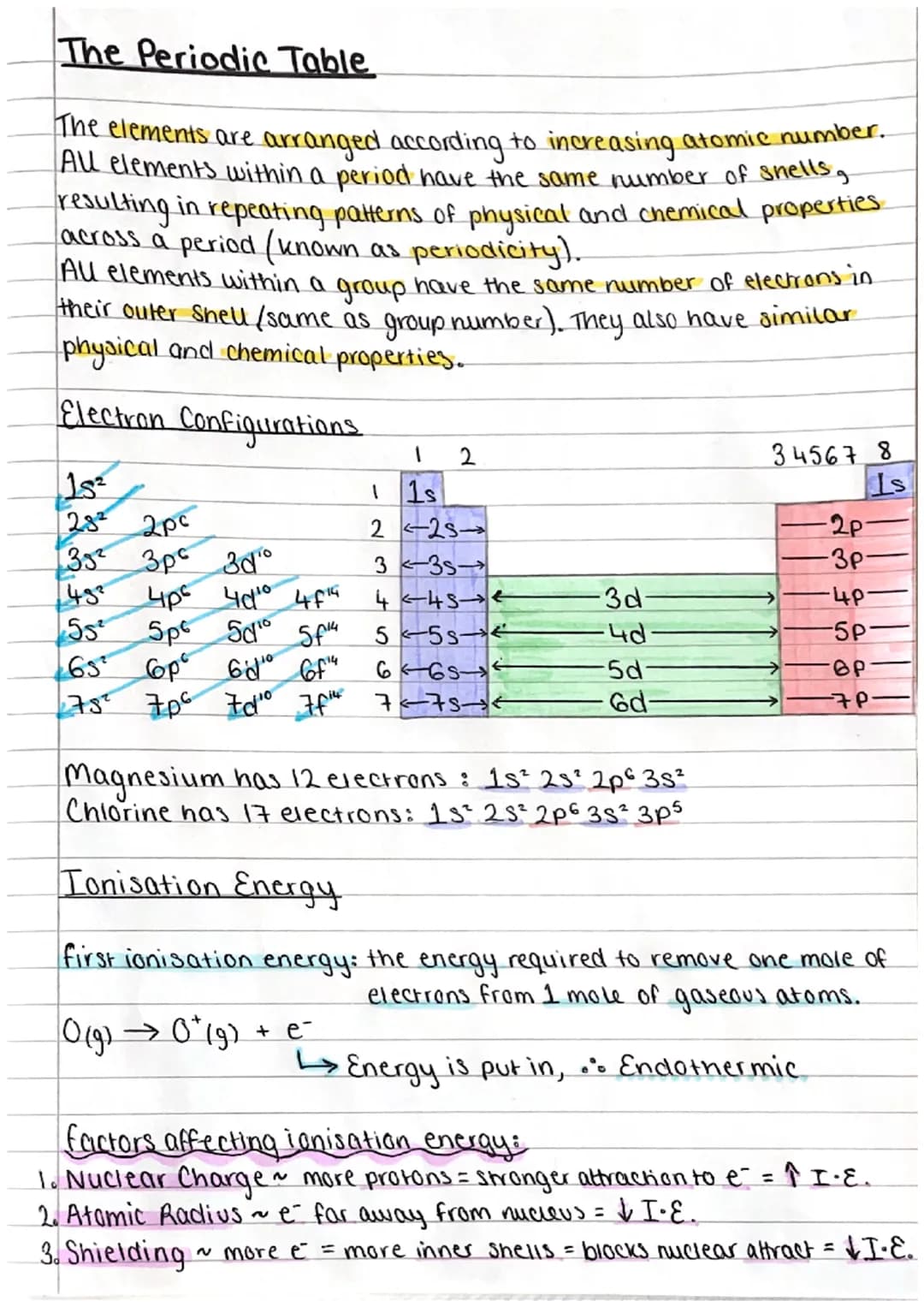
The Periodic Table: Structure and Electron Configurations

The periodic table arranges elements by increasing atomic number, with periods and groups showing repeating patterns of properties. Electron configurations play a crucial role in understanding element behavior.

Definition: Periodicity refers to the repeating patterns of physical and chemical properties across a period in the periodic table.

Elements in the same group have similar properties due to their identical outer shell electron configurations. The guide provides detailed electron configurations for various elements.

Example: Magnesium (12 electrons): 1s² 2s² 2p⁶ 3s² Chlorine (17 electrons): 1s² 2s² 2p⁶ 3s² 3p⁵

Ionization Energy

Ionization energy is a key concept in understanding atomic properties and periodic trends.

Definition: First ionization energy is the energy required to remove one mole of electrons from one mole of gaseous atoms.

Factors affecting ionization energy include:

  1. Nuclear charge
  2. Atomic radius
  3. Shielding effect

Understanding these factors is crucial for predicting and explaining ionization energy trends across the periodic table.

5
of 10
# The Periodic Table

The elements are arranged according to increasing atomic number.
All elements within a period have the same number of
6
of 10
# The Periodic Table

The elements are arranged according to increasing atomic number.
All elements within a period have the same number of
7
of 10
# The Periodic Table

The elements are arranged according to increasing atomic number.
All elements within a period have the same number of
8
of 10
# The Periodic Table

The elements are arranged according to increasing atomic number.
All elements within a period have the same number of
9
of 10
# The Periodic Table

The elements are arranged according to increasing atomic number.
All elements within a period have the same number of
10
of 10
# The Periodic Table

The elements are arranged according to increasing atomic number.
All elements within a period have the same number of

We thought you’d never ask...

What is the Knowunity AI companion?

Our AI Companion is a student-focused AI tool that offers more than just answers. Built on millions of Knowunity resources, it provides relevant information, personalised study plans, quizzes, and content directly in the chat, adapting to your individual learning journey.

Where can I download the Knowunity app?

You can download the app from Google Play Store and Apple App Store.

Is Knowunity really free of charge?

That's right! Enjoy free access to study content, connect with fellow students, and get instant help – all at your fingertips.

Can't find what you're looking for? Explore other subjects.

Students love us — and so will you.

4.6/5App Store
4.7/5Google Play

The app is very easy to use and well designed. I have found everything I was looking for so far and have been able to learn a lot from the presentations! I will definitely use the app for a class assignment! And of course it also helps a lot as an inspiration.

Stefan SiOS user

This app is really great. There are so many study notes and help [...]. My problem subject is French, for example, and the app has so many options for help. Thanks to this app, I have improved my French. I would recommend it to anyone.

Samantha KlichAndroid user

Wow, I am really amazed. I just tried the app because I've seen it advertised many times and was absolutely stunned. This app is THE HELP you want for school and above all, it offers so many things, such as workouts and fact sheets, which have been VERY helpful to me personally.

AnnaiOS user

ChemistryChemistry387 views·Updated Jun 2, 2026·10 pages

Why Ionisation Energy Changes and Cool Giant Structures

user profile picture
Erin Gauntlett@eringauntlett.x

Learn about why the ionisation energy goes up across periods like 2 and 3 and why it goes down in Group 2. Discover the mysteries of ionisation energy and the awesome world of giant covalent structures like diamond and graphite. Find out about the electron configurations of cool elements like magnesium, chlorine, and oxygen. Perfect for curious kids who love science!

1
of 10
# The Periodic Table

The elements are arranged according to increasing atomic number.
All elements within a period have the same number of

Sign up to see the content. It's free!

  • Access to all documents
  • Improve your grades
  • Join milions of students

Trends in Ionization Energy

Down a Group

The trend in first ionization energy down group 2 and other groups is generally decreasing. This is due to:

  1. Increasing atomic radius
  2. Enhanced shielding effect from additional electron shells

Highlight: Although nuclear charge increases down a group, the effect of larger atomic radius and increased shielding outweighs this, resulting in lower ionization energies.

Across a Period

The ionization energy across period 3 and other periods generally increases. This trend is explained by:

  1. Increasing nuclear charge
  2. Relatively constant atomic radius
  3. Minimal change in shielding effect

Highlight: The increasing nuclear charge across a period leads to stronger attraction between the nucleus and outer electrons, making it harder to remove electrons.

Anomalies in Periodic Trends

There are two notable anomalies in the trend of ionization energy across period 2 and other periods:

  1. Small drop between groups 2 and 3 (e.g., Mg to Al)
  2. Small drop between groups 5 and 6 (e.g., P to S)

These anomalies are explained by subtle differences in electron configurations and orbital energies.

Example: The drop from Mg to Al is due to Al's outer electron being in the slightly higher energy 3p orbital, which is further from the nucleus and experiences additional shielding from 3s electrons.

Understanding these trends and anomalies is crucial for OCR Chemistry A Level students preparing for exams and OCR Chemistry A Level past papers.

2
of 10
# The Periodic Table

The elements are arranged according to increasing atomic number.
All elements within a period have the same number of

Sign up to see the content. It's free!

  • Access to all documents
  • Improve your grades
  • Join milions of students

Giant Covalent Lattices

Giant covalent lattices are important structures in chemistry, particularly for elements like carbon and silicon.

Definition: Giant covalent lattices are huge networks of covalently bonded atoms.

Carbon Allotropes

Carbon forms several allotropes with giant covalent structures:

  1. Graphite
  2. Diamond
  3. Graphene

Graphite

Graphite has a unique layered structure:

  • Carbon atoms arranged in flat hexagonal sheets
  • Three covalent bonds per atom within sheets
  • Weak induced dipole-dipole forces between sheets

Highlight: The delocalised electrons in graphite allow for electrical conductivity, making it useful in various applications.

Diamond

Diamond's structure differs significantly from graphite:

  • Each carbon atom covalently bonded to four others
  • Tetrahedral arrangement in a crystal lattice

Highlight: The strong covalent bonds in diamond result in its extreme hardness and high melting point.

Graphene

Graphene is a single layer of graphite with remarkable properties:

  • One atom thick
  • Excellent electrical conductor
  • Extremely strong and light

Example: Graphene's unique properties make it potentially useful in high-speed electronics and aircraft technology.

Silicon

Silicon forms a giant covalent lattice structure similar to carbon, with some key differences.

Understanding these giant covalent structures examples is essential for grasping the properties of materials and their applications in technology and industry.

3
of 10
# The Periodic Table

The elements are arranged according to increasing atomic number.
All elements within a period have the same number of

Sign up to see the content. It's free!

  • Access to all documents
  • Improve your grades
  • Join milions of students

Metallic Bonding and Properties

Metallic bonding is a crucial concept in understanding the properties of metals.

Definition: Metallic bonding involves a lattice of positive metal cations in a sea of delocalised electrons.

Structure of Metallic Bonds

  • Outer electrons of metal atoms are delocalised
  • Positive metal cations form a lattice
  • Electrostatic attraction between cations and delocalised electrons

Example: In magnesium, a lattice of Mg²⁺ ions is surrounded by delocalised electrons.

Properties of Metals

Melting and Boiling Points

Factors affecting melting and boiling points of metals:

  1. Number of delocalised electrons per atom
  2. Size of the metal ion
  3. Lattice structure

Highlight: More delocalised electrons generally lead to stronger bonding and higher melting and boiling points.

Malleability and Ductility

The ability of metals to be shaped is due to their unique bonding:

  • No specific bonds between individual ions
  • Metal ions can slide over each other when force is applied

This property explains why metals are malleable and ductile, making them useful in various applications.

Understanding metallic bonding and its effects on material properties is essential for students studying OCR Chemistry A Level and preparing for exams.

4
of 10
# The Periodic Table

The elements are arranged according to increasing atomic number.
All elements within a period have the same number of

Sign up to see the content. It's free!

  • Access to all documents
  • Improve your grades
  • Join milions of students

The Periodic Table: Structure and Electron Configurations

The periodic table arranges elements by increasing atomic number, with periods and groups showing repeating patterns of properties. Electron configurations play a crucial role in understanding element behavior.

Definition: Periodicity refers to the repeating patterns of physical and chemical properties across a period in the periodic table.

Elements in the same group have similar properties due to their identical outer shell electron configurations. The guide provides detailed electron configurations for various elements.

Example: Magnesium (12 electrons): 1s² 2s² 2p⁶ 3s² Chlorine (17 electrons): 1s² 2s² 2p⁶ 3s² 3p⁵

Ionization Energy

Ionization energy is a key concept in understanding atomic properties and periodic trends.

Definition: First ionization energy is the energy required to remove one mole of electrons from one mole of gaseous atoms.

Factors affecting ionization energy include:

  1. Nuclear charge
  2. Atomic radius
  3. Shielding effect

Understanding these factors is crucial for predicting and explaining ionization energy trends across the periodic table.

5
of 10
# The Periodic Table

The elements are arranged according to increasing atomic number.
All elements within a period have the same number of

Sign up to see the content. It's free!

  • Access to all documents
  • Improve your grades
  • Join milions of students
6
of 10
# The Periodic Table

The elements are arranged according to increasing atomic number.
All elements within a period have the same number of

Sign up to see the content. It's free!

  • Access to all documents
  • Improve your grades
  • Join milions of students
7
of 10
# The Periodic Table

The elements are arranged according to increasing atomic number.
All elements within a period have the same number of

Sign up to see the content. It's free!

  • Access to all documents
  • Improve your grades
  • Join milions of students
8
of 10
# The Periodic Table

The elements are arranged according to increasing atomic number.
All elements within a period have the same number of

Sign up to see the content. It's free!

  • Access to all documents
  • Improve your grades
  • Join milions of students
9
of 10
# The Periodic Table

The elements are arranged according to increasing atomic number.
All elements within a period have the same number of

Sign up to see the content. It's free!

  • Access to all documents
  • Improve your grades
  • Join milions of students
10
of 10
# The Periodic Table

The elements are arranged according to increasing atomic number.
All elements within a period have the same number of

Sign up to see the content. It's free!

  • Access to all documents
  • Improve your grades
  • Join milions of students

We thought you’d never ask...

What is the Knowunity AI companion?

Our AI Companion is a student-focused AI tool that offers more than just answers. Built on millions of Knowunity resources, it provides relevant information, personalised study plans, quizzes, and content directly in the chat, adapting to your individual learning journey.

Where can I download the Knowunity app?

You can download the app from Google Play Store and Apple App Store.

Is Knowunity really free of charge?

That's right! Enjoy free access to study content, connect with fellow students, and get instant help – all at your fingertips.

Can't find what you're looking for? Explore other subjects.

Students love us — and so will you.

4.6/5App Store
4.7/5Google Play

The app is very easy to use and well designed. I have found everything I was looking for so far and have been able to learn a lot from the presentations! I will definitely use the app for a class assignment! And of course it also helps a lot as an inspiration.

Stefan SiOS user

This app is really great. There are so many study notes and help [...]. My problem subject is French, for example, and the app has so many options for help. Thanks to this app, I have improved my French. I would recommend it to anyone.

Samantha KlichAndroid user

Wow, I am really amazed. I just tried the app because I've seen it advertised many times and was absolutely stunned. This app is THE HELP you want for school and above all, it offers so many things, such as workouts and fact sheets, which have been VERY helpful to me personally.

AnnaiOS user