
El sistema nervioso y hormonal juegan un papel crucial en...
 Biology318 views·Updated Jun 16, 2026·5 pages
How Your Body’s Nerves and Hormones Keep Things Balanced

Seren White@serenwhite_muwd
1 / 5
1
of 5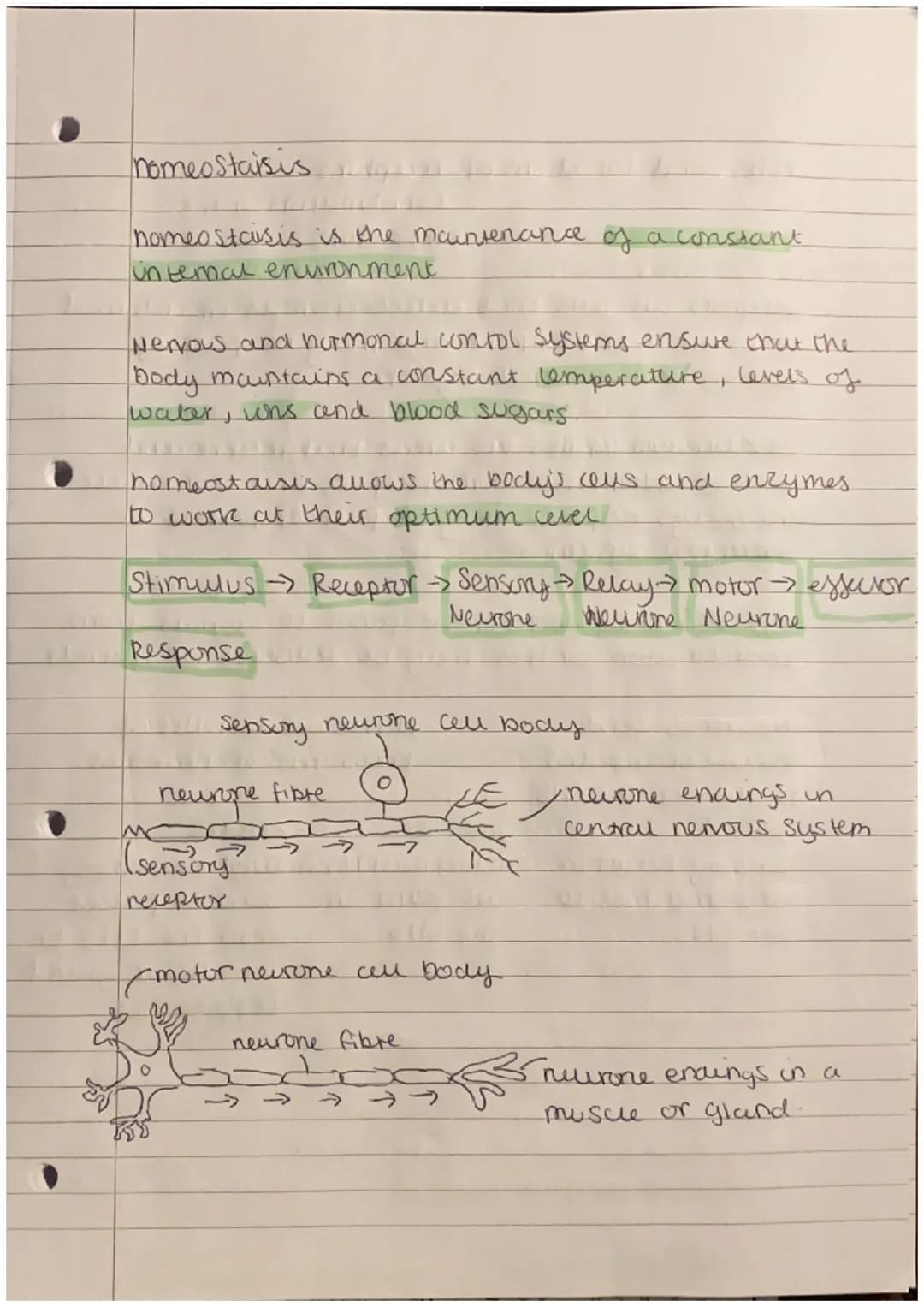
Roles and Locations of Key Components in Body Regulation
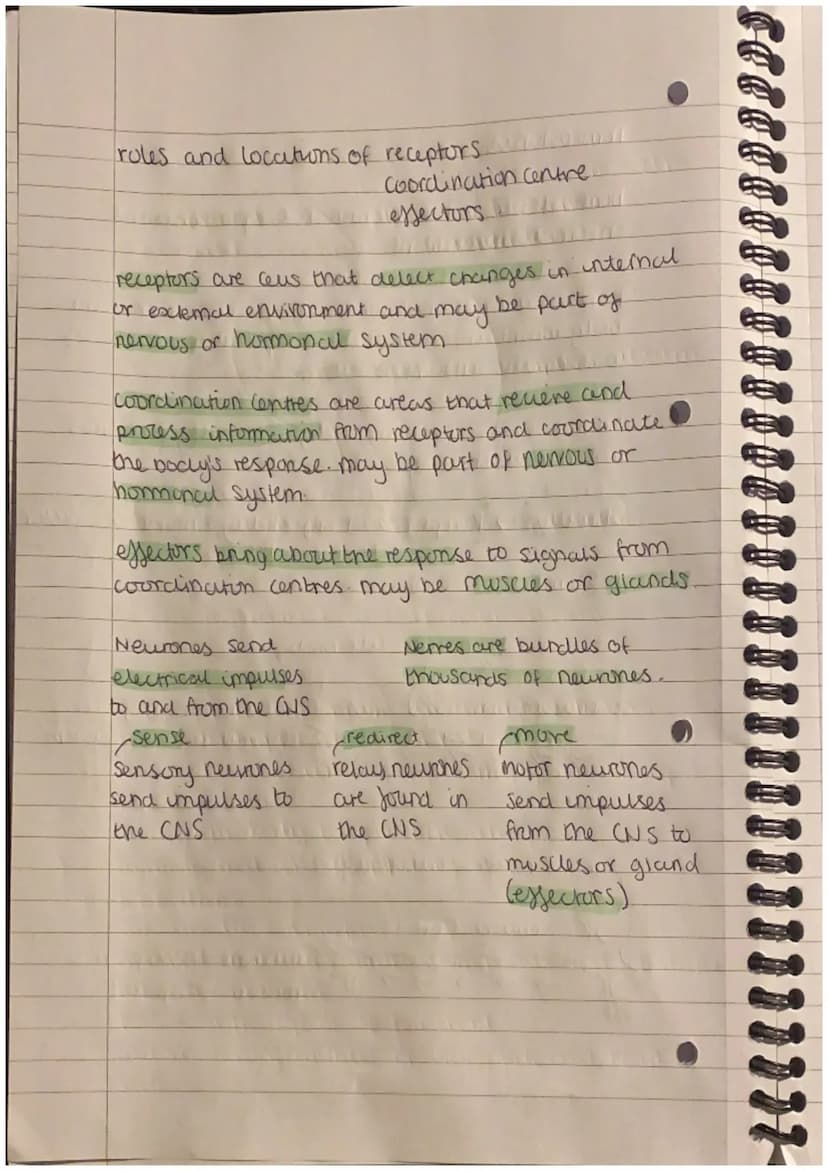
This page delves into the specific roles and locations of receptors, coordination centers, and effectors in the body's regulatory systems.
Receptors are crucial components that detect changes in both internal and external environments. They can be part of either the nervous or hormonal system, serving as the first line of detection for any changes that might disrupt homeostasis.
Coordination centers receive and process information from receptors and coordinate the body's response. These centers may be part of the nervous system (like the brain or spinal cord) or the hormonal system (like the pituitary gland).
Effectors are the components that bring about the response to signals from coordination centers. These can be muscles or glands, acting to restore balance in the body.
The nervous system plays a vital role in this process, with neurons sending electrical impulses to and from the Central Nervous System (CNS). Sensory neurons send impulses to the CNS, while motor neurons send impulses from the CNS to muscles or glands (effectors).
Vocabulary: Neurons are specialized cells that transmit electrical and chemical signals in the nervous system.
Highlight: Nerves, which are bundles of thousands of neurons, facilitate rapid communication throughout the body, essential for quick responses to maintain homeostasis.
Example: When you touch a hot object, receptors in your skin detect the heat, sending signals via sensory neurons to your CNS, which then sends signals via motor neurons to muscles in your arm, causing you to quickly withdraw your hand.
2
of 5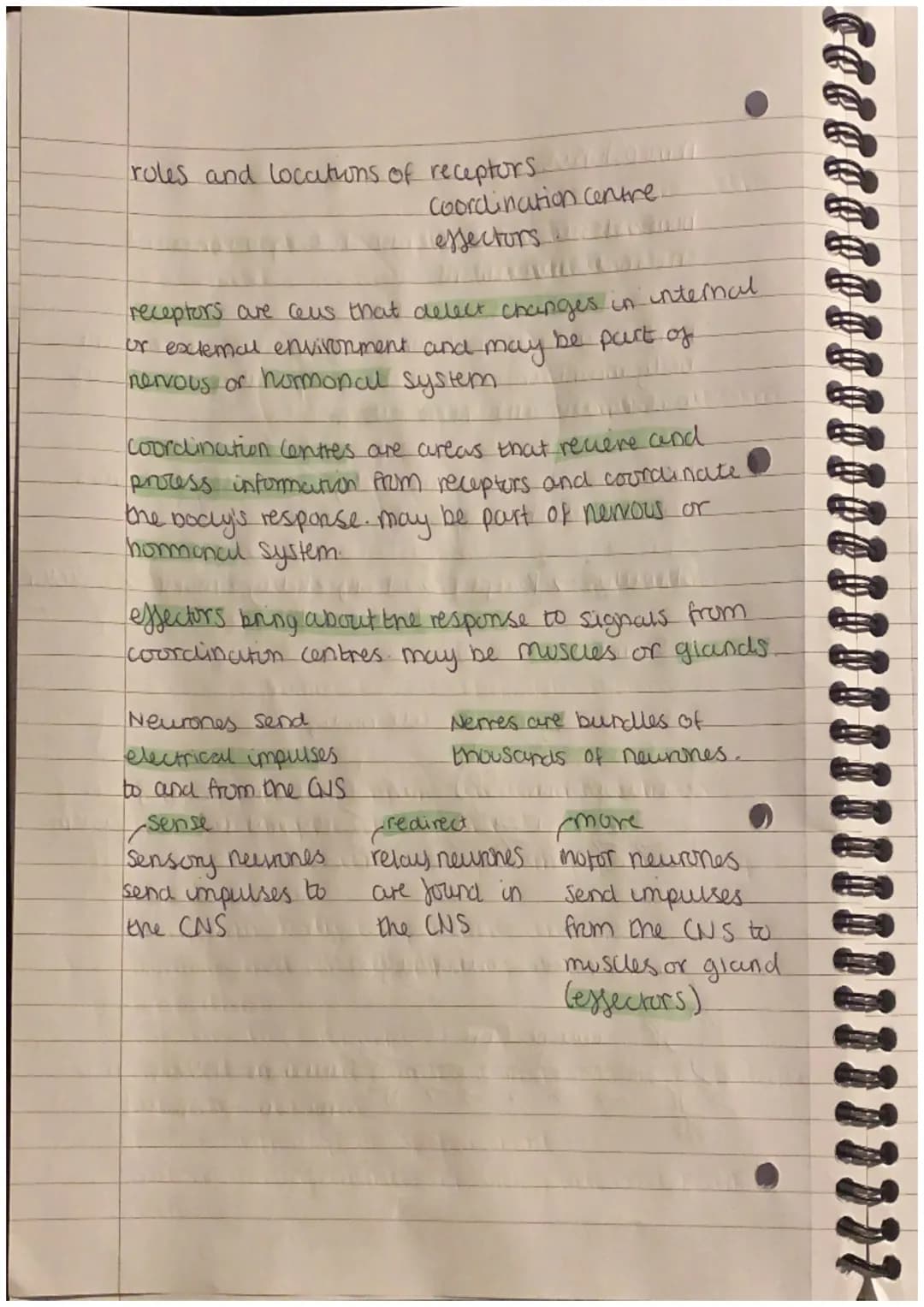
Reflexes and Synaptic Transmission
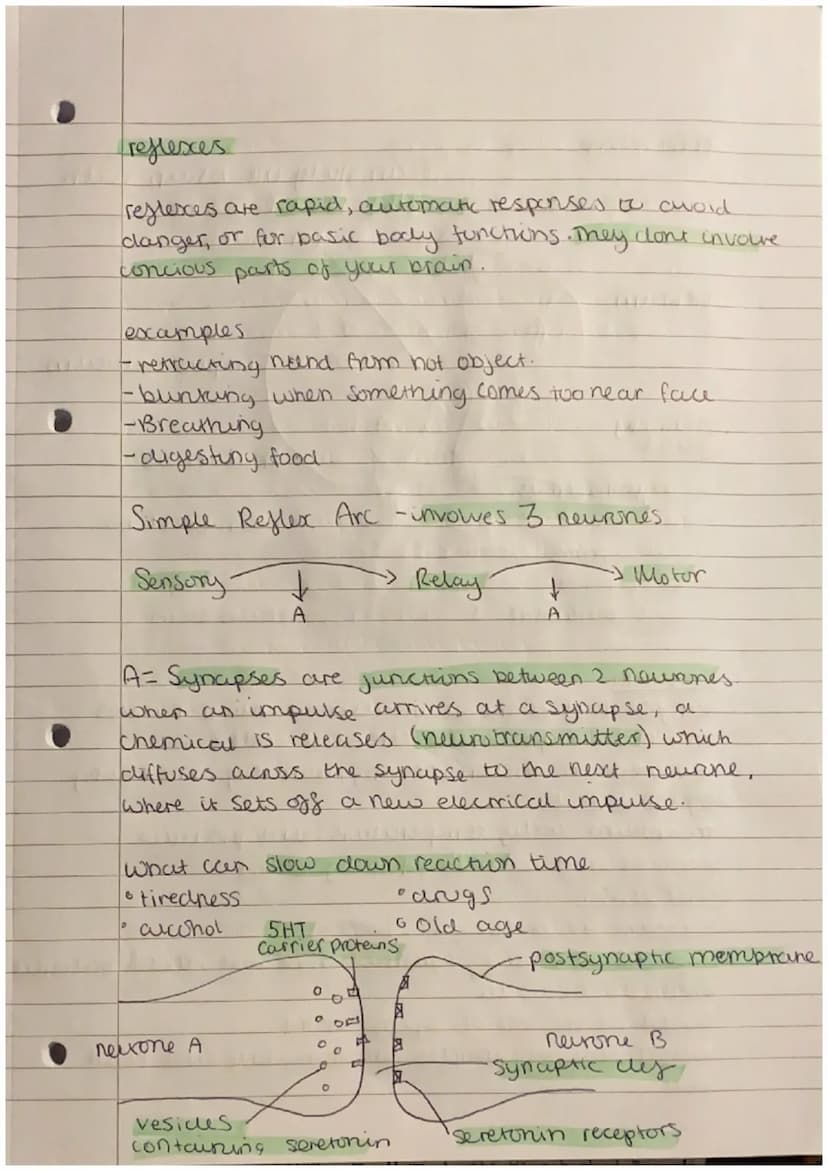
This page focuses on reflexes and the intricate process of synaptic transmission, both crucial for rapid responses in the body.
Reflexes are rapid, automatic responses that help avoid danger or maintain basic body functions. These responses don't involve conscious parts of the brain, allowing for quick reactions. The cómo los reflejos automáticos protegen el cuerpo humano is evident in examples such as retracting a hand from a hot object, blinking when something comes too close to the face, breathing, and digesting food.
A simple reflex arc involves three neurons: sensory, relay, and motor. This pathway allows for rapid response to stimuli without the need for conscious thought.
Synapses, the junctions between two neurons, play a crucial role in transmitting signals. When an impulse arrives at a synapse, neurotransmitters are released, diffusing across the synapse to the next neuron, where they trigger a new electrical impulse.
Definition: A reflex is a rapid, automatic response to a stimulus, bypassing conscious thought for quicker reaction times.
Example: When you touch a hot stove, the reflex arc quickly sends signals to pull your hand away before you consciously register the pain.
Highlight: Synaptic transmission allows for the precise and controlled passage of information between neurons, essential for coordinated bodily functions.
Factors that can slow down reaction time include aging, tiredness, and alcohol consumption. Understanding these factors is crucial for maintaining optimal reflexes and overall body function.
3
of 5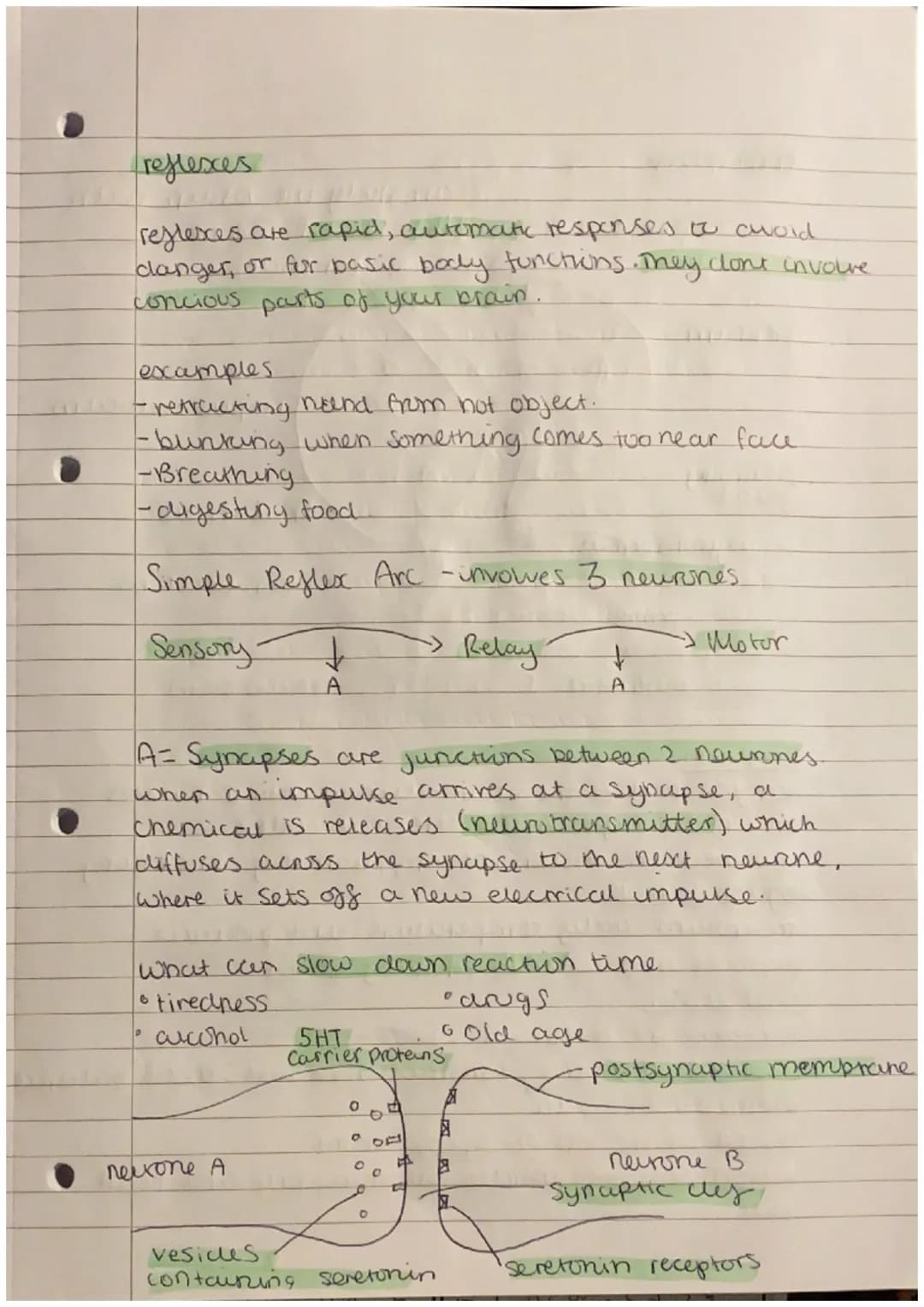
Thermoregulation: Maintaining Body Temperature
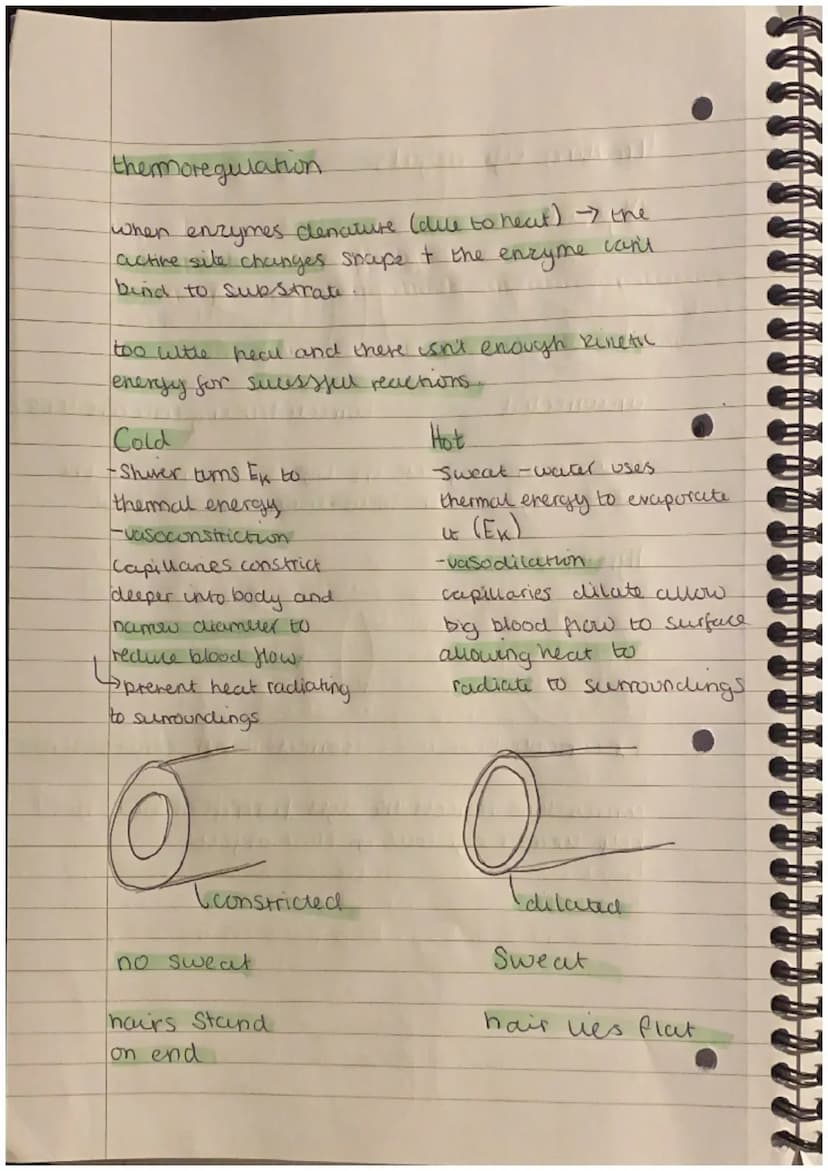
Thermoregulation is a critical homeostatic process that maintains the body's temperature within a narrow range, essential for optimal enzyme function and overall health.
When enzymes denature due to excessive heat, their active sites change shape, preventing them from binding to substrates. Conversely, too little heat results in insufficient kinetic energy for successful reactions. This delicate balance underscores the importancia del sistema nervioso y hormonal en la homeostasis, particularly in temperature regulation.
The body employs various mechanisms to respond to temperature changes:
In cold conditions:
- Shivering converts energy to thermal energy
- Vasoconstriction reduces blood flow to the skin, preventing heat loss
- Hair stands on end to trap an insulating layer of air
In hot conditions:
- Sweating uses thermal energy for evaporation, cooling the body
- Vasodilation increases blood flow to the skin, allowing heat to radiate to surroundings
Vocabulary: Vasoconstriction is the narrowing of blood vessels, while vasodilation is their widening.
Highlight: The body's ability to rapidly adjust to temperature changes through these mechanisms is a prime example of homeostasis in action.
Example: When you exercise on a hot day, your body increases sweat production and dilates blood vessels near the skin to help dissipate excess heat.
4
of 5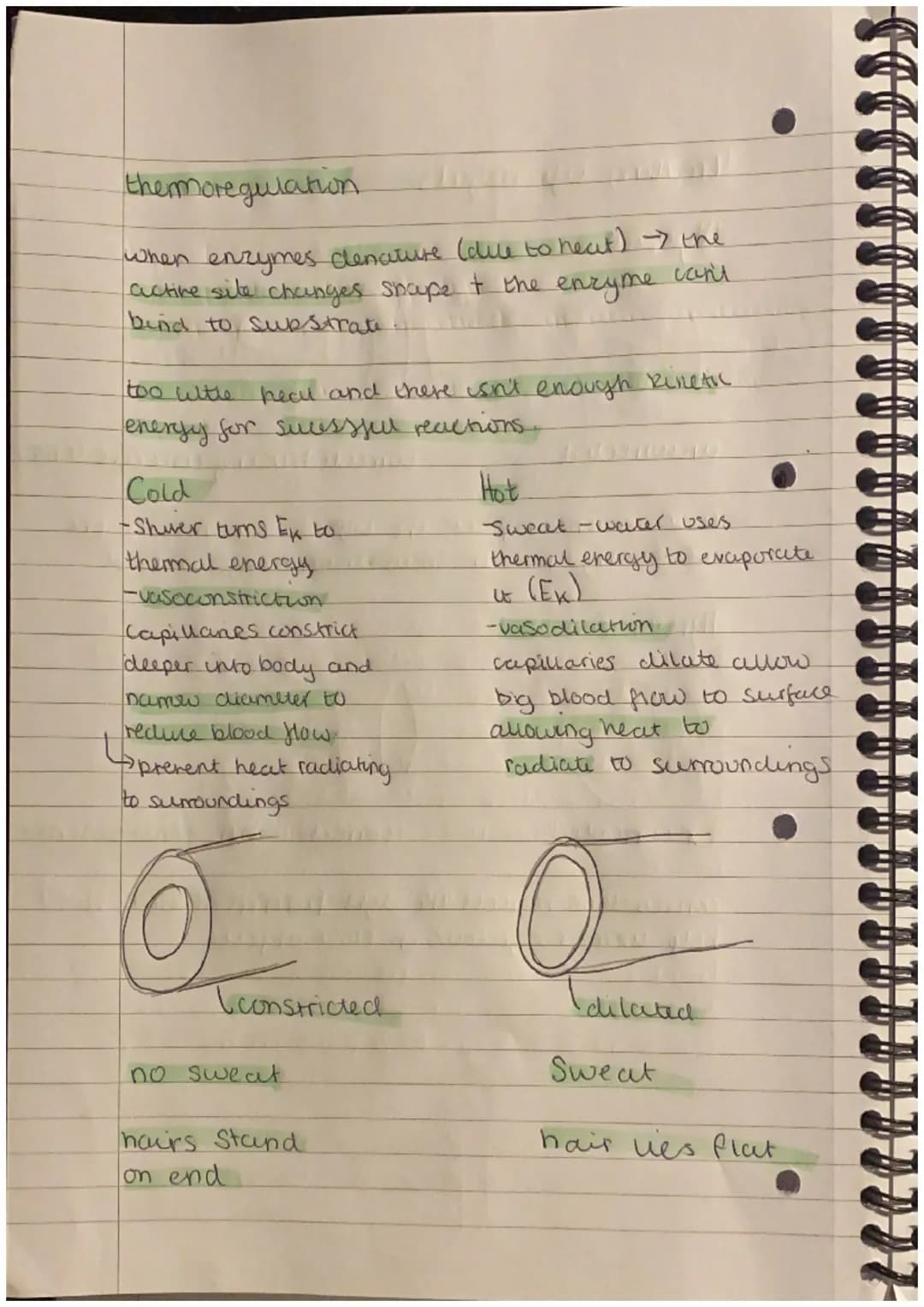
Glucoregulation: Controlling Blood Sugar Levels
Glucoregulation is a vital homeostatic process that maintains blood glucose levels within a healthy range. This page explores the proceso de glucorregulación y su impacto en el nivel de azúcar en sangre, highlighting the pancreas's role in this intricate balance.
After eating, blood glucose levels rise but quickly return to normal due to the pancreas's regulatory action. When glucose levels are too high, the pancreas releases insulin, a hormone that prompts the liver to convert glucose into glycogen for storage in the liver and muscles.
Conversely, when glucose levels drop too low, the pancreas releases glucagon. This hormone signals the liver to convert stored glycogen back into glucose, releasing it into the bloodstream to raise blood sugar levels.
This delicate balance is crucial for maintaining energy levels and overall health:
- High glucose triggers insulin release
- Insulin causes glucose uptake by cells and conversion to glycogen
- Low glucose triggers glucagon release
- Glucagon causes glycogen breakdown and glucose release into blood
Definition: Glucoregulation is the process of maintaining blood glucose levels within a normal range through hormonal control.
Highlight: The pancreas acts as both a sensor and an effector in glucoregulation, demonstrating the intricate interplay between the endocrine and metabolic systems.
Example: In individuals with diabetes, this regulatory system is impaired, leading to chronically high blood sugar levels that require medical intervention to manage.
Understanding glucoregulation is essential for comprehending metabolic health and diseases like diabetes, underscoring the importancia del sistema nervioso y hormonal en la homeostasis in maintaining overall well-being.
5
of 5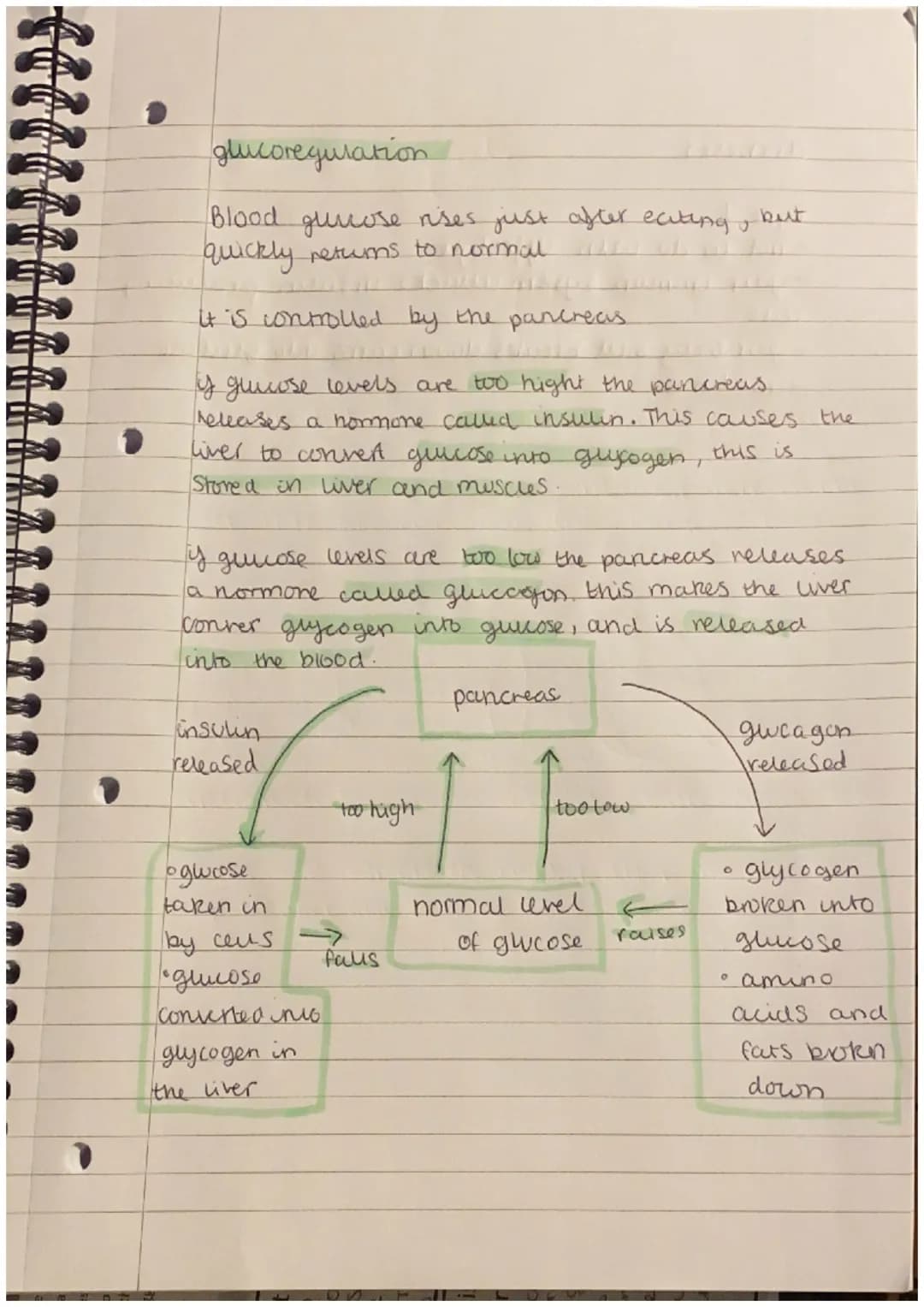
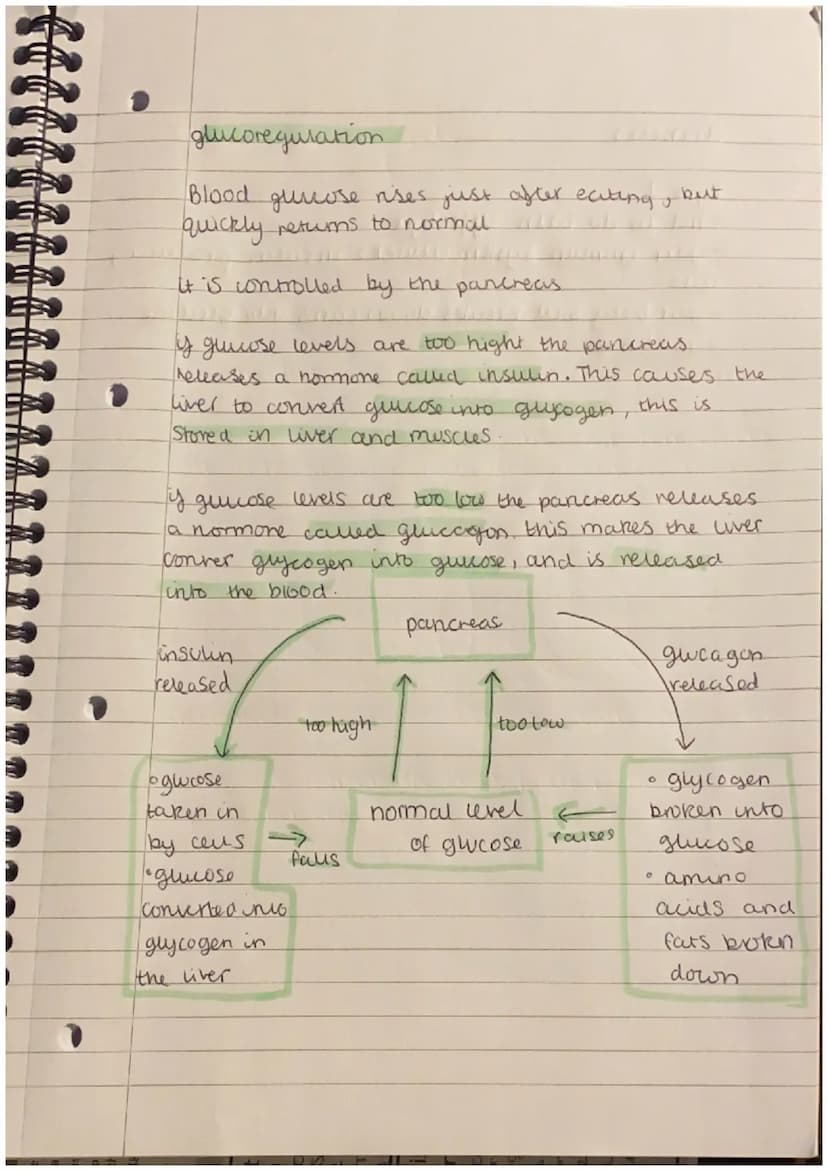
Understanding Homeostasis and Body Regulation
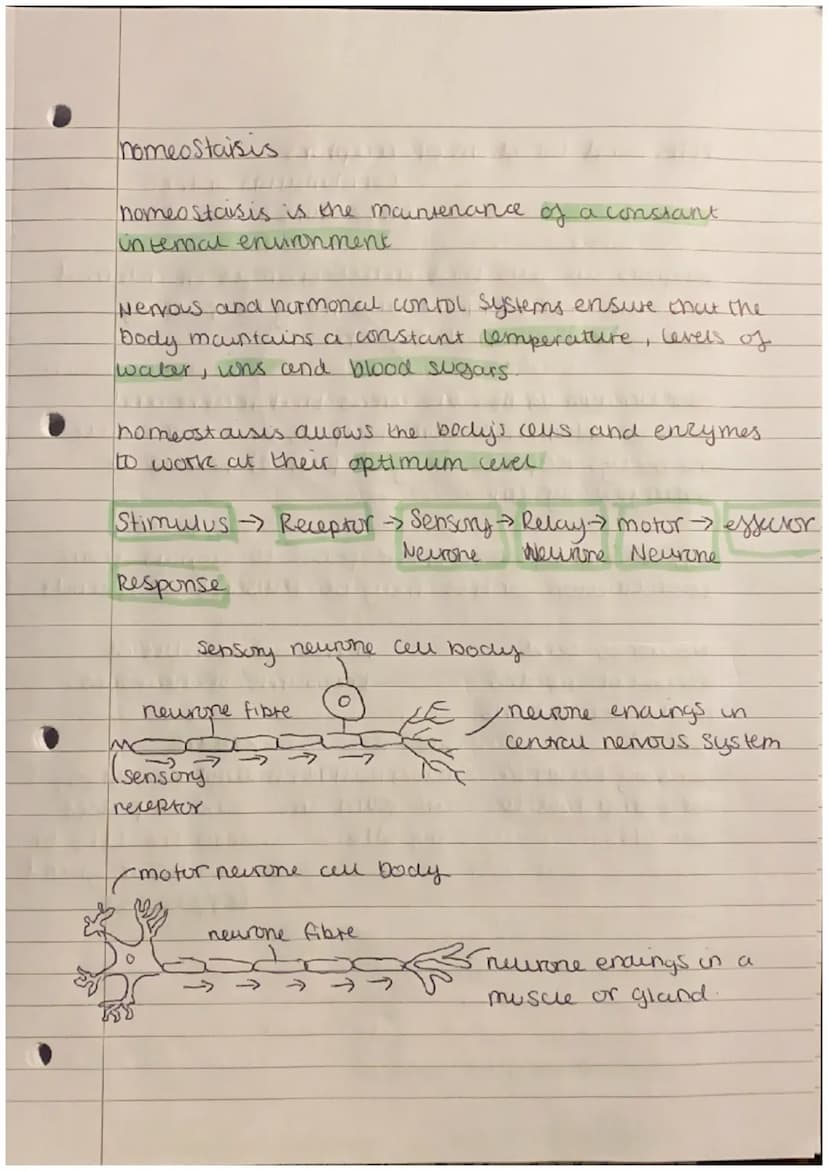
Homeostasis is the cornerstone of maintaining a stable internal environment in the human body. This page introduces the concept and its importance for optimal bodily function.
The importancia del sistema nervioso y hormonal en la homeostasis cannot be overstated. These systems work in tandem to ensure that the body maintains constant temperature, water levels, waste, and blood sugar levels. This stability allows cells and enzymes to function at their best.
A basic stimulus-response pathway is outlined, showing how the body reacts to changes:
Stimulus → Receptor → Sensory Neurone → Relay Neurone → Motor Neurone → Effector → Response
This pathway illustrates how information flows through the nervous system, from the initial detection of a change to the body's response.
Definition: Homeostasis is the maintenance of a constant internal environment within the body, crucial for optimal functioning of cells and enzymes.
Highlight: The nervous and hormonal systems play pivotal roles in maintaining homeostasis, regulating key bodily functions such as temperature and blood sugar levels.
Example: When body temperature rises, sweat glands (effectors) are activated to cool the body down, demonstrating a homeostatic response.
We thought you’d never ask...
What is the Knowunity AI companion?
Our AI Companion is a student-focused AI tool that offers more than just answers. Built on millions of Knowunity resources, it provides relevant information, personalised study plans, quizzes, and content directly in the chat, adapting to your individual learning journey.
Where can I download the Knowunity app?
You can download the app from Google Play Store and Apple App Store.
Is Knowunity really free of charge?
That's right! Enjoy free access to study content, connect with fellow students, and get instant help – all at your fingertips.
Similar content
Most popular content: Reflexes
4BiologyNervous & Hormonal Control
Explore the intricate workings of the nervous and endocrine systems in this comprehensive summary. Understand neuronal communication, reflex arcs, and hormonal regulation of blood glucose levels. Ideal for SQA National 5 Biology students, this resource covers neuron types, synapses, and the physiological responses to stimuli.
S32748
BiologyHomeostasis & Feedback Mechanisms
Explore key concepts of homeostasis and feedback mechanisms in biological systems. This summary covers essential topics such as negative feedback, biological growth, and response mechanisms, tailored for AQA Combined Science Paper 2 revision. Ideal for students preparing for exams.
1091079
BiologyReflex Arcs & Synaptic Transmission
Explore the mechanisms of reflex arcs and synaptic transmission in the human nervous system. This summary covers how sensory, relay, and motor neurones interact to produce fast, automatic responses to stimuli, highlighting the role of synapses and the importance of reflexes in injury prevention. Ideal for Biology students preparing for exams.
102842
BiologyNervous System Overview
Explore the divisions of the nervous system, including the central and peripheral systems, and understand the roles of sympathetic and parasympathetic pathways. This summary covers the reflex arc, neuron types, and the relationship between the nervous and endocrine systems, emphasizing homeostasis and involuntary actions.
S5726
Most popular content in Biology
9C
BiologyCell Biology and Cell structure
cell structures
93,2430
1
Biology1.cells Gcse biology question cards
combined science higher biology
92,3514
BiologyAQA Biology: Key Concepts
Explore essential AQA Biology topics including Photosynthesis, Respiration, Homeostasis, Genetics, and Ecology. This comprehensive knowledge organizer covers key concepts such as energy transfer, hormonal control, and genetic variation, providing a solid foundation for your studies. Ideal for exam preparation and understanding biological processes.
108,792306
T
BiologyThe functions of subcellular structures - B1 Biology
Flashcards on the different functions of subcellular structures: cell membrane, nucleus, mitochondria, ribosomes, cytoplasm, permant vacuole, chloroplasts and cell wall.
102,7885
BiologyA-Level Biology Year 1 Overview
Comprehensive summary of AQA A-Level Biology Year 1, covering key topics such as cellular structure, protein synthesis, immune response, gas exchange, and more. Ideal for exam preparation and understanding biological concepts. Includes detailed insights into cellular processes, biological classification, and the circulatory system.
1214,890694
T
BiologyTypes of cells
biology
101,2080
B
BiologyBiology Paper 1 quiz
this is a simple quiz on key knowledge needed for paper 1
102,7725
BiologyBiology paper 1 Summary
Notes for Biology paper 1 contains the full course for AQA higher combined!
104,128106
C
BiologyCells part 1 function of cells.
About cells and function of cells etc.
119861
Most popular content
9 Sociology
Sociology of Education Overview
Explore comprehensive A-Level Sociology notes on the education system, covering key theories, policies, and sociological perspectives. This resource includes insights on marketisation, gender roles, cultural deprivation, and educational inequalities, providing a thorough understanding of how education shapes social stratification and individual achievement. Ideal for exam preparation and in-depth study.
12102,8483,040
SociologySociology of Families: Comprehensive Revision
Dive into an extensive overview of family dynamics, perspectives, and patterns in sociology. This resource covers key concepts such as family diversity, gender roles, marriage, and the impact of social policies on family structures. Perfect for A-Level Sociology students preparing for Paper 2.
1273,6562,307
CriminologyCriminology: Crime & Punishment Overview
Comprehensive mindmaps covering key concepts in the Crime and Punishment topic for WJEC Criminology Unit 4. This resource includes detailed insights into the Criminal Justice System, crime prevention strategies, sentencing models, and the roles of various agencies. Ideal for A-Level revision, ensuring you grasp essential theories and legislative processes to excel in your exams.
1254,8691,059
SociologyComprehensive Crime & Deviance Overview
Explore an extensive revision of crime and deviance topics, including theories, types of crime, and the impact of media. This resource covers key concepts such as Marxism, functionalism, gender and crime, and the influence of globalization on criminal behavior. Ideal for students seeking a thorough understanding of criminology and its various theories. Type: Full Topic Revision.
1251,6521,399
C
BiologyCell Biology and Cell structure
cell structures
93,2430
 English Literature
An Inspector Calls: Character Insights
Explore in-depth analysis and key quotes for characters in J.B. Priestley's 'An Inspector Calls'. This resource covers Gerald Croft, Inspector Goole, Sheila Birling, Mrs. Birling, Eric Birling, and Eva Smith, focusing on themes of class, gender roles, and social responsibility. Ideal for students aiming for Grade 8 and above.
1025,429907
CriminologyWJEC Unit 4 Criminology
Criminology unit 4 detailed revision note
127,151125
CriminologyCriminology Theories Overview
Explore key criminology theories and their implications on crime and deviance. This comprehensive summary covers biological, psychological, and sociological perspectives, including labelling theory, right realism, and the impact of social campaigns on policy development. Ideal for A-Level criminology students seeking to understand the complexities of criminal behaviour and the factors influencing crime prevention strategies.
129,760210
English LiteratureRomeo and Juliet: Key themes
Key Romeo and Juliet themes and analysed quotes
106,708198
Can't find what you're looking for? Explore other subjects.
Students love us — and so will you.
4.6/5App Store
4.7/5Google Play
The app is very easy to use and well designed. I have found everything I was looking for so far and have been able to learn a lot from the presentations! I will definitely use the app for a class assignment! And of course it also helps a lot as an inspiration.
Stefan SiOS user
This app is really great. There are so many study notes and help [...]. My problem subject is French, for example, and the app has so many options for help. Thanks to this app, I have improved my French. I would recommend it to anyone.
Samantha KlichAndroid user
Wow, I am really amazed. I just tried the app because I've seen it advertised many times and was absolutely stunned. This app is THE HELP you want for school and above all, it offers so many things, such as workouts and fact sheets, which have been VERY helpful to me personally.
AnnaiOS user
Biology318 views·Updated Jun 16, 2026·5 pagesHow Your Body’s Nerves and Hormones Keep Things Balanced
Seren White@serenwhite_muwd
El sistema nervioso y hormonal juegan un papel crucial en la homeostasis, manteniendo el equilibrio interno del cuerpo. Este resumen destaca:
- La importancia del sistema nervioso y hormonal en la homeostasis para regular funciones corporales vitales
- Cómo los reflejos automáticos...
1
of 5
Sign up to see the content. It's free!
- Access to all documents
- Improve your grades
- Join milions of students
Roles and Locations of Key Components in Body Regulation
This page delves into the specific roles and locations of receptors, coordination centers, and effectors in the body's regulatory systems.
Receptors are crucial components that detect changes in both internal and external environments. They can be part of either the nervous or hormonal system, serving as the first line of detection for any changes that might disrupt homeostasis.
Coordination centers receive and process information from receptors and coordinate the body's response. These centers may be part of the nervous system (like the brain or spinal cord) or the hormonal system (like the pituitary gland).
Effectors are the components that bring about the response to signals from coordination centers. These can be muscles or glands, acting to restore balance in the body.
The nervous system plays a vital role in this process, with neurons sending electrical impulses to and from the Central Nervous System (CNS). Sensory neurons send impulses to the CNS, while motor neurons send impulses from the CNS to muscles or glands (effectors).
Vocabulary: Neurons are specialized cells that transmit electrical and chemical signals in the nervous system.
Highlight: Nerves, which are bundles of thousands of neurons, facilitate rapid communication throughout the body, essential for quick responses to maintain homeostasis.
Example: When you touch a hot object, receptors in your skin detect the heat, sending signals via sensory neurons to your CNS, which then sends signals via motor neurons to muscles in your arm, causing you to quickly withdraw your hand.
2
of 5Sign up to see the content. It's free!
- Access to all documents
- Improve your grades
- Join milions of students
Reflexes and Synaptic Transmission
This page focuses on reflexes and the intricate process of synaptic transmission, both crucial for rapid responses in the body.
Reflexes are rapid, automatic responses that help avoid danger or maintain basic body functions. These responses don't involve conscious parts of the brain, allowing for quick reactions. The cómo los reflejos automáticos protegen el cuerpo humano is evident in examples such as retracting a hand from a hot object, blinking when something comes too close to the face, breathing, and digesting food.
A simple reflex arc involves three neurons: sensory, relay, and motor. This pathway allows for rapid response to stimuli without the need for conscious thought.
Synapses, the junctions between two neurons, play a crucial role in transmitting signals. When an impulse arrives at a synapse, neurotransmitters are released, diffusing across the synapse to the next neuron, where they trigger a new electrical impulse.
Definition: A reflex is a rapid, automatic response to a stimulus, bypassing conscious thought for quicker reaction times.
Example: When you touch a hot stove, the reflex arc quickly sends signals to pull your hand away before you consciously register the pain.
Highlight: Synaptic transmission allows for the precise and controlled passage of information between neurons, essential for coordinated bodily functions.
Factors that can slow down reaction time include aging, tiredness, and alcohol consumption. Understanding these factors is crucial for maintaining optimal reflexes and overall body function.
3
of 5Sign up to see the content. It's free!
- Access to all documents
- Improve your grades
- Join milions of students
Thermoregulation: Maintaining Body Temperature
Thermoregulation is a critical homeostatic process that maintains the body's temperature within a narrow range, essential for optimal enzyme function and overall health.
When enzymes denature due to excessive heat, their active sites change shape, preventing them from binding to substrates. Conversely, too little heat results in insufficient kinetic energy for successful reactions. This delicate balance underscores the importancia del sistema nervioso y hormonal en la homeostasis, particularly in temperature regulation.
The body employs various mechanisms to respond to temperature changes:
In cold conditions:
- Shivering converts energy to thermal energy
- Vasoconstriction reduces blood flow to the skin, preventing heat loss
- Hair stands on end to trap an insulating layer of air
In hot conditions:
- Sweating uses thermal energy for evaporation, cooling the body
- Vasodilation increases blood flow to the skin, allowing heat to radiate to surroundings
Vocabulary: Vasoconstriction is the narrowing of blood vessels, while vasodilation is their widening.
Highlight: The body's ability to rapidly adjust to temperature changes through these mechanisms is a prime example of homeostasis in action.
Example: When you exercise on a hot day, your body increases sweat production and dilates blood vessels near the skin to help dissipate excess heat.
4
of 5Sign up to see the content. It's free!
- Access to all documents
- Improve your grades
- Join milions of students
Glucoregulation: Controlling Blood Sugar Levels
Glucoregulation is a vital homeostatic process that maintains blood glucose levels within a healthy range. This page explores the proceso de glucorregulación y su impacto en el nivel de azúcar en sangre, highlighting the pancreas's role in this intricate balance.
After eating, blood glucose levels rise but quickly return to normal due to the pancreas's regulatory action. When glucose levels are too high, the pancreas releases insulin, a hormone that prompts the liver to convert glucose into glycogen for storage in the liver and muscles.
Conversely, when glucose levels drop too low, the pancreas releases glucagon. This hormone signals the liver to convert stored glycogen back into glucose, releasing it into the bloodstream to raise blood sugar levels.
This delicate balance is crucial for maintaining energy levels and overall health:
- High glucose triggers insulin release
- Insulin causes glucose uptake by cells and conversion to glycogen
- Low glucose triggers glucagon release
- Glucagon causes glycogen breakdown and glucose release into blood
Definition: Glucoregulation is the process of maintaining blood glucose levels within a normal range through hormonal control.
Highlight: The pancreas acts as both a sensor and an effector in glucoregulation, demonstrating the intricate interplay between the endocrine and metabolic systems.
Example: In individuals with diabetes, this regulatory system is impaired, leading to chronically high blood sugar levels that require medical intervention to manage.
Understanding glucoregulation is essential for comprehending metabolic health and diseases like diabetes, underscoring the importancia del sistema nervioso y hormonal en la homeostasis in maintaining overall well-being.
5
of 5Sign up to see the content. It's free!
- Access to all documents
- Improve your grades
- Join milions of students
Understanding Homeostasis and Body Regulation
Homeostasis is the cornerstone of maintaining a stable internal environment in the human body. This page introduces the concept and its importance for optimal bodily function.
The importancia del sistema nervioso y hormonal en la homeostasis cannot be overstated. These systems work in tandem to ensure that the body maintains constant temperature, water levels, waste, and blood sugar levels. This stability allows cells and enzymes to function at their best.
A basic stimulus-response pathway is outlined, showing how the body reacts to changes:
Stimulus → Receptor → Sensory Neurone → Relay Neurone → Motor Neurone → Effector → Response
This pathway illustrates how information flows through the nervous system, from the initial detection of a change to the body's response.
Definition: Homeostasis is the maintenance of a constant internal environment within the body, crucial for optimal functioning of cells and enzymes.
Highlight: The nervous and hormonal systems play pivotal roles in maintaining homeostasis, regulating key bodily functions such as temperature and blood sugar levels.
Example: When body temperature rises, sweat glands (effectors) are activated to cool the body down, demonstrating a homeostatic response.
We thought you’d never ask...
What is the Knowunity AI companion?
Our AI Companion is a student-focused AI tool that offers more than just answers. Built on millions of Knowunity resources, it provides relevant information, personalised study plans, quizzes, and content directly in the chat, adapting to your individual learning journey.
Where can I download the Knowunity app?
You can download the app from Google Play Store and Apple App Store.
Is Knowunity really free of charge?
That's right! Enjoy free access to study content, connect with fellow students, and get instant help – all at your fingertips.
Similar content
Most popular content: Reflexes
4BiologyNervous & Hormonal Control
Explore the intricate workings of the nervous and endocrine systems in this comprehensive summary. Understand neuronal communication, reflex arcs, and hormonal regulation of blood glucose levels. Ideal for SQA National 5 Biology students, this resource covers neuron types, synapses, and the physiological responses to stimuli.
S32748
BiologyHomeostasis & Feedback Mechanisms
Explore key concepts of homeostasis and feedback mechanisms in biological systems. This summary covers essential topics such as negative feedback, biological growth, and response mechanisms, tailored for AQA Combined Science Paper 2 revision. Ideal for students preparing for exams.
1091079
BiologyReflex Arcs & Synaptic Transmission
Explore the mechanisms of reflex arcs and synaptic transmission in the human nervous system. This summary covers how sensory, relay, and motor neurones interact to produce fast, automatic responses to stimuli, highlighting the role of synapses and the importance of reflexes in injury prevention. Ideal for Biology students preparing for exams.
102842
BiologyNervous System Overview
Explore the divisions of the nervous system, including the central and peripheral systems, and understand the roles of sympathetic and parasympathetic pathways. This summary covers the reflex arc, neuron types, and the relationship between the nervous and endocrine systems, emphasizing homeostasis and involuntary actions.
S5726
Most popular content in Biology
9C
BiologyCell Biology and Cell structure
cell structures
93,2430
1
Biology1.cells Gcse biology question cards
combined science higher biology
92,3514
BiologyAQA Biology: Key Concepts
Explore essential AQA Biology topics including Photosynthesis, Respiration, Homeostasis, Genetics, and Ecology. This comprehensive knowledge organizer covers key concepts such as energy transfer, hormonal control, and genetic variation, providing a solid foundation for your studies. Ideal for exam preparation and understanding biological processes.
108,792306
T
BiologyThe functions of subcellular structures - B1 Biology
Flashcards on the different functions of subcellular structures: cell membrane, nucleus, mitochondria, ribosomes, cytoplasm, permant vacuole, chloroplasts and cell wall.
102,7885
BiologyA-Level Biology Year 1 Overview
Comprehensive summary of AQA A-Level Biology Year 1, covering key topics such as cellular structure, protein synthesis, immune response, gas exchange, and more. Ideal for exam preparation and understanding biological concepts. Includes detailed insights into cellular processes, biological classification, and the circulatory system.
1214,890694
T
BiologyTypes of cells
biology
101,2080
B
BiologyBiology Paper 1 quiz
this is a simple quiz on key knowledge needed for paper 1
102,7725
BiologyBiology paper 1 Summary
Notes for Biology paper 1 contains the full course for AQA higher combined!
104,128106
C
BiologyCells part 1 function of cells.
About cells and function of cells etc.
119861
Most popular content
9SociologySociology of Education Overview
Explore comprehensive A-Level Sociology notes on the education system, covering key theories, policies, and sociological perspectives. This resource includes insights on marketisation, gender roles, cultural deprivation, and educational inequalities, providing a thorough understanding of how education shapes social stratification and individual achievement. Ideal for exam preparation and in-depth study.
12102,8483,040
SociologySociology of Families: Comprehensive Revision
Dive into an extensive overview of family dynamics, perspectives, and patterns in sociology. This resource covers key concepts such as family diversity, gender roles, marriage, and the impact of social policies on family structures. Perfect for A-Level Sociology students preparing for Paper 2.
1273,6562,307
CriminologyCriminology: Crime & Punishment Overview
Comprehensive mindmaps covering key concepts in the Crime and Punishment topic for WJEC Criminology Unit 4. This resource includes detailed insights into the Criminal Justice System, crime prevention strategies, sentencing models, and the roles of various agencies. Ideal for A-Level revision, ensuring you grasp essential theories and legislative processes to excel in your exams.
1254,8691,059
SociologyComprehensive Crime & Deviance Overview
Explore an extensive revision of crime and deviance topics, including theories, types of crime, and the impact of media. This resource covers key concepts such as Marxism, functionalism, gender and crime, and the influence of globalization on criminal behavior. Ideal for students seeking a thorough understanding of criminology and its various theories. Type: Full Topic Revision.
1251,6521,399
C
BiologyCell Biology and Cell structure
cell structures
93,2430
English LiteratureAn Inspector Calls: Character Insights
Explore in-depth analysis and key quotes for characters in J.B. Priestley's 'An Inspector Calls'. This resource covers Gerald Croft, Inspector Goole, Sheila Birling, Mrs. Birling, Eric Birling, and Eva Smith, focusing on themes of class, gender roles, and social responsibility. Ideal for students aiming for Grade 8 and above.
1025,429907
CriminologyWJEC Unit 4 Criminology
Criminology unit 4 detailed revision note
127,151125
CriminologyCriminology Theories Overview
Explore key criminology theories and their implications on crime and deviance. This comprehensive summary covers biological, psychological, and sociological perspectives, including labelling theory, right realism, and the impact of social campaigns on policy development. Ideal for A-Level criminology students seeking to understand the complexities of criminal behaviour and the factors influencing crime prevention strategies.
129,760210
English LiteratureRomeo and Juliet: Key themes
Key Romeo and Juliet themes and analysed quotes
106,708198
Can't find what you're looking for? Explore other subjects.
Students love us — and so will you.
4.6/5App Store
4.7/5Google Play
The app is very easy to use and well designed. I have found everything I was looking for so far and have been able to learn a lot from the presentations! I will definitely use the app for a class assignment! And of course it also helps a lot as an inspiration.
Stefan SiOS user
This app is really great. There are so many study notes and help [...]. My problem subject is French, for example, and the app has so many options for help. Thanks to this app, I have improved my French. I would recommend it to anyone.
Samantha KlichAndroid user
Wow, I am really amazed. I just tried the app because I've seen it advertised many times and was absolutely stunned. This app is THE HELP you want for school and above all, it offers so many things, such as workouts and fact sheets, which have been VERY helpful to me personally.
AnnaiOS user