Classification and Species Definition
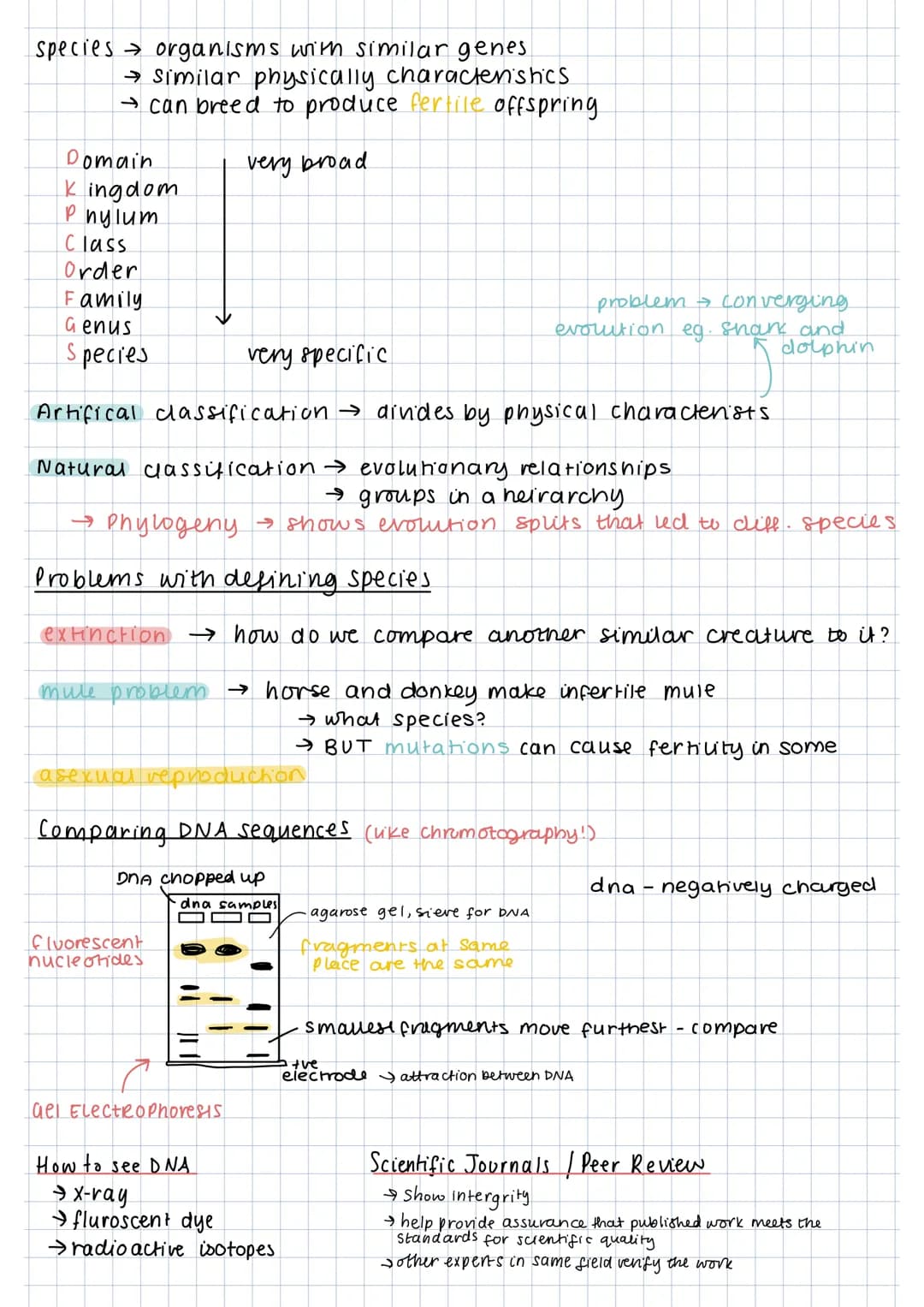
Ever wondered what actually makes a dog different from a wolf, or why scientists argue about whether certain animals belong to the same group? A species consists of organisms with similar genes that share physical characteristics and can breed to produce fertile offspring.
Scientists organise life using a hierarchy that goes from very broad (Domain, Kingdom, Phylum) down to very specific (Genus, Species). Think of it like your address - you start with your country and narrow it down to your house number.
There are two main ways to classify organisms. Artificial classification simply groups things by how they look physically, whilst natural classification focuses on evolutionary relationships through phylogeny - basically the family tree showing how different species split apart over time.
Defining species isn't as straightforward as it sounds though. What happens with extinct animals we can't observe breeding? Or consider mules - horses and donkeys can breed, but their offspring are infertile, so are they the same species? Plus, some organisms reproduce asexually, making the breeding definition useless.
Key Insight: The classic definition of species (can breed fertile offspring) breaks down in many real-world situations, which is why scientists increasingly rely on genetic evidence.

 Biology
 Biology
 English Literature
 Sociology