
Ever wondered why some students succeed whilst others struggle, or... Show more
 Sociology
 Psychology
 English Literature
 Biology
Sign up to see the contentIt's free!
Access to all documents
Improve your grades
Join milions of students
Knowunity AI
Subjects
Triangle Congruence and Similarity Theorems
Triangle Properties and Classification
Linear Equations and Graphs
Geometric Angle Relationships
Trigonometric Functions and Identities
Equation Solving Techniques
Circle Geometry Fundamentals
Division Operations and Methods
Basic Differentiation Rules
Exponent and Logarithm Properties
Show all topics
Human Organ Systems
Reproductive Cell Cycles
Biological Sciences Subdisciplines
Cellular Energy Metabolism
Autotrophic Energy Processes
Inheritance Patterns and Principles
Biomolecular Structure and Organization
Cell Cycle and Division Mechanics
Cellular Organization and Development
Biological Structural Organization
Show all topics
Chemical Sciences and Applications
Atomic Structure and Composition
Molecular Electron Structure Representation
Atomic Electron Behavior
Matter Properties and Water
Mole Concept and Calculations
Gas Laws and Behavior
Periodic Table Organization
Chemical Thermodynamics Fundamentals
Chemical Bond Types and Properties
Show all topics
European Renaissance and Enlightenment
European Cultural Movements 800-1920
American Revolution Era 1763-1797
American Civil War 1861-1865
Global Imperial Systems
Mongol and Chinese Dynasties
U.S. Presidents and World Leaders
Historical Sources and Documentation
World Wars Era and Impact
World Religious Systems
Show all topics
Classic and Contemporary Novels
Literary Character Analysis
Rhetorical Theory and Practice
Classic Literary Narratives
Reading Analysis and Interpretation
Narrative Structure and Techniques
English Language Components
Influential English-Language Authors
Basic Sentence Structure
Narrative Voice and Perspective
Show all topics
332
•
Updated Mar 31, 2026
•

leah✌🏼
@leahandrasi
Ever wondered why some students succeed whilst others struggle, or... Show more
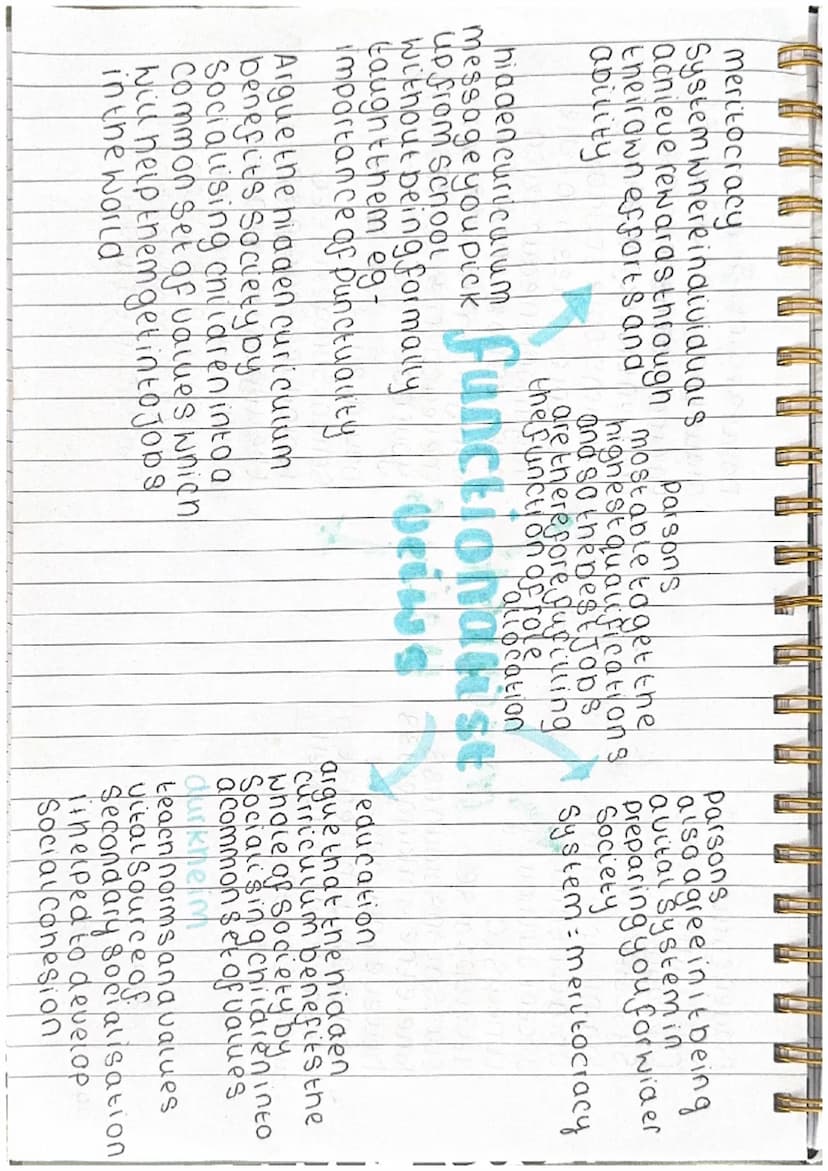

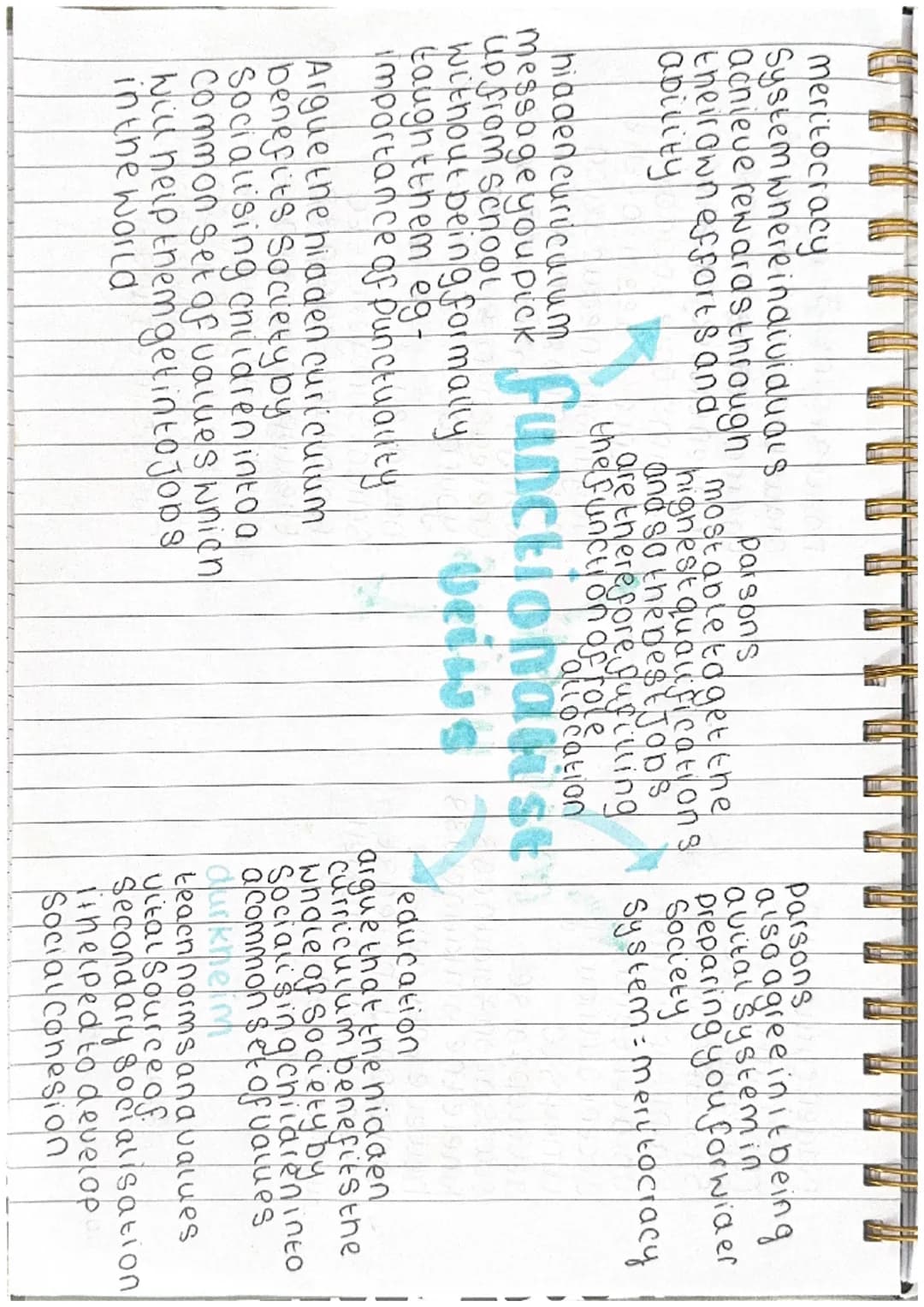
Schools aren't just about maths and English - they're secretly teaching you loads of other stuff without you even realising it. This hidden curriculum includes things like turning up on time, following rules, and respecting authority - basically all the skills you'll need in the workplace later on.
Meritocracy is the idea that if you work hard and have the ability, you'll get the rewards you deserve. Functionalist sociologists like Parsons reckon this system is brilliant because it means the smartest, hardest-working people end up in the most important jobs.
According to Durkheim, schools act as a vital source of secondary socialisation, teaching you the norms and values that help create social cohesion. Think of it as learning how to fit into society beyond your family bubble.
Quick Tip: Remember that functionalists see education as benefiting everyone by creating shared values and preparing students for adult life.

Not everyone thinks the hidden curriculum is a good thing. Marxist sociologists argue that schools are actually designed to create obedient workers who won't challenge the capitalist system.
Bowles and Gintis came up with the correspondence principle - the idea that what happens in school directly mirrors what happens at work. Just like you obey your teacher without question, you'll later obey your boss without question. Clever, right?
Bourdieu takes this further, arguing that schools exist purely to keep the class system going. The upper classes have loads of advantages (money, cultural knowledge, connections) that guarantee their kids succeed, whilst working-class students are set up to fail.
This creates false class consciousness - where working-class people believe they deserve low-paid jobs because they "didn't do well enough" at school, rather than recognising the system was rigged against them from the start.
Key Point: Marxists see education as a tool that benefits the wealthy and keeps everyone else in their place.
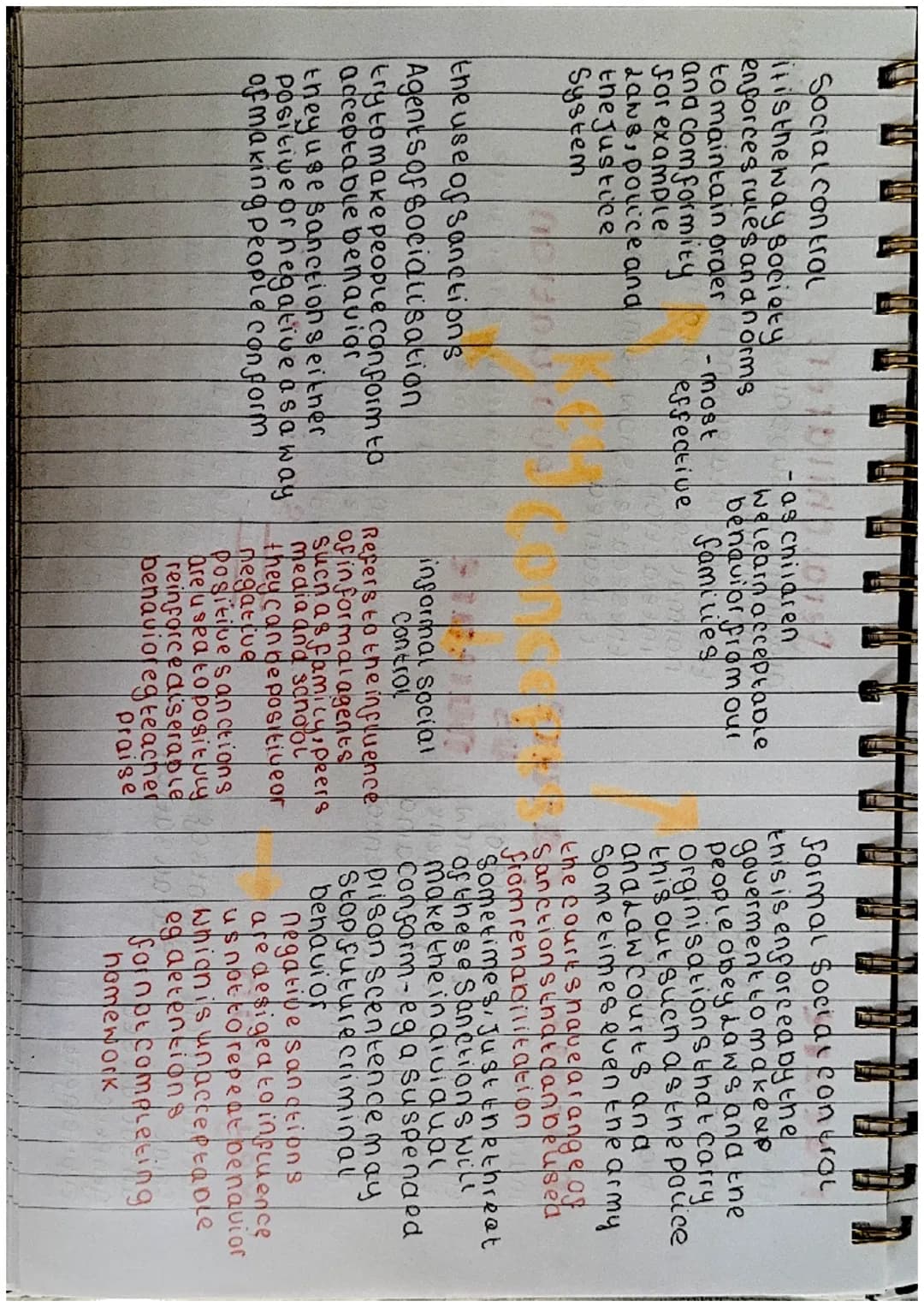
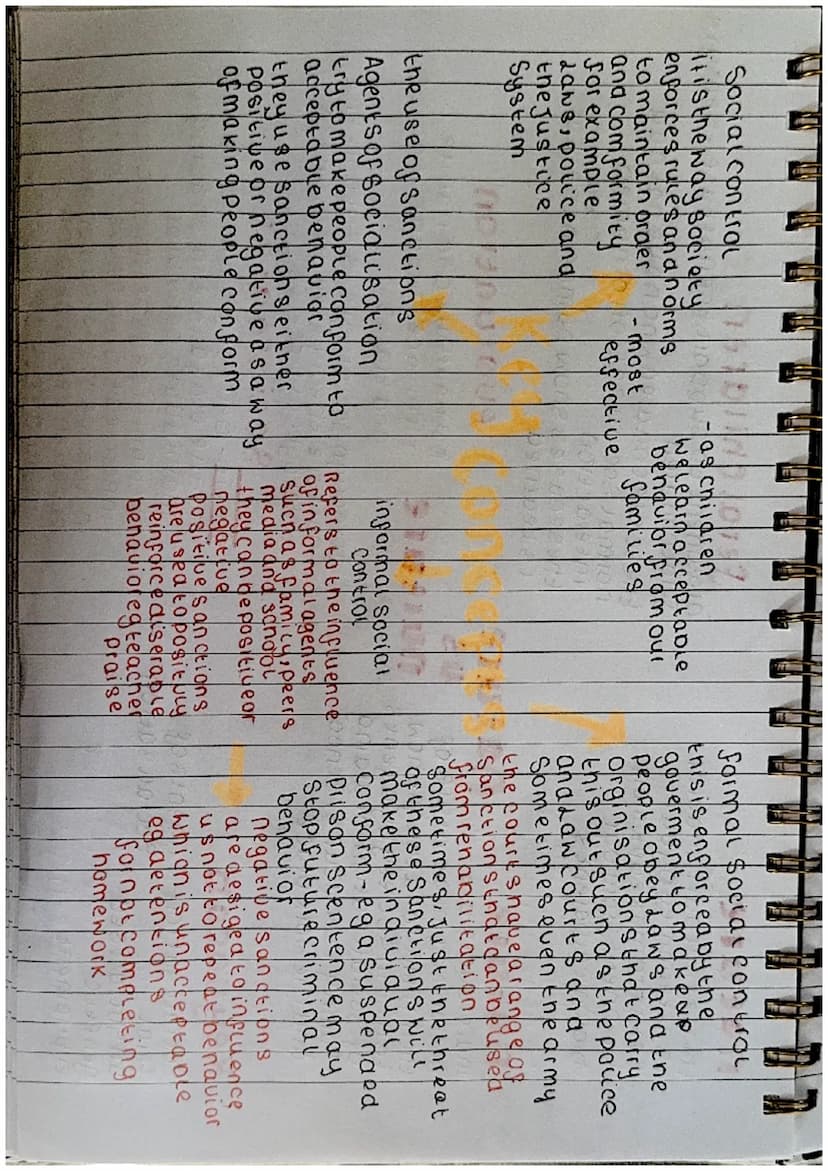
Ever wondered why most people follow rules even when no one's watching? That's social control in action - society's way of making sure we all behave acceptably and maintain order.
Informal social control comes from everyday interactions with family, friends, school, and media. These agents of socialisation use positive sanctions (rewards like praise or money) and negative sanctions (punishments like detention or disappointed looks) to shape our behaviour.
Formal social control is the heavy-duty stuff - laws enforced by police, courts, and the justice system. The sanctions here include fines, prison sentences, and community service. Sometimes just the threat of these punishments is enough to keep people in line.
Both types work together brilliantly. Your family teaches you basic right from wrong, whilst the legal system deals with serious rule-breaking. Most of our behaviour is controlled informally - imagine how chaotic society would be if we needed police for everything!
Reality Check: You experience social control daily - from your parents' rules to school policies to traffic laws.
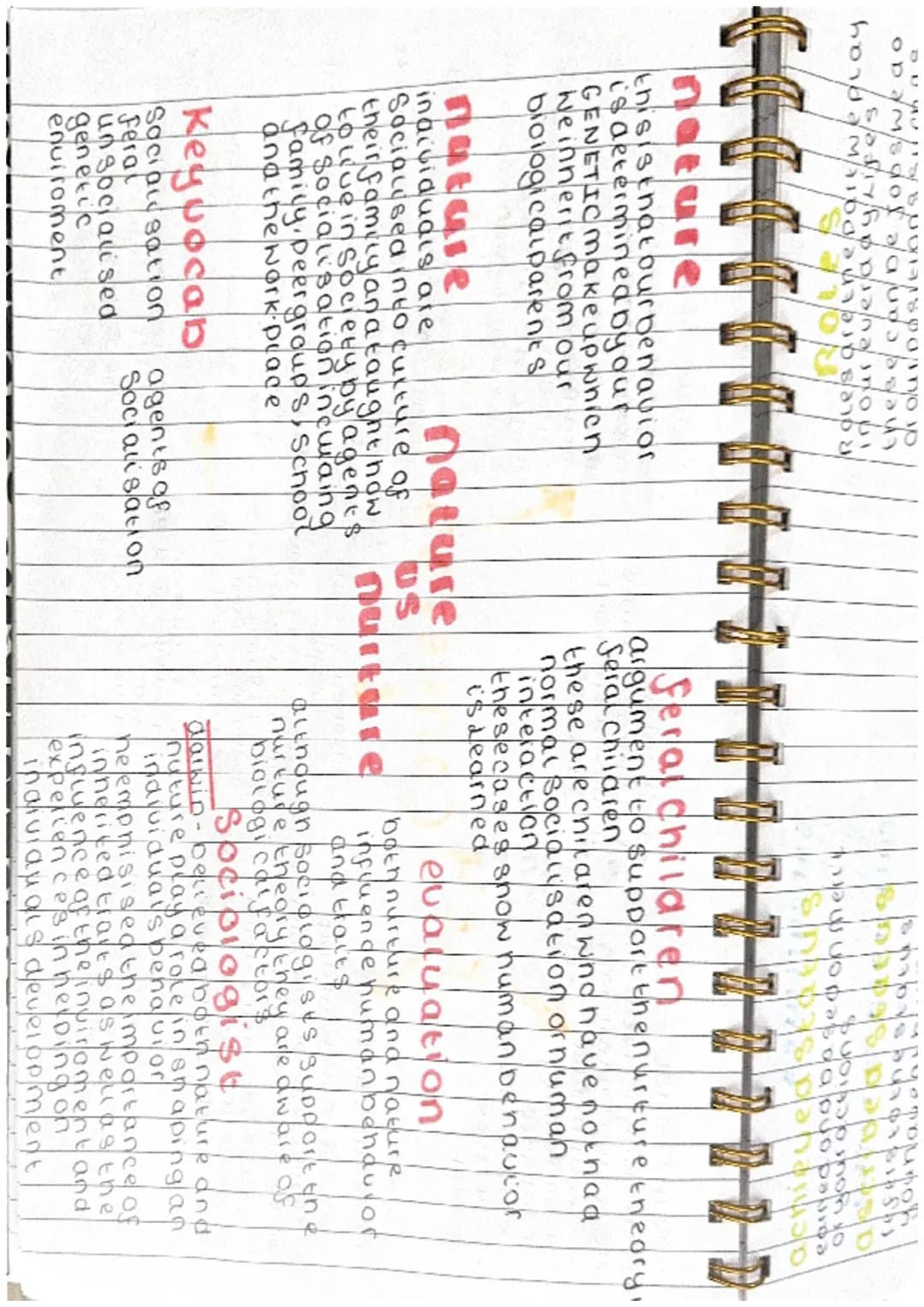
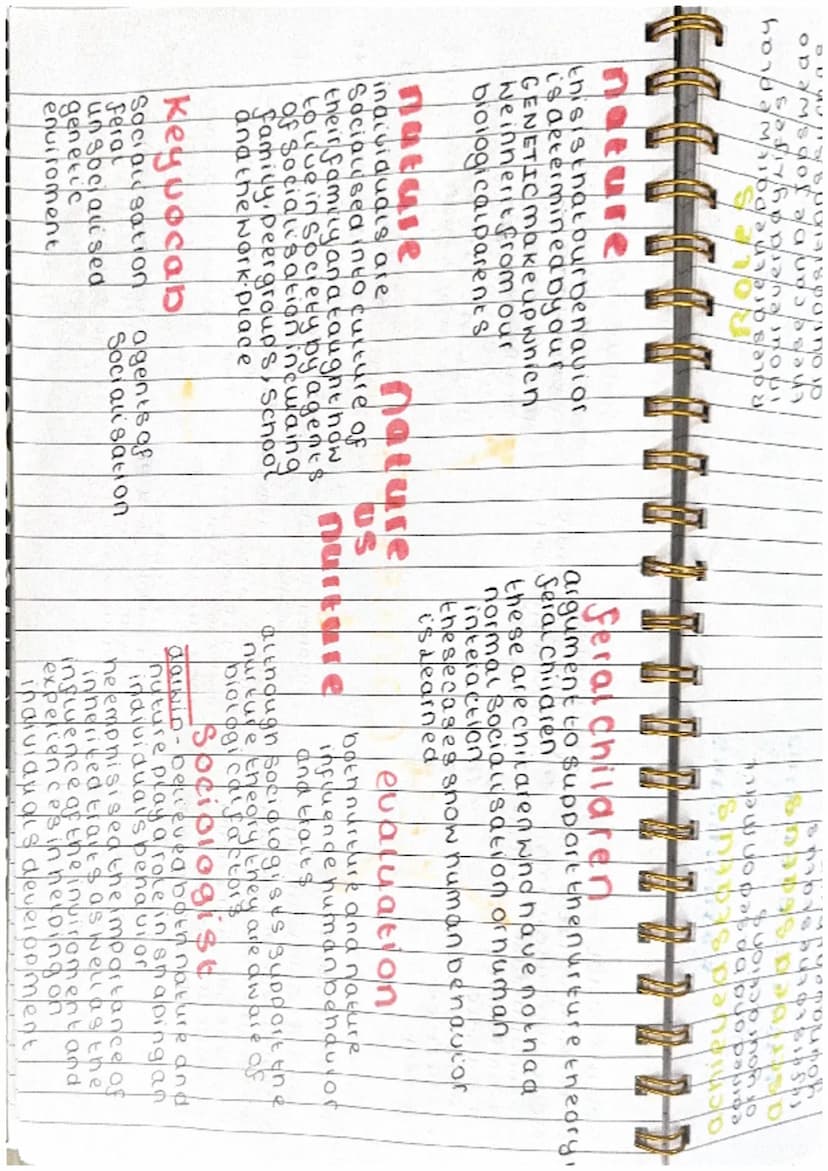
One of sociology's biggest debates is whether we're shaped more by our genes (nature) or our environment (nurture). Are you naturally good at football, or did growing up in a sports-mad family make the difference?
The nature argument suggests our genetic makeup determines our behaviour, intelligence, and personality traits. Meanwhile, nurture theorists argue that socialisation through family, peer groups, school, and work shapes who we become.
Feral children - kids who've grown up without normal human interaction - provide fascinating evidence for the nurture side. These cases show that human behaviour is learned rather than instinctive, since these children often struggle with basic social skills.
Most modern sociologists, including Darwin, believe both factors matter. You might inherit musical talent from your parents, but whether you become a brilliant pianist depends on practice, encouragement, and opportunities. It's nature AND nurture working together.
Think About It: Consider your own talents and personality - can you identify which bits might be inherited and which are learned?
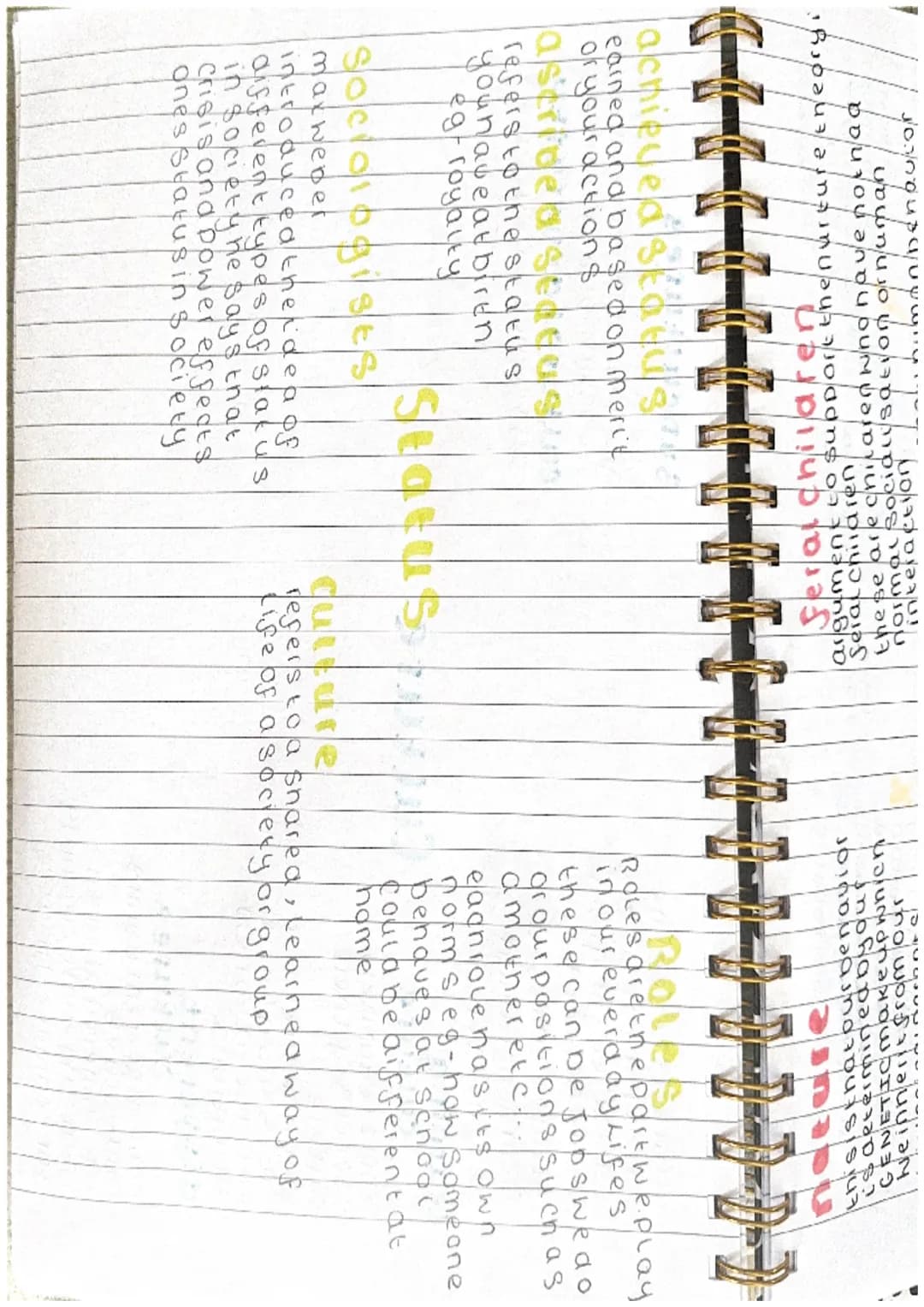
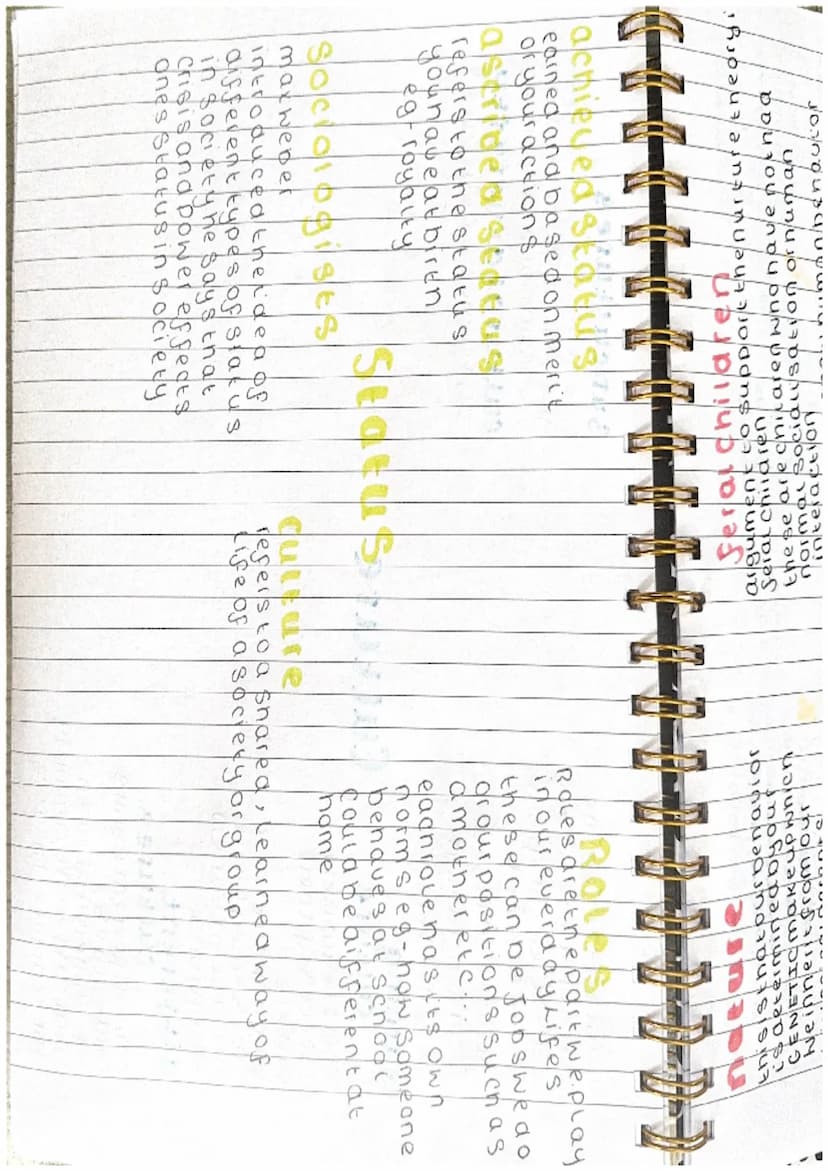
Think about all the different "parts" you play in a single day - student, friend, sibling, teammate. These are your roles, and each comes with its own set of expectations and behaviours.
Your status is basically your position in society's hierarchy. Ascribed status is stuff you're born with (like being a prince or princess), whilst achieved status is earned through your actions and merit - like becoming head girl or getting into university.
Each role has its own norms - the unwritten rules about how someone in that position should behave. How you act as a student at school might be completely different from how you behave at home with your family.
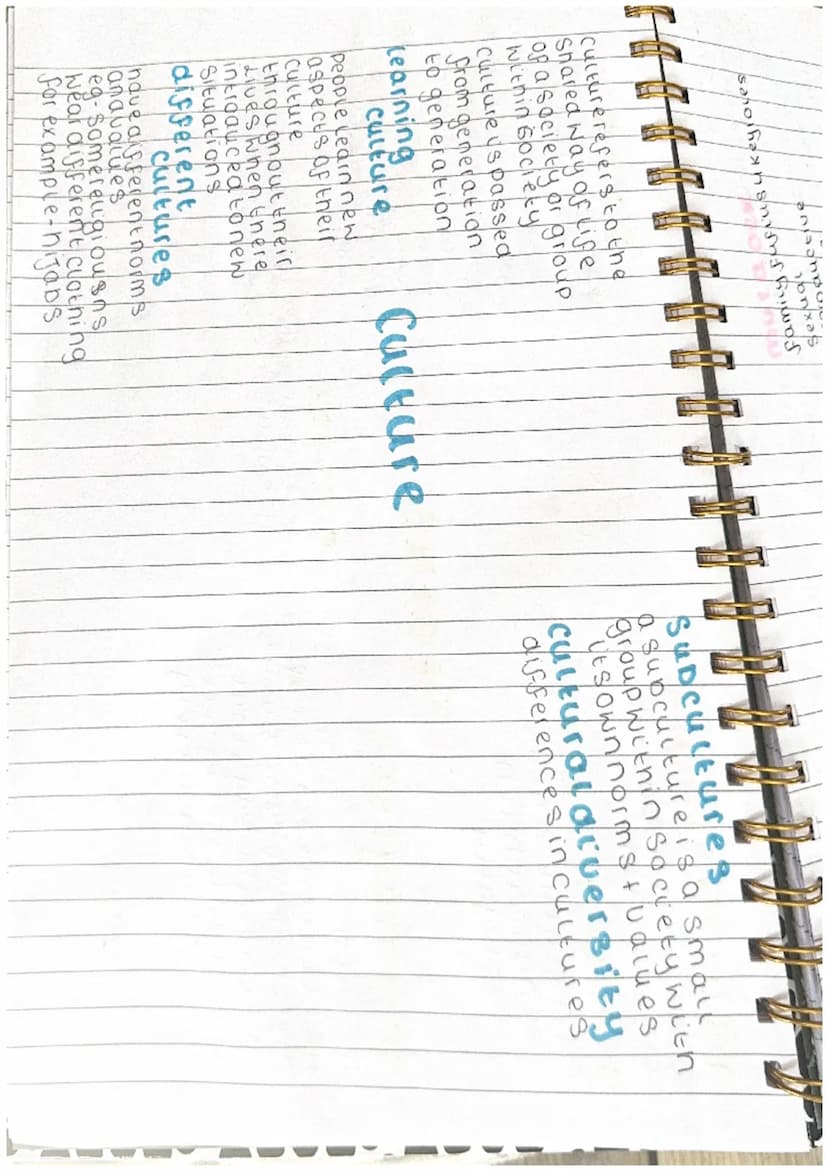
Culture refers to the shared, learned way of life of a society or group. It's passed down through generations and includes everything from language and food to beliefs and traditions. Different cultures have different norms and values, which is why behaviour that's normal in one society might seem strange in another.
Real Talk: You probably switch between different roles dozens of times per day without even thinking about it!
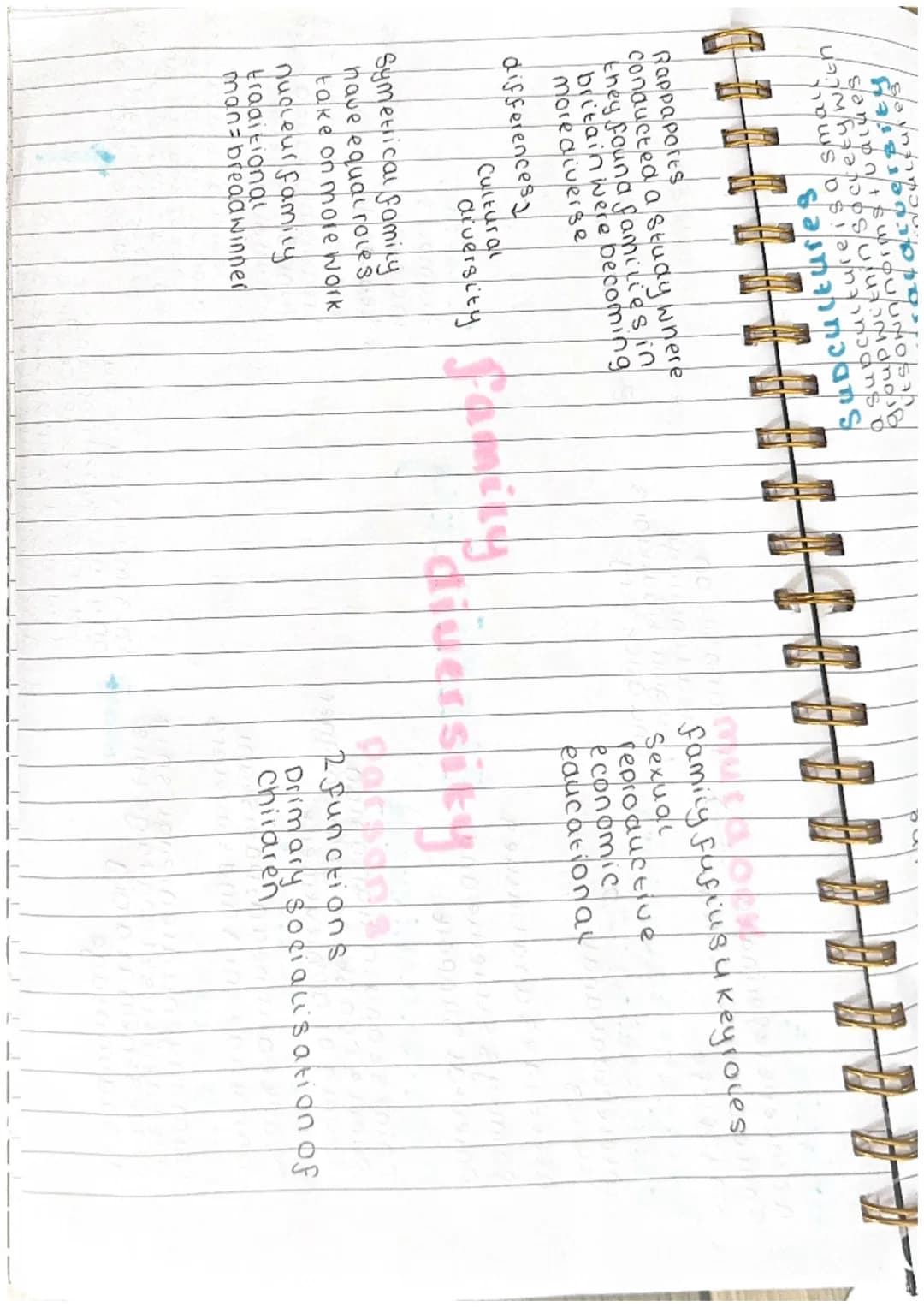
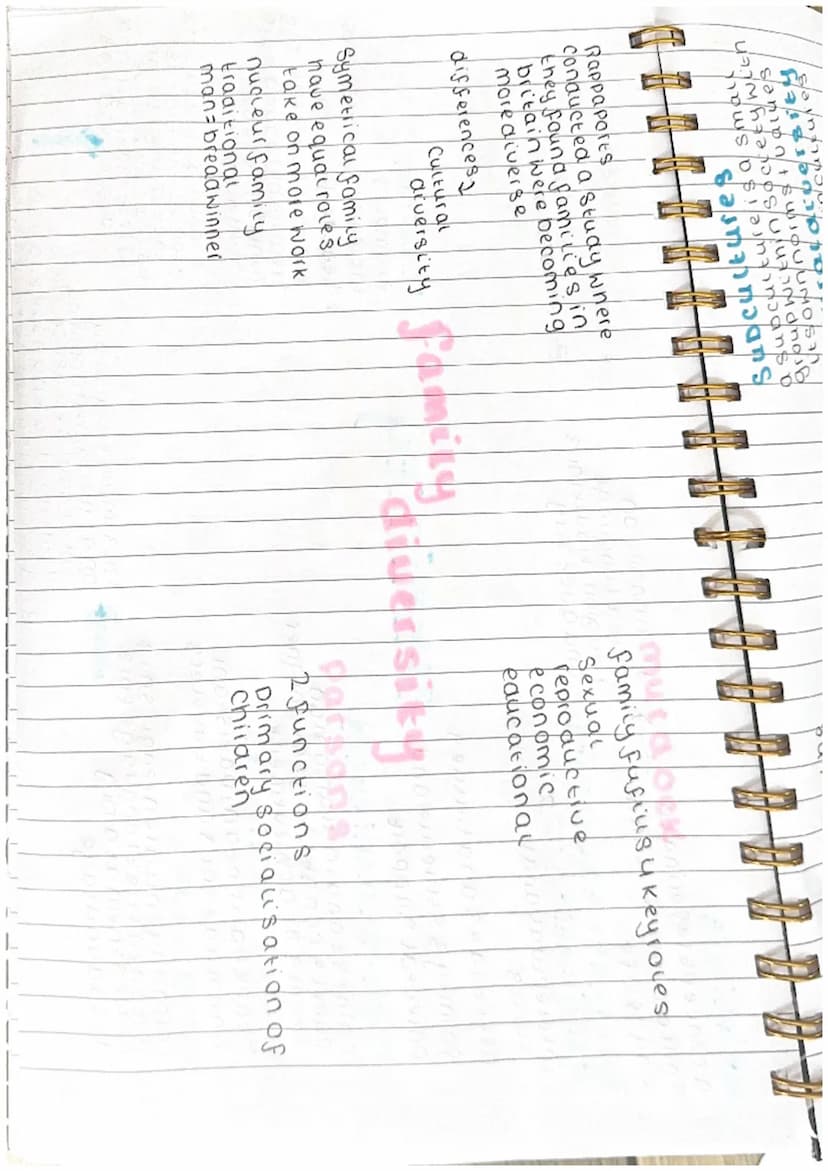
Families aren't all the same anymore (if they ever were). Family diversity means we now have loads of different family types - from traditional nuclear families to single-parent households to same-sex couples with children.
The symmetrical family model suggests modern families have more equal roles, with both parents sharing housework and childcare. This is pretty different from the traditional nuclear family where dad was the breadwinner and mum stayed home.
Functionalists argue that families serve key purposes: primary socialisation of children (teaching basic norms and values), plus sexual, reproductive, economic, and educational functions. Basically, families are society's way of making sure children grow up properly socialised.
Rappaport's research found that British families were becoming increasingly diverse, challenging the idea that there's one "normal" family type. Today's families come in all shapes and sizes, and that's perfectly fine.
Food for Thought: What type of family structure do you come from, and how has it shaped your values and beliefs?
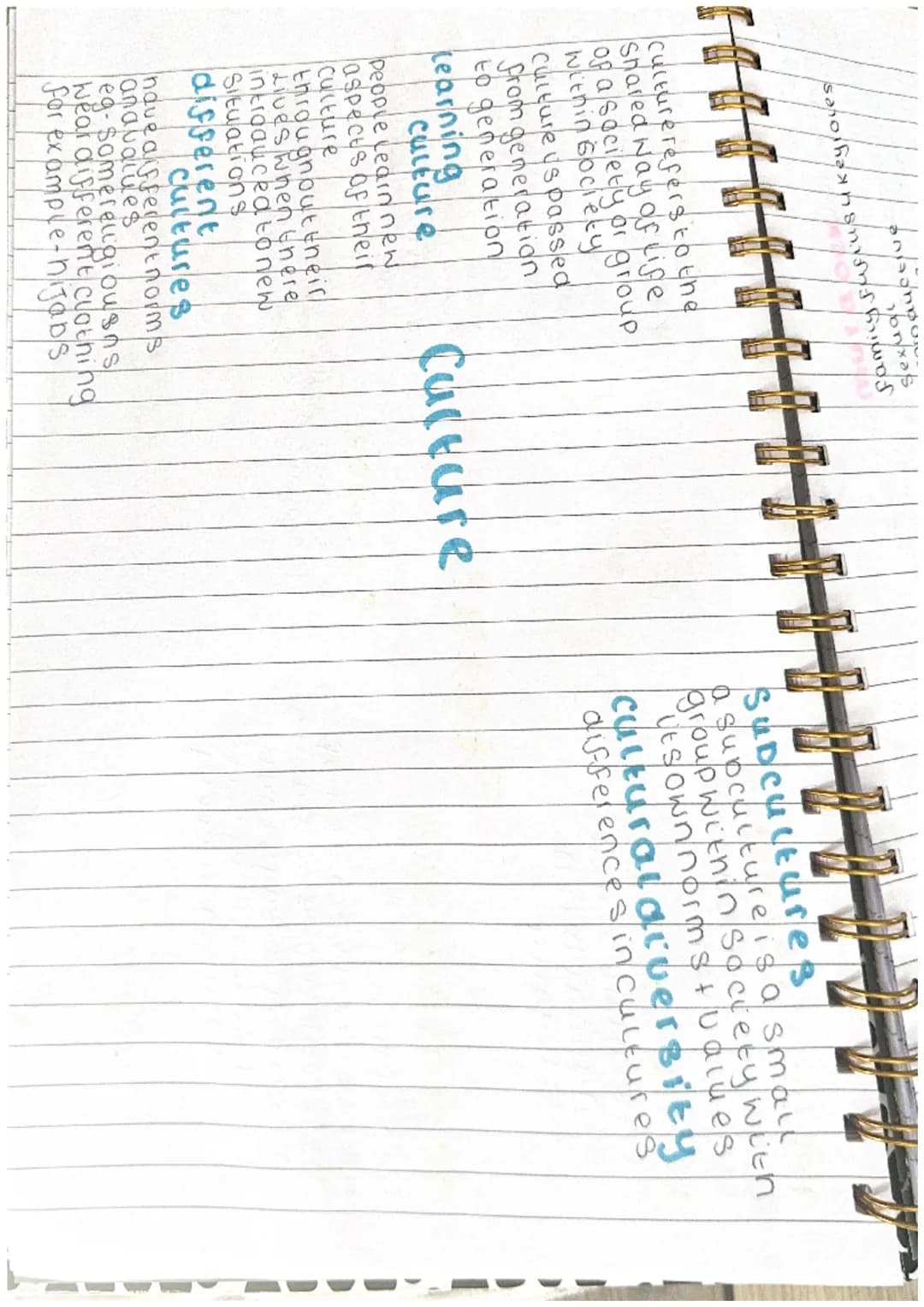
Culture isn't just about art galleries and Shakespeare - it's the entire shared way of life that gets passed from generation to generation. You're constantly learning new aspects of culture as you encounter different situations throughout your life.
Different cultures have different norms and values. Some religious groups wear specific clothing like hijabs, others have particular dietary restrictions, and some celebrate different holidays. This cultural diversity makes society more interesting and varied.
Subcultures are smaller groups within society that have their own distinct norms and values whilst still being part of the broader culture. Think goths, gamers, or football fans - they're all British, but they've got their own specific ways of doing things.
Understanding cultural differences helps explain why people behave differently and why conflicts sometimes arise between groups. What seems normal to you might be completely alien to someone from a different cultural background.
Key Insight: You probably belong to several subcultures yourself - consider how your friend groups, hobbies, or interests create mini-communities with their own rules.
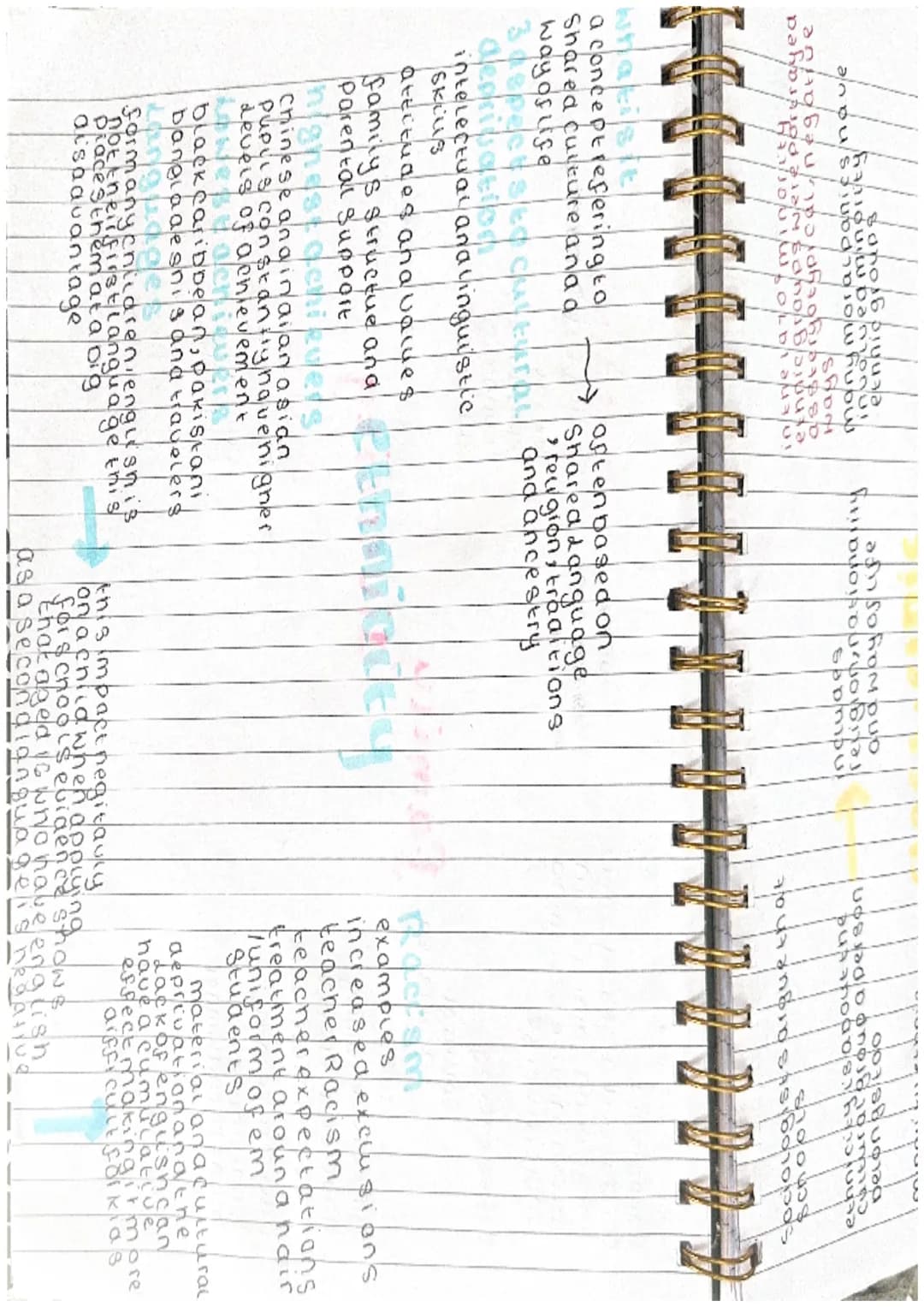
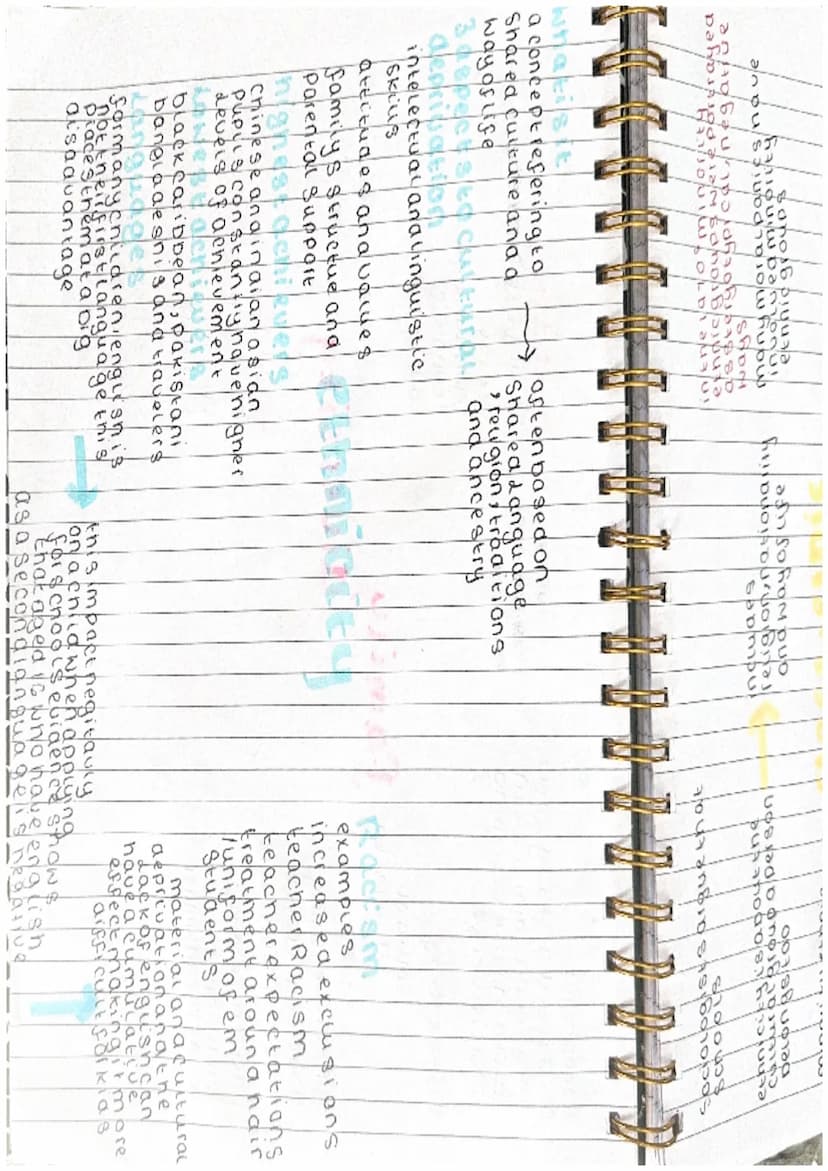
Ethnicity is about the cultural group you belong to - including religion, traditions, language, and ancestry. It's different from race, which is more about physical characteristics.
There are massive differences in educational achievement between ethnic groups. Chinese and Indian Asian pupils consistently perform better, whilst Black Caribbean, Pakistani, Bangladeshi, and Traveller students often struggle more.
Several factors explain these gaps: material deprivation (poverty), cultural deprivation (different values around education), and linguistic barriers (English as a second language). Many children face a significant disadvantage if English isn't their first language.
Schools themselves can make things worse through increased exclusions, teacher racism, low expectations, and unfair treatment. When you combine poverty, language barriers, and discrimination, it creates a cumulative effect that makes success much harder to achieve.
Important Note: These are statistical patterns, not rules - individual students from any background can succeed with the right support and opportunities.
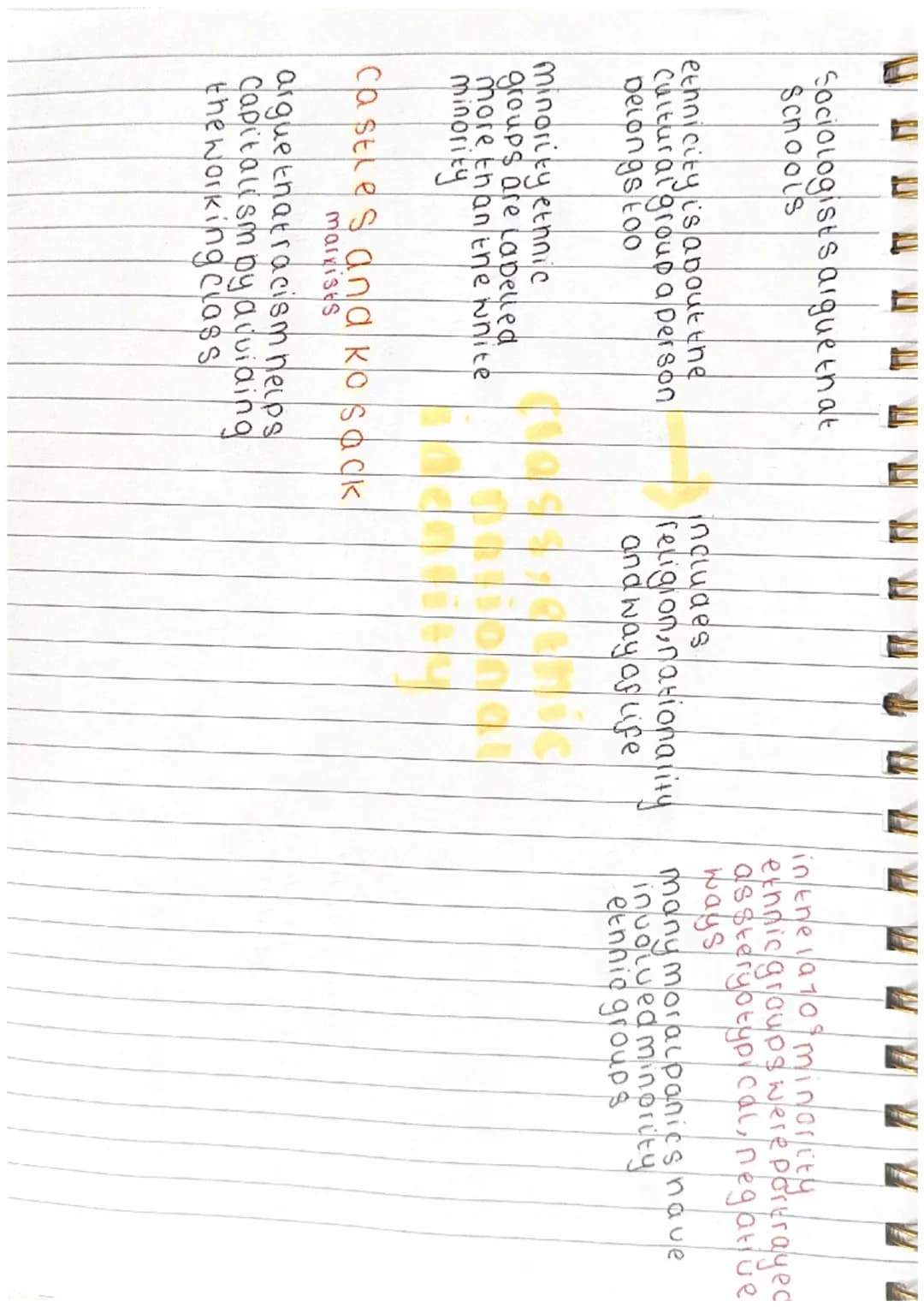
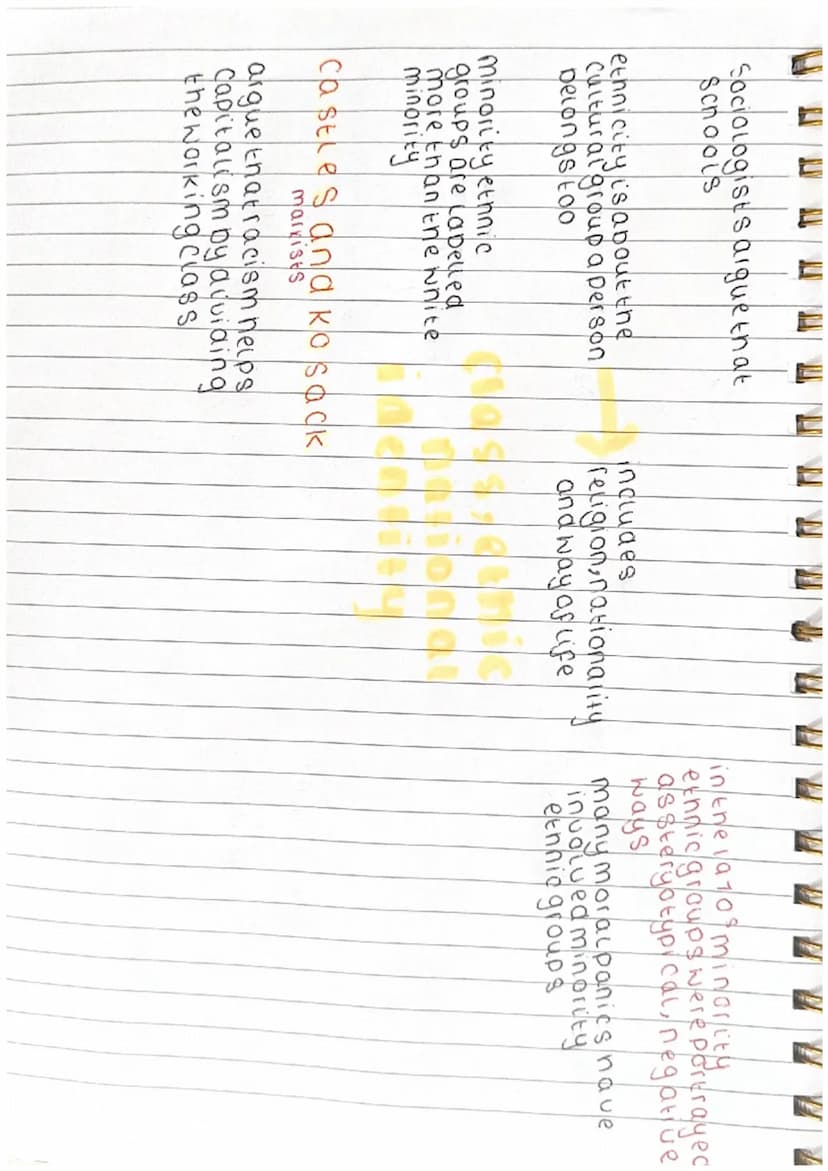
Sociologists define ethnicity as the cultural group someone belongs to, including their religion, nationality, and way of life. Unfortunately, minority ethnic groups often face more negative labelling and stereotyping than white British people.
Marxist sociologists like Castles and Kosack argue that racism actually helps capitalism survive. How? By dividing the working class and stopping them from uniting against their real oppressors - the wealthy elite.
The media has historically portrayed minority ethnic groups in stereotypical and negative ways, often creating moral panics that blow problems out of proportion. These unfair representations can influence how people think about different ethnic groups.
This systematic prejudice affects everything from job applications to school experiences, creating barriers that have nothing to do with individual ability or effort.
Think Critically: Notice how different ethnic groups are portrayed in media you consume - are these representations fair and balanced?
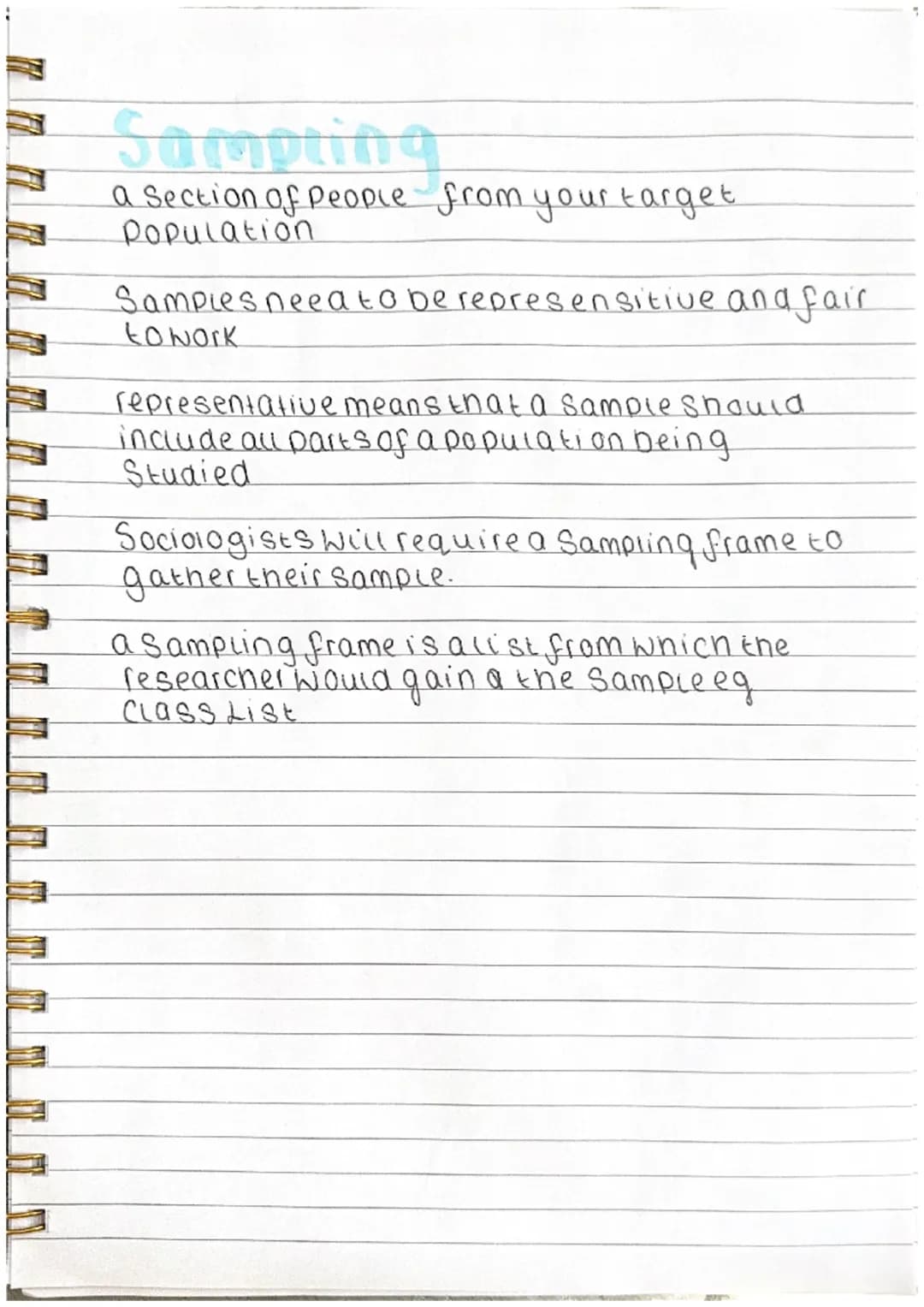
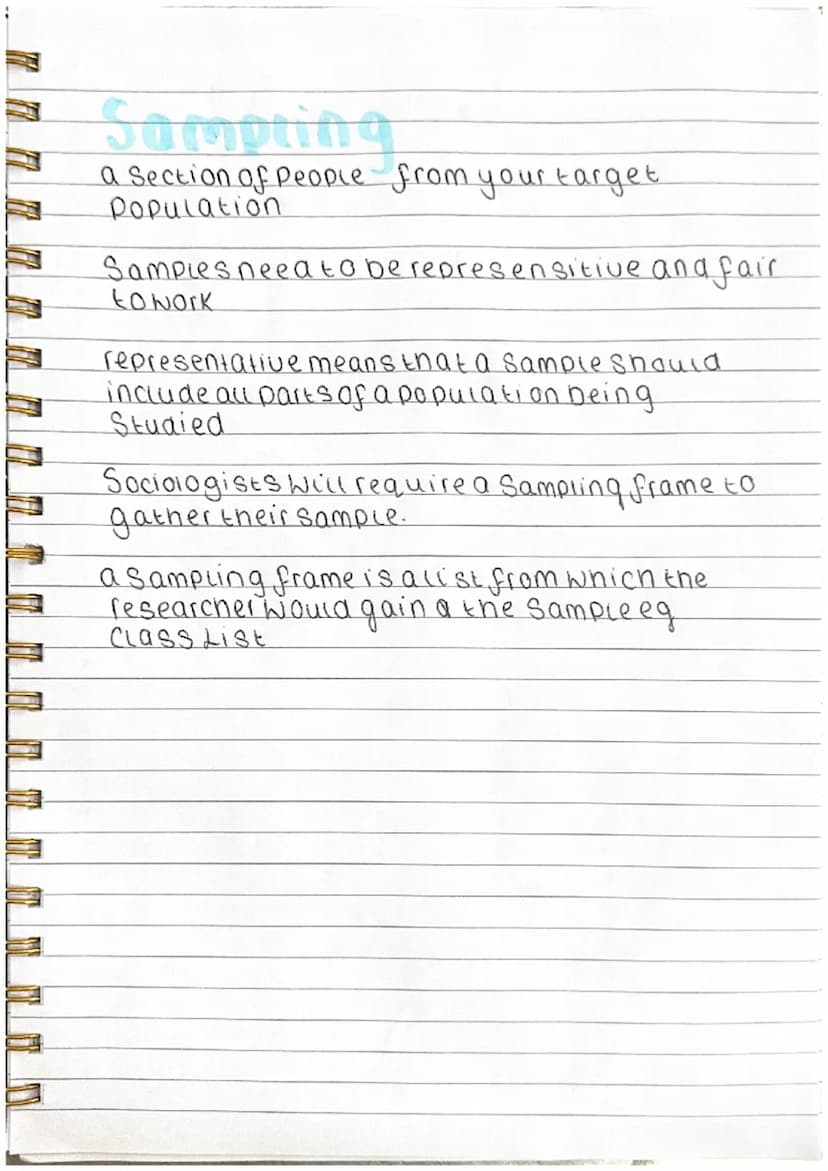
When sociologists want to study society, they can't possibly ask everyone - imagine trying to survey all 67 million people in the UK! Instead, they use sampling to study a smaller, manageable group.
The key is making sure your sample is representative - it needs to include all the different types of people from your target population. If you're studying teenagers' attitudes to social media, you'd need students from different schools, backgrounds, and areas.
Researchers use a sampling frame - basically a list they can pick people from. This might be a class register, electoral roll, or membership list. The better your sampling frame, the more accurate your results will be.
Getting sampling right is crucial because if your sample is biased or unrepresentative, your findings will be wrong. It's like trying to understand British food by only eating at McDonald's - you'd miss the full picture completely.
Research Tip: Always ask yourself "who was included in this study?" when reading research findings - it helps you judge how reliable the conclusions are.
Our AI Companion is a student-focused AI tool that offers more than just answers. Built on millions of Knowunity resources, it provides relevant information, personalised study plans, quizzes, and content directly in the chat, adapting to your individual learning journey.
You can download the app from Google Play Store and Apple App Store.
That's right! Enjoy free access to study content, connect with fellow students, and get instant help – all at your fingertips.
App Store
Google Play
The app is very easy to use and well designed. I have found everything I was looking for so far and have been able to learn a lot from the presentations! I will definitely use the app for a class assignment! And of course it also helps a lot as an inspiration.
Stefan S
iOS user
This app is really great. There are so many study notes and help [...]. My problem subject is French, for example, and the app has so many options for help. Thanks to this app, I have improved my French. I would recommend it to anyone.
Samantha Klich
Android user
Wow, I am really amazed. I just tried the app because I've seen it advertised many times and was absolutely stunned. This app is THE HELP you want for school and above all, it offers so many things, such as workouts and fact sheets, which have been VERY helpful to me personally.
Anna
iOS user
Best app on earth! no words because it’s too good
Thomas R
iOS user
Just amazing. Let's me revise 10x better, this app is a quick 10/10. I highly recommend it to anyone. I can watch and search for notes. I can save them in the subject folder. I can revise it any time when I come back. If you haven't tried this app, you're really missing out.
Basil
Android user
This app has made me feel so much more confident in my exam prep, not only through boosting my own self confidence through the features that allow you to connect with others and feel less alone, but also through the way the app itself is centred around making you feel better. It is easy to navigate, fun to use, and helpful to anyone struggling in absolutely any way.
David K
iOS user
The app's just great! All I have to do is enter the topic in the search bar and I get the response real fast. I don't have to watch 10 YouTube videos to understand something, so I'm saving my time. Highly recommended!
Sudenaz Ocak
Android user
In school I was really bad at maths but thanks to the app, I am doing better now. I am so grateful that you made the app.
Greenlight Bonnie
Android user
very reliable app to help and grow your ideas of Maths, English and other related topics in your works. please use this app if your struggling in areas, this app is key for that. wish I'd of done a review before. and it's also free so don't worry about that.
Rohan U
Android user
I know a lot of apps use fake accounts to boost their reviews but this app deserves it all. Originally I was getting 4 in my English exams and this time I got a grade 7. I didn’t even know about this app three days until the exam and it has helped A LOT. Please actually trust me and use it as I’m sure you too will see developments.
Xander S
iOS user
THE QUIZES AND FLASHCARDS ARE SO USEFUL AND I LOVE Knowunity AI. IT ALSO IS LITREALLY LIKE CHATGPT BUT SMARTER!! HELPED ME WITH MY MASCARA PROBLEMS TOO!! AS WELL AS MY REAL SUBJECTS ! DUHHH 😍😁😲🤑💗✨🎀😮
Elisha
iOS user
This apps acc the goat. I find revision so boring but this app makes it so easy to organize it all and then you can ask the freeeee ai to test yourself so good and you can easily upload your own stuff. highly recommend as someone taking mocks now
Paul T
iOS user
The app is very easy to use and well designed. I have found everything I was looking for so far and have been able to learn a lot from the presentations! I will definitely use the app for a class assignment! And of course it also helps a lot as an inspiration.
Stefan S
iOS user
This app is really great. There are so many study notes and help [...]. My problem subject is French, for example, and the app has so many options for help. Thanks to this app, I have improved my French. I would recommend it to anyone.
Samantha Klich
Android user
Wow, I am really amazed. I just tried the app because I've seen it advertised many times and was absolutely stunned. This app is THE HELP you want for school and above all, it offers so many things, such as workouts and fact sheets, which have been VERY helpful to me personally.
Anna
iOS user
Best app on earth! no words because it’s too good
Thomas R
iOS user
Just amazing. Let's me revise 10x better, this app is a quick 10/10. I highly recommend it to anyone. I can watch and search for notes. I can save them in the subject folder. I can revise it any time when I come back. If you haven't tried this app, you're really missing out.
Basil
Android user
This app has made me feel so much more confident in my exam prep, not only through boosting my own self confidence through the features that allow you to connect with others and feel less alone, but also through the way the app itself is centred around making you feel better. It is easy to navigate, fun to use, and helpful to anyone struggling in absolutely any way.
David K
iOS user
The app's just great! All I have to do is enter the topic in the search bar and I get the response real fast. I don't have to watch 10 YouTube videos to understand something, so I'm saving my time. Highly recommended!
Sudenaz Ocak
Android user
In school I was really bad at maths but thanks to the app, I am doing better now. I am so grateful that you made the app.
Greenlight Bonnie
Android user
very reliable app to help and grow your ideas of Maths, English and other related topics in your works. please use this app if your struggling in areas, this app is key for that. wish I'd of done a review before. and it's also free so don't worry about that.
Rohan U
Android user
I know a lot of apps use fake accounts to boost their reviews but this app deserves it all. Originally I was getting 4 in my English exams and this time I got a grade 7. I didn’t even know about this app three days until the exam and it has helped A LOT. Please actually trust me and use it as I’m sure you too will see developments.
Xander S
iOS user
THE QUIZES AND FLASHCARDS ARE SO USEFUL AND I LOVE Knowunity AI. IT ALSO IS LITREALLY LIKE CHATGPT BUT SMARTER!! HELPED ME WITH MY MASCARA PROBLEMS TOO!! AS WELL AS MY REAL SUBJECTS ! DUHHH 😍😁😲🤑💗✨🎀😮
Elisha
iOS user
This apps acc the goat. I find revision so boring but this app makes it so easy to organize it all and then you can ask the freeeee ai to test yourself so good and you can easily upload your own stuff. highly recommend as someone taking mocks now
Paul T
iOS user
leah✌🏼
@leahandrasi
Ever wondered why some students succeed whilst others struggle, or how society shapes our behaviour from birth? This study guide explores the hidden forces that influence education and social control, from the unwritten rules schools teach us to the complex... Show more
Access to all documents
Improve your grades
Join milions of students
Schools aren't just about maths and English - they're secretly teaching you loads of other stuff without you even realising it. This hidden curriculum includes things like turning up on time, following rules, and respecting authority - basically all the skills you'll need in the workplace later on.
Meritocracy is the idea that if you work hard and have the ability, you'll get the rewards you deserve. Functionalist sociologists like Parsons reckon this system is brilliant because it means the smartest, hardest-working people end up in the most important jobs.
According to Durkheim, schools act as a vital source of secondary socialisation, teaching you the norms and values that help create social cohesion. Think of it as learning how to fit into society beyond your family bubble.
Quick Tip: Remember that functionalists see education as benefiting everyone by creating shared values and preparing students for adult life.
Access to all documents
Improve your grades
Join milions of students
Not everyone thinks the hidden curriculum is a good thing. Marxist sociologists argue that schools are actually designed to create obedient workers who won't challenge the capitalist system.
Bowles and Gintis came up with the correspondence principle - the idea that what happens in school directly mirrors what happens at work. Just like you obey your teacher without question, you'll later obey your boss without question. Clever, right?
Bourdieu takes this further, arguing that schools exist purely to keep the class system going. The upper classes have loads of advantages (money, cultural knowledge, connections) that guarantee their kids succeed, whilst working-class students are set up to fail.
This creates false class consciousness - where working-class people believe they deserve low-paid jobs because they "didn't do well enough" at school, rather than recognising the system was rigged against them from the start.
Key Point: Marxists see education as a tool that benefits the wealthy and keeps everyone else in their place.
Access to all documents
Improve your grades
Join milions of students
Ever wondered why most people follow rules even when no one's watching? That's social control in action - society's way of making sure we all behave acceptably and maintain order.
Informal social control comes from everyday interactions with family, friends, school, and media. These agents of socialisation use positive sanctions (rewards like praise or money) and negative sanctions (punishments like detention or disappointed looks) to shape our behaviour.
Formal social control is the heavy-duty stuff - laws enforced by police, courts, and the justice system. The sanctions here include fines, prison sentences, and community service. Sometimes just the threat of these punishments is enough to keep people in line.
Both types work together brilliantly. Your family teaches you basic right from wrong, whilst the legal system deals with serious rule-breaking. Most of our behaviour is controlled informally - imagine how chaotic society would be if we needed police for everything!
Reality Check: You experience social control daily - from your parents' rules to school policies to traffic laws.
Access to all documents
Improve your grades
Join milions of students
One of sociology's biggest debates is whether we're shaped more by our genes (nature) or our environment (nurture). Are you naturally good at football, or did growing up in a sports-mad family make the difference?
The nature argument suggests our genetic makeup determines our behaviour, intelligence, and personality traits. Meanwhile, nurture theorists argue that socialisation through family, peer groups, school, and work shapes who we become.
Feral children - kids who've grown up without normal human interaction - provide fascinating evidence for the nurture side. These cases show that human behaviour is learned rather than instinctive, since these children often struggle with basic social skills.
Most modern sociologists, including Darwin, believe both factors matter. You might inherit musical talent from your parents, but whether you become a brilliant pianist depends on practice, encouragement, and opportunities. It's nature AND nurture working together.
Think About It: Consider your own talents and personality - can you identify which bits might be inherited and which are learned?
Access to all documents
Improve your grades
Join milions of students
Think about all the different "parts" you play in a single day - student, friend, sibling, teammate. These are your roles, and each comes with its own set of expectations and behaviours.
Your status is basically your position in society's hierarchy. Ascribed status is stuff you're born with (like being a prince or princess), whilst achieved status is earned through your actions and merit - like becoming head girl or getting into university.
Each role has its own norms - the unwritten rules about how someone in that position should behave. How you act as a student at school might be completely different from how you behave at home with your family.
Culture refers to the shared, learned way of life of a society or group. It's passed down through generations and includes everything from language and food to beliefs and traditions. Different cultures have different norms and values, which is why behaviour that's normal in one society might seem strange in another.
Real Talk: You probably switch between different roles dozens of times per day without even thinking about it!
Access to all documents
Improve your grades
Join milions of students
Families aren't all the same anymore (if they ever were). Family diversity means we now have loads of different family types - from traditional nuclear families to single-parent households to same-sex couples with children.
The symmetrical family model suggests modern families have more equal roles, with both parents sharing housework and childcare. This is pretty different from the traditional nuclear family where dad was the breadwinner and mum stayed home.
Functionalists argue that families serve key purposes: primary socialisation of children (teaching basic norms and values), plus sexual, reproductive, economic, and educational functions. Basically, families are society's way of making sure children grow up properly socialised.
Rappaport's research found that British families were becoming increasingly diverse, challenging the idea that there's one "normal" family type. Today's families come in all shapes and sizes, and that's perfectly fine.
Food for Thought: What type of family structure do you come from, and how has it shaped your values and beliefs?
Access to all documents
Improve your grades
Join milions of students
Culture isn't just about art galleries and Shakespeare - it's the entire shared way of life that gets passed from generation to generation. You're constantly learning new aspects of culture as you encounter different situations throughout your life.
Different cultures have different norms and values. Some religious groups wear specific clothing like hijabs, others have particular dietary restrictions, and some celebrate different holidays. This cultural diversity makes society more interesting and varied.
Subcultures are smaller groups within society that have their own distinct norms and values whilst still being part of the broader culture. Think goths, gamers, or football fans - they're all British, but they've got their own specific ways of doing things.
Understanding cultural differences helps explain why people behave differently and why conflicts sometimes arise between groups. What seems normal to you might be completely alien to someone from a different cultural background.
Key Insight: You probably belong to several subcultures yourself - consider how your friend groups, hobbies, or interests create mini-communities with their own rules.
Access to all documents
Improve your grades
Join milions of students
Ethnicity is about the cultural group you belong to - including religion, traditions, language, and ancestry. It's different from race, which is more about physical characteristics.
There are massive differences in educational achievement between ethnic groups. Chinese and Indian Asian pupils consistently perform better, whilst Black Caribbean, Pakistani, Bangladeshi, and Traveller students often struggle more.
Several factors explain these gaps: material deprivation (poverty), cultural deprivation (different values around education), and linguistic barriers (English as a second language). Many children face a significant disadvantage if English isn't their first language.
Schools themselves can make things worse through increased exclusions, teacher racism, low expectations, and unfair treatment. When you combine poverty, language barriers, and discrimination, it creates a cumulative effect that makes success much harder to achieve.
Important Note: These are statistical patterns, not rules - individual students from any background can succeed with the right support and opportunities.
Access to all documents
Improve your grades
Join milions of students
Sociologists define ethnicity as the cultural group someone belongs to, including their religion, nationality, and way of life. Unfortunately, minority ethnic groups often face more negative labelling and stereotyping than white British people.
Marxist sociologists like Castles and Kosack argue that racism actually helps capitalism survive. How? By dividing the working class and stopping them from uniting against their real oppressors - the wealthy elite.
The media has historically portrayed minority ethnic groups in stereotypical and negative ways, often creating moral panics that blow problems out of proportion. These unfair representations can influence how people think about different ethnic groups.
This systematic prejudice affects everything from job applications to school experiences, creating barriers that have nothing to do with individual ability or effort.
Think Critically: Notice how different ethnic groups are portrayed in media you consume - are these representations fair and balanced?
Access to all documents
Improve your grades
Join milions of students
When sociologists want to study society, they can't possibly ask everyone - imagine trying to survey all 67 million people in the UK! Instead, they use sampling to study a smaller, manageable group.
The key is making sure your sample is representative - it needs to include all the different types of people from your target population. If you're studying teenagers' attitudes to social media, you'd need students from different schools, backgrounds, and areas.
Researchers use a sampling frame - basically a list they can pick people from. This might be a class register, electoral roll, or membership list. The better your sampling frame, the more accurate your results will be.
Getting sampling right is crucial because if your sample is biased or unrepresentative, your findings will be wrong. It's like trying to understand British food by only eating at McDonald's - you'd miss the full picture completely.
Research Tip: Always ask yourself "who was included in this study?" when reading research findings - it helps you judge how reliable the conclusions are.
Our AI Companion is a student-focused AI tool that offers more than just answers. Built on millions of Knowunity resources, it provides relevant information, personalised study plans, quizzes, and content directly in the chat, adapting to your individual learning journey.
You can download the app from Google Play Store and Apple App Store.
That's right! Enjoy free access to study content, connect with fellow students, and get instant help – all at your fingertips.
2
Smart Tools NEW
Transform this note into: ✓ 50+ Practice Questions ✓ Interactive Flashcards ✓ Full Mock Exam ✓ Essay Outlines
App Store
Google Play
The app is very easy to use and well designed. I have found everything I was looking for so far and have been able to learn a lot from the presentations! I will definitely use the app for a class assignment! And of course it also helps a lot as an inspiration.
Stefan S
iOS user
This app is really great. There are so many study notes and help [...]. My problem subject is French, for example, and the app has so many options for help. Thanks to this app, I have improved my French. I would recommend it to anyone.
Samantha Klich
Android user
Wow, I am really amazed. I just tried the app because I've seen it advertised many times and was absolutely stunned. This app is THE HELP you want for school and above all, it offers so many things, such as workouts and fact sheets, which have been VERY helpful to me personally.
Anna
iOS user
Best app on earth! no words because it’s too good
Thomas R
iOS user
Just amazing. Let's me revise 10x better, this app is a quick 10/10. I highly recommend it to anyone. I can watch and search for notes. I can save them in the subject folder. I can revise it any time when I come back. If you haven't tried this app, you're really missing out.
Basil
Android user
This app has made me feel so much more confident in my exam prep, not only through boosting my own self confidence through the features that allow you to connect with others and feel less alone, but also through the way the app itself is centred around making you feel better. It is easy to navigate, fun to use, and helpful to anyone struggling in absolutely any way.
David K
iOS user
The app's just great! All I have to do is enter the topic in the search bar and I get the response real fast. I don't have to watch 10 YouTube videos to understand something, so I'm saving my time. Highly recommended!
Sudenaz Ocak
Android user
In school I was really bad at maths but thanks to the app, I am doing better now. I am so grateful that you made the app.
Greenlight Bonnie
Android user
very reliable app to help and grow your ideas of Maths, English and other related topics in your works. please use this app if your struggling in areas, this app is key for that. wish I'd of done a review before. and it's also free so don't worry about that.
Rohan U
Android user
I know a lot of apps use fake accounts to boost their reviews but this app deserves it all. Originally I was getting 4 in my English exams and this time I got a grade 7. I didn’t even know about this app three days until the exam and it has helped A LOT. Please actually trust me and use it as I’m sure you too will see developments.
Xander S
iOS user
THE QUIZES AND FLASHCARDS ARE SO USEFUL AND I LOVE Knowunity AI. IT ALSO IS LITREALLY LIKE CHATGPT BUT SMARTER!! HELPED ME WITH MY MASCARA PROBLEMS TOO!! AS WELL AS MY REAL SUBJECTS ! DUHHH 😍😁😲🤑💗✨🎀😮
Elisha
iOS user
This apps acc the goat. I find revision so boring but this app makes it so easy to organize it all and then you can ask the freeeee ai to test yourself so good and you can easily upload your own stuff. highly recommend as someone taking mocks now
Paul T
iOS user
The app is very easy to use and well designed. I have found everything I was looking for so far and have been able to learn a lot from the presentations! I will definitely use the app for a class assignment! And of course it also helps a lot as an inspiration.
Stefan S
iOS user
This app is really great. There are so many study notes and help [...]. My problem subject is French, for example, and the app has so many options for help. Thanks to this app, I have improved my French. I would recommend it to anyone.
Samantha Klich
Android user
Wow, I am really amazed. I just tried the app because I've seen it advertised many times and was absolutely stunned. This app is THE HELP you want for school and above all, it offers so many things, such as workouts and fact sheets, which have been VERY helpful to me personally.
Anna
iOS user
Best app on earth! no words because it’s too good
Thomas R
iOS user
Just amazing. Let's me revise 10x better, this app is a quick 10/10. I highly recommend it to anyone. I can watch and search for notes. I can save them in the subject folder. I can revise it any time when I come back. If you haven't tried this app, you're really missing out.
Basil
Android user
This app has made me feel so much more confident in my exam prep, not only through boosting my own self confidence through the features that allow you to connect with others and feel less alone, but also through the way the app itself is centred around making you feel better. It is easy to navigate, fun to use, and helpful to anyone struggling in absolutely any way.
David K
iOS user
The app's just great! All I have to do is enter the topic in the search bar and I get the response real fast. I don't have to watch 10 YouTube videos to understand something, so I'm saving my time. Highly recommended!
Sudenaz Ocak
Android user
In school I was really bad at maths but thanks to the app, I am doing better now. I am so grateful that you made the app.
Greenlight Bonnie
Android user
very reliable app to help and grow your ideas of Maths, English and other related topics in your works. please use this app if your struggling in areas, this app is key for that. wish I'd of done a review before. and it's also free so don't worry about that.
Rohan U
Android user
I know a lot of apps use fake accounts to boost their reviews but this app deserves it all. Originally I was getting 4 in my English exams and this time I got a grade 7. I didn’t even know about this app three days until the exam and it has helped A LOT. Please actually trust me and use it as I’m sure you too will see developments.
Xander S
iOS user
THE QUIZES AND FLASHCARDS ARE SO USEFUL AND I LOVE Knowunity AI. IT ALSO IS LITREALLY LIKE CHATGPT BUT SMARTER!! HELPED ME WITH MY MASCARA PROBLEMS TOO!! AS WELL AS MY REAL SUBJECTS ! DUHHH 😍😁😲🤑💗✨🎀😮
Elisha
iOS user
This apps acc the goat. I find revision so boring but this app makes it so easy to organize it all and then you can ask the freeeee ai to test yourself so good and you can easily upload your own stuff. highly recommend as someone taking mocks now
Paul T
iOS user