Family Functions and Structure
Murdock identified four universal family functions: primary socialisation (teaching basic norms), reproduction (having children), economic provision (earning money), and stabilisation of sex drive (channelling sexual behaviour appropriately).
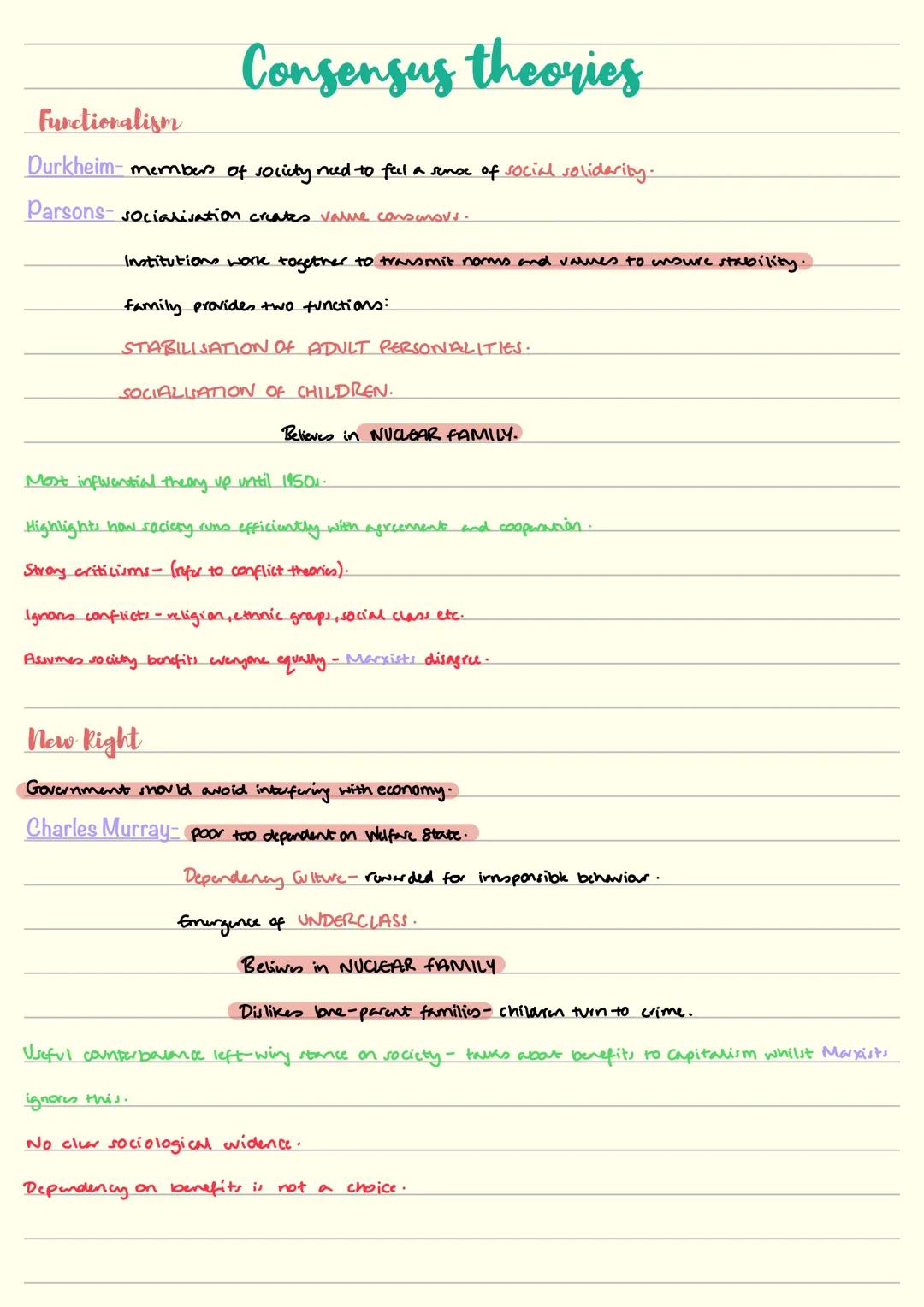
Parsons focused on two key functions: socialising children into society's values and stabilising adult personalities through emotional support. His "warm bath theory" suggests families provide comfort after stressful workdays, but only nuclear families can properly fulfil these functions.
Functionalists claimed extended families were dying out in modern industrial society. However, Laslett showed that historically, low life expectancy meant few families ever lived as three generations anyway - extended families weren't as common as people assumed.
Young and Willmott's 1950s research contradicted this decline narrative by finding strong extended family networks in working-class London communities, suggesting family diversity rather than simple nuclear family dominance.
Evaluation Point: Consider whether modern families single−parent,same−sexcouples,childlesscouples can perform these functions just as effectively as traditional nuclear families.






 Combined Science