
Want to understand how the UK's population is changing and... Show more
 Sociology
 English Literature
 Biology
Sign up to see the contentIt's free!
Access to all documents
Improve your grades
Join milions of students
By signing up you accept Terms of Service and Privacy Policy
Subjects
Classic Dramatic Literature
Modern Lyric Poetry
Influential English-Language Authors
Classic and Contemporary Novels
Literary Character Analysis
Romantic and Love Poetry
Reading Analysis and Interpretation
Evidence Analysis and Integration
Author's Stylistic Elements
Figurative Language and Rhetoric
Show all topics
Human Organ Systems
Cellular Organization and Development
Biomolecular Structure and Organization
Enzyme Structure and Regulation
Cellular Organization Types
Biological Homeostatic Processes
Cellular Membrane Structure
Autotrophic Energy Processes
Environmental Sustainability and Impact
Neural Communication Systems
Show all topics
Social Sciences Research & Practice
Social Structure and Mobility
Classic Social Influence Experiments
Social Systems Theories
Family and Relationship Dynamics
Memory Systems and Processes
Neural Bases of Behavior
Social Influence and Attraction
Psychotherapeutic Approaches
Human Agency and Responsibility
Show all topics
Chemical Sciences and Applications
Chemical Bond Types and Properties
Organic Functional Groups
Atomic Structure and Composition
Chromatographic Separation Principles
Chemical Compound Classifications
Electrochemical Cell Systems
Periodic Table Organization
Chemical Reaction Kinetics
Chemical Equation Conservation
Show all topics
Nazi Germany and Holocaust 1933-1945
World Wars and Peace Treaties
European Monarchs and Statesmen
Cold War Global Tensions
Medieval Institutions and Systems
European Renaissance and Enlightenment
Modern Global Environmental-Health Challenges
Modern Military Conflicts
Medieval Migration and Invasions
World Wars Era and Impact
Show all topics
515
•
Updated 15 Mar 2026
•
Ezraa
@ezraawalker19
Want to understand how the UK's population is changing and... Show more
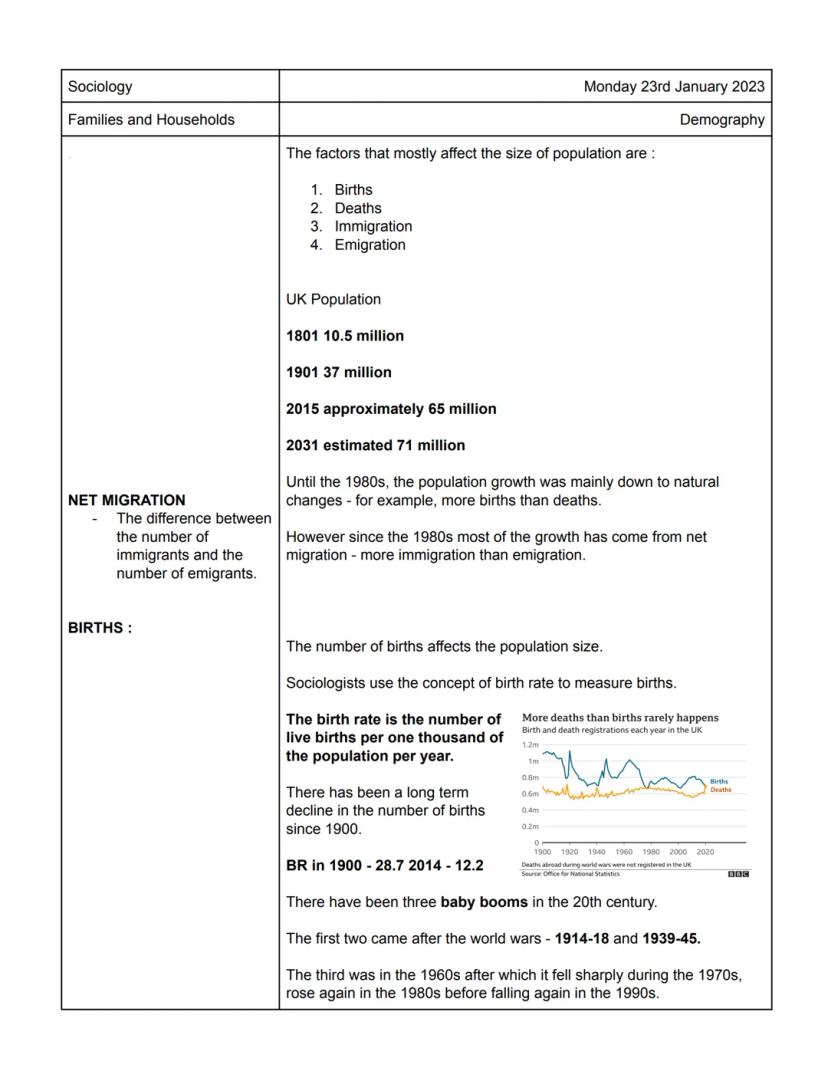
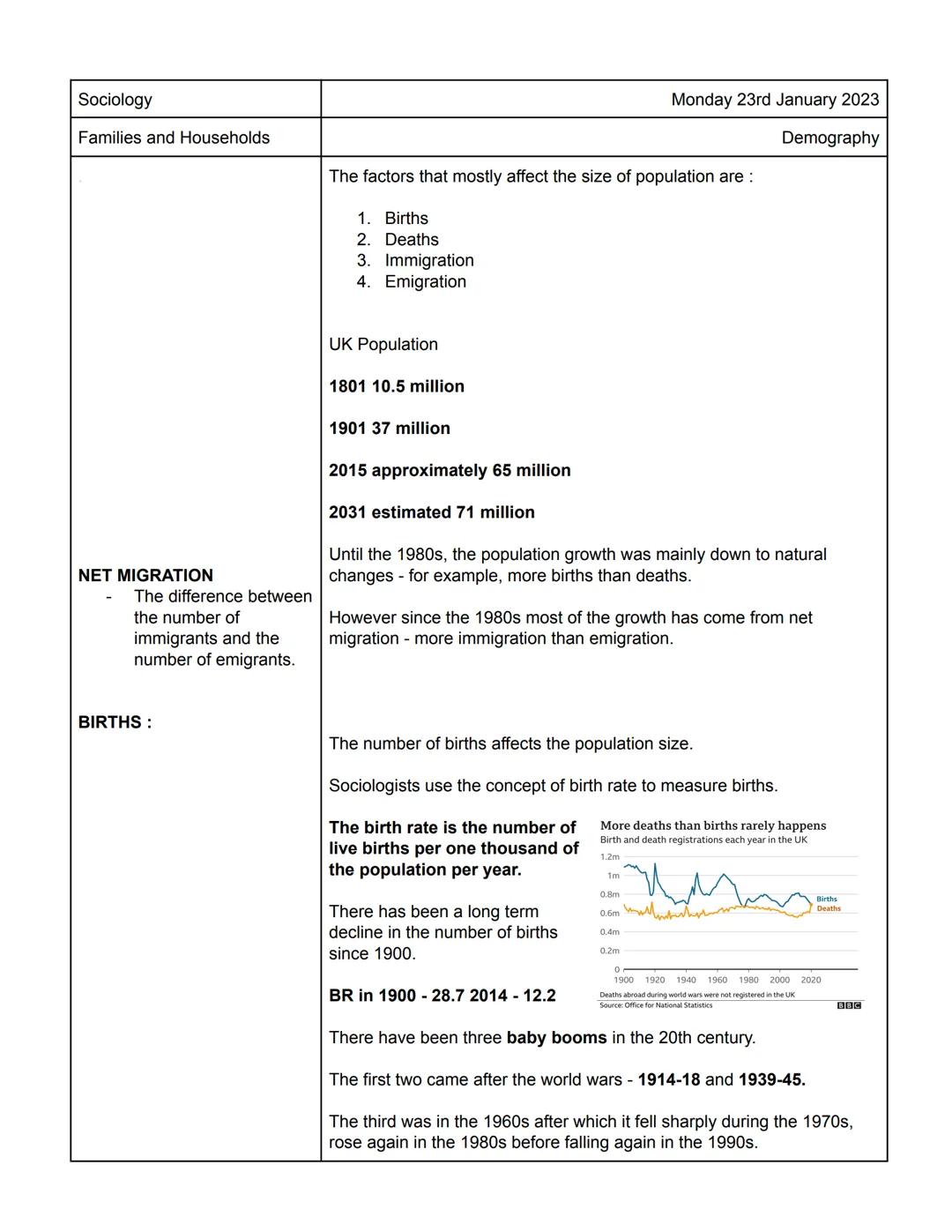
The UK's population has exploded from just 10.5 million in 1801 to around 65 million today, with projections hitting 71 million by 2031. That's massive growth, but here's the twist: the reasons behind it have completely shifted.
Until the 1980s, natural change drove population growth - basically, more babies were born than people died. Since then, net migration (more people moving in than leaving) has become the main driver. This shift completely changes how we think about British society.
Four key factors control population size: births, deaths, immigration, and emigration. Understanding these helps explain everything from housing shortages to why your grandparents' generation was so different from yours.
Key Insight: The birth rate measures live births per thousand people annually - it's dropped dramatically from 28.7 in 1900 to just 12.2 in 2014.
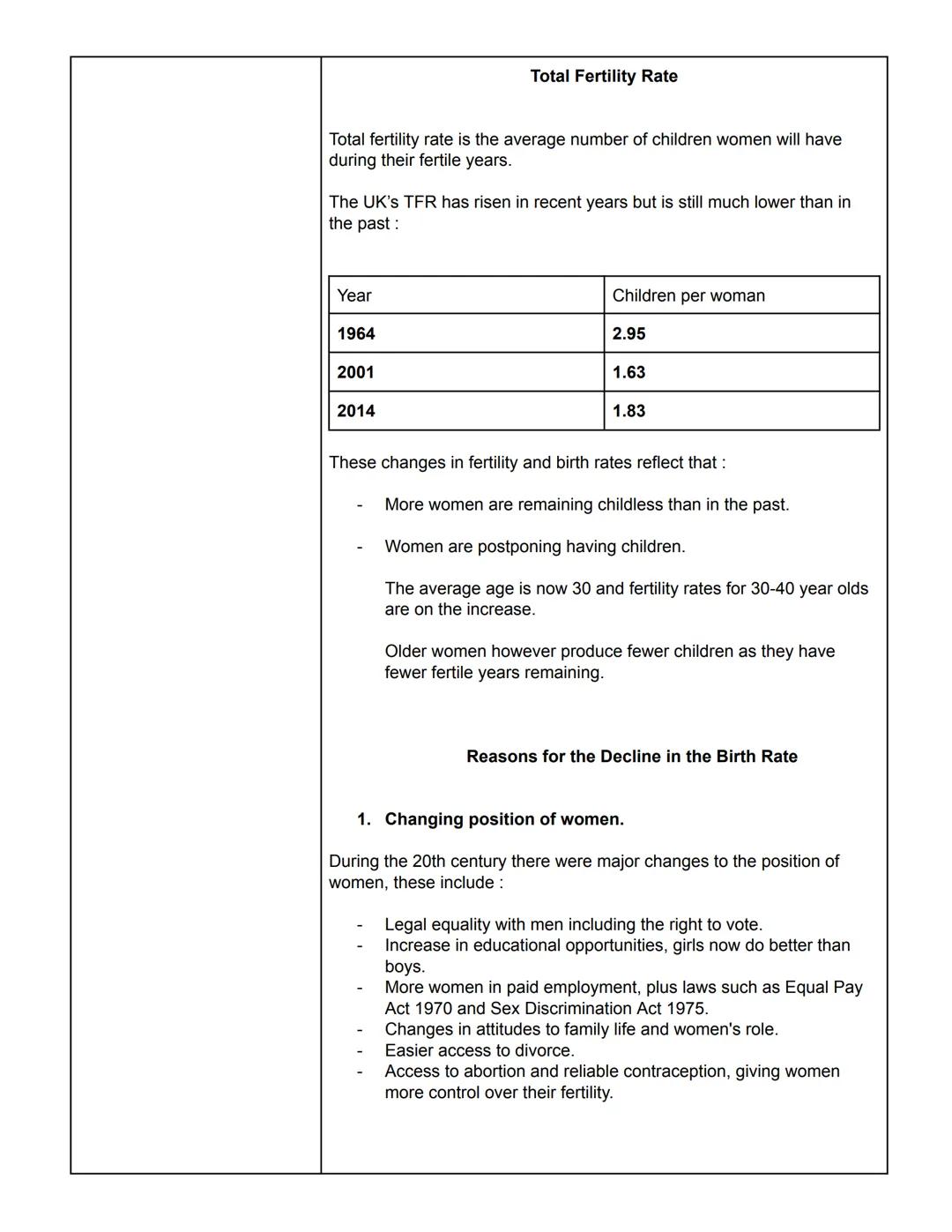
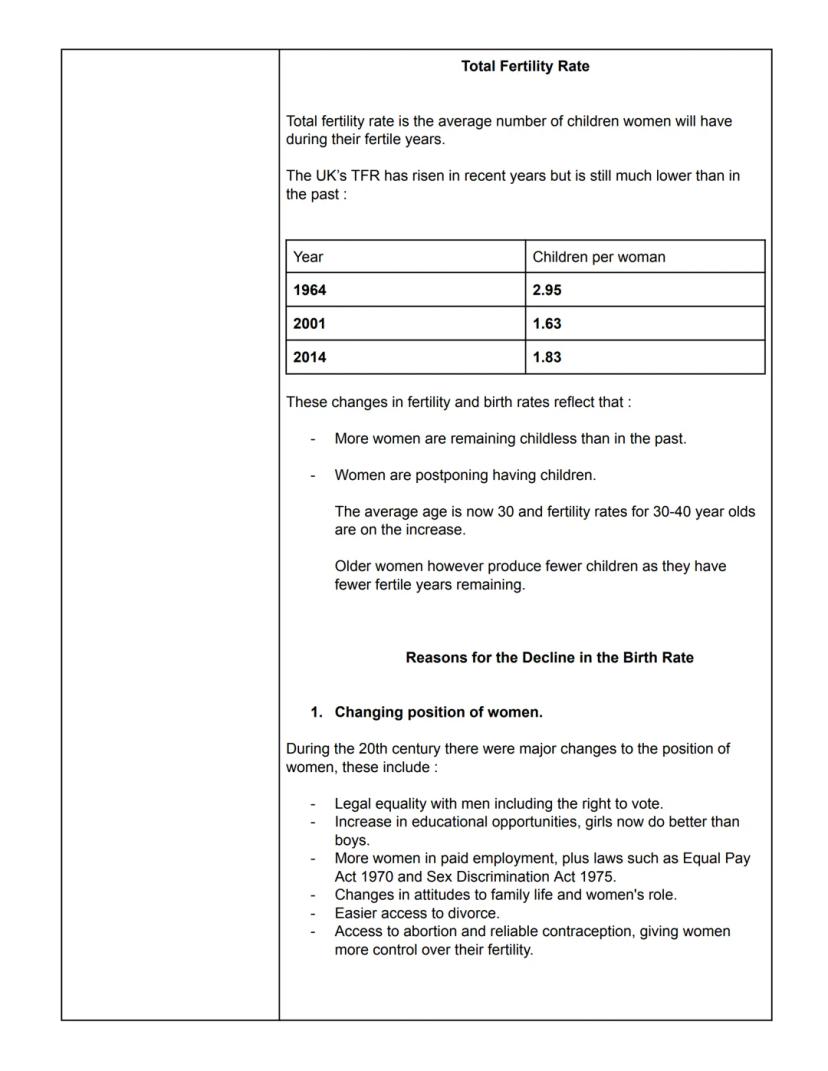
The Total Fertility Rate (TFR) tells us how many children women have during their fertile years. UK women today average just 1.83 children compared to 2.95 in 1964 - that's a massive cultural shift that affects everything from school places to future workforce size.
Three notable baby booms occurred in the 20th century: after both World Wars and during the swinging sixties. Each boom was followed by dramatic declines, creating generational bulges that still impact society today.
Modern fertility patterns show women are choosing to remain childless or delay having children until their thirties. However, older mothers typically have fewer children overall since their fertile years are limited.
Reality Check: In 2012, one in five women aged 45 were childless - double the rate from 25 years earlier.
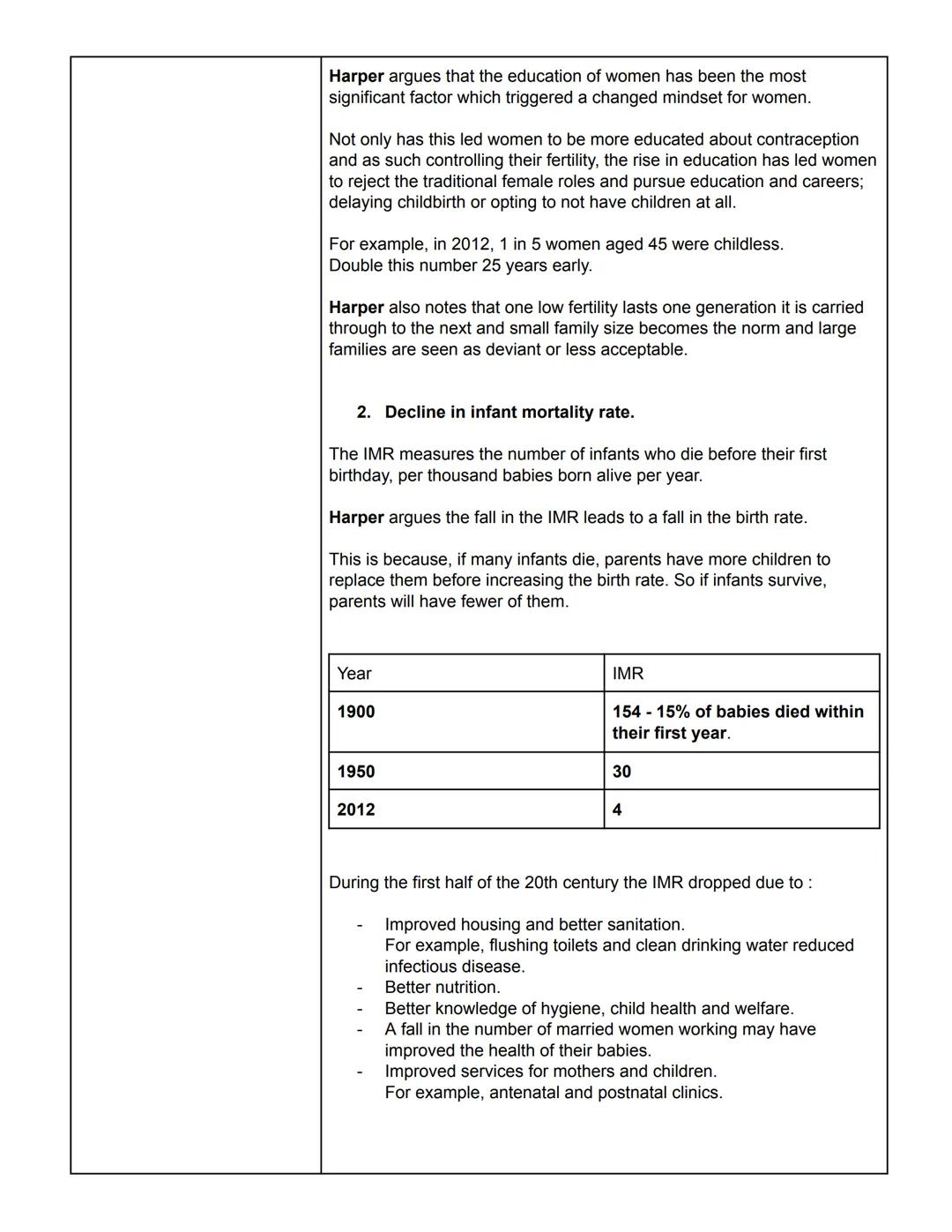
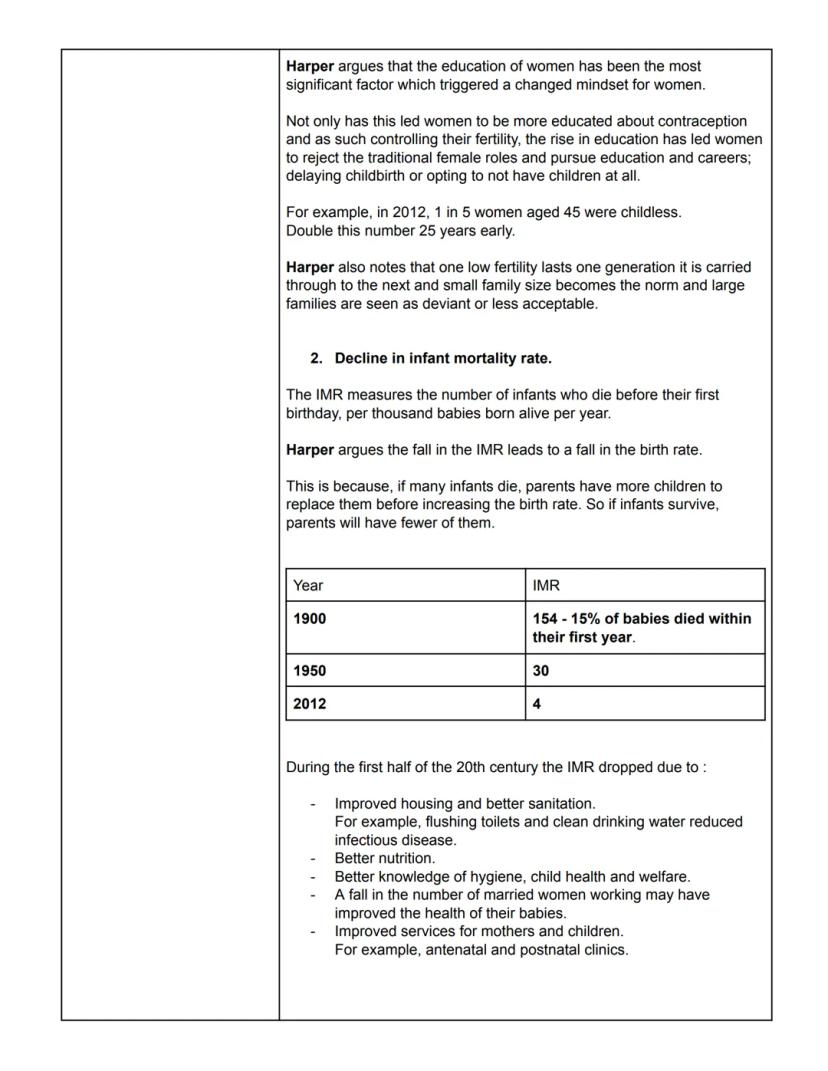
The changing position of women represents the biggest game-changer in British demographics. Legal equality, better education (girls now outperform boys), increased employment opportunities, and reliable contraception have revolutionised women's choices.
Harper argues that women's education triggered a complete mindset shift. Educated women gained control over their fertility, rejected traditional roles, and prioritised careers over large families. This creates a generational effect where small families become the new normal.
The dramatic fall in infant mortality rate (IMR) from 154 per thousand in 1900 to just 4 in 2012 meant parents no longer needed multiple children as "insurance" against early death. Better housing, nutrition, healthcare, and medical advances made child survival almost guaranteed.
Historical Context: In 1900, a shocking 15% of babies died within their first year - today's survival rates would seem miraculous to our ancestors.
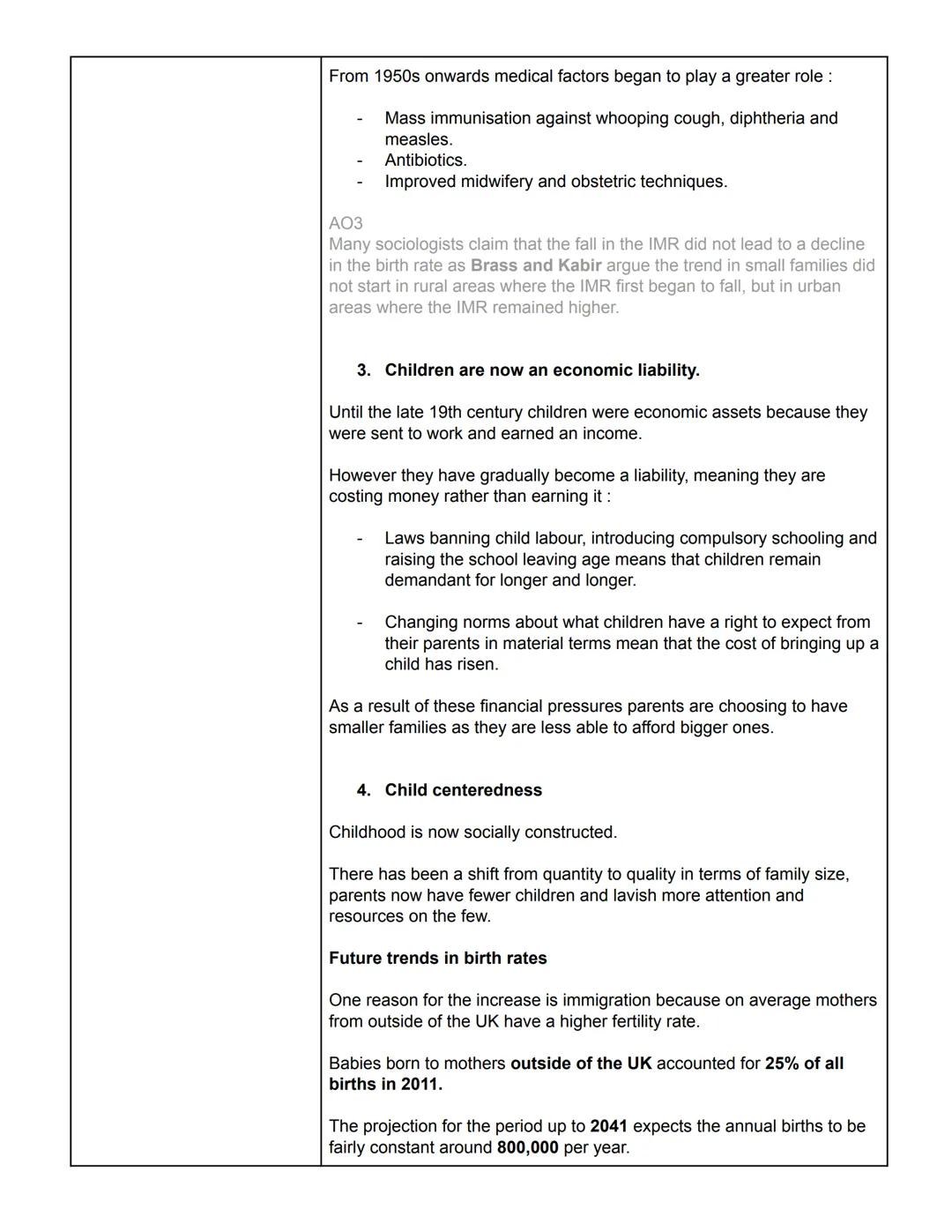
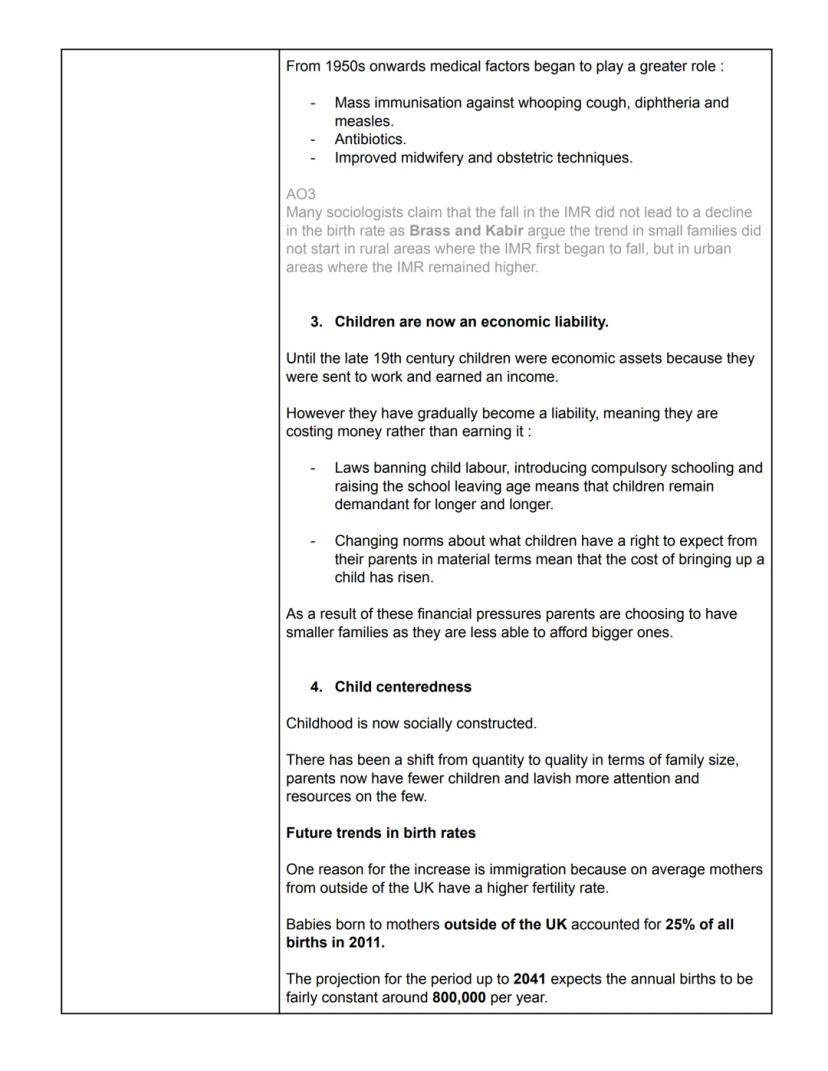
Children transformed from economic assets to economic liabilities during the 20th century. Previously, kids worked and earned money; now they attend school until 18, go to university, and remain financially dependent for decades.
Modern child-centeredness means parents focus on quality over quantity. Instead of having many children, families have fewer kids but invest heavily in their education, activities, and opportunities. This shift reflects changing social values and expectations.
Immigration currently boosts UK birth rates since mothers born outside the UK typically have higher fertility rates. These mothers accounted for 25% of all births in 2011, helping maintain population stability.
Future Projection: Annual births are expected to remain steady around 800,000 per year until 2041, despite ongoing demographic changes.
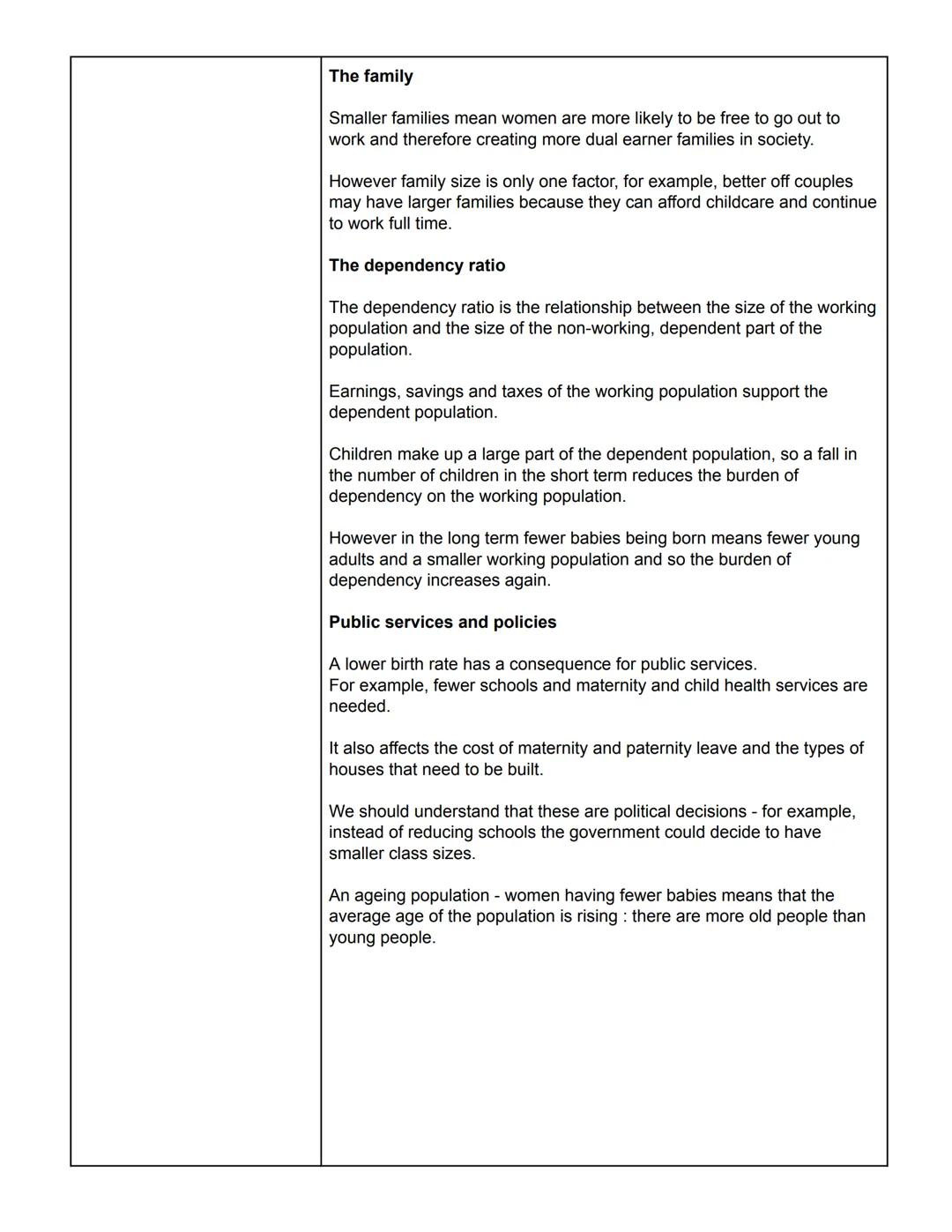
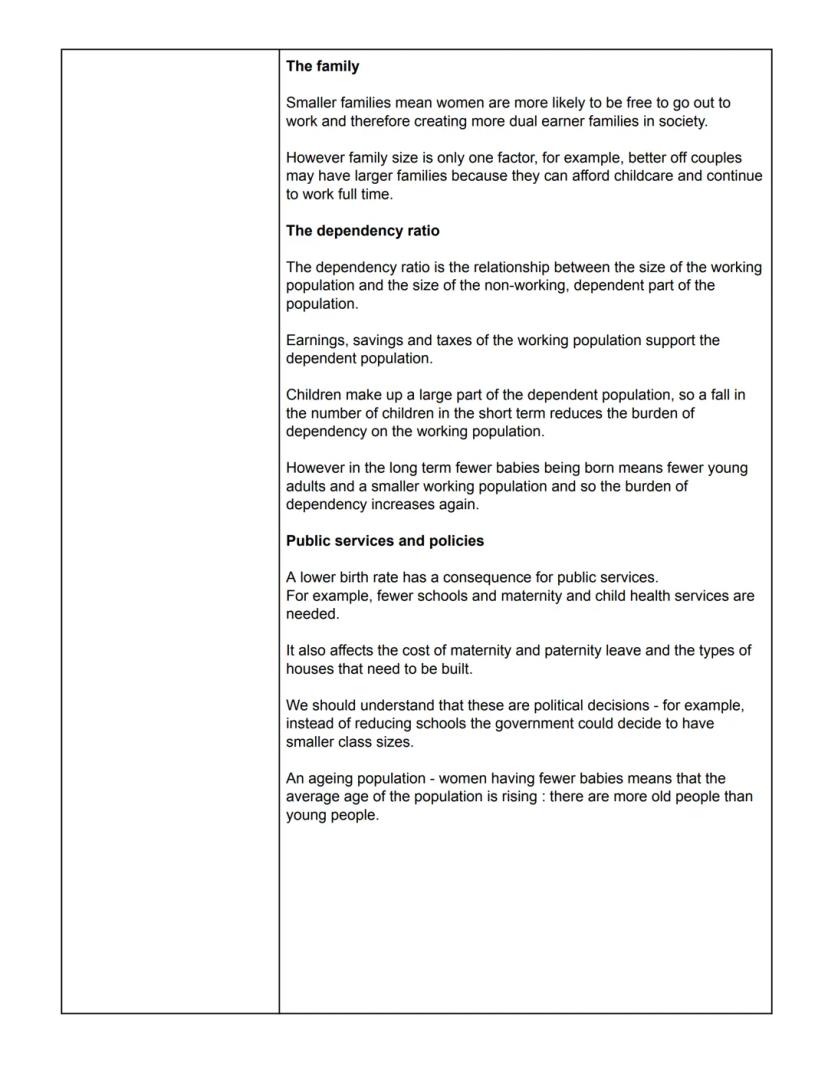
Smaller families enable more dual-earner households as women can pursue careers more easily. However, family size depends on multiple factors - wealthy couples might afford larger families through childcare and flexible work arrangements.
The dependency ratio compares working-age people to dependents (children and elderly). Fewer children initially reduces dependency burdens, but eventually creates a smaller workforce, increasing pressure on future workers to support growing numbers of retirees.
Lower birth rates reshape public services - fewer schools and maternity services are needed, but this creates political choices about resource allocation. Should we close schools or reduce class sizes? These decisions shape your educational experience.
Demographic Reality: An ageing population emerges when fertility falls - more old people relative to young people fundamentally changes society's structure.
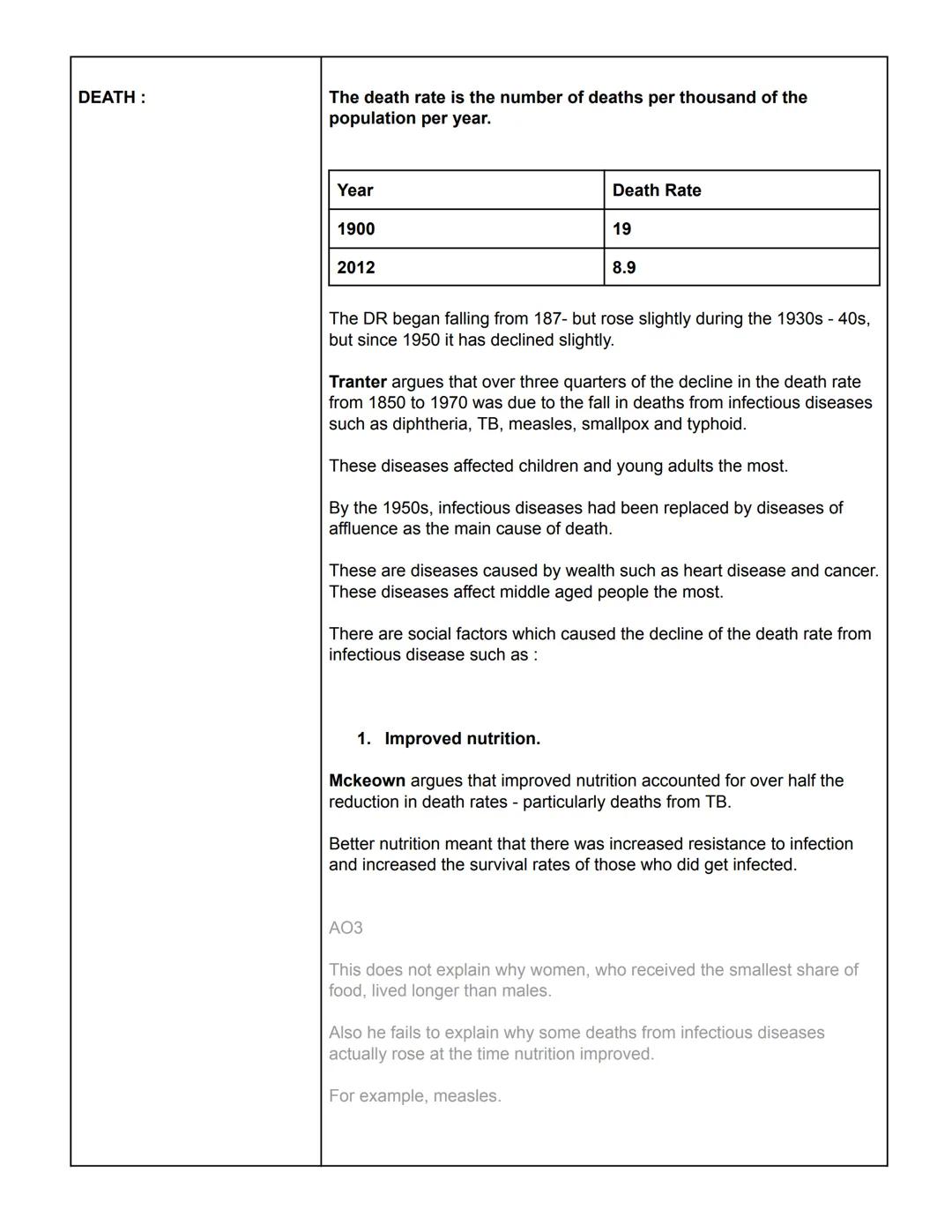
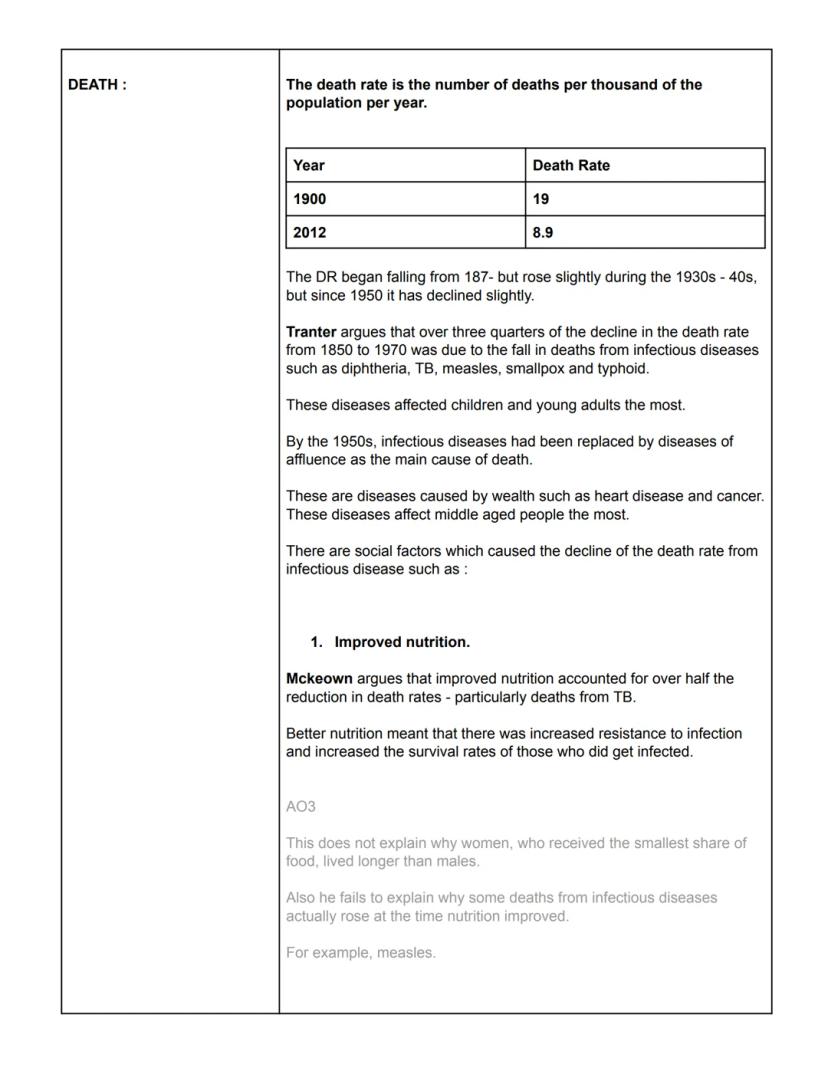
The death rate plummeted from 19 per thousand in 1900 to 8.9 in 2012, representing one of humanity's greatest achievements. This decline occurred in two distinct phases with different causes and impacts.
Infectious diseases like tuberculosis, measles, and typhoid dominated early deaths, particularly affecting children and young adults. By the 1950s, these were replaced by diseases of affluence - heart disease and cancer linked to lifestyle and longevity.
Improved nutrition played a crucial role, with McKeown arguing it accounted for over half the reduction in death rates. Better-fed people resisted infections more effectively and survived illnesses that previously proved fatal.
Critical Analysis: McKeown's nutrition theory doesn't explain why women (who received smaller food portions) lived longer than men, or why some infectious disease deaths increased despite better nutrition.
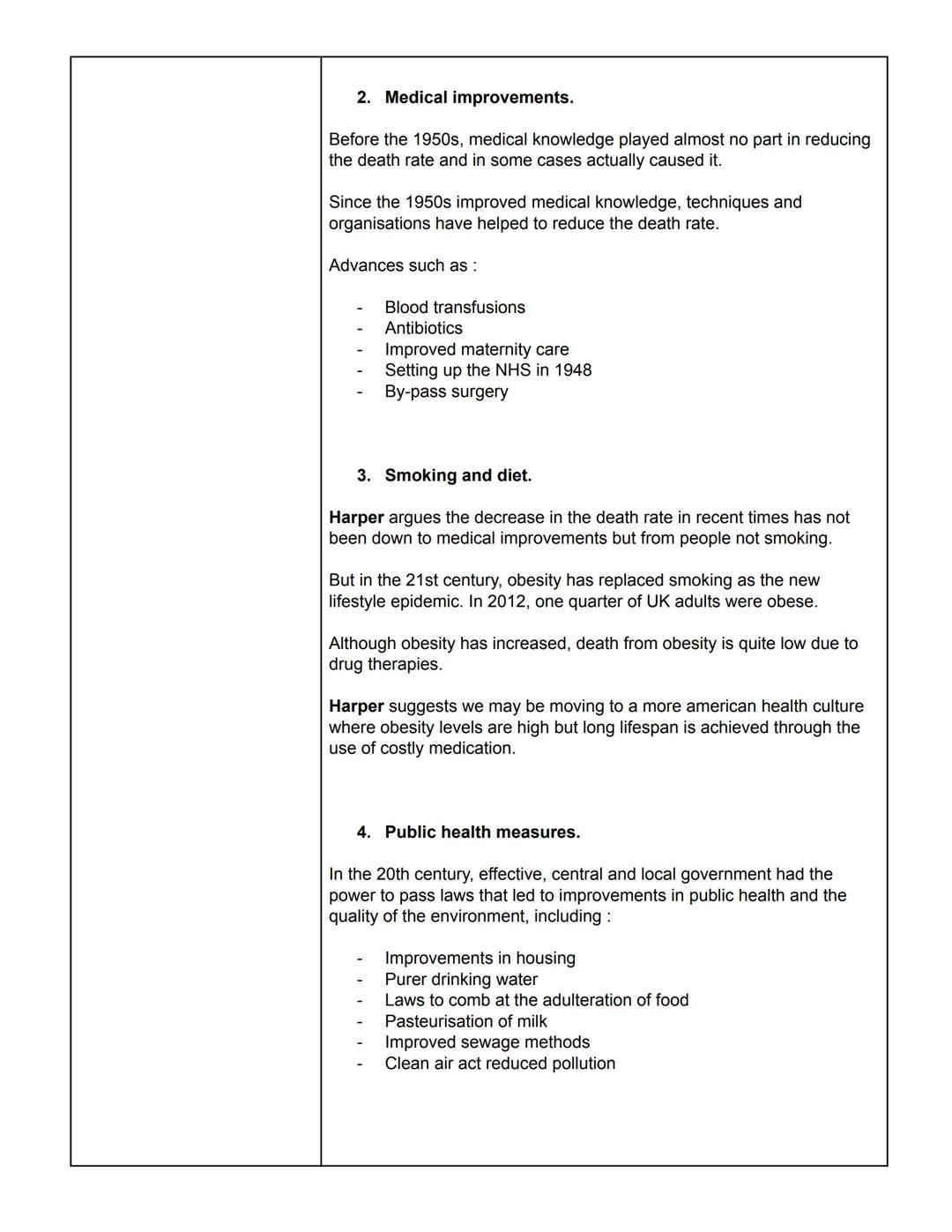
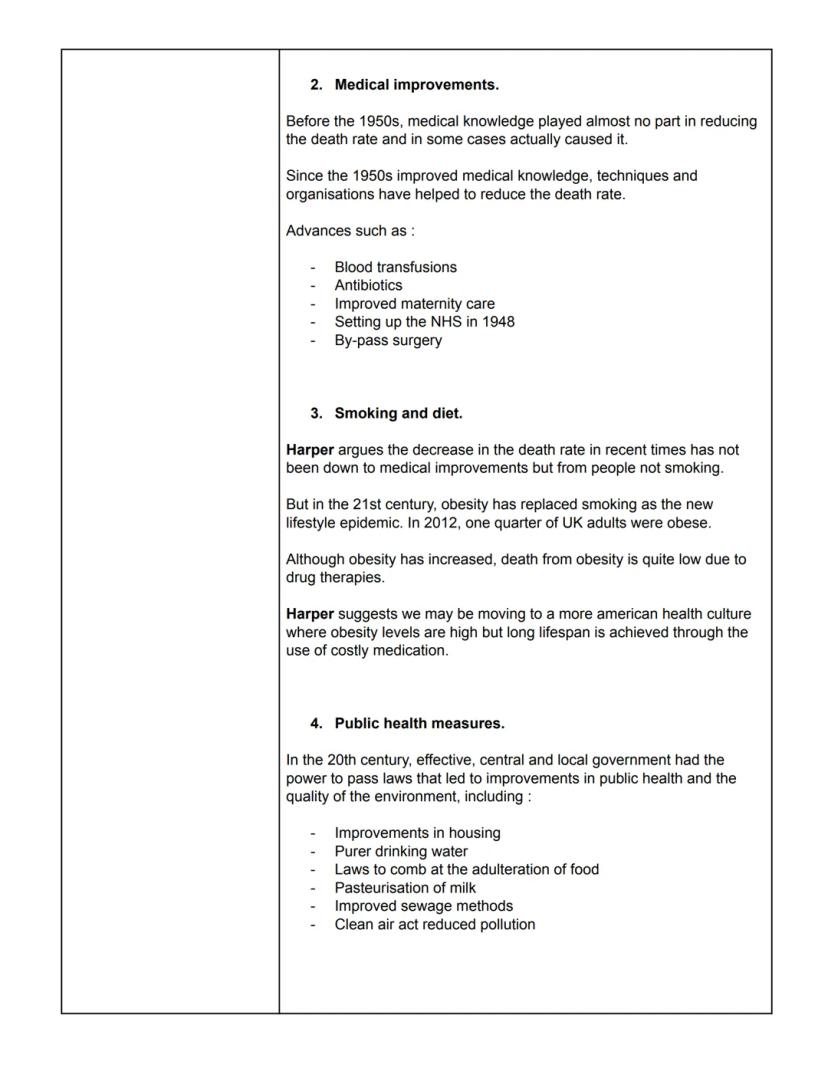
Medical advances had minimal impact before 1950 but became game-changers afterwards. The NHS (1948), antibiotics, blood transfusions, and surgical techniques revolutionised survival rates and life quality.
Lifestyle changes, particularly reduced smoking, significantly impacted recent death rate improvements. However, obesity now threatens to reverse these gains, though drug therapies currently manage obesity-related deaths effectively.
Public health measures demonstrate government power to save lives through legislation. Clean water, improved housing, food safety laws, and pollution controls created healthier environments for entire populations.
Modern Challenge: We may be adopting an American health culture - high obesity but extended lifespan through expensive medications rather than prevention.
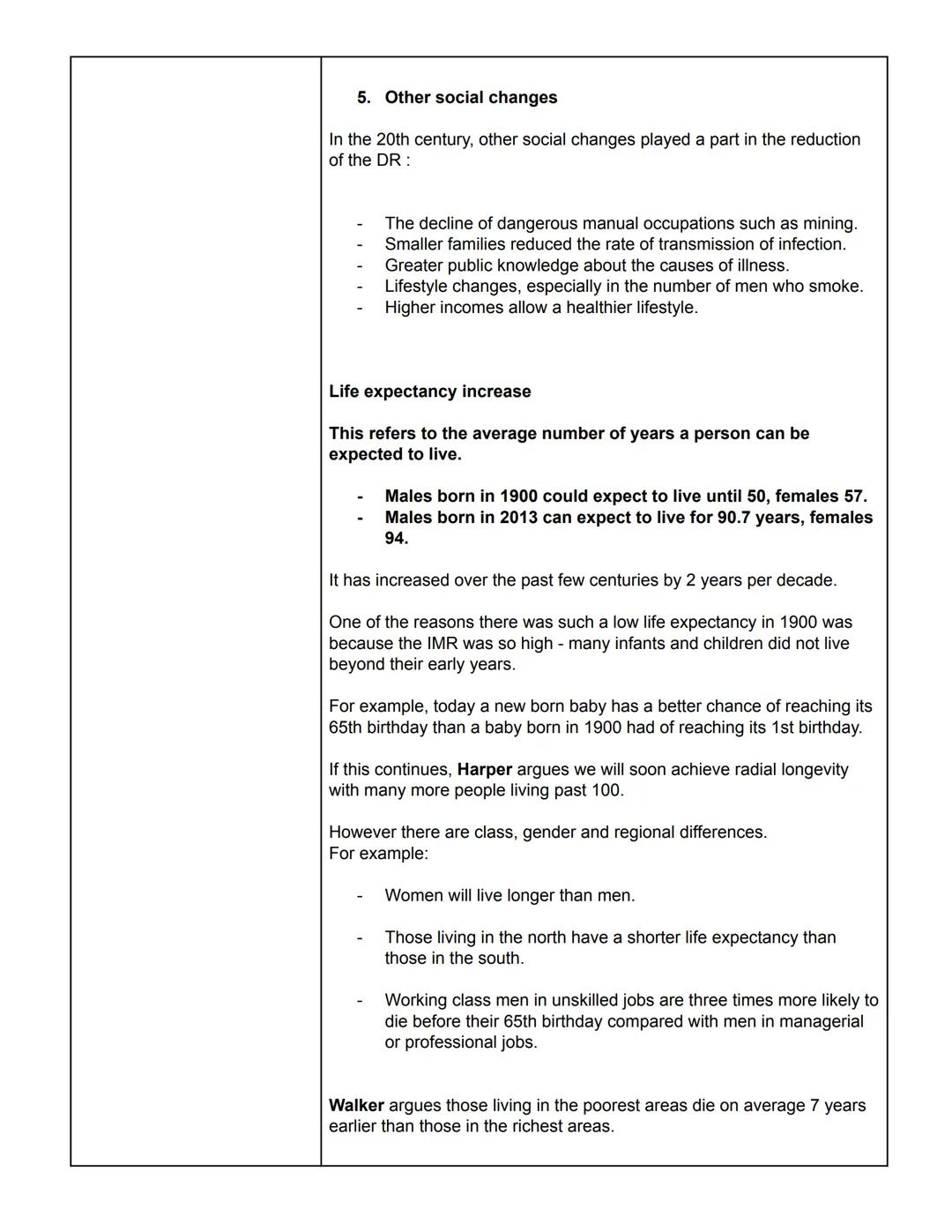
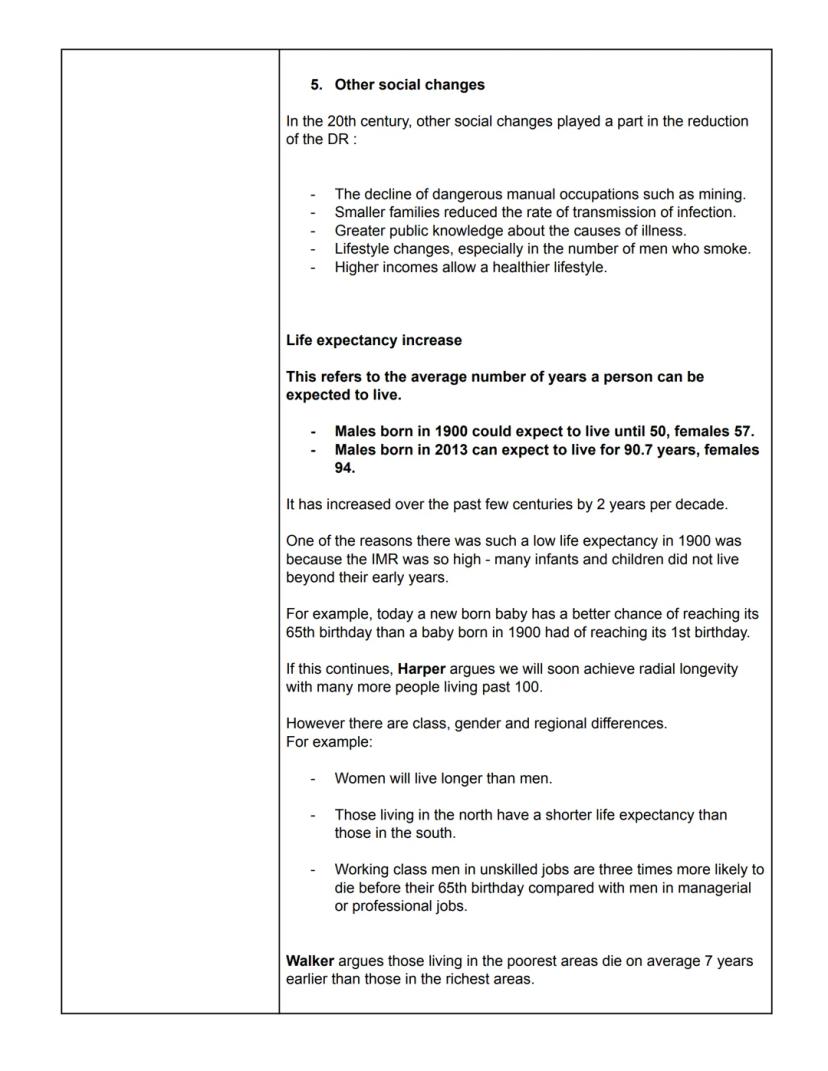
Life expectancy improvements represent extraordinary social progress. Males born in 1900 expected to reach 50; today's newborn males can expect 90.7 years, with females reaching 94 years.
The transformation means today's newborn has better chances of reaching 65 than a 1900 baby had of reaching their first birthday. This represents the conquest of infant and child mortality that plagued previous generations.
However, significant inequalities persist. Working-class men in unskilled jobs are three times more likely to die before 65 compared to professional men. Regional differences mean northern residents have shorter life expectancies than southerners.
Stark Reality: People in the poorest areas die on average 7 years earlier than those in the richest areas - postcode still determines lifespan.
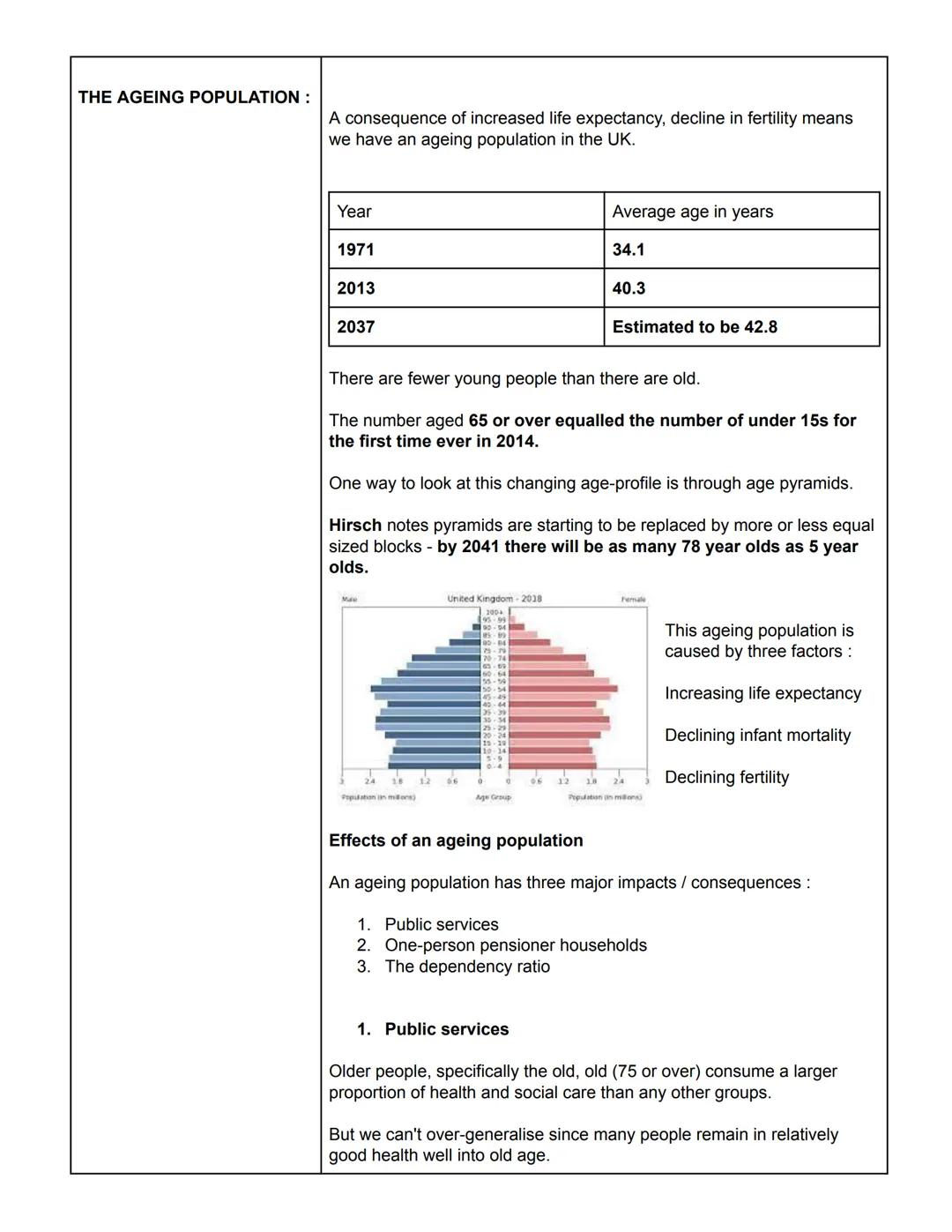
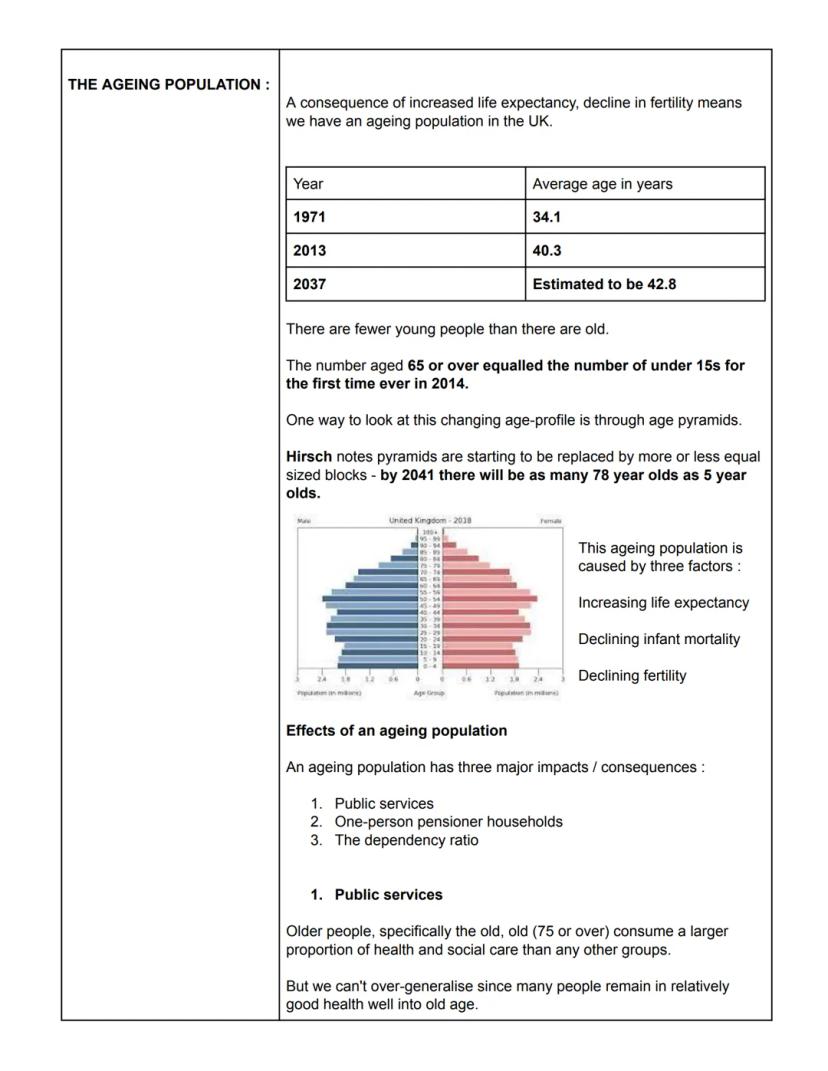
Britain's ageing population reflects longer lives and fewer births. The average age rose from 34.1 years in 1971 to 40.3 in 2013, with projections reaching 42.8 by 2037.
Age pyramids traditionally showed many young people supporting fewer elderly. Now we're developing rectangular age structures - by 2041, there'll be as many 78-year-olds as 5-year-olds. This fundamentally reshapes society's needs and priorities.
The old-old (75+) consume disproportionate healthcare and social services, though many remain healthy well into later life. This creates planning challenges for housing, transport, and medical facilities.
Demographic Milestone: 2014 marked the first time ever that people aged 65+ equalled those under 15 - a historic population rebalancing.
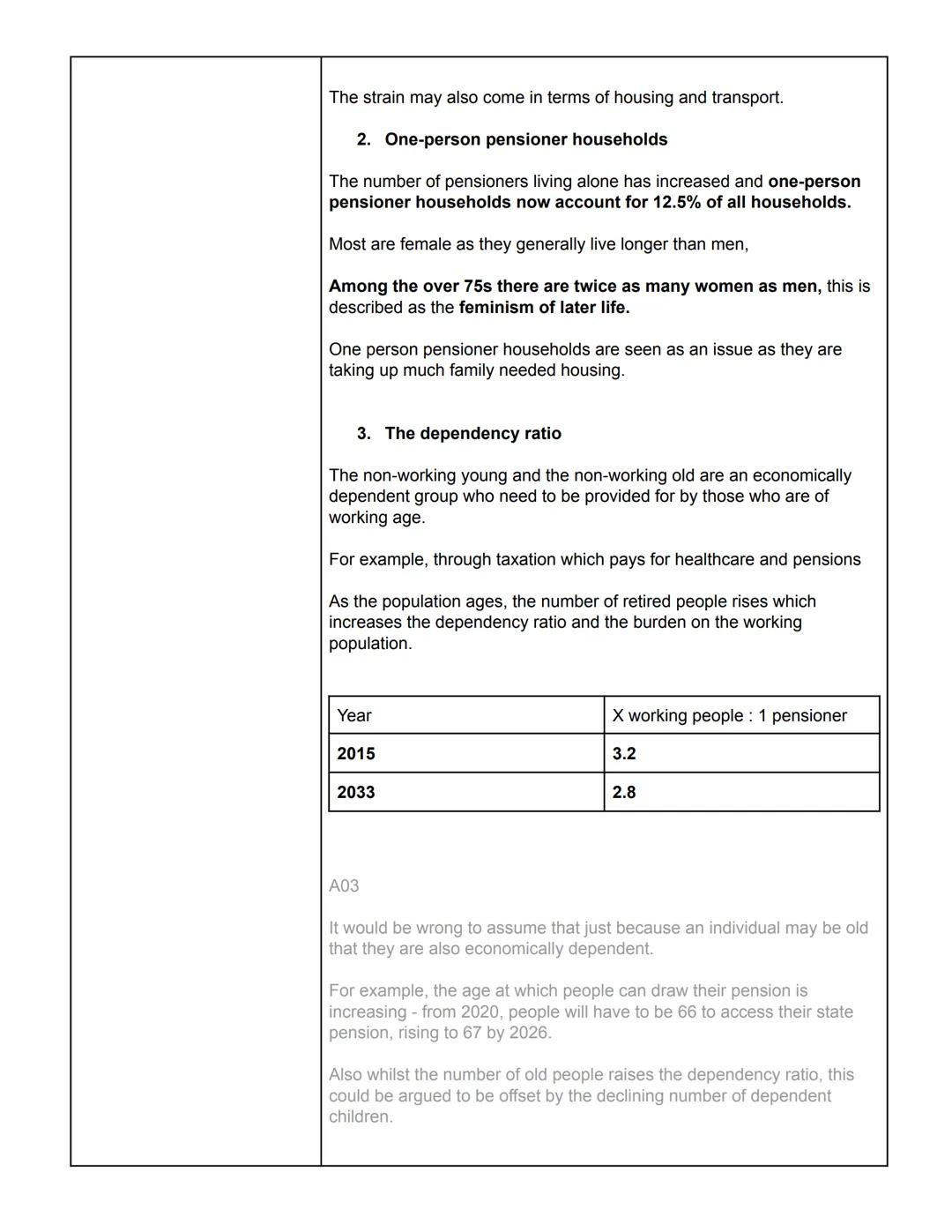
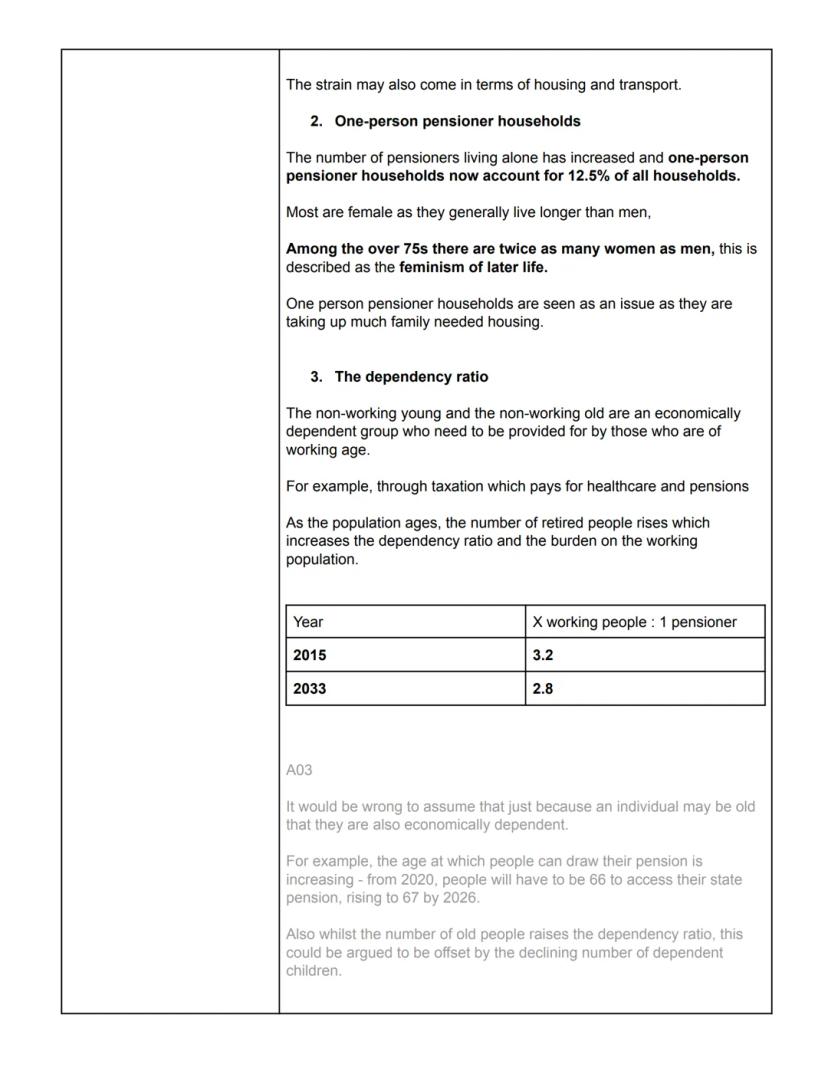
One-person pensioner households now represent 12.5% of all households, mostly women due to longer female life expectancy. Among over-75s, women outnumber men two-to-one - called the feminisation of later life.
The dependency ratio shows economic pressure on working-age people to support non-working young and old. Currently 3.2 workers support each pensioner, but this will drop to 2.8 by 2033, increasing taxation and economic burdens.
However, assumptions about dependency are changing. Pension ages are rising (66 by 2020, 67 by 2026), and many older people remain economically active. The decline in dependent children might offset increased elderly dependency.
Economic Reality: Just because someone is old doesn't automatically make them economically dependent - many people work well beyond traditional retirement ages.
Our AI Companion is a student-focused AI tool that offers more than just answers. Built on millions of Knowunity resources, it provides relevant information, personalised study plans, quizzes, and content directly in the chat, adapting to your individual learning journey.
You can download the app from Google Play Store and Apple App Store.
That's right! Enjoy free access to study content, connect with fellow students, and get instant help – all at your fingertips.
App Store
Google Play
The app is very easy to use and well designed. I have found everything I was looking for so far and have been able to learn a lot from the presentations! I will definitely use the app for a class assignment! And of course it also helps a lot as an inspiration.
Stefan S
iOS user
This app is really great. There are so many study notes and help [...]. My problem subject is French, for example, and the app has so many options for help. Thanks to this app, I have improved my French. I would recommend it to anyone.
Samantha Klich
Android user
Wow, I am really amazed. I just tried the app because I've seen it advertised many times and was absolutely stunned. This app is THE HELP you want for school and above all, it offers so many things, such as workouts and fact sheets, which have been VERY helpful to me personally.
Anna
iOS user
Best app on earth! no words because it’s too good
Thomas R
iOS user
Just amazing. Let's me revise 10x better, this app is a quick 10/10. I highly recommend it to anyone. I can watch and search for notes. I can save them in the subject folder. I can revise it any time when I come back. If you haven't tried this app, you're really missing out.
Basil
Android user
This app has made me feel so much more confident in my exam prep, not only through boosting my own self confidence through the features that allow you to connect with others and feel less alone, but also through the way the app itself is centred around making you feel better. It is easy to navigate, fun to use, and helpful to anyone struggling in absolutely any way.
David K
iOS user
The app's just great! All I have to do is enter the topic in the search bar and I get the response real fast. I don't have to watch 10 YouTube videos to understand something, so I'm saving my time. Highly recommended!
Sudenaz Ocak
Android user
In school I was really bad at maths but thanks to the app, I am doing better now. I am so grateful that you made the app.
Greenlight Bonnie
Android user
very reliable app to help and grow your ideas of Maths, English and other related topics in your works. please use this app if your struggling in areas, this app is key for that. wish I'd of done a review before. and it's also free so don't worry about that.
Rohan U
Android user
I know a lot of apps use fake accounts to boost their reviews but this app deserves it all. Originally I was getting 4 in my English exams and this time I got a grade 7. I didn’t even know about this app three days until the exam and it has helped A LOT. Please actually trust me and use it as I’m sure you too will see developments.
Xander S
iOS user
THE QUIZES AND FLASHCARDS ARE SO USEFUL AND I LOVE Knowunity AI. IT ALSO IS LITREALLY LIKE CHATGPT BUT SMARTER!! HELPED ME WITH MY MASCARA PROBLEMS TOO!! AS WELL AS MY REAL SUBJECTS ! DUHHH 😍😁😲🤑💗✨🎀😮
Elisha
iOS user
This apps acc the goat. I find revision so boring but this app makes it so easy to organize it all and then you can ask the freeeee ai to test yourself so good and you can easily upload your own stuff. highly recommend as someone taking mocks now
Paul T
iOS user
The app is very easy to use and well designed. I have found everything I was looking for so far and have been able to learn a lot from the presentations! I will definitely use the app for a class assignment! And of course it also helps a lot as an inspiration.
Stefan S
iOS user
This app is really great. There are so many study notes and help [...]. My problem subject is French, for example, and the app has so many options for help. Thanks to this app, I have improved my French. I would recommend it to anyone.
Samantha Klich
Android user
Wow, I am really amazed. I just tried the app because I've seen it advertised many times and was absolutely stunned. This app is THE HELP you want for school and above all, it offers so many things, such as workouts and fact sheets, which have been VERY helpful to me personally.
Anna
iOS user
Best app on earth! no words because it’s too good
Thomas R
iOS user
Just amazing. Let's me revise 10x better, this app is a quick 10/10. I highly recommend it to anyone. I can watch and search for notes. I can save them in the subject folder. I can revise it any time when I come back. If you haven't tried this app, you're really missing out.
Basil
Android user
This app has made me feel so much more confident in my exam prep, not only through boosting my own self confidence through the features that allow you to connect with others and feel less alone, but also through the way the app itself is centred around making you feel better. It is easy to navigate, fun to use, and helpful to anyone struggling in absolutely any way.
David K
iOS user
The app's just great! All I have to do is enter the topic in the search bar and I get the response real fast. I don't have to watch 10 YouTube videos to understand something, so I'm saving my time. Highly recommended!
Sudenaz Ocak
Android user
In school I was really bad at maths but thanks to the app, I am doing better now. I am so grateful that you made the app.
Greenlight Bonnie
Android user
very reliable app to help and grow your ideas of Maths, English and other related topics in your works. please use this app if your struggling in areas, this app is key for that. wish I'd of done a review before. and it's also free so don't worry about that.
Rohan U
Android user
I know a lot of apps use fake accounts to boost their reviews but this app deserves it all. Originally I was getting 4 in my English exams and this time I got a grade 7. I didn’t even know about this app three days until the exam and it has helped A LOT. Please actually trust me and use it as I’m sure you too will see developments.
Xander S
iOS user
THE QUIZES AND FLASHCARDS ARE SO USEFUL AND I LOVE Knowunity AI. IT ALSO IS LITREALLY LIKE CHATGPT BUT SMARTER!! HELPED ME WITH MY MASCARA PROBLEMS TOO!! AS WELL AS MY REAL SUBJECTS ! DUHHH 😍😁😲🤑💗✨🎀😮
Elisha
iOS user
This apps acc the goat. I find revision so boring but this app makes it so easy to organize it all and then you can ask the freeeee ai to test yourself so good and you can easily upload your own stuff. highly recommend as someone taking mocks now
Paul T
iOS user
Ezraa
@ezraawalker19
Want to understand how the UK's population is changing and why it matters? This demographic deep-dive reveals why families are shrinking, people are living longer, and what this means for your future society.
Access to all documents
Improve your grades
Join milions of students
By signing up you accept Terms of Service and Privacy Policy
The UK's population has exploded from just 10.5 million in 1801 to around 65 million today, with projections hitting 71 million by 2031. That's massive growth, but here's the twist: the reasons behind it have completely shifted.
Until the 1980s, natural change drove population growth - basically, more babies were born than people died. Since then, net migration (more people moving in than leaving) has become the main driver. This shift completely changes how we think about British society.
Four key factors control population size: births, deaths, immigration, and emigration. Understanding these helps explain everything from housing shortages to why your grandparents' generation was so different from yours.
Key Insight: The birth rate measures live births per thousand people annually - it's dropped dramatically from 28.7 in 1900 to just 12.2 in 2014.
Access to all documents
Improve your grades
Join milions of students
By signing up you accept Terms of Service and Privacy Policy
The Total Fertility Rate (TFR) tells us how many children women have during their fertile years. UK women today average just 1.83 children compared to 2.95 in 1964 - that's a massive cultural shift that affects everything from school places to future workforce size.
Three notable baby booms occurred in the 20th century: after both World Wars and during the swinging sixties. Each boom was followed by dramatic declines, creating generational bulges that still impact society today.
Modern fertility patterns show women are choosing to remain childless or delay having children until their thirties. However, older mothers typically have fewer children overall since their fertile years are limited.
Reality Check: In 2012, one in five women aged 45 were childless - double the rate from 25 years earlier.
Access to all documents
Improve your grades
Join milions of students
By signing up you accept Terms of Service and Privacy Policy
The changing position of women represents the biggest game-changer in British demographics. Legal equality, better education (girls now outperform boys), increased employment opportunities, and reliable contraception have revolutionised women's choices.
Harper argues that women's education triggered a complete mindset shift. Educated women gained control over their fertility, rejected traditional roles, and prioritised careers over large families. This creates a generational effect where small families become the new normal.
The dramatic fall in infant mortality rate (IMR) from 154 per thousand in 1900 to just 4 in 2012 meant parents no longer needed multiple children as "insurance" against early death. Better housing, nutrition, healthcare, and medical advances made child survival almost guaranteed.
Historical Context: In 1900, a shocking 15% of babies died within their first year - today's survival rates would seem miraculous to our ancestors.
Access to all documents
Improve your grades
Join milions of students
By signing up you accept Terms of Service and Privacy Policy
Children transformed from economic assets to economic liabilities during the 20th century. Previously, kids worked and earned money; now they attend school until 18, go to university, and remain financially dependent for decades.
Modern child-centeredness means parents focus on quality over quantity. Instead of having many children, families have fewer kids but invest heavily in their education, activities, and opportunities. This shift reflects changing social values and expectations.
Immigration currently boosts UK birth rates since mothers born outside the UK typically have higher fertility rates. These mothers accounted for 25% of all births in 2011, helping maintain population stability.
Future Projection: Annual births are expected to remain steady around 800,000 per year until 2041, despite ongoing demographic changes.
Access to all documents
Improve your grades
Join milions of students
By signing up you accept Terms of Service and Privacy Policy
Smaller families enable more dual-earner households as women can pursue careers more easily. However, family size depends on multiple factors - wealthy couples might afford larger families through childcare and flexible work arrangements.
The dependency ratio compares working-age people to dependents (children and elderly). Fewer children initially reduces dependency burdens, but eventually creates a smaller workforce, increasing pressure on future workers to support growing numbers of retirees.
Lower birth rates reshape public services - fewer schools and maternity services are needed, but this creates political choices about resource allocation. Should we close schools or reduce class sizes? These decisions shape your educational experience.
Demographic Reality: An ageing population emerges when fertility falls - more old people relative to young people fundamentally changes society's structure.
Access to all documents
Improve your grades
Join milions of students
By signing up you accept Terms of Service and Privacy Policy
The death rate plummeted from 19 per thousand in 1900 to 8.9 in 2012, representing one of humanity's greatest achievements. This decline occurred in two distinct phases with different causes and impacts.
Infectious diseases like tuberculosis, measles, and typhoid dominated early deaths, particularly affecting children and young adults. By the 1950s, these were replaced by diseases of affluence - heart disease and cancer linked to lifestyle and longevity.
Improved nutrition played a crucial role, with McKeown arguing it accounted for over half the reduction in death rates. Better-fed people resisted infections more effectively and survived illnesses that previously proved fatal.
Critical Analysis: McKeown's nutrition theory doesn't explain why women (who received smaller food portions) lived longer than men, or why some infectious disease deaths increased despite better nutrition.
Access to all documents
Improve your grades
Join milions of students
By signing up you accept Terms of Service and Privacy Policy
Medical advances had minimal impact before 1950 but became game-changers afterwards. The NHS (1948), antibiotics, blood transfusions, and surgical techniques revolutionised survival rates and life quality.
Lifestyle changes, particularly reduced smoking, significantly impacted recent death rate improvements. However, obesity now threatens to reverse these gains, though drug therapies currently manage obesity-related deaths effectively.
Public health measures demonstrate government power to save lives through legislation. Clean water, improved housing, food safety laws, and pollution controls created healthier environments for entire populations.
Modern Challenge: We may be adopting an American health culture - high obesity but extended lifespan through expensive medications rather than prevention.
Access to all documents
Improve your grades
Join milions of students
By signing up you accept Terms of Service and Privacy Policy
Life expectancy improvements represent extraordinary social progress. Males born in 1900 expected to reach 50; today's newborn males can expect 90.7 years, with females reaching 94 years.
The transformation means today's newborn has better chances of reaching 65 than a 1900 baby had of reaching their first birthday. This represents the conquest of infant and child mortality that plagued previous generations.
However, significant inequalities persist. Working-class men in unskilled jobs are three times more likely to die before 65 compared to professional men. Regional differences mean northern residents have shorter life expectancies than southerners.
Stark Reality: People in the poorest areas die on average 7 years earlier than those in the richest areas - postcode still determines lifespan.
Access to all documents
Improve your grades
Join milions of students
By signing up you accept Terms of Service and Privacy Policy
Britain's ageing population reflects longer lives and fewer births. The average age rose from 34.1 years in 1971 to 40.3 in 2013, with projections reaching 42.8 by 2037.
Age pyramids traditionally showed many young people supporting fewer elderly. Now we're developing rectangular age structures - by 2041, there'll be as many 78-year-olds as 5-year-olds. This fundamentally reshapes society's needs and priorities.
The old-old (75+) consume disproportionate healthcare and social services, though many remain healthy well into later life. This creates planning challenges for housing, transport, and medical facilities.
Demographic Milestone: 2014 marked the first time ever that people aged 65+ equalled those under 15 - a historic population rebalancing.
Access to all documents
Improve your grades
Join milions of students
By signing up you accept Terms of Service and Privacy Policy
One-person pensioner households now represent 12.5% of all households, mostly women due to longer female life expectancy. Among over-75s, women outnumber men two-to-one - called the feminisation of later life.
The dependency ratio shows economic pressure on working-age people to support non-working young and old. Currently 3.2 workers support each pensioner, but this will drop to 2.8 by 2033, increasing taxation and economic burdens.
However, assumptions about dependency are changing. Pension ages are rising (66 by 2020, 67 by 2026), and many older people remain economically active. The decline in dependent children might offset increased elderly dependency.
Economic Reality: Just because someone is old doesn't automatically make them economically dependent - many people work well beyond traditional retirement ages.
Our AI Companion is a student-focused AI tool that offers more than just answers. Built on millions of Knowunity resources, it provides relevant information, personalised study plans, quizzes, and content directly in the chat, adapting to your individual learning journey.
You can download the app from Google Play Store and Apple App Store.
That's right! Enjoy free access to study content, connect with fellow students, and get instant help – all at your fingertips.
6
Smart Tools NEW
Transform this note into: ✓ 50+ Practice Questions ✓ Interactive Flashcards ✓ Full Mock Exam ✓ Essay Outlines
App Store
Google Play
The app is very easy to use and well designed. I have found everything I was looking for so far and have been able to learn a lot from the presentations! I will definitely use the app for a class assignment! And of course it also helps a lot as an inspiration.
Stefan S
iOS user
This app is really great. There are so many study notes and help [...]. My problem subject is French, for example, and the app has so many options for help. Thanks to this app, I have improved my French. I would recommend it to anyone.
Samantha Klich
Android user
Wow, I am really amazed. I just tried the app because I've seen it advertised many times and was absolutely stunned. This app is THE HELP you want for school and above all, it offers so many things, such as workouts and fact sheets, which have been VERY helpful to me personally.
Anna
iOS user
Best app on earth! no words because it’s too good
Thomas R
iOS user
Just amazing. Let's me revise 10x better, this app is a quick 10/10. I highly recommend it to anyone. I can watch and search for notes. I can save them in the subject folder. I can revise it any time when I come back. If you haven't tried this app, you're really missing out.
Basil
Android user
This app has made me feel so much more confident in my exam prep, not only through boosting my own self confidence through the features that allow you to connect with others and feel less alone, but also through the way the app itself is centred around making you feel better. It is easy to navigate, fun to use, and helpful to anyone struggling in absolutely any way.
David K
iOS user
The app's just great! All I have to do is enter the topic in the search bar and I get the response real fast. I don't have to watch 10 YouTube videos to understand something, so I'm saving my time. Highly recommended!
Sudenaz Ocak
Android user
In school I was really bad at maths but thanks to the app, I am doing better now. I am so grateful that you made the app.
Greenlight Bonnie
Android user
very reliable app to help and grow your ideas of Maths, English and other related topics in your works. please use this app if your struggling in areas, this app is key for that. wish I'd of done a review before. and it's also free so don't worry about that.
Rohan U
Android user
I know a lot of apps use fake accounts to boost their reviews but this app deserves it all. Originally I was getting 4 in my English exams and this time I got a grade 7. I didn’t even know about this app three days until the exam and it has helped A LOT. Please actually trust me and use it as I’m sure you too will see developments.
Xander S
iOS user
THE QUIZES AND FLASHCARDS ARE SO USEFUL AND I LOVE Knowunity AI. IT ALSO IS LITREALLY LIKE CHATGPT BUT SMARTER!! HELPED ME WITH MY MASCARA PROBLEMS TOO!! AS WELL AS MY REAL SUBJECTS ! DUHHH 😍😁😲🤑💗✨🎀😮
Elisha
iOS user
This apps acc the goat. I find revision so boring but this app makes it so easy to organize it all and then you can ask the freeeee ai to test yourself so good and you can easily upload your own stuff. highly recommend as someone taking mocks now
Paul T
iOS user
The app is very easy to use and well designed. I have found everything I was looking for so far and have been able to learn a lot from the presentations! I will definitely use the app for a class assignment! And of course it also helps a lot as an inspiration.
Stefan S
iOS user
This app is really great. There are so many study notes and help [...]. My problem subject is French, for example, and the app has so many options for help. Thanks to this app, I have improved my French. I would recommend it to anyone.
Samantha Klich
Android user
Wow, I am really amazed. I just tried the app because I've seen it advertised many times and was absolutely stunned. This app is THE HELP you want for school and above all, it offers so many things, such as workouts and fact sheets, which have been VERY helpful to me personally.
Anna
iOS user
Best app on earth! no words because it’s too good
Thomas R
iOS user
Just amazing. Let's me revise 10x better, this app is a quick 10/10. I highly recommend it to anyone. I can watch and search for notes. I can save them in the subject folder. I can revise it any time when I come back. If you haven't tried this app, you're really missing out.
Basil
Android user
This app has made me feel so much more confident in my exam prep, not only through boosting my own self confidence through the features that allow you to connect with others and feel less alone, but also through the way the app itself is centred around making you feel better. It is easy to navigate, fun to use, and helpful to anyone struggling in absolutely any way.
David K
iOS user
The app's just great! All I have to do is enter the topic in the search bar and I get the response real fast. I don't have to watch 10 YouTube videos to understand something, so I'm saving my time. Highly recommended!
Sudenaz Ocak
Android user
In school I was really bad at maths but thanks to the app, I am doing better now. I am so grateful that you made the app.
Greenlight Bonnie
Android user
very reliable app to help and grow your ideas of Maths, English and other related topics in your works. please use this app if your struggling in areas, this app is key for that. wish I'd of done a review before. and it's also free so don't worry about that.
Rohan U
Android user
I know a lot of apps use fake accounts to boost their reviews but this app deserves it all. Originally I was getting 4 in my English exams and this time I got a grade 7. I didn’t even know about this app three days until the exam and it has helped A LOT. Please actually trust me and use it as I’m sure you too will see developments.
Xander S
iOS user
THE QUIZES AND FLASHCARDS ARE SO USEFUL AND I LOVE Knowunity AI. IT ALSO IS LITREALLY LIKE CHATGPT BUT SMARTER!! HELPED ME WITH MY MASCARA PROBLEMS TOO!! AS WELL AS MY REAL SUBJECTS ! DUHHH 😍😁😲🤑💗✨🎀😮
Elisha
iOS user
This apps acc the goat. I find revision so boring but this app makes it so easy to organize it all and then you can ask the freeeee ai to test yourself so good and you can easily upload your own stuff. highly recommend as someone taking mocks now
Paul T
iOS user