
Ever wondered why you might copy your mates' behaviour or... Show more
 Psychology
 Criminology
 English Literature
 Biology
Sign up to see the contentIt's free!
Access to all documents
Improve your grades
Join milions of students
By signing up you accept Terms of Service and Privacy Policy
Subjects
Classic Dramatic Literature
Modern Lyric Poetry
Influential English-Language Authors
Classic and Contemporary Novels
Literary Character Analysis
Romantic and Love Poetry
Reading Analysis and Interpretation
Evidence Analysis and Integration
Author's Stylistic Elements
Figurative Language and Rhetoric
Show all topics
Human Organ Systems
Cellular Organization and Development
Biomolecular Structure and Organization
Enzyme Structure and Regulation
Cellular Organization Types
Biological Homeostatic Processes
Cellular Membrane Structure
Autotrophic Energy Processes
Environmental Sustainability and Impact
Neural Communication Systems
Show all topics
Social Sciences Research & Practice
Social Structure and Mobility
Classic Social Influence Experiments
Social Systems Theories
Family and Relationship Dynamics
Memory Systems and Processes
Neural Bases of Behavior
Social Influence and Attraction
Psychotherapeutic Approaches
Human Agency and Responsibility
Show all topics
Chemical Sciences and Applications
Chemical Bond Types and Properties
Organic Functional Groups
Atomic Structure and Composition
Chromatographic Separation Principles
Chemical Compound Classifications
Electrochemical Cell Systems
Periodic Table Organization
Chemical Reaction Kinetics
Chemical Equation Conservation
Show all topics
Nazi Germany and Holocaust 1933-1945
World Wars and Peace Treaties
European Monarchs and Statesmen
Cold War Global Tensions
Medieval Institutions and Systems
European Renaissance and Enlightenment
Modern Global Environmental-Health Challenges
Modern Military Conflicts
Medieval Migration and Invasions
World Wars Era and Impact
Show all topics
110
•
10 Feb 2026
•
elle
@studywithelle
Ever wondered why you might copy your mates' behaviour or... Show more
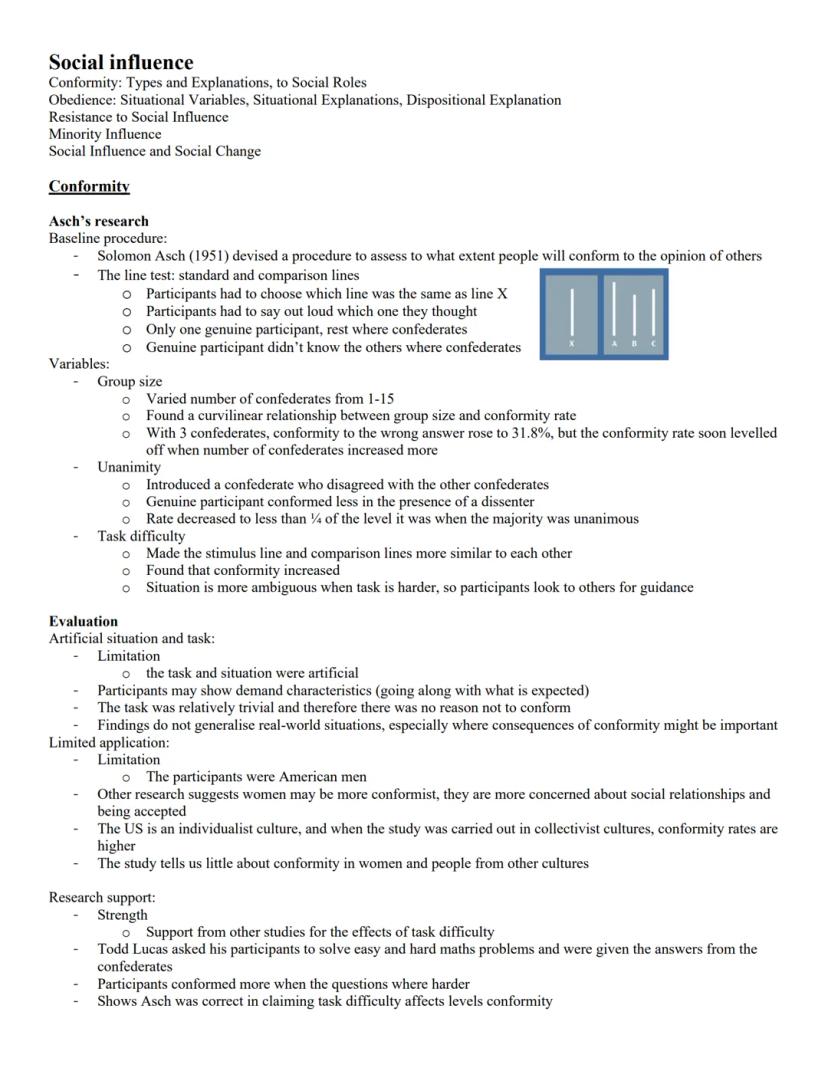
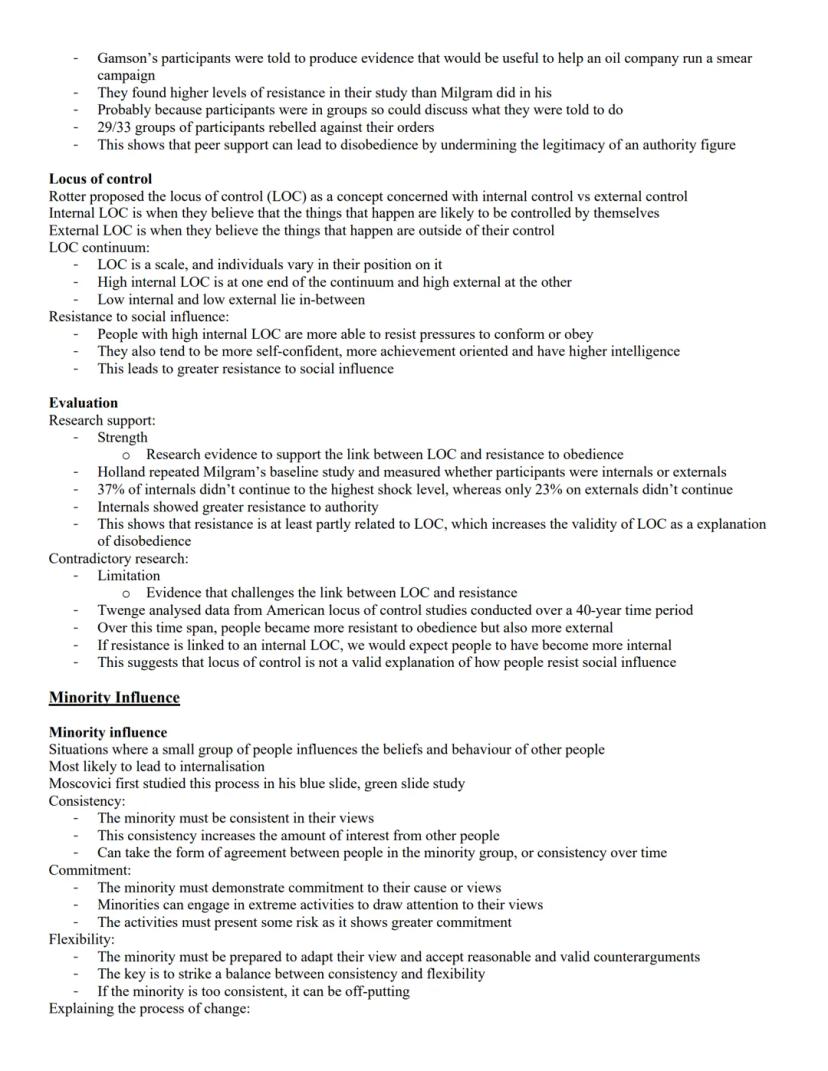
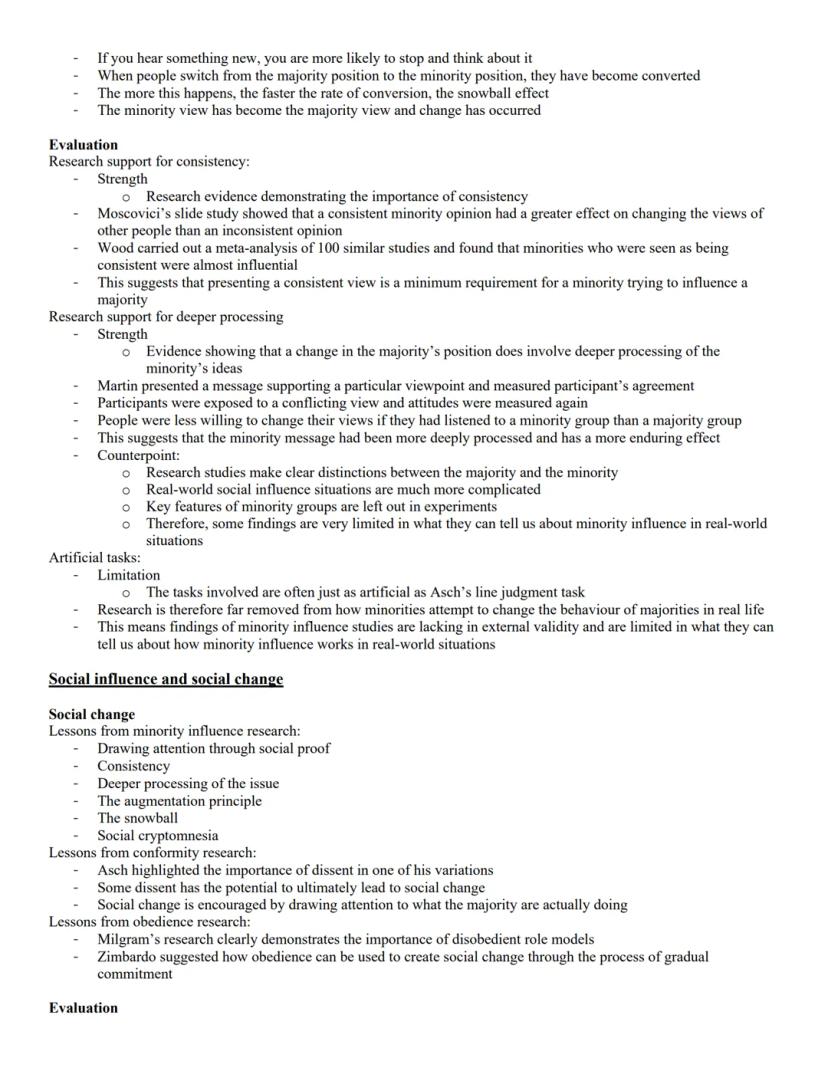
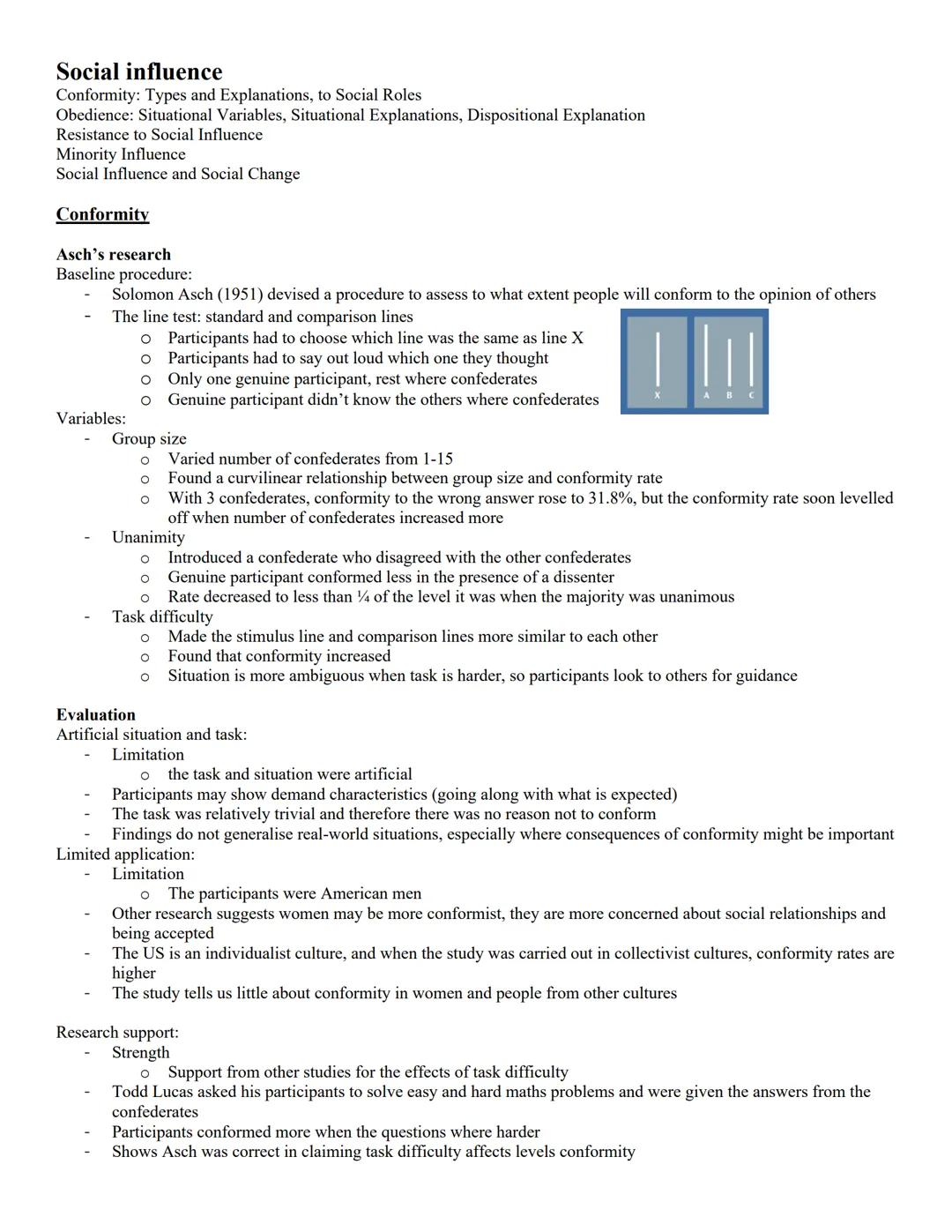
Conformity happens when you change your behaviour to fit in with a group, even when you know they're wrong. Solomon Asch proved this with his famous line experiment in 1951.
Asch asked people to match lines that were obviously different lengths - dead simple, right? But here's the twist: fake participants (called confederates) deliberately gave wrong answers out loud. The real participant, not knowing the others were fake, often went along with the obviously incorrect group answer.
Group size mattered most with 3 confederates - conformity jumped to 32% but didn't increase much with more people. Unanimity was crucial too; just one person disagreeing with the group cut conformity in half. When the task got harder (task difficulty), people looked to others for guidance and conformed even more.
Key Point: You're most likely to conform when everyone else agrees and you're unsure what's right!
The study's limitations include being artificial , only testing American men, and lacking serious consequences. However, other research supports Asch's findings about task difficulty affecting conformity levels.
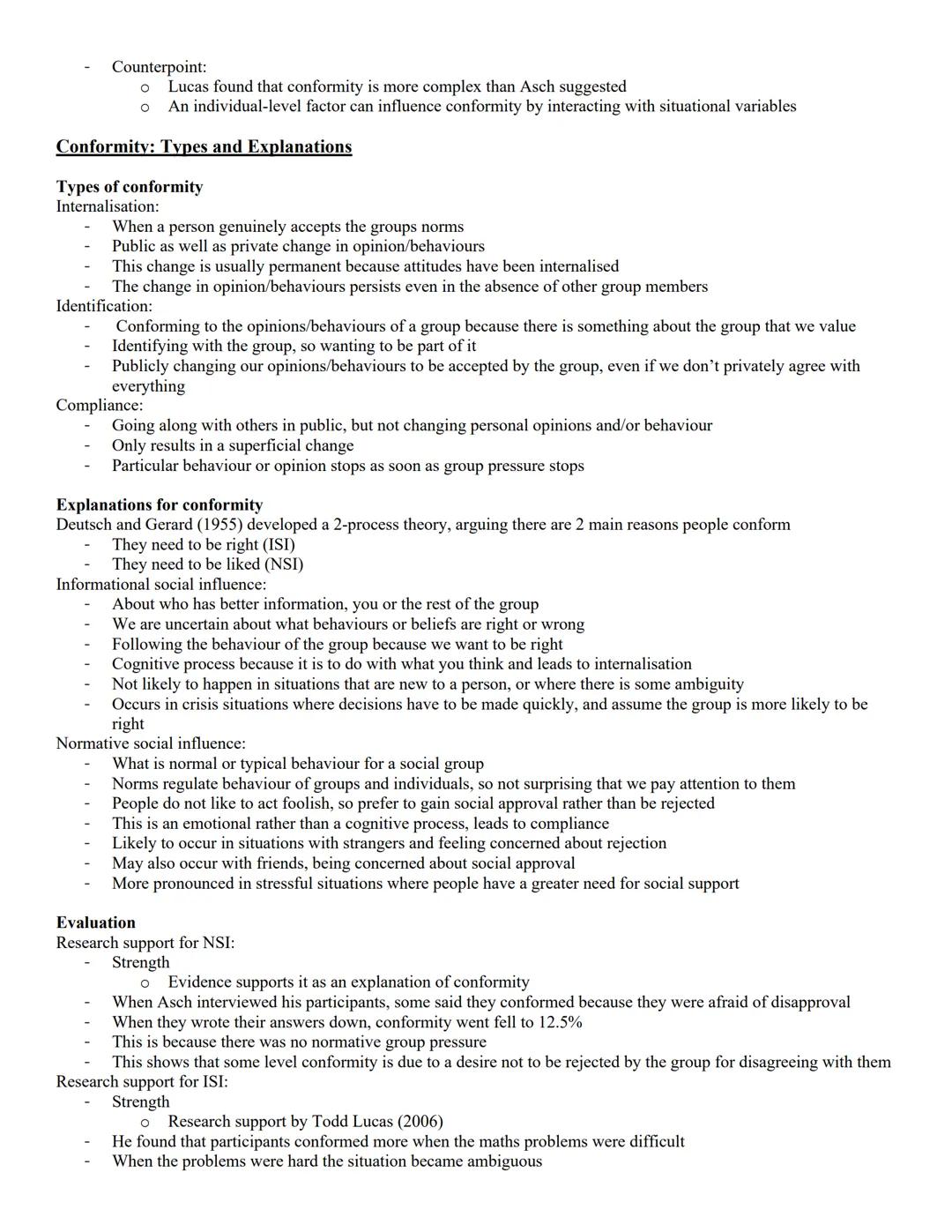
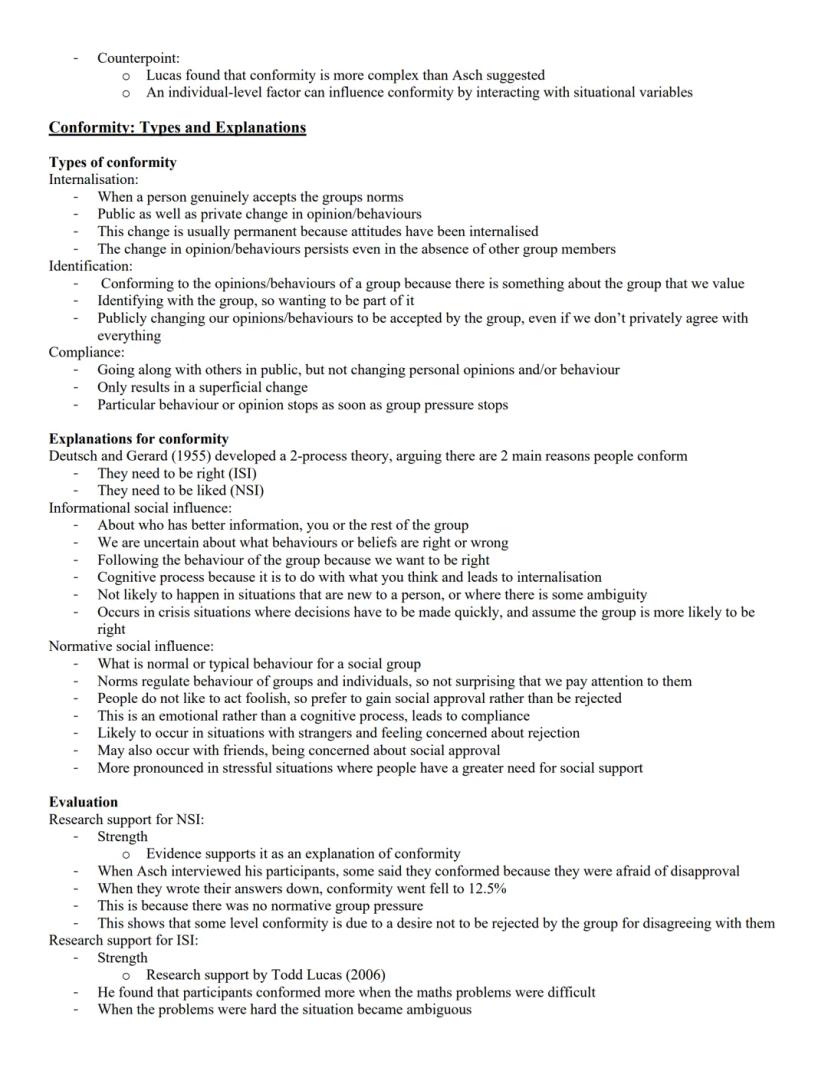
Not all conformity is the same - there are three main types you should know about. Internalisation means genuinely accepting the group's views and changing your private beliefs permanently. Identification involves publicly agreeing to be accepted by a group you value, even if you privately disagree. Compliance is just going along publicly whilst keeping your real opinions private.
Why do we conform? Deutsch and Gerard identified two key reasons. Informational Social Influence (ISI) happens when you're genuinely unsure and think the group knows better - it's about being right. Normative Social Influence (NSI) occurs when you want to be liked and avoid rejection - it's about fitting in.
ISI typically leads to internalisation because you've actually changed your mind. It's most common in new, ambiguous, or crisis situations. NSI usually results in compliance since you're just avoiding social disapproval, especially around strangers or in stressful situations.
Remember: ISI = "I want to be right" and NSI = "I want to be liked"!
Research supports both explanations, though they often work together in real situations. Individual differences matter too - some people (called nAffiliators) have stronger needs for social approval and conform more readily.
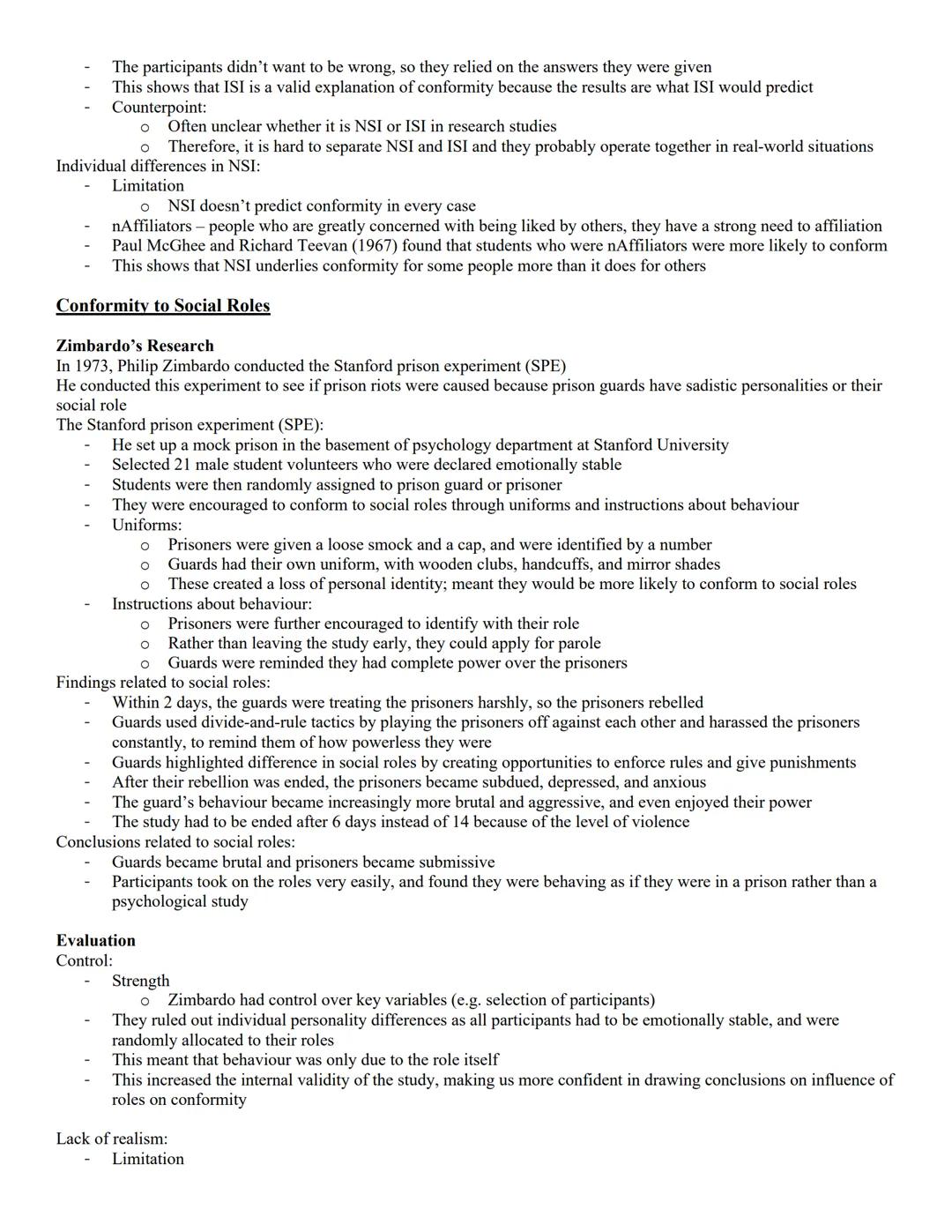
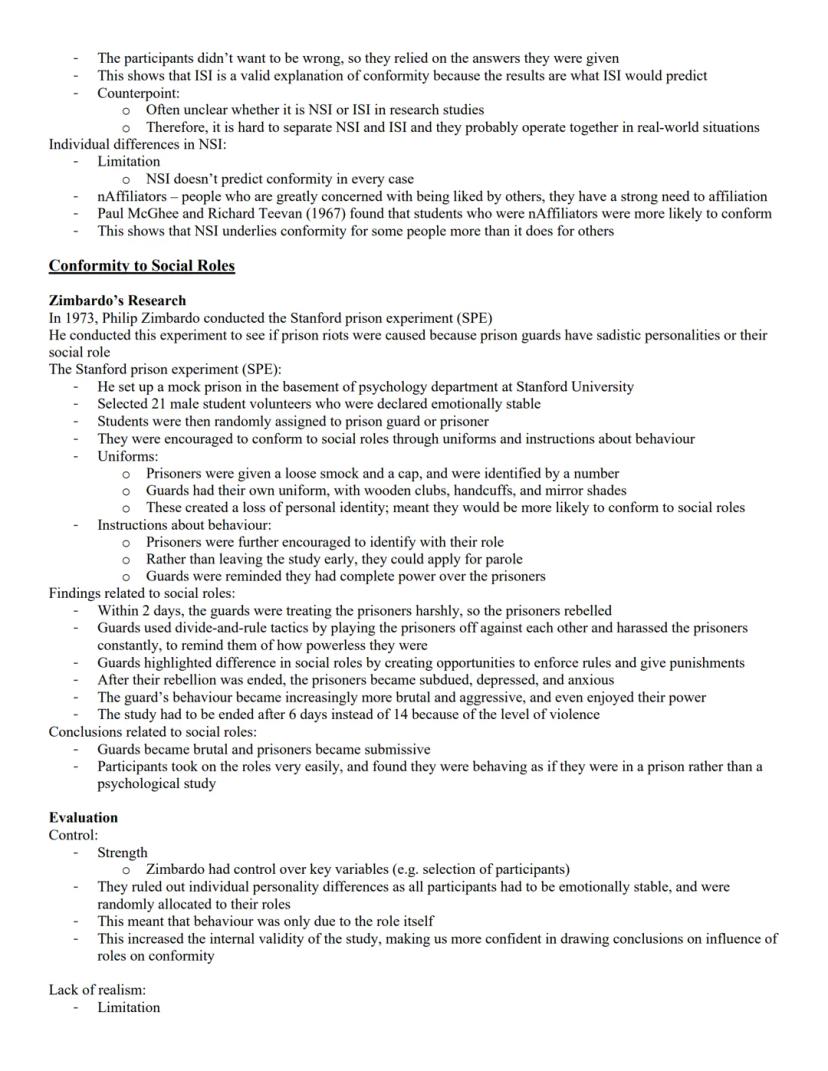
Philip Zimbardo's 1973 Stanford Prison Experiment revealed how quickly people adapt to social roles. He wanted to understand whether prison violence came from guards' personalities or their situational roles.
Twenty-one emotionally stable male students were randomly assigned as guards or prisoners in a mock prison. Uniforms stripped away personal identity - prisoners wore smocks and numbers, whilst guards had official uniforms with clubs and mirrored sunglasses. Guards were told they had complete power, and prisoners could "apply for parole" rather than quit.
Within days, guards became brutal and aggressive, using divide-and-rule tactics and constant harassment. Prisoners initially rebelled but then became submissive, depressed, and anxious. The violence escalated so severely that Zimbardo ended the study after just 6 days instead of the planned 14.
Shocking Fact: The experiment had to be stopped early because participants were acting so much like real prisoners and guards!
Critics argue participants were just play-acting based on stereotypes, especially since some guards admitted copying film characters. However, 90% of prisoners' conversations focused on prison life, and many believed it was real. The study shows how powerful social roles can be, though only one-third of guards actually became brutal.
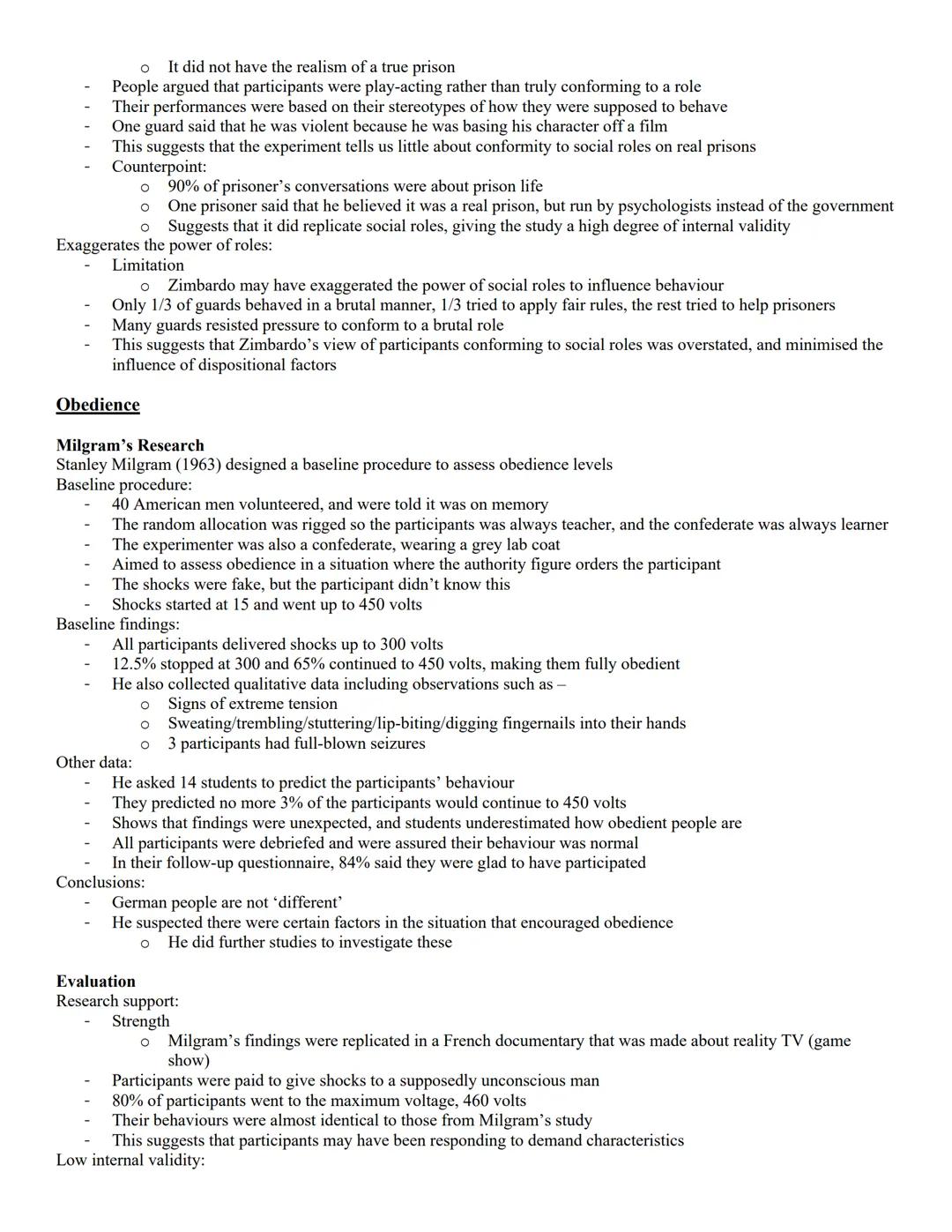
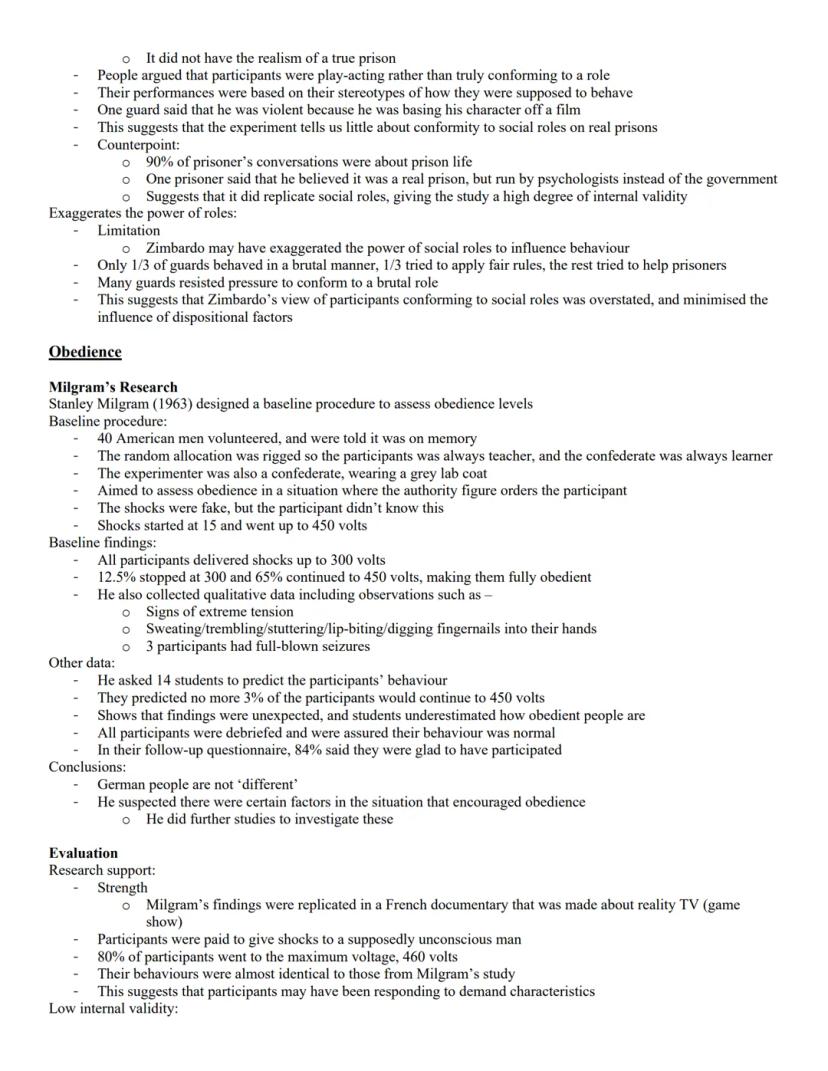
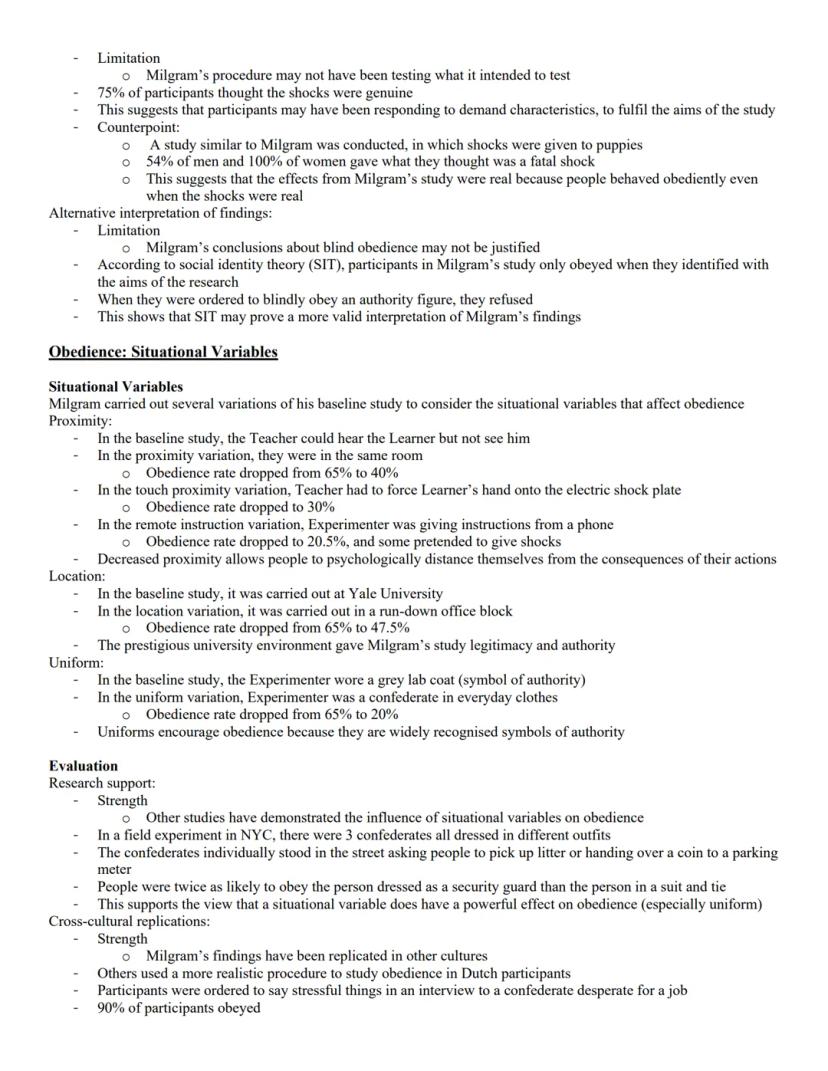
Stanley Milgram's 1963 experiment shocked the world by showing how far ordinary people will go when ordered by an authority figure. His research aimed to understand obedience - following direct orders from someone in authority.
Participants thought they were testing memory by giving electric shocks to a "learner" (actually a confederate) every time they got an answer wrong. The shocks started at 15 volts and increased to a potentially lethal 450 volts. The experimenter wore a lab coat and gave four verbal "prods" to continue when participants hesitated.
The results were staggering: 65% of participants delivered the maximum 450-volt shock, even when they could hear the learner screaming and eventually falling silent. All participants continued to at least 300 volts. Many showed extreme stress - sweating, trembling, and even having seizures.
Mind-blowing Stat: Before the study, experts predicted only 3% would go to maximum voltage!
Milgram's findings suggested that ordinary people, not just Germans, could commit atrocities under authority pressure. The study has been replicated successfully, including in a French TV show where 80% went to maximum voltage. However, critics question whether participants truly believed the shocks were real, though follow-up studies with real consequences (like shocking puppies) showed similar obedience rates.
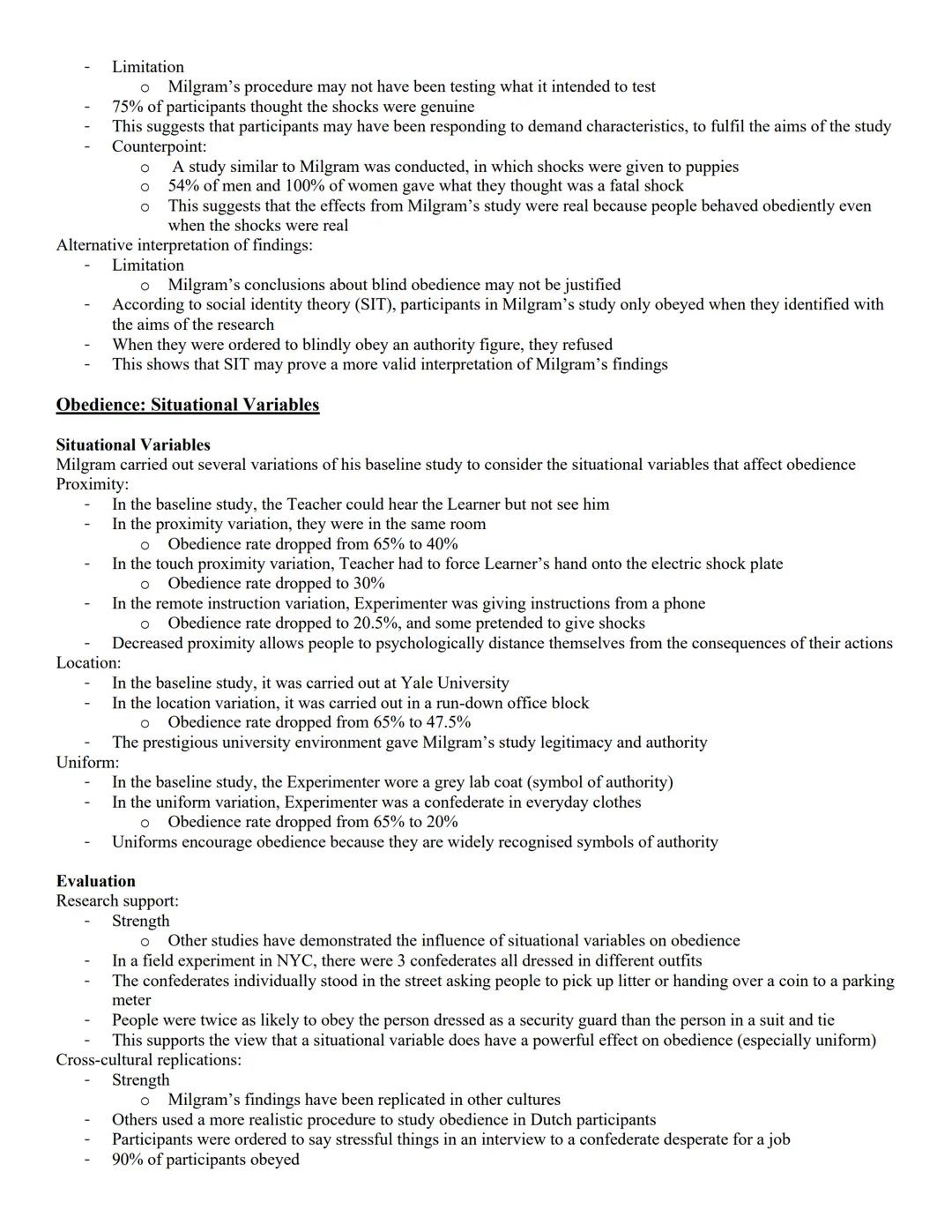
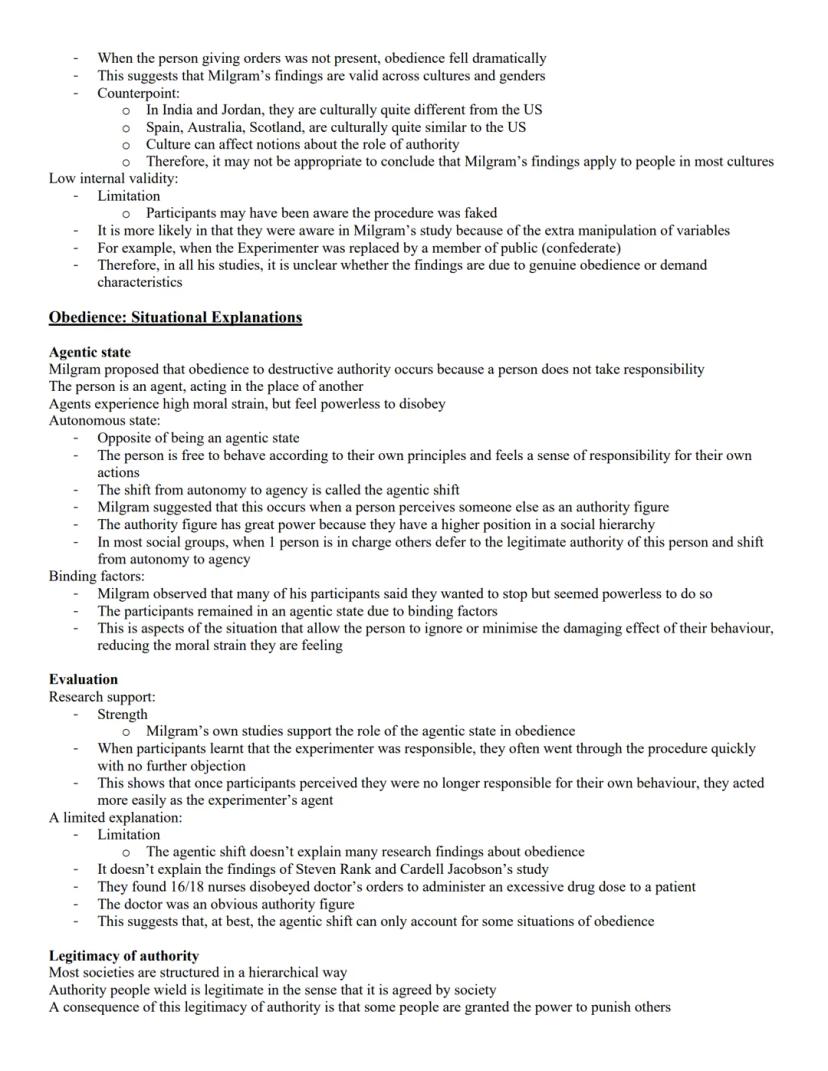
Milgram conducted variations of his original study to identify what situational factors increase or decrease obedience. Three key variables emerged: proximity, location, and uniform.
Proximity dramatically affected obedience rates. When teacher and learner were in the same room, obedience dropped from 65% to 40%. When teachers had to physically force the learner's hand onto the shock plate, it fell to 30%. Most dramatically, when the experimenter gave instructions by phone, only 20.5% fully obeyed.
Location mattered too - moving from prestigious Yale University to a run-down office block reduced obedience from 65% to 47.5%. The university's reputation gave the study legitimacy and authority that participants respected.
Uniform proved crucial for establishing authority. When the experimenter wore everyday clothes instead of a lab coat, obedience plummeted from 65% to just 20%. Lab coats are widely recognised symbols of scientific authority and expertise.
Real-world Evidence: People are twice as likely to obey someone dressed as a security guard compared to someone in ordinary clothes!
These findings have been replicated across cultures, with a Dutch study showing 90% obedience to harmful orders. However, cultural differences exist - collectivist cultures often show higher obedience rates than individualist ones like the US.
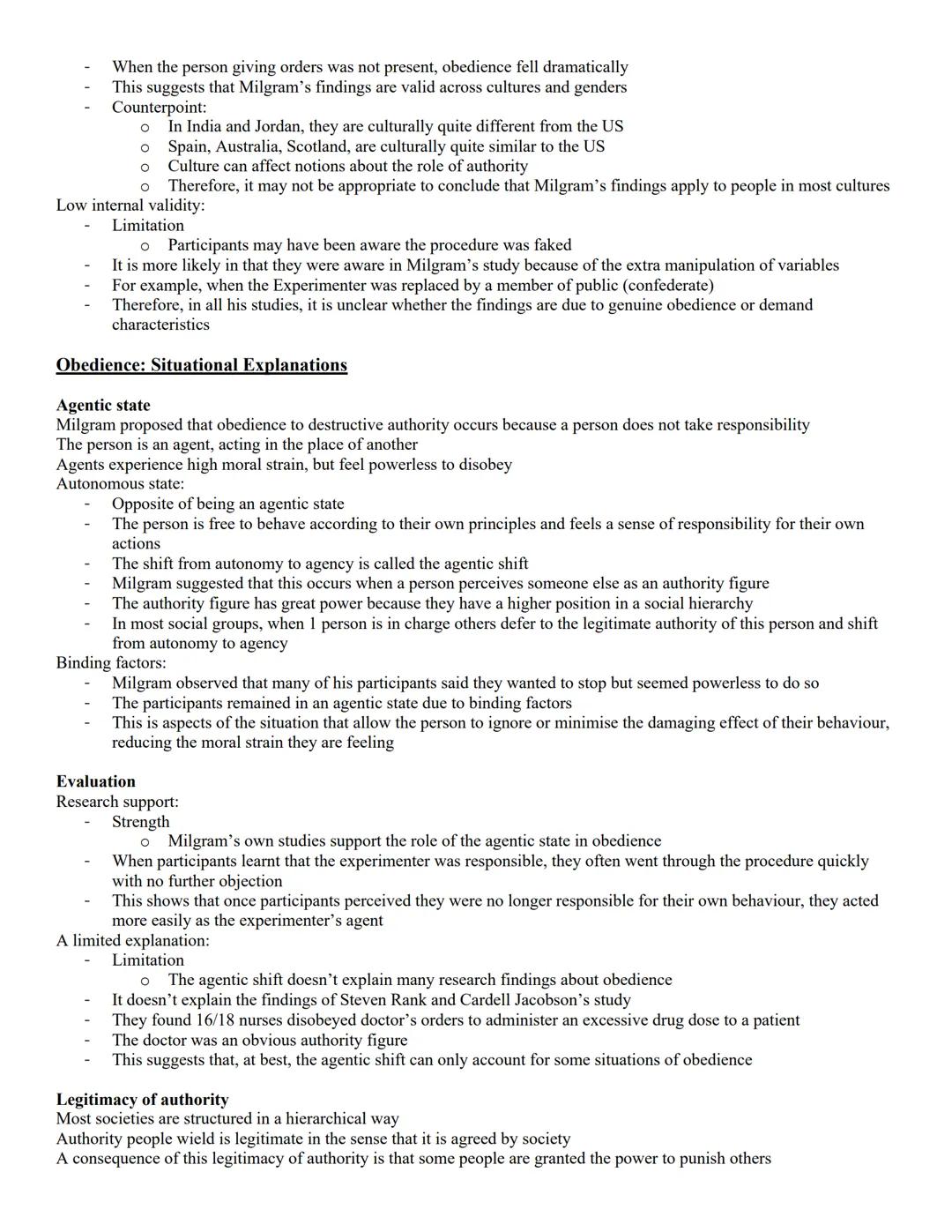
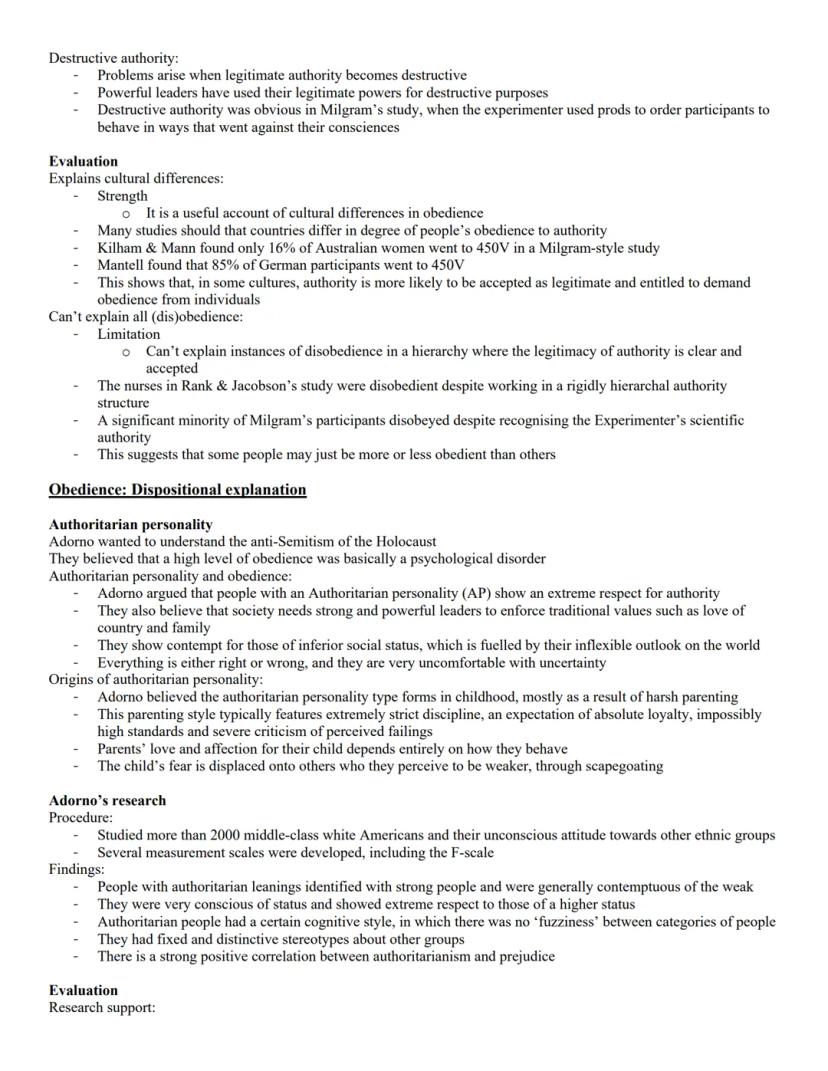
Two main theories explain why people obey destructive orders: agentic state and legitimacy of authority. Understanding these helps explain how ordinary people can commit extraordinary acts of cruelty.
Agentic state theory suggests people shift from being autonomous (taking responsibility for their actions) to being agents of authority. In this state, you feel like you're just following orders and the authority figure takes responsibility. Binding factors keep you in this state by helping you minimise the harm you're causing.
Milgram observed that participants wanted to stop but felt powerless to do so. When they learned the experimenter was responsible, they often proceeded quickly without further objection. However, this theory can't explain why nurses in one study disobeyed doctors' orders to give excessive drug doses.
Legitimacy of authority explains obedience through social hierarchies. We're taught from childhood to respect authority figures like parents, teachers, and police. Most societies accept that some people have legitimate power to give orders and even punish others.
Cultural Connection: Countries differ in obedience levels - only 16% of Australian women vs 85% of Germans went to maximum voltage in Milgram-style studies!
This theory explains cultural differences in obedience but struggles to account for disobedience within clear hierarchies, like some of Milgram's participants who refused despite recognising the experimenter's scientific authority.
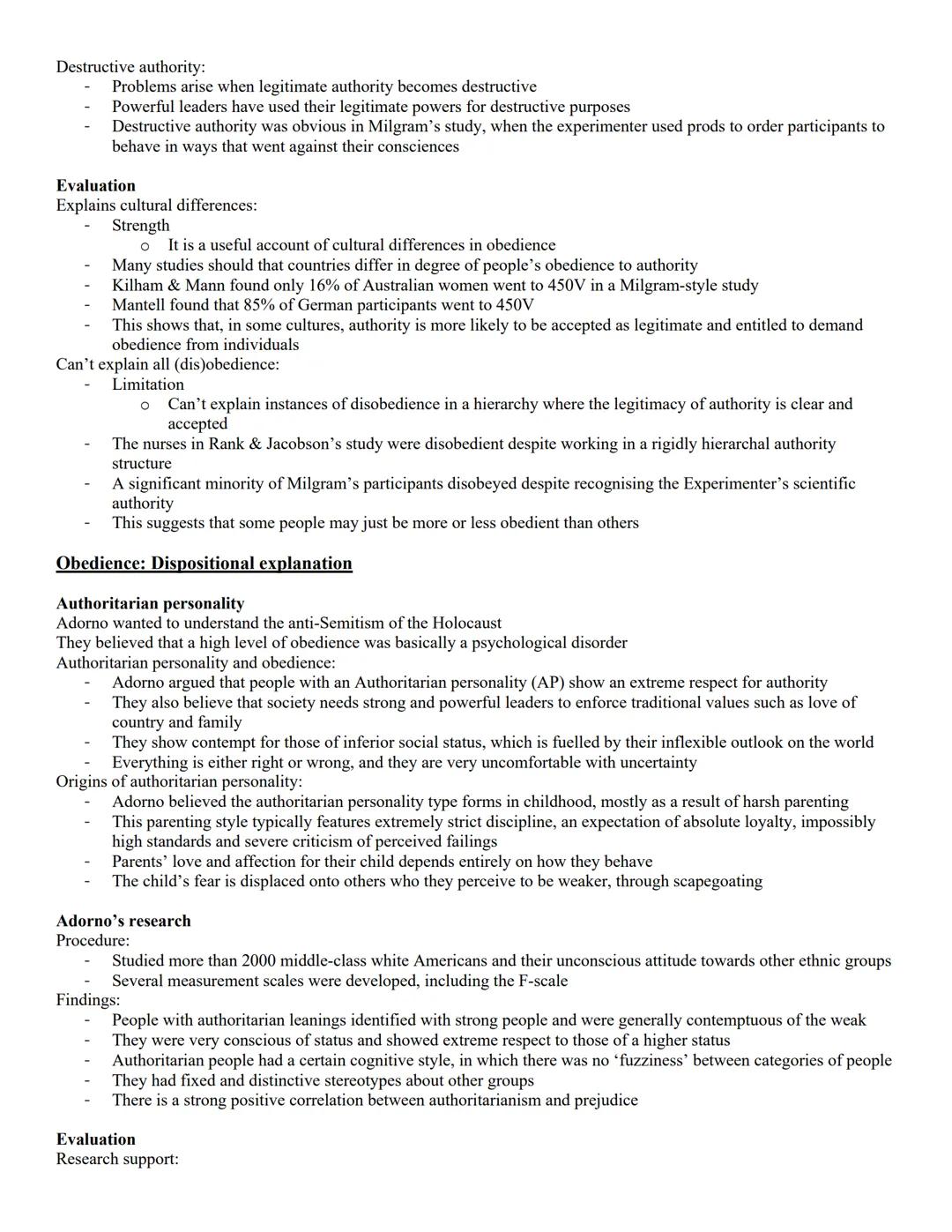
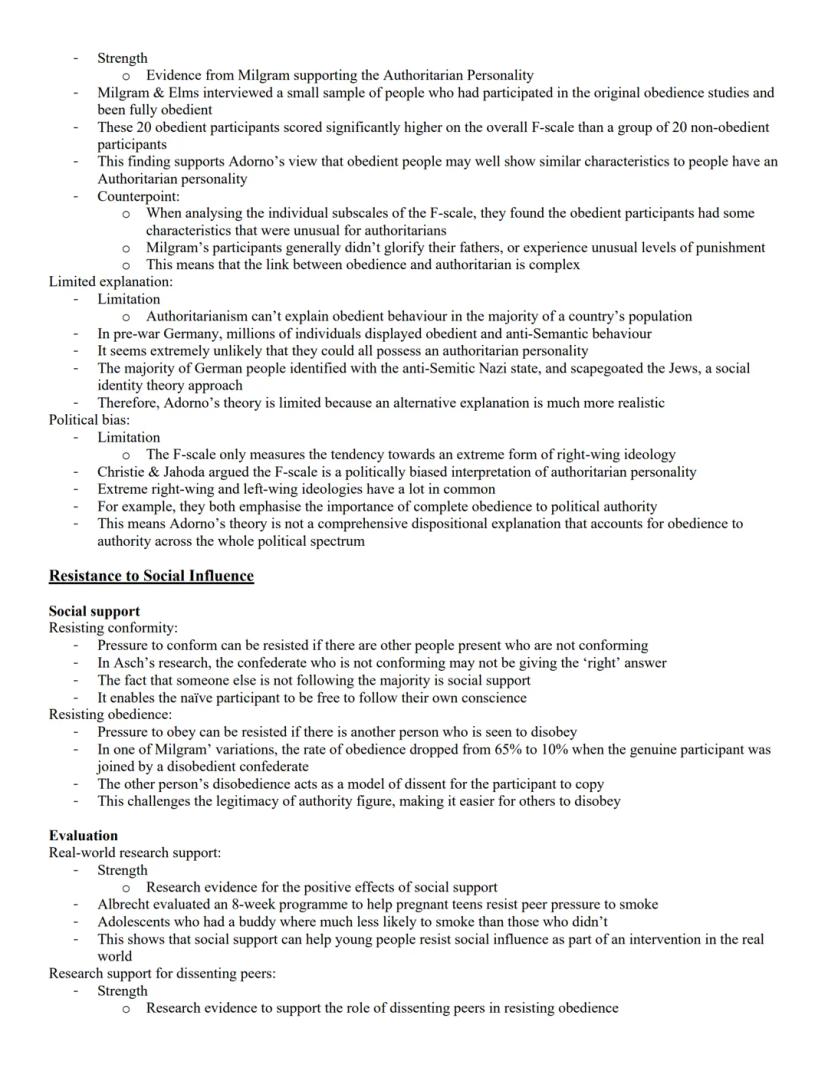
Adorno's research into the authoritarian personality aimed to understand why some people are more obedient than others. He believed certain personality traits made individuals more likely to follow destructive orders, partly explaining events like the Holocaust.
People with authoritarian personalities show extreme respect for authority and believe society needs strong leaders to enforce traditional values. They're contemptuous of those they see as inferior and have an inflexible, black-and-white view of the world where everything is either right or wrong.
This personality type develops through harsh parenting involving strict discipline, impossibly high standards, and conditional love based on behaviour. Children learn to fear authority but displace this fear onto weaker targets through scapegoating.
Adorno's research with over 2000 middle-class Americans used the F-scale to measure authoritarian tendencies. He found strong correlations between authoritarianism and prejudice, with authoritarian people having fixed stereotypes about other groups.
Research Finding: Milgram's most obedient participants scored significantly higher on authoritarianism measures!
However, this explanation has limitations. It can't account for mass obedience in entire populations (like Nazi Germany), focuses only on right-wing authoritarianism, and doesn't explain why many people with normal personalities also obey destructive orders. Social identity theory offers a more realistic alternative for understanding widespread obedience.
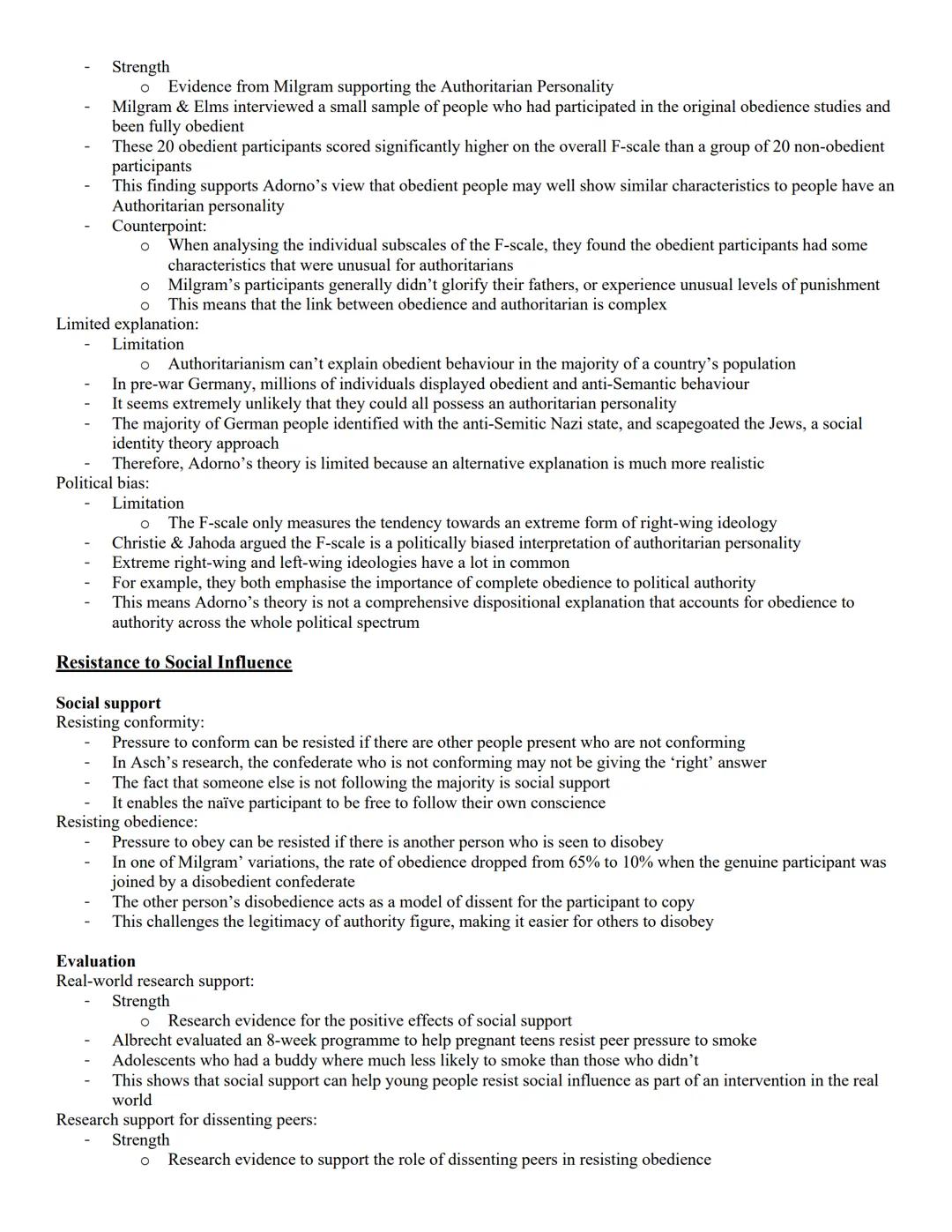
Not everyone conforms or obeys - some people successfully resist social pressure. Understanding how resistance works can help you maintain your independence when facing unwanted influence.
Social support is crucial for resistance. In Asch's studies, having just one other person who didn't conform gave participants the confidence to resist group pressure, even if that person gave a different wrong answer. The key is knowing you're not alone in disagreeing with the majority.
For resisting obedience, seeing someone else disobey provides a powerful model of dissent. In Milgram's variations, obedience dropped from 65% to just 10% when participants witnessed another person refusing to continue. This challenges the authority figure's legitimacy and makes resistance easier.
Locus of control also affects resistance. People with internal locus of control believe they control what happens to them, whilst those with external locus of control feel controlled by outside forces. Internals tend to be more self-confident and achievement-oriented, making them better at resisting social influence.
Practical Application: Pregnant teens with a supportive buddy were much less likely to start smoking when pressured by peers!
Research supports both explanations, though some studies show contradictory findings. Over a 40-year period, Americans became more resistant to obedience but also more external in their locus of control, suggesting the relationship might be more complex than originally thought.
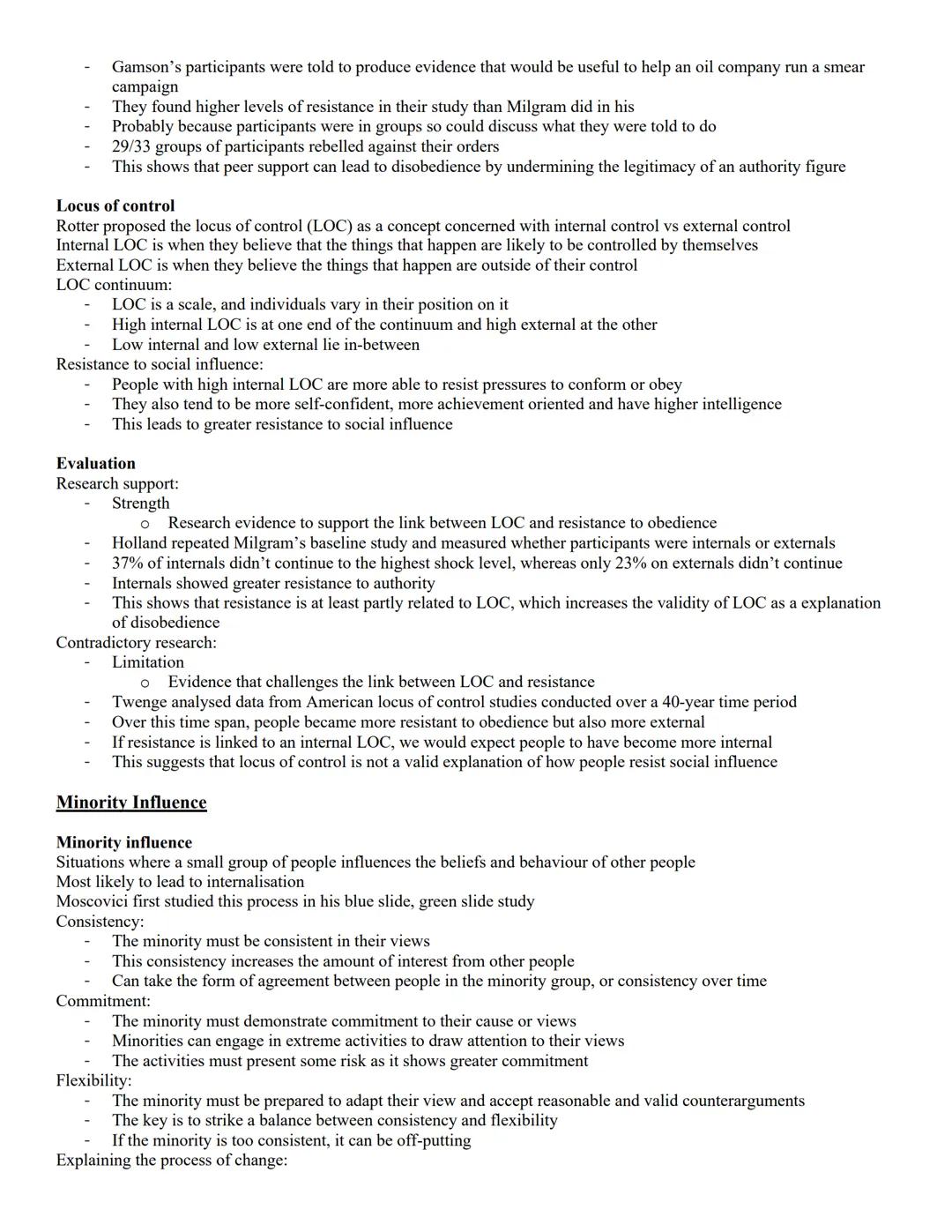
Sometimes small groups can change the minds of larger majorities - think about how movements for civil rights or environmental protection started with just a few committed individuals. Minority influence often leads to deeper, more permanent attitude changes than majority influence.
Moscovici's research identified three key factors for successful minority influence. Consistency means the minority must maintain the same message over time and between group members. This draws attention and makes people take notice of their views.
Commitment involves demonstrating dedication to the cause, often through personal sacrifice or risk. When minorities engage in extreme activities or face persecution for their beliefs, it shows genuine commitment that can't be easily dismissed.
Flexibility requires finding the right balance - minorities must be consistent enough to be taken seriously but flexible enough to accept valid counterarguments. Being too rigid can be off-putting and reduce influence effectiveness.
The process works through deeper thinking. When you hear something new or unexpected from a minority, you're more likely to carefully consider their arguments rather than just going along with them. This leads to genuine attitude change rather than superficial compliance.
The Snowball Effect: As more people convert from majority to minority positions, the rate of conversion accelerates until the minority becomes the new majority!
Research supports the importance of consistency and shows that minority influence does involve deeper processing. However, laboratory studies often use artificial tasks that may not reflect how real-world social movements create change.
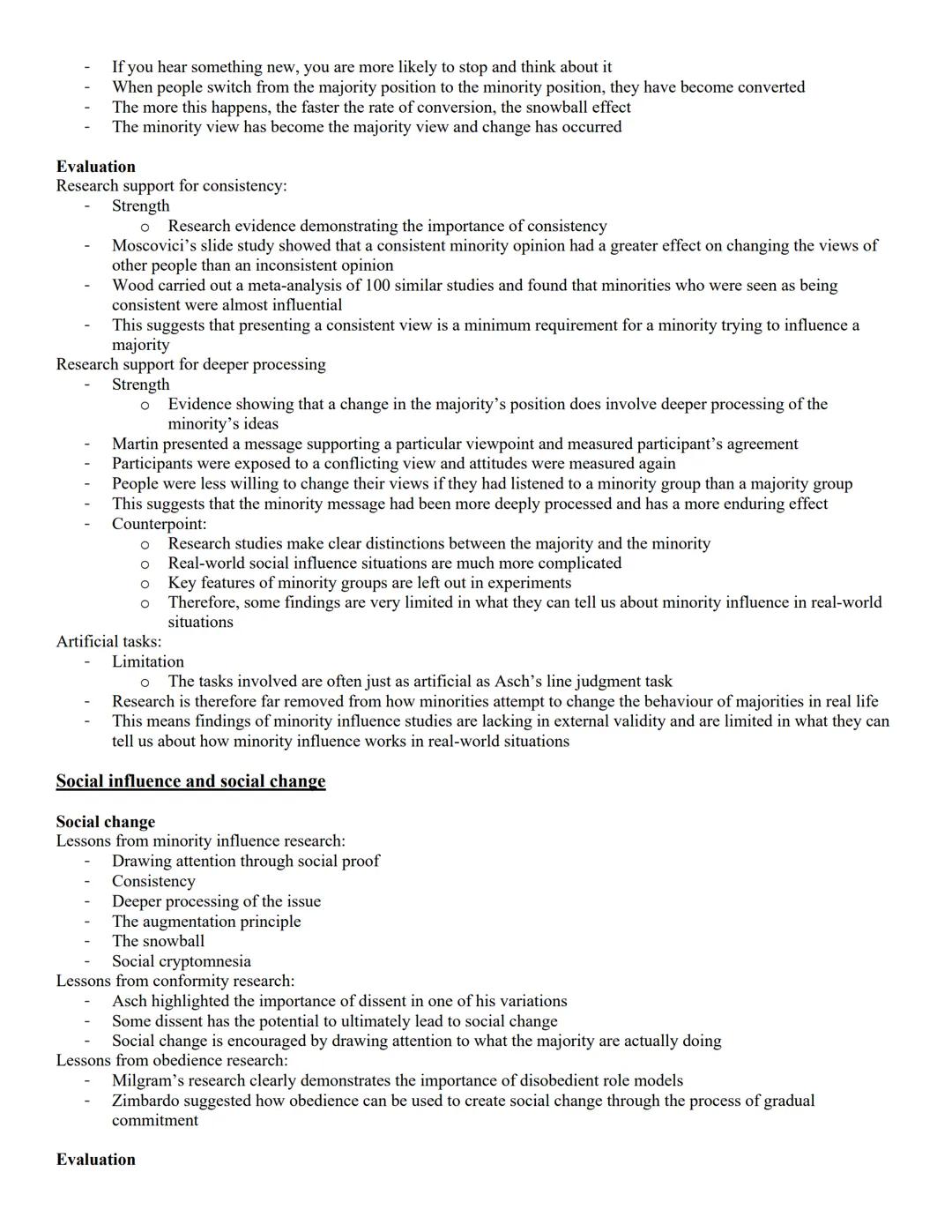
Understanding social influence helps explain how societies transform over time. Real-world social movements use principles discovered in conformity, obedience, and minority influence research to create lasting change.
Minority influence research shows how small groups can transform society. Successful movements draw attention through social proof, maintain consistency in their message, and encourage deeper processing of important issues. The augmentation principle suggests that minorities who face hardship for their beliefs are seen as more committed and influential.
Conformity research reveals the power of dissent. Asch's studies showed that just one person disagreeing can break unanimous group pressure. Social change often begins when people realise others share their concerns and that the majority position isn't as universal as it appears.
Obedience research demonstrates how disobedient role models can inspire others to resist harmful authority. Milgram's findings show that seeing someone else refuse orders makes it much easier for others to follow suit. Zimbardo suggests that gradual commitment can also create positive social change.
The process often involves social cryptomnesia - people remember that change occurred but forget how it happened or who started it. This explains why social movements sometimes seem to emerge suddenly, even though they've been building gradually over time.
Modern Examples: Think about how movements like #MeToo or climate activism started small but created massive social change through these exact principles!
These principles help explain major historical changes like civil rights movements, women's suffrage, and environmental awareness. Understanding social influence empowers you to both resist unwanted pressure and potentially contribute to positive social change yourself.
Our AI Companion is a student-focused AI tool that offers more than just answers. Built on millions of Knowunity resources, it provides relevant information, personalised study plans, quizzes, and content directly in the chat, adapting to your individual learning journey.
You can download the app from Google Play Store and Apple App Store.
That's right! Enjoy free access to study content, connect with fellow students, and get instant help – all at your fingertips.
App Store
Google Play
The app is very easy to use and well designed. I have found everything I was looking for so far and have been able to learn a lot from the presentations! I will definitely use the app for a class assignment! And of course it also helps a lot as an inspiration.
Stefan S
iOS user
This app is really great. There are so many study notes and help [...]. My problem subject is French, for example, and the app has so many options for help. Thanks to this app, I have improved my French. I would recommend it to anyone.
Samantha Klich
Android user
Wow, I am really amazed. I just tried the app because I've seen it advertised many times and was absolutely stunned. This app is THE HELP you want for school and above all, it offers so many things, such as workouts and fact sheets, which have been VERY helpful to me personally.
Anna
iOS user
Best app on earth! no words because it’s too good
Thomas R
iOS user
Just amazing. Let's me revise 10x better, this app is a quick 10/10. I highly recommend it to anyone. I can watch and search for notes. I can save them in the subject folder. I can revise it any time when I come back. If you haven't tried this app, you're really missing out.
Basil
Android user
This app has made me feel so much more confident in my exam prep, not only through boosting my own self confidence through the features that allow you to connect with others and feel less alone, but also through the way the app itself is centred around making you feel better. It is easy to navigate, fun to use, and helpful to anyone struggling in absolutely any way.
David K
iOS user
The app's just great! All I have to do is enter the topic in the search bar and I get the response real fast. I don't have to watch 10 YouTube videos to understand something, so I'm saving my time. Highly recommended!
Sudenaz Ocak
Android user
In school I was really bad at maths but thanks to the app, I am doing better now. I am so grateful that you made the app.
Greenlight Bonnie
Android user
very reliable app to help and grow your ideas of Maths, English and other related topics in your works. please use this app if your struggling in areas, this app is key for that. wish I'd of done a review before. and it's also free so don't worry about that.
Rohan U
Android user
I know a lot of apps use fake accounts to boost their reviews but this app deserves it all. Originally I was getting 4 in my English exams and this time I got a grade 7. I didn’t even know about this app three days until the exam and it has helped A LOT. Please actually trust me and use it as I’m sure you too will see developments.
Xander S
iOS user
THE QUIZES AND FLASHCARDS ARE SO USEFUL AND I LOVE Knowunity AI. IT ALSO IS LITREALLY LIKE CHATGPT BUT SMARTER!! HELPED ME WITH MY MASCARA PROBLEMS TOO!! AS WELL AS MY REAL SUBJECTS ! DUHHH 😍😁😲🤑💗✨🎀😮
Elisha
iOS user
This apps acc the goat. I find revision so boring but this app makes it so easy to organize it all and then you can ask the freeeee ai to test yourself so good and you can easily upload your own stuff. highly recommend as someone taking mocks now
Paul T
iOS user
The app is very easy to use and well designed. I have found everything I was looking for so far and have been able to learn a lot from the presentations! I will definitely use the app for a class assignment! And of course it also helps a lot as an inspiration.
Stefan S
iOS user
This app is really great. There are so many study notes and help [...]. My problem subject is French, for example, and the app has so many options for help. Thanks to this app, I have improved my French. I would recommend it to anyone.
Samantha Klich
Android user
Wow, I am really amazed. I just tried the app because I've seen it advertised many times and was absolutely stunned. This app is THE HELP you want for school and above all, it offers so many things, such as workouts and fact sheets, which have been VERY helpful to me personally.
Anna
iOS user
Best app on earth! no words because it’s too good
Thomas R
iOS user
Just amazing. Let's me revise 10x better, this app is a quick 10/10. I highly recommend it to anyone. I can watch and search for notes. I can save them in the subject folder. I can revise it any time when I come back. If you haven't tried this app, you're really missing out.
Basil
Android user
This app has made me feel so much more confident in my exam prep, not only through boosting my own self confidence through the features that allow you to connect with others and feel less alone, but also through the way the app itself is centred around making you feel better. It is easy to navigate, fun to use, and helpful to anyone struggling in absolutely any way.
David K
iOS user
The app's just great! All I have to do is enter the topic in the search bar and I get the response real fast. I don't have to watch 10 YouTube videos to understand something, so I'm saving my time. Highly recommended!
Sudenaz Ocak
Android user
In school I was really bad at maths but thanks to the app, I am doing better now. I am so grateful that you made the app.
Greenlight Bonnie
Android user
very reliable app to help and grow your ideas of Maths, English and other related topics in your works. please use this app if your struggling in areas, this app is key for that. wish I'd of done a review before. and it's also free so don't worry about that.
Rohan U
Android user
I know a lot of apps use fake accounts to boost their reviews but this app deserves it all. Originally I was getting 4 in my English exams and this time I got a grade 7. I didn’t even know about this app three days until the exam and it has helped A LOT. Please actually trust me and use it as I’m sure you too will see developments.
Xander S
iOS user
THE QUIZES AND FLASHCARDS ARE SO USEFUL AND I LOVE Knowunity AI. IT ALSO IS LITREALLY LIKE CHATGPT BUT SMARTER!! HELPED ME WITH MY MASCARA PROBLEMS TOO!! AS WELL AS MY REAL SUBJECTS ! DUHHH 😍😁😲🤑💗✨🎀😮
Elisha
iOS user
This apps acc the goat. I find revision so boring but this app makes it so easy to organize it all and then you can ask the freeeee ai to test yourself so good and you can easily upload your own stuff. highly recommend as someone taking mocks now
Paul T
iOS user
elle
@studywithelle
Ever wondered why you might copy your mates' behaviour or follow orders without thinking twice? Social influence explains how other people affect what we do, say, and believe - and it's happening around you constantly, from fashion trends to peer... Show more
Access to all documents
Improve your grades
Join milions of students
By signing up you accept Terms of Service and Privacy Policy
Conformity happens when you change your behaviour to fit in with a group, even when you know they're wrong. Solomon Asch proved this with his famous line experiment in 1951.
Asch asked people to match lines that were obviously different lengths - dead simple, right? But here's the twist: fake participants (called confederates) deliberately gave wrong answers out loud. The real participant, not knowing the others were fake, often went along with the obviously incorrect group answer.
Group size mattered most with 3 confederates - conformity jumped to 32% but didn't increase much with more people. Unanimity was crucial too; just one person disagreeing with the group cut conformity in half. When the task got harder (task difficulty), people looked to others for guidance and conformed even more.
Key Point: You're most likely to conform when everyone else agrees and you're unsure what's right!
The study's limitations include being artificial , only testing American men, and lacking serious consequences. However, other research supports Asch's findings about task difficulty affecting conformity levels.
Access to all documents
Improve your grades
Join milions of students
By signing up you accept Terms of Service and Privacy Policy
Not all conformity is the same - there are three main types you should know about. Internalisation means genuinely accepting the group's views and changing your private beliefs permanently. Identification involves publicly agreeing to be accepted by a group you value, even if you privately disagree. Compliance is just going along publicly whilst keeping your real opinions private.
Why do we conform? Deutsch and Gerard identified two key reasons. Informational Social Influence (ISI) happens when you're genuinely unsure and think the group knows better - it's about being right. Normative Social Influence (NSI) occurs when you want to be liked and avoid rejection - it's about fitting in.
ISI typically leads to internalisation because you've actually changed your mind. It's most common in new, ambiguous, or crisis situations. NSI usually results in compliance since you're just avoiding social disapproval, especially around strangers or in stressful situations.
Remember: ISI = "I want to be right" and NSI = "I want to be liked"!
Research supports both explanations, though they often work together in real situations. Individual differences matter too - some people (called nAffiliators) have stronger needs for social approval and conform more readily.
Access to all documents
Improve your grades
Join milions of students
By signing up you accept Terms of Service and Privacy Policy
Philip Zimbardo's 1973 Stanford Prison Experiment revealed how quickly people adapt to social roles. He wanted to understand whether prison violence came from guards' personalities or their situational roles.
Twenty-one emotionally stable male students were randomly assigned as guards or prisoners in a mock prison. Uniforms stripped away personal identity - prisoners wore smocks and numbers, whilst guards had official uniforms with clubs and mirrored sunglasses. Guards were told they had complete power, and prisoners could "apply for parole" rather than quit.
Within days, guards became brutal and aggressive, using divide-and-rule tactics and constant harassment. Prisoners initially rebelled but then became submissive, depressed, and anxious. The violence escalated so severely that Zimbardo ended the study after just 6 days instead of the planned 14.
Shocking Fact: The experiment had to be stopped early because participants were acting so much like real prisoners and guards!
Critics argue participants were just play-acting based on stereotypes, especially since some guards admitted copying film characters. However, 90% of prisoners' conversations focused on prison life, and many believed it was real. The study shows how powerful social roles can be, though only one-third of guards actually became brutal.
Access to all documents
Improve your grades
Join milions of students
By signing up you accept Terms of Service and Privacy Policy
Stanley Milgram's 1963 experiment shocked the world by showing how far ordinary people will go when ordered by an authority figure. His research aimed to understand obedience - following direct orders from someone in authority.
Participants thought they were testing memory by giving electric shocks to a "learner" (actually a confederate) every time they got an answer wrong. The shocks started at 15 volts and increased to a potentially lethal 450 volts. The experimenter wore a lab coat and gave four verbal "prods" to continue when participants hesitated.
The results were staggering: 65% of participants delivered the maximum 450-volt shock, even when they could hear the learner screaming and eventually falling silent. All participants continued to at least 300 volts. Many showed extreme stress - sweating, trembling, and even having seizures.
Mind-blowing Stat: Before the study, experts predicted only 3% would go to maximum voltage!
Milgram's findings suggested that ordinary people, not just Germans, could commit atrocities under authority pressure. The study has been replicated successfully, including in a French TV show where 80% went to maximum voltage. However, critics question whether participants truly believed the shocks were real, though follow-up studies with real consequences (like shocking puppies) showed similar obedience rates.
Access to all documents
Improve your grades
Join milions of students
By signing up you accept Terms of Service and Privacy Policy
Milgram conducted variations of his original study to identify what situational factors increase or decrease obedience. Three key variables emerged: proximity, location, and uniform.
Proximity dramatically affected obedience rates. When teacher and learner were in the same room, obedience dropped from 65% to 40%. When teachers had to physically force the learner's hand onto the shock plate, it fell to 30%. Most dramatically, when the experimenter gave instructions by phone, only 20.5% fully obeyed.
Location mattered too - moving from prestigious Yale University to a run-down office block reduced obedience from 65% to 47.5%. The university's reputation gave the study legitimacy and authority that participants respected.
Uniform proved crucial for establishing authority. When the experimenter wore everyday clothes instead of a lab coat, obedience plummeted from 65% to just 20%. Lab coats are widely recognised symbols of scientific authority and expertise.
Real-world Evidence: People are twice as likely to obey someone dressed as a security guard compared to someone in ordinary clothes!
These findings have been replicated across cultures, with a Dutch study showing 90% obedience to harmful orders. However, cultural differences exist - collectivist cultures often show higher obedience rates than individualist ones like the US.
Access to all documents
Improve your grades
Join milions of students
By signing up you accept Terms of Service and Privacy Policy
Two main theories explain why people obey destructive orders: agentic state and legitimacy of authority. Understanding these helps explain how ordinary people can commit extraordinary acts of cruelty.
Agentic state theory suggests people shift from being autonomous (taking responsibility for their actions) to being agents of authority. In this state, you feel like you're just following orders and the authority figure takes responsibility. Binding factors keep you in this state by helping you minimise the harm you're causing.
Milgram observed that participants wanted to stop but felt powerless to do so. When they learned the experimenter was responsible, they often proceeded quickly without further objection. However, this theory can't explain why nurses in one study disobeyed doctors' orders to give excessive drug doses.
Legitimacy of authority explains obedience through social hierarchies. We're taught from childhood to respect authority figures like parents, teachers, and police. Most societies accept that some people have legitimate power to give orders and even punish others.
Cultural Connection: Countries differ in obedience levels - only 16% of Australian women vs 85% of Germans went to maximum voltage in Milgram-style studies!
This theory explains cultural differences in obedience but struggles to account for disobedience within clear hierarchies, like some of Milgram's participants who refused despite recognising the experimenter's scientific authority.
Access to all documents
Improve your grades
Join milions of students
By signing up you accept Terms of Service and Privacy Policy
Adorno's research into the authoritarian personality aimed to understand why some people are more obedient than others. He believed certain personality traits made individuals more likely to follow destructive orders, partly explaining events like the Holocaust.
People with authoritarian personalities show extreme respect for authority and believe society needs strong leaders to enforce traditional values. They're contemptuous of those they see as inferior and have an inflexible, black-and-white view of the world where everything is either right or wrong.
This personality type develops through harsh parenting involving strict discipline, impossibly high standards, and conditional love based on behaviour. Children learn to fear authority but displace this fear onto weaker targets through scapegoating.
Adorno's research with over 2000 middle-class Americans used the F-scale to measure authoritarian tendencies. He found strong correlations between authoritarianism and prejudice, with authoritarian people having fixed stereotypes about other groups.
Research Finding: Milgram's most obedient participants scored significantly higher on authoritarianism measures!
However, this explanation has limitations. It can't account for mass obedience in entire populations (like Nazi Germany), focuses only on right-wing authoritarianism, and doesn't explain why many people with normal personalities also obey destructive orders. Social identity theory offers a more realistic alternative for understanding widespread obedience.
Access to all documents
Improve your grades
Join milions of students
By signing up you accept Terms of Service and Privacy Policy
Not everyone conforms or obeys - some people successfully resist social pressure. Understanding how resistance works can help you maintain your independence when facing unwanted influence.
Social support is crucial for resistance. In Asch's studies, having just one other person who didn't conform gave participants the confidence to resist group pressure, even if that person gave a different wrong answer. The key is knowing you're not alone in disagreeing with the majority.
For resisting obedience, seeing someone else disobey provides a powerful model of dissent. In Milgram's variations, obedience dropped from 65% to just 10% when participants witnessed another person refusing to continue. This challenges the authority figure's legitimacy and makes resistance easier.
Locus of control also affects resistance. People with internal locus of control believe they control what happens to them, whilst those with external locus of control feel controlled by outside forces. Internals tend to be more self-confident and achievement-oriented, making them better at resisting social influence.
Practical Application: Pregnant teens with a supportive buddy were much less likely to start smoking when pressured by peers!
Research supports both explanations, though some studies show contradictory findings. Over a 40-year period, Americans became more resistant to obedience but also more external in their locus of control, suggesting the relationship might be more complex than originally thought.
Access to all documents
Improve your grades
Join milions of students
By signing up you accept Terms of Service and Privacy Policy
Sometimes small groups can change the minds of larger majorities - think about how movements for civil rights or environmental protection started with just a few committed individuals. Minority influence often leads to deeper, more permanent attitude changes than majority influence.
Moscovici's research identified three key factors for successful minority influence. Consistency means the minority must maintain the same message over time and between group members. This draws attention and makes people take notice of their views.
Commitment involves demonstrating dedication to the cause, often through personal sacrifice or risk. When minorities engage in extreme activities or face persecution for their beliefs, it shows genuine commitment that can't be easily dismissed.
Flexibility requires finding the right balance - minorities must be consistent enough to be taken seriously but flexible enough to accept valid counterarguments. Being too rigid can be off-putting and reduce influence effectiveness.
The process works through deeper thinking. When you hear something new or unexpected from a minority, you're more likely to carefully consider their arguments rather than just going along with them. This leads to genuine attitude change rather than superficial compliance.
The Snowball Effect: As more people convert from majority to minority positions, the rate of conversion accelerates until the minority becomes the new majority!
Research supports the importance of consistency and shows that minority influence does involve deeper processing. However, laboratory studies often use artificial tasks that may not reflect how real-world social movements create change.
Access to all documents
Improve your grades
Join milions of students
By signing up you accept Terms of Service and Privacy Policy
Understanding social influence helps explain how societies transform over time. Real-world social movements use principles discovered in conformity, obedience, and minority influence research to create lasting change.
Minority influence research shows how small groups can transform society. Successful movements draw attention through social proof, maintain consistency in their message, and encourage deeper processing of important issues. The augmentation principle suggests that minorities who face hardship for their beliefs are seen as more committed and influential.
Conformity research reveals the power of dissent. Asch's studies showed that just one person disagreeing can break unanimous group pressure. Social change often begins when people realise others share their concerns and that the majority position isn't as universal as it appears.
Obedience research demonstrates how disobedient role models can inspire others to resist harmful authority. Milgram's findings show that seeing someone else refuse orders makes it much easier for others to follow suit. Zimbardo suggests that gradual commitment can also create positive social change.
The process often involves social cryptomnesia - people remember that change occurred but forget how it happened or who started it. This explains why social movements sometimes seem to emerge suddenly, even though they've been building gradually over time.
Modern Examples: Think about how movements like #MeToo or climate activism started small but created massive social change through these exact principles!
These principles help explain major historical changes like civil rights movements, women's suffrage, and environmental awareness. Understanding social influence empowers you to both resist unwanted pressure and potentially contribute to positive social change yourself.
Our AI Companion is a student-focused AI tool that offers more than just answers. Built on millions of Knowunity resources, it provides relevant information, personalised study plans, quizzes, and content directly in the chat, adapting to your individual learning journey.
You can download the app from Google Play Store and Apple App Store.
That's right! Enjoy free access to study content, connect with fellow students, and get instant help – all at your fingertips.
0
Smart Tools NEW
Transform this note into: ✓ 50+ Practice Questions ✓ Interactive Flashcards ✓ Full Mock Exam ✓ Essay Outlines
App Store
Google Play
The app is very easy to use and well designed. I have found everything I was looking for so far and have been able to learn a lot from the presentations! I will definitely use the app for a class assignment! And of course it also helps a lot as an inspiration.
Stefan S
iOS user
This app is really great. There are so many study notes and help [...]. My problem subject is French, for example, and the app has so many options for help. Thanks to this app, I have improved my French. I would recommend it to anyone.
Samantha Klich
Android user
Wow, I am really amazed. I just tried the app because I've seen it advertised many times and was absolutely stunned. This app is THE HELP you want for school and above all, it offers so many things, such as workouts and fact sheets, which have been VERY helpful to me personally.
Anna
iOS user
Best app on earth! no words because it’s too good
Thomas R
iOS user
Just amazing. Let's me revise 10x better, this app is a quick 10/10. I highly recommend it to anyone. I can watch and search for notes. I can save them in the subject folder. I can revise it any time when I come back. If you haven't tried this app, you're really missing out.
Basil
Android user
This app has made me feel so much more confident in my exam prep, not only through boosting my own self confidence through the features that allow you to connect with others and feel less alone, but also through the way the app itself is centred around making you feel better. It is easy to navigate, fun to use, and helpful to anyone struggling in absolutely any way.
David K
iOS user
The app's just great! All I have to do is enter the topic in the search bar and I get the response real fast. I don't have to watch 10 YouTube videos to understand something, so I'm saving my time. Highly recommended!
Sudenaz Ocak
Android user
In school I was really bad at maths but thanks to the app, I am doing better now. I am so grateful that you made the app.
Greenlight Bonnie
Android user
very reliable app to help and grow your ideas of Maths, English and other related topics in your works. please use this app if your struggling in areas, this app is key for that. wish I'd of done a review before. and it's also free so don't worry about that.
Rohan U
Android user
I know a lot of apps use fake accounts to boost their reviews but this app deserves it all. Originally I was getting 4 in my English exams and this time I got a grade 7. I didn’t even know about this app three days until the exam and it has helped A LOT. Please actually trust me and use it as I’m sure you too will see developments.
Xander S
iOS user
THE QUIZES AND FLASHCARDS ARE SO USEFUL AND I LOVE Knowunity AI. IT ALSO IS LITREALLY LIKE CHATGPT BUT SMARTER!! HELPED ME WITH MY MASCARA PROBLEMS TOO!! AS WELL AS MY REAL SUBJECTS ! DUHHH 😍😁😲🤑💗✨🎀😮
Elisha
iOS user
This apps acc the goat. I find revision so boring but this app makes it so easy to organize it all and then you can ask the freeeee ai to test yourself so good and you can easily upload your own stuff. highly recommend as someone taking mocks now
Paul T
iOS user
The app is very easy to use and well designed. I have found everything I was looking for so far and have been able to learn a lot from the presentations! I will definitely use the app for a class assignment! And of course it also helps a lot as an inspiration.
Stefan S
iOS user
This app is really great. There are so many study notes and help [...]. My problem subject is French, for example, and the app has so many options for help. Thanks to this app, I have improved my French. I would recommend it to anyone.
Samantha Klich
Android user
Wow, I am really amazed. I just tried the app because I've seen it advertised many times and was absolutely stunned. This app is THE HELP you want for school and above all, it offers so many things, such as workouts and fact sheets, which have been VERY helpful to me personally.
Anna
iOS user
Best app on earth! no words because it’s too good
Thomas R
iOS user
Just amazing. Let's me revise 10x better, this app is a quick 10/10. I highly recommend it to anyone. I can watch and search for notes. I can save them in the subject folder. I can revise it any time when I come back. If you haven't tried this app, you're really missing out.
Basil
Android user
This app has made me feel so much more confident in my exam prep, not only through boosting my own self confidence through the features that allow you to connect with others and feel less alone, but also through the way the app itself is centred around making you feel better. It is easy to navigate, fun to use, and helpful to anyone struggling in absolutely any way.
David K
iOS user
The app's just great! All I have to do is enter the topic in the search bar and I get the response real fast. I don't have to watch 10 YouTube videos to understand something, so I'm saving my time. Highly recommended!
Sudenaz Ocak
Android user
In school I was really bad at maths but thanks to the app, I am doing better now. I am so grateful that you made the app.
Greenlight Bonnie
Android user
very reliable app to help and grow your ideas of Maths, English and other related topics in your works. please use this app if your struggling in areas, this app is key for that. wish I'd of done a review before. and it's also free so don't worry about that.
Rohan U
Android user
I know a lot of apps use fake accounts to boost their reviews but this app deserves it all. Originally I was getting 4 in my English exams and this time I got a grade 7. I didn’t even know about this app three days until the exam and it has helped A LOT. Please actually trust me and use it as I’m sure you too will see developments.
Xander S
iOS user
THE QUIZES AND FLASHCARDS ARE SO USEFUL AND I LOVE Knowunity AI. IT ALSO IS LITREALLY LIKE CHATGPT BUT SMARTER!! HELPED ME WITH MY MASCARA PROBLEMS TOO!! AS WELL AS MY REAL SUBJECTS ! DUHHH 😍😁😲🤑💗✨🎀😮
Elisha
iOS user
This apps acc the goat. I find revision so boring but this app makes it so easy to organize it all and then you can ask the freeeee ai to test yourself so good and you can easily upload your own stuff. highly recommend as someone taking mocks now
Paul T
iOS user