Accessing the Unconscious Mind and Key Debates
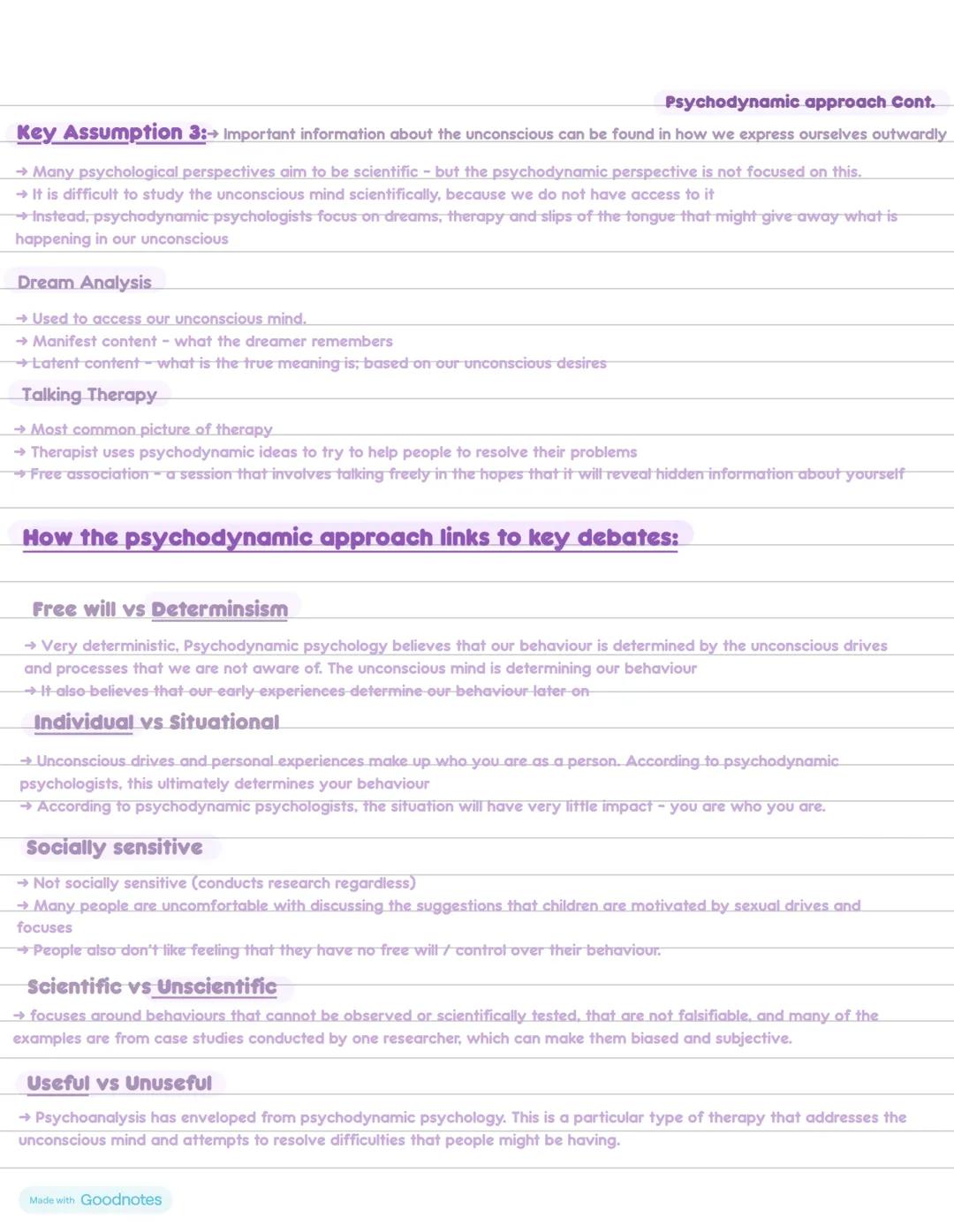
Since you can't directly peek into someone's unconscious, psychodynamic psychologists become detectives, looking for clues in dreams, therapy sessions, and slips of the tongue.
Dream analysis distinguishes between manifest content (what you remember) and latent content (the hidden meaning). That dream about flying might actually represent your unconscious desire for freedom. Talking therapy uses free association - basically letting your mind wander freely - to uncover buried thoughts and feelings.
The psychodynamic approach takes strong positions on major psychological debates. It's highly deterministic, suggesting your unconscious drives control your behaviour rather than conscious choice. It also emphasises individual differences over situational factors - you are who you are because of your unique unconscious makeup and childhood experiences.
However, this approach faces criticism for being unscientific since unconscious processes can't be directly observed or tested. It's also considered socially insensitive - many people feel uncomfortable with ideas about childhood sexuality or having no control over their behaviour.
Exam Focus: Be ready to evaluate the psychodynamic approach's scientific credibility - its reliance on case studies and unfalsifiable concepts are key weaknesses to discuss.


 Psychology
 English Literature
 Sociology
 Biology