
Ever wondered why you might have certain habits or fears... Show more
 Psychology
 English Literature
 Sociology
 Biology
Sign up to see the contentIt's free!
Access to all documents
Improve your grades
Join milions of students
By signing up you accept Terms of Service and Privacy Policy
Subjects
Classic Dramatic Literature
Modern Lyric Poetry
Influential English-Language Authors
Classic and Contemporary Novels
Literary Character Analysis
Romantic and Love Poetry
Reading Analysis and Interpretation
Evidence Analysis and Integration
Author's Stylistic Elements
Figurative Language and Rhetoric
Show all topics
Human Organ Systems
Cellular Organization and Development
Biomolecular Structure and Organization
Enzyme Structure and Regulation
Cellular Organization Types
Biological Homeostatic Processes
Cellular Membrane Structure
Autotrophic Energy Processes
Environmental Sustainability and Impact
Neural Communication Systems
Show all topics
Social Sciences Research & Practice
Social Structure and Mobility
Classic Social Influence Experiments
Social Systems Theories
Family and Relationship Dynamics
Memory Systems and Processes
Neural Bases of Behavior
Social Influence and Attraction
Psychotherapeutic Approaches
Human Agency and Responsibility
Show all topics
Chemical Sciences and Applications
Chemical Bond Types and Properties
Organic Functional Groups
Atomic Structure and Composition
Chromatographic Separation Principles
Chemical Compound Classifications
Electrochemical Cell Systems
Periodic Table Organization
Chemical Reaction Kinetics
Chemical Equation Conservation
Show all topics
Nazi Germany and Holocaust 1933-1945
World Wars and Peace Treaties
European Monarchs and Statesmen
Cold War Global Tensions
Medieval Institutions and Systems
European Renaissance and Enlightenment
Modern Global Environmental-Health Challenges
Modern Military Conflicts
Medieval Migration and Invasions
World Wars Era and Impact
Show all topics
169
•
Updated 19 Feb 2026
•
Fitria Maulida
@fitriamaulida_eqmr
Ever wondered why you might have certain habits or fears... Show more
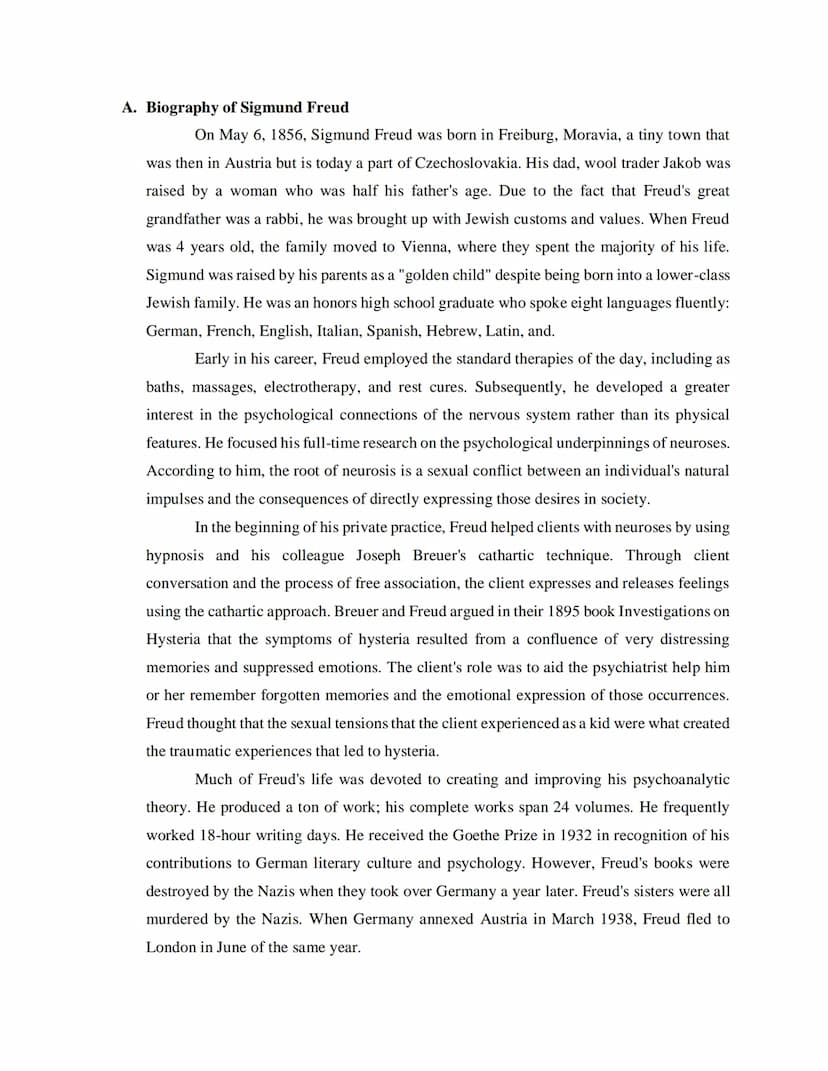
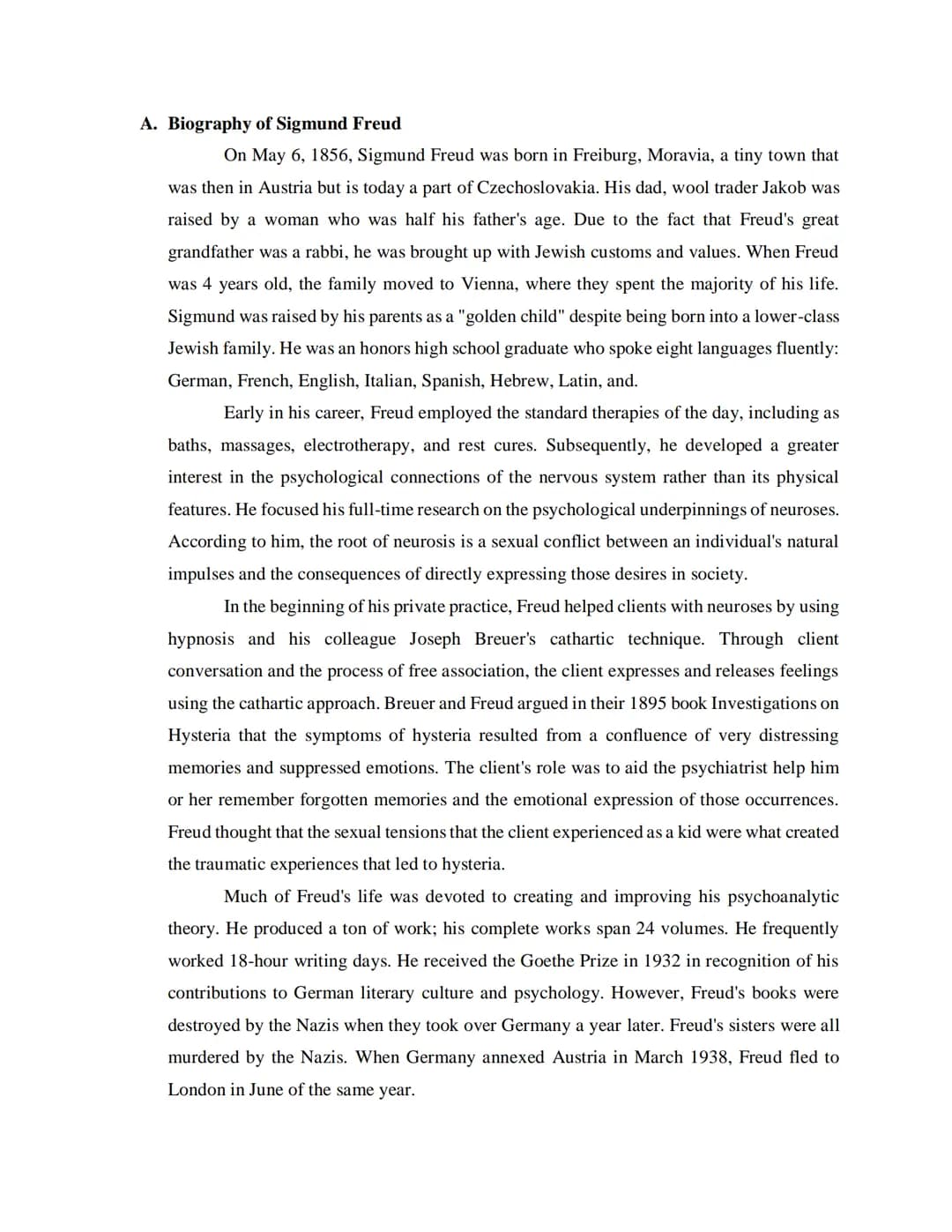
Freud wasn't your typical 19th-century academic - he was a linguistic genius who spoke eight languages and worked 18-hour days developing his theories. Born in 1856 to a lower-class Jewish family, he became the "golden child" who would revolutionise how we think about mental health.
His career started with traditional treatments like massages and electrotherapy, but he quickly realised the mind's psychological aspects were far more important than physical symptoms. Working with colleague Joseph Breuer, Freud discovered that hysteria often stemmed from repressed traumatic memories - usually with sexual undertones.
Key insight: Freud believed that neuroses developed when people's natural impulses clashed with society's expectations, creating internal conflict.
💡 Freud's technique of free association - letting patients talk about whatever came to mind - was revolutionary for its time and helped uncover hidden memories.
Despite winning the prestigious Goethe Prize in 1932, Freud faced persecution under Nazi rule. His books were burned, his sisters murdered, and he fled to London in 1938, where his legacy continued to grow.
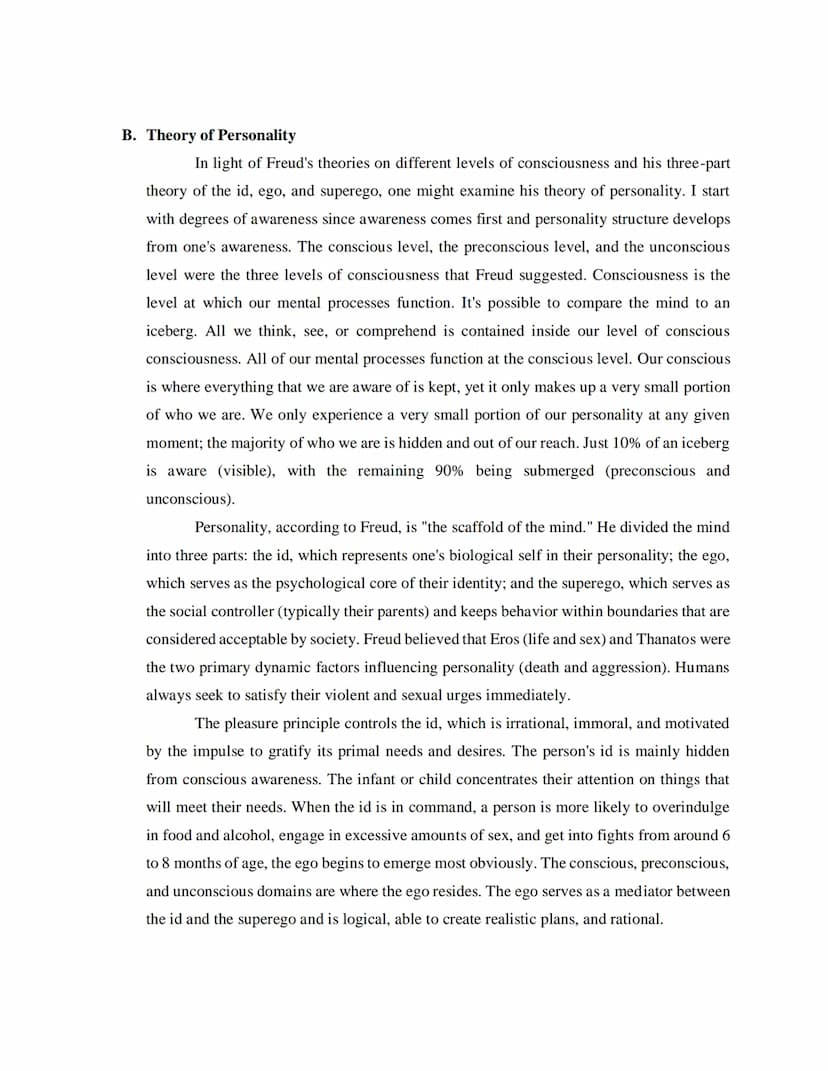
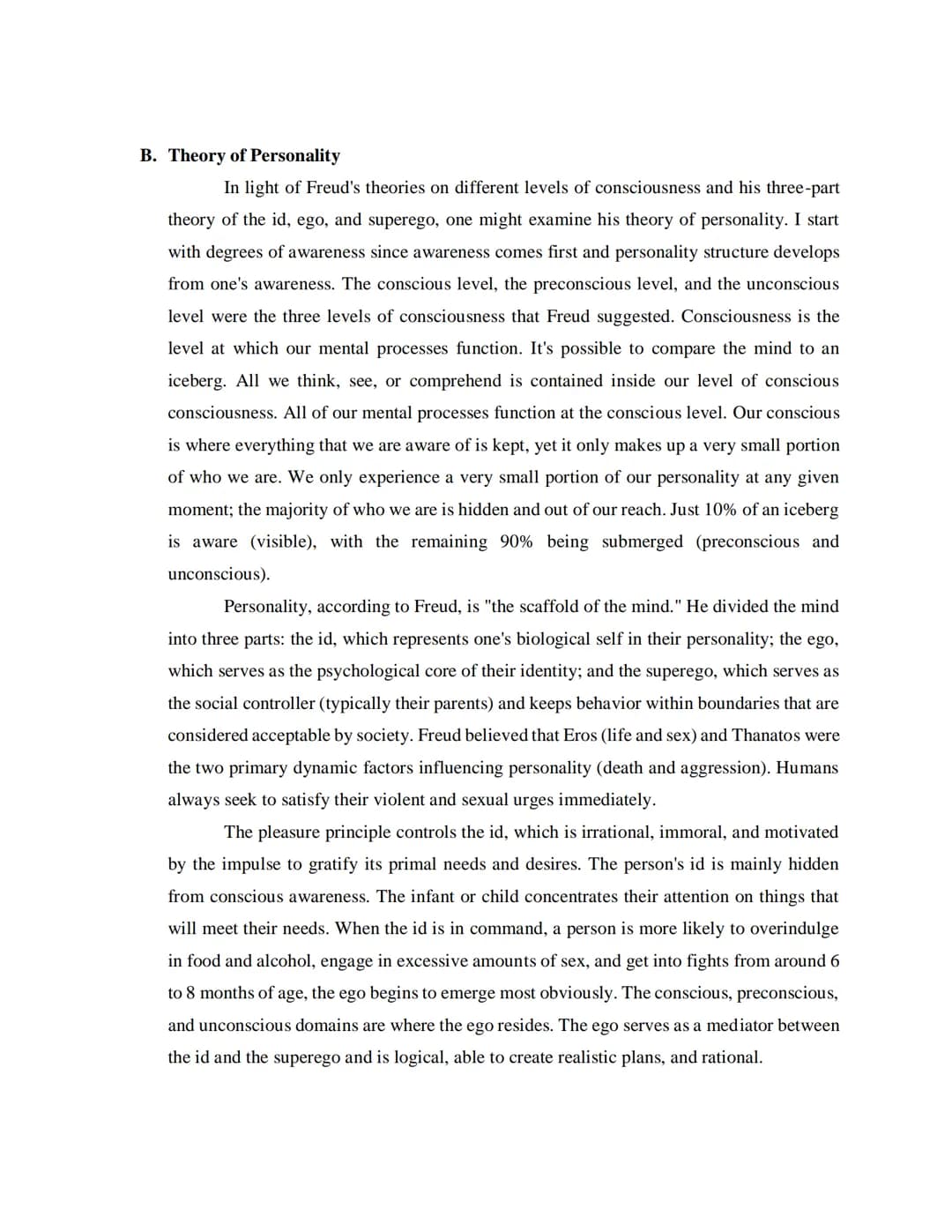
Think of your mind like an iceberg - what you're aware of right now is just the tip floating above water. Consciousness represents only about 10% of your mental processes, containing everything you're currently thinking about or aware of.
The remaining 90% lies beneath the surface in your preconscious and unconscious minds. This hidden part contains forgotten memories, repressed emotions, and buried conflicts that still influence your behaviour today.
Freud's personality structure consists of three competing forces: the id (your primal desires), the ego (your rational mind), and the superego (your moral conscience). The id operates on the pleasure principle, demanding immediate gratification of sexual and aggressive urges - think of a toddler wanting sweets right now.
Your ego develops around 6-8 months of age and tries to balance the id's demands with reality. Meanwhile, your superego represents your parents' values and society's rules, operating on the morality principle.
💡 When these three parts of personality conflict, psychological problems can develop - it's like having three different voices arguing in your head!
The key to mental health lies in achieving balance between these competing forces.
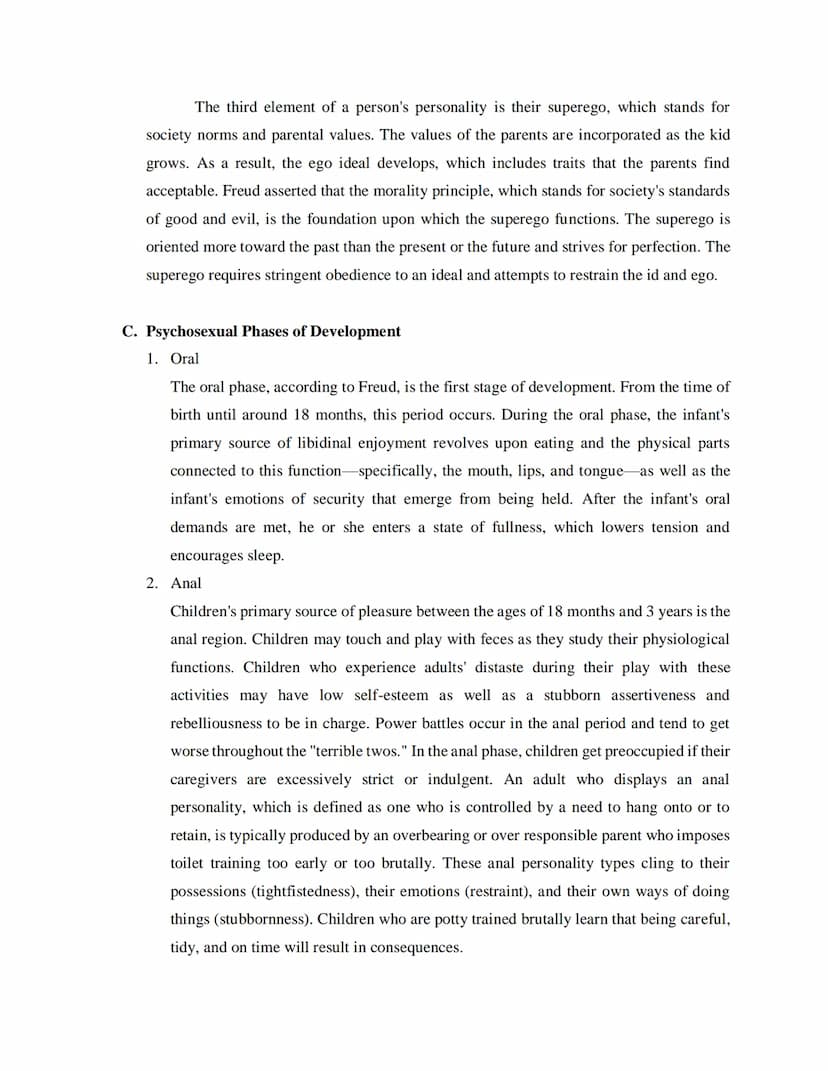
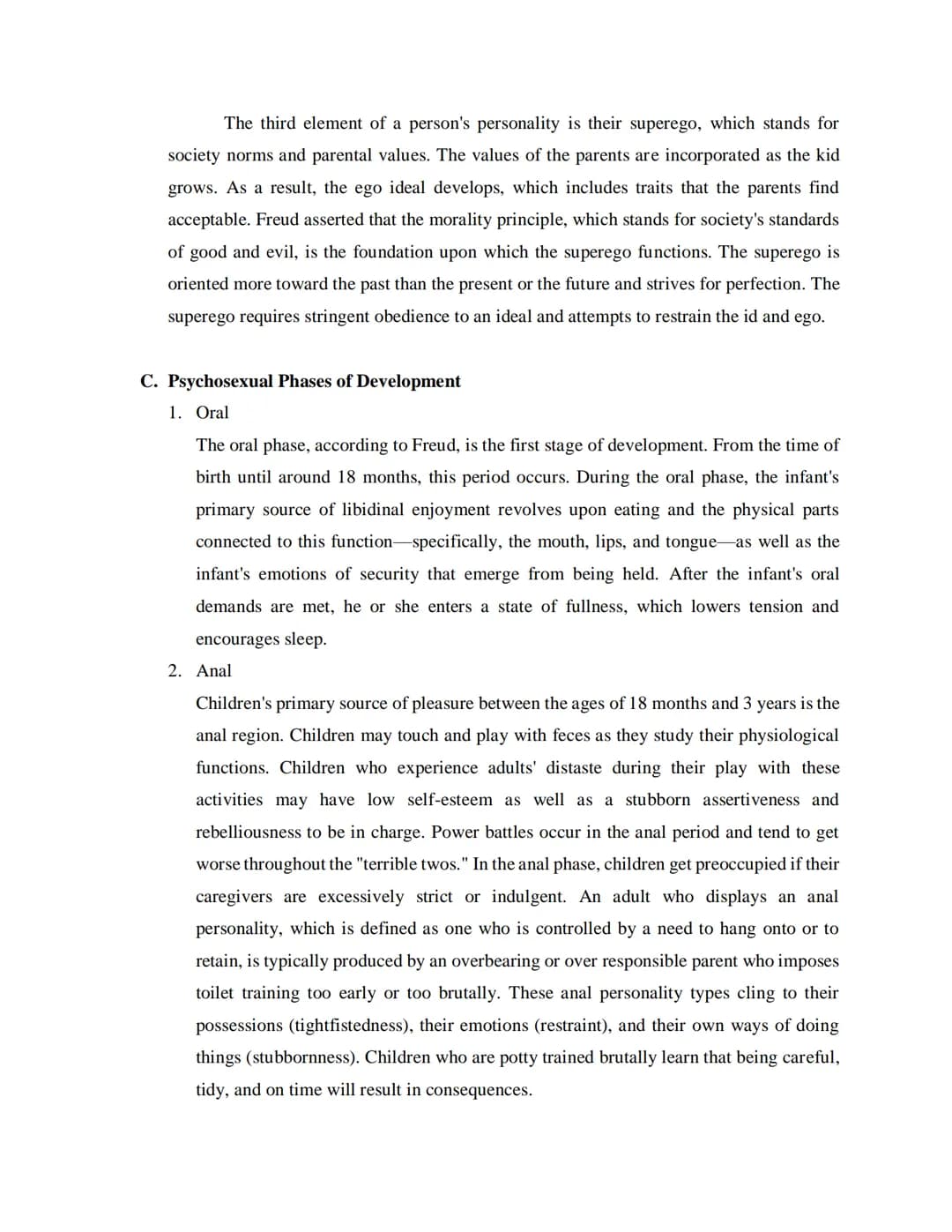
Freud believed personality develops through five psychosexual stages, each focused on different body parts and potential conflicts. Getting "stuck" at any stage could shape your adult personality in surprising ways.
The oral stage (birth to 18 months) centres on feeding and mouth-related activities. Babies find pleasure through sucking, biting, and oral exploration - it's their primary way of interacting with the world.
During the anal stage (18 months to 3 years), toilet training becomes the major battleground. Children discover they can control their bodily functions, leading to power struggles with parents. Overly strict potty training might create "anal personality" traits like stubbornness, orderliness, and emotional restraint.
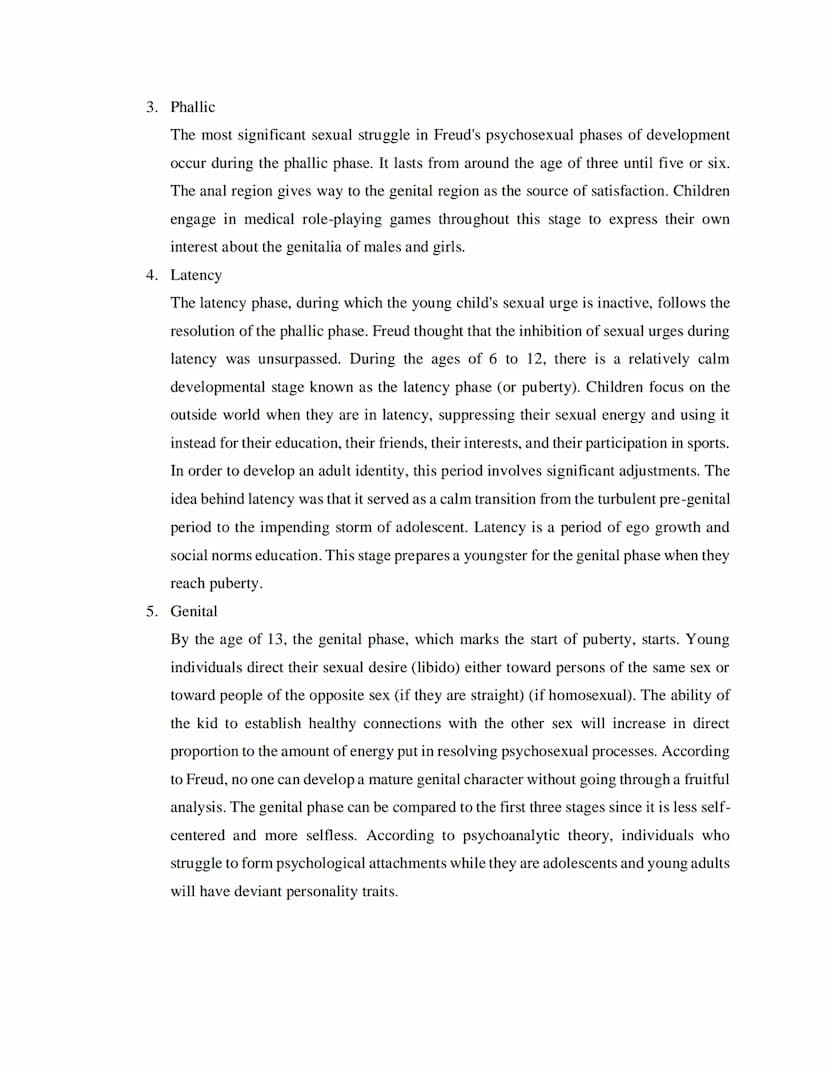
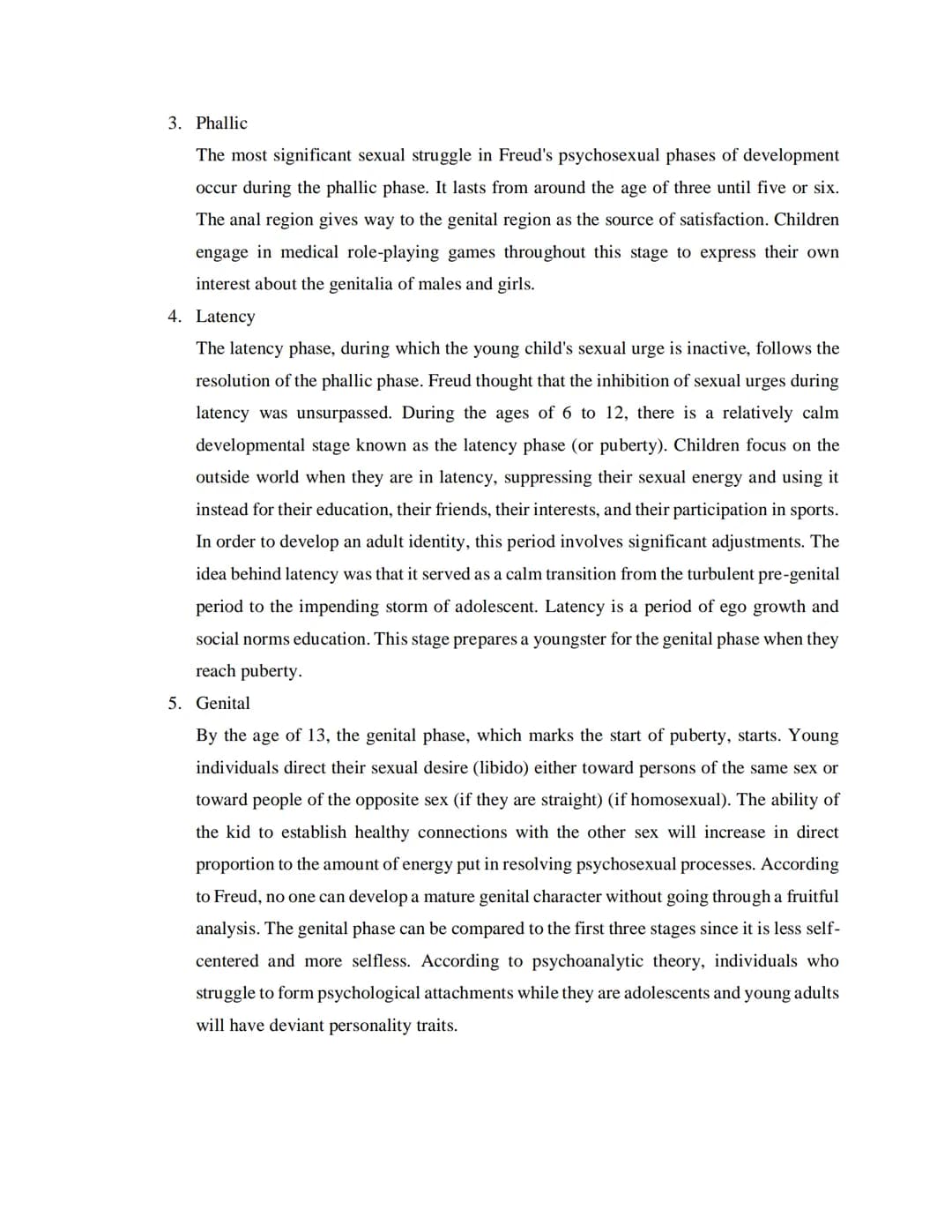
The phallic stage involves children becoming curious about genital differences and engaging in "doctor" games. This is when Freud's most controversial theories about childhood sexuality emerge.
💡 The latency stage is like a calm before the storm - sexual interests go dormant while children focus on school, friendships, and hobbies.
Finally, the genital stage begins at puberty when sexual interests re-emerge, ideally leading to mature relationships if earlier stages were successfully navigated.
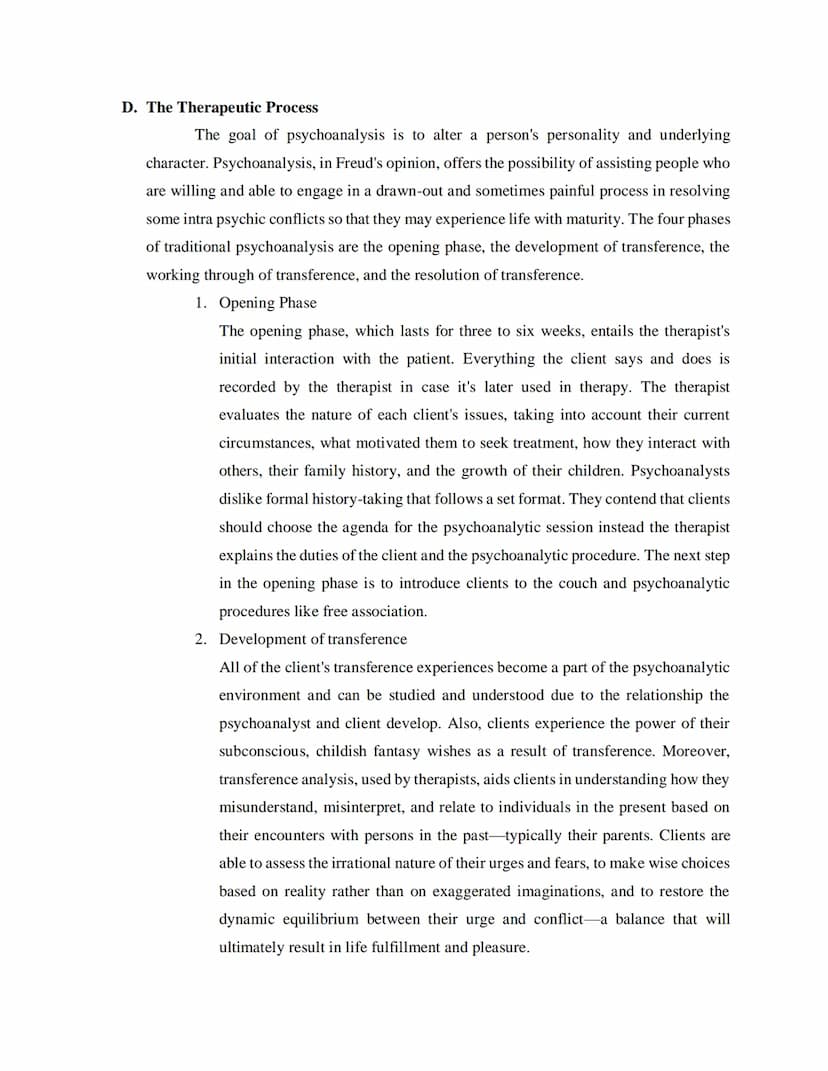
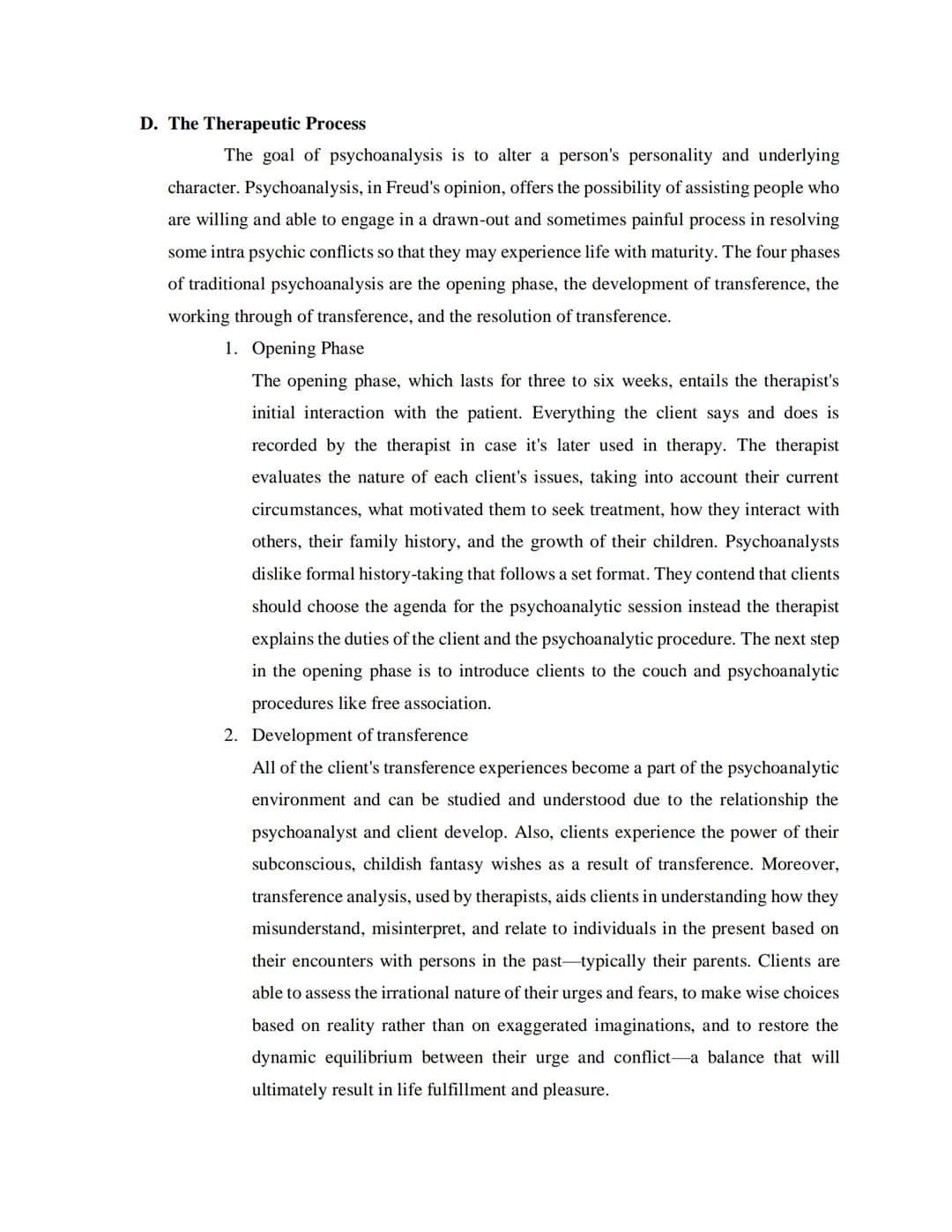
Psychoanalysis isn't a quick fix - it's designed to fundamentally change personality and resolve deep-rooted conflicts through a lengthy, sometimes painful process. The therapy unfolds in four distinct phases that can take years to complete.
The opening phase involves getting to know the client without formal questionnaires. Instead, therapists let clients set the agenda while observing everything they say and do. This phase introduces the famous couch and free association technique.
Transference development is where things get interesting - clients unconsciously transfer feelings about important people (usually parents) onto their therapist. Rather than avoiding this, analysts use it as valuable material for understanding the client's relationship patterns.
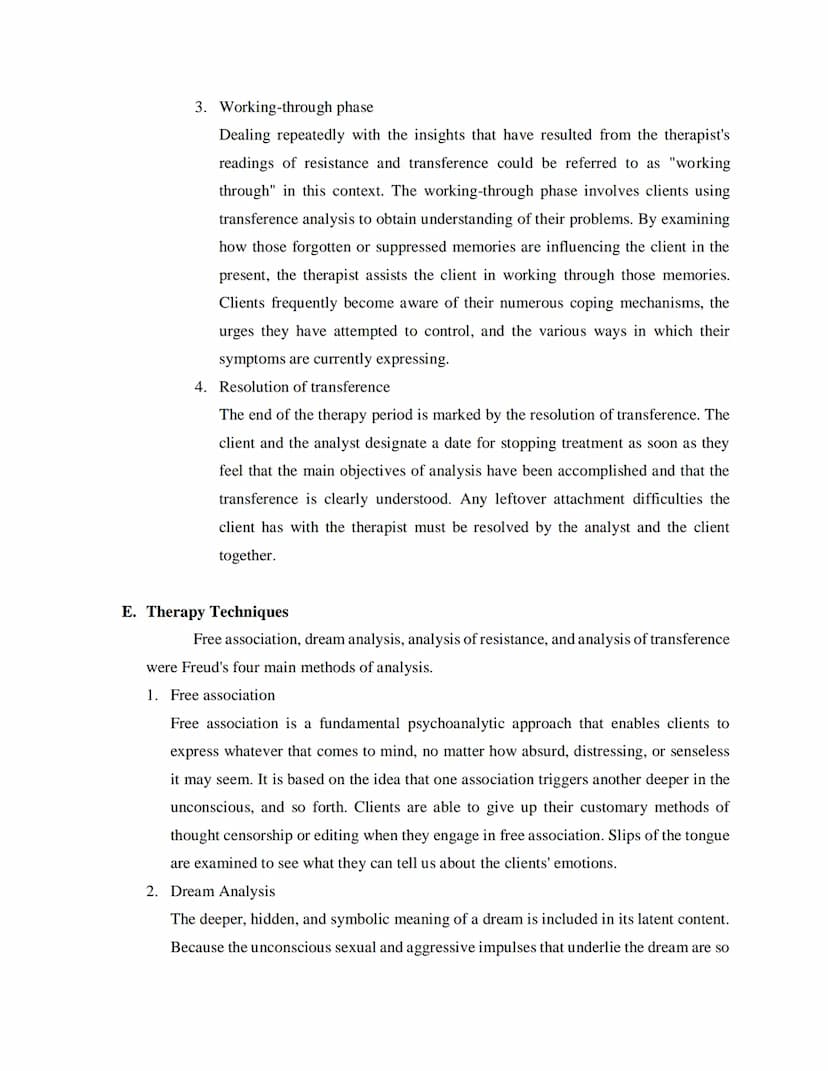
The working-through phase involves repeatedly examining insights gained from transference analysis. Clients discover how past experiences distort their present relationships and learn to recognise their unconscious coping mechanisms.
💡 Transference is like seeing your therapist through a filter of past relationships - you might react to them as if they were your critical mother or absent father.
The final resolution phase occurs when major therapeutic goals are achieved and the transference relationship is fully understood and resolved.
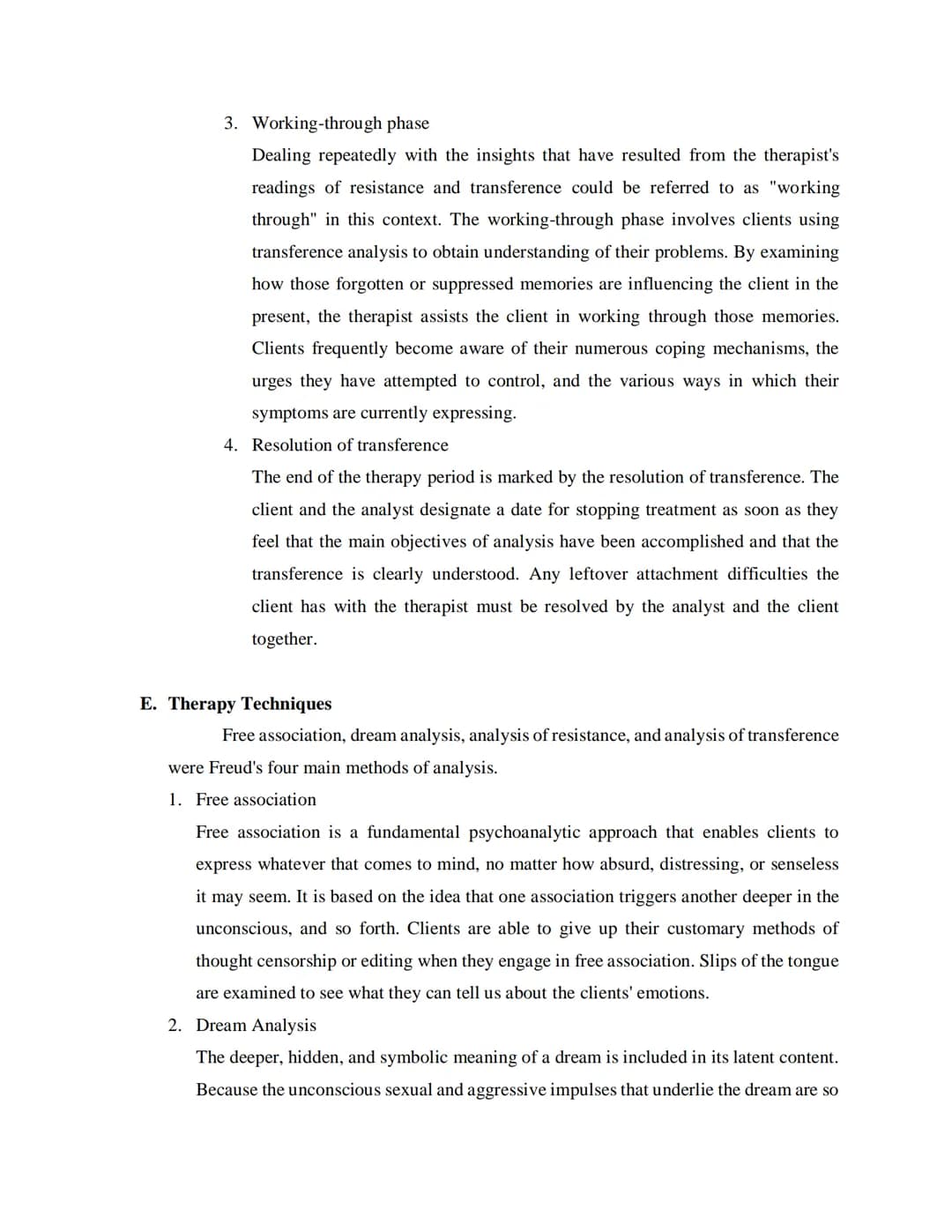
Freud developed four main techniques that remain influential in modern therapy, even if they're used differently today. These methods aim to uncover unconscious conflicts and bring them into conscious awareness.
Free association encourages clients to say whatever comes to mind, no matter how silly or embarrassing. The idea is that one thought leads to deeper unconscious material - even Freudian slips (verbal mistakes) are considered meaningful clues about hidden feelings.
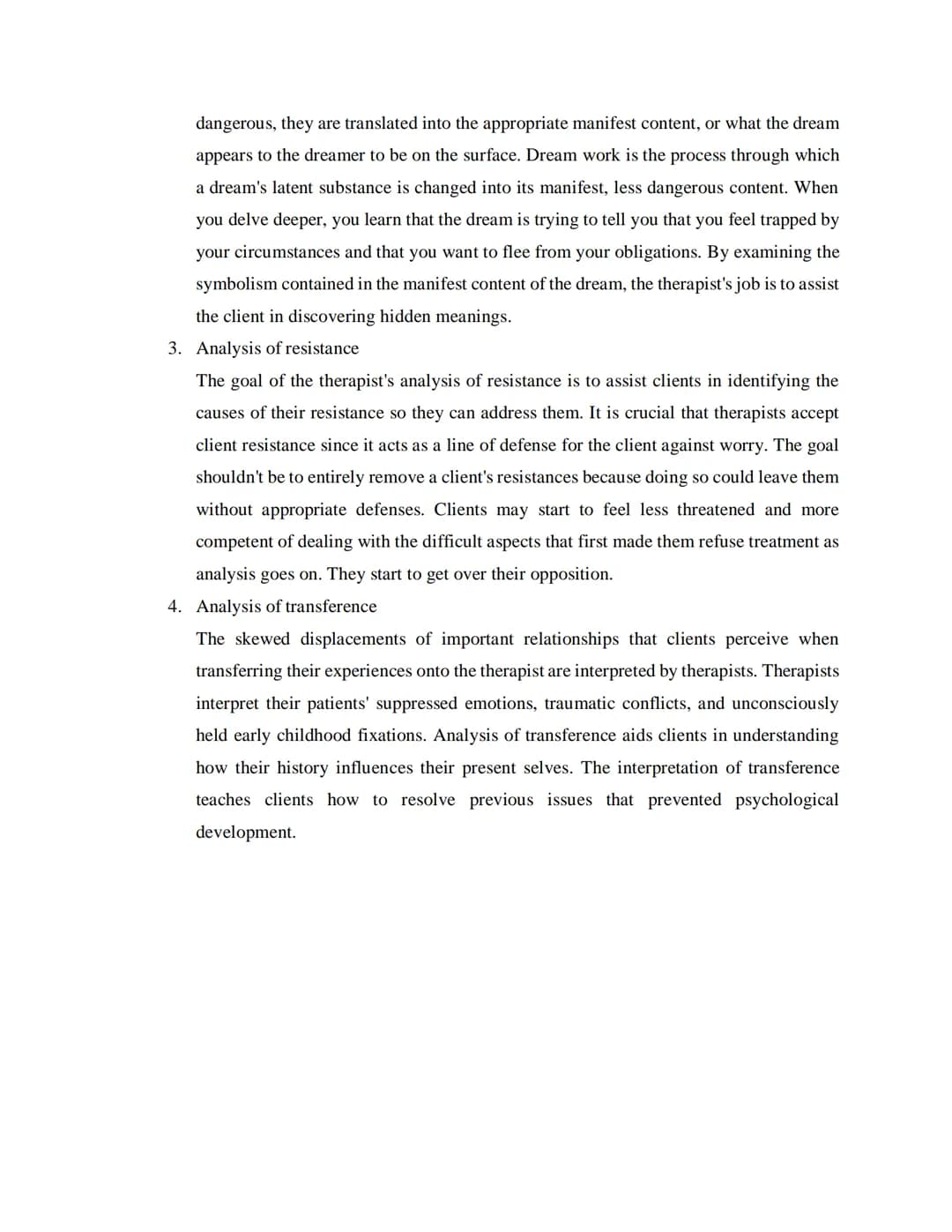
Dream analysis treats dreams as the "royal road to the unconscious." The manifest content (what you remember) disguises the latent content (the dream's true meaning). For example, dreaming about being chased might really represent feeling trapped by responsibilities.
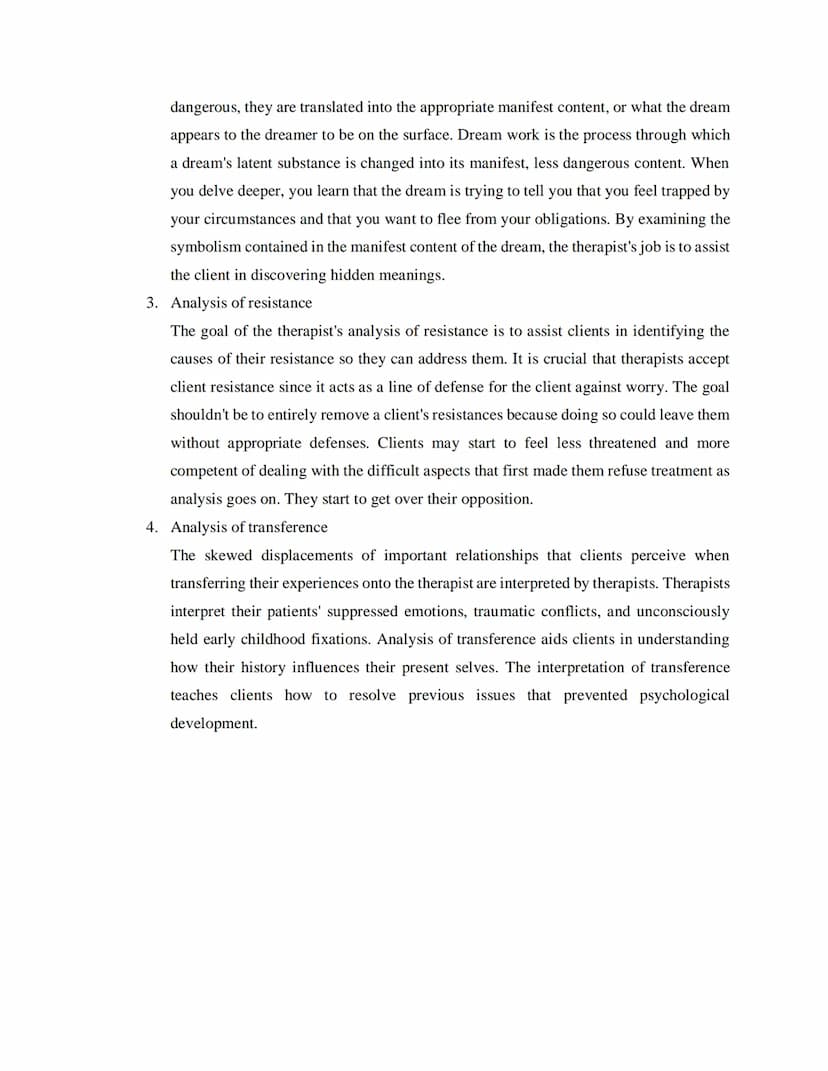
Resistance analysis recognises that clients often unconsciously fight against therapeutic progress. Rather than pushing through resistance, therapists explore why clients might need these psychological defences - they often protect against overwhelming anxiety.
Transference analysis interprets how clients distort their relationship with the therapist based on past experiences. This helps clients understand how childhood relationships continue to influence their adult interactions.
💡 These techniques work together like detective tools, helping uncover the unconscious conflicts that drive problematic behaviours and emotional difficulties.
The goal isn't just symptom relief but fundamental personality change through increased self-awareness.
Our AI Companion is a student-focused AI tool that offers more than just answers. Built on millions of Knowunity resources, it provides relevant information, personalised study plans, quizzes, and content directly in the chat, adapting to your individual learning journey.
You can download the app from Google Play Store and Apple App Store.
That's right! Enjoy free access to study content, connect with fellow students, and get instant help – all at your fingertips.
App Store
Google Play
The app is very easy to use and well designed. I have found everything I was looking for so far and have been able to learn a lot from the presentations! I will definitely use the app for a class assignment! And of course it also helps a lot as an inspiration.
Stefan S
iOS user
This app is really great. There are so many study notes and help [...]. My problem subject is French, for example, and the app has so many options for help. Thanks to this app, I have improved my French. I would recommend it to anyone.
Samantha Klich
Android user
Wow, I am really amazed. I just tried the app because I've seen it advertised many times and was absolutely stunned. This app is THE HELP you want for school and above all, it offers so many things, such as workouts and fact sheets, which have been VERY helpful to me personally.
Anna
iOS user
Best app on earth! no words because it’s too good
Thomas R
iOS user
Just amazing. Let's me revise 10x better, this app is a quick 10/10. I highly recommend it to anyone. I can watch and search for notes. I can save them in the subject folder. I can revise it any time when I come back. If you haven't tried this app, you're really missing out.
Basil
Android user
This app has made me feel so much more confident in my exam prep, not only through boosting my own self confidence through the features that allow you to connect with others and feel less alone, but also through the way the app itself is centred around making you feel better. It is easy to navigate, fun to use, and helpful to anyone struggling in absolutely any way.
David K
iOS user
The app's just great! All I have to do is enter the topic in the search bar and I get the response real fast. I don't have to watch 10 YouTube videos to understand something, so I'm saving my time. Highly recommended!
Sudenaz Ocak
Android user
In school I was really bad at maths but thanks to the app, I am doing better now. I am so grateful that you made the app.
Greenlight Bonnie
Android user
very reliable app to help and grow your ideas of Maths, English and other related topics in your works. please use this app if your struggling in areas, this app is key for that. wish I'd of done a review before. and it's also free so don't worry about that.
Rohan U
Android user
I know a lot of apps use fake accounts to boost their reviews but this app deserves it all. Originally I was getting 4 in my English exams and this time I got a grade 7. I didn’t even know about this app three days until the exam and it has helped A LOT. Please actually trust me and use it as I’m sure you too will see developments.
Xander S
iOS user
THE QUIZES AND FLASHCARDS ARE SO USEFUL AND I LOVE Knowunity AI. IT ALSO IS LITREALLY LIKE CHATGPT BUT SMARTER!! HELPED ME WITH MY MASCARA PROBLEMS TOO!! AS WELL AS MY REAL SUBJECTS ! DUHHH 😍😁😲🤑💗✨🎀😮
Elisha
iOS user
This apps acc the goat. I find revision so boring but this app makes it so easy to organize it all and then you can ask the freeeee ai to test yourself so good and you can easily upload your own stuff. highly recommend as someone taking mocks now
Paul T
iOS user
The app is very easy to use and well designed. I have found everything I was looking for so far and have been able to learn a lot from the presentations! I will definitely use the app for a class assignment! And of course it also helps a lot as an inspiration.
Stefan S
iOS user
This app is really great. There are so many study notes and help [...]. My problem subject is French, for example, and the app has so many options for help. Thanks to this app, I have improved my French. I would recommend it to anyone.
Samantha Klich
Android user
Wow, I am really amazed. I just tried the app because I've seen it advertised many times and was absolutely stunned. This app is THE HELP you want for school and above all, it offers so many things, such as workouts and fact sheets, which have been VERY helpful to me personally.
Anna
iOS user
Best app on earth! no words because it’s too good
Thomas R
iOS user
Just amazing. Let's me revise 10x better, this app is a quick 10/10. I highly recommend it to anyone. I can watch and search for notes. I can save them in the subject folder. I can revise it any time when I come back. If you haven't tried this app, you're really missing out.
Basil
Android user
This app has made me feel so much more confident in my exam prep, not only through boosting my own self confidence through the features that allow you to connect with others and feel less alone, but also through the way the app itself is centred around making you feel better. It is easy to navigate, fun to use, and helpful to anyone struggling in absolutely any way.
David K
iOS user
The app's just great! All I have to do is enter the topic in the search bar and I get the response real fast. I don't have to watch 10 YouTube videos to understand something, so I'm saving my time. Highly recommended!
Sudenaz Ocak
Android user
In school I was really bad at maths but thanks to the app, I am doing better now. I am so grateful that you made the app.
Greenlight Bonnie
Android user
very reliable app to help and grow your ideas of Maths, English and other related topics in your works. please use this app if your struggling in areas, this app is key for that. wish I'd of done a review before. and it's also free so don't worry about that.
Rohan U
Android user
I know a lot of apps use fake accounts to boost their reviews but this app deserves it all. Originally I was getting 4 in my English exams and this time I got a grade 7. I didn’t even know about this app three days until the exam and it has helped A LOT. Please actually trust me and use it as I’m sure you too will see developments.
Xander S
iOS user
THE QUIZES AND FLASHCARDS ARE SO USEFUL AND I LOVE Knowunity AI. IT ALSO IS LITREALLY LIKE CHATGPT BUT SMARTER!! HELPED ME WITH MY MASCARA PROBLEMS TOO!! AS WELL AS MY REAL SUBJECTS ! DUHHH 😍😁😲🤑💗✨🎀😮
Elisha
iOS user
This apps acc the goat. I find revision so boring but this app makes it so easy to organize it all and then you can ask the freeeee ai to test yourself so good and you can easily upload your own stuff. highly recommend as someone taking mocks now
Paul T
iOS user
Fitria Maulida
@fitriamaulida_eqmr
Ever wondered why you might have certain habits or fears that seem to come from nowhere? Sigmund Freud, the father of psychoanalysis, believed our personalities are shaped by unconscious conflicts and childhood experiences. His revolutionary approach to understanding the mind... Show more
Access to all documents
Improve your grades
Join milions of students
By signing up you accept Terms of Service and Privacy Policy
Freud wasn't your typical 19th-century academic - he was a linguistic genius who spoke eight languages and worked 18-hour days developing his theories. Born in 1856 to a lower-class Jewish family, he became the "golden child" who would revolutionise how we think about mental health.
His career started with traditional treatments like massages and electrotherapy, but he quickly realised the mind's psychological aspects were far more important than physical symptoms. Working with colleague Joseph Breuer, Freud discovered that hysteria often stemmed from repressed traumatic memories - usually with sexual undertones.
Key insight: Freud believed that neuroses developed when people's natural impulses clashed with society's expectations, creating internal conflict.
💡 Freud's technique of free association - letting patients talk about whatever came to mind - was revolutionary for its time and helped uncover hidden memories.
Despite winning the prestigious Goethe Prize in 1932, Freud faced persecution under Nazi rule. His books were burned, his sisters murdered, and he fled to London in 1938, where his legacy continued to grow.
Access to all documents
Improve your grades
Join milions of students
By signing up you accept Terms of Service and Privacy Policy
Think of your mind like an iceberg - what you're aware of right now is just the tip floating above water. Consciousness represents only about 10% of your mental processes, containing everything you're currently thinking about or aware of.
The remaining 90% lies beneath the surface in your preconscious and unconscious minds. This hidden part contains forgotten memories, repressed emotions, and buried conflicts that still influence your behaviour today.
Freud's personality structure consists of three competing forces: the id (your primal desires), the ego (your rational mind), and the superego (your moral conscience). The id operates on the pleasure principle, demanding immediate gratification of sexual and aggressive urges - think of a toddler wanting sweets right now.
Your ego develops around 6-8 months of age and tries to balance the id's demands with reality. Meanwhile, your superego represents your parents' values and society's rules, operating on the morality principle.
💡 When these three parts of personality conflict, psychological problems can develop - it's like having three different voices arguing in your head!
The key to mental health lies in achieving balance between these competing forces.
Access to all documents
Improve your grades
Join milions of students
By signing up you accept Terms of Service and Privacy Policy
Freud believed personality develops through five psychosexual stages, each focused on different body parts and potential conflicts. Getting "stuck" at any stage could shape your adult personality in surprising ways.
The oral stage (birth to 18 months) centres on feeding and mouth-related activities. Babies find pleasure through sucking, biting, and oral exploration - it's their primary way of interacting with the world.
During the anal stage (18 months to 3 years), toilet training becomes the major battleground. Children discover they can control their bodily functions, leading to power struggles with parents. Overly strict potty training might create "anal personality" traits like stubbornness, orderliness, and emotional restraint.
The phallic stage involves children becoming curious about genital differences and engaging in "doctor" games. This is when Freud's most controversial theories about childhood sexuality emerge.
💡 The latency stage is like a calm before the storm - sexual interests go dormant while children focus on school, friendships, and hobbies.
Finally, the genital stage begins at puberty when sexual interests re-emerge, ideally leading to mature relationships if earlier stages were successfully navigated.
Access to all documents
Improve your grades
Join milions of students
By signing up you accept Terms of Service and Privacy Policy
Psychoanalysis isn't a quick fix - it's designed to fundamentally change personality and resolve deep-rooted conflicts through a lengthy, sometimes painful process. The therapy unfolds in four distinct phases that can take years to complete.
The opening phase involves getting to know the client without formal questionnaires. Instead, therapists let clients set the agenda while observing everything they say and do. This phase introduces the famous couch and free association technique.
Transference development is where things get interesting - clients unconsciously transfer feelings about important people (usually parents) onto their therapist. Rather than avoiding this, analysts use it as valuable material for understanding the client's relationship patterns.
The working-through phase involves repeatedly examining insights gained from transference analysis. Clients discover how past experiences distort their present relationships and learn to recognise their unconscious coping mechanisms.
💡 Transference is like seeing your therapist through a filter of past relationships - you might react to them as if they were your critical mother or absent father.
The final resolution phase occurs when major therapeutic goals are achieved and the transference relationship is fully understood and resolved.
Access to all documents
Improve your grades
Join milions of students
By signing up you accept Terms of Service and Privacy Policy
Freud developed four main techniques that remain influential in modern therapy, even if they're used differently today. These methods aim to uncover unconscious conflicts and bring them into conscious awareness.
Free association encourages clients to say whatever comes to mind, no matter how silly or embarrassing. The idea is that one thought leads to deeper unconscious material - even Freudian slips (verbal mistakes) are considered meaningful clues about hidden feelings.
Dream analysis treats dreams as the "royal road to the unconscious." The manifest content (what you remember) disguises the latent content (the dream's true meaning). For example, dreaming about being chased might really represent feeling trapped by responsibilities.
Resistance analysis recognises that clients often unconsciously fight against therapeutic progress. Rather than pushing through resistance, therapists explore why clients might need these psychological defences - they often protect against overwhelming anxiety.
Transference analysis interprets how clients distort their relationship with the therapist based on past experiences. This helps clients understand how childhood relationships continue to influence their adult interactions.
💡 These techniques work together like detective tools, helping uncover the unconscious conflicts that drive problematic behaviours and emotional difficulties.
The goal isn't just symptom relief but fundamental personality change through increased self-awareness.
Access to all documents
Improve your grades
Join milions of students
By signing up you accept Terms of Service and Privacy Policy
Access to all documents
Improve your grades
Join milions of students
By signing up you accept Terms of Service and Privacy Policy
Access to all documents
Improve your grades
Join milions of students
By signing up you accept Terms of Service and Privacy Policy
Our AI Companion is a student-focused AI tool that offers more than just answers. Built on millions of Knowunity resources, it provides relevant information, personalised study plans, quizzes, and content directly in the chat, adapting to your individual learning journey.
You can download the app from Google Play Store and Apple App Store.
That's right! Enjoy free access to study content, connect with fellow students, and get instant help – all at your fingertips.
0
Smart Tools NEW
Transform this note into: ✓ 50+ Practice Questions ✓ Interactive Flashcards ✓ Full Mock Exam ✓ Essay Outlines
App Store
Google Play
The app is very easy to use and well designed. I have found everything I was looking for so far and have been able to learn a lot from the presentations! I will definitely use the app for a class assignment! And of course it also helps a lot as an inspiration.
Stefan S
iOS user
This app is really great. There are so many study notes and help [...]. My problem subject is French, for example, and the app has so many options for help. Thanks to this app, I have improved my French. I would recommend it to anyone.
Samantha Klich
Android user
Wow, I am really amazed. I just tried the app because I've seen it advertised many times and was absolutely stunned. This app is THE HELP you want for school and above all, it offers so many things, such as workouts and fact sheets, which have been VERY helpful to me personally.
Anna
iOS user
Best app on earth! no words because it’s too good
Thomas R
iOS user
Just amazing. Let's me revise 10x better, this app is a quick 10/10. I highly recommend it to anyone. I can watch and search for notes. I can save them in the subject folder. I can revise it any time when I come back. If you haven't tried this app, you're really missing out.
Basil
Android user
This app has made me feel so much more confident in my exam prep, not only through boosting my own self confidence through the features that allow you to connect with others and feel less alone, but also through the way the app itself is centred around making you feel better. It is easy to navigate, fun to use, and helpful to anyone struggling in absolutely any way.
David K
iOS user
The app's just great! All I have to do is enter the topic in the search bar and I get the response real fast. I don't have to watch 10 YouTube videos to understand something, so I'm saving my time. Highly recommended!
Sudenaz Ocak
Android user
In school I was really bad at maths but thanks to the app, I am doing better now. I am so grateful that you made the app.
Greenlight Bonnie
Android user
very reliable app to help and grow your ideas of Maths, English and other related topics in your works. please use this app if your struggling in areas, this app is key for that. wish I'd of done a review before. and it's also free so don't worry about that.
Rohan U
Android user
I know a lot of apps use fake accounts to boost their reviews but this app deserves it all. Originally I was getting 4 in my English exams and this time I got a grade 7. I didn’t even know about this app three days until the exam and it has helped A LOT. Please actually trust me and use it as I’m sure you too will see developments.
Xander S
iOS user
THE QUIZES AND FLASHCARDS ARE SO USEFUL AND I LOVE Knowunity AI. IT ALSO IS LITREALLY LIKE CHATGPT BUT SMARTER!! HELPED ME WITH MY MASCARA PROBLEMS TOO!! AS WELL AS MY REAL SUBJECTS ! DUHHH 😍😁😲🤑💗✨🎀😮
Elisha
iOS user
This apps acc the goat. I find revision so boring but this app makes it so easy to organize it all and then you can ask the freeeee ai to test yourself so good and you can easily upload your own stuff. highly recommend as someone taking mocks now
Paul T
iOS user
The app is very easy to use and well designed. I have found everything I was looking for so far and have been able to learn a lot from the presentations! I will definitely use the app for a class assignment! And of course it also helps a lot as an inspiration.
Stefan S
iOS user
This app is really great. There are so many study notes and help [...]. My problem subject is French, for example, and the app has so many options for help. Thanks to this app, I have improved my French. I would recommend it to anyone.
Samantha Klich
Android user
Wow, I am really amazed. I just tried the app because I've seen it advertised many times and was absolutely stunned. This app is THE HELP you want for school and above all, it offers so many things, such as workouts and fact sheets, which have been VERY helpful to me personally.
Anna
iOS user
Best app on earth! no words because it’s too good
Thomas R
iOS user
Just amazing. Let's me revise 10x better, this app is a quick 10/10. I highly recommend it to anyone. I can watch and search for notes. I can save them in the subject folder. I can revise it any time when I come back. If you haven't tried this app, you're really missing out.
Basil
Android user
This app has made me feel so much more confident in my exam prep, not only through boosting my own self confidence through the features that allow you to connect with others and feel less alone, but also through the way the app itself is centred around making you feel better. It is easy to navigate, fun to use, and helpful to anyone struggling in absolutely any way.
David K
iOS user
The app's just great! All I have to do is enter the topic in the search bar and I get the response real fast. I don't have to watch 10 YouTube videos to understand something, so I'm saving my time. Highly recommended!
Sudenaz Ocak
Android user
In school I was really bad at maths but thanks to the app, I am doing better now. I am so grateful that you made the app.
Greenlight Bonnie
Android user
very reliable app to help and grow your ideas of Maths, English and other related topics in your works. please use this app if your struggling in areas, this app is key for that. wish I'd of done a review before. and it's also free so don't worry about that.
Rohan U
Android user
I know a lot of apps use fake accounts to boost their reviews but this app deserves it all. Originally I was getting 4 in my English exams and this time I got a grade 7. I didn’t even know about this app three days until the exam and it has helped A LOT. Please actually trust me and use it as I’m sure you too will see developments.
Xander S
iOS user
THE QUIZES AND FLASHCARDS ARE SO USEFUL AND I LOVE Knowunity AI. IT ALSO IS LITREALLY LIKE CHATGPT BUT SMARTER!! HELPED ME WITH MY MASCARA PROBLEMS TOO!! AS WELL AS MY REAL SUBJECTS ! DUHHH 😍😁😲🤑💗✨🎀😮
Elisha
iOS user
This apps acc the goat. I find revision so boring but this app makes it so easy to organize it all and then you can ask the freeeee ai to test yourself so good and you can easily upload your own stuff. highly recommend as someone taking mocks now
Paul T
iOS user