Humanistic Psychology: The Optimistic Approach
Ever wondered why some psychological theories make you feel empowered rather than trapped by your past? Humanistic psychology does exactly that by celebrating what makes you uniquely human.
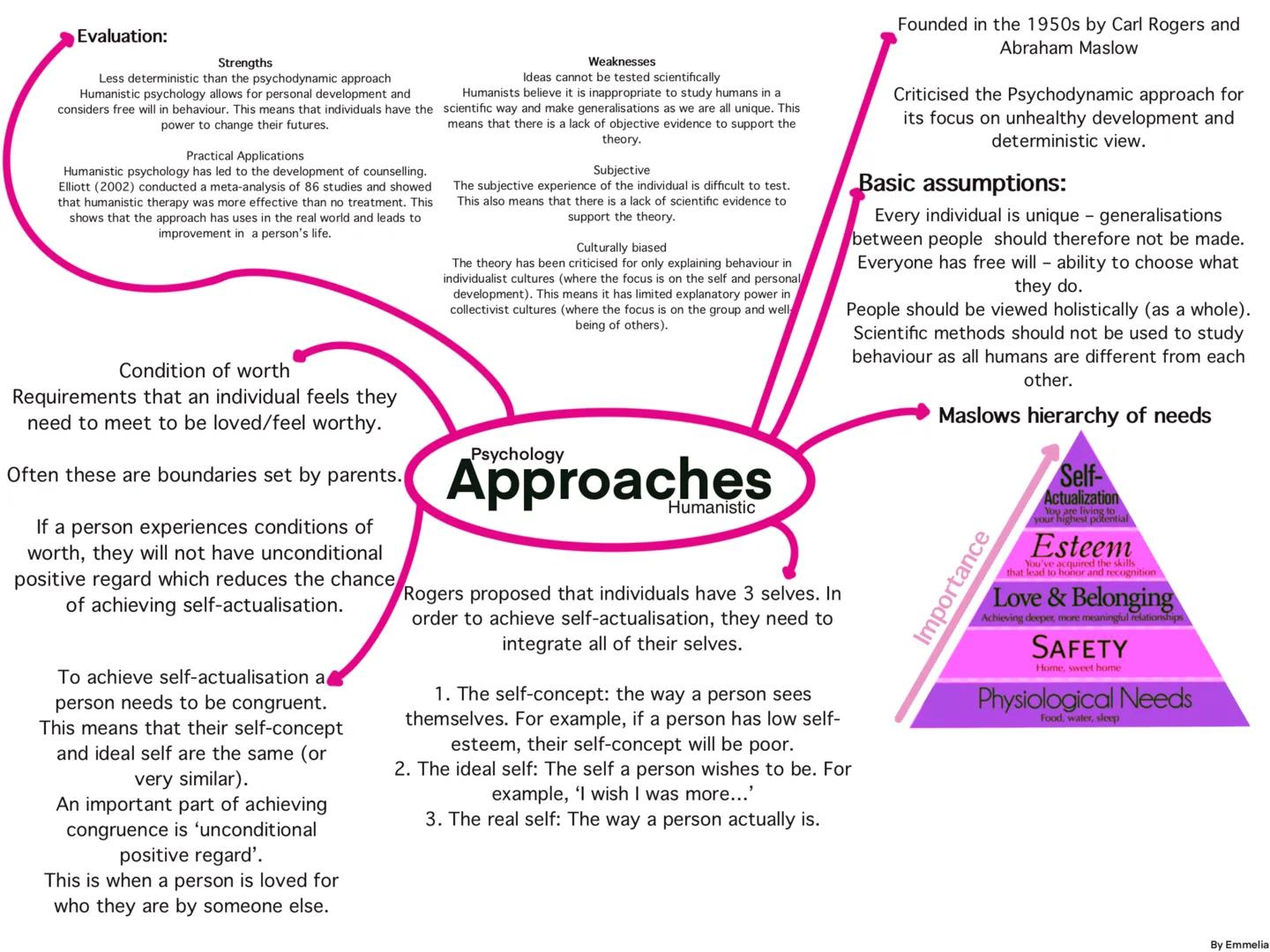
This approach kicked off in the 1950s when Carl Rogers and Abraham Maslow got fed up with psychology only focusing on mental problems. They wanted something more positive that recognised your free will and ability to grow. The basic idea? You're not just a product of your childhood or biological programming—you have genuine choices.
Rogers' theory of three selves explains how we can reach our full potential. Your self-concept is how you see yourself right now, your ideal self is who you'd love to become, and your real self is who you actually are. The magic happens when these three align—that's called being congruent.
Key insight: Achieving self-actualisation (reaching your full potential) requires unconditional positive regard—being loved for who you are, not what you achieve. This is the opposite of conditions of worth, where you feel you must meet certain standards to be worthy of love.
The approach isn't perfect though. Critics argue it can't be tested scientifically since everyone's experience is so subjective and personal. It also works better in cultures that value individual achievement over group harmony. However, its practical applications in counselling have proven genuinely helpful, with research showing humanistic therapy beats no treatment at all.


 Sociology
 Psychology
 English Literature
 Biology