Definitions of Abnormality
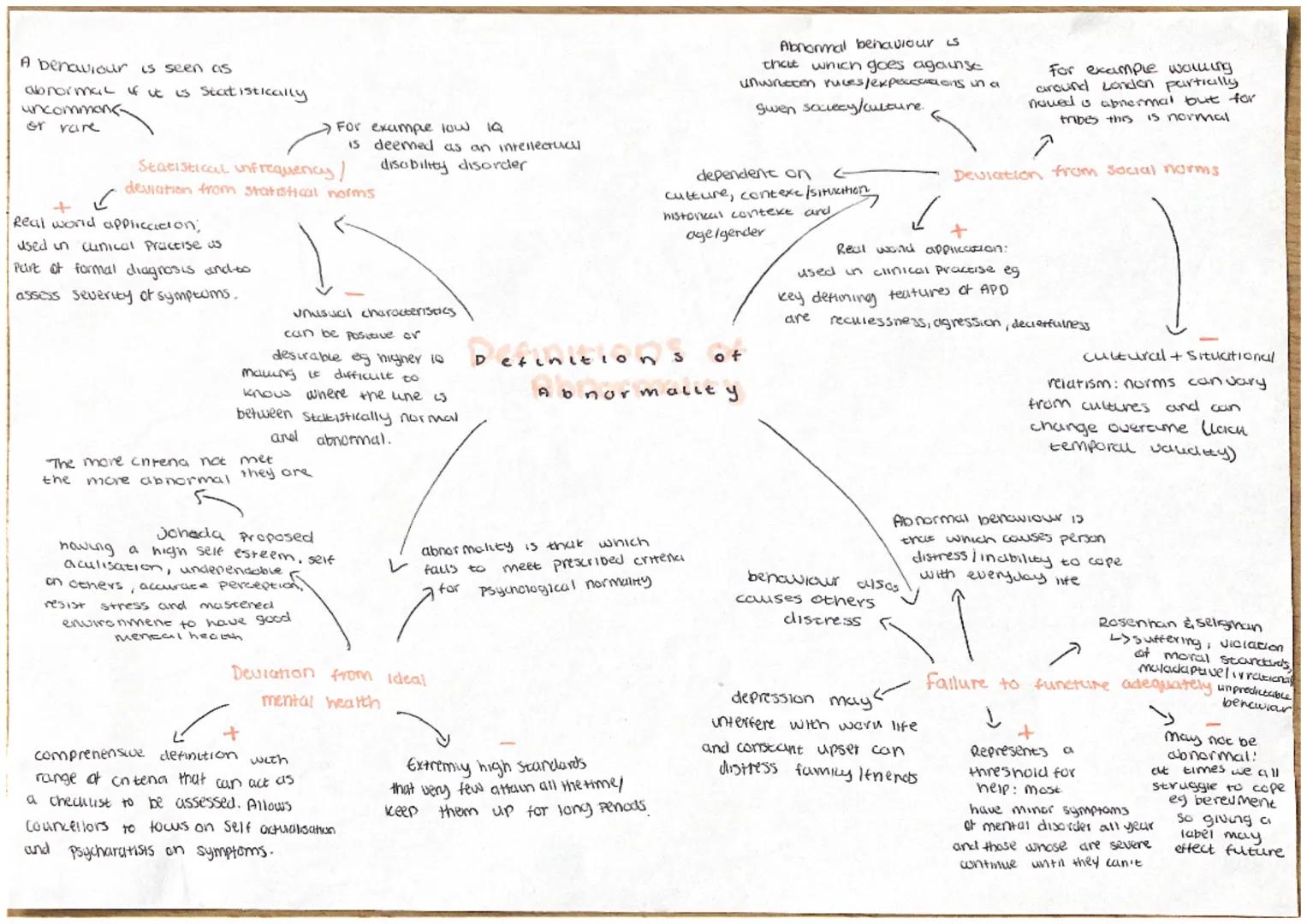
Statistical infrequency is the most straightforward approach - if behaviour is rare or uncommon, it's considered abnormal. Low IQ scores, for example, are classified as intellectual disability disorders because they fall outside the normal statistical range.
This method has clear real-world applications in clinical practice, where it's used for formal diagnoses and assessing symptom severity. However, it creates a tricky problem: unusual characteristics can actually be positive (like having a higher IQ), making it difficult to determine where the line between normal and abnormal should be drawn.
Deviation from ideal mental health takes the opposite approach by defining what good mental health looks like first. Jahoda proposed that mentally healthy people have high self-esteem, can self-actualise, aren't overly dependent on others, have accurate perception, can resist stress, and master their environment.
This comprehensive definition works like a checklist that allows counsellors to focus on self-actualisation whilst psychiatrists concentrate on symptoms. The major drawback? These are extremely high standards that very few people can maintain consistently over long periods.
Key Insight: Remember that the more criteria someone fails to meet, the more "abnormal" they're considered to be.
Deviation from social norms considers behaviour abnormal when it goes against unwritten rules or expectations in a given society. Walking around London partially naked would be abnormal here, but it's perfectly normal for certain tribes elsewhere.
This definition is highly dependent on culture, context, situation, historical period, and factors like age and gender. It's used clinically - for instance, key features of Antisocial Personality Disorder include recklessness, aggression, and deceitfulness. However, cultural and situational relativism means norms vary between cultures and change over time, affecting the definition's validity.
Failure to function adequately focuses on whether behaviour causes distress or prevents someone from coping with everyday life. Depression, for example, might interfere with work life and consequently upset family members, showing how the behaviour affects both the individual and others around them.
This approach represents a practical threshold for seeking help - most people experience minor mental health symptoms throughout the year, but those with severe symptoms that prevent normal functioning are more likely to seek treatment. The limitation is that we all struggle to cope sometimes (like during bereavement), so labelling these periods as "abnormal" might unfairly pathologise normal human experiences.


 Psychology
 English Literature
 Sociology
 Biology