Coding in Memory Stores
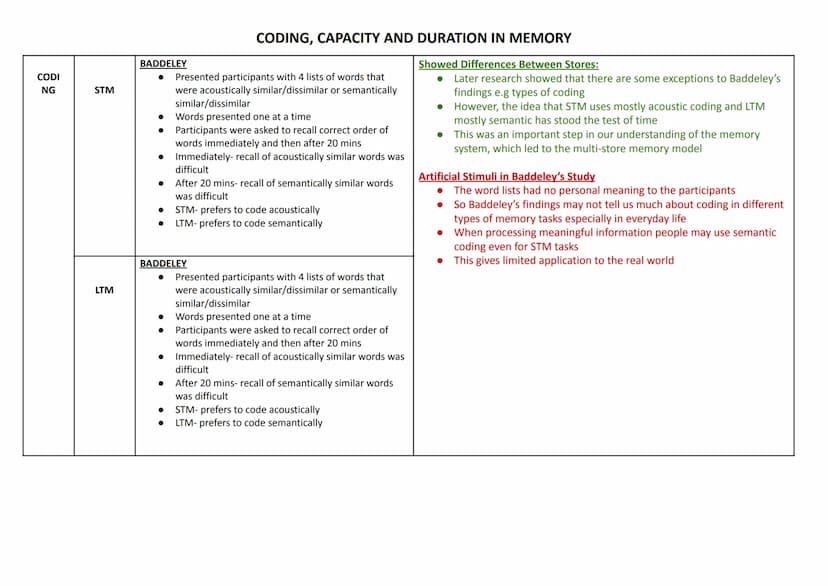
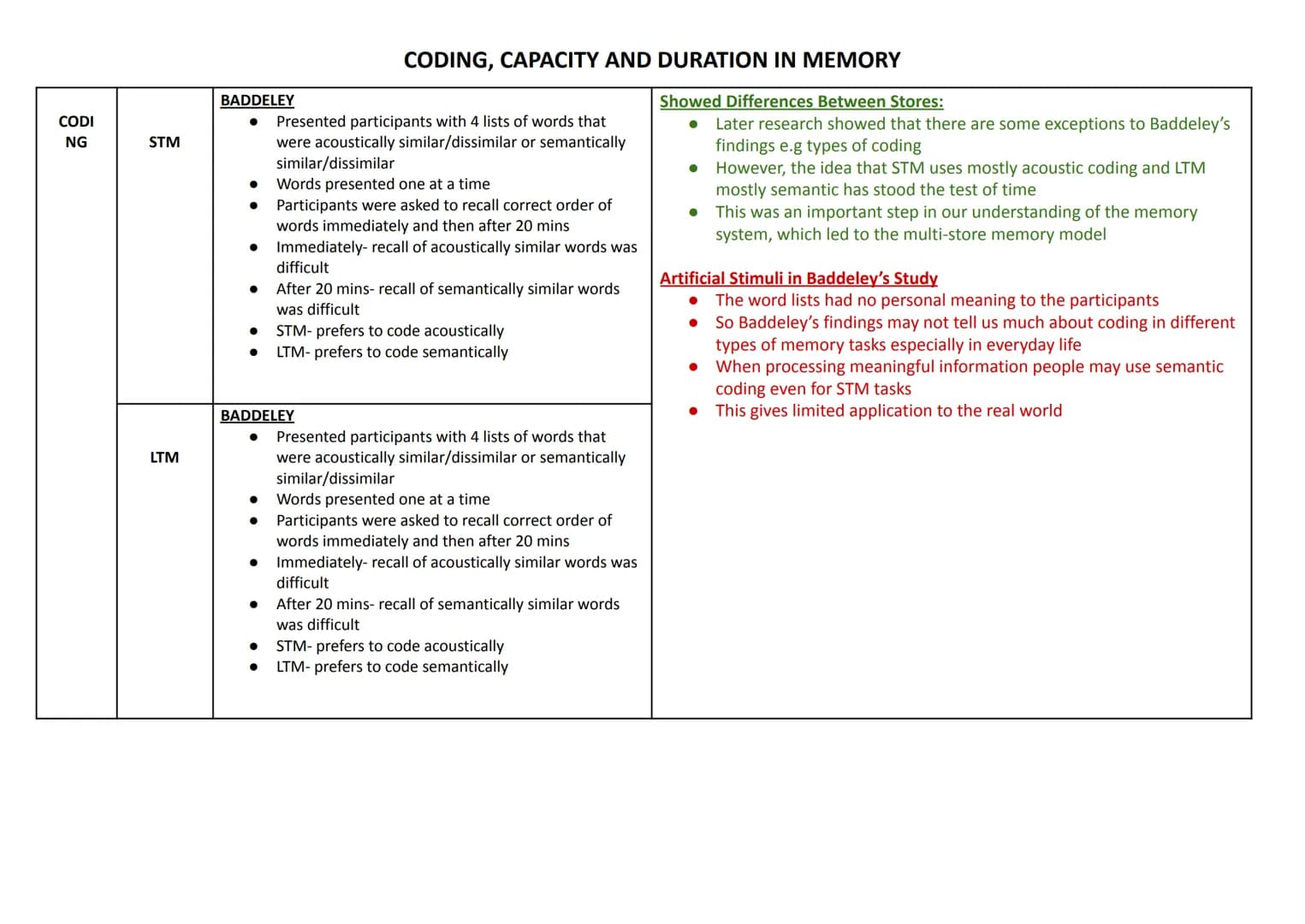
When we process information, our brain stores it using different coding methods. Baddeley's research revealed a fascinating distinction: short-term memory primarily uses acoustic coding (based on sound), while long-term memory relies on semantic coding (based on meaning).
In his experiment, participants struggled to recall acoustically similar words immediately, suggesting STM stores information by how it sounds. After 20 minutes, semantically similar words became harder to recall, indicating LTM organizes information by meaning.
While these findings have stood the test of time, there are important limitations. The word lists used had no personal meaning to participants, so the results may not fully represent how we process meaningful information in everyday life. When dealing with personally relevant information, we might use semantic coding even for short-term tasks.
Quick Tip: Think about phone numbers—we often repeat them aloud (acoustic coding) to remember them briefly, but meaningful dates like birthdays are stored based on their significance (semantic coding).

 Psychology
 English Literature
 Biology
 Sociology