
Psychology has evolved from philosophical guesswork into a proper science... Show more
 Psychology
 Sociology
 English Literature
 Biology
Sign up to see the contentIt's free!
Access to all documents
Improve your grades
Join milions of students
Knowunity AI
Subjects
Triangle Congruence and Similarity Theorems
Triangle Properties and Classification
Linear Equations and Graphs
Geometric Angle Relationships
Trigonometric Functions and Identities
Equation Solving Techniques
Circle Geometry Fundamentals
Division Operations and Methods
Basic Differentiation Rules
Exponent and Logarithm Properties
Show all topics
Human Organ Systems
Reproductive Cell Cycles
Biological Sciences Subdisciplines
Cellular Energy Metabolism
Autotrophic Energy Processes
Inheritance Patterns and Principles
Biomolecular Structure and Organization
Cell Cycle and Division Mechanics
Cellular Organization and Development
Biological Structural Organization
Show all topics
Chemical Sciences and Applications
Atomic Structure and Composition
Molecular Electron Structure Representation
Atomic Electron Behavior
Matter Properties and Water
Mole Concept and Calculations
Gas Laws and Behavior
Periodic Table Organization
Chemical Thermodynamics Fundamentals
Chemical Bond Types and Properties
Show all topics
European Renaissance and Enlightenment
European Cultural Movements 800-1920
American Revolution Era 1763-1797
American Civil War 1861-1865
Global Imperial Systems
Mongol and Chinese Dynasties
U.S. Presidents and World Leaders
Historical Sources and Documentation
World Wars Era and Impact
World Religious Systems
Show all topics
Classic and Contemporary Novels
Literary Character Analysis
Rhetorical Theory and Practice
Classic Literary Narratives
Reading Analysis and Interpretation
Narrative Structure and Techniques
English Language Components
Influential English-Language Authors
Basic Sentence Structure
Narrative Voice and Perspective
Show all topics
534
•
Updated Mar 25, 2026
•

Zainab
@zainab_02839
Psychology has evolved from philosophical guesswork into a proper science... Show more




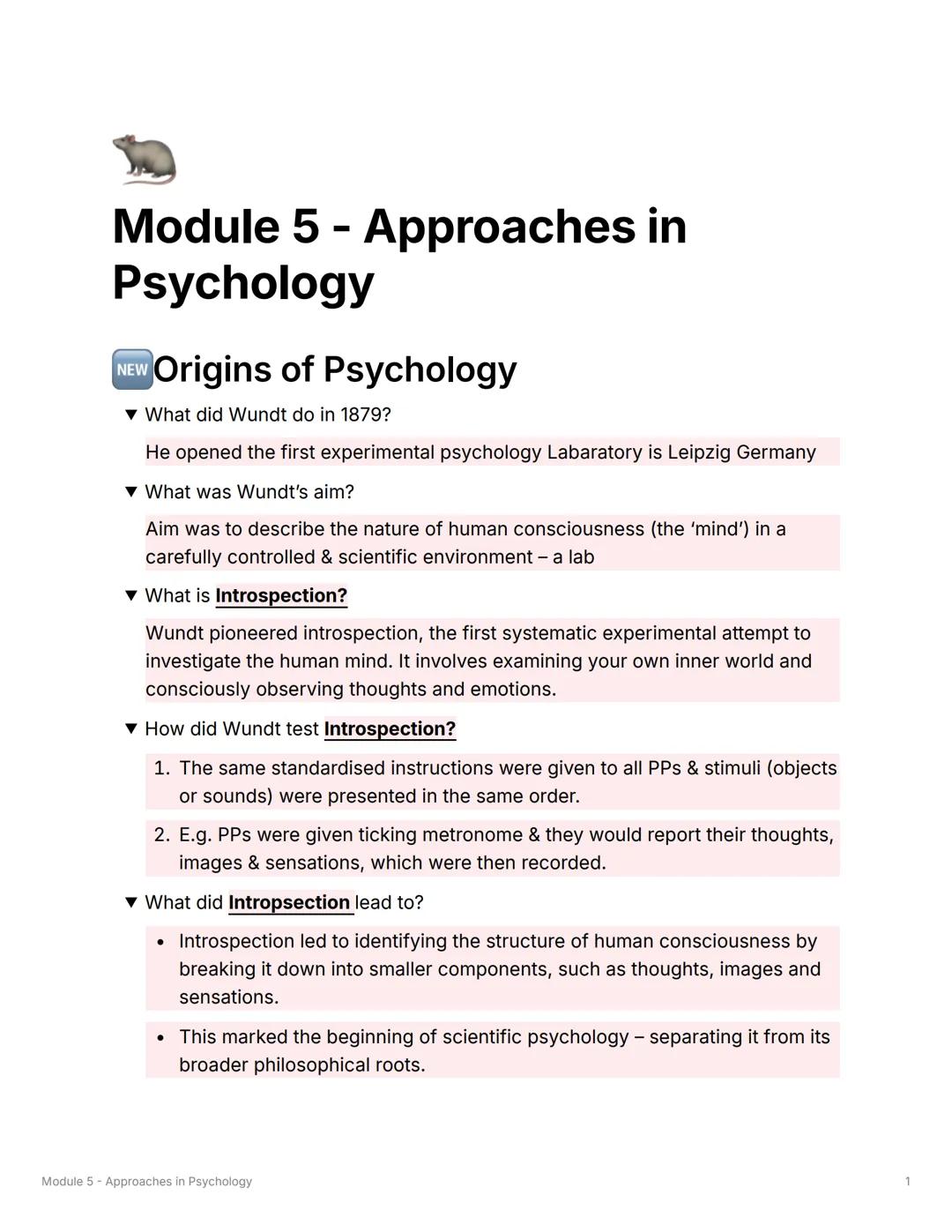
Back in 1879, Wilhelm Wundt opened the first psychology lab in Germany and basically invented psychology as we know it. His big idea was to study human consciousness (how our minds work) in a controlled, scientific way rather than just philosophising about it.
Wundt pioneered introspection - getting people to carefully observe and report their own thoughts and feelings. His participants would listen to a ticking metronome and describe exactly what was going on in their minds, which he'd record systematically.
This approach helped identify the basic building blocks of consciousness like thoughts, images, and sensations. Most importantly, it separated psychology from philosophy and made it a proper science for the first time.
Key Point: Wundt's work in 1879 marks the birth of scientific psychology, moving it away from pure philosophy into controlled laboratory research.

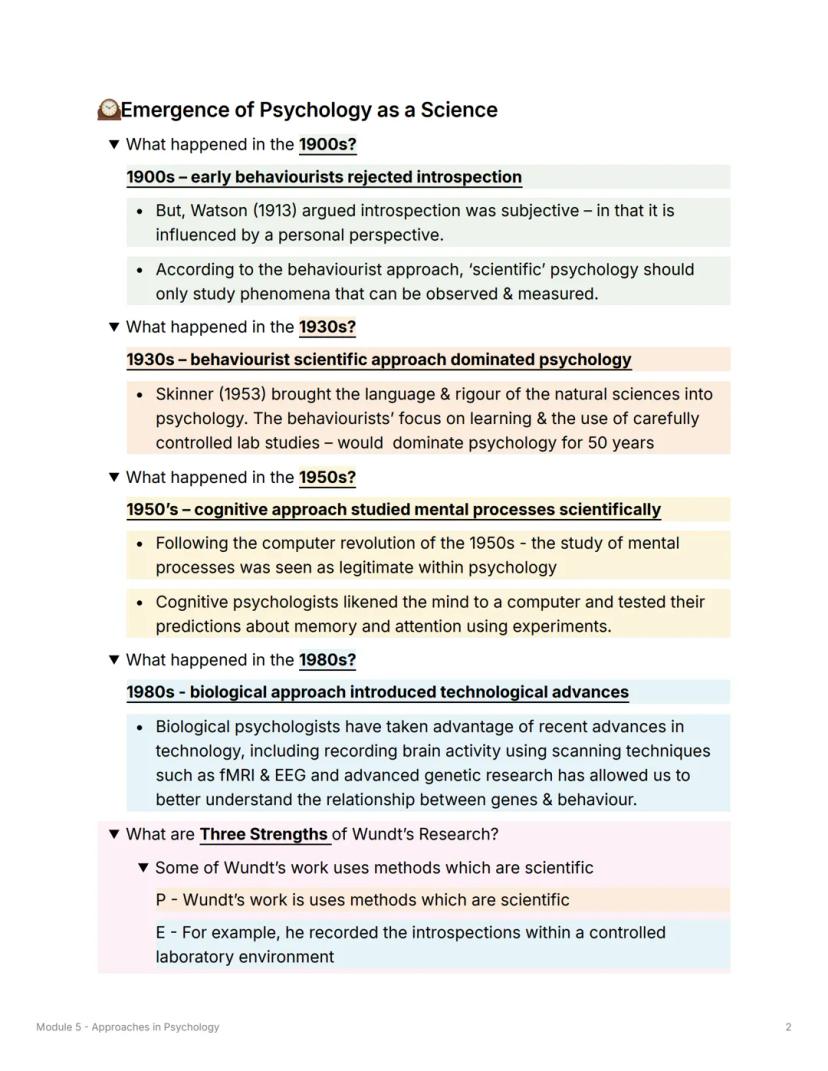
The early 1900s saw major changes as behaviourists like Watson rejected introspection completely. They argued it was too subjective - basically just people's personal opinions rather than hard facts that could be measured and tested.
By the 1930s, Skinner's behaviourist approach dominated psychology for 50 years. These researchers insisted that 'proper' psychology should only study things you can actually observe and measure, bringing the rigour of natural sciences into psychology.
The 1950s brought the cognitive revolution after computers were invented. Psychologists realised they could study mental processes scientifically by comparing the mind to a computer and testing predictions about memory and attention.
From the 1980s onwards, the biological approach took off thanks to brain scanning technology like fMRI and EEG, plus advances in genetic research that helped us understand how genes influence behaviour.
Remember: Each decade brought new scientific methods - from controlled labs to computer models to brain scans.
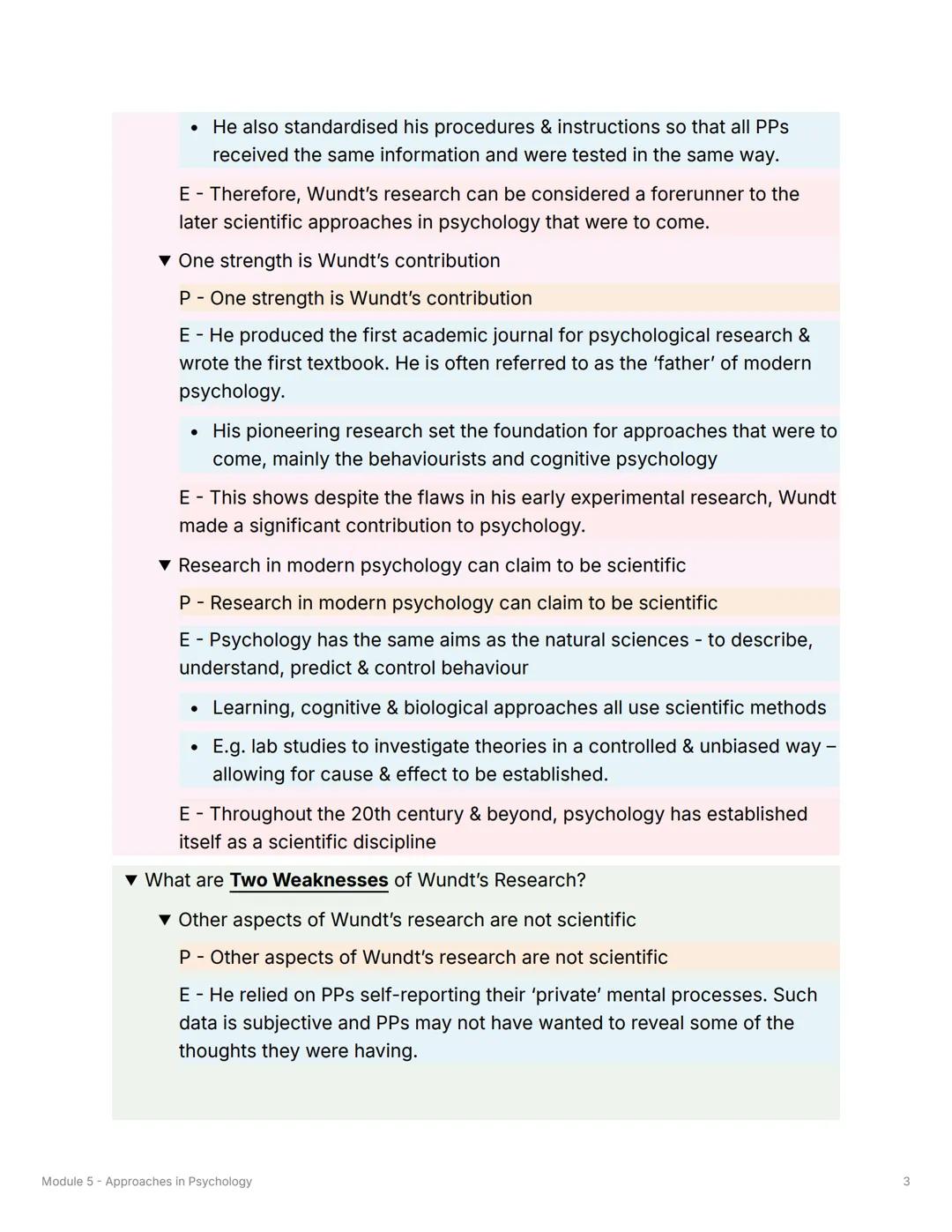
Wundt's contributions were massive - he created the first psychology journal, wrote the first textbook, and earned the title 'father of modern psychology'. His controlled laboratory methods and standardised procedures laid the foundation for all the scientific approaches that followed.
Modern psychology definitely counts as scientific because it shares the same goals as natural sciences: describing, understanding, predicting, and controlling behaviour. Most approaches use proper scientific methods like controlled experiments to establish cause and effect.
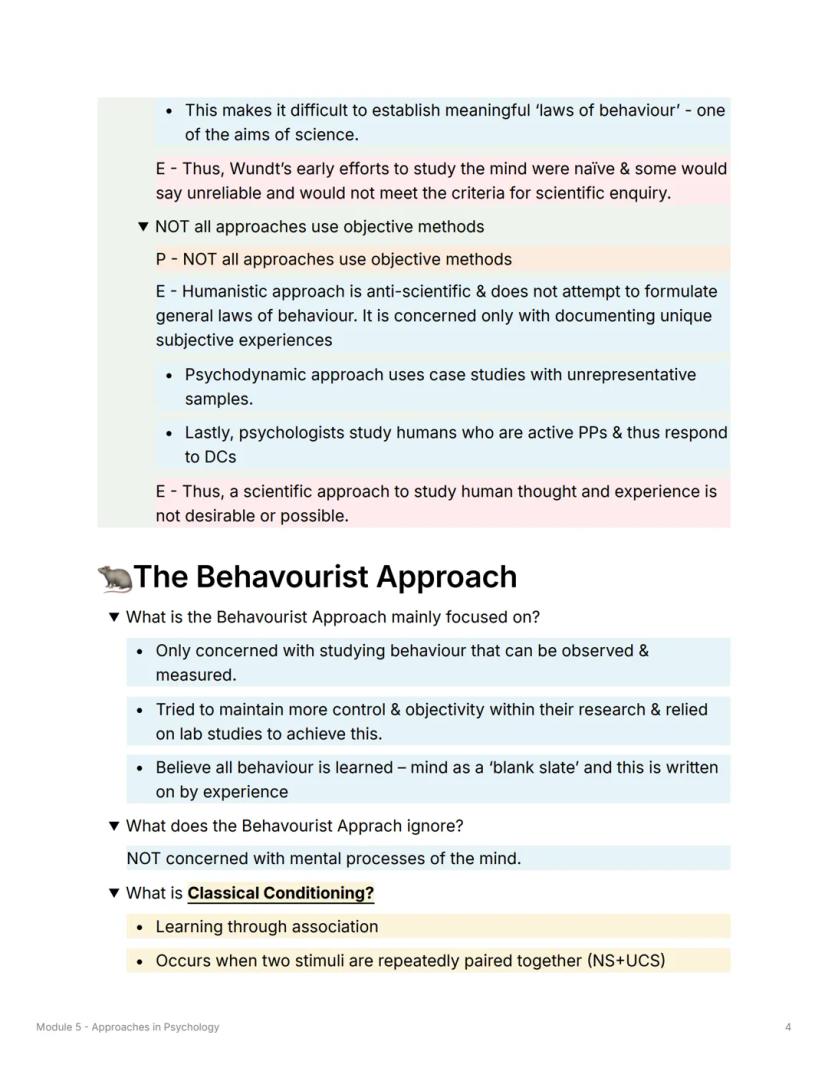
However, introspection had serious flaws. People reporting their private thoughts is incredibly subjective - they might lie, forget, or simply not understand what's happening in their own minds. This makes it impossible to create reliable 'laws of behaviour'.
Not all psychology approaches are scientific anyway. The humanistic approach deliberately avoids trying to create general laws, focusing instead on unique personal experiences that can't be measured objectively.
Exam Tip: You can argue both sides - psychology has scientific elements but also non-scientific approaches depending on what's being studied.
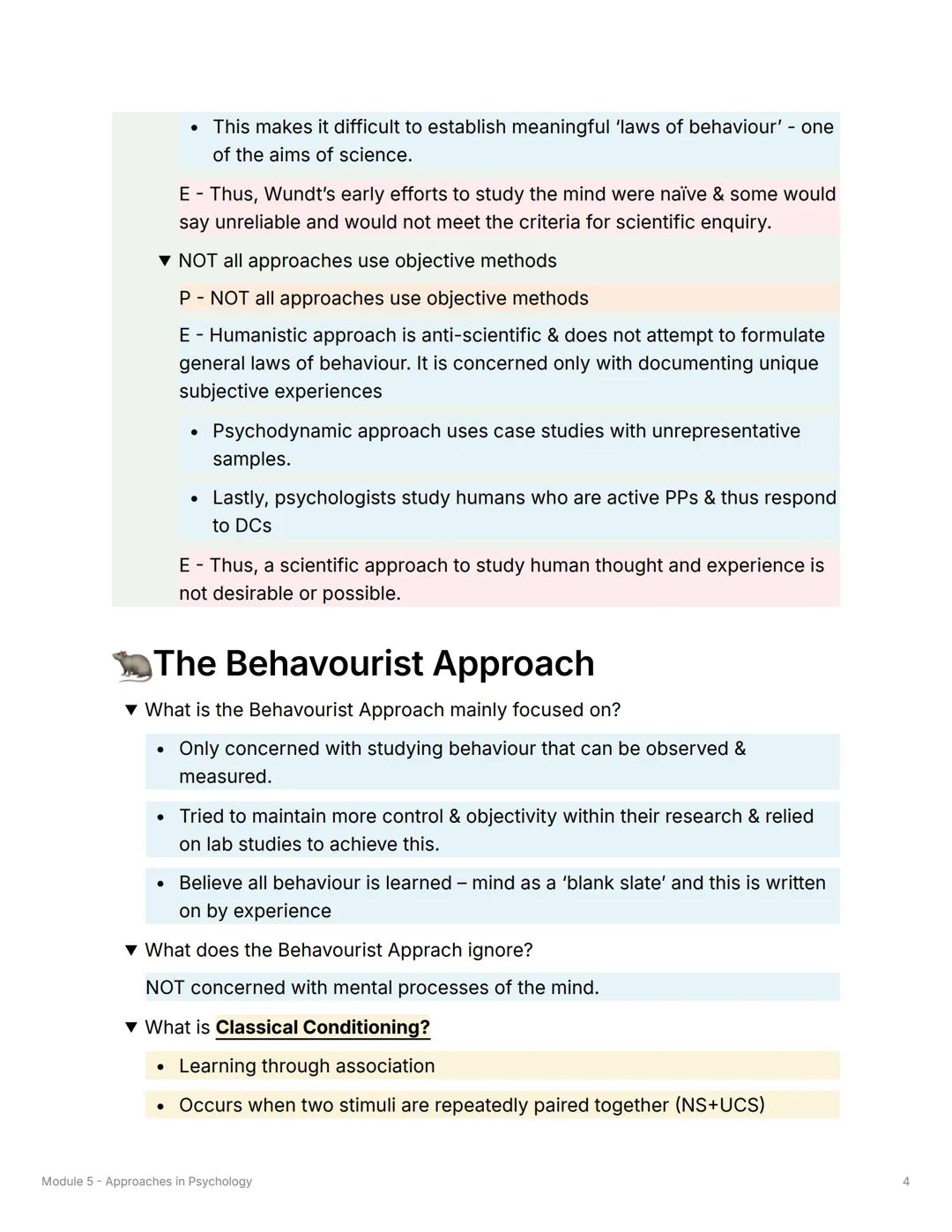
Behaviourists only cared about observable, measurable behaviour - they completely ignored mental processes and treated the mind like a 'blank slate' that gets written on by experience. Everything we do is learned through our environment.
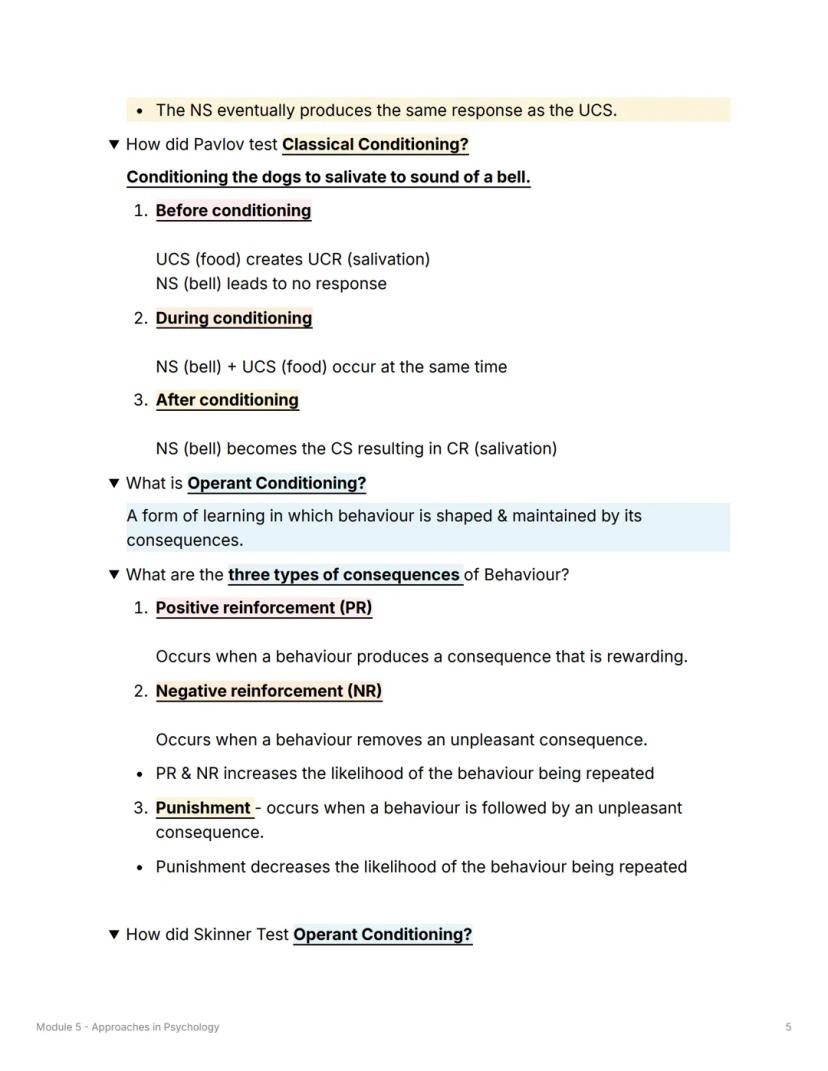
Classical conditioning is learning through association. Pavlov famously showed this by getting dogs to salivate when they heard a bell. He paired the bell (neutral stimulus) with food (unconditioned stimulus) repeatedly until the bell alone made them drool.
The process works in three stages: before conditioning (food causes salivation, bell doesn't), during conditioning , and after conditioning (bell alone causes salivation because it's now a conditioned stimulus).
Operant conditioning shapes behaviour through consequences. Positive reinforcement adds something pleasant, negative reinforcement removes something unpleasant (both increase behaviour), while punishment adds something unpleasant to decrease behaviour.
Memory Trick: Think of your phone - you keep checking it because of positive reinforcement (likes, messages) and negative reinforcement .
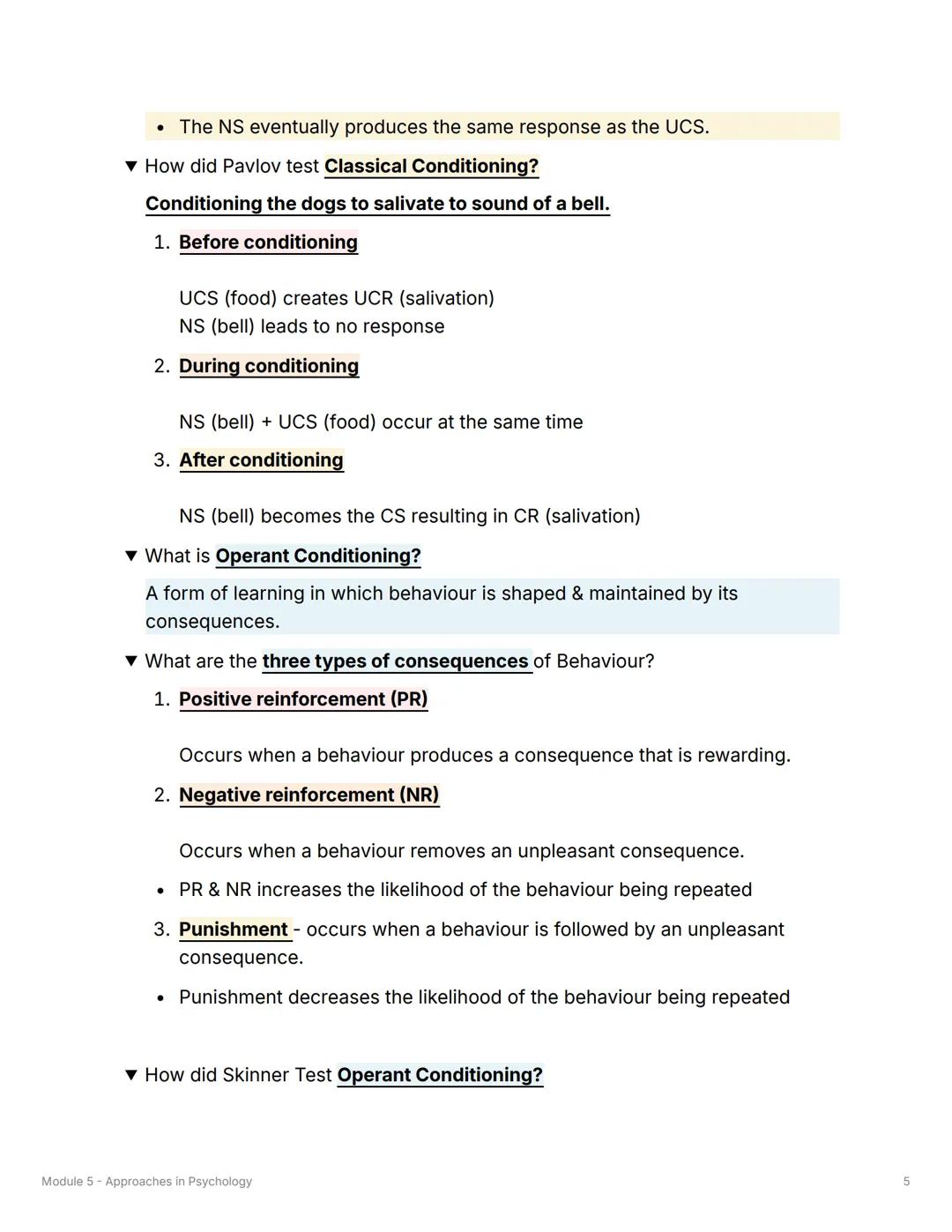
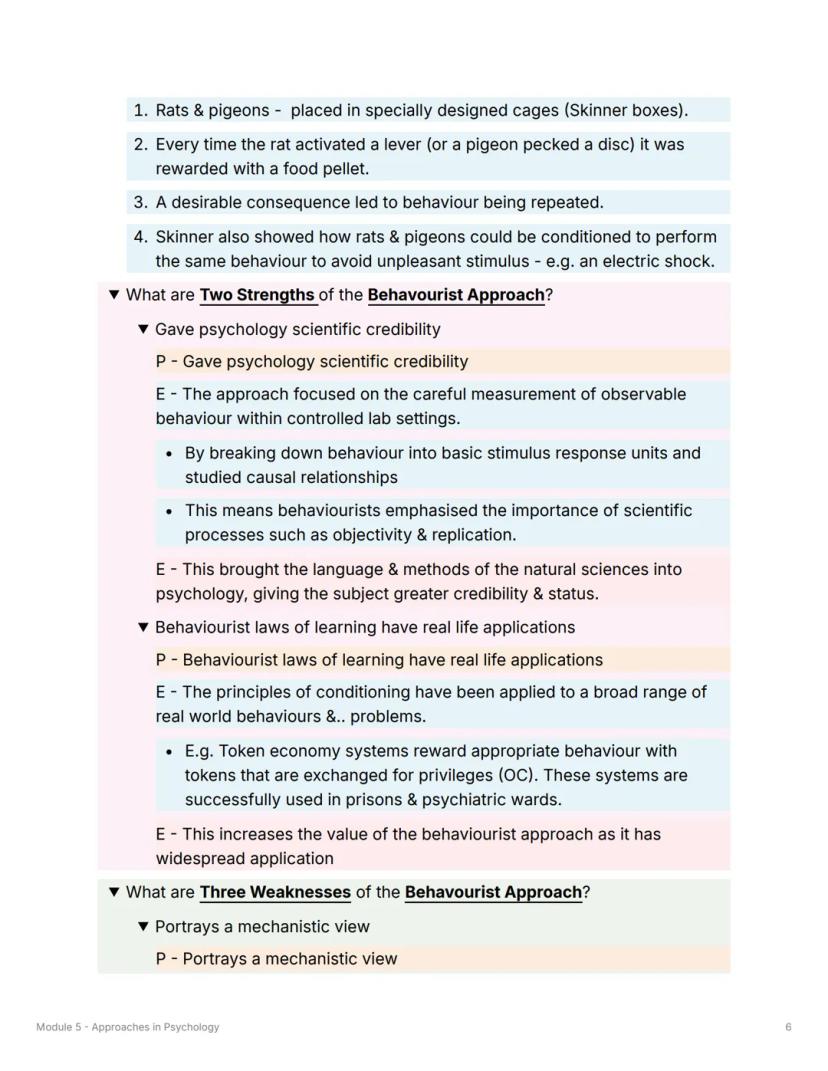
Skinner's experiments used specially designed cages (Skinner boxes) with rats and pigeons. Every time animals pressed a lever or pecked a disc, they got food pellets - showing how pleasant consequences increase behaviour repetition.
He also demonstrated negative reinforcement by training animals to perform behaviours that stopped electric shocks. This proved that removing unpleasant things is just as powerful as adding pleasant ones.
The behaviourist approach gave psychology scientific credibility by focusing on careful measurement in controlled conditions. Breaking behaviour down into stimulus-response units and studying cause-and-effect relationships brought proper scientific methods into psychology.
Real-world applications include token economy systems used in prisons and psychiatric wards, where people earn tokens for good behaviour that can be exchanged for privileges - proving these principles actually work in practice.
Think About It: You probably use operant conditioning daily - rewarding yourself after studying or avoiding behaviours that led to bad consequences before.
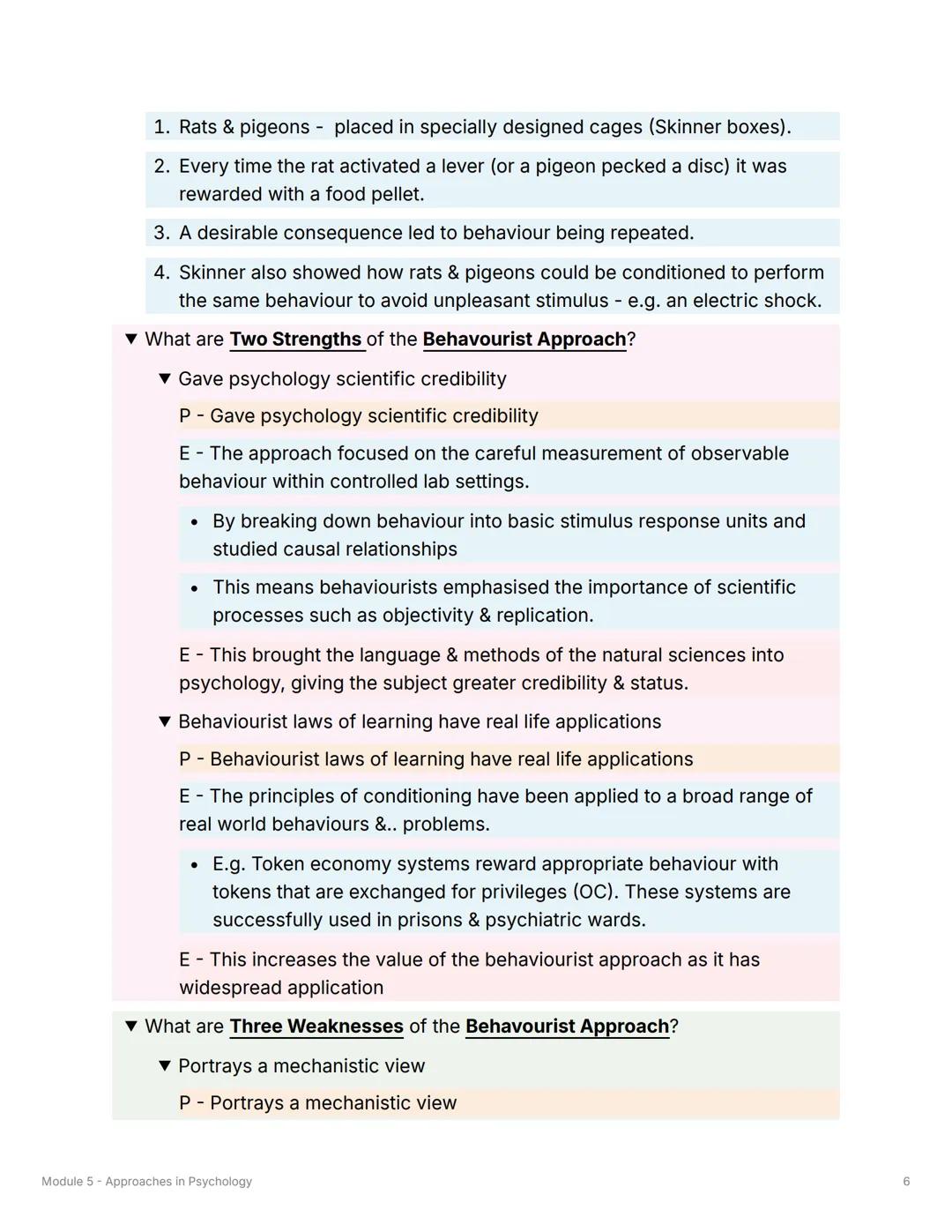
Behaviourism presents a mechanistic view that treats humans like passive machines responding to their environment. This ignores the active role our minds play in learning - we're not just robots reacting to stimuli.
It's also environmental determinism - claiming all behaviour comes from past conditioning and ignoring free will completely. Skinner argued free will is just an illusion, but this extreme position doesn't account for conscious decision-making.
Animal research raises ethical issues since animals were kept in harsh conditions, deliberately underfed to stay motivated by food rewards. While the research produced valuable insights, there are serious questions about whether the benefits justify the animal suffering.
Other approaches like Social Learning Theory and the cognitive approach have shown that mental processes during learning are crucial - we're much more active participants in our own learning than behaviourists suggested.
Critical Thinking: Consider whether the knowledge gained from animal experiments justifies the ethical costs - this debate continues in psychology today.
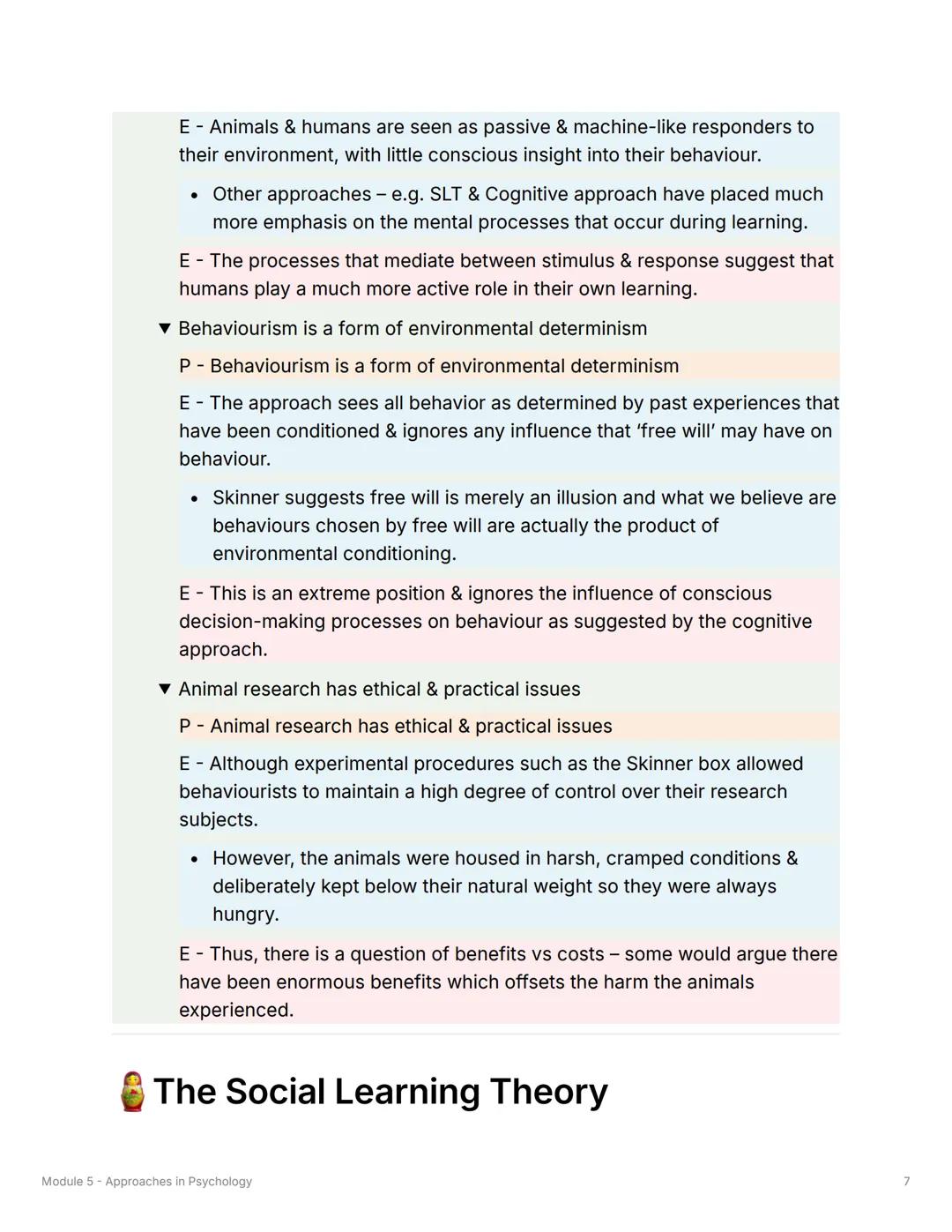
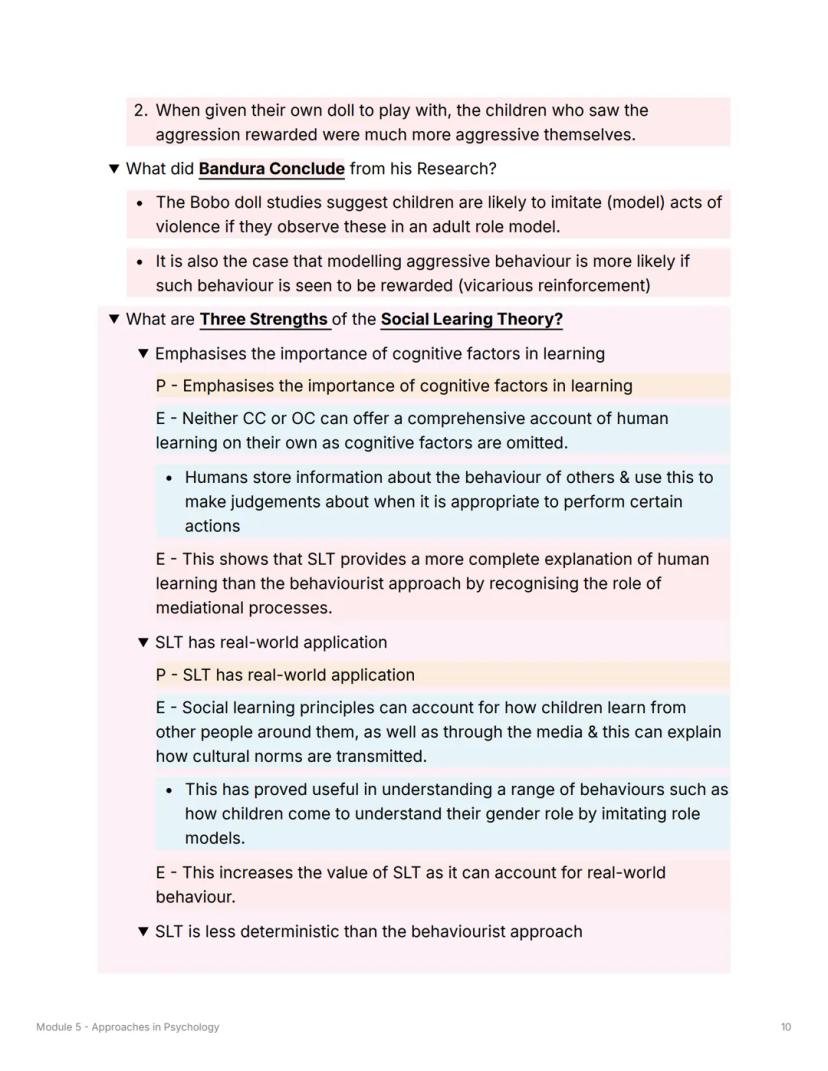
Social Learning Theory bridges behaviourism and cognitive approaches by recognising that we learn through observation, but mediational processes (mental factors) determine whether we actually copy what we see.
The four mediational processes are crucial: Attention (we must notice the behaviour), Retention (we must remember it), Reproduction (we must be physically able to copy it), and Motivation (the rewards must seem worth it).
Vicarious reinforcement means we observe what happens to others and copy behaviours that get rewarded while avoiding those that get punished. We don't need to experience consequences directly - we learn from watching others.
Identification explains why we're more likely to imitate people we see as similar to ourselves or who have high status and attractiveness. These role models have more influence on our behaviour than random strangers.
Real Example: You might copy a popular student's study habits if you see them getting good grades, especially if you identify with them in some way.
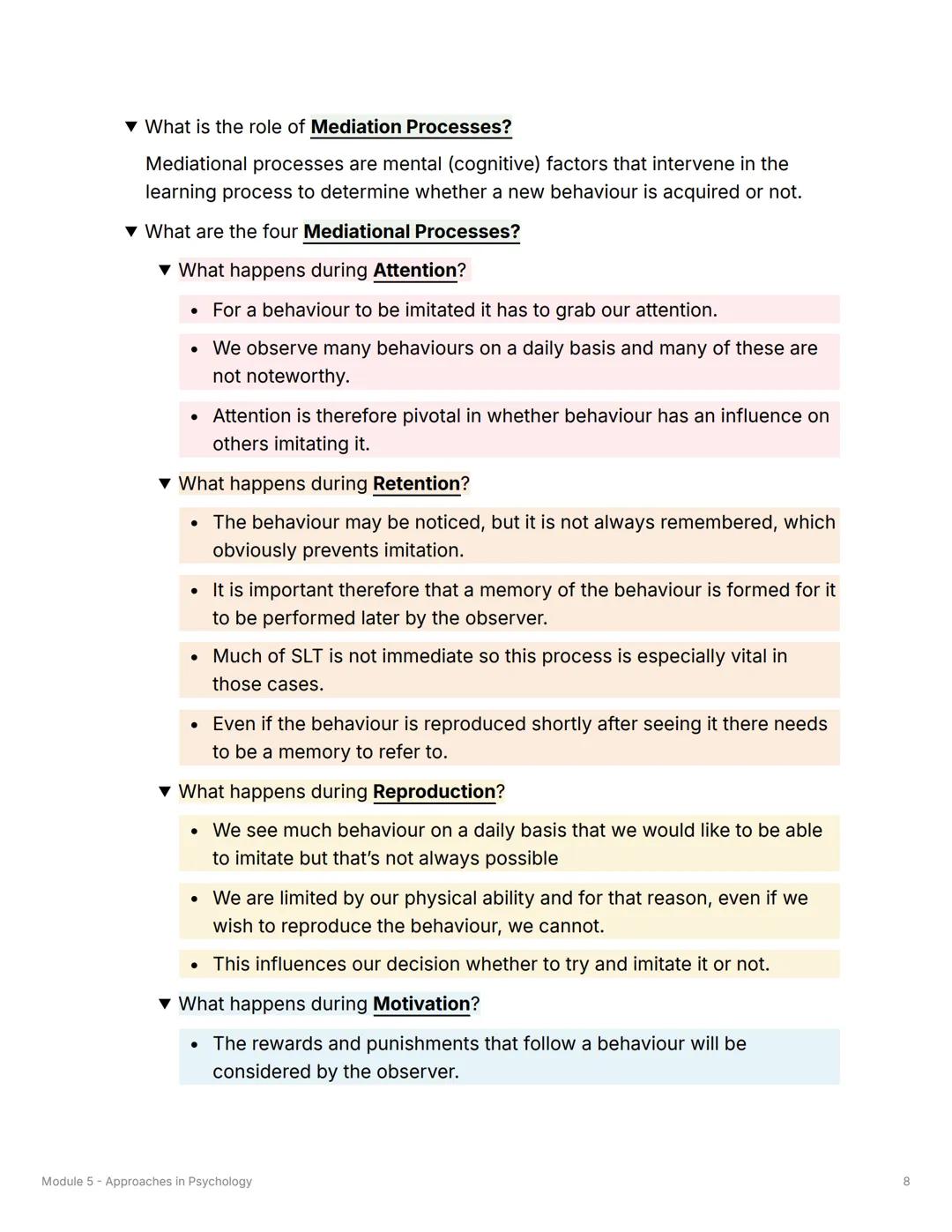
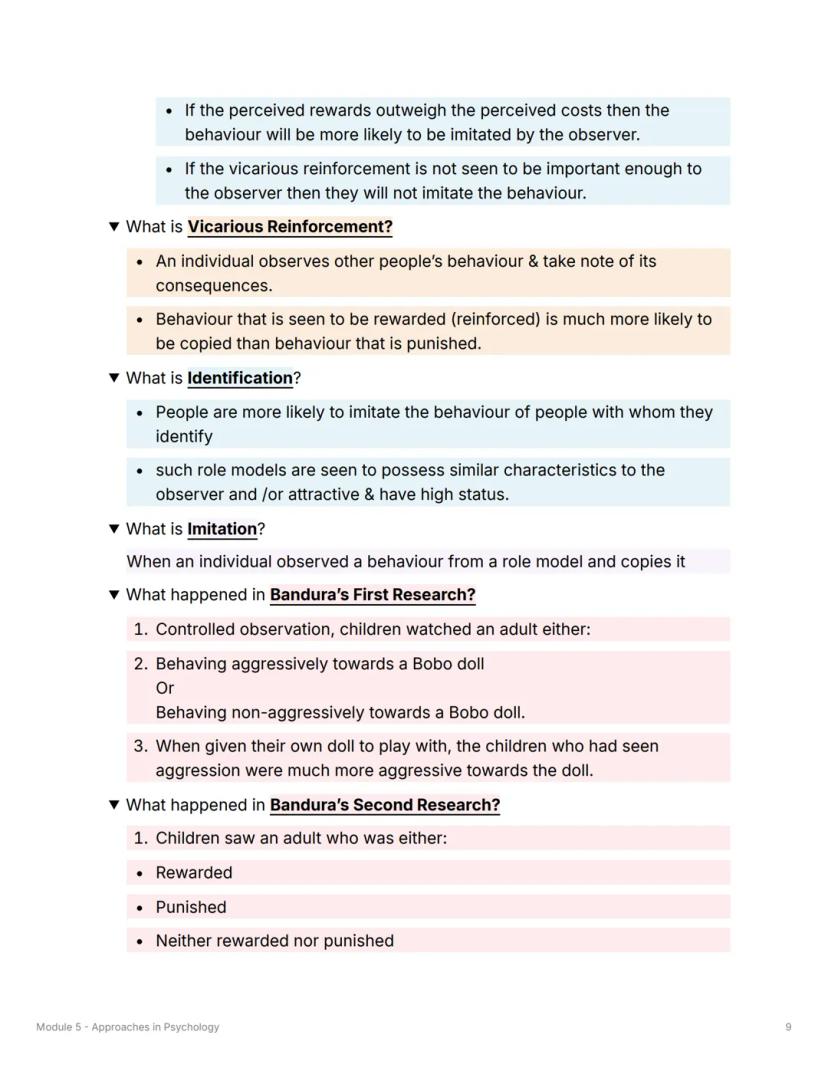
Bandura's first study showed children different adult behaviours with a Bobo doll - some saw aggression, others saw non-aggressive play. When given their own doll, children who witnessed aggression were much more aggressive themselves.
His second study explored vicarious reinforcement by showing children adults who were either rewarded, punished, or experienced no consequences for aggressive behaviour. Children who saw aggression rewarded were most likely to copy it.
These studies proved that children learn violence through observation and are more likely to imitate aggressive behaviour if they see it being rewarded. This has huge implications for understanding media influence on behaviour.
The research demonstrates how imitation works in practice - we don't just copy any behaviour we see, but we're influenced by the consequences others experience and whether we identify with the person we're observing.
Modern Relevance: These findings are still used today in debates about violent video games, films, and social media influence on young people's behaviour.
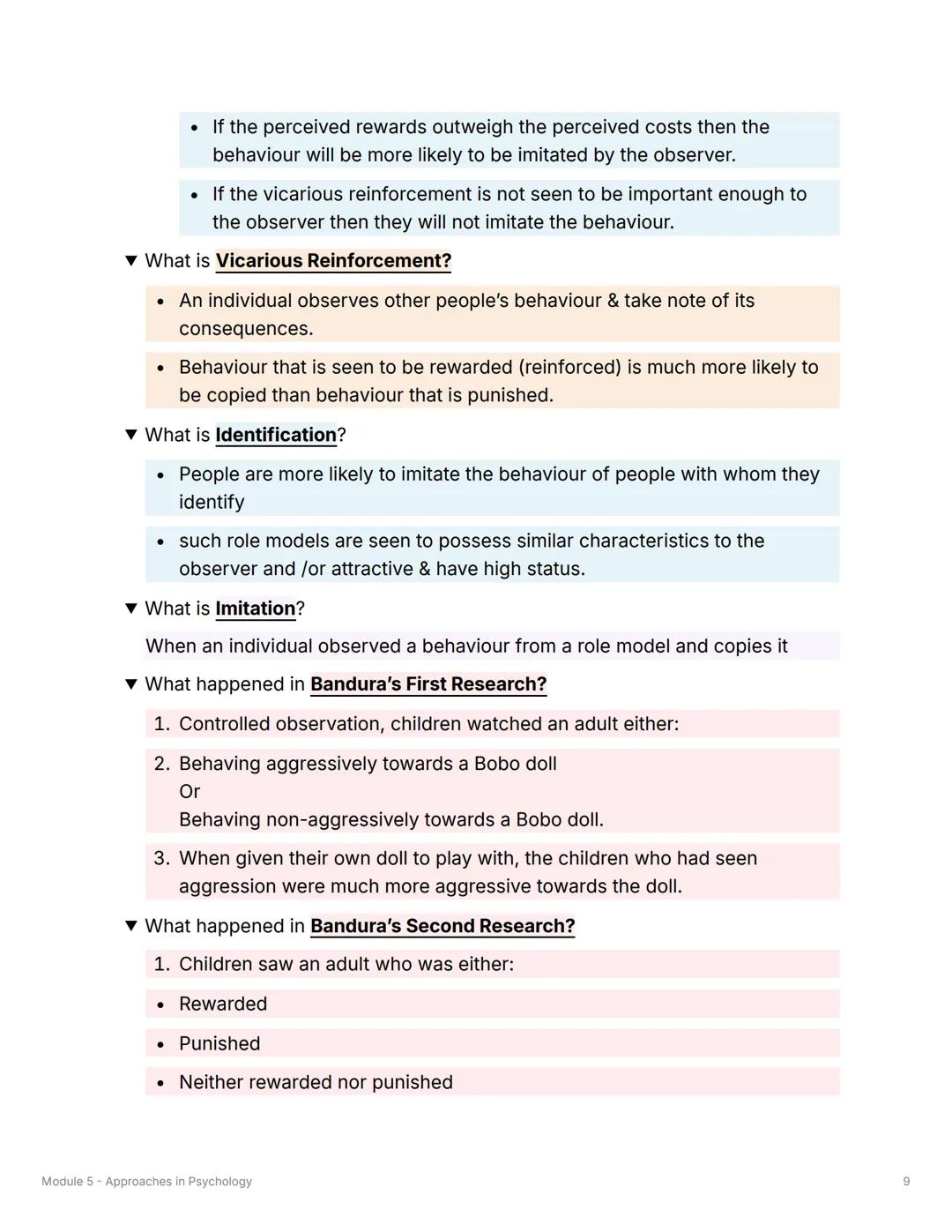
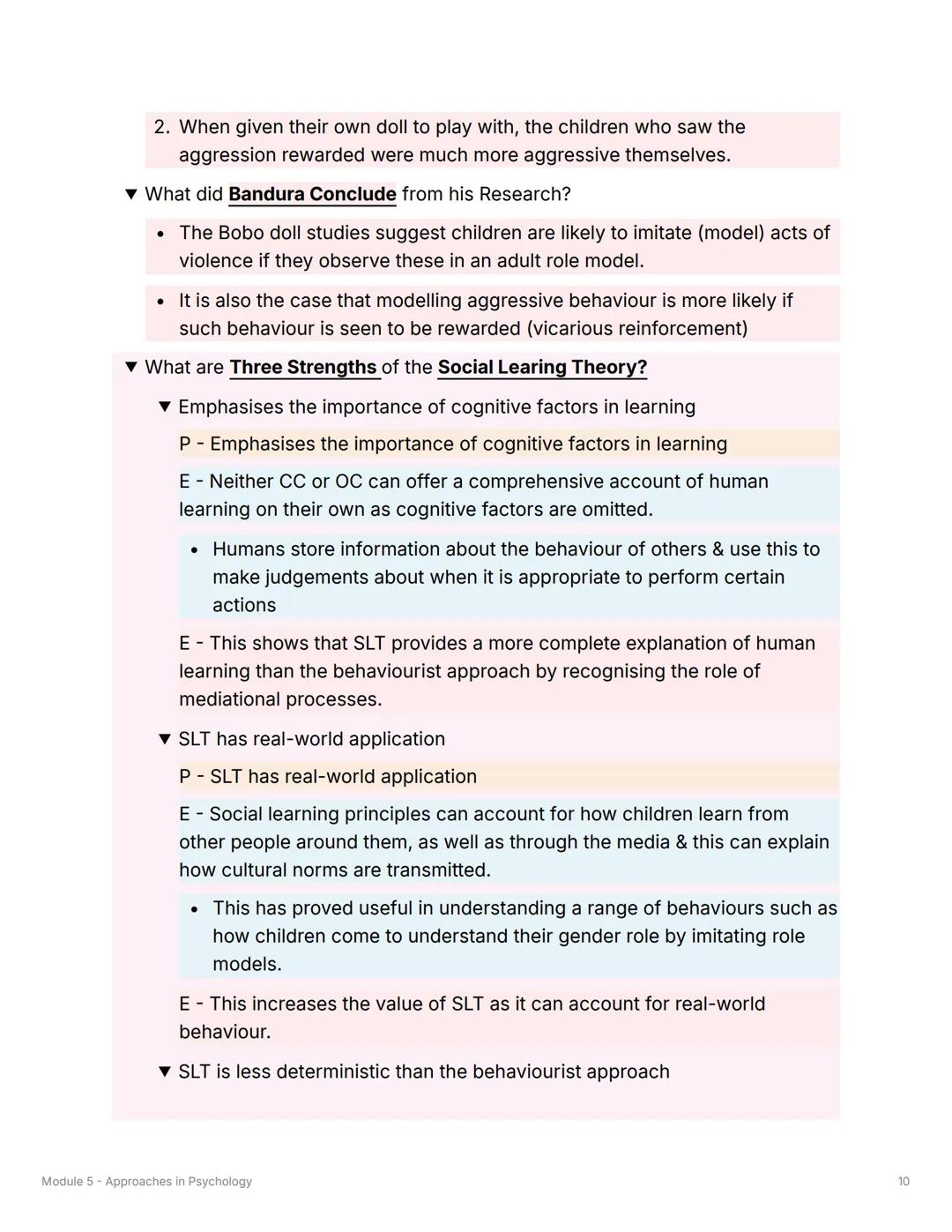
SLT emphasises cognitive factors that behaviourism completely ignored. Neither classical nor operant conditioning alone can explain human learning because they miss out mental processes - we store information about others' behaviour and make judgements about when to use it.
The theory has excellent real-world applications for understanding how children learn gender roles, cultural norms, and behaviours through media influence. It explains how knowledge and behaviours spread through society via observation and imitation.
SLT is less deterministic than pure behaviourism because it recognises we have some choice in what we pay attention to, remember, and decide to imitate. We're active participants rather than passive recipients of conditioning.
However, the theory still doesn't fully account for individual differences - why do people exposed to the same models sometimes learn completely different things? Personal factors like personality and existing beliefs play important roles too.
Exam Success: Remember that SLT provides a bridge between behaviourist and cognitive approaches, combining the best elements of both while addressing their individual weaknesses.
Our AI Companion is a student-focused AI tool that offers more than just answers. Built on millions of Knowunity resources, it provides relevant information, personalised study plans, quizzes, and content directly in the chat, adapting to your individual learning journey.
You can download the app from Google Play Store and Apple App Store.
That's right! Enjoy free access to study content, connect with fellow students, and get instant help – all at your fingertips.
App Store
Google Play
The app is very easy to use and well designed. I have found everything I was looking for so far and have been able to learn a lot from the presentations! I will definitely use the app for a class assignment! And of course it also helps a lot as an inspiration.
Stefan S
iOS user
This app is really great. There are so many study notes and help [...]. My problem subject is French, for example, and the app has so many options for help. Thanks to this app, I have improved my French. I would recommend it to anyone.
Samantha Klich
Android user
Wow, I am really amazed. I just tried the app because I've seen it advertised many times and was absolutely stunned. This app is THE HELP you want for school and above all, it offers so many things, such as workouts and fact sheets, which have been VERY helpful to me personally.
Anna
iOS user
Best app on earth! no words because it’s too good
Thomas R
iOS user
Just amazing. Let's me revise 10x better, this app is a quick 10/10. I highly recommend it to anyone. I can watch and search for notes. I can save them in the subject folder. I can revise it any time when I come back. If you haven't tried this app, you're really missing out.
Basil
Android user
This app has made me feel so much more confident in my exam prep, not only through boosting my own self confidence through the features that allow you to connect with others and feel less alone, but also through the way the app itself is centred around making you feel better. It is easy to navigate, fun to use, and helpful to anyone struggling in absolutely any way.
David K
iOS user
The app's just great! All I have to do is enter the topic in the search bar and I get the response real fast. I don't have to watch 10 YouTube videos to understand something, so I'm saving my time. Highly recommended!
Sudenaz Ocak
Android user
In school I was really bad at maths but thanks to the app, I am doing better now. I am so grateful that you made the app.
Greenlight Bonnie
Android user
very reliable app to help and grow your ideas of Maths, English and other related topics in your works. please use this app if your struggling in areas, this app is key for that. wish I'd of done a review before. and it's also free so don't worry about that.
Rohan U
Android user
I know a lot of apps use fake accounts to boost their reviews but this app deserves it all. Originally I was getting 4 in my English exams and this time I got a grade 7. I didn’t even know about this app three days until the exam and it has helped A LOT. Please actually trust me and use it as I’m sure you too will see developments.
Xander S
iOS user
THE QUIZES AND FLASHCARDS ARE SO USEFUL AND I LOVE Knowunity AI. IT ALSO IS LITREALLY LIKE CHATGPT BUT SMARTER!! HELPED ME WITH MY MASCARA PROBLEMS TOO!! AS WELL AS MY REAL SUBJECTS ! DUHHH 😍😁😲🤑💗✨🎀😮
Elisha
iOS user
This apps acc the goat. I find revision so boring but this app makes it so easy to organize it all and then you can ask the freeeee ai to test yourself so good and you can easily upload your own stuff. highly recommend as someone taking mocks now
Paul T
iOS user
The app is very easy to use and well designed. I have found everything I was looking for so far and have been able to learn a lot from the presentations! I will definitely use the app for a class assignment! And of course it also helps a lot as an inspiration.
Stefan S
iOS user
This app is really great. There are so many study notes and help [...]. My problem subject is French, for example, and the app has so many options for help. Thanks to this app, I have improved my French. I would recommend it to anyone.
Samantha Klich
Android user
Wow, I am really amazed. I just tried the app because I've seen it advertised many times and was absolutely stunned. This app is THE HELP you want for school and above all, it offers so many things, such as workouts and fact sheets, which have been VERY helpful to me personally.
Anna
iOS user
Best app on earth! no words because it’s too good
Thomas R
iOS user
Just amazing. Let's me revise 10x better, this app is a quick 10/10. I highly recommend it to anyone. I can watch and search for notes. I can save them in the subject folder. I can revise it any time when I come back. If you haven't tried this app, you're really missing out.
Basil
Android user
This app has made me feel so much more confident in my exam prep, not only through boosting my own self confidence through the features that allow you to connect with others and feel less alone, but also through the way the app itself is centred around making you feel better. It is easy to navigate, fun to use, and helpful to anyone struggling in absolutely any way.
David K
iOS user
The app's just great! All I have to do is enter the topic in the search bar and I get the response real fast. I don't have to watch 10 YouTube videos to understand something, so I'm saving my time. Highly recommended!
Sudenaz Ocak
Android user
In school I was really bad at maths but thanks to the app, I am doing better now. I am so grateful that you made the app.
Greenlight Bonnie
Android user
very reliable app to help and grow your ideas of Maths, English and other related topics in your works. please use this app if your struggling in areas, this app is key for that. wish I'd of done a review before. and it's also free so don't worry about that.
Rohan U
Android user
I know a lot of apps use fake accounts to boost their reviews but this app deserves it all. Originally I was getting 4 in my English exams and this time I got a grade 7. I didn’t even know about this app three days until the exam and it has helped A LOT. Please actually trust me and use it as I’m sure you too will see developments.
Xander S
iOS user
THE QUIZES AND FLASHCARDS ARE SO USEFUL AND I LOVE Knowunity AI. IT ALSO IS LITREALLY LIKE CHATGPT BUT SMARTER!! HELPED ME WITH MY MASCARA PROBLEMS TOO!! AS WELL AS MY REAL SUBJECTS ! DUHHH 😍😁😲🤑💗✨🎀😮
Elisha
iOS user
This apps acc the goat. I find revision so boring but this app makes it so easy to organize it all and then you can ask the freeeee ai to test yourself so good and you can easily upload your own stuff. highly recommend as someone taking mocks now
Paul T
iOS user
Zainab
@zainab_02839
Psychology has evolved from philosophical guesswork into a proper science over the past 150 years. This journey involves key figures like Wundt who started it all, followed by behaviourists who focused on observable actions, and social learning theorists who recognised... Show more
Access to all documents
Improve your grades
Join milions of students
Back in 1879, Wilhelm Wundt opened the first psychology lab in Germany and basically invented psychology as we know it. His big idea was to study human consciousness (how our minds work) in a controlled, scientific way rather than just philosophising about it.
Wundt pioneered introspection - getting people to carefully observe and report their own thoughts and feelings. His participants would listen to a ticking metronome and describe exactly what was going on in their minds, which he'd record systematically.
This approach helped identify the basic building blocks of consciousness like thoughts, images, and sensations. Most importantly, it separated psychology from philosophy and made it a proper science for the first time.
Key Point: Wundt's work in 1879 marks the birth of scientific psychology, moving it away from pure philosophy into controlled laboratory research.
Access to all documents
Improve your grades
Join milions of students
The early 1900s saw major changes as behaviourists like Watson rejected introspection completely. They argued it was too subjective - basically just people's personal opinions rather than hard facts that could be measured and tested.
By the 1930s, Skinner's behaviourist approach dominated psychology for 50 years. These researchers insisted that 'proper' psychology should only study things you can actually observe and measure, bringing the rigour of natural sciences into psychology.
The 1950s brought the cognitive revolution after computers were invented. Psychologists realised they could study mental processes scientifically by comparing the mind to a computer and testing predictions about memory and attention.
From the 1980s onwards, the biological approach took off thanks to brain scanning technology like fMRI and EEG, plus advances in genetic research that helped us understand how genes influence behaviour.
Remember: Each decade brought new scientific methods - from controlled labs to computer models to brain scans.
Access to all documents
Improve your grades
Join milions of students
Wundt's contributions were massive - he created the first psychology journal, wrote the first textbook, and earned the title 'father of modern psychology'. His controlled laboratory methods and standardised procedures laid the foundation for all the scientific approaches that followed.
Modern psychology definitely counts as scientific because it shares the same goals as natural sciences: describing, understanding, predicting, and controlling behaviour. Most approaches use proper scientific methods like controlled experiments to establish cause and effect.
However, introspection had serious flaws. People reporting their private thoughts is incredibly subjective - they might lie, forget, or simply not understand what's happening in their own minds. This makes it impossible to create reliable 'laws of behaviour'.
Not all psychology approaches are scientific anyway. The humanistic approach deliberately avoids trying to create general laws, focusing instead on unique personal experiences that can't be measured objectively.
Exam Tip: You can argue both sides - psychology has scientific elements but also non-scientific approaches depending on what's being studied.
Access to all documents
Improve your grades
Join milions of students
Behaviourists only cared about observable, measurable behaviour - they completely ignored mental processes and treated the mind like a 'blank slate' that gets written on by experience. Everything we do is learned through our environment.
Classical conditioning is learning through association. Pavlov famously showed this by getting dogs to salivate when they heard a bell. He paired the bell (neutral stimulus) with food (unconditioned stimulus) repeatedly until the bell alone made them drool.
The process works in three stages: before conditioning (food causes salivation, bell doesn't), during conditioning , and after conditioning (bell alone causes salivation because it's now a conditioned stimulus).
Operant conditioning shapes behaviour through consequences. Positive reinforcement adds something pleasant, negative reinforcement removes something unpleasant (both increase behaviour), while punishment adds something unpleasant to decrease behaviour.
Memory Trick: Think of your phone - you keep checking it because of positive reinforcement (likes, messages) and negative reinforcement .
Access to all documents
Improve your grades
Join milions of students
Skinner's experiments used specially designed cages (Skinner boxes) with rats and pigeons. Every time animals pressed a lever or pecked a disc, they got food pellets - showing how pleasant consequences increase behaviour repetition.
He also demonstrated negative reinforcement by training animals to perform behaviours that stopped electric shocks. This proved that removing unpleasant things is just as powerful as adding pleasant ones.
The behaviourist approach gave psychology scientific credibility by focusing on careful measurement in controlled conditions. Breaking behaviour down into stimulus-response units and studying cause-and-effect relationships brought proper scientific methods into psychology.
Real-world applications include token economy systems used in prisons and psychiatric wards, where people earn tokens for good behaviour that can be exchanged for privileges - proving these principles actually work in practice.
Think About It: You probably use operant conditioning daily - rewarding yourself after studying or avoiding behaviours that led to bad consequences before.
Access to all documents
Improve your grades
Join milions of students
Behaviourism presents a mechanistic view that treats humans like passive machines responding to their environment. This ignores the active role our minds play in learning - we're not just robots reacting to stimuli.
It's also environmental determinism - claiming all behaviour comes from past conditioning and ignoring free will completely. Skinner argued free will is just an illusion, but this extreme position doesn't account for conscious decision-making.
Animal research raises ethical issues since animals were kept in harsh conditions, deliberately underfed to stay motivated by food rewards. While the research produced valuable insights, there are serious questions about whether the benefits justify the animal suffering.
Other approaches like Social Learning Theory and the cognitive approach have shown that mental processes during learning are crucial - we're much more active participants in our own learning than behaviourists suggested.
Critical Thinking: Consider whether the knowledge gained from animal experiments justifies the ethical costs - this debate continues in psychology today.
Access to all documents
Improve your grades
Join milions of students
Social Learning Theory bridges behaviourism and cognitive approaches by recognising that we learn through observation, but mediational processes (mental factors) determine whether we actually copy what we see.
The four mediational processes are crucial: Attention (we must notice the behaviour), Retention (we must remember it), Reproduction (we must be physically able to copy it), and Motivation (the rewards must seem worth it).
Vicarious reinforcement means we observe what happens to others and copy behaviours that get rewarded while avoiding those that get punished. We don't need to experience consequences directly - we learn from watching others.
Identification explains why we're more likely to imitate people we see as similar to ourselves or who have high status and attractiveness. These role models have more influence on our behaviour than random strangers.
Real Example: You might copy a popular student's study habits if you see them getting good grades, especially if you identify with them in some way.
Access to all documents
Improve your grades
Join milions of students
Bandura's first study showed children different adult behaviours with a Bobo doll - some saw aggression, others saw non-aggressive play. When given their own doll, children who witnessed aggression were much more aggressive themselves.
His second study explored vicarious reinforcement by showing children adults who were either rewarded, punished, or experienced no consequences for aggressive behaviour. Children who saw aggression rewarded were most likely to copy it.
These studies proved that children learn violence through observation and are more likely to imitate aggressive behaviour if they see it being rewarded. This has huge implications for understanding media influence on behaviour.
The research demonstrates how imitation works in practice - we don't just copy any behaviour we see, but we're influenced by the consequences others experience and whether we identify with the person we're observing.
Modern Relevance: These findings are still used today in debates about violent video games, films, and social media influence on young people's behaviour.
Access to all documents
Improve your grades
Join milions of students
SLT emphasises cognitive factors that behaviourism completely ignored. Neither classical nor operant conditioning alone can explain human learning because they miss out mental processes - we store information about others' behaviour and make judgements about when to use it.
The theory has excellent real-world applications for understanding how children learn gender roles, cultural norms, and behaviours through media influence. It explains how knowledge and behaviours spread through society via observation and imitation.
SLT is less deterministic than pure behaviourism because it recognises we have some choice in what we pay attention to, remember, and decide to imitate. We're active participants rather than passive recipients of conditioning.
However, the theory still doesn't fully account for individual differences - why do people exposed to the same models sometimes learn completely different things? Personal factors like personality and existing beliefs play important roles too.
Exam Success: Remember that SLT provides a bridge between behaviourist and cognitive approaches, combining the best elements of both while addressing their individual weaknesses.
Access to all documents
Improve your grades
Join milions of students
Our AI Companion is a student-focused AI tool that offers more than just answers. Built on millions of Knowunity resources, it provides relevant information, personalised study plans, quizzes, and content directly in the chat, adapting to your individual learning journey.
You can download the app from Google Play Store and Apple App Store.
That's right! Enjoy free access to study content, connect with fellow students, and get instant help – all at your fingertips.
7
Smart Tools NEW
Transform this note into: ✓ 50+ Practice Questions ✓ Interactive Flashcards ✓ Full Mock Exam ✓ Essay Outlines
App Store
Google Play
The app is very easy to use and well designed. I have found everything I was looking for so far and have been able to learn a lot from the presentations! I will definitely use the app for a class assignment! And of course it also helps a lot as an inspiration.
Stefan S
iOS user
This app is really great. There are so many study notes and help [...]. My problem subject is French, for example, and the app has so many options for help. Thanks to this app, I have improved my French. I would recommend it to anyone.
Samantha Klich
Android user
Wow, I am really amazed. I just tried the app because I've seen it advertised many times and was absolutely stunned. This app is THE HELP you want for school and above all, it offers so many things, such as workouts and fact sheets, which have been VERY helpful to me personally.
Anna
iOS user
Best app on earth! no words because it’s too good
Thomas R
iOS user
Just amazing. Let's me revise 10x better, this app is a quick 10/10. I highly recommend it to anyone. I can watch and search for notes. I can save them in the subject folder. I can revise it any time when I come back. If you haven't tried this app, you're really missing out.
Basil
Android user
This app has made me feel so much more confident in my exam prep, not only through boosting my own self confidence through the features that allow you to connect with others and feel less alone, but also through the way the app itself is centred around making you feel better. It is easy to navigate, fun to use, and helpful to anyone struggling in absolutely any way.
David K
iOS user
The app's just great! All I have to do is enter the topic in the search bar and I get the response real fast. I don't have to watch 10 YouTube videos to understand something, so I'm saving my time. Highly recommended!
Sudenaz Ocak
Android user
In school I was really bad at maths but thanks to the app, I am doing better now. I am so grateful that you made the app.
Greenlight Bonnie
Android user
very reliable app to help and grow your ideas of Maths, English and other related topics in your works. please use this app if your struggling in areas, this app is key for that. wish I'd of done a review before. and it's also free so don't worry about that.
Rohan U
Android user
I know a lot of apps use fake accounts to boost their reviews but this app deserves it all. Originally I was getting 4 in my English exams and this time I got a grade 7. I didn’t even know about this app three days until the exam and it has helped A LOT. Please actually trust me and use it as I’m sure you too will see developments.
Xander S
iOS user
THE QUIZES AND FLASHCARDS ARE SO USEFUL AND I LOVE Knowunity AI. IT ALSO IS LITREALLY LIKE CHATGPT BUT SMARTER!! HELPED ME WITH MY MASCARA PROBLEMS TOO!! AS WELL AS MY REAL SUBJECTS ! DUHHH 😍😁😲🤑💗✨🎀😮
Elisha
iOS user
This apps acc the goat. I find revision so boring but this app makes it so easy to organize it all and then you can ask the freeeee ai to test yourself so good and you can easily upload your own stuff. highly recommend as someone taking mocks now
Paul T
iOS user
The app is very easy to use and well designed. I have found everything I was looking for so far and have been able to learn a lot from the presentations! I will definitely use the app for a class assignment! And of course it also helps a lot as an inspiration.
Stefan S
iOS user
This app is really great. There are so many study notes and help [...]. My problem subject is French, for example, and the app has so many options for help. Thanks to this app, I have improved my French. I would recommend it to anyone.
Samantha Klich
Android user
Wow, I am really amazed. I just tried the app because I've seen it advertised many times and was absolutely stunned. This app is THE HELP you want for school and above all, it offers so many things, such as workouts and fact sheets, which have been VERY helpful to me personally.
Anna
iOS user
Best app on earth! no words because it’s too good
Thomas R
iOS user
Just amazing. Let's me revise 10x better, this app is a quick 10/10. I highly recommend it to anyone. I can watch and search for notes. I can save them in the subject folder. I can revise it any time when I come back. If you haven't tried this app, you're really missing out.
Basil
Android user
This app has made me feel so much more confident in my exam prep, not only through boosting my own self confidence through the features that allow you to connect with others and feel less alone, but also through the way the app itself is centred around making you feel better. It is easy to navigate, fun to use, and helpful to anyone struggling in absolutely any way.
David K
iOS user
The app's just great! All I have to do is enter the topic in the search bar and I get the response real fast. I don't have to watch 10 YouTube videos to understand something, so I'm saving my time. Highly recommended!
Sudenaz Ocak
Android user
In school I was really bad at maths but thanks to the app, I am doing better now. I am so grateful that you made the app.
Greenlight Bonnie
Android user
very reliable app to help and grow your ideas of Maths, English and other related topics in your works. please use this app if your struggling in areas, this app is key for that. wish I'd of done a review before. and it's also free so don't worry about that.
Rohan U
Android user
I know a lot of apps use fake accounts to boost their reviews but this app deserves it all. Originally I was getting 4 in my English exams and this time I got a grade 7. I didn’t even know about this app three days until the exam and it has helped A LOT. Please actually trust me and use it as I’m sure you too will see developments.
Xander S
iOS user
THE QUIZES AND FLASHCARDS ARE SO USEFUL AND I LOVE Knowunity AI. IT ALSO IS LITREALLY LIKE CHATGPT BUT SMARTER!! HELPED ME WITH MY MASCARA PROBLEMS TOO!! AS WELL AS MY REAL SUBJECTS ! DUHHH 😍😁😲🤑💗✨🎀😮
Elisha
iOS user
This apps acc the goat. I find revision so boring but this app makes it so easy to organize it all and then you can ask the freeeee ai to test yourself so good and you can easily upload your own stuff. highly recommend as someone taking mocks now
Paul T
iOS user