Energy Resources and Sustainability
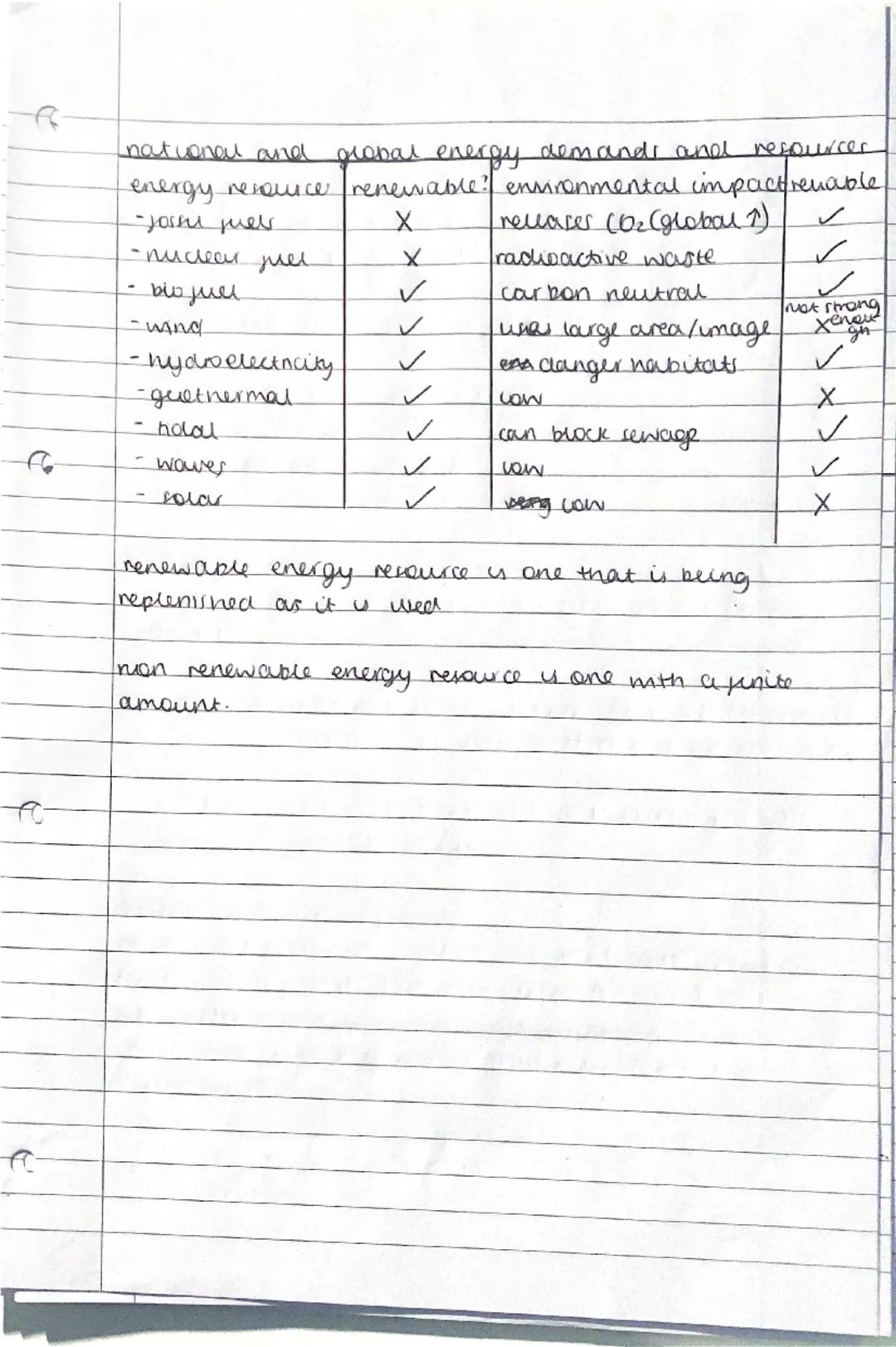
Energy resources split into two crucial categories that'll definitely appear in your exams. Renewable resources like wind, solar, and hydroelectricity replenish themselves naturally, whilst non-renewable resources like fossil fuels and nuclear fuel have finite amounts.
Each energy source comes with trade-offs you need to understand. Fossil fuels release CO₂ contributing to climate change, whilst nuclear power creates radioactive waste but produces no greenhouse gases during operation. Wind and solar are clean but require large areas and don't work consistently.
Carbon neutral energy sources either produce no CO₂ or absorb as much as they release. Biomass can be carbon neutral because plants absorb CO₂ as they grow, balancing out emissions when burned.
The choice of energy resources depends on local factors - sunny countries favour solar, windy coastlines suit wind farms, and mountainous regions often use hydroelectricity.
Key Point: There's no perfect energy source - each involves compromises between environmental impact, cost, reliability, and availability.


 Sociology