Circuit Symbols You Need to Know
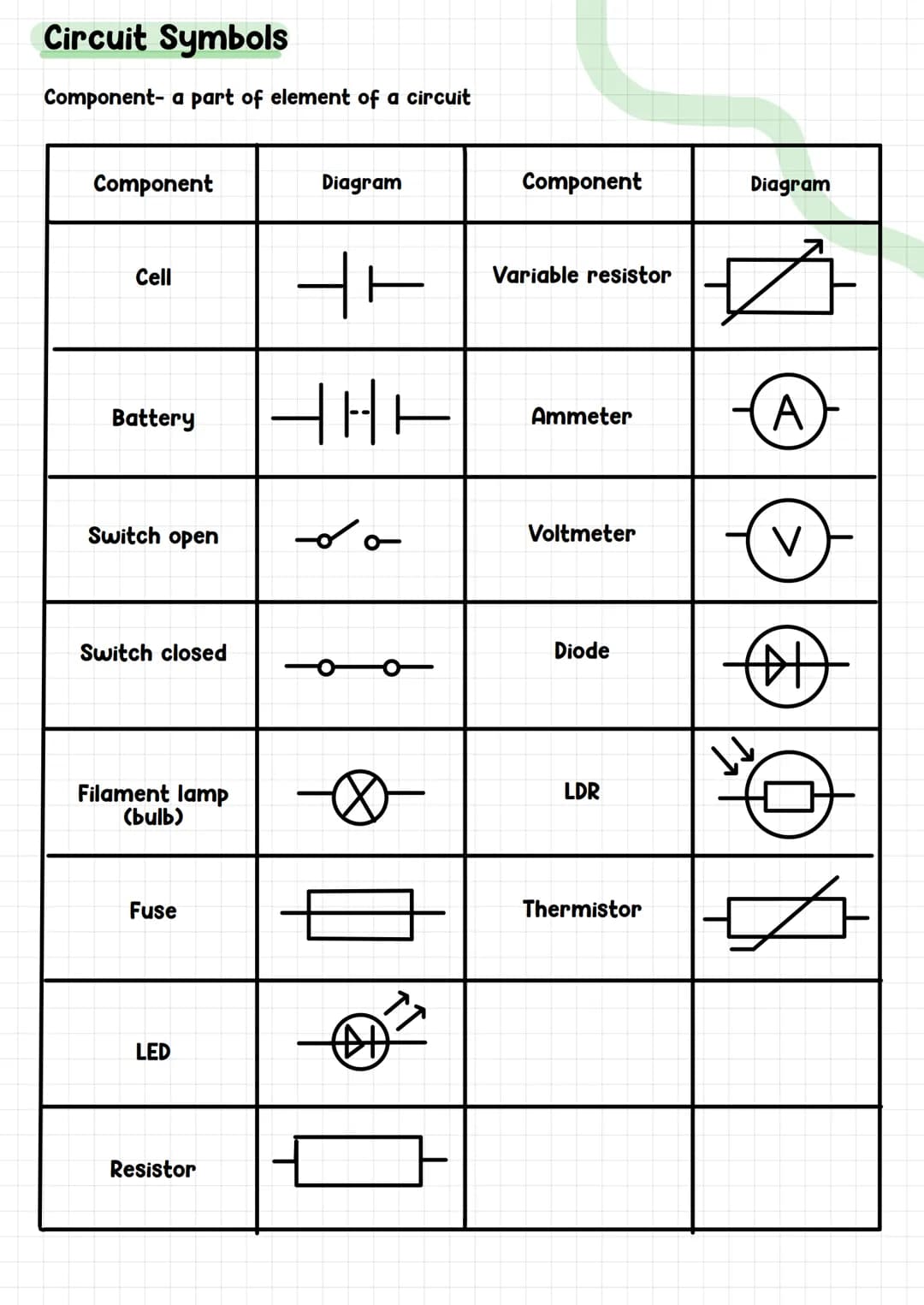
Think of circuit symbols as a universal language that electricians and engineers use worldwide. Each component (that's any part or element of a circuit) has its own unique symbol that tells you exactly what it does.
The most basic symbols include the cell (a single battery unit) and battery (multiple cells together), which provide the power for your circuit. You'll also see switches - drawn as a gap when open and a complete line when closed - that control whether electricity can flow.
Resistors look like rectangular boxes and control how much current flows through a circuit. Their cousin, the variable resistor, has an arrow through it showing you can adjust its resistance. Filament lamps (ordinary bulbs) are drawn as circles with crosses inside.
Quick Tip: The letter symbols A and V inside circles represent ammeter and voltmeter - these measure current and voltage respectively, and you'll use them loads in practical work.
More advanced components include diodes (triangles with lines that only let current flow one way), LEDs (like diodes but they light up), and smart resistors like LDRs light−dependentresistors and thermistors that change resistance based on light or temperature. Don't forget the fuse - your circuit's safety guard that breaks if too much current flows!



 Physics
 Sociology