Understanding Basic Inequalities
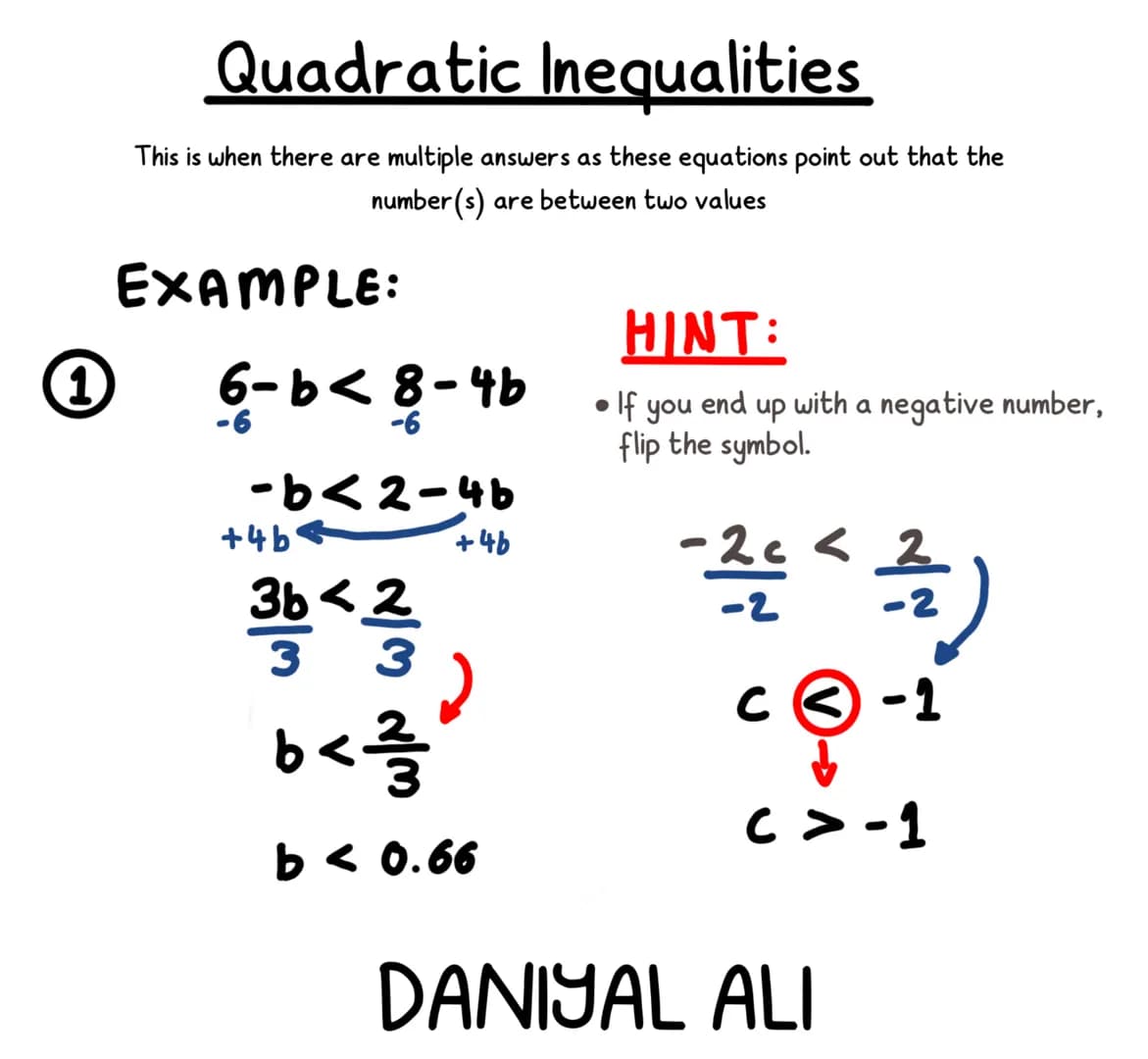
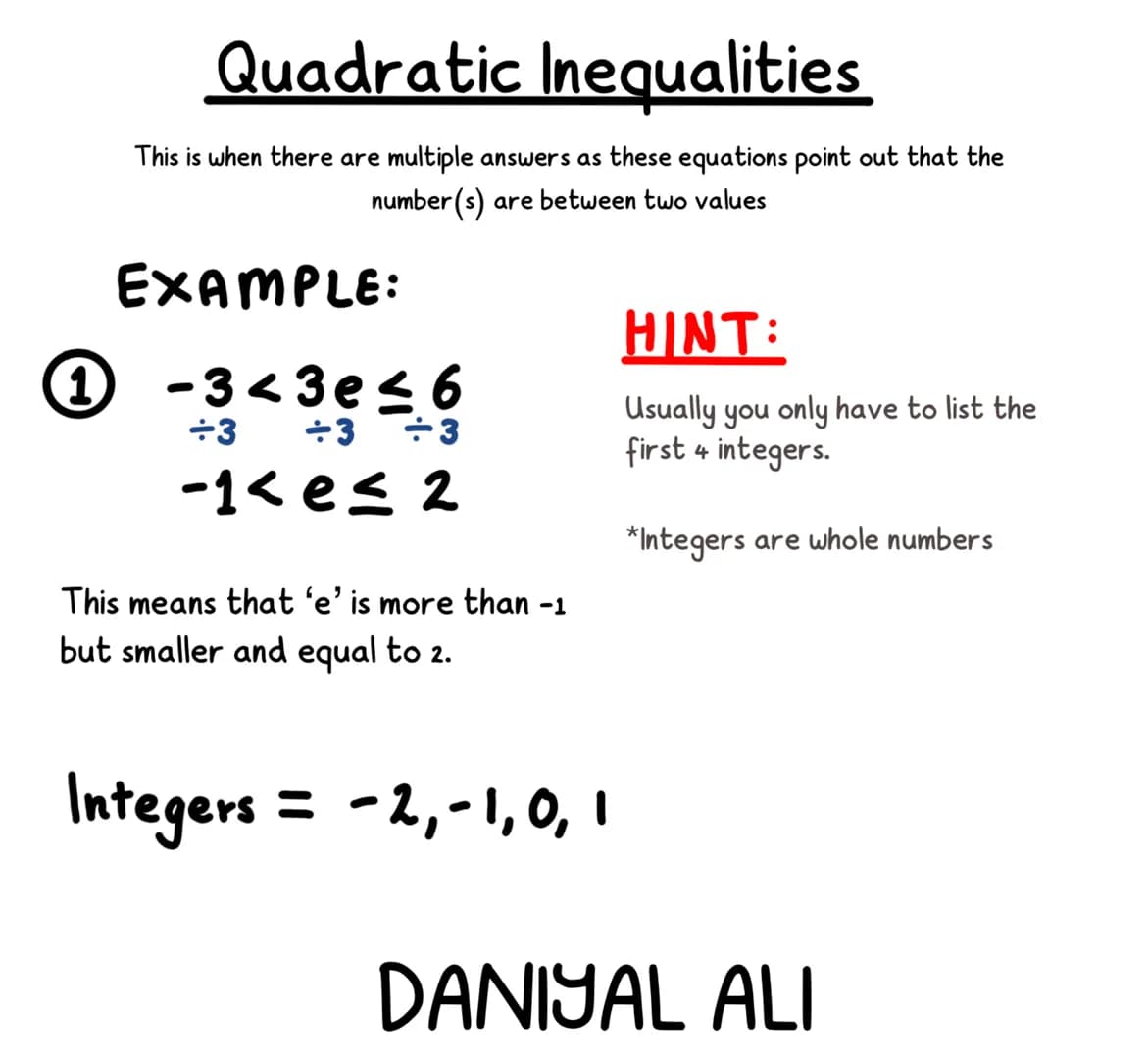
Inequalities are mathematical statements that show when one value is greater than, less than, or equal to another. Unlike regular equations that give you one answer, inequalities give you multiple solutions within a range.
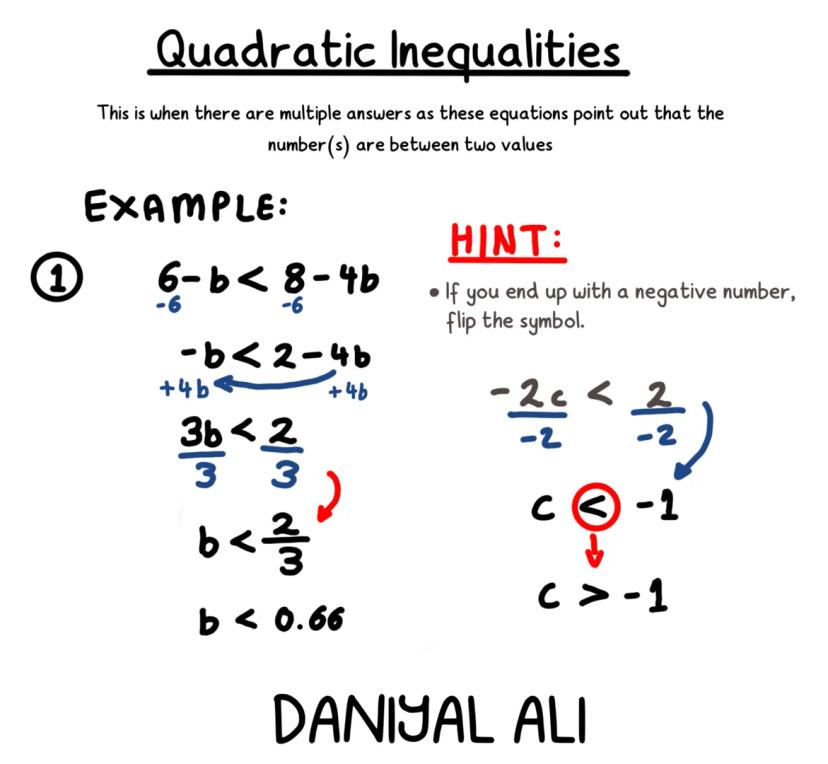
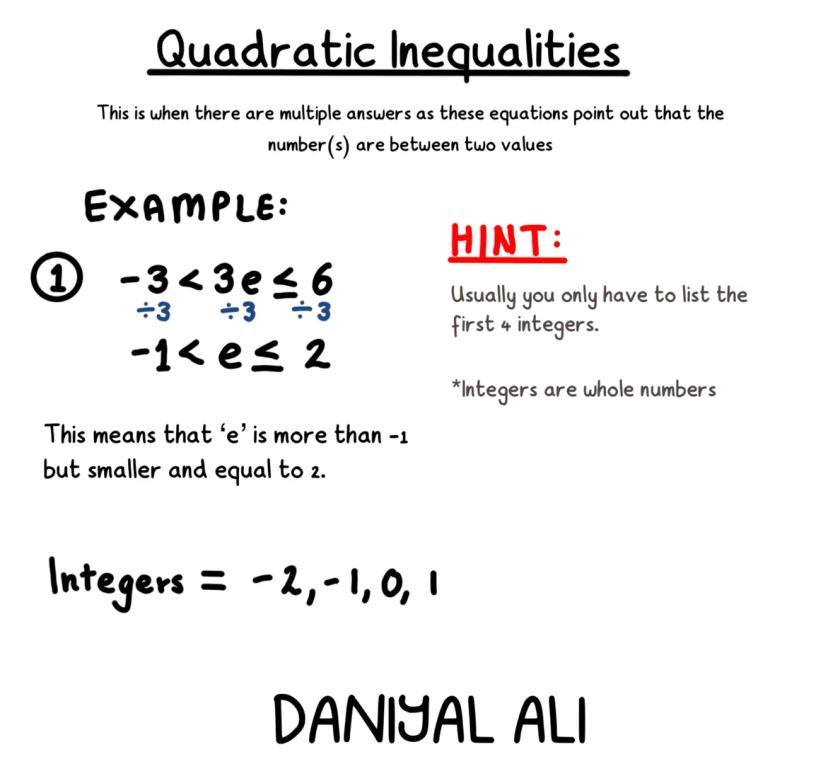
When you see symbols like > (greater than), < (less than), ≥ (greater than or equal to), or ≤ (less than or equal to), you're dealing with inequalities. These tell you exactly what relationship the numbers have with each other.
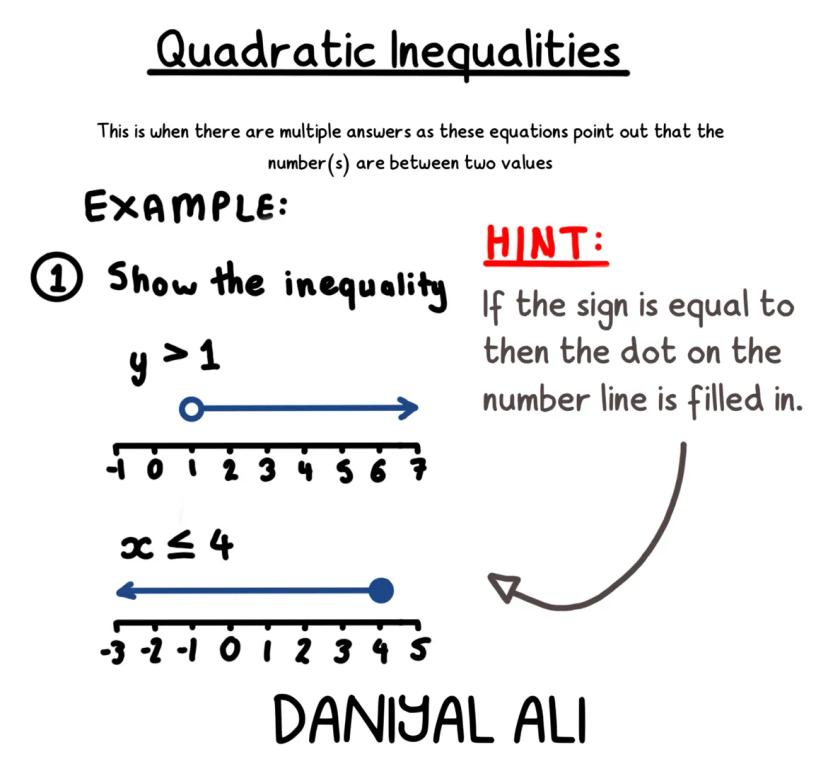
On a number line, you'll show these relationships using dots and arrows. If the inequality includes "equal to" (≥ or ≤), you fill in the dot completely. If it doesn't include "equal to" (> or <), you leave the dot empty to show that exact number isn't included.
Quick Tip: Think of filled dots as "including" that number and empty dots as "excluding" it from your solution.


 Maths
Maths English Literature
 Sociology
 Biology