
History isn't just a collection of dates and events—it's a... Show more
 History
 English Literature
 Sociology
 Biology
Sign up to see the contentIt's free!
Access to all documents
Improve your grades
Join milions of students
Knowunity AI
Subjects
Triangle Congruence and Similarity Theorems
Triangle Properties and Classification
Linear Equations and Graphs
Geometric Angle Relationships
Trigonometric Functions and Identities
Equation Solving Techniques
Circle Geometry Fundamentals
Division Operations and Methods
Basic Differentiation Rules
Exponent and Logarithm Properties
Show all topics
Human Organ Systems
Reproductive Cell Cycles
Biological Sciences Subdisciplines
Cellular Energy Metabolism
Autotrophic Energy Processes
Inheritance Patterns and Principles
Biomolecular Structure and Organization
Cell Cycle and Division Mechanics
Cellular Organization and Development
Biological Structural Organization
Show all topics
Chemical Sciences and Applications
Atomic Structure and Composition
Molecular Electron Structure Representation
Atomic Electron Behavior
Matter Properties and Water
Mole Concept and Calculations
Gas Laws and Behavior
Periodic Table Organization
Chemical Thermodynamics Fundamentals
Chemical Bond Types and Properties
Show all topics
European Renaissance and Enlightenment
European Cultural Movements 800-1920
American Revolution Era 1763-1797
American Civil War 1861-1865
Global Imperial Systems
Mongol and Chinese Dynasties
U.S. Presidents and World Leaders
Historical Sources and Documentation
World Wars Era and Impact
World Religious Systems
Show all topics
Classic and Contemporary Novels
Literary Character Analysis
Rhetorical Theory and Practice
Classic Literary Narratives
Reading Analysis and Interpretation
Narrative Structure and Techniques
English Language Components
Influential English-Language Authors
Basic Sentence Structure
Narrative Voice and Perspective
Show all topics
83
•
Updated Mar 23, 2026
•
MiK
@mik_wycuu
History isn't just a collection of dates and events—it's a... Show more
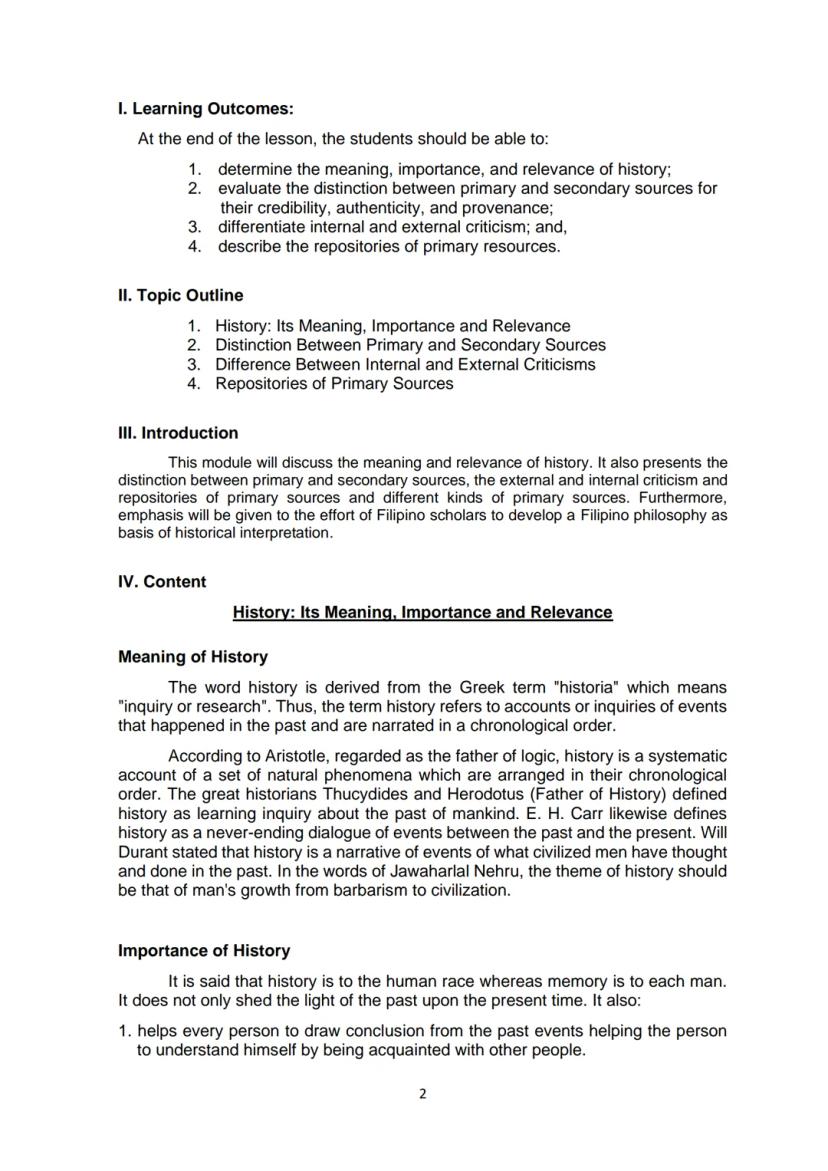
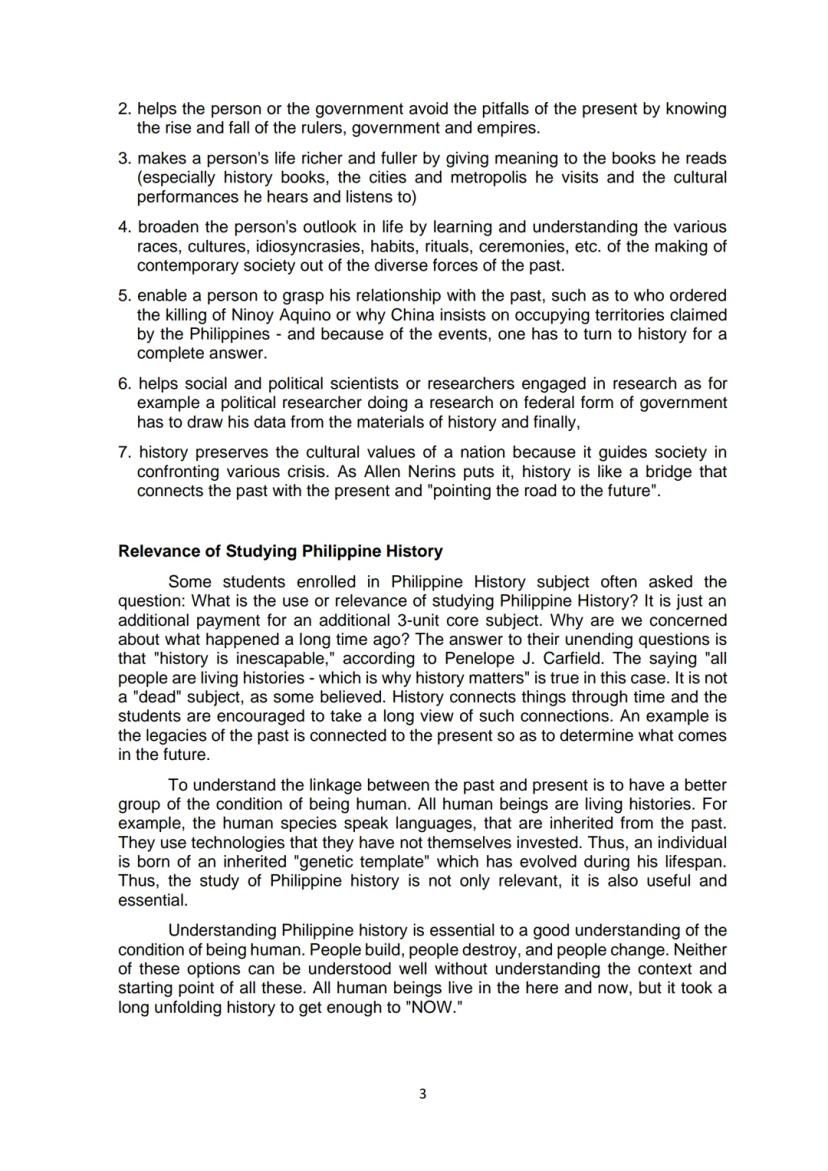
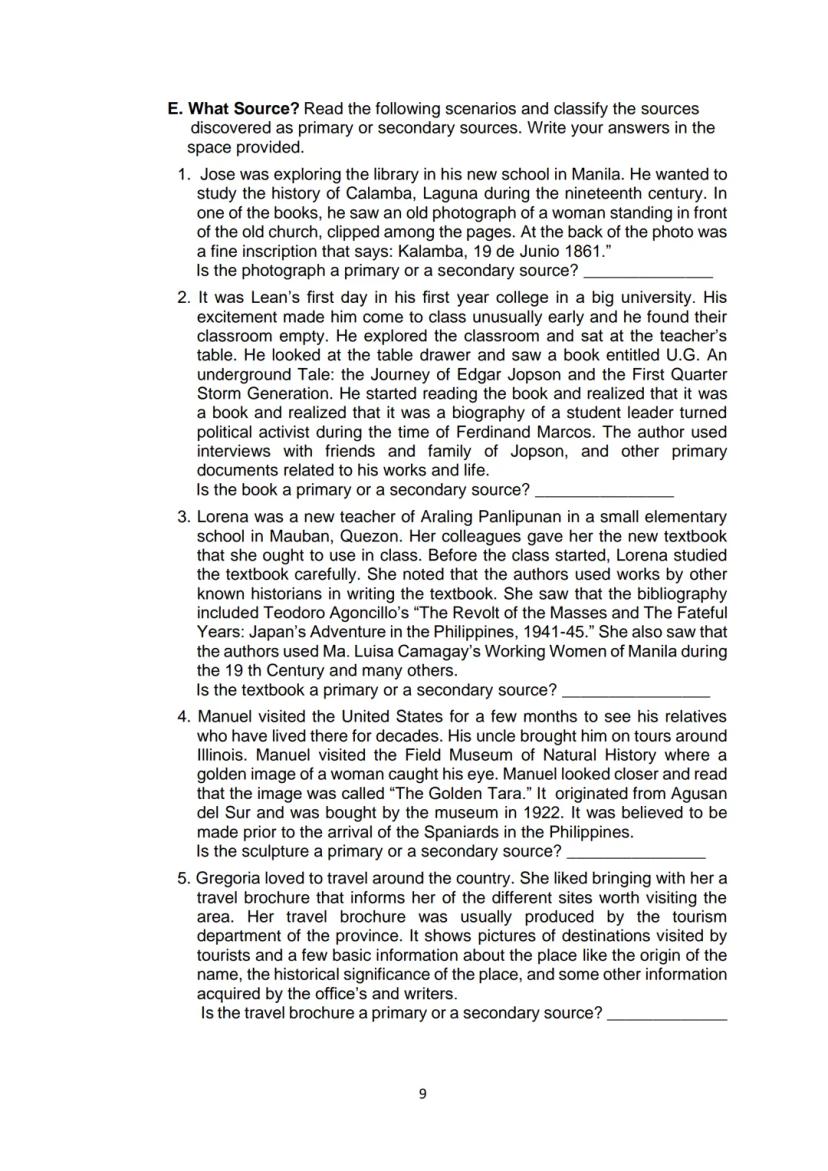
History stems from the Greek word "historia" meaning "inquiry or research." It's more than just a timeline—it's a systematic investigation of past events that shape our present reality. As historian A.J.P. Taylor wisely noted, "History is not just a catalogue of events put in the right order like a railway timetable."
This module will guide you through understanding the meaning of history, distinguishing between different types of historical sources, and learning how to critically evaluate historical evidence. You'll discover why studying history—particularly Philippine history—remains relevant to your life today.
Did you know? Aristotle defined history as a systematic account of natural phenomena arranged in chronological order, while Herodotus is considered the "Father of History."
History connects humanity to its past, functioning for society as memory does for individuals. It's not just about memorizing facts—it's about understanding ourselves and others through time.
Studying history helps us avoid repeating past mistakes. When you learn about the rise and fall of empires or the decisions of past leaders, you gain insight into current political challenges. This knowledge gives deeper meaning to everything from the books you read to the cities you visit.
History broadens your perspective by exposing you to diverse cultures, traditions and social systems. Want to understand why China claims territories in dispute with the Philippines? Or who ordered Ninoy Aquino's assassination? These questions require historical context for complete answers.
Remember: History preserves cultural values and serves as a bridge connecting the past with the present while "pointing the road to the future," as historian Allen Nerins put it.
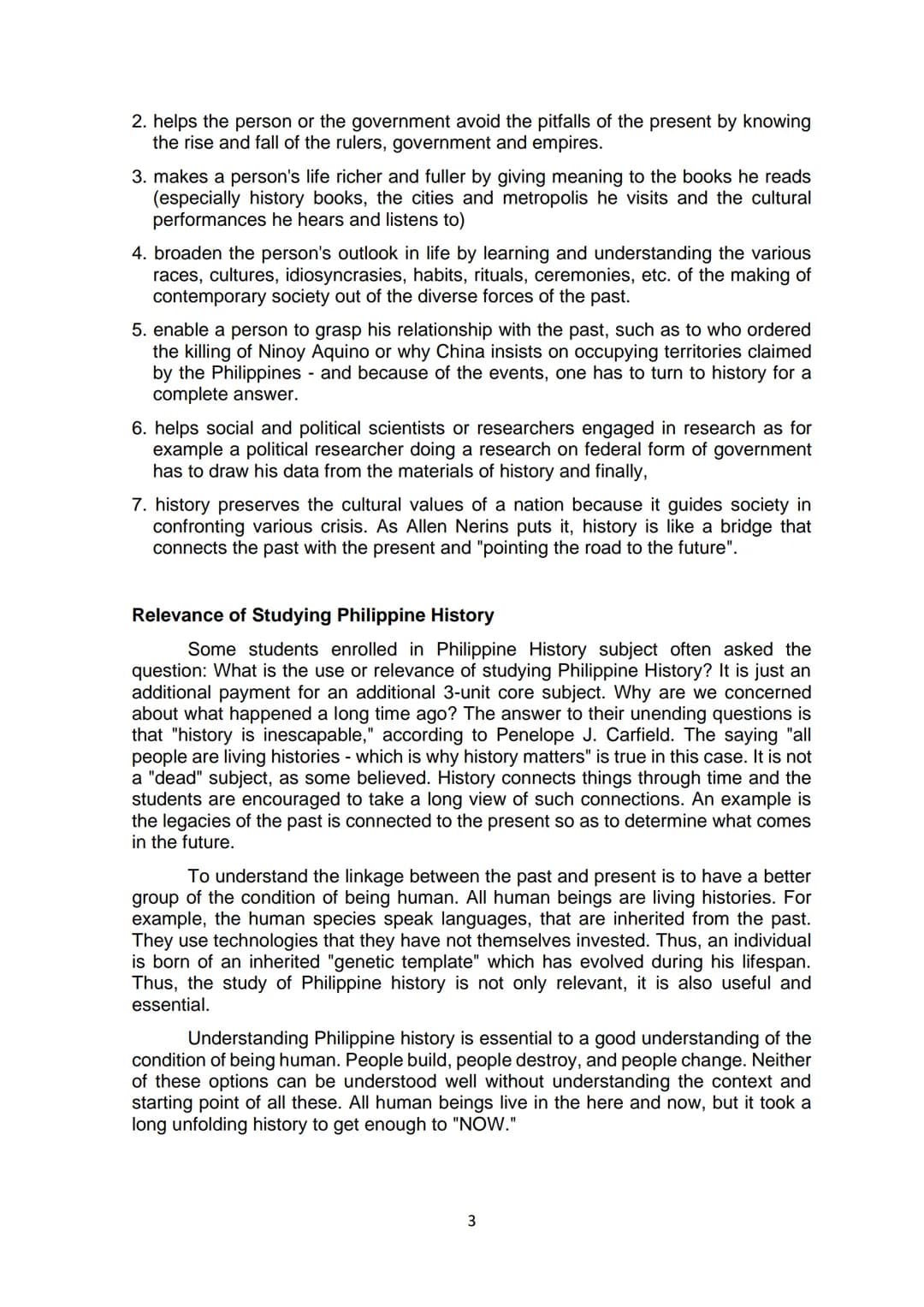
Ever wondered "Why do I need to study Philippine history?" You're not alone! Many students question the value of learning about events from long ago, seeing it as just another required subject. But history isn't a "dead" subject—it's actually essential to understanding your identity.
You're living history right now. The language you speak, the technology you use, even your genetic makeup—all have been shaped by historical processes. Nothing in your present exists without a past that created it. Understanding Philippine history helps you grasp what it means to be Filipino in today's world.
History reveals patterns of human behavior that remain relevant. People build, destroy and change—but none of these actions happen in isolation from what came before. By studying how Filipinos responded to challenges in the past, you gain insight into how similar situations might be handled today.
Think about it: All of us live in the present or "NOW," but it took a long unfolding history to reach this moment. Understanding that journey helps you make sense of current realities and prepare for future possibilities.
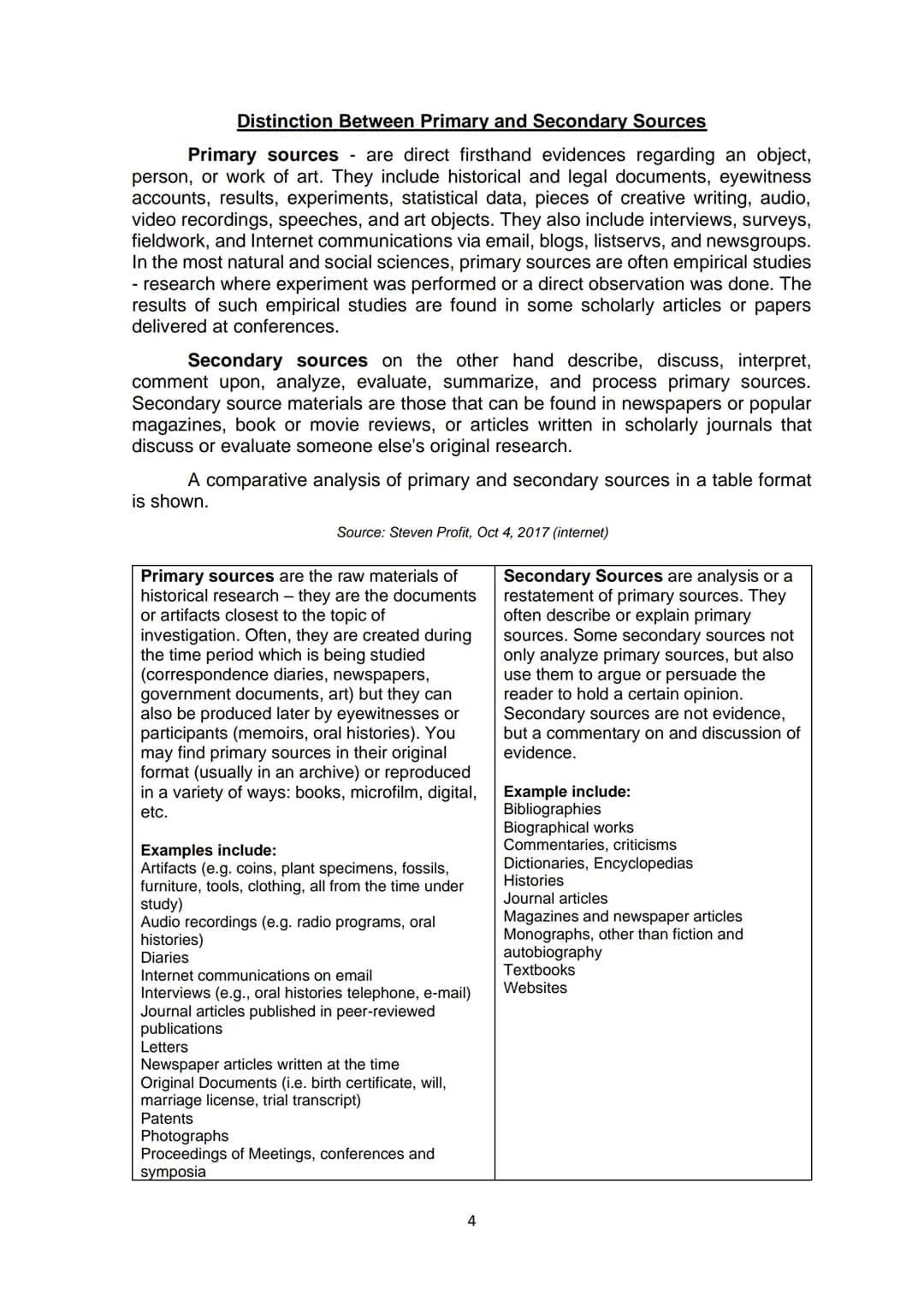
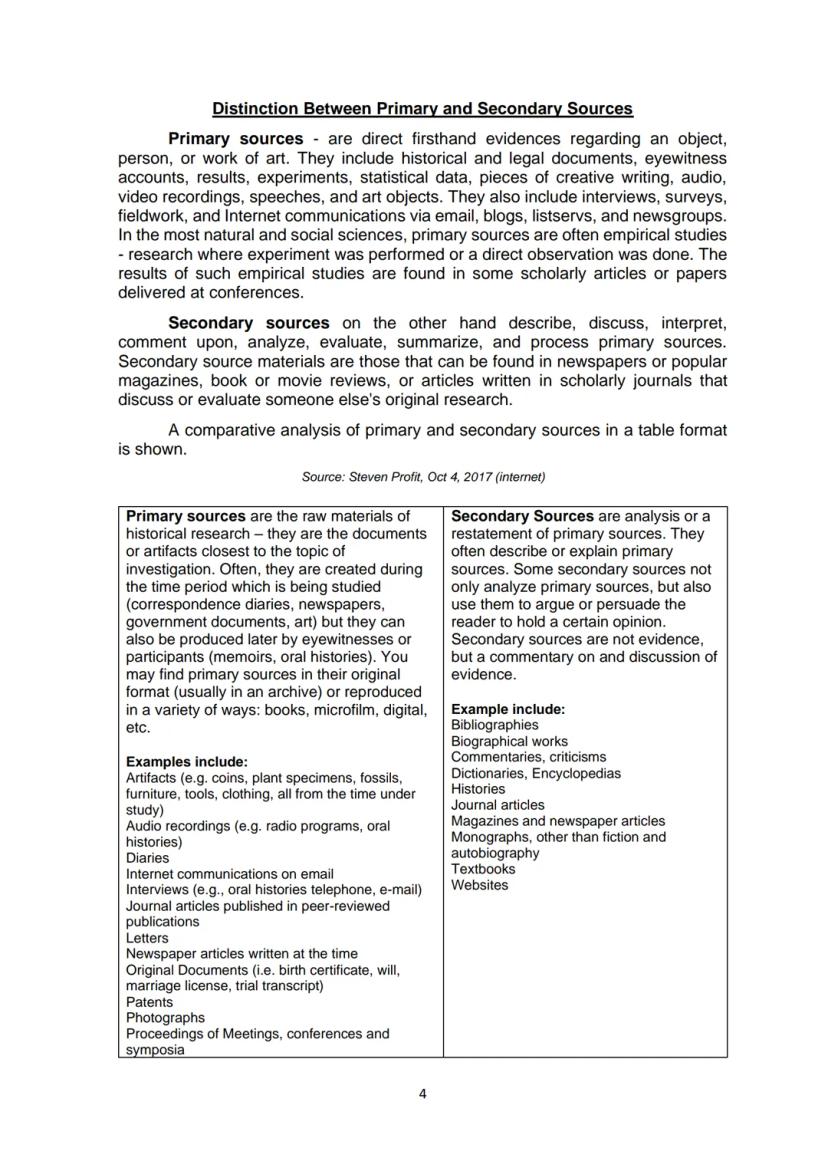
Primary sources are firsthand evidence from the time period being studied. These authentic materials include original documents (letters, diaries, government records), artifacts, photographs, audio recordings, and eyewitness accounts. When you read Rizal's actual letters or examine coins from the Spanish colonial period, you're engaging with primary sources.
Secondary sources interpret, analyze, and explain primary sources. These include textbooks, encyclopedias, magazine articles, and most history books. When a modern historian writes about the Philippine Revolution using primary documents as evidence, they're creating a secondary source.
The key difference lies in their proximity to the event: primary sources were created during the time being studied or by direct participants, while secondary sources are created afterward by people analyzing those original materials. Both have value, but primary sources provide the raw material that secondary sources interpret.
Critical thinking tip: When examining a source, always ask: "Was this created by someone who directly experienced these events, or by someone studying them afterward?" This helps determine if you're looking at a primary or secondary source.
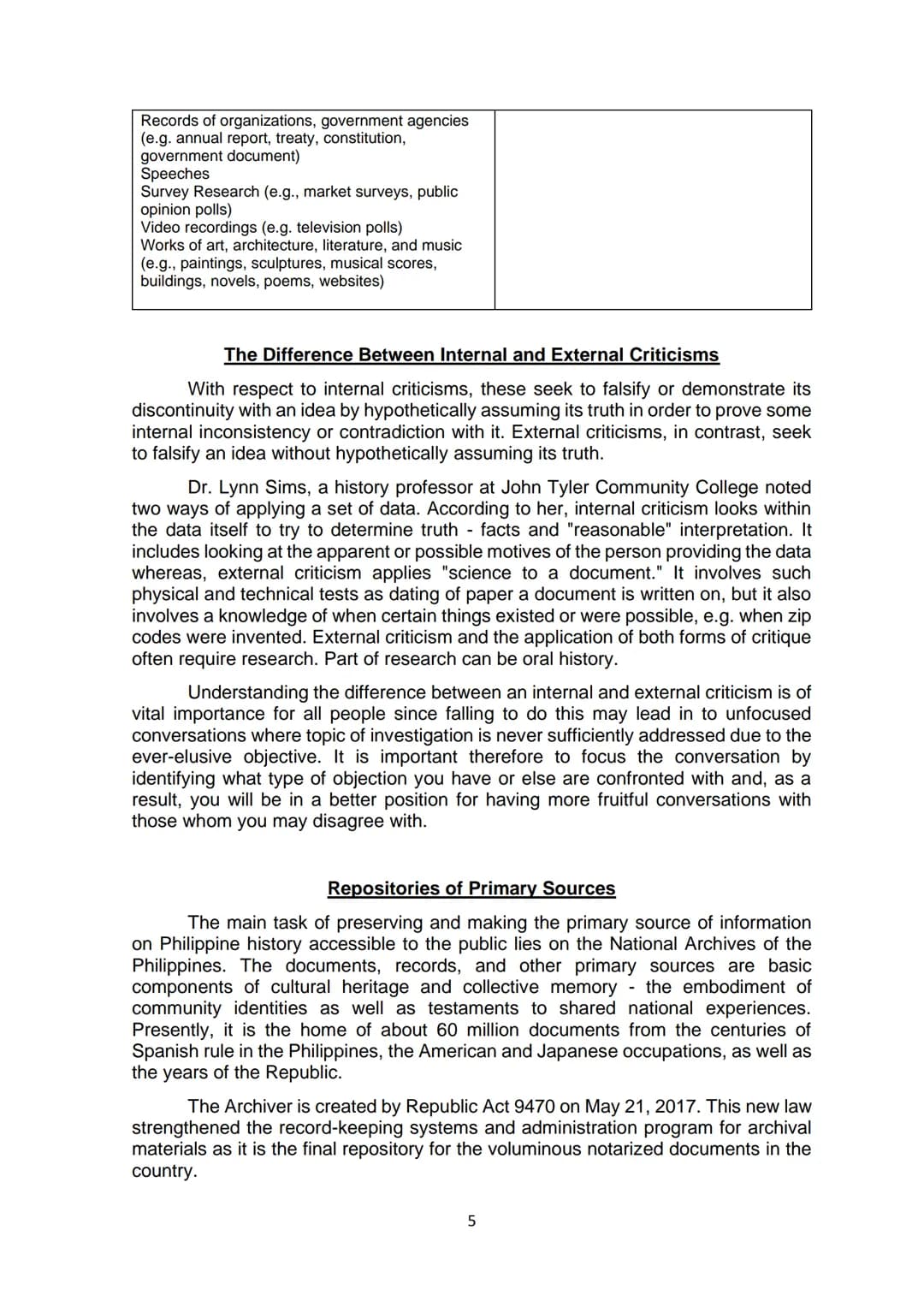
When historians evaluate sources, they use two main approaches: internal and external criticism. Both are essential for determining reliability and accuracy.
External criticism examines the physical aspects of a source—essentially applying scientific methods to verify authenticity. This involves checking the age of paper, type of ink, handwriting styles, or when certain technologies existed. For instance, a supposed 1890s document containing postal codes would immediately be suspect since this system didn't exist then.
Internal criticism focuses on the content itself to assess credibility and accuracy. This involves examining the author's biases, motivations, consistency, and whether their account aligns with other known facts. Internal criticism asks: "Does this information make logical sense within its historical context?"
Failing to distinguish between these forms of criticism can lead to unfocused historical investigations. By applying both forms, you can better determine if a source tells us what actually happened or merely what someone wanted others to believe.
Pro tip: When analyzing a historical document, first verify its authenticity through external criticism before evaluating its content through internal criticism. This two-step process helps prevent building historical interpretations on fraudulent evidence.
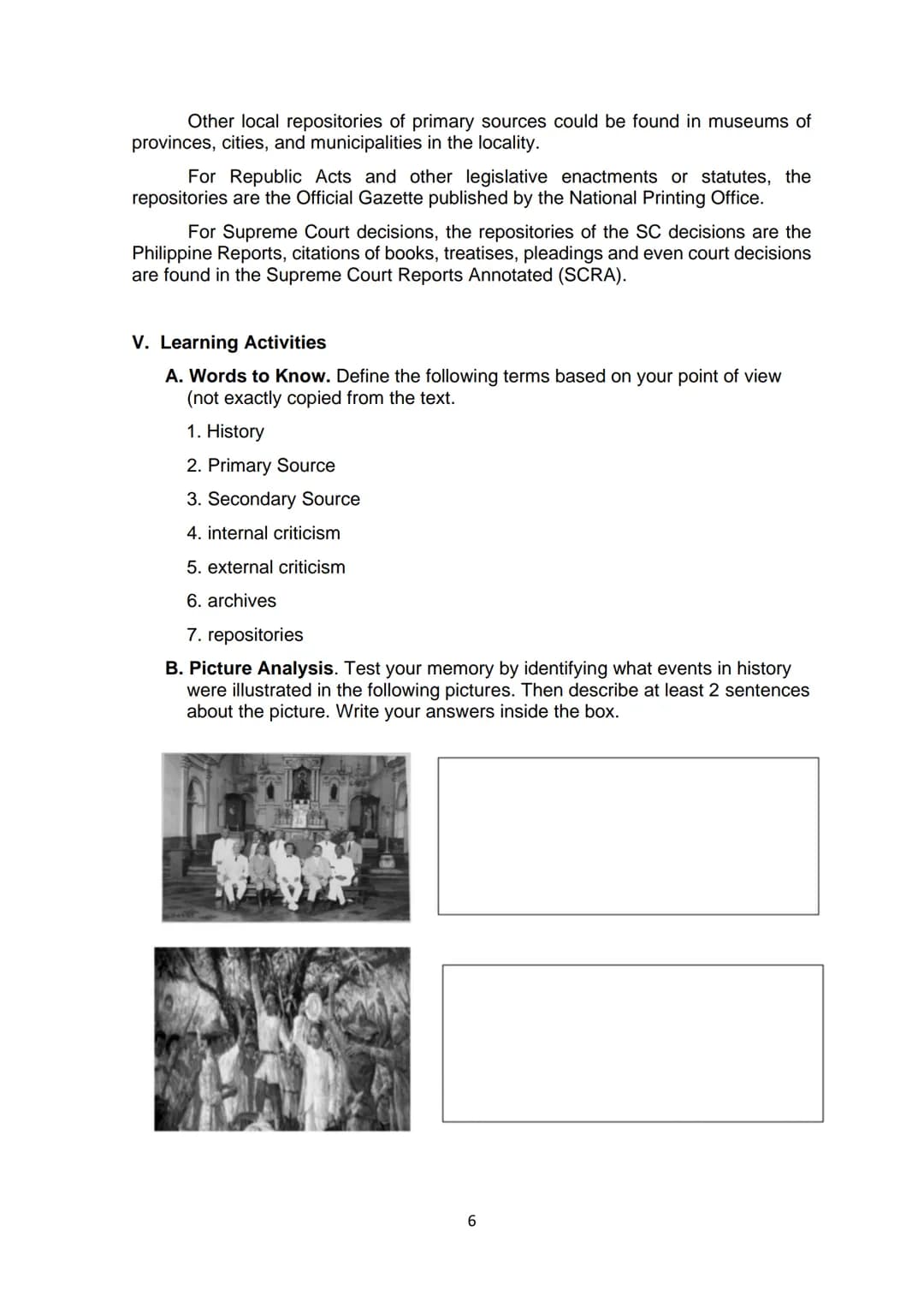
The National Archives of the Philippines serves as the primary guardian of the country's historical documents. Established by Republic Act 9470 in 2017, it houses approximately 60 million documents spanning centuries of Philippine history—from Spanish colonial records to documents from the American and Japanese occupations and the modern Republic.
These archives aren't just dusty collections of old papers. They're vital repositories of national memory and identity that help connect Filipinos to their shared past. Researchers, students and historians regularly access these materials to develop deeper understandings of historical events.
Beyond the National Archives, you can find primary sources in local museums, provincial record offices, and municipal collections throughout the Philippines. Legal documents have specific repositories: Republic Acts appear in the Official Gazette published by the National Printing Office, while Supreme Court decisions are preserved in the Philippine Reports and Supreme Court Reports Annotated (SCRA).
Explore history: Next time you visit your local province or municipality, check if they maintain a museum or archive. These smaller repositories often contain fascinating documents and artifacts about local history that you won't find in national collections.
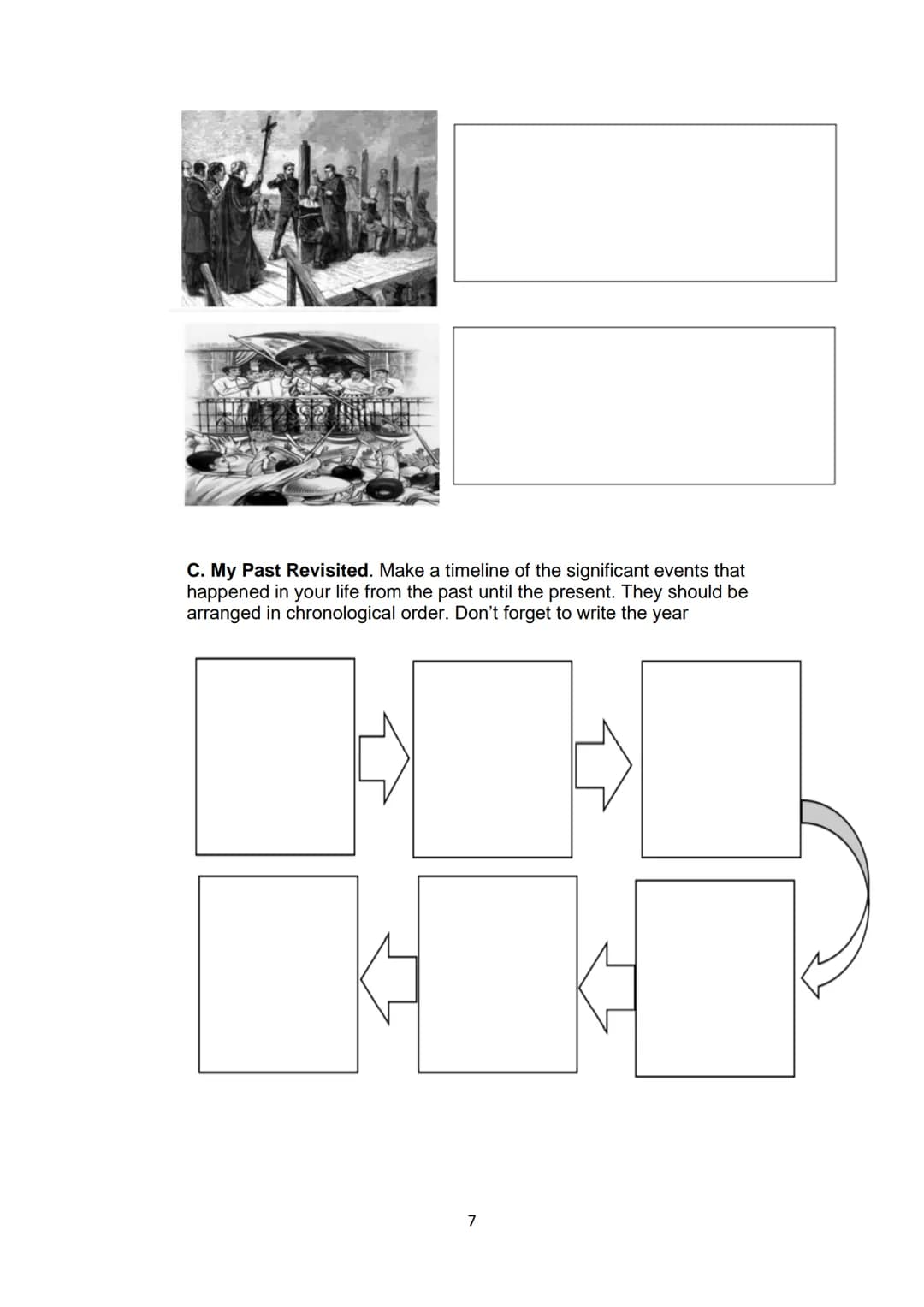
The module provides several engaging activities to help you apply what you've learned about historical sources and methods. These practical exercises transform abstract concepts into tangible skills you can use.
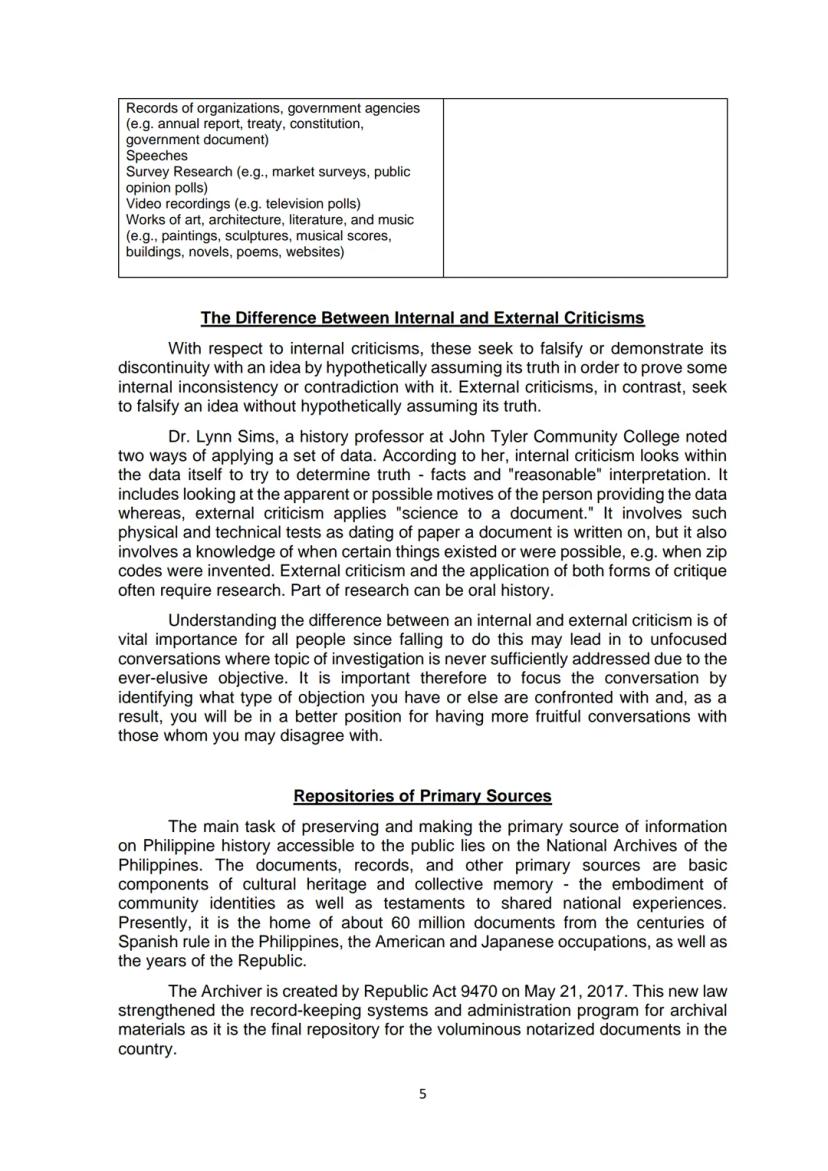
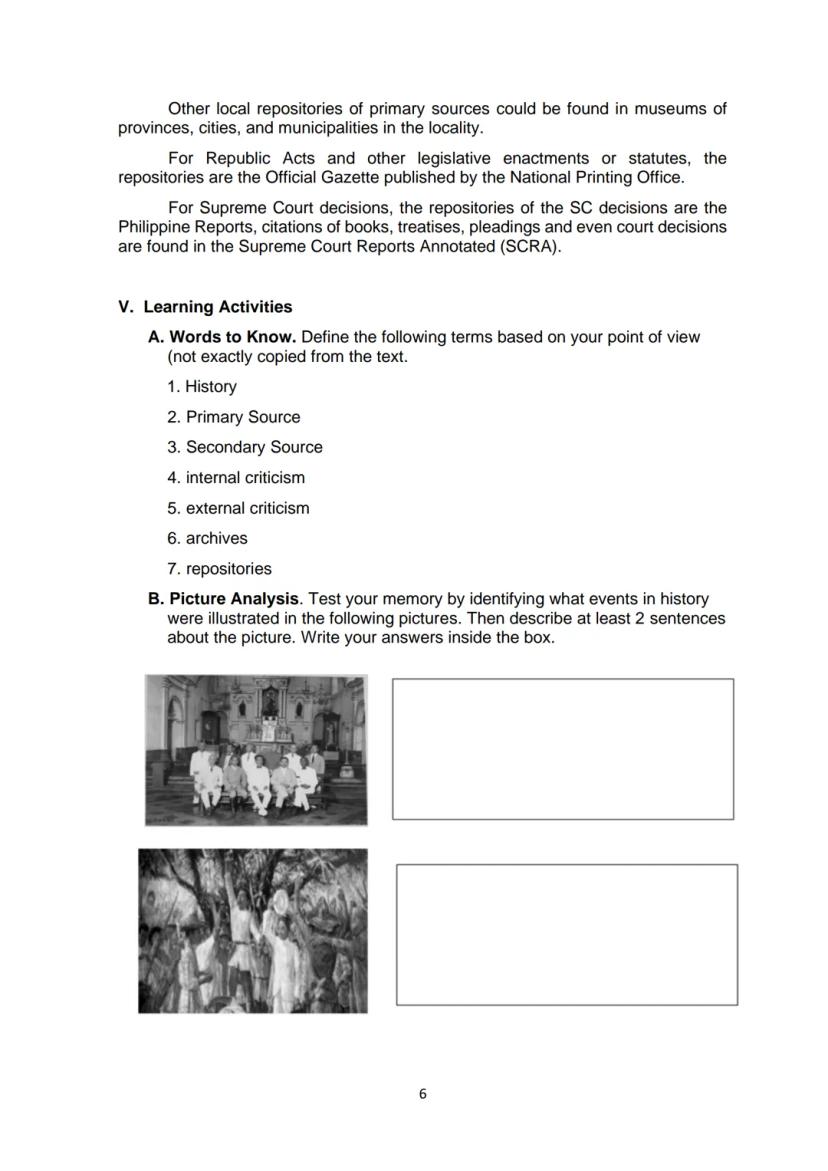
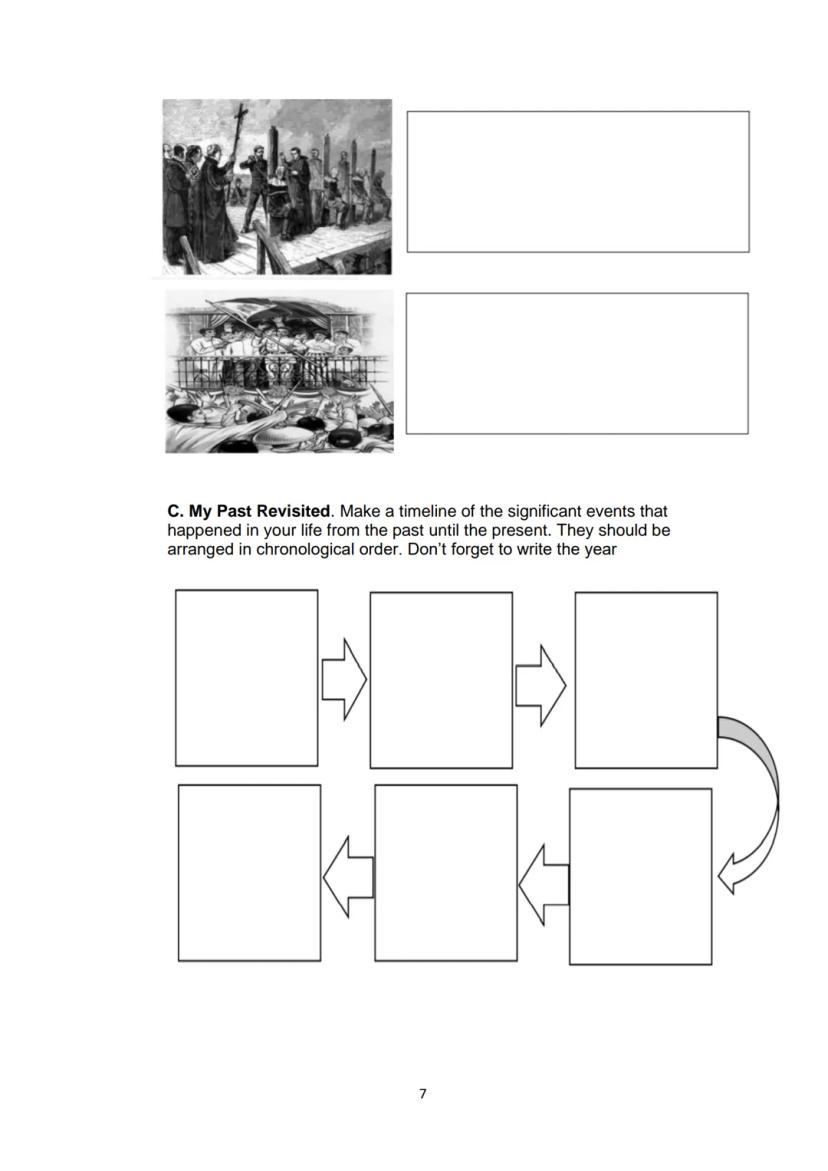
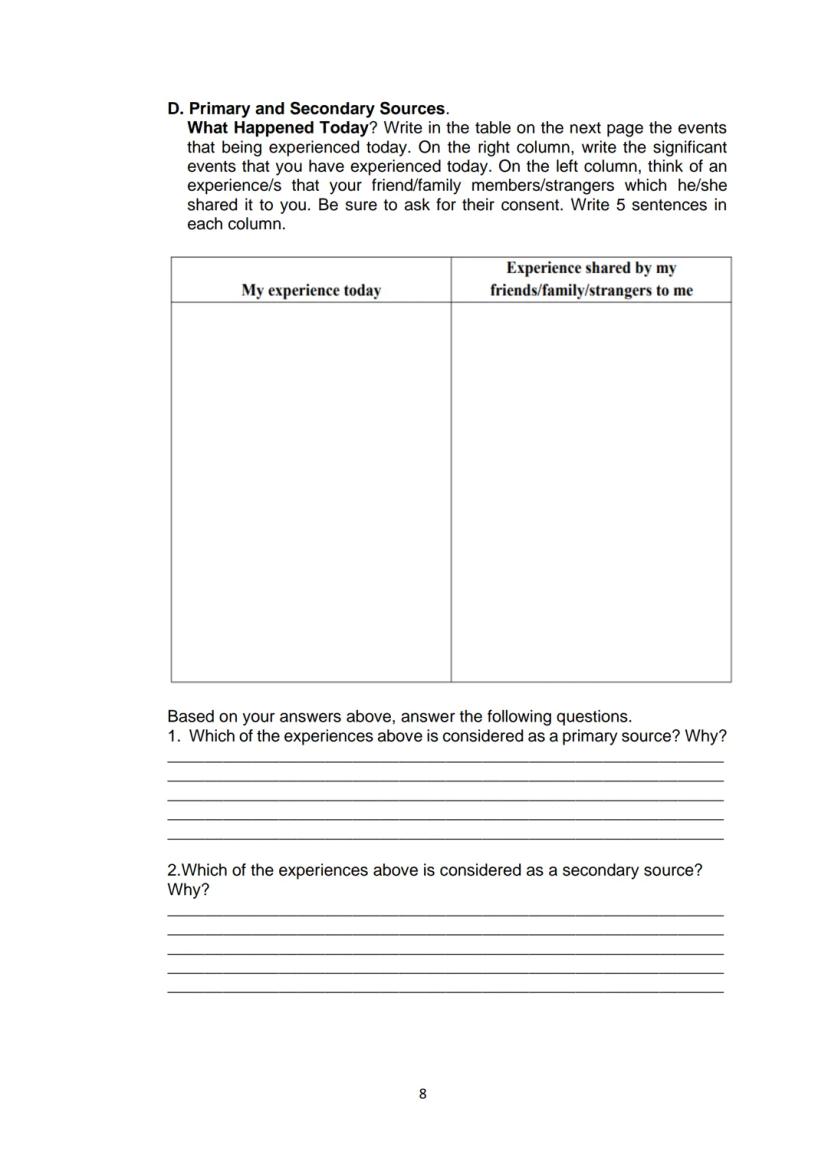
In the "Words to Know" activity, you'll define key terms like history, primary source, and archives in your own words—reinforcing your understanding of essential concepts. The "Picture Analysis" exercise challenges you to identify historical events from images, helping you recognize how visual sources convey historical information.
"My Past Revisited" asks you to create a personal timeline, arranging significant events from your life chronologically. This clever exercise helps you understand how historians organize information while connecting historical methods to your own experiences.
Make it personal: When creating your timeline for "My Past Revisited," include not just major life events but also how larger historical events (elections, natural disasters, technological changes) intersected with your personal story. This helps you see how your life connects to broader historical narratives.
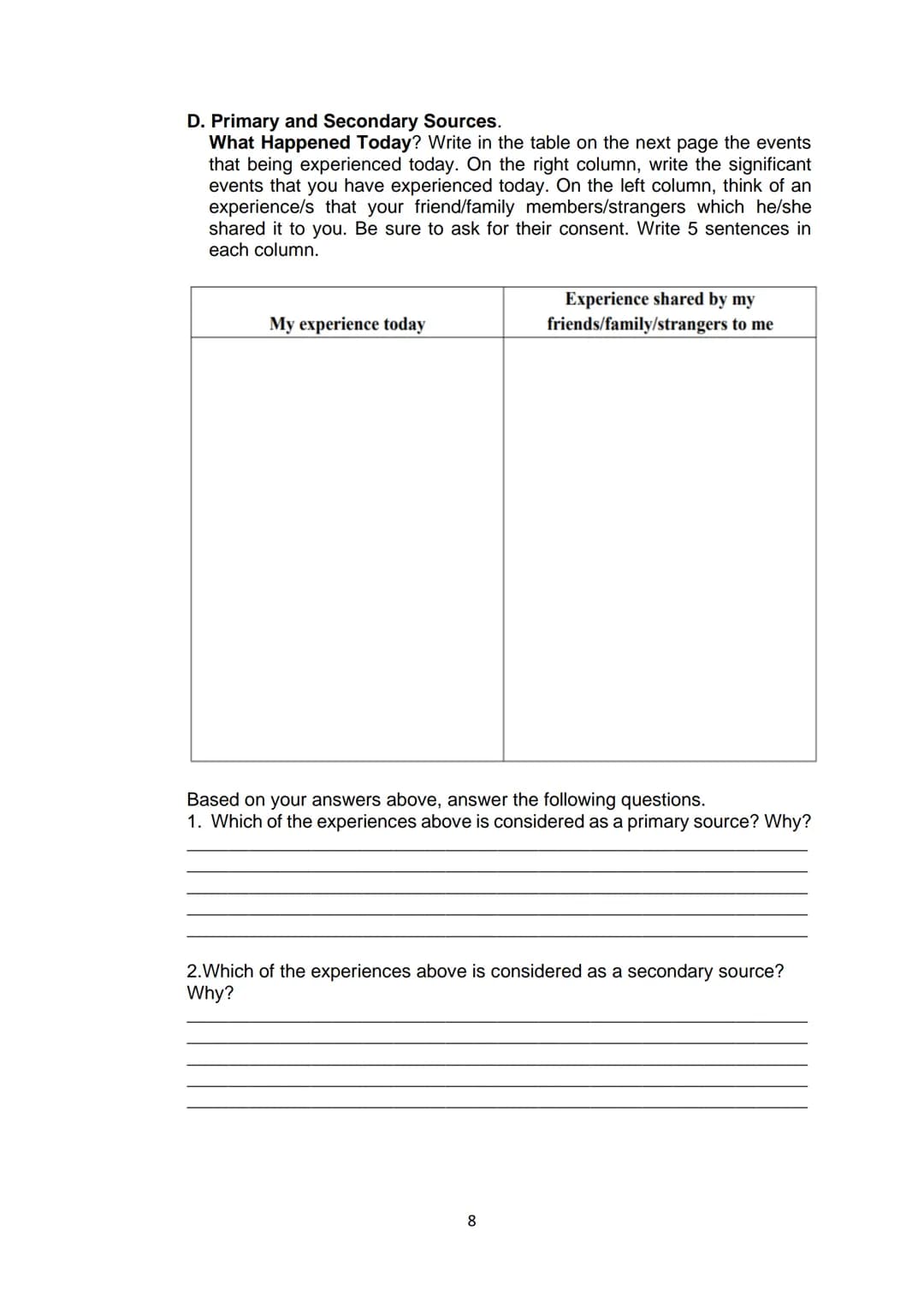
The "Primary and Secondary Sources" activity cleverly uses your own experiences to illustrate the difference between these source types. By comparing events you directly experienced (primary sources) with events others told you about (secondary sources), you'll gain a clear understanding of this crucial distinction.
This hands-on approach demonstrates that historical methods aren't abstract concepts—they're practical tools for understanding any information. When you experience something directly, you have firsthand knowledge, but when you hear about it from someone else, you're receiving an interpretation that might include biases or omissions.
The activity also encourages critical thinking about information sources in your everyday life. By analyzing your own experiences alongside information shared by others, you develop the same evaluative skills historians use when determining the reliability of historical accounts.
Apply this skill: Next time you read news about an event, notice if the report comes from eyewitnesses (primary) or commentators interpreting those accounts (secondary). This awareness will make you a more critical consumer of all information, not just historical texts.
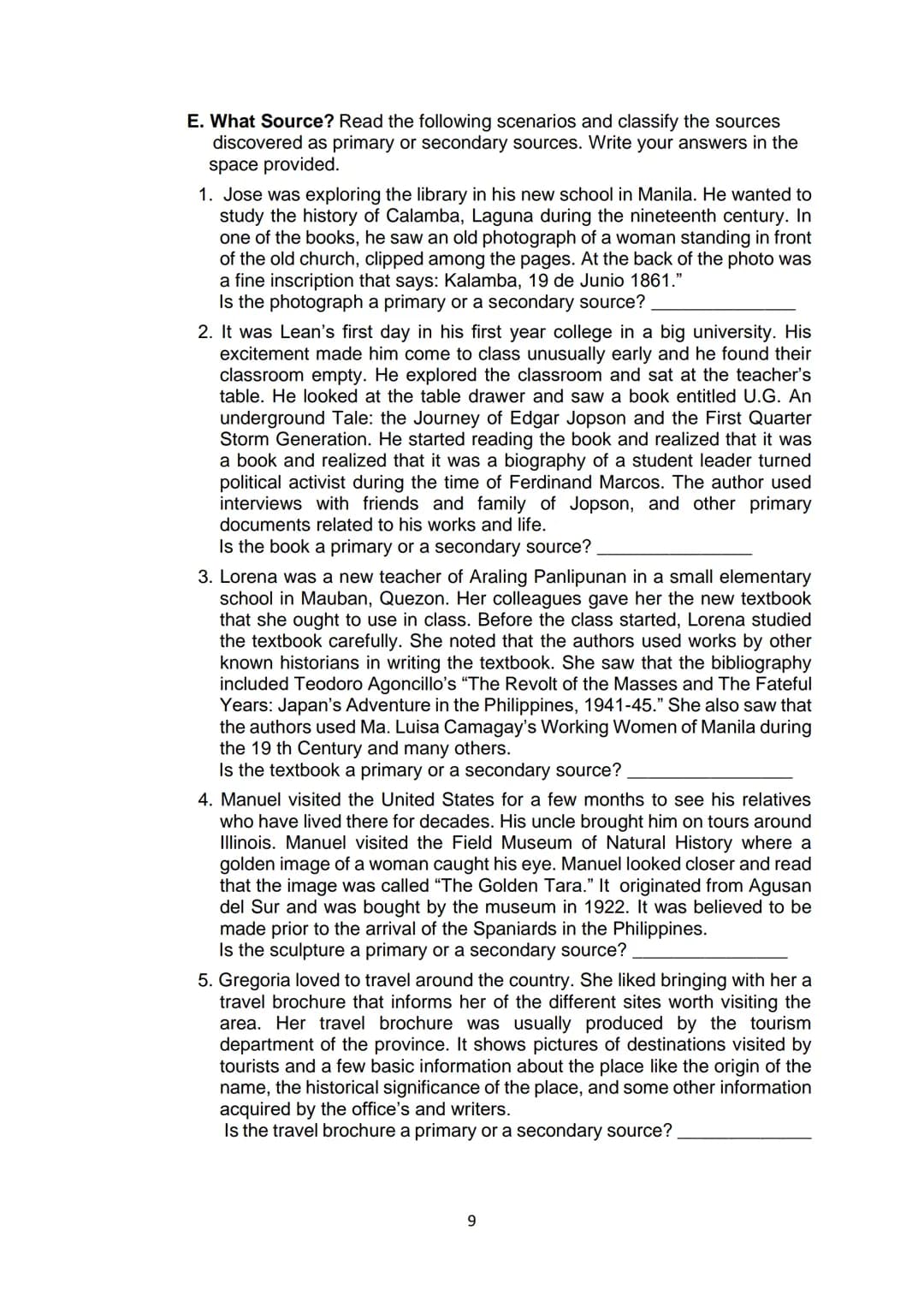
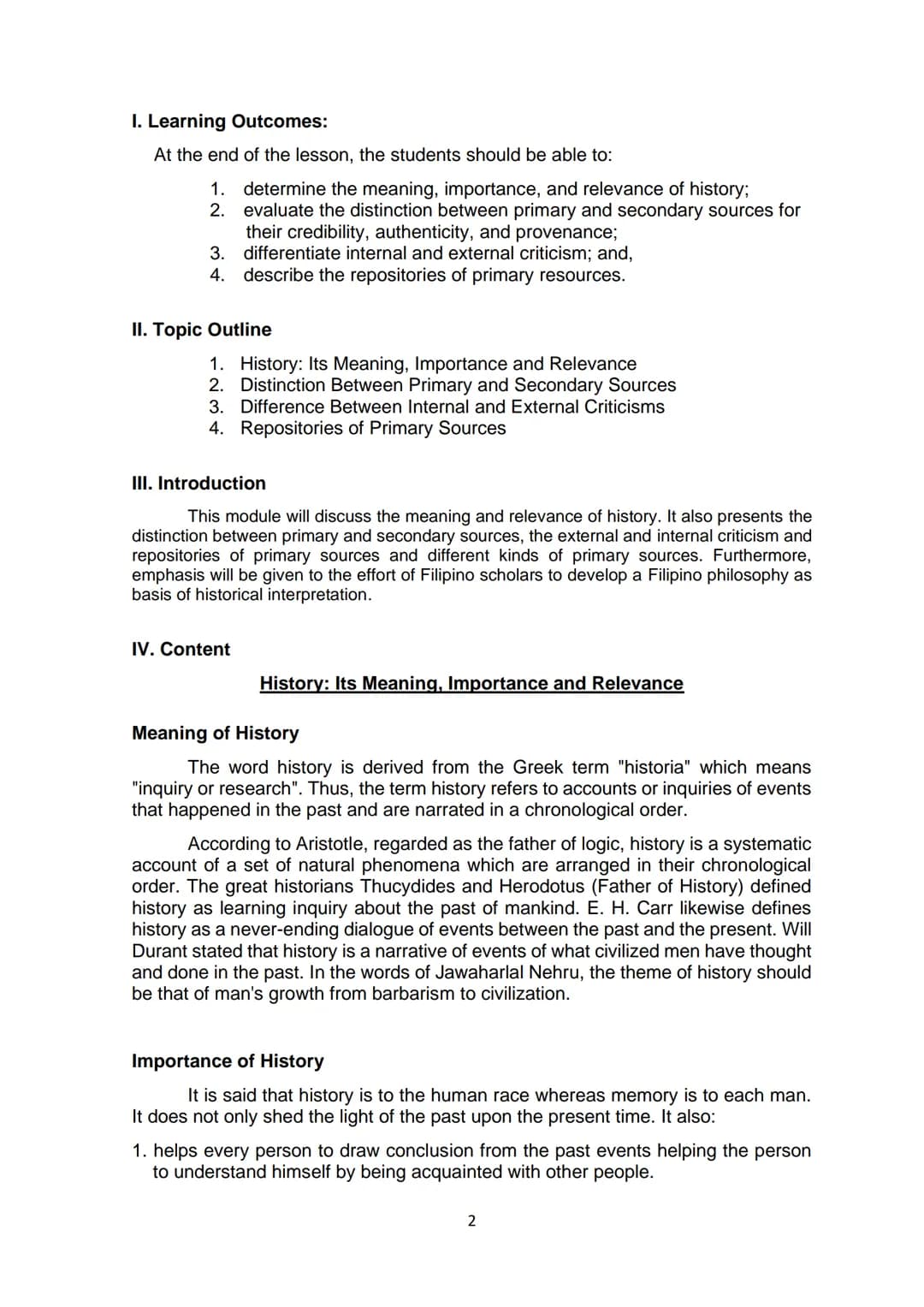
The "What Source?" activity presents five realistic scenarios where different types of historical evidence are discovered. These examples—from finding a 19th-century photograph to evaluating a tourist brochure—help you practice distinguishing between primary and secondary sources in everyday contexts.
You'll analyze artifacts like "The Golden Tara" sculpture that dates from pre-Spanish Philippines, determining if it's a primary source based on its creation and relationship to historical events. Similarly, you'll evaluate texts like biographies and textbooks to determine if they provide direct evidence or interpretations of evidence.
This exercise builds crucial analytical skills that extend beyond history classes. The ability to recognize whether you're dealing with original evidence or someone's interpretation of that evidence is valuable in many academic disciplines and real-world situations, from evaluating news reports to assessing scientific claims.
Critical thinking challenge: When analyzing any potential historical source, ask yourself: "How close was this source to the actual events it describes?" The closer the connection, the more likely it represents a primary rather than secondary source.
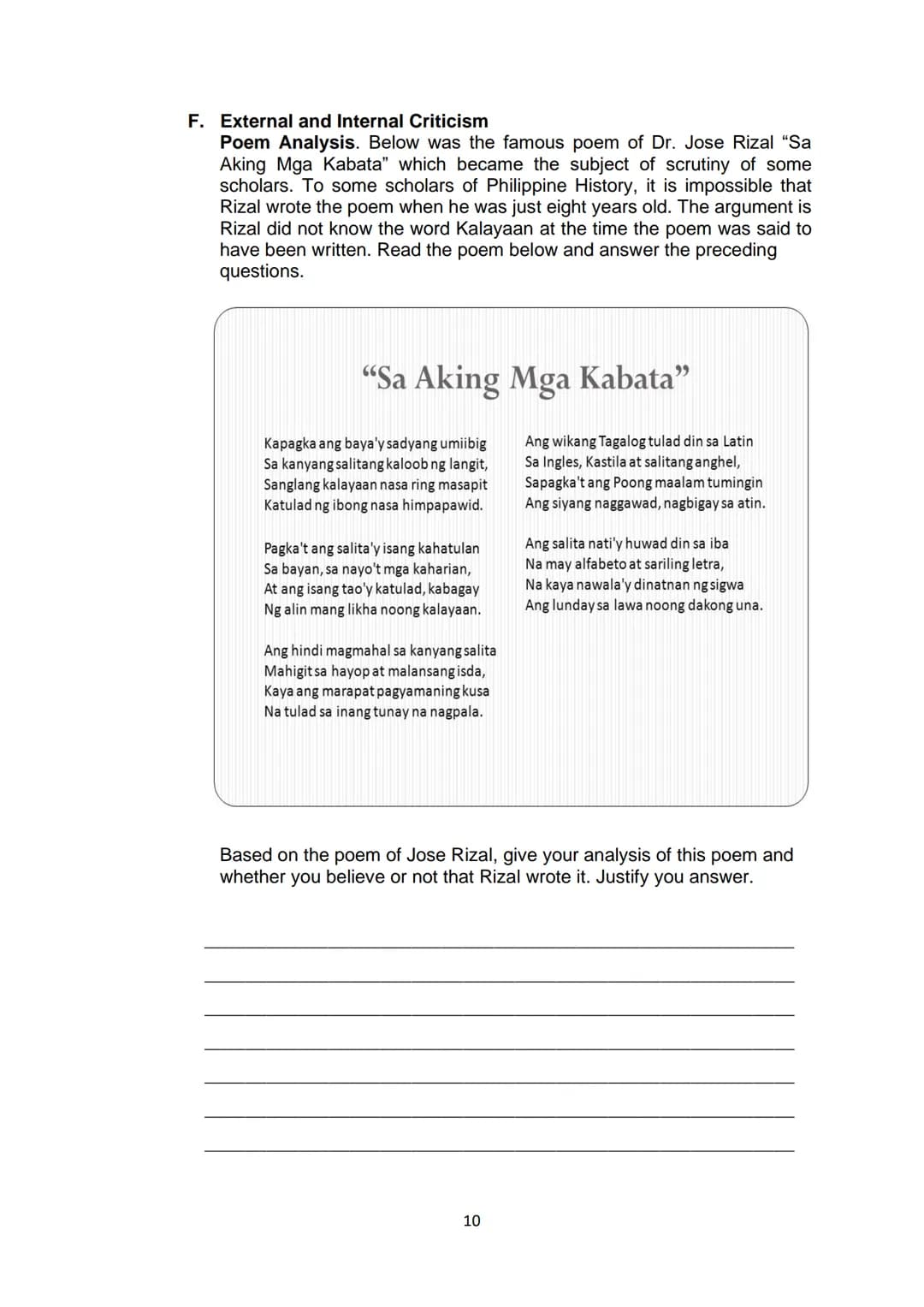
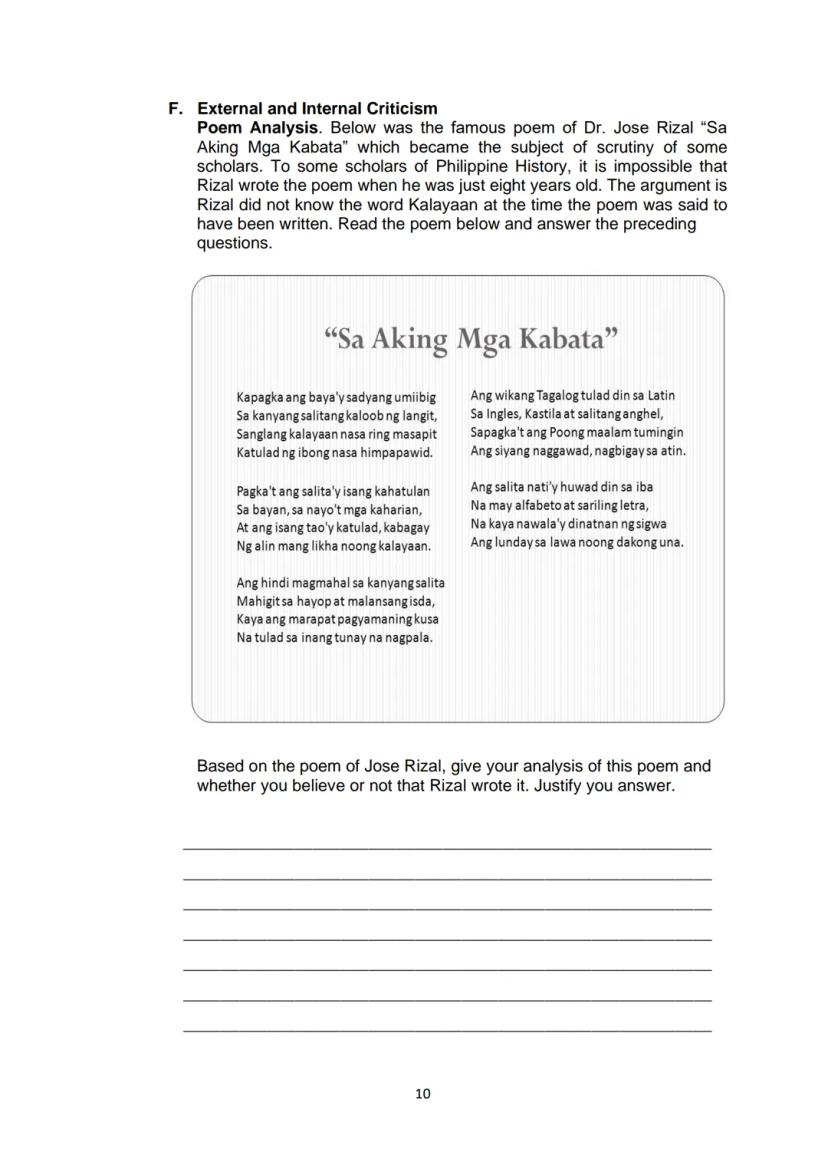
The poem "Sa Aking Mga Kabata," supposedly written by José Rizal at age eight, offers a perfect case study for applying both external and internal criticism. Scholars debate its authenticity based on several points that you're asked to evaluate.
The internal criticism questions center on content: Could an eight-year-old Rizal have possessed the vocabulary, especially words like "kalayaan" (freedom), and sophisticated understanding of language reflected in this poem? The poem's themes about language and national identity seem remarkably advanced for a child author.
External criticism examines factors like when the poem first appeared in publication, whether original manuscripts exist, and what we know about Rizal's linguistic development at that age. This controversy demonstrates how historians must carefully evaluate even widely accepted historical "facts."
Think critically: When examining the poem, consider both what the text says (internal criticism) and what we know about its origins and physical evidence (external criticism). This balanced approach models how historians actually work with questionable sources.
Our AI Companion is a student-focused AI tool that offers more than just answers. Built on millions of Knowunity resources, it provides relevant information, personalised study plans, quizzes, and content directly in the chat, adapting to your individual learning journey.
You can download the app from Google Play Store and Apple App Store.
That's right! Enjoy free access to study content, connect with fellow students, and get instant help – all at your fingertips.
App Store
Google Play
The app is very easy to use and well designed. I have found everything I was looking for so far and have been able to learn a lot from the presentations! I will definitely use the app for a class assignment! And of course it also helps a lot as an inspiration.
Stefan S
iOS user
This app is really great. There are so many study notes and help [...]. My problem subject is French, for example, and the app has so many options for help. Thanks to this app, I have improved my French. I would recommend it to anyone.
Samantha Klich
Android user
Wow, I am really amazed. I just tried the app because I've seen it advertised many times and was absolutely stunned. This app is THE HELP you want for school and above all, it offers so many things, such as workouts and fact sheets, which have been VERY helpful to me personally.
Anna
iOS user
Best app on earth! no words because it’s too good
Thomas R
iOS user
Just amazing. Let's me revise 10x better, this app is a quick 10/10. I highly recommend it to anyone. I can watch and search for notes. I can save them in the subject folder. I can revise it any time when I come back. If you haven't tried this app, you're really missing out.
Basil
Android user
This app has made me feel so much more confident in my exam prep, not only through boosting my own self confidence through the features that allow you to connect with others and feel less alone, but also through the way the app itself is centred around making you feel better. It is easy to navigate, fun to use, and helpful to anyone struggling in absolutely any way.
David K
iOS user
The app's just great! All I have to do is enter the topic in the search bar and I get the response real fast. I don't have to watch 10 YouTube videos to understand something, so I'm saving my time. Highly recommended!
Sudenaz Ocak
Android user
In school I was really bad at maths but thanks to the app, I am doing better now. I am so grateful that you made the app.
Greenlight Bonnie
Android user
very reliable app to help and grow your ideas of Maths, English and other related topics in your works. please use this app if your struggling in areas, this app is key for that. wish I'd of done a review before. and it's also free so don't worry about that.
Rohan U
Android user
I know a lot of apps use fake accounts to boost their reviews but this app deserves it all. Originally I was getting 4 in my English exams and this time I got a grade 7. I didn’t even know about this app three days until the exam and it has helped A LOT. Please actually trust me and use it as I’m sure you too will see developments.
Xander S
iOS user
THE QUIZES AND FLASHCARDS ARE SO USEFUL AND I LOVE Knowunity AI. IT ALSO IS LITREALLY LIKE CHATGPT BUT SMARTER!! HELPED ME WITH MY MASCARA PROBLEMS TOO!! AS WELL AS MY REAL SUBJECTS ! DUHHH 😍😁😲🤑💗✨🎀😮
Elisha
iOS user
This apps acc the goat. I find revision so boring but this app makes it so easy to organize it all and then you can ask the freeeee ai to test yourself so good and you can easily upload your own stuff. highly recommend as someone taking mocks now
Paul T
iOS user
The app is very easy to use and well designed. I have found everything I was looking for so far and have been able to learn a lot from the presentations! I will definitely use the app for a class assignment! And of course it also helps a lot as an inspiration.
Stefan S
iOS user
This app is really great. There are so many study notes and help [...]. My problem subject is French, for example, and the app has so many options for help. Thanks to this app, I have improved my French. I would recommend it to anyone.
Samantha Klich
Android user
Wow, I am really amazed. I just tried the app because I've seen it advertised many times and was absolutely stunned. This app is THE HELP you want for school and above all, it offers so many things, such as workouts and fact sheets, which have been VERY helpful to me personally.
Anna
iOS user
Best app on earth! no words because it’s too good
Thomas R
iOS user
Just amazing. Let's me revise 10x better, this app is a quick 10/10. I highly recommend it to anyone. I can watch and search for notes. I can save them in the subject folder. I can revise it any time when I come back. If you haven't tried this app, you're really missing out.
Basil
Android user
This app has made me feel so much more confident in my exam prep, not only through boosting my own self confidence through the features that allow you to connect with others and feel less alone, but also through the way the app itself is centred around making you feel better. It is easy to navigate, fun to use, and helpful to anyone struggling in absolutely any way.
David K
iOS user
The app's just great! All I have to do is enter the topic in the search bar and I get the response real fast. I don't have to watch 10 YouTube videos to understand something, so I'm saving my time. Highly recommended!
Sudenaz Ocak
Android user
In school I was really bad at maths but thanks to the app, I am doing better now. I am so grateful that you made the app.
Greenlight Bonnie
Android user
very reliable app to help and grow your ideas of Maths, English and other related topics in your works. please use this app if your struggling in areas, this app is key for that. wish I'd of done a review before. and it's also free so don't worry about that.
Rohan U
Android user
I know a lot of apps use fake accounts to boost their reviews but this app deserves it all. Originally I was getting 4 in my English exams and this time I got a grade 7. I didn’t even know about this app three days until the exam and it has helped A LOT. Please actually trust me and use it as I’m sure you too will see developments.
Xander S
iOS user
THE QUIZES AND FLASHCARDS ARE SO USEFUL AND I LOVE Knowunity AI. IT ALSO IS LITREALLY LIKE CHATGPT BUT SMARTER!! HELPED ME WITH MY MASCARA PROBLEMS TOO!! AS WELL AS MY REAL SUBJECTS ! DUHHH 😍😁😲🤑💗✨🎀😮
Elisha
iOS user
This apps acc the goat. I find revision so boring but this app makes it so easy to organize it all and then you can ask the freeeee ai to test yourself so good and you can easily upload your own stuff. highly recommend as someone taking mocks now
Paul T
iOS user
MiK
@mik_wycuu
History isn't just a collection of dates and events—it's a dynamic conversation between the past and present that helps us understand who we are. This module explores the foundations of historical study, teaching you how to evaluate sources and develop... Show more
Access to all documents
Improve your grades
Join milions of students
History stems from the Greek word "historia" meaning "inquiry or research." It's more than just a timeline—it's a systematic investigation of past events that shape our present reality. As historian A.J.P. Taylor wisely noted, "History is not just a catalogue of events put in the right order like a railway timetable."
This module will guide you through understanding the meaning of history, distinguishing between different types of historical sources, and learning how to critically evaluate historical evidence. You'll discover why studying history—particularly Philippine history—remains relevant to your life today.
Did you know? Aristotle defined history as a systematic account of natural phenomena arranged in chronological order, while Herodotus is considered the "Father of History."
Access to all documents
Improve your grades
Join milions of students
History connects humanity to its past, functioning for society as memory does for individuals. It's not just about memorizing facts—it's about understanding ourselves and others through time.
Studying history helps us avoid repeating past mistakes. When you learn about the rise and fall of empires or the decisions of past leaders, you gain insight into current political challenges. This knowledge gives deeper meaning to everything from the books you read to the cities you visit.
History broadens your perspective by exposing you to diverse cultures, traditions and social systems. Want to understand why China claims territories in dispute with the Philippines? Or who ordered Ninoy Aquino's assassination? These questions require historical context for complete answers.
Remember: History preserves cultural values and serves as a bridge connecting the past with the present while "pointing the road to the future," as historian Allen Nerins put it.
Access to all documents
Improve your grades
Join milions of students
Ever wondered "Why do I need to study Philippine history?" You're not alone! Many students question the value of learning about events from long ago, seeing it as just another required subject. But history isn't a "dead" subject—it's actually essential to understanding your identity.
You're living history right now. The language you speak, the technology you use, even your genetic makeup—all have been shaped by historical processes. Nothing in your present exists without a past that created it. Understanding Philippine history helps you grasp what it means to be Filipino in today's world.
History reveals patterns of human behavior that remain relevant. People build, destroy and change—but none of these actions happen in isolation from what came before. By studying how Filipinos responded to challenges in the past, you gain insight into how similar situations might be handled today.
Think about it: All of us live in the present or "NOW," but it took a long unfolding history to reach this moment. Understanding that journey helps you make sense of current realities and prepare for future possibilities.
Access to all documents
Improve your grades
Join milions of students
Primary sources are firsthand evidence from the time period being studied. These authentic materials include original documents (letters, diaries, government records), artifacts, photographs, audio recordings, and eyewitness accounts. When you read Rizal's actual letters or examine coins from the Spanish colonial period, you're engaging with primary sources.
Secondary sources interpret, analyze, and explain primary sources. These include textbooks, encyclopedias, magazine articles, and most history books. When a modern historian writes about the Philippine Revolution using primary documents as evidence, they're creating a secondary source.
The key difference lies in their proximity to the event: primary sources were created during the time being studied or by direct participants, while secondary sources are created afterward by people analyzing those original materials. Both have value, but primary sources provide the raw material that secondary sources interpret.
Critical thinking tip: When examining a source, always ask: "Was this created by someone who directly experienced these events, or by someone studying them afterward?" This helps determine if you're looking at a primary or secondary source.
Access to all documents
Improve your grades
Join milions of students
When historians evaluate sources, they use two main approaches: internal and external criticism. Both are essential for determining reliability and accuracy.
External criticism examines the physical aspects of a source—essentially applying scientific methods to verify authenticity. This involves checking the age of paper, type of ink, handwriting styles, or when certain technologies existed. For instance, a supposed 1890s document containing postal codes would immediately be suspect since this system didn't exist then.
Internal criticism focuses on the content itself to assess credibility and accuracy. This involves examining the author's biases, motivations, consistency, and whether their account aligns with other known facts. Internal criticism asks: "Does this information make logical sense within its historical context?"
Failing to distinguish between these forms of criticism can lead to unfocused historical investigations. By applying both forms, you can better determine if a source tells us what actually happened or merely what someone wanted others to believe.
Pro tip: When analyzing a historical document, first verify its authenticity through external criticism before evaluating its content through internal criticism. This two-step process helps prevent building historical interpretations on fraudulent evidence.
Access to all documents
Improve your grades
Join milions of students
The National Archives of the Philippines serves as the primary guardian of the country's historical documents. Established by Republic Act 9470 in 2017, it houses approximately 60 million documents spanning centuries of Philippine history—from Spanish colonial records to documents from the American and Japanese occupations and the modern Republic.
These archives aren't just dusty collections of old papers. They're vital repositories of national memory and identity that help connect Filipinos to their shared past. Researchers, students and historians regularly access these materials to develop deeper understandings of historical events.
Beyond the National Archives, you can find primary sources in local museums, provincial record offices, and municipal collections throughout the Philippines. Legal documents have specific repositories: Republic Acts appear in the Official Gazette published by the National Printing Office, while Supreme Court decisions are preserved in the Philippine Reports and Supreme Court Reports Annotated (SCRA).
Explore history: Next time you visit your local province or municipality, check if they maintain a museum or archive. These smaller repositories often contain fascinating documents and artifacts about local history that you won't find in national collections.
Access to all documents
Improve your grades
Join milions of students
The module provides several engaging activities to help you apply what you've learned about historical sources and methods. These practical exercises transform abstract concepts into tangible skills you can use.
In the "Words to Know" activity, you'll define key terms like history, primary source, and archives in your own words—reinforcing your understanding of essential concepts. The "Picture Analysis" exercise challenges you to identify historical events from images, helping you recognize how visual sources convey historical information.
"My Past Revisited" asks you to create a personal timeline, arranging significant events from your life chronologically. This clever exercise helps you understand how historians organize information while connecting historical methods to your own experiences.
Make it personal: When creating your timeline for "My Past Revisited," include not just major life events but also how larger historical events (elections, natural disasters, technological changes) intersected with your personal story. This helps you see how your life connects to broader historical narratives.
Access to all documents
Improve your grades
Join milions of students
The "Primary and Secondary Sources" activity cleverly uses your own experiences to illustrate the difference between these source types. By comparing events you directly experienced (primary sources) with events others told you about (secondary sources), you'll gain a clear understanding of this crucial distinction.
This hands-on approach demonstrates that historical methods aren't abstract concepts—they're practical tools for understanding any information. When you experience something directly, you have firsthand knowledge, but when you hear about it from someone else, you're receiving an interpretation that might include biases or omissions.
The activity also encourages critical thinking about information sources in your everyday life. By analyzing your own experiences alongside information shared by others, you develop the same evaluative skills historians use when determining the reliability of historical accounts.
Apply this skill: Next time you read news about an event, notice if the report comes from eyewitnesses (primary) or commentators interpreting those accounts (secondary). This awareness will make you a more critical consumer of all information, not just historical texts.
Access to all documents
Improve your grades
Join milions of students
The "What Source?" activity presents five realistic scenarios where different types of historical evidence are discovered. These examples—from finding a 19th-century photograph to evaluating a tourist brochure—help you practice distinguishing between primary and secondary sources in everyday contexts.
You'll analyze artifacts like "The Golden Tara" sculpture that dates from pre-Spanish Philippines, determining if it's a primary source based on its creation and relationship to historical events. Similarly, you'll evaluate texts like biographies and textbooks to determine if they provide direct evidence or interpretations of evidence.
This exercise builds crucial analytical skills that extend beyond history classes. The ability to recognize whether you're dealing with original evidence or someone's interpretation of that evidence is valuable in many academic disciplines and real-world situations, from evaluating news reports to assessing scientific claims.
Critical thinking challenge: When analyzing any potential historical source, ask yourself: "How close was this source to the actual events it describes?" The closer the connection, the more likely it represents a primary rather than secondary source.
Access to all documents
Improve your grades
Join milions of students
The poem "Sa Aking Mga Kabata," supposedly written by José Rizal at age eight, offers a perfect case study for applying both external and internal criticism. Scholars debate its authenticity based on several points that you're asked to evaluate.
The internal criticism questions center on content: Could an eight-year-old Rizal have possessed the vocabulary, especially words like "kalayaan" (freedom), and sophisticated understanding of language reflected in this poem? The poem's themes about language and national identity seem remarkably advanced for a child author.
External criticism examines factors like when the poem first appeared in publication, whether original manuscripts exist, and what we know about Rizal's linguistic development at that age. This controversy demonstrates how historians must carefully evaluate even widely accepted historical "facts."
Think critically: When examining the poem, consider both what the text says (internal criticism) and what we know about its origins and physical evidence (external criticism). This balanced approach models how historians actually work with questionable sources.
Our AI Companion is a student-focused AI tool that offers more than just answers. Built on millions of Knowunity resources, it provides relevant information, personalised study plans, quizzes, and content directly in the chat, adapting to your individual learning journey.
You can download the app from Google Play Store and Apple App Store.
That's right! Enjoy free access to study content, connect with fellow students, and get instant help – all at your fingertips.
1
Smart Tools NEW
Transform this note into: ✓ 50+ Practice Questions ✓ Interactive Flashcards ✓ Full Mock Exam ✓ Essay Outlines
App Store
Google Play
The app is very easy to use and well designed. I have found everything I was looking for so far and have been able to learn a lot from the presentations! I will definitely use the app for a class assignment! And of course it also helps a lot as an inspiration.
Stefan S
iOS user
This app is really great. There are so many study notes and help [...]. My problem subject is French, for example, and the app has so many options for help. Thanks to this app, I have improved my French. I would recommend it to anyone.
Samantha Klich
Android user
Wow, I am really amazed. I just tried the app because I've seen it advertised many times and was absolutely stunned. This app is THE HELP you want for school and above all, it offers so many things, such as workouts and fact sheets, which have been VERY helpful to me personally.
Anna
iOS user
Best app on earth! no words because it’s too good
Thomas R
iOS user
Just amazing. Let's me revise 10x better, this app is a quick 10/10. I highly recommend it to anyone. I can watch and search for notes. I can save them in the subject folder. I can revise it any time when I come back. If you haven't tried this app, you're really missing out.
Basil
Android user
This app has made me feel so much more confident in my exam prep, not only through boosting my own self confidence through the features that allow you to connect with others and feel less alone, but also through the way the app itself is centred around making you feel better. It is easy to navigate, fun to use, and helpful to anyone struggling in absolutely any way.
David K
iOS user
The app's just great! All I have to do is enter the topic in the search bar and I get the response real fast. I don't have to watch 10 YouTube videos to understand something, so I'm saving my time. Highly recommended!
Sudenaz Ocak
Android user
In school I was really bad at maths but thanks to the app, I am doing better now. I am so grateful that you made the app.
Greenlight Bonnie
Android user
very reliable app to help and grow your ideas of Maths, English and other related topics in your works. please use this app if your struggling in areas, this app is key for that. wish I'd of done a review before. and it's also free so don't worry about that.
Rohan U
Android user
I know a lot of apps use fake accounts to boost their reviews but this app deserves it all. Originally I was getting 4 in my English exams and this time I got a grade 7. I didn’t even know about this app three days until the exam and it has helped A LOT. Please actually trust me and use it as I’m sure you too will see developments.
Xander S
iOS user
THE QUIZES AND FLASHCARDS ARE SO USEFUL AND I LOVE Knowunity AI. IT ALSO IS LITREALLY LIKE CHATGPT BUT SMARTER!! HELPED ME WITH MY MASCARA PROBLEMS TOO!! AS WELL AS MY REAL SUBJECTS ! DUHHH 😍😁😲🤑💗✨🎀😮
Elisha
iOS user
This apps acc the goat. I find revision so boring but this app makes it so easy to organize it all and then you can ask the freeeee ai to test yourself so good and you can easily upload your own stuff. highly recommend as someone taking mocks now
Paul T
iOS user
The app is very easy to use and well designed. I have found everything I was looking for so far and have been able to learn a lot from the presentations! I will definitely use the app for a class assignment! And of course it also helps a lot as an inspiration.
Stefan S
iOS user
This app is really great. There are so many study notes and help [...]. My problem subject is French, for example, and the app has so many options for help. Thanks to this app, I have improved my French. I would recommend it to anyone.
Samantha Klich
Android user
Wow, I am really amazed. I just tried the app because I've seen it advertised many times and was absolutely stunned. This app is THE HELP you want for school and above all, it offers so many things, such as workouts and fact sheets, which have been VERY helpful to me personally.
Anna
iOS user
Best app on earth! no words because it’s too good
Thomas R
iOS user
Just amazing. Let's me revise 10x better, this app is a quick 10/10. I highly recommend it to anyone. I can watch and search for notes. I can save them in the subject folder. I can revise it any time when I come back. If you haven't tried this app, you're really missing out.
Basil
Android user
This app has made me feel so much more confident in my exam prep, not only through boosting my own self confidence through the features that allow you to connect with others and feel less alone, but also through the way the app itself is centred around making you feel better. It is easy to navigate, fun to use, and helpful to anyone struggling in absolutely any way.
David K
iOS user
The app's just great! All I have to do is enter the topic in the search bar and I get the response real fast. I don't have to watch 10 YouTube videos to understand something, so I'm saving my time. Highly recommended!
Sudenaz Ocak
Android user
In school I was really bad at maths but thanks to the app, I am doing better now. I am so grateful that you made the app.
Greenlight Bonnie
Android user
very reliable app to help and grow your ideas of Maths, English and other related topics in your works. please use this app if your struggling in areas, this app is key for that. wish I'd of done a review before. and it's also free so don't worry about that.
Rohan U
Android user
I know a lot of apps use fake accounts to boost their reviews but this app deserves it all. Originally I was getting 4 in my English exams and this time I got a grade 7. I didn’t even know about this app three days until the exam and it has helped A LOT. Please actually trust me and use it as I’m sure you too will see developments.
Xander S
iOS user
THE QUIZES AND FLASHCARDS ARE SO USEFUL AND I LOVE Knowunity AI. IT ALSO IS LITREALLY LIKE CHATGPT BUT SMARTER!! HELPED ME WITH MY MASCARA PROBLEMS TOO!! AS WELL AS MY REAL SUBJECTS ! DUHHH 😍😁😲🤑💗✨🎀😮
Elisha
iOS user
This apps acc the goat. I find revision so boring but this app makes it so easy to organize it all and then you can ask the freeeee ai to test yourself so good and you can easily upload your own stuff. highly recommend as someone taking mocks now
Paul T
iOS user