
World War 2 didn't just happen overnight - it was... Show more
 History
 English Literature
 Sociology
 Biology
Sign up to see the contentIt's free!
Access to all documents
Improve your grades
Join milions of students
Knowunity AI
Subjects
Triangle Congruence and Similarity Theorems
Triangle Properties and Classification
Linear Equations and Graphs
Geometric Angle Relationships
Trigonometric Functions and Identities
Equation Solving Techniques
Circle Geometry Fundamentals
Division Operations and Methods
Basic Differentiation Rules
Exponent and Logarithm Properties
Show all topics
Human Organ Systems
Reproductive Cell Cycles
Biological Sciences Subdisciplines
Cellular Energy Metabolism
Autotrophic Energy Processes
Inheritance Patterns and Principles
Biomolecular Structure and Organization
Cell Cycle and Division Mechanics
Cellular Organization and Development
Biological Structural Organization
Show all topics
Chemical Sciences and Applications
Atomic Structure and Composition
Molecular Electron Structure Representation
Atomic Electron Behavior
Matter Properties and Water
Mole Concept and Calculations
Gas Laws and Behavior
Periodic Table Organization
Chemical Thermodynamics Fundamentals
Chemical Bond Types and Properties
Show all topics
European Renaissance and Enlightenment
European Cultural Movements 800-1920
American Revolution Era 1763-1797
American Civil War 1861-1865
Global Imperial Systems
Mongol and Chinese Dynasties
U.S. Presidents and World Leaders
Historical Sources and Documentation
World Wars Era and Impact
World Religious Systems
Show all topics
Classic and Contemporary Novels
Literary Character Analysis
Rhetorical Theory and Practice
Classic Literary Narratives
Reading Analysis and Interpretation
Narrative Structure and Techniques
English Language Components
Influential English-Language Authors
Basic Sentence Structure
Narrative Voice and Perspective
Show all topics
580
•
Updated Mar 20, 2026
•

🎸🦕🕸️𝔱𝔥𝔢𝔬🕸️🦕🎸
@gh0styb0i
World War 2 didn't just happen overnight - it was... Show more
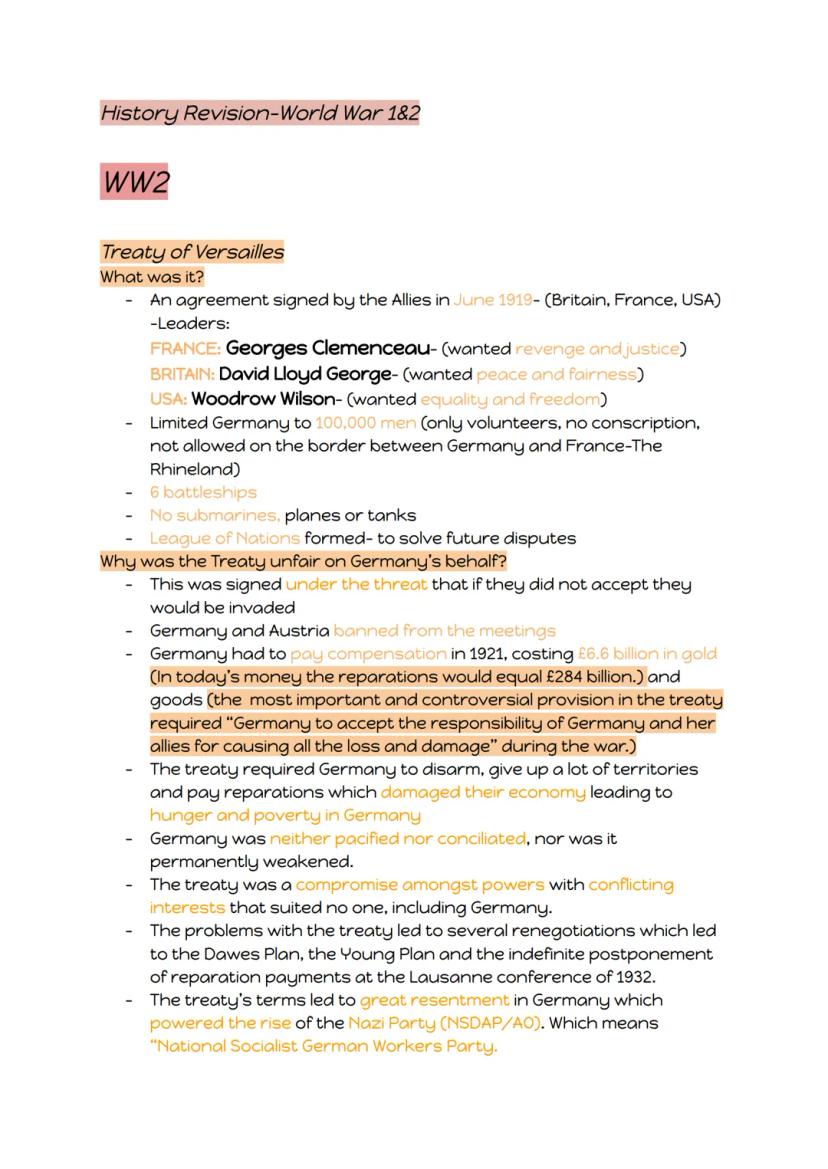
Ever wondered how a peace treaty could actually lead to another war? The Treaty of Versailles in June 1919 was supposed to end all wars, but it backfired spectacularly.
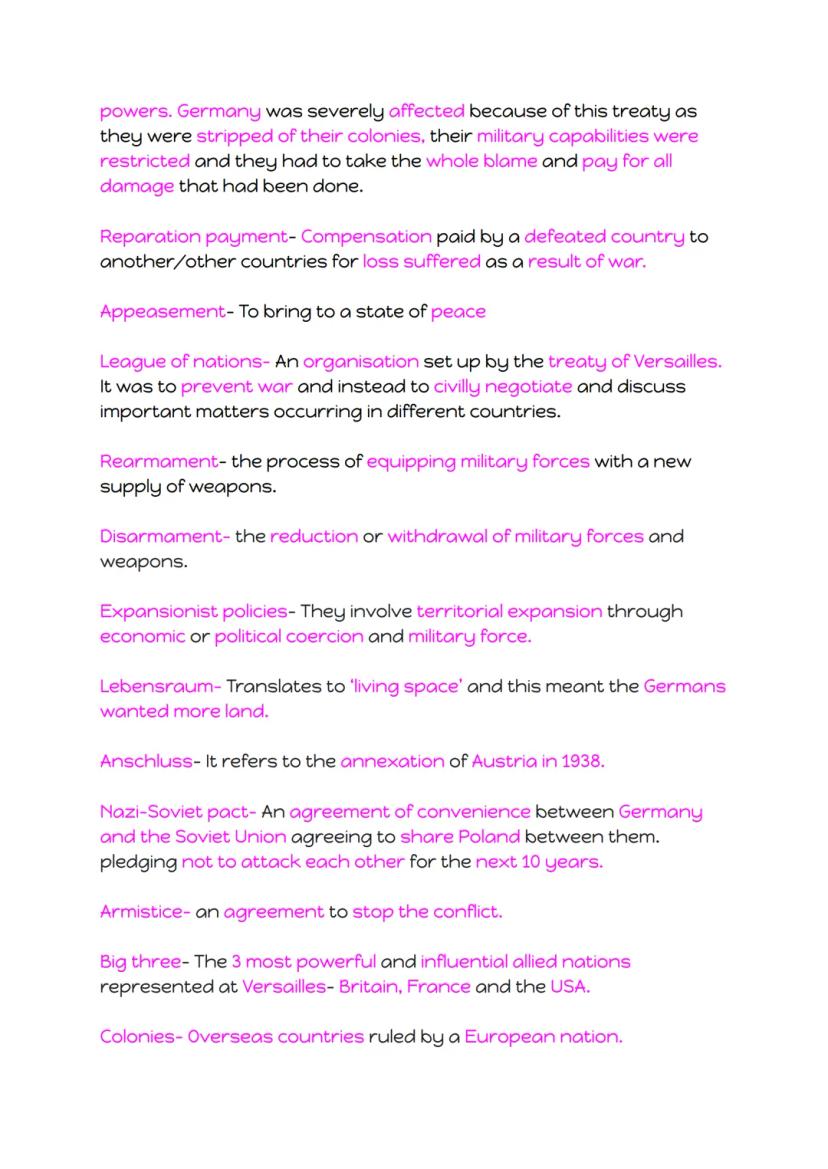
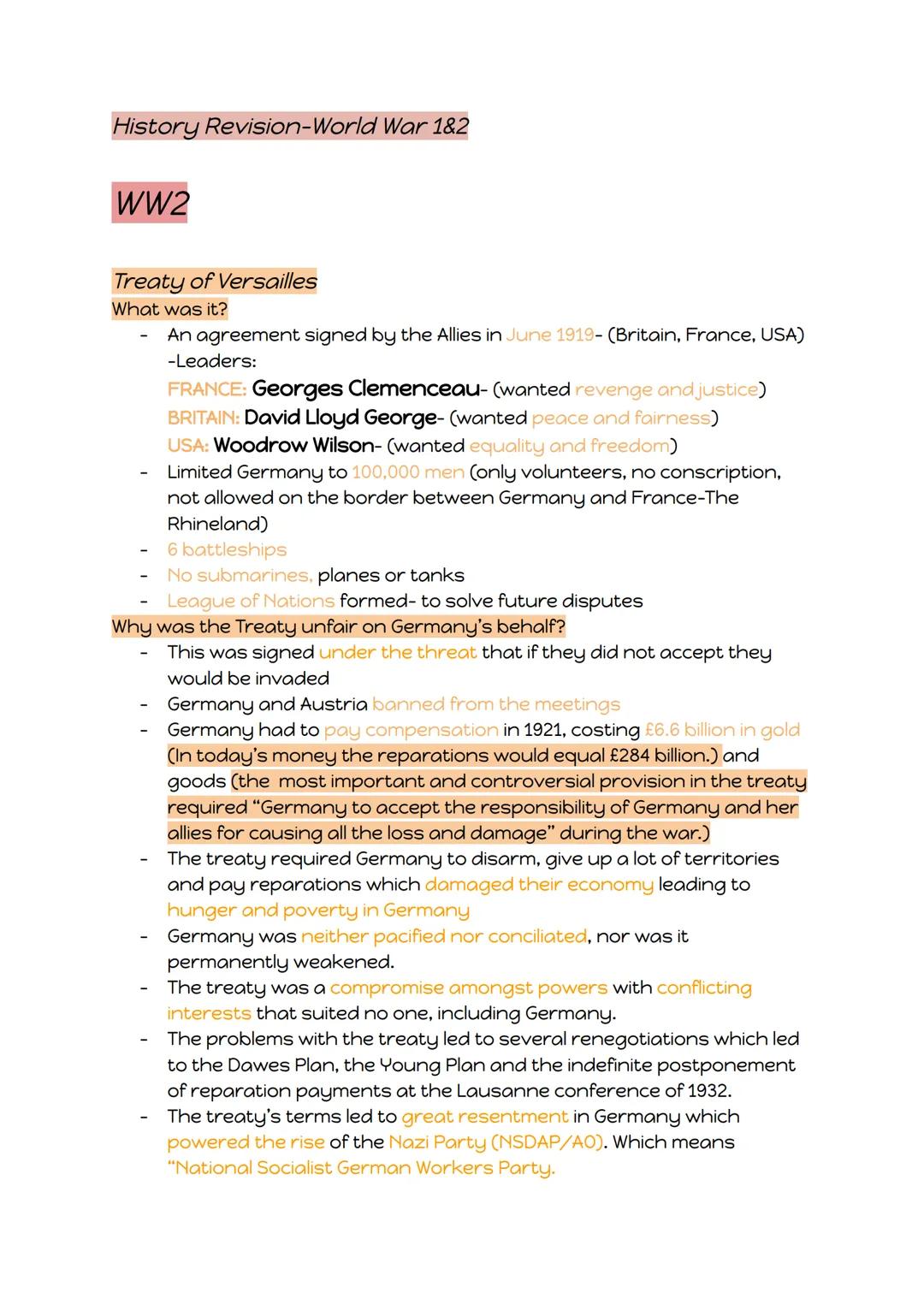
The Big Three leaders had completely different ideas about what to do with Germany. France's Clemenceau wanted revenge, Britain's Lloyd George wanted fairness, and America's Wilson wanted equality. This clash of ideas created a compromise that pleased nobody - especially not Germany.
Germany got absolutely hammered by the treaty's terms. They were limited to just 100,000 soldiers, banned from having tanks or planes, and forced to pay £6.6 billion in reparations (that's £284 billion in today's money!). The worst part? Germany wasn't even allowed to negotiate - they had to sign under threat of invasion.
Quick Fact: The treaty was so harsh that it directly powered the rise of Hitler's Nazi Party, who promised to tear it up completely.
This wasn't just unfair - it was economically devastating. Germans couldn't afford basic necessities, lost their pride when territories were taken away, and felt completely defenceless with such a tiny army. The resentment this created would fuel Hitler's rise to power just over a decade later.
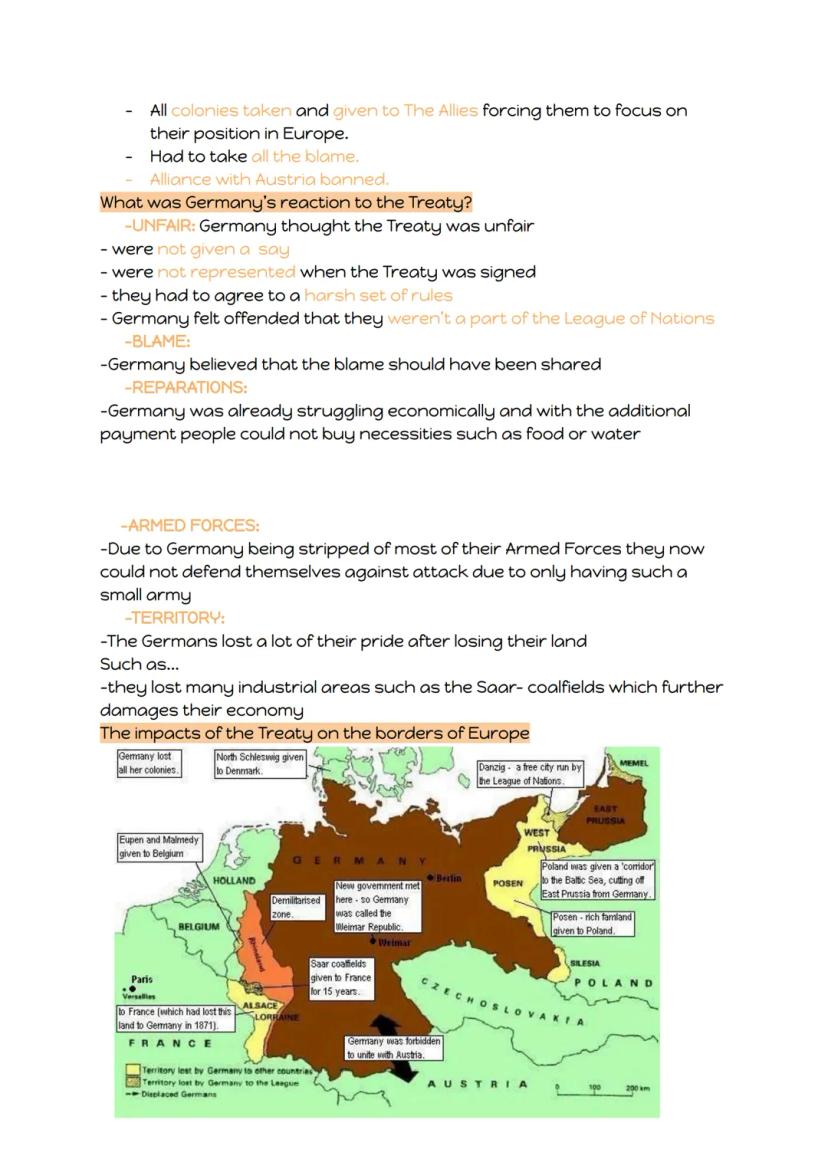
Imagine losing huge chunks of your country overnight - that's exactly what happened to Germany under the Treaty of Versailles. The territorial losses weren't just lines on a map; they ripped apart German communities and destroyed the economy.
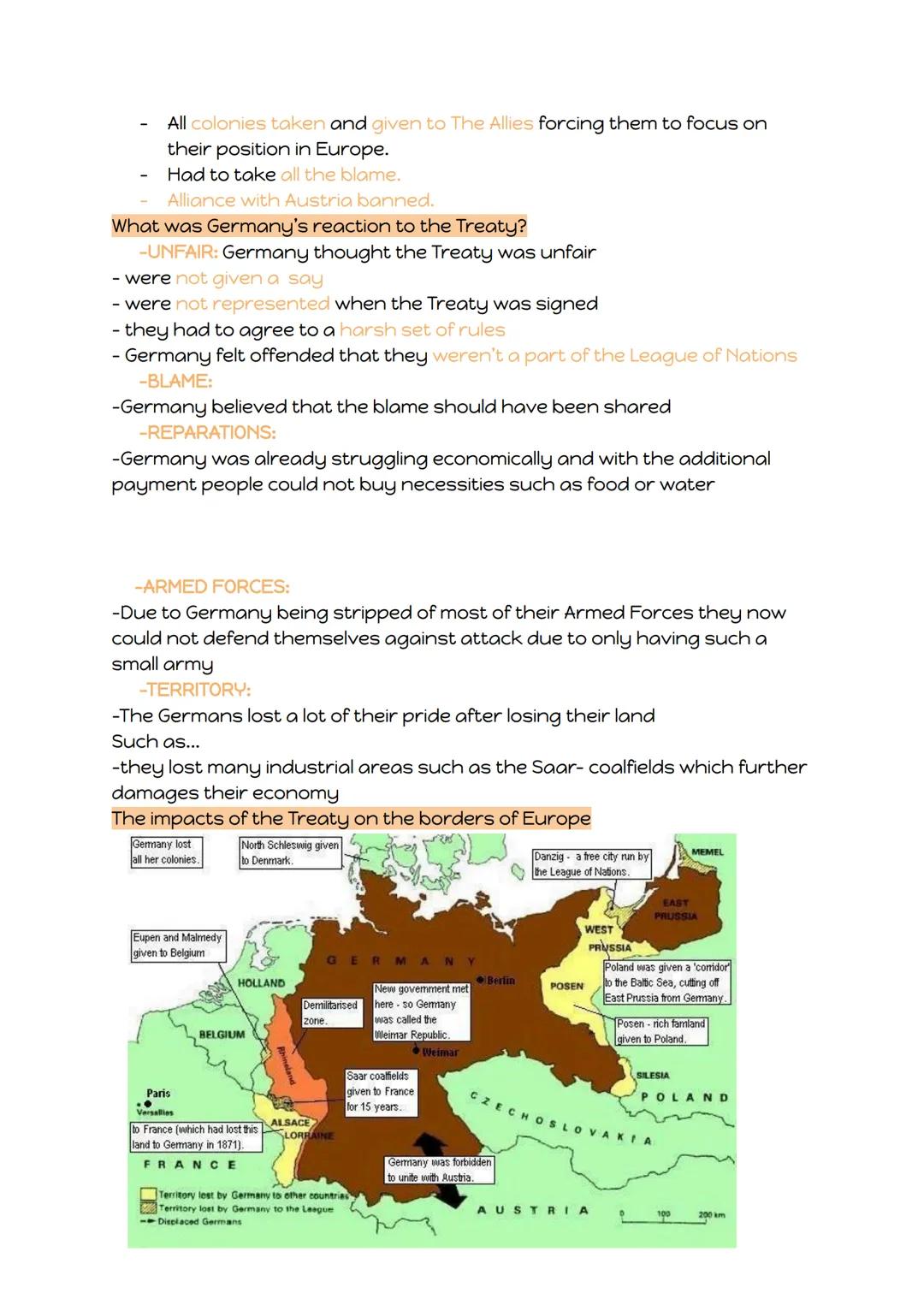
Germany lost all its colonies and valuable industrial areas like the Saar coalfields, which went to France for 15 years. Poland got a corridor to the sea, completely cutting off East Prussia from the rest of Germany. This meant German families were suddenly living in different countries!
The Rhineland became a demilitarised zone, meaning Germany couldn't defend its own border with France. Austria was banned from uniting with Germany, and important ports like Danzig became "free cities" run by the League of Nations.
Map Tip: The territorial losses shown in your textbook maps are exam favourites - make sure you can identify what went where!
These losses weren't just about land - they were about German pride and identity. Millions of Germans now lived under foreign rule, industrial areas were gone, and the country felt completely vulnerable. Hitler would later use these grievances to justify his aggressive expansion across Europe.
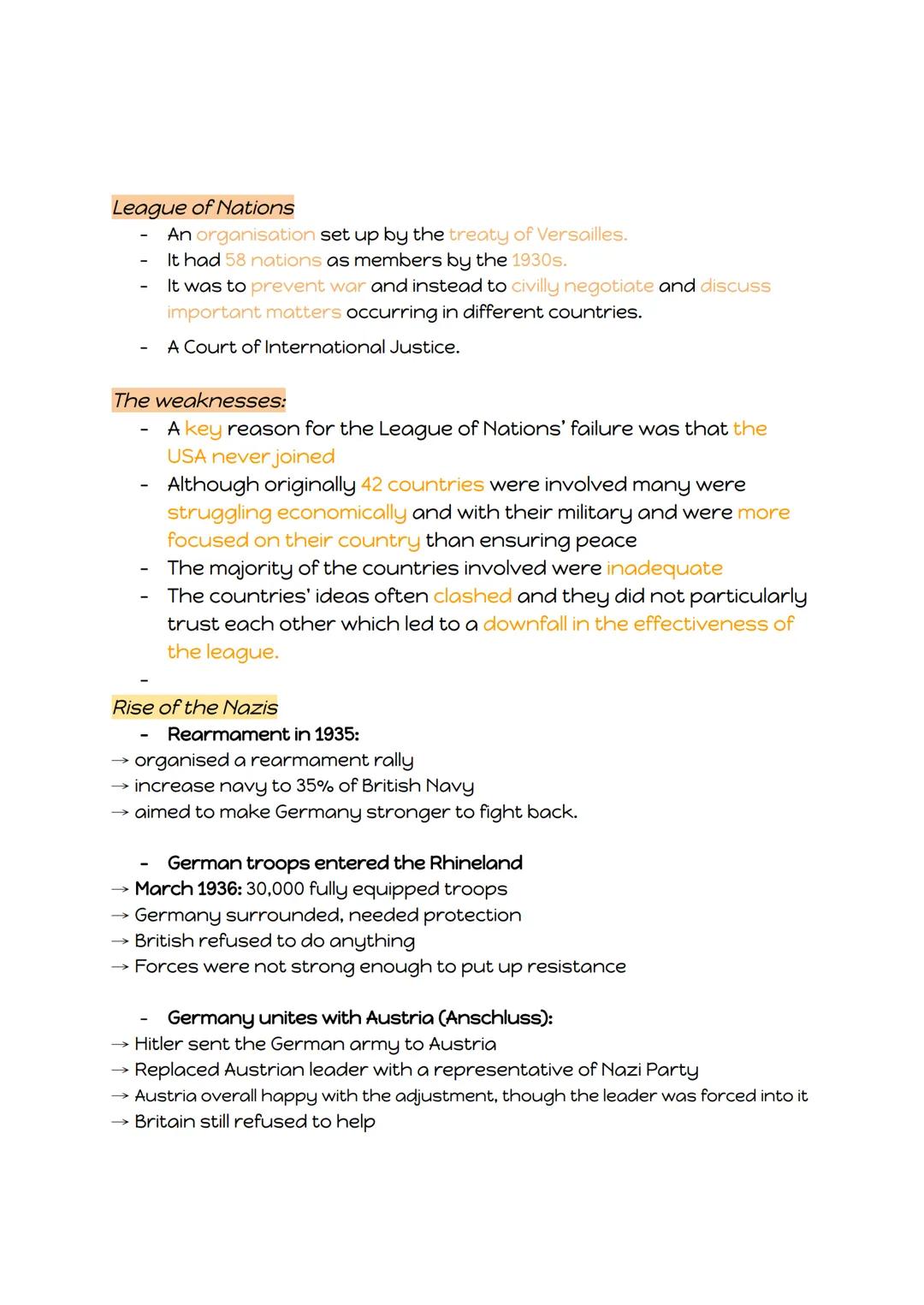
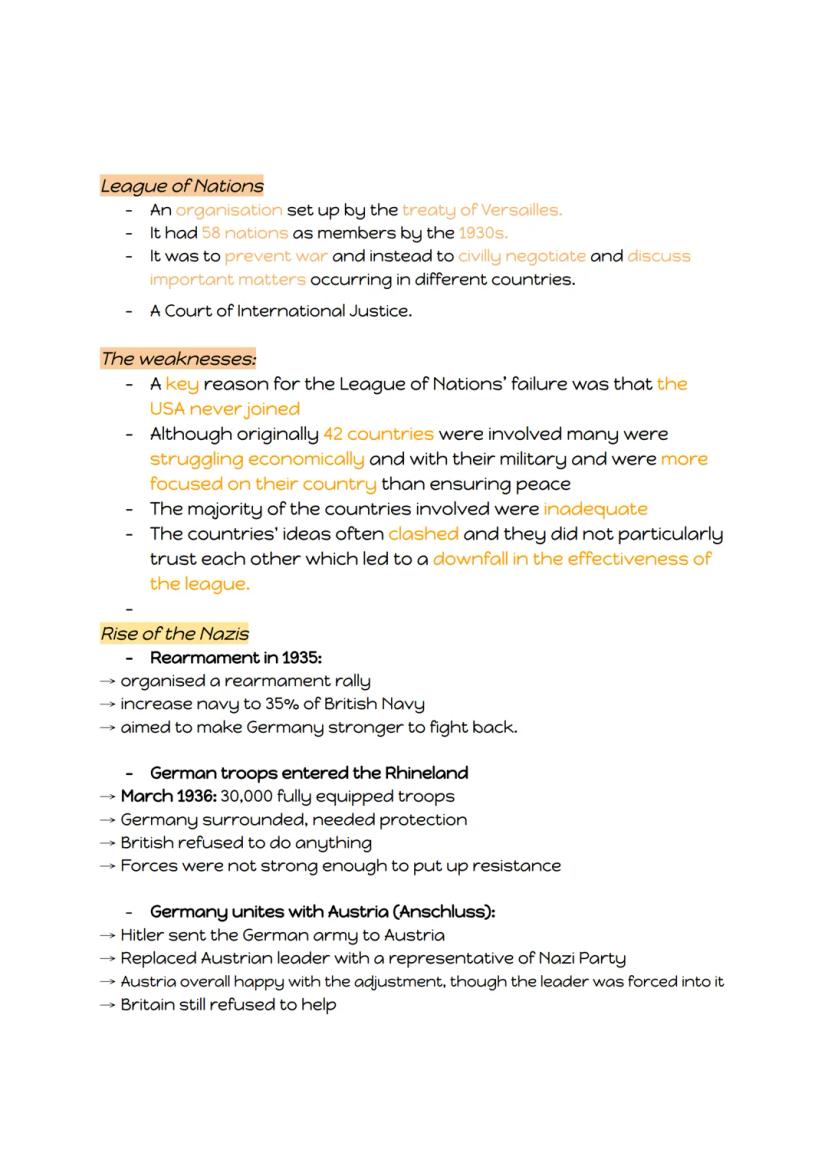
The League of Nations was meant to be the world's peacekeeping superhero, but it turned out to be more like a toothless tiger. With 58 member nations by the 1930s, it looked impressive on paper but failed when it mattered most.
The league's biggest weakness? America never joined, despite President Wilson's enthusiasm for creating it. Most member countries were too focused on their own economic problems to care about international peace, and they didn't trust each other anyway.
Meanwhile, Hitler was busy breaking every rule in the book. In 1935, he organised a rearmament rally and started rebuilding Germany's military. By March 1936, he sent 30,000 troops into the Rhineland - and nobody stopped him! Britain refused to act, and other nations were too weak to resist.
Key Point: Hitler's successful remilitarisation of the Rhineland was his first major test - when nobody stopped him, he knew he could get away with more.
The Anschluss with Austria in 1938 was Hitler's next move. He simply sent the German army in, replaced the Austrian leader with a Nazi, and declared the countries united. Again, Britain did nothing. Each success made Hitler bolder and showed the world that the League of Nations was powerless.
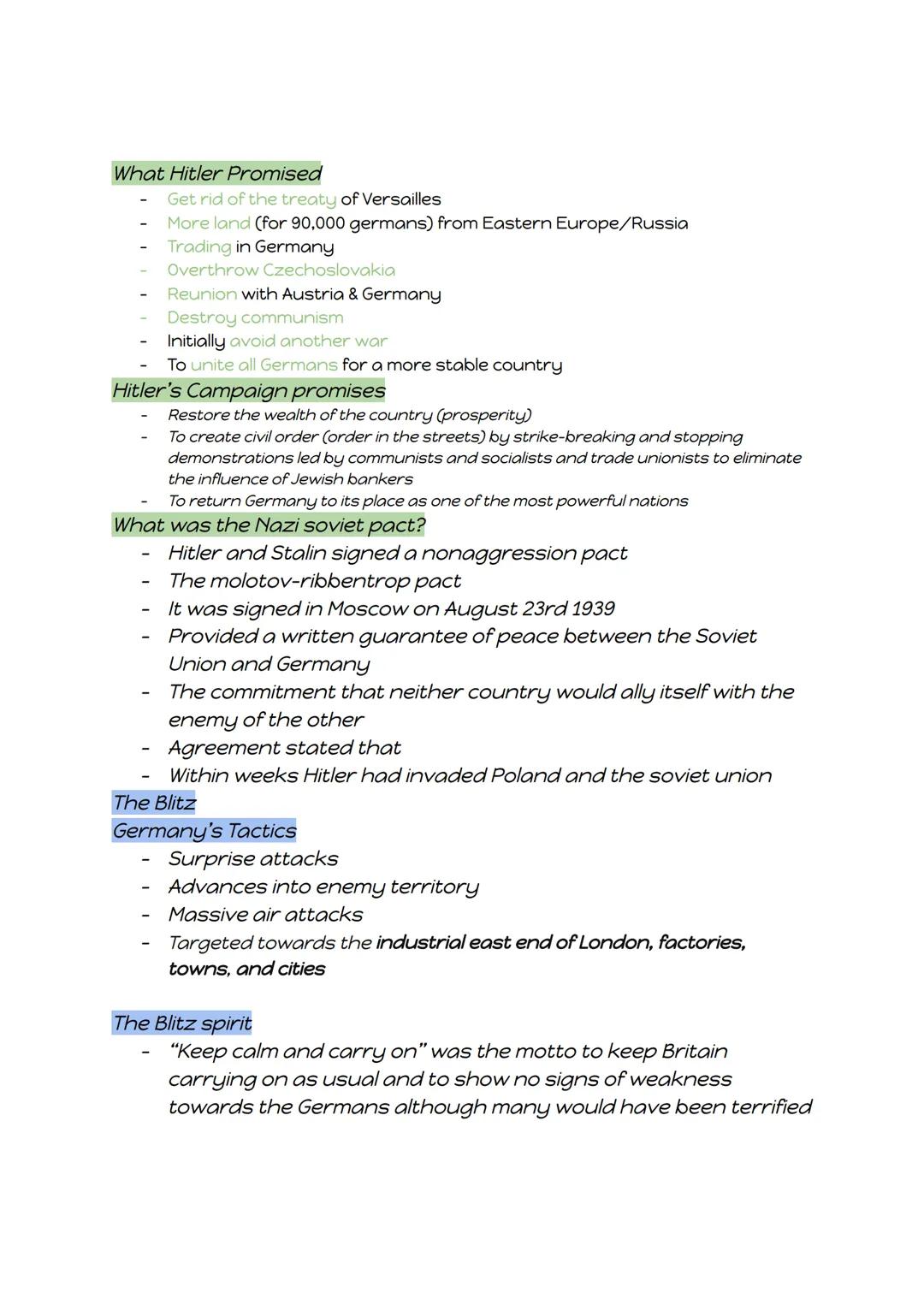
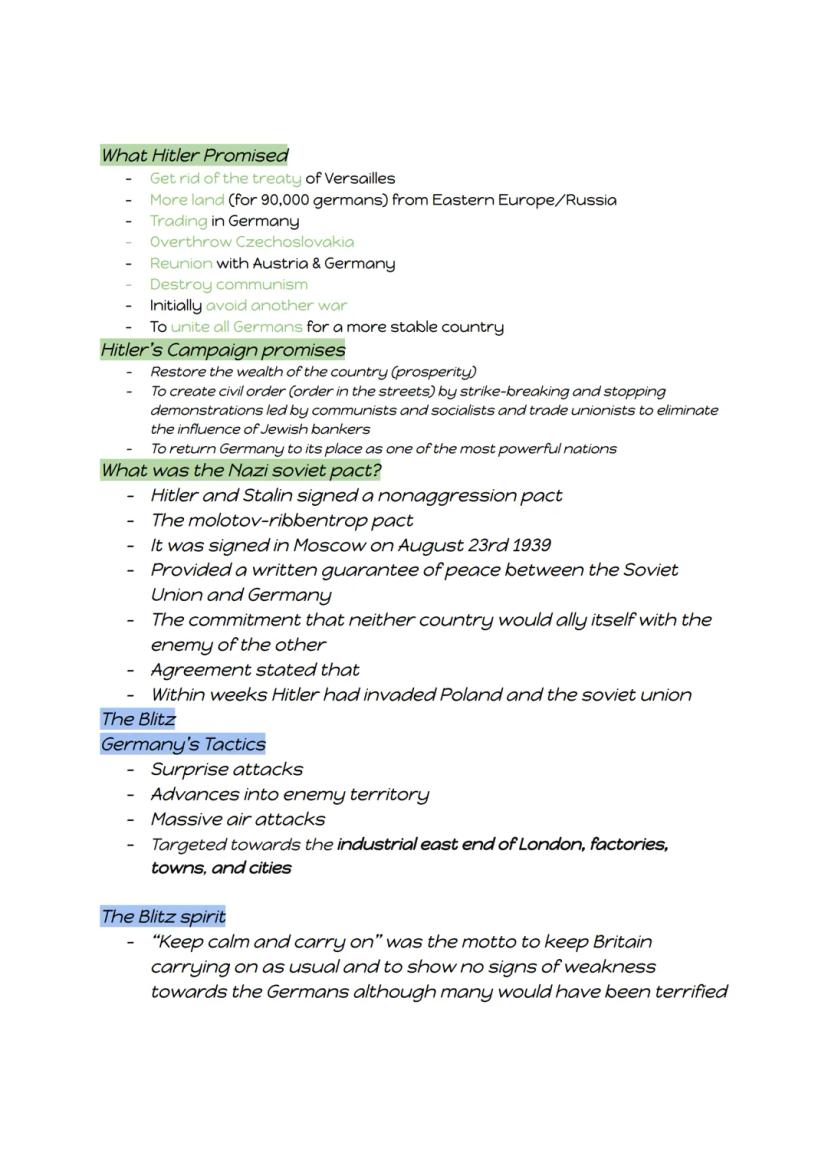
Hitler was basically a master manipulator who told Germans exactly what they wanted to hear. His campaign promises sounded brilliant if you were a struggling German in the 1930s: get rid of the hated Treaty of Versailles, restore Germany's wealth and power, and unite all Germans under one strong nation.
He promised lebensraum (living space) from Eastern Europe, the destruction of communism, and revenge against those who had humiliated Germany. Most importantly, he initially promised to avoid another devastating war while secretly planning for exactly that.
The Nazi-Soviet Pact of August 1939 was Hitler's masterstroke of deception. Despite hating communism, he signed a non-aggression pact with Stalin, agreeing not to attack each other for 10 years. This deal also secretly divided Poland between them.
Exam Alert: The Nazi-Soviet Pact is crucial - it allowed Hitler to invade Poland without fighting Russia, triggering World War 2.
Within weeks of signing this "peace" pact, Hitler invaded Poland anyway. This finally forced Britain and France to declare war on Germany in September 1939. Hitler's promises had led Germany - and the world - into the deadliest conflict in human history.
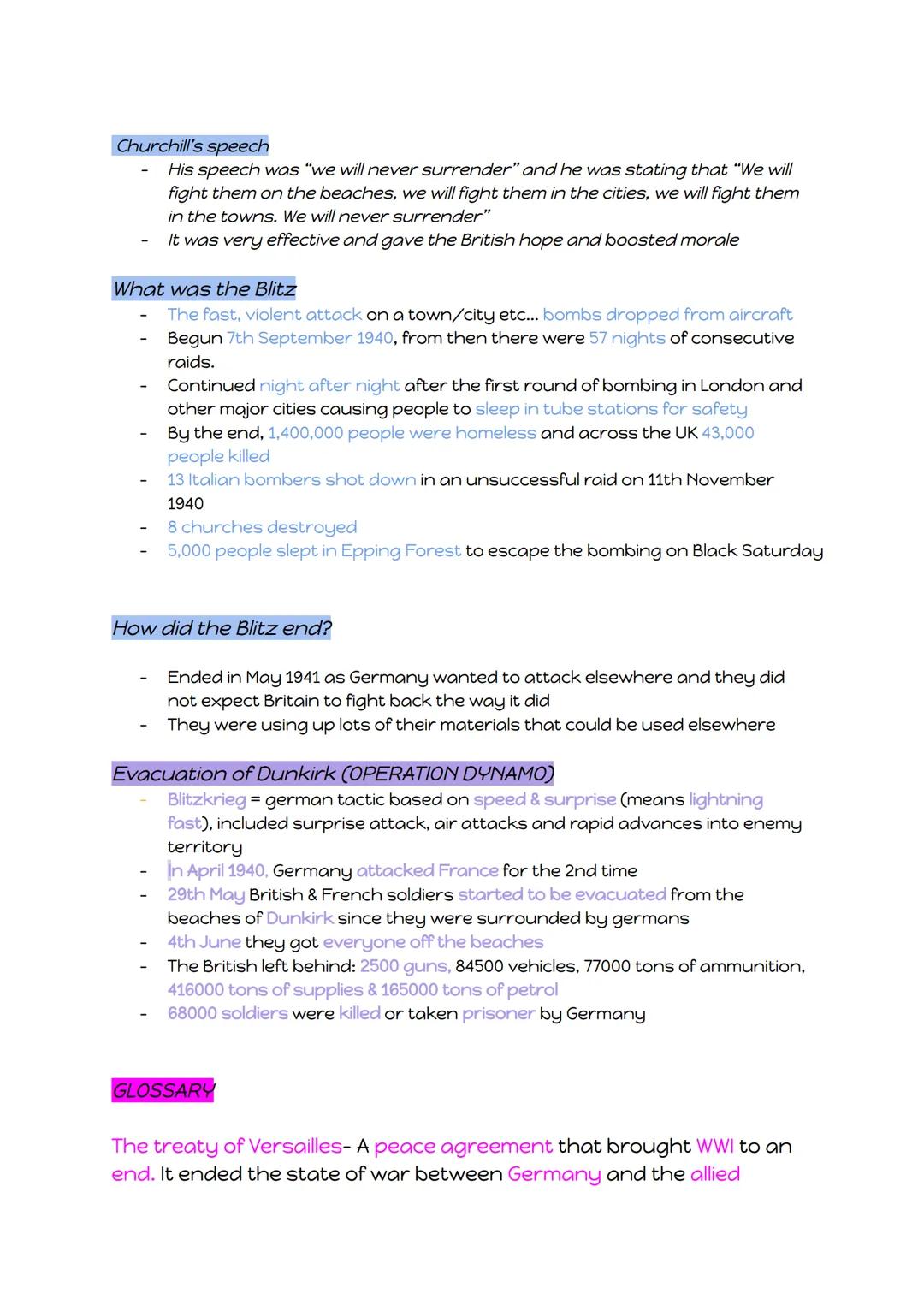
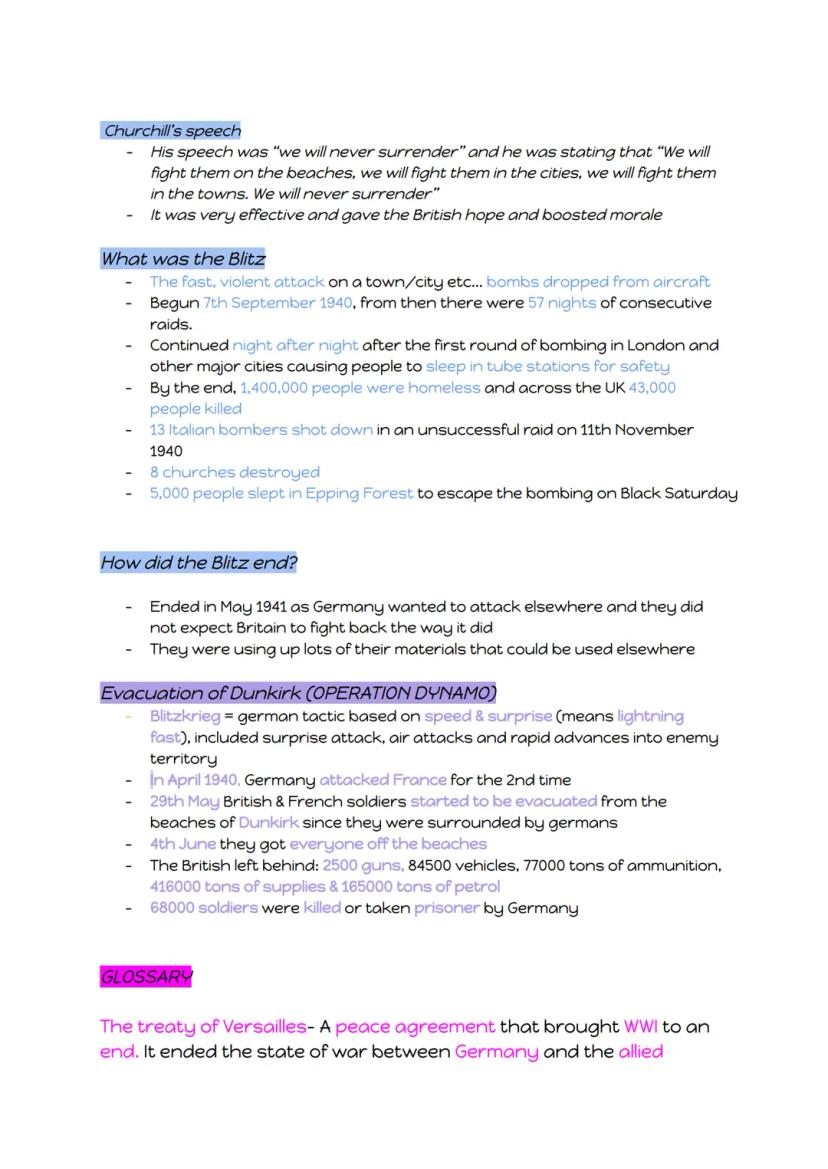
Picture this: for 57 consecutive nights starting September 7th, 1940, German bombers pounded London relentlessly. This was the Blitz - Hitler's attempt to bomb Britain into submission using blitzkrieg tactics of surprise, speed, and massive air attacks.
The bombing was absolutely devastating. By the end, 1.4 million people were homeless and 43,000 had been killed across the UK. Londoners slept in tube stations for safety, while 5,000 people even slept in Epping Forest to escape the bombing on "Black Saturday."
But here's what Hitler didn't expect - the Blitz spirit. Churchill's famous "We will never surrender" speech rallied the nation with words like "We will fight them on the beaches, we will fight them in the cities." The motto "Keep calm and carry on" became Britain's defiant response to Nazi terror.
Churchill's Impact: His speeches were so effective at boosting morale that they're still quoted today - perfect for exam quotes!
The Blitz finally ended in May 1941, not because Britain surrendered, but because Germany needed its planes elsewhere. Hitler had underestimated British resolve and was wasting precious resources he needed for his planned invasion of Russia.
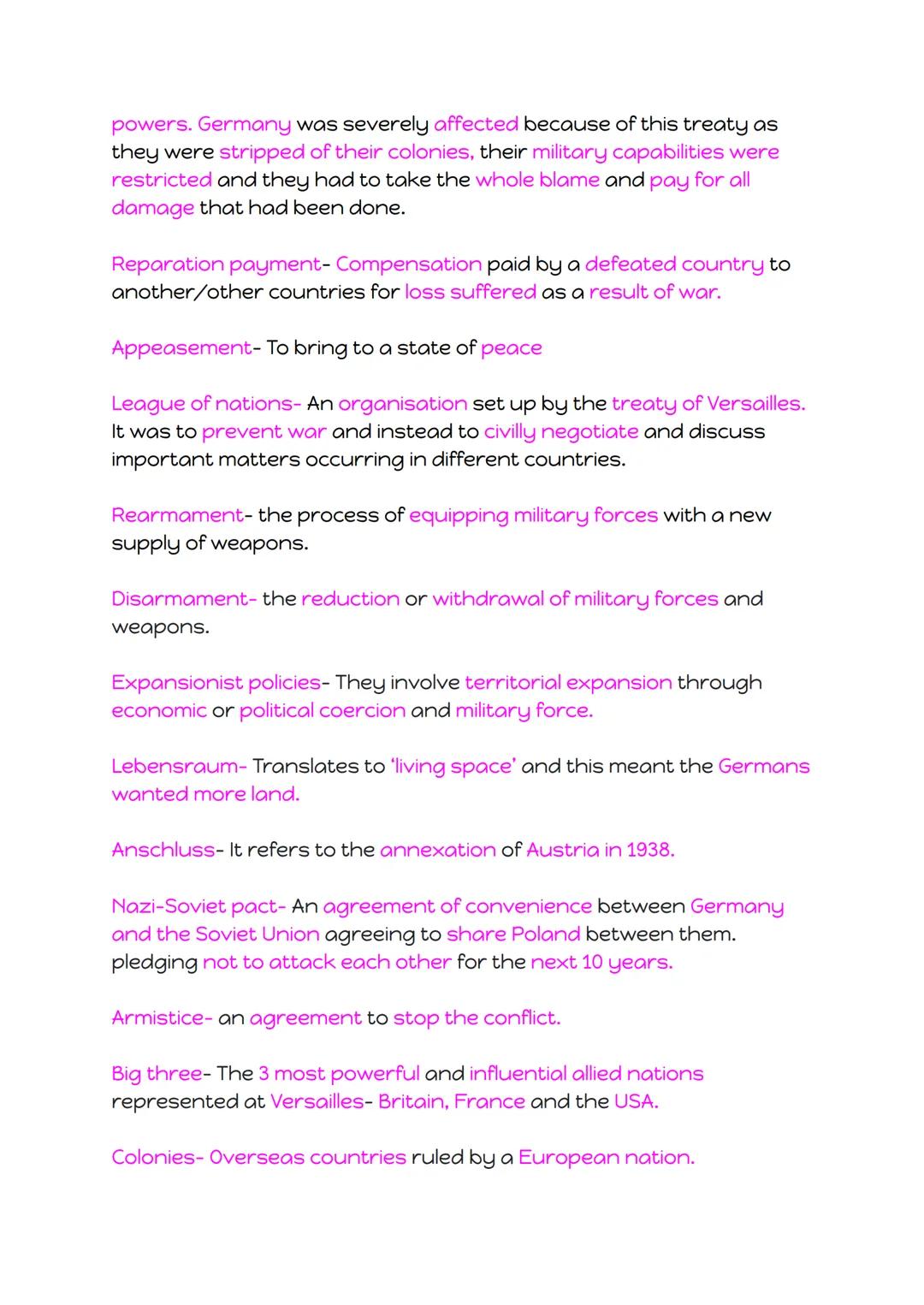
Operation Dynamo - the evacuation of Dunkirk - shows how disasters can become victories through determination and clever spin. After Germany's lightning-fast blitzkrieg trapped British and French forces on the beaches, it looked like total defeat was inevitable.
Between May 29th and June 4th, 1940, an incredible rescue operation got everyone off the beaches using everything from naval destroyers to tiny fishing boats. However, the cost was enormous: 68,000 soldiers killed or captured, plus massive amounts of equipment left behind.
Understanding the key vocabulary is essential for your exams. Reparation payments were the compensation Germany had to pay, while appeasement was the failed policy of giving Hitler what he wanted to avoid war. Lebensraum meant Germany's desire for "living space" through expansion.
Exam Success: Learn these definitions - they appear in almost every World War 2 exam question!
The Anschluss refers to Germany's annexation of Austria, while a demilitarised zone is an area where armies aren't allowed. These terms aren't just vocabulary - they're the building blocks for understanding how Europe stumbled into the world's deadliest conflict.
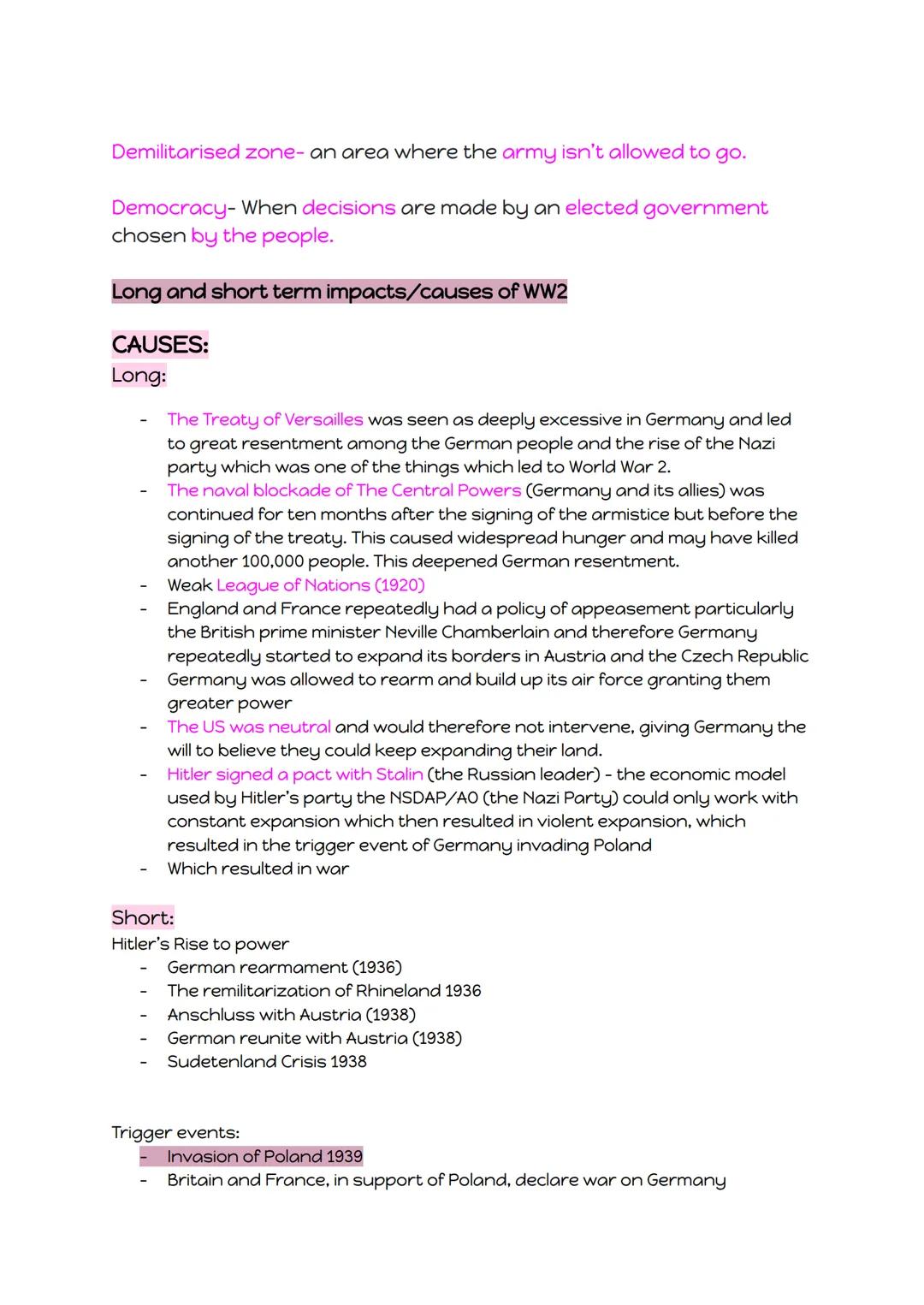
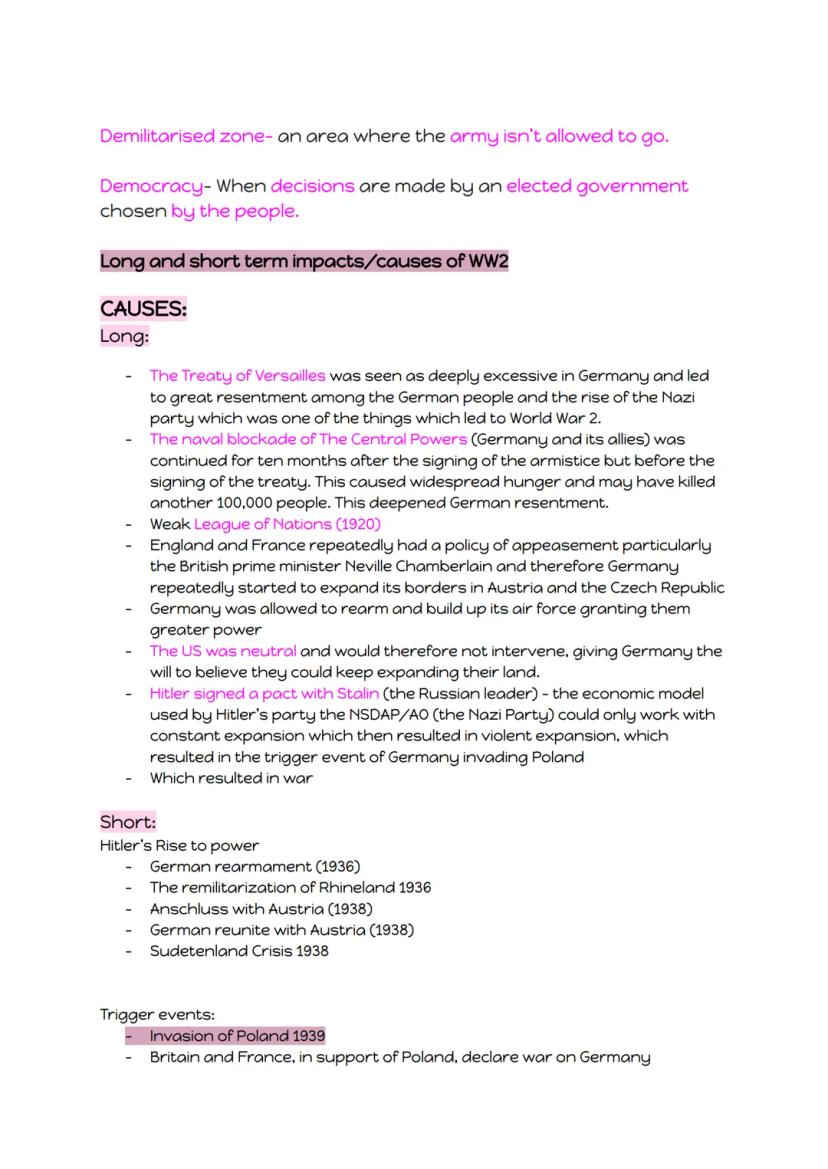
World War 2 didn't start overnight - it was the result of long-term resentment building up over decades. The harsh Treaty of Versailles created deep German anger, while the weak League of Nations couldn't stop aggressive dictators when it mattered.
The policy of appeasement by leaders like Chamberlain made things worse. Every time Hitler grabbed more territory - the Rhineland in 1936, Austria in 1938, Czechoslovakia in 1939 - and faced no real consequences, he grew bolder. America's neutrality meant Hitler thought he could expand without facing the world's strongest power.
The short-term causes were Hitler's specific aggressive moves: German rearmament in 1935, the Anschluss with Austria, and the Sudetenland crisis. Each success convinced him that the Western powers wouldn't fight.
Timeline Tip: Learn the key dates from 1936-1939 - they show the clear escalation towards war.
The final trigger event was Germany's invasion of Poland on September 1st, 1939. This time, Britain and France couldn't ignore Hitler's aggression. They declared war on September 3rd, 1939, and World War 2 had begun. Understanding both long-term causes (like Versailles) and short-term triggers (like Poland) is crucial for exam success.
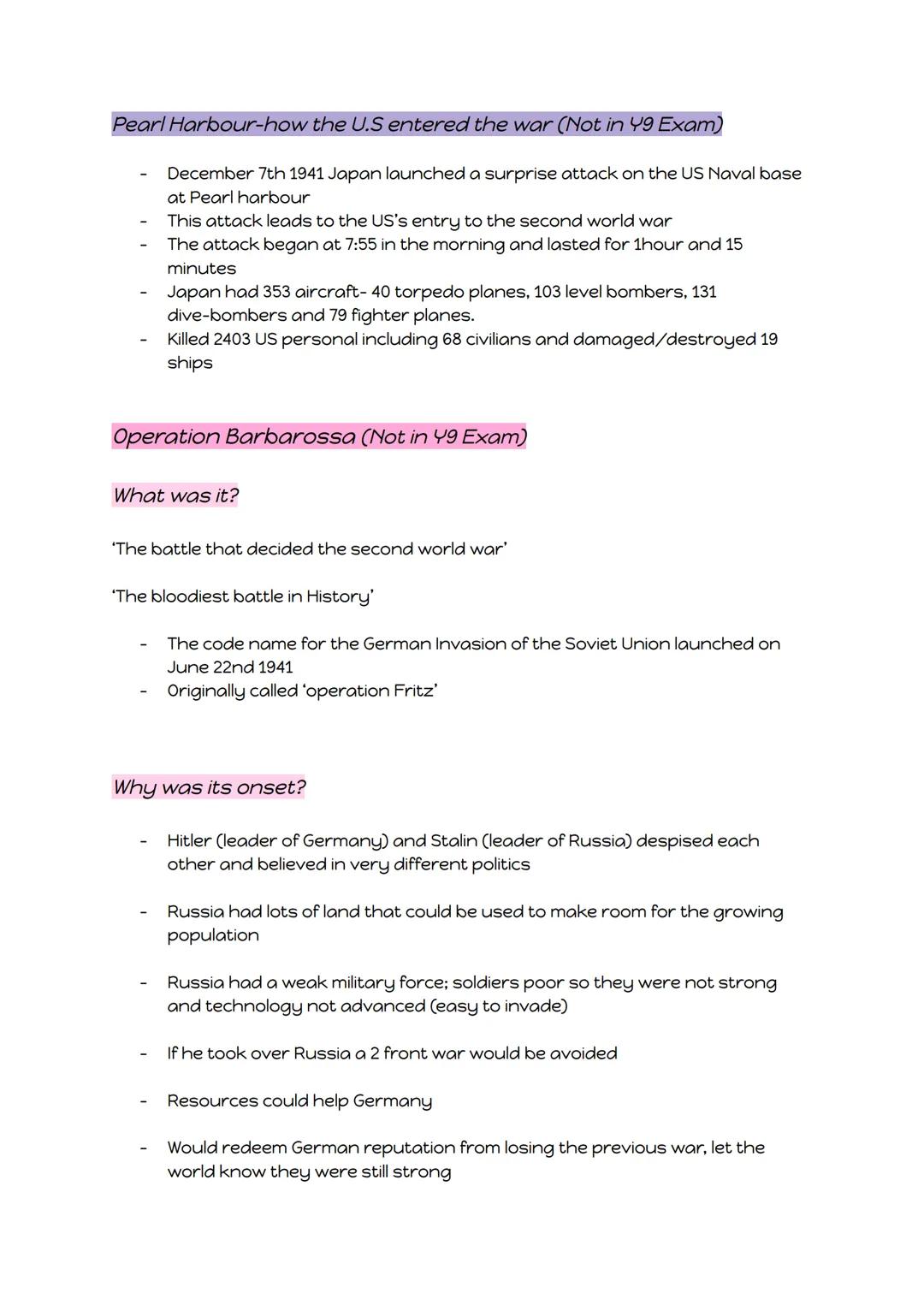
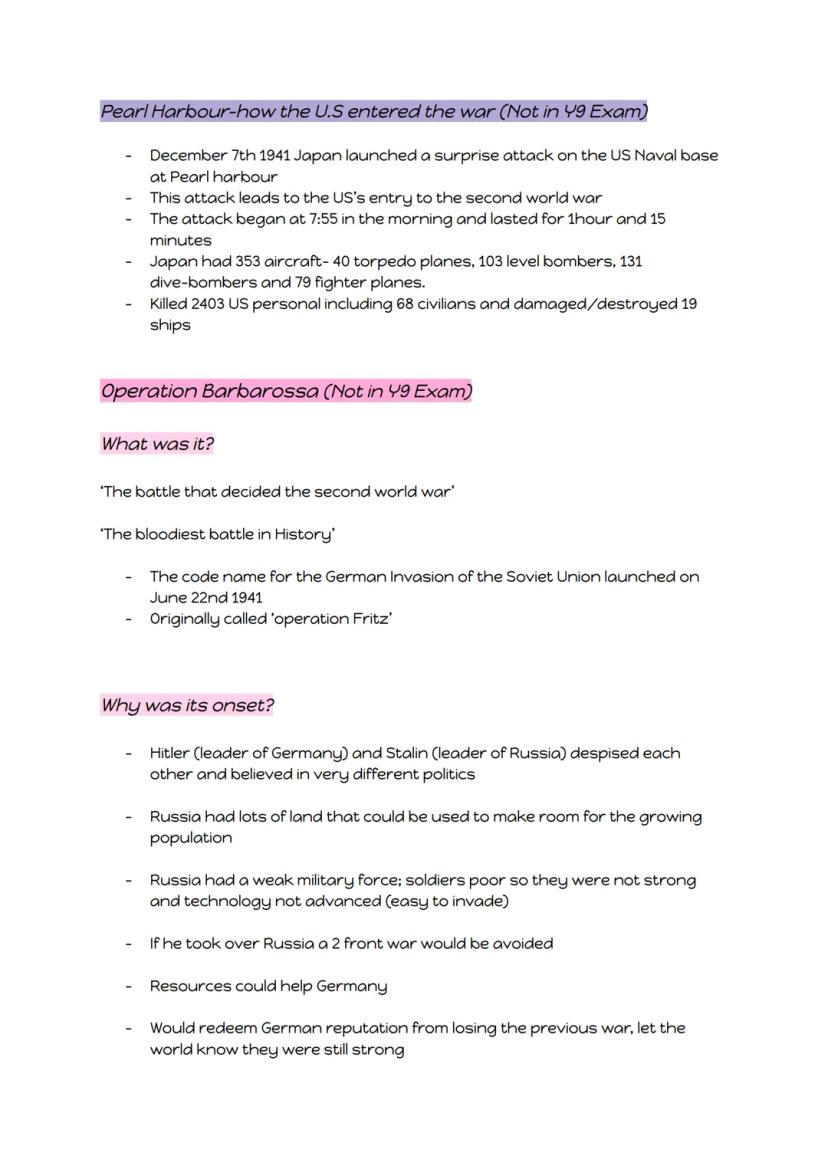
Pearl Harbor changed everything for America on December 7th, 1941. Japan's surprise attack on the US naval base killed 2,403 Americans and destroyed 19 ships in just over an hour. This "date which will live in infamy" finally brought America into the war.
Operation Barbarossa was Hitler's massive gamble - invading Russia on June 22nd, 1941. Called "the battle that decided World War 2," it was originally named "Operation Fritz" and represented Hitler's biggest mistake.
Hitler had logical reasons for attacking Russia: Stalin and he despised each other, Russia had vast territories for German lebensraum, and the Soviet military seemed weak. Hitler thought a quick victory would give Germany resources and avoid fighting on two fronts.
Critical Error: Hitler fatally underestimated Russian resistance and the brutal Russian winter.
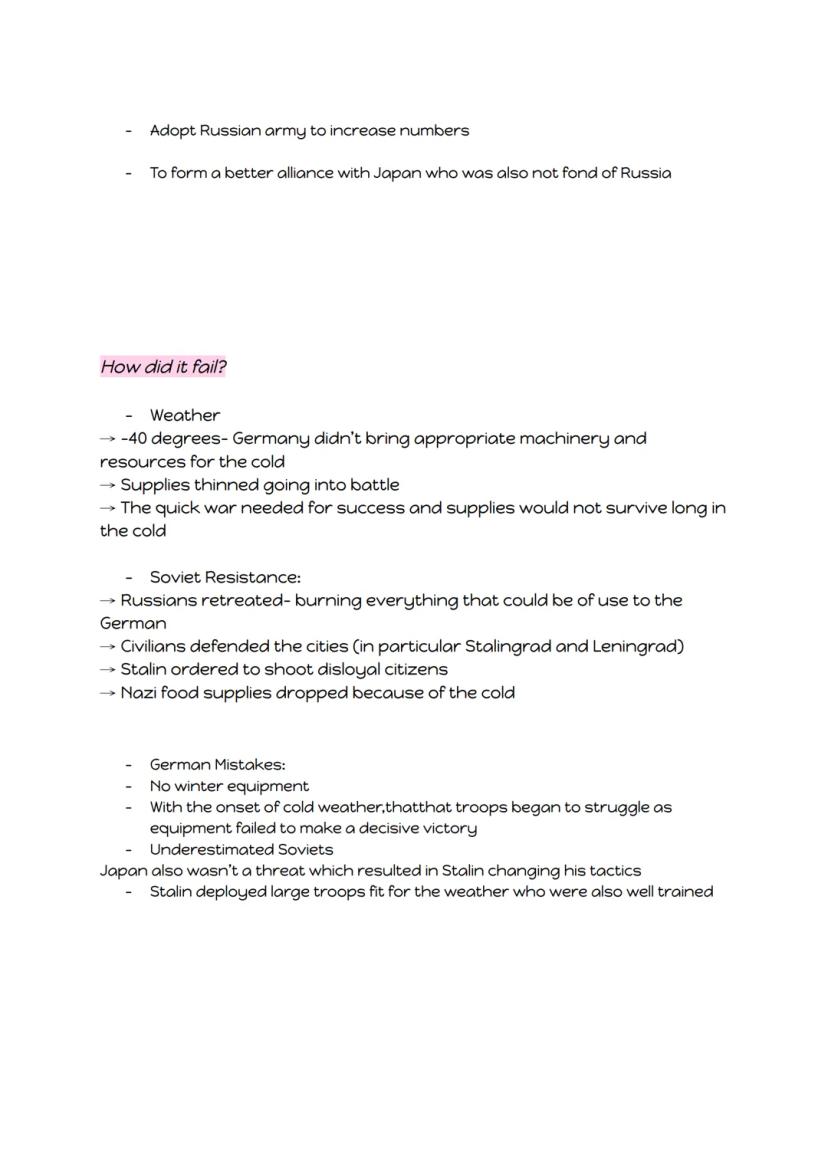
But Operation Barbarossa failed spectacularly. German soldiers weren't equipped for -40°C temperatures, the Russians used "scorched earth" tactics (burning everything useful as they retreated), and Soviet civilians fought fiercely to defend cities like Stalingrad. Stalin's well-trained winter troops eventually pushed the Germans back, marking the beginning of Hitler's downfall.
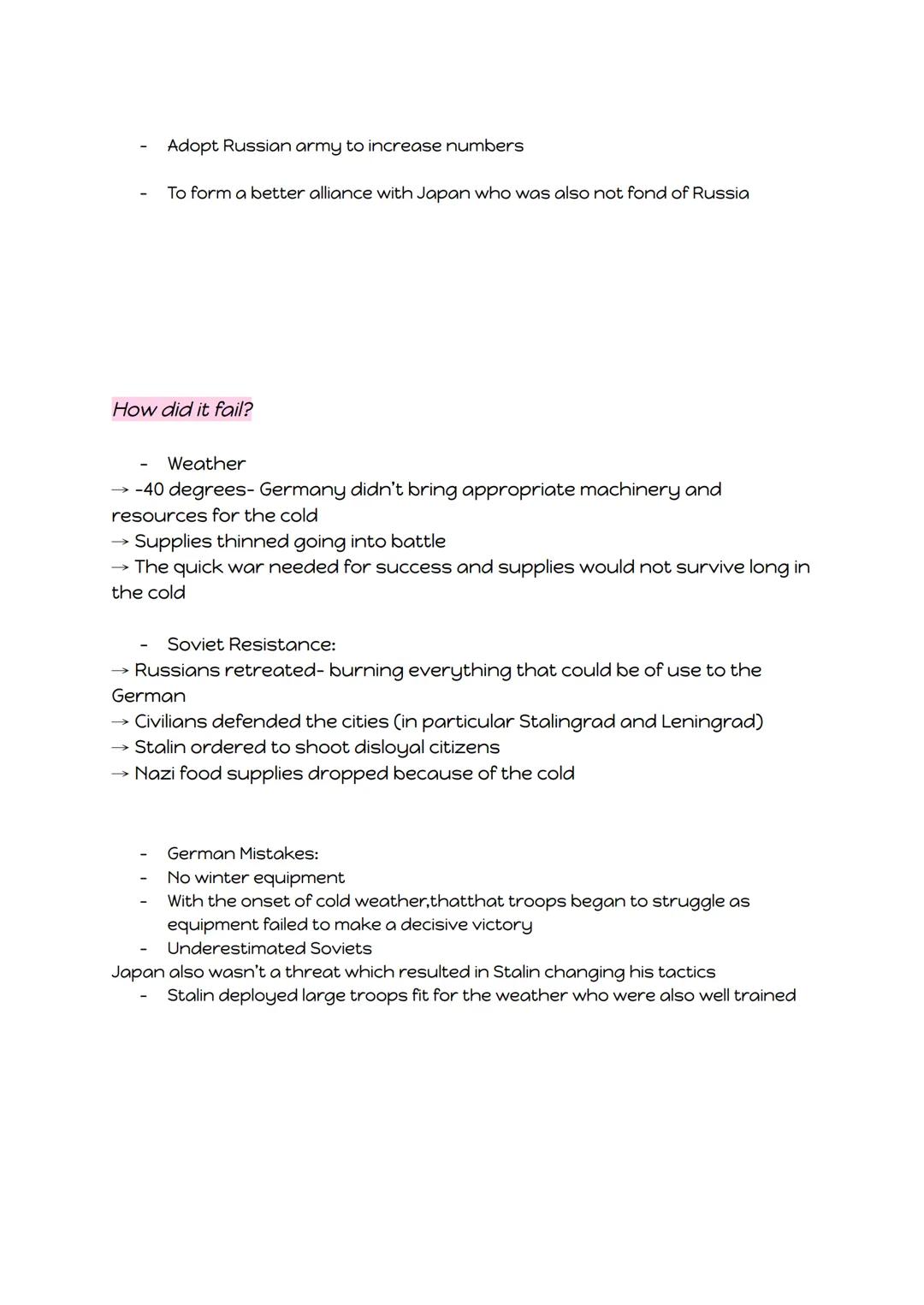
The failure of Operation Barbarossa shows how overconfidence can destroy even the mightiest armies. Hitler made three critical mistakes that cost Germany the war and millions of lives.
Weather was Germany's biggest enemy. Temperatures dropped to -40°C, but German soldiers had no winter equipment. Tanks wouldn't start, weapons jammed, and supply lines stretched dangerously thin. The blitzkrieg tactics that worked in warm Western Europe were useless in the Russian winter.
Soviet resistance was far fiercer than expected. Russians retreated while burning everything useful - crops, buildings, fuel - leaving Germans with nothing. Civilians in cities like Stalingrad and Leningrad fought house-to-house rather than surrender. Stalin even ordered disloyal citizens to be shot to prevent collaboration.
Turning Point: This failure marked the beginning of Germany's defeat - they never recovered from the losses in Russia.
German mistakes were numerous: no winter equipment, underestimating Soviet strength, and assuming Japan would attack Russia from the east (they didn't). When Stalin realised Japan wasn't a threat, he moved well-trained Siberian troops west to fight the Germans. These soldiers were perfectly equipped for winter warfare and gradually pushed the German army back towards Berlin.
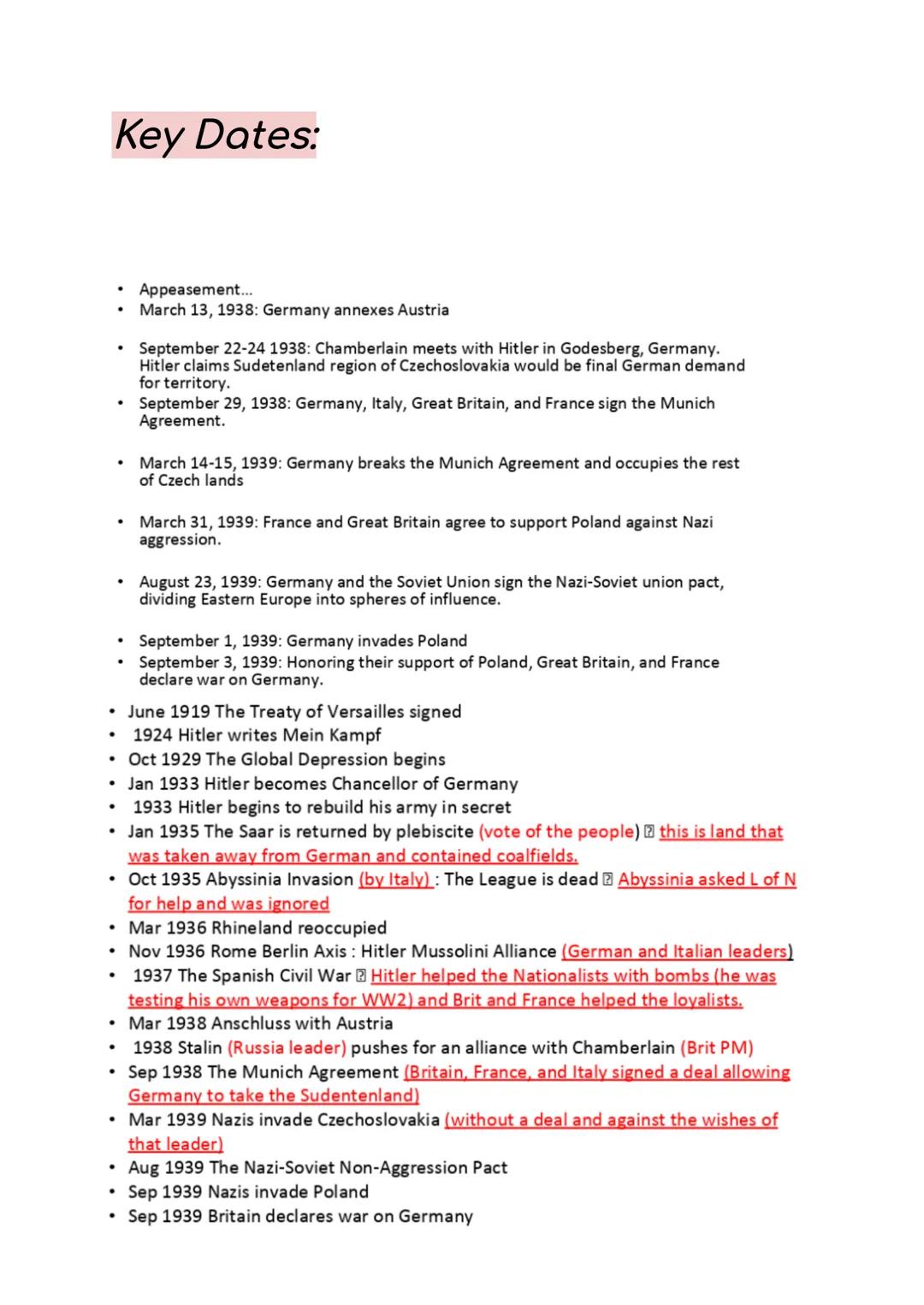
Mastering the chronology of World War 2 is absolutely essential for exam success. These dates tell the story of how appeasement failed and war became inevitable.
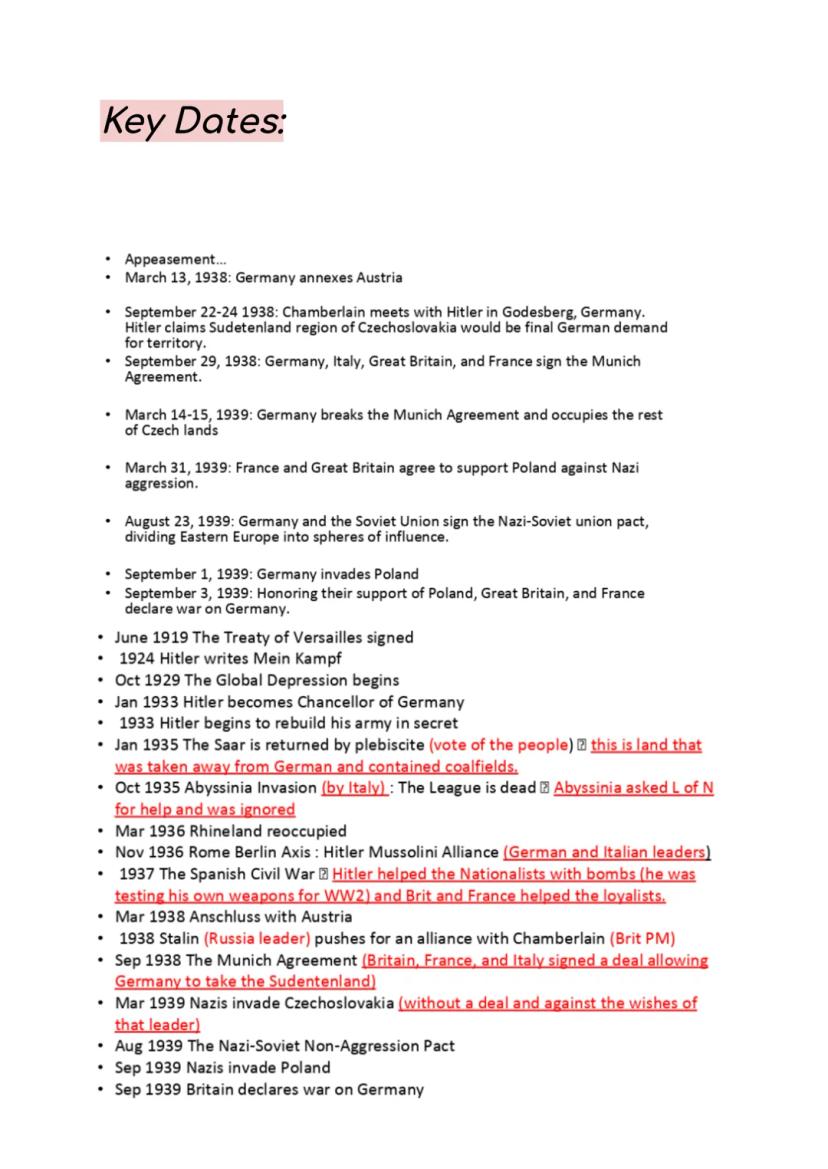
The timeline starts with the Treaty of Versailles in June 1919 and Hitler writing Mein Kampf in 1924. The 1929 Global Depression helped Hitler become Chancellor in January 1933, after which he began secretly rebuilding Germany's army.
Key escalation points include the Rhineland reoccupation (March 1936), the Anschluss with Austria (March 1938), and the Munich Agreement (September 1938) where Britain and France essentially gave Hitler Czechoslovakia's Sudetenland region.
Exam Strategy: Focus on 1938-1939 - this period shows the clear build-up to war and features in most exam questions.
The final countdown began when Hitler broke the Munich Agreement in March 1939 by occupying the rest of Czechoslovakia. The Nazi-Soviet Pact in August 1939 shocked the world, followed immediately by Germany's invasion of Poland on September 1st. Britain and France declared war on September 3rd, 1939, and World War 2 had begun. Learning these dates in sequence helps you understand how each event led inevitably to the next.
Our AI Companion is a student-focused AI tool that offers more than just answers. Built on millions of Knowunity resources, it provides relevant information, personalised study plans, quizzes, and content directly in the chat, adapting to your individual learning journey.
You can download the app from Google Play Store and Apple App Store.
That's right! Enjoy free access to study content, connect with fellow students, and get instant help – all at your fingertips.
App Store
Google Play
The app is very easy to use and well designed. I have found everything I was looking for so far and have been able to learn a lot from the presentations! I will definitely use the app for a class assignment! And of course it also helps a lot as an inspiration.
Stefan S
iOS user
This app is really great. There are so many study notes and help [...]. My problem subject is French, for example, and the app has so many options for help. Thanks to this app, I have improved my French. I would recommend it to anyone.
Samantha Klich
Android user
Wow, I am really amazed. I just tried the app because I've seen it advertised many times and was absolutely stunned. This app is THE HELP you want for school and above all, it offers so many things, such as workouts and fact sheets, which have been VERY helpful to me personally.
Anna
iOS user
Best app on earth! no words because it’s too good
Thomas R
iOS user
Just amazing. Let's me revise 10x better, this app is a quick 10/10. I highly recommend it to anyone. I can watch and search for notes. I can save them in the subject folder. I can revise it any time when I come back. If you haven't tried this app, you're really missing out.
Basil
Android user
This app has made me feel so much more confident in my exam prep, not only through boosting my own self confidence through the features that allow you to connect with others and feel less alone, but also through the way the app itself is centred around making you feel better. It is easy to navigate, fun to use, and helpful to anyone struggling in absolutely any way.
David K
iOS user
The app's just great! All I have to do is enter the topic in the search bar and I get the response real fast. I don't have to watch 10 YouTube videos to understand something, so I'm saving my time. Highly recommended!
Sudenaz Ocak
Android user
In school I was really bad at maths but thanks to the app, I am doing better now. I am so grateful that you made the app.
Greenlight Bonnie
Android user
very reliable app to help and grow your ideas of Maths, English and other related topics in your works. please use this app if your struggling in areas, this app is key for that. wish I'd of done a review before. and it's also free so don't worry about that.
Rohan U
Android user
I know a lot of apps use fake accounts to boost their reviews but this app deserves it all. Originally I was getting 4 in my English exams and this time I got a grade 7. I didn’t even know about this app three days until the exam and it has helped A LOT. Please actually trust me and use it as I’m sure you too will see developments.
Xander S
iOS user
THE QUIZES AND FLASHCARDS ARE SO USEFUL AND I LOVE Knowunity AI. IT ALSO IS LITREALLY LIKE CHATGPT BUT SMARTER!! HELPED ME WITH MY MASCARA PROBLEMS TOO!! AS WELL AS MY REAL SUBJECTS ! DUHHH 😍😁😲🤑💗✨🎀😮
Elisha
iOS user
This apps acc the goat. I find revision so boring but this app makes it so easy to organize it all and then you can ask the freeeee ai to test yourself so good and you can easily upload your own stuff. highly recommend as someone taking mocks now
Paul T
iOS user
The app is very easy to use and well designed. I have found everything I was looking for so far and have been able to learn a lot from the presentations! I will definitely use the app for a class assignment! And of course it also helps a lot as an inspiration.
Stefan S
iOS user
This app is really great. There are so many study notes and help [...]. My problem subject is French, for example, and the app has so many options for help. Thanks to this app, I have improved my French. I would recommend it to anyone.
Samantha Klich
Android user
Wow, I am really amazed. I just tried the app because I've seen it advertised many times and was absolutely stunned. This app is THE HELP you want for school and above all, it offers so many things, such as workouts and fact sheets, which have been VERY helpful to me personally.
Anna
iOS user
Best app on earth! no words because it’s too good
Thomas R
iOS user
Just amazing. Let's me revise 10x better, this app is a quick 10/10. I highly recommend it to anyone. I can watch and search for notes. I can save them in the subject folder. I can revise it any time when I come back. If you haven't tried this app, you're really missing out.
Basil
Android user
This app has made me feel so much more confident in my exam prep, not only through boosting my own self confidence through the features that allow you to connect with others and feel less alone, but also through the way the app itself is centred around making you feel better. It is easy to navigate, fun to use, and helpful to anyone struggling in absolutely any way.
David K
iOS user
The app's just great! All I have to do is enter the topic in the search bar and I get the response real fast. I don't have to watch 10 YouTube videos to understand something, so I'm saving my time. Highly recommended!
Sudenaz Ocak
Android user
In school I was really bad at maths but thanks to the app, I am doing better now. I am so grateful that you made the app.
Greenlight Bonnie
Android user
very reliable app to help and grow your ideas of Maths, English and other related topics in your works. please use this app if your struggling in areas, this app is key for that. wish I'd of done a review before. and it's also free so don't worry about that.
Rohan U
Android user
I know a lot of apps use fake accounts to boost their reviews but this app deserves it all. Originally I was getting 4 in my English exams and this time I got a grade 7. I didn’t even know about this app three days until the exam and it has helped A LOT. Please actually trust me and use it as I’m sure you too will see developments.
Xander S
iOS user
THE QUIZES AND FLASHCARDS ARE SO USEFUL AND I LOVE Knowunity AI. IT ALSO IS LITREALLY LIKE CHATGPT BUT SMARTER!! HELPED ME WITH MY MASCARA PROBLEMS TOO!! AS WELL AS MY REAL SUBJECTS ! DUHHH 😍😁😲🤑💗✨🎀😮
Elisha
iOS user
This apps acc the goat. I find revision so boring but this app makes it so easy to organize it all and then you can ask the freeeee ai to test yourself so good and you can easily upload your own stuff. highly recommend as someone taking mocks now
Paul T
iOS user
🎸🦕🕸️𝔱𝔥𝔢𝔬🕸️🦕🎸
@gh0styb0i
World War 2 didn't just happen overnight - it was brewing for years after the harsh Treaty of Versailles left Germany angry and humiliated. Understanding how Hitler rose to power and why the world failed to stop him early on... Show more
Access to all documents
Improve your grades
Join milions of students
Ever wondered how a peace treaty could actually lead to another war? The Treaty of Versailles in June 1919 was supposed to end all wars, but it backfired spectacularly.
The Big Three leaders had completely different ideas about what to do with Germany. France's Clemenceau wanted revenge, Britain's Lloyd George wanted fairness, and America's Wilson wanted equality. This clash of ideas created a compromise that pleased nobody - especially not Germany.
Germany got absolutely hammered by the treaty's terms. They were limited to just 100,000 soldiers, banned from having tanks or planes, and forced to pay £6.6 billion in reparations (that's £284 billion in today's money!). The worst part? Germany wasn't even allowed to negotiate - they had to sign under threat of invasion.
Quick Fact: The treaty was so harsh that it directly powered the rise of Hitler's Nazi Party, who promised to tear it up completely.
This wasn't just unfair - it was economically devastating. Germans couldn't afford basic necessities, lost their pride when territories were taken away, and felt completely defenceless with such a tiny army. The resentment this created would fuel Hitler's rise to power just over a decade later.
Access to all documents
Improve your grades
Join milions of students
Imagine losing huge chunks of your country overnight - that's exactly what happened to Germany under the Treaty of Versailles. The territorial losses weren't just lines on a map; they ripped apart German communities and destroyed the economy.
Germany lost all its colonies and valuable industrial areas like the Saar coalfields, which went to France for 15 years. Poland got a corridor to the sea, completely cutting off East Prussia from the rest of Germany. This meant German families were suddenly living in different countries!
The Rhineland became a demilitarised zone, meaning Germany couldn't defend its own border with France. Austria was banned from uniting with Germany, and important ports like Danzig became "free cities" run by the League of Nations.
Map Tip: The territorial losses shown in your textbook maps are exam favourites - make sure you can identify what went where!
These losses weren't just about land - they were about German pride and identity. Millions of Germans now lived under foreign rule, industrial areas were gone, and the country felt completely vulnerable. Hitler would later use these grievances to justify his aggressive expansion across Europe.
Access to all documents
Improve your grades
Join milions of students
The League of Nations was meant to be the world's peacekeeping superhero, but it turned out to be more like a toothless tiger. With 58 member nations by the 1930s, it looked impressive on paper but failed when it mattered most.
The league's biggest weakness? America never joined, despite President Wilson's enthusiasm for creating it. Most member countries were too focused on their own economic problems to care about international peace, and they didn't trust each other anyway.
Meanwhile, Hitler was busy breaking every rule in the book. In 1935, he organised a rearmament rally and started rebuilding Germany's military. By March 1936, he sent 30,000 troops into the Rhineland - and nobody stopped him! Britain refused to act, and other nations were too weak to resist.
Key Point: Hitler's successful remilitarisation of the Rhineland was his first major test - when nobody stopped him, he knew he could get away with more.
The Anschluss with Austria in 1938 was Hitler's next move. He simply sent the German army in, replaced the Austrian leader with a Nazi, and declared the countries united. Again, Britain did nothing. Each success made Hitler bolder and showed the world that the League of Nations was powerless.
Access to all documents
Improve your grades
Join milions of students
Hitler was basically a master manipulator who told Germans exactly what they wanted to hear. His campaign promises sounded brilliant if you were a struggling German in the 1930s: get rid of the hated Treaty of Versailles, restore Germany's wealth and power, and unite all Germans under one strong nation.
He promised lebensraum (living space) from Eastern Europe, the destruction of communism, and revenge against those who had humiliated Germany. Most importantly, he initially promised to avoid another devastating war while secretly planning for exactly that.
The Nazi-Soviet Pact of August 1939 was Hitler's masterstroke of deception. Despite hating communism, he signed a non-aggression pact with Stalin, agreeing not to attack each other for 10 years. This deal also secretly divided Poland between them.
Exam Alert: The Nazi-Soviet Pact is crucial - it allowed Hitler to invade Poland without fighting Russia, triggering World War 2.
Within weeks of signing this "peace" pact, Hitler invaded Poland anyway. This finally forced Britain and France to declare war on Germany in September 1939. Hitler's promises had led Germany - and the world - into the deadliest conflict in human history.
Access to all documents
Improve your grades
Join milions of students
Picture this: for 57 consecutive nights starting September 7th, 1940, German bombers pounded London relentlessly. This was the Blitz - Hitler's attempt to bomb Britain into submission using blitzkrieg tactics of surprise, speed, and massive air attacks.
The bombing was absolutely devastating. By the end, 1.4 million people were homeless and 43,000 had been killed across the UK. Londoners slept in tube stations for safety, while 5,000 people even slept in Epping Forest to escape the bombing on "Black Saturday."
But here's what Hitler didn't expect - the Blitz spirit. Churchill's famous "We will never surrender" speech rallied the nation with words like "We will fight them on the beaches, we will fight them in the cities." The motto "Keep calm and carry on" became Britain's defiant response to Nazi terror.
Churchill's Impact: His speeches were so effective at boosting morale that they're still quoted today - perfect for exam quotes!
The Blitz finally ended in May 1941, not because Britain surrendered, but because Germany needed its planes elsewhere. Hitler had underestimated British resolve and was wasting precious resources he needed for his planned invasion of Russia.
Access to all documents
Improve your grades
Join milions of students
Operation Dynamo - the evacuation of Dunkirk - shows how disasters can become victories through determination and clever spin. After Germany's lightning-fast blitzkrieg trapped British and French forces on the beaches, it looked like total defeat was inevitable.
Between May 29th and June 4th, 1940, an incredible rescue operation got everyone off the beaches using everything from naval destroyers to tiny fishing boats. However, the cost was enormous: 68,000 soldiers killed or captured, plus massive amounts of equipment left behind.
Understanding the key vocabulary is essential for your exams. Reparation payments were the compensation Germany had to pay, while appeasement was the failed policy of giving Hitler what he wanted to avoid war. Lebensraum meant Germany's desire for "living space" through expansion.
Exam Success: Learn these definitions - they appear in almost every World War 2 exam question!
The Anschluss refers to Germany's annexation of Austria, while a demilitarised zone is an area where armies aren't allowed. These terms aren't just vocabulary - they're the building blocks for understanding how Europe stumbled into the world's deadliest conflict.
Access to all documents
Improve your grades
Join milions of students
World War 2 didn't start overnight - it was the result of long-term resentment building up over decades. The harsh Treaty of Versailles created deep German anger, while the weak League of Nations couldn't stop aggressive dictators when it mattered.
The policy of appeasement by leaders like Chamberlain made things worse. Every time Hitler grabbed more territory - the Rhineland in 1936, Austria in 1938, Czechoslovakia in 1939 - and faced no real consequences, he grew bolder. America's neutrality meant Hitler thought he could expand without facing the world's strongest power.
The short-term causes were Hitler's specific aggressive moves: German rearmament in 1935, the Anschluss with Austria, and the Sudetenland crisis. Each success convinced him that the Western powers wouldn't fight.
Timeline Tip: Learn the key dates from 1936-1939 - they show the clear escalation towards war.
The final trigger event was Germany's invasion of Poland on September 1st, 1939. This time, Britain and France couldn't ignore Hitler's aggression. They declared war on September 3rd, 1939, and World War 2 had begun. Understanding both long-term causes (like Versailles) and short-term triggers (like Poland) is crucial for exam success.
Access to all documents
Improve your grades
Join milions of students
Pearl Harbor changed everything for America on December 7th, 1941. Japan's surprise attack on the US naval base killed 2,403 Americans and destroyed 19 ships in just over an hour. This "date which will live in infamy" finally brought America into the war.
Operation Barbarossa was Hitler's massive gamble - invading Russia on June 22nd, 1941. Called "the battle that decided World War 2," it was originally named "Operation Fritz" and represented Hitler's biggest mistake.
Hitler had logical reasons for attacking Russia: Stalin and he despised each other, Russia had vast territories for German lebensraum, and the Soviet military seemed weak. Hitler thought a quick victory would give Germany resources and avoid fighting on two fronts.
Critical Error: Hitler fatally underestimated Russian resistance and the brutal Russian winter.
But Operation Barbarossa failed spectacularly. German soldiers weren't equipped for -40°C temperatures, the Russians used "scorched earth" tactics (burning everything useful as they retreated), and Soviet civilians fought fiercely to defend cities like Stalingrad. Stalin's well-trained winter troops eventually pushed the Germans back, marking the beginning of Hitler's downfall.
Access to all documents
Improve your grades
Join milions of students
The failure of Operation Barbarossa shows how overconfidence can destroy even the mightiest armies. Hitler made three critical mistakes that cost Germany the war and millions of lives.
Weather was Germany's biggest enemy. Temperatures dropped to -40°C, but German soldiers had no winter equipment. Tanks wouldn't start, weapons jammed, and supply lines stretched dangerously thin. The blitzkrieg tactics that worked in warm Western Europe were useless in the Russian winter.
Soviet resistance was far fiercer than expected. Russians retreated while burning everything useful - crops, buildings, fuel - leaving Germans with nothing. Civilians in cities like Stalingrad and Leningrad fought house-to-house rather than surrender. Stalin even ordered disloyal citizens to be shot to prevent collaboration.
Turning Point: This failure marked the beginning of Germany's defeat - they never recovered from the losses in Russia.
German mistakes were numerous: no winter equipment, underestimating Soviet strength, and assuming Japan would attack Russia from the east (they didn't). When Stalin realised Japan wasn't a threat, he moved well-trained Siberian troops west to fight the Germans. These soldiers were perfectly equipped for winter warfare and gradually pushed the German army back towards Berlin.
Access to all documents
Improve your grades
Join milions of students
Mastering the chronology of World War 2 is absolutely essential for exam success. These dates tell the story of how appeasement failed and war became inevitable.
The timeline starts with the Treaty of Versailles in June 1919 and Hitler writing Mein Kampf in 1924. The 1929 Global Depression helped Hitler become Chancellor in January 1933, after which he began secretly rebuilding Germany's army.
Key escalation points include the Rhineland reoccupation (March 1936), the Anschluss with Austria (March 1938), and the Munich Agreement (September 1938) where Britain and France essentially gave Hitler Czechoslovakia's Sudetenland region.
Exam Strategy: Focus on 1938-1939 - this period shows the clear build-up to war and features in most exam questions.
The final countdown began when Hitler broke the Munich Agreement in March 1939 by occupying the rest of Czechoslovakia. The Nazi-Soviet Pact in August 1939 shocked the world, followed immediately by Germany's invasion of Poland on September 1st. Britain and France declared war on September 3rd, 1939, and World War 2 had begun. Learning these dates in sequence helps you understand how each event led inevitably to the next.
Our AI Companion is a student-focused AI tool that offers more than just answers. Built on millions of Knowunity resources, it provides relevant information, personalised study plans, quizzes, and content directly in the chat, adapting to your individual learning journey.
You can download the app from Google Play Store and Apple App Store.
That's right! Enjoy free access to study content, connect with fellow students, and get instant help – all at your fingertips.
53
Smart Tools NEW
Transform this note into: ✓ 50+ Practice Questions ✓ Interactive Flashcards ✓ Full Mock Exam ✓ Essay Outlines
App Store
Google Play
The app is very easy to use and well designed. I have found everything I was looking for so far and have been able to learn a lot from the presentations! I will definitely use the app for a class assignment! And of course it also helps a lot as an inspiration.
Stefan S
iOS user
This app is really great. There are so many study notes and help [...]. My problem subject is French, for example, and the app has so many options for help. Thanks to this app, I have improved my French. I would recommend it to anyone.
Samantha Klich
Android user
Wow, I am really amazed. I just tried the app because I've seen it advertised many times and was absolutely stunned. This app is THE HELP you want for school and above all, it offers so many things, such as workouts and fact sheets, which have been VERY helpful to me personally.
Anna
iOS user
Best app on earth! no words because it’s too good
Thomas R
iOS user
Just amazing. Let's me revise 10x better, this app is a quick 10/10. I highly recommend it to anyone. I can watch and search for notes. I can save them in the subject folder. I can revise it any time when I come back. If you haven't tried this app, you're really missing out.
Basil
Android user
This app has made me feel so much more confident in my exam prep, not only through boosting my own self confidence through the features that allow you to connect with others and feel less alone, but also through the way the app itself is centred around making you feel better. It is easy to navigate, fun to use, and helpful to anyone struggling in absolutely any way.
David K
iOS user
The app's just great! All I have to do is enter the topic in the search bar and I get the response real fast. I don't have to watch 10 YouTube videos to understand something, so I'm saving my time. Highly recommended!
Sudenaz Ocak
Android user
In school I was really bad at maths but thanks to the app, I am doing better now. I am so grateful that you made the app.
Greenlight Bonnie
Android user
very reliable app to help and grow your ideas of Maths, English and other related topics in your works. please use this app if your struggling in areas, this app is key for that. wish I'd of done a review before. and it's also free so don't worry about that.
Rohan U
Android user
I know a lot of apps use fake accounts to boost their reviews but this app deserves it all. Originally I was getting 4 in my English exams and this time I got a grade 7. I didn’t even know about this app three days until the exam and it has helped A LOT. Please actually trust me and use it as I’m sure you too will see developments.
Xander S
iOS user
THE QUIZES AND FLASHCARDS ARE SO USEFUL AND I LOVE Knowunity AI. IT ALSO IS LITREALLY LIKE CHATGPT BUT SMARTER!! HELPED ME WITH MY MASCARA PROBLEMS TOO!! AS WELL AS MY REAL SUBJECTS ! DUHHH 😍😁😲🤑💗✨🎀😮
Elisha
iOS user
This apps acc the goat. I find revision so boring but this app makes it so easy to organize it all and then you can ask the freeeee ai to test yourself so good and you can easily upload your own stuff. highly recommend as someone taking mocks now
Paul T
iOS user
The app is very easy to use and well designed. I have found everything I was looking for so far and have been able to learn a lot from the presentations! I will definitely use the app for a class assignment! And of course it also helps a lot as an inspiration.
Stefan S
iOS user
This app is really great. There are so many study notes and help [...]. My problem subject is French, for example, and the app has so many options for help. Thanks to this app, I have improved my French. I would recommend it to anyone.
Samantha Klich
Android user
Wow, I am really amazed. I just tried the app because I've seen it advertised many times and was absolutely stunned. This app is THE HELP you want for school and above all, it offers so many things, such as workouts and fact sheets, which have been VERY helpful to me personally.
Anna
iOS user
Best app on earth! no words because it’s too good
Thomas R
iOS user
Just amazing. Let's me revise 10x better, this app is a quick 10/10. I highly recommend it to anyone. I can watch and search for notes. I can save them in the subject folder. I can revise it any time when I come back. If you haven't tried this app, you're really missing out.
Basil
Android user
This app has made me feel so much more confident in my exam prep, not only through boosting my own self confidence through the features that allow you to connect with others and feel less alone, but also through the way the app itself is centred around making you feel better. It is easy to navigate, fun to use, and helpful to anyone struggling in absolutely any way.
David K
iOS user
The app's just great! All I have to do is enter the topic in the search bar and I get the response real fast. I don't have to watch 10 YouTube videos to understand something, so I'm saving my time. Highly recommended!
Sudenaz Ocak
Android user
In school I was really bad at maths but thanks to the app, I am doing better now. I am so grateful that you made the app.
Greenlight Bonnie
Android user
very reliable app to help and grow your ideas of Maths, English and other related topics in your works. please use this app if your struggling in areas, this app is key for that. wish I'd of done a review before. and it's also free so don't worry about that.
Rohan U
Android user
I know a lot of apps use fake accounts to boost their reviews but this app deserves it all. Originally I was getting 4 in my English exams and this time I got a grade 7. I didn’t even know about this app three days until the exam and it has helped A LOT. Please actually trust me and use it as I’m sure you too will see developments.
Xander S
iOS user
THE QUIZES AND FLASHCARDS ARE SO USEFUL AND I LOVE Knowunity AI. IT ALSO IS LITREALLY LIKE CHATGPT BUT SMARTER!! HELPED ME WITH MY MASCARA PROBLEMS TOO!! AS WELL AS MY REAL SUBJECTS ! DUHHH 😍😁😲🤑💗✨🎀😮
Elisha
iOS user
This apps acc the goat. I find revision so boring but this app makes it so easy to organize it all and then you can ask the freeeee ai to test yourself so good and you can easily upload your own stuff. highly recommend as someone taking mocks now
Paul T
iOS user