Plate Tectonic Theory and Earth's Structure
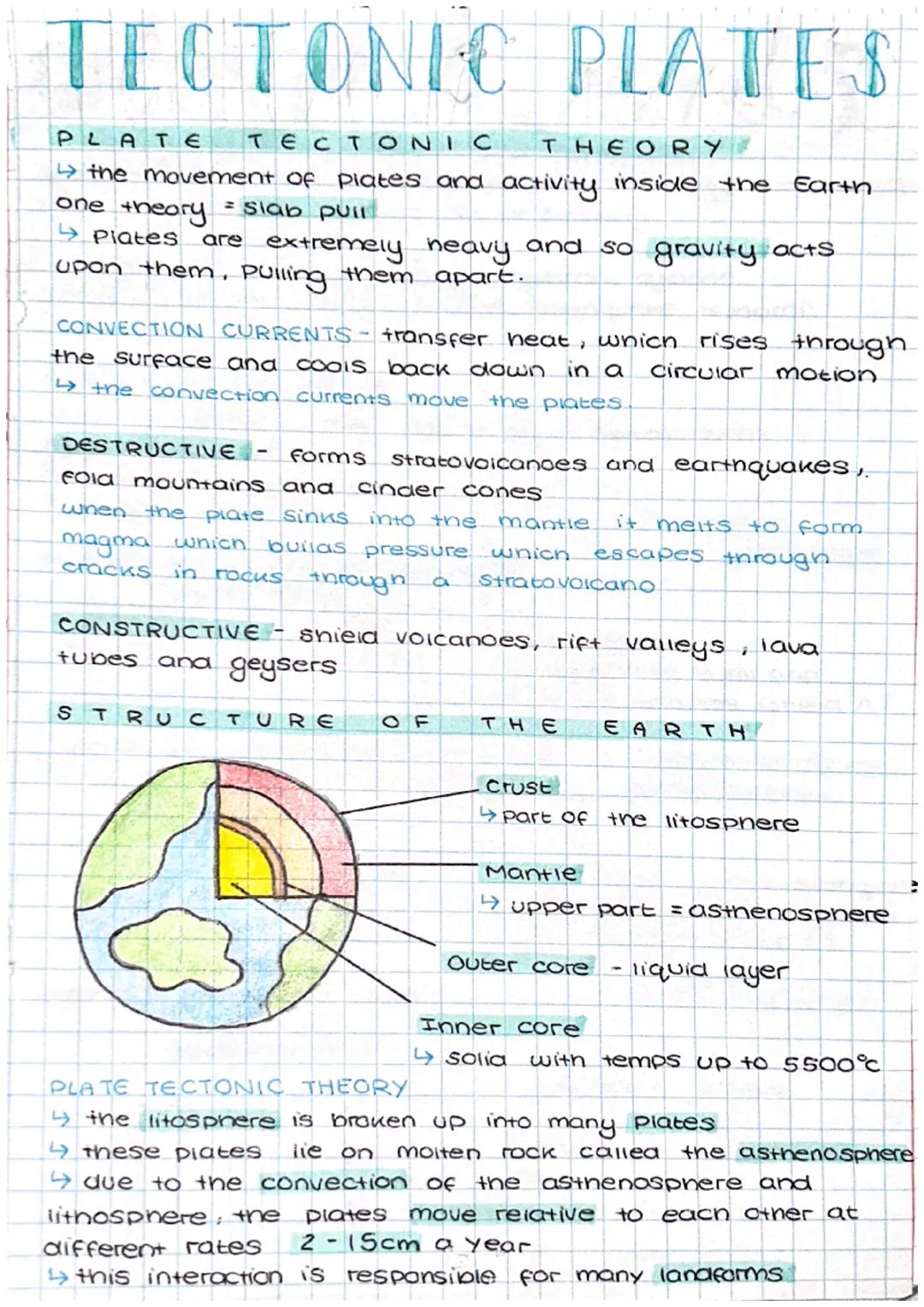
Plate tectonic theory explains how our planet's surface constantly moves and changes. The theory suggests that Earth's lithosphere is broken into massive plates that float on the molten asthenosphere beneath, moving 2-15cm per year due to convection currents and gravity.
Convection currents work like a giant heating system inside Earth. Hot material rises through the mantle, cools at the surface, then sinks back down in a circular motion, dragging the plates along. Some scientists also believe in slab pull, where the sheer weight of heavy plates causes gravity to pull them apart.
Earth's structure has four main layers you should memorise. The crust forms part of the lithosphere and is where we live. The mantle contains the upper asthenosphere and drives plate movement. The outer core is liquid, whilst the inner core is solid with temperatures reaching 5,500°C.
Remember: The interaction between moving plates creates most of the dramatic landforms we see today, from mountain ranges to ocean trenches.
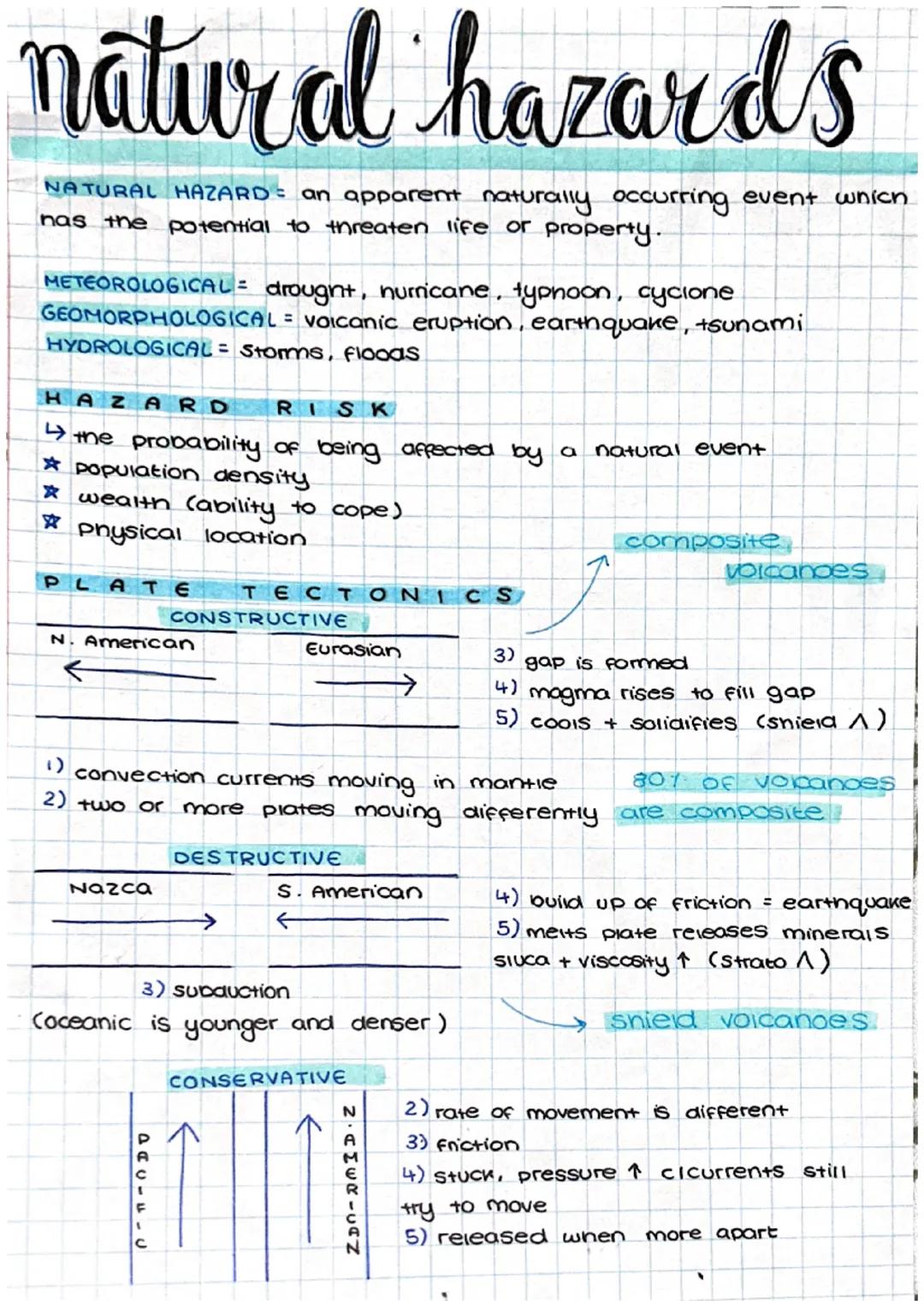
Different plate boundaries create different features. Destructive boundaries form stratovolcanoes, earthquakes, and fold mountains, whilst constructive boundaries create shield volcanoes, rift valleys, and new ocean floor.


 Geography
 English Literature
 Sociology
 Biology