Tropical Cyclones and Climate Systems
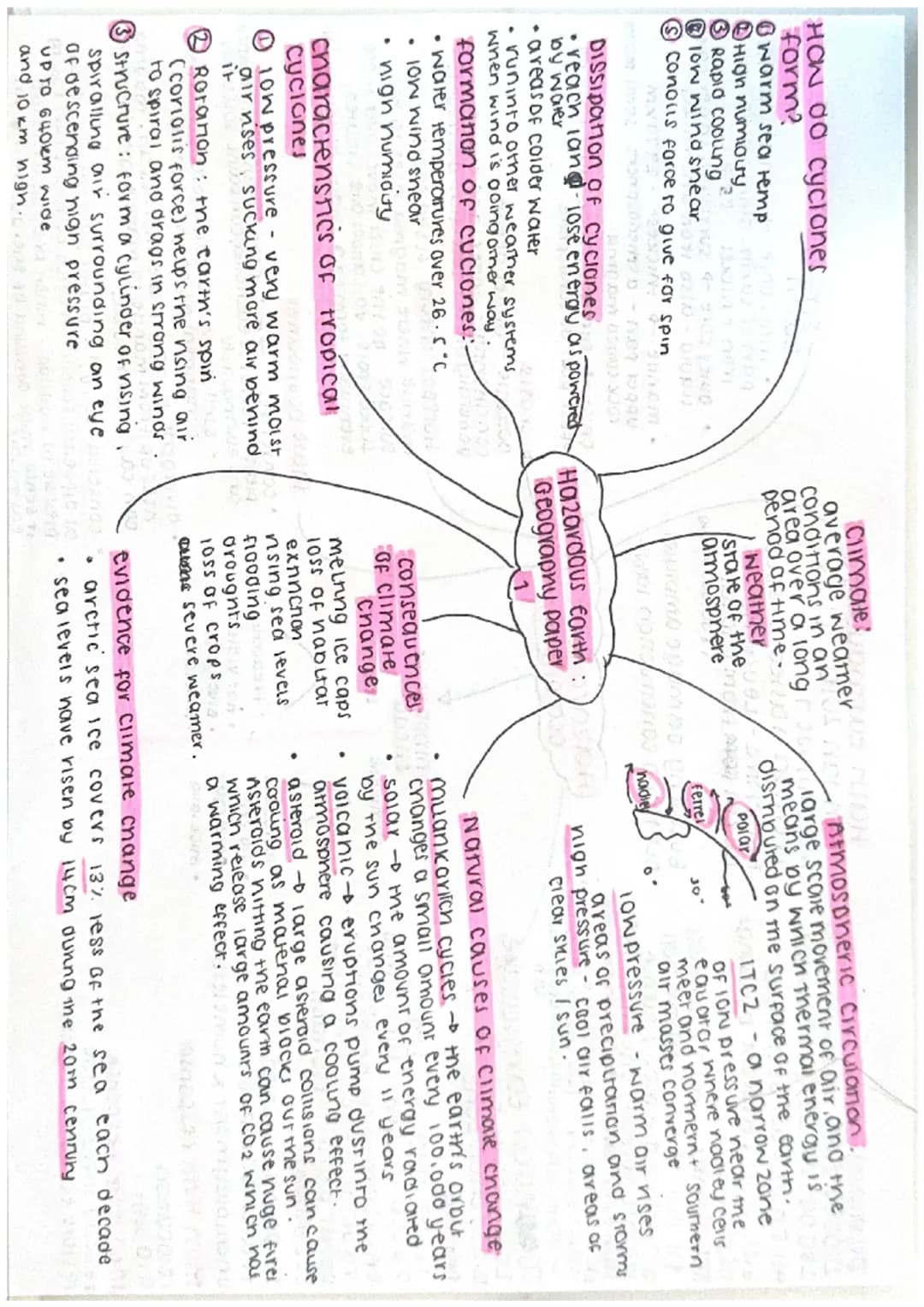
Ever wondered why tropical storms always spin in the same direction? Tropical cyclones form when specific conditions align perfectly: ocean temperatures above 26°C, high humidity, and low wind shear. The Earth's rotation (Coriolis force) creates that distinctive spiral pattern as warm, moist air rises.
These massive weather systems can reach up to 640km wide and 10km high, with a distinctive eye of high pressure surrounded by spiraling winds. When cyclones reach land or colder water, they quickly lose power since they're fueled by warm ocean water.
Global atmospheric circulation explains our planet's weather patterns. The Earth has three major circulation cells (Hadley, Ferrel and Polar) that distribute heat around the globe. Where air rises, we get low pressure and rainfall; where it falls, we experience high pressure and clear skies.
Did you know? Climate change evidence is becoming increasingly clear - Arctic sea ice is disappearing at a rate of 13% per decade, and sea levels rose 14cm during the 20th century alone.
Climate change has both natural and human causes. Natural factors include Milankovitch cycles (Earth's orbit changes), solar activity variations, volcanic eruptions, and asteroid impacts. The consequences are far-reaching: melting ice caps, habitat loss, species extinction, sea level rise, and increasingly severe weather events.

 Geography
 English Literature
 Biology
 Sociology