My Last Duchess - Power, Control, and Murder
Ever wondered how someone could casually admit to murder whilst showing off their art collection? Browning's Duke does exactly that in this disturbing Renaissance tale.
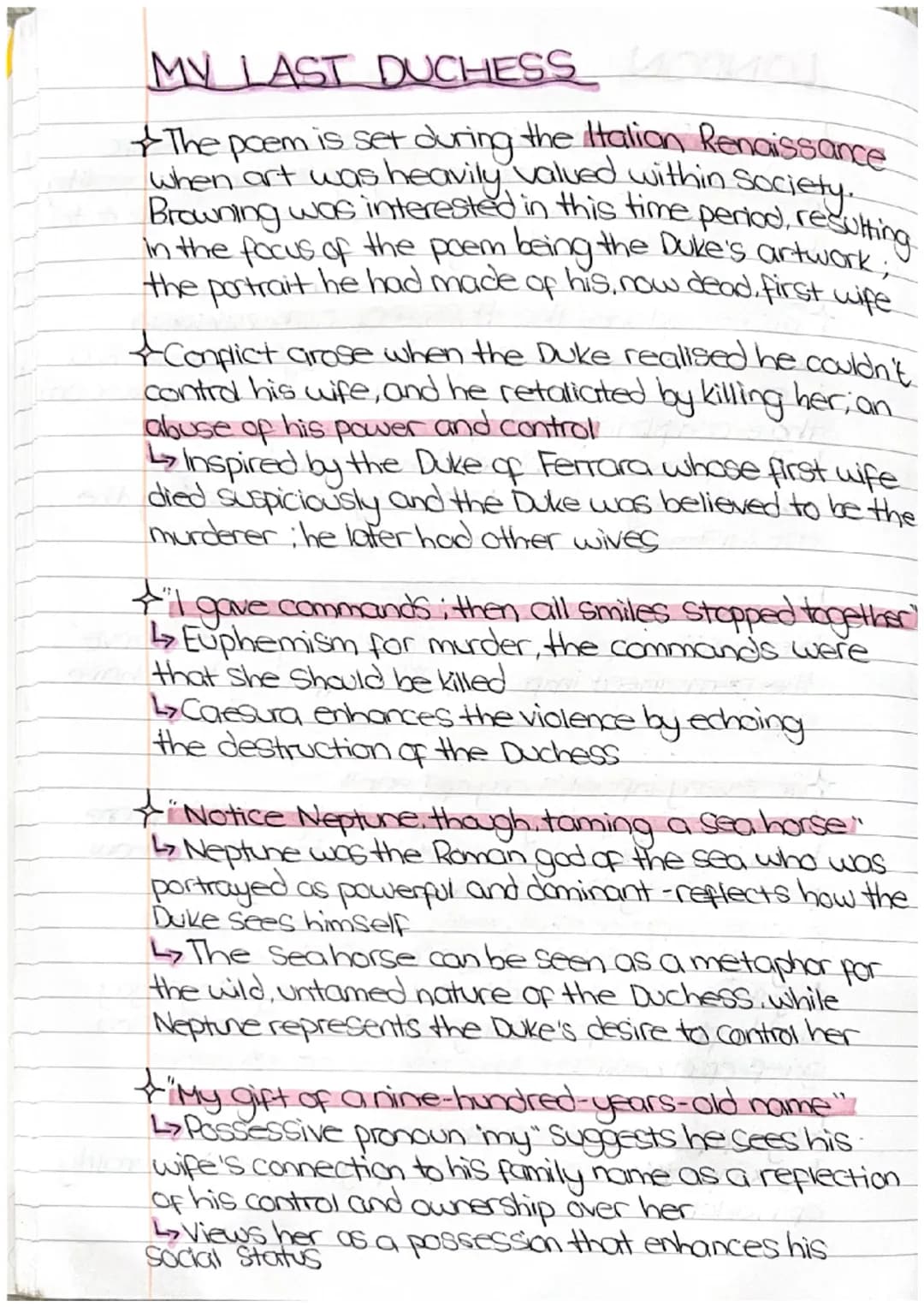
The poem takes place during the Italian Renaissance, when wealthy nobles collected art as symbols of their power and status. The Duke is showing off a portrait of his first wife, who's now conveniently dead. What starts as an art tour quickly becomes a confession of control and violence.
The Duke's problem was simple: he couldn't control his wife's natural happiness and friendliness. She smiled at everyone - not just him. His solution? Murder. The line "I gave commands: then all smiles stopped together" is a chilling euphemism for having her killed. The caesura (pause) in this line mirrors the sudden, violent end to her life.
Key Insight: The Duke views his wife as property, not a person. This reflects the extreme patriarchal attitudes of Renaissance society.
Browning based this character on the real Duke of Ferrara, whose first wife died under suspicious circumstances. The historical Duke was suspected of murder and later remarried - sound familiar? This real-life inspiration makes the poem even more unsettling, showing how power can corrupt absolutely.



 Sociology