Banquo, The Witches, and Duncan
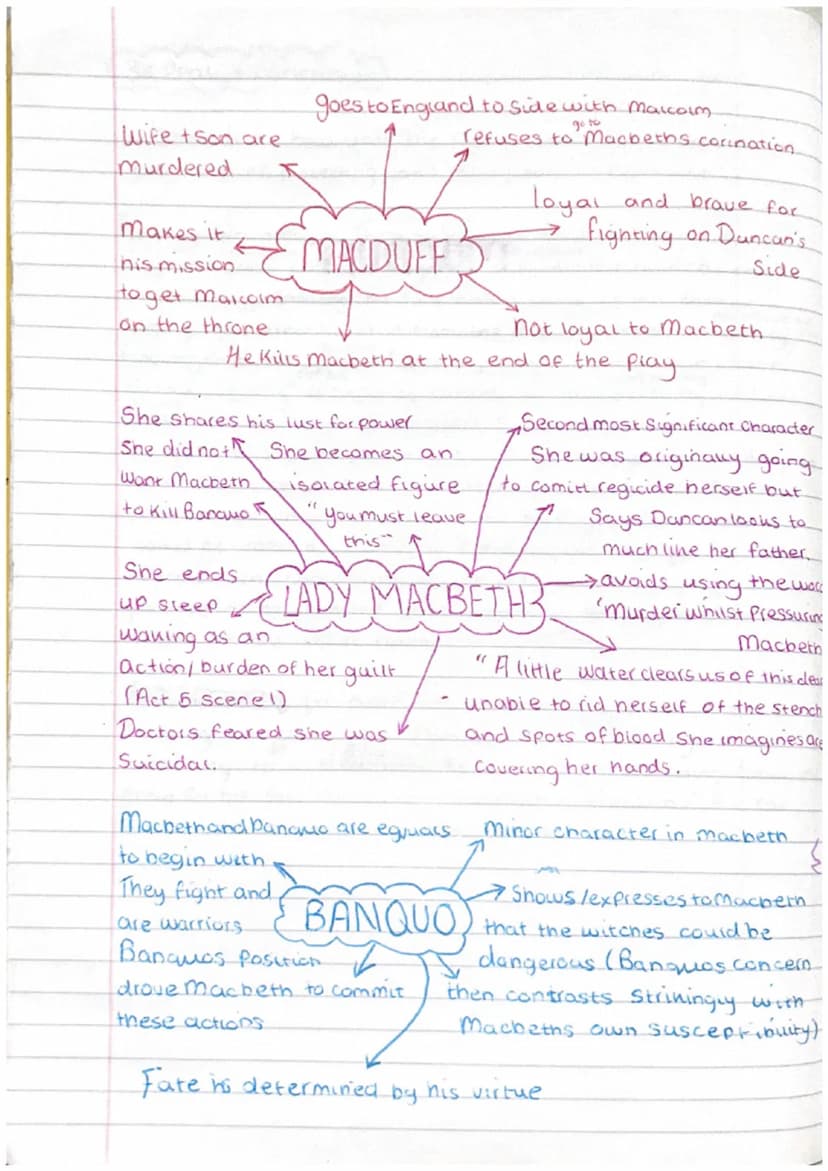
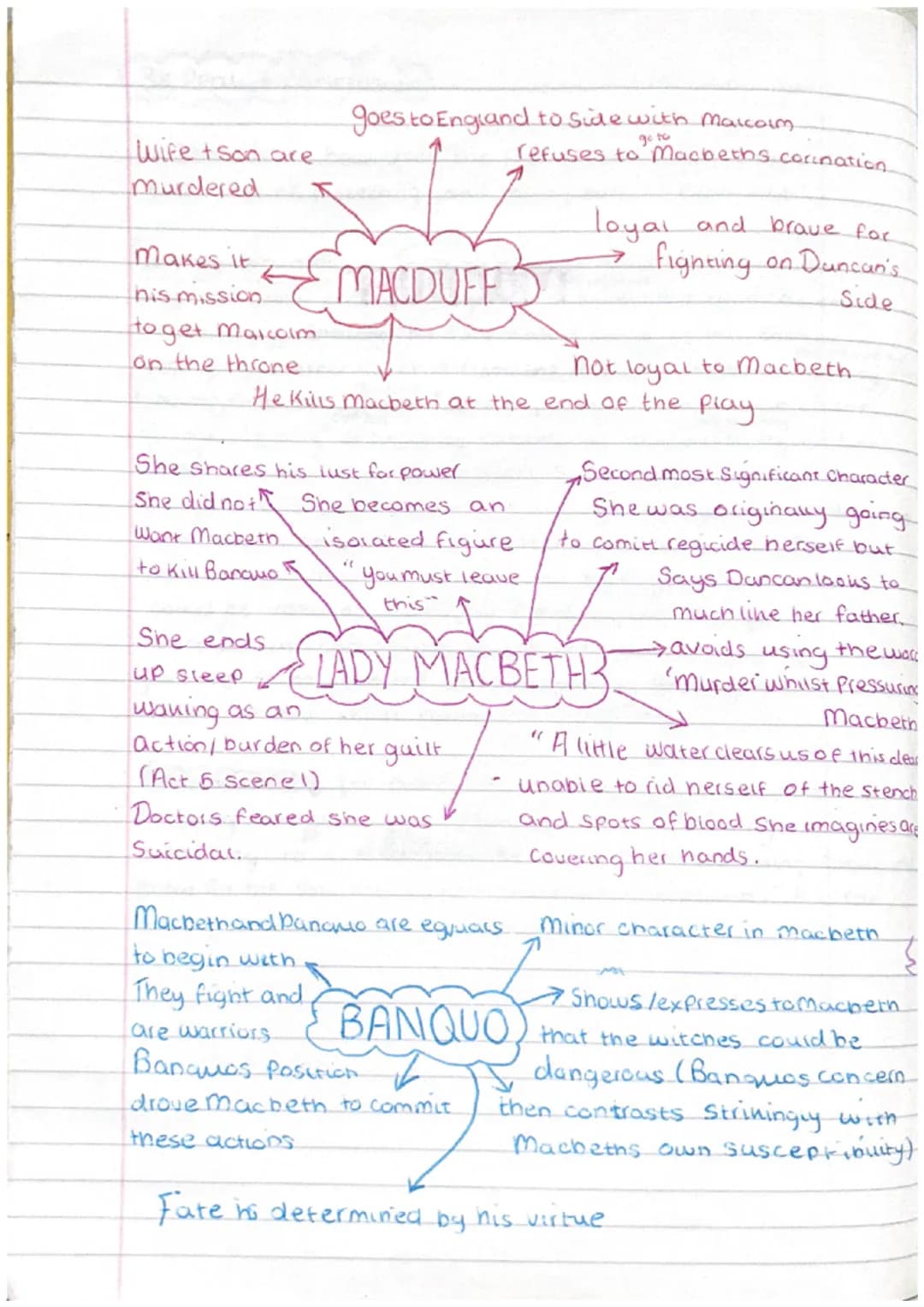
Banquo begins as Macbeth's equal - both are brave warriors fighting for Duncan. However, Banquo shows wisdom by expressing concern that the witches could be dangerous, contrasting sharply with Macbeth's susceptibility to their prophecies. His virtue determines his fate differently than Macbeth's.
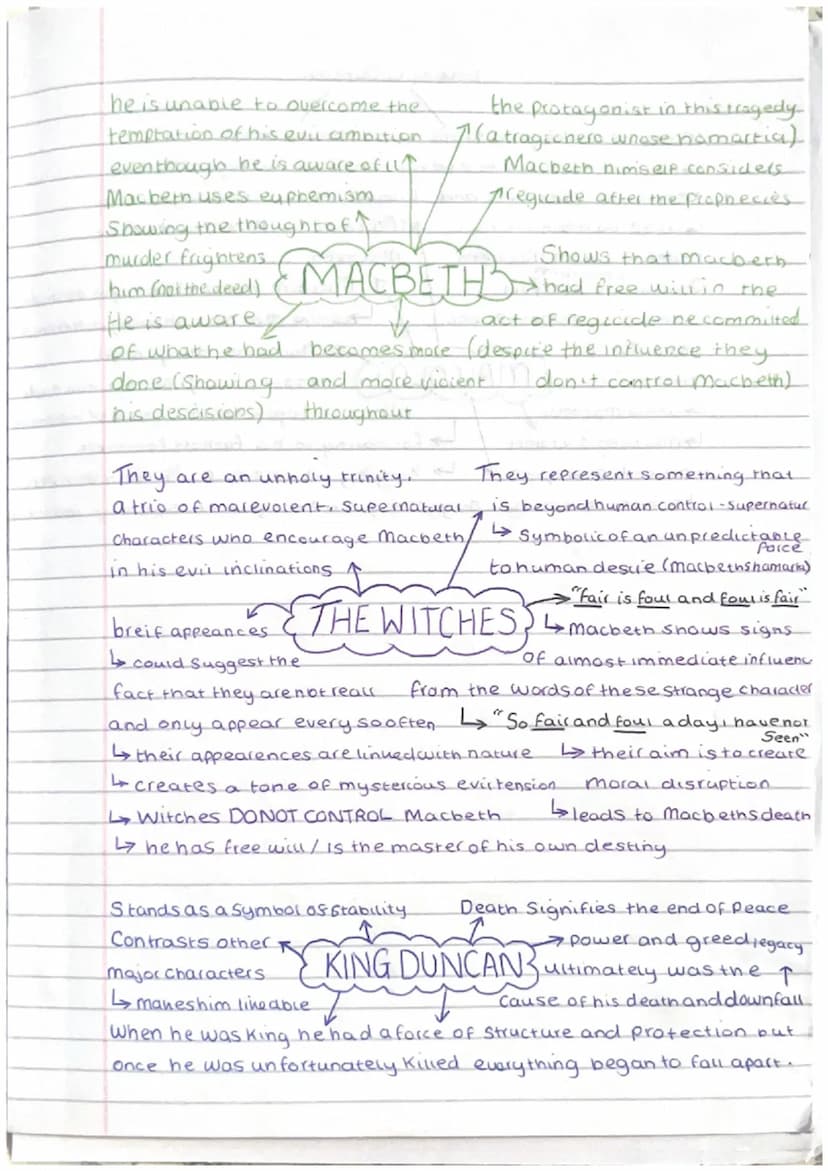
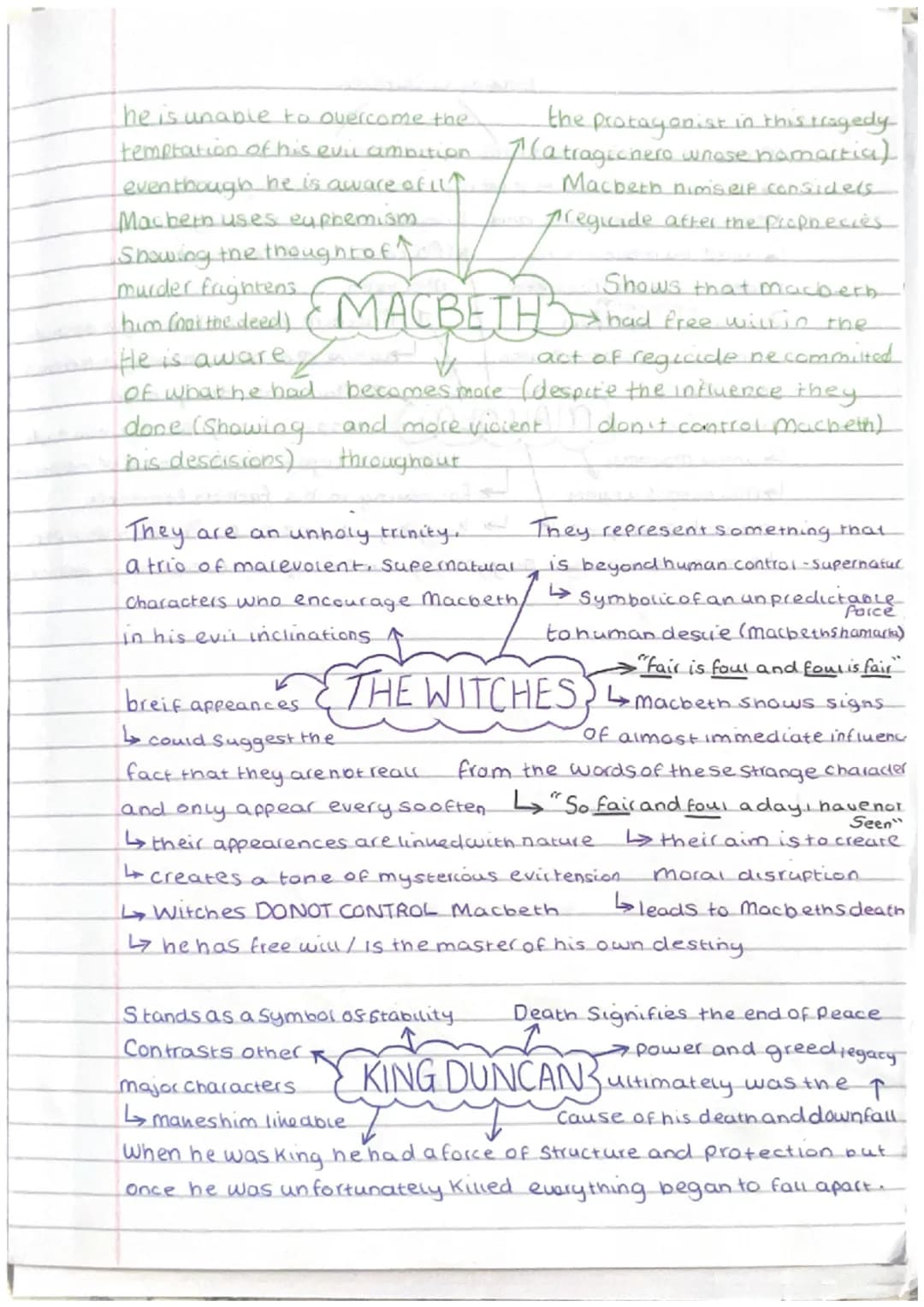
The Witches form an unholy trinity of supernatural characters who encourage Macbeth's evil inclinations. Their famous line "fair is foul and foul is fair" immediately influences Macbeth, who echoes it with "So fair and foul a day I have not seen." Crucially, they don't control Macbeth - he has free will and chooses his own destructive path.
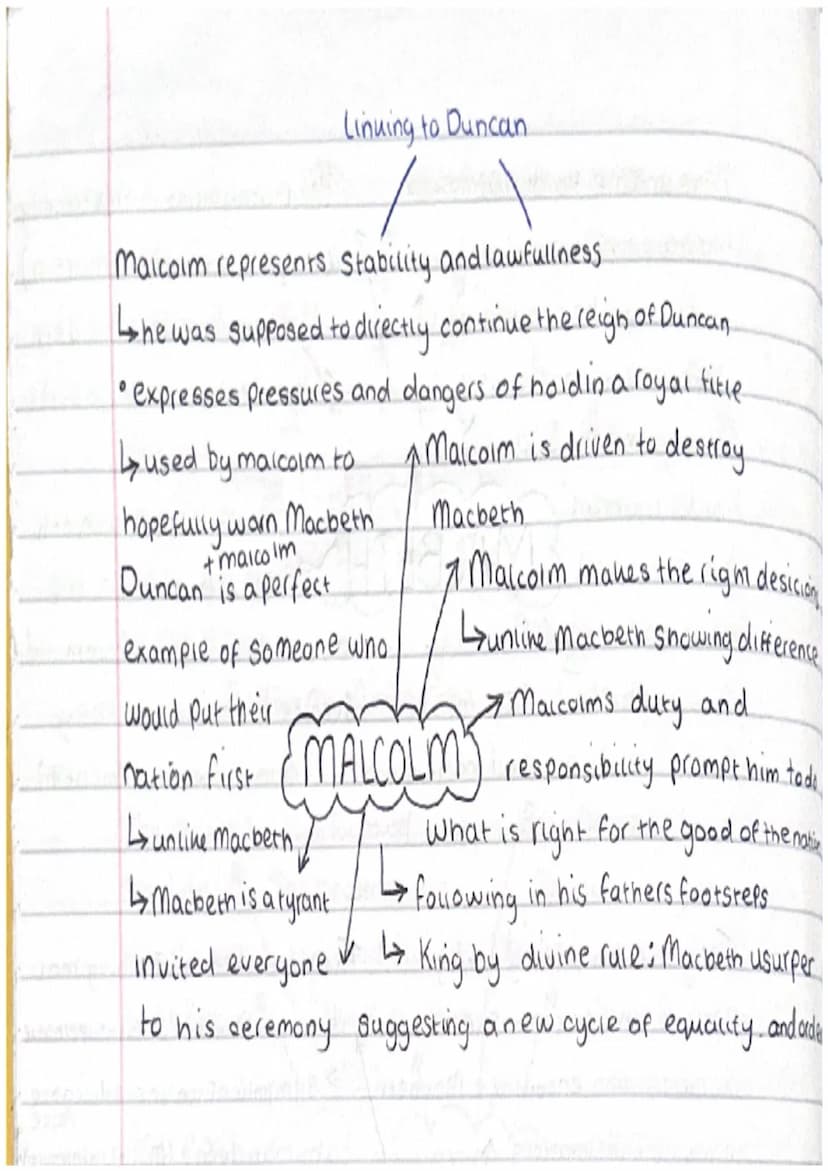
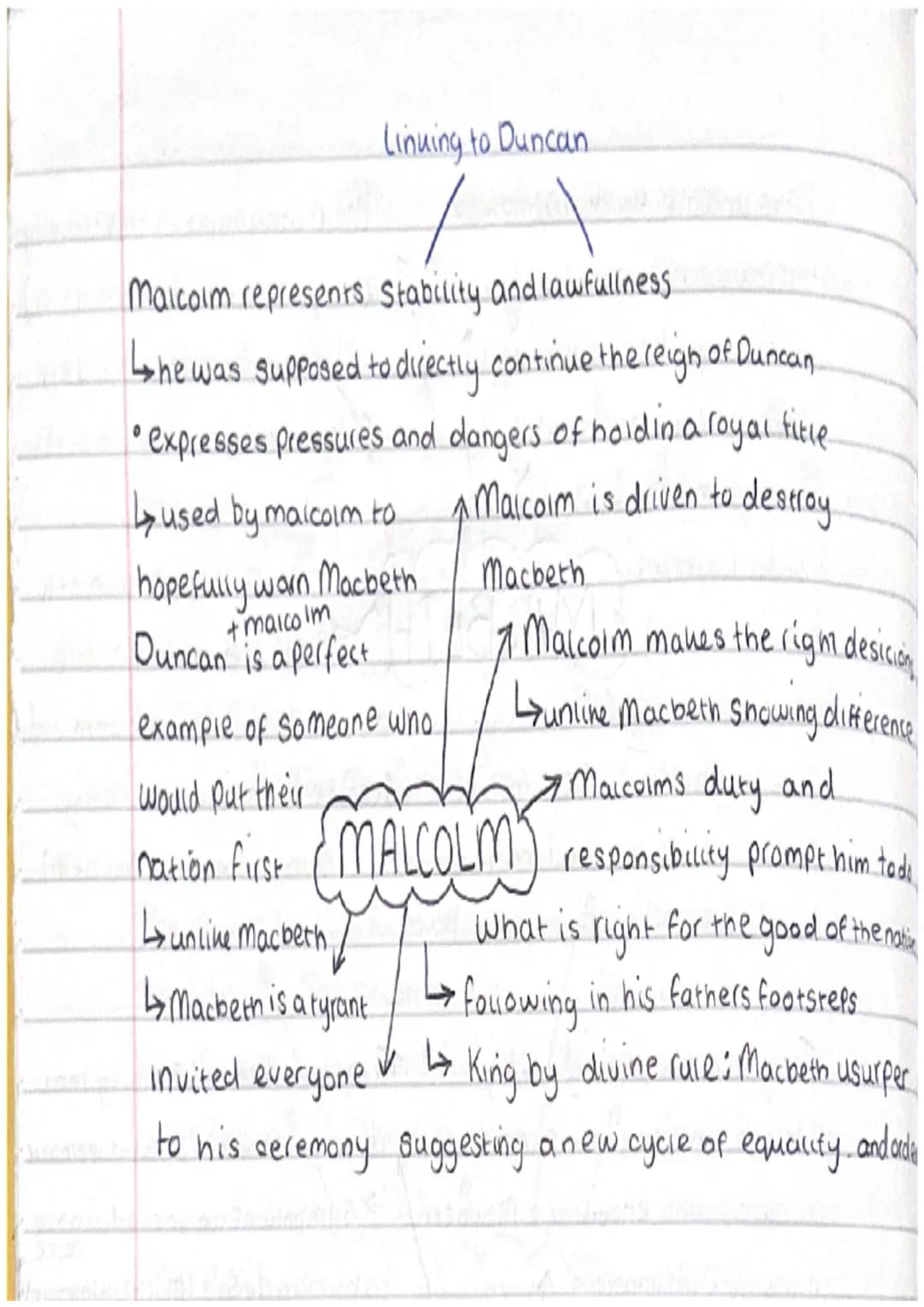
King Duncan represents stability and protection as the rightful king. Shakespeare presents him as the perfect example of divine rule, making his murder even more shocking. Once Duncan dies, everything begins to fall apart, showing how his death destroys the natural order.
Remember: The witches represent temptation, not control - Macbeth's choices are his own responsibility.

 English Literature
 Sociology
 Biology